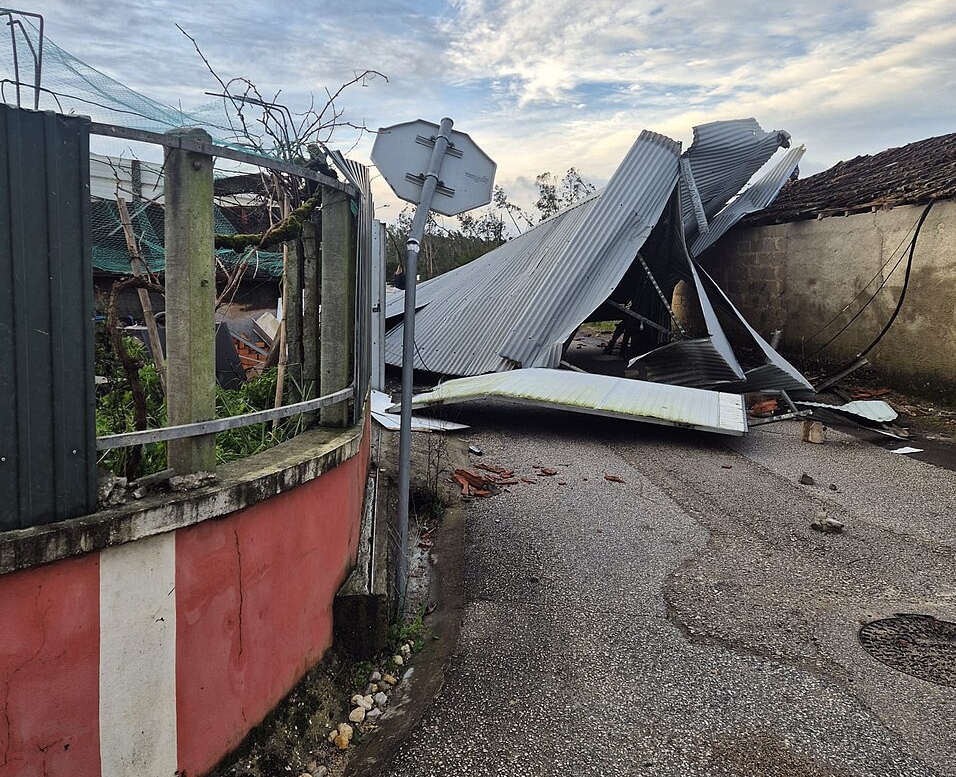
One could easily mistake the names Francis, Goretti, Harry, Ingrid, and Joseph for the names of a bunch of digital nomads passing through Portugal in recent times. Yet these are the names of storms, or diluvial nomads, which have become regular visitors to Portugal, with varying degrees of impact: more or less gusty and rainy; causing some flood or roof leaks or a tree falling here and there; nothing out of this world.
So, when Storm Kristin arrived in the early hours of January 28th, it took many people by surprise, in spite of the warnings, and its impact still hadn’t sunk in after its passage. The region surrounding the city of Leiria (near the coast, roughly halfway between Lisbon and Porto) bore its brunt: several deaths, winds peaking at 200km/h, incessant rain and almost a million people left without power, water or network signal.
Among those people was my own elderly mother, who I couldn’t reach for three days, having decided to check if she was unscathed and sheltered. I presumed she’d be alright, beyond the power cut, but not hearing from someone close becomes increasingly anxiogenic.
As the region fell into a black hole, the focus of the news soon drifted elsewhere: returning to the daily incidents of the presidential election campaign and wins by Portuguese clubs in the Champions League, especially Benfica’s spectacular victory over Real Madrid. Most of the country was oblivious to the distress felt by a substantial chunk of its population.
Over the past few years, originating in a glitch in a famous video game, there has been a viral running joke that Leiria doesn’t exist, that it’s off the map. It became so well known that the local tourism board ended up adopting it as a slogan. In the aftermath of the storm, the irony wasn’t lost on most people.
It really was as if Leiria didn’t actually exist. Fortunately, my mother was alright, and unshaken. Kristin had awoken her in the middle of night. She simply got dressed, tucked her mobile phone into her pocket, grabbed a torch and the house keys and waited it out on the sofa, in the dark, with the world howling, whipping and cracking outside.
Fortunately the house remained almost unscathed too. The vegetation was, however, hard hit. Especially, the old tall trees in the back of her garden. One pine and three oaks fell to the ground, while another pine and oak are still standing but are look certain to slide with the ground they stand on. Smaller fruit trees were hit too, but that’s no big deal.
Sense of Destruction
As I got closer to her house, the sense of destruction grew stronger. Roof tiles had flown off, while posts and signs were bent and torn away. Many, sickeningly many, trees had been uprooted, or snapped in half like matchsticks, or were leaning in such a way that they faced a slow death, and would have to be chopped down.
There were sycamores, cedars, a great deal of oaks, countless Atlantic pines, and also many eucalypti, a perfect fuel for forest fires, which I could do without for the most part.
The cities of Marinha Grande, first, and then, Leiria looked like they had been under attack. Three days after the storm – under the first, short-lived, rays of sun for a long while – people were out on the streets, but the silence was eerie, mainly broken by the sound of chainsaws, trucks and hammering.
There remained a dusty haze in the atmosphere. What had been a fairly leafy city and region, looked to have been stripped naked. I foresee a weird shortage of shade in the summer.
The buildings, roofs, factories, urban equipment etc. can be fixed up and rebuilt within a short time. Even a sixteenth century chapel, part of the city’s skyline, or the pinnacles of a fifteenth century monastery in the town of Batalha, which was also destroyed by the storm. But for the economic ecosystem, the consequences may be dire.
The region, which has been one of the economic engines of the country, has managed to keep unemployment low and withstand various wider crises since the seventies, thanks to diversified industries and exporting capacity, particularly in plastics, moulds, wood and glass.
Leiria and its Castle.
Specific Trees
Trees are a different, soul-crushing, story. In Leiria and its immediate surroundings alone, never mind the broader region, it has been estimated that eight million trees were destroyed. There are specific trees, some of which have existed for as long as I can remember that I would randomly revisit and vividly see in my memories and dreams, like an amputee feels a phantom limb.
As a child, I rode my bike over tapestries of fern and pine needles. I fell off my bike due to scattered pinecones and jutting roots. I played football with trunks as goalposts. Seeing pieces of bark chipped off due to a shot hitting the ‘post’ would leave us unmoved. After all, there was such an abundance of trees, with enough time for regeneration.
The fragrance of resin, pine and eucalyptus hung in the air, especially in the summer. Over the past decades, however, due to increasing demographic and economic pressure, vast swathes of woodland have already disappeared.
One symbolic example, and also the largest of these woodlands, is the plainly named Pinhal de Leiria (Leiria’s pine forest) or Pinhal do Rei (King’s pine forest), an expanse of over 11,000 hectares of maritime pines, stretching over twenty kilometres along the coast.
This was presciently planted from the thirteenth century, in order to contain the encroaching dunes and to mitigate the effect of Atlantic winds. Also, two centuries later, the ships used by the Portuguese to venture out into the Atlantic Ocean were built from the wood of that forest.
On account of its sheer size and location by the wild ocean, it has provided magnificent views and is a refuge for many. Some would say there is a mystical side to it. At the very least, it is intrinsic to the local identity.
In October 2017, another Storm, Leslie (and possibly criminal hands as well) caused uncontrollable fires that burned 80% of the forest. I recently heard someone refer to that fire as its ‘holocaust’. A word I found sadly appropriate.
In 2026, Storm Kristin finished it off with a final sweep. The forest is gone. I guess the trees can be replanted, but how long will they take to grow? Will they be given the time to grow at all?
In the early twentieth century, local poet Afonso Lopes Vieira called it the ‘green cathedral’. Does this crumbled cathedral have sufficient followers pious enough to resurrect it?
Given the recurring fires and storms, competing priorities and the length of time it takes trees to reach maturity, I very much doubt I’ll see proper reforestation in my lifetime.
Although less ravaging, Kristin was followed by Leonardo, Marta and Nils blowing and raining into roofless houses, for a couple more weeks. The effects of climate change are palpable, by now. We are in the thick of it. Its consequences are snowballing in unpredictable ways.
Features Image: Debris from after the initial disaster, clogging up a Leiria street.
Review: We Must Begin with the Land: Seeking Abundance and Liberation through Social Ecology by Stephen E. Hunt (Zer0 books, 2025)
Environmentalists find themselves in the paradoxical situation of living in a golden age of radical ecological thinking – even as our global economic system blasts through one climactic tipping-point after another, more or less guaranteeing the extinction of planetary life as we know it at present. A rich field of research and intellectual inquiry has sprung up from between the fault-lines of the emerging climate crisis, along with concomitant movements centred (among other aims) on food sovereignty, habitat protection, the democratization of land holdings, and anti-extractivist resistance. Joining in this spirit of stewardship and challenge, Stephen E. Hunt has produced a prospectus for what might be described as eco-socialist change, in an attempt to measure and mitigate “the profound reengineering of life on Earth” that capitalist food systems have wrought. In place of monopolistic land-hoarding and ever-expanding “agri-business” – which trace their roots to the era of settler colonialism – he makes the case for a not-for-profit, “circular economy”, based on the principle that “nutritious food” is “an essential human need.”
If Hunt draws inspiration from “utopian” ideas – the notion, say, that local commoning could provide a vital food source for significant numbers of people in the U.K. (where he lives), in place of the corporate or commodified provisions they currently rely on – he is nothing if not clear-eyed about the scale and extremity of the climate catastrophe predicted to engulf our already warming world. The vitality of his analysis might be said to stem from its symbiotic pairing of transformative hopes with a deep-running awareness of natural necessities. It is simply not possible, he states, to reach or maintain “ecological integrity within planetary boundaries” without simultaneously “addressing profound social problems embedded in deep history.” Far from being inevitable, he argues in a similar vein, famine is “primarily a social problem that demands solutions founded on social justice.”
If Hunt often focuses on the practicalities of ecological action – how to grow wholesome food, and nurture communal practices, in a durable way – he nevertheless situates his proposals within an internationalist horizon. His book draws as much on the lessons of the Kurdish revolutionaries in Rojava, say, or the grassroots agricultural labourers comprising La Via Campesina, as on the experience of local campaigners in Bristol, his home. We Must Begin with the Land is anything but parochial. In fact, by arguing for the radicalism of community gardening, foraging, the conversion of waste grounds into allotments, and the like, Hunt may find himself in the vanguard of progressive thinking. Some commentators – not without reason – have attempted to hitch the cause of ecological adaptation exclusively to the wagon of the nation-state, essentially envisaging climate adaptation as a matter of enlightened technocratic adjustments from on high. Hunt’s contrasting emphasis is on the importance of localised, grassroots environmentalism, with an anti-capitalistic edge – aligning him politically with the late Grace Lee Boggs, for example, whose campaigns for community-led ecological regeneration in Detroit offered a new model of labour agitation in that industrialised city.
Hunt also invokes the “social ecology” of Murray Bookchin, a multi-faceted philosophy that advances a critique of “the historic turn towards hierarchy and patriarchy” within radical movements – often hampered, ironically, by rigid structures and internal power imbalances – as well as a diagnosis of the “statism” and “capitalism” that define wider social structures, particularly in the global north. By re-examining our conceptions of urban and rural, of agricultural production and consumption, Hunt observes (via Bookchin), reformers can “ensure that human and ecological well-being are at the heart of democratic initiatives”, bringing the grand ideals of socialist transformation down to earth – and into an actionable zone inhabited by actual communities. During the Occupy Wall Street protests, he recalls (perhaps with a tinge of nostalgic over-statement), the occupiers’ “self-managed food provision” merged into something of an improvised welfare service. The movement exposed the degree of social isolation in the twenty-first century’s metropolitan centres. One of the chief benefits of communal eating is to help to address alienation.
Such schemes, of course, are driven as much by physiology as by psychological or socio-econonmic factors. Our ability not only to think beyond the present infrastructre of a capitalistic economy, but physically to survive, is directly connected to the attitudes we hold and the measures we take regarding food and the land it grows from. It was hunger, after all, and not just a spirit of experimentation and progressivism, that inspired the rebellious denizens of Kronstadt to cultivate the waste grounds of their city in 1921 – instituting a “horticultural commune”, according to the historian Voline, that the Bolsheviks, intent on centralization, were zealous in repressing, even after the famous mass of striking sailors there had been executed or dispersed. Then as now, democracy and ecology may be thought of as connected strands of any authentically revolutionary endeavour. As Kristin Ross has written:
Land and the way it is worked is the most important factor in an alternative ecological society. Capital’s real war is against subsistence, because subsistence means a qualitatively different economy; it means people actually living differently, according to a different conception of what constitutes wealth and what constitutes deprivation.
Such issues take on a palpable urgency in the age of climate change, as extreme weather events merge with the predicted decimation of habitats and food-chains. Whether or not we realise it, how we feed ourselves (and learn to live with one another) is a crucial question for communities everywhere – a question likely to turn into an existential dilemma if left unanswered. In Hunt’s words,
as the food crisis worsens, it will be increasingly necessary to make productive use of urban or “peri-urban” land for local self-provisioning… it is wise to activate urban gardening as a collective form of commoning that transcends the atomisation of communities into clusters of individuals.
Noting the explosion of factory farming and other for-profit models of meat production globally, he wonders: “Can the straight trajectory of relentless economic growth be bent into the spiralling plenty of truly regenerative production?” For readers in Ireland, these speculations hold special resonance. A nation-wide campaign centred on community-organised green spaces and vegetable allotments – such as Hunt envisions – could serve as an original, effective response to the expanding epidemic of dereliction afflicting Irish towns and cities (itself in part a symptom of the housing and cost-of-living crises that have caused concomitantly high levels of emigration and homelessness). As to the issue of food sovereignty, despite inspiring efforts by networks such as Talamh Beo to implement sustainable models of “agro-ecology” across the country, successive Irish governments seem to have remained in thrall to a meat (and dairy) industry operating on a commercial model hostile to workers’ rights and favouring large-scale operations that are emissions-intensive. Meanwhile, the goal of reaching even the minimum requirements for decarbonising our farming practices seems as illusory as it’s ever been. A dramatic re-set in local and national policy is needed – and soon.
Among other things, there is arguably a risk of hubris in a progressive politics that centres its aims and actions solely on the state and its traditional organs of power. As Hunt suggests, in an era of drastic ecological and economic ruptures, a consumerist society that simultaneously “does not know how to feed and dress itself”, that destroys abundant eco-systems to make way for industrial-scale farming and vast monocultures, can hardly be taken as the sanest or safest of socio-environmental paradigms. We must begin with the land, he declares – and re-build our agricultural economy from the grassroots up. The change we need starts here and now.
The intense green colour of much of the landscape of Ireland – the so-called “Emerald Isle” – bears testimony to Garrett Hardin’s assessment that ‘As a rational being, each herdsman seeks to maximize his gain’[i]. The predominance of highly verdant grassland across most of Ireland is not a natural phenomenon. In most regions hazel and oak are the summit vegetation. The synthetic fertiliser used on the abundant pastures creates an artificial glow. An outsider might assume that the absence of a ‘strong state’ is to blame for an unwieldy agricultural system dedicated to the production of meat and dairy for export, but this is not necessarily the case. This essay argues that state intervention, in the form of a land tax, could provide an important means of ameliorating a system that rewards a shrinking number of farmers, at a high environmental cost. The state can also facilitate the development of ‘alternative agriculture’, involving more sustainable environmental practices, higher employment, improved health outcomes and a reduction in the cost of living for the wider population, but this must allow farmers as Silke Helfrich puts it ‘to act like entrepreneurs on a local scale’[ii].
On the climatic periphery of grain cultivation, and with a wet climate, over millennia farmers, mainly seeking new grazing land, steadily removed most of Ireland’s native tree cover. Thus, according to Mitchell and Ryan in Reading the Irish Landscape: ‘from about five thousand years ago when the first tree-felling axes made woodland clearance possible man’s hands have borne down ever more heavily on the Irish landscape’[iii]. This left a mere twelve per cent of native woodland by the 1400s. An intensive period of British colonisation from the seventeenth century removed much of what was left, leading to the extinction of native fauna, includingthe wolf. The loss of access to woodland also presented enormous difficulties to a native population subjected to land seizure and discriminatory colonial laws. By the eighteenth century the poet Aodhagan Ó Rathaille asks “cad a dhéanfaifimd feasta gan adhmaid / tá deireadh na gcoillte ar lár” (Now what will we do for timber, / With the last of the woods laid low?). Today, despite ideal conditions, Ireland still has the third lowest coverage of forestry in the EU after Malta and the Netherlands, and much of that is in the form of non-native Sitka Spruce plantations that do further damage to the ecology.
Contemporary Irish agriculture is dedicated to the production of food commodities for export, principally beef and dairy that fuel climate change (the Irish agriculture sector was directly responsible for 38.4% of national Greenhouse Gases (GHGs) emissions in 2022). Despite excellent growing conditions, largescale horticulture is rare – and small-scale allotments are few in number – while public health authorities contend with a host of ‘lifestyle diseases’, linked to obesity and sedentarism. Irish agriculture is far from being the result of a free market. The system is underpinned by EU subsidies, and other regulations, which often do more harm than good.
An Irish Peasant Family Discovering the Blight of their Store by Cork artist Daniel MacDonald, c. 1847
Thus far we have not referred to the (non-native) staple crop most identified with Ireland, which appears to serve as a vivid illustration of the tragedy of the commons, and the pessimistic view of Thomas Malthus that food production fails to keep pace with population growth over time. Ireland was the first European country to adopt the potato (solanum tuberosum) as a widespread staple. This was an inauspicious development, according to John Reader, as ‘the innocent potato has facilitated exploitation wherever it has been introduced and cultivated’[iv]. The catalyst for the potato’s successful adoption was the traumatic wars of the seventeenth century especially Oliver Cromwell’s subjugation of Ireland (1649-53) since ‘the potato could both be cultivated and stored in a manner which might intuit the spirit of destruction, and the malevolence of the enemy’[v]. However, Henry Hobhouse argues that ‘of all the havoc wrought by [Oliver] Cromwell in Ireland, the by-product, the lazybed, was in the end the most damaging’[vi]. Another author, A. T. Lucas denigrated the ‘dark reign of the potato’ for ‘banishing’ most other foods from the table.[vii]
For the Irish peasant farmer the advantages of the potato far outweighed its disadvantages. The remarkable growth of the population in the eighteenth and early nineteenth centuries from approximately two million to over eight million is unlikely to have occurred without the availability of a subsistence crop whose yield exceeds that of wheat, and which was suited to Ireland’s moist, friable soil. The potato has a nutritional profile that allows for almost exclusive long-term consumption unlike most cereals, which lack the essential amino acid lysine; although the tuber has the drawback of a high glycaemic load. At the start of the nineteenth century Irishmen’s heights were greater than those of equivalent Englishmen in a variety of occupations and situations, and life expectancy was higher than most Europeans of that time. Daly has described it as ‘a wonder crop the only subsistence foodstuff which provides a nearly perfect diet, a crop which would feed a family on very little land, in almost all types of Irish soil, irrespective of rain or lack of sunshine’[viii].
As any student of Irish history knows the story ended in tragedy with the Great Famine of 1845-51. The potato blight (phytophthora infestans) proved devastating for the three million out of a population of eight million almost exclusively dependent on it. According to Sen: ‘In no other famine in the world [was] the proportion of people killed . . . as large as in the Irish famine of the 1840s’[ix]. This was because by the eve of the Great Famine three million (out of a population of eight) were living on just one million acres of land which represented a mere five per cent of the total acreage of twenty million. Crotty argues that ‘with twenty million, instead of one million, acres of land available for the production of the population’s food requirements even with the worst conceivable crop failures, an abundance of food could have been grown to feed eight or more millions of people’[x]. This view is endorsed by Mokyr who argues that Ireland was not overpopulated on the eve of the Great Famine.[xi] Perhaps uniquely in the world, the population of Ireland has never scaled similar heights.
Over generations, peasant proprietors would have noticed that holdings were being continuously sub-divided, and that sustenance was increasing dependent on the unpalatable but prolific Lumper variety of potato. Yet the pattern of early marriage and large families endured; gynaecological brakes were not applied as seems to have occurred in other European peasant societies at that time. Importantly, during these decades of unprecedented fecundity, political activism was lacking, even in the face of the continued injustices of the Penal Laws. Notably, most of the leadership of the first republican independence movement, the United Irishmen, were from Protestant and Dissenter minorities in Dublin and, in particular, Ulster, the northern province. A Catholic society denuded of its native leadership (the Earls flew in 1607 and ‘the Wild Geese’ in 1691) failed to mobilise politically.
Surprisingly, Crotty laments the tenant land purchase schemes of the late nineteenth and early twentieth century as: ‘[t]he abandonment of competitive rent in favour of a system of peasant proprietorship naturally introduces an element of immobility into the allocation of land among farmers’. He argues that: ‘[t]here are reasons to believe that under Irish conditions this immobility is likely to be particularly severe, leading in turn to serious misallocation of land’.[xii] Thus, between 1850 and 1900 the number of cattle on Irish farms increased by over 60% and the number of sheep more than doubled. The area under tillage declined from 4.3 to 2.4 million acres, but the rural population fell from 5.3 to 3 million. The revolutionary socialist James Connolly identified the effect on rural Ireland: ‘Where a hundred families had reaped a sustenance from their small farms, or by hiring out their labour to the owners of large farms, a dozen shepherds now occupied their places’[xiii]. Crotty argues that:
concentration on cattle and sheep . . . has had an extremely harmful effect on Irish agriculture and on the whole Irish economy. While on the one hand is has led to the enrichment of the numerically small landed interest, on the other it has given rise first to famine and subsequently to chronic emigration and to very slow economic progress for the numerically much greater non-land-owning section of the population’[xiv].
The successful movement for land reform in the late nineteenth century created a society with a preponderance of peasant proprietors who maintained a model of production that offered few employment or investment opportunities.
According to Crotty: ‘The structure of the agriculture, characterized by the predominance of beef-cattle and sheep, provided little opportunity for the employment of labour or capital and with a static volume of output these opportunities did not improve’. He further contends that the interests of farmers, or landowners, and the nation ‘are essentially conflicting’; because: ‘[t]he scope for intensifying grassland beef production is very limited. The profitability of the system depends on a low rate of expenditure’[xv]. Thus, the Irish population continued to decline after independence, while the price of food tended to be at least as high as in Britain, despite far lower population density, and greater possibilities for local production.
Patrick Hogan 1891-1936.
Independence brought little change in agricultural priorities with Ireland remaining a primary producer of livestock products and cattle often exported ‘on the hoof’ to Britain. This was driven by the first Minister for Agriculture Patrick Hogan (1922-32) whose sympathy lay with large cattle farmers. The early commercialisation of agriculture has cast a long shadow as farmers have continued to produce commodities for the international market, and purchase their own food from the same anonymous source. In an address to Macra na Feirme in 1974, the psychiatrist Ivor Browne observed the irrational scenario of: ‘a small farmer in Mayo taking his calf to the town to sell and his wife asking him to pick up a chicken for dinner in the supermarket while he is there; he manages to sell his calf for £1 and pays £1.50 for the chicken for dinner’[xvi]. Similarly, writing in 1968, Fennell bemoaned the demise of country markets and how a ‘frequent complaint in Ireland is the lack of variety of in vegetables for sale and the high prices charged’[xvii].
From 1972 the European Community’s Common Agricultural Policy (CAP) perpetuated this pastoral model, generating further specialisation and reducing the unprotected horticultural sector which struggled, as a result, to compete with cheap, often subsidised, imports after the removal of trade barriers. Farm supports did allow large farmers to earn incomes comparable often to urban dwellers but generated further imbalance: a miniscule proportion of Irish farmland is devoted to tillage, much of it used as animal feed; there are over seven million cattle and almost six million sheep in the country.
The adoption of agricultural alternatives from a variety of international ‘toolkits’ could confer significant advantages through reduced dependency on imported food, and increased employment in more labour-intensive tillage and horticulture as well as raising the health of a population that is beset by lifestyle diseases linked to a stunted food culture. One challenge for alternative agriculture is the historic inflexibility in the land market which thwarts diversification. It remains the case, as Mitchell and Ryan observed that ‘In Ireland it is still next to impossible to rent land on a lease of sufficient length to make improvements and where land can be bought it is often in small parcels at too high a price’[xviii]. The CAP subsidy regime maintains the high cost of land, as farmers are guaranteed incomes from privileged pastoral farming.
Any alternative agriculture should involve far wider direct participation than is the case today. Farmers and farm workers could work on a part-time or seasonal basis. The hinterland of cities would be especially important. Crotty argued that: ‘A land-tax offers the only means of reconciling future increases in cattle and sheep prices, relative to those of other farm products, with the general welfare’[xix]. This would involve the broadening of the property tax to encompass agricultural land. Taxation revenue emanating from any land tax could be redistributed in the form of low-interest loans, allowing enterprising individuals or cooperatives to acquire land. However, the involvement of government agencies should be restricted as according to Thirsk:
[T]he strong assumption of our age that omniscient governments will lead the way out of economic problems will not in practice serve. The solutions are more likely to come from below, from the initiatives of individuals, singly or in groups, groping their way, after many trials and errors, towards fresh undertakings. They will follow their own hunches, ideals and inspirations, and obsessions, and along the way some will even be dismissed as harmless lunatics. The state may help indirectly, but it is unlikely to initiate, or select for support the best strategies; and, out of ignorance or lack of imagination, it may positively hinder.[xx]
Thus, it will be important for farmers to “act like entrepreneurs on a local scale”.
A relatively sparsely populated island such as Ireland ought to be equipped for self-sufficiency as we enter a turbulent era in human history. Above all, for this to occur, we require a political leadership representing the interests of the people in alignment with entrepreneurial opportunities and environmental constraints. The introduction of a land tax could allow for a more equitable distribution of land, revenues from which could be used to allow individuals or cooperatives to acquire land. Any government should be mindful, however, that over-regulation may hinder development. The role of the state should be to provide access to land. Thereafter, farmers should be allowed to experiment. The history of Irish agriculture prior to the Famine, when three million were subsisting off just one million acres without artificial fertilisers or machinery, demonstrates how fertile Ireland can be. It will be necessary, however, for farmers to avoid dependence on a single staple, and for the state to insist on an increase in the coverage of native trees which provide additional ‘services’, including clean water and air.
[i] Hardin G. (1968): The tragedy of the commons. Science, New Series, 162 (3859), S.1243-1248, doi: http://www.jstor.org/stable/1724745
[ii] Helfrich S. (2009): Gemeingüter sind nicht, sie werden gemacht. In: Ostrom E. (2009): Was mehr wird, wenn wir teilen. München: oekom, S.11-19. (Helfrich 2009, p.13)
[iii] Mitchell, F. and Ryan, M., Reading the Irish landscape (Dublin, 1997), p.8.
[iv] Reader, J., The untold history of the potato (London, 2009). p.14
[v] Salaman, R., The history and social influence of the potato (Cambridge, 1949). p.215
[vi] Hobhouse, H. Seeds of change: six plants that changed mankind (London, 1985), 253..
[vii] Lucas, A. T., ‘Irish food before the Famine’, Gwerin 3 (1962)
[viii]Daly, M. ‘Farming and the Famine’, in O´ Grada, Famine 150 commemorative lecture series., p.39.
[ix] Sen, A., Identity and violence: the delusions of destiny (New York, 2006), p.105.
[x] Crotty, R., Irish agricultural production (Cork, 1966), p.63.
[xi] Mokyr, J., Why Ireland starved: an analytical and quantitative history of the Irish economy 18401850 (New York, 1985), p.291.
[xvi] Brown, I., The writings of Ivor Browne: steps along the road: the evolution of a slow learner (Cork, 2013), p 90.
[xvii] Fennell, R. ‘The domestic market for Irish agricultural produce’, in Baillie and Sheehy, Irish agriculture in a changing world, (Dublin, 1968). p. 106.
In 1841 the population of county Leitrim stood at 155,297. By 1901, however, it had fallen to 69,343, dropping further to 41,209 by 1951, before reaching a nadir of just 25,057 in 1996. The 2022 census records a population of 35,087 – a significant increase, but still a staggering 77% reduction on the 1841 figure.
No other Irish county has experienced such a dramatic decrease over that period; although all witnessed varying levels of decline apart from two Northern counties, Dublin (which experienced a 289% increase) and its adjoining counties. The Western seaboard’s demographic pattern merits comparison with the impact of European colonisation on the native populations of the Americas.
The presence of both abandoned stone cottages and tumbledown bungalows bear witness to this long-running decline; these are nestled in a bewitching but ecologically scarred landscape of craggy mountains, gushing falls and still pristine lakes. Lough Allen, the source of the majestic Shannon, divides a mountainous north from the flatter lands of the south. A short stretch of coastline positions the county on the Wild Atlantic Way.
Perhaps unsurprisingly, according to CSO datathe vacancy rate for Leitrim in 2022 was 15.5%, down from 19.9% in 2016. Indeed, Leitrim has the highest rate of vacancy of any county in Ireland, followed closely by its neighbours Roscommon and Mayo. In contrast 5.5% of Dublin properties were vacant – still an unsatisfactorily proportion given there are currently (as of February 10, 2023) just under six hundred properties available rent for all of Dublin city and county listed on daft.ie.
There are various explanations for the stark population decline along the western seaboard since the Great Famine (1845-51), most obviously the Famine itself, but also a shift in agricultural priorities from tillage to pasture after the Napoleonic Wars in 1815 and the Repeal of the Corn Laws in 1847, which brought cheaper grain to the British market.
As John Mitchel wrote sarcastically for The Nation in 1847:
You may be surprised to hear of a country having, at one and the same time, a “surplus produce” and a “surplus population” – too much food for its people, and too many people for its food. Your surprise arises from ignorance of the great principles of political economy. All produce that can be spared for export is, in the technical language of that science, “surplus;” and all people who cannot get profitable employment are also “surplus.”
Pastoral agriculture depends on low labour inputs for profitability, meaning few children from any family could stay on the land. After independence, it became state policy to encourage beef and dairy exports. Since then, European subsidies have calcified an agricultural system that produces (as of 2020) just 61,800 tonnes of fruit and vegetablesfor the domestic market, compared to imports of 890,000 tonnes.
It is also notable that two railway lines serving Leitrim were dissolved in the 1950s: the Cavan and Leitrim Railway running between Dromod and Belturbet with a branch from Ballinamore to Arigna; and the Sligo, Leitrim and Northern Counties Railway, which ran between Enniskillen and Collooney near Sligo, taking in the north of the county, including Manorhamilton.
The Vacant Property Refurbishment Grant provides for a sum of up to €50,000 to refurbish a vacant property. It appears tailor-made for a significant proportion of the housing stock of Leitrim. As of February 7, 2023 there are 33 properties for sale under €100,000 in the county out of 197 according to the website daft.ie. Many appear suitable candidates for the Grant.
In line with national trends, property prices have been rising steadily in Leitrim, albeit from a low base. Research on daft.ie indicates a 13.8% increase in the average price of property in the county over the course of 2022, the second steepest increase for any county apart from Donegal. Such a figure could be skewed by a few expensive purchases, but is a good indicator nonetheless.
The prospect of purchasers receiving a Vacant Property Refurbishment Grant might lead vendors to apply a premium. Anyone availing of the Grant, meanwhile, must retain the property as a principal primary residence, and be a first-time buyer or qualify for the fresh start scheme.
After receiving the Grant, if you decide to sell up or rent the property out within ten years of a successful application local authorities will claw back the Grant. If it is less than ten years, you must repay it in full; over five years, but less than ten, you have to repay 75%.
Anyone availing of the Grant would want to be sure of their desire to live in a particular area, and of this fitting with their employment prospects. Moreover, the sum involved would hardly put a roof on many of the dilapidated properties dotted around the Irish countryside, given the current cost of building materials.
The Grant does not apply where an individual is living in the house after the purchase. One contributor to boards.ie, who claimed to be sleeping on a mattress in a house in need of significant refurbishment, said he was denied the Grant on this ground alone, which seems unfair.
Perhaps unsurprisingly given the onerous terms and conditions, there has been little uptake. Last year, 765 applications were made for the Grant. 105 of these were approved while another 102 were rejected. The remaining 558 are still in progress.
One can understand a need for due diligence before pay outs are made. However, assuming the Department is insufficiently staffed to carry out numerous inspections, it is surprising to hear ads on the radio promoting the Grant. Perhaps this is simply to create the impression that a beleaguered Government is taking action on the hot topic of vacancy.
On January 30 2023, Minister Darragh O’Brien launched the Vacant Homes Action Plan 2023 – 2026. In its preamble the Minister sensibly stated that the ‘most efficient home to deliver is the one which already exists’.
One of its key objectives is to support the regeneration, repopulation and development of rural towns and villages to contribute to local and national economic recovery, and to enable people to live and work in a high quality environment.
There is, however, scant evidence that Government measures are encouraging people to settle in rural Ireland, in contrast to insatiable demand for Dublin property, where almost thirty percent of the population lives. In contrast, less than 15% of the UK population inhabits London, which is generally considered disproportionate.
The rather insipid planned actions include further budgeting for the Better Energy Homes Scheme; reference to the previously established Rural Regeneration and Development Fund; plans to harness European Regional Development Funding; and perhaps significantly a new programme for the Compulsory Purchase of vacant properties ‘for resale on the open market.’
Use of CPOs is the most obvious means of addressing vacancy, as well as bringing land into use for housing and other development projects. Historically, Irish Governments have evinced a reluctance to use CPOs to generate land for housing, notably the failure to act on the recommendations of the Kenny Report (1973) recommending that local authorities should be empowered to acquire undeveloped lands at existing use value plus 25% by adopting Designated Area Schemes.
Historically, the Courts have also generally weighed a constitutional right to property over what is, arguably, a concurrent constitutional right – flowing from a generalised Right to Life – for citizens to secure reasonable accommodation. Father Peter McVerry has pointed to a paradox whereby a constitutional right to property is ‘being used to prevent Irish people getting their own home.’
The Vacant Homes Action Plan is thin on ambition, merely stating that with ‘regard to compulsory purchases/acquisitions is being reviewed with a view to streamlining and consolidating the CPO process. This will arrive alongside a review of the Planning Act and the Law Reform Commission’s examination of the use of CPOs which is ongoing.’
Although the Plan states:
The Department in partnership with the Housing Agency will examine each local authority’s Derelict Sites Register with a view to identifying potential properties that could be brought back into use through compulsory acquisition. Local authorities will be requested to review these properties in the first instance with a view to engaging with owners.
And that
Under Action 19.9 of Housing for All, it was agreed that all Government Departments would examine their existing portfolio of properties and, subject to any obligations under the Public Spending Code, the Land Development Agency Act 2021 or the State Property Act 1954, would place them on the market if they were not required and may be suitable for residential housing.
Existing Schemes
The Plan also refers to the Ready to Build Scheme, which was launched in September, 2022:
Under the Scheme, local authorities will make serviced sites available in towns and villages at a discount on the market value, to individual purchasers for the building of their home which will be their principal private residence. It is intended that the local authority will develop existing sites in their control or purchase sites.
And to The Living City Initiative, a scheme of property tax incentives first enacted in the Finance Act 2013 and commenced on 5 May 2015 aimed at the regeneration of older heritage buildings in the historic inner cities of Cork, Dublin, Galway, Kilkenny, Limerick and Waterford.
The Plan acknowledges that there been a low take-up of this initiative, but points to a number of measures included in the Finance Act, 2022 aimed at accelerating uptake.
The Vacant Homes Action Plan also says that in Budget 2023, ‘the introduction of a Vacant Homes Tax was announced. Legislation providing for the introduction of the new tax is included in the Finance Act 2022.’
It estimates that 57,206 (3.2%) of all Irish properties were indicated by their owners as being vacant. A property is considered vacant for the purposes of a forthcoming tax if it is in use as a dwelling for less than 30 days in a 12-month chargeable period. Owners of vacant properties are to be charged at a rate equal to three times the property’s base Local Property Tax liability for 2023, which will apply in addition to a property’s LPT charge.
This, however, will only apply in relation to vacant properties ‘that are habitable, and therefore suitable for occupation as a dwelling.’
The Plan also provides for important exemptions to ensure, as it puts it, ‘property owners are not unfairly charged for temporary vacancy arising from genuine reasons.’ These include recently sold properties, or those currently listed for sale or rent.
It would seem that simply by putting up a property on the market for sale or rent – at whatever price – the penalty may be avoided. We seem to be in the realm of performative politics again, rather than substantive action.
There appear to be two broad categories of vacancy in Ireland. An awareness of this distinction might inform policy and the law. The existence of designated rent pressure zones already distinguishes between regions of the country.
We may observe the first category occurring in mainly urban areas – rent pressure zones – especially Dublin and its hinterland where housing is in short supply. Here, a dominant player, or players, could collude by withdrawing accommodation from the market in order to maintain, or generate an increase in, rental income. This is especially insidious and severe penalties should be available to stamp out any suspicion of any such monopolistic practices.
A second category of vacancy arises in a rural county such as Leitrim which has experienced historic de-population, leading to the abandonment of many houses. Draconian penalties serve little purpose here. Instead, there should be greater incentives for renovation and refurbishment. Here at least, the Vacant Property Refurbishment Grant should not be restricted to principal primary residences.
In the case of much of county Leitrim, even for people to live for a part of the year there would be a boon for retail and hospitality businesses, and could restore life to sleepy villages that have experienced emigration over many generations. For the Vacant Property Refurbishment Grant to inhibit sales for a period of ten years seems prohibitively restrictive, and would likely deter many from availing of it.
It is in the public interest for the stock of quality housing to rise through the availability of such grants. A three year restriction seems sufficient.
A second, ‘holiday’, home would offer an opportunity for residents of built-up urban areas to undertake small scale agriculture on a part-time basis in summer retreats, as one still sees in Central and Eastern European countries where an apartment in the city is often complimented with a rural residence that includes a market garden. The availability of alternative garden space for the summer months might lead “empty-nesters” and retirees to downsize from houses into apartments.
A sparsely populated country like Ireland ought to have available a stock of affordable housing in low density rural locations for second homes, such as is the case in Scandinavian countries.
Game Changer?
Policy makers need to look beyond housing itself to encourage re-population of rural Ireland, while confronting car dependency. We require a radical improvement in public transport. Extending quiet ways on treacherous roads would also allow for safer cycling. E-bikes could be a game changer for rural Ireland, permitting extended journeys for older less physically fit people, while expending far less energy than even electric cars. Buses and trains need to offer free and secure carriage for bicycles.
Hopefully the Department of Housing is working in conjunction with the Department of Transport, following Eamon Ryan’s recent proposal for rail lines to be restored in the West, to identify areas suitable for development in rural Ireland.
Reversing the decline in Ireland’s rural population, especially along the western seaboard, requires joined-up thinking and innovative approaches. Cheap, modular housing might be considered for new housing arrangements that depart from the conventional idea of the family home in a changing society.
Co-operative agricultural enterprises, inspired by the tradition of the Clachan, offer the prospect of sociability and affordability, while potentially reducing greenhouse gas emissions and decreasing reliance on imported foodstuffs.
One way to address a seemingly intractable housing crisis concentrated in the city of Dublin is surely to make other parts of the country more attractive to live in, especially in an era of remote working.
There have been encouraging trends over recent decades along the Western seaboard, with renewed appreciation of resilient traditions and greater opportunities for adventure sports – but there is a hidden Ireland, generally at a remove from the coastline, that tends not to see benefits from tourism.
As we approach the bicentenary of the Great Famine novel approaches to life in Ireland ought to enter the mainstream. Government should act decisively and imaginatively to encourage more people to live in counties such as Leitrim.
Jonathan O’Brien of City Kayaking says they began taking litter out of the River Liffey ten years ago. In that time he’s seen a change in the river.
City Kayaking was launched in order to offer people access to water activities in Dublin, but in the beginning there was a lot of what we used to call ‘legacy litter’ in the Liffey. It would have wildlife underneath it, or bottles would be full of barnacles. We don’t get that anymore. All the litter now comes out pretty clean, quite new. In the summer we take it out so quickly because we’re on the river so often. A McDonald’s bag will blow into the river and we’ll get it out before it’s even wet. Whereas ten years ago people got used to looking at a lot of trash when they saw the Liffey.
Today Jonathan pulls cans, plastic bottles and a few take away containers from the water while motoring up the river. ‘Small amounts of effort every day go a long way,’ he says.
The presence of Styrofoam is a recurring issue. Jonathan doesn’t know where it comes from, but he says it is as common as the seagulls: ‘there’s no pattern to it. It’s just there.’
Jonathan reckons most of the litter comes from the city itself, from along the quays, the boardwalk and new Dockland developments:
We can very easily predict where rubbish is going to be. Daily cleanups are just part of our routine now when guiding kayaking tours. For us, removing litter is a small step to leave the river cleaner than we found it. We’re also chipping away at negative perceptions people may have of the Liffey.
Sadly, Jonathan has encountered little expertise in Dublin City Council for managing this waterway: ‘I don’t see a department in there who are getting their teeth stuck in.’
Jonathan and his colleague Jamie have also been conducting tests on behalf of Dublin City University to monitor water quality. Over the past few years they have measured elevated levels of phosphate and nitrate, which washes downstream from farms and comes locally from urban runoff.
This nitrate and phosphate residue is invisible to people walking Dublin’s quays but Jonathan sees its effect on the river’s flora: ‘effectively it fertilises the river. Those blooms of algae grow. They grow very fast, and then they die off. And the secondary effect is that the ecosystem gets hammered.’ This he thinks is ‘a ticking bomb.’
Nonetheless, ‘ Ireland has never had heavy industry. We’ve never had coal or steel in any significant quantities, so we’ve never had the slag and the downstream problems with that.’
Thus, unlike major rivers in other European countries, such as the Thames the Rhine or the Seine, which have had heavy industry situated along them for centuries, the Liffey doesn’t have a long-term legacy of heavy metals or arsenic.
Originally Jonathan’s business found it far easier to get tourists onto their kayaks than to get Dubliners on board.
He now recognises that ‘Dubliners were always looking at the river and thinking it was filthy.’
But drawing attention to the problem of litter was a double-edged sword:
The last thing we needed to do was reinforce the bad reputation the Liffey had as a dirty river. There was a lot of litter, but litter in itself doesn’t make for bad water quality. It’s just litter. It’s like saying that the soil is bad because there’s rubbish on the surface. It doesn’t necessarily make sense. So we never spoke about it. We never tweeted about it. We never put pictures of it out. It’s only recently we’re kind of confident enough that the city’s attitude has changed to the water, that we can say, you know what, collectively we can clean it up.
The COVID-19 pandemic caused an abrupt drop in tourism and City Kayaking’s business, but this period also sparked Dubliners into rediscovering the Liffey and their local green spaces. Jonathan says they’ve seen more locals showing up to go paddling and it’s a trend he wants to continue. He finds the global attitude has changed:
The average Joe is much more environmentally aware than they used to be. They might not know exactly how to help, but they are still supportive of the idea of a sustainable environment. Floating the Liffey is an experience that brings things into focus — the beauty of nature alongside a few stray bits of litter, and our capacity to improve things. We’re not just kayaking, we’re opening minds.
In September 2022, the Environmental Protection Agency releaseda report demonstrating that water quality declined nationally between 2016-2021. This included a downgrade in the ecological status of the Liffey estuary from “satisfactory” to “moderate” due to phytoplankton, or algae blooms.
With thanks to Jamie Brunkow for editorial assistance.
The Stone Age didn’t come to an end because they ran out of stones. Similarly, we should be building an economy where we ‘use’ resources rather than ‘use them up’. The human species must change its profligate ways, and radically reduce the level of extraction required to fuel our needs and desires.
The economy is a part of society, and society is inextricably bound to the environment. In the living world there is no landfill; instead, materials simply flow. The waste of one species is food for another. Things grow, fade in time, and nutrients safely return to the soil. We, humans, however, generally ‘Take-Make-Dispose’.
With increasing consumer demand, we continue to eat into finite resources and waste more and more. It begs the question: how can we turn waste into capital?
The idea of the circular economy is move to ‘Make-Use-Return’, both in mindset and practice, and for this to become natural. A circular world economy would marry resourcefulness, design thinking for products built to last and be recyclable, retrieve raw materials, and alter current ownership models.
We have a waste problem. Globally, we generate about 1.3 billion tons of trash per year, leading to environmental atrocities like ocean plastic pollution. This may even become a source of future conflicts, as countries search for new places to stash their trash.
The UN International Resources Panel projects that our use of natural resources will double by 2050. A study by the OECD shows that the flow of materials through acquisition, transportation, processing, use and disposal accounts for about fifty per cent of greenhouse gas emissions.
The circular economy is a model of production and consumption, which involves sharing, leasing, reusing, repairing, refurbishing and recycling existing materials and products as long as possible. In this way, the life cycle of products is extended.
This helpful definition should make us consider how we reduce waste to a minimum, and disassemble raw materials after a product reaches the end of its life cycle.
A circular economy is an industrial system that is restorative or regenerative by intention and design. It replaces the end-of-life concept with restoration, shifts towards the use of renewable energy, eliminates the use of toxic chemicals, which impair reuse and return to the biosphere, and aims for the elimination of waste through the superior design of materials, products, systems, and business.
The challenge is to change our mindsets: how we think, behave, and consume collectively and individually.
Can the goods of today become the resources of tomorrow? This could involve, for example, changing the way we recycle valuable alloys, polymers and metals so that they maintain their quality and continue to be useful beyond the shelf life of an individual product. It would certainly make a lot of commercial sense.
We must move away from the ‘use and throw’ culture that operates today, consciously pivoting towards a more ‘return and renew’ approach, where products can be easily disassembled and regenerated.
The circular economy isn’t about one manufacturer changing one product, it is about all of the interconnected companies that form our infrastructure and economy coming together.
Therefore, across industries, the idea is to design products that can be disassembled systematically once the consumer has finished using them, re-manufacture and offer them out again.
The focus then moves to ‘cradle to cradle’ rather than ‘cradle to grave’ and the production cost should decrease drastically. For example, in the clothing industry, instead of garments lying as waste in a landfill, clothing companies could collect them and reuse them to make new products; potentially profiting out of the waste.
Everything is healthy food for something else. Everyday products from shoes to mattresses can be manufactured in a way that could be fully recyclable. For example, the fast-fashion brand H&M has made a commitment to use 100% sustainably sourced material.
The circular economy is an inevitability. It is not simply about fixing a particular problem, but redesigning an entire system to address the interconnected challenges of climate change, pollution and waste.
The concept of ‘sustainability’ is often used interchangeably with the Circular Economy. This is rather misleading. Although both of the concepts address issues around decarbonization, energy transition, and the waste minimization narrative – amongst other points that include local and ‘glocal’ actions and strategies – the two concepts remain quite distinct.
Sustainability, to a large extent, is a systems-level approach that encompasses environmental, social, and economic factors and assesses how they interact.
We can also include the concept of the Triple Bottom Line (i.e., people, planet, profit) in the context of business organisations, and how this can contribute to the cause of sustainability.
The concept of sustainability also helps us to evaluate the risks, trade-offs and externalities (positive or negative), from a life-cycle perspective, across the entire value chain. This is what leads to long-term system balance.
Fundamentally, however, sustainability is an umbrella term addressing a wide range of scenarios and issues, and not only focusing on conservation, choosing eco-friendly options, or switching to renewable energy.
Research by the MacArthur Foundation argues that sustainability does not have a singular focus on any individual part of the chain; rather the concept helps us to understand how the parts interrelate to enable effective overall outcomes.
In other words, ‘individual parts cannot be optimized without optimizing the whole’. Thus, an electric vehicle is not sustainable if we factor in the unquantified and unaccounted for social and environmental externalities that span the lifecycle of the lithium-ion battery that powers the vehicle, from mining, processing, smelting, trade, and transportation across the globally networked supply chain to the lack of recycling and reuse options for the battery at its end-of-life.
Certain industries have taken the lead in terms of rethinking and redesigning how they manufacture; choice of raw materials; and how they recollect products once consumers have stopped using them.
BSH sells home appliances-as-a-service promoted reuse, repair and extend product lifecycles. It now offers a full service, delivering, installing, repairing, moving, adjusting and picking up the appliances again at the end of the contract.
In the agriculture sector, there is growing availability of affordable bio-based solutions for recycling nutrients from agriculture. Using Hybrid Biofilter is a scalable solution that prevents nutrient leakage from fields, thereby improving local water quality. At their end-of-life, the biofilters can also be reused in several applications to release the captured nutrients back to their natural cycle.
Similarly, Nike launched the recycled-content version of the Converse Chuck Taylor All-Star series and introduced ‘exploratory footwear collection’ made from factor and post-consumer waste. At the Tokyo Olympics, the athletes representing US, France, and Brazil used Nike-sponsored uniforms made with 100 per cent recycled polyester.
Another closely related example would be Adidas, which has rolled out fully recyclable version of the Ultraboost running shoe collection made from a single material without glue. Similar initiatives are going on in Puma and Timberland.
Likewise, IKEA launched a buy back programme where customers can receive up to 50% of an item’s original price in the form of a store voucher. Also, unsold items are recycled or donated to local community projects.
Philips design products for hospitals, including medical equipment such as MRIs and CT Scanners. They are currently offering trade-ins on their old equipment for a discount on new systems. The company disassembles the collected equipment, refurbishing and upgrading them to sell these again.
This is a ‘win-win’ model since hospitals get financial returns from their older equipment, while also efficiently upgrading to the latest technology. This also addresses the e-waste recycling challenge that we face today.
H&M, the leading fast-fashion brand, now encourages customers to return used clothing to stores, who receive discount vouchers for future purchases at the store. The company classifies the collected used clothing into a) Rewear; b) Reuse; and c) Recycle categories, and they work across partners to continue with their sustainability measures.
In 2015, the Ellen MacArthur Foundation demonstrated that a circular economy could boost Europe’s resource productivity by 3 per cent by 2030, generating cost savings of €600 billion a year.
The following are three sector specific examples:
(a) Clothing businesses have actively taken steps towards embracing circular economy practices. Some firms in the apparels industry have formed coalitions to promote nontoxic chemicals, improve cotton farming. Others are developing standards for garments that are reused or recycled. There is great scope in investing in the development of new fibres that lower the environmental impacts of production.
(b) Recovering the material value of bottles, from mixed recyclables or bottle-to-bottle recycling, could lead to a much higher pay out. Metals, meanwhile, are commonly extracted from tires in open backyard fires – at great cost to both human health and the environment. Aggregating tires for use as industrial fuel could increase their value almost tenfold, while crumbling them to make road-paving material yields even higher returns.
(c) Dell has incorporated recycled plastics into its products, using the world’s largest takeback program for used electronics. Their cloud service lines provide customers with computing capabilities, while eliminating the need for physical assets, reducing costs and carbon footprints. All these practices, as mentioned above, can help companies extract additional value from leakages or waste in the production process.
A study by the World Resources Institute (WRI) identifies certain operational barriers in the functioning of the circular economy.
Creating a changed mindset is a major challenge. Thus, for example, we use twenty times as much plastic as we did just fifty years ago. This is despite a strong push from the market to use linen as the material for shopping bags.
Unfortunately, shoppers still choose single-use plastic bags and packages that often wind up at the bottom of the ocean. This requires a change in consumer attitude as well as a more stringent regulatory push on this matter.
Another related aspect to this is how we understand the ‘expiry date’ of a food product. Expiration dates are designed to protect the consumer, but it is not contingent on how a particular foodstuff is stored. Thus, the expiration date on eggs in India may be labelled for pantry storage, but these will last longer when refrigerated.
So, while an expiry date can mean that a food is inedible in certain circumstances, it may still be safe to eat while not necessarily meeting the manufacturer’s quality standards. This is currently being addressed in several markets.
Waste management and recycling infrastructure differ from country to country, which is another difficult factor to control. For example, studies project that there could be more plastics than fish in the ocean by 2050.
There are certain limitations in how plastics are sorted by chemical composition and cleaned of additives. Better technology can maintain quality and purity so that product manufacturers are willing to use recycled plastics.
Once there is some incentive, companies and users will be more inclined to act responsibly. This is an area where nations can work together during international conferences on partnerships and share research and development.
The global population is projected to reach 9.5 billion by 2050, with far fewer living in poverty than today. Emerging countries such as the BRICs (Brazil, Russia, India, China, South Africa) have an expanding middle class – with increasing purchasing power.
Clothing and apparel sector needs to lessen their environmental externalities by using non-toxic dyes and recycling cloth scraps.
As discussed earlier, the ‘rental and resale’ model has to succeed against fast fashion preferences which produce far more waste. Also, with increasing demand for electric cars, lithium-ion battery manufacturers must design products with a similar mixtures of chemicals, allowing more processed recycling possibilities.
A Harvard study reviewing the manufacturing sector, in particular the clothing and furnishing sectors, provides an understanding of the different strategies that embed a functioning circularity.
First, the study suggests that companies should consider leasing products instead of selling them. This would retain the continuity or circularity.
Moreover, from a stakeholder perspective, this would mean that the companies remain responsible for the products, even after consumers are finished with them.
Xerox, for example, over the years have followed a model where they lease their printers and photocopiers to corporate clients rather than selling them. It entails after-sales and repair costs but is still more sustainable than replacing the devices after their life cycle ends.
Since time immemorial the robes used at graduation ceremonies have been rented rather than sold. Similarly, the company ‘Rent the Runway’ also leases designer clothes for one-off events’
The second example follows from the first: companies designing products that have a longer product life cycle. A longer life span means there are fewer repeat purchases and, at the same time, companies can leverage ‘durability’ as a competitive advantage over rivals.
This can also give them access to new markets and price their products higher given the premium nature of the offering.
For example, Bosch Power Tools extends the life of its used tools by remanufacturing them. This enables them to compete with cheaper products from competitors.
Thirdly, companies can embed the recycling aspect during the product development stages and planning process. The idea here is to maximise the recoverability of materials used in products.
For example, Adidas partners with Parley. The latter company makes textile thread using plastic waste from which Adidas manufactures its shoes and apparel. The end result is less plastic at the bottom of the ocean.
We urgently require innovative public-private partnerships, where companies, investors, governments and academia offer the intellectual, financial, and operational assets to solve big problems
We also require a mindset shift to dream of ‘prosperity in a world of finite resources’, and where over a third of all food is wasted, even as the Amazon is deforested to produce more.
We have to move to a situation where we are ‘users’ of services, rather than ‘consumers’; to pay-for-use (like we do in the Gig and Sharing economy) rather than ‘owning’ a service.
The choice is as much individual as it is collective, as the Dalai Lama once put it: ‘if you think you are too small to make a difference, try sleeping with a mosquito.’
Feature Image: Shade-grown coffee, a form of polyculture (an example of sustainable agriculture) in imitation of natural ecosystems. Trees provide resources for the coffee plants such as shade, nutrients, and soil structure; the farmers harvest coffee and timber.
Standing outside a Dublin hostelry in the drizzle, I fell into conversation with an Ulsterman who arrived with impeccable republican-socialist credentials. I assumed, this would make him sympathetic to the recently vanquished Labour leader Jeremy Corbyn.
I breezily opined that the long-serving MP for Islington had been the first post-War Labour leader to challenge a neo-colonial consensus in British politics, to which I received a surprising response.
“He’s just like the rest of them,” he said, pausing before almost spitting out the words, “the allotment,” and muttering “that’s how you can tell.”
Only on reflection do I recognise the origin of a prejudice against anyone holding an interest in the dark arts of composting, training vines, or even the life cycle of the carrot fly.
He echoed savage criticism of privileged do-gooders with an evangelical zeal for horticulture, from that most quintessential of English writers, George Orwell.
Hugh Fearnley Whittingstall
‘food-crank’
In The Road to Wigan Pier (1937) Orwell dismissed a certain type of socialist ‘food-crank’, ‘sandal-wearer’, ‘fruit-juice drinker’ as ‘a person willing to cut himself off from human society in hopes of adding five years on to the life of his carcass; that is, a person out of touch with common humanity.’
He maintained: ‘The ordinary human being would sooner starve than live on brown bread and raw carrots.’ But added, revealingly: ‘the peculiar evil is this, that the less money you have, the less inclined you feel to spend it on wholesome food.’
Orwell articulated an enduring English working class aversion to a New Age paternalism, which my Republican-Socialist interlocuter outside the pub appeared to share.
Well-intentioned, but often tone deaf, efforts to instil passion for horticulture continues to emanate from aristocratic scions such as Hugh Fearnley Whittingstall. His Dorset estate became a TV showcase for sustainable gastronomy in a country more renowned for mushy peas and fried batter, washed down with Irn-bru.
There is, however, a curmudgeonly quality to Orwell’s critique, reflected in a stated preference for Anglo-Saxon words over those of French or Classical origins in ‘The Politics of the English Language’. In England, and not only among working class, plain food, as well as plain words, are generally preferred over anything sophisticated, complex or, worst of all, French.
However, in my view, Corbyn comes from an honourable lineage of Ragged Trousered Philanthropists: genuine social reformers that secured parliamentary approval through the 1908 Small Holdings and Allotments Act. This brought 1,500,000 plots into cultivation by 1918, thereby ensuring a steady supply of fresh fruit and vegetables in many metropolitan districts.
It also led to a wide diffusion of gardening skills, which became a valuable resource during World War II when, denied of imports, the population was urged to Dig for Victory, withimpressive results.
Nonetheless, what Orwell acknowledged as “the peculiar evil” of working class people turning their noses up at healthy produce suggests early industrialisation of food production in Britain – particularly the preponderance of refined sugar – had a lasting effect on the British pallet, and sadly the Irish one too.
In England today organic is a by-word for posh, and unaffordable: “not for the likes of you and me.”
Sadly, reflecting the colonial experience, Irish tastes are often just as blinkered. This is apparent in a lasting aversion to cultivating fruit and vegetables, which has informed the state’s agricultural priorities since independence.
Notably, the celebration of specifically ‘Irish’ food did not figure prominently among Irish nationalist at the end of the nineteenth century. Crucially, with the inception of the state, agriculture was identified as a primary source of export revenue.
This perpetuated a pattern of development that can be traced to the end of the Napoleonic wars in 1815, when a reduction in the price of grain on the British market created economic conditions in Ireland favouring raising cattle for export, often ‘on the hoof’.
The potato has long been identified with the Irish people, but it has not become a cherished foodstuff in the same way rice is to the Japanese for example. Early nationalists were more concerned with promoting self-sufficiency in wheat. Moreover, the Great Famine remains a relatively unexplored trauma, at least in terms of the Irish relationship with food, and the land.
Tony Kiely describes Dublin working- class meals in the 1950s as follows: ‘Family diets were very basic, consisting in the main of bread, tea, oatmeal, cocoa, potatoes, cabbage, herrings and pairings of cheap meat pieces for stews and soups .…’ While: ‘Bread was both a staple, and a constant companion at all meals.’[i]
Anthony Farmar suggests that an absolute rule among the Irish middle class in the 1960s was never to talk about food: ‘to enjoy eating as such was unbecoming to a serious person’. He quotes an American commentator who claimed cooking in Ireland was ‘a necessary chore rather than an artistic ceremony, and that in restaurants “‘nine out of ten ordered steak every time with nine out of ten ordering chips with it.”’[ii]
Among the post-Great Famine diaspora, there is little evidence of recreation of native dishes. Panikos Panayi claims that in Britain: ‘Irish food did not have enough distinction from that of the ethnic majority to warrant the opening of specifically designated food shops.’[iii]
Regarding nineteenth-century Irish-American immigrants, Hasia R. Diner reveals: ‘They rarely talked about food, neither did they sing about it, nor did it contribute to community institutions and rituals.’[iv]
Self-consciously Irish recipe books emerged only after independence. Most Irish nationalists did not view eating distinctively Irish food as an important cultural marker, except perhaps when it came to eating bread made from home-grown wheat.
Thus, in a pamphlet addressed to the women of Ireland, the writer and Irish language activist Mary Butler crafted a list of fifteen ways in which to foster authentic Irishness in their homes. Revealingly, ‘no traditional recipes, foodways, food names, or food practices as instruments for building Irish identity were included.’[v]
Image (c) Daniele Idini.
Aping the English
According to Benedict Anderson, ‘by the second decade of the nineteenth century if not earlier a model of the independent nation state was available for pirating.’[vi]
This is important in the Irish context as the model most readily available was English or British nationalism, a society that prized letters and sporting prowess, and in which a native culinary tradition had been ‘decapitated’[vii] by the end of the nineteenth century.
In 1880 the surgeon and polymath Sir Henry Thompson observed:
On questioning the average middle-class Englishman as to the nature of his food, the all but universal answer is, ‘My living is plain, always roast and boiled’—words which but too clearly indicate the dreary monotony, not to say unwholesomeness, of his daily food; while they furthermore express his satisfaction, such as it is, that he is no luxurious feeder.[viii]
The disinterest exhibited by the English in cookery and the discussion of food was compounded by the nutritional impoverishment of the working class.
Sidney Mintz estimates that by 1900 nearly one-fifth of average caloric intake came in the form of refined sugar, which was mainly consumed in tea or jam.[ix] Apart from being nutritionally deficient, this diet lacked variety and bred conservatism as older traditions of food preparation yielded to bland industrial products.
With no sophisticated models of food consumption to compete against, the Irish cultural elite was not drawn to food as an expression of identity; unlike Italians, for example, situated within the domineering cultural orbit of French cuisine.
An Irish Peasant Family Discovering the Blight of their Store by Cork artist Daniel MacDonald, c. 1847
Poverty
This was compounded by the virtual extinction of many traditional foods as a result of poverty and changes in agricultural production in the wake of the Agricultural Revolution.
David Dickson ‘suspects that much of what is today regarded as traditional Irish cuisine—soda bread, barm brack, boxty, champ, colcannon etc—’ was only developed in the nineteenth century ‘in the kitchens of the solid farming class.’[x]
During the Famine, those unaffected by starvation bore witness to suffering on a scale that is hard for those of us living in contemporary Ireland to fathom. Joseph Lee likens its effects to the Jewish experience of the Holocaust and explores a psychological legacy:
They will have seen corpses, if not in their own dwellings, then on the roads and in the ditches. Many are likely to have felt a degree of guilt, of the type that often afflicts survivors of tragedies, not only of the Holocaust, but of events like earthquakes and mining catastrophes. Why did you survive when others in your family did not? A sense of guilt can simmer below the surface, to perhaps breakout in uncontrollable and, to uncomprehending outside observers, in apparently inexplicable ways.[xi]
Crawford and Clarkson concur, suggesting that survivors carried psychological scars and that their physical and intellectual developments were stunted.[xii]
Image (c) Daniele Idini.
Alternative Crops
The dominance of the market generated a snobbery directed against foraged foods, which according to Louse M. Cullen acquired a ‘stigma.’[xiii]
Kevin Myers once mused in his Irishman’s Diary that: ‘It’s almost as if those who live on the land here are culturally and emotionally disengaged from its essence as a living thing.’[xiv]
The impact of colonisation cannot be overlooked. According to John Feehan: ‘it seems more than likely that the loss of the Gaelic tradition of farming was accompanied by a decline in the lore of wild plants and animals as food or medicine.’[xv]
Furthermore, the absence of a native ‘improving’ gentry, especially after the Act of Union in 1801, limited experimentation in and demand for ‘alternative’ crops: fruit and vegetables varieties with limited market value.
By the eve of the Great Famine three million (out of a population of eight million) were living on a mere one million acres of land, which represented just 5% of a the total acreage of 20 million.’[xvi] It is remarkable that until the blight arrived, without modern machinery or chemicals, so many were able to subsist on such small plots .
Moore Hall, County Mayo.
Lack of Variety
Writing in 1971, Rosemary Fennel bemoaned the demise of country markets, saying a ‘frequent complaint in Ireland is the lack of variety of in vegetables for sale and the high prices charged.’[xvii] Media coverage of the subject of food in the form of recipes, reviews and features only really took off in the 1990s.
It may be that the enduring absence of alternative agriculture and gastronomy owes something to the rejection of the ‘Big House’ in whose walled gardens, orchards and hothouses horticultural experimentation had occurred prior to independence, which precipitated the departure of a significant proportion of what remained of the landlord class.
In an independent state dominated by a petit -bourgeois farmer class, the Big House, was despised. In 1944 the Minister for Lands Sean Moylan condemned them as ‘tombstones of a departed aristocracy’ remarking ‘the sooner they go down the better. They are no use.’[xviii] More recently Nuala O’Faolain admitted: ‘We cannot, or at least I cannot, look at the Big House without some degree of rage.’[xix]
Certainly, since independence the focus of the state has been on securing export revenue from agricultural produce. In her history, Mary Daly argues that ‘it is evident that the Department [of Agriculture] has traditionally looked at agricultural matters from the perspective of the producer rather than the consumer.’ She cautions that the identity of interests between farmers and the Irish nation ‘does not necessarily apply on issues such as food policy, or the environment.’[xx]
Securing land has never been easy. Frank Mitchell and Michael Ryan observed in 1997: ‘In Ireland it is still next to impossible to rent land on a lease of sufficient length to make improvements and where land can be bought it is often in small parcels at too high a price.’[xxi]
The Irish Breakfast Roll.
Changing Habits of a Lifetime
Pierre Bourdieu claims that ‘it is probably in tastes in food that one would find the strongest and most indelible mark of infant learning.’[xxii] Developing a taste for brown bread and carrots perhaps does not come easily if white bread and jam have been childhood staples.
One way to bring about a shift in Irish tastes could be through increased participation in small scale agriculture. This might lead to wider agricultural reforms, as people gain an appreciation of seasonality and even terroir – the unique flavour imparted by the growing environment.
A gastronomic awakening could lead to the cultivation of gardens across suburban and rural Ireland, and in more built-up areas public allotments – yes “allotments” – ought to be developed, but this will require state intervention.
More public land should be set aside for allotments given the importance of consuming sufficient fresh fruit and vegetables in our diets; not to mention the potentially huge savings if people were able to grow more of their own. Recall that on the eve of the Great Famine three million were subsisting on a mere one million acres of land!
My own district of Dun-Laoghaire Rathdown, which contains vast under-utilised parklands has just two public allotment sites available for a population of over two hundred thousand. One at Goatstown with 136 plots and another in Shankhill with 95 plots. Unsurprisingly, both are over-subscribed.
Meanwhile in the more congested Dublin City Council region, where there is still ample public land availabe, some zoned Z9 for Lands/Green Network, there are nine, again over-subscribed, sites.
Until there is an adequate distribution of land, horticulture will remain a privilege of property owners with gardens. This has important implications for the endurance of the perception that fresh fruit and vegetables are ‘posh’ food.
[i] Tony Kiely, “We managed”: reflections on the culinary practices of Dublin’s working class poor in the 1950s’, in Máirtín Mac Con Iomaire and Eamon Maher (eds) Tickling the palate, gastronomy in Irish literature and culture (Oxford, 2014), p.108.
[ii] Anthony Farmar, Privileged lives: a social history of middle class Ireland 1882-1989, (Dublin, 1989), p.180-2
[iii] Panikos Panayi, The multicultural history of British food (London, 2008), p.43.
[iv] Hasia R. Diner, Hungering for America: Italian, Irish and Jewish foodways in the age of migration. (Cambridge, 2002), p.114.
[ix] Sidney Mintz, Sweetness and Power: the place of sugar in modern history, (New York and London, 1985) p.6
[x] David Dickson, ‘The potato and the Irish diet before the Great Famine’, in Cormac Ó Grada (ed.), Famine 150 commemorative lecture series (Dublin, 1997), p.19.
[xi] Joseph Lee, ‘The Famine in Irish history’, in Cormac Ó Grada (ed.), Famine 150 commemorative lecture series (Dublin, 1997), pp.168-9
[xii] Leslie Clarkson and Margaret Crawford, Feast and Famine, (Oxford, 2001), p.134.
[xiii] Louse M. Cullen, The Emergence of Modern Ireland 1600-1900 (London, 1981), p.173
[xv] John Feehan, Farming in Ireland, (Dublin, 2003), p.201.
[xvi] Raymond Crotty, Irish Agricultural Production: Its Volume and Structure, (Cork, 1966), p.63
[xvii] Rosemary Fennell, ‘The domestic market for Irish agricultural produce’, in Baillie and Sheehy, Irish agriculture in a changing world, p.106.
[xviii] Terence Dooley, ‘The Big House and Famine memory: Strokestown Park House’, in Crawley, Smith and Murphy, Atlas of the Great Irish Famine, p.625.
It’s easy to despair in the face of our species’ (homo sapiens: ‘wise man’) apparent unwillingness to recognise environmental constraints. The facts of life on planet Earth have been laid bare to most of us by now. We cannot go on consuming as many of us do in the West indefinitely, especially with populations in developing countries increasingly adopting our lifestyles.
Denial is the default, including by chipping away at the edges of an incontrovertible proposition that humans are out of balance with nature; but also in terms of how we satisfy our desires individually – sure a little more won’t do any harm. There is always some excuse or other available to avoid taking responsibility for our actions.
Pope Francis previously described a dysfunctional relationship with Mother Earth:
This sister now cries out to us because of the harm we have inflicted on her by our irresponsible use and abuse of the goods with which God has endowed her. We have come to see ourselves as her lords and masters, entitled to plunder her at will.
Russia’s brutal invasion of Ukraine ought to bring this serious imbalance home to us. Underlying the aggressive posturing in response – and crazed talk of no-fly zones that could precipitate nuclear war – is a hard-nosed recognition that European countries will continue to purchase oil and gas from Russia. So, how should conscientious individuals respond to the impasse?
Ludwig Wittgenstein’s statement comes to mind: ‘Whereof one cannot speak, thereof one must be silent.’ In moments of crises holding back from holding forth is often appropriate.
The reflection required is also facilitated by viewing Bob Quinn’s short (16 minutes, 48 seconds) film ‘Bog Graffiti’, which mostly wordlessly documents the co-existence of his art work and nature on land he has regenerated in Conemara. The unspoken context is climate change. Another of the old masters, pioneering electronic music composer Roger Doyle provides a score that artfully integrates the elements.
Art in nature in Bog Grafitti.
Bob Quinn explained the concerns animating the film in a 2019 blog post:
The desertification of the Sahara happened suddenly.
Six thousand years ago northern Africa had as temperate a climate as Europe, had two lakes as big as Munster. It was fertile enough to support a settled agricultural population and their gods. There were fauna too, antelope, rhinoceros, hippopotamus, crocodile roaming as freely as the human animals.
Over a couple of centuries – the blink of a geologist’s eye, according to a computer simulation (Milutin Milankovic Medal, 2005) – a combination of local vegetative and atmospheric changes in the area (recorded in deep land and sea cores) caused a local climate event – the Sahara event.
It should not surprise us. During another of this planet’s many interglacial warming periods , alligators thrived at the north pole; there are fossils to prove it.
A blindspot of our species is that we confuse weather with climate. Humans do not cause destructive climate events; we accelerate and intensify their frequency. Unexpected change follows unregulated ‘progress’: our cars, our holiday flights, our excessive consumption.
Present climate change is, like politics, global but people experience it in local terms: a drought in one place, a tsunami in another, forest fires here and there. Tough luck on poor people, faraway. It couldn’t happen here?
Alas, homo sapiens is all the one, seven billion of us, all on the same tiny planet, as voracious and unthinking as mice sailing on a ship of cheese.
The film puts on a display of the natural world, from bees to butterflies, in all its glory, and gore. A poignant moment is the sight of a bat writhing in agony in a pool of cooking oil. At least we are a little more aware now that the bat may yet have its revenge, over humankind at least.
A bat fails to recover its flight in ‘Bog Grafitti’.
Filmed in 2019 at a point when – prompted by a certain teenager from Sweden – many of us were facing up to the challenge of climate change, it is appropriate perhaps that the scenes in the film are seen through the eyes of a young girl – Bob Quinn’s granddaughter Sasha May Quinn. She seems destined to inherit this Garden of Eden, but as we see in the film, storms are moving in – interspersed with scenes of motor cars, cattle marts and aeroplanes demonstrating the excesses of consumption. It begs the question: what will remain for the generation to come?
Bog Graffiti is the work of a master craftsman teaching us what we know already in our hearts but generally fail to acknowledge in our conscious actions. The film ends with the Latin motto: ars longis, vita brevis ‘skilfulness takes time and life is short,’ which originates in a Greek text, Aphorismi written by the Father of Medicine, Hippocrates.
Appropriately perhaps, the lines following from that text state: ‘The physician must not only be prepared to do what is right himself, but also to make the patient, the attendants, and externals cooperate.‘ Thus, art such as Bob Quinn’s can impart a lesson, but it remains to be seen whether we take this on board in our actions and deeds.
Environmentalist Erik Stokstad once remarked that ‘H2O – is there any other molecule so vital, and so problematic, for people?
The UN estimates that around 1.2 billion people, or 20 per cent of the world’s population, live in areas where the limits of sustainable water use have already either been reached, or breached. It is high time the issue sits as a priority on the global agenda. There may still be enough for us all, if only we can keep it clean and share it.
In 2017, 5.3 billion people used a safely managed drinking-water service (i.e., one located on-premises and free from contamination)
6.8 billion people used at least a basic service. Basic service is an improved drinking-water source, within a round trip of 30 minutes, to collect water.
785 million people lack even a basic drinking-water service, including 144 million people who are dependent on surface water.
About 2 billion people use a drinking water source contaminated with faeces.
Contaminated water can transmit diseases such as diarrhea, cholera, dysentery, typhoid, and polio. Contaminated drinking water is estimated to cause 485 000 diarrheal deaths each year.
By 2025, half of the world’s population will be living in water-stressed areas.
In the least developed countries, 22% of health care facilities have no water service, 21% no sanitation service, and 22% no waste management service.
Water use has been increasing globally by about 1% every year since the 1980s. This is due to population growth, socio-economic development and changing consumption patterns. Global water demand is set to rise at a similar pace until 2050, accounting for an increase of 20-30% above the current level of use with increased demand from both industrial and domestic sectors.
About two billion people live in countries experiencing high water stress, and four billion people experience severe water scarcity for at least a month every year.
Water stress is defined as the ratio between water withdrawals (i.e., domestic, agricultural, and industrial water uses) and available renewable water supplies.
Water scarcity means scarce availability (i.e., physical shortage) due to the failure of institutions to ensure a regular supply or due to a lack of adequate infrastructure. Safe drinking water and sanitation are basic human rights, indispensable to sustaining healthy livelihoods and fundamental to maintaining the dignity of all human beings.
International Human Rights law obliges states to work towards achieving universal access to water and sanitation for all, without discrimination, while prioritizing those most in need. Fulfilment requires that services be safely available, physically accessible, equitably affordable. Water availability depends upon the amount of water physically available, and also how it is stored, managed and allocated to various users.
It, therefore, relates to surface water and groundwater management, alongside water recycling and reuse. Water management for smallholder family farmers needs to consider both rainfed and irrigated agriculture. Approximately 80% of global cropland is rainfed, and 60% of the world’s food is produced on rainfed land.
The 2019 UN-Water initiative called ‘Leaving No One Behind’ suggested how improvements in water resources management and access to water supply and sanitation services are essential to addressing various social and economic inequities. Water scarcity is entwined with environmental protection, poverty alleviation and promoting development; globally more than 2.5 billion people live in the most abysmal standards of hygiene and sanitation.
Wastage of water and absence of regular clean water supply is evident not only in burgeoning metropolises but also in huge rural regions. The mighty Colorado river, North America, seldom meets the sea. One-third of the US and one-fifth of Spain still suffer from water stress. Central Africa’s Lake Chad, supporting thirty million-plus people has already shrunk to one-tenth of its former size, the negative contributory factors include inter alia climate change, drought, poor management and overuse.
South Asian woman carrying water on her head, 2016.
India
In India accessibility to drinking water has increased considerably over the last decade in particular. However, around 10 per cent of the rural and urban populations still don’t have access to regular safe drinking water.
The available annual utilizable water in the country (surface as well as ground) stands at 1100b cubic meters.
World Bank data shows that the total cost of environmental damage in India amounts to 4.5 per cent of GDP and of this 59 per cent results from the health impact of water pollution!
Another cause of anxiety is that unsatisfactory availability of safe drinking water. Though water contains organic and inorganic impurities, the main source of diseases are the organic impurities that enter into the water through the soil from cesspools, through manure, or through sewers emptying their contents into the rivers – from which many cities, in particular, get their drinking water supply.
Additionally, inadequate home piping systems including unclean water tanks, improper drainage, and waste disposal systems, also contribute to impure or contaminated water. Again, the presence of excessive inorganic matters (iron, lead salts, etc.) leads to diseases like constipation, dyspepsia, colic, paralysis, and kidney disease, sometimes resulting in death. Dangerous bacteria produce deadly diseases of jaundice, cholera, typhoid, diphtheria, kidney problems, nervous system problems and even lead to an increased risk of cancer.
Contrary to popular perception, the hardness of water is not a risk to health so long it does not contain disease-causing pathogens and bacteria. Especially, during summer and rainy seasons, the position goes from bad to worse, as water-borne diseases become rampant. The extreme heat and humid environments are favourable to bacteria. The immediate need is thus to invest in timely, reliable, proven and advanced water purification systems[xiv] that guarantees the public safe and pure drinking water at all times.
Efforts to enhance drinking water supply must move at a greater speed so as to cover all of the villages in the developing bloc with adequate potable water connection and supply.
Technology plays a vital role in terms of meeting people’s basic needs in a sustained manner. Naturally, protecting freshwater reserves, watershed development, chemical treatments following the safety norms, tackling the arsenic and fluoride contamination, among others, could offer rich dividends.
Strategies for Managing Water
The former Secretary-General of the United Nations Ban Ki-moon once said:
we need to begin thinking about better strategies for managing water – for using it efficiently and sharing it fairly. This means partnerships involving not just governments but civil society groups, individuals and businesses.
This is a realistic approach, which is not achieved by hiding in conference rooms and observing world water day.
Responsibility lies with both government and the private sector, and involves: checking the unrestricted exploitation of groundwater; encouraging planned urbanization; optimisation of use; restricting the flow of effluents from industrial units to the rivers, with stricter governance.
We must nurture new scientific knowledge in order to understand the evolution of water systems that involve the relationship between man and nature. But also integrate local knowledge into scientific research to address user needs, and put in place more effective mechanisms to translate scientific knowledge into societal action.
The challenges of addressing the water-food-climate-change-nexus could be mitigated if collaborative approaches are taken up, which depend on political will, market mechanisms and innovative technology.
For example, market forces could work well under a cap-and-trade approach similar to those applied to carbon dioxide. Creating mechanisms for market forces to play a role in the management of scarce water could be a major leap forward.
Developing an inclusive institutional structure to establish multi-stakeholder dialogue and cooperation is essential to ensuring equitable access to sustainable water supply and sanitation services.
When governments’ roles are geared towards policy setting and regulation, the actual provision of services is carried out by non-state actors or independent departments. Well-functioning accountability mechanisms help institutions with sufficient capacity fulfil their mandates to monitor and enforce the obligations of the service providers.[xvi]
Girls of squatter settlement in Dharan collect water from river.
Towards a Sustainable and Efficient Water Resource Strategy
Every year, several millions of people die from drinking contaminated water. To help address these challenges related to freshwater, scientists in many disciplines are applying new tools and techniques. One way has been to understand the impact of climate change on water quantity and quality and predict future needs and threats. Another way has been to explore making use of water—for drinking or industrial purposes—from sources that are otherwise considered unusable.
An emerging area is the ecological impact of activities related to the energy industry such as fracking or carbon sequestration. Other researchers are trying to increase the efficiency of farms and factories – the biggest consumers. Water scarcity already poses a great threat to economic growth, human rights and national security.
Deforestation of the Madagascar Highland Plateau has led to extensive siltation and unstable flows.
A Global Phenomenon requiring Local action – a ‘Glocal’ focus for the road ahead!
Water recycling and finding better ways to remove salt from seawater could be of key importance. Population growth could cause global demand for water to outpace supply by mid-century if current levels of consumption continue, according to a recent study.
Periods of increased demand for water – often coinciding with population growth or other major demographic and social changes – were followed by periods of rapid innovation of new water technologies that helped end or ease any shortages.
Using a delayed-feedback mathematical model that analyses historic data to help project future trends, some studies have identified a regularly recurring pattern of global water use in recent centuries. Based on this recurring pattern, researchers from Duke University predict a similar period of innovation could occur in the coming decades.
There is thus an immediate need to invest in a reliable, proven and advanced water purification system that guarantees the public – in both rural and urban areas – safe and pure drinking water at all times.
State of the art technology must be extensively made use of in a time-bound manner to protect the triple bottom (planet, people, profit)[i] from threats emanating from various forms of pollution.
PROACTIVE over REACTIVE use of water technologies
It is worth noting that companies are proactively taking initiatives and are stepping up steadily. One company called Ecolab intends to further leverage lot and machine learning to enhance its proactive services to ensure water is conserved and available to both businesses and the communities they operate in.
They have provided their service to about 40,000 customers in more than 170 countries around the world to maximize available resources. There is a positive impact on process efficiency too.
Hopefully, the next-generation 3D TRASAR technology reduces reuses and recycles water. The technology can not only monitor the water usage at a customer’s site and alert us should it get out of control, but it can also take remedial actions based on the stress levels on the systems, and induce chemicals or reduce water usage to maximize the life of the asset and minimize usage.
People collect clean drinking water from a tapstand in the town of Ghari Kharo, in western Sindh Province in Pakistan.
Population Growth
Population growth puts strain on the per capita availability of water. In the developing world, efforts to enhance drinking water supply must move at a greater speed so as to cover all of the villages with adequate potable water connection/supply.
New technology should play a bigger role in such a context to meet people’s basic needs in a sustainable manner. Naturally, protecting freshwater reserves, watershed development, chemical treatments following the safety norms, tackling the arsenic and fluoride contamination, among others, could also offer rich dividends for private companies.
Water limits are close to being breached in several countries, while food output has to increase by up to 100 per cent by 2050 to sustain a growing world population, according to the United Nations.
We must holistically manage water and energy usage. Further efforts must be intensified to maximize the use of technology in order to proactively conserve water and improve performance in water-intensive industries.
A progressive, realistic plan should therefore focus on:
(A) improving data collection on the location and types of water resources.
(B) promoting water-saving farming technologies.
(C) developing sewage treatment facilities alongside water projects.
(D) establishing a national monitoring body and a new legal framework for the sector.
As we can’t expand in a quantitative sense, we have to expand by using our water more carefully.
Feature Image: Abandoned ship near Aral, Kazakhstan.
it is difficult enough for the fishermen to make a living but because of inaction with seal culls, they are now suffering very seriously … What is needed is to dramatically reduce the amount of seals in our water in the same way as we have to reduce our deer population … There is no nice way to do this – the hard core facts are we need a seal cull and we need it immediately and nothing less will be sufficient. Michael Healy-Rae, T.D. for Kerry, February, 2019.
I have rarely agreed with Michael Healy-Rae’s, or others from his Kerry dynasty, views on anything, but the colourful manner in which they impart their message has always brought a smile.
I respect their support for the people of Kerry, while disliking a partisan style which pits one part of the country against another. They are undoubted masters of public relations and gaining valuable media coverage, delivering messages in a way that seemingly makes them loved in Kerry, if not by the Dublin medja.
This time, however, it’s personal. Healy-Rae has attacked friends of mine, having called for their death in the usual lurid language.
Among the dive community a petition to stop licences being granted to cull seal colonies along the coast was quickly arranged. Within days it garnered 5,000 signatories, a number which is still climbing, as divers voice their anger at the prospect of an attack on one of the most popular of Ireland’s coastline animal communities.
Dalkey Days
I spent my teenage years bringing groups of children out to meet the seal colony on Dalkey Island. Snorkel camps run weekly during the summer months out of Dun Laoghaire always culminated with a much loved boat trip to Dalkey Island to swim among the resident seals.
Some of the first underwater images I took with a disposable underwater film camera were of these playful sea creatures interacting with children from around south county Dublin. It was always hard to determine who was more playful the children or the seals, who seemed to have a number of games they liked to play, including hide and seek, tag and their constant favourite of fin chomping without being seen.
The playful nature of seals reminds any snorkeler of a dog looking for affection from its owner. So listening to news stories where people are saying the best solution to the problems afflicting the fishing community is to take a high powered rifle to these playful creatures filled me with rage and frustration around the management of our coast, and what the future holds for it.
Of course it is a complex issue replicated across the world and our history, where human appetites come into direct competition with other predators in the natural world.
The Grey Seal
The Grey Seal – one of the two seal species found along our coastline – holds an auspicious distinction of being the first animal to be protected by law against hunting back in 1903.
By that time the Grey Seal had become nearly extinct in Irish waters, having been hunted for both their meat and fur. Now, thanks to conservation efforts their numbers are estimated to have reached over five thousand around Irish waters, with nearly 300,000 worldwide.
Although this sounds like a fair number, they are actually fewer in number than the African Elephant, another endangered species more wildly known for being at risk of extinction. With Ireland home to just over one per cent of the worldwide Grey Seal population, we have a great opportunity to help conserve this incredible marine animal for future generations.
Hunter Gatherers
The fishing industry has been under threat for as long as I can remember from all sides. In a way it is the last remaining among the hunter-gatherer professions, so it’s easy to understand why the call for seals to be culled has come from this quarter.
Fishing quotas introduced at a European level can seem deeply unfair to those who support their family from fishing. Catches often have to be thrown back into the water on account of it being a species which cannot be sold due to quotas. On the other hand, the playful seal does not have these caps inflicted on it, and is able to hunt for fish to its heart’s content.
Technological advances have allowed super trawlers to travel thousands of miles to hoover up fish stocks, with implications for small scale fisheries. The recent restaurant closures due to the Covid restrictions has seen a collapse in demand in local markets for their produce.
Like so many business, fishermen are facing a very difficult year while the playful seal watches on, oblivious to the stresses of running a business in the era of Covid-19.
This is not a new battle between two communities, with the fisherman receiving enough support in the 1960s and the 1970s to allow culls of seal colonies. Yet it is all too easy to blame the fishermen for cruelty, while ignoring the methods required to provide affordable fish for supper.
Joy and Wonder
As a diver, meeting a seal under water brings great joy and wonder, although on rare occurrences seals take a dislike to the bubble trail divers surround themselves with. Ironically, it’s easier to encounter a seal on a snorkel and held breath, as they don’t perceive a threat from the diver’s bubbles.
Seals are wrapped up in Irish mythology and lore, with stories of the ‘Selky featuring prominently among most coastal communities. A Selky is a shape-shifting seal that comes ashore and is transformed into a beautiful woman.
Lucky fishermen could win themselves a wife by capturing the seal skin and hiding it from the Selky. If the captured Selky found her skin only then would she be able to return to her underwater lair, leaving the fisherman alone and holding the baby!!
Anyone who has heard the melodic calls of the seals around Dalkey island can well understand why such myths sprang into existence. Seals provide a human tone that could easily deceive the ear. In protecting them around our coastline we are also preserving a part of our own cultural inheritance, as these tales would mean very little we were to drive this species from our waters again.
Quite recently, while bringing an open water diver on a final dive for their open water course we had the pleasure of being joined on the dive by a playful Grey Seal. The seal stayed with us for over five minutes and watching my student’s eyes I could tell this magical encounter would stay with him for the rest of his life. Hopefully through this interaction a new diver also became a new guardian and advocate of the seal population.
Farmers Replacing Hunters
Sandycove in Dublin, beside Dun Laoghaire, like Dalkey Island is home to multiple seals colonies, but with the welcome new cycle lanes divers can no longer park cars near this space, meaning these interactions are frustratingly difficult to avail of. Hopefully a resolution can be found, as divers cannot transport equipment without a vehicle.
Almost every diver includes stories of encounters with seals among their favourite dives, so it is easy to see why a petition to save the seals would garner such support from within the dive community in such a short time.
Every year I make a point of revisiting the seal colonies on Dalkey island to see how these friends from my teenage years are getting along. In the last few years I have been delighted to observe the population increasing with nearly forty Grey Seals counted this year.
If you haven’t had the pleasure of spending time on Dalkey Island yet I again highly recommend it in these pandemic times. It offers an opportunity to see wild animals in their natural habitat while exploring a nature reserve, without leaving the confines of the county.
In this time of rampant extinction events the playful Grey Seal communities in Ireland stand out as an example of how, with the right steps taken by our political leaders, we can preserve species from extinction. It is also a clear sign that once steps are taken continued care is needed to ensure these creatures survive and thrive.
The grandfather of scuba diving Jacques Yves said: ‘We must plant the sea and herd its animals using the sea as farmers instead of hunters. That is what civilization is all about – farming replacing hunting.’
Perhaps other ways to earn a living from the sea may in time become available to fishing communities, and a compulsion to hunt in a destructive manner will decline.
Hopefully steps can be taken so that a balance can be struck between fishing communities and the seal communities that co-exist along our incredible coastline.
If you believe in preserving these seal communities that have so recently come back from extinction along our coast please sign the petition by clicking here.