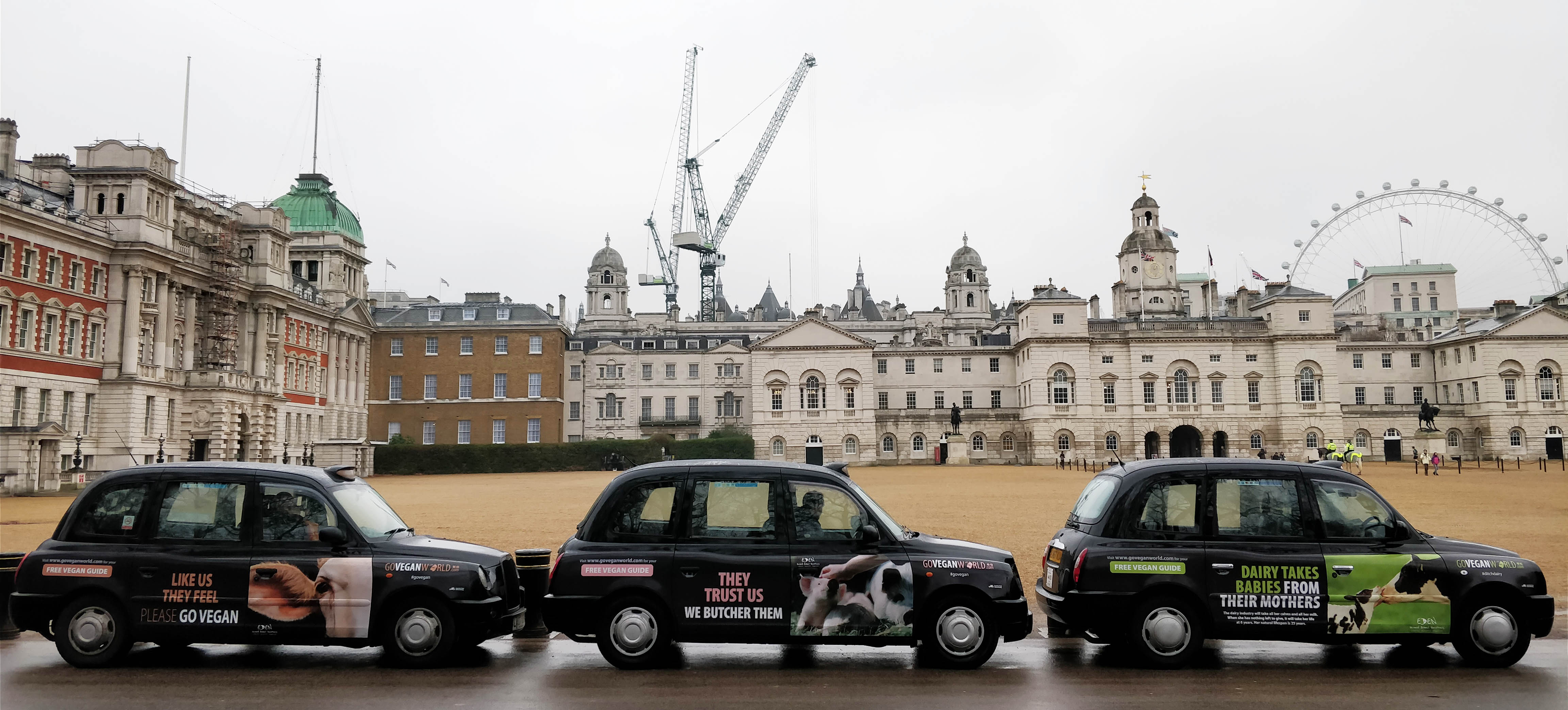
We are currently seeing relatively intense media focus on veganism, but I am worried this is another false dawn. All social movements go through peaks and troughs, and today’s coverage reminds me of what happened in the 1980s and 1990s. It is quite possible we are seeing the beginnings of a repeat cycle. If we are, then we need to learn how to improve our claims-making capacity in response to negative vegan stereotyping.
The 1980s witnessed a huge peak in animal advocacy and interest in the ‘animal issue’. British groups like Animal Aid, founded in 1977, were young and energetic and, in North America, People for the Ethical Treatment of Animals (PeTA) emerged in 1980 as a brash, fresh, champion of other animals. This was at a time when the idea of animal rights – meaning the moral rights of other sentient beings – was being taken more seriously than it is today, and often articulated as rights-based animal rights.
PeTA was a radical grassroots group in the early years, before it morphed into the toxic, racist, sexist, and ableist, welfarist corporation it is now. Tom Regan’s seminal The Case for Animal Rights was fresh off the presses, and things were really buzzing. At one point in England, a journalist (who was ideologically opposed to animal advocacy) estimated that the Animal Liberation Front (ALF) were carrying out around six actions per night. The British Union for the Abolition of Vivisection had been radicalised, and that gave grassroots campaigners throughout Britain access to funds and materials.
Any new generation of social movement participants wants to break with the conventions of the old brigade. As Jake Conroy notes in this recent video about activism in the 1990s, recent 21st century claims about the ‘first ever open rescue’ in the USA, and the ‘largest animal rights march ever,’ ignore the history of the animal rights movement. As regards the latter case, referring to a march in Israel, in 1990 a ‘March for Animals’ in Washington attracted a crowd estimated at between twenty-five and seventy thousand participants. The organisers claimed 55,000, far more than the number who are believed to have taken part in the recent Israeli march.
I acted as a press officer for an animal rights organisation when mass media coverage of animal advocacy shifted in the 1980s. The message got a lot darker. We were getting used to being referred to as ‘animal freedom fighters’, and ‘rescuers’, and weren’t prepared for the ‘terrorist turn’ in mass media characterisation of animal activists. Our reputation wasn’t helped by how the Animal Liberation Front literally ran out of safe homes for liberated other animals. This led to an increase in the incidence of what in those days was called ‘economic sabotage’. Other factors, such as a Mars Bar poisoning hoax, and the development of incendiary devices based on firelighters, which the press invariably called ‘fire bombs’, added to the burden on those doing media interviews.
With the benefit of hindsight it seems to me a smart move for embattled 21st century animal farmers, and the animal user industries in general, to attempt to re-establish a link between animal advocacy and terrorism. I want modern day advocates to be more prepared for the backlash than we were.
The animal user industries will surely attempt to ride on the wave of the current moral panic about terrorism. For example, some farmers have recently claimed to have received ‘death threats’ from ‘militant vegans.’ I notice from reports on social media that farmers have been asked to verify these threats but have failed to do so. Expect dirty from an animal user industry backlash.
For example, Mr. Alan Newberry-Street, the Director of the ‘British Hunting Exhibition’ – a mobile bloodsports display supported by the British Field Sports Society and the Masters of Fox Hounds Association, was jailed for planting a nail bomb under his own vehicle in a bid to discredit the animal movement. At his trial he had the audacity to ask for other similar offences to be taken into consideration.
If the tactic of linking vegans to violence is smart, we need to be smarter. The angry vegan stereotype has already been reventilated on BBC’s Jeremy Vine Show national radio. Playing up to that image, as happened sadly, is naïve and counterproductive. Any explanation as to why vegans may be angry must be couched in a calm manner. Moreover, 21st century activists must avoid joining in with this rhetoric, as some British national animal groups did in the 1980s. Sadly, there is already evidence of this occurring. In my experience paid-up staff in the movement are unlikely to defend grassroots campaigners if negative labels have been successfully attached to their activities in the mass media, however justified and merited such activities may appear.
Drawing on Tom Regan’s ideas (see video above) and a rights-based animal rights approach and a rights-based animal rights approach, I appeal to a new crop of vegan spokespersons, firstly to diversify: there are too manymale voices. Secondly read up on rights-based philosophy in order to respond to the characterisation of veganism as welfare-based. This counters the argument ‘we have the best welfare standards in world’ which all representatives of users industries are likely to throw at you. Welfare standards are not relevant to the rights-based case for animal rights: rights violations are never excused by the regulation of atrocities. Be smart, don’t fall for their traps.
I went in my first chatroom when I was 12. My name was ‘Phoebe’ – she was my favourite friend – and every day after school I rushed to the computer to chat to the other liars in the chatroom who were probably aged 38. It was like stepping into Narnia. One evening I dialled up the Internet, let off some steam (or trolled people) and left the chatroom. I set up a new identity – possibly ‘Rachel’ – and told everyone that I had terrible news. Phoebe had jumped out the window.
It was fun when the sympathies came in, with people so shocked and sorry for the loss of my friend (myself). Rachel left the chatroom, and we never returned, me or myselves. The chatroom was, like Narcos episodes or Easter eggs, too much of a good thing. My life since then has been one chatroom disappearance after another, though the chatrooms have the more benign shape of ‘social media’ and the disappearances are not so dramatic, just the absences you don’t notice when the algorithm wipes people out.
I never cared for networking sites, and Bebo and MySpace seemed to be just culchie hang-outs. Then one day people started using this Orwellian surveillance technique called Facebook. Now, I thought Facebook was the laughing stock of everyone. The Irish, enemies of narcissism, seemed to particularly hate it. Imagine having an online diary all about yourself, putting pictures of yourself online for all the world to see. Imagine being seen to think thoughts about yourself. People jeered, with the glazed look of the captive just before they enter the cult. In around Summer 2007, my friend Francis told me that within twelve months, everyone we knew would have a Facebook page. He eyed me. Everyone. Everyone except me, I promised.
Then you move abroad and Facebook sounds like a good way of keeping in touch with old friends. Also I had the selfie application on my Apple Mac that took gorgeous pictures of the beholder (myself). So I handed Facebook all my personal details and took some gorgeous pictures of me and my flatmate in our new London pad, and posted the hell out of them one restless night. Friend requests came pumping in – it was viral, a friend disease, a cholera outbreak of camaraderie and everyone I’d ever met was stricken. I sat in bed enthralled by kite surfing conventions and weddings in Capri, envy infiltrating my shivering soul so quietly I didn’t even know it was there.
The next night my flatmate knocked on my door.
‘You put pictures of us online in our pajamas.’
It was all about learning, but it was all still very compelling, and I kept stalking people, kept infecting new friends. The picture slideshows were like a beautiful sedative. Evenings, mornings, were thrown away gazing at edited lives and it really didn’t matter. Facebook had rooted out an obsessive strain in my character and I wanted to click and click until I could be absorbed into the screen, indistinct from the digitised friends whose own friends’ lives I was preying on, and then I would just fall asleep. The friends which, by the way, were incongruously arranged. What was Bianca from Spain doing with those idiots from primary school, and my mum’s friend and that new girl at work who seems nice but boring. The whole thing was a fiasco.
I stayed on Facebook about three weeks before trying to disappear. (‘Are you sure?’ They asked when I begged them to unchain me. What makes you so sure? What is your real reason for wanting to leave us? Would you like us to keep your personal information? It doesn’t matter, we’re going to keep your personal information anyway, and have it ready for the moment you come crawling back to us.’) The exit was labyrinthine, I recall, and even after I’d got away one of their men was crouched there waiting to intercept me.
Many humorous articles were written at the time, parodying Facebook and taking issue with what these Californian kids were asking us to do with our ‘friends’. The ‘poke’ was a great source of naughty excitement. Privacy was a real talking point. Anonymity was much pondered as a modern belief system. Trolling, bullying and abuse were not okay. And over the years, Facebook listened to its critics, had some glossy AGMs, cleaned up its act, and created a more softly controlled ‘tool-kit’ for its ‘community’. Even when it recently got caught publishing fake news written by Russian teenagers, Facebook was terribly remorseful. Top nerd Mark Zuckerberg has been compared to Lennie, the giant in Of Mice and Men, for his helplessness in the face of his own power. Doesn’t he hate himself? I don’t know. I am way above Facebook now (aside from borrowing my mum’s password if I need to prey on someone). I went on Twitter.
In an old diary, on ‘June 11th, or 12th, or 13th, probably 13th’, there is written in an angered hand: ‘Miseries, miseries. Today I entered Twitter, or it entered me, penetrating my thoughts and [illegible] and perceptions and thrusting onto me all the familiar friends and famous people I could ever hope to meet in Lillies [Bordello]. Oh the grimness. Most of the evening spent uploading a thumbnail image – what kind of [illegible] crackpot keeps thumbnail images of themselves on computers. Kafkaesque. Like introducing yourself at a dinner party you know you will never get out the door of.’
That was 2012, when there were still names for people who used Twitter, like ‘Twitterati’. Now Twitterati are just people. All of us. There is no special tribe. My first season on Twitter wasn’t a success. I didn’t know how to tweet, or even what a tweet was. Then one day, early in my unprolific and ongoing career in journalism, I wrote an article that struck a goldmine. It must have been about beautiful women or something. Everybody retweeted the hell out of it that fine, salubrious day. I watched my numbers build. Watched that tweet balloon. I was getting fans, influencers on my side. Like the gambler, flush from her first winning horse, I bet higher – wrote more daring tweets, with opinions. And nobody retweeted those. I disappeared, let my Twitter profile die of natural causes and returned to friendlessness.
My late and unlamented LinkedIn presence must have emerged around then, too. I’d been having requests from all my mates – Vincent Browne, David McWilliams, Rosanna Davison, everyone really – to connect with me on LinkedIn. (It took time before I realized that the LinkedIn nerds and losers had a kind of hari-kari click, whereby with one slip of the hand you’d asked everyone you’d ever written an email, including that guy from the hostel in Buenos Aires, to be your peer in business.) So I thought I should make the career move. I spent an afternoon setting up a LinkedIn profile, publishing my work CV, which would surely be fascinating reading for people, and, thus whored to the Western elite, waited for something to happen. I wasn’t head-hunted instantly. The odd message came in, from an old real-life friend, who laughed with me about meeting like this. I never once used LinkedIn. I tried to disappear from it, tried hard to remember old passwords that would let me disappear forever, but LinkedIn is still loafing around the unwanted ‘Social’ section of my Gmail account, sending daily spams, together with its creepy sister Pinterest. Apparently I’m still ‘on’ LinkedIn. I haven’t used it in six years. Bit of a long-shot, eh, LinkedIn losers? Though it regularly tells me that so and so has been admiring my profile and I do get a little bit excited.
Around 2013 I went back on Twitter for a second shot, keen to make it now. The years I spent in shared office spaces, where there were signs in the bathrooms asking office mates to kindly not steal toilet paper, I remember without fondness. Each morning, I would get a coffee and a double chocolate chip muffin and sit at my lair with a bleary kind of ambition. I was going to have a great day. I knew people who forced themselves to write 2000 words before they could open their Twitter machines, but not me, I was way above Twitter. I would go directly, nonchalantly, on Twitter, first thing in the morning, just to show how little it meant to me.
And so I scrolled through the Neoliberally sorted parcels of news. And scrolled, and clicked, and engorged myself with other people’s success, until envy’s poison seeped into my veins again. I felt awed, embittered, and then, something I couldn’t put a finger on, something uncomfortable. Something that made me want to throw a few hardbacks out the window, or worse. Anger. I felt a great, blood-letting anger. And by the time the double chocolate chip muffin and the coffee had worn off and my little Twitter profile was still little, I felt as good as dead.
Depression usually enters a person through an unconventional route. Not directly through consciousness, more through the back of the heart, and in around the stomach, through the legs, gently paralyzing them. I watched an old friend become ultra-famous on Twitter, and I think in real life – there’s no difference now. I conversed with him publicly on Twitter thinking – I’m not doing this for show, not to gain followers, not me. I watched as media storms blew up, over terrorist attacks or sexism or people captured and tortured by terrorist groups themselves formed by Twitter and Facebook; threw in some hashtags and lent support to causes that made me look pretty good, as a bonus. I watched as my ultra-famous friend wiped out thousands of followers one night. Just deleted us. Apparently it’s something you do when you get ‘there’, so that more people are following you than you are them, and I was lost in his genocide.
It came to me one day. The backslapping lie of the whole thing. People only say nice things about other people with their names in the tweet, in order to get a mega retweet out of it and an orgiastic public massage. (@famousfriend. I can’t thank @famousjournalist enough for her amazing article about me in which I talk about @influentialfamousfriend. I love you all so much. #mybook. Blah.) It looks nice to be nice. Who doesn’t like niceness, when there are all those terrible trolls to contend with! And it also wins you retweets, when the person retweets the nice thing said about them. Niceness makes you a really big deal. So I said nice things about other people with their names linked into the tweet, in order to get a mega retweet out of it and an orgiastic public massage.
How then do you even write an incredibly successful tweet? This was the next great challenge of my career. There were just 140 characters to hang your reputation on, those days. I’m sure they teach that at journalism college now but I had to learn it alone.
When there was an article to plug, a ware to sell, that was easy. You just sent the link out to do your dirty work. But when I just wanted to tweet about something on an ordinary day – when I just wanted to be a natural, loveable wit. That could take hours. No matter how ingenious the idea, how hysterically funny the sentiment, how neat the observation, how succinct my little aphorism really sounded, it always ran over those 140 characters into the dead zone of untweetable words. (‘Your Tweet is too long. You have to be smarter,’ Twitter told me once. I think they’ve changed that auto setting – like Facebook, they’ve grown up, become nice young men.) Sometimes, seeing my tweet sit there unliked, or seeing one or two charity likes under it, I simply had to delete the wretched thing – had to proverbially ball up the opus that hadn’t gone beyond the first draft. There were all too many of those. The ignominy of my tweets! My career was not blossoming, my articles not grandly shared – and by the way, every year I got hit by the mother and father of a tax bill. Journalism, on Twitter, was a stupid existence.
I quit the Twitter machine in December 2016. That’s when I went heavy on WhatsApp.
WhatsApp led me back to something like the good old days in the chatrooms. It was just hanging out, with your closest friends instead of bots and strangers. And, you could post cute pictures for free. You could barrage close friends with cute pictures. Nobody would not find these pictures cute. Nobody would desert their friends. (‘X left’ in small font was your shame to live with if you tried.) You could keep in touch with your friends abroad, for free. You could make a plan for a night out together, and then change the plan, for a night out that never happened, then comment convivially on the night that never happened, then set up another group for a night that will never happen, as the group ‘Nite on the Tiles!’ sinks lower and lower into the graveyard of groups – down with ‘Table Quiz Larks’ and ‘Summer Swims’ and ‘Trip to Tayto Park?’
I liked WhatsApp. Liked how the popularity contest wasn’t numerically driven, how we were all equals. Liked the dopamine punch-up when you threw something really successful, and nobody didn’t comment. Liked the crying-laughing emoji, the dancing girl emoji, pressing my finger on the crying-laughing emoji so you got a whole paragraph of them, just to show how heartbreakingly LOL all this was. I liked to see that such and such was ‘typing’ – I was glued to that. With one friend, we were both ‘typing’ so much, so cleverly, I felt sure our dialogues would be optioned for a major motion picture. I loved to share pictures. Any pictures, of any of the fabulous things I was doing in this efflorescence of my digital life – Campari cocktails at home, the beaches of Santorini, my little newborn’s first bath. WhatsApp was so safe. There were protocols, but of course. Some memes were not acceptable in the wider WhatsApp community, and silence was the loudest comment of all. But WhatsApp was a wonderful place to spend the evenings. I had events to look forward to: birthdays of people I didn’t like; Christmas parties planned years in advance; expensive lunches. I felt what I had been missing all that time on Twitter. I felt massaged. WhatsApp brought me and my friends so much closer together.
And every waking minute was dedicated to catching up with the latest hilarious chat. There was a feel of unreality to the ever warm, congratulatory tones of WhatsApp. There were no trolls here, just the opposite of trolls – friends. Who, despite all the groups that kept multiplying, I didn’t actually ever see. I wanted something real. I wanted at least a good trolling. It was sitting by the fire one night with my family, shooting off sneaky WhatsApp replies between Snakes and Ladders moves, that I saw how antisocial social media is. Facebook, Twitter, WhatsApp, barbaric dating sites – they’re all free but we’re prisoners. Like the fawns of Narnia, they gave us the sweets, then had us frozen in pretendy-world.
One day on the bus I was about to catch up with the latest hilarious WhatsApp chat but instead I pressed delete on the WhatsApp icon. Now everyone is gone.
I still check my emails 248 times a day, so that’s social. And the Internet keeps my pancake brain nice and flat, so I want for nothing in terms of intellectual decline and death. As for personal validation, I can always be Peeping Tom via my mum’s Facebook password. So when this article goes out, it better be liked.
Maggie Armstrong is the fiction editor of Cassandra Voices. Her short story ‘My Space‘ appeared in the last edition.
“What face?” I said again. I wanted to help. I wanted more wine.
My flare-ups, real and imagined, may be related to all the drinking I do now. I think I drink every day, which seems shocking, until I try to conceive of getting through a whole day without drinking, which seems unfeasable. I handed Rebecca a glass.
“What face?” – for the fourth time. She kicked out her legs and threw her eyes to the ceiling, as though channeling spirits.
“The face you make when you go out,” she said. “The face that says you’re open for business. You were doing the face tonight. You made the face at every hot little thing who looked at you. You weren’t even discriminating. And don’t think this is me being jealous of them. I’m jealous of you. I used to make the face. But now I’m so fucking besotted and into you that I’m nothing. You’ve stolen my fucking wind. I don’t even exist anymore. You exist, and I don’t, so why don’t you go and exist and I’ll stay here in the void.”
The opera of it!
“Don’t find me amusing,” she said. “Just don’t.”
I thought to myself, be grave … and giggled. (Sometimes I giggle like a little girl. As I get older and more ogre-like the disjunct is starting to reek.) I took a breath, straightened my mouth to a slit. “You’re not nothing,” I said. Not in the way that the volume of wine in our glasses essentially counted as nothing. Experience told me that we’d be awake for two to four hours before we achieved a resolution to Rebecca’s face problem, or to whatever problem lay beneath the face problem, the face problem surely being only one tiny tile in the rich mosaic of her current problems. A bottle’s worth of problems. I wanted more wine. Should I go to the Indian on the corner? What was I saying?
“There’s another bottle in the fridge,” said Rebecca.
I subsided into the couch, my heart large with love. The wine could wait! I smothered Rebecca in kisses and endearments until she pushed me away.
“But how do I know that you love me?” she said. “I mean, where is it, this love?” She looked behind a cushion, under her feet. “And if I can’t make the fucking face, why can you make the fucking face if you’re so fucking besotted with me?”
She gets a potty mouth on her when she’s spoiling for a fight.
“I don’t know how you know,” I said. “When a relationship has lasted a while you just have to have faith that the love is there until you have proof that it isn’t.”
Rebecca doubled over and pretended to gag on the the word “relationship”. It occurred to me that I’d probably said that sentence before, possibly those exact words, and that she’d pretended to gag before as well. A certain level of self-parody was inevitable at this advanced stage of courtship, I told myself. Be sanguine. Do not despair. Have another drink.
Now she was crying. I stroked her between her shoulder blades. She mumbled. I asked her to repeat herself. She mumbled again, but I still couldn’t catch it, so I said loudly, “Baby, I’m sorry, I don’t know what you’re saying.”
“I said I don’t know what’s wrong with me!” she screamed.
Neither did I. There were too many possibilities. It could be work. I don’t really know what her work day is like, even though that’s where she spends the largest portion of her waking life. There’s a category in my brain for other people’s work lives, a purgatorial, limbo-like space into which they simply disappear for a set number of hours per day. As far as I’m concerned nothing of real consequence happens in work limbo (because nothing of real consequence happens where I work, except for counting the falling sand grains). Maybe she was being bullied in work? Maybe she had no work friends, and felt terribly isolated? Maybe it was the aggregate of stressors (and sand grains) that come with every job, beginning with getting out of bed in the morning?
Or maybe it was sex. Rebecca worries about sex all the time. She worries we don’t have sex often enough, worries that she doesn’t masturbate enough, doesn’t watch porn enough, doesn’t discuss sex enough, hasn’t slept with enough people, hasn’t seen and felt and sucked enough cocks, doesn’t really understand how to make other women orgasm, isn’t attractive enough, isn’t attracted to enough. She worries that her tits are falling. She worries that men sometimes reduce her to a talking pair of tits, and she worries that they don’t do it as much as in the good old days.
The temptation was to be chemically reductive and point out that we’d taken a variety of drugs for three days straight last weekend and had since been drinking even more heavily than usual to relieve the fear and the shakes and the vertigo. It’s just the drugs, I was going to tell her. And what if we are just the drugs and the drink? If you’re chemically altered all the time then isn’t altered the authentic ground of your being?
She had another problem now, because I resented her for involving me in her impossible sadness. I pulled myself into the farthest corner of the sofa and imagined being alone and free. Except I wasn’t alone in my imagination. Women softened the edges. There was a girl who’d been down at the festival with us during that three day binge, and there was another girl I kept seeing at the Shaw, a really sparky looking creature, probably a graphic designer or a photographer or something. She looked like she’d seriously consider a threesome.
My imagination, in other words, is a lazy moron, and didn’t bother filling in the girls beyond a few physical incidentals, this one’s bum, that one’s smile, so really I was on my own in the fantasy. Then I imagined life without Rebecca’s love. I would crawl through the limbo of a working day and then crawl home to a human rights violation of a one-bed flat, and I would drink endless cans of cheap beer instead of delicious relationship wine, and bunker down in a fortress of cans and porn and pizzas, and my remaining hair would succumb to scurvy, and I would see the promise of salvation in every new half-pretty creature, and I would throw myself at them with a frenzied (exhausted) air of lust and lovelessness.
“You should leave me,” said Rebecca.
“What?”
“I’m a nightmare. You should go and be free. You’d be happy if you were free.”
“No, I wouldn’t.”
“Yes, you would, you just never have been.”
“Bollocks. I’ve been free.”
“No, you haven’t. You’ve always had a girlfriend. It’s pathetic.”
“If I wanted to be alone I could be alone, I just don’t want –”
“Why are you so angry with me?”
“I’m not.”
“You are. You get so angry with me so quickly now.”
“I’m not angry.”
“I wish you’d stop being angry and just hit me.”
“You don’t want me to hit you.”
“I want to feel something!”
The possibility of violence squatted between us like a crocodile. Three feet of sofa cushion separated us, and I had to consciously engage all my muscles, a patient coming out of anaesthesia, to move across them and kneel above Rebecca. We stared hard at each other. Then I drew back my fist sharply, and she flinched and covered her face.
“No you don’t,” I said, and got off the couch to refill my glass.
I felt like I’d scored an important point with this demonstration, and tossed back my wine victoriously. It caught in my throat and I coughed. You can’t toss back wine.
The fundamental problem was that nothing bad had ever happened to Rebecca. Nothing bad could happen to people like us, in the world we lived in. It was just the drugs, the alcohol, the emotional incontinence. I was telling her this when a glass exploded beside my face.
Rebecca had hoisted herself up on the arm of the couch, her eyes all white like Goya’s Saturn. I felt a wet spot on my forehead and for a second thrilled to the notion that she had drawn blood. But it was just a splash of wine.
“You missed,” I said.
Rebecca launched herself from the couch with startling speed and landed a flurry of slaps and thumps on my shoulders and arms. I swatted most of them away and asked her to calm down. “You’ll only hurt yourself, baby, ” I said. She took a step back, gathered all of her detestation of me into her knuckly right fist, and smashed it into the side of my head. “Wow,” I said, cupping my ear. My vision swam blackly. She panted before me, her fingers still curled.
“Fight back!” she said. But I was so tired all of a sudden. It was three in the morning. The adrenaline of the fight was already souring. I shook my ringing head, backed away from her, and climbed the stairs.
What are you going to do about it, I asked myself as I took off my clothes. What are you going to do about it, as I got under the covers and laid my head on the pillow. What are you going to do about it, as I waited for the real girl to come up from the sitting room to terrorise me, and the nightmare girls to come up from my unconscious to smother me.
The nightmares had enveloped me the previous three nights, decomposing girls who pulled me into dark rooms and wrapped their rotting arms around my face. When I closed my eyes now they swam out of the blackness, and brought their rotting mouths towards mine to suck the air out of my lungs. My unconscious is a very literal spinner of symbols. He’s also a fucking charlatan. The girls didn’t look like Rebecca, or previous girlfriends, or my mother, or my manager, or anyone who might by usefully symbolized. They were just debt-collecting heavies sent by the drug fairy. I sank into the oily darkness and felt one of them at my back, tugging me. But it was only my lover.
“Forgive me.”
“What?”
“You have to forgive me.”
I rolled away from her. She was poking me in the shoulder, and I don’t think any human touch has ever been so abhorrant.
“Forgive me!” she said.
“All right, yes, you’re forgiven.”
“You have to mean it.”
“Jesus fucking Christ, I mean it, you’re forgiven, let me sleep.”
“You don’t mean it,” she whispered.
“You’re forgiven, okay? Now just let me go back to sleep.”
“No, I want you to talk to me.”
Roiling black fury swept away all higher mental processes like a hurricane through a hedge school. I didn’t have to talk. She poked me again and said, “Say something!” I threw the covers back and jumped out of bed.
“What are you doing?” she said, as I pulled on my boxers. “I’m leaving,” I said, spinning around the room looking for my jeans. My eyeballs throbbed and my vision was streaked and spotted (it felt like geysers of blood spurting from my brain). We grabbed my jeans off the floor at the same time, and as I tried to jab a foot through the waist she yanked on the legs. I stumbled backwards out of the jeans, bounced off the bed to right myself, and then tried to push past her to get out of the room.
“Don’t leave me!” she said, her voice high and hysterical.
“I’m not leaving you,” I said (I shouted), “I’m just getting out of this house.”
“Please don’t leave me,” she said (she cried). She had my right arm clasped between her hands. “Please, please don’t go,” she said, pulling my arm to her face, wetting my wrist with her tears. “Why won’t you just hit me?” she said.
I cradled her head in my hands like a coconut, or a melon, a beloved melon. Her eyes were moist and achingly blue in the light cast by a heavy wrought iron lamp we bought (she bought) at an antiques market one Sunday morning. One of those Sunday mornings. I could split her skull right down the middle with the butt of this lamp. I felt no scruples or squeamishness about the possibility of doing so. But I already knew what was inside. If I split it open no surprises would spill out.
Simon Ashe-Browne is a writer and script editor. His novel Nothing Human Left won the Dundee International Book Prize in 2011.
What a beautiful day to be a nihilist. The sun
shatters like a wine glass on the sheer ocean.
Someone is stretching a canvas on the patio.
Little blue flowers whose names I will never know
sprout up in the grass, crickets trill,
an empty crab shell contemplates existence on the window sill—
the compost bin exudes its sweet
ammoniac rot.
Down in the surf,
small children scream their heads off.
Christopher Robinson is a novelist, poet, and futurist. He is the co-author, with Gavin Kovite, ofWaroftheEncyclop aedists (Scribner, May 2015), which received glowing reviews in the New York Times and the Wall Street Journal. He lives in Seattle with his partner, Amanda Knox, who pushes him daily to be more empathic.
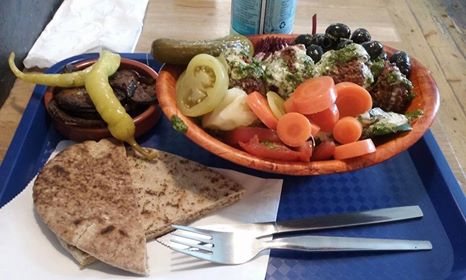
It is thirty years since I consumed my last drop of milk and the food scene for vegans in Ireland has changed considerably in that time. Back then options for eating out were fairly limited, although there were always a few vegetarian places along with Indian, Italian and Chinese restaurants that could easily cater for me. This article will provide a snapshot of established businesses, operating from fixed premises, in the south and west of Ireland, which I regularly visited.
I only review restaurants that do not serve meat, so all are either vegetarian or vegan. It is by no means exhaustive, and I invite readers to contact me with updates so I can try out more options country-wide and provide further details for future pieces. Before I get started I’d like to draw attention to the wonderful resource of a nation-wide database of Irish eateries set up by the Irish Vegans group some years ago. It is regularly updated and available at this address: http://irishvegan.ie/eating-out/. This is a volunteer effort so you could consider becoming a contributor too. It works best as a community forum. Reviews can also subsequently be contributed to the Happy Cow website and TripAdvisor so that overseas visitors who might be unfamiliar with the Irish database have other sources of information.
Being from Cork and working in Galway, I get to pass along the western corridor a lot so I try to take in towns and cities along the way such as Ennis and Limerick. I also occasionally find myself in Dublin. So in order to avoid capital discourse, I’ll start with Galway which has two vegetarian places: the Lighthouse Café and TGO Falafel.
The charming Lighthouse Café is on Upper Abbeygate St. and has been open for several years. It serves a full menu and also does takeaways, including cakes. It has hearty options such as a daily soup, hotpot served with rice and salad, a burger with gluten free options, hummus and salad. There are several desserts and they have an array of plant milks for teas and coffees. If you are planning to go for lunch, however, you have to get their early as it fills up fast.
Lighthouse Cafe, Galway
TGO Falafel started with a stall in the Saturday market where it thrived on its falafel and hummus offerings. It now trades from a premises on Mary Street, where it not only serves Middle Eastern comestibles but also has added popular dishes such as Indonesian gado gado, tempeh and curries. Their aubergine is to die for. They have a mezze plate for two which is enormous, and delicious. They also offer dessert, which is made by Bliss Bites Bakery, a popular raw vegan bakery. Again, TGOs has limited seating, all of which is upstairs.
TGO Falafel, Galway
Heading southwards on the M18, Ennis is about an hour from Galway. Awaiting you there is Peckish Café in a pedestrianised part of town very close to the centre. The owner also has two adjacent shops called Meanwell, one of which is a health food store with some exotic items I have not seen elsewhere (such as spelt wraps and unfamiliar vegan cheeses from the UK), as well as a fruit and vegetables shop. They also stock dried goods such as pulses and grains, in bulk with minimal packaging, and you can fill up containers there, saving on plastic.
Peckish Café has been open for nearly two years and is positively thriving. It is spacious with both tables and sofas. The Clare Vegans meetup group get together there most Saturday afternoons for a late lunch or coffee and dessert. They have a fairly extensive menu with a wide range of ethnic dishes such as Asian pancakes – a personal favourite – and Mexican quesadillas with vegan cheese. They also have daily specials and lots of desserts: both raw and baked. Not being a tea drinker I can only vouch for the coffee served with a range of plant milk options.
Peckish Cafe, Ennis
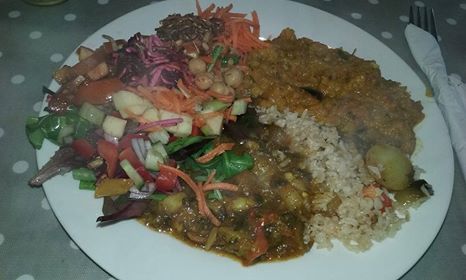
Next on this southward route is Limerick city, and I often get off the motorway between the City of Tribes and Cork especially for the city’s vegan options. First port of call is the Grove on Cecil St, a small restaurant with big flavours, open Monday to Friday from 9.30 to 4. For vegans there is a really tasty nut burger and generally a dal or curry, all served with hot vegetables, rice and a range of salads with a sprinkling of toasted seeds, often with tamari. They pay great attention to detail, for instance: I still fondly recall a rich tomato salad infused with basil and dressed with balsamic vinegar. Even though I usually order several salads, the flavour from each one on my plate is generally distinctive and memorable. The portions are generous and there are also desserts. But generally I am so full up I don’t indulge! The Grove is quite small and sells out fairly early so if you want to get in for lunch, do not tarry.
Grove Cafe, Limerick
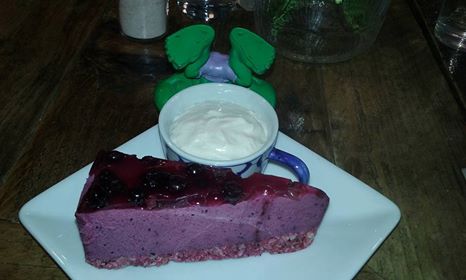
The next stop in Limerick for vegans is the Old Fire Station which is a vegetarian restaurant with many vegan options open some nights of the week. Their main courses are really delicious, but their vegan cakes are the real stand out. These are traditionally baked cakes, which is a welcome relief from a growing obsession with reducing carbohydrates and championing fats and proteins instead. The purpose of cake can sometimes get lost. In my book they are there to bring pleasure! The Old Fire Station never disappoints, and I’ve enjoyed both their lemon and chocolate cake that most people would never guess were vegan.
Limerick will soon welcome the Underdog, a new vegan café and restaurant that is about to open up. One more reason to bypass the motorway on my travels.
My only quibble with most of the eateries above is that they rarely stock vegan cream. I cannot comprehend why they stock vegan cake and offer either dairy cream or nothing at all. Vegan cake without vegan cream feels austere and hardly worth the inevitable calories. I’ve asked repeatedly in the Lighthouse over the years and got nowhere, and Peckish, the all vegan café is often out of it, even though they have a shop across the road. Bizarre! If vegetarians get more than me then I want a euro off! Or they might even offer custard (but not yogurt – it’s not sweet enough).
In the next installment I’ll give an overview of the vegan scene in Cork and hope to show that Ireland is a very good place to be a vegan right now, and it is only likely to improve.
Automation in a variety of sectors could liberate millions from mind-numbing labour. But despite technological advances workers’ earnings have stagnated since the 1990s, while the rich have grown seriously richer, as we face an unemployment cliff. A powerful remedy to the impending obsolescence of many types of work, and grotesque inequality, could be the introduction of universal basic income. This would provide an unconditional payment to every citizen sufficient to avert poverty, providing an opportunity for individual flourishing, to the ultimate benefit of society. Another appropriate response would be for the law to require all companies to register a defined social purpose, beyond simply the exploitation of opportunity for profit. That way the dynamism of entrepreneurship might be harnessed for the common good.
With irresistible force the alien sound of an alarm bleeds into my dreamscape. A hand shoots out clumsily in search of the offending contraption – an aged radio alarm clock spilling the flotsam and jetsam of morning news. Woe is this man on a chilly January morning in Dublin! Then silence, as a finger brings a relieving click to the harangues.
I hide in the womb of my duvet, cowering before the frigid lash of cold air beyond the covers. Plea bargaining begins in earnest: ‘Another hour or two won’t make a difference’; ‘You aren’t productive in the morning anyway’; until finally the imperial self asserts: ‘To hell with this, I am going back to sleep’.
In response my whole being softens at the unexpected leniency, eyelids resume a stately repose, the pulse slows, and agitation of thought gives way to a free roaming imagination in slumber.
I have been resisting proverbial alarm clocks all my life, whether calling me to school, employment or binding exercise regime. I bridle – like other independent-minded people I know – at outside agencies determining my hours of sleep.
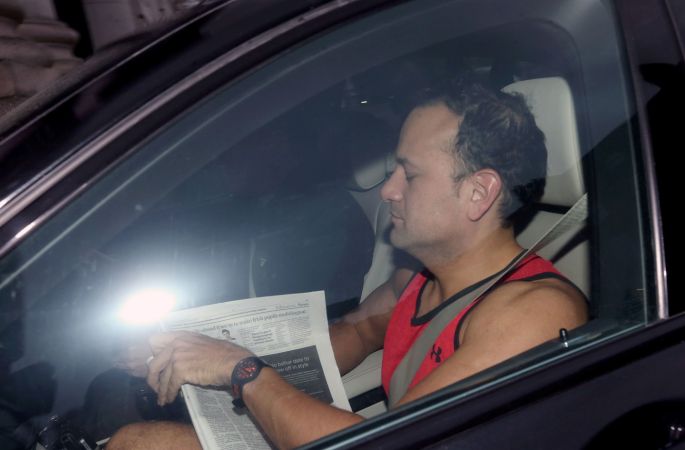
Last year, I was put on my mettle when I heard Leo Varadkar’s glib announcement on taking office that he wanted to be a Taoiseach for early risers. Like those guardians of the Ancient Roman Republic I sensed a Rubicon being crossed into my home territory by a recalcitrant general. The battle between dream and reality had been joined, and I would carry the Late Risers’ Manifesto into the affray.
It is out of stillness – not forcing our thoughts – that creation emerges. Silently, we assemble meaning, deconstruct artifice and forge originality. Brother David Steindl-Rast puts it thus: ‘Communication out of silence is true communication. All else is chitchat.’
I imagine internal remonstrances are not entertained in the intimacy of Leo Varadkar’s chamber. Excuses for softness, or indulgence of loitering are given short shrift. More likely: ‘Where is my singlet? I need to look sharp for the weekly vlog.’ He wastes no time on idle speculation, vacant imagination is held in check. The ephemera of newscast is devoured. Now attendants are called for. Primed for purpose – carpe diem – he seizes the day.
From workout to workday: the life and times of Taoiseach Varadkar. Photograph: Laura Hutton/PA Wire, https://www.irishtimes.com/polopoly_fs/1.3315569.1512416086!/image/image.jpg_gen/derivatives/landscape_685/image.jpg
II
Leo styles himself a liberal, preferring the state to leave the individual alone, a commendable notion for many situations, but not so where this allows accumulation of vast wealth by a small minority. Economic liberalism is predicated on a shaky assumption that success, measured in money, sex or fame, derives from a single-minded focus on hard work. Such fortune cookie philosophy would explain his veneration for the alarm clock, and attention to scapegoating ‘welfare cheats’ while a minister.
It’s a grand delusion that early rising and hard work make dreams a reality, at its extreme recalling the banner greeting Auschwitz inmates: arbeit met frei ,‘work will set you free’. A devotion to labour for its own sake is misplaced: it can have the effect of dulling the mind.
Adam Smith, the father of modern economics, asserted that the tedium of monotonous industrial tasks would render anyone ‘stupid and narrow-minded’; maintaining that the torpor of repetitive labour renders an individual incapable ‘of relishing or bearing a part in rational conversation’, or ‘conceiving generous, noble or tender sentiment’. He asserted that this would come in the way of ‘any just judgment concerning even the ordinary duties of private life.’
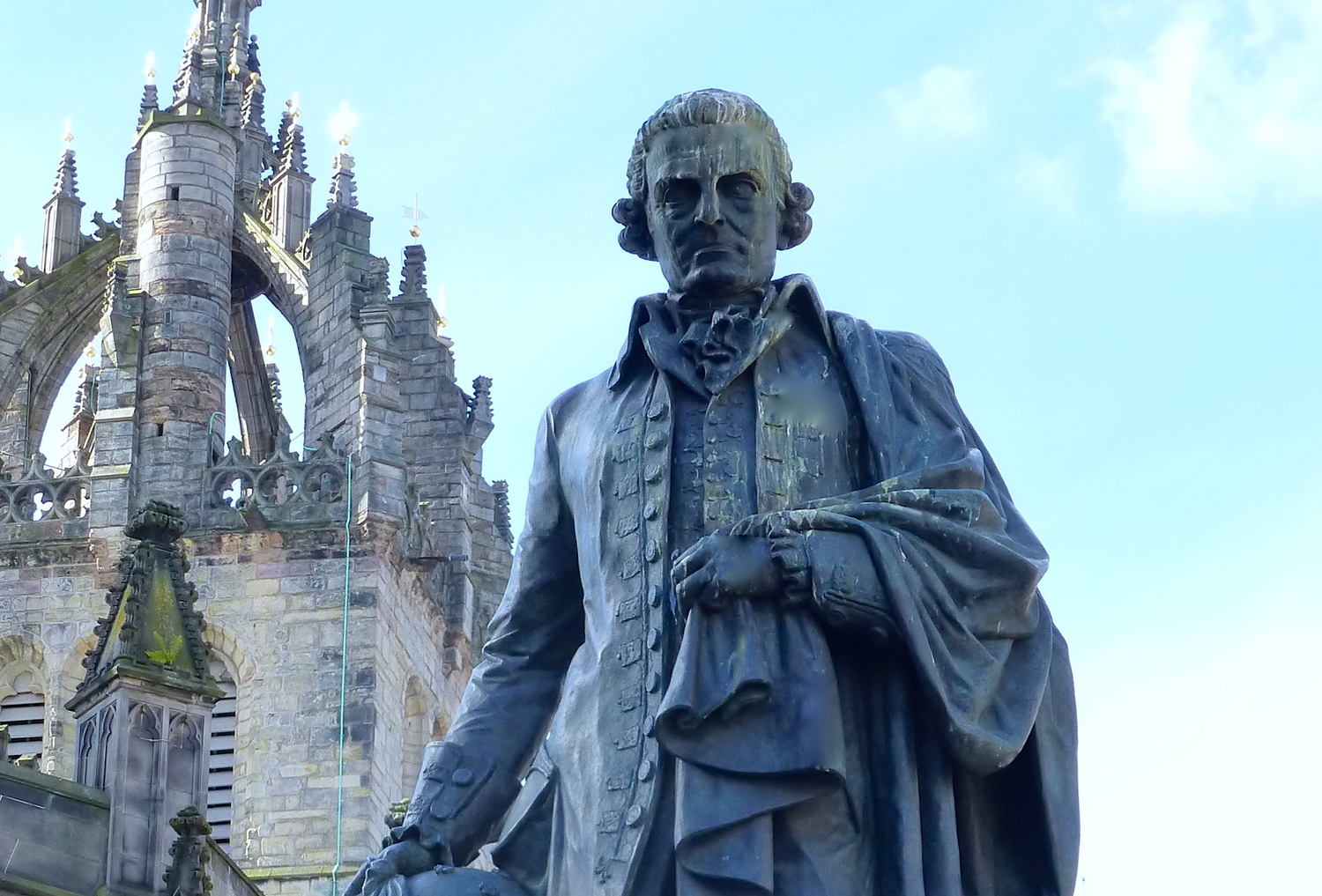
The Adam Smith Monument in Edinburgh.
Over the course of the last century especially, workers, including those engaged in monotonous ‘unskilled’ work, joined forces to win a series of improvements to their conditions. These included ample leisure time, giving scope for many among the proletariat to enjoy a reasonable standard of living. This permitted recreation along with access to higher education, a decent life followed for most of us in Western Europe. The decades after World War II are known as Les Trente Glorieuses in France and Il Miracolo Economico in Italy, as salaries kept pace with labour productivity. In large part this was down to the political clout of the Left, including Communist parties.
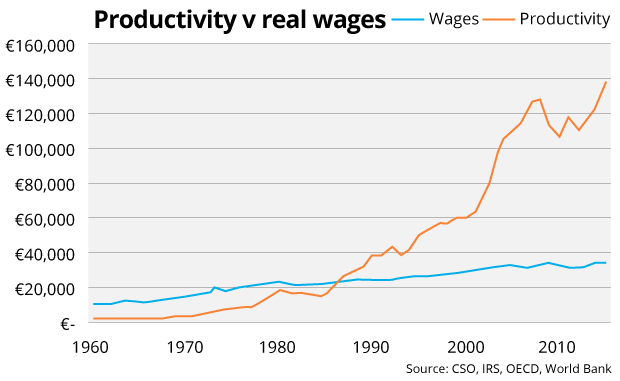
But these developments have given way to what is widely regarded as a Neoliberal Order. Since the 1990s real wages have stagnated, while private, and often public, debts have spiralled, with the wealth of a few expanding grotesquely. Tellingly, whereas in the 1950s the CEO of General Motors, then the model of a successful US business, was paid 135 times more than assembly-line workers, fifty years later the CEO of Walmart earned 1,500 times as much as an ordinary employee. Essentially, efficiencies enabled by new technologies are enriching those at the apex of corporations.
Unions, which were vital for bringing workers’ rights, are now in retreat. Those that remain often only represent employees in privileged positions. A chasm below an unemployment cliff looms in front of us, with little opposition to the new world order.
III
These developments are a feature of a technological revolution, especially in communications with the advent of the Internet, which is shattering a short-lived, post-Cold War consensus, and shifting the economic substrate. Moreover, the world wide web has rendered words, video and music virtually uncommodifiable, wreaking havoc upon the livelihoods of independent-minded writers, musicians and others artists, who struggle to share fresh approaches to life.
Automation looms in a host of industries which will further enhance ‘labour productivity’, at the expense of labour, and to the benefit of capital. The graphic below illustrates what has occurred in Ireland since the 1960s: from the 1990s productivity ceased to be passed on to workers.
Irish productivity per worker v. real wages since 1960. Source: https://www.irishtimes.com/opinion/david-mcwilliams-why-ireland-s-growing-economy-isn-t-making-you-richer-1.3327231
Our present disorder is comparable to the expansion of the Roman Republic in the first century BCE, when territories to the West and East fell to generals such as Caesar, Pompey and Crassus. These charismatic consuls pillaged unprecedented loot, bringing enormous prestige and popularity that led to an oligarchic triumvirate. This gave way to the Roman Empire in 49BCE, under Julius Caesar.
Today, we have our own benign despots of Big Data, whose loot would make an emperor blush. Their algorithms convey us from purchase to purchase, intruding ever more into our inner-most thoughts. Most worryingly, the independence of voting intentions are being severely undermined by sophisticated (anti-) social media devices.
At the outset of a dizzying technological revolution a small number of individuals wield unaccountable power, and as time passes the freedom of the Internet recedes. Just as the Celtic tribes of Gaul cowered before the ingenuity of Roman legions, structures of democratic government – states and transnational bodies – melt before the tortoise formations of the corporations, and their often solipsistic commanders. Of whom it might be said:
The sense that he was greater than his kind
Had struck, methinks, his eagle spirit blind
By gazing on its own exceeding light[i]
As in another age where the value of men was assigned in conquest, a capacity to appeal to a wide public with a new Internet tool, whether useful or not, has brought mind-boggling fortunes to the founders and shareholders of Google, Facebook, Instagram and the rest. There are few safeguards against truly villainous characters concentrating unassailable political power through vast fortunes. The descent of the Roman Empire into corruption and excess should be a warning.
Just as Johannes Gutenberg was buried in an unmarked grave while others profited from his invention of the printing press, opportunism rather than ingenuity tends to be rewarded under current economic structures; as with the phenomenon of Trump, who recalls the fiddling Emperor Nero himself. This acknowledged master of the soundbite is the product of inherited wealth, and the redoubtable political nous of Steve Bannon, who recognised the impending obsolescence of the American worker.
One such, Leo Varadkar, offers no opposition to the current order. Indeed, he unashamedly promotes dominant corporations in Ireland, through low, or non-existent, corporation taxation, which has long been justified by narrow national self-interest. We had an ‘Ireland First’ doctrine here long before Trump invented America’s.
The Irish state has been reduced to the role of croupier at a casino table where the super-rich trouser their winnings without being required to even tip the attendants. So obsequious is the Irish government that the award of an enormous windfall to the exchequer of the Apple tax bill is being resisted: ‘Would sir like to cash his chips in now or later?’.
IV
The impending obsolescence of much unskilled work may provide an opportunity for a fuller flourishing of homo sapiens. Liberation from tedious tasks, such as driving and manufacturing, should provide scope for the development of the “generous, noble and tender” sentiments referred to by Adam Smith. These resources may be shared with the Global South in time.
A powerful remedy to our present inequalities would be for wealthy federations such as Europe and the United States to introduce a guarantee of universal basic income: an unconditional payment sufficient for every citizen to avoid poverty. It could offer an opportunity for individual fulfillment in various domains, ultimately to the benefit to society. This would require, however, most states to improve educational and cultural facilities, which can be financed by effective taxation of assets, and simplification of codes.
An often parasitic financial industry must be regulated and taxed effectively, while the sustenance of life: especially a roof over one’s head, nutritious food, and public transport, must all become affordable; if not the cheap air travel to which we have grown accustomed. In many respects a Communist ideal, but with the major difference that the originality and drive of the entrepreneur should be harnessed
The Financial Crisis of the past decade originated in failings within the banking system, unconnected to what were, in fact, increasing efficiencies simultaneously occurring in the real economy. Rethinking economics in its wake involves questioning theoretical limitations on fiscal stimuli. The value we ascribe money currency is a product of the human imagination, and governments possess a singular capacity to generate more of it through expenditure.
Recent experience indicates that it is possible to expand the supply of money through our fiat currencies, without generating inflation. Thus austerity measures, which generally affect the poorest disproportionately are generally both unnecessary, and counter-productive. Optimum allocation of government resources should involve a weighting towards provision of basic necessities, which usually sees money being spent within a local economy.
Aligning policy to the basic needs of the population should be the role of democratic government, but this is often derailed by special interests. Socio-economic rights can be enshrined in European treaties so as to avoid a repeat of the disgraceful impoverishment of ordinary Greek people during the Crisis. But government expenditure must avoid the rampant inefficiency and careerism often found in the state sector, where people often stay in jobs out of fear.
The great error, and folly, of ‘Bannonism’, which Trump seized on for his peculiar policy of ‘America first’, is to assume that nation-states, even one the size of America, can mount barriers insulating them from the rest of the world. The racist idea of a chosen people singularly entitled to the good life is the source of much of the conflict in this world. We may respond positively to collective identities derived from mythology and literature, but these are imaginary concepts and ought to be acknowledged as such, rather than merged nonsensically with notions of biological inheritance. We are one people.
That’s my Steve.
V
One objection to the idea of basic income might stem from a pessimistic assessment that if not spurred by a need to work, homo sapiens will indulge his vices, especially excessive consumption of drugs and alcohol. Yet it is apparent that the oblivion of intoxication is associated with the end of the working week in jobs that do not inspire. It is also apparent that a sense of worthlessness generates excess, often self-destructive.
A legal right to economic security would take much of the fear, and even boredom, out of life, while affording the possibility for many to follow their dreams. The pursuit of money as an end in itself, is a lust for power held in common with the warlords of yore. Such moguls are a rare breed requiring containment (who in their right mind would have the motivation to become a billionaire?), and perhaps even compassion.
Naturally, many of us enjoy the regularity and community of daily work. That is nothing to be ashamed of, and there are numerous roles which will survive the technological onslaught, preserving the satisfaction derived from tasks well done. Home-makers, farmers, carers, and teachers of all kinds will always be required. The pleasure of craftsmanship and joint enterprise can be enhanced, so as to generate greater pride in work. Goods produced in an ethical and sustainable manner should be encouraged through targeted subsidisation aimed at reducing waste.
Technology professionals are particularly prized in our economy, and their continued usefulness is assured. Many wish to devote their talents towards altruistic goals, rather than work for vampire corporations, which exploit people and the Earth. The model of the open source linux operating system – such I avail of in this programme as I write – shows how a spirit of cooperation endures to make technology a collective resource.
We might also contemplate a radical shift in company law. The inherent danger of profit-seeking corporations was once widely recognised. Thus, between 1720 and 1825 it was a criminal offence to start a company in England, during a period of rapid economic expansion. In the United States until the nineteenth century there were two competing ideas regarding the purpose of companies: the first involved those with charters restricted to the pursuit of objectives in the public interest, such as canal building; the other regime issued charters of a general character, allowing companies to engage in whatever business proved profitable.
The latter category emerged triumphant, divorced from responsibility to fellow citizens, and often a unaccountable abstraction with separate legal personality. By altering the nature of the company under law we may continue to harness the thrusting energy of entrepreneurship for positive ends.
Acquisition of wealth is not the be-all and end-all for most of us, especially if basic needs are met. But we may still have a real dedication to what we do. Changes in company law requiring any company to have a public interest purpose contained in its articles and memoranda of association could prove hugely beneficial.
VI
Human creativity is manifest in a wide variety of fields. We may discover different vocations throughout our lives, some economically productive, others seemingly desultory, but perhaps crucial to individual development at particular junctures in life. The technologies we have developed should allow many of us to indulge our passions, which can ultimately be to the benefit of all, if creativity and invention are deployed in the right direction.
For many of us, the orthodox structure of the working day is unsatisfactory, and diligence occurs in pursuit of self-ordained objectives, rather than via external imposition This may seem like the privilege of an avant-garde, who tend to have enjoyed educational privileges, but many are increasingly imperiled by current economic structures, and wish to stand apart from what amounts to a conspiracy promoting the purchase of property.
We might draw wisdom from the lifestyle of the early modern craftsman, who was not beholden to a dictatorial clock, which has cast its shadow over the working day since the Industrial Revolution. Households would retire for a few hours after dusk, waking some time later for an hour or two, before taking what was referred to as a second sleep until morning. During this interlude, people would relax, ponder their dreams, or perhaps make love. Others would engage in activities like sewing, chopping wood, or reading, relying on the light of the moon, or oil lamps.
Nor was the working week set in stone, and the seasons would dictate the extent of one’s labour. Naturally, the number of burghers who dragged themselves out of a generalised misery at that time was limited, but those managing to do so could operate in tune with their own rhythms, not the demands of the omnipotent factory owner who emerged ascendant after the Industrial Revolution. In many respects the cooperative nature of linux programming represents a return to the model of the craftsman, as Richard Sennett has argued.
VII
The level of poverty we permit in our superficially developed societies is, simply, unconscionable. Insecurity and fear afflict far more than those living in destitution, and are the silent forces that drive us to the edge of reason. We have our winners and losers, but the number in the former category has declined considerably in recent decades, as the technological race stretches out the field.
Just as the Roman Empire grew out of economic imbalances resulting from conquest, our own societies confront unassailable capital, which feeds a delusion that chosen people can be saved from barbarian hordes.
The possibilities for homo sapiens are boundless. But we require basic safeguards to flourish. Companies can operate for the benefit of society as a whole, harnessing the dynamism of the entrepreneur, and working cooperatively as the craftsman once did. Let us avoid the fate of the Roman Republic, and prosper together.
[i] Percy Bysshe Shelley, Julian and Maddalo, (1819).
At the height of the Vietnam War, torching U.S. flags at anti-war demonstrations became something of a burning issue for many patriotically-minded Americans. Most states brought in laws criminalising such actions, but the US Supreme Court twice struck these down, holding that desecrating the star-spangled banner is protected by the First Amendment, which regulates freedom of expression.
In a society as divided as the United States of the late 1960s and early 1970s, flag-burning was a provocation seized on by self-proclaimed patriots to clamp down on ‘Un-American’ activities. Today in Spain, a similar scenario is being played out, but people offending Spain’s sacred cows are not afforded protections equivalent to those under the First Amendment.
Spain is not currently involved in a foreign war, but is instead embroiled in an existential conflict with itself. One of the most unpleasant aspects of this is a deluge of draconian sentences being handed down, mostly to young people for ‘offending the symbols of Spain’.
There is no large far-right or anti-immigrant movement in Spain. The animus of Spanish ‘patriotism’ has not, as one might expect, been directed against North African Muslims, or even sub-Saharan Africans, who make up a substantial minority of the population. Instead, the enemy lies within, namely Catalan and Basque nationalists, as well as those on the Spanish left perceived as sympathetic to separatism.
The prime example of this was the long-running mass hysteria generated by Basque terrorist organisation ETA. Yet since the turn of the century, ETA has killed just a quarter of the number of the victims of Islamist terrorism in Spain. But Islamists have not aroused anything like the level of frenzied antipathy, as they are not perceived as threatening Spain’s national integrity, whereas an independent Basque state would see Spain ‘dismembered’.
During the Basque conflict the Parot Doctrine – named after ETA member Henri Parot who first to feel the brunt of it – was introduced in a 2006 decision by the Spanish Supreme Court. It proved controversial and ultimately unlawful. To the chagrin of Spanish conservatives, the European Court of Human Rights declared the approach invalid in 2013 for retrospectively adding years to sentences.
About a decade ago, Basque nationalists, both constitutional and violent, began to calm down. ETA declared a definitive end to its campaign in 2011. Enter Catalan nationalism. Losing Catalonia would be far more catastrophic for Spain as it has three times the population of the Basque provinces and is responsible for almost a fifth of the country’s GDP. It would also be, in the view of many Spaniards, an indescribable blow to the country’s pride and self-esteem.
To counteract these challenges, the central government in Madrid of the right-wing Partido Popular (PP), has chosen stick rather than carrot. A harsh sentencing regime has become the norm for acts of politically motivated vandalism, with prison terms of more than ten years handed down for offences such as setting fire to public buses, ATMs or wheelie bins – violence against property in which no one was injured.
Such measures could previously have been construed as a proportionate response to a genuine threat posed by terrorism. But in recent times, perpetrators of seemingly innocuous crimes – in some cases hardly crimes at all – have begun to feel the full force of these laws.
Listed are a sample of the numerous cases that have made headlines in Spain, and which raise serious doubts over Freedom of Speech in Spain. Some appear almost comical, albeit distasteful, and in only one case was anyone actually physically hurt.
Josep Miquel Arenas, a greengrocer’s assistant from Sa Pobla in Mallorca, sentenced to three-and-a-half years for releasing a rap song, which ‘calumnies and slanders the crown, glorifies terrorism and humiliates its victims’. Among the lyrics were gems such as ‘the Bourbon king and his whims; I don’t know if he was hunting elephants or whoring’; and ‘fucking police, fucking monarchy, let’s see if ETA places a bomb and it explodes’. Hardly Byron or Shelley but worthy of a jail sentence? A decision of the Spanish Supreme Court is imminent as to whether he serves the time.
Cassandra Vera, a student teacher from Valencia, given a suspended sentenced of one year’s imprisonment for tweets containing jokes about Admiral Luis Carrero Blanco. Blanco was heir apparent to Generalissimo Franco who was dictator of Spain until 1975. Blanco’s assassination by ETA in 1973 is widely reckoned to have removed the biggest obstacle to a democratic transition after the dictator’s death.
Generalissimo Franco with heir apparent Blanco.
Santiago Espot, a self-confessed Catalan separatist, fined €7,200 for ‘slandering the king and insulting Spain’, by organising the booing of the national anthem at the 2015 Spanish Cup Final.
There also ongoing cases in which no sentences have been handed down, and where the state brings indeterminate charges, recalling the shadowy manipulation of the judicial process in Kafka’s novel TheTrial. Perhaps the most notorious, concerns Catalan separatist leaders accused of misappropriation of public funds, sedition and violent rebellion. The latter charge is highly contentious as the only violence throughout the Catalan Referendum Crisis was perpetrated by Spanish police, especially the Guardia Civil. Incredibly, state prosecutors are arguing that the ‘violent language’ of separatists should be equated with actual violence. The charge of violent rebellion carries a sentence of up to 30 years.
One has to question the extent to which fair trials are possible in circumstances where a sitting cabinet minister makes statements such as: ‘the jail to which [deposed Catalan president] Puigdemont will be sent has all the mod-cons that most people, not just prisoners, would desire’; and where a government spokesman says: ‘they’ll probably end up in jail’.
Exiled Catalan leader Carles Puigdemont.
Even these prosecutions pale in insignificance compared to the plight of nine youths from Altsasu, a town of fewer than 7,500 inhabitants in a Basque nationalist heartland. In October 2016, they became embroiled in a bar fight. The two men they tussled with were off-duty police officers. The state prosecution alleges the youths were aware of this, and the court deemed it was an intentional assault against police officers. All nine were arrested and transferred to Madrid, three have been under arrest since, without bail conditions being set.
The eight now face sentences ranging from 12 to 62 years on a variety of terrorism-related charges. It is instructive to note the draconian penalties faced by just one, Oihan Arnanz: eight years for terroristic public disorder; two years for attacking agents of authority; eight years for non-terrorist lesions; and twelve-and-a-half years for making terroristic threats. In contrast, Rafa Mora, a reality TV star was involved in another barroom fracas that same year with off-duty police officers, and fined €300.
The list of injustices grows daily: Oleguer Presas, a former professional footballer with Barcelona and Ajax, and outspoken Catalan separatist, is about to go on trial for a bar fight with police 14 years ago.
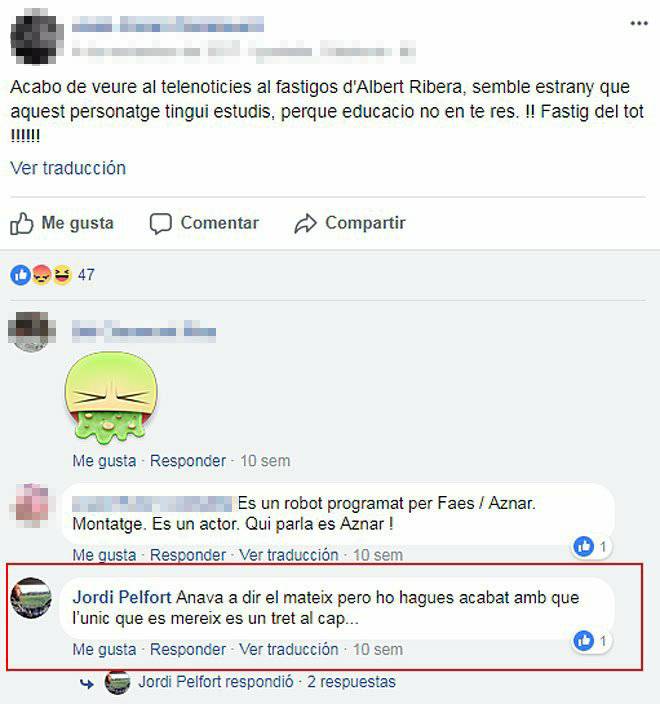
There is also the case of Jordi Pelfort a 48-year-old barber from a town near Barcelona who has been charged with incitement to hatred and threatening to kill the leader of the virulently anti-Catalan nationalist Ciudadanos (Citizens) party. He posted on Facebook that Albert Rivera, the party’s leader, ‘deserves to be shot in the head’.
The Facebook comment of Jordi Pelfort which led to criminal charges.
Wishing someone to be shot is very different to actually threatening to do so, yet that is what he has been charged with. It is indicative of an alarming trend towards highly disproportionate sentencing against those who ‘offend the symbols of Spain’
In fairness, recently a court handed down a suspended sentence of fifteen months against a Catalan man for making threats against Puigdemont on Facebook. But the overwhelming majority of prosecutions have been brought against those expressing views unfavourable to Spain, and its sacred cows.
Sadly, Spanish civil society beyond the Left and the nationalist parties is hardly questioning this disturbing spiral. Faced with an existential crisis, the dominant approach has been to circle the wagons and deny ‘the enemies of Spain’ ammunition by questioning the Rule of Law or the Separation of Powers. Spain remains to a large extent a liberal democracy, but there’s an unsettling authoritarian trend, which is being orchestrated by its main conservative party. Moreover, the European Union has failed to censure this approach, unlike its condemnation of similar repressive measures in Poland and Hungary.
Editor’s Note: The presumption of innocence is a hallowed principle central to the Rule of Law. Human rights lawyer and founder of the Innocence Project in Ireland, David Langwallner rails against a culture of Political Correctness that permits trial-by-media of alleged sexual offences, leading to a distortion of male-female relations. He identifies this with an all-consuming Neoliberalism, in which vendettas are pursued through false accusations – often for economic advantage – and where the parameters of permitted behaviour in courtship are sanitised to a point where men are being reduced to automatons. While strongly condemning the behaviour of Harvey Weinstein and his ilk, he argues that many of his accusers were willing participants, and only spoke out when it was to their advantage.
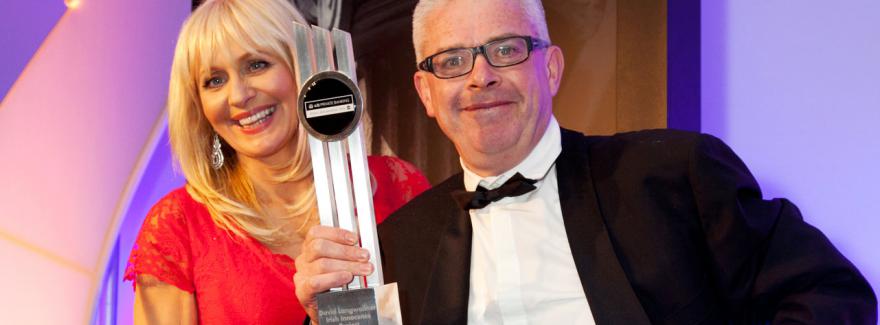
David Langwallner receiving the prize from Miriam O’Callaghan for Pro Bono & Public Interest Team/Lawyer of the Year at the AIB Private Banking Irish Law Awards 2015.
The late great art historian Robert Hughes penned an anti-political-correctness polemic in 1980 entitled Culture of Complaint. He argued that America was witnessing a pandemic of false sexual harassment claims, often leveled in corporate or institutional power games. At the same time, David Mamet, the legendary American playwright, wrote his Orleanna, a structured and more nuanced evaluation of the parameters of sexual harassment.
I despise political correctness, and the dumbing down it has brought to personal relationships and public discourse. In many instances it has marginalised forthright criticism, protecting vested interests, who employ the tactic of character assassination. Relationships between men and women are also distorted. The slide Hughes and Mamet wrote of in the 1980s, has today become an avalanche.
No one in their right mind condones acts of sexual violence against men or women, or persistent harassment, whether sexual or not. Workplace bullying, moreover, is not always sexual. At any level, whether sex is the weapon or not, no one should sanction a breach of trust, or an abuse of power.
We have witnessed all too many ageing multi-millionaire bulldog types, usually from the arts or politics, using the ‘casting couch’ to steer or negate career advancement, especially of women. Though it seems that if a reputation is truly satanic, such as Mick Jagger’s, that individual may escape condemnation.
It should equally be noted, in the interests of balance, how long bright-eyed starlets were circumspect about blowing any whistle on Harvey Weinstein. It seems some were more than compliant in the toleration of his behaviour, and in some instances his advances, as long as it succoured and supported their careers.
In many instances his accusers lack true moral grounds for condemning him now. Questions of guilt and attribution cuts both ways, a subtlety not grasped by the present snowballing hysteria of outing perverts and harassers. The crimes of the accused, whether real or not, are exposed amidst the hypocrisy of the accusers.
Michael Colgan, the former Director of The Gate, our latest outing and a more sedate Harvey, is now being thrown to the wolves. In both cases it is noticeable that exposure only occurs once a power base has been eroded: Weinstein, after decades of success in independent cinema loses his Midas touch after a string of flops, and brewing financial difficulties; dwindling audiences at the Gate Theatre, meanwhile, may have contributed to Colgan’s downfall. Of course for some such as Mr. Polanski the glamour never fades and that is, in a perverse way, his protection.
There is something very unseemly about the sight of this coup de grace ending the career of the ageing male. The final nails in the proverbial coffin. The killing of the once-prized bull by the matador media.
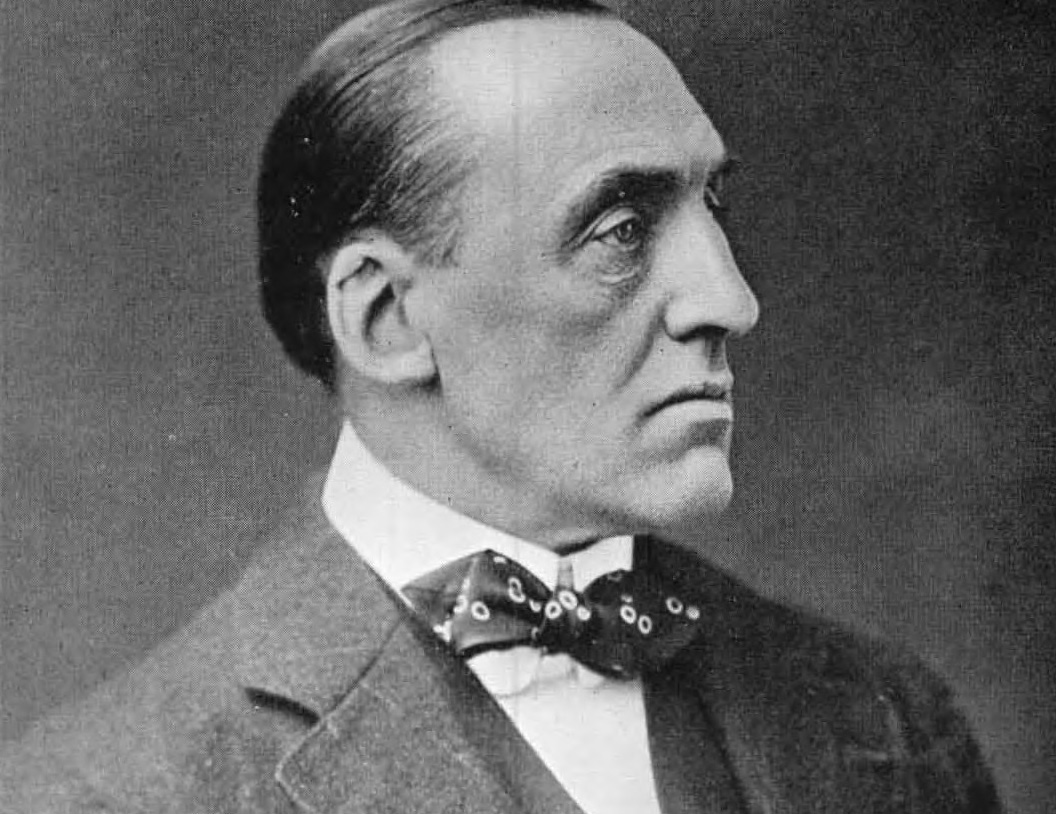
After all Sir Edward Carson – in even more puritanical times – and with at least a measure of compassion, refused to prosecute Oscar Wilde after the damage had been done in the civil case, which exposed his gay love affair with Lord Alfred ‘Bosie’ Douglas; by Carson himself of course, and with a good deal of vindictiveness, from one Trinity man to another.
“The poor man has suffered enough”, he is reputed to have said. Standards of decency have plummeted since. No doubt a queue of lawyers are slavering at the prospect of successful actions against aging playboys.
Edward Carson: ‘The poor man has suffered enough’.
In a different context The French famously say ‘les absents sans toujours tort’, ‘the absent are always wrong’, or translated to this context the disempowered – compulsorily or not – are now easier prey for a slightly hysterical Witch hunt.
Arthur Miller wrote one of his best plays The Crucible on that them,where religious and sexual hysteria – a toxic mix at work in Ireland – leads to an all-consuming madness of false allegations. Not that Weinstein appears to be innocent, but others may be. The point is that balanceis lost once the story begin.
Complainants who were amenable, or tolerant, in the past now seek to expurgate their involvement, cleansing their souls and conscience by shopping someone. Often, as was seemingly the case with former deputy Prime Minister Michael Fallon in The United Kingdom, to protect their own job. The issues of guilt and retribution are far from clear.
Motivations are murky. As in the Mamet play, and indeed a Michael Douglas film called Disclosure (1994), sex allegations are often linked to political or corporate power plays. Saying someone has touched your knee inappropriately may save one’s job. It’s kill or be killed in our Neoliberal universe.
The culture was of course different before the transcendence of political correctness, a greater laxity in personal conduct was tolerated, and both sides often participated in what might be deemed the immoral, generally sexual, pleasures of an uncensored society.
It ill-behoves one side to scream from the citadel of innocence, and dress in the cloak of victimhood considering their consensual participation, and inculpation in some cases.
That in no way exculpates, or should lead to toleration of, the practices of Mr. Weinstein, or even earlier, and more notoriously Mr Polanski, whom the French protect, as they seem to, all artists of significance, which is merely to note a peculiar national characteristic. For him, as was said of Benjamin Disraeli, the glamour never fades.
Thus, the retrospective retributive justice by the kangaroo court of vox populi, and the dangerous menace of public avengers. The Rule of Law is being subverted and due process and forensic truth-seeking replaced with trial-by-media, whipped up by a populist clamour. Prosecution by smear, through innuendo, and ‘no smoke without fire’, even by falsehoods in some instances.
None of this is helped by the psycho-babble of often pseudo-feminism, including the blathering of Hilary Clinton, reversing the burden of proof, and undermining the presumption of innocence. This antiquated feminist agenda dovetails very neatly with trial-by-media. Guilty in the court of public opinion before any charges are made and– as in the case of Garda McCabe in a different context – the manufacturing of guilt and suspicion by politically-motivated criminal and corrupt public officials.
Careers are rapidly destroyed, reputations irretrievably damaged, without anything so troublesome as a court process, or even internal disciplinary procedures, where anonymity may be preserved.
**********
All of this is leading to a great disturbance and realignment of normal interactions between men and women. Displays of attraction will be culturally realigned, such that communication of permission and refusal will be increasingly difficult to divine.
This will destroy much of the interesting texture of courtship and flirtation, displays of intimacy, and non-intrusive physical contact. A peck on the cheek or hand on the shoulder, may now be considered an act of violation. In American corporations, in some instances, employees who wish to date are required to sign a sex contract, detailing precisely what is consented to.
This will magnify the mistakes and misunderstandings that often precede sexual congress, complicating the quest for a suitable mate, or ideal match. A sexually-programmed, robotic world beckons, appropriate for the preferred model of serf employees.
I dislike intensely corporate cleanliness, fused with the family values of the religious maniacs of the U.S. Republican Party. A sexually ‘clean’ Neoliberalism, served up with great dollops of hypocrisy. A Corporatism requiring the worker to comply with stable domestic strictures on fidelity and religiosity.
Sexual behaviour has been, and always will be, a disturbance of the ordinary and smooth processes of income accumulation. Deviation cannot be tolerated among a malleable workforce.
Furthermore, in many instances an innocent man is the victim. False allegations against Cliff Richard and Paul Gambiccini nearly destroyed clean-cut, almost asexual, national treasures. It has become a penalisation of success, a titillating feature of the celebrity culture. An allegation of sexual deviancy may destroy a trade competitor, to gain a trifle of public recognition for yourself and reinvigorate a flagging career. A solipsistic ‘Me’ generation demanding Andy Warhol 15 minutes of fame.
In this blood sport, the more talented and renowned the celebrity, the greater prize the scalp becomes. All the more opportunity for faked outrage against a fallen idol from plastic people, who equate success with one’s name appearing in the newspapers.
It is also, frankly, a society rapidly becoming the obverse of Margaret Atwood’s novel The Handmaid’s Tale (1985), a dystopian tale following a Second American Civil War, where women are forced into sexual and child-bearing servitude. The new handmaidens are an increasingly de-sexed and under-the-thumb male population. Today all men except those under total control, display the Original Sin of perverts and harassers.
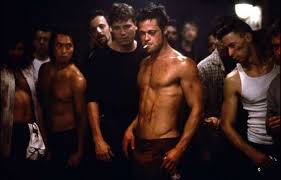
Other expressions of public opinion, such as the film Fight Club (1999), have demonstrated this precarious male identity. What escape now for the domesticised American male, drawing his wage in an insidious corporate culture, where any degree of abnormality in courtship is impugned? The Irish equivalents of Fight Club remain the male debating society, binge drinking and that awful sport of rugby. In these arenas male aggression can flow uninterrupted.
Irish male debating societies.
**********
Although Mr Weinstein and Mr. Spacey seem, at first blush, guilty, after trial-by-media, or at least to have a strong case to answer, I fear the whole onslaught will lead to a McCarthyite Witch Hunt, about which Miller’s play based around the Salem Witch Trials is a parable. The present hue and cry and that of over half century ago, are linked by a common plethora of false allegations, stoked by the religious and political Right for nefarious ends.
Someone needs to turn this ship around, and quickly, before genuine expressions of male and female sexuality aredistorted for good.
Vive la difference as the French say. Not all flirtation and banter is harassment. Not all men are rapists. The pendulum has swung too far, and through the constant recourse to public titillation in the media, important ideasconcerning the problems of economic and environmental catastrophe are side-lined. The bread and circus of sexual distraction is delivered in daily doses by red top and broadsheet alike.
Michael Fallon is no Winston Churchill, but his fate recalls a story – apocryphal or otherwise – told of the latter being accosted under the influence as he entered the House of Commons by Lady Astor: “You are drunk Sir Winston”, she said. “I am”, he replied, “but I will be sober in the morning and you will still be ugly”; an undeniably sexist remark, which, in the present circumstances, would lead to a swift political demise for Britain’s war time leader.
‘Who’s a pretty girl’, Winston Churchill and Lady Astor
This is a plea for moderation and balance, and for an appraisal of the true evils inherent to Neoliberalism; an appreciation that the very difficult road of reason, principle and fairness needs to be traveled; coupled with examination of the often willing participation of those leveling accusations. Too often, we externalise blame, excluding individual and collective failings, which, to reiterate, in no way condones genuine sexual violence or harassment.
But let us not confuse fakery, contrivance and falsity with reality.
The Irish-based Go Vegan World is the largest vegan education campaign worldwide. Its sophisticated advertising campaign has got under the skin of the animal exploitation industries, who have attempted, unsuccessfully, to shut it down. In this article founder Sandra Higgins explains the ethical considerations that animate her grassroots movement.
Most people imagine themselves to be animal lovers. Few scenes on television spark more awe than those featuring animals in their natural habitats, or more affection than those featuring companion animals in documentaries exploring their complexity and playfulness. We find ourselves moved when we witness the precariousness of their lives in TV veterinary series. If we witness one of them being chased or threatened, we find ourselves with bated breath until they escape.
From early childhood we are fair in our interactions with other animals. We don’t have an innate inclination to harm them. Most of us reach adulthood with the moral conviction that it is wrong to unnecessarily harm anyone, including other animals.
Yet despite considering ourselves animal lovers, most of us are responsible for the oppression and needless deaths of sentient, complex, individual lives, in the most brutal manner, with every non-vegan choice we make. What has led to this tragic farce where we can affectionately cuddle the family dog, whilst eating the remains of someone just like him, who lived a miserable life and endured a violent, painful and frightening death, for something we don’t need?
We grow up in a speciesist culture that discriminates against other animals on the basis that they are not human. But what occurs in exploitative industries is carefully hidden from us. We are progressively desensitised from our innate care for other lives into thinking that other animals don’t matter. We are educated in a system that teaches myth rather than fact. We erroneously believe that humans are superior to other species and that our difference from them entitles us to use them as objects to meet our needs. We are taught to separate their dead remains on our plates, in our clothing, in our personal care and cleaning products, and in our entertainment, from who they are.
If we are to face the fact that, although they are different to us, they share our right not to be used, harmed or killed, on the basis that we all have in common a sentient capacity to feel, be aware and value life, then we must reconnect with them. We must stop believing the lies that we are sold that we are better than them, that they exist for our use, and that our use of them is necessary.
Educating the public so that we rid ourselves of these speciesist ideas and reconnect with the animals we use, is the goal of Go Vegan World, which is a public educational campaign that originated in Ireland in November 2015, and now operates internationally. It provides factual information that is our right to know and our responsibility to act on.
The public face of the campaign are advertisements positioned in places frequented by consumers: bus stops, tube stations, taxis, outside supermarkets and restaurants; public bathrooms; on social media; at sporting events; in newspapers etc. These direct the public to a comprehensive website and free Vegan Guide, which provides evidence-based information for people to learn why veganism is imperative if we are to be consistent with the non-violent values we claim to hold, as well as practical help on how to live as a vegan. The campaign also involves lectures, print, radio and television interviews, and works individually and with groups of people as they go vegan and learn how to be effective animal rights activists.
Although Go Vegan World is the largest vegan education campaign worldwide, it is a grassroots organisation firmly rooted in the lives of other animals. It is run by Eden Farm Animal Sanctuary Ireland which is home to more than 100 residents, all of whom are survivors of animal agriculture. They inspire and inform the campaign and their images feature in most of its advertisements.
The advertisements are designed to encourage empathy towards the animals we use for food, clothing, entertainment and research, as individual, feeling beings. When other animals are seen for who they are, and for the qualities they have in common with us, empathy with them becomes easier. We can then put ourselves in their positions, and comprehend what they endure when we are not vegan.
The advertisements cover several themes that counter traditional representations of animals as objects who exist to serve us, and willingly participate in their own exploitation, mutilation and death. They show the animals in a light that most people have not previously encountered: innocent, defenceless, trusting, affectionate beings who feel, and who do not want to die.
The advertisements are colourful and eye-catching, capturing the complex sentience of the animals depicted. This contrasts with their stark educational messages, reminding us of the price they pay for non-veganism.
The cow with a tear running down her face reminds us that Like Us, They Feel. The monkey behind bars in a zoo lets us know that the price she pays for our day’s entertainment is lifelong imprisonment. The frightened faces of the pigs at a slaughterhouse tell us that Humane Meat is a Myth. The innocent mouse reaching up to cling onto the hand of his vivisector shows us that They Trust Us, yet we torment them because we believe that our cosmetics, cleaning products and scientific research are more important than his life.
The contentment of the pig as she is caressed by a human hand is juxtaposed with her comrade’s body as it revolves over a barbecue, reminding us that They Trust Us, We Butcher Them. The fish being dragged by a fisherman from the river that was her home depicts the human abuse of power in a classic bullying scene, whilst the headline reads We All Have One Precious Life. Will Your Lunch Take Hers? The beautiful mother-child bond of the cow as she licks her newborn calf reminds us that Dairy Takes Babies from their Mothers. Feedback from the public informs us that these messages are sufficiently powerful to prompt people to research the website and go vegan.
Go Vegan World is one of the few organisations focused on the animals it advocates on behalf of, giving an unmistakable message that the complete abolition of animal use is the only rational response to the problems other animals face at our human hands.
Unfortunately most campaigns emanating from the animal rights movement do not meet the needs of the oppressed animals they advocate for. In fact, one would be forgiven for imagining that veganism is a diet or a trend, or even a form of lifestyle consumerism, given the manner in which it is currently popularly portrayed. With typical humanocentricism, advocates assume the need to dilute the message to make it palatable to the public, presuming that they are unable to absorb the significance of a serious social justice issue, unless it is couched in a manner that prioritises human interests.
The word vegan has been bastardised by both the media and even by many advocates, often resulting in the complete obliteration of the animals it concerns. Veganism is the moral conviction that it is wrong to inflict unnecessary violence on others. It is not the end goal; it is merely the step that we need to take to begin restoring their rights. Veganism is not a fashionable, elitist, fad. It is a radically new way of recognising and relating to other animals with respect, one that humbles us as we grapple to reconcile the complexity of their sentience with the bluntness of our own.
In keeping with this definition of the word, Go Vegan World gives a clear message that other animals are not ours to use. Because the campaign is so deeply embedded in the individual histories and personalities of the animals at Eden Farmed Animal Sanctuary, it is both informed and powerful. For the first time in history the animals themselves have taken to the streets to show us who they are and to assert their right not to be used. The campaign message remains focused on the animals who are affected by our use of them. It does not distract from or compromise on what they need from us.
The integrity of the campaign was vindicated in 2017 by the UK Advertising Standards Authority finding in favour of the Go Vegan World claim that Humane Milk is a Myth. The dairy industry had claimed this was not fact-based, and that it misled consumers into believing that farmers did not adhere to welfare regulations in the production of dairy.
Go Vegan World clarified, however, that its aim was to show that the use of other animals is unjust regardless of adherence to welfare guidelines. The production of dairy, like every animal use, involves rights violations such as artificial insemination, separation of mother and calf, selective breeding and the consequential physiological stress of repeated cycles of pregnancy and simultaneous lactation.
There is no humane way to exploit the reproductive system of another being. There is no right way of separating a baby from his or her mother. There is no justification for taking away the purpose, existence and entirety of someone else’s life to meet a trivial human desire for profit. Taste or habit offers no excuse for killing.
It is because other animals are so unfairly and violently violated that people go vegan. This is quite distinct from going on a plant-based diet, or reducing animal use for health reasons, or because it is more environmentally and economically sustainable to do so. While these intersectional aspects of veganism are relevant, they do not constitute veganism and are neither necessary nor sufficient reasons for being vegan.
There is only one reason to be vegan and that is because we respect life and refuse to participate in unnecessary violence. This is the essence of the Go Vegan World message and it is why it targets the root cause of animal use (speciesism), and why it promotes the complete abolition of animal use by humans.
This is also why Go Vegan World has consistently attracted the attention of the animal exploitation industries. A high profile campaign that is unwavering in its call for complete cessation of animal use is unprecedented, and it is of immeasurably greater concern to those who profit from non-veganism, than all the limp calls for better welfare of those we exploit, less meat consumption, or the public portrayal of veganism as a trendy lifestyle or diet.
Becoming vegan involves a dawning awareness that other animals share our capacity to feel; that our use of them is unjust because it harms them. It begins when we recognise that not only can they feel pain; they also feel pleasure and they value their lives.
Each of them, like us, has one precious life. When we are not vegan we take that one, and only, life from them, individual by individual, in their thousands throughout our lifetime. Every year seven billion humans kill over 70 billion land animals, and trillions of fishes. Veganism is made possible when we realise that animal use is unnecessary and that every one of them dies for something humans do not need.
Veganism begins in the cognitive processes of our altered perception of the world in light of this new information. Most of us are shaken to the core when we scratch the surface of the horror of animal use. The world we imagined to be relatively safe, benign, and trustworthy is revealed as carefully organised to profit from torture and death, the brutal intricacies of which are legislated for, and sold to us as if they are both necessary and humane.
We go vegan when we realise we have been sold a monstrous lie. Few of us would willingly participate in the extreme violence that is inherent in every non-vegan item and choice we make, if we were in possession of the information the Go Vegan World campaign is bringing to light.
Go Vegan World is designed to target the processes upon which behavioural change are predicated. The advertisements along with the website and vegan guide, provide information that prompts the cognitive and emotional processes that motivate people to research veganism. These processes completely alter who we perceive ourselves to be; how we view the world and our place in it; and, concomitantly, how we behave in light of the awareness of the consequences of our actions on others. This is why veganism is not a lifestyle that we can adopt and reject as it suits us. It is who we are.
In our time where there are ample alternatives, we are either mindlessly or deliberately violent depending on whether or not we are aware of the facts, or we are vegan. The aim of Go Vegan World is to make as many people as possible aware of a violence that is generally hidden, and to remind them of who they exploit and kill, so that they chose to be vegan.
Many will read this in agreement that veganism is the right thing to do and vaguely plan to be vegan at some distant and perfect future moment. But it is your responsibility to be vegan now.
The animals we use feel as we do. While we wait for that perfect moment to live in alignment with the basic moral premise that it is wrong to harm and kill, they are being born exquisitely vulnerable and new to this world, with a death sentence on their young heads. Newly emerged from their mothers’ wombs, they instinctively reach for the nurturing safety of her breast, only to be heartlessly taken from her so we can take the milk she produces to feed them.
While we wait they are being confined, mutilated and tortured on farms, in laboratories, in circuses and zoos.
While we wait they are taken to slaughterhouses where they are hung by one leg that bears the weight of their whole, frequently artificially obese, body. Some of them are still conscious when their skins are removed or when they are dropped into tanks of boiling water. All of them are alive when their throats are slit. All male chicks are conscious when they are minced or gassed.
We do not have the right to do this.
Their lives and their bodies are not ours to use.
There is nothing special about being vegan. To stop participating in this violence that we ourselves would dread, is merely the decent thing to do. We owe it to them to be vegan.