
Tag: Cassandra Voices current affairs

  • Gerry ‘the Monk’ Hutch Challenges Gangsters Inc.
    At their inauguration, public leaders
    must swear to uphold unwritten law and weep
    to atone for their presumption to hold office –
    Seamus Heaney, ‘From the Republic of Conscience’

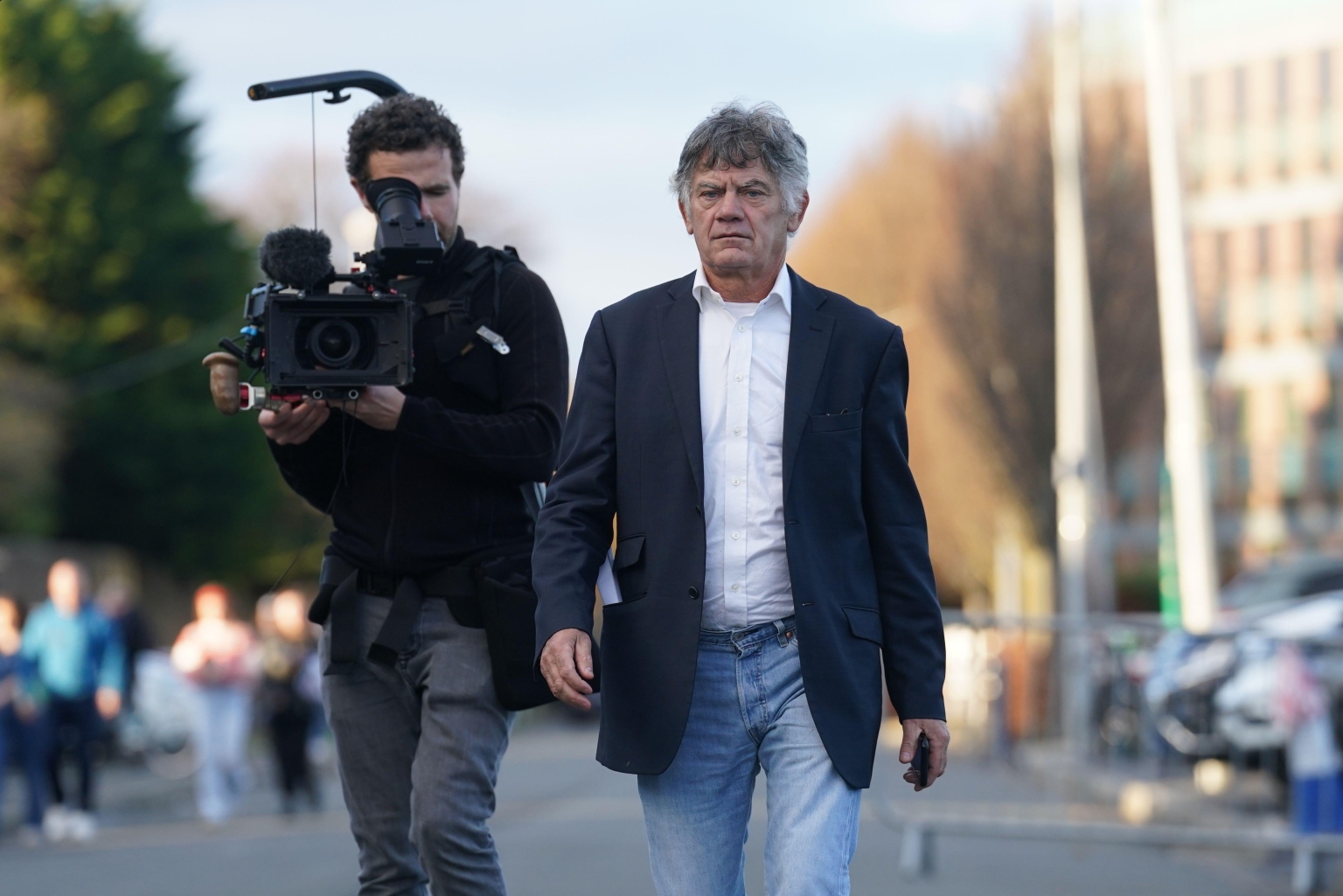
    With a Dublin Central by-election on the horizon, Irish politics appears to be descending into GUBU. The ‘grotesque, unbelievable, bizarre and unprecedented’ prospect of alleged crime boss Gerry ‘the Monk’ Hutch taking a seat in Dáil Éireann looms large in a May by-election triggered by the resignation of former Finance Minister Paschal Donohoe.

    Supreme Court Justice Peter Charleton once inquired as to why I pleaded for John Gilligan not as a gentleman, but as a self-employed businessman. Gilligan’s singular presence and the shadow over the murder of Veronica Guerin engendered the Criminal Assets Bureau and The Proceeds of Crime Act 1996. This was the beginning of the end for Due Process in Ireland. In the interim, one form of organised crime mutated into another via NAMA and offshore accounts. Thus, Ireland’s Gangster Inc. of Cuckoo and Vulture Funds was born.

    Of course, Gilligan never held political office, but Hutch’s candidacy and near election to the Dáil in 2023 begs the question as to whether an alleged crime boss ought to be barred from holding political office. Any such prohibition would raise questions of definition, and indeed whether the activities of present or former office holders, including at least one former Minister for Justice I can think of, might fit that description.

    There are obvious examples of corrupt politicians such as former Fianna Fáil T.D. Liam Lawlor, paid a small fortune by Beef Baron Larry Goodman, who remains one of the state’s richest citizens. During the 1980s a rogue’s gallery of grafters made their home in Leinster House. Today’s white collar criminals keep their finger nails clean, if not their toe nails, which remain firmly embedded in the dirt.

    A drawing of Ned Kelly on a wall in Melbourne.

    Art Imitating Life?

    A hagiographic play recently staged in Dublin’s Ambassador Theatre offered an alternative take on the staid format of the party-political broadcast. Remarkably, the eponymous hero of ‘The Monk’ made a surprise appearance on stage on the opening night, taking part in a fictional live question-and-answer session with playwright and performer Rex Ryan.

    The lineage of conventional – as opposed to de facto – Irish gangsters proceeds from Martin Cahill to Gilligan and the Kinahan Cartel, and on to Gerry Hutch. The Irish media display a morbid fascination mixed with veneration for their undeniable chutzpah – Martin Cahill’s costume clown appearances on multiple court appearances springs to mind.

    It is certainly not an exclusively Irish phenomenon. In his autobiography, Geoffrey Robertson KC describes his fellow Australian’s veneration of the Wild Colonial Boy, Ned Kelly. Further evidence emanates from the global success of Francis Ford Coppola’s The Godfather (1970), or the many films of Martin Scorsese exploring mobsters’ lives.

    It should be acknowledged that politics has always had close associations with crime, and not just in a state such as Italy under Andreotti or Berlusconi. The distribution of patronage and the promulgation of laws are often to the benefit of sectional, corporate or individual interests, who endeavour, and often grease, political machines with filthy lucre.

    A dirty business requires forensic and independent journalism, and may even compromise those intent on cleaning it up. JFK’s brother Bobby went full throttle against organised crime post-election, but the former seems to have relied on shady elements to win the Presidential election. That unrequited love may have led, one way or another, to Dallas, Texas.

    As Boby Dylan put it in ‘Murder Most Foul’:

    Then they blew off his head when he was still in the car
    Shot down like a dog in broad daylight
    ‘Twas a matter of timing and the timing was right
    You got unpaid debts and we’ve come to collect
    We’re gon’ kill you with hatred and without any respect
    We’ll mock you and shock you, we’ll grin in your face
    We’ve already got someone here to take your place

    That’s the place where Faith, Hope and Charity died

    That infamous day certainly paved the way for the cabal now in office: ‘Business is business and it’s murder most foul.

    Terrorist to Law-Maker?

    A criminal and law-breaker, or even a terrorist, can also become a unifying figure like Nelson Mandela, a national hero such as Michael Collins, or more ambiguously, a peacemaker like Gerry Adams. Perhaps Gerry Hutch is on his own Road to Damascus. He certainly portrays himself as a latter-day Robin Hood, bent on exposing the criminality of  Garda Síochána. Who knows what he’d come out with under Dáil privilege. If so what could he achieve?

    Gary Gannon, the pearl-clutching Social Democrats T.D. from the same constituency claimed to have been shocked at seeing Hutch on the ballot paper last time out. Former Taoiseach, and legendary recipient of brown envelopes, Bertie Ahern described Gannon’s comments as ‘absolute nonsense,’ and noted with moral ambivalence and some subtlety:

    Gerry Hutch has been around as long as me. I won’t get into morals or ethics but I have trampled that ground for 40 years and Hutch has been kind to the community in Dublin Central in indirect ways. Whether we like it or not, he is respected by people which explains his 3,000 votes. It is not just younger people voting for him, older people I know voted for him. We can all say the self-righteous things we want but the reaction is what it is.     

    It is noteworthy that Ahern’s political machine was colloquially known as the Drumcondra Mafia. At least when Hutch was growing up in the area, there were few options other than criminality for raising oneself out of poverty. Moreover, as Balzac put it: ‘Behind every great fortune there is a crime’ Which among the wealthiest individuals in Ireland have not soiled their bibs?

    The distinction between conventional robber and a new breed of corporate robber barons is unclear, or how to evaluate it in ethical or moral terms. Perhaps the writ of the Monk is preferable to the Cuckoo Funds making housing unaffordable for most of the population?

    George Galloway making his post-declaration speech at the 2024 Rochdale by-election.

    Protest Vote

    By-elections are an ideal opportunity for one-off protest votes. Consider the recent case of George Galloway who won the seat of Rochdale by a landslide in 2023, before losing it in the 2024 U.K. General Election.

    The Irish diaspora have long been adept at bringing out the vote, arranging transfers, and indeed scouring electoral registers for the dead and the dying. Gerry Hutch has called on disenfranchised citizens to register to vote – just as the Democrats in the U.S. continue to leverage disenfranchised minorities.

    His candidature is not unlike what one used to see in the U.K. with the Monster Raving Loony Party and Screaming Lord Sutch. Yet Hutch stands a real chance. And what if one were to advise him, however guardedly, on how to beat the established parties?

    Garnering acceptance among floating voters, and picking up precious transfers, would require him to articulate political objectives, at least in outline. Apart from being critical of the conduct of the Gardaí, what does he stand for?

    The Dublin Central constituency has some of the worst poverty in the state, alongside new hipster wealth and significant immigration in recent years. A manifesto of sorts would be worthwhile, addressing the concerns of native Dubliners in particular, and hopefully encouraging greater acceptance of diversity. Tony Gregory brought great benefits to the area. An independent candidate like Hutch might be able to perform a similar role.

    Corruption ought to be condemned, but violence should never be condoned. A reformed Hutch might have greater clout among troublesome elements than most politicians when addressing the current wave of violent crime. Recent fuel protests reveal Ireland to be on the brink.

    It remains to be seen whether Gerry Hutch has any real ideas for addressing the enduring problems of access to housing, health and education, or the increasing lawlessness in city centre, as the State continues to fail in its primary duty to keep the peace.

    Tom Wolfe in 1988.

    Radical Chic

    Tom Wolfe in his 1970 New Yorker essay ‘Radical Chic: That Party at Lenny’s’ used the term to satirize composer Leonard Bernstein and his friends for their absurdity in hosting a fundraising party for the Black Panthers. Wolfe’s concept of radical chic lampooned individuals (not unlike jet setters such as Paddy Cosgrave and his ‘Whistleblower’ Café) who endorsed leftist radicalism to affect worldliness, assuage white guilt, or garner prestige, rather than to affirm genuine political convictions.

    In short, Radical Chic is described as a form of highly developed decadence; and its greatest fear is to be seen not as prejudiced or unaware, but as middle-class. One suspects, however, that their Irish equivalents would be wary of Gerry Hutch, but let’s see.

    At one level I endorse his candidature as a means of giving the establishment a kick up the posterior, but it remains to be seen whether he possess any real ideas for addressing the issues I have alluded to. In the Kingdom of the blind, the one-eyed man is king. Perhaps the best that can be said of Gerry Hutch is that he might prove to be a superior form of gangster than the rest.

  • When will Micheál Martin’s epitaph be written?

    Last November, in one of his final outings as Taoiseach, Micheál Martin delivered the annual Romanes Lecture at Oxford University. It’s unusual to find a senior Irish politician laying out a political philosophy, and for this he deserves credit, even if I take issue with his claim to occupying a ‘liberal’ middle ground.

    It reveals a politician of serious intent, at least compared to Leo Varadkar, who consented to a premature biography, containing hostages to fortune. Like Robert Emmet, Micheál Martin has, thus far, left no epitaph as a ‘weapon in the power of envy.’ This is despite a personal history that could easily evoke public sympathy.

    Since the nadir of the 2011 election, when Fianna Fáil won just 20 seats with 17.6% of the vote, Martin has steadied that ship; winning 44 seats with 24.3% of the vote in 2016, and 38 seats with 22.2% in 2020, in the face of Sinn Fein’s surge.

    Importantly, during this holding pattern, Martin has restored the party’s access to levers of power and patronage. A romantic yearning for an overall majority associated with the leadership of Charles J. Haughey is a distant memory. In its place, we find steely pragmatism under Martin.

    One commentator recently argued that Martin, ‘has remade Fianna Fáil from a party with pretensions of national leadership into a reduced but successful vehicle for its leader.’ This seems unfair. It is difficult to imagine any leader re-invigorating the party sufficiently to remain ‘the natural governing party’ after the car crash years of Bertie Ahern and Brian Cowen.

    Whatever about the morality of the issue, Martin’s decision to endorse the Repeal of the Eighth Amendment in 2018 – in contrast to the majority of his parliamentary colleagues – was politically astute, given the low age profile of the ‘yes’ vote.

    Nevertheless, Fianna Fail is still struggling to attract younger voters, remains moribund in Dublin and vulnerable to rural independents. It is still being argued that a party lacking obvious rising stars could cease to exist. A competent leader, however, cannot be blamed for the relative mediocrity of his colleagues.

    Martin’s relationship to his lieutenants recalls a story about Charlie Haughey bringing his cabinet to the exclusive Coq Hardi restaurant. The princely Haughey ordered Steak Tartar, and when asked, “what about for the vegetables?”, replied “they won’t be dining.”

    Moreover, Martin’s personal approval ratings consistently exceed those of the gaff-prone Leo Varadkar. This has implications for the forthcoming general election, when we may expect presidential campaigning, with relentless media focus on the strengths and weaknesses of the main party leaders.

    Finally, when it comes to deciding the composition of the next government, Martin’s Fianna Fáil is in less of an ideological straightjacket than Fine Gael. With an election looming, Martin may be happy to occupy a putative political centre, while watching sparks fly between Sinn Féin and Fine Gael.

    Charles J. Haughey in 1989.

    Embattled

    Thus, in the Romanes Lecture Martin lays claim to what he describes as an ‘embattled liberal middle ground’, pointing to threats posed by the technological rupture of the Internet and nefarious Russian interference in our democracy. These developments he ties to the recent political earthquakes of Brexit and the Trump Presidency, as well as the expression of conspiracy theories.

    This familiar narrative contains some truth, but ‘an angry public discourse’ in most countries can be traced primarily to a decline in manufacturing and heavy industry, the widening gap between rich and poor and a global housing crisis.

    Martin nonetheless contends: ‘In terms of basic concerns such as incomes, life expectancy and education, the scale of progress over the last century is beyond anything which was predicted, yet this is largely absent from the public discourse’.

    This idea that we have ‘never had it so good’ ignores that since the 1970s real wages have barely budged; life expectancy now appears to be declining, in the U.S. at least; and how in Ireland we have an education system designed to produce nothing more than ‘second class robots’, according to an OECD expert. And that is to ignore more existential threats such as climate change.

    He weakly recalls ‘the best’ losing ‘all conviction’ from W.B. Yeats’s ‘The Second Coming’, a poem anticipating the victorious march of ideologies such as Communism and Fascism in the 1920s. Today, in contrast, we find a distinct absence of fixed ideologies animating the ‘Populist’ movements Martin decries.

    Thus, Martin’s broad-brush account of Populism joins left (including Sinn Féin presumably) opposition with that on the right, to a point where, it seems as if anything other than his own centre-right viewpoint is, at best, fiscally irresponsibility, or, at worst, a ‘threat to core principles of liberal democracy.’

    Implicitly, any deviation from a neoliberal consensus reigning ascendant in Washington and Brussels is illegitimate. This amounts to a denial of a core principle of democracy: the sovereignty of the people in determining policy decisions through their elected representatives; as opposed to politicians facilitating a permanent government of unelected civil servants and unaccountable corporations.

    Martin with Ukrainian President Volodymyr Zelenskyy in Kyiv, Ukraine in July 2022.

    Undermining Democracy?

    Furthermore, Martin’s assessment that ‘the efforts by autocratic governments to undermine democracies is a relatively recent development in terms of its scale and ambition’ absolves the U.S. from responsibility for its long-standing interference in democracies, including Ukraine. He expresses no condemnation for the U.S. hatching coups.

    Moreover, according to the American Bar Association: ‘Special counsel Robert Mueller’s investigation did not find sufficient evidence that President Donald Trump’s campaign coordinated with Russia to influence the United States’ 2016 election and did not take a clear position on whether Trump obstructed justice.’ Thus, to insinuate otherwise is simply a conspiracy theory.

    A lack of perspective is also evident in his contention that ‘Russia’s escalation of its eight-year war against Ukraine draws on a vision of restored imperial grandeur, but it is ultimately more about the desire to prevent liberal democracy succeeding in a former imperial domain.’

    This disregards an obvious reason for the invasion, anticipated by, among others, George Kennan the architect of containment: the prospect of NATO expanding as far as the Russian frontier. Democratically elected, or otherwise, any Russian leader would object to this. This is not to justify the invasion, but to explain it.

    We might reasonably expect greater historical insight from a holder of an MA in the subject. Approval for Timothy Snyder’s ‘wonderful work in linking historical insight to contemporary action’ suggests he is not reading widely enough.

    A withering 2018 assessment of Snyder by Research Professor and Director of the Institute for European, Russian and Eurasian Studies at the George Washington University Dr Marlene Laruelle is worth recalling:

    The fact that Timothy Snyder is an influential public intellectual and respected historian is no reason for scholars not to challenge his facile and polemical analysis of the contemporary Russian state … Distortions, inaccuracies, and selective interpretations do not help illuminate what motivates the Russian leadership’s self-positioning on the international, and in particular the European, scene. Simplistic reductionist techniques and invalid reasoning further confuse the analysis—and bias policy responses.

    The hawkish Snyder recently dismissed the danger of nuclear weapons being used in the Russian-Ukrainian conflict, blithely claiming a nuclear bomb ‘would make no decisive military difference.

    Martin meets with U.S. President Joe Biden at Carlingford Castle in April 2023.

    Atlanticist

    It might be noted that in 2003, immediately after the illegal U.S. invasion of Iraq that caused up to one million deaths, as Minister for Health and Children, Micheal Martin voted alongside his government in favour of a motion endorsing ‘the long-standing arrangements for the overflight and landing in Ireland of US military and civilian aircraft’ – essentially sanctioning the refuelling of U.S. jets in Shannon.

    During that debate then Fine Gael leader Enda Kenny warned perceptively that the U.S. invasion invited anarchy in the global system. Indeed, it is believed to have had a significant effect on the psychological and political climate in Russia.

    It should also be noted that as chair of the U.S. Senate Committee on Foreign Relations then Senator Joe Biden actively championed the invasion of Iraq. As President he has included in his cabinet neoconservative hawks, such as Assistant Secretary of State Victoria Nuland, who was U.S. Permanent Representative to NATO from 2005 to 2008. In early 2008, NATO promised Ukraine and Georgia they would one day join the alliance ‘after rebuffing U.S. demands to put the former Soviet republics on an immediate path to membership.’

    Both as Taoiseach and now as Foreign Minister Martin has proved a staunch ally to the Biden administration, using Ireland’s platform as a member of UN Security Council to argue that Russia’s conduct could not be reconciled with its place on the Security Council. This hardly enhances the prospect of Ireland ever using its non-aligned status to work as an intermediary for a negotiated settlement to the war.

    Any Irish leader is likely to bow to realpolitik considerations, but Martin might have done well to peruse the response of his former party colleague, and Minister for Foreign (or External) Affairs, Frank Aiken to the U.S.-funded Bay of Pigs invasion of Cuba in 1961.

    In the U.N., Ireland supported the U.S. position, but Aiken also expressed an understanding of the Cuban reaction. He counselled the Cubans on the fundamentals of de Valera’s neutrality policy, specifically towards our own large neighbour: ‘That principle was that under no circumstances would we allow our country to be used as a base for attack against our neighbour Britain … It has special validity in the case of small countries placed beside powerful neighbours with whom they have disputes or disagreements.’

    The same logic might apply to a smaller country such as Ukraine, offering a base from which NATO could attack its powerful Russian neighbour. Martin might have let it be known that Ireland favoured de-escalation, acknowledging Russia’s anxieties arising out of a collective memory of World War II, when the Soviet Union suffered up to 27 million deaths at the hands of the Nazis and their allies. Instead, we hear unrelenting belligerence towards Russia – including an apparent disavowal of Irish neutrality.

    Also in that lecture, Martin referenced the apparently undifferentiated views of the people of Ukraine:

    Just as they did in 2014, the people of Ukraine have been willing to sacrifice everything because they want to secure a free and prosperous future for their country.

    This ignores that the (pro-Russian) Viktor Yanukovych won the 2010 Presidential elections, and was removed from power by force, provoking a bloody civil war that witnessed up to 14,000 deaths. Sadly, Martin coarsely labelled T.Ds in Dáil Eireann challenging his preferred narrative ‘Putin’s Puppets, a remark surely contributing to “an angry public discourse.”

    Image: Daniele Idini.

    Liberalism?

    In the Romane Lecture, Martin argues that the liberalism he espouses ‘is a set of values which inherently respect the legitimacy of diverse political and social views.’ But this hardly tallies with his record as Taoiseach.

    The reaction of the Irish state under Martin as Taoiseach to Covid-19 can hardly be described as liberal. Lockdowns, vaccine passes and forced quarantine for travellers in reception facilities were unprecedented interventions by the State into people’s private lives.

    Doubtless, he would argue that a test of proportionality applied. In the lecture he maintains that COVID-19 ‘presented just as serious a threat to governments and institutions’ as the Spanish Influenza pandemic.

    The Spanish Influenza (H1N1) pandemic of 1918-19 carried off an astonishing fifty million people, most of whom were in the prime of their lives. In contrast, globally, there have been just under seven million confirmed deaths ‘with’ Covid, the vast majority over seventy years of age and suffering from significant co-morbidities. This at a time when the global population is six times that of 1918.

    We find further pieties from Martin such as condemnation of ‘widespread attempts to question core public health advice and to spread doubt about the efficacy of vaccines and the intent behind them.’ Unrestrained scientific debate is surely a key feature of liberalism.

    Martin also claims, without evidence, that ‘the measure of the response of democratic societies to the pandemic can be seen in millions of saved lives and livelihoods.’ In fact, according to one recent study lockdowns prevented just 0.2% of deaths in Europe during the first wave. Moreover, excess deaths have increased steeply across Europe since the end of the pandemic, indicating that lockdown measures produced serious harms.

    The Irish economic model remains highly dependent on foreign direct investment, including from pharmaceutical companies such as Pfizer. Martin may consider preserving their goodwill to be his priority.  But it leaves him open to the accusation that he is, at the very least, inadequately attentive to the conduct of companies with a long record of corruption, and criminality.

    Martin showed poor judgment as Taoiseach during Covid-19, invariably resorting to draconian interventions. Thus, Ireland became the first European country to re-enter lockdown in October, 2020, based on speculative projections. Then he promised a ‘meaningful Christmas’ later that year, when opening up prior to the annual winter respiratory season, generating the world’s highest Covid rate.

    Commendably, Martin ‘placed an unrivalled emphasis on keeping schools open,’ but he played a curious role in the introduction of face mask mandates. In Pandemonium: Power, Politics and Ireland’s Pandemic by Jack Horgan-Jones and Hugh O’Connell we learn that Martin’s phone had been ‘buzzing with texts from his sister-in-law in Singapore. ‘Masks, masks, masks,’ she told him.’ Earlier, however, Professor Martin Cormican informed NPHET that, ‘if there is a benefit, it is very small’, and that ‘widespread mask use also rapidly degenerates with poor practice, which could increase the risk of Covid-19 transmission.’

    We also learn of Angela Merkel ringing up the Taoiseach to air her concerns about the Irish case trajectory in the Christmas of 2020, and Martin recalling her bringing this up again ‘at the bloody EU Council meeting.’ Merkel appeared to be demanding a level of stringency in other European states that ignored wider impacts. Just as during the era of austerity, the Irish government under Martin endeavoured to be the best boy in the European class and disregarded the consequences.

    Paddy Cosgrave in 2022.

    Pervasive Division

    As a politician who has survived in government, and as leader of Fianna Fáil, for longer than most, Martin obviously recognises the importance of maintaining warm relations with the press corps. Critical, or investigative, journalism, however, would hardly be a welcome intrusion into his affairs. The press, as the editor of the Times wrote in 1852, ‘lives by disclosure … The statesman’s duty is precisely the reverse.’

    Martin nonetheless said:

    Support for professional and independent journalism has become an urgent need in our societies. We can see what happens when we no longer put value on journalism which takes time, involves expertise and operates to high ethical standards. The dominance of current affairs by partisan media or by a limited number of the wealthiest in our societies is always destructive.

    His recent broadside, however, impugning the motivations of Paddy Cosgrave, Chay Bowes and The Ditch, delivered under Dáil privilege, is more revealing of his attitude. This further lapse into participation in “an angry public discourse” was criticised by the National Union of Journalists.

    Associating the Ditch’s impressive record of exposing corruption with Russian interference is a worrying sign of Martin being prepared to employ ‘McCarthyite’ tactics.

    Martin refers to ‘a pervasive division in public discourse is directly undermining the ability to develop effective responses to complex problems.’ His problem is that young people, in particular, angrily contest the effectiveness of his government’s response to these complex problems.

    In his role as Minister for Foreign Affairs and Tánaiste Micheál Martin may be somewhat insulated from the enduring failure of the Irish government to deliver on housing, which is now being preyed on by an incipient far right. But possessing an ability to survive in Irish politics is surely not the only epitaph he craves.

    Micheál Martin may only consent to his epitaph being written once a majority of the young people of Ireland look forward optimistically to a reasonable standard of living under a Fianna Fáil-led government. Unless there is a significant change in circumstances, however, any second coming for him as Taoiseach appears remote.

    Feature Image: Martin with U.S. President Joe Biden virtually on St Patrick’s Day in 2022.