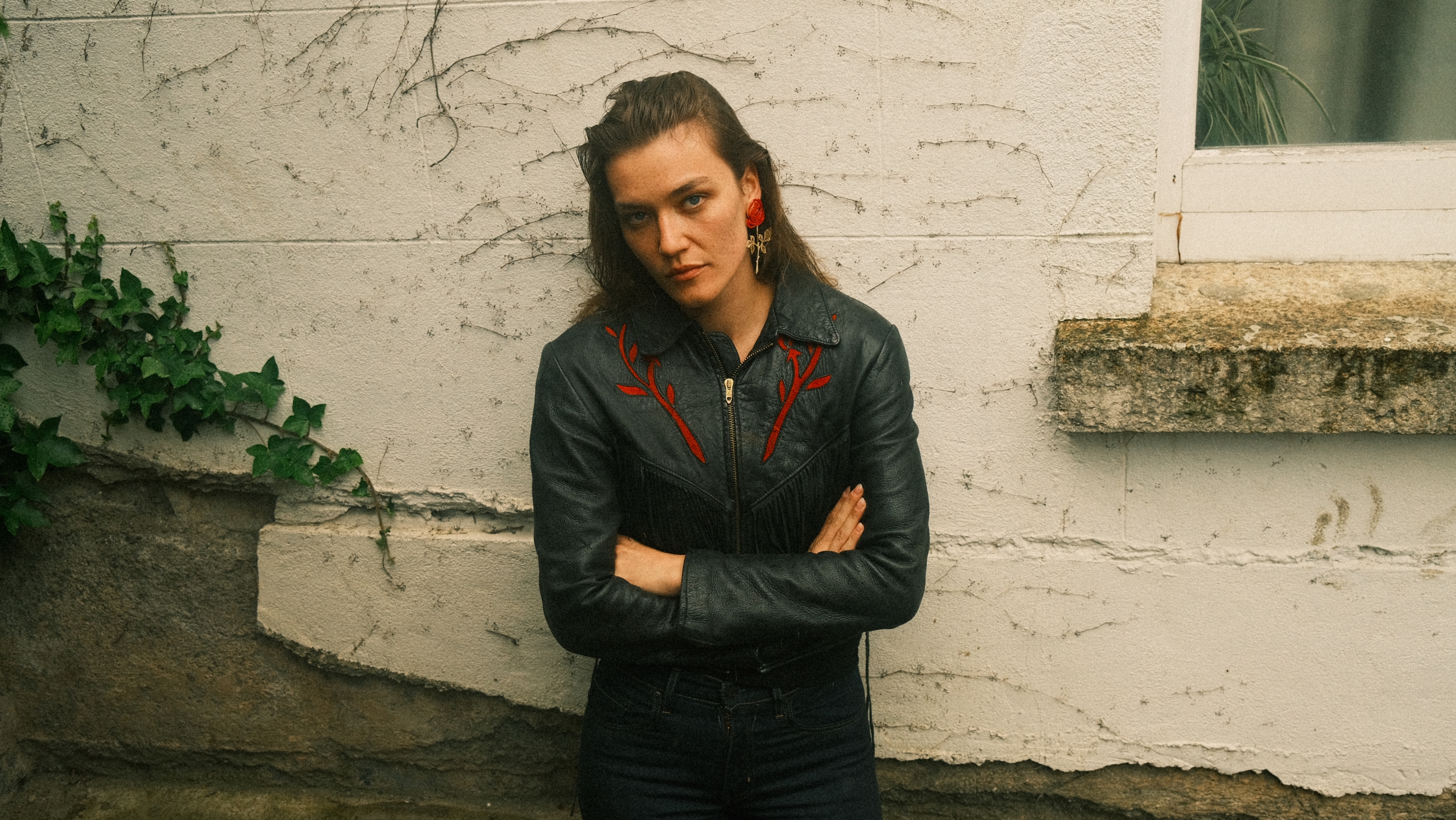
I am a California native Irish traditional musician based in Ireland. I started playing music when I was around seven years old, beginning on piano and the Native American flute, which was my first wind instrument. My dad bought three of these flutes before I was born, and I am still playing them to this day. I tried various instruments as a child, including clarinet, saxophone, various percussion instruments, the accordion, and a few others. It wasn’t until I was eleven-years-old however that I discovered the tin whistle.
I was about to board the bus back from an American Civil War reenactment in Mariposa, California, when I visited the souvenir stand. I bought a tin whistle from a barrel and my life changed forever. I played it on the bus heading home, then occasionally throughout the year, setting it down for a while before picking it up again in May 2014.
I was inspired by a few film scores and remembered a tune that my grandparent’s friends played at their barn, which was called ‘The Swallowtail Jig’. I searched for this tune on YouTube and the gates of traditional Irish music heaven opened for me. I have been ‘tradicted’ ever since!
I listen to many different sources of traditional Irish music as well as folk music from around the world, classic rock, American folk, jazz, and more.
These influences have made an impact on my playing. My style is my own creation, influenced by these genres and specific individuals suchas Brian Finnegan, Alan Doherty, Ali Levack, and others. It is highly percussive and energetic, which reflects the person I am.
I am currently working on an album that will be released on March 23rd. I co-engineered and mixed four albums, including ‘Harmonies’ (a flute and whistle meditation album), ‘Decade’, (a traditional Irish music album with a contemporary twist), ‘Tradify’ (an album that features a band I was in), and ‘A Whistle Wonderland’ (Christmas music treated as traditional Irish tunes).
The album that will be released this month is entitled ‘From Kolkata to Dublin’, which is a minimally produced album featuring the Indian tabla, tin whistles, and exotic/rare wind instruments.
I am planning to record duets with tin whistles and harmonica/button accordion this month, and to record an album of traditional Irish music that suits the Chinese Hulusi.
As I write this, I am in the middle of eight days of gigging in Dublin. Six gigs down, three to go!
I am a full-time musician, gigging every week and offering my remote recording services, teaching, custom tune compositions, and more.
I am also currently forming the Cedar Dobson Band, which will consist of two or three musicians that will be performing at various festivals within Ireland this year as well as abroad.
One of my greatest joys in life is to perform and share my original music and arrangements with others. This music is my life and I love it so much!
I am expanding my horizons by diving into the world of gypsy jazz, playing complex solos on the low whistle. I am planning to film professional music videos to send to festivals as one of my goals is to play in Celtic connections next year. I just want to play the music that I love so much with others who appreciate it. That way I will able to express my emotions through music and hopefully touch other people on a deep level. Music is so powerfully emotional and it’s vital for us during this time in history.
I post videos nearly every day on social media and YouTube. I post a tune of the week every Sunday as well as videos of exotic wind instruments and videos of me riding a unicycle while playing the tin whistle simultaneously. Indeed I love a good challenge and unicycling while playing the tin whistle has been just that!
I hope to break into the scene more within Ireland and Europe as I am striving for more fulfilling opportunities, such as performing in festivals and in beautiful venues. I am grateful for every opportunity though, as they have made a positive impact on me. I am making valuable connections more often now than before.
I moved to Ireland from California to experience the music as it is in all of its glory, honesty, and rawness. I’ve been based in Ireland for nearly five years and I am absolutely living the dream! I’m so grateful for every opportunity. I am now looking forward to traveling within Ireland and abroad, sharing the joys of music with others and hopefully offering moments of peace, joy, and lightness to others.
This music has formed me into the person I am today. Endless gratitude!
Gazing up into the darkness I saw myself as a creature driven and derided by vanity; and my eyes burned with anguish and anger.’
James Joyce, ‘Araby’, from Dubliners (1914)
Nineteen Seventy-Nine was a big year for me. I turned eighteen, which meant I could vote, had I felt so inclined. I had my first real girlfriend, and mistakenly thought that was going to last for ever. I did my Leaving Certificate, for which I did not do very much study (an unfortunate fact not unconnected to having said first girlfriend, and also my discovery of the live punk rock music scene around Dublin). I had my first proper adult job, or job that adults did, working as a bus conductor through that long, hot summer (nepotism was involved in securing the temporary position). Bus conducting is a job adults no longer do – or children for that matter – since it is a job that no longer exists, at least in Ireland. My first real girlfriend broke up with me after a few months and, heartbroken, I struggled to understand why. I got into the vocational college course I wanted (a triumph somewhat tainted by the presence of said first ex-girlfriend there too). I formed my first and, so far, only band, and we played a grand total of five paying gigs, before succumbing to the pressures of non-stardom. And I saw future megastars U2 play in the Dandelion Market at St. Stephen’s Green, McGonagle’s nightclub in St. Anne’s Street (afternoon gigs), and the Baggot Inn on Baggot Street – attendance at the Dandelion Market for one of the fledgling band’s shows there coming to be regarded in later years as our generation’s equivalent of being present in the General Post Office for the 1916 Easter Rising.
And in 1979 Pope John Paul II came to Ireland, paying a flying three-day visit from Saturday, 29 September to Monday, 1 October. I refrained from going to see his Saturday show in the Phoenix Park, Dublin, which was a rather radical move, considering how pretty much everyone else on the east coast of Ireland and beyond – some 1,250,000 people in fact, one-third of the then population of the country – flocked there for the event, while other extravaganzas in Drogheda, Clonmacnoise, Galway, Knock, Maynooth and Limerick during the following two days meant that he eventually wound up playing to over 2.5m souls, all told.
I wonder why I had already made up my mind about institutional religion, and so vehemently renounced the Catholic faith, even at that early stage? After all, this was a time – long before clerical sexual abuse scandals and increased levels of education had put paid to the church’s vice-like dominance – when nearly everyone in Ireland was a Catholic, in some shape or form, except the small percentage who weren’t, and they were usually some sort of Protestant. Agnostics, much less those evil atheists, were few and far between. I must have been ahead of my time in this regard, which means being out of step with the present. More practically, where were my parents, and how did I avoid being corralled, or shamed, into going?
Twelve-year-old me had caused consternation in my hyper religious family by announcing that I no longer wanted to go to Sunday Mass. All kinds of pressure was brought to bear – visits to Jesuit spiritual advisors, withdrawal of pocket money – in an effort to get me ‘back on the right road’. I capitulated by saying I was going to evening Mass by myself, and instead took long walks for the required duration.
I suppose my main beef with the Catholic ethos was its ubiquity, coupled with the fact that much of it just didn’t make any sense to empirically minded young me. An early fan of comparative religion, I questioned why one version of God was popular in one part of the world, while another held sway in another part, while both claimed to be the one true faith. It seemed like some sort of competitive sport, which I surmised was not what a just, wise and beneficent Godly entity would have necessarily intended. As a child, I’d had a keen interest in astronomy, which served to make me place affairs on tiny Planet Earth in a more universal perspective. Had God made the entire cosmos, or only our small corner of it? Had God been around before the universe had been created and, if so, who’d made God, or where did He come from? Also, I had been an altar boy, and my glimpse behind the scenes of the congregation’s collection offerings being counted out and bagged off alerted me to the worldly pecuniary underpinning of the celestial domain. God was inextricably funded by Mammon.
Getting my hands on some books, other than prayer missals, probably expedited my apostasy as well. For example James Joyce’s künstlerroman, A Portrait of the Artist as a Young Man (1916), or Albert Camus’s ode to existential alienation, L’Etranger (1942) (or, indeed, Colin Wilson’s popular literary critical study of the time, which favours the English translation of that title, The Outsider (1956)), never mind science fiction like Robert A. Heinlein’s Stranger in a Strange Land (recommended via New Musical Express articles on David Bowie, and subsequently appropriated as the title of a song by that Dublin new wave band U2, from their sophomore album October (1981) – and itself a direct Biblical quotation (Exodus 2:22)). I actually read these books, rather than merely name-dropping them, as others were wont to do. Being educated at a school run by the now notorious and reviled Christian Brothers – even one of the better ‘fee-paying’ ones (my parents were poor, but I was sent to a posh school, a story too convoluted to provide an explanation for here) – didn’t help either, as the pedagogical experience amounted to little more than daily skirmishes in a war of attrition between ‘us’ and ‘them’. I had, and retain, a problem with authority figures of any description. I felt instinctively, rather than could articulate coherently, that the church was just about controlling people, keeping them in line. They tried to break your will, so that you would do the will of God. I wasn’t one for obeying the rules, although I didn’t always like the consequences if I didn’t.
The day of the Pope’s mass in the Phoenix Park I was still employed in my student job on the buses, and transport workers were among the few sectors doing any service that day, ferrying the multitudes to and from the site. There were no private cars on the road. A special stand had been erected for us busmen to view the proceedings, between doing the outward and return journeys. I didn’t bother going down to it, but hung out by my bus, eating my lunch. I don’t know where the rest of my family were. My father, also a bus conductor (thus, the nepotism), would have been down in the busmen’s viewing area, but it would have been easy to miss him in the general ‘Mass’ chaos. My mother, a semi-invalid, probably stayed at home. The fact that I was on duty would have precluded me meeting up with my elder brother or sister or their families. All in all, my summer job saved me a lot of potential conflict that day, and was a good excuse for not having to make a fake show of religiosity. I suppose, unlike many others, I also earned a few bob courtesy of the Pontiff’s Dublin visit. Transport had begotten me some delight.
Some time in the months following that autumn day I got to meet and become friendly with the guys in this group called U2 – well, Bono, Edge and Larry at any rate, Adam proving more elusive. Dublin was small, much smaller than I had previously imagined, hailing as I did from a sheltered background where my parents didn’t do much socialising, and the music community was even smaller. I cannot remember with any clarity how this happened: I was in a band, they were in a band, both playing the same scene; I’d been writing for a music fanzine, Imprint, which that tumultuous first girlfriend edited; in the summer of 1980 I’d begun writing for Hot Press music magazine, as part of my journalism training course (a distinct incidence of lycanthropism: critic by day, musician by night – or vice versa); most likely, it was because I’d started attending the Shalom Christian prayer group, of which those three musicians, plus various Virgin Prunes (U2’s outlier, little brother band) were also members.
This admission may seem startling, given my already confessed antipathy to so-called ‘organised’ religion. But perhaps exactly what appealed was that this was not at all organised. And while I may have shunned the church, all traces of spiritual longing had not deserted me. Even Joyce’s Stephen Dedalus suffered a reconversion (or do ‘lapsed’ Catholics ‘relapse’?), before abandoning religion, specifically Roman Catholicism, for evermore.
This newfound Bible-bashing proved to be an unhappy conflux of events, a classic case of bad timing: after all, the hippie liberals in Hot Press didn’t care for their punky young contributors to be sneaking off to prayer meetings on the sly, when we should have been skulling pints and vacuuming up rip-snorting intoxicants and generally behaving in a recognisably debauched and approved Rock’n’Roll manner (Hot Press advertising slogan of the period: ‘Making Ireland Safe for Rock’n’Roll’), even if in subsequent years the fate and fortunes of that particular organ became inextricably entwined with the largesse of U2’s coffers – thus ensuring that you’ll never read a bad word about U2 in Hot Press. I kept such associations undercover at my place of casual employment, although I do remember allusions in that publication’s gossip pages inquiring as to ‘What is this hip new religion?’. The U2 boys were in no hurry to have their committed Christian beliefs become common public knowledge either, at this early stage.
That was the summer, 1980, of U2 recording their debut album Boy at Windmill Lane Studios, where I was present on at least one occasion. I also remember a trip to Gorey Arts Festival on 15 August, to see the band play at the Theatre Hall, possibly the worst live performance of their entire career, due to being ensconced in the studio, under-rehearsed, and road rusty. By September, I had dropped out of my journalism course, determined that my vocation was to be a professional songwriter and musician. But by the turn of the year, the winter of discontent, it had all turned to shit: my band, 1991, were good, and we’d had great fun and learned a lot making music, but we weren’t making any money; my parents, unable or unwilling to support me in this endeavour, were berating me to pay for my upkeep; my attitude having proven unpopular in Hot Press, I wasn’t getting any work there – and in any case the magazine had never been the most regular of paymasters, and when you did finally squeeze a cheque out of them the rewards were meagre. I took a mind-numbing job turning screws in an electronics assembly factory, to stave off simmering discontent at home. The bass player didn’t fit, and we needed a new one. The lead guitarist wanted me to play bass, while we looked for a new singer, a reconfiguration I wasn’t about to accept. I may not have been possessed of the best voice in the world (unlike Bono Vox, whose nickname proclaimed that he had a ‘good voice’ in dog Latin), but neither was Lou Reed. Most piercingly, my second and more profound loss of faith occurred, and can best be attributed to the creeping realisation that the Born Again God-bothering was merely providing a haven for those embroiled in the insecurities of late adolescence, terrified at the prospect of facing into an uncertain young adulthood. This applied as much to the U2ers as other frequenters of those Monday evening gatherings in the tiny flat in East Arran Street – although they arguably had much more going for them than most of the other worshippers. A cult-like sect can be as much about control and manipulation, albeit on a smaller, more intimate scale, as any mainstream belief system. So, everything disintegrated, I felt I had few options, and I grew temporarily deranged.
In retrospect, I can rationalise my brief, embarrassing flirtation with fundamentalist religion as my way of reconciling the strong influence of the traditionally grounded Catholicism of my parents’ generation, coupled with my sister and her family’s membership of a Charismatic Renewal Christian Community (a particularly noxious commingling of said traditional Irish Catholicism with U.S.-style evangelicalism), with the local popular musical culture of which I was a devotee, thus simultaneously winning the approval of my family and getting on with establishing myself in my chosen field. I would be keeping everyone happy. Even Bob Dylan had found God, and David Bowie was wearing a crucifix around his neck. Maybe religion could be hip and liberating, instead of a straitjacket stranglehold on imagination and creativity. How wrong I was. For there were a lot of people – indeed, all those outside the tiny circle of my immediate family and the Shalom brethren – who weren’t very happy at all. Context is everything. I blame the dread example of Bono and his two bandmates for leading me astray. Still, they held steadfast to their fervent beliefs, for the time being at least, which must have been hard, even outré, given the indie rock milieu in which they were operating. But they had a sense of mission, and wanted to change the world, which is what kept them going. I had just wanted to write original songs with good hooks, mostly about girls and relationships, falling in love and breaking up, the secular rather than the sacred. It wasn’t enough to sustain me in the face of parental disapproval and opposition, and the financial insecurity.
And so, amid all this hysteria, I cut my losses, and decamped to Amsterdam, to get away from it all, and make a fresh start after a turbulent couple of years.
So began my (mis)adventures as part of yet another subculture, that of disenfranchised European internal immigrants – Irish, Scottish, Welsh, English, French, Italian – all in Holland to earn some money before returning to college or moving on to warmer climes. My cohort worked for an agency which placed us in food-processing factories, and we lived in dormitories on a farm about twenty kilometres from Amsterdam city centre. A fleet of vans ferried us to and from our work places five days a week, for alternating weeks of early and late shifts (much like those scheduled for bus crews). At weekends, I’d go up to the bright lights with my newfound and now lifelong friend, Mick, and I’d busk while he bottled (held the hat and collected the money), and we’d stay over in hostels and sample the mythic delights of the port’s sleazy nightlife – buy drugs, get drunk, eat space cake, and watch bands and films in the Paradiso or Melkweg. I was not just backsliding, but well-lapsed by then. We even quit our jobs for a few weeks and lived in a tent on a campsite on the outskirts of the city, having calculated that we could just about precariously survive on my street-performer’s revenues.
But even there, I could not escape the rising U2 phenomenon. Well, I could have if I’d tried, but obviously I didn’t want to. It’s hard to imagine from this vantage-point, the best part of forty-five years later, but there was a time when they were comparable contemporaries of Echo & The Bunnymen and Joy Division, just another interesting indie band on the up, a time when it seemed not unfanciful that The Edge would become the next Tom Verlaine (outstandingly gifted, idiosyncratic guitarist with New York avant-garde outfit Television), and they’d make slightly off-kilter, left-of-centre, alternative music, well-regarded and influential among their peers, but hardly the earth-bestriding colossus into which they subsequently grew. This was still a couple of years before the martial drum beat of ‘Sunday Bloody Sunday’ and the expansive strains of ‘New Year’s Day’ were to be heard ringing out from the rec rooms of every frat house across the USA. The pretending-to-be-cowboys-lost-in-the-desert phase of The Josuha Tree album, a change of image adopted as part of a huge push to break the hugely lucrative US market, was still half a decade away.
They were playing in the pretty college town of Leiden on Wednesday, 28 October 1981, while touring to promote that second album, October, and I made it my business to get along and reconnect, following up again two days later, when they took the stage at the famed Paradiso club back in Amsterdam. Both were excellent shows, if memory serves, as they were a tight little road-hardened unit by that point. When I approached their tour bus outside the first venue, I was remembered and made welcome, and then invited into the dressing rooms for both shows, and watched the performances from the wings. Maybe they thought I still shared their evangelical faith, or were under the impression that I was there in my capacity as a rock journalist. More likely, they were just glad to see a Dublin face in the crowd on their travels. Friday, 30 October was Larry’s birthday, or rather the 31 is, but it was celebrated on the Friday night, I forget why, maybe because his girlfriend was over. A battery-operated toy fire engine, and other gifts, were unwrapped. I spent both nights sleeping on the floor of the twin bed hotel rooms shared by Edge and Adam (Bono and Larry always roomed together in another one). A few months later, back in Dublin, I received a ‘Postcard from The Edge’ which read, ‘Nice to run into you in Holland, God Bless.’
You see, I hadn’t been completely stupid. Yes, after Amsterdam, I had taken off on my pan-European odyssey, in my mind doing for my continent what Kerouac had done for his, stopping off in in Frankfurt, Cologne, Munich, Salzburg, Belgrade, Athens and a sprinkling of Greek islands. But I had also managed to save some money, in order to return to the Auld Sod, and register myself in UCD for a proper university education (a luxury it was thought not everyone was entitled to back then, when getting an arts degree had more value than a certificate of attendance). After all, this was the recession-torn 1980s, there were no jobs, and sitting in lecture theatres and libraries was preferable to working in some dead-end job – in the unlikely event that you could find one – or not working at all. I didn’t want to spend the rest of my life picking burnt carrots off a conveyor belt, or even busking for passing change. And so, aged twenty-one, and with some life experience behind me, my new life of long hours at a desk burying myself in books began. Why should such pleasures be the preserve solely of the privileged?
The second last time I met Bono he was out with Adam, at some nightclub in Dublin, when they were taking a break from the recording of their third album War (1983), between September and November 1982. The Hot House Flowers duo of Liam Ó Maonlaí and Fiachna Ó Braonáin, in their alternative iteration as The Benzini Brothers, were knocking out R’n’B standards in the corner (R’n’B here referring broadly to the genre of music made by Chuck Berry rather than by Beyonce). Everyone in the place was too cool or too embarrassed to talk to the by now fairly famous frontman, or maybe out of deference were just leaving him alone to enjoy his night out, but in his inimitable, irrepressible way, Bono made a point of tapping me on the arm when he recognised me sitting a few places up from him, and said hello. Wow, he remembered me, again, having been half-way around the world since we last ran into each other. We shot the breeze for a while, nothing too deep or meaningful, typical after hours venue conversation. We agreed the live show was good.
The last time I encountered Bono I was working student security at a gig by Welsh band The Alarm on the UCD Belfield campus, on 22 October 1983. My job was to guard their dressing room door. The ever-ebullient one arrived with an entourage, to offer moral support to a group who had toured with U2 as an opening act. He gave me a big wave and full-on smile as soon as he saw me (much to the jaw-dropping surprise of the too-cool-for-school Students’ Union social secretary and his crew, whom I sensed had pegged me as a bit of an nerd), told me how he really wanted to get down to doing some serious reading soon too, and inquired what time I’d be finished my doorman duties. I told him being a student was fine, except for the lack of money. ‘Sure, what do you need money for?’ was his reply. Later on he did a turn on stage with his Cymru friends, improvising lyrics to Dylan’s ‘Knockin’ On Heaven’s Door’, and then disappeared into the night.
The last time I was in the presence of Mr. B was when he was called on to launch an exhibition of work by Italian painter Francesco Clemente at the Irish Museum of Modern Art, early in 2004. The circumstances were quite comical. He arrived in a flurry of security, gave his speech, and was whisked away again in jig time; there was no mingling with the assembled throng. The place was, it has to be admitted, packed to the rafters, much more so than any other gallery opening I’ve ever been invited to, with the great and good of Dublin’s bourgeoisie, all anxious to catch a glimpse of the great man. Just because he’s Bono. Just because his band are rich, famous and successful. Because that’s the only way the middle-class vulgarians, who ordinarily have no interest in popular music and culture, can appreciate its significance: through money, how much it sells and how much it makes. Afterwards, there were the usual overheard comments about his diminutive physical stature, of the ilk of ‘He’s very short in real life, isn’t he?’ Ah, Bono and his Napoleon complex.
The last time I saw U2 live – having caught them a few times at various junctures around the globe since those club dates in Holland in 1982 – was in August 1993 in the RDS Arena in Ballsbridge, Dublin, as part of the Zoo TV tour. Achtung Baby (1991) and Zooropa (1993), the albums they were then touring, are now widely regarded as the pinnacle of the band’s artistic career (although I am sometimes tempted to argue that Boy remains their best album, and it’s been downhill ever since). Their popularity and status had put them well out of my league by then, and I was just another punter standing in the middle of a field. I have not had any desire to see them again since then, not being much of a one for huge outdoor stadium gigs. I certainly would not have been caught dead at any of the forty concerts which made up their U2:UV Achtung Baby Live at Sphere residency in Las Vegas from 29 September 2023 to 2 March 2024, a meretriciously bloated spectacle (judging from the snippets I inadvertently saw of it online) which would be best described as a sell-out, if they hadn’t sold out years before that. If U2 wouldn’t go to the mountain of touring, then the mountain of fans could come to see U2 in one place, and where better than the gaudiness conceptualised of Vegas, even if in this case not everything that happened there stayed there? Anyway, it is my hipsterish habit to discover nascent bands and enthuse about them in their formative stages when they are still trying to make it, only to – with some notable exceptions – gradually lose interest as they achieve widespread recognition and become established in the mainstream. Call it inverted critical snobbery, if you will, but it’s rare bands who continue to improve with age; for most, the law of diminishing returns sadly kicks in, sooner or later. U2 actually had quite a good run, before they started marking time, followed by a typical decline setting in.
Here ends the chronology of my personal Zelig-like relationship with Ireland’s biggest rock export, and its most famous son. Let us now put it all into a little perspective.
Bono on stage in 1983.
Everybody in Dublin (and now many far beyond) has at least one U2 or, more specifically, one Bono story. (Legion are the number of bands who are identified, liked or disliked, solely on the basis of the behaviour of their frontman.) Some of the stories are about how he’s just an ordinary bloke, some are about how he’s a prick. (The former tend to be the more distant ones, timewise, the latter more recent.) But everybody also would have liked the fairytale of a band they formed in high school becoming world-famous. Everybody would have liked to be in a band based on deep commitment and friendship, rather than a bunch of divisive, competing egotists who just happened to be able to play their instruments and grew up in the same place. Everybody would have liked, in some way or another, the U2 story to be theirs – up to a point.
So I didn’t become a rock star (while Bono did), which is a regret, but not a big one. Certainly, it would have been salutary to have been given the time and opportunity to try and find out how far I could have taken it, but times were harder for people from my background in those days, and I didn’t have the support, contacts or confidence to make it work and pursue the dream. But, there again, probably neither did he – except for the utter confidence, which helped him acquire the support and contacts. To be honest, I didn’t have his patent chutzpah, or his vaulting ambition. Few did, or do. Nor his lack of self-consciousness, which can be flipped and cast positively as that familiar, winning self-confidence. He is a living, breathing example of – as Sinéad O’Connor would have had it – the value of ignorance.
You see, Rock’n’Roll was still just about ‘bad’ in our day, not yet a multi-million dollar business. This was long before the advent of private ‘train-to-be-a-rockstar’ colleges such as BIMM, or the state doing-its-bit-for-the-kids with the likes of Ballyfermot Rock School. In fact, I can remember that when I inquired of the Principal of the Brothers’ kip where I received my secondary education (an institution staffed predominantly by ‘fools in old-style hats and coats’, constantly complaining about ‘long’ collar-length hair and denim jeans and, when punk belatedly arrived, about short spiky hair and leather jackets, sprinkled with stern admonitions about ‘immorality’), if my band could rehearse in the school gym at weekends, he was quick to ascertain the socio-economic background of each group member – and refused us on the basis that the drummer, my first cousin Robbie, was from Ballyfermot, thus demonstrating his poisonous admixture of Irish Catholic conservatism’s censorious attitude to any uncodified artistic activity, and plain old social snobbery. Happily, my local Protestant rector was generous enough to let his nearby primary school – which most kids in the neighbourhood attended irrespective of their religious persuasion – be used by any bunch of teenagers who wanted to practise their developing chops in their spare time. Bono has made much of his mixed-marriage parentage, which means not that one of them was a man and the other a woman, but that his father was a Catholic and his mother was a Protestant. This alliance led to him getting his schooling in the interdenominational Mount Temple Comprehensive, a liberal enclave which perhaps determined the entire subsequent course of his life. They would not have been so disapproving of students’ budding efforts at creative expression. In fact, if reports and results are to be credited, they positively encouraged it. Perhaps Bono has played his own part in making Rock’n’Roll not so ‘Bad’ (to appropriate one of U2’s more well-known song titles) and more socially accepted but, in a sense, that has only made it worse, by making it less incendiary and so less relevant to cutting edge discourse. Now bog-standard ‘rock’ is just another form of corporate entertainment, and a niche interest as well, no longer central to youth culture. Which is part of why it is so disconcerting to hear the 1990s talked of as though it was ancient history, like the 1950s were spoken of during the 1980s – but which is, undeniably, exactly the same amount of time elapsed: thirty years.
Of course I am not so foolish as to think that U2, and Mr. B, nearly ruined my life. I was more than capable of doing that myself (with a little help from family, so-called-friends, and powerful institutions). Maybe I should have just been stronger, more single-minded, more determined – in short, more like him. Maybe, like him, I should have ‘kept the faith’. But that is not my nature, at least not in that sphere. Besides, everybody runs up against the walls of their own innate talent, eventually. I was good, I wasn’t bad, my band were good (if disunited), but was I good enough? It’s probably a bit like being the best football player in your local under-16s soccer team, and because you’re head and shoulders above the other kids there, you think the world is just waiting for you to conquer it, but discovering in succeeding years that you’re more of a League 1 or League of Ireland level journeyman rather than a potential Premiership international superstar, the next Messi or Ronaldo. Still, lots of guys and gals are happy to make a reasonable living in lower divisions or lowly leagues, doing something they enjoy, operating within the limitations of their personal talent walls. But, for me, once an enjoyable hobby becomes ‘the job’, it tends to lose some of its lustre – unless you’re really good at it, and are always getting better, or maintaining the same high standard. In any case, I’m probably a better writer than I am a musician, and the working conditions are more congenial to a person like me – or the person I have become, due to those conditions.
For I’ve attained enough self-knowledge to realise that I would have been temperamentally unsuited to the role of being a rock star. While I like the buzz of performing, playing with friends in private, or sometimes even in public – once I’ve got over my initial nerves, and if it’s going well – I imagine I would have found the rigours of constant touring a sore trial: always being surrounded by people, everybody wanting a piece of you, never having a minute to yourself. I don’t think I’d have been very stable or content being in the glare of the spotlight, unless I’d managed to cultivate strategies to distance myself from it (which, depending on the reification or compartmentalisation of personality involved, is kind of a contradiction in terms). Never mind Bono, to quote another capering frontman, Mick Jagger, on his former bandmate, Brian Jones: ‘Fame doesn’t sit very comfortably on anyone’s shoulders,’ (here, with tongue-in-cheek, reflexively referencing himself) ‘but some people’s shoulders [don’t] seem to fit it on at all. And he was one of them.’ That’s it: given my then – and, albeit increasingly in moderation, still abiding – liking for certain illicit substances, I may well have wound up gaining unwanted membership of the 27 Club. Besides, I was a budding (self-styled!) intellectual – even if I didn’t know it – at a time when rock musicians were not supposed to have brains, or be too clever. Admittedly, intellectuals in general do not enjoy very much popularity in the public eye (unless you live in France), as it is assumed that they lack ‘the common touch’ – which may very well be true. And while public intellectuals can be identified in these parts (every Irish person is, to a greater or lesser extent, a ‘public intellectual’, in the open-air lunatic asylum that Ireland so patently is), the idea and reality of being ‘always on’, as those with a high profile in any field must be, but particularly in the entertainment sector which requires constant self-promotion, can prove tiresome to those of us with minds of our own, and a need for solitude. I’m much happier being alone in my study, reading and writing (or taking the occasional break by playing my guitar) than I would be traipsing across the concert stages of the world. Notwithstanding the fact that it does mean I languish in relative obscurity.
Fintan O’Toole in 2010.
Fintan O’Toole was surely right, in his article headlined ‘Bono at 60 – Why is Ireland so ambivalent about its most famous son?’ (The Irish Times, 20/05/2020), about how, with Bono, ‘Whatever part of the brain makes us cringe at ourselves is missing’, as evidenced by when Hot Press – in its infinite wisdom – sent him to interview Bob Dylan (Slane, 1984), and it soon became clear that he knew fuck all about Dylan or his music. The reporter-for-the-day didn’t even know any of the lyrics to Bob’s albatross-round-his-neck most well-known song, ‘Blowin’ in the Wind’, when he joined the headliner on stage for the encore – so he had the temerity to improvise his own. The generally resolutely poker-faced Mr. Dylan was clearly nonplussed, and looked askance at these antics. As this one incident among many illustrates, Bono certainly doesn’t lack for brass neck, and is good at spoofing – in contrast to more reflective and reticent people, who like to do their research and know what they’re talking about before they open their mouths (which, in Bono’s case, is usually to change feet).
And yet, as anyone who has ever met him will tell you, his charm is lethal. He is, though you’d be loath to admit it, a nice guy. Or was, when I was acquainted with him. Maybe a bit brash, and loud, but not obnoxiously so. And he does have a great talent, perhaps not so much as a musician, but as a performer. I’ve seen him make a football stadium in Modena, Italy, seem as intimate as a small theatre, on the 1987 Joshua Tree tour (and I was standing a lot farther back by then than I had been in The Dandelion Market or McGonagle’s or The Baggot Inn). He came to hear my band rehearse once, and offer advice. He was always enthusiastic and interested in people and the stuff they were doing, with no apparent motive of self-interest, other than being friendly. Obviously, I haven’t seen or spoken to him in years. So it’s strange how much I dislike him (or rather, his public persona) and even the group now, and this despite some of the undeniably great records they’ve made – always acknowledging the fact that they haven’t made a decent one in years, and seem content to reinterpret their own back catalogue, in the process becoming a heritage act, their own tribute band. Like many Irish people, Dubliners especially, I tend to concur when I hear the oft-repeated phrase, ‘Bono is a pox’.
The simple reason for this antipathy is the perceived hypocrisy involved in his political posturing and tax avoidance, and the concomitant suspicion (as most thoroughly documented and delineated in Harry Browne’s book The Frontman (2013)) that perhaps all Bono’s do-gooding celebrity philanthropy and hobnobbing with dodgy politicians and economists in 10 Downing Street or the White House or at the Davos World Economic Forum or the G8 summit, in reality only makes things worse rather than better, or better only in the short term, because it perpetuates the present system, of which he is a thoroughly embedded part.
For sure, a card-carrying socialist proselytiser like Billy Bragg, or even right-on Paul Weller, do not have anything like Bono’s reach or range of influence, but everyone knows where they stand politically. Bono’s politics, and even his religious beliefs, have always remained opaque, at least until more recent years, beyond a vague ‘don’t hurt people, help them’ ill-thought-out, secular Christian humanism. But all the fuzzy charity work and debt-relief activism shouldn’t obscure the fact that he is, and always has been, an arch capitalist. This began to become overt in an Op-Ed Guest Columnist piece he wrote for the New York Times (02/01/2010), ‘Ten for the Next Ten’, which, amid predictions for the incoming decade, contained the parenthetical injunction ‘(Trust in capitalism – we’ll find a way)’. It became fully manifest in his acceptance speech for the U.S. Presidential Medal of Freedom, bestowed on him by the outgoing holder of that office, Joe Biden, in January 2025 – wherein he said his campaigning activities are ‘a way to bring the capitalists on board (and that was before I realized I was one)’. It’s all about trickle down with Bono. He could even be considered to be a personified proponent of the U.S. evangelical-style ‘prosperity gospel’.
(Incidentally, consenting to be conferred with that honour (and be photographed in beatific choirboy pose) was an unforgivably smug, self-centred extravagance, at a time when Genocide Joe was funding the ethnic cleansing of the Palestinian people by the apartheid state of Israel (a process continued seamlessly by the current incumbent). A real crusading, anti-establishment rock star would have refused the garish, star-encrusted trinket, just as John Lennon handed back his MBE in 1969 in protest, in his own words, ‘against Britain’s involvement in the Nigeria-Biafra thing, against our support of America in Vietnam, and against ‘Cold Turkey’ slipping down the charts.’ But then Bono has been remarkably reticent about the atrocities and human rights violations being committed in Gaza, in contrast to his lifelong vocal concern with Africa, and solving the problems of some of the continent’s poorer countries (and also given his rush to intervene in other war-torn centres like the Balkans and Ukraine). His unbelievably crass comments in an interview (RTE Radio 1’s Brendan O’Connor Show, May 2025) about ‘competitive empathy’ regarding the humanitarian crisis in Gaza serve only as a telling indication of where his own ‘competitive empathy’ lies. Make poverty history, and promote conflict resolution, but only in certain locales. But such an intervention in Middle Eastern geopolitics would doubtlessly damage U2’s marketability in the States, given the large support the terrorist state of Israel enjoys there, not only among its Jewish, but also its Christian fundamentalist population. After all, Christian Zionists maintain that the Book of Genesis says that God will bless those who bless Israel, and curse those who curse it. Furthermore, the evangelicals – who number some 62 million in the U.S. – believe that the return of Jews to the Holy Land, and the conversion of Jews to Christian belief, is a prerequisite for the return of Christ, which will in turn be heralded by the Rapture, when true believers will be whisked away to meet Jesus in an otherworldly realm.)
Of course Bono would think of himself as too smart – in the sense of being streetwise and practical – to be a Marxist, or even a socialist. Why would he even consider such a course, when capitalism has so demonstratively worked for hardworking him? Bono is a Northside Dubliner who has long been resident in a mansion in the poshest district on the Southside. I grew up on a council estate on the Southside, but have migrated in the opposite direction to him, and now live in a spacious detached house in north County Dublin, because that is one of the few places where we can afford a home which is more than a suburban shoebox, while still within striking distance of Dublin city centre, on a bus route. He may sing about ‘Where the Streets Have No Name’, but he lives ‘Where the Houses Have No Numbers’. He is very rich, while I remain – comparatively speaking – very poor (as, I would wager a modest amount, do you). He buys properties as investments, and flips them, like any good businessman would, as though unimaginably enormous royalties from humungous record sales and astronomical proceeds from record-breaking world tours aren’t enough. It’s been quite a remarkable journey from suspected Sandinista sympathiser (‘Bullet the Blue Sky’, anyone?) to international property speculator. Even drummer Larry has got in on the act, last heard of suing a Dublin accountancy firm over bad property investment advice. Sure you’d have to be doing something with all your money, rather than just letting it sit there in a deposit account in the bank or post office. But it’s not really about the music anymore, and hasn’t been for a long time. Sadly, the institution that is U2 is now all things to all people; but it could have been so much more. It could have meant so much more than just an exemplary business model. One is tempted, in a biblical allusion, to say that Bono has sold his musical birthright for a mess of monetary pottage. Except that it amounts to a very large mess. Not that there is anything inherently wrong with commercial success, but lots of the wealth didn’t come from music. The art just provided the seed capital. Perhaps he should have become a contestant on Dragon’s Den instead, and saved us all the trouble. One thinks of that oft-quoted cliché, variously attributed to Georges Clemenceau or Winston Churchill: ‘If a man is not a socialist by the time he is twenty, he has no heart. If he is not a conservative by the time he is forty, he has no brain.’ Except Bono was never a socialist, even at twenty, and I remain some sort of one, even in my sixties. From which I can only conclude that I have no brain. Yet why wouldn’t I be a socialist, given my socio-economic circumstances and my diagnosis of why I find myself in them? Bono’s argument, and that of those of his kind, would be that I am just left-leaning because I’m not well-off (and, concomitantly, that I’m not well-off because I am left-leaning), and that I’m probably lazy too. But then, I don’t operate in a socialist society, so what hope have I, unless I ‘get with the programme’ they have always been ‘brainy’ enough to embrace? (Just as it is difficult to be a socialist in a capitalist society, it is a hard road if you are based in Ireland and are someone who likes to write about rock music, but who thinks Hot Press is little more than a fortnightly public relations press release masquerading as cutting-edge criticism: bring on some free market choice in Irish music journalism outlets, please.)
For, what if they are right? What if my politics are just evidence of my own incorrigible naivety? What if I should have ‘got with the programme’ all around me years ago? I might now be rich, or richer than I am, or at least ‘well-off’ or ‘comfortable’ or ‘secure’, or any of those other terms commonly employed to denote not having to worry about money. Or maybe, more than likely, I’d still be struggling, like almost everyone else I know, to get by. Most people live in debt for most of their lives, anyway, just to keep up middle-class appearances. Somehow, I think Bono probably worries about money a good deal more than I do – albeit in a rather different way. The usual non-committal riposte, whenever Bono’s bona fides are questioned, is that ‘He means well’. But this amounts to little more than a (holy) fool’s pardon. Forgive him, for he knows not what he does. Besides, I think he has a fair idea of what he does. While obviously not the most self-aware individual on the planet, he is far from unaware of the repercussions of his actions. In addition to which, Lenin, Hitler, Mao – all those utopian visionaries-gone-wrong – meant well, leastways at various points in their careers. It is rare that someone does not ‘mean well’, for some of the people, if not all the people, some of the time, if not all the time. Most people ‘mean well’ for somebody, at some time – if only for themselves. The road to hell is paved with good intentions – and sometimes also with actions. ‘Salvation is of the Lord, lest any man should boast.’
Bono has God, I do not. ‘Christian rock’ is a hugely popular subgenre in the U.S. but almost unknown outside of it. But in many ways, U2 were the original Christian rock band, and Bono’s frequent lyrical references to God, Yahweh and Jesus have contributed in no small part to making them popular there, to the extent that the U.S. is their breadbasket, which in turn has made them rich, and their wealth is in turn the reason why important, powerful people (Blair, Browne, Bush, Obama) listened to him and wanted to be seen to hang with him. The recently deceased Pope Francis was probably more of a socialist than Bono is, or ever was (as is his newly-appointed his successor). Yet when said R.C. church mainman visited Ireland on 25 and 26 August 2018, as part of the World Meeting of Families (whatever that is), his audiences were not nearly as large as those that turned out for John Paul II in 1979. When Pope Francis celebrated Mass at the Papal Cross in Phoenix Park – a monument that commemorates his predecessor’s visit thirty-nine years previously – approximately 152,000 attended the service, according to the Office of Public Works (far less than the estimated 500,000 predicted, which was itself a huge reduction on the preceding performance). More Irish people may have come around to my way of thinking in the interim as regards attendance at pontifical gigs, but Bono and his bandmates could certainly draw a bigger crowd in Dublin than the Bishop of Rome, aka God’s appointed vicar on earth: a three-night run at Croke Park, which they did in 2005 and 2009, amounted to 240,000 tickets sold each time, give or take a few thousand – which even accounting for fans who might have gone to all three separate appearances still trumps Jorge Mario Bergoglio’s audience figures – and they were not waiving appearance fees. John Lennon took a lot of flak in 1966 when he claimed that The Beatles were more popular than Jesus. Bono could have, with some justification, made the same assertion at the height of U2’s prominence – at least within Ireland. Not that he would have done so, and definitely not back in his beloved born again USA – if only because it might be a closer run thing over there. Still, little wonder that he might be tempted, as the old joke has it, to walk around Dublin thinking he is God (the difference between the two deities being that God doesn’t walk around the Fair City thinking he’s Bono).
Bono and his wife Ali Hewson at the 2022 Kennedy Center Honors Dinner.
I have no idea what would happen if I met Bono now. But, much like what Elvis Costello has said in interview (with Allen Jones, Dublin, May 1989, from Too Late To Stop Now (2023)) about Paul McCartney:
You know, I think of him, McCartney, like he’s Buzz Aldrin or somebody. Someone who’s been to the fucking moon. None of us can conceive what it must be like to have been through what he’s experienced. It’s a unique experience, probably, in the 20th century, to be him. And that’s not making too big a thing of it.
I think it must be really odd being Bono. Considering how Mega U2 have been, the monolith they’ve become, it’s surprising he’s even halfway normal – if, indeed, he is. Although there was always something a bit abnormal about him, even in the early days. It’s like that thing people used to say about Bill Clinton: how when he walks into a room he’s instantly the centre of attention (even before he was world-famous) because he glows, with a particular kind of luminous energy. I guess it’s called charisma. But that must be difficult for others to be around all the time. It must be even stranger for Bono to have been known for all his public life by a nickname that he acquired as a teenager: it stuck so tightly that he could never drop it – like his mask. Or what if he doesn’t, as he and all his myriad fans would aver, wear a mask? What if what you see is what you get? Or maybe the mask, like the nickname, has adhered so solidly to his face that he can never take it off? His mask is his face. I mean, when does Bono go home? And what’s he like when he gets there? Is he ever plain old Paul Hewson? Or is he ‘Bono’ all the time? I sincerely hope not, because that would be truly scary. Unfortunately, it may well be the case.
A few months ago I sold my copy of U23, the band’s first 12” EP (bought on release in 1979, only a thousand copies pressed, £1.49 R.R.P.) for €5,000 online, which paid for the paint job on the exterior of our new house, and other odd jobs arising from personalising the property. So, it wasn’t all for nothing. Maybe Bono is right, after all, along with his friends in the World Bank: maybe trickle down does work. Maybe there even really is a God, who looks down and smiles with satisfaction on all this personal wealth accumulation. All thanks and praise be to Bono, and the lads.
There is a poem by Mary Ruefle called „Provenance“. It ends with with the following words:
„So I have gone up to the little room in my face, I am making something out of a jar of freckles and a jar of glue
I hated childhood I hate adulthood And I love being alive.
This is also what my artist statement closes with, the one I occasionally have to send out to residencies or other art institutions to prove that I am always ready to be my entire weird self and produce something out of nothing (or a jar of freckles and a jar of glue) for a humble chunk of money, or simply a room to live, sing, sketch, write, sew, paint, film, and make noise in.
I don’t like the categorisation of creative work, those restrictive boxes for organic, wild, un-boxable growths. „I make things“, I often say. „You’re a storyteller“, my partner says. „You point at what has always been there, and make me see it for the first time“, my cousin says. „Ha ha“, my brother says.
There isn’t one thing that was here first. I was not making music before I was painting, or painting before I made sculptures. The documentation available to me from my childhood in provincial Austria shows that I made drawings as a baby, and at one point I glued three pieces of paper together and called it „Staubsauger (Vacuum cleaner)“. There is also a cassette tape that features me at kindergarten age, passionately singing a song I had just made up called „Wenn ich alleine bin, bin ich verloren (When I am alone, I am lost)“ about feeling mistreated and very, very sad and I can happily report that nothing has changed. I still do all those things, partly because I must, but mostly because nobody was silly enough to tell me to stop. I am also, of course, still very, very sad.
Creating music and visual art, similar to dancing, aren’t primarily fancy, romantic, dramatic jobs. It is mostly basic human behaviour. I am glad I get to do all of it to this extent.
I don’t think the ways in which I came to make music are particularly interesting. It was just a way of saying something when things needed to be said; a way to prove to my teenage self that I, too, could say those things in that particular way. I can’t play any instrument „properly“, but I put many to good use. My music reading skills are still that of a seven-year-old learning to play the recorder. I don’t know which notes or chords I am playing most of the time, but music has been a solo endeavour for the majority of my life, so I don’t need to communicate my unorthodox ways of producing it to anybody.
I made my first record back in 2005-ish, using a very slow laptop, the free software Audacity, a peanut-sized clip-on microphone, and the audacity to think that this is how you could make an album. I learned how to be my own recording engineer, learned how to mix my songs by knowing no theory but knowing my ears, learned how to turn field recordings into rhythms, learned how to make beats by trial and error, copy and paste, and I obsessively wrote lyrics because that was always the easiest part. I wrote in English because it was fun, it was a game of discovery and growth, and it was the right tool to reach beyond the confinements of home. When I was twelve, in the early days of the internet, I would stay up all night to talk to American teenagers in music-themed chatrooms. It made me feel connected to the world in a way that seemed vital and endlessly exciting at the time. Connecting to my international audience through poetry brings back very similar emotions.
The narrators and characters in my work have a tendency to seem lost, searching, observing, often barely tethered to the earth. I myself have trouble figuring out the boundaries between the self and its surroundings, often losing track of who I am and what I do. My work is strongly influenced by recurring dreams and folklore, images of the subconscious that are found again and again throughout the history of humans explaining themselves. That is how i put myself in context, this is how I find my footing.
Every morning, I wake up raw and shapeless, barely remembering who I am, as if it was all lost in sleep. Creating music and images means re-making myself, establishing my contours, every day anew. The work is what tethers me to the earth; this is gravity.
Between 2006 and 2022, I made six solo albums, three or four EPs, an album with my band Twin Tooth, a few short film soundtracks, a bunch of singles, a hard drive full of unreleased material, and various songs in collaboration with friends, most of them long-distance because I love to make things difficult and expansive for myself.
As I am writing this, I am sitting on a couch at an artist residency inside a former stove factory in Chattanooga, Tennessee. A fellow resident is frying something in the adjacent kitchen, and a pickup truck down in the parking lot has the bass turned up so high that the walls are shaking. At night, the freight trains blow their horns. I have an old guitar at my disposal, a stack of watercolour paper, and a lot of empty wall space to fill.
Songs will happen here, and if not here, then somewhere else, after. There are four music-related projects I would like to finish and five I would like to start. An album’s worth of lyrics for the next Twin Tooth record need to be written. A solo EP demands polishing. A scrap of found fabric wants to be shaped into a person. Paper is patiently waiting to be sent through a Letterpress. What must be said will be said, if not in sound, then in color, light, paint, fabric.
Jar of freckles and jar of glue, both in my back pocket.
My formative years were spent growing up on a pretty amazing cul-de-sac called Verbena Grove in the north Dublin suburb of Bayside, a 1960s/1970s sprawl of low-rise semis that borders the coast road between the city centre and Howth Head. My Dad, Mick O’Brien was a schoolteacher and is one of Ireland’s leading uilleann pipers. My Mam, Fidelma is a music teacher who comes from a large family of Irish dancers and musicians. Both grandfathers were musicians, My grandad Dinny O’ Brien had a huge influence on us growing up. All of my aunties, uncles and cousins play. Music was water and air to my family. I had it on both sides, there was no escape.
So it started right there in Bayside. Once the parents on the road realised that Mam was a music teacher they came knocking on the door for music lessons. My first memories bring me back to the front room of our house with the children of Verbena Grove sitting around the table with tin whistles, I was often sitting on the table as a baby, watching, listening. Those children were the ones I looked up to, particularly the Peat family across the road who treated me like family from day one. So when Joanne Peat started playing the violin – so did I. I was two years old when I started violin lessons. The rest as they say was history.
Growing up in Dublin, I was very fortunate with the teachers that were available to my siblings and I. We all started on the violin in the Young European School of Music with Maria Keleman and Ronald Masin, to whom I owe my early years of practice and dedication to the violin. Then I was fortunate to study with Maeve Broderick in RIAM, Dublin before finding myself in Nantes, France under the watchful eyes and ears of Constantin Serban and eventually to Leipzig, Germany where I had my forever teacher, Mariana Sirbu. An incredible person, musician and friend. She took care of every student as a person as well as the music. But she was also very tough. She’d make me sweat. I really respected that. I’m not sure anyone had ever understood me as well as she did and I was so fortunate to have her in my life.
Throughout those years of study and practice I was working constantly, a musical gun for hire if you will. There are few gigs I did not do. From the West End to classical recitals and concerti, Bach to Tommie Potts, contemporary music with Crash Ensemble to performances with Baroque ensembles on period instruments, jazz improvisation and jamming in studios with singers and actors. Looking back it has shaped who I am in many ways, but I often wonder what life would have been like if I had chosen one path and dedicated my life to one musical genre.
When I think of those years I have a feeling of imposter syndrome. To exist in both and classical and traditional world musically was difficult to get my head around. Not only from a playing point of view but from a personal point of view. Who was I? And what was I trying to say with my music? Luckily I kept myself so busy I never had time to really dwell on those questions or answers! Then two things happened. A cervical cancer diagnosis put a stop to my worldwide gallivanting. Life got put on hold. Not a month after the final surgery this virus shut down theatres and concert venues all around the world. Now I had time on my hands. Lots of time and nowhere to go.
Fast forward to 2021. Lockdown was still in effect but Other Voices Cardigan were having their festival online and I got asked to play. It was a solo gig at first until the wonderful Philip King called me up and asked would it be possible to collaborate with the Welsh harpist Catrin Finch. “Catrin who?’ I asked. “Google her” said Philip “and call me back”. It was a very quick Google search and an even speedier reply when I called Philip back and said “absolutely 100 percent yes”.
Catrin and I met up to rehearse in Cardiff – no mean feat in lockdown. Test, letters and permission from the BBC just to play a few tunes. It was a hit. Having grown up playing music with my immediate family I knew what the feeling was to have an instant rapport with someone. It’s very rare and something I cherish anywhere that I find it. It all started with Bach, a composer close to both of our hearts. From there we just let the music take us where we wanted it to go and started composing together. We heard things similarly. We speak the same language, but we’re also not afraid to push each other. And I’ve never met anybody I’ve had that instant connection with who was not related to me or a musical friend from childhood. It was really extraordinary. From there the project has turned into our debut album “Double You”. A record I am very proud of as it combines all the elements of our musical lives and meanderings. The different musical accents we have developed over the years.
That is something that I feel explains what I do in music. Accents. My Dublin accent my Irish, my French accent, my German accent. All part of my musical DNA and all unique. In music I knew I could never play one style over the other. I never felt I really had the opportunity to dedicate myself solely to the classical thing because there was always the responsibility to continue with the traditional music, I knew I could never turn my back on what my family gave me as a gift. And that brings us to the here and now. A real melting pot of music and ideas.
The future for me is as winding a road as ever. The next projects include a book on the fiddle player Tommie Potts who was a shining light for me growing up and someone whose recordings taught me a lot and allowed me a freedom I would not otherwise have known existed. A new album with the Goodman Trio (that being Dad and Emer Mayock) as we continue our excavation of the incredible manuscripts. There is an album to be released in the near future with my avant garde string quintet Wooden Elephant and the incredible spoken work artist Moor Mother, a new duo with viola da gamba virtuoso Liam Byrne; a new recording with my childhood friends Eoghan Ó Ceannabháín and Caoimhín Ó Fearghail; as well as a few solo recordings featuring Enescu, Locatelli, Ysaye and some Potts inspired traditional tunes.
It is definitely not an easy task being so in love with classical and traditional music and trying to respect them in their truest form also blending them in live performance to bring the music, regardless of genre to a new audience. I was fortunate enough to perform Shostakovich’s first Violin Concerto in Germany recently and my encore was Enescu into the Maids of Mitchelstown. A few years ago, I would never have had the courage to step up and be so musically blasphemous, but music is music, people are people and if you can convince the audience that what you are playing is informed, authentic and true to who you are as an artist, a musician and as a human – they don’t throw tomatoes, they applaud.
I think the future is bright for music, collaboration and open-mindedness, but, if anything, it takes twice the amount of work and practice, so on that note – I can hear my metronome calling!
The Empire Windrush sails tonight, she’s got a one-way ticket, and she’s half way home
In June 1948, The Empire Windrush arrived at Tilbury docks in England to the sound of a brass band and hundreds of cheering residents. On board were 802 people, the majority of whom were returning from the Caribbean. Returning, because earlier in the year John ‘Johnny’ Smythe – the father of Dubwiser’s Eddy and John – was charged with accompanying troops from the Caribbean back home after their fight in World War II.
When, on the outward journey, The Windrush arrived at Jamaica, due to severe unemployment and a struggling economy, hundreds of young men could not be given the jobs they richly deserved. The Jamaican Labour officer appealed to Britain for assistance and the Colonial Office contacted Johnny, the senior officer in charge, and asked for him to assess the situation, come up with recommendations and report back. He interviewed the men, categorised them according to their qualifications and abilities and recommend to the Colonial Office that they return to the UK and seek employment.
Anchored off Jamaica, it’s hard to know if Johnny had any awareness of being at the fulcrum of history. He probably just wanted to help the men under his charge out of a dilemma and seized the opportunity.
Two of our fathers sailed on this ship, at different times and in different directions, and they both agreed on two things. First, that it was a beaten-up old rust bucket. The engine regularly conked out and the anchor would have to be dropped for repairs. Secondly that the camaraderie on board was second to none.
The old German boat now acted as a colonial bus service, stopping at every port to take on and put off people, supplies and anything else that could be crammed in. Every corner of Britain’s crumbling empire was represented, every culture, food, language and philosophy. After the misery of the war, it was a chance for ordinary people from all over the world to meet, rejoice, and plan for a better future.
From the lion mountain he came like a storm, Johnny came from Sierra Leone, an African in uniform
Some years before becoming the unwitting catalyst of the Windrush generation. Johnny answered the call from the ‘motherland’ who, after taking a beating from the Luftwaffe, swallowed their pride and sent a call out to the colonies for help. As a ‘Krio’ (descendant of freed slaves) in Sierra Leone Johnny knew what it was like to be an outsider in his own country, so he coped better than some with a sudden immersion into Scotland in winter and RAF training.
Shot to the right, shot to the left from ‘Johnny’ by Dubwiser.
He ended up as a navigator on Stirling bombers. The only black man in his squadron, he became a talisman for the others. Life expectancy was very short and during the latter part of 1943. On average planes were shot down every five to seven missions.
In November 1943, Johnny was shot down, badly wounded, captured, brutally interrogated by his captors, hospitalised and further interrogated in Frankfurt before being sent to a POW camp.
There, he joined the escape committee, but never tried to escape, as he pointed out that a six foot four inch black man wouldn’t get very far in North Eastern Germany. After eighteen months in the camp, on a morning in 1945 he and the other inmates awoke to find the guards gone and the gates wide open. Russians appeared two days later and they were liberated.
340 years ago, Colston was a slaver-oh, they covered it up, but still we know, now the truth is rolling down the road
Like it or not, statues have power. They point in a direction, usually the one which the commissioners wanted to point in. Bristol was littered for hundreds of years with the name of it’s ‘greatest son’ Edward Colston. Known still in our lifetimes as ‘a great philanthropist’ who, childless, left a lot of his colossal wealth to the city of Bristol.
We aren’t interested in the argument that that was ‘a great gesture’, worthy, indeed of place names and a statue in the city centre. The money was not his to give. The wealth that he created came from the slavery of 80,000 souls. He made the people smugglers who ply their bloody trade across the Mediterranean and the English Channel, look like amateurs. This man was a mass murderer. He gained a fortune and a statue, and in return he reaped genocide.
On the June 7, 2020 Jonas’s son Josh received a message on his phone: There was a big protest happening down at Bristol city centre. He hurried down there in time to see a huge crowd dragging the statue of Colston down towards the cut. He sent his father a photo, who had the sense of a long loud cheer going up across the country. As in so many things, young people were leading the way. Resistance to everything Colston stood for had been building in Bristol over a long period. His time had come and now he lies, battered and bruised, in a museum where he belongs.
A gal from the Caribbean… What an amazing woman!
After the great and ignominious, it’s useful to return to the small. Alexandrine (Spider’s mum) was a small woman, but like so many of the Windrush generation, she was strong. Eight years after the Empire Windrush sank in the Mediterranean, she was invited to come to England after passing a test demonstrating her skills in sewing, cooking and auxiliary nursing.
She left everything, her whole life in Dominica and came half-way across the globe to a country that was becoming less and less welcoming to ‘her kind’. But she knew what she had to do and she saw something in London, a glimpse of a larger potential world, if not for her, then perhaps for her children?
So, she worked, raised her children, worked some more and she kept going, kept doing, through thick and thin. In Dominica her skills as a calligrapher were noticed by Catholic nuns and in England she also learned to type.
In time Alexandrine managed to get a post as a pastry chef at The London School of Hygiene and Tropical Medicine. As the years went by she ensured many others in her circle of family and friends could also get work there, each according to their abilities. She made it her mission to help those who were in turn helping others.
After a generation of work, play, child and grandchild rearing and making what was agreed to be the best curry goat and black pudding in East London, Alexandrine returned to Dominica at the age of forty-four.
From there she sent pictures of herself smiling broadly under a coconut or banana palm and returned to the U.K. every year in the Autumn (to avoid hurricane season) with bags of produce and stories from back home. The beauty of a life well lived is unparalleled. Across Britain, this story is being retold by mother after aunty after grandma. This is our small and unsung legacy, inspiring us to live our best life.
She did, she did, she did and she keep on doing From ‘Amazing’ by Dubwiser.
Wingform is an hour-long piece of music I composed for Crash Ensemble between 2017 and 2020. Scored for twelve musicians, it has four ensemble movements connected by my own solo electric guitar passages, which act as a kind of connective tissue for the whole body of the work.
In 2017 I was invited to join Crash as a Composer-in-Residence as well as an electric guitarist, after which Wingform was commissioned. Being embedded in the group and growing as a musician during that time has made it the largest and most personal piece of work I’ve ever put together. I’m fortunate to have been able to work so closely with a hugely talented, open-minded and creative ensemble of players, and to have the opportunity to push the boat out in my own approach to the electric guitar as a solo instrument and as voice within a modern chamber orchestra.
Beyond the raw sounds themselves, Wingform’s biggest influence is like that of a lot of art: that overwhelming feeling of awe that comes from being confronted with nature in all its beautiful and grotesque and serene and scary forms– especially from its more hidden corners – and wanting to somehow channel or rebuild those found natural sounds and structures through the medium of music. While this is destined to fail in any literal sense the moment it is mediated through humanity and technology, the hope is that some of that uncanny non-human musicality carries through into the final work, giving that mystic sense of having plugged into nature in some small way.
The sonic seed of the piece is a short recording of a tiger mosquito swarm, stumbled upon at the beginning of the composition process. Putting aside initial preconceptions toward the sound and listening, you can hear in this mass of wing vibrations a strangely haunting, melancholy chord. Providing the root note is an electrical hum which in most situations would be unwelcome, but here it creates a striking quality of animal merged with machine that captured my imagination.
I scored out this wave-like, gliding mosquito chord for the instrumentation of Crash, in an approach borrowed from French spectral composition. I then messed around with the orchestration, creating all kinds of variations and contortions: glacial subterranean groans; double-speed Doppler flashes; delicate shimmers; and vertical chords broken into horizontal melodies. After workshopping and recording these with the players of Crash, they became the sonic palette that I would use throughout the whole piece, like a sort of shape-shifting mantra.
The piece as a whole tries to feel like a living breathing organism, and the electric guitar runs through and between movements like connective tissue. I constantly asked myself how could I make the guitar behave and sound less like itself and more like a piano or a percussion instrument, and embraced alternate tunings and unusual techniques to help unlock this. This went on to influence the winds, string, piano and percussion, which interacted with the strange sounds of the guitar to form new kinds of flavour combinations.
The opening movement is a slow-burn: it’s based on the idea of a slowly descending line, introduced via slide guitar, that gradually unspools from high shimmers into a really big snaking melody. Ebbing and flowing below this, like a tide, are the mosquito chords.
Movement II feels like faulty machinery reclaimed by nature. A tense and glitchy groove, played amazingly by pianist Máire Carroll, holds together a lattice of sounds. There are a lot of loops on the verge of collapse, and a sense of windows opening briefly into parallel musical worlds only to be slammed shut.
Movement III also plays with loops on the edge of stability, and constant forward motion with a rickety handmade feel. It combines some nods to the language of jazz and post minimal music with more hard-edged and sometimes grotesque sounds, often playing with the contrast between them as if turning a dial to a point of intensity.
The fourth movement is glacially slow, with a floating sense of grief to it, like the end of a life cycle for the organic whole. It’s an emotional and structural climax, bringing us right back to the original mosquito chord and finishing out on that initial electrical hum, the whole ensemble droning along with two oscillators.
Wingform really brought together the various threads of my musical life like nothing else I’ve done: the hands-on, aural approach to electric guitar as my native instrument; the traditional composer’s sketches with pencil and manuscript paper; audio and MIDI collage on Logic software; and a constant back and forth dialogue between all of these things before the final project was typeset in score for players to make a reality. Going hand-in-hand with this is the hybridity of the sound world, which absorbs elements of many musical languages I’ve worked in over the years.
Composing a score like this is a long, solitary process, and by its very nature you often have to take a leap of faith in believing that what you have written down will sound as good as your inner ear did when you imagined it, and that some of that magic gets through to listeners on a visceral level at the other end. This kind of music can be dense with a lot of moving parts, but for the audience it’s really there to be felt and experienced, not over-analysed.
In my other experience as part of a band, there is always a collaborative mixer where everyone ends up giving feedback and co-authoring in real time, regardless of whose original demo was brought in. It’s different with a score like Wingform,where you are the sole composer, and more needs to be decided and structured before you ever send it to players, with whom time is scarce. The development workshops I did have with Crash players, who were totally supportive and engaged, were crucial not only for test-driving bits of material but also for keeping my morale alive.
Huddersfield Contemporary Music Festival 2022 (Image: Simon Marshall).
Wingform was completed at the beginning of 2020, right as the pandemic was beginning and the certainty over when it would see the light of day suddenly evaporated. It was cruel timing, but the gut punch was softened by the solidarity with every musician internationally experiencing something similar. It was all the more cathartic when we premiered it streaming at New Music Dublin 2021, and this year with a live audience for the first time at Huddersfield Contemporary Music Festival 2022 followed by Crash’s 25th birthday celebrations in the National Concert Hall in Dublin. It’s also toured as an installation, created by video artist Jack Phelan (pictured).
Installation, created by Jack Phelan (Image: Charlie Joe Doherty).
By the time we reached the end of each performance, the drones vibrating through our bodies, it felt as if we as an ensemble had been through a long, vivid and disarmingly emotional journey, in the work itself and beyond. I hope that Wingform evokes something similar in listeners.
For a lot of my life I felt a fervent need to be doing something creative but I didn’t know what. Eventually I started to feel the unsated creative urge turn to intense frustration within me; a physical tension through my body, like important growth held back or suspended indefinitely. I pictured bunched vines in my arms, straining to be freed and climb. I knew I needed a creative outlet, but I didn’t know what it should be. I quashed these intense feelings, over and over, trying to reason them out of existence.
https://www.youtube.com/watch?v=QNcw0ZkADKY
A music-lover since I was tiny (as a small child I heard a lot of traditional Irish music; as a teen I loved The Cranberries, Alanis Morrissette, Pink Floyd, Kate Bush, Metallica, Sinead O’Connor, Leonard Cohen, Nirvana, a little Placebo, Smashing Pumpkins, Red Hot Chilli Peppers to name a few… then Joni Mitchell, Fairport Convention, Richard and Linda Thompson, Jefferson Airplane in my late teens/early twenties), I actually went through a long period in my early twenties of denying myself the pleasure of listening to my favourite songwriters.
It had actually become painful for me: Listening to my favourite songs was never enough – I felt I should be writing songs. It was a nagging, constant voice chanting in my ear. However, for years I stifled that urge, I told myself people who don’t play an instrument can’t write songs. I kept telling myself I didn’t need to have a creative outlet, it wasn’t as though anyone else needed it to happen from me: there are plenty of songwriters out there! But it was a need, not merely a desire.
A ferocious hunger was building in me and I felt utterly helpless in the face of it. I convinced myself I was unable to write a song. Isn’t it strange how boxed-in our ideas can be? How stifled and thwarted we can become because of them. I gave up on listening to music, it was too painful, and I was busy in life anyway, so there were a million distractions…
One day, however, my husband (a singer and guitarist) and I decided to record “Ain’t Misbehavin’” for a laugh on his Mac: He would put down the guitar and main vocal and I’d add harmonies. After we recorded the song – amazed by the possibilities that recording with the Mac offered – I asked my husband to show me how to layer tracks and then he left me alone for a while to play around with it.
I grabbed a notebook of poetry (I’ve written since I was a small child) and started singing words into the mic. Entire songs came out of me, already fully formed. I was astounded and elated: I put my voice to the air as though freeing a bird long-trapped and the lines of words came out as songs, as though they’d been stored inside me just waiting to be sung. No thought or effort was needed. The question as to whether they were “good” or not didn’t actually occur to me at all. The creative frustration I had been feeling for years was finally being released.
I was euphoric. I hardly left the bedroom for three days. I wrote at least twelve songs within those three days, each one a fully-formed melody and full set of lyrics: verses, choruses, bridges – everything flowing out effortlessly.
I felt like I was wholly myself – truly – for the first time in my life. I didn’t need anything else to come from it. Having the songs written was enough. My soul had the avenue of expression it had been hankering for – making me absolutely desperate – for years. A month after my first bout of songwriting, the third song I wrote – “Down Near the Sea” – won a thousand euros in the Allingham Festival Songwriting competition. It was a very welcome validation.
Despite the fact that my husband is a musician, it took a couple of years before he began writing accompaniments for my songs, all of which I wrote and recorded a capella – often recording them as I wrote them – with layered harmonies. He brought the songs to completion. He is highly intuitive and stays utterly true to the meanings and feelings of the songs. He also has an unbelievable ability to surprise me and craft unexpected accompaniments for certain of my songs. It is endlessly satisfying, having this creative relationship as well as our marriage now.
The two of us derive enormous pleasure from it. He has said he loves being pushed creatively by certain of my songs to challenge himself and get the accompaniment to where he wants it. I know next to nothing about music – keys, chords, etc – so the work of creating accompaniment is down to Steve. However, I sometimes write a line of melody for the guitar to play here and there, or request a certain sound or feel here, a certain atmosphere there, and we have developed an intuitive creative rapport between us.
Niamh and Stephen McKinney.
I write alone and in dribs and drabs: a little ribbon of melody floating to me while I unpack the dishwasher; a snippet of a lyric coming to me while I’m out running. When I feel I have the song finished or near it, I sing it for Steve and he begins to write an accompaniment for it.
Songwriting is a gift: A gift to a soul that endlessly craves to express itself, to express the way it experiences itself, and to channel pain and sorrow – as well as joy – in a way that no other art form allows. I am blessed to be married to a gifted musician who creates the accompaniments, the structures for my songs to be held in and elevated upon.
There is something ethereal and mysterious about how a melody visits you, or descends to you, and entices your voice to sing it. So deliciously mysterious; the compulsion to join voice to melody, lyric to line, in order to allow the soul a kind of freedom it can access in no other way. I have been singing since I was a baby.
Melody comes to me at odd moments, or mundane moments. I might be thinking about something else entirely and suddenly notice I am humming a tune I quite enjoy and I’ll record it into my phone. A particular lyric will ‘ask’ for a particular series of notes; the notes come and lend themselves to the words, and suddenly the marriage of words to melody have completed the expression of the feeling; they encapsulate that extremely personal experience or reflection. When it happens I experience a unique high. I consider myself lucky, to have stumbled upon relief, release: A gift.
Sometime in early 2022, in the middle of the fourth or fortieth wave of the corona virus, I got a message from my old friend, Stefano Schiavocampo. He told me that he was editing for a magazine in Dublin and he’d like me to contribute.
“Me?” I thought, “What would anyone need to hear from me?” In finishing this abstract essay now, that thought still hasn’t changed much.
To be honest I basically just wrote it for him. I hadn’t seen Stefano in over five years. In my memory he’ll always be on fire in the eyes and still at heart. The eternal street musician, at home in the overgrowth of roads less traveled and Tuscan villas. The tarred fingers rolling Belgian anarchist squat cigarettes. The boules champion of mid-evil French castles with a perennial beer frothed mustache grin forever fresh from an Irish dive.
Though the thought of him is once again on my mind, I still don’t know where he and his family are today. Let’s say Dublin for lack of a better guess. I like to put him there, so I can dream myself back to that place. That rough little city of rain and song. The idea of an audience has become too abstract to imagine over the last two years of separation, so I write these words less to the faceless you and more for my old friend Stefano and my city of maybes; Dublin.
Before the Storm
I’m going to assume that you don’t know me. There are pretty few justifiable reasons why you would unless you were in south-eastern Florida in the late 1980’s. If so, then do you remember that hospital by the beach where it was forever womb warm? Where it’d get so hot it’d cook up thunder every afternoon like the one I was born on before the storm. If you weren’t there, then do you remember being out on that pier while I was making my first memory looking up at a spaceship drawing a cloud into the sky when the wind threw my hat into the waves and I was caught right before jumping in by my mom. Remember that skateboarding Mickey Mouse hat? It was great, right?
If you were there, then you obviously can’t forget dad’s accident and mom’s cancer. The Damocles Sword and an uprooting from coast to corn fields. Canned laughter on TV. Being a big brother. Fitting in and testing boundaries. Rejection at a grade-school dance. Starting a band in your basement. Remember those Nirvana covers and a new name every week (Sideburns Magoo, Brothers from Different Mothers, etc…)? Power chords turned to fingerpicking.
Time went marching and the coddled underwing turned to an opening curtain on the other side of the world. Graduating from structure to be reborn and blinded drunk talking Marx smoking through every bar and backstage back and forth between Berlin and Vienna, with something to prove and not much to do it with.
You might have been there and might remember more than me. If you weren’t, then there are songs I forget that we can use to remember.
So, so many songs. Used to show you my world. Used to make me what I wanted to be. Used to understand what I was feeling. To put words to the wordless. Then sing and sing and sing again till hoarse. Surrendering nightly to and follow behind powerlessly contorting to the shape of a stage-light shadow of a past me or a mimicked subconscious idol.
Remember when all the hope of youth ran out of greener grass to graze on? Maybe it happened to you too. Waking up in a small room of a shared apartment wondering “why here and how forward?”
Stubbornly stagnated sticking to a dream no longer dreamt and fattened by vices lazing low below the horizon of what dreams may come. Onward the same. Onward the same. Feet in a world changing and a skull shat full by boomers. Heavy-headed limbo walking closer and closer to the ground. Raging inside rolling and worming across a world of drying sidewalks. The friction of blue-eyed ambitions rubbing up against obstacles of age.
Sparking and humming the subtle melodies sap slowly out of fall trees. We have felt the fretboard for a resolving chord. Not knowing the notes we play, but knowing only if they sound right. Those human feelings passing from you to something beyond. Slowly they launch like drops of sweat evaporating up into clouds to rain on far off fields. The songs faintly rumble in the internal distant thunder of night. The sound of little universes being born. A world of meaning in a moment.
Though I have assumed that you don’t know me and I not you, a storm is born from all but itself and a creation never comes alone. Creation is an act of sharing. To sense is to share. To share yourself. To share in someone else. To give and receive simultaneously. To connect. In spite of the distance between us now. In spite of this world where we are all apart. To bridge the gaps in the voids inside of us and between us with an honest act of creation is one of the few real beauties we have. Where we are a part of each other. To remember we are one. I’m trying to remember. Do you? Remind me.
— Ian Fisher is a songwriter, performer, and recording artist raised in Missouri, USA, and living between Germany and Austria. Rolling Stone magazine describes his music as “half Americana and half Abbey Road-worthy pop”. He has written nearly two thousand songs while touring Europe, the USA, and Africa. You can listen to his most recent album, “American Standards”, on his website (www.ianfishersongs.com/music) or on any streaming site and you can support his music by joining him at www.fanklub.com/ianfishersongs. Fisher is currently working in Sicily on a new collection of intimate songs for an album to be released this November.
Welcome to the second Cassandra Voices podcast introduced and written by Nicola Bigatti, and produced by Massimiliano Galli. This podcast was recorded in the heart of Dublin 8 in what used to be the studios of the 2014 indipendent project Radio Liberties.
This podcast continues a journey through Italian ‘Library Music,’ a vast catalogue of records composed mainly in the 1960s and 1970s by some of Italy’s finest musicians, with Rome and Milan becoming centres of excellence.
Although recording artists associated began with generic soundtrack music, this provided a springboard for an innovative music scene. From a commercial base in T.V. series and advertising jingles, musicians forged unique styles, and developed distinctive sounds such as that associated with Spaghetti Westerns, a genre known as Film Poliziesco-groove.
Ennio Morricone in 2015
Foremost among these composers was Ennio Morricone, who achieved global fame for soundtracks to films such as ‘Once Upon a Time in America’ (1984) and ‘The Good the Bad and the Ugly’ (1966). Morricone passed away in July of this year at the age of ninety-one, and this Podcast is dedicated to his memory.
This Italian Library encompassed avant-garde composition, classical harmony, psychedelia, and funk with brash horns, guitars, and futuristic synths prominent. It was a fertile ground for experimentation and creativity, strongly influenced by the social, economic and political dynamics of that epoch.
Composition occcurred under the shadow of political and social turmoil in Italy – ‘the Years of Led’ (Anni di piombo) as a succession of bombings and assassinations by extremist groups shattered an uneasy post-War consensus.