
Tag: comment

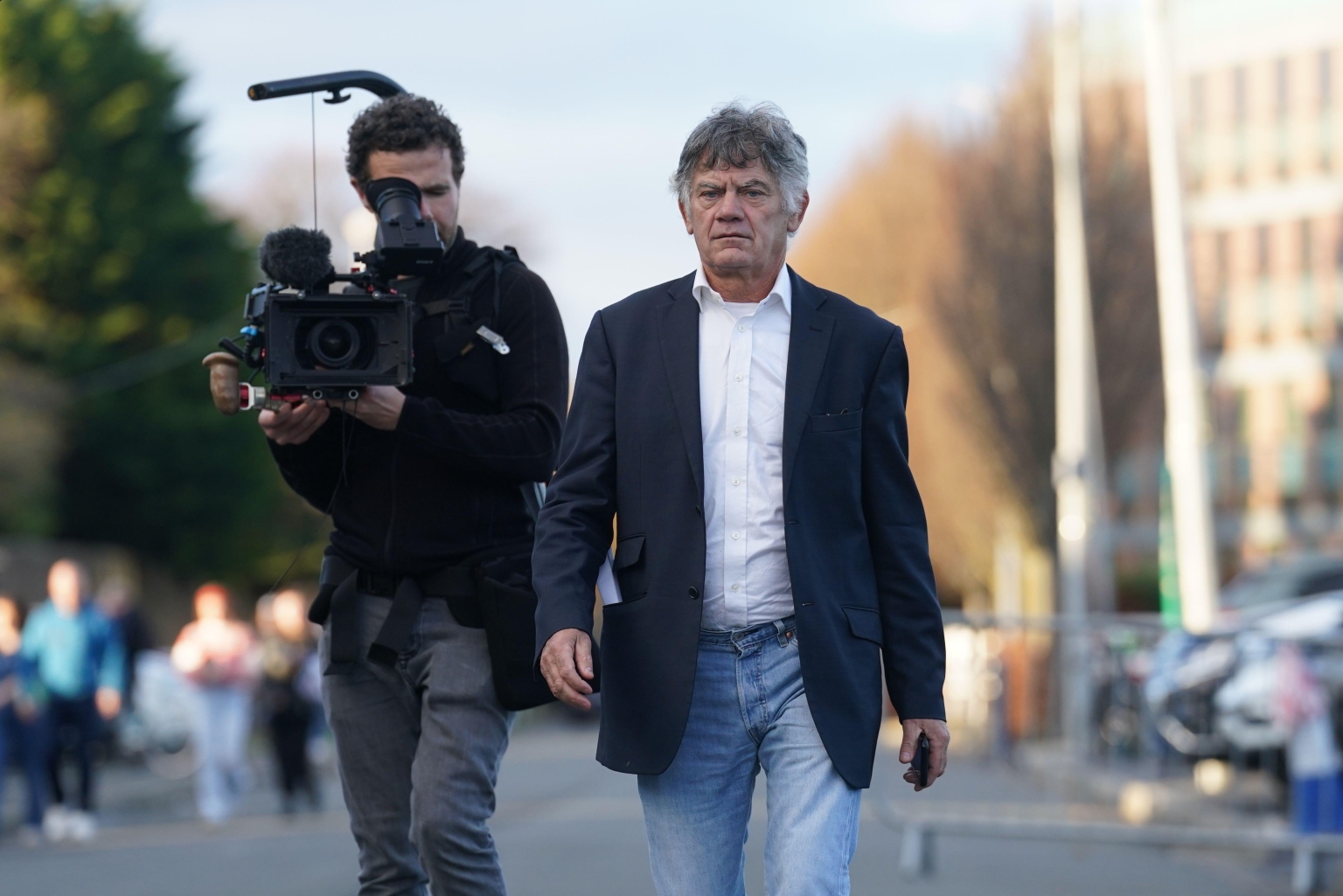
  • Gerry ‘the Monk’ Hutch Challenges Gangsters Inc.
    At their inauguration, public leaders
    must swear to uphold unwritten law and weep
    to atone for their presumption to hold office –
    Seamus Heaney, ‘From the Republic of Conscience’

    With a Dublin Central by-election on the horizon, Irish politics appears to be descending into GUBU. The ‘grotesque, unbelievable, bizarre and unprecedented’ prospect of alleged crime boss Gerry ‘the Monk’ Hutch taking a seat in Dáil Éireann looms large in a May by-election triggered by the resignation of former Finance Minister Paschal Donohoe.

    Supreme Court Justice Peter Charleton once inquired as to why I pleaded for John Gilligan not as a gentleman, but as a self-employed businessman. Gilligan’s singular presence and the shadow over the murder of Veronica Guerin engendered the Criminal Assets Bureau and The Proceeds of Crime Act 1996. This was the beginning of the end for Due Process in Ireland. In the interim, one form of organised crime mutated into another via NAMA and offshore accounts. Thus, Ireland’s Gangster Inc. of Cuckoo and Vulture Funds was born.

    Of course, Gilligan never held political office, but Hutch’s candidacy and near election to the Dáil in 2023 begs the question as to whether an alleged crime boss ought to be barred from holding political office. Any such prohibition would raise questions of definition, and indeed whether the activities of present or former office holders, including at least one former Minister for Justice I can think of, might fit that description.

    There are obvious examples of corrupt politicians such as former Fianna Fáil T.D. Liam Lawlor, paid a small fortune by Beef Baron Larry Goodman, who remains one of the state’s richest citizens. During the 1980s a rogue’s gallery of grafters made their home in Leinster House. Today’s white collar criminals keep their finger nails clean, if not their toe nails, which remain firmly embedded in the dirt.

    A drawing of Ned Kelly on a wall in Melbourne.

    Art Imitating Life?

    A hagiographic play recently staged in Dublin’s Ambassador Theatre offered an alternative take on the staid format of the party-political broadcast. Remarkably, the eponymous hero of ‘The Monk’ made a surprise appearance on stage on the opening night, taking part in a fictional live question-and-answer session with playwright and performer Rex Ryan.

    The lineage of conventional – as opposed to de facto – Irish gangsters proceeds from Martin Cahill to Gilligan and the Kinahan Cartel, and on to Gerry Hutch. The Irish media display a morbid fascination mixed with veneration for their undeniable chutzpah – Martin Cahill’s costume clown appearances on multiple court appearances springs to mind.

    It is certainly not an exclusively Irish phenomenon. In his autobiography, Geoffrey Robertson KC describes his fellow Australian’s veneration of the Wild Colonial Boy, Ned Kelly. Further evidence emanates from the global success of Francis Ford Coppola’s The Godfather (1970), or the many films of Martin Scorsese exploring mobsters’ lives.

    It should be acknowledged that politics has always had close associations with crime, and not just in a state such as Italy under Andreotti or Berlusconi. The distribution of patronage and the promulgation of laws are often to the benefit of sectional, corporate or individual interests, who endeavour, and often grease, political machines with filthy lucre.

    A dirty business requires forensic and independent journalism, and may even compromise those intent on cleaning it up. JFK’s brother Bobby went full throttle against organised crime post-election, but the former seems to have relied on shady elements to win the Presidential election. That unrequited love may have led, one way or another, to Dallas, Texas.

    As Boby Dylan put it in ‘Murder Most Foul’:

    Then they blew off his head when he was still in the car
    Shot down like a dog in broad daylight
    ‘Twas a matter of timing and the timing was right
    You got unpaid debts and we’ve come to collect
    We’re gon’ kill you with hatred and without any respect
    We’ll mock you and shock you, we’ll grin in your face
    We’ve already got someone here to take your place

    That’s the place where Faith, Hope and Charity died

    That infamous day certainly paved the way for the cabal now in office: ‘Business is business and it’s murder most foul.

    Terrorist to Law-Maker?

    A criminal and law-breaker, or even a terrorist, can also become a unifying figure like Nelson Mandela, a national hero such as Michael Collins, or more ambiguously, a peacemaker like Gerry Adams. Perhaps Gerry Hutch is on his own Road to Damascus. He certainly portrays himself as a latter-day Robin Hood, bent on exposing the criminality of  Garda Síochána. Who knows what he’d come out with under Dáil privilege. If so what could he achieve?

    Gary Gannon, the pearl-clutching Social Democrats T.D. from the same constituency claimed to have been shocked at seeing Hutch on the ballot paper last time out. Former Taoiseach, and legendary recipient of brown envelopes, Bertie Ahern described Gannon’s comments as ‘absolute nonsense,’ and noted with moral ambivalence and some subtlety:

    Gerry Hutch has been around as long as me. I won’t get into morals or ethics but I have trampled that ground for 40 years and Hutch has been kind to the community in Dublin Central in indirect ways. Whether we like it or not, he is respected by people which explains his 3,000 votes. It is not just younger people voting for him, older people I know voted for him. We can all say the self-righteous things we want but the reaction is what it is.     

    It is noteworthy that Ahern’s political machine was colloquially known as the Drumcondra Mafia. At least when Hutch was growing up in the area, there were few options other than criminality for raising oneself out of poverty. Moreover, as Balzac put it: ‘Behind every great fortune there is a crime’ Which among the wealthiest individuals in Ireland have not soiled their bibs?

    The distinction between conventional robber and a new breed of corporate robber barons is unclear, or how to evaluate it in ethical or moral terms. Perhaps the writ of the Monk is preferable to the Cuckoo Funds making housing unaffordable for most of the population?

    George Galloway making his post-declaration speech at the 2024 Rochdale by-election.

    Protest Vote

    By-elections are an ideal opportunity for one-off protest votes. Consider the recent case of George Galloway who won the seat of Rochdale by a landslide in 2023, before losing it in the 2024 U.K. General Election.

    The Irish diaspora have long been adept at bringing out the vote, arranging transfers, and indeed scouring electoral registers for the dead and the dying. Gerry Hutch has called on disenfranchised citizens to register to vote – just as the Democrats in the U.S. continue to leverage disenfranchised minorities.

    His candidature is not unlike what one used to see in the U.K. with the Monster Raving Loony Party and Screaming Lord Sutch. Yet Hutch stands a real chance. And what if one were to advise him, however guardedly, on how to beat the established parties?

    Garnering acceptance among floating voters, and picking up precious transfers, would require him to articulate political objectives, at least in outline. Apart from being critical of the conduct of the Gardaí, what does he stand for?

    The Dublin Central constituency has some of the worst poverty in the state, alongside new hipster wealth and significant immigration in recent years. A manifesto of sorts would be worthwhile, addressing the concerns of native Dubliners in particular, and hopefully encouraging greater acceptance of diversity. Tony Gregory brought great benefits to the area. An independent candidate like Hutch might be able to perform a similar role.

    Corruption ought to be condemned, but violence should never be condoned. A reformed Hutch might have greater clout among troublesome elements than most politicians when addressing the current wave of violent crime. Recent fuel protests reveal Ireland to be on the brink.

    It remains to be seen whether Gerry Hutch has any real ideas for addressing the enduring problems of access to housing, health and education, or the increasing lawlessness in city centre, as the State continues to fail in its primary duty to keep the peace.

    Tom Wolfe in 1988.

    Radical Chic

    Tom Wolfe in his 1970 New Yorker essay ‘Radical Chic: That Party at Lenny’s’ used the term to satirize composer Leonard Bernstein and his friends for their absurdity in hosting a fundraising party for the Black Panthers. Wolfe’s concept of radical chic lampooned individuals (not unlike jet setters such as Paddy Cosgrave and his ‘Whistleblower’ Café) who endorsed leftist radicalism to affect worldliness, assuage white guilt, or garner prestige, rather than to affirm genuine political convictions.

    In short, Radical Chic is described as a form of highly developed decadence; and its greatest fear is to be seen not as prejudiced or unaware, but as middle-class. One suspects, however, that their Irish equivalents would be wary of Gerry Hutch, but let’s see.

    At one level I endorse his candidature as a means of giving the establishment a kick up the posterior, but it remains to be seen whether he possess any real ideas for addressing the issues I have alluded to. In the Kingdom of the blind, the one-eyed man is king. Perhaps the best that can be said of Gerry Hutch is that he might prove to be a superior form of gangster than the rest.

  • Who is my Neighbour? On the Death of Renee Good

    It’s very possible that Renee Nicole Good reasoned, as I would’ve, that her whiteness would protect her when she put her Honda Pilot, dog in tow, in the path of ICE vehicles on a Minneapolis street less than a mile from where George Floyd’s last words were, just six years before, “I can’t breathe.” Unfortunately for Renee—a poet, wife, and mother of three—neither the historically privileged color of her skin nor her citizenship were sufficient to shield her from three shots fired at point blank range by an ICE officer after a brief and startling confrontation. The officer was briefly hospitalized and released the same day.

    Ordinary Americans can add this outrageous bloodshed to a growing list of Orwellian events prompted by the Trump administration, which includes both the killing itself and subsequent state-propagated lies seeking to style Good as a ‘domestic terrorist’ and ‘professional agitator.’ Today, I woke to news of a flurry of resignations from top prosecutors: four senior leaders in the division that investigates police killings have resigned in protest, and six federal prosecutors in Minnesota have jumped ship, not to mention the FBI denying local MN authorities any access to their investigation.

    Our times (and our enforcement officers) are trigger-happy, and the socio-political hot buttons have long since boiled over. There is palpable temptation—on all sides of the American partisan spectrum—to give into violence, or despair, or both. Reaching into an exhausted rattle-bag of the faith in which I was raised, “love thy neighbor as thyself” – a Levitical commandment echoed by Jesus of Nazareth—sits like a cold stone in my palm.

    Christ was an effective radical because he knew when to flip a table and when to restore a sword-shorn ear lopped off in protest of his own arrest. Angry Americans flip tables with zeal. It’s the cathartic part, the part that soothes our sense of wounded moral dignity and our desire to see immediate justice. But I fear that until we understand the counterintuitive nature of this rattle-bag text – counterintuitive because we do not get to pick and choose the identities of our neighbors, and because we are completely entrenched as a society in ‘othering’ those outside our given and (especially) our chosen ‘tribes’ – we will continue to see blood in the streets and lies on the screen.

    POTUS is set on besmirching the name and legacy of Renee Nicole Good—who died standing up for her neighbors. I’m certain we will not see these calumnies retracted any time soon. A closeted melancholiac, I’m left mourning Renee, a fellow artist, and imagining what it means to bring up my young son in such turbulent, hate-stricken times. I know I’m not the only one.

    We might finally start living when we learn to kill each other with kindness. Until then, we seem doomed to proceed without the last two words and suffer the consequences.


    SOMETHING GOOD
    by Haley Hodges

    Sky, road, rain, one great
    grey. Into this toothless homogeny
    come fanged questions—
    must we raise our children
    in a police state? Was the grey,
    say, two generations back
    (grand grey to this grey)
    softer, somehow? Fault fate
    if you must. How to return
    to iridescence—to joy—
    despite this—despite all—
    before we return to dust:
    that’s our operation, our
    immutable mandate. Let
    slates be wiped and crammed
    with this endeavor. Light,
    it’s time. Come like cream
    to the top. Crown each
    seeking life, lives going
    to the lengths men with guns
    and covered faces go—
    but oh, finally gently. And
    for something good.

    Feature Image: Uniformed HSI SRT agents in Los Angeles


  • My Mary & Me

    Many good people will ‘do the right thing’ and spoil their vote this coming Friday. Many will ‘do the right thing’ and vote for one or other of the two candidates that have been shepherded onto the ballot sheet by the powers that be. Many will undoubtedly take the easiest option: blame the weather and not show up at all.

    Of the usual fifty-odd percent of eligible voters, who arrive at polling stations as expected, more than likely the majority will vote for Catherine Connolly. In the unlikely event that more Fine Gael stalwarts from South Dublin, Cork and the more affluent suburbs show up, then Heather might rule the day – but that seems very unlikely.

    Given the near inevitability of the outcome and the futility of participation in a game that has been rigged from the start, it’s hard to know which of the options is the most ‘right thing to do.’ Personally, if I manage to get the grass cut on polling day I will have done my civic duty.

    As far as I can see, there’s about as much difference between the three options as there is any difference between the candidates themselves. In practical or political terms, both Heather and Catherine are on the ballot because neither will use the office of the Presidency to hold the main political parties to account in any practical or substantive way. Of course there will be lip-service to neutrality, wars, digital identities and so on, and perhaps we should be content with a bit of lip service. Either way, neither candidate poses any practical threat to the status quo. Neither candidate will use the office to effectively challenge those who have graciously paved the path to the Áras.

    The major issues that face the nation: housing, health, immigration, public services and our neutrality will of course serve as talking points, but the Presidency will function in the usual perfunctory manner, as a kind of mood-music for the political establishment.

    Aside from the machinations of ‘far-right extremists’, there appears to be no real appetite for practical change in Ireland. Nothing at least beyond a more trendy set of clothes for the Emperor. Crucially, neither candidate has any intention of raising any questions in respect of the behaviour of the three main parties throughout the Covid years. On that front the government, the opposition and both candidates are united. As Henry Ford said of his Model-T in 1919: “the customer can have any colour he wants, as long as it’s black.”

    Seán Gallagher former Irish Presidential candidate.

    No Big-Mouth Independents

    The whips have ensured that no big-mouthed independents will appear on the ballot paper, independents who might have asked uncomfortable, unscripted questions. An independents who might have given those on the right of the political spectrum a place at the table perhaps?

    Yet, it is not only right-wing extremists who are quick to recall the Covid years; the elderly who died, the money trails, the passports, the genetic vaccinations and so on. If not questions, then at least eyebrows are here and there being raised more generally in respect of issues like ‘excess deaths,’ and the increasing incidence of cancers in Ireland.

    Even RTÉ is unafraid to admit that cancer was on the decline between 2011 and 2021 but that since 2021 the incidence in Ireland has soared, becoming the second highest in the EU in 2022. Today it is likely to be even higher. Excess deaths are another matter, but they too might step out from behind the shadows one day too.

    It is perhaps unsurprising that most Irish voters do see differences between the candidates. To peruse the mainstream media in recent weeks, one would think we had a choice between chalk and cheese. In fairness, Irish voters apparently notice a distinction between Fianna Fail and Fianna Gael, and because Sinn Féin are in opposition and appear to often disagree with FFFG, voters see some differences there too.

    I suspect that a growing number of Irish people (young people in particular) are coming to regard the apparent differences between the main political parties as purely superficial. During the Covid years the veil slipped for a time, as the three main parties showed their true colours, behaving in precisely the same manner: pandering to the same fears; promoting the same policies; advocating for the same pharmaceutical products; and pushing the same uncompromising agenda.

    In truth, the difference between the main parties, like the difference between Catherine and Heather, is mostly ‘smoke and mirrors,’ entertainment created by the media for the purposes of buttering bread, earning a crust and paying the bills. Unfortunately, figuring out the truth requires intellectual investment, which usually pays poor dividends.

    Perhaps we buy into notions of ‘difference’ between parties and between candidates because increasingly we lack that capacity to think deeply; to read a book instead of a tweet.

    Mary McAleese. ©Patrick Bolger Photography

    Soundbites

    Despite the ascendancy of the soundbite, Irish voters are undoubtedly wearying of the same old packaging. The presidential Mary-model – featuring the heels, pearl necklace, Louise Kennedy suit and precision haircut – are the unmistakable hallmarks of the two Marys who have gone before. The familiar trappings at the very least have become dull and boring, if for no other reason that we grow tired of repetition.

    The only evolution that Heather brings to the ‘Mary-model’ for Presidential success, is the fact that she is not a Mary. Those who will actually make a choice this Friday could not, and will not (in any significant numbers) vote for another Mary. If they do one can surely conclude that all hope is lost, both for Ireland and for the Oysters.

    An evolution in our thinking, an intellectual escape from the paradigm of our post-colonial mindset, might be an impossibility, but that does not mean that we are not experiencing an evolution in how we see the world. We evolve cautiously, in small and slow increments. We may be insecure and await precedents to be established elsewhere in the U.K. or the U.S. but it does evolve.

    The Mary-boat has sailed. It has had its presidential cruise and is scheduled to be up-cycled into something different, something ‘trending’ and a little bit more environmentally friendly.

    Even my dachshund rolls his eyes and looks disappointed when I present him with a bowl of the dried dog-nuts we keep in the pantry. He has come to expect a few leftovers to be mixed in with the mundane.

    Catherine Connolly.

    ‘An Element of Newness’

    In respect of how the Presidential ‘rubber-stamp’ will be applied to legislation, Catherine might be no different to Heather, but she will bring a sufficient element of ‘newness’ and ‘difference’ to apply a veneer of ‘change’ lacquered on the planks of the same-old.

    Catherine has a certain ruggedness about her, an edge that is ‘earthy’ and ‘progressive’.  Her posters are less formal and contain a frequent, if veiled, nod to ‘pride’. Catherine hasn’t been wooed to the mainland to purchase a perfect smile. Unlike her competitor, there is nary a pearl necklace anywhere to be seen, and she is not afraid to wear an anorak, even when it’s not raining. There is something natural and home-grown about Catherine, and that  certain-something will be sufficient to carry her all the way to the Áras.

    When advanced capitalism sets the agenda for the general production of ‘news’ – costs increase the greater the scrutiny is applied to the issues. It would take a bit of depth and thought to arrive at the truth that there is little if any difference beneath the surface. It’s all about what’s trending, nothing more than that.

    Authenticity (whatever that is when it’s at home) took a major hit from that oxymoron of ‘Artificial Intelligence’. Deeper issues escape the mainstream media because they require some thought. The more of that commodity required of legacy media the less marketable and consumer-friendly it becomes.

    In respect of the ‘vote-spoilers’, few if any media outlets reap a harvest from that small herd of ‘right wing extremists,’ a cohort who are insisting they smell a rat somewhere. That motley crew of racist, flag-wielding loopers, have been smelling plague rats for more than five years now. The left in Dáil Eireann on the other hand are preoccupied with more pressing issues: Ukraine, gender, Palestine and pay gaps for example.

    The election naysayers will be ignored by legacy media. The spoilers will scarcely get a mention, and the inevitable low turn-out will most likely be described as ‘only marginally worse than usual’.

    Why should we expect anything different? Irish tenants elected their landlords to the English parliament for far longer than we have been freely voting for more of the same. It’s only a pity Jim Gavin bowed out after failing to return money owed to his tenant, as the analogy would require no further reference. We have a long and established tradition of voting for who we’ve been told to vote for. It’s a cultural trait which is quite possibly an integral component of a post-colonial make-up.

    Our respect for the authorities who preserve and protect us from each other is predicated on the belief that they care for us – much in the same way as a farmer cares for his herd of milch cows. They have our best interests at heart, and thanks to democracy they remain answerable to ‘we the people.’ All that is necessary to buy into the myth is to show up and vote.

    Heather Humphreys.

    Our Proud History

    Yes, we did have a Revolution and a War of Independence. We have built a mythology around that brief period in our history. We like to forget that only a handful of right and left-wing loopers showed up on Easter Sunday, and those in charge were spat on before being executed. Subsequently, much of our nationalism was self-sabotaged and consumed in the crucible of the Civil War. What little remained expired in the protracted bloodshed of the Northern Troubles.

    Ireland is a subservient nation. To suggest otherwise would be to deny the unprecedented scale of our wilful compliance during the Covid years. Lockdowns might have been insane, but we had the longest ones in Europe. In general, we love rules, we love imposing them upon each other, and we respect our masters, just as long as we get to eat some of the long grass in the summer.

    That the Presidential election has effectively been rigged; that the party whip was employed openly and unashamedly by Harris and Martin; speaks volumes and roars into some cavernous region of our national psyche.

    We elect politicians who act out of a desire to rise through the ranks, and allow themselves to be directed by a whip, rather than being guided by their consciences. Our system of politics has become indistinguishable from the one that it replaced in 1922. Our politics exists primarily as a means for promotion of ambitious individuals within political parties. Harris and Martin are obvious examples.

    The system ensures that only ‘yes-men’ or ‘yes-Marys’ rise to the top. One need only look at the mediocrities that reach the top of the pile to confirm that hypothesis. But what if those at the top of the party-political system are presently saying ‘yes’ to other shadowy institutions and individuals?

    Today we may be living under a regime that is little more than an elaborate form of puppetry. We call it a ‘liberal democracy’ because we have the right to select the puppets.

    Neither Humphreys nor Connolly can see the ‘wizard behind the curtain’. That’s what makes them viable candidates and good politicians. Or perhaps they do see the wizard, but view him as most of the puppets do: as a kind of benign or benevolent entity, who brings ’employment’ and ‘economic growth’ in his big sack.

    Either way, the globalist tyrant behind the sheet of ballot paper, the fat man pulling the levers and speaking into the megaphone, remains hidden from view at best. Worse still is when we are entirely grateful to have him pulling the strings.

    Hopefully it won’t rain on Friday.

    Feature Image from Judging the Lovely Girls Competition, Father Ted, Hat Trick Comedy.

  • I Have a Dream

    There is a hidden global superpower that dominates all our lives. It does not reside inside any government building or military base, but instead, rests snug as a bug within each and every one of us – the brain. In centuries past, it was widely believed that human consciousness was located somewhere between the heart and the gut. This medieval mindset meant people’s everyday awareness of life, and their surrounding relationships were a lot more visceral and emotional than our own. However, with the Age of Enlightenment the old world of deep feeling awareness was transformed into a more detached and reasoned approach to human cognizance. Over the years, neuroscientists have slowly revealed how the brain reigns supreme over every function of the human body, and all our everyday interactions with the world outside. It is both a living matrix of layered complexity, and a biochemical organ through which consciousness has become both self-reflective and ordered. As a result, our brain is viewed by many as the most fascinating and complex structure in the known universe.

    Sadly, the brain also harbours the greatest everyday threat to all humanity. This threat comes from something that is often far more insidious and widespread than inequality, poverty and even climate disaster – our dreams. Not long ago, dreams were primary seen by psychoanalysts as the early alarm bells of emotional and psychological tensions which, left unchecked, could fester into a multitude of mental health disorders such as neurosis, psychosis, phobias etc.

    Today, however, neuroscientists and psychologists have discarded this psycho-drama interpretation of dreams, preferring instead to see them as the unintended outcome of the brain simply undertaking much needed housekeeping while we sleep. Dreams emerge as a direct result of the brain recharging important memories that would otherwise be wiped clean by time. It is the arbitrariness of these memories being triggered that shape the ensuing drama of our dreams. Unfortunately, alongside the recharging of memories comes the unleashing of various electro-chemical and emotional reactions tied up with them.

    Upon waking, these emotional and electrochemical disturbances permeate our everyday existence. This process can be both positive and sublime as witnessed in the form of the mysterious muse who, darkly veiled, imbues life and inspiration into poetry, literature, music and art.

    In addition, there are the eureka moments experienced by scientists, mathematicians and various pioneers who following months and even years of grappling with a problem suddenly, after a peaceful sleep, experience the realisation of something that was always knowingly obvious. On a more intimate level, there is the heightened sexual arousal felt by millions of people as they emerge from their dreams drowsy, half asleep and half awake, delicately exploring the sensual surge towards climax. Lastly, and most significant of all, there is the emotional, psychological and social impact of dreams on our everyday wellbeing and relationship with others. How often have you heard someone claim that they are not a morning person, but instead are grumpy, bad tempered and full of resentment? It is these negative moods and feelings that become engrained within a person’s sense of being, as well as their everyday relationship with the world around them.

    In essence, dreams are not the play ground of wishful illusions or the expression of deep seated mental health disorders, but accidents caused by one of our brain’s basic functions – the maintenance of important memories that could aid our survival. Amongst all its sublime riches, by randomly triggering our memories in the form of dreams, the brain sets in motion a flurry of biochemical reactions that linger and become the breeding ground for all sorts of social, emotional and psychological problems. It could be that dreams rather than money are the root of all evil..

    Feature Image: Daniele Idini

  • It’s All Academic: Bad Ideas Bloom

    A few years ago, I had occasion to walk regularly past the university in Galway. My journeys took me across the Salmon Weir Bridge, which had narrow footpaths and has since been relieved by a new footbridge, and up past the cathedral and the university. Often, I found myself walking against the current of students coming from the university. The various encounters along the way were sometimes surprisingly hostile. Many of the students seemed fired up with startling aggressive intent. Their demeanour reminded me of us as kids pouring out of the cinemas having watched a Bruce Lee movie, flexing fledgling muscles, feeling ready to take on the world.

    Naturally, I wondered: is it just me or is this a thing? On one occasion, when a young black woman glared at me on sight, for no apparent reason, a paraphrase of Ali G’s line popped into my mind, “Is it cuz I’s white?” That made me smile, for a while anyway, until I realized there was likely more than a grain of truth in it.

    I had attended that university as a mature student, took an arts degree, majored in English and sociology/politics (soc ‘n’ pol) and I do recall feeling similarly fired up at the time about the injustices of capitalism and so on, leaving me inclined to glower at men in suits. Was I now the man in the suit?

    I read up on what was being disseminated in the universities that was causing students in England and across the West to tear down statues and demand reparations for slavery, among other outraged activities. Back in the 70s and 80s, this same type of young person would be forming bands or theatre troupes, annoying no one, but neighbours and critics. What has changed?

    Pilgrims Going to Church by George Henry Boughton (1867).

    The New Puritans

    I came across a very helpful book by Andrew Doyle called The New Puritans: How the Religion of Social Justice Captured the Western World, which pretty much laid out the entire state of play: woke ideology filling the place that religion used to occupy and becoming a pseudo-religion itself.  It seemed that I, as a “white hetero male with colonialist tendencies,” as a student might put it, was actually the new framed culprit for everything wrong with the world. A kind of latter-day elder of Zion, guilty of everything, with an innate desire to colonise as a result of an innate desire for violent expression and appropriation. In a word, I’m “bad”, and not in a good way, as in rapper “cool”. And not even salvageable. To put it religiously, I’m beyond redemption.

    This idea of the “white hetero male”, as being “violent” likely stemmed from a confusion of terms, where male competitiveness was equated with “aggression”, which then brought the word “violent” into the word family, to be used for effect in argumentative debate, because everyone responds to scare stories and everyone loves a villain to make themselves look “good” in comparison. And what is a lecture after all but a kind of performance, the students filling the lecture theatres of the western world being the audiences. From this perspective the idea of the violent white male is a kind of pulp fiction, designed to thrill, while giving the freshers something to shoot at.

    But as philosopher and neuroscientist Sam Harris puts it, there usually aren’t that many bad people around at any one time. Maybe only 1% or so of people are psychopaths and sadists in any one historical moment. More often there are bad ideas that good people act upon with good intentions and usually disastrous consequences.

    And it seems from what I’ve learned from Doyle’s book and other sources, that Western universities have been disseminating some very bad ideas for a long while now, among them the idea that all white men are innately violent and all their works corrupt and deserving of destruction. But they don’t call it “destruction”. They call it “dismantling”. Meaning, I suppose, polite destruction.

    “No, Marie Antoinette, we’re not chopping off your head, silly girl, we’re simply dismantling you.”

    Then as if things weren’t complicated enough, meaning itself is regarded as a “construction” to facilitate patriarchal power, and that definitions of anything you care to name are totally subjective. Meaning, everything has many meanings. As many meanings as there are people. Which means that nothing has any real meaning, only subjective interpretation. Which means that everything is meaningless and ultimately the best yarn wins.

    All these bad ideas then became cornerstones of black studies, leading to the conclusion of the increasingly discredited doctrine of Critical Race Theory, which itself is racist, and often proudly so – “Now it’s our turn!” – that “violent” white people owe people of colour big time, with, apparently, justified hell to pay. A belief system which is perhaps even inspiring the killing of white farmers in South Africa.

    Incidentally, the “Now it’s our turn” idea also comes from feminism, and was used by some feminists to justify abuses of power when they gained authority over others, conveniently failing to recognize that far from creating equality Heaven on Earth, many of them seemed instead quite determined to create the same old same old, with themselves in the seats of power. Proving, at least, that power and ambition still have very definite meanings.

    Compulsory

    When I started in university in the early 1990s, one of the things that struck me as odd at the time was that gender studies was compulsory. The last time I’d been in “school”, Irish language was compulsory and eventually people saw that this was a bad idea because it created a system of inequality, favouring some and side-lining others. Now here I was, back in “school”, and the university, which I understood as being a place of free-thinking, had a compulsory subject. It all seemed a bit “off” to me.

    I asked some people I knew who worked in education about the oddity of having a compulsory subject in the free-thinking university, and both just looked back at me and said absolutely nothing, immovably shtum, although both exuded the vibe that this was some kind of unmentionable thing and that I would be best off saying no more about it, which I duly did, obediently attending the various compulsory gender studies lectures and seminars, to no great advantage.

    “To put it clearly, girls: white men are bad, but white women are good. We’re their first victims. And there’s hell to pay”

    Ironically, feminists also appear to have placed themselves in the role of white saviour to the Third World. Now heading up NGOs and helpfully inviting millions to “deserved better lives” in the likes of Newtownmountkennedy, they continue the task of identifying “bad” people, most of whom, oddly enough, come wrapped in white skin with male genitalia, making them easy to spot.

    “Look! A violent colonialist misogynist! Get him!”

    On top of all that, those radicalised students emerging from Western universities appear to believe that anyone who disagrees with them, on even the most trivial point, is actually evil, if not in direct league with Satan, and possibly psychically and spiritually contagious, justifying physical reprimand, as was demonstrated recently in Limerick when student Jamie O’Mahoney waved an Israeli flag during a pro-Palestine meeting. It’s little wonder then that these unfortunate students, at the receiving end of an education seemingly designed to make enemies of their fellow countrymen, now appear to have so much in common with radical Islam.

    Friedrich Nietzsche

    Theory to Practise

    Well-intentioned theory, as was so strikingly demonstrated by the Nazi misreading of Nietzsche, doesn’t always bloom beautifully into reality. For instance, one of the current real-world consequences of the teachings of comfortable academics serenely creating theoretical paper models in ivy-decked tenure, is mass immigration. The thinking and moral lesson being that male white Europe owes reparations to the Third World for colonialist crimes committed in previous centuries. This idea is partly driven by another text called The Wretched of the Earth by Frantz Fanon, which was a big ideas source in my university time.

    The ensuing academic-influenced invitation to the actual wretched of the Earth has resulted in, among other perplexities, the village of Dundrum in County Tipperary, with a population of 200 or so, being joined by almost 300 male strays – sans WAGs – from the Third World who no one quite knows, least of all our government, with locals being labelled criminally racist by the apostles of the global equality agenda for even questioning this more than extraordinary imposition. If there was any real social justice, those migrants would be housed in the universities. Chickens coming home to roost and all that.

    “Now girls, listen up! I want you to give a big feminist ‘Hey there’ to your new exotic boyfriends.”

    John Rawls

    The Pot is Black

    If the Humanities become selectively humane, as appears to be happening, it’s no longer the Humanities. It’s something else entirely. And the particular slant of “humanities” that is becoming evident in universities across the West seems more than a little racist and sexist, the very things it claims to be attempting to eradicate, itself apparently unwittingly succumbing to malignant Freudian projection on a grand scale.

    Referencing political philosopher John Rawls’ book A Theory of Justice, Thomas Sowell, economist and historian writes in his 2010 book “Intellectuals and Society”:

    Justice is the first virtue of institutions, as truth is of systems of thought. A theory, however elegant and economical, must be rejected or revised if it is untrue; likewise, laws and institutions, no matter how efficient and well-arranged, must be reformed or abolished if they are unjust.

    The way things are going, we may one day see a social movement demanding reparations from the universities.

  • Charity, Privatisation and Body Counts

    The common denominator between charities and private service providers is that they all live off public money on the basis of serving “victims” of one stripe or another, the raw material of these particular “industries”. But a victim helped and eventually “cured” is no use to this business model. To make it viable you need more “victims” coming onstream at a steady rate. But fixing the victims or the circumstances creating them is not part of the business model, since to actually fix the problems is to put yourself out of business. Raise awareness by all means, but please, don’t go fixing things. Broken is best. It’s broke, we’re fixed. It’s fixed, we’re broke.

    Private Concerns

    While it might be said, and often is, that privatisation is a “good”, promising efficiency and so on, there are of course problems. But then, there are problems with everything, life being what it is, so it wouldn’t be unusual for privatisation to also have problems.

    “In fact, it would be downright unnatural if privatisation didn’t have problems.”

    “Yes minister, but that isn’t the question. The question is: is privatisation better than public ownership?”

    The problem with the privatisation of services is the profit motive. It stands to reason that a private company entrusted with a service, any service, is going to rig the system to maximise profits. This means cutting and cutting and cutting, while valiantly keeping up appearances. This explains the awful food served in private prisons and direct provision, for instance, primped to appear as normal as possible for as cheap as possible while carefully managing not to descend to clear and present pig swill; while the company directors, healthy on profits, hang out in sun resorts, beaming around the beaches with great white shark’s teeth and the latest in designer shades.

    More Bodies

    I once worked in RTE and there was some kind of to-do between workers and management. Inevitably us writers got involved, because there’s none so militant as a writer, it’s almost a lifestyle thing, but management swiftly solved that small problem with a genius move: they hired more writers, lots of writers, flooding the writer’s pool with more writers than anyone could ever use, smothering the original small militant group of writers with grateful newbies. This tactic crossed my mind recently when our manifestly unpopular government kept our borders open to the entire third world and their grandmothers despite cries of dissent and distress from towns and villages far and wide.

    What do you do with disgruntled voters?

    “Get more voters! Grateful ones!”

    The problem with this short-term solution to a long-term problem is that some newbie from Mumbai or Kabul is not really going to give a damn about Fine Gael versus Fianna Fail versus the Shinners. When you dangle power like that to the hungry world don’t expect gratitude translated into neat generous voting patterns. You put power up for grabs like that and not only have you given your country away, you’ve given yourself away too, opening enticing opportunities for the thoroughly ruthless.

    Win-Win

    In 2017 a private prison company in Torrance County, New Mexico, threatened to sue the county on account of disappointing returns and close the damn prison, costing the county two hundred jobs. The private company demanded two hundred extra prisoners pronto, “Or we’ll see y’all in court!”

    Don’t you just love the symmetry of those numbers? Two hundred prisoners: Two hundred jobs.  As Paul Simon once wrote, “When times are mysterious, serious numbers will always be heard.”

    I lost track of the story after that. It was all pending. Maybe Obama sorted it out before turning out the lights, took some prisoners from elsewhere and sent them down there to Torrance to keep the private company in business and the country out of the courthouse.

    Or maybe that’s where the blind-eye to illegal immigration comes in. Just let a few hundred thousand South Americans steal over the border and impress upon your police force the urgent need for many arrests in a hurry to ward off a potential corporate suing tsunami. Keep the system oiled with more bodies.

    Business Plans

    What does a charity need most of all besides funding? It needs someone or something to be charitable towards. What’s say, a homeless charity without homeless people? Well, jobless would be one word that might spring to mind, maybe even homeless. Homeless charities and the people who work in them need homeless people. Arguably, they need homeless people far more than homeless people need them.

    Like privatisation of services, there is profit in charitable causes, which may go some way towards explaining the existence of over 30,000 NGOs in Ireland, nearly a thousand of which came into existence since 2020, according to Benefacts legacy. It’s boom time in charitable work and it’s not difficult to imagine the CEOs of charitable NGOs also hanging out in sun resorts, beaming around the beaches with great white shark’s teeth and the latest in designer shades.

    So it may be that mass immigration is little more than a few bad management plans gone awry. A result of unpopular political parties seeking grateful voters who’ll work for peanuts and act as infantry should the Russians invade, (you can never have too much cannon fodder), and poverty industry entrepreneurs spreading their nets wider to catch more “victims” to expand their businesses, based as they are on a kind of economic cannibalism. Because in the end, charity, like politics, war and orgies, all comes down to body counts. The more the merrier.

    Feature Image: U.K. Prime Minister Margaret Thatcher and U.S. President Ronald Reagan in 1988.

  • Name-Calling and the Fall of the West

    The cultural commentator Konstantin Kisin said recently in a podcast that the left had destroyed language. For instance, the lazy use of the words “nazi” and “fascist” to condemn someone who holds differing views has only succeeded in draining those words of meaning. If everyone is a fascist then no one is; and what then do we call an actual fascist?

    But the distortion of language by the left goes far deeper than this and is, paradoxically, far simpler. Its roots appear to be in simple name-calling, a favourite weapon of both young girls and perhaps not surprisingly, radical feminists who gave us terms like male chauvinist “pigs”, casually de-humanising men while charging them with a “crime” of sorts. When I was a young man a favourite feminist darling of the left in Ireland was Nell McCafferty, a whiskey swigging ladette who made jokes about house-training men and so on, cheered on by her lesbian and misandrist supporters.

    By the way, the word “misandrist” is one that gets downplayed a lot in the culture. I once had a windows spell-checker that didn’t recognize the word. For those unfamiliar with the term, a misandrist is a woman who despises men, the dark sister of misogynist. A prime example was that loon Valerie Solanas who shot Andy Warhol, she a CEO for the Society for Cutting Up Men or SCUM. We don’t hear a whole lot about her in the culture, and yet, there she is, as large as life, living proof that even feminists can be toxic.

    Andy Warhol and his dachshund Archie Warhol, 1973.

    SCUM

    It was Jordan Peterson, a clinical psychologist and recipient of oodles of leftist insult and yet still standing, though admittedly prone to bursting into tears every now and then, who explained the difference between male and female aggression and how it is expressed. Feminist propagandists have gone a long way in persuading the culture that the female is devoid of aggression, that violence is strictly a male preserve, except for the occasional regrettable anomaly like the CEO of SCUM, who, feminists would argue, was so hurt by men that she was kind of infected by their innate violence, and so, the shooting of Andy Warhol and all violence of women against men is actually men’s fault, the women in question being “victims” of male violence responding in like for like form, the only language men understand.

    Jordan Peterson explained that while male aggression is generally expressed overtly, female aggression is more indirect, expressing itself in the form of relational aggression: speaking badly of someone, destroying their social links, setting out to inflict reputational damage and destruction, achieved for the most part through simple name-calling.

    “If you don’t vote me on to the board I’ll tell everyone you’re a nazi.”

    “Okay, I’ll vote for you, but just this once. And please, tell everyone I’m ‘nice’.”

    “I might. If you pretend really hard to be nice. You being an aggressive man an’ all.”

    King’s College London graduands with VivienneWestwood-designed academic dress.

    Homo Placidus

    There tends to be a more placid kind of man occupying the faculties of universities and they were a pushover for the aggressive feminists seeking power in the academy, the very workshop of language and thought. We all know what happened next, they took lots of seats of power in the academy and in publishing and in the media and, with postmodernism, succeeding in drenching reality in endless question marks: did it even exist, or is it just something some selfish man made to please himself? Which brings us more or less to today… except, that is, for one important factor which is often overlooked. Because in faraway places, people with an interest in taking power in the west noted that name-calling worked as a weapon for seizing power. It was a peculiar, almost comical Achilles heel of the western male. He could be toppled by calling him a pejorative name. How very interesting…

    The late Christoper Hitchens was probably the first to notice the danger. In 2011 he warned of a term that had been deliberately created to take advantage of this western weakness. A term that would have the effect of silencing dissent while delivering power to gleeful enemies of the west. The term was “Islamophobia”, a brilliant construction with in-built gaslighting. “There’s nothing wrong with Islam, you simply have a phobia.”

    Christopher Hitchens.

    Barbarians

    Hitchens said at the time “…this is very urgent business ladies and gentlemen. I beseech you, resist it while you still can, before the right to complain is taken away from you, which will be the next thing. You will be told you can’t complain because you’re Islamophobic. The term is already being introduced into the culture as if it was an accusation of race hatred or bigotry, whereas it’s only the objection to the preachings of a very extreme and absolutist religion …”

    Hitchens went on to show how the use of the term will open the way to power by silencing objections. And it works like a charm. But even so, it still needs help, and this help comes from those already holding cultural power and influence. Hitchens, finishing with a plea, describes how the power of the west will be taken:

    “…the barbarians never take a city till someone holds the gates open for them and it’s your own preachers who will do it for you and your own multicultural authorities who will do it for you. Resist. Resist it while you can.”

    It’s difficult not to believe sometimes now, especially when some girl is raped or some man gets his head lopped off, that our own elites and the liberal left, as well-intentioned as they may be, have inadvertently fallen into the role of gate-openers for the barbarian hordes, to put our current civilisational situation in a Romanesque context.

    What an ironic historical twist this could turn out to be. That the men of the west, helpfully agreeable in the feminist cause, inadvertently created the conditions for the takeover of the west by men whose main power gesture is the subjugation of women.

    Feature Image: Ipanemah Corella

  • Kneecapped at Coachella

    Kneecap caused a stir at Coachella this year—though you wouldn’t know it from the official festival footage. The Belfast rap trio opened their set with a searing visual: a burning police car, references to British imperialism, American complicity in Palestine, and a general tone of “we’re not here to play nice.” The response? Censorship. The land of the free doesn’t want freedom with a pulse.

    Now the Metropolitan Police are investigating them. For what, exactly? Performing a politically charged rap set in California? The timing is transparent. This isn’t just about bad vibes—it’s a coordinated attempt to silence a group that refused to dilute its politics for a global stage.

    It’s a tale as old as time. An artist speaks plainly and suddenly everyone forgets their free speech talking points. Protest is fine, apparently, as long as it’s vague, aesthetic, and monetizable. Hashtags are fine, but don’t actually use your platform to say something real.

    Let’s be honest, Kneecap was never a good fit for Coachella’s algorithm-optimized playlist of “vibe music for brand partnerships.” This is a festival that sells an illusion of bohemianism and alternative living: surface-level aesthetic progressivism, but just inoffensive enough for corporate sponsors.

    Real politics, especially the messy kind grounded in colonial trauma, don’t do numbers on TikTok.

    So, when Kneecap dared to connect U.S. foreign policy to real-world consequences in Gaza, or referenced the British state’s still-rotting legacy in the North, it wasn’t just disruptive. It was unprofitable, and Coachella was never going to protect art that costs money.

    Philip Anschutz, the billionaire owner of AEG and founder of Coachella, himself keeps a little black book full of far-right sponsors. He’s spent years quietly funding conservative and far-right causes, including anti-LGBTQ+, climate denialist, and anti-union organisations. When this became public in 2017, there was outcry, but no real reckoning, just a vague statement about “reviewing donations”,  then back to business as usual.

    It’s a real-time contradiction: we sell rebellion, but the money is filthy lucre. So, when an act like Kneecap turns up and delivers a protest that isn’t product-tested, the machine grinds to a halt.

    The hypocrisy is unreal. People will invoke “free speech” to defend actual ideological fascists on YouTube, but feel uneasy as soon as someone mentions the IRA or shouts “Tibet” in Shanghai.

    Björk did just that in 2008, ending her song “Declare Independence” with a cry of “Tibet! Tibet!” at a concert in Shanghai. Chinese authorities were livid. Western media downplayed it. Promoters distanced themselves. Her remaining tour dates in the region were effectively cancelled. It was a single, spontaneous act of solidarity, and it cost her.

    Sinead O’Connor tore up a photo of Pope John Paul II on Saturday Night Live in 1992, declaring, “Fight the real enemy,” in protest of abuse within the Catholic Church. She was vilified. Media outlets called her insane, radio stations boycotted her. Joe Pesci threatened to hit her during the very next episode of SNL. Madonna, herself no stranger to co-opting Catholic imagery or controversy in general, mocked her. The crowd at Madison Square Garden booed her offstage at a Bob Dylan tribute show. It took twenty odd years for the world to admit she was right, but she didn’t live to hear an apology.

    The problem isn’t just the festivals or the corporations. Green Day are another perfect example. They made a half-hearted nod to genocide and fascist governments during their set, altering a lyric or two. Fair play to them, I suppose, but it was so blatantly performative. “We stand with humanity,” Billie Joe said, He probably later stood at the bar with his mate, Mark Zuckerberg, too.

    Dissent is just content, now. Discourse is clickbait, and anything that can’t be simplified into a slogan or sold on a t-shirt is “too much.” But protest isn’t a playlist. It’s not supposed to make you comfortable. It’s supposed to make you act.

    If the music industry actually cared about free speech, it would protect artists like Kneecap. Instead, it gives us curated rebellion. Safety pins in ears. “Resist” T-shirts made in sweatshops. Festival stages that erase the parts of performances that weren’t “brand-aligned.”

    Kneecap didn’t ask for permission. They didn’t try to fit in.

    But let’s be honest. They’re not martyrs either. They’ve since walked back their most controversial comments, stating that they do not support Hamas or Hezbollah. It’s not betrayal as much as it is survival, however. They have a career to protect, fans to answer to, and possibly legal consequences on the table.

    There’s a case currently before the U.K. High Court to remove Hamas from the list of proscribed terrorist organisations. They could’ve used this moment to say, “Actually, let’s have that conversation” but they didn’t, and perhaps they couldn’t.

    After the fallout, Kneecap didn’t apologise. They didn’t roll out a PR strategy. They posted a defiant message: “We will not be silenced.” It’s not clean, it’s not simple, but it’s real, and in a culture obsessed with diet dissent, that’s rare enough to be worth defending.

    Thankfully, several of their peers have. Following the decision to drop the trio from Cornwall’s Eden Project festival this summer, more than 40 music acts signed an open letter in support of their unwavering stance. Those included come as no great surprise, given their public support for progressive causes.

    Art is inherently political. The fact that one act has not spoken but shouted their truth to power, with the endorsement of so many, some luminary and legendary, is not just worth defending. It’s worth celebrating.

  • Fearful Times, and Canada

    On Tuesday last I had an email from the Chancellor of UMass Lowell, where I sometimes teach:

    “I am sorry to let you know that this changed over the weekend. As part of the university’s proactive effort to support and inform our international students, the International Students & Scholars Office (ISSO) has been regularly monitoring the federal database used to monitor and track international students. On Saturday, the university discovered that federal authorities had revoked the visa and terminated the immigration status of a UMass Lowell undergraduate student.”

    It seems U.S. politics are circling the drain. The U.S. Constitution, I had thought, was designed to prevent the ‘Mad King’ phenomenon, but it turns out that that depended on everyone–executive, legislators, judiciary–playing by rules which, it seems, aren’t rules after all, only habits and customs.

    The U.S. has done irreparable harm to its power in the world.

    Some Canadians are inclined to jeer at the U.S. and its embarrassment on the world stage. That could become a dangerous habit. Instead let’s be honest and clear-sighted on the strengths and vulnerabilities within our own system of government and our own societal & cultural norms. We need to support leaders who understand Canada’s position within the world and have strategies to strengthen it as the rules of global trade are rewritten. Alliances, military and (is in trade agreements) economic, are not love-fests, but strategic partnerships.

    I am uncomfortable when some Canadians get all teary–the other side of jeering–about how much and how blindly they have ‘loved’ the U.S.. The goal of any Canadian government must be to strengthen Canada’s position in the world, with the understanding that no economy or society in a smart, fluid, and connected world is or should be “independent”, and that a system that works to benefit of all players is best for us. (The devil is in the details, of course.)

    I admire Prime Minister Mark Carney–the little I know of him– (three Co. Mayo grandparents!)–but he is a new type of Canadian PM: an internationally-minded elitist technocrat. Effective leadership in our decentralized democratic confederation will also demand other, quite different skills. PM Carney is the man of the hour now, though, which is his good fortune and, I hope, Canada’s. Like WSC in 1940, the man is meeting the moment, perhaps.

    I respect the measured, sensible language that Prime Minister Carney and Foreign Minister Mélanie Joly use.  They accept that the U.S. “Administration” (I think “Régime”, with its suggestion of autocracy, ossification, and damage, is a better noun) can cause immense trouble. They accept the necessity of accommodation, but in their speeches and interviews they have maintained a firm tone and offered clear warnings that somethings are not negotiable.

    A good relationship with the U.S. will always be in Canada’s interest. At certain times such may not be possible, but we should work to keep those breaks as short as possible, while maintaining a clear awareness of our own interests, and being willing to sometimes pay a price for standing firm…

    Right now, many smart people in the U.S. – undergraduates on student visas, scientists and researchers working at the highest levels – are feeling vulnerable. Canada ought to be reaching out to these victimized people with offers not just of asylum, but of freedom–to study, learn, research, contribute (and freedom to protest Israel’s project in Gaza, though that might be as career-threatening in Canada as in U.S.). Intellectual immigrants would give an invaluable, game-changing boost to the knowledge base and skill set of the nation. Just like the thousands of émigré Hungarians who sparked up Montreal and Toronto starting in the 1950s, and other waves of immigrants before and after that…

    To offer people in flight from the U.S. educational and research ecosystems place to land, Canada needs to commit to developing the quality, scale, and scope of research in Canadian universities, which have been, for most of our history, second-rate.  It will be hard to beat the Chinese in this area, but we can try. (The multitude of Chinese students and graduate students I’ve encountered as Harvard and UCLA this year–suggests that U.S. schools are still a powerful draw globally … up until January 2025, anyway). Many faculty, researchers and students in U.S. schools and institutions feel furious, scared, and – rightly – vulnerable. Canadian schools and institutions should be making offers, backed with serious support for studies and research. As an editor and writing coach, I work with tenured faculty in the highest reaches of Ivy League acclaim and renown who feel censored, threatened, and sickened by the atmosphere. Their world-renowned institutions are poisoned by fear.

    Can Canada make an all-out effort to scoop international research and teaching talent from U.S. universities? That will require the federal govt stepping in and up. Canada’s universities are for the most part significantly underfunded. And there are aspects of the U.S. university system, particularly the great public schools like U of Michigan, UTA, UCLA, UC Berkeley, UC Riverside, UMass, U of Wisconsin, UVA, OSU, etc. that Canadians ought to take a closer look at. (Beyond the NCAA football and basketball seasons!) These are large public research institutions with global reach. Asking Canadian undergraduates to pay more, while offering them ready access to scholarships and loans might be step one in improving the landscape for scholarship and research in Canada. I can’t think it’s a bad thing to ask people to invest more deeply in their own education. And I’ll shut up now.

    Feature Image: Thomas K. 


  • The Powerful Nature of Addiction

    Back in 2016, I was embarking on a road towards sobriety after nearly eighteen years of committed alcoholism, homelessness, depression, and, in many ways, desperation. I needed to change. However, I did not know how or where to begin. I started with ‘one day at a time,’ taking small, manageable steps. If I don’t drink this week, I will try it next week. That was my mantra, and that’s how it went initially.

    That was when I happened to be in Manchester on my way from Salford, where I had been staying in a homeless night shelter, and walking into town to go to work one Sunday morning, when a fresh-looking can of Carlsberg was sitting all alone on the low or a brick wall near a small park. As to where its owner had gone, I had no clue. Still, I wanted to down that can of fizzy beer. I wanted to guzzle its beery contents down my throat and for it to wash around freely in my guttiwuts (as they put it in Clockwork Orange). Filling me with the desire for more beer, to smoke fags, and to fall about like a drunken imbecile, not being at all the responsible person that I used to be and aligning foolish behaviour(s) I know all too well – being the eternal alcoholic bum.

    Cut to the previous year prior, 2015, on a Sunday, the first of November, I had the worst hangover of my life, and wanted to kill myself. I simply had had enough of being an alcoholic.

    The scenario was that I was at Birmingham International Airport’s train station, lying on a bench in the small waiting room, suffering from a desperate hangover, holding onto a sausage baguette with congealing red sauce in a paper bag, murmuring in pain. I didn’t see how I could continue in life, having failed at it so badly.

    I wanted to throw myself under an oncoming train.

    I had been out on the lash in Birmingham the night before and spent a lot of money on a premeditated drinking session. The following day, I jumped on an earlier train, and the conductor came round and asked for my ticket and, inspecting it, said, ‘You’re an hour early; either buy a new ticket which will cost you £35.00 or get off at the next station and wait for your train.’ I choose to get off.

    Feature Image: David Kwewum

    Sobering up has been rather hellish. Seriously, it has.

    For the first five years, I was ill. I was lethargic and had a rumbling stomach. I believe I developed GERD (Gastroesophageal Reflux Disease), where the lining of the stomach is decimated due to all the booze I tipped down my throat, where it swilled around in there like a dark, seething, twisted, broiling sea.

    During my recovery, if I drank strong, cheap tea bags, the tannins in the tea played havoc with my liver, leading to a dull, searing pain in the lower right-hand side of my upper body.

    In 2017, I went to the GP in Derry, where I was living in a hostel, and he informed me I was having recurring liver infections. He didn’t know what I knew.

    I had a liver scan. There was some ‘superficial’ scarring on my liver, the nurses at Altnagelvin Hospital said. If it was superficial, I didn’t want to know what actual, deeper scarring felt like. No way. This had been painful enough so far.

    The reality was, after years of alcohol consumption, I had liver disease – let’s make no bones about it, leading to recurring infections. And my diet was atrocious, which contributed to my poor health.

    I drank far too many fizzy drinks. I scoffed far too many biscuits – once I sat down with a cup of tea, I would ‘clear the decks’ in terms of consuming high-sugar and high-fat content junk food in one sitting. Tunnock’s Teacakes were a firm favourite; I could consume at least four in one go. I ate crisps by the tonnage and ballooned to nearly fifteen stone in 2020. That’s big for someone of my height of 5ft 7¾, with a small enough frame. I was a greedy, unmitigated, irresponsible (health-wise) git.

    Two years ago, I went to the GP for a checkup as I was feeling lightheaded and had chest pains. My blood pressure was up six points, and I had high cholesterol, I was informed. I was on the danger alert for a heart attack. I think I have had some minor ones. Or Angina, at least. That or it was the GERD.

    These days, I rarely drink fizzy drinks. I seldom eat crisps and opt for baked ones. I would have a chocolate bar at least twice a week. Rarely more than that. I prepare most of my meals from scratch and mostly drink water.

    I recently saw an advertisement on a billboard at 8:44am for a pint of the black stuff, and wanted to imbibe it so badly that I considered going on the ‘drink.’ I swear to goodness that one millisecond glance up at that foamy pint with roasted barley, and I was there with one in my hand, ready to take a good draught.

    That is the powerful nature of addiction – that pull is as strong as it ever was, even though I am currently nine years alcohol-free.

    It takes work to remain sober. I don’t think I ever will be free from alcoholism.

    Only now can I say that I am not drinking. And that’s what I intend for the foreseeable future.

    I’m aware of the downsides, and it’s far from ideal: the anxiety, the guilt, and the worthless feeling(s) that soaking oneself in booze brings.

    At least now that I am sober, I can focus on my hobbies, including writing and making music – two things which bring me joy. And if that gets me out of bed in the morning – I now rise every morning at around 5am – sleeping right through from the night after usually going t to bed around 10pm.

    That is something which I can control and manage. I opt to be busy, which is something I aim to maintain. Things change when people have to.

    Feature Image: Pixababy