
Tag: gangsters

  • Gerry ‘the Monk’ Hutch Challenges Gangsters Inc.
    At their inauguration, public leaders
    must swear to uphold unwritten law and weep
    to atone for their presumption to hold office –
    Seamus Heaney, ‘From the Republic of Conscience’

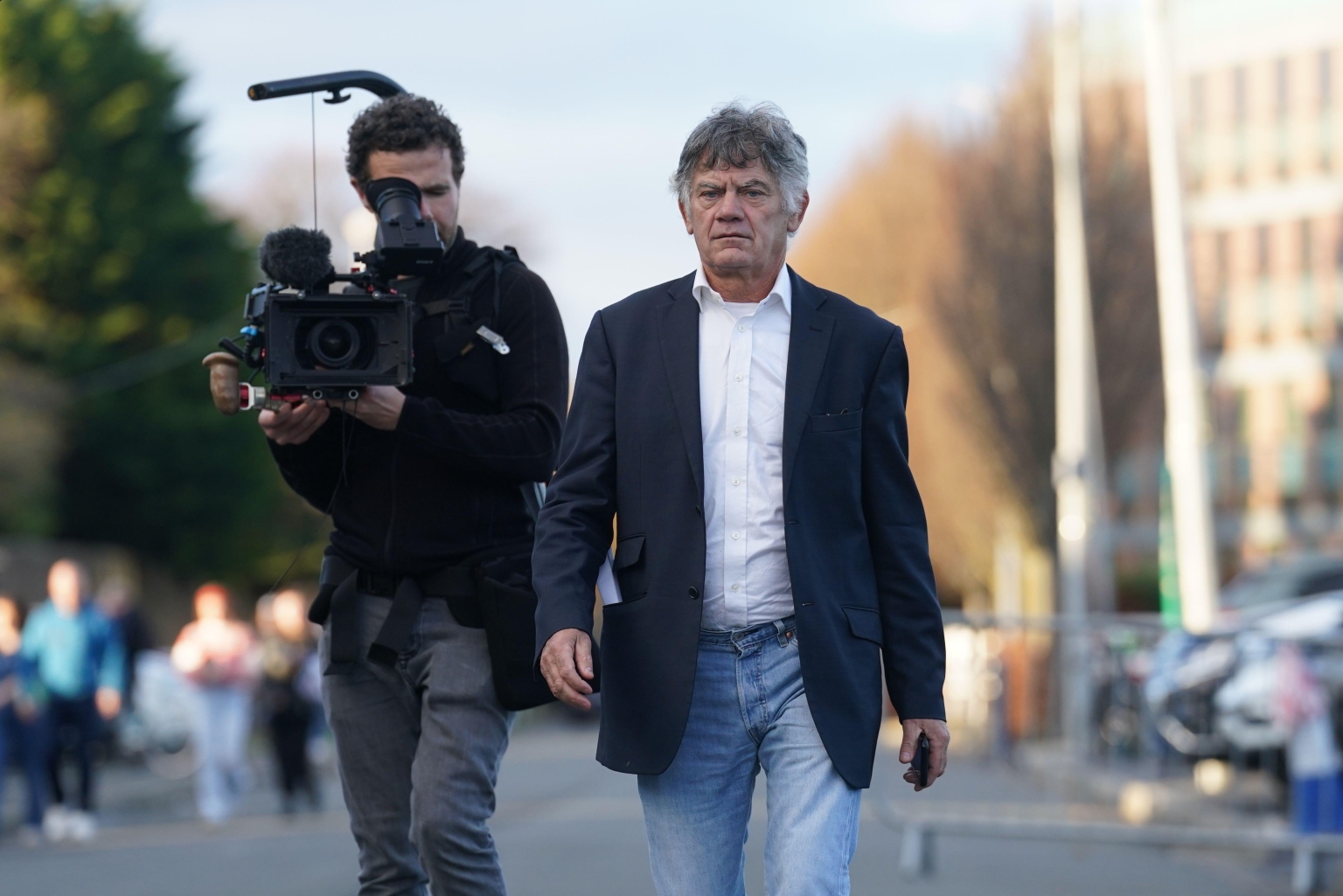
    With a Dublin Central by-election on the horizon, Irish politics appears to be descending into GUBU. The ‘grotesque, unbelievable, bizarre and unprecedented’ prospect of alleged crime boss Gerry ‘the Monk’ Hutch taking a seat in Dáil Éireann looms large in a May by-election triggered by the resignation of former Finance Minister Paschal Donohoe.

    Supreme Court Justice Peter Charleton once inquired as to why I pleaded for John Gilligan not as a gentleman, but as a self-employed businessman. Gilligan’s singular presence and the shadow over the murder of Veronica Guerin engendered the Criminal Assets Bureau and The Proceeds of Crime Act 1996. This was the beginning of the end for Due Process in Ireland. In the interim, one form of organised crime mutated into another via NAMA and offshore accounts. Thus, Ireland’s Gangster Inc. of Cuckoo and Vulture Funds was born.

    Of course, Gilligan never held political office, but Hutch’s candidacy and near election to the Dáil in 2023 begs the question as to whether an alleged crime boss ought to be barred from holding political office. Any such prohibition would raise questions of definition, and indeed whether the activities of present or former office holders, including at least one former Minister for Justice I can think of, might fit that description.

    There are obvious examples of corrupt politicians such as former Fianna Fáil T.D. Liam Lawlor, paid a small fortune by Beef Baron Larry Goodman, who remains one of the state’s richest citizens. During the 1980s a rogue’s gallery of grafters made their home in Leinster House. Today’s white collar criminals keep their finger nails clean, if not their toe nails, which remain firmly embedded in the dirt.

    A drawing of Ned Kelly on a wall in Melbourne.

    Art Imitating Life?

    A hagiographic play recently staged in Dublin’s Ambassador Theatre offered an alternative take on the staid format of the party-political broadcast. Remarkably, the eponymous hero of ‘The Monk’ made a surprise appearance on stage on the opening night, taking part in a fictional live question-and-answer session with playwright and performer Rex Ryan.

    The lineage of conventional – as opposed to de facto – Irish gangsters proceeds from Martin Cahill to Gilligan and the Kinahan Cartel, and on to Gerry Hutch. The Irish media display a morbid fascination mixed with veneration for their undeniable chutzpah – Martin Cahill’s costume clown appearances on multiple court appearances springs to mind.

    It is certainly not an exclusively Irish phenomenon. In his autobiography, Geoffrey Robertson KC describes his fellow Australian’s veneration of the Wild Colonial Boy, Ned Kelly. Further evidence emanates from the global success of Francis Ford Coppola’s The Godfather (1970), or the many films of Martin Scorsese exploring mobsters’ lives.

    It should be acknowledged that politics has always had close associations with crime, and not just in a state such as Italy under Andreotti or Berlusconi. The distribution of patronage and the promulgation of laws are often to the benefit of sectional, corporate or individual interests, who endeavour, and often grease, political machines with filthy lucre.

    A dirty business requires forensic and independent journalism, and may even compromise those intent on cleaning it up. JFK’s brother Bobby went full throttle against organised crime post-election, but the former seems to have relied on shady elements to win the Presidential election. That unrequited love may have led, one way or another, to Dallas, Texas.

    As Boby Dylan put it in ‘Murder Most Foul’:

    Then they blew off his head when he was still in the car
    Shot down like a dog in broad daylight
    ‘Twas a matter of timing and the timing was right
    You got unpaid debts and we’ve come to collect
    We’re gon’ kill you with hatred and without any respect
    We’ll mock you and shock you, we’ll grin in your face
    We’ve already got someone here to take your place

    That’s the place where Faith, Hope and Charity died

    That infamous day certainly paved the way for the cabal now in office: ‘Business is business and it’s murder most foul.

    Terrorist to Law-Maker?

    A criminal and law-breaker, or even a terrorist, can also become a unifying figure like Nelson Mandela, a national hero such as Michael Collins, or more ambiguously, a peacemaker like Gerry Adams. Perhaps Gerry Hutch is on his own Road to Damascus. He certainly portrays himself as a latter-day Robin Hood, bent on exposing the criminality of  Garda Síochána. Who knows what he’d come out with under Dáil privilege. If so what could he achieve?

    Gary Gannon, the pearl-clutching Social Democrats T.D. from the same constituency claimed to have been shocked at seeing Hutch on the ballot paper last time out. Former Taoiseach, and legendary recipient of brown envelopes, Bertie Ahern described Gannon’s comments as ‘absolute nonsense,’ and noted with moral ambivalence and some subtlety:

    Gerry Hutch has been around as long as me. I won’t get into morals or ethics but I have trampled that ground for 40 years and Hutch has been kind to the community in Dublin Central in indirect ways. Whether we like it or not, he is respected by people which explains his 3,000 votes. It is not just younger people voting for him, older people I know voted for him. We can all say the self-righteous things we want but the reaction is what it is.     

    It is noteworthy that Ahern’s political machine was colloquially known as the Drumcondra Mafia. At least when Hutch was growing up in the area, there were few options other than criminality for raising oneself out of poverty. Moreover, as Balzac put it: ‘Behind every great fortune there is a crime’ Which among the wealthiest individuals in Ireland have not soiled their bibs?

    The distinction between conventional robber and a new breed of corporate robber barons is unclear, or how to evaluate it in ethical or moral terms. Perhaps the writ of the Monk is preferable to the Cuckoo Funds making housing unaffordable for most of the population?

    George Galloway making his post-declaration speech at the 2024 Rochdale by-election.

    Protest Vote

    By-elections are an ideal opportunity for one-off protest votes. Consider the recent case of George Galloway who won the seat of Rochdale by a landslide in 2023, before losing it in the 2024 U.K. General Election.

    The Irish diaspora have long been adept at bringing out the vote, arranging transfers, and indeed scouring electoral registers for the dead and the dying. Gerry Hutch has called on disenfranchised citizens to register to vote – just as the Democrats in the U.S. continue to leverage disenfranchised minorities.

    His candidature is not unlike what one used to see in the U.K. with the Monster Raving Loony Party and Screaming Lord Sutch. Yet Hutch stands a real chance. And what if one were to advise him, however guardedly, on how to beat the established parties?

    Garnering acceptance among floating voters, and picking up precious transfers, would require him to articulate political objectives, at least in outline. Apart from being critical of the conduct of the Gardaí, what does he stand for?

    The Dublin Central constituency has some of the worst poverty in the state, alongside new hipster wealth and significant immigration in recent years. A manifesto of sorts would be worthwhile, addressing the concerns of native Dubliners in particular, and hopefully encouraging greater acceptance of diversity. Tony Gregory brought great benefits to the area. An independent candidate like Hutch might be able to perform a similar role.

    Corruption ought to be condemned, but violence should never be condoned. A reformed Hutch might have greater clout among troublesome elements than most politicians when addressing the current wave of violent crime. Recent fuel protests reveal Ireland to be on the brink.

    It remains to be seen whether Gerry Hutch has any real ideas for addressing the enduring problems of access to housing, health and education, or the increasing lawlessness in city centre, as the State continues to fail in its primary duty to keep the peace.

    Tom Wolfe in 1988.

    Radical Chic

    Tom Wolfe in his 1970 New Yorker essay ‘Radical Chic: That Party at Lenny’s’ used the term to satirize composer Leonard Bernstein and his friends for their absurdity in hosting a fundraising party for the Black Panthers. Wolfe’s concept of radical chic lampooned individuals (not unlike jet setters such as Paddy Cosgrave and his ‘Whistleblower’ Café) who endorsed leftist radicalism to affect worldliness, assuage white guilt, or garner prestige, rather than to affirm genuine political convictions.

    In short, Radical Chic is described as a form of highly developed decadence; and its greatest fear is to be seen not as prejudiced or unaware, but as middle-class. One suspects, however, that their Irish equivalents would be wary of Gerry Hutch, but let’s see.

    At one level I endorse his candidature as a means of giving the establishment a kick up the posterior, but it remains to be seen whether he possess any real ideas for addressing the issues I have alluded to. In the Kingdom of the blind, the one-eyed man is king. Perhaps the best that can be said of Gerry Hutch is that he might prove to be a superior form of gangster than the rest.

  • Hooligans, Thugs and Gangsters


    Our world, especially the United States, is now becoming a Gangster Enterprise where brutality and soma-induced compliance maintain the ruling order. Sadly, the weapons of resistance against authoritarianism are not readily apparent. Housing rights and in some cases a right to life are threatened at all levels. We experience deep-seated inequality and a worldwide Ponzi-scheme, not least in Ireland. This is a country where the banksters and their political apparatchiks are in charge. Welcome Paschal to the knowledge base of the World Bank.

    The global population, apart from a small coterie of the rich, are reduced to corporate and other forms of slavery and servitude. Dissidence and criticism is categorised as disruption or even criminalised. It is a situation unprecedented since medieval times, but then the lord of the manor often took care of his vassals. Not any longer.

    In this respect, the definition and etymology of three terms hooligan, thug and gangster has become central to any understanding of this New Dark Age.

    In general, the term hooligan is closely related to rioting, disorderly conduct, bullying and vandalism. Today, either actual violence or the threat it is omnipresent. Often, regrettably this emanates from those in authority in corporate organisations, schools or other institutions.

    Hooliganism is fundamentally about brutality, and it is telling that brutalist architecture began to arrive in Italy under Mussolini. This is where veneration of the strongman – or Big Fella in Ireland’s case – really began.

    Today, true strength is associated with brutality and the strongman, one of Umberto Eco’s canonical definitions of fascism, has reemerged. Prole workers are being bullied in a period of an unregulated free markets, not unlike that which obtained at the turn of the twentieth century in America in The Jungle by Upton Sinclair (1905).

    The word hooligan is in fact Irish or perhaps Scottish in origin. Thus, the Victorian novel Hooligan Nights (1899) is based on the character of Patrick Holohan a.k.a. Hooligan. The Scots, as anyone who has spoken in the Glasgow Union would attest, have also a form of attribution for that term in that General Wade during the Jacobite rebellion in 1794 referred to the Scots as hooligans.

    The word first appeared in print in London police reports in 1894 referring to the name of a gang of youths in the Lambeth area — the Hooligan Boys.

    The Daily Graphic thus records  in 1898: ‘The avalanche of brutality which, under the name of ‘Hooliganism’ … has cast such a dire slur on the social records of South London.’

    Modern Hooligans c. 1990.

    Extortion is intrinsic to gangsterism including its corporate version. As a barrister I am aware of how blackmail cases have a particular flavour of awfulness, involving emotional and financial manipulation, fear of disclosure, along with physical and psychic violence.

    H.G. Wells wrote in his 1909 semi-autobiographical novel Tono-Bungay:

    Three energetic young men of the hooligan type, in neck-wraps and caps, were packing wooden cases with papered-up bottles, amidst much straw and confusion.

    And then we arrive via the Blueshirts, Blackshirts et al at the football hooliganism from the 1970s and 1980s, which was referred to as ‘The British Disease,’ but was also evident in Italy, Russia and elsewhere.

    A hooligan is, above all, someone who has no consequential respect for other people, their privacy, or their values. They nonchalantly damage the lives of others. The word thug is often used in this context or in the legal profession, a not dissimilar expression is boot boys with brains. Our learned friends.

    But it is far from exclusively British in origin or orientation, although the late Martin Amis suggested that the yobs are taking over, and certainly that is the theme of his uneven Lisbon Asbo (2012).

    Group of Thuggees, c. 1894.

    Thug and Gangster

    The word thug is derived from the term for the cult Indian sect thuggee, and is often associated with excessive nativism or colonialism. It should be stressed that the thugees caricatured in Gunga Din (1939), or in the Indiana Jones movies, were in fact actively engaged in deception and motivated by religious fundamentalism. So, one of their mantras is: ‘God is all in all, for good and evil.’

    Well, that could be a slogan for the activities of the fundamentalist Evangelical robber barons of our age. Our new thugees?

    Gangs or gangsterism is also a-turn-of-the-century phenomenon. Thus, Scorsese’s Gangs of New York (2002) portrays The Bowery Boys immortalised by Day Lewis as Bill the Butcher. They were nativistic Americans and viciously anti-Irish. Today of course we have vicious Irish nativists, wishing to exclude others. Ignorance disinformation and stupidity, as Karl Krauss historically indicated, is now apparent in every direction.

    The terms gangster is centrally associated with the Costa Nostra or the mafia, and it is revealing that this develops after the decline of feudalism and the rule of primogeniture. In Marxist terms the freeing up of the alienation of land created the possibility of exploitation.

    The Italian aristocrat Tomasi di Lampedusa’s extraordinary novel The Leopard (1960) was written under a settled hopeless expectation of death. It was filmed brilliantly by Visconti and is a crucial portrait of Italy in revolution, just as feudal entitlements are stripped away. The abolition of feudalism was replaced by sharecropping and small holdings, which ushered in the opportunistic mafia and robber barons.

    Today wealth is channelled to a small minority, and everyone else is left scrambling for a living in worldwide corporate serf-Capitalism or, in some respects, serf-Communism. Take your pick. The gangsters corporate and their role models worldwide engage in blackmail, deceit, and manipulation.

    How do you expect the wretched of this Earth to behave? What with the lure of consumerism and an endless media barrage of lifestyle choices, hedonism, and easy money.

    The gangster drug problem in Dublin, for example, essentially stems from an abject failure in urban planning, moving people from solid working class communities into squalid estates as well as the tower blocks of Ballymun, which spawned drug-infested infernos. Naturally, these buildings were modelled on the brutalism of Le Corbusier.

    Roberto Saviano exhibited his expertise in the Italian drug trade in his book Gomorrah (2006), which demonstrates the economic rational and organisation of the drug cartels. His subsequent book Zero, Zero, Zero (2016) makes the following crucial points:

    First, the gangster drug cartels of South America and Italy among other places created a model of business organisation and funding that corporate organisations have emulated. What difference in moral terms is there between vulture funds, Goldman Sachs, and drug barons? None at all. The business of America is business. Or of Ireland or, more pertinently, of China.

    Secondly, this model has become, through both its ruthlessness and an omertà code of compliance, the model for corporate business organisation. The transnational vulture funds and purchasers of Canadian, Chinese and American origin presently destroying Ireland are, in moral terms, equivalent to drug cartels.

    There is, no moral distinction between Steve Bannon, the late Peter Sutherland, Xi Jinpeng and Pablo Escobar. Corporate law firms’ bankers share the same dynamic as the drugs trade.

    Piazza Pretoria, Palermo.

    Visit to Palermo

    I recently visited Sicily and while in Palermo stayed in a beautiful old hotel with a golden bath frequented by Elizabeth Taylor and Richard Burton for under fifty pounds. I chose the restaurant because it was recommended by Peter Robb in Midnight in Sicily (1996). It was just around the corner.

    Before leaving the concierge said to me: ‘Oh no, Sir, we will order you a taxi, the alleyway is bad.’ You could walk around it, but that would take an extra forty-five minutes, while a cab will take fifteen minutes, and it’s a beautiful drive.’

    And so it was. When I arrived in the restaurant, serving the fantastic Sicilian dishes recommended by Peter Robb Pesto Al Sarna, I noticed the adjacent table had lots of guns on the table, and from the alleyway the hotelier referred to gun shots were audible.

    Agrigento is of course very close to Corleone a town with many limousines with blocked windows and a dislike of visitors. The next day on the drive there I was greeted by half-finished buildings. Unfinished, because of backhanders to the mafia. Reminiscent of the false promise of housing from Mr Martin.

    Thus, we are rendering housing, both for the rentier and mortgaged class, impossible in Ireland. We are destroying the next generation from living happy and fulfilled lives, as we embark on the road to an ever-compliant mediaeval feudalism.

    Beautiful spaces and buildings create balanced, adjusted people, as Alain De Boton rightly argues in his book about buildings and urban spaces The Architecture of Happiness (2006). And yet the tribalistic veneration of gangsters from Ned Kelly to Don Corleone to the Irish variations in Martin Cahil and Gerry Hutch persists.

    Gerry Hutch has been around as long as I have. I won’t get into morals or ethics, but Hutch has been kind to the community in Dublin Central in indirect ways, as Bertie Ahern put it. Whether we like it or not, he is respected by downtrodden working class Dubliners, in a way that the legal class is not. I doubt Rossa Phelan, another person who secured a not guilty verdict in a recent murder trial, will be going up for an election any time soon.

    The solution to all this is the reassertion of community, fraternity, equality and of course respect, but this must be earned rather than inherited. Their wise talk is about trust and respect which leads to kindness and inner warmth. Openness to chat.

    Feature Image: James Cagney in Angels with Dirty Faces, 1938