
Tag: Musician of the Month

  • Musician of the Month: Cedar Dobson
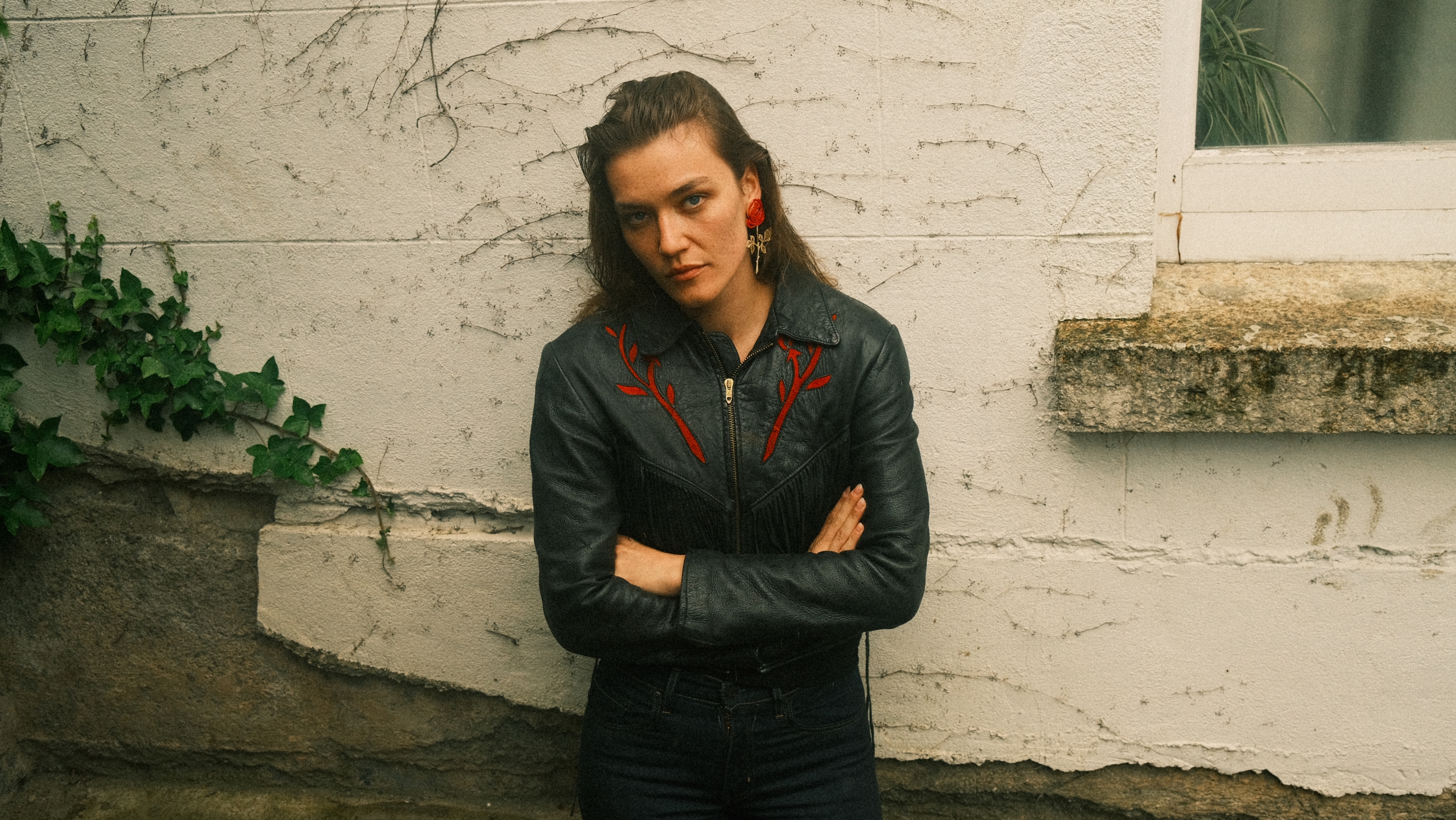
    I am a California native Irish traditional musician based in Ireland. I started playing music when I was around seven years old, beginning on piano and the Native American flute, which was my first wind instrument. My dad bought three of these flutes before I was born, and I am still playing them to this day. I tried various instruments as a child, including clarinet, saxophone, various percussion instruments, the accordion, and a few others. It wasn’t until I was eleven-years-old however that I discovered the tin whistle.

    I was about to board the bus back from an American Civil War reenactment in Mariposa, California, when I visited the souvenir stand. I bought a tin whistle from a barrel and my life changed forever. I played it on the bus heading home, then occasionally throughout the year, setting it down for a while before picking it up again in May 2014.

    I was inspired by a few film scores and remembered a tune that my grandparent’s friends played at their barn, which was called ‘The Swallowtail Jig’. I searched for this tune on YouTube and the gates of traditional Irish music heaven opened for me. I have been ‘tradicted’ ever since!

    I listen to many different sources of traditional Irish music as well as folk music from around the world, classic rock, American folk, jazz, and more.

    These influences have made an impact on my playing. My style is my own creation, influenced by these genres and specific individuals suchas Brian Finnegan, Alan Doherty, Ali Levack, and others. It is highly percussive and energetic, which reflects the person I am.

    I am currently working on an album that will be released on March 23rd. I co-engineered and mixed four albums, including ‘Harmonies’ (a flute and whistle meditation album), ‘Decade’, (a traditional Irish music album with a contemporary twist), ‘Tradify’ (an album that features a band I was in), and ‘A Whistle Wonderland’ (Christmas music treated as traditional Irish tunes).

    The album that will be released this month is entitled ‘From Kolkata to Dublin’, which is a minimally produced album featuring the Indian tabla, tin whistles, and exotic/rare wind instruments.

    I am planning to record duets with tin whistles and harmonica/button accordion this month, and to record an album of traditional Irish music that suits the Chinese Hulusi.

    As I write this, I am in the middle of eight days of gigging in Dublin. Six gigs down, three to go!

    I am a full-time musician, gigging every week and offering my remote recording services, teaching, custom tune compositions, and more.

    I am also currently forming the Cedar Dobson Band, which will consist of two or three musicians that will be performing at various festivals within Ireland this year as well as abroad.

    One of my greatest joys in life is to perform and share my original music and arrangements with others. This music is my life and I love it so much!

    I am expanding my horizons by diving into the world of gypsy jazz, playing complex solos on the low whistle. I am planning to film professional music videos to send to festivals as one of my goals is to play in Celtic connections next year. I just want to play the music that I love so much with others who appreciate it. That way I will able to express my emotions through music and hopefully touch other people on a deep level. Music is so powerfully emotional and it’s vital for us during this time in history.

    I post videos nearly every day on social media and YouTube. I post a tune of the week every Sunday as well as videos of exotic wind instruments and videos of me riding a unicycle while playing the tin whistle simultaneously. Indeed I love a good challenge and unicycling while playing the tin whistle has been just that!

    I hope to break into the scene more within Ireland and Europe as I am striving for more fulfilling opportunities, such as performing in festivals and in beautiful venues. I am grateful for every opportunity though, as they have made a positive impact on me. I am making valuable connections more often now than before.

    I moved to Ireland from California to experience the music as it is in all of its glory, honesty, and rawness. I’ve been based in Ireland for nearly five years and I am absolutely living the dream! I’m so grateful for every opportunity. I am now looking forward to traveling within Ireland and abroad, sharing the joys of music with others and hopefully offering moments of peace, joy, and lightness to others.

    This music has formed me into the person I am today. Endless gratitude!

    Latest Album: Decade https://cedardobsonmusic.bandcamp.com/album/decade

    Instagram: https://www.instagram.com/cedar_dobson_music?igsh=MWF3a2hxc3Z5bHU0bg%3D%3D&utm_source=qr

    Website: www.cedardobson.com

    YouTube Channel: https://www.youtube.com/@CedarDobsonMusic

  • Musician of the Month: Cory Seznec

    It’s always been a challenge to compress my life into tidy, coherent narratives full of hidden meanings and uniting threads with distinguishable identity signposts that give audiences an obvious sense of who this person is. My artistic identity has, in many ways, been an attempt to seek some form of ‘personal style,’ by tossing together what, at face value, might seem like incongruous interests into a gumbo of my own making. In all this digging in the dark, the ‘ego’s’ quest was to forge some form of authentic artistic voice out of a chaos of unknowing. With no mentors to guide me, and no institutions to mould me, it was all very freeing, very scary and a complete mess.

    I’ll begin with the early days of ‘professional’ gigging. London 2004-2005. A young man completing a Masters in history is wondering how to break away from academia, play gigs and earn money from music. Early on in his studies he posts an ad on Craig’s List: ‘American folk musician in London looking to collaborate with any musicians who play guitar, banjo, mandolin, fiddle, percussion, piano, and/or accordion.’

    The only response received is from an accordionist. They call each other. All the young man recalls of the conversation is wondering if the person on the other end is on a Witness Protection Program. A strong Long Island accent. They arrange to meet at the Witness’ place in south Wimbledon. They jam and are surprisingly ambitious about developing a professional project around accordion and banjo, as well as a strange percussion stick called the ‘Freedom Boot.’

    Looking back, it was at this moment that the Witness, a.k.a. Michael Ward-Bergeman, appeared to me as a clown-roshi-seeker-mentor figure, undergoing the beginning of his own transformation to another life. We started a duo and began touring, sending out millions of emails, knocking on doors and taking every paying gig that came our way. No smartphones, no GPS.

    We then recorded our first album with my brother as sound engineer over a span of four nights in the gymnasium of Harefield Hospital outside London, sleeping on chairs, with hospital guards waking us up (one was very surprised to see us when he opened the door at 6am). We printed up a thousand CDs and sold them at all our shows during our insane jaunts around the UK. It was all starting to get exciting, yet also very real. I was starting to wonder: is this my profession?

    With the Masters finished I was out of a dorm and started crashing on couches around town, before finally moving in with my future wife to a small apartment in Brooklyn, New York. There I tapped into the folk scene, worked carpentry to pay rent, and taught fingerstyle guitar and banjo at the Jalopy Theatre in Red Hook, regularly hopping over to London for tours with Michael.

    After that blip we moved to Paris, France where I soon became an intermittent du spectacle (state-sponsored artist support scheme) playing in all sorts of venues with all sorts of other musicians to get my cachets (declared gigs). During that time, I made my first trip to Africa – an unforgettable three week trip around Mali.

    But back to the U.K.. The ‘long strange trip’ continued, touring around England, Scotland, Wales, the U.S. and mainland Europe (although I never made it to Ireland!) with Michael, and the eventual addition of another brilliant, lunatic, Canadian percussionist, performance artist, sound engineer and anarchist called Paul Clifford. We went by the name of The Groanbox Boys, then Groanbox Boys, then just Groanbox. Did we grow up or shrink down? This whole trip lasted about ten years; with peaks and valleys; ebbs and flows; collaborating with classical composers and ensembles, packed out village halls, and played to two people in a pub in the Lake District; big festival crowds; hospital patients, and a wall of chavs in Yeovil not listening to a note we were playing. We made warts-and-all guerrilla records on the fly that contained both unlistenable discordance and mellifluous magic that we could sell DIY by the carloads at all these venues we navigated to with frayed roadmaps in beat up rentals from a used car dealer named Mel in Kent. Sea legs were obtained.

    The absurdity of all this is that the music and the whole ‘business’ of it might have been just some cosmic pretext to get the gods – or someone – laughing. In the van (where all the actual stuff happened) we surmised that we were living in a simulation created by a ten-year-old named Benny, who had created us on a lark. Case in point – we had asked Paul to find a tree log to play on stage, since our second album featured percussion that included the sound of logs being struck by axes and other objects. He did so with gusto, locating not just any old piece of wood, but a very strong and gnarly piece of yew. Surely Benny was behind this.

    Sacred to the Celts, venerated in Christian traditions, called the world tree Yggdrasil in Norse mythology, we became obsessed with taxus baccata, visiting yew groves and churchyards across Britain, engaging with (manifested as a worship ritual involving deep meditation, musical farting, and general obscenities) ancient yew-god avatars in some strange restorative communion during our gruelling tours (we would block book tours of 30-60 shows, performing once, sometimes twice a day, with occasional days of respite). We were totally burned-out and these yew baths were magical balms for our weary souls.

    And you thought this was about music.

    Let me jump forward 10 years to Touki, my project with Senegalese artist Amadou Diagne and London producer Oscar Cainer. We had put the project together in 2019, securing Arts Council funding to record an album as a duo at Real World Studios. All our tour dates and album release were planned for March 2020, which imploded with the Covid-19 pandemic. We picked up steam again the following year and got some more funding to record, this time with American cellist and violinist Duncan Wickel, who joined us on the road for a couple of U.K. tours. We then joined forces with Marius Pibarot for a couple of years, who was an excellent addition to the group. Earlier this year, however, Marius wasn’t available to tour with us so we called someone we all knew well. Michael Ward-Bergeman.

    Did we even call him, or did Benny make him appear out of thin air? All I know is the laughing gods were back. We were no longer just playing music but visiting ancient standing stones and cairns in remote Scotland at sunrise. Early in the tour we were joined by Little John, a clown puppet sidekick who’s accent and intonation sounds eerily like Michael’s Long Island accent in falsetto. And, always, the pairing of the numinous and the flatulent, an Ancient Monolith – High Street Curry Shop negotiation, with awe being expressed by mouths and sphincters alike.

    And you thought this was about music.

    But I digress. ‘Normal’ gigs did occur and are projected to continue to happen in my career. I’ve been teaching in music camps around the US and in France, and recorded video lessons for Stefan Grossman’s Guitar Workshop. I released a bunch of solo records, and performed with numerous artists over the years, playing festival stages, theatres, music camps, clubs, pubs, cafés-concerts, village halls, churches, hospitals, prisons, schools, museums…in Europe, North America, Ethiopia.

    Ah Ethiopia. Another inflection point. I spent three years there (2013-16) with my wife holding down a ‘real’ job. Learned many of the Ethiopian modes, assisted on rugged and totally manic field recording trips through the highlands, held a weekly gig at Mulatu Astatke’s jazz club, hopped down to Kenya to study with omutibo guitarists, and generally had my mind slowly blown to bits. I miss it all terribly, and getting into it more than this almost seems pointless, at least until I write my memoirs.

    These experiences brought me to some realization that going back to school to study ethnomusicology might be promising for my quest. As I write this, I’m sitting in Takoma Park, Maryland and commuting everyday to the University of Maryland – College Park to sit in graduate seminars and teach undergraduates a course on World Music & Identity (this time mainly sans instrument). A new chapter, in my ‘home’ country, which now feels oddly like an alien planet.

    As for where I’m headed … who knows? If the music vibrating from within me can help people in various ways, then that’s probably good enough for me. If I can be a good dad to my kids and a decent husband, that’s probably good enough too. A recent conversation with Michael in which he stated he still ‘has no idea what is going on,’ made me think that this is what drew us together in the first place. Alongside him, Oscar, Paul, Amadou and all my other compagnons de route the hidden (and sometimes not so hidden) quest somehow seems to be an exaltation in this very unknowing. Perhaps it feels like the only real, honest thing anyone can say about anything.

    https://www.coryseznec.com/

  • Musician of the Month: Jaed

    On recovering a lost part of the soul

    She was summoned back from the dead, a spirit with form to keep me company, sword, sister for me, brother- man. I missed her, was lonely so she came. Her voice tore down buildings as she flew around me, and though it comforted me, the price was too high, people were going to get hurt, the earth was sinking in, the ground cracked and sunk. My sister brought me to a canyon, vast desert open plains and still they crumbled from my dead wife’s voice. This place was suitable, but was no way to live. I would have my love by my side but no one could come near. And she was a floating thing, I could never really touch her, flying pixie with dark air, dark hair. ‘This is the only safe place’ my sister said, but even then the mountain tops were crumbling on the horizon. Blue sky yellow ground and yellow tumbling mountain tips breaking away and falling down. ‘Send her back’

    ‘So many bad things happened here. So many good things can still happen here.’ Photo by Luisa Felicia Clauss Taino symbol of Protection of the Earth Mother taken during the solar eclipse 2024 in a basement where a mother and child were murdered by the father.

    Girls have fathers. Conjuring the man but keeping him in the bag. I can have all the dinner I want at this kind of resort. And everything’s ok with this girl now right? I think she came out of the bag enjoying a raven’s crow. Beehive around my arm at night. Thrown against walls and not held warm. In a pit of hate, pleasant petals falling over the dainty hunt and slaughter.

    I Loved the Gauntlet and There Was No Other Way. Album Released October 29th 2024. Photo and images by Uhuruheru Costume, headpiece & makeup by Uhurumatahari with help from their daughter Laxmi.

    Such a relief to breathe a dream, loving the solid ground and also the spirit of breath coming on like a volcano. Dreams that were written on parts of my body were part of something else you were interested in. A point of light was written something about you on my side, showing you were also written inside me. There were so many words, so many words that you were interested in.

    On the cusp of welcome, on the cusp on invasion. Do you feel you are a soul-less cog in a wheel? Do you regret every time you push people away? What is it that people meet if they don’t meet your heart? I’m dying to meet you in a space that’s strong enough to really see you and to be fully seen. I think I’m ready, I want to try. I want to sing your song that’s my song too and get well paid. Steer me away for terror and into kindness. The edge hell so near suddenly and I only on a sofa reclined. I stomached the casual racism too, alerted to make an intelligent difference. There is no reason to be circling around the carcass. Let’s eat and be strong, clean up and to move along with the true meaning of the scavenger and the vulture. The child, the man and the woman do not need to walk down such a dark path alone, do not need to walk down such a dark path at all. A little company on the ledge let’s say, a little company on the ledge. My secret space is small and round and along the edges are some rectangular friends (they are not all bad you know)

    Still from ‘Very Fond’ video.

    These days are simple for me now. When it’s time I withdraw to greet my grief and menstruation while watching the evening sky turn dark. Writing living Taino song. Do I write a song how I’ve been fucking spirits? Any spirit, any and all? And when I stopped, when it was time to shut the factory down, how they came at me first in dreams of iphones of porn but they couldnt tempt me, I had got so clean. Later was next level. I thought I was in heaven until I couldnt move my arm. Then I knew I was dreaming. In my fake dream of heaven I knew I was  asleep in my bed. I knew it was coming for me and that I must wake up fully. It’s true that when good healing is happening it also attracts the bad spirits.

    ‘The Free Hand’ Italy 2025

    They held me down when they couldn’t tempt me to use, and be used. They held my left hand to the corner of the bed. When I fully woke up my arm was being pulled slowly. They rubbed my breast just as I got myself free. Lol. That was weird I said. And you know the difference between dreaming and not. Cheeky bastards. I slept with the light on, ok, but still spooked and scared. Next night my wardrobe door popped open. Is that what’s been following me around this whole time? Is that the demon I was feeding? Now we’re going to get to know each other real well. We can become true and caring friends because all the cards are on the table now. Surely there’s better things we can be doing than rolling around the sack with all those blue and pink probing tendrils from outer space pumping into us. I had been pushing this gunk into me for years. And years with the way I was forcing my body to feel a certain way. So after thirty days and thirty nights she showed me how it was done. She’d be the boss of the hand, not the other way around and nothing would be forced. And yes, I had strict rules on simple things and in the end it was the inside and the opening of a flower that could actually seduce me and nothing less.

    Handmade guitar by Tim Stapley.

    FEATURE IMAGE by Luisa Felicia Clauss.

    Jaed plays her next show July 3 at The Windmill, Brixton, London.

    https://linktr.ee/jaedway

    Instagram: https://www.instagram.com/____jaed_____/?hl=en

    Bandcamp: Jaed

  • Musician of the Month: Dee Armstrong

    I am a self-taught musician, playing fiddle, viola, hammer dulcimer, bodhran and tunes percussion. I am mainly known as a composer, arranger and fiddle player with Kila for the last thirty-four years. I also play with Freespeakingmonkey and The Armagh Rhymers.

    Several generations of my family were and are musicians. My grandmother Maggie Armstrong was a great singer and storyteller who sang old traditional and gospel songs. My father was taught traditional and classical music by Derek Bell of the Chieftains and my mother was a brilliant classical piano player and teacher. Many cousins and my sister all play. My four children play and /or sing.

    I also make massive willow puppets and structures for carnivals and am a community arts worker. I run a Rockschool for kids aged 10 to 18, where kids learn to play in bands, write their own songs and perform gigs and record.

    I have just released my first solo album, Deichtine’s Daughter. The title comes from a poem by Louis De Paor, which I love. Deichtine was the mother of Cúcullin, one of Irelands great mythological heroes. Deichtine means “Ten Fires” in Irish as a literal translation and I loved that.

    However, we know much more about Cúcullin than Deichtine, which is a recurring theme in Ireland where women get written out of history. What if Deichtine had a daughter, or Cúcullin a sister, what would she have been like? Louis de Paor was asking that question to himself, and then he saw her…walking down the road in Galway, swinging a hurl…and she made such an impression on him he wrote a poem for her.

    The poem hit me immediately. It was more a feeling than anything of strength, having a voice, fighting for your rights, fighting for your life. Fire and inspiration. So, the piece of music says that to me. It’s an expression of that. I wrote this piece on the hammered dulcimer, which has an ancient sound, but is very rhythmical, very strong, though at times it can sound delicate like a harp.

    I write intuitively, I don’t read music very well and I learn tunes by ear, and do string arrangements by ear and use the recording process to arrange music usually, as I can’t write it down. It’s all in me head. Tunes usually pop into my head as I am sitting playing the fiddle or banjo or whatever. They express whatever is going on in my life at the time I guess. I try not to get in the way and let it happen.

    My sons will tell you, I often don’t like doing more than one or two takes. I like catching the initial spirit of the piece. Music is an amazing communicator. The feeling of the story is there, as I write tunes and music, there are no words. I often focus on the atmosphere of a piece of music; what’s coming through and emphasise that.

    I studied film in Dun Laoghaire VEC, way back. I ended up doing soundtracks for numerous short films, and this experience was valuable when Kila got soundtrack work with Cartoon Saloon doing animated features for Wolfwalkers, Song of the Sea etc.

    I love working with my sons, writing and recording. Plenty of craic, arguments and door slamming! We are all quite particular, but generally we all get on great. We have a similar musical sensibility I think. Lughaidh and I have been working on soundtracks and stuff for theatre since he was about 14 or 15. He’s a very gifted musician. We both love creating atmospheric soundtracks, and indeed I think this is a shared composing trait with us. There is a visual element, we are painting a picture. Diarmaid is a dancer and he brings another angle into it all with that. We all have a zany imagination and made strange short films over lockdown. We are a creative family

    My daughter Rosie is a lovely singer and my other son Tiggy plays bass. His son, my wee grandson Leon is very musical. He sings away. Sure, who knows what will pop out. Music is my anchor, and it will probably be theirs.

    My cousin Bridget is a great musician, and her kids are all musical and so it goes. If there is a love for it, it will probably continue.

    I didn’t want to play music as a kid, I wanted to be a dancer! So, I came late to the party. My parents tried to get me to play fiddle, and I got a few lessons from an amazing violin player Mary Gallagher, but I just wanted to dance.

    I was into Heavy Metal, Rock, Disco and Funk as a teenager. I never imagined I would play traditional music, but it was always there in the ackground, especially the Chieftains as Derek Bell would come and make reeds with Dad and we would visit Paddy Maloney sometimes. I took up fiddle aged 16 or 17, then had a baby, so it wasn’t till I was 19 or 20 that I took up learning tunes properly.

    Writing music became an expression for me. It depends on the tune, but often I’ll write a tune for a person, as in The Prince of Laughter, or one of my children, as in Django’s. Ed the Visitor is for our legendary dog Ed who was a constant companion through good times and bad.

    Sometimes they just come to me. I dreamt the Killi Willi Waltz. It was funny. I wonder was it the shit loads of B52s I had consumed the night before! Luckily, I crawled over to the fiddle and managed to extract the tune to the fiddle before I forgot it!

    I have dreamt other tunes, but they have slipped away. I think the best tunes come to us in unexpected moments. Wandering down the road, after chatting to a friends; while trying to learn a tune; after a good shag. You just never know.

    I included an old Jewish dance tune, a ‘frailach” on the album. I’m a huge fan of Roma gypsy and Irish Traveller music, also Middle Eastern music, Jewish Music. Nomadic people carry the music with them, absorbing everything they hear and turning it into their own versions of gold. Often the most powerful music comes from the most oppressed. Look at the history of the Blues. The experiences of the people live in the music.

    Music is the lifeline. It can’t be taken away, and then it speaks to us down through the generations. We are witnessing the attempted obliteration of Palestine, and the Palestinian, people currently. So many Jewish people have spoken out against this genocide as it is a repeat of their own suffering. This tune is for them and the people of Palestine and their children, who suffer occupation, death, starvation and destruction every day.

    The album is made up of all original compositions bar Frailach, and Yon Do, which is a traditional Selkie song from Scotland. I liked the combination, and I wanted them all to fit together and these did fit. I wanted it to be an album of primarily my music.

    Eoin Dillon, longtime piper in Kila, and I were playing a few tunes one day, and he wrote one part of the Bearna Waltz. Bobby Lee wrote Prince of Laughter together. He wrote the chords and I wrote the tune and strings. Bobby played a lot of guitar on the album and I loved playing with him.

    Leitrim. Image: Morgan Bolger

    I live in a very wild and beautiful place in North Leitrim, on the side of Benbo Mountain near Manorhamilton since 2001. It’s very different to Dublin, where I grew up!

    Up until the 50s and 60s there were 158 families living in this small townland, all with loads of kids. They nearly all had to emigrate because the land was poor, and it was too hard to make a living. This always resonated with me, and it’s so sad that this had to happen.

    There were lots of music on the mountain and musicians. There was a great musician Micheal Clancy, who was called the man of 1000 tunes. He was from Boihy and his cottage is still there, though he died in the 80s. I am making a documentary about him, as he taught all the people of the area music in his day.

    I had to move to Leitrim because if was impossible to afford rent in Galway or Dublin any longer. You could get a bedsit or a small flat in Dublin in the 80s and 90s for 12 or 15 quid a week. Even if you had little money you could still live in the middle of town where all the action was. You could go busking, go to sessions, meet other musicians and walk home.

    I had a young baby as a teenager, so I was lucky to live with my friends on Wexford Street and they helped me with the baby. Otherwise, I would have been very isolated.

    The scene in Dublin was buzzing when I was growing up. This Lizzy, Sinead O Connor, Dolores O’Riordain and the Cranberries, U2, Aslan, Waterboys, and so many more. There was a sense of excitement with so many great bands and a freedom of musical ideas across the board, traditional and folk included.

    Riverdance and Ireland getting in to the World Cup helped as well! All this meant a lot to us. Suddenly, people across the world wanted to hear us. The Celtic Tiger didn’t do us any favours.

    No one can afford to live in the cities in Ireland now. If you don’t have affordable housing, musicians and artists and ordinary people will have to leave and the community and music scene will be dissipated.

    Luckily, the folk and traditional scene is having a real revival in Ireland again. Look at the wonderful Lankum for example. It’s brilliant to see. I’m looking forward to getting out to a few gigs after being a single mum for years and years!!! It’s exciting!

    I am just finishing a thirteen date tour around Ireland to launch the album. I have more music recorded with my sons. Music the three of us wrote together, and I am hoping to finish that off in the next few months. I’ll be playing festivals in Ireland in the summer and we will see after that!

    Link to Dee Armstrong’s Bandcamp

  • Musician of the Month: Caterina Schembri

    On November 14th I am releasing my debut album Sea Salt & Turpentine on the Ergodos label with a launch concert at the National Concert Hall. The album is a collection of chamber and vocal works I composed over the past two and a half years for Ficino Ensemble and Michelle O’Rourke in rotating subsets. It also features original lyrics and text written by me.

    The music is an intimate portrait of my inner landscapes and explores some of my main creative interests: a focus on colour and nuance, rich soundscapes, naturalistic imagery, obnubilated symbols, connections with the written word, and literary allusions translated into music. With this music, I want to create a sense of suspension, spaciousness, and introspection.

    And with water printed unto my bones
    I break asunder from the flock…

    Out of this light,
    Into this dusk.

    The title piece, Sea salt and turpentine, plays last and it carries the soul of the album. Written for string quartet and two voices, Sea salt and turpentine is about finding a sense of refuge in nature and creativity. It is mapped as a ritual of individual affirmation and sensorial connectivity with the landscape. I find solace and moments of deep reflection and stimulation in proximity to the ocean; this piece condenses in one moment a constellation of rebirths. Its germinal idea alludes to Virginia Woolf’s poetic novel The Waves, a work that has been very influential to my creative work and perception of the world.

    I decided to open the album with a solo viola piece for Nathan Sherman, creative director of the ensemble and key collaborator in this project. Soft charcoal over moonstone is the opening gate to the sound universe of the album. It explores the idea of chiaroscuro through the viola, contrasting light versus shade and all possibilities in-between. The title establishes a visual reference, the charcoal as a dark drawing tool over a shiny luminous material, the moonstone. These two opposing forces emerge in many shades providing the palette and arc of the piece.

    Nathan Sherman recording Soft charcoal over moonstone.

    When light bleeds out of the day.
    To see your gestures blur,
    Deform,
    Wolfsbane blue, underwater
    Screams cross a long distance
    Embellishing themselves.

    These eyes, these hips, these hands
    Clothes spread wide and mermaid-like
    Let the light flicker mercurial…
    Let the light flicker and fade.

    There is a willow for voice, viola clarinet, and harp is the first piece I composed in this collection, written in 2022 as part of the Ficino Ensemble Composers Workshop it was also my first link to Ficino Ensemble. Depicting Ophelia’s death, the text of There is a willow opens with a quote from Hamlet and then evolves into original text. I wanted to explore her experience first-hand, things her eyes might have seen, but also thoughts that could have crossed her mind. I am fascinated by the timelessness of this character and her representation of the feeling of surrendered disembodiment that a first heartbreak can generate. The text is scattered with images of flowers that carry a symbolic meaning, a secret message.

    This idea of floriography (the meanings of flowers) was the main inspiration for the visual aspect of the album, flowers and trees that carry a symbolic meaning are found in the lyrics of three of the pieces. To create the cover, I made cyanotypes using flowers I collected around Dublin, the dry flowers were then organised on top of the finished cyanotype and beautifully captured in photo by my dear friend Néstor Romero Clemente.

    Sea salt & Turpentine – album cover.

    Cold storm pines tangle and expand
    Tracing maps of empty cities,
    Empty palms.

    My fingers follow scarlet roads
    Of chins, of ears,
    Of mouths that turn to stone

    If I wake up slowly,
    I’m off the shore.

    The third track of the album, I wake up in the night when I dream in black and white explores the elusive nature of dreams and the arrested rhythms of broken expectations. The musical gestures trace blooming lines that crest and die out traversing the liminal space between reality and dream, disclosing fragments of the darker corners of the mind often ignored during daytime. The visual idea of an unknown silhouette coming in and out of focus without fully revealing itself, beautiful and slightly unsettling.

    This piece was written for String Quartet and speaker, it features a segment of spoken word. I loved working on this element as it was the first time I wrote a piece of standalone text in this context. The text was brewing in my head for a while and came together on a winter afternoon in Paris.

    This piece is one of three in the album that include vocal elements, I was very lucky to work with vocalist Michelle O’Rourke on all three of them. Her care for nuance, her versatility, and her understanding of intention and meaning elevate the text and the music.

    Paris, winter, 2023.

    The full instrumental ensemble comes together for It was only half as far.

    In the twenty-first poem of Pictures of the Gone World (1955), Lawrence Ferlinghetti opens up with the line: ‘Heaven // was only half as far that night // at the poetry recital…’ and proceeds to describe a scene that to distant eyes could seem simple or mundane, but that encapsulates an instant of bliss to him. I always loved this image of the wide distance to the ether shrinking, a vivid and clear representation of those moments of fleeting elation that often come unexpectedly, in ordinary scenarios, leaving deep imprints behind. It was only half as far echoes the times in which this sentiment shone a light on me.

    This album is the result of a collective effort, it has been a great joy to work with a team of exceptional musicians; Ficino Ensemble and Michelle O’Rourke gave the richest and most soulful performances I could have wished for. The care and artistry in the capture and production of the record are all in the hands of co-producer Garrett Sholdice and sound engineer Edu Prado, with the final touch from mastering engineer Christoph Stickel.

    Sea salt & Turpentine found its perfect home in Ergodos. The label, founded by composers Benedict Schlepper-Connolly and Garrett Sholdice is a beautiful ecosystem of careful curation for music projects that I have long admired and that has been a very active part of my creative life. I am proud to see my music there and always grateful to the two powerhouses in this operation Garrett and Benedict.

    Link to Album Launch at the National Concert Hall on Thursday November 14th.

    Feature Image: Néstor Romero Clemente

  • Musician of the Month: Finn Doherty

    Early Influences

    I tend to cite the same small handful of artists as my early influences, but I always find myself defining the difference between ‘influence’ and ‘inspiration.’ As a kid, I was really inspired by bands like Green Day, and I loved Arctic Monkeys, but that doesn’t necessarily reflect the music I make now.

    You could probably draw comparisons between some of my songwriting choices and Alex Turner’s, but these bands were probably more ‘inspirations’ as opposed to ‘influences.’ In many ways, it was more about wearing a leather jacket and slicking my hair back, or pairing black eyeliner with shirts and ties, than it was about the music.

    I grew up in North London, going to a lot of sessions with my parents, and I think trad music played a big part in the way I write melodies. Trad tunes are so much about repetitive phrasing and short motifs, which I think has ultimately translated into me writing music that is pretty hooky and catchy. Also, learning to play Irish music is a lot about learning tunes by ear, and I think that influenced the way I write, where melody often comes first and is generated really quickly.

    Current Practice

    I just released an EP called ‘if you’re bored of this city’. It’s a project about desire, obsession, and self-destruction. It’s kind of a personal exploration of my own identity, and about how relationships can become complicated by self-discovery.

    I had a very complex relationship with a friend a few years ago, and that was a big drive behind the narrative of this project. Musically, I looked to the songs and sounds that were soundtracking my life at the time of that experience, so it was a lot of dark pop music off the back of the first Billie Eilish album, and the production on the early Chance The Rapper projects, and the breakout of hyperpop.

    I was also really inspired by Son Lux’s soundtrack for ‘Everything Everywhere All at Once’, which I saw while I was mapping out a lot of the production for the EP. I think that had a big influence on the project, especially when I listen back to ‘Figure It Out’.

    I made a whole series of videos to accompany the project, which string each song together and use the music to soundtrack this night of partying and recklessness. The project tells the story of such a pivotal time in my life, and I wanted to retell that story to the fullest extent through this lens of the art I was into at the time.

    I think that’s why the videos are such an essential part of this EP. I’m really proud of what my friends and I managed to achieve with the visual side of this project, as it was all produced independently. It’s all available to watch for free on YouTube.

    Future Plans

    I’m really only just getting started. Right now, I’m focusing on ways to bring ‘if you’re bored of this city’ to more people, so I’m working on new shows and various other projects.

    I think it’s so important to experience music in face-to-face environments with other people, and I want my work to be a catalyst for those kinds of experiences. I love creating and engaging with content online, but live events are really where I thrive, and playing my songs live is the reason I do what I do.

    I think through playing more shows and being at more events post-pandemic, I’ve also found myself considering how the music I’m making will work in a live setting, and I’m really enjoying being out, and dancing, and just having a good time.

    I’m always working on new music, so it’s only a matter of time before the next project clicks into place in my mind and I start rolling out the next thing…

    Spotify: https://open.spotify.com/artist/2e3gFNiRxdNMh5TaVNwUHF?si=Ocqg4oaqRr6oGib1VRVMlQ

    Apple Music: https://music.apple.com/gb/artist/finn-doherty/1211574396

    YouTube: https://www.youtube.com/@finndoherty_/

    Instagram: https://www.instagram.com/finndoherty/

    ‘if you’re bored of this city’ EP: https://hypeddit.com/finndoherty/ifyoureboredofthiscity

    All Images Simon Jafrato

  • Musician of the Month: Magdalena Jacob

    My musical journey started with a lot of Church organ and Bohemian brass music in a tiny village in Bavaria –  and when I say village I really mean it.

    At the age of five I developed a desperate desire to learn the guitar, because my mum had one (for her kindergarten group and she knew about four chords). At the age of five I wanted to be exactly like my mum, a genius.

    After three years I hated the guitar because after too many odd versions of Beatles covers I was just really bored and annoyed. I quit because, in the mean time, I desperately wanted to learn a random brass instrument, which I never actually managed to do.

    This tiny village where I grew up in had an unwritten rule that every kid had to learn a brass instrument to later play in the local youth brass band, in order to be part of the game. I learned the guitar and later the bass, because my dad was desperately looking for a bass player for his church band, so I was rather out of the game (and it’s nice to be able to blame the string instruments for it instead of myself).

    As a child I didn’t really think about becoming a musician. I didn’t think it was a real job anyway. I wanted to become a vet, then a kindergarten teacher, then a writer – which somehow I considered a real job.

    That one person at the party nobody gets…

    As long as I can remember, I have always been that one person at the party nobody gets. According to certain rumours, some believed I was a genius. Others were convinced that I was just really high (yes, even as a child).

    Once I came dressed up to a costume party as a tasteless dressmaker. It was supposed to be funny, but in the end people just thought I was mental.

    If a costume is too close to reality, people tend to confuse it for reality. And then the costume fails and protects me at the same time. The perfect illusion is to create a mask that looks exactly like your real face. It’s still a mask then. But it’s also a protective shield. And it’s still you, right?

    At the age of eleven I re-discovered the guitar because we randomly founded a band at some children’s birthday party of a friend in order to be cool or something, and I started to compose a couple of love songs about a guy I was pretending to be in love with at the time.

    Ten years later I moved to Berlin to become a full-time musician. I married my band mate at the time and we moved into a tiny room in a flat share together. I was actually more like a half-time busker, half-time film student and the weekends we spent touring (mostly hitchhiking) around Germany, busking and playing in bars as a guitar-duo that played sad, experimental guitar music for two guitars.

    After three years we broke up and I became a full-time film student and started to produce electronic pop music with weird spoken word elements. I was twenty-five and I felt like starting a completely new life.

    The gay clown on the moon…

    I recently came out as a clown which is due to the fact that I can’t take myself seriously any longer. How could I write sad, dramatic poems and scream them into the world when everything my white privileged ass can possibly emotionally understand are luxury problems?

    I made myself comfortable with being ridiculous and it was quite a liberation to be stupid, and not to expect anyone to take myself seriously anymore.

    My music now is sad, but funny. It’s cute. Still a lot of people don’t get it and sometimes they leave the room during concerts because I’m making fun about stuff that isn’t funny to them.

    Sometimes they insult me because in their ears, I’m not doing music. Which is true, because what I’m actually doing is theatre, or some kind of performance art that people would watch at night time on Arte, and be like “what the hell made her become like that?”.

    I sometimes ask myself the same question. But I realized people are mostly not really interested in honest answers.

    Therapy

    Music is therapy and I will make the audience my therapists as long as someone is willing to listen to my random brainfarts. Sometimes I’m scared that if too many people start listening to me I will never shut the fuck up ever again. And I’m also scared they would all just stop listening completely at some point.

    Sometimes living in Berlin is scary. The city is so loud because everyone is trying to find someone to listen to them.  And nobody is possibly getting enough of the attention they deserve. And unlike the village: most people are not trying to hide their problems from anyone. I mean, why should they do so?

    Life makes no sense in a city like that and is beautiful and liberating (in summer), but it’s also random and scary (in winter).

    I’ve recently become a half-time film maker, a half-time musician and a babysitter and a cat and a dog sitter, and a clown.

    Sometimes I’m not sure if I can ever go back to a serious approach to making music. Parts of me just always want to remain a clown on a tiny stage that creates something weird and funny and magical in the moment.

    Parts of me want to be an accordion-playing clown with an orchestra on their back, performing slutty lyrics in a church and crying all the time on stage. Parts of me also just want to become insta-famous or a tik-tok-star or this weird actress that is doing kind of everything and nothing at the same time and no-one knows what she’s actually famous for.

    What I want to achieve next is to move to space and live-stream arthouse cinema from the moon. Make friends with many more cats. Grow my own potatoes and save the world by growing potatoes.

    Generally saving the world would be great actually. Maybe that’s also possible from my treehouse on the moon.

    www.solarpoweredmoontown.de

    https://www.instagram.com/solarpoweredmoontown/

  • Musician of the Month: Bróna McVittie

    I grew up in a rambling country house with damp bubbling from the walls and ghosts lurking in the locked rooms. It was big enough for a family of five to lose themselves, each in their own space, occasionally coming together for meals, but not needing to live in each others’ pockets.

    Just beyond the garden boundary were the ruins of an old mill, a remnant of the once thriving linen industry in Ulster. We used to collect frogspawn from the boggy patches there in old jam jars.

    Just beyond the mill walls was (and still is) the Fairy Glen along which we would traipse to primary school. We were always looking out for the fairies. Mum said that if you asked them nicely they would do things for you. So I started with wee things like ‘wake me up in time for school tomorrow’. And they always did. Somehow.

    Forestbrook House.

    Link for The Fairy Glen (Gleann Na Sidhe)

    We got evicted when I was eight-years-old and we moved to a Council House in a nearby estate, the only Protestant family.

    We had a mixed reception. Some friendly and a few spuds thrown at the window to keep us in check. One day our neighbour’s son stole my Dad’s bicycle, but we found it in a field down the way not too long after.

    I don’t recall those being the happiest of days. But four years later my Dad found an old rambling country house to rent, much like the one we’d lived in previously. And we moved.

    The landlord had left an old upright piano in the house and I was instantly smitten. This was where I experienced my first musical urges. I remember being inspired by Mum and Dad’s records, anything from Dolly Parton or Judy Collins was a hit. And Mum had a very cool African record by a band called Osibisa, who I’m very pleased to discover are still going.

    Drumsesk House.

    I got piano lessons from a local eccentric. He was surely more Norman Bates than Norman himself. His mother lived upstairs, although you never saw her. He had four different rooms with pianos. One for each season. His toupee was also changeable. He was an excellent teacher and I even managed to pass a few grades with his help.

    I had started clarinet lessons in school a few years previously, and although it didn’t feel like it at the time, this musical introduction had more than a little to do with my current preoccupation.

    Mr Green taught me how to play jazz clarinet, a very important part of which was keeping the foot tapping. As part of the deal of getting a clarinet ‘for free’ I had to go on Saturdays to play with the South Ulster Youth Band in Portadown. 7am Saturday starts on the bus weren’t popular with me at the time, but looking back on it, it was a tremendous thing for a young person to be involved with.

    It wasn’t until I was almost done with secondary school, and had fallen for a local outcast, musician and romantic, who was a few years my senior and very much ‘not what my parents wanted’, that I was inspired to pick up a guitar and compose.

    I’ll never forget my best friend crying when I played her my first song on the guitar. Only two chords; taught to me by my brother. That’s all I could play, but the lyrics were by W.B. Yeats – the chorus: “Had I the heaven’s embroidered cloths, Enwrought with gold(en) and silver light, The blue and the dim and the dark cloths, Of night and light and the half light.” And the sentiment was deeply earnest. I was in love. And there was no way to unfeel it.

    When I left high school I decided to delay a University degree and headed off to South America as part of an organised voluntary-work overseas initiative. I spent five months living in Ecuador teaching English to primary school children and working at an orphanage, a home for abandoned children and an animal reserve.

    It was an extraordinary experience and opened my eyes to worlds I’d had no notion of. After the placement finished I wandered off alone into Peru and Bolivia with no idea of what I would do or where I would go, and ended up buying my first guitar in La Paz.

    When I eventually arrived at St-Hilda’s College, Oxford I had firmly cemented my relationship with the guitar as a tool for songwriting. It wasn’t until later after graduation, when I moved to London, that I discovered the harp.

    A friend and luthier kindly lent me one of his instruments, which featured on my first album As the Crow Flies recorded under the moniker Forestbrook (after my first family home). That album is as underground today as it ever was. So it delighted me greatly when – after releasing my first solo album We Are the Wildlife a decade later – the press validated my work. Four star reviews from The Guardian, The Independent, Mojo and Uncut Magazine!? So giving up the day job hadn’t been such a bad idea.

    Bróna at St. Hilda’s.

    It had taken me a while to find my own voice. It wasn’t a sudden occurrence. I still recall Dad’s advice when I would sing a Dolly Parton song in her voice. “Careful with that vibrato! If you start that now, you’ll never be able to stop.”

    What matters most to me now is that I’m not imitating anyone. I am truly enjoying doing what I love, what feels right. But it’s not without great effort. There’s a wealth of technical knowledge, an endless sea of admin, grant applications, petitions to promoters, social media campaigns galore, and very many dull and tedious tasks that go with being a full time artist in your own right.

    As I heard Iarla Ó Lionáird recently concede during a lecture; “I think about giving up this job every single week!” And I know only too well why. If only we artists could simply enjoy doing our art.

    Link to The Woman in the Moon (The Album)

  • Musician of the Month: Dan Trueman

    In my studio here, I have a clavichord, built by my parents in 1971, with a somewhat rococo and amusing backdrop painted by my mother (who otherwise has left us with a stunning body of mostly modernist artwork).

    I grew up with this painfully quiet clavichord, along with a gorgeous harpsichord (also built by my parents, and which I learned to tune by ear, a sign of things to come), countless recorders of various shapes and sizes (both parents were avid and accomplished players), lutes, oboes, guitars, baritone horns, and of course a piano (my older sister, annoyingly, plays pretty much all of these instruments with ease, though piano is her main instrument, so I grew up hearing that repertoire through her practice).

    Clavichord

    The basement of my childhood home on Long Island was filled with various tools, wood scraps, and other evidence of my parent’s instrument building habits (both were amateurs, by the way: during business hours, my father was a theoretical physicist, my mother a painter), and our evenings and weekends were filled with making music together with these instruments (ok, maybe that is a bit of revisionist history there, but we did make a lot of music together with these instruments as a family).

    I didn’t realize at the time that this wasn’t particularly normal. And one of the things that it marked me with is a love of musical instruments for their own sake, and a love of making music in an exploratory way with instruments at the heart of the process, performance relegated to a secondary concern. I performed, for sure, but it wasn’t the driving force behind the music making in my house, and we never performed together as a family.

    It also left me with a clear sense that the instruments themselves were things we made—not immutable, given objects—and thus were potential sites for exploration and revision.

    I loved my own instrument at the time—a somewhat tetchy violin made by the engineer Norman Pickering, himself a researcher of instrument design—though it took me a while to discover that the music I was learning with it—European Classical music—wasn’t, for the most part, what I really wanted to play (the Bach Unaccompanied Sonatas aside, really). Indeed, trying to discover the music that I do really want to play (and hear) has been the driving force behind my work ever since and has led to a number of explorations in musical instrument design itself.

    In my early 20’s, I flailed about trying to find ways to escape the confines of the Classical violin—its repertoire and technical training that leaves such a profound, embodied mark on anyone who goes deep with it—which led to predictable explorations of jazz improvisation and rock music, both of which also felt not quite right, though I learned a lot, and in particular ended up spending time with, of all things, the Flying-V 6-string fretted electric violin by Mark Wood, and an unfretted version made by my father.

    Hardanger fiddle

    Ultimately, I found the sound of the instrument unsatisfying—in spite of my best efforts, including exploring multiple other electric violins, pick-up systems, amplifiers, equalization and signal processing units, and so on—as well as the feel of the instrument—the solid-body electric violin is perversely rigid, and doesn’t seem to actually absorb any of our physical efforts.

    In the midst of these experiences, a composer friend of mine (Gavin Borchert) wrote a piece for me, for the electric violin, and he was inspired by the traditional music of Norway, in particular the Hardanger fiddle; my experience listening to the cassette tape he gave me—a recording of Anund Roheim playing music from Telemark in the 1950s—was one of those I will never forget; I remember where I was sitting, the time of day, the color of the sky, and so on, when I first heard the sounds of this magical, beguiling instrument and its mesmerizing music.

    There is so much I could say about the Hardanger fiddle, but I will focus on the sound and feel of it. Its sympathetic strings (extra strings that run underneath the fingerboard and ring along as you play) create a magical, personal, reverberant space around the player and, in contrast to the solid-body electric violin, it is so clearly responsive to our efforts, absorbing and extending them into this private space; it feels wonderful—physically—to play.

    Adapting my Classically-based technique to the instrument was far more challenging than I expected. The strings are slightly shorter, requiring ever so slightly different finger spacing, something that took months of slow practice to adapt to, especially given my own penchant for playing without vibrato, and for having the intervals ring as purely as possible.

    But even more than that, adapting my bowing technique to the instrument was particularly challenging. The Classical violin is designed to be as loud as possible, to project over an orchestra to the back of a concert hall, and it requires intense arm weight and energy to drive appropriately.

    In contrast, the Hardanger fiddle is designed to ring continuously, and it has a relatively flat bridge, so playing individual strings is difficult, and the strings are under noticeably less tension, so applying intense arm weight is counterproductive, suffocating the instrument rather than activating it. The instrument induces a more empathetic, gentle approach to playing, and I feel like I literally became a different person in transforming my physical technique to play it.

    Musical instruments have a way of bringing people together; indeed, in Norway one of the most common experiences with other fiddlers is simply sitting around, trying each others fiddles, visiting with a maker (many of whom are fiddlers themselves), and so on.

    Collaboration with Caoimhín Ó Raghallaigh

    The instrument itself is at the heart of the matter. The Hardanger fiddle brought me together with Caoimhín Ó Raghallaigh back in 2000; Caoimhín was working in my father’s physics lab, and I’m forever grateful to my father for recognizing that Caoimhín and I might like to meet!

    Another experience I’ll never forget: sitting with Caoimhín that summer (next to the harpsichord my parents built, by the way), playing tunes for each other, trying each other’s instruments, and so on. Subsequent similar sessions with Caoimhín in Dublin led to the discovery that I was using the wrong bow, one that itself was suffocating the Hardanger, and we now both use beautiful bows made by Michel Jamonneau; teaching my body to work with this new bow (actually, more of an old bow, based on Baroque designs) was a whole other transformative experience, far more challenging than I anticipated.

    Before I continue on with where my explorations of the Hardanger fiddle led over the subsequent decades, I will mention that during this time I was also exploring a whole range of other musical instrument design projects: my frustration with electric violin speakers led to collaborations with Perry Cook on the design of spherical speakers, which roughly emulate the way acoustic instruments fill rooms with sound; this itself led to the design of a radical new instrument, BoSSA (the Bowed Sensor Speaker Array), that is a spherical speaker outfitted with digital sensors of various sorts, so you actually bow the speaker itself, the sensors then mapping your physical actions to sound through the spherical speaker (sitting in the lap!) via a computer.

    BoSSA (the Bowed Sensor Speaker Array).

    This led to the establishment of the Princeton Laptop Orchestra (PLOrk), a kind of digital musical instrument design laboratory that remains in force today; which in turn led me to the development of bitKlavier, a kind of prepared digital piano that remains one of my primary projects today.

    The Princeton Laptop Orchestra (PLOrk).

    All that to say that musical instrument design has been at the heart of my artistic practice from the beginning.

    A New Instrument

    Back to the Hardanger fiddle… Some 15 years after my deep dive into the Hardanger fiddle began, I had the pleasure of collaborating with the Old Time fiddler Brittany Haas. Britt plays the 5-string fiddle; the extra string is lower, and she regularly tunes the instrument up in unusual, non-standard ways, which is also common with the Hardanger fiddle—all the open strings invite a drone-based approach to playing, with lots of double-stops (two notes at a time).

    One challenge though: the Hardanger fiddle, with its shorter strings, is usually tuned up quite a bit higher than the conventional fiddle, so when Britt and I would play, all of our open strings would be different from one another! In some cases, this was fodder for creative explorations, but other times was just frustrating and awkward. We did make an album together that I’m tremendously proud of—CrissCross—but the friction between the instrument designs led me to wonder whether there might be a new instrument out there, some kind of cross between the Hardanger fiddle and the 5-string fiddle.

    A pair of Hardanger d’Amores.

    And this is how the Hardanger d’Amore was born. In early 2010, I asked the Norwegian maker Salve Håkedal if he could imagine an instrument that has the ring and feel of the Hardanger fiddle, but is tuned down to where fiddles from the rest of the world are tuned, and also has an extra low string.

    Salve immediately started sending me sketches and ideas, and several months later I traveled to his workshop in southern Norway to pick up the very first Hardanger d’Amore (initially we called it a 5+5, because of its 5 strings on top, and the 5 sympathetic strings, but later Caoimhín dubbed it the Hardanger d’Amore, given its echoes of the Viola d’Amore).

    At the time, I was living in Dublin, and when I returned with the instrument, Caoimhín came by and gave it a try; he ordered #2 the very next day. Earlier this year, Caoimhín and I both got our second d’Amores, #35 and #36, a clear indication of how excited we both are about the instrument, not to mention the other 30+ fiddlers out there who now play one as well.

    Solo Album

    Last year, in the midst of quarantine, I made a solo album of original music for Hardanger d’Amore in my home studio. I generally prefer playing with other people, and am not so interested in playing solo concerts, but the lockdown made both impossible, so I was free to lay down some tracks that I certainly would not have had we not been so isolated by the pandemic.

    The album—Fifty Five—is something of a surprise to me, and it celebrates where I grew up, amongst the instruments that my parents built and played. It also celebrates the instrument itself, trying to reveal and discover some of the nooks and crannies of the soundworld the instrument embodies.

    I recorded these tunes up close, so the listener can hear something close to what I hear, right under my ear; I find it intense and personal but also, I confess, quite beautiful.  I’m also excited about my latest project with Caoimhín, our album The Fate of Bones, which he’s written about here so I will leave it at that.

    We are an independent media platform dependent on readers’ support. You can contribute on an ongoing basis via Patreon or through a one-off contribution via Buy Me a Coffee. Any small amount is hugely appreciated.


  • Musician of the Month: Martin Mackie

    Martin Mackie is a singer and music producer from Belfast who has been living in Dublin for more than a decade. His latest single The Ballad of Christy Moore is a tribute, with a comical twist, to the Irish musical legend from Kildare. It is from Martin’s new album Temperance Songs, which will be released later this year. All of the songs on the album are about drinking and the peculiar relationship the Irish have with booze.

    The songs are about my own experiences with alcohol. Not just me personally but my family and friends. Rollovers, lock-ins, early houses, hair of the dog, and the booze blues are just some of the subjects. But I’ve tried to add a bit of comedy to the misery.

    The Ballad Of Christy Moore is folk tune, one of two on the album. The other is The Ballad of Brendan Behan, which I wrote with Craig Walker from The Power of Dreams. The Christy song is about me coming back after a weekend of madness at a music festival. I was hanging, as they say in Dublin. I had this weird dream or maybe even a hallucination that the ghost of Christy Moore was in my wardrobe, even though he’s very much alive. Christy’s a famous ex-boozer. So in the song he jumps out and starts lecturing me on the evils of excess.

    I was a bit worried what Christy would think of the song because there’s a line in it that describes him as being all ‘sweaty and hairy’. So I sent it to him. I was absolutely delighted when he sent me back a lovely postcard that said: “Dear Martin, Sweaty and Hair! Ride on. Christy.” And he drew a little guitar beside it. I’ve framed that.

    William Hogarth – A Rake’s Progress – Tavern Scene

    I got the whole idea for Temperance Songs from a series of paintings by the artist William Hogarth. The Rake’s Progress is a set of eight paintings showing the rise and fall of young man who ends up in the Bedlam asylum because of his partying lifestyle. I was gonna write a song for each painting but I found out the composer Igor Stravinsky had beaten me to that idea. You can’t compete with him so I had to change things. Instead I drew from my own experience.

    The track ‘Drunk For Fifteen Years’ features vocals by Waterford singer Katie Kim, who is another friend. That song is about a guy in hospital after a mammoth drinking session. Again, there are ghosts and spirits in the lyrics; that seems to be a recurring theme. I think there’s a lot of mystery to booze, the psychological effect it has on you when you drink and the downer you can get if you overdo it. Nobody in Ireland really talks about this stuff, beyond platitudes and clichés, so I thought it would be nice explore it in an album.

    There’s other songs such as a Lock-in for The Damned about a famous Dublin venue where people end up leaving, completely twisted, when it’s daylight. That’s normal behaviour in the music world

    The first single off Temperance Songs was released before the pandemic. It is called Magic Potion and it features a host of well-known musicians.  Kate Ellis, who is the musical director of the Crash Ensemble plays cello, Conor O’Brien, from Villagers, plays bass guitar, Eleanor Myler, from the shoegaze band Percolator plays the drums with Mackie on guitar and vocals.

    The video was made by long-time friend and collaborator Laura Sheeran.

    It’s an incredibly well shot video. Laura is such a talent in everything she does and she does a lot of things. For the video she does what the song tries to do…find beauty in the misery. We’ve been pals for years and she sings backing vocals along with Niamh Lowe on another one of the tracks on the album called The Apple.

    In Magic Potion, there’s a line “we’re the ones who wish good health with a poison chalice.” It’s weird the way we all say ‘slainte’ or ‘good health’ when this thing is classified as poison. I’m not an anti-booze crusader at all. But nobody really talks about the downsides of it, the ‘booze blues,’ or ‘the fear’ — the negative aspects.

    I was in Conor O’Brien’s house, from Villagers, and got chatting about the song. I recorded a demo with Ellie from Percolator and sent him it. This fantastic bassline came back in a style I would never have thought of in a million years. Kate from Crash Ensemble got involved and I went to Laura Sheeran’s house and recorded cello in her living room.

    So I went into the studio with Ellie’s drums, Conor’s bass, Kate’s cello and my vocals and guitar — and it sounded really good. Laura then shot the video for me.

    While Magic Potion is slow and menacing,, A Lock-in for the Damned whizzes along with the whimsical feel of a 1980s indie track in the vein of Orange Juice or Josef K and the tension between the jocular music and the slowly unfolding madness of the storyline was deliberate.

    Martin sings in the chorus, ‘I’d like to flee the madness but the door and me are locked’ — and most people in Ireland have found themselves in similar situations.

    I suppose A Lock-in for The Damned represents the party before the disaster and the following day of hell. It’s about me and my friends who would often have lock-ins at various pubs. You’re there all night. It’s just a free-for-all, and the spirits and the black pints flow and you’re leaving when it’s daylight.

    There’s something very, very odd when you’re walking along the street in the morning and you’re half-pished and there’s people jogging past you, or going to work, and living their everyday life. I thought it was something that’s not written about really.

    Alcohol can be a wonderful drug if used correctly, and we all enjoy times together and it’s good for relaxing, but it’s only good if you’re in a good space. But it never works, for me anyway, if you’re trying to escape your troubles or you’re feeling a bit down.