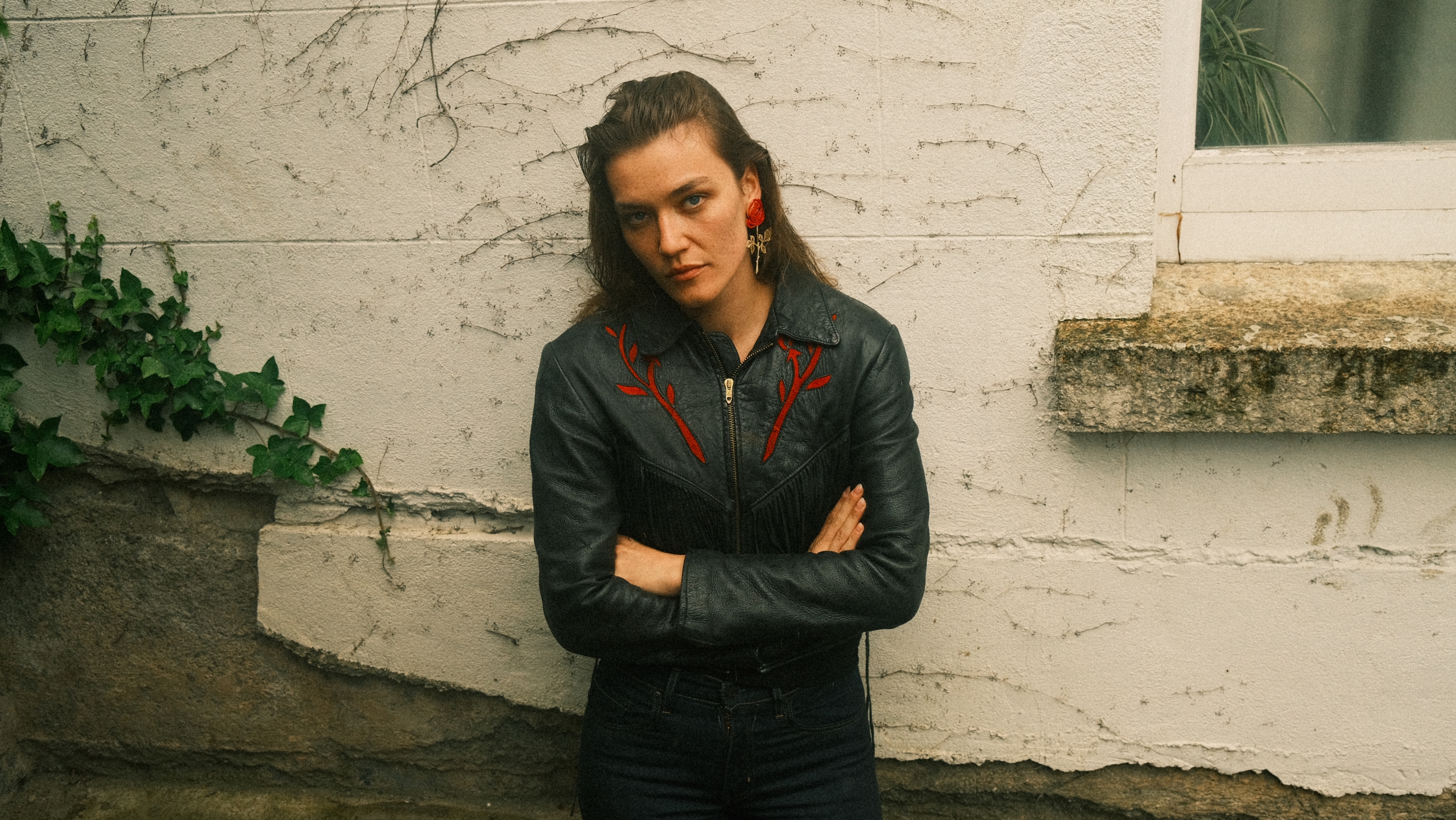
I am a California native Irish traditional musician based in Ireland. I started playing music when I was around seven years old, beginning on piano and the Native American flute, which was my first wind instrument. My dad bought three of these flutes before I was born, and I am still playing them to this day. I tried various instruments as a child, including clarinet, saxophone, various percussion instruments, the accordion, and a few others. It wasn’t until I was eleven-years-old however that I discovered the tin whistle.
I was about to board the bus back from an American Civil War reenactment in Mariposa, California, when I visited the souvenir stand. I bought a tin whistle from a barrel and my life changed forever. I played it on the bus heading home, then occasionally throughout the year, setting it down for a while before picking it up again in May 2014.
I was inspired by a few film scores and remembered a tune that my grandparent’s friends played at their barn, which was called ‘The Swallowtail Jig’. I searched for this tune on YouTube and the gates of traditional Irish music heaven opened for me. I have been ‘tradicted’ ever since!
I listen to many different sources of traditional Irish music as well as folk music from around the world, classic rock, American folk, jazz, and more.
These influences have made an impact on my playing. My style is my own creation, influenced by these genres and specific individuals suchas Brian Finnegan, Alan Doherty, Ali Levack, and others. It is highly percussive and energetic, which reflects the person I am.
I am currently working on an album that will be released on March 23rd. I co-engineered and mixed four albums, including ‘Harmonies’ (a flute and whistle meditation album), ‘Decade’, (a traditional Irish music album with a contemporary twist), ‘Tradify’ (an album that features a band I was in), and ‘A Whistle Wonderland’ (Christmas music treated as traditional Irish tunes).
The album that will be released this month is entitled ‘From Kolkata to Dublin’, which is a minimally produced album featuring the Indian tabla, tin whistles, and exotic/rare wind instruments.
I am planning to record duets with tin whistles and harmonica/button accordion this month, and to record an album of traditional Irish music that suits the Chinese Hulusi.
As I write this, I am in the middle of eight days of gigging in Dublin. Six gigs down, three to go!
I am a full-time musician, gigging every week and offering my remote recording services, teaching, custom tune compositions, and more.
I am also currently forming the Cedar Dobson Band, which will consist of two or three musicians that will be performing at various festivals within Ireland this year as well as abroad.
One of my greatest joys in life is to perform and share my original music and arrangements with others. This music is my life and I love it so much!
I am expanding my horizons by diving into the world of gypsy jazz, playing complex solos on the low whistle. I am planning to film professional music videos to send to festivals as one of my goals is to play in Celtic connections next year. I just want to play the music that I love so much with others who appreciate it. That way I will able to express my emotions through music and hopefully touch other people on a deep level. Music is so powerfully emotional and it’s vital for us during this time in history.
I post videos nearly every day on social media and YouTube. I post a tune of the week every Sunday as well as videos of exotic wind instruments and videos of me riding a unicycle while playing the tin whistle simultaneously. Indeed I love a good challenge and unicycling while playing the tin whistle has been just that!
I hope to break into the scene more within Ireland and Europe as I am striving for more fulfilling opportunities, such as performing in festivals and in beautiful venues. I am grateful for every opportunity though, as they have made a positive impact on me. I am making valuable connections more often now than before.
I moved to Ireland from California to experience the music as it is in all of its glory, honesty, and rawness. I’ve been based in Ireland for nearly five years and I am absolutely living the dream! I’m so grateful for every opportunity. I am now looking forward to traveling within Ireland and abroad, sharing the joys of music with others and hopefully offering moments of peace, joy, and lightness to others.
This music has formed me into the person I am today. Endless gratitude!
Jenny Ní Ruiséil is a musician and Yoga teacher, based in the west of Ireland. She creates music inspired by her roots finding her voice through singing in the Irish language, as well as taking inspiration from medicine music around the world and devotional chanting tradition of bhakti yoga and other spiritual traditions. Jenny is inspired by the continuously changing landscapes of the natural world, our human bodies, and the relationship between mind, body and awareness that we navigate on a daily basis.
My earliest musical influences were quite classical in nature – I trained from a young age on the classical flute and played in orchestras and concert bands throughout primary and secondary school. I was always enamoured with the idea of being a singer but I didn’t officially take any lessons until I was in about 5th year in school. I taught myself guitar at fifteen – on a right-handed guitar that my dad had lying around the house (I’m left-handed).
During my teenage years I was fortunate enough to attend the Gaeltacht (Coláiste Lurgan), where I subsequently worked. It was there that my love for music and songwriting was really given a space to flourish. I often say that if it wasn’t for Gaeilge (the Irish language) and Coláiste Lurgan, I would not be a singer today. Gaeilge literally gave me my voice. My boss in the college Mícheál Ó Foighil was the first person to ever put me in a room and say – ‘tá tusa ag canadh an amhráin seo’ (you are singing this song) – for no other reason that he believed me capable of it.
I can’t tell you how impactful that was. Or how impactful it was to be part of a community centered around speaking the Irish language and creating music for young people to reconnect to it. As I got older I began spending whole summers there, and ended up working as a múinteoir and stiúrthóir ceoil (musical director). My job (along with a small group of others) was to translate songs into Irish and adapt them to suit groups of teenagers to sing in groups. We would then record the songs in a studio and shoot music videos to upload to Youtube for them to enjoy at home.
Eventually, myself and the other teachers responsible for these projects formed a band, Seo Linn, who I sang with for nearly five years. Our music was mainly as Gaeilge (in Irish), with some bilingual songs too. We were really lucky to be given some amazing opportunities to travel to Uganda, Boston, London, Scotland and all over Ireland. We played for Micheal D. Higgins on a few occasions, as well as in venues and college bars all over the country, and I can safely say they were my ‘wildest’ days!
I took a ‘break’ from the band aged twenty-two that ended up being permanent, as my mental health wasn’t good and I was struggling with an eating disorder. It was from there that yoga and meditation became important staples in my life, and I went fully into studying and practicing yoga while I travelled. I didn’t sing for a couple of years then, until one day I found myself at a Kirtan session (a form of call and response chanting), and fell in love immediately with the practice.
It was a bit outside of my comfort zone at the time, as the only reference point I had for ‘devotion’ was something I associated with mass and the Catholic Church growing up. But I quickly realised that Kirtan (and yoga for that matter) were speaking to something much more universal, and something that any human with a heart has the capacity to connect to and feel impacted by.
I began hosting kirtan sessions back in Dublin in around 2019, and was starting to write my own original songs again by this point. It is still a journey for me to reclaim the idea of being a
singer-songwriter, but I feel that mantra and my yoga practice has really bolstered me to trust my creative instincts and capacity again.
My music now reflects this, and is still deeply influenced by the land, music, spirituality and mythology of Ireland as well as my own personal healing journey.
My hope for the future is to continue writing and creating more music that can connect people to the healing capacity of song and chanting, whilst also capturing some of the essence of Ireland and the magic contained within the language and landscape of this land.
My first memory of music is of being very young, maybe three years old, held in my father’s arms while we danced in our living room. There was a large sound system filling the space, and I remember being completely absorbed by it. I didn’t have words for what I was feeling then, but I remember a deep sense of being alive, as if nothing else existed beyond that moment.
That feeling has stayed with me throughout my life. When I’m listening to music, making it, or dancing to it, everything else seems to fall away. These are the moments when I feel entirely present, almost touching a deeper sense of the meaning of life. Looking back now, I can see how that early experience quietly shaped the direction of my life, even when I wasn’t consciously aware of it.
I grew up dancing and spent much of my childhood and teenage years in the dance studio, moving to R&B, hip-hop, and contemporary music. R&B in particular left a strong imprint on me. I was drawn to its emotional depth and the way it centred storytelling through the voice, supported by bass, rhythm, and live instrumentation. Although my own music doesn’t sit within that genre, those elements, emotion, rhythm, and narrative, continue to influence how I create.
Music has always felt like home to me. At different points in my life, it has also been a form of escape from my humanity, yet simultaneously a place of deep connection to something greater. In my early adulthood, I spent years on dance floors and in warehouses, dancing in front of large sound systems and allowing the music to move through my body on a cellular level. At the time, I didn’t fully understand what I was seeking, but I can see now that music was helping me, almost like fanning the embers of my heart, to keep going, to keep seeking something greater than what society has imposed on us as a species. It offered connection, presence, and a sense of meaning during periods when I lacked true direction.
I recognised my voice as my instrument from a young age, but it wasn’t something I felt encouraged to share. Over time, I became shy and hesitant, and singing became a private ritual. I sang in the shower or when I was alone in the house, treating those moments as something sacred. Singing moved me deeply, it stirred my emotions, often bringing salty tears and a sense of release, yet I carried a fear that perhaps I was one of those people who loved to sing but couldn’t sing at all. That uncertainty kept my voice hidden for many, many years.
A significant turning point came when I spent time with the Shipibo tribe in the Amazon, healing a chronic pain condition I had lived with for many years. I was deeply moved by their connection to nature spirits, and I was enchanted by the healing songs sung in ceremony. I had the direct experience of feeling their songs recalibrate my being. Shortly after, my voice began to open in a new way, and I started channelling songs in my personal ceremonies at home while working with the medicine of cacao. For the past six years, I have devoted myself to creating space for these songs to emerge. I don’t experience this as songwriting in a conventional sense; the songs arrive through listening moment by moment. There is an emptying out of myself completely, and from that place, sound emerges.
In 2019, I had a moment of deep recognition during meditation, where I cried for hours, realising that music was a huge part of what I was being called to explore in my life, and that I had been unconsciously turning away from that calling. From that point on, my relationship with music shifted from something I simply loved into something I felt deeply devoted to.
Over the past year, I’ve spent a lot of time in the studio, creating music shaped by grief, loss, and profound heartbreak. These experiences have been painful, but they have also deepened my commitment to the work. During periods of isolation and suffering, music became my altar, the place where I could lay everything down and remain connected to something larger than myself.
My current work moves along two parallel paths. One is more shamanic in nature, rooted in channelling and ceremony. The other sits within emotional, hypnotic techno. While these expressions sometimes overlap, they exist as distinct projects, each reflecting a different aspect of my inner world. I don’t usually begin with a clear idea; the music unfolds through intuition, moment by moment.
Nature plays an important role in my sound. I’m often drawn to incorporating elemental textures — wind, birds, water, and other natural sounds — creating environments that feel immersive and alive. I see my music as a landscape that invites listeners inward, into a deeper relationship with themselves.
I’ve played the piano by ear since childhood and have always resisted formal musical structures, preferring to feel my way through sound. At the moment, I’m writing a series of piano-based songs that began during moments of strong emotion. It’s a slow and patient process, one I’m learning to trust. This year also marked an important milestone with the release of several techno tracks on Linee Sonore record label, alongside a number of self-released shamanic pieces. More music is in progress, with further releases planned throughout 2026.
As an artist, I feel I am becoming more honest and transparent. Music is the clearest expression of who I am, intimate with my own heart. I don’t create with a specific outcome in mind. My intention is simply to listen and to follow what feels true.
Ultimately, I hope my music invites people into a deeper sense of presence. I hope it allows them to feel both their humanness and their divinity at the same time, even if only for a moment, and offers a pause from the pressures of everyday life. If my art can help someone feel more connected, more embodied, or more at peace, then it has fulfilled its legacy.
Nyah has been holding sacred containers and trainings since 2018, offering immersive spaces that explore sacred movement arts, sacramental medicines such as cacao and saffron, deep self-inquiry, and sound-based ceremony.
Ciara O’Donnell is an artist performing under the name of Domhan. She creates music inspired by her love of the Irish Celtic spirit, shamanism and Eastern spirituality. She is also a member of Irish band Bog Bodies a heavy folk rock outfit unearthing ancient Irish tribal tones and rich melody through an archaeological lens. Ciara is from the West of Ireland and is inspired by world influences and reverent, magical modes of music.
My most profound early musical influences began aged of five when I was an Irish dancer and learning Irish music. At that point I was a huge fan of the Eurovision Song Contest, fascinated by how each country portrayed their culture through music and performance, using varying tones, scales, instrumentation, costume and language.
I was blown away during the 1994 Eurovision when the act ‘Riverdance’ appeared during the interval. My whole body went into shivers hearing the etheric quality of the singers’ entrance.
It opened a portal of remembrance in me to an Otherworld, something my logical mind knew nothing of until that point. Then came the dancers, the rhythm and percussion; the dance between light and dark; light shoe and heavy shoe; jumping toward sky and pulling up energy from the earth. I began to understand something deeper, an ancient memory and ritual of expression had been triggered.
My soul was understanding the true meaning of dance, music, creation and a traditional influence merged with contemporary culture. A sound of the past, but fresh to a modern era. The music was a journey to a beyond timeline.
I was only aged five and couldn’t intellectualise it, or understand fully what its meaning was to me. All I knew was that I was obsessed.
From that point on I watched the Eurovision religiously every year, but nothing hit me in quite the same way, although I still loved absorbing new learnings through this cultural lens.
I then began obsessively re-watching on video the full ‘Riverdance’ show in full. My mind opened further through encountering its mysticism, and the power of a hands free Irish dance adopting innovative Irish traditional and a new pulsating other-worldly influence. I had never heard anything like it.
I am forever influenced by Bill Whelan’s fusion of World music, rooted in the Celtic spirit. Nothing up to that point did it better than the innovative sound of Riverdance, sampling Irish traditional music with Eastern European influence, Spanish flamenco, Jazz, Persian and Indian scales. I was blown away by its power to evoke so much through melody.
As a teen I experienced another shiver moment after being given a compilation CD with the song ‘Return to Innocence” by Enigma.
Once again I had never heard anything like it. This song hit something deep inside my core, and again this piece was on repeat, as I encountered a world music sound that had something else: a prayer, a majesty, a life, an essence.
This became my spur to create music with a spirit in it, a memory, a life, a prayer an essence through sound and form.
Now I work on music with the artist name “Domhan” meaning ‘World’ in Gaelic Irish. World music and tonality has been a huge influence, in how it enlivens and enriches memory and allows the musical ear to be drawn by an energy of evocation.. Sound is not just sound in some World music. It can be a prayer. A profound expression of something other.
An evocation such as this has become my life’s dream. I aspire to create music that glimmers with the mystical, offering a connection to that unseen place from which creativity arrives.
My muse is a vision of a balanced world that once was and that could be – just as I heard in the prayer song “return to innocence’.
My songs from Domhan are like prayers returning us to a vision of a harmony and balance with nature within, in deep connectivity with country, nation, tribe, land and planet. To be inspired from this place, and perhaps inspire from this place.
In working on this I feel a guidance in how it wishes to be expressed, trusting my own lens and passion for Celtic Mythology, the Heart and the power of feeling and imagining.
I have released a single called ‘Trócaire Brighid’ and EP called ‘Spirit Works’ as my debut pieces. I am currently working on a ‘Journey’ album, inspired by the elemental spirits of Water, Wind, Fire and Earth, journeying musically through their landscapes and essences.
With Bog Bodies
My band ‘Bog Bodies’ has also released an album called ‘Reclaim the Ritual’, weaving ancient Celtic memory, archaeological references with a tribal folk rock sound. We have been performing this album at major festivals since then, and are excited to be releasing a new album next year.
My aspiration for the future is to make music more frequently. Music that feels like it is a gateway to the Otherworld, that helps remember another time and uplift true nature within. It’s only real because I believe it to be, and so there it is.
It’s always been a challenge to compress my life into tidy, coherent narratives full of hidden meanings and uniting threads with distinguishable identity signposts that give audiences an obvious sense of who this person is. My artistic identity has, in many ways, been an attempt to seek some form of ‘personal style,’ by tossing together what, at face value, might seem like incongruous interests into a gumbo of my own making. In all this digging in the dark, the ‘ego’s’ quest was to forge some form of authentic artistic voice out of a chaos of unknowing. With no mentors to guide me, and no institutions to mould me, it was all very freeing, very scary and a complete mess.
I’ll begin with the early days of ‘professional’ gigging. London 2004-2005. A young man completing a Masters in history is wondering how to break away from academia, play gigs and earn money from music. Early on in his studies he posts an ad on Craig’s List: ‘American folk musician in London looking to collaborate with any musicians who play guitar, banjo, mandolin, fiddle, percussion, piano, and/or accordion.’
The only response received is from an accordionist. They call each other. All the young man recalls of the conversation is wondering if the person on the other end is on a Witness Protection Program. A strong Long Island accent. They arrange to meet at the Witness’ place in south Wimbledon. They jam and are surprisingly ambitious about developing a professional project around accordion and banjo, as well as a strange percussion stick called the ‘Freedom Boot.’
Looking back, it was at this moment that the Witness, a.k.a. Michael Ward-Bergeman, appeared to me as a clown-roshi-seeker-mentor figure, undergoing the beginning of his own transformation to another life. We started a duo and began touring, sending out millions of emails, knocking on doors and taking every paying gig that came our way. No smartphones, no GPS.
We then recorded our first album with my brother as sound engineer over a span of four nights in the gymnasium of Harefield Hospital outside London, sleeping on chairs, with hospital guards waking us up (one was very surprised to see us when he opened the door at 6am). We printed up a thousand CDs and sold them at all our shows during our insane jaunts around the UK. It was all starting to get exciting, yet also very real. I was starting to wonder: is this my profession?
With the Masters finished I was out of a dorm and started crashing on couches around town, before finally moving in with my future wife to a small apartment in Brooklyn, New York. There I tapped into the folk scene, worked carpentry to pay rent, and taught fingerstyle guitar and banjo at the Jalopy Theatre in Red Hook, regularly hopping over to London for tours with Michael.
After that blip we moved to Paris, France where I soon became an intermittent du spectacle (state-sponsored artist support scheme) playing in all sorts of venues with all sorts of other musicians to get my cachets (declared gigs). During that time, I made my first trip to Africa – an unforgettable three week trip around Mali.
But back to the U.K.. The ‘long strange trip’ continued, touring around England, Scotland, Wales, the U.S. and mainland Europe (although I never made it to Ireland!) with Michael, and the eventual addition of another brilliant, lunatic, Canadian percussionist, performance artist, sound engineer and anarchist called Paul Clifford. We went by the name of The Groanbox Boys, then Groanbox Boys, then just Groanbox. Did we grow up or shrink down? This whole trip lasted about ten years; with peaks and valleys; ebbs and flows; collaborating with classical composers and ensembles, packed out village halls, and played to two people in a pub in the Lake District; big festival crowds; hospital patients, and a wall of chavs in Yeovil not listening to a note we were playing. We made warts-and-all guerrilla records on the fly that contained both unlistenable discordance and mellifluous magic that we could sell DIY by the carloads at all these venues we navigated to with frayed roadmaps in beat up rentals from a used car dealer named Mel in Kent. Sea legs were obtained.
The absurdity of all this is that the music and the whole ‘business’ of it might have been just some cosmic pretext to get the gods – or someone – laughing. In the van (where all the actual stuff happened) we surmised that we were living in a simulation created by a ten-year-old named Benny, who had created us on a lark. Case in point – we had asked Paul to find a tree log to play on stage, since our second album featured percussion that included the sound of logs being struck by axes and other objects. He did so with gusto, locating not just any old piece of wood, but a very strong and gnarly piece of yew. Surely Benny was behind this.
Sacred to the Celts, venerated in Christian traditions, called the world tree Yggdrasil in Norse mythology, we became obsessed with taxus baccata, visiting yew groves and churchyards across Britain, engaging with (manifested as a worship ritual involving deep meditation, musical farting, and general obscenities) ancient yew-god avatars in some strange restorative communion during our gruelling tours (we would block book tours of 30-60 shows, performing once, sometimes twice a day, with occasional days of respite). We were totally burned-out and these yew baths were magical balms for our weary souls.
And you thought this was about music.
Let me jump forward 10 years to Touki, my project with Senegalese artist Amadou Diagne and London producer Oscar Cainer. We had put the project together in 2019, securing Arts Council funding to record an album as a duo at Real World Studios. All our tour dates and album release were planned for March 2020, which imploded with the Covid-19 pandemic. We picked up steam again the following year and got some more funding to record, this time with American cellist and violinist Duncan Wickel, who joined us on the road for a couple of U.K. tours. We then joined forces with Marius Pibarot for a couple of years, who was an excellent addition to the group. Earlier this year, however, Marius wasn’t available to tour with us so we called someone we all knew well. Michael Ward-Bergeman.
Did we even call him, or did Benny make him appear out of thin air? All I know is the laughing gods were back. We were no longer just playing music but visiting ancient standing stones and cairns in remote Scotland at sunrise. Early in the tour we were joined by Little John, a clown puppet sidekick who’s accent and intonation sounds eerily like Michael’s Long Island accent in falsetto. And, always, the pairing of the numinous and the flatulent, an Ancient Monolith – High Street Curry Shop negotiation, with awe being expressed by mouths and sphincters alike.
And you thought this was about music.
But I digress. ‘Normal’ gigs did occur and are projected to continue to happen in my career. I’ve been teaching in music camps around the US and in France, and recorded video lessons for Stefan Grossman’s Guitar Workshop. I released a bunch of solo records, and performed with numerous artists over the years, playing festival stages, theatres, music camps, clubs, pubs, cafés-concerts, village halls, churches, hospitals, prisons, schools, museums…in Europe, North America, Ethiopia.
Ah Ethiopia. Another inflection point. I spent three years there (2013-16) with my wife holding down a ‘real’ job. Learned many of the Ethiopian modes, assisted on rugged and totally manic field recording trips through the highlands, held a weekly gig at Mulatu Astatke’s jazz club, hopped down to Kenya to study with omutibo guitarists, and generally had my mind slowly blown to bits. I miss it all terribly, and getting into it more than this almost seems pointless, at least until I write my memoirs.
These experiences brought me to some realization that going back to school to study ethnomusicology might be promising for my quest. As I write this, I’m sitting in Takoma Park, Maryland and commuting everyday to the University of Maryland – College Park to sit in graduate seminars and teach undergraduates a course on World Music & Identity (this time mainly sans instrument). A new chapter, in my ‘home’ country, which now feels oddly like an alien planet.
As for where I’m headed … who knows? If the music vibrating from within me can help people in various ways, then that’s probably good enough for me. If I can be a good dad to my kids and a decent husband, that’s probably good enough too. A recent conversation with Michael in which he stated he still ‘has no idea what is going on,’ made me think that this is what drew us together in the first place. Alongside him, Oscar, Paul, Amadou and all my other compagnons de route the hidden (and sometimes not so hidden) quest somehow seems to be an exaltation in this very unknowing. Perhaps it feels like the only real, honest thing anyone can say about anything.
Since before I can remember, music has been my world, and a path that I had to follow. I feel so grateful to be able to channel my feelings, emotions, heart, and experiences into music that can touch others. To be a bridge in the dark between strangers that illuminates our shared human experiences.
My parents have always supported my art unconditionally. I set my arrow on it, and they were fully on board, encouraging me at every step, no matter what struggles may come with this career and life path. From a young age I’d make fake tickets to put on a show in the sitting room, that they’d of course have no choice but to attend. I’m so grateful to them, and their championing of me to follow my own choices and dreams. Having that kind of support made me feel like the sky was the limit, that anything I could imagine I could make possible in my life. My sister has always been such an inspiration to me as well, she’s a creative Goddess and has always been a big part of my artistry since I was a kid.
I grew up around the world. I was born in the U.S. and raised predominantly in Wicklow, Ireland, as well as partly in Italy where my mother’s side of the family is from. I have been living nomadically for five-and-a-half years, and it’s been so special weaving experiences, sounds and connections from around the world into my music.
I’m currently working on my debut album, taking listeners through a very personal heroine’s journey that I’ve been on the last couple years. Losing myself, which was mirrored in the form of a challenging relationship, only to go deep within to find the parts of myself that needed love and tending to, and coming out the other side stronger than ever. This song, Learning to Love Me, and my album, are a celebration of self. All the parts of ourselves we may have not accepted, and realizing they’re all part of what makes us so special and unique. Most often it’s through our biggest challenges that we find our greatest strengths. Hopefully through this journey listeners can reflect on their own story, and this can be a little light on the path, with a few nuggets of wisdom that I’ve learned a long the way.
After the fall comes the rise. With every contraction comes a great expansion. Learning To Love Me is about coming Home to myself. After a relationship where I lost myself, and abandoned parts of me, this song is about that beautiful period post relationship where you start to devote more time to yourself and rediscover your magic, your wonder, and your strength. Where you welcome the fallen parts of yourself in from the cold, tending to them, holding them close to your Heart. It’s a song about power and self love, howling under the moonlight, re-wilding, and dancing like sparks in the night sky.
I’m about to head on my first European tour supporting U.S. artist, Haiden Henderson. I get to go through so many of my favorite cities. I’m really looking forward to connecting with fans from different countries and cultures. I love the energy in the room when you’re performing live, nothing compares. It’s electric.
I feel constantly inspired by time with community, experiences out in the world, adventures and stillness in nature, human relating, I take inspiration from everything! To me LIVING is one of the most important things an artist can do for their art. Feeling the depths of your human experience, the furthest reaches of pain and pleasure, of joy and play and heartbreak. It’s the job of the artist to feel everything and somehow make some sense of the chaos through music, painting, movement, or whatever art form you weave with. I think creativity is a birth right and that we all have this capacity to alchemize our pain and pleasure into art to help us process this complicated and beautiful thing called Life.
I’m hoping to start collaborating with more Irish artists and creatives. I’ve been living abroad for a long time but I’m bringing it back home. So if you’re a music artist, producer, visual artist, director, photographer etc. feel free to reach out! I’d love to make more art in my beautiful homeland.
And if you’ve read this far, thank you for joining me! Feel free to follow me on Instagram @flaviaspeaks.
She was summoned back from the dead, a spirit with form to keep me company, sword, sister for me, brother- man. I missed her, was lonely so she came. Her voice tore down buildings as she flew around me, and though it comforted me, the price was too high, people were going to get hurt, the earth was sinking in, the ground cracked and sunk. My sister brought me to a canyon, vast desert open plains and still they crumbled from my dead wife’s voice. This place was suitable, but was no way to live. I would have my love by my side but no one could come near. And she was a floating thing, I could never really touch her, flying pixie with dark air, dark hair. ‘This is the only safe place’ my sister said, but even then the mountain tops were crumbling on the horizon. Blue sky yellow ground and yellow tumbling mountain tips breaking away and falling down. ‘Send her back’
‘So many bad things happened here. So many good things can still happen here.’ Photo by Luisa Felicia Clauss Taino symbol of Protection of the Earth Mother taken during the solar eclipse 2024 in a basement where a mother and child were murdered by the father.
Girls have fathers. Conjuring the man but keeping him in the bag. I can have all the dinner I want at this kind of resort. And everything’s ok with this girl now right? I think she came out of the bag enjoying a raven’s crow. Beehive around my arm at night. Thrown against walls and not held warm. In a pit of hate, pleasant petals falling over the dainty hunt and slaughter.
I Loved the Gauntlet and There Was No Other Way. Album Released October 29th 2024. Photo and images by Uhuruheru Costume, headpiece & makeup by Uhurumatahari with help from their daughter Laxmi.
Such a relief to breathe a dream, loving the solid ground and also the spirit of breath coming on like a volcano. Dreams that were written on parts of my body were part of something else you were interested in. A point of light was written something about you on my side, showing you were also written inside me. There were so many words, so many words that you were interested in.
On the cusp of welcome, on the cusp on invasion. Do you feel you are a soul-less cog in a wheel? Do you regret every time you push people away? What is it that people meet if they don’t meet your heart? I’m dying to meet you in a space that’s strong enough to really see you and to be fully seen. I think I’m ready, I want to try. I want to sing your song that’s my song too and get well paid. Steer me away for terror and into kindness. The edge hell so near suddenly and I only on a sofa reclined. I stomached the casual racism too, alerted to make an intelligent difference. There is no reason to be circling around the carcass. Let’s eat and be strong, clean up and to move along with the true meaning of the scavenger and the vulture. The child, the man and the woman do not need to walk down such a dark path alone, do not need to walk down such a dark path at all. A little company on the ledge let’s say, a little company on the ledge. My secret space is small and round and along the edges are some rectangular friends (they are not all bad you know)
Still from ‘Very Fond’ video.
These days are simple for me now. When it’s time I withdraw to greet my grief and menstruation while watching the evening sky turn dark. Writing living Taino song. Do I write a song how I’ve been fucking spirits? Any spirit, any and all? And when I stopped, when it was time to shut the factory down, how they came at me first in dreams of iphones of porn but they couldnt tempt me, I had got so clean. Later was next level. I thought I was in heaven until I couldnt move my arm. Then I knew I was dreaming. In my fake dream of heaven I knew I was asleep in my bed. I knew it was coming for me and that I must wake up fully. It’s true that when good healing is happening it also attracts the bad spirits.
‘The Free Hand’ Italy 2025
They held me down when they couldn’t tempt me to use, and be used. They held my left hand to the corner of the bed. When I fully woke up my arm was being pulled slowly. They rubbed my breast just as I got myself free. Lol. That was weird I said. And you know the difference between dreaming and not. Cheeky bastards. I slept with the light on, ok, but still spooked and scared. Next night my wardrobe door popped open. Is that what’s been following me around this whole time? Is that the demon I was feeding? Now we’re going to get to know each other real well. We can become true and caring friends because all the cards are on the table now. Surely there’s better things we can be doing than rolling around the sack with all those blue and pink probing tendrils from outer space pumping into us. I had been pushing this gunk into me for years. And years with the way I was forcing my body to feel a certain way. So after thirty days and thirty nights she showed me how it was done. She’d be the boss of the hand, not the other way around and nothing would be forced. And yes, I had strict rules on simple things and in the end it was the inside and the opening of a flower that could actually seduce me and nothing less.
“The bird fights its way out of the egg. The egg is the world.
Who would be born must first destroy a world.” — Hermann Hesse, Demian
1. The first time I ever touched a piano must have been when I was 10 or 12 years old. It was the piano at my school, set in the library. One day, I was there alone, opened it up, and pressed down some of its old ivory keys. Though out of tune, the sound had such an impact on me that, unknowingly, it would alter the course of my life forever.
2. One day, still a child, I saw one of the many versions of The Phantom of the Opera on television. I didn’t know it at the time, but one of the pieces featured in that film was Bach’s Toccata and Fugue in D minor. I think that experience and the 1985 earthquake in Santiago de Chile are among the most powerful memories I have from those early years.
3. I cannot live without making music. I don’t want to live without making music. I don’t want to, I can’t, I wouldn’t, I couldn’t.
4. My relationship with music is constant, deep, intense, passionate, radical, playful, violent, cubist, serious, abstract, warm, tender, emotional, multifaceted, energetic, imaginative, luminous, dark, dense, fragile, mechanical, sweet, loving, experimental, eternal, fast-paced, arid, quick, vertiginous, surrealist, poetic. And so on.
A brief journey through my work across formats, exploring contemporary composition, electronics, and music theatre.
5. My mother encouraged my approach to classical music. She always suggested that I listen to it, saying it would be good for me. One day, with all her love, she handed me a cassette. Everything changed after that. I must have been around 12. I owe her so much.
6. One day, my father bought me a piano. It was a significant financial effort at the time, but he did it with love, so I could dedicate myself to music, to learn and to play. I’m still making music. I owe him so much.
7. Although classical music has been the core of my life, I’ve ventured in many directions. Classical, experimental, “neoclassical,” free improvisation, contemporary, graphic scores, improvisation guides, music theatre, electronics, hybrids of all kinds, music for dance, for film, ambient music, strange experiments for interactive installations, and on and on. There’s nothing better than navigating through different sonic worlds, getting to know them, playing with them, combining them, rejecting them, incorporating them.
8. Sometimes I ask myself: what’s my tribe? And I respond: choose only one kind of music and you’ll have a tribe. So, I prefer to remain without a tribe and stop asking myself such useless questions.
9. I’d say I’m a musical explorer, perhaps an adventurer, close to Ryuichi Sakamoto, who also ventured in countless directions, or to Bryce Dessner, or Laurie Anderson. But undoubtedly, I am much closer to Sakamoto than to anyone else. Thank you, Sakamoto-san.
10. First Bach and Sakamoto, then Jarrett, Bruckner, and Mehldau. Later Sassetti, Satie, Fauré, Poulenc, Ligeti, Takemitsu, Awadis, Goebbels, Glass, Richter, Mompou, Johannsson, Lutoslawski, Feldman, Kilar and so many more. If only there were enough life for so much music.
“Memoria”, for piano and electronics, from my latest Ep Invisible (live version):
11. I compose in different ways depending on the project I’m working on. Sometimes I do it by improvising at the piano and recording. Other times in Ableton, playing with sounds and ideas or provoking situations I can’t control to find things I didn’t know I could achieve. Mistakes are a fundamental part of my creative process.
12. I read a lot—whatever I can, whatever interests me. Essays. Novels. Poetry. Philosophy. Astronomy. Science. Reading is a fundamental pillar of my creative practice.
13. I listen to a huge amount of music. Sometimes, I even listen to music while I’m already listening to music. Sometimes, I listen to music while I’m composing. It might sound chaotic, but in my internal order, everything has its place. It’s like listening to myself and the world at the same time, making the right (or wrong) connections.
14. Sometimes I read about music and different creative processes. I like developing new ways to approach creation. I copy everything that interests me, or rather, everything that resonates with me. Sometimes it’s just to learn an approach, but sometimes it’s to incorporate a new method. Sometimes I realize it doesn’t serve me, but the pleasure of knowing it and learning it outweighs everything. I’m full of useless knowledge.
15. I use many notebooks to jot down ideas, thoughts, projects, lists, and whatever comes to mind. I try not to discard anything, no matter how exotic it may seem. I try to do the same with my musical ideas; I jot them all down when I come across something I like. My musical notation notebooks are full of ideas, scribbles, bits and pieces, unfinished works, moments, fragments, microfragments, sounds, chords, situations. Sometimes I feel like a collector of ideas.
16. A good part of my music is basically literature. I’ll say no more, but first Cortázar, Bolaño, Tomeo. Then Aira, Auster, Perec, Manguso, and many more.
17. My music, especially for piano, doesn’t usually begin with any specific emotion. I can create deeply sad music without feeling even the slightest sadness, or the other way around—I can create tremendously intense or joyful music without internally being in that state. I don’t believe one should always make catharsis and transfer their feelings to music. Sometimes yes, sometimes no. What fascinates me are the colors, the physical sensations of sound, the rhythm, the superimpositions, the harmonies, the modulations, the dissonances. Let emotions arise from the music for the listener—I am just an intermediary.
18. Sometimes my music is based on concrete ideas, concepts, situations, constraints. In smaller pieces, sometimes I just want to explore solutions based on a rhythm or the exclusive use of certain notes that come to mind in the moment. But in my larger works, especially in music theatre, there are always concepts that carry significant research behind them. I never start composing until I’ve clarified everything that underpins the work. And most of the time, I write all the texts first (Insomnia, Microteatro, etc.).
19. I borrow a lot from cinema: rhythm of the image, camera movements, time jumps, counterpoint, editing, transitions, lighting. Pure gold for making music. And yes, my music is often quite cinematic. Kubrick, Nolan, Hitchcock, Tarkovsky, Villeneuve, Wenders. Scorsese, Herzog, Eggers. Buñuel, Lanthimos, Garland, Joon-ho, Lang. More time, I need more time…
20. I’ve had more failures than successes. I believe I have very few of the latter, or perhaps none at all. But failures—yes, plenty. And the big, resounding kind. It’s quite a long list.
YouTube: “Artificial”, Part II, excerpt (violin, viola, percussion, electronics)
21. My tempos are slow. Though I’ve been making music for many years, it’s only since the pandemic that my own voice, my sound, my true artistic self has begun to emerge. It’s not something static—far from it. It mutates, shifts, moves, transforms. But whatever makes it mine (something ineffable, perhaps) is always there. It wasn’t easy to find, nor did it happen overnight. It was a conscious, almost desperate search to uncover it. Some readings helped spiritually: La música os hará libres (R. Sakamoto), Words Without Music (P. Glass), Vertical Thoughts (M. Feldman). Others helped psychologically: Art and Fear (Orland, Bayles), The Artist’s Way (J. Cameron), La vía del creativo (G. Lamarre). But without a doubt, reading between the lines, listening, listening to myself, stripping away everything, and leaping—that was the most important thing. I went back to the basics (Sakamoto), and then everything else came.
22. Although I always wanted to dedicate myself fully to music, for reasons I still haven’t entirely clarified (though I certainly understand them well), I spent 22 years in academia. Don’t get me wrong, I enjoy teaching, but I am not a teacher. I am an artist.
23. One of the most important moments of my life happened at the end of 2022. The Ensemble Vertixe Sonora premiered my piece Artificial in Spain. That was the year I decided to leave everything behind and devote myself 100% to music. I left my position as director and professor of a university program—with an excellent salary—to dedicate my whole mind and energy to making music, launching myself into total uncertainty. It was the best decision of my life, and luckily, I made it before turning 50.
24. Once, my piano teacher told me I wasn’t cut out for piano—that I should dedicate myself to anything else. “I’ll study composition,” I said. He let out a loud, brief laugh while I crumbled inside. But a thousand years later, here I am, standing, happy, making music.
25. My first trip outside of Chile was at 26, and it was to Japan. It was the most incredible and exotic experience of my life. It happened because I was selected to participate in a Contemporary Music Festival in Yokohama. They covered everything, and they performed my only string quartet. There’s definitely a before and after that trip.
“Microteatro Psicopático” Teaser (Music Theatre)
26. I stopped studying piano formally because of that teacher. Even so, I was never entirely distant from the instrument and managed to resume my studies seventeen years later. Since then, I not only play and record my own music, but I’ve also been able to perform it in concert.
27. Since dedicating myself fully to music a little over two years ago, I’ve created more music than in all the 22 years before. I’ve published some of it, but there’s still so much waiting to come to light, much more waiting to be shaped, and much more waiting to be played live and shared.
28. The next 50 years, I’ll make more music than in the previous 200. This is just the beginning.
Music has always been my favourite mystery. As a medium, an energy or exchange, there’s no other frequency that carries as much potential.
I grew up learning classical music as a French horn player in orchestras. Most of my teenage years were spent exploring musical brass ensembles from the Baroque era. However, deep down, I was always drawn to rhythms and unusual textural sounds, and fascinated by music production. I initially discovered improvisation by playing the didgeridoo, before going on to study tabla in India and other hand percussion in West Africa and South Africa. I’ve continued to explore a combination of hybrid contemporary percussion, which I incorporate in my music and ever-changing percussive set-up.
A large part of my musical career has been influenced by me having lived in different parts of the world. I was born in Northern Ireland and grew up in Germany, where I spent 18 years before moving to South Africa, where I lived for 25 years. Now I’m back in Ireland, living in Dublin. As a performing artist, I’ve had a very diverse career, spanning many genres, bands and projects, both as a side man and band leader. I’ve toured extensively, and have had the great fortune of sharing the stage with greats such as Johnny Clegg, Rodriguez and Manu Dibango.
Much of my experience as a percussionist has involved me refining the process of capturing the sounds of my instruments, especially in a live context. This has given me a better understanding of the sonic spectrum of sound, production and recording, prompting me to explore production music for films. This knowledge, coupled with my years of experience as a recording artist who’s played on more than 100 albums to date, further enhanced my understanding of the role of a producer in studio contexts, and has characterised my more current and recent projects.
As with many artists, the onset of the COVID-19 pandemic forced me to reinvent myself as a musician, and saw me pivoting from being more of a performing artist to creating soundtrack music. What fascinates me about this genre is the simplicity with which music can function: the musical score provides the emotional content, setting the tone and directly influencing the dramaturgy of a storyline. This type of music-making has been a constant source of exploration, ever since I was involved in creating the score for the 2020 Oscar-winning documentary film, My Octopus Teacher. Ultimately I’d like to be involved in scoring a feature-length film or providing the theme music for a TV series. I’m always working on some sort of soundtrack music, and have made specifically curated library music for several labels over the past few years.
There is a downside to making this kind of music, though. It can be quite solitary and often takes hours of recording specific sounds in sequence, like a puzzle that forms over time. Also, this process can become quite self-indulgent, which is why I’ve been realising of late that the performer in me would like to get back on stage and be part of a new project that I could collaborate on.
The Dublin music scene is still very new to me, and I’ve not had a chance to explore my place in the live music scene as yet. Irish traditional music fascinates me and I’d be interested in collaborating with trad musicians. I have great respect for the cultural significance of traditional music of this nature, and I realise that my role as a percussionist would have to be carefully curated. I’ve always felt that as long as you learn the basics and don’t disrespect the origins, then you’re in honest territory. It’s important to understand the heritage of musical offerings and find appropriate ways to build bridges with old and new sounds. Instruments evolve, compositions adapt accordingly, and people and new collaborations shape new contemporary styles and genres.
Currently, I’m part of the Ingrid Lukas band, which is based in Zürich, Switzerland. We have regular shows and usually tour at least once a year. There is also a new album in the making. Apart from that, I am a guest lecturer at the University of Limerick’s World Music Academy, teaching tabla and percussion on a part-time basis. One of the concepts I’ve been developing with the students is part of a future project that I’ve been distilling for a few years and is finally coming to fruition. Essentially, it’s a space within which rhythmic exercises can take shape in a group dynamic, where the focus is on listening, working as a unit and understanding the “ghost notes” that make up the space between the beats.
I am a self-taught musician, playing fiddle, viola, hammer dulcimer, bodhran and tunes percussion. I am mainly known as a composer, arranger and fiddle player with Kila for the last thirty-four years. I also play with Freespeakingmonkey and The Armagh Rhymers.
Several generations of my family were and are musicians. My grandmother Maggie Armstrong was a great singer and storyteller who sang old traditional and gospel songs. My father was taught traditional and classical music by Derek Bell of the Chieftains and my mother was a brilliant classical piano player and teacher. Many cousins and my sister all play. My four children play and /or sing.
I also make massive willow puppets and structures for carnivals and am a community arts worker. I run a Rockschool for kids aged 10 to 18, where kids learn to play in bands, write their own songs and perform gigs and record.
I have just released my first solo album, Deichtine’s Daughter. The title comes from a poem by Louis De Paor, which I love. Deichtine was the mother of Cúcullin, one of Irelands great mythological heroes. Deichtine means “Ten Fires” in Irish as a literal translation and I loved that.
However, we know much more about Cúcullin than Deichtine, which is a recurring theme in Ireland where women get written out of history. What if Deichtine had a daughter, or Cúcullin a sister, what would she have been like? Louis de Paor was asking that question to himself, and then he saw her…walking down the road in Galway, swinging a hurl…and she made such an impression on him he wrote a poem for her.
The poem hit me immediately. It was more a feeling than anything of strength, having a voice, fighting for your rights, fighting for your life. Fire and inspiration. So, the piece of music says that to me. It’s an expression of that. I wrote this piece on the hammered dulcimer, which has an ancient sound, but is very rhythmical, very strong, though at times it can sound delicate like a harp.
I write intuitively, I don’t read music very well and I learn tunes by ear, and do string arrangements by ear and use the recording process to arrange music usually, as I can’t write it down. It’s all in me head. Tunes usually pop into my head as I am sitting playing the fiddle or banjo or whatever. They express whatever is going on in my life at the time I guess. I try not to get in the way and let it happen.
My sons will tell you, I often don’t like doing more than one or two takes. I like catching the initial spirit of the piece. Music is an amazing communicator. The feeling of the story is there, as I write tunes and music, there are no words. I often focus on the atmosphere of a piece of music; what’s coming through and emphasise that.
I studied film in Dun Laoghaire VEC, way back. I ended up doing soundtracks for numerous short films, and this experience was valuable when Kila got soundtrack work with Cartoon Saloon doing animated features for Wolfwalkers, Song of the Sea etc.
I love working with my sons, writing and recording. Plenty of craic, arguments and door slamming! We are all quite particular, but generally we all get on great. We have a similar musical sensibility I think. Lughaidh and I have been working on soundtracks and stuff for theatre since he was about 14 or 15. He’s a very gifted musician. We both love creating atmospheric soundtracks, and indeed I think this is a shared composing trait with us. There is a visual element, we are painting a picture. Diarmaid is a dancer and he brings another angle into it all with that. We all have a zany imagination and made strange short films over lockdown. We are a creative family
My daughter Rosie is a lovely singer and my other son Tiggy plays bass. His son, my wee grandson Leon is very musical. He sings away. Sure, who knows what will pop out. Music is my anchor, and it will probably be theirs.
My cousin Bridget is a great musician, and her kids are all musical and so it goes. If there is a love for it, it will probably continue.
I didn’t want to play music as a kid, I wanted to be a dancer! So, I came late to the party. My parents tried to get me to play fiddle, and I got a few lessons from an amazing violin player Mary Gallagher, but I just wanted to dance.
I was into Heavy Metal, Rock, Disco and Funk as a teenager. I never imagined I would play traditional music, but it was always there in the ackground, especially the Chieftains as Derek Bell would come and make reeds with Dad and we would visit Paddy Maloney sometimes. I took up fiddle aged 16 or 17, then had a baby, so it wasn’t till I was 19 or 20 that I took up learning tunes properly.
Writing music became an expression for me. It depends on the tune, but often I’ll write a tune for a person, as in The Prince of Laughter, or one of my children, as in Django’s. Ed the Visitor is for our legendary dog Ed who was a constant companion through good times and bad.
Sometimes they just come to me. I dreamt the Killi Willi Waltz. It was funny. I wonder was it the shit loads of B52s I had consumed the night before! Luckily, I crawled over to the fiddle and managed to extract the tune to the fiddle before I forgot it!
I have dreamt other tunes, but they have slipped away. I think the best tunes come to us in unexpected moments. Wandering down the road, after chatting to a friends; while trying to learn a tune; after a good shag. You just never know.
I included an old Jewish dance tune, a ‘frailach” on the album. I’m a huge fan of Roma gypsy and Irish Traveller music, also Middle Eastern music, Jewish Music. Nomadic people carry the music with them, absorbing everything they hear and turning it into their own versions of gold. Often the most powerful music comes from the most oppressed. Look at the history of the Blues. The experiences of the people live in the music.
Music is the lifeline. It can’t be taken away, and then it speaks to us down through the generations. We are witnessing the attempted obliteration of Palestine, and the Palestinian, people currently. So many Jewish people have spoken out against this genocide as it is a repeat of their own suffering. This tune is for them and the people of Palestine and their children, who suffer occupation, death, starvation and destruction every day.
The album is made up of all original compositions bar Frailach, and Yon Do, which is a traditional Selkie song from Scotland. I liked the combination, and I wanted them all to fit together and these did fit. I wanted it to be an album of primarily my music.
Eoin Dillon, longtime piper in Kila, and I were playing a few tunes one day, and he wrote one part of the Bearna Waltz. Bobby Lee wrote Prince of Laughter together. He wrote the chords and I wrote the tune and strings. Bobby played a lot of guitar on the album and I loved playing with him.
Leitrim. Image: Morgan Bolger
I live in a very wild and beautiful place in North Leitrim, on the side of Benbo Mountain near Manorhamilton since 2001. It’s very different to Dublin, where I grew up!
Up until the 50s and 60s there were 158 families living in this small townland, all with loads of kids. They nearly all had to emigrate because the land was poor, and it was too hard to make a living. This always resonated with me, and it’s so sad that this had to happen.
There were lots of music on the mountain and musicians. There was a great musician Micheal Clancy, who was called the man of 1000 tunes. He was from Boihy and his cottage is still there, though he died in the 80s. I am making a documentary about him, as he taught all the people of the area music in his day.
I had to move to Leitrim because if was impossible to afford rent in Galway or Dublin any longer. You could get a bedsit or a small flat in Dublin in the 80s and 90s for 12 or 15 quid a week. Even if you had little money you could still live in the middle of town where all the action was. You could go busking, go to sessions, meet other musicians and walk home.
I had a young baby as a teenager, so I was lucky to live with my friends on Wexford Street and they helped me with the baby. Otherwise, I would have been very isolated.
The scene in Dublin was buzzing when I was growing up. This Lizzy, Sinead O Connor, Dolores O’Riordain and the Cranberries, U2, Aslan, Waterboys, and so many more. There was a sense of excitement with so many great bands and a freedom of musical ideas across the board, traditional and folk included.
Riverdance and Ireland getting in to the World Cup helped as well! All this meant a lot to us. Suddenly, people across the world wanted to hear us. The Celtic Tiger didn’t do us any favours.
No one can afford to live in the cities in Ireland now. If you don’t have affordable housing, musicians and artists and ordinary people will have to leave and the community and music scene will be dissipated.
Luckily, the folk and traditional scene is having a real revival in Ireland again. Look at the wonderful Lankum for example. It’s brilliant to see. I’m looking forward to getting out to a few gigs after being a single mum for years and years!!! It’s exciting!
I am just finishing a thirteen date tour around Ireland to launch the album. I have more music recorded with my sons. Music the three of us wrote together, and I am hoping to finish that off in the next few months. I’ll be playing festivals in Ireland in the summer and we will see after that!