Tag: the

  • Gerry ‘the Monk’ Hutch Challenges Gangsters Inc.
    At their inauguration, public leaders
    must swear to uphold unwritten law and weep
    to atone for their presumption to hold office –
    Seamus Heaney, ‘From the Republic of Conscience’

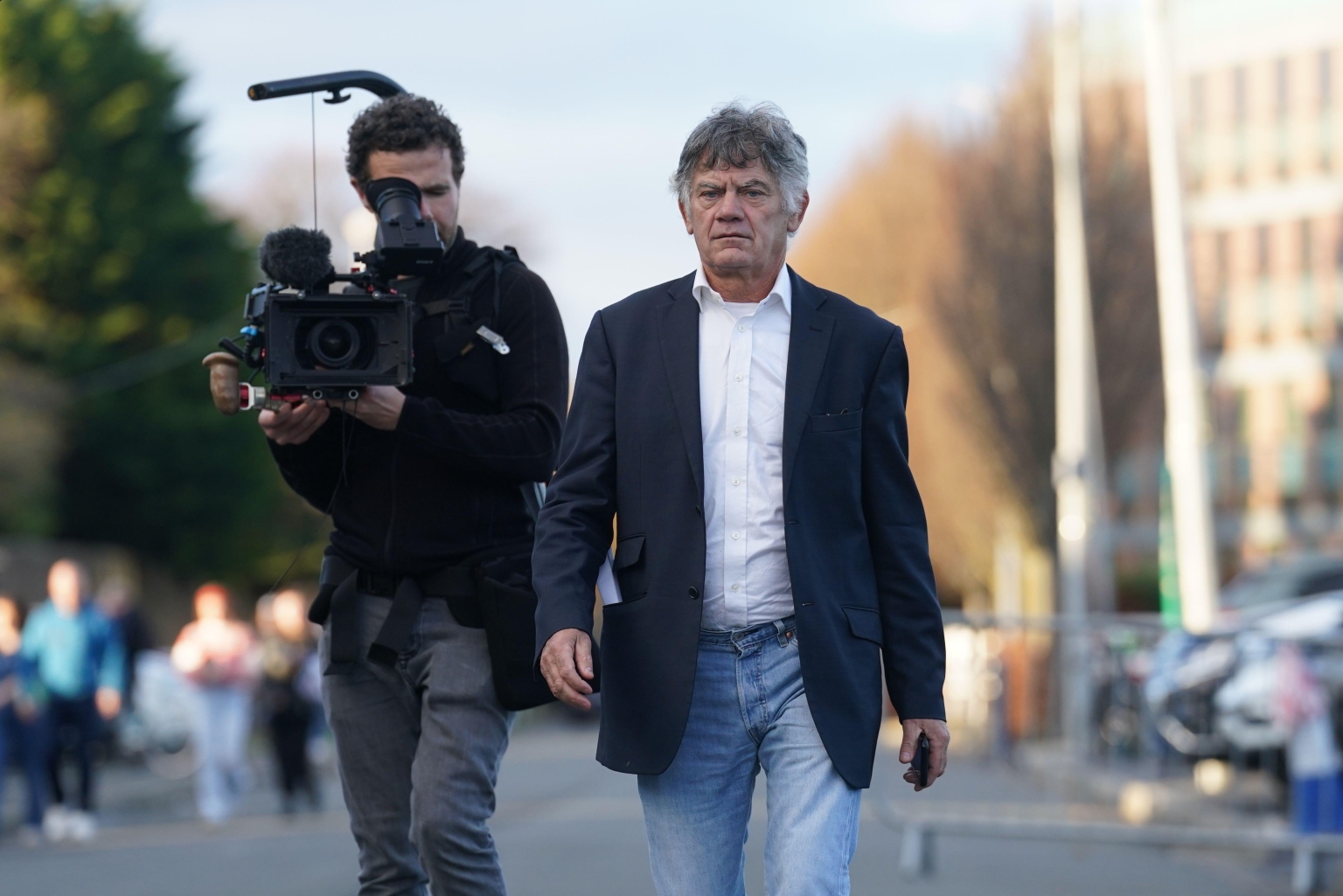
    With a Dublin Central by-election on the horizon, Irish politics appears to be descending into GUBU. The ‘grotesque, unbelievable, bizarre and unprecedented’ prospect of alleged crime boss Gerry ‘the Monk’ Hutch taking a seat in Dáil Éireann looms large in a May by-election triggered by the resignation of former Finance Minister Paschal Donohoe.

    Supreme Court Justice Peter Charleton once inquired as to why I pleaded for John Gilligan not as a gentleman, but as a self-employed businessman. Gilligan’s singular presence and the shadow over the murder of Veronica Guerin engendered the Criminal Assets Bureau and The Proceeds of Crime Act 1996. This was the beginning of the end for Due Process in Ireland. In the interim, one form of organised crime mutated into another via NAMA and offshore accounts. Thus, Ireland’s Gangster Inc. of Cuckoo and Vulture Funds was born.

    Of course, Gilligan never held political office, but Hutch’s candidacy and near election to the Dáil in 2023 begs the question as to whether an alleged crime boss ought to be barred from holding political office. Any such prohibition would raise questions of definition, and indeed whether the activities of present or former office holders, including at least one former Minister for Justice I can think of, might fit that description.

    There are obvious examples of corrupt politicians such as former Fianna Fáil T.D. Liam Lawlor, paid a small fortune by Beef Baron Larry Goodman, who remains one of the state’s richest citizens. During the 1980s a rogue’s gallery of grafters made their home in Leinster House. Today’s white collar criminals keep their finger nails clean, if not their toe nails, which remain firmly embedded in the dirt.

    A drawing of Ned Kelly on a wall in Melbourne.

    Art Imitating Life?

    A hagiographic play recently staged in Dublin’s Ambassador Theatre offered an alternative take on the staid format of the party-political broadcast. Remarkably, the eponymous hero of ‘The Monk’ made a surprise appearance on stage on the opening night, taking part in a fictional live question-and-answer session with playwright and performer Rex Ryan.

    The lineage of conventional – as opposed to de facto – Irish gangsters proceeds from Martin Cahill to Gilligan and the Kinahan Cartel, and on to Gerry Hutch. The Irish media display a morbid fascination mixed with veneration for their undeniable chutzpah – Martin Cahill’s costume clown appearances on multiple court appearances springs to mind.

    It is certainly not an exclusively Irish phenomenon. In his autobiography, Geoffrey Robertson KC describes his fellow Australian’s veneration of the Wild Colonial Boy, Ned Kelly. Further evidence emanates from the global success of Francis Ford Coppola’s The Godfather (1970), or the many films of Martin Scorsese exploring mobsters’ lives.

    It should be acknowledged that politics has always had close associations with crime, and not just in a state such as Italy under Andreotti or Berlusconi. The distribution of patronage and the promulgation of laws are often to the benefit of sectional, corporate or individual interests, who endeavour, and often grease, political machines with filthy lucre.

    A dirty business requires forensic and independent journalism, and may even compromise those intent on cleaning it up. JFK’s brother Bobby went full throttle against organised crime post-election, but the former seems to have relied on shady elements to win the Presidential election. That unrequited love may have led, one way or another, to Dallas, Texas.

    As Boby Dylan put it in ‘Murder Most Foul’:

    Then they blew off his head when he was still in the car
    Shot down like a dog in broad daylight
    ‘Twas a matter of timing and the timing was right
    You got unpaid debts and we’ve come to collect
    We’re gon’ kill you with hatred and without any respect
    We’ll mock you and shock you, we’ll grin in your face
    We’ve already got someone here to take your place

    That’s the place where Faith, Hope and Charity died

    That infamous day certainly paved the way for the cabal now in office: ‘Business is business and it’s murder most foul.

    Terrorist to Law-Maker?

    A criminal and law-breaker, or even a terrorist, can also become a unifying figure like Nelson Mandela, a national hero such as Michael Collins, or more ambiguously, a peacemaker like Gerry Adams. Perhaps Gerry Hutch is on his own Road to Damascus. He certainly portrays himself as a latter-day Robin Hood, bent on exposing the criminality of  Garda Síochána. Who knows what he’d come out with under Dáil privilege. If so what could he achieve?

    Gary Gannon, the pearl-clutching Social Democrats T.D. from the same constituency claimed to have been shocked at seeing Hutch on the ballot paper last time out. Former Taoiseach, and legendary recipient of brown envelopes, Bertie Ahern described Gannon’s comments as ‘absolute nonsense,’ and noted with moral ambivalence and some subtlety:

    Gerry Hutch has been around as long as me. I won’t get into morals or ethics but I have trampled that ground for 40 years and Hutch has been kind to the community in Dublin Central in indirect ways. Whether we like it or not, he is respected by people which explains his 3,000 votes. It is not just younger people voting for him, older people I know voted for him. We can all say the self-righteous things we want but the reaction is what it is.     

    It is noteworthy that Ahern’s political machine was colloquially known as the Drumcondra Mafia. At least when Hutch was growing up in the area, there were few options other than criminality for raising oneself out of poverty. Moreover, as Balzac put it: ‘Behind every great fortune there is a crime’ Which among the wealthiest individuals in Ireland have not soiled their bibs?

    The distinction between conventional robber and a new breed of corporate robber barons is unclear, or how to evaluate it in ethical or moral terms. Perhaps the writ of the Monk is preferable to the Cuckoo Funds making housing unaffordable for most of the population?

    George Galloway making his post-declaration speech at the 2024 Rochdale by-election.

    Protest Vote

    By-elections are an ideal opportunity for one-off protest votes. Consider the recent case of George Galloway who won the seat of Rochdale by a landslide in 2023, before losing it in the 2024 U.K. General Election.

    The Irish diaspora have long been adept at bringing out the vote, arranging transfers, and indeed scouring electoral registers for the dead and the dying. Gerry Hutch has called on disenfranchised citizens to register to vote – just as the Democrats in the U.S. continue to leverage disenfranchised minorities.

    His candidature is not unlike what one used to see in the U.K. with the Monster Raving Loony Party and Screaming Lord Sutch. Yet Hutch stands a real chance. And what if one were to advise him, however guardedly, on how to beat the established parties?

    Garnering acceptance among floating voters, and picking up precious transfers, would require him to articulate political objectives, at least in outline. Apart from being critical of the conduct of the Gardaí, what does he stand for?

    The Dublin Central constituency has some of the worst poverty in the state, alongside new hipster wealth and significant immigration in recent years. A manifesto of sorts would be worthwhile, addressing the concerns of native Dubliners in particular, and hopefully encouraging greater acceptance of diversity. Tony Gregory brought great benefits to the area. An independent candidate like Hutch might be able to perform a similar role.

    Corruption ought to be condemned, but violence should never be condoned. A reformed Hutch might have greater clout among troublesome elements than most politicians when addressing the current wave of violent crime. Recent fuel protests reveal Ireland to be on the brink.

    It remains to be seen whether Gerry Hutch has any real ideas for addressing the enduring problems of access to housing, health and education, or the increasing lawlessness in city centre, as the State continues to fail in its primary duty to keep the peace.

    Tom Wolfe in 1988.

    Radical Chic

    Tom Wolfe in his 1970 New Yorker essay ‘Radical Chic: That Party at Lenny’s’ used the term to satirize composer Leonard Bernstein and his friends for their absurdity in hosting a fundraising party for the Black Panthers. Wolfe’s concept of radical chic lampooned individuals (not unlike jet setters such as Paddy Cosgrave and his ‘Whistleblower’ Café) who endorsed leftist radicalism to affect worldliness, assuage white guilt, or garner prestige, rather than to affirm genuine political convictions.

    In short, Radical Chic is described as a form of highly developed decadence; and its greatest fear is to be seen not as prejudiced or unaware, but as middle-class. One suspects, however, that their Irish equivalents would be wary of Gerry Hutch, but let’s see.

    At one level I endorse his candidature as a means of giving the establishment a kick up the posterior, but it remains to be seen whether he possess any real ideas for addressing the issues I have alluded to. In the Kingdom of the blind, the one-eyed man is king. Perhaps the best that can be said of Gerry Hutch is that he might prove to be a superior form of gangster than the rest.

  • Podcast: Murder Most Foul: Amanda Knox on the Lucy Letby Case

    American journalist Amanda Knox joins Frank Armstrong to discuss the case of English nurse Lucy Letby. Knox was herself falsely charged with murdering her roommate Meredith Kerchner in Italy in 2007 and spent four years in prison.

    Lucy Letby was a nurse working in the neonatal unit of the Countess of Chester hospital. She was found guilty of murdering seven babies in her care in 2023, based primarily on statistical evidence and statements she made apparently implicating her.

    Amanda has found parallels with her treatment by the British media, and points to major flaws in the prosecution case.

    Episode Credits:

    Host: Frank Armstrong

    Music: Loafing Heroes – ​​https://theloafingheroes.bandcamp.com

    Produced by Massimiliano Galli – https://www.massimilianogalli.com

  • Musician of the Month: Cedar Dobson

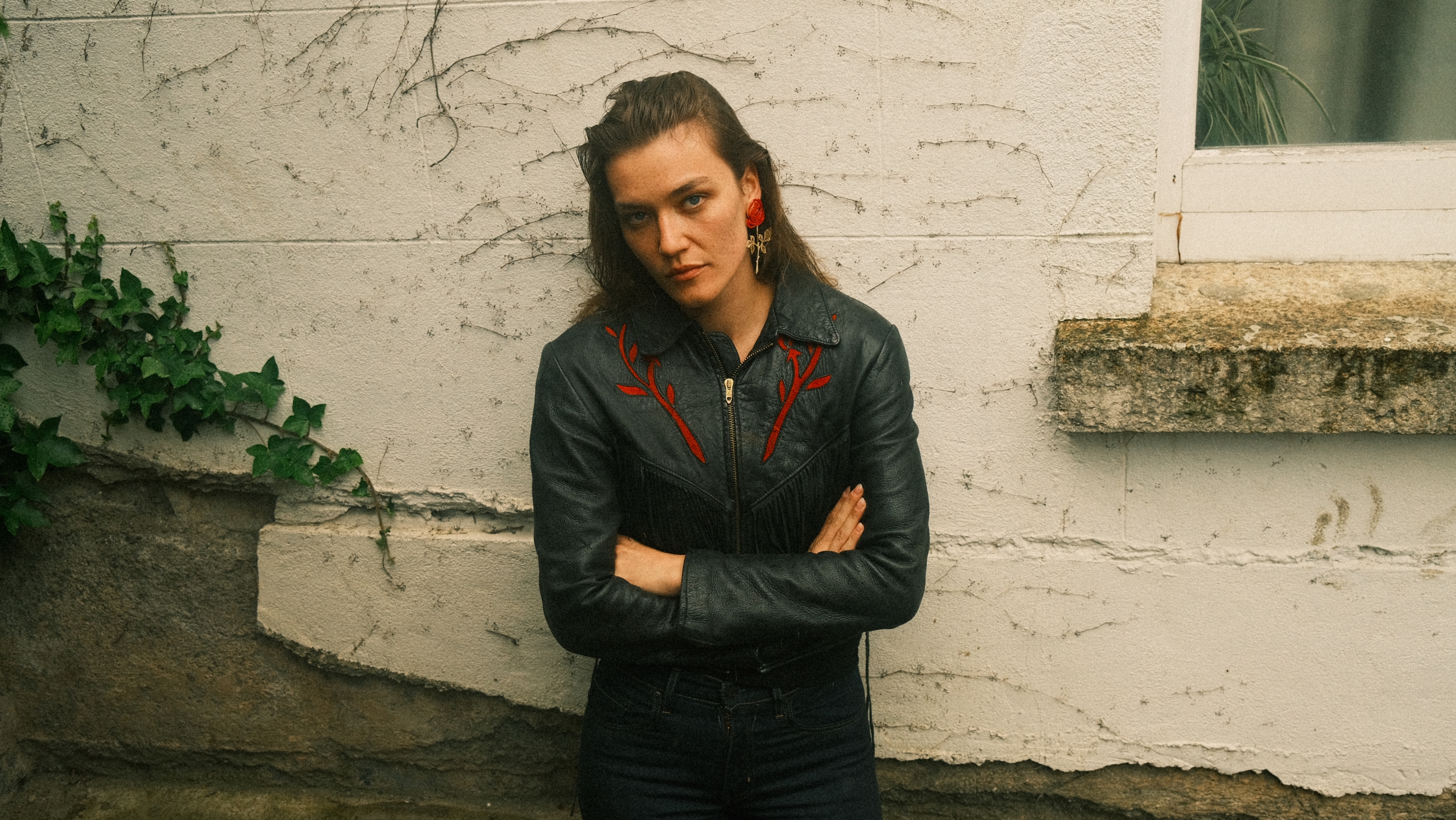
    I am a California native Irish traditional musician based in Ireland. I started playing music when I was around seven years old, beginning on piano and the Native American flute, which was my first wind instrument. My dad bought three of these flutes before I was born, and I am still playing them to this day. I tried various instruments as a child, including clarinet, saxophone, various percussion instruments, the accordion, and a few others. It wasn’t until I was eleven-years-old however that I discovered the tin whistle.

    I was about to board the bus back from an American Civil War reenactment in Mariposa, California, when I visited the souvenir stand. I bought a tin whistle from a barrel and my life changed forever. I played it on the bus heading home, then occasionally throughout the year, setting it down for a while before picking it up again in May 2014.

    I was inspired by a few film scores and remembered a tune that my grandparent’s friends played at their barn, which was called ‘The Swallowtail Jig’. I searched for this tune on YouTube and the gates of traditional Irish music heaven opened for me. I have been ‘tradicted’ ever since!

    I listen to many different sources of traditional Irish music as well as folk music from around the world, classic rock, American folk, jazz, and more.

    These influences have made an impact on my playing. My style is my own creation, influenced by these genres and specific individuals suchas Brian Finnegan, Alan Doherty, Ali Levack, and others. It is highly percussive and energetic, which reflects the person I am.

    I am currently working on an album that will be released on March 23rd. I co-engineered and mixed four albums, including ‘Harmonies’ (a flute and whistle meditation album), ‘Decade’, (a traditional Irish music album with a contemporary twist), ‘Tradify’ (an album that features a band I was in), and ‘A Whistle Wonderland’ (Christmas music treated as traditional Irish tunes).

    The album that will be released this month is entitled ‘From Kolkata to Dublin’, which is a minimally produced album featuring the Indian tabla, tin whistles, and exotic/rare wind instruments.

    I am planning to record duets with tin whistles and harmonica/button accordion this month, and to record an album of traditional Irish music that suits the Chinese Hulusi.

    As I write this, I am in the middle of eight days of gigging in Dublin. Six gigs down, three to go!

    I am a full-time musician, gigging every week and offering my remote recording services, teaching, custom tune compositions, and more.

    I am also currently forming the Cedar Dobson Band, which will consist of two or three musicians that will be performing at various festivals within Ireland this year as well as abroad.

    One of my greatest joys in life is to perform and share my original music and arrangements with others. This music is my life and I love it so much!

    I am expanding my horizons by diving into the world of gypsy jazz, playing complex solos on the low whistle. I am planning to film professional music videos to send to festivals as one of my goals is to play in Celtic connections next year. I just want to play the music that I love so much with others who appreciate it. That way I will able to express my emotions through music and hopefully touch other people on a deep level. Music is so powerfully emotional and it’s vital for us during this time in history.

    I post videos nearly every day on social media and YouTube. I post a tune of the week every Sunday as well as videos of exotic wind instruments and videos of me riding a unicycle while playing the tin whistle simultaneously. Indeed I love a good challenge and unicycling while playing the tin whistle has been just that!

    I hope to break into the scene more within Ireland and Europe as I am striving for more fulfilling opportunities, such as performing in festivals and in beautiful venues. I am grateful for every opportunity though, as they have made a positive impact on me. I am making valuable connections more often now than before.

    I moved to Ireland from California to experience the music as it is in all of its glory, honesty, and rawness. I’ve been based in Ireland for nearly five years and I am absolutely living the dream! I’m so grateful for every opportunity. I am now looking forward to traveling within Ireland and abroad, sharing the joys of music with others and hopefully offering moments of peace, joy, and lightness to others.

    This music has formed me into the person I am today. Endless gratitude!

    Latest Album: Decade https://cedardobsonmusic.bandcamp.com/album/decade

    Instagram: https://www.instagram.com/cedar_dobson_music?igsh=MWF3a2hxc3Z5bHU0bg%3D%3D&utm_source=qr

    Website: www.cedardobson.com

    YouTube Channel: https://www.youtube.com/@CedarDobsonMusic

  • Poem: ‘The con cometh’

    The con cometh

    The demon smirks, having laid out her wares.
    Will they see what she’s doing?
    Will they realise how they’re being taken in?
    Not all will grasp how an influencer works.
    She hopes they won’t. Her power over them
    depends on her ability to cajole and deceive.
    She insinuates herself into their thoughts,
    whispering temptations, telling them that the world
    is theirs for the taking. Only a click away.
    It’s not all about apples. Other goods are available.


    Feature Image: Max Beckmann – Family Picture (1920)

  • Piano Van on the N17

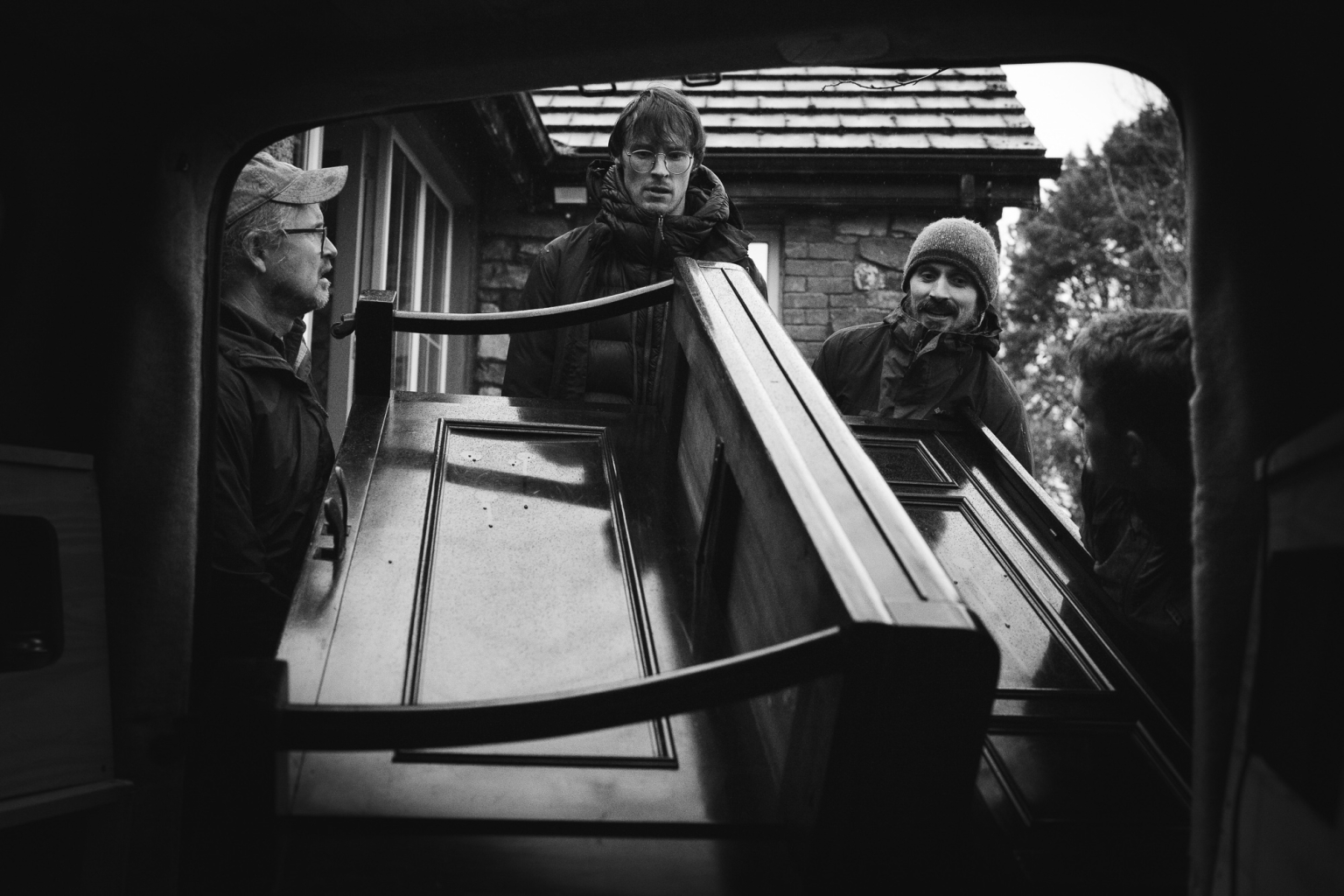
    Word came through from cousin Ed in Limerick: ‘Good news, I’ve a piano for you that’ll fit in Paul’s van.’ ‘Great stuff’ I enthused, blithely disregarding the challenge of getting it as far as my house in Sligo, let alone up the steps and through the door.

    Remarkably, cousin Paul agreed to make the trip on a dank evening in January when winter seemed interminable: ‘sure a road trip would be a bit of craic.’ Relative to other possibilities on that first weekend of January he was probably right.

    A layer of ice shrouded the tarmac as we set off from Sligo town on Saturday morning. At the Toberbride roundabout outside Collooney we bought what were apparently small Americanos. When these appeared in pint-sized cups it begged the question: what manner of receptacle is reserved for a large one? The proprietor clearly understands the importance of motorists loading up on the dark sludge before driving the first leg of the N17, especially on a bleak January morning.

    Collooney gives way to Ballinacarrow, where you find signs for Coolaney on the road to Cloonacool, then Tubbercurry anticipates Curry, and you’re into Mayo by the time the caffeine wears off.

    The Saw Doctors travelled the N17 from Tuam to Galway with ‘thoughts and dreams,’ a state of mind not recommended for the winding road to Tubbercurry, an accident blackspot. As for ‘stone walls and the grasses green’, although there are plenty of the former, the boggy fields are more fawn than green at this time of year, until you get past Tuam at least.

    The road widens before Ireland West Airport, outside Knock. There, Our Lady, Saint Joseph and Saint John the Evangelist appeared to Mary Byrne in 1879, but the opening of the airport in 1985 was the real miracle, as Christy Moore insisted. The messianic zeal of Monsignor James Horan brought this solitary crumb of infrastructure to a neglected north-west region in 1986.

    Only featherheads now dream of the Western Rail Corridor being resuscitated as far as Sligo, despite tangible evidence of surviving track under public ownership, recalling Monty Python: what did the British ever do for us? The 2024 All-Island Strategic Rail Review proposes new lines are restricted to connecting settlements with populations over fifty thousand, but how is a city, such as Sligo, supposed to expand sustainably without further rail infrastructure, and is Donegal to remain the forgotten county forever?

    The N17, which serves as the main north-south transport artery through Connacht, abuts a curiously desolate landscape, almost entirely devoid of native woodland. It offers a foretaste of the Midlands, without the charm of the waterways. Far from wild Atlantic shores, it’s scenery that nurtures disappointment.

    Beyond the seemingly supernatural marilyn of Knocknashee (‘hill of the fairies’), there’s barely a hillock in view along the entire route to Galway. There the slick motorways of another Ireland come into view. I’ve never taken the route other than under a sky that promises rain, and usually delivers.

    Many of the super-sized bungalows along it appear to have been constructed in the 1980s, when Ireland still exported its children. Aesthetic considerations did not figure prominently in the considerations of draughtsmen, who might as well have been paid by the room. The influence of Southfork, the Ewing Mansion outside Dallas, Texas is apparent in the expansive Southern Colonial style of some of these over-sized residences.

    Ribbon developments streak from historic towns, where the number of pubs diminish with each increase in the price of a pint. They say the kids prefer to go to the gym these days in any case.

    Beyond Galway, the gentle scenery of east Clare barely registered such was the speed we reached on the N18 motorway. Before long we were crawling through dystopian industrial estates outside Limerick. At last, we reached the city’s attractive inner core, including the country’s only Georgian Crescent, near the house where our piano was located.

    Ed had let us know there would be 5.5 men on hand to lift the piano. It turned out the .5 of a man was a blind Jack Russel, and that the additional men were piano players rather than heavyweight lifters. Undeterred, we hefted it out of the house – which mercifully had no steps at the entrance – and squeezed it into the van, albeit at a slightly awkward angle, without too much bother.

    There followed an evening of revelry, as the additional piano lifters, who turned out to be Maltese, revealed their real talent, as musicians. At one point, I am convinced, the blind dog chimed in, but sadly we lack documentary evidence to this effect. The only regret is that cousin Ed declined to sing his cult – a small cult admittedly – classic, ‘Mow’, about a young man taking refuge from the slings and arrows of outrageous fortune in the gentle comforts of cutting the grass.

    On Sunday morning we awoke early. Cousin Paul had taken further precautions against the January blues by booking a seaweed bath back in Sligo for that afternoon. The road rose to meet us at 9am, as we traced our way back home along the same route.

    At Milltown, Galway a large, modernist church that spoke of a more self-confident era was welcoming the remaining Cathaholics that shuffle through its doors. Among the pillars of Old Ireland, only the GAA continues to thrive. Today its brash, new club houses might pass for aircraft hangers. This is Supermac’s country of ersatz, super-sized Americana.

    After passing Tuam, we required further lashings of the dark sludge. At the petrol station in Ballindine a screen saver at the till read: ‘Coronavirus COVID-19 – Contactless – We would prefer if you could pay be contactless card.’ Covid frayed the social bonds like no other event in modern Irish history, and along the N17 it’s a gift that keeps on giving to a corporate aspiration for a brave new, cashless world.

    The real challenge came at the other end. Another cousin Johnny was thankfully on hand, and our photographer’s boyfriend Shane, a strapping Mayo man, was enlisted too.

    The great weight of a piano – most uprights weigh well in excess of 200kg – proved more of a challenge than anticipated, but after much heaving and straining – ribs were almost popped – we maneuvered it into the space. It now could do with tuning, and awaits a suitable hand.

    All Images: Síoraí Photography

  • Musician of the Month: Jenny Ní Ruiséil

    Jenny Ní Ruiséil is a musician and Yoga teacher, based in the west of Ireland. She creates music inspired by her roots finding her voice through singing in the Irish language, as well as taking inspiration from medicine music around the world and devotional chanting tradition of bhakti yoga and other spiritual traditions. Jenny is inspired by the continuously changing landscapes of the natural world, our human bodies, and the relationship between mind, body and awareness that we navigate on a daily basis.

    My earliest musical influences were quite classical in nature – I trained from a young age on the classical flute and played in orchestras and concert bands throughout primary and secondary school. I was always enamoured with the idea of being a singer but I didn’t officially take any lessons until I was in about 5th year in school. I taught myself guitar at fifteen – on a right-handed guitar that my dad had lying around the house (I’m left-handed).

    During my teenage years I was fortunate enough to attend the Gaeltacht (Coláiste Lurgan), where I subsequently worked. It was there that my love for music and songwriting was really given a space to flourish. I often say that if it wasn’t for Gaeilge (the Irish language) and Coláiste Lurgan, I would not be a singer today. Gaeilge literally gave me my voice. My boss in the college Mícheál Ó Foighil was the first person to ever put me in a room and say – ‘tá tusa ag canadh an amhráin seo’ (you are singing this song) – for no other reason that he believed me capable of it.

    I can’t tell you how impactful that was. Or how impactful it was to be part of a community centered around speaking the Irish language and creating music for young people to reconnect to it. As I got older I began spending whole summers there, and ended up working as a múinteoir and stiúrthóir ceoil (musical director). My job (along with a small group of others) was to translate songs into Irish and adapt them to suit groups of teenagers to sing in groups. We would then record the songs in a studio and shoot music videos to upload to Youtube for them to enjoy at home.

    Eventually, myself and the other teachers responsible for these projects formed a band, Seo Linn, who I sang with for nearly five years. Our music was mainly as Gaeilge (in Irish), with some bilingual songs too. We were really lucky to be given some amazing opportunities to travel to Uganda, Boston, London, Scotland and all over Ireland. We played for Micheal D. Higgins on a few occasions, as well as in venues and college bars all over the country, and I can safely say they were my ‘wildest’ days!

    I took a ‘break’ from the band aged twenty-two that ended up being permanent, as my mental health wasn’t good and I was struggling with an eating disorder. It was from there that yoga and meditation became important staples in my life, and I went fully into studying and practicing yoga while I travelled. I didn’t sing for a couple of years then, until one day I found myself at a Kirtan session (a form of call and response chanting), and fell in love immediately with the practice.

    It was a bit outside of my comfort zone at the time, as the only reference point I had for ‘devotion’ was something I associated with mass and the Catholic Church growing up. But I quickly realised that Kirtan (and yoga for that matter) were speaking to something much more universal, and something that any human with a heart has the capacity to connect to and feel impacted by.

    I began hosting kirtan sessions back in Dublin in around 2019, and was starting to write my own original songs again by this point. It is still a journey for me to reclaim the idea of being a
    singer-songwriter, but I feel that mantra and my yoga practice has really bolstered me to trust my creative instincts and capacity again.

    My music now reflects this, and is still deeply influenced by the land, music, spirituality and mythology of Ireland as well as my own personal healing journey.

    My hope for the future is to continue writing and creating more music that can connect people to the healing capacity of song and chanting, whilst also capturing some of the essence of Ireland and the magic contained within the language and landscape of this land.

    Spotify: Jenny Ní Ruiséil

    Instagram: Jenny Ní Ruiséil

  • Podcast: Why I Joined the Revolution in Rojava

    For this episode, we have asked our friend and contributor, Greek journalist and filmmaker, Alexis Daloumis, to sit in for an interview with Luke Sheehan about his newly released Documentary Belki Sibe.

    Back in 2015 Alexis travelled in northern Syria to Rojava, to join the Kurdish Syrian Democratic Forces and soon was deployed on the frontlines as a member of the International Freedom battalion.

    His documentary depicts with unprecedented candour and rawness his eighteen-month journey through war and revolution, during the advances and victory against Isis, the liberation of Raqqa in 2017, until then, the Islamic State capital and stronghold.

    The documentary also includes new footage and interviews from his subsequent visit in 2021 to the same places and cities where he once fought.

    Now, as a journalist, his camera turns to scrutinize civil life and institutions under the autonomous Kurdish administration.

    In light of recent developments, we asked Alexis to talk about the making of his documentary, his experiences on the frontlines and that of his comrades, as well as the potential dangers that loom over the area and its people, now that United States has withdrawn its support to the autonomous Kurdish administration in favour of the newly established Syrian Central Government after the fall of the Assad’s regime.


    Host: Luke Sheehan

    Intro: Daniele Idini

    Music: Loafing Heroes – ​​https://theloafingheroes.bandcamp.com

    Produced by Massimiliano Galli – https://www.massimilianogalli.com


  • Archiving Gaza in the Present

    Review: Archiving Gaza in the Present: Memory, Culture and Erasure. Edited by Dina Matar and Venetia Porter (Saqi Books, London, November, 2025). 

    While Israel has made Gaza synonymous with its genocide, a rich cultural heritage, now largely destroyed, paints a completely different picture. The introduction to Archiving Gaza in the Present: Memory Culture and Erasure states that the book serves as “a reminder that Gaza as we see it today in the media’s live-streaming coverage of the war, miserable, shattered and deformed is not the Gaza that saw the unfolding of many civilisations.”

    The book is a compilation of papers and visual material presented at a two-day conference in November 2024 in London, a little over a year since Israel unleashed its genocide in Gaza. The level of annihilation and erasure – not only of Gaza’s infrastructure but also of its historical sites – made archiving and preservation more urgent. Palestine’s historical and cultural heritage is presented in the book through the contributions of various artists, historians, lawyers, curators, archaeologists, poets and journalists. Described as an ‘archive of Gaza in the present’, the book illustrates the process of archiving even as Israel continued to wage its destructive campaign.

    There is also an urgency to archive. In 2024, halfway through the genocide before the ceasefire announcement, which Israel has now violated hundreds of times, the world was witnessing a replica of the 1948 Nakba. This time they were using sophisticated military technology resulting in unprecedented destruction of Palestinian lives, culture and heritage in Gaza. For example, camps established in the aftermath of the 1948 Nakba, during which thousands of Palestinians fled to Gaza, were bombed in Israel’s genocide: “The names of camps are becoming those of mass graves.”

    With each massacre, Israel erases a part of Gaza. The compilation of essays and visual material in the book show not only the magnitude of destruction, but how much of that destruction is unknown to the West.

    Salman Abu Sitta, for example, notes that Gaza is the only place in Palestine which never took down the Palestinian flag since before the Nakba. Gaza was also the first to play a central role in the anti-colonial struggle and refugee political organisation. Gaza’s traits are largely overlooked due to the colonial impositions inflicted on it. Indeed, as Abu Sitta notes, the term ‘Gaza Strip’ is a product of this recent colonisation.

    An aerial photo of displaced Palestinians waiting in northern Nuseirat to return to their homes in Gaza. © 2025 UNRWA Photo by Ashraf Amra

    A Decolonial Act

    Archiving Gaza is a decolonial act, happening at a time of political and demographic erasure. Many artists in Gaza have had their studios destroyed in Israel’s bombing, their work decimated, yet continue to express themselves and their wider communities in Gaza.

    Thus, art became a way to document the genocide, using whatever materials were available. Some artists directed their efforts towards art therapy. One particular collection of images that stands out in the book is Ahmed Muhanna’s art work, drawn on the packaging of humanitarian aid boxes: “He began drawing on them, incorporating the stamped warning ‘Not for Sale or Exchange’ into his compositions – reframing it as an artistic and philosophical element.”

    Several artworks now deal with memories of genocide, memories of Palestinians killed by Israel, memories of being still alive amid the erasure. Maisara Baroud states: “In my work, I express the story beyond the official narrative. It is the story of war that produces a tremendous capacity for harm, conquering distance, geography, and even the speed of sound to bring death to more people in less time.”

    Prior to the genocide, Gaza was a thriving art hub, with residencies, art programmes, exhibitions and grants for artists. The art department at the Al-Aqsa University in Gaza was established in 1995, the same year the university was recognised, and it played a major role in promoting art through academic programmes. In 2021, recognising the restrictions as well as earlier destruction, the concept of the Sahab Museum (The Museum of the Clouds) was implemented, preserving material and digital works in a curated virtual space that is also an act of resistance. It decolonises Gaza through Palestinian memory, “providing an attempt to respond to the destruction of cultural archives, which lies at the heart of colonial policy.”

    The book also documents Gaza’s deceased artists. One example is Fathi Ghaben, who died after inhaling white phosphorus. His paintings are synonymous with Palestinian resistance,  depicting the Palestinian flag as well as other cultural symbols in his art, leading to his arrest and detention by Israel in the 1980s. Another Palestinian artist from Gaza, Mahasen al-Khatib was killed in October 2024, just hours after publishing her last artwork depicting Sha’ban al-Dalou, who was burnt alive following a strike on the tents outside al-Aqsa Hospital.

    The striking discrepancy between Ghaben’s paintings and the art produced during the genocide illustrate both devastation and displacement. Apart from the bombed buildings, burnt vehicles, what stands out is Gaza and its population as a multitude of barely discernible figures. Masses of people awaiting food, landscapes of tents. Upon viewing the images, one pauses to think of the population’s individual identities in the midst of these scenes, and that is where the horror surges through.

    Fathi Ghaben 1947-2024.

    Rich Cultural Heritage

    Shifting from past to present and back to the past again, the essays in the book attest to both Gaza’s rich cultural heritage, ancient civilisations and Israel’s erasure. Six thousand years of history have been battered into oblivion by Israel to sustain the myth of a barren land ripe for colonisation. Hosting two hundred archaeological sites, Israel targeted Gaza prior to the genocide in a bid to assert its fabricated narrative of ownership over the land through archaeology and excavations. The first archaeological discovery was made before the British Mandate in 1879 in Nuseirat – a statue of Zeus which now forms part of the Istanbul Archaeological Museum. From 1967 onwards, excavations were carried out by the Israeli military.

    Jawdat Khoudary, a Palestinian from Gaza, started his own private collection of antiquities after finding an Islamic glass coin. With over 3,000 artefacts dating back from 2000 BC to the Ottoman Empire, Khoudary eventually decided to establish the region’s first archaeological museum in 2008. In February 2024, the museum was completely obliterated by Israel.

    The book refers to Polish lawyer Raphael Lemkin who coined the word genocide and who identified eight dimensions: political, social, cultural, economic, biological, physical, religious and moral. Israel’s eradication of Gaza illustrates how each of these components is intertwined in the systematic erasure of land and generations of people.

    The erasure also limits the Palestinians people’s struggle for self-determination. Israel destroyed numerous libraries in Gaza during the genocide, but before that, it had already looted most of Palestine’s archives during the 1948 Nakba, which are now held in Israel’s State Archive and the National Library. Quoting Palestinian scholar Mezna Qato, the book notes that Palestine’s history is under Israeli state surveillance: “To tell a history of Palestine now often requires seeking access through Israeli state keepers.”

    The Islamic University of Gaza in 2021.

    As a result of Israel’s colonial violence, Gaza’s exclusion from the rest of the world is amplified in several ways. Education is one example – Western universities do not engage with Gaza’s universities, as Israel’s colonial narrative is increasingly upheld in academic institutions. The exclusion of Gaza can also be traced back to the British Mandate and the 1948 Nakba, during which the entirety of Palestine faced restrictions on curriculum expansion and resources. Since October 2023, however, Israel moved from destruction to annihilation of Gaza’s education system. Other parts of Gaza’s history are also overlooked and largely unknown to the world, such as the history of aviation in Gaza and how this was also linked to Zionist colonial violence.

    Archiving Gaza in the present, as the book title states, represents quite a contradiction. Archiving in the face of erasure primarily presents one dilemma, as the book states in the case of archaeology, “Given the ongoing humanitarian, economic and environmental crises in Gaza, identifying new archaeological sites is not currently a priority.” However, the altered landscape requires an urgency to channel efforts towards preservation.

    But altered land presents a major problem. As the book shows, so much of Gaza has been lost that its very survival as a distinct entity has been placed in peril. Amid striving to safeguard their own survival in a land reduced to rubble, Palestinians are also aware of the necessity of preserving what can be salvaged, at a time when they are also preserving their own history of the genocide. International humanitarian law has failed Palestinians, as the book asserts. A Palestinian oral history thus becomes not only central but imperative. As the international community rallies behind the U.S. 20-point plan for Gaza, which upholds the Zionist narrative of a barren land in the current genocidal erasure, reclaiming Gaza in recollections, and wider Palestinian narratives, is an important part of decolonisation.

    In complete defiance to the Zionist narrative, this collection of essays and photos stand as testimony to Gaza as Palestinians know and remember it.

    Feature Image: Forced Displacement of Palestinians in the Gaza Strip devastated by Israeli bombing, January 29, 2025.

  • Who is my Neighbour? On the Death of Renee Good

    It’s very possible that Renee Nicole Good reasoned, as I would’ve, that her whiteness would protect her when she put her Honda Pilot, dog in tow, in the path of ICE vehicles on a Minneapolis street less than a mile from where George Floyd’s last words were, just six years before, “I can’t breathe.” Unfortunately for Renee—a poet, wife, and mother of three—neither the historically privileged color of her skin nor her citizenship were sufficient to shield her from three shots fired at point blank range by an ICE officer after a brief and startling confrontation. The officer was briefly hospitalized and released the same day.

    Ordinary Americans can add this outrageous bloodshed to a growing list of Orwellian events prompted by the Trump administration, which includes both the killing itself and subsequent state-propagated lies seeking to style Good as a ‘domestic terrorist’ and ‘professional agitator.’ Today, I woke to news of a flurry of resignations from top prosecutors: four senior leaders in the division that investigates police killings have resigned in protest, and six federal prosecutors in Minnesota have jumped ship, not to mention the FBI denying local MN authorities any access to their investigation.

    Our times (and our enforcement officers) are trigger-happy, and the socio-political hot buttons have long since boiled over. There is palpable temptation—on all sides of the American partisan spectrum—to give into violence, or despair, or both. Reaching into an exhausted rattle-bag of the faith in which I was raised, “love thy neighbor as thyself” – a Levitical commandment echoed by Jesus of Nazareth—sits like a cold stone in my palm.

    Christ was an effective radical because he knew when to flip a table and when to restore a sword-shorn ear lopped off in protest of his own arrest. Angry Americans flip tables with zeal. It’s the cathartic part, the part that soothes our sense of wounded moral dignity and our desire to see immediate justice. But I fear that until we understand the counterintuitive nature of this rattle-bag text – counterintuitive because we do not get to pick and choose the identities of our neighbors, and because we are completely entrenched as a society in ‘othering’ those outside our given and (especially) our chosen ‘tribes’ – we will continue to see blood in the streets and lies on the screen.

    POTUS is set on besmirching the name and legacy of Renee Nicole Good—who died standing up for her neighbors. I’m certain we will not see these calumnies retracted any time soon. A closeted melancholiac, I’m left mourning Renee, a fellow artist, and imagining what it means to bring up my young son in such turbulent, hate-stricken times. I know I’m not the only one.

    We might finally start living when we learn to kill each other with kindness. Until then, we seem doomed to proceed without the last two words and suffer the consequences.


    SOMETHING GOOD
    by Haley Hodges

    Sky, road, rain, one great
    grey. Into this toothless homogeny
    come fanged questions—
    must we raise our children
    in a police state? Was the grey,
    say, two generations back
    (grand grey to this grey)
    softer, somehow? Fault fate
    if you must. How to return
    to iridescence—to joy—
    despite this—despite all—
    before we return to dust:
    that’s our operation, our
    immutable mandate. Let
    slates be wiped and crammed
    with this endeavor. Light,
    it’s time. Come like cream
    to the top. Crown each
    seeking life, lives going
    to the lengths men with guns
    and covered faces go—
    but oh, finally gently. And
    for something good.

    Feature Image: Uniformed HSI SRT agents in Los Angeles


  • On the Question of Immigration

    The European Convention on Human Rights (ECHR) is perhaps best understood as the culmination of the Enlightenment tradition of constitutionalism, hedged in legalistic language of proportionality and balance. It asserts that people have a right – or at the very least the right to have rights – to rely on the Convention when a domestic state has been derelict.

    It has been invoked successfully on many occasions against Ireland, most obviously with Mary Robinson’s enlistment by David Norris in 1990 to establish his right to privacy in terms of the criminalisation of homosexuality, in circumstances where the Irish domestic Supreme Court decided against him. That challenge fell within the rubric of Article 8 of the Convention: respect for your private and family life.

    The prohibition against torture and inhumane and degrading treatment under Article 3 of the Convention has protected Irish people in the infamous H Block 5 techniques case Ireland v U.K. (1979).

    Using the same Article 3, the ECHR sanctioned the rogue police state in the Greek case of The Regime of The Colonels (1966), and multiple human rights cases for the actions of various police forces not least in Turkey – referred to in a recent Cassandra Voices Podcast and article. It is noticeable that it has been extended to mental suffering, including demonisation by race. With ever more advanced techniques of torture, abuse and degrading treatment that extension was a jurisprudential necessity.

    A new podcast and article discuss fresh crackdowns targeting the Istanbul Metropolitan Municipality, with Fatima Akman Lehmann joining Luke Sheehan.https://t.co/nQzOJ3bxCP

    — CassandraVoices (@VoicesCassandra) January 3, 2026

    The track record of Ireland’s noncompliance does not make for pretty reading, not least the Norris Case. In many recent cases, given the fractured incorporation of the Convention, we have witnessed the development of the sinister interpretative obligation where the Convention is ignored if a constitutional principle applies, however dubiously, or as in the recent cases of Quirke and Dwyer, where the Irish courts used police powers and data protection to sidestep the Convention and thus entirely undermine its legal application.

    Along with others, historically we have been a rogue state in Convention compliance terms, and contrary to the view of Gerard Hogan our Constitution is a paltry substitute, not least given the diminution of Due Process by the Irish judiciary, which, in fairness, Hogan sedulously opposes.

    Now, with Minister for Justice O’ Callaghan leading the way, a joint statement of The Council of Europe calls for Article 8 of the ECHR, which protects the right to a family life, to be ‘adjusted so that more weight is put on the nature and seriousness of the offence committed and less weight is put on the foreign criminal’s social, cultural, and family ties with the host Country.’

    It also call for the crucial Article 3 to be ‘constrained to the most serious issues in a manner which does not prevent State Parties from taking proportionate decisions on the expulsion of foreign criminals, or in removal or extradition cases.’

    The joint statement also stresses the importance of ‘a states’ right… to control the entry, residence, and expulsion of foreigners from their territories, which should guide the interpretation of the Convention.’

    Image: Matt Barnard

    Vexed Question of Our Age

    Immigration has been the vexed question of our age, and the use of the word foreigner in the above statement is a deeply divisive word. There should be no such expression allowed in any language, only people. None of us are pure blood. The word “foreigner” in this context is meaningless.

    My experience of the ludicrous Irish refugee tribunal system was that the vast preponderance of claims were rejected, and if a tribunal chair had the temerity to admit to more than a minuscule amounts of claims he or she would be removed. The Cosma case (2006) – involving suicidal ideation – I litigated with Gerard Hogan in the High and Supreme Courts sidestepped Article 2 of the convention, in circumstances where there were tangible psychological reports. English tribunals are better but increasingly restrictive, albeit educated English judges tend to respect the Convention.

    In the Irish system I encountered judgments of monumental absurdity, involving ill-informed credibility assessments.

    It should be born in mind that many of those who seek asylum have been falsely convicted or framed by state criminals. Turkey comes to mind. When someone is accused by criminals of being a criminal the term loses any meaning.

    In all this the lessons of history and the reason why the Convention was founded are lost. Let us consider, therefore, given my mixed Austrian-Irish heritage, the respective experiences of forced or compulsory immigration in both these countries.

    In some cases, as in that of legendary Austrian-Jewish writers such as Joseph Roth, Stevan Zweig and indeed the very elderly Sigmund Freud forced migration was a consequence of real or prospective political persecution, and what is known as non-refoulement is a central part of immigration law, which is a well-founded fear of political persecution.

    That was during the last epoch of real barbarism. It’s clear that we are now returning to similar depravities, as the gyres of history turn.

    Apart from writers and intelligentsia who were often thoroughly disenchanted with the place, most of those leaving the country have done so for economic reasons. In more recent times, if not always, we have been welcomed into the U.K. and U.S.. Sadly, we no longer live in a world that extends a welcome to the poor huddled masses. And despite others welcoming the Irish, apart from welcoming tourists and accommodating multinationals, we have never really been the land of a thousand welcomes.

    Sideshow and Deflection

    The immigration issue is in fact a sideshow and deflection, where fag end capitalism foments hatred and discord, turning people against each other. It is often used to deflect attention from governmental inaction in housing and substantive equality matters.

    The Irish approach seems to be move immigrants down the canal, or use Gastarbeiter who pay exorbitant fees to shady educational institutions, but keep refusing them settled status.

    In a separate initiative O’Callaghan has a point about working immigrants contributing to accommodation costs, and no doubt family reunification issues do require careful consideration, especially with respect to the costing of whether those who come in can be supported by family members, but any denudation of Article 3 opens up a dangerous vista.

    Violent demonstrations and attacks on particular nationalities suggest that Irish parochialism and indeed racism have reached unprecedented levels. This is also the case in the rest of Europe and the UK. Let us consider the larger context.

    First published in 1918, and translated into English in 1926, Oswald Spengler’s The Decline of the West was perhaps the most influential text of the 1930s. Spengler  blamed what he saw as a declining European civilisation on the dilution of a mythical Aryan race – whether Germanic or Anglo Saxon. Spengler influenced Hitler and provided an ideological impetus for the extermination of undesirable races in the Holocaust or Shoah.

    Moreover, our age of chaos and uncertainty allows strongman leaders like Viktor Orban (whose Hungary signed this document) to assert as policy demonization of the other. If you listen carefully enough you will recognise that the Social Darwinism of another age is also the rallying cry of neo-liberalism, as an age of cartels and select groups brings exclusion and enforced conformity against others.

    It hardly matters to racists, who do not believe in science or empirical evidence, that there is zero evidence for the concept of race, as geneticists have worked out that every person on Earth can trace a lineage back to a single common female ancestor – a Mitochondrial Eve – who lived around 200,000 years ago.

    Franz Fanon

    Reproducing Colonialism

    Who is not a foreigner and what the hell does that mean? In works such as Culture and Imperialism (1994) and Orientalism (1978) Edward Said argued that ‘Patriotism, chauvinism, ethnic, religious and racial hatreds can lead to mass destructiveness.’ He also cites our very own Conor Cruise O’Brien to the effect that Imagined Communities of identity are hijacked by the petty dictators of state nationalism.

    Meanwhile, Frantz Fanon’s seminal anti-colonial text The Wretched of the Earth (1961) demonstrates how the indigenous population is required to pay the debts of the occupying powers.

    This is now being reproduced in our own societies in the form of austerity. The occupying powers are now the corporatocracy, or those with inherited wealth. The only difference from the colonial period is they no longer exclusively come from a distinct ethnic group. In fact, a veneer of diversity is achieved with the promotion of a few specimens with varied pigmentation. Leo Varadkar comes to mind. As long as they embrace safe, politically correct policies that ignore structural racism they become one of us.

    What Fanon said is true both of former colonialism and now internal colonialism by corporate vulture and hedge funds with politicians as puppets: ‘The people’s property and the people’s sovereignty are to be stripped from them.’

    Furthermore, with respect to the assault on Article 3, certain Irish nationals might nativistically welcome this without understanding that its denudation, in conjunction with the already denuded due process, ushers in the potential Article 3 violation of Irish citizens in Ireland.

    We are on a slippery slope to a larger police state.

    The previous site of the heavy gang on Harcourt Street may already be equipped with physical and newly given psychological torture techniques derived from American institutions. Be careful what you wish for citizens.

    Thus we find an increasing differentiation between ‘them’ and ‘us’, involving unedifying forms of class warfare and demonization of those outside the dominant culture, whether foreigner, migrant or displaced. ‘Killing an Arab’, the central theme of expurgation of ‘the other’ in Albert Camus’s L’ Étranger is now writ large in our culture.

    Camus, in my view the greatest writer, humanist and intellect of the 20th Century with his Shakespearean mixed-race native ambivalence is a ghostly prophet of the way we live now.

    Well before fascism there was of course widespread hatred of the wandering and or wealthy jew. The rebranding of Herzog Park in Dublin might be part of a resurgent anti-Semetism. Why not rebrand it Wittgenstein Park, after one of the great intellects of the 20th century, who is merely awarded a humble plaque in the Aishling Hotel.

    Albert Camus in 1957 by Robert Edwards
    Albert Camus in 1957 by Robert Edwards

    End of an Era

    We are seeing a growing hostility towards miscegenation, mixed marriages and corruption of bloodlines. Members of the blue-blooded, ‘Anglo-Norman’, Fine Gael party display an absurd sense of entitlement, while many Fianna Fáil members appear to be card-carrying racists, while a vigilante Catholic Right inveighs against alleged paedophiliac Asian men, while ignoring the litany of its own abuses.

    All is not lost in Britain, though the rise of Tommy Robinson and co does not augur well. Even in the polyglot cosmopolis – the ultimate melting pot that is London – the sense is that multicultural tolerance has been eroded substantially, and is being replaced by fractious intolerance, racism, class warfare, intimidation and social fragmentation.

    The Post Second World war humanist consensus is almost gone.

    The words of Stefan Zweig, who committed suicide in Brazil after fleeing Hitler’s Europe are returning to haunt us: ‘I feel that Europe, in its state of degeneracy has passed its own death sentence.’

    Feature Image: Syrian and Iraqi migrants arriving in Lesbos, Greece, in 2015 seeking refuge.