Blog

  • Cassandra Classics: ‘The Lottery’ (1948) by Shirley Jackson

    At Cassandra Voices we believe in contrasting the original work of our contemporary contributors with accomplished authors from yesteryear. Perennial favourites of such mastery, they appear as fresh and modern as the day they were first published.

    For our May edition we bring you Shirley Jackson’s ‘The Lottery’. A short story from 1948, and notorious for provoking the most vehement hate mail of any piece of fiction in the venerable New Yorker’s history. Loyal readers of the magazine went so far as to cancel their subscriptions in protest.

    In Shirley Jackson’s own words,

    Curiously, there are three main themes which dominate the letters of that first summer—three themes which might be identified as bewilderment, speculation and plain old-fashioned abuse. In the years since then, during which the story has been anthologized, dramatized, televised, and even—in one completely mystifying transformation—made into a ballet, the tenor of letters I receive has changed. I am addressed more politely, as a rule, and the letters largely confine themselves to questions like what does this story mean? The general tone of the early letters, however, was a kind of wide-eyed, shocked innocence. People at first were not so much concerned with what the story meant; what they wanted to know was where these lotteries were held, and whether they could go there and watch.

    ************************************************************************************

    The morning of June 27th was clear and sunny, with the fresh warmth of a full-summer day; the flowers were blossoming profusely and the grass was richly green. The people of the village began to gather in the square, between the post office and the bank, around ten o’clock; in some towns there were so many people that the lottery took two days and had to be started on June 2th. but in this village, where there were only about three hundred people, the whole lottery took less than two hours, so it could begin at ten o’clock in the morning and still be through in time to allow the villagers to get home for noon dinner.

    The children assembled first, of course. School was recently over for the summer, and the feeling of liberty sat uneasily on most of them; they tended to gather together quietly for a while before they broke into boisterous play. and their talk was still of the classroom and the teacher, of books and reprimands. Bobby Martin had already stuffed his pockets full of stones, and the other boys soon followed his example, selecting the smoothest and roundest stones; Bobby and Harry Jones and Dickie Delacroix– the villagers pronounced this name “Dellacroy”–eventually made a great pile of stones in one corner of the square and guarded it against the raids of the other boys. The girls stood aside, talking among themselves, looking over their shoulders at rolled in the dust or clung to the hands of their older brothers or sisters.

    Soon the men began to gather. surveying their own children, speaking of planting and rain, tractors and taxes. They stood together, away from the pile of stones in the corner, and their jokes were quiet and they smiled rather than laughed. The women, wearing faded house dresses and sweaters, came shortly after their menfolk. They greeted one another and exchanged bits of gossip as they went to join their husbands. Soon the women, standing by their husbands, began to call to their children, and the children came reluctantly, having to be called four or five times. Bobby Martin ducked under his mother’s grasping hand and ran, laughing, back to the pile of stones. His father spoke up sharply, and Bobby came quickly and took his place between his father and his oldest brother.

    The lottery was conducted–as were the square dances, the teen club, the Halloween program–by Mr. Summers. who had time and energy to devote to civic activities. He was a round-faced, jovial man and he ran the coal business, and people were sorry for him. because he had no children and his wife was a scold. When he arrived in the square, carrying the black wooden box, there was a murmur of conversation among the villagers, and he waved and called. “Little late today, folks.” The postmaster, Mr. Graves, followed him, carrying a three- legged stool, and the stool was put in the center of the square and Mr. Summers set the black box down on it. The villagers kept their distance, leaving a space between themselves and the stool. and when Mr. Summers said, “Some of you fellows want to give me a hand?” there was a hesitation before two men. Mr. Martin and his oldest son, Baxter. came forward to hold the box steady on the stool while Mr. Summers stirred up the papers inside it.

    The original paraphernalia for the lottery had been lost long ago, and the black box now resting on the stool had been put into use even before Old Man Warner, the oldest man in town, was born. Mr. Summers spoke frequently to the villagers about making a new box, but no one liked to upset even as much tradition as was represented by the black box. There was a story that the present box had been made with some pieces of the box that had preceded it, the one that had been constructed when the first people settled down to make a village here. Every year, after the lottery, Mr. Summers began talking again about a new box, but every year the subject was allowed to fade off without anything’s being done.

    The black box grew shabbier each year: by now it was no longer completely black but splintered badly along one side to show the original wood color, and in some places faded or stained.

    Mr. Martin and his oldest son, Baxter, held the black box securely on the stool until Mr. Summers had stirred the papers thoroughly with his hand. Because so much of the ritual had been forgotten or discarded, Mr. Summers had been successful in having slips of paper substituted for the chips of wood that had been used for generations. Chips of wood, Mr. Summers had argued. had been all very well when the village was tiny, but now that the population was more than three hundred and likely to keep on growing, it was necessary to use something that would fit more easily into he black box. The night before the lottery, Mr. Summers and Mr. Graves made up the slips of paper and put them in the box, and it was then taken to the safe of Mr. Summers’ coal company and locked up until Mr. Summers was ready to take it to the square next morning. The rest of the year, the box was put way, sometimes one place, sometimes another; it had spent one year in Mr. Graves’s barn and another year underfoot in the post office. and sometimes it was set on a shelf in the Martin grocery and left there.

    There was a great deal of fussing to be done before Mr. Summers declared the lottery open. There were the lists to make up–of heads of families. heads of households in each family. members of each household in each family. There was the proper swearing-in of Mr. Summers by the postmaster, as the official of the lottery; at one time, some people remembered, there had been a recital of some sort, performed by the official of the lottery, a perfunctory. tuneless chant that had been rattled off duly each year; some people believed that the official of the lottery used to stand just so when he said or sang it, others believed that he was supposed to walk among the people, but years and years ago this p3rt of the ritual had been allowed to lapse. There had been, also, a ritual salute, which the official of the lottery had had to use in addressing each person who came up to draw from the box, but this also had changed with time, until now it was felt necessary only for the official to speak to each person approaching. Mr. Summers was very good at all this; in his clean white shirt and blue jeans. with one hand resting carelessly on the black box. he seemed very proper and important as he talked interminably to Mr. Graves and the Martins.

    Just as Mr. Summers finally left off talking and turned to the assembled villagers, Mrs. Hutchinson came hurriedly along the path to the square, her sweater thrown over her shoulders, and slid into place in the back of the crowd. “Clean forgot what day it was,” she said to Mrs. Delacroix, who stood next to her, and they both laughed softly. “Thought my old man was out back stacking wood,” Mrs. Hutchinson went on. “and then I looked out the window and the kids was gone, and then I remembered it was the twenty- seventh and came a-running.” She dried her hands on her apron, and Mrs. Delacroix said, “You’re in time, though. They’re still talking away up there.”

    Mrs. Hutchinson craned her neck to see through the crowd and found her husband and children standing near the front. She tapped Mrs. Delacroix on the arm as a farewell and began to make her way through the crowd. The people separated good-humoredly to let her through: two or three people said. in voices just loud enough to be heard across the crowd, “Here comes your, Missus, Hutchinson,” and “Bill, she made it after all.” Mrs. Hutchinson reached her husband, and Mr. Summers, who had been waiting, said cheerfully. “Thought we were going to have to get on without you, Tessie.” Mrs. Hutchinson said. grinning, “Wouldn’t have me leave m’dishes in the sink, now, would you. Joe?,” and soft laughter ran through the crowd as the people stirred back into position after Mrs. Hutchinson’s arrival.

    “Well, now.” Mr. Summers said soberly, “guess we better get started, get this over with, so’s we can go back to work. Anybody ain’t here?”

    “Dunbar.” several people said. “Dunbar. Dunbar.”

    Mr. Summers consulted his list. “Clyde Dunbar.” he said. “That’s right. He’s broke his leg, hasn’t he? Who’s drawing for him?”

    “Me. I guess,” a woman said. and Mr. Summers turned to look at her. “Wife draws for her husband.” Mr. Summers said. “Don’t you have a grown boy to do it for you, Janey?” Although Mr. Summers and everyone else in the village knew the answer perfectly well, it was the business of the official of the lottery to ask such questions formally. Mr. Summers waited with an expression of polite interest while Mrs. Dunbar answered.

    “Horace’s not but sixteen yet.” Mrs. Dunbar said regretfully. “Guess I gotta fill in for the old man this year.”

    “Right.” Mr. Summers said. He made a note on the list he was holding. Then he asked, “Watson boy drawing this year?”

    A tall boy in the crowd raised his hand. “Here,” he said. “I’m drawing for my mother and me.” He blinked his eyes nervously and ducked his head as several voices in the crowd said thin#s like “Good fellow, lack.” and “Glad to see your mother’s got a man to do it.”

    “Well,” Mr. Summers said, “guess that’s everyone. Old Man Warner make it?” “Here,” a voice said. and Mr. Summers nodded.


    A sudden hush fell on the crowd as Mr. Summers cleared his throat and looked at the list. “All ready?” he called. “Now, I’ll read the names–heads of families first–and the men come up and take a paper out of the box. Keep the paper folded in your hand without looking at it until everyone has had a turn. Everything clear?”

    The people had done it so many times that they only half listened to the directions: most of them were quiet. wetting their lips. not looking around. Then Mr. Summers raised one hand high and said, “Adams.” A man disengaged himself from the crowd and came forward. “Hi. Steve.” Mr. Summers said. and Mr. Adams said. “Hi. Joe.” They grinned at one another humorlessly and nervously. Then Mr. Adams reached into the black box and took out a folded paper. He held it firmly by one corner as he turned and went hastily back to his place in the crowd. where he stood a little apart from his family. not looking down at his hand.

    “Allen.” Mr. Summers said. “Anderson. Bentham.”

    “Seems like there’s no time at all between lotteries any more.” Mrs. Delacroix said to Mrs. Graves in the back row.

    “Seems like we got through with the last one only last week.”

    “Time sure goes fast,” Mrs. Graves said.

    “Clark. Delacroix”

    “There goes my old man.” Mrs.Delacroix said. She held her breath while her husband went forward.

    “Dunbar,” Mr. Summers said, and Mrs. Dunbar went steadily to the box while one of the women said. “Go on. Janey,” and another said, “There she goes.”

    “We’re next.” Mrs. Graves said. She watched while Mr. Graves came around from the side of the box, greeted Mr. Summers gravely and selected a slip of paper from the box. By now, all through the crowd there were men holding the small folded papers in their large hand. turning them over and over nervously Mrs. Dunbar and her two sons stood together, Mrs. Dunbar holding the slip of paper.

    “Harburt. Hutchinson.”

    “Get up there, Bill,” Mrs. Hutchinson said. and the people near her laughed. “Jones.”

    “They do say,” Mr. Adams said to Old Man Warner, who stood next to him, “that over in the north village the’re talking of giving up the lottery.”

    Old Man Warner snorted. “Pack of crazy fools,” he said. “Listening to the young folks, nothing’s good enough for them. Next thing you know, they’ll be wanting to go back to living in caves, nobody work any more, live hat way for a while. Used to be a saying about ‘Lottery in June, corn be heavy soon.’ First thing you know, we’d all be eating stewed chickweed and acorns. There’s always been a lottery,” he added petulantly. “Bad enough to see young Joe Summers up there joking with everybody.”

    “Some places have already quit lotteries.” Mrs. Adams said.

    “Nothing but trouble in that,” Old Man Warner said stoutly. “Pack of young fools.” “Martin.” And Bobby Martin watched his father go forward. “Overdyke. Percy.”

    “I wish they’d hurry,” Mrs. Dunbar said to her older son. “They’re almost through,” her son said.

    “You get ready to run tell Dad,” Mrs. Dunbar said.

    Mr. Summers called his own name and then stepped forward precisely and selected a slip from the box. Then he called, “Warner.”

    “Seventy-seventh year I been in the lottery,” Old Man Warner said as he went through the crowd. “Seventy-seventh time.”

    “Watson” The tall boy came awkwardly through the crowd. Someone said, “Don’t be nervous, Jack,” and Mr. Summers said, “Take your time, son.”

    “Zanini.”


    After that, there was a long pause, a breathless pause, until Mr. Summers. holding his slip of paper in the air, said, “All right, fellows.” For a minute, no one moved, and then all the slips of paper were opened.

    Suddenly, all the women began to speak at once, saving. “Who is it?,” “Who’s got it?,” “Is it the Dunbars?,” “Is it the Watsons?” Then the voices began to say, “It’s Hutchinson. It’s Bill,” “Bill Hutchinson’s got it.”

    “Go tell your father,” Mrs. Dunbar said to her older son.

    People began to look around to see the Hutchinsons. Bill Hutchinson was standing quiet, staring down at the paper in his hand. Suddenly. Tessie Hutchinson shouted to Mr. Summers. “You didn’t give him time enough to take any paper he wanted. I saw you. It wasn’t fair!”

    “Be a good sport, Tessie.” Mrs. Delacroix called, and Mrs. Graves said, “All of us took the same chance.” “Shut up, Tessie,” Bill Hutchinson said.

    “Well, everyone,” Mr. Summers said, “that was done pretty fast, and now we’ve got to be hurrying a little more to get done in time.” He consulted his next list. “Bill,” he said, “you draw for the Hutchinson family. You got any other households in the Hutchinsons?”

    “There’s Don and Eva,” Mrs. Hutchinson yelled. “Make them take their chance!”

    “Daughters draw with their husbands’ families, Tessie,” Mr. Summers said gently. “You know that as well as anyone else.”

    “It wasn’t fair,” Tessie said.

    “I guess not, Joe.” Bill Hutchinson said regretfully. “My daughter draws with her husband’s family; that’s only fair. And I’ve got no other family except the kids.”

    “Then, as far as drawing for families is concerned, it’s you,” Mr. Summers said in explanation, “and as far as drawing for households is concerned, that’s you, too. Right?”

    “Right,” Bill Hutchinson said.

    “How many kids, Bill?” Mr. Summers asked formally. “Three,” Bill Hutchinson said.

    “There’s Bill, Jr., and Nancy, and little Dave. And Tessie and me.”

    “All right, then,” Mr. Summers said. “Harry, you got their tickets back?”

    Mr. Graves nodded and held up the slips of paper. “Put them in the box, then,” Mr. Summers directed. “Take Bill’s and put it in.”

    “I think we ought to start over,” Mrs. Hutchinson said, as quietly as she could. “I tell you it wasn’t fair. You didn’t give him time enough to choose. Everybody saw that.”

    Mr. Graves had selected the five slips and put them in the box, and he dropped all the papers but those onto the ground, where the breeze caught them and lifted them off.

    “Listen, everybody,” Mrs. Hutchinson was saying to the people around her.

    “Ready, Bill?” Mr. Summers asked. and Bill Hutchinson, with one quick glance around at his wife and children. nodded.

    “Remember,” Mr. Summers said. “take the slips and keep them folded until each person has taken one. Harry, you help little Dave.” Mr. Graves took the hand of the little boy, who came willingly with him up to the box. “Take a paper out of the box, Davy.” Mr. Summers said. Davy put his hand into the box and laughed. “Take just one paper.” Mr. Summers said. “Harry, you hold it for him.” Mr. Graves took the child’s hand and removed the folded paper from the tight fist and held it while little Dave stood next to him and looked up at him wonderingly.

    “Nancy next,” Mr. Summers said. Nancy was twelve, and her school friends breathed heavily as she went forward switching her skirt, and took a slip daintily from the box “Bill, Jr.,” Mr. Summers said, and Billy, his face red and his feet overlarge, near knocked the box over as he got a paper out. “Tessie,” Mr. Summers said. She hesitated for a minute, looking around defiantly. and then set her lips and went up to the box. She snatched a paper out and held it behind her.

    “Bill,” Mr. Summers said, and Bill Hutchinson reached into the box and felt around, bringing his hand out at last with the slip of paper in it.

    The crowd was quiet. A girl whispered, “I hope it’s not Nancy,” and the sound of the whisper reached the edges of the crowd.

    “It’s not the way it used to be.” Old Man Warner said clearly. “People ain’t the way they used to be.” “All right,” Mr. Summers said. “Open the papers. Harry, you open little Dave’s.”

    Mr. Graves opened the slip of paper and there was a general sigh through the crowd as he held it up and everyone could see that it was blank. Nancy and Bill. Jr.. opened theirs at the same time. and both beamed and laughed. turning around to the crowd and holding their slips of paper above their heads.

    “Tessie,” Mr. Summers said. There was a pause, and then Mr. Summers looked at Bill Hutchinson, and Bill unfolded his paper and showed it. It was blank.

    “It’s Tessie,” Mr. Summers said, and his voice was hushed. “Show us her paper. Bill.”

    Bill Hutchinson went over to his wife and forced the slip of paper out of her hand. It had a black spot on it, the black spot Mr. Summers had made the night before with the heavy pencil in the coal company office. Bill Hutchinson held it up, and there was a stir in the crowd.

    “All right, folks.” Mr. Summers said. “Let’s finish quickly.”

    Although the villagers had forgotten the ritual and lost the original black box, they still remembered to use stones. The pile of stones the boys had made earlier was ready; there were stones on the ground with the blowing scraps of paper that had come out of the box Delacroix selected a stone so large she had to pick it up with both hands and turned to Mrs. Dunbar. “Come on,” she said. “Hurry up.”

    Mr. Dunbar had small stones in both hands, and she said. gasping for breath. “I can’t run at all. You’ll have to go ahead and I’ll catch up with you.”

    The children had stones already. And someone gave little Davy Hutchinson few pebbles.

    Tessie Hutchinson was in the center of a cleared space by now, and she held her hands out desperately as the villagers moved in on her. “It isn’t fair,” she said. A stone hit her on the side of the head. Old Man Warner was saying, “Come on, come on, everyone.” Steve Adams was in the front of the crowd of villagers, with Mrs. Graves beside him.

    “It isn’t fair, it isn’t right,” Mrs. Hutchinson screamed, and then they were upon her.
  • When Home is an Untouchable Beloved

    The cruellest aspect of protracted displacement is a descent into the realms of collective forgetfulness, in places where social injustice and political abandonment are normalised. Fresh from her fourth visit to Lebanon, author and activist Bruna Kadletz sees the Palestinian cause being relegated more and more to the margins of global concern.

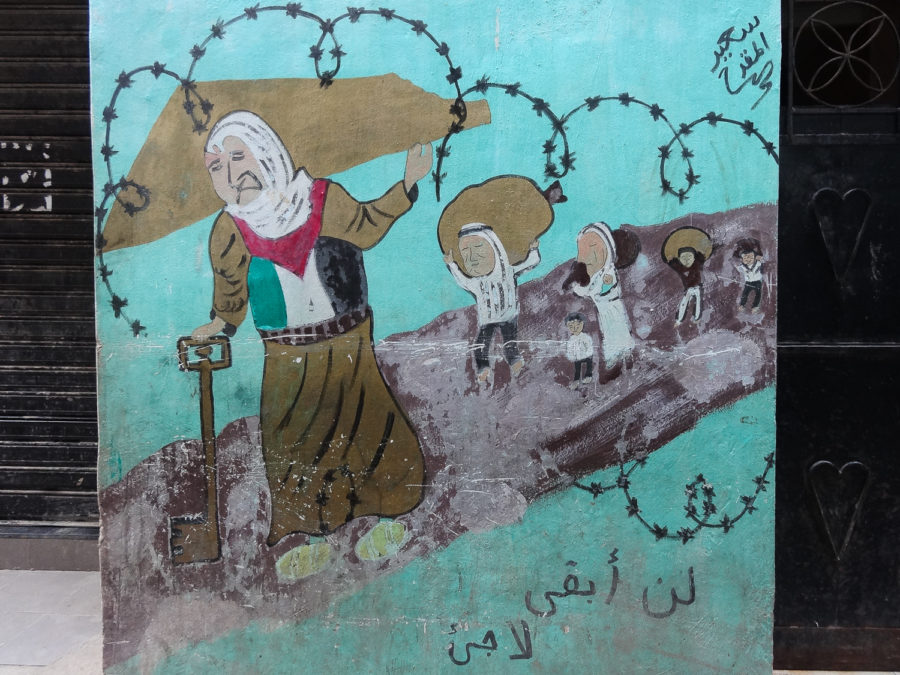
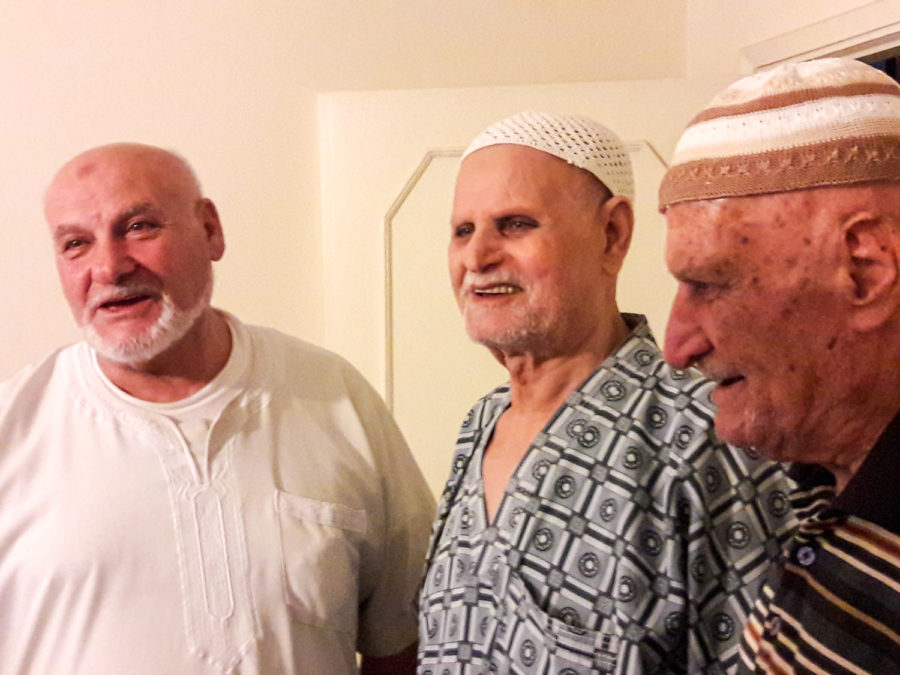
    In the autumn of 2017 I met three Palestinian elders at the Shatila Refugee Camp, in Beirut, Lebanon. All are survivors of Al-Nakba, meaning ‘disaster’ or ‘catastrophe’. The expression refers to the period during the violent birth pangs of the Israeli state in 1948, when hundreds of thousands of Palestinians were expelled from their villages and forced into exile. Many of the survivors and their offspring still live as refugees in Lebanon without a right of return to their homeland in sight.

    To the elders, memory, oral history and tradition are essential pillars which sustain Palestinian identity. Otherwise, given the hardships of exile in refugee camps, the generations born expatriated are at risk of forgetting not only who they are, but also about the land of their ancestors.

    For millions of refugees around the world, home is an untouchable beloved, imagined in the sweetness and pain of memories, and only visited in the imageries of storytelling. Many Palestinians still carry the keys to their former homes in Palestine, symbolizing an unwavering desire to return. This dream of home is their life breath.

    Holding a misbaha in one of his hands, while moving prayer beads through his fingers, Abu Mahmoud and other elders talk about the Occupation’s deep wounds and transgenerational trauma, as well as community and ties to the land. In the old Palestinian villages, sharing and a sense of community were central values integrated into personal relationships and the economic system.

    To the villagers, the land held a deep meaning – involving devotion to the soil out of which figs, olives, wheat, among other crops, grew – and was not seen as a commodity, with a purely financial price. Before selling their produce, tradition demanded a share be reserved for the wider village community. This practice ensured all residents generally had access to sufficient nutritious food.

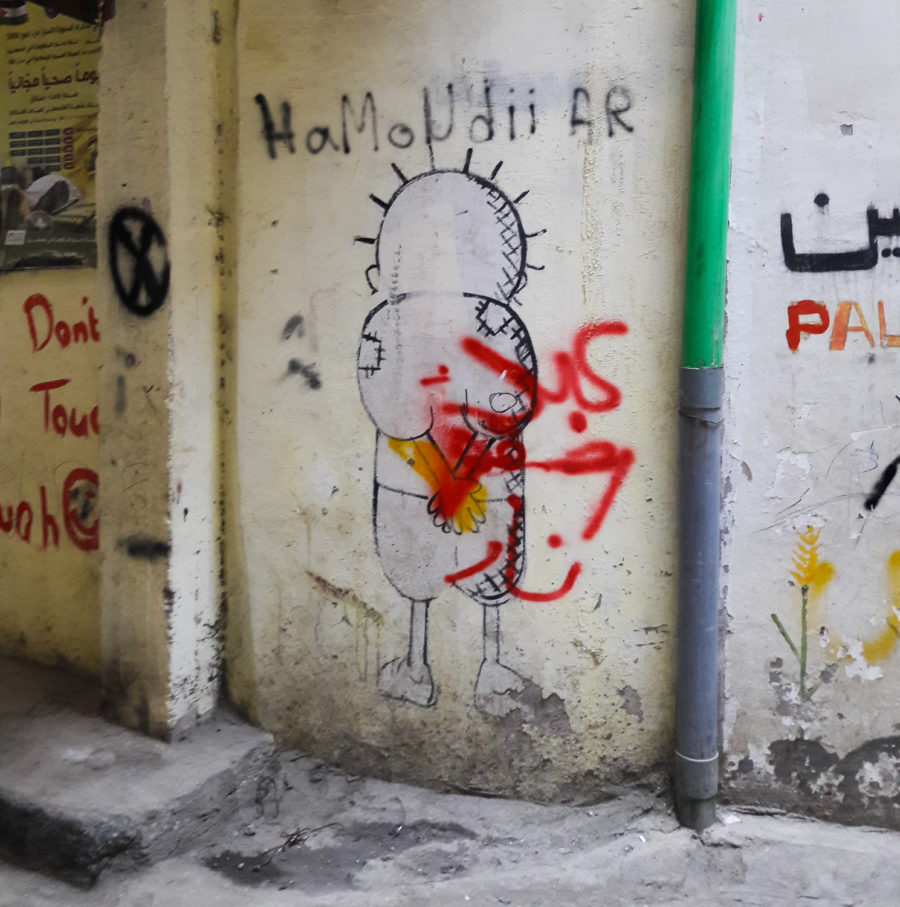
    This camp where the elders now reside lies far from those childhood memories. Shatila, along with another dozen camps in Lebanese territory, was set-up in 1949 in response to the Palestinian exodus. Today, there are approximately four hundred and fifty thousand Palestinians registered in refugee camps in that country.[i] Since the beginning of the Syrian War in 2011 the camps have been swollen further by the arrival of Syrian refugees.

    Being Brazilian, when I first entered an urban refugee camp in Lebanon, I was reminded of our favelas. The structure and living conditions of favelas and urban refugee camps are very similar: overpopulation, cramped buildings, a lack of sanitation and extreme poverty are among the resemblances. Favelas and urban refugee camps are pockets of social and political abandonment, zones of exclusion and punishment, where fundamental human rights and dignified living conditions are, all too often, unattainable.

    I was accompanied by my cousin Marina on my most recent visit to Lebanon in April 2019. As it was her first visit, I advised against drinking from taps, or even touching the camp´s water. Unfortunately she forgot the warning and rinsed her mouth with tap water, which was extremely salty, leaving her feeling nauseous. Most residents use this same water to wash their faces and hands, brush their teeth and bathe. I previously found it so salty that it burned my eyes.

    A local told us that most of the water distributed in refugee camps in Lebanon is contaminated. Treatment plants inject high volumes of disinfectant chemicals to mask the pollution, amidst a water crisis.

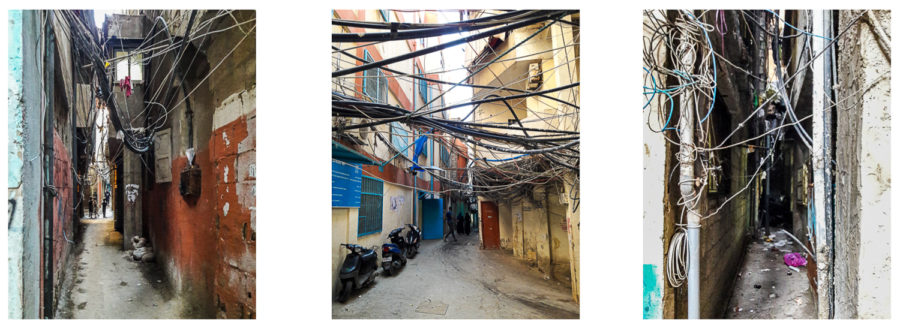
    Some Palestinian camps have another singular characteristic: the water distribution system is not subterranean. Instead, water is circulated via pipes which intertwine with electric wires, forming a deadly roof, covering great swathes of the camps. Wherever a leak occurs residents are in danger of electrocution.

    Because Palestinians living in Lebanon are prohibited from acquiring property in that state, and denied entry to over seventy professions, most have bleak future.

    Since they cannot build beyond the camp’s walls and expand horizontally, the remaining option is to build vertically and take advantage of every square inch in the camp. As a result, there is now insufficient gaps between buildings and deficient ventilation. The sun does not shine on the narrow alleys connecting the camps.

    I am reminded of a popular Brazilian saying, ‘The sun rises for all’. Underpinning this optimistic view of life, is an understanding that everyone enjoys similar opportunities in life. But having witnessed the exclusion of Palestinian refugees in Lebanon, and the deprivations they endure in their daily lives, it seems to me that, for those living in alleys and ghettos, the sun does not rise at all. Alas, a growing number of displaced people around the world, like the Palestinians, inhabit this dark space of dispossession.

    In August 2018, the Trump administration announced it would cease funding the United Nations Relief and Works Agency (UNRWA), which is responsible for the protection and provision of aid to Palestinians in the Middle East.[ii] For many years, the U.S. had been contributing a quarter of UNRWA’s budget. This was part of a wider strategy of subjugating the Palestinian people by placing them in positions of greater economic vulnerability. The loss of funding is already harming projects supported by UNRWA, such as schools and medical clinics.

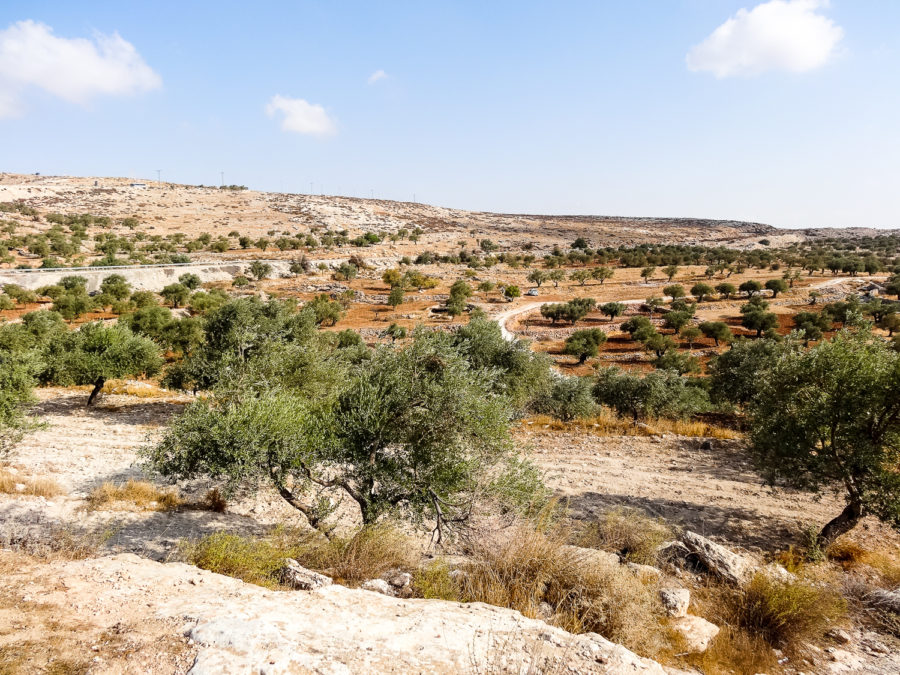
    Yet, in spite of adversity, Palestinians remain resilient. When I think of Palestinians, I see the olive trees they love so much. Olive trees are drought-resistant and grow in poor soil. This reflects Palestinian strength, resistance and endurance. The trees and the Palestinian people can teach us how to bear fruit, even in arid conditions.

    [i] United Nations relief and works agency for Palestinian refugees in the Near East, ‘Where We Work’, https://www.unrwa.org/where-we-work/lebanon, accessed 29/4/19.

    [ii] Karen DeYoung and Ruth Eglash, ‘Trump administration to end U.S. funding to U.N. program for Palestinian refugees’, August 30th, 2018, The Washington Post, https://www.washingtonpost.com/world/national-security/trump-administration-to-end-us-funding-to-un-program-for-palestinian-refugees/2018/08/30/009d9bc6-ac64-11e8-b1da-ff7faa680710_story.html?utm_term=.0798b05139ba, accessed 29/4/19.

  • HEY POCKY WAY

    In the year of our Lord 2019, what remained engrained was an émigré from the hoi omphaloi of confusion and strife. The Easter in question came late on the calendar but much like the highly controversial transubstantiation, the bitter end of Holy Week started as it was in the beginning, is now and ever shall be. In other words, all at once.

    Living in the mountains one can’t escape the effects of a full moon and my particular suburb of the Vatican that is Ireland has finally ended its unconscionable 90 year Good Friday booze ban. So there I am in the supermarket, and U2 with whom despite a vast disparity in our respective net assets, I’ve been periodically privileged to mingle, were piping over the sound system. I noticed there was a sale on vodka. So I mixed a pitcher of Bloody Mary and let the games begin. Think Joaquin Phoenix playing his role as the emperor Commodus in that movie he stole from Russell Crowe called Gladiator shouting ‘AM I NOT MERCIFUL?’

    So, I whipped up a polenta, mostly because I was craving grits and I’ll let you in on a little secret… they are and always have been one and the same. Irresistible on my second drink, just ask anyone I’ve shamelessly hit on, I stirred the pot and began to twang melancholy as Dolly, “I beg your pardon, I never promised you a rose garden.”

    Dancing barefoot in one’s own living room provides all the benefits of a Pilates course or an extramarital affair with none of that nasty documentable collateral damage and I am nothing if not prudent in my pursuits. The solitude of sleep did not elude me, furthermore it elucidated a dream from my childhood.

    Hours before church I awoke with a lurch to the bleat of an atypical fauna for the sauna that is my beloved Big Easy. A live goat was yoked to a wagon loaded with lovingly hand decorated eggs and sticky store-bought jelly beans. From the centre of this embarrassment of riches, the obligatory bunny leaned toward me like a chocolate Tower of Pisa. Its stature notably stunted by the harsh amputation of what had been fine upstanding ears. Still partially wrapped in jewel toned tin foil, the spoiled candy was a solemn crime scene yet somehow reassuring in that its carnage by friendly fire was an annual event.

    This animal sacrifice was no trespass by a neighbouring spaniel, fancy treats foraged while we ate our porridge. No indeed, it was none other than the predictable ritual of our pedigreed bitch. The eternally fertile Irish Setter, Kathleen Haggerty O’Shane, whose thirteen pups had been hijacked under cover of darkness was addicted. Probably on account of those bags of Oreo cookies I shared with her on a regular basis.

    It was not our habit to bet if she’d get the rabbit, just when. Only then did we pause in alarm for the second act. Not charming at all in fact, while the goat, who had taken this opportunity to escape, was being confiscated by local authorities, our impeccably bred show dog’s finale included an overwhelming urge to purge her decadent sins with a roiling encore of blood and semi-digested chocolate-soiled tin regurgitated across the floor. Cave Canem.

    Years pass and now I’m an extra-cold Cava sippin’ lass livin’ ass backwards but six hours ahead of the time zone I left behind. The import tax on Champagne resigns me to Spanish bubbles for washing away my troubles with a lava-like curry. I write in a hurry because no matter how bold, the past becomes a blur and then you’re just old. It’s late and I’d hate to mention how many Mardi Gras I might’ve seen. It’s not the naughty nights that get you, but more the mournings.

    Cancer snuffed another friend on Friday. Felt like a power failure and I can’t find the phone number to report the fault. Alternatively, I’m thinking Lent put a dent in my drinking year. At least the feast of Easter promises a queer quench for that wrenching thirst.

    Easter is called Pâque in French and in Louisiana’s patois, especially around Ascension Parish like Lafayette, ‘pâque-ing’ is a verb that refers to a sort of seasonal combat. Kissing cousins bang boiled eggs that, in anticipation, were dyed on Good Friday. We bang’em until one breaks. See, that’s the loser and beware because next time, it could be you.

    If you were from Orleans Parish like me, at this stage you’d break into a funk tune by The Mighty Meters, ‘HEY POCKY WAY.’ The illustrious musician, Dr. John, explains: ‘This talk was the Indians’ own Creole language, part French, part Spanish, part Choctaw, part Yoruba, and part mystery to an outsider like me. What the first one said basically was, ‘Where yaatt, bro?’ or the like. And the second one said, ‘Everything’s oaks and herbs’ – which means everything’s cool because they had smoke lots of herbs. If the second one responded ‘No om bah way,’ then y’all had problems…

    Saw my first lambing, leaning on a doorjamb here in Wicklow. Don’t forget Joaquin, bein’ a prophet of PETA, wouldn’t have watched the wool I’d always worn being born in the dappled light of a chapel-like barn. It’s the darndest thing to recall my Crescent City slicker’s eyes finally falling on a supersized old poster of Bertie Ahern looking unconcerned. Ain’t no harm in nailing him way up there in the rarefied air, with spare farming gear. After all, Christ rhymes with heist.

    Libations risen from Malin to Mizen Head, the grateful dead will come back one day and like pearls before swine, even porcupines and protestants will line up in designer tops. The corks popped should sop every drop of the popish black pool while the so-called cool twine their way like vines exhausted by Pentecost. When the last ground seems lost, between you, me and Jesus, even he knew it’s no use hanging around.

    Amazingly, I awoke safe under a duvet in bed. Miraculous, mostly because my mandatory mid-century modern spiral staircase whose perilous design challenges both the sensual and sober, lends that compulsory edge for this over-examined life I’ve yet to deem not worth living.

    It’s dawn and smoking the last cigarette in the house, a prayer comes into my head… ‘If I die before I wake, I pray the Lord my soul to …’ Never mind that. Take me to the river. Considering the difference between the words slaughter and laughter is a single  ‘S’, a letter of the alphabet which also sits, like a little snake, at the beginning of the word ‘sacrifice’, my advice to you is : Never let’em get your goat.

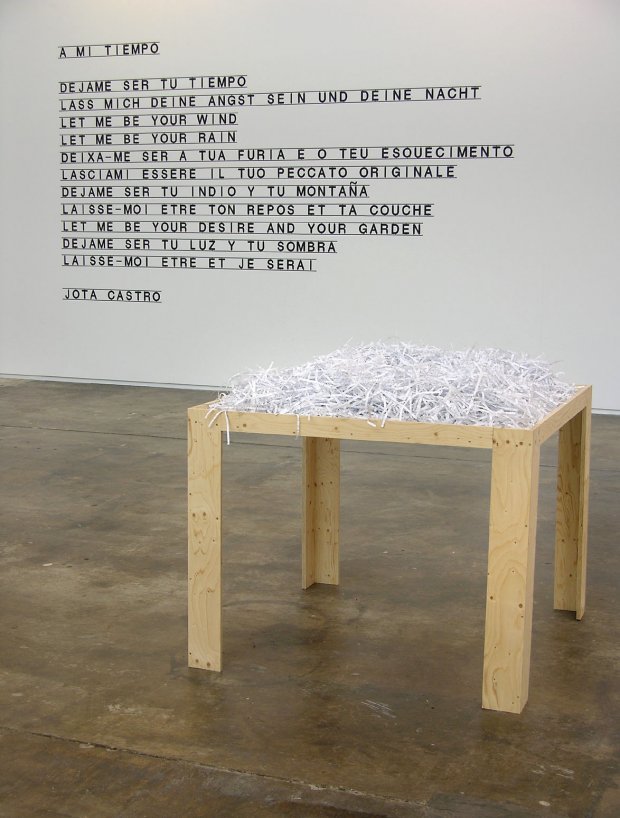
  • Artist of the Month – Jota Castro

    I feel Irish today,
    No decent future, maybe just money and a new distillery
    The new hotel to fuck my view in Dublin 8 is empty
    The enormous student residence is as windy as a Hong Kong typhoon.
    And empty like my pockets.
    How is it possible to live without depression in Dublin 8?
    Rents growing up like young kids
    New lovers prefer Inchicore for survival
    I saw a couple of new Dubs from Yemen
    Laughing in from of a €16 sort-of-pita on Fumbally Lane .
    Dog shit is everywhere and landlords now aren’t building
    Anymore, they prefer selling the risk to young tenters
    Ladies are covering up today like an old bad memory
    The weather hit me like the
    Cultural page of the Irish Times
    And Dalkey economics need to take their fucking Volvos
    And visit reality on the North Side and stop talking about Brexit.
    Living on an island other than Sicily is hard, especially if your rent looks
    Like a Greenwich Village one without the Jazz and Latin vibes
    I read a prick note from a fella working on cultural issues in Ireland that creates
    Anxiety in me.

    How am I supposed to live?
    How am I supposed to fuck?
    How am I supposed to smile?
    We have a fucking bad poet taking care of us,
    And a Minogue fan and Murphy destroying the social fabric of Dublin 8

    The Irish create the 3.0 Proletarian Profile, they are not concerned
    Because money arrives, nothing more
    It is sad, like a Dub
    Empathy is gone
    Love is only there
    And Setanta doesn’t fight any longer.

  • The Wrong End of Gun Karma

    In the time it took him to close the three yards of separation between us, a well-dressed young man with a Saints ballcap pulled down low was holding a Glock 19 semi-automatic to my head.  I’d been hypervigilant for three weeks after a New Orleans tarot card reader at the Golden Leaves Bookstore divined bad juju all around me.  Misreading the bleeps on my psychic radar, by the time I realized what was happening, it was too late.

    A scant ten minutes earlier, I’d been in a meeting and now was pretending to listen to a Vietnam Vet turned lawyer who fancied himself a lady’s man.  Instead I was assessing each pedestrian on Napoleon Avenue.  It was a self-soothing technique used when on high alert.  Each person was quickly categorized as to safe or unsafe mostly based on their dress and posture.  This inner detection system had been honed on the New Orleans streets for over fifteen years and had never failed; but that was before I understood how easy it is for some to disguise evil as good.

    As I assured myself all was well, I felt a vibration much like the distortion in the audio when a speaker’s volume is turned up too high.  In the nanosecond it took for me to register consciously what was happening, the dapper dressed demon had already closed the space between us loaded and locked and was now shifting his gun from my head to the Vet/Lawyer’s face.  I knew they were both talking because their lips were moving but the information was lost in translation.

    That’s when I panicked.  Clutching my purse close to my chest, I started running away from the lighted street into the darkness of the poorer neighborhoods that exist behind all the old-world charm of uptown avenues.  Hiding behind a parked car, I watched and waited for him to come and find me.  When he did, he put me on my knees with the gun to my forehead so that I was looking up into dark blank eyes.  Smiling, he growled through clenched teeth, “give me your purse, you stupid bitch.”

    Two weeks later he killed a tourist who refused him his wallet.  Two weeks after that he was caught and later tried and convicted for murder and armed robbery.  I’ll never know why he killed the man and not me.  What I do understand is that in the time it would have taken to retrieve a gun from my purse, he would have shot me.  This was the catalyst for the slow and painful process of opening my heart and then changing my mind regarding gun ownership and gun control.

    I suffer no illusions about using guns.  My early life was wild and chaotic, filled with mean and nasty characters much like the ones found in any of Flannery O’Connor’s gothic depictions of the antebellum South.  As a Gulf Coast Navy brat born to poor circumstances, guns were the norm.  The maintenance of the big anti-aircraft guns mounted on the aircraft carriers used in WWII was my father’s responsibility.  Along with the 1950s baby sitter, the television set, those images shape shifted my baby boomer imagination.  My first heroes were President Eisenhower, the Lone Ranger and Roy Rogers – the good guys with guns.  Mounted firmly on my stick pony firing my toy guns, I passed days of creative play fighting the Russians and other bad guys.

    On my first hunting trip, we came across a mama raccoon and her babies hanging out on a limb.  Encouraged by the taunts of my teenage friends, I took aim and fired again and again and again.  Eight times.  Suddenly, I could hear the high-pitched squeal of a not quite dead rabbit as my grandfather slid a knife beneath its skin.  This Silence of the Bunnies memory mixed with my slaughter made death real and tangible leaving a metal taste in my mouth.  I never hunted again.

    As an adult, working my way through undergraduate school tending bar and waiting tables in 1970s New Orleans, I often found myself in the French Quarter after midnight mixing and mingling with the nightcrawlers and the tourists.  An uncle with mob connections had given me my first handgun, a hammerless, double-action derringer.  His only instructions were if you pull it, you better be ready to use it.

    A New Orleans cop gave me a better idea.  One evening as I stood outside the same Howard Johnson’s where just three years earlier Mark Essex, a dishonorably discharged Navy man had shot and killed seven people, two men approached trying to coax me to their car.  Hey there Baby, need a ride?  With my muff pistol safely hidden in a cheap purse with finger on the trigger, I pointed it toward the two men and firmly said GO AWAY!   As they slithered back into the dark night, they looked back at me saying, Hey now pretty girl.  We just wanted to party 

    At twenty-six, I already knew killing someone would drive me over the edge.  The lingering guilt of having left that derringer loaded and unattended had been enough to make me rethink my fake bravado.  To be the cause of the fear in my son’s eyes as I watched his seven-year-old friend point it at him, shames me to this day.  As it should.  Just as ignorance is no defense under the law, neither is it with me when taking my own actions into account.

    My progun opinions didn’t change then nor when my cousin used a handgun to shoot herself in the heart after chain smoking crack cocaine for a week.  My uncle had given her a gun too.  I can still hear the hum and hollow whooshing sound of the ventilator in her ICU suite.  In real life, gunshot victims don’t look like they do in the movies.  There is no make-up, no weak smiles, no last confessions; just a physical body doing its best to stay alive with medical assistance.

    There were tubes coming in and out of every orifice plus one for feeding.  Barely conscious with the intubation tube pushing air into her lungs, she stared out of tear-filled slits for eyes.  Looking like she was about to crack wide open like a split tomato left on the vine too long, her body clung to life long enough to recover.  That’s how biological life is – it goes on pitted against death whether the consciousness inhabiting the form is up to the task or not.

    Several years later, I sold my last gun in 1995 after Timothy McVeigh bombed the Alfred P. Murrah Federal Building in Oklahoma City, Oklahoma.  I still don’t know why this terrorist act got my attention when a Glock 19 held to my head failed to do so.   What I do know is that for me the differences between owning a handgun, a rifle or a military weapon like an AR-15 are painfully obvious:

    One is for protection.

    One is for hunting.

    One is for killing as many people as possible in the shortest amount of time.

  • Forest

    Nightfalls.
    Creatures are on the move,
    Leaping, dancing, diving, digging, loving
    that’s the art of living, that’s the art of dying.
    Machines are slowing down
    Cars, trains, ships, aeroplanes
    I’m coming in now to land, from all those names
    the Pacific, the Wild Atlantic way,
    the Mediterranean, the Indian and Arctic Oceans
    the South China Sea, Caribbean, the Arabian Sea.
    Now I see it – the Irish Sea,
    the sea by my city where I was born
    Cities seems old when we are young,
    And young when we are old
    There’s always something left over from the past
    Which can turn out to be the future
    Reaching the exit doors to those bittersweet parties, it’s often like life
    People don’t really meet until they have to say goodbye.

    I want to wake up to something new
    I want to wake up to something old
    I want to go with you, I want to run with you
    Away from the city, away from the chatter
    And into the green land, into the primal wildness
    To every place we ever dreamed
    And every place we never dreamed

    ***

    To the trees, the trees, the trees, the trees, the trees
    the trees, the trees, the trees, the trees, the trees
    I throw my life to the trees, to the earth, to the breeze
    Come into the forest and relish the trees
    Lie down next to me
    Open up to this evolving polyphony
    Sycamores, Silver Birch, Oak and Yew
    Baobab, Jacaranda, Sequoia
    Hazel, Ash, the Weeping Willow
    Holly, Hawthorn, the Sumaúma queen
    Oh let us breathe
    These are my prayers in layers
    In words that burn all the thumping time

    Why do we walk deeper into the forest?
    Why do we walk deeper into the forest?
    I don’t know what nature is
    I don’t know what nature is
    So I’ll sing, yes I’ll sing it
    The plays, plots and ploys of living
    The plays, plots and ploys of dying
    There are so many days that have not yet broken
    There are so many days that have not yet opened
    I was rushing towards somewhere I always want to be
    I was rushing towards somewhere I always wanted to see
    Let us walk deeper into the forest
    Out here there are big trees
    Out here there are small trees
    Out here there are strange trees
    Out here
    These lands are lush and I was lost
    Big space is here and everything is clear

    ***

    Times of mass extinctions and the great shame
    I’m staying with the trouble
    I’m staying with the trouble
    Madness, machines, riverines
    Erething above ground in this book of breathings
    Sham or shunner in kicking time
    Neither beginning nor ending
    We are in the middle of things
    We are in the middle of things
    I exist only when I sing
    I exist only when I sing
    We are not insane, we are not insane
    We are not insane, we are not insane

    Why do you walk deeper into the forest?
    Why do you walk deeper into the forest?
    To dream, to dream
    This contaminating diversity reeling of cacophony
    “It is not down in any map; true places never are”
    The water of this face has flowed
    Let us go back into the trees
    Let us go back into the water
    Do you hear what I’m seeing?
    Listen to the sound
    Listen to the river
    Listen to the trees
    Listen

    ***

    Adrift
    in these ruins, we are all stories
    in the sticky jungle, there is no time, only dark thrilling space
    something in us is born, something in us remains,
    in the depths of dreams, and up there
    I say: “hello moon … hello sun and stars”
    childhood memories are returning
    did we reach that place?
    oh melancholy me, remnants of the gods, moods, sounds, shadows, oblivion
    a subterranean woman is at work: tunneling, mining, undermining
    I can see her with my theatre eye
    there are rooms filled with chords and sonatas
    there are fields filled with flowers and grasshoppers
    there is a girl who wanted confirmation and a boy who was afraid
    never before has there been such an open sea
    never before did I see so many trees
    the endlessness of the forest swallowed up my consciousness
    take me, eat me, drink me, drown me
    we are all strangers now
    we are all tyrants now
    we are all shamans now
    we are all charlatans now
    it’s all good. the animals are here.

    The Loafing Heroes: https://theloafingheroes.bandcamp.com/

  • ‘Wooden Legs on Hens’ – The Ongoing Failure of the Restoration of the Irish Language

    Last January, the Minister for Education, Joe McHugh, invited views from the public on the current system of granting exemptions to pupils from the compulsory study of Irish, following debate around the current regime.

    The Irish language organisations want exemptions to be kept to a minimum; they have long complained that these are granted too easily[i], and seem to fear that the public consultation process may lead to a further loosening in the system, rather than the tightening in the grounds they wish to see.

    These Irish-language advocacy organisations, Conradh na Gaeilge and COGG (representing the Gaelscoil movement) perceive an even greater threat to the position of Irish in the schools in certain other refors under consideration by the Department of Education and the NCCA, namely, the possibility of students being able to choose just five subjects (as opposed to the current minimum of six – and with most schools offering eight subjects) from a wider range of Leaving Certificate subjects than are currently on offer.[ii]

    The organisations fear that increased freedom of choice for students, combined with an expanded range of practical or vocational subjects, would lead, inexorably, to Irish becoming a subject of choice in the final school examination.

    The Irish language organisations are therefore pledged to resist the changes now being mooted, knowing that the place of Irish in the education system has to be maintained by compulsion, and that its loss would both reduce the numbers of pupils studying Irish, and diminish the number of teachers of Irish required in the educational system as a whole.

    Yet, already there is an acute shortage of teachers of Irish,[iii] even in its current dumbed-down form. The shortage is even more acute in teachers who can teach other subjects through Irish, and some all-Irish schools are now having to teach subjects such as Science, including Physics, through English.

    The contest between Irish and other subjects in the school curriculum is an ancient one. In 1934, when the government was harnessing the primary schools to the task of reviving Irish, the resulting stresses on teachers led to intense negotiations between the Irish National Teachers Organisation (INTO) and the state. These resulted in teachers agreeing to place greater emphasis on Irish in return for the government accepting lower standards in the other subjects.[iv]

    English was then reduced to the old ‘lower course’ in all schools; Mathematics shrank, with Algebra and Geometry becoming optional subjects in one teacher schools, as well as in three-teacher coeducational schools, and in all classes taught by women. ‘Farm Economics & Rural Science’ was abolished altogether, leaving its flasks, pipettes, rubber tubing and Bunsen burners in many a national school cófra to gather dust for ever after.

    There followed the long decades of the Revival when 25% more class time was given to Irish than Arithmetic, twice as much time as to English and five times as much time as to either History or Geography.[v]

    By the 1960’s, 40% of the entire budget for primary and secondary education went on languages, and, of that, 45% went went to Irish, while less than 1% was devoted to German.[vi] The vast expenditure was all, however, to no avail, proving Eoin MacNeill, the first Minister for Education, to be correct in his surmise that ‘You might as well be putting wooden legs on hens as trying to restore Irish through the school system.’[vii]

    But the underlying ideology persists, and still today Conradh na Gaeilge and COGG persist in their determination to resist any weakening of the system of compulsion. It is essential to their mission and, make no mistake, these are doughty fighters who expect to be successful in their campaign.

    Shaping the political narrative is a crucial factor, and these are past masters at harnessing allies to their cause. Irish politicians remain sensitive to any accusation of treachery to the national language. Furthermore, with Irish-language-enthusiast Joe McHugh at the helm, the organisations already have an ally occupying a crucial position in the forthcoming battle over the curriculum.

    They were not to be disappointed. Within days the Minister for Education and Skills publicly asserted that Irish would always remain a compulsory school subject[viii] and Deputy Seán Kyne, Minister for the Gaeltacht went so far as to declare that students who were given exemptions from learning Irish should be blocked from learning other languages.[ix]

    How will it all turn out? As if we didn’t know already; the Irish people will keep speaking English and their English-speaking officials will keep telling them to speak Irish – plus ca change – mar a déarfá. 

    Note: Donal Flynn is the author of a paper ‘The Revival of Irish – Failed Project of a Political Elite’ which can be found on www.sites/google.com/site/failedrevival

    [i] Untitled, ‘É curtha i leith na Roinne Oideachais go bhfuil próiseas comhairliúcháin dhíolúine na Gaeilge ‘réamhshocraithe’’, December 18th, 2017, Tuairisc.ie, https://tuairisc.ie/e-curtha-i-leith-na-roinne-oideachais-go-bhfuil-proiseas-comhairliuchain-dhioluine-na-gaeilge-reamhshocraithe/, accessed 25/4/19.

    [ii] Untitled, ‘Amhras mór caite ar stádas na Gaeilge mar ábhar éigeantach i dtuarascáil de chuid an NCCA’, December 17th, 2018, Tuairisc.ie, https://tuairisc.ie/amhras-mor-caite-ar-stadas-na-gaeilge-mar-abhar-eigeantach-i-dtuarascail-de-chuid-an-ncca/, accessed, 25/4/19.

    [iii] Untitled, ‘‘Fáilte’ ag an Aire Oideachais roimh mholadh ar bith a leigheasfadh géarchéim na múinteoirí Gaeilge’, February 5th, 2018, Tuairisc.ie, https://tuairisc.ie/failte-ag-an-aire-oideachais-roimh-mholadh-ar-bith-a-leigheasfadh-gearcheim-na-muinteoiri-gaeilge/, accessed 25/4/19.

    [iv] Adrian Kelly, Compulsory Irish: Language ad Education in Ireland 1870s to 1970s, ??? p.46

    [v] John Kelly, ‘Education and the Irish State’, Unpublished paper delivered in Saint Patrick’s College Drumcondra, 1969.

    [vi] Dr Edmund Walsh, ‘Education for Europe’, delivered to the Chambers of Commerce of Ireland on May 16th, 1987.

    [vii] J. J. Lee, Ireland 1912-1985, Politics and Society, Cambridge, Cambridge University Press, 1989, p.133

    [viii] Carl O’Brien, ‘Minister insists Irish will remain compulsory in school’, January 4th, 2019, Irish Timeshttps://www.irishtimes.com/news/education/minister-insists-irish-will-remain-compulsory-in-school-1.3747161, accessed 24/4/19.

    [ix] Ian O’Doherty, ‘Gaeilgeoir brigades still turning people off learning Irish’, April 24th, 2019, Irish Independent, https://www.independent.ie/opinion/ian-odoherty-gaeilgeoir-brigades-still-turning-people-off-learning-irish-37723097.html, accessed 24/4/19.

  • Bull Moose – A Monthly Column from Across the Pond

    Temperature Rising

    ‘Give them enough rope and they’ll hang themselves.’ That’s what a wise ex-colleague of mine used to say whenever someone made a boneheaded move out of extreme self-interest.

    Democrats would do well to heed that lesson.  In the first edition of this newsletter we argued that they should move on from the Mueller investigation and focus on the issues affecting electors. Have they? Hardly. The House is in full swing to subpoena Trump for everything he has ever said or done prior to taking office.

    Despite Nancy Pelosi’s repeated promises not to go down the route of impeachment, the question keeps coming up, as the news media tries its darnedest hardest to feed the frenzy. Meanwhile, the White House has vowed to ‘boycott’ any and all subpoenas from Congress. An escalated public battle, and playing the victim, suits Trump just fine.

    The real question is, what are the Democrats trying to prove? That the President lies? That his campaign had multiple contacts with the Russians? That the President is a narcissist who brands all real news he doesn’t like as ‘fake news’? That he rarely paid taxes and isn’t half as rich as he claims to be?

    Americans know all this, and, mostly, don’t care. At least those that voted for him. They look at the economy and see it chugging along; Wall Street is not far off an all-time high and pension funds are doing just fine.

    The Mueller report, when it was finally was released, included nearly one thousand redactions.[i] But there was still plenty of incriminating evidence, perhaps none more so than the President’s own words: ‘Oh my God. This is terrible. This is the end of my presidency. I’m fucked.’ Hardly the words of a man who knew he would be ‘totally vindicated and exonerated.’

    Those that like Trump, or voted for him, have bought into the notion that the media is out to get him. They get their daily fix of consternation and reality bending news from Fox, talk show radio and Facebook/Twitter. It’s no better on the left, where MSNBC and the NY Times are crying foul, and have become so accustomed to doing so, that they are increasingly at risk of sounding like whiners.

    At the end, you can blame the Russians all you want, but Americans do a pretty good job of creating division themselves when it’s in their interest to do so.

    So Democrats, don’t spend the next year and half going down a rabbit hole trying to impeach him. As the Trump anointed ‘Crazy Bernie’ rightfully pointed out, this will merely play into his hands.

    Start, instead, by giving him a nickname that sticks – like the ‘The Mafia Don’ or simply ‘The Don.’

    (BTW, ‘Sleepy Joe Biden’ just entered the race. If elected he’ll be the oldest president ever at 76, and he’s got more than a few skeletons in his closet. For now, he’s polling first ahead of the twenty other candidates in the race. It should make for an interesting Democratic primary. More on this in due course)

    For now, the Democrats need to hammer aggressively on the issues and differentiate themselves from ‘The Don,’ by being more principled and solution-oriented.

    He’s banking on being able to play the victim – please don’t fall for that trick again.

    [i] Luke Harding, ‘What’s missing? The clues to Barr’s 1,000 Mueller report redactions’, 20th of April, 2019, The Guardian, https://www.theguardian.com/us-news/2019/apr/19/mueller-report-redactions-whats-missing-clues, accessed 26/4/19.

  • No Comment – Francesco Taurisano

    Inferno in the Alpine foothills of Northern Italy near Vercelli and Biella, Piedimont.

    [Best_Wordpress_Gallery id=”40″ gal_title=”NoComment: Inferno in the Alpine foothills of Northern Italy near Vercelli and Biella.”]

    https://cargocollective.com/francescotaurisano/BIO

  • Early Days in RTÉ

    Back in Dublin again, I was one of thirty, all-male trainees destined to become the camera, lighting and sound operators with the new television service.  I started late, in November 1961 and found the first work ambience I had ever enjoyed. We were based in the hall of a school near Ringsend and then in a warehouse on Lower Middle Abbey Street, where we pre-recorded dramas and musical programmes for broadcast when the station would go on air.

    So began a love/hate relationship with RTÉ which, though I have been a free spirit since 1969, has endured to the present day. My early attempts to become a writer, lover, lieder singer, piano player, actor, writer, travel agent all faded away like the morning dew, sublimated into this exciting new medium. My flibbertigibbet nature – as my father described it – had paid off. He had also described it as ‘divine discontent’, which I quite liked.

    As I write, the TV station and I are sharing over a half-century of uneasy co-existence.

    I spent the first two years as a sound operator, a job whose initial glamour soon wore off. Kevin McClory, producer of the early James Bond movies, once told me that it was as a lowly microphone boom operator he first learned how to produce films. He had regularly and stealthily let his boom microphone linger above the producers’ conversations.  He learned their Machiavellian ways by eavesdropping.

    However, for me, RTÉ was far from James Bond and after two years the old demon of boredom raised its fickle head. How much longer could I endure days of cable-bashing, boom-swinging, disc-playing, the only functions for which I was qualified, having no technical insight into the mysteries of sound?

    Frustration was not alleviated by my occasional writing, which included devising and presenting a couple of radio programmes. Only concern at my parents’ likely final disillusionment postponed my certain departure.

    In the new year of 1962 we moved into Montrose, the Michael Scott-designed television studios in Donnybrook. The place was soon named ‘fairyhouse’ after the alleged number of homosexuals employed. The term ‘gay’ had not yet been appropriated by that lobby. I could identify only a very few, among them Hilton Edwards, Head of Drama  and Alpho O’Reilly, Head of Design. Alpho made no secret of his revulsion at the first appearance of finely-contoured mini-skirts in the canteen and corridors. I am still acquainted with the two first, magnificently-thighed girls who bravely wore them. Alpho disappeared one day and neither he nor his car were ever found.

    There was also a popular young floor manager named J. whose wit was legendary. Once he was unlucky enough to hire a taxi driver who was openly ‘homophobic’ – years before that word was coined for queer-basher. It was a rainy night and J. caused the driver to search endlessly for an address. Finally when the destination was found and J. alighted, he left his umbrella on the back seat. The driver thrust it at him with the farewell: ‘Hey Fairy! Don’t forget your wand.’

    Jeremy clutched his property, pointed it at the driver and said: ‘Turn to shite.’

    The rest of us were boringly straight. But we had fun. Our coming-of age-occasion was when we dared have a drinking party on Good Friday when all pubs were closed. It was the initiative of Tom Mack, a fellow worker in the sound department who regaled us with tales of his enviable, and probably imaginary, sex life. Reality caught up with Tom: he was dismissed for sexually harassing a make up girl in a dressing room.

    James Plunkett once described the RTÉ organisation to me as ‘compassionate’. He was referring to the organisation’s capacity for forgiving those who succumbed to alcoholism and other social diseases. But Tom Mack’s crime was sexual, which was beyond the pale. It was officially described in Civil Service terms as ‘moral turpitude’, and he ran away to England with the wife of the Head of Graphics. For an inhibited colleague like me, what was there not to admire about him? I was bored and desperate.

    Out of the blue the cavalry came to my rescue. RTÉ management offered me simultaneously a choice of three jobs: production assistant for commercial radio programmes (which, with the hindsight of my detestation of consumerism, is ironic); trainee newsreader was the second offer – Mike Murphy was a fellow trainee. This was the initial path trod by most of the first batch of Irish TV personalities: Bart Bastable, Gay Byrne, Andy O’Mahony, Frank Hall, Bunny Carr, Terry Wogan et alia.  I now murmur ‘Whew!’ at the narrow escape I had from the delusions of minor celebrity. But, as Kurt Vonnegut put it to me: ‘I could sure do with the money’.

    The third offer was everyone’s dream job at the time: TV producer. It did not take any heart-searching to choose it. Looking back on my various jobs, I wonder how employers were blind to my chronic unemployability. Perhaps all they saw was malleable innocence and may have mistaken it for humility. If you can fake that you can fake anything.

    I spent five busy years as a producer/director, working with some of the above talented people in programmes which included the original Late Late Show. But mainly I made documentary films, which enabled me to escape the straitjacket of a studio

    In our youth in the Coffee Inn in Duke St. the late Nuala Ó Faoláin said to me: ‘You have unresolved adolescent complexes’. I had unwisely revealed my private thoughts to a journalist – worse, to a sophisticate. Twenty years later in West Virginia I met Nuala and happily told her I still had the same complexes, but now found them a useful spur to creativity. ‘Lucky you’ she said.

    As I had recently produced a fictional memoir, Smokey Hollow, she asked my advice about doing the same. I could offer nothing except the jaded: apply thy bottom to a chair and start writing. Not long afterwards she began her acclaimed autobiography Are You Somebody? We had each learned that personal versions are the only antidote to objective reality. However, I was taken aback by her portrait of her father, bon viveur journalist Terry O’Sullivan, as the villain of her upbringing. He, a music lover, had once rung me in studio after a music programme which I had devised for Radio Eireann and wistfully said: ‘I wish I’d made that.’ I never met the man in person but it softened the feminist version of him later portrayed in Nuala’s book.

    Ironically, Father Romould Dodd – another Dominican – head of Religious Programmes asked the powers-that-be in RTÉ that I, sceptic, agnostic, non-believer, take your pick, be appointed to his non-existent department. Thereafter, I could make films on any subject I liked. I would merely decide on a theme, meet Romould over his gin and tonic in the RTÉ social club, and tell him what I had in mind. He would nod approval, smile affably and regale me with tales of his time as a chaplain in the oilfields of the Middle East.

    My illusions stayed with me when I was making documentary films. Early efforts concentrated on the old-fashioned truth that we are each a fallible link in a social chain made strong by cooperation i.e. we are completely interdependent. I even titled a film on the Cheshire Homes ‘The Weakest Link’ to argue that the apparently handicapped are just differently endowed and that the apparently healthy are just as handicapped, certainly less than perfect.

    My penchant for fantasy was soon recognised by the new Head of Drama who invited me to join his department. I declined and told him about Robert O’Flaherty, maker of ‘Man of Aran’ and ‘Nanook of the North’, who had invited a friend to join him in documenting the lives of exotic and primitive peoples. The friend, John Grierson, replied that his personal preference was to document the lives of the savages in Birmingham. Grierson went on to found the National Film Board of Canada and become another hero of mine.

    Meanwhile, I was finding out that my childhood version of Christianity was an imposter, a pretender. I had been led up the garden path. Fundamental Christianity and Socialism, though apparently deadly enemies, were actually the same thing and neither were being practised! Quite unconsciously I fell for the worst of both worlds and became that contradiction in terms, a Catholic Marxist, just like Arthur Dooley, the Liverpool sculptor. Dooley had  shown my colleague Jim Fitzgerald and myself his absurdist two-story miniature Model T Ford which he had called after the Tory bigwig, The Sir Alec Douglas Hume. Because, Arthur explained, ‘it doesn’t work either’. Fitzgerald kept the sculpture until poverty forced him to sell it to Charles J. Haughey.

    These vague ideas I tried desperately to reconcile, despite two realisations that blunted my idealism. The first was watching my films as they were broadcast under the RTÉ religious ‘Horizon’ banner every Sunday at teatime. The family would briefly glance at the screen (“Oh, another of yours’) and resume eating. The second was Catholic-induced guilt: I was a whited sepulchre. How could I preach social virtues to others when I myself was a confused hotbed of lust and decadence? How else explain being locked up with a cageful of prostitutes in a Parisian gendarmerie in 1966? Here is my version:

    On the RTÉ rugby football team actor Frank Kelly (aka ‘Father Jack’) and myself were the centre three-quarters who outdid each other in physical unfitness. The team travelled to Paris to play the RTF (French TV) team and see the Irish/French international. Our ruthless opponents forced cognac on us and kept us up until 4.00 am. At 9.00 am we staggered onto the rugby pitch, were soundly thrashed and that afternoon saw the Irish team suffer the same fate. There was then another sorrow-drowning dinner with a cognac-scoffing competition and a French tie-snipping ceremony – presumably a symbol of our rugby castration that morning – which led to mild violence.

    That night we attended a discotheque whose air I found suffocating. I climbed on to a window sill on the 2nd floor to get a breath of the balmy Paris night air and a little peace. It appears that some overwrought dancer then looked up, spotted my legs dangling overhead, screamed and gave everybody the impression that there was a suicide in the offing. Soon a group of uniformed men arrived to talk me down. I explained my breathing difficulties to the Gendarmes but they missed the point and insisted I come along with them. I did so, protesting mildly about free will and democracy.

    That is how I ended up in a cage in the police station, being fed cups of black coffee and sharing mimed jokes with some ladies of the night who had also been rounded up. One of my team mates with a smattering of French finally persuaded the Gendarmes that I was not a serious threat to public order or myself, and they released me.

    I continued my television campaign for illusory decencies until 1967 when the effort proved too much. My labours had produced no change in the world, certainly none apparent to me; the majority of people were as sensibly pragmatic as they’d ever been. Most were – to this arrogant observer – living unexamined lives, concentrating their energies on careers, ignoring my filmic exhortations to observe the lilies in the fields.

    Literature gave me intimations that everybody lived unadmitted lives of quiet desperation. I remember devouring, on successive lunch hours in Kiely’s pub in Donnybrook, two books that were mind altering: R.D. Laing’s Politics of Experience and Peter L. Berger’s The Precarious Vision. I would defy any impressionable person of the time to read those books and carry on their normal humdrum lives. They certainly changed mine because I had not been defused by third level education, and was that homemade time-bomb, an autodidact. The first book questioned our definition of ‘normality’; the second demonstrated the relativity of all belief systems. They incited me to question the very ground on which I walked, and established a lifelong pattern of querying every fixed position.

    I also got an insight from the late writer Francis Stuart.

    In the Arts Club in Dublin I asked him whether he resented the likes of Frederick Forsyth making a fortune from reactionary potboilers while he had to soldier on modestly. ‘No,’ he replied. ‘I see myself as a backroom researcher. My findings will gradually filter down.’ This demonstrated to me his modesty as well as faith, hope and confidence, attributes to which I hopelessly aspired.

    Stuart defined for me the only unique perspective a person possesses, the one that alone distinguishes him or her from their fellows: his ignorance. That cheered me up. Not possessing much talent but plenty of ignorance, it became my lifejacket. In his advice Stuart was echoing T.S. Eliot’s dictum: ‘what we know is what we do not know’, and  ‘the only wisdom is humility’.

    I became confident in my ignorance, enough to stop trying to conceal it, actually revelling in it. As a direct consequence a producer colleague once rhetorically asked whether I was very humble or very stupid. I answered that I was very stupid, which reply the arrogant wretch was forced to concede as quite clever, covering both bases. It even saved him a bloody nose. I discovered that an admission of ignorance on my part invited confidences from others. This proved invaluable in the making of documentary films.

    I did not pause to assess the truth of Stuart’s or Eliot’s wisdom; I was too busy picking theirs and everybody else’s brains for answers. I thought Stuart’s was a good philosophy for a writer who sensed the abyss. It was not inconsistent with his youthful throwing in his lot with the Nazis, for which many would never accept his artistic excuses. Although I found his autobiographical Black List Section H to be a little self-serving, designed to de-nazify his reputation, its frankness was startling and his novels were thought-provoking. Francis Stuart was a devout, perhaps even a mystic Christian, who enjoyed a very long life and whose funeral I attended in County Clare.

    The challenge of ‘that which we do not know’ is for me balanced by the insight that we are all in the same gluepot, just guessing, studying form. The exceptions are those – among them career academics, high priests and politicians – whose busy eyes and mouths are full of certain certainties. I could add much more on this subject, having spent the second half of my life trying to rid myself of what I learned in the first half.

    I think I have by now earned an honorary PhD in ignorance.

    In the sense that a doctor ‘practises’ medicine, never mastering it, I practised the art/craft of film for many years. Now I realise I was merely treading water, blundering around and, unlike doctors, unable to bury my mistakes: twenty of my films were recently re-run on Irish national television With few exceptions, they resigned me to the futility of any attempt at excavating truth or changing the world by one tiny iota. Rather late have I discovered that all change begins with oneself.

    We rely on contributions to keep Cassandra Voices going.