
Tag: science

  • Portugal: Storm Kristin’s Devastating Effects
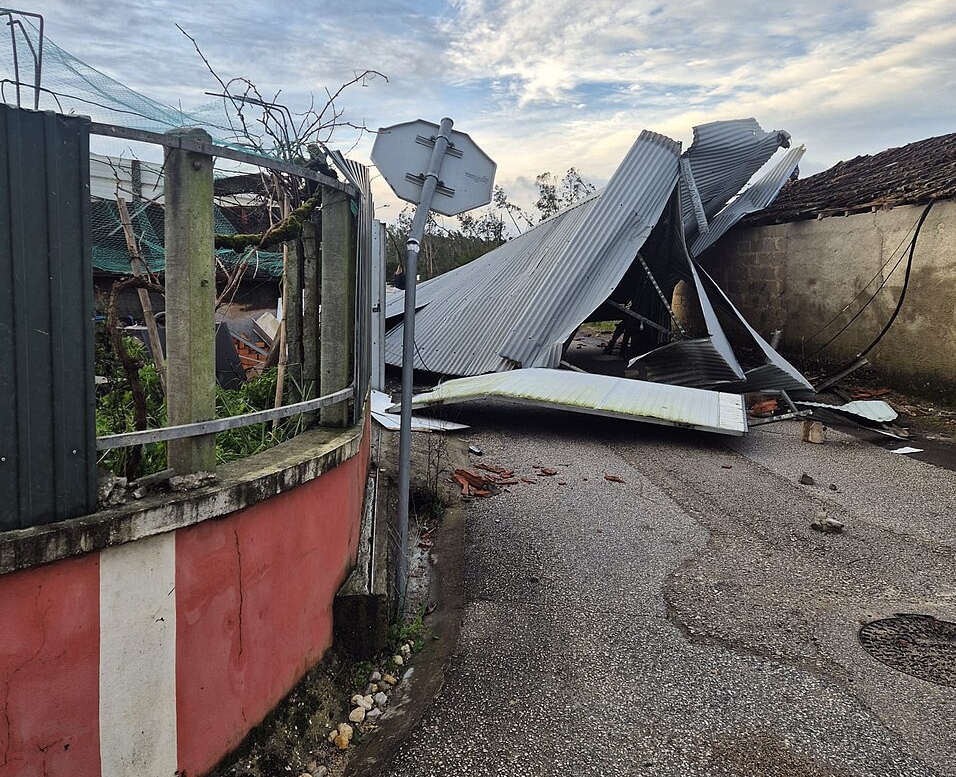
    One could easily mistake the names Francis, Goretti, Harry, Ingrid, and Joseph for the names of a bunch of digital nomads passing through Portugal in recent times. Yet these are the names of storms, or diluvial nomads, which have become regular visitors to Portugal, with varying degrees of impact: more or less gusty and rainy; causing some flood or roof leaks or a tree falling here and there; nothing out of this world.

    So, when Storm Kristin arrived in the early hours of January 28th, it took many people by surprise, in spite of the warnings, and its impact still hadn’t sunk in after its passage. The region surrounding the city of Leiria (near the coast, roughly halfway between Lisbon and Porto) bore its brunt: several deaths, winds peaking at 200km/h, incessant rain and almost a million people left without power, water or network signal.

    Among those people was my own elderly mother, who I couldn’t reach for three days, having decided to check if she was unscathed and sheltered. I presumed she’d be alright, beyond the power cut, but not hearing from someone close becomes increasingly anxiogenic.

    As the region fell into a black hole, the focus of the news soon drifted elsewhere: returning to the daily incidents of the presidential election campaign and wins by Portuguese clubs in the Champions League, especially Benfica’s spectacular victory over Real Madrid. Most of the country was oblivious to the distress felt by a substantial chunk of its population.

    Over the past few years, originating in a glitch in a famous video game, there has been a viral running joke that Leiria doesn’t exist, that it’s off the map. It became so well known that the local tourism board ended up adopting it as a slogan. In the aftermath of the storm, the irony wasn’t lost on most people.

    It really was as if Leiria didn’t actually exist. Fortunately, my mother was alright, and unshaken. Kristin had awoken her in the middle of night. She simply got dressed, tucked her mobile phone into her pocket, grabbed a torch and the house keys and waited it out on the sofa, in the dark, with the world howling, whipping and cracking outside.

    Fortunately the house remained almost unscathed too. The vegetation was, however, hard hit. Especially, the old tall trees in the back of her garden. One pine and three oaks fell to the ground, while another pine and oak are still standing but are look certain to slide with the ground they stand on. Smaller fruit trees were hit too, but that’s no big deal.

    Sense of Destruction

    As I got closer to her house, the sense of destruction grew stronger. Roof tiles had flown off, while posts and signs were bent and torn away. Many, sickeningly many, trees had been uprooted, or snapped in half like matchsticks, or were leaning in such a way that they faced a slow death, and would have to be chopped down.

    There were sycamores, cedars, a great deal of oaks, countless Atlantic pines, and also many eucalypti, a perfect fuel for forest fires, which I could do without for the most part.

    The cities of Marinha Grande, first, and then, Leiria looked like they had been under attack. Three days after the storm – under the first, short-lived, rays of sun for a long while –  people were out on the streets, but the silence was eerie, mainly broken by the sound of chainsaws, trucks and hammering.

    There remained a dusty haze in the atmosphere. What had been a fairly leafy city and region, looked to have been stripped naked. I foresee a weird shortage of shade in the summer.

    The buildings, roofs, factories, urban equipment etc. can be fixed up and rebuilt within a short time. Even a sixteenth century chapel, part of the city’s skyline, or the pinnacles of a fifteenth century monastery in the town of Batalha, which was also destroyed by the storm. But for the economic ecosystem, the consequences may be dire.

    The region, which has been one of the economic engines of the country, has managed to keep unemployment low and withstand various wider crises since the seventies, thanks to diversified industries and exporting capacity, particularly in plastics, moulds, wood and glass.

    Leiria and its Castle.

    Specific Trees

    Trees are a different, soul-crushing, story. In Leiria and its immediate surroundings alone, never mind the broader region, it has been estimated that eight million trees were destroyed. There are specific trees, some of which have existed for as long as I can remember that I would randomly revisit and vividly see in my memories and dreams, like an amputee feels a phantom limb.

    As a child, I rode my bike over tapestries of fern and pine needles. I fell off my bike due to scattered pinecones and jutting roots. I played football with trunks as goalposts. Seeing pieces of bark chipped off due to a shot hitting the ‘post’ would leave us unmoved. After all, there was such an abundance of trees, with enough time for regeneration.

    The fragrance of resin, pine and eucalyptus hung in the air, especially in the summer. Over the past decades, however, due to increasing demographic and economic pressure, vast swathes of woodland have already disappeared.

    One symbolic example, and also the largest of these woodlands, is the plainly named Pinhal de Leiria (Leiria’s pine forest) or Pinhal do Rei (King’s pine forest), an expanse of over 11,000 hectares of maritime pines, stretching over twenty kilometres along the coast.

    This was presciently planted from the thirteenth century, in order to contain the encroaching dunes and to mitigate the effect of Atlantic winds. Also, two centuries later, the ships used by the Portuguese to venture out into the Atlantic Ocean were built from the wood of that forest.

    On account of its sheer size and location by the wild ocean, it has provided magnificent views and is a refuge for many. Some would say there is a mystical side to it. At the very least, it is intrinsic to the local identity.

    In October 2017, another Storm, Leslie (and possibly criminal hands as well) caused uncontrollable fires that burned 80% of the forest. I recently heard someone refer to that fire as its ‘holocaust’. A word I found sadly appropriate.

    In 2026, Storm Kristin finished it off with a final sweep. The forest is gone. I guess the trees can be replanted, but how long will they take to grow? Will they be given the time to grow at all?

    In the early twentieth century, local poet Afonso Lopes Vieira called it the ‘green cathedral’. Does this crumbled cathedral have sufficient followers pious enough to resurrect it?

    Given the recurring fires and storms, competing priorities and the length of time it takes trees to reach maturity, I very much doubt I’ll see proper reforestation in my lifetime.

    Although less ravaging, Kristin was followed by Leonardo, Marta and Nils blowing and raining into roofless houses, for a couple more weeks. The effects of climate change are palpable, by now. We are in the thick of it. Its consequences are snowballing in unpredictable ways.

    Features Image: Debris from after the initial disaster, clogging up a Leiria street.

  • The Oxford Covid Debate

    On November 19 the Committee for Academic Freedom (CAF) hosted one of the first genuine debates on Covid policies. The nature of the debate, the issues discussed and the responses since, are all revealing as to where the last five years have brought public engagement on difficult topics – and how painful that time has been.

    CAF invited to the debate two speakers who had at the time been critical of Covid policies from a left-wing perspective: Sunetra Gupta (Professor of Theoretical Epidemiology at Oxford, and co-signatory of the Great Barrington Declaration) and myself, Toby Green, a Professor of African history; along with two speakers who had been critical of the critics: UCL Clinical Professor of Intensive Care Medicine Hugh Montgomery (who at one time famously claimed people not amending their routines had ‘blood on their hands’) and Guardian journalist and medical historian Mark Honigsbaum. The chair, reproductive biologist and an advocate for public-facing science Güneş Taylor had a tough job on her hands, which she performed with aplomb.

    Several things are important to note about the discussion. First is that there were some clear areas of agreement. Britain certainly got the issue of school closures wrong, along with the rest of the world. The fraught nature of the Covid crisis was exacerbated by the failure to prepare adequately for medical emergencies in the West through building spare capacity in health services rather than using a ‘just-in-time’ model based on neoliberal economics. The shutting down of debate was widely agreed to have been a serious problem, and to have exacerbated mistrust in government and the crisis of misinformation (or information saturation); moreover the systematic failure in previous decades to have proper debates about social values related to death, and how society should in fact approach end of life in an ageing population, contributed to the discourse collapse.

    What was also encouraging in the debate was that there was some evidence of ability to listen and change opinion. Hugh Montgomery said that he had changed his mind on some topics over the evening. I too was also touched by his discussion and that of a nurse in the audience of the genuine fear and stress felt by medical staff at the outset of the crisis.

    All participants agreed on the social cost of the lockdown measures. Almost inevitably, however, this was where the differences were ignited. Did those catastrophic costs make them unjustifiable? Mark Honigsbaum thought they had become inevitable once China began to build its quarantine camps, citing the oft-quoted projection of Imperial College modeller Neil Ferguson that locking down a week earlier would have saved 20,000 lives in the U.K. alone – a quote repeated the very next day on the publication of Baroness Hallett’s Covid Inquiry report in the U.K.. In spite of strong disagreements on this, what was striking was also the breadth of the debate, even on lockdowns: where did lockdowns sit on the scale of values as compared to our debts to the young, the kind of society we wish to live in, and the immense rupture which Covid had brought to people’s digital habits and mental health – already acknowledged as a serious problem for the young prior to lockdowns and digital ‘learning’?

    If, as I pointed out, evidence suggested that over the long haul of an eighteen-month pandemic, fatality rates were very similar in lockdown and non-lockdown cases, what was the lockdown for? If it offered to buy a limited window of time to bring in PPE equipment and protect frontline medical staff, this could perhaps for a short time be justified (and here too there was some agreement). Nevertheless, it remains my view that had we invested sufficiently in primary healthcare pre-Covid there would not have been the same sense of panic, and such a dramatic suspension of basic civil liberties would have been unnecessary.

    What was encouraging about the debate itself was its breadth. Though at times the participants diverged into their 2020 camps, there were broader discussions about social change, the current systemic and social crisis, and the young – all the kinds of discussion that were systematically shut down in 2020. This itself was positive, and while in his Substack summary of the event Honigsbaum reverted to the lockdown for-and-against discussion, which had been just a part of what was debated that night, this breadth of debate and evidence of listening was something that, as one of the participants said later, restored their faith in humanity.

    What was also fascinating about the event was the audience, which was almost entirely anti-lockdown, as Honigsbaum noted in his ‘post-match report’. As indeed he also said, it was also difficult to find anyone to debate the pro-lockdown position. Therefore, he must be thanked for agreeing to participate. It is also hard, it seems, to get those who aggressively supported the measures to attend and engage in a post-mortem. Is this because people hate being proven wrong in such a massive way? Or is it because they still hunker down in an algorithmic silo contending that debating an issue will give succour to the ‘far right’ (by which, unless they are really disturbed, they cannot mean Sunetra Gupta and me)? Whether it is for both reasons is for the reader to decide.

    At this stage, sadly, it seems that one person’s far right is another person’s far left on so many issues – and this itself is symptomatic of the systemic social crisis we now face in the West. What is clear is that, as I said in my closing remarks, unless we are prepared to listen better to each other, and discuss the moral and political crisis we are living through openly and without judgement, all of us will pay the price.

    In conclusion, I provide the answers I prepared for Güneş Taylor’s questions for the Oxford debate – most of which, in some form or other, I tried to get across.

    Opening comments  in response to the title of ‘What did Britain get right and wrong during the Covid-19 pandemic?’

    One thing we got wrong: this is pretty hard to choose, to be honest, as I think so many things were got wrong. I would emphasise especially here the jettisoning of previous pandemic plans which led to many of the subsequent crises – and corruption in contracts, as responses were being made up on the back of an envelope. Many figures who worked extremely hard on those previous plans, such as Lucy Easthope and Robert Dingwall, have emphasised the extent to which they were ignored. I would also mention the inhumane cruelty of isolating care home residents in the last months of their lives and depriving them of contact with their families – where the life expectancy of someone entering a care home is about one year. This is as cruel as you can be.

    My focus will be on something broader here, as I will zoom in on more details later: the lack of debate. The shutting down of debate by public service broadcasters and social media platforms was nothing short of a catastrophe. It has contributed to many of the subsequent catastrophes. In particular, the lack of trust in government and media today – which links to the increasing appeal of Populism. So, I want to thank my fellow panellists this evening for being here and enabling this event to happen. We may have strong disagreements, but we are willing to air them in public, to try to understand each other’s perspectives, and thereby to understand what happened so much better. It’s quite shocking that this appears to be the first such event that has taken place in the U.K., and that it has taken five years to have it.

    It was also pretty hard to think of one thing that we got right in the U.K., but eventually I did remember one. It was the decision not to lock down in the December of 2021 during the Omicron wave. There was a huge amount of pressure, and The Guardian reported that we might have two million cases a day by New Year. In the end, the peak was at a little over 200,000, so this was an exaggeration of 1000% – not the first time this happened during the pandemic; with the misrepresentation of PCR testing as a diagnostic tool rather than a laboratory test giving the impression things were much worse than they were. And afterwards, many media “experts” such as Jeremy Vine intoned that they “had not realised” that “people adapted their behaviour automatically” at times of health crises – even though this was precisely what Sweden had said, under Anders Tegnell, in the spring of 2020, when deciding not to lock down.

    As it was things were already bad. On a call with a practising G.P. that winter, he told me that he was the only emergency G.P. in a city the size of Oxford, because everyone else had been called in for the booster rollout.

    A student put it to me like this: “If we lock down again, it’s going to mean more weeks doing my classes on the stairs.” The enormously regressive impacts – as a 2022 Sutton Trust study showed – of education lockdowns meant that advances in educational outcomes among the poorer sectors of the population had been reversed by ten years. We also cannot easily estimate the health costs of taking these measures, including pathological loneliness, and missed diagnoses.

    Image: Daniele Idini.

    What measures were taken e.g. masks, vaccine passports etc? Did they ‘work’? How were Covid deaths measured? Could more lives have been saved through earlier and longer lockdowns? 

    There is no evidence that more lives would have been saved by earlier and longer lockdowns. A new book by Frances Lee and Stephen Macedo, In Covid’s Wake, shows no discernible difference in Covid mortality pre-vaccine between U.S. States which locked down and those which did not. Meanwhile, excess deaths in Sweden were among the lowest in the OECD between 2020 and 2022, comparable with its much-lauded neighbours. [Editor’s Note: according to this 2023 OECD report: Notably, Sweden, which was under the spotlight at the beginning of the pandemic, saw excess mortality among 65+ age group below the OECD average in 2020 and negative in 2021 and 2022, as well as overall.]

    And this is the key statistic, overall societal deaths, for the precise reason that measurement of who died ’from’ or ‘with’ Covid is so unreliable. In April 2020, the WHO changed the definition of death from Covid to someone who had a positive PCR within 28 days or just the suspicion of Covid. Peru changed its means of measuring Covid deaths after 18 months, for instance, which suddenly gave it far and away the world’s worst per capita mortality figure; in Italy it was the reverse, and in November 2021 the Italian ministry of health revised figures to show the numbers who had died without any comorbidities as dying “of Covid”, which was very small (under 4000). Indeed, at one point Priti Patel went on TV to try to argue that Covid mortality was lower than stated because of the comorbidities – and this was probably true, since Neil Ferguson himself had said quite early in the pandemic that a third of those who died of Covid would probably have died within the next year anyway.

    In effect, politicians became prisoners of statistics. This also led to the focus on vaccines and vaccine passports, even after the Associate Editor of the BMJ Peter Doshi  reported in the BMJ in October 2020 that the vaccines were not being studied to determine whether they would interrupt transmission, so could not guarantee a sterilising vaccine. Given the history of vaccination and its connection to colonial power in Africa and racialised experimentations in the U.S. and elsewhere in the West, vaccine passports were nothing short of racist and discriminatory – and scientifically illegitimate, given the fact this was not a sterilising vaccine, and never could have been.

    This global perspective points to another issue, which is the absurdity of focussing on lockdowns when so many other variables are at stake: health spending per capita, socioeconomic wealth, obesity, age pyramids of populations, other health priorities, and so on. Given the huge range of health variables, and global socioeconomic conditions, it really is extraordinary that a medieval policy – developed when the humoural theory of medicine was still in vogue – was rolled out again, and assumed to be fit for the entire world for eighteen months to two years. Cui bono? The billionaire class!

    Image: Daniele Idini.

    What was the cost of the measures taken? What have been the global ramifications of the pandemic and pandemic response? Its effect on healthcare, economy, civil liberties?

    The cost was a catastrophe, which no one wants to talk about. I remember an email which Sunetra Gupta and I received in April 2021 during the Delta Wave in India from a Human Rights lawyer working for a trade union in India – saying that literally millions of informal sector workers were starving by the roadside in the state of Uttar Pradesh alone. In the Philippines, children were not allowed to leave their homes for eighteen months – enormous increases in child abuse were reported.

    We often hear that all this was “caused by Covid”. But it wasn’t: it was caused by Covid measures. In November 2023, the U.N. Development Programme (UNDP) stated that ‘50 million more people in Africa fell into extreme poverty as a result of Covid’. This is nonsense: the African continent registered less than 260,000 Covid deaths, and over 100,000 were in South Africa alone. Mortality was very low compared to other endemic diseases – as some predicted right from the start on a continent where the median age is around nineteen.

    But now, Africa is entering Structural Adjustment 2.0 according to the New Internationalist. This has been caused by inflation, and collapse of the informal and service sectors during 2020-1. Well documented mass food price increases had already been reported by the World Food Programme and Reuters by October 2020, long before the war in Ukraine – although that certainly hasn’t helped. The result is, OXFAM reports, that over half of Low Income Countries are reducing health and education spending in the next five years. That isn’t going to offer any help in “preventing the next pandemic”.

    We saw two years of school closures in countries like Honduras, India, and Uganda. There were 4.5 million schoolchildren alone removed from schooling in Uganda, leading to catastrophic increases in teenage marriage and forced labour. We also have a whole lost generations in India, as documented in Collateral Global’s film The Children of Nowhere.

    We saw a massive spike in gender-based violence, a ‘shadow pandemic’ as the UN Women’s Commissioner described it – with twenty years of progress in sexual health wiped out by the closure of clinics; the abused incarcerated with abusers; huge increases in prostitution; and the shuttering of informal markets which are the main source of income for many women in the Global South.

    We also saw a version of this in the West. Enormously elevated time was spent by adolescents online, which has led to increased consumption of violent pornography with devastating consequences.

    So, closer to home we can see the haemorrhaging of trust in public institutions and government In the UK. There have been huge protests around, for instance, Keir Starmer’s policy of cutting winter fuel payments to many pensioners, saving around £1.5 billion. Yet we have had no debate around the £310-£410 billion spent on Covid policies, with bewildering figures such as £37 billion (the entire UK transport budget) allocated to track and trace – which the U.K. government’s own National Audit office estimates reduced cases by just 2-5%.

    Covid spending achieved very little, but it has meant that there is “No money left”. The worst of all – at least for those of us fortunate enough to be in this room – is the generalised collapse in hope and optimism for the future, as we can see all about us. It is this which is degenerating into polarisation, and social fragmentation.

    How should this experience shape our future responses to pandemics? E.g. Could the Great Barrington Declaration’s ‘focused protection’ strategy be applied to future pandemic preparedness? What lessons can history teach us about balancing public health, personal freedom and societal impact?

    In terms of how the experience should shape future policy, we held a conference funded by Collateral Global at King’s in 2023, which came up with some important recommendations signed by 25 scholars from across the Global South. I am going to share them here:

    :- The centrality of public investment in healthcare – especially primary healthcare and infrastructure – and in social welfare, to expand at times of need. The “just in time” model does not work for healthcare or social welfare, and is not “efficient” – this requires rethinking the privatisation of so many features of the state, as countries like Nicaragua and Sweden showed. In the end it was private pharmaceutical companies that profited. Astra Zeneca (branded as “the Oxford vaccine”) wasn’t supposed to be for profit but they altered that policy later on.

    :- Proportionality and the disaggregation of risk: people at Low risk of diseases in one country will not be the same in another – we need community-based healthcare, as the WHO’s 1978 Alma Ata declaration demanded, not top-down centralisation derived from a corporate management structure.

    :- The importance of an open and accurate flow of information: censorship quickly becomes misinformation and actively works against the public good.

    :- Attendance to socio-economic factors and the social determinants of disease: what works for residents of North Oxford does not work for residents of Peckham or Oldham – let alone for Lagos or Kinshasa.

    :- Awareness of the complexity of supply chains and the impacts that disruption can have in access to healthcare – transport restrictions can be catastrophic when they are required to get people to hospitals for regular medication, or to bring in medical equipment manufactured elsewhere.

    :- Awareness of how policies that aggravate inequality will exacerbate ill-health – as all previous research indicated, and as the Covid policies showed – with the biggest transfer of wealth in history from the poor to the rich, and subsequent prolonged increases in excess deaths in many countries long past the end of the pandemic.

    And this highlights the absurdity that those who opposed these measures such as Sunetra Gupta and myself were painted as “right-wing”, when the left has always favoured the opposite policy – the redistribution of wealth from the rich to the poor.

  • Manchurian Monkeys

    Acts of commission – such as an amputation of the wrong leg or a dose of morphine an order of magnitude higher than recommended – generally elicit moral outrage. This anger usually extends to the relatives of the deceased should the victim pass away. Based on figures from the U.S., where medical error is the third leading cause of death, we may infer that five thousands are dying each year occur as a result of medical examination or treatment in Ireland through either commission or omission. The likelihood is that the former outnumbers the latter (see Oops! Why Things Go Wrong: Understanding and Controlling Error by Niall Downey (Liffey Books, 2023))

    Over the course of the past century the medical profession has been responsible for horrendous, large scale acts of commission, usually in service of an ideology that made perfect sense at the time. Thus, various documentaries depict old Nazi or Japanese doctors recalling with rheumy eyed nostalgia ‘the good old days’; when everything made sense and boiling, freezing, vivisecting and poisoning human beings was all in a day’s work.

    Japanese Unit 731 inflicted unspeakable brutality on the population of China (Manchuria) and Korea. Their experiments were published in prestigious medical journals many of which were aware that the Manchurian monkey-subjects were in fact Chinese peasants (see Japan’s Infamous Unit 731 by Hal Green and Yuma Totani (Tuttle Classics, 2019). Many died during the experiments – one rarely survives vivisection – and the remainder were murdered before the laboratories were destroyed.

    Most will be familiar with accounts of the Nazi doctors – of whom a tiny fraction were put on trial at Nuremberg in 1947 – and from which we derive the Nuremberg Code on human experimentation. 50% of German doctors were members of the Nazi party in the early 1940s by which time the euthanasia programme were in full swing.

    Doctors’ trial, Nuremberg, 1946–1947.

    For the Greater Good?

    The rationale for carrying out much of this barbaric work was apparently ‘for the greater good’, clearly not of the subjects, but for those who held sway over life and death by virtue of their power. The academic brilliance of many of the Nazi doctors led to them being spirited away to the USA to prevent the Soviets accessing their genius. Many of today’s pharmaceutical companies benefitted from their discoveries, e.g. sulfanilamides, methadone, phenol to name but a few (See The Nazi Doctors: Medical Killing and the Psychology of Genocide by Robert Jay Lifton, Hachette Book Group, 1986).

    Of course it wasn’t only the Germans and Japanese who had a penchant for inflicting carnage on the human race; the USA’s own Fort Detrick was a bio-weapons development site, which has had several accidents since the 1960s (See Pandemic, Inc.: Chasing the Capitalists and Thieves Who Got Rich While We Got Sick, by J. David McSwane Simon and Schuster, 2022). It was even cited in Professor Jeffry Sachs’ 2022 Lancet report concerning the possible source of Sars-CoV2.

    Less often discussed are acts of omission, unless one regards inordinately long waiting times for operations and treatments as omissions. These are not to be dismissed and would include the tragic deaths of children here in Ireland awaiting scoliosis surgery.

    The type of omission that we wish to speak about is perhaps more sinister and it doesn’t lend itself to explanations such as ‘scarce resources’ or ‘bureaucratic bumbling.’ Some omissions hint at a systemic evil.

    In 2020 at the outset of the Covid-19 pandemic (a pandemic generated by fear and hysteria as much as illness), it was widely believed, and stated by the majority of family physicians, that there were no safe and effective treatments for the condition. After all, they had been told as much in a the guidelines that were issued by the Irish College of General Practitioners (ICGP) in April 2020: ‘Care of the Covid-19 presumptive or test positive covid-19 patient at home, including management of the deteriorating patient.’ The document stated that 16% of those over eighty years could die and that 50% of deaths could occur in the community.

    Repurposed Drugs

    At that time, however, there was a growing number of doctors around the world using repurposed drugs, i.e. medications that were known to have effects outside of what they were designed to do, and that these features might be helpful to fighting this novel yet potentially deadly situation. This is referred to as ‘empirical treatment’ and doctors have been practising it for decades, if not centuries. Examples include the use of blood pressure tablets for headaches, aspirin in the treatment of heart attacks or sildenafil (Viagra). Many are eternally grateful for empiricism!

    To the long list of empirical treatments one should add hydroxychloroquine (HCQ) and ivermectin (IVM). However, these once safe, cheap and readily available drugs were transformed by a sustained media campaign into potentially lethal, prohibitively expensive and scarce medicines. Debate around their possible merits bordered on the disavowal of heresy. Indeed, mentioning them on social media platforms resulted in suspension or banning as an army of so-called ‘fact-checkers’ protected the world from empiricism.

    Thus, the medical profession, scientists and public health officials abandoned critical faculties and moral courage and joined the mob to bray and bark out any nonsense fed to them by Anthony Fauci, Mike Ryan, Luke O’Neill and other such figures. None of whom had clinical responsibility for patients.

    Whilst all of this was unfolding there were people within the Health Service Executive (HSE) here in Ireland, and no doubt in many similar organisations around the world, who knew that repurposed drugs could have had a vital role to play. Indeed, Uttar Pradesh, a state in northern India with over 241 million inhabitants, made readily available, take-away packs containing these drugs.


    Freedom of Information Request

    A recent Freedom of Information Act (FOIA) request reveals the National Clinical Advisor and Group Lead at the HSE was issuing entirely conflicting instructions to hospital CEO’s around the country in respect of Hydroxychloroquine. A letter to the CEO’s of Irish Hospitals ,dated 24/March/2020 instructs that:

    Hydroxychloroquine (Plaquenil) has been identified as having antiviral activity against SARS-CoV2.There is sufficient rationale and pre-clinical evidence of effectiveness to include it as an antiviral treatment option and is included in the guideline.

    Its use was not, however permitted in the community or the Nursing Homes. Even more bizarrely in another letter of the same date, issued by Primary Care Reimbursement and Eligibility at the HSE instructed that all pharmacists in Ireland to report any doctor writing prescriptions for this medication.

    NPHET and/or the HSE had decided that patients would not be treated in the community despite us having effective medication (chloroquine has been known since 2002/3 to have antiviral properties) and despite it being prescribed, albeit empirically, by family physician (See: ‘Chloroquine is a potent inhibitor of SARS coronavirus infection and spread’ Virology Journal, 2005).

    Physicians working within the community – GP’s who cared sufficiently to question the guidelines – looked into using Hydroxychloroquine and found the available evidence instructing that Hydroxychloroquine was most effective if used early in treatment. This is a common theme with most antibiotic or antiviral medications. So, it ought to have been abundantly clear that hospital was not the place where the treatment was needed, nor the setting where the treatment might even work. Of the c. 2000 Covid deaths that occurred in the Irish Nursing Home Sector it is doubtful if any one of them had access to this ‘effective antiviral treatment,’ which might well have saved their lives.

    A ‘visiting window’ at a nursing home in Wetherby, West Yorkshire.

    Loss of Hope

    It’s shocking to consider that while politicians, journalists and medics were ridiculing the U.S. President for using Hydroxychloroquine – at a time when Irish GP’s were being disciplined and placed under investigation for trying to use it to treat the sick and the dying – the doctors in charge of policy knew perfectly well that it was a safe and effective treatment.

    Even if decisive evidence was lacking, their application might at least have given people hope, which could plausibly have had a placebo effect. It seems as if ‘hope’ is precisely what they wanted to remove. The absence of hope certainly contributed to many lonely deaths.

    This seems to have been designed to serve a Pharmaceutical Agenda. You see Covid genetic vaccines were licensed for use under ‘Emergency Use Authorisation’ (EUA). They could only escape the necessity of appropriate trials and be released onto the market on condition that there were no available treatments. So, effective medications were withheld and carnage ensued in the nursing home sector, where victims were deprived of an opportunity to say goodbye to loved ones weeping in car parks. Their deaths facilitated a Pharmaceutical Agenda. They apparently died ‘for the greater good’.

    This theme of no treatment, in spite of thousands of case studies from around the world, was perpetuated in a February 2021 HIQA report. It was an approach demonstrating either willful blindness or callous disregard for the need to ‘first do no harm.’

    In hindsight, and having climbed in and out of so many rabbit holes, it’s hard not to believe that most people just follow orders – they don’t think, they don’t read, they just pay the mortgage, feed the children, get through the day and find comfort in wearing blinkers. And who could blame them?

    The reality is probably more than most could bear. Manchurian Monkeys are everywhere and they need to be controlled. One can’t have liberal democracy upsetting the plans for a greater, if less populated, future. Thus, insidiously unelected and unaccountable bodies – such as the EU Commission, UN, IMF, WHO and WEF slowly dismantle any democratic processes that might thwart their path to political hegemony: suppressing free speech, the right of travel, right of assembly, bodily autonomy, online anonymity, cash transactions and soon perhaps all forms of political dissent.

    Feature Image: Building of the Unit 731 bioweapon facility in Harbin

  • The Birth of a Doctor

    The title of this article may seem somewhat prosaic, but given that it really is about birth after death it seems appropriate. For I really did die on July 25 2022, and that which came back to life was not the same person, and certainly not the same doctor.

    Prior to 2020 I hadn’t asked the question: ‘what is a doctor?’ I entered medical school to escape working class powerlessness, and successfully developed unhealthy delusions of grandeur reveling in a body of knowledge that I now know to be about as substantial as clouds. I did have some moments of sober reflection during my undergraduate days, but they were not in Dublin. Rather, the people and doctors of Moscow taught me to see the world from a different perspective. I have no love of Soviet-style Communism, and no wish to eulogize it, given the millions of lives lost or destroyed, but the sense of classlessness I experienced in the Russia of 1990 was liberating. It was a feeling that soon evaporated on returning to the ‘land of the free.’

    Reflecting now on how I practiced medicine, I think that it was fortunate that for much of that time I worked in low-risk environments. This was fortunate for the patients who encountered me at that time. Despite my paucity of knowledge and practical skills I succeeded in doing some good by listening and tried to understand complex human relationships, and the societal forces shaping these. With that perceived limited skill set – perhaps created by impostor syndrome and the pressure of the short duration of time per consultation – one invariably becomes a conduit for the distribution of pharmaceutical products. The quick pattern recognition followed by the reflexive use of the prescription pad. I was getting well paid. I was doing the same as my colleagues, or at least that’s what we told each other in practice meetings, and all was right in the world.

    Of course, I never really questioned what world I was actually referring to, my own or my patients. On reflection I chose willful blindness over open scepticism, a strange position to take for a young man brought up in Ireland since the 1960s. This was a country that showed clearly – at least to anyone who chose to look – that those in power and positions of authority had feet of clay. That period revealed clerical abuse, government corruption and waste, medical malfeasance in the form of vaccine experiments and the selling of children to wealthy Americans in collusion with the Church. Then we had the banking and economic collapse leading to the selling off of the country and its sovereignty, and more recently the Covid-19 scandal. Why did I think that the biomedical model served anyone other than those corporations and professions earning vast profits from illness?

    Image Daniele Idini.

    Awakening

    A growing cynicism and scepticism coalesced into an awakening on St Patrick’s day March 17, 2020 when then Taoiseach (prime minister) Leo Varadkar paraphrased Winston’s Churchill’s World War II speech: ‘never in the field of human conflict was so much owed by so many to so few.’ It was then, to quote Emily Dickenson, that I felt “a cleaving in my mind”. The juxtaposition of such incongruent images as the much loved and revered patron saint of Ireland with his herpetology skills, and the current barely re-elected and much reviled Taoiseach conjuring up images of the London Blitz when speaking about an impending wave of beta-corona virus infections recalled a Monty Python sketch.

    The more I listened to mainstream media in Ireland that mainly consisted of the state-funded Raidio Teilifis Éireann (RTÉ), the more the absurdities flowed and the cleft grew. Eventually, this dislocated myself and a few like-minded colleagues from the rest of our colleague’s apparent embrace of what to us seemed a clearly fabricated, dystopian reality. Doctors shut their practices, refused to see or treat patients because the Irish College of General Practitioners told them that there was no treatment available. Yet, the HSE had been claiming that hydroxychloroquine was effective in treating Sars-CoV1, from 2003, sending a circular to pharmacists suggesting they stock up on the drug and reserved it for treating patients in hospital with Sars-CoV2.

    Who thought that this was ethically and morally appropriate? The rest of society followed suit accepting with slack-jawed-gormlessness curious phrases such as ‘apart together’,’social distancing’,’flatten the curve,’ along with the ultra-dystopian ‘build back better’ and the ‘new normal’. What did any of these inane statements even mean?

    Societal strategies such as mandatory mask-wearing were inflicted with the emphatic certainty only fools can generate and even bigger fools gorge themselves on. Masks of any material, worn walking through restaurants, but not seated, even masks for solo journeys in cars. Then we had the perspex screens over which, apparently, viruses couldn’t jump, the safe purchasing practice of beer and crisps, but not socks and shoes, within the same department stores, and the viral-repellent Nine Euro Meal, along with the destructive removal of children from school for months.

    The sacred was not spared the ravages of this banal evil. Burials were in closed caskets, while no wakes were allowed, and only a ‘safe’ few mourners were permitted; weddings were cancelled, and masses went uncelebrated.

    The medical profession adopted its own dystopian practices such as artificially ventilating cases initially, at least until they realised they were actively killing people. Within general practice the main concern expressed on a well known GP support website was the potential loss of income if we couldn’t see patients. Any attempt to discuss the ramifications of drastically altering the daily rhythms of society was met with ridicule, and dismissed as irrelevant. After all, this was a pandemic and we could lose a substantial amount of our income! Later, when the topic of vaccine adverse events were raised, many of the same people urged us to shut up and vaccinate.

    Nursing Homes

    Meanwhile, in the nursing homes around Ireland, the elderly were left alone, unloved, unvisited and untreated unless it was end of life care. How ironic and criminally sad that these people should be treated this way for ‘their own good’.

    A personal story about a patient of mine may bring home the human tragedy. Jim and Mary were married for close to sixty years. Mary was moved to a nursing home after her dementia worsened to a point where she could no longer be cared for at home. Once that happened Jim visited her every day. Speaking to him after several of these visits he expressed his frustration at her memory loss. Then one day after a visit he came out and told me that he discovered that Mary had excellent recall of the events of their early life together, so he would just talk about those memories. For a while he had the woman he married back.

    Then the nursing homes prevented people visiting on account of Covid. Neither the residents nor their families were asked for their permission to be separated. Jim still visited everyday but he would come away frustrated. Mary would be placed in the window, like a mannequin, and Jim would stand outside. On a sunny day he would stand there looking at his own reflection, unable to see his wife.

    Jim was finally allowed in to see Mary, but by then she was on her death bed and was unable to share any memories or even say goodbye. This was for the greater good of course.

    What wasn’t used for anyone’s ‘ good’ were treatments such as Ivermectin and hydroxychloroquine despite emerging evidence of efficacy from around the world from reputable clinicians. Curiously these ‘reputable’ clinicians rapidly became disreputable, despite decades of blemish-free clinical service to their patients. Some had very respectable research and academic careers. Yet, they became outcasts, renegades, not to be trusted according to the ‘fact-checkers.’ This latter group of reprobates turned out to be captured academics with vested interests in protecting certain ideologies or social media companies, pressurised by the U.S. state department and FBI to suppress all ‘thought crime’.

    Image: Daniele Idini.

    But One Hope

    Fear was thus weaponised as the great and the good climbed aboard the gravy train and stoked fear until a mental paralysis gripped the nation. Any dissenting voice was dismissed as selfish and lacking a social conscience. We had but one hope: the vaccine, which was arriving at ‘warp speed,’ while Ursula von der Leyden was exhausting her texting thumb making sure that we in Europe would be saved.

    Everybody would be rescued, whether they wanted it or not, and sure who wouldn’t want a novel pharmaceutical product that was still in phase 3 of clinical trials. Trials that were confounded by giving the placebo arm the product, a product never before used successfully as a vaccine. This was a product for whom the English language had to be subverted in order to accommodate it. Only the insane or the selfish would not want to be rescued, and we don’t want those type of people in our ‘new normal’ world was the message that came from politicians, celebrities and doctors via a complicit media. They pleaded for all our sake to get vaccinated. These were people who at any other time would not give a moments reflection to inordinately long waiting times in our public hospitals, the overcrowding in our prisons, the record levels of homeless children, or the plight of the working class suddenly wanted to embrace collectivism, and ideas about humanity sharing the burden of this ‘pandemic.’ And it worked. Beaten down by fearmongering propaganda and the mind-numbing effects of Netflix, beer and pizza most people walked towards the light, or rather what they were told was the light.

    As of 2025 homelessness in Ireland is at a record high, along with immigration and the cost of living. Excess deaths, which remained steady until 2020 (2018: 31,116; 2019: 31,134; 2020: 31,765) rising to 33,055 in 2021, 35,477 in 2022, 35,459 in 2023 and 35,173 in 2024. Cancer is also on the rise. We have the second highest rate in Europe as of 2022 (our Minister for Health’s office informed me that this was because we are so much better at recording than other nations). International events have further revealed the powerless of many nations and that the rule of law isn’t universal. There is no rules based order. There is only power and money and the golden rule is that those who have the gold rule!

    Image: Polina Tankilevitch.

    Vaccine Injured

    Amongst the flotsam and jetsam post-Covid are the inadequately accounted injured by these vaccines. They are deemed to be invisible, however, even inconvenient and regularly have their realities denied by the very people who created the problem. The medical profession is still clinging to the idea that they saved the world from the plague and are indignant that more gratitude hasn’t been shown.

    The medical profession according to JAMA(Journal of the American Medical Association) has seen a 30% drop in public trust. This will have complex reasons behind it, but the combination of snout in trough and downright dishonesty will have contributed. Gaslighting those who were previously well and now cannot function after receiving Covid vaccines has only added to this.

    People will reflect on the misuse of the Covid vaccines, the profits made and the lies told about its efficacy and safety, and wonder how many times these same scenarios played out in a greater or lesser form in the past.

    After thirty years of practice, I simply can no longer engage with a profession that has been captured by an industry whose sole aim is profit. Most postgraduate medical training is paid for or delivered by the pharmaceutical industry. One has to question what are the priorities of an industry that spends $19 dollars on advertising and marketing for every dollar spent on research.

    This results is a disease model rather than one that examines the root cause. The former results in conditions that coincidentally have pharmaceutical products as alleged solutions. This chronic disease approach rarely if ever returns a person to a state of health. With such an interventionist approach one can understand why around a quarter of a million people may die each year at the hands of the medical profession in the USA, and perhaps 5,000 per annum in Ireland. An emphasis on sleep, diet, breath and movement is unlikely to result in such carnage or in such vast profits.

    The shifting of a paradigm is rarely easy to achieve, but it is doubly troublesome when the concepts are unfamiliar to the people one is seeing on a daily basis in practice. Not only have the medical profession been trained to view health through the lens of chronic disease but the population at large connect health this with pharmaceutical products. They receive this message from most hucksters who want you to buy their products/procedures/cleanses etc. So when it comes to the person taking control of their lives there is a gargantuan effort needed to shift many people’s locus of control from the external to the internal. And it can be financially risky to give a person agency over their own health.

    Image: Brett Sayles.

    Growing Awareness

    Fortunately, there is a growing awareness that lifestyle is more than a sidebar to achieving health. Instead it is health. One aspect in particular has gained a wide interest recently, the issue of insulin resistance.

    This is this concept that I now spend most of my consultations discussing with amenable patients. The subject can be as complex or as straight-forward as one wants to make it. Fundamentally, we do not need carbohydrates, another large industry – the misnamed ‘food industry’ – would disagree, but physiology says we don’t.

    Up to 70% of the Western diet is composed of carbohydrates. Most of the items in our supermarket trollies are in packets with barcodes and usually contain a lot of carbohydrate, and worse still refined carbohydrates. These products are broken down into the main fuel of the body and in particular the brain, i.e. glucose. However many of these products contain fructose, or more precisely high fructose corn syrup, a substance that causes a great deal of problems for our mitochondria and subsequently our cells and energy levels. Most of the health problems that we develop are ‘energy’ problems. Using this term runs the risk of wandering into the land of ‘woo,’ but slowly the concept of energy deficits as a cause of many inflammatory conditions, such as diabetes, cancers and dementia is gaining traction.

    Returning to insulin resistance. This is a phenomenon that occurs when we consume and create more glucose. Then our body habitus changes, i.e. we get more fat than muscle and we move less. We then need more insulin to regulate our glucose levels. And this is where current medical thinking creates the problem that it then goes on to profit from.

    We measure glucose not insulin. Glucose stays within the normal range for decades before it rises above some arbitrary threshold to be called Type 2 diabetes mellitus. But insulin has been raised for decades resulting in high blood pressure, altered lipids, migraines, anxiety, depression, IBS, polycystic ovarian syndrome, dementia, cancer and insomnia to list but a few. All of these conditions are seen as separate problems when in fact they have a common treatable root cause.

    Let me just clarify something at this stage. I am not saying that these complex conditions are solely caused by insulin resistance (IR), but IR is a fundamental feature and if more effort went into reducing IR through actual lifestyle changes then people could actually return to and maintain a state of good health.

    Image: Josh Sorenson.

    Suicide

    At the beginning of this article I alluded to how I died in 2022 and that was the death of this doctor. From that suicide attempt, an attempt precipitated by increasing dismay at the state of the world and my profession in particular, I have rejected many of the beliefs and gods of the past. I have found hope in taking an approach to both my lifestyle and that of my patients which actually has tangible results, and is not based on probabalistic forecasts. My own state of health is fundamental to how I practice medicine and is reflected in my consultation style and physical presence with my patients, and whether they ‘believe’ what I tell them until they see that it is or isn’t working for themselves. Then we rethink and try again. This is unlike the medical model that expects the patient to believe regardless of the almost inevitable side effects.

    The physician needs to be and live in the state of health that they want the patient to obtain. Patients are driven by emotion and to some extent by optics not by rational argument. An overweight, flatulent and out-of-breath doctor is not going to promote anything healthy in his or her patients. They can, however, empathize with the pill for every ill model because they have clearly embraced that wholeheartedly.

    The role of the doctor has declined in significance over time and will continue to do so with the evolution of more advanced AI models if doctors continue down the same road using the same disease model paradigms that are conveniently linked to pharmaceutical products. Instead, doctors need to revert to the model of the physicians of old, and perhaps once again let ‘food be thy medicine’ and be role models for their patients. Optics in today’s age of forever-on-screens is a useful adjunct, but the doctor-patient relationship untainted by influence from the pharmaceutical industry should still be the bedrock of the practice of medicine.

    Feature Image: Pixabay

  • Covid-19 Vaccines: Informed Consent?

    What if I told you that I had a new product – never before used on a population-wide basis – and after coming into use the manufacturer requested that a court compel the authorities to lock away the results of the initial trials from prying eyes for seventy five years?

    This same product is made using E.coli bacteria. Yes, they are the little buggers that can give you the runs, but they are not all bad. These same clever E.coli make strands of genetic material or recipes for a protein that’s actually found on the outside of the virus, Sars-CoV2,a beta-corona virus that in healthy people may give them a bad cold. For others it can prove nasty, but in this unfortunate group of people almost anything can prove nasty. This is the same spike protein that is thought to provoke the worst excesses of the immune response when one encounters a beta-corona virus.

    The genetic material uses a unique substance N1-methyl pseudouridine, a synthetic base not found in nature as one of the letters spelling out the recipe for spike protein production. This substance, we are told, stabilises the recipe and helps the cell produce spike protein for longer. That can be a good thing because we want spike protein, to allow our immune system to react to it and produce protective antibodies for future use.

    That would be all very well if that’s all it did. Pseudouridine, however, produces a phenomena called frameshifting so that the reading of the recipe can go a bit off track. It’s a bit like reading ‘add  4 cups of flower’ and instead adding ‘flour’ to your scone mix. Who knows what you might end up with. Actually nobody knows for sure.

    And that’s not the only problem with letting E.coli make products for humans. E.coli have their own agendas. They are living creatures and not machines. They are under evolutionary pressure to disseminate their genes. One of the ways in which they do so is by packaging them into a little envelope called a plasmid and ejecting it out into the world. This is the process used to make the mRNA for the Covid vaccines, only the bacteria don’t just follow the recipe. They are artists and so embellish and improvise and sneak their DNA into the end product.

    Now the manufacturer assures us that they are one step ahead of these fiendish creatures and have managed to remove most, but not all of this foreign material. The manufacturers have in the past few years caught a break from the regulators who once upon a time said that the DNA from bacteria had to be so low that it was measured in picograms. It’s now measured in nanograms, which is one thousand times greater!

    They reassure us that this tiny amount – albeit one thousand times greater than was previously permitted – is broken down by the immune system. The immune system doesn’t like ‘naked DNA,’ i.e. DNA free-floating in the body. What if it’s not naked, but contained within the lipid nanoparticle, and it enters the cell with the rest of its encapsulated material?

    If the DNA passed on to us humans from our E.coli cousins were to confer the ability to photosynthesise, I’d gladly accept the reduction in my food bill, but what does the bacterial DNA code for?

    But its ok, or at least the manufacturers tell us it is. The level of DNA set by the FDA is what the manufacturer says is in their products. They’ve tested them and the various regulatory bodies believe them. Fingers crossed behind the back etc etc.

    Several independent researchers, however, noticed the crossing of fingers trick and had a look for themselves and found a lot more bacterial DNA. Now who do we believe?

    If that isn’t bad enough something else in the vials, and I don’t understand why it is there. This wasn’t presented to the FDA in the original application for licensing as ‘it was considered to be a non-functional part of the plasmid.’ Its presence has been disputed by some regulatory bodies and researchers, but is now actually recorded in the manufacturer’s literature.

    This substance is Simian virus 40, not all of the virus, just a portion called a promoter/enhancer sequence. In another incarnation this same substance – genetic material from a monkey virus – facilitates the entry of genetic material into the nucleus and hence the genome of the individual treated. This is the desired aim in this other incarnation, but is it the desired aim in the Covid vaccines? If not then why is it there?

    Authorities have sought to reassure those asking questions about SV40 that it is a ‘naturally occurring virus’. Somehow telling me that I am to be injected with a portion of genetic material from a virus that infects monkeys doesn’t reassure me.

    Let us speculate for a moment on the ramifications if this genetic sequence did facilitate the entry of the vaccine genetic material into our genetic material. If it was a heart cell or a liver cell nothing might happen. That genetic material may never again be expressed in the lifetime of that individual especially if they were elderly, wherein cellular activity, like most other activities, is slowed right down. If, however, the genetic material is incorporated into a sperm cell, what then? It could theoretically be transferred to the next generation through a baby with rapidly growing cells. What then?

    Pseudouridine is a synthetic substance not found in nature. Will we have then created semi-synthetic life forms or trans-humans? And just to stretch this concept to the point of being almost ridiculous, who owns the genetic material? Does the manufacturer have any proprietorial rights over the trans-human creature? When I discussed this with ChatGPT it gave me a long winded explanation as to why this is a complex medicolegal area, but it didn’t say ‘no’.

    Maybe I’m over-reacting. Maybe N1-methyl pseudouridine, bacterial plasmid DNA and fragments of SV40 will do me no harm. But what about the lipid nanoparticle?

    Surely a fatty bubble couldn’t do us harm, or could it?

    Once again, regulatory authorities dispute that there is substantial risk to us humans. They deny the amount of DNA, whether the DNA can incorporate into our genome, whether the mRNA can incorporate into our genome, significance of the SV40 fragment and the potential side effects of synthetic lipids.

    The title of this essay is ‘Informed Consent.’ At the time that these products where given emergency use authorisation they were still technically experimental and given the abundance of unanswered questions I would say they remain experimental.

    The 1947 Nuremberg Code, formulated after the trials of the Nazi doctors stresses the concept of informed consent before an experimental medical procedure is carried out on a human being. What percentage of the 70% of the world’s population who received these products can say that they gave ‘informed consent’?

  • The Carbon Tax Scapegoat

    We are regularly presented with press releases from government departments that express empathy for those struggling to make ends meet while facing exorbitant day-to-day living costs—not least among them the price of petrol, diesel, and home heating fuel. Yet, in the next breath, government bureaucracies issue statements justifying the ‘need’ to raise Carbon Taxes so that we can ‘do our bit’ for the environment and society. These contradictory messages serve only to exacerbate the hardship felt by those who, day in and day out, live under the weight of economic and political pressure.

    We regularly hear about problems and disasters attributed to climate change. There are, we are told, endless challenges stemming from this phenomenon—and as responsible citizens, we must be willing to pay the price for its effects.

    As of May 2025, nearly 50% of the price of petrol and diesel at the pump is made up of various taxes, with the Carbon Tax accounting for almost 10%. It is worth remembering that motorists are paying VAT not only on the fuel but also on the tax applied to the fuel. Those using natural gas to heat their homes are paying close to €130 a year in Carbon Tax, while those using home-heating oil are paying €63.50 per tonne of CO₂ emitted in the same tax. With all these sources of Carbon Tax, the State’s revenue from this ‘green initiative’ reached €1 billion for the first time in 2024.

    Unravelling the Hysteria

    The seemingly endless chorus of climate change consequences can leave one feeling helpless, subservient to an invisible, unquestionable force beyond comprehension.

    But just as the old saying goes, a journey of a thousand miles begins with a single step, perhaps understanding the burden of the consequences of this unchallengeable doctrine begins with asking the most basic questions.

    Are the repeated justifications for never-ending increases in Carbon Tax truly the result of the general population’s failure to make sufficient sacrifices to combat climate change, or could they stem from other factors—politically inconvenient ones—that are more easily scapegoated as climate issues? Climate change has become a topic so shielded from scrutiny that questioning anything presented as its direct result is rare, for fear of being labeled a climate change denier.

    Just as Winston Smith, the protagonist of George Orwell’s novel 1984, began to question the scapegoating ritual of the “Two Minutes Hate”, a daily exercise designed to convince citizens that society’s problems stemmed from disloyal citizens rather than a deeply flawed system, we, too, might benefit from stepping back. Perhaps some of our societal and economic struggles are rooted in deeper, overlooked issues that are being ignored or glossed over due to the incessant rhetoric of climate change effects, paradigm blindness and groupthink.

    Take, for example, the recent introduction of water usage restrictions in areas of Ireland that experience some of the wettest spring months in Europe. Just recently, a hosepipe ban was announced for Mullingar in Co. Westmeath, Milford in Co. Donegal, and Kells-Oldcastle in Co. Meath, set to last for six weeks due to yet another climate change-attributable factor. The official stated reason?

    “Below average rainfall over the last seven months.”

    According to the Uisce Éireann website:

    “Climate change is leading to more frequent and intense weather events, such as flooding and dry spells. This impacts our water resources, which can mean we need to put restrictions in place.

    And who must pay the price for this catastrophe? Why, each and every one of us, of course—as good comrade citizens, all for the common good!

    But is the need for the hosepipe ban—and the accompanying Carbon Taxes supposedly meant to remedy the ‘harms done by carbon’, truly the result of the general population’s ‘carbon greed’? Or is it, at least in part, a form of scapegoating used to avoid answering some rather politically awkward questions?

    Let’s, without venturing down the well-worn road of climate change denial, consider an alternative to the familiar mantra that supposedly justifies yet another increase in Carbon Tax to solve yet another ‘climate problem’.

    Since its foundation in 2013 as a state-owned water utility company, Uisce Éireann has promised to revitalise Ireland’s water infrastructure. Despite having a multi-billion euro budget, the utility has faced significant criticism for massive overspending and making unrealistic claims about fixing leaking pipes and upgrading infrastructure—largely due to its lack of transparency, particularly regarding how funds are allocated for operational costs and repairs.

    Considering the lavish funding allocated to this company—€16.9 billion from 2025 to 2029, including €10.3 billion for infrastructure and €6.6 billion for operating costs, one might reasonably expect that leaking pipes and inefficiencies would no longer be an issue. Yet, even in the month of May, water shortages persist even in some of the wettest areas of Europe raising serious questions about where this investment is going.

    Multi-million euro contracts are regularly awarded by Uisce Éireann as part of a massive overhaul of Ireland’s long-neglected water infrastructure. However, there is little to no scrutiny or transparency when it comes to assessing value for money or the efficiency of the work carried out. When water shortages do occur, it becomes all too easy to deflect the hard questions by reinforcing the idea in the public’s mind that the fault lies not with the state, but with the ever-looming spectre of climate change.

    At the implementation of the Government’s Climate Action Plan in 2019, the people of Ireland were told:

    “Climate disruption is already having diverse and wide ranging impacts on Ireland’s environment, society, economic and natural resources. The Climate Action Plan sets out an ambitious course of action over the coming years to address this issue”.

    This same plan told the burden carriers

    “For most areas of environmental damage, a key problem is that those inflicting the damage do not pay the cost of the damage they inflict. This is the rationale for charging a carbon price for carbon emissions which reflects the growing damage that they are inflicting. This serves to discourage emissions and to make carbon abatement more profitable.

    The Flaccid Fourth Estate

    Ireland’s media, one would assume, should challenge the government on its climate policies should there ever be any possibility of it dodging responsibility. But alas, as history has proven time and time again—especially with the specific example of the Irish Banking Inquiry of 2011 into the causes and impact of the collapse of the Celtic Tiger economy and the housing market crash of 2008. it has been clearly shown that Ireland’s established media has repeatedly failed to question the sustainability of government policy, lacked investigative reporting, and played a role in normalizing risk to the general populace. The established media in Ireland, therefore, simply does not criticise government policy in any meaningful way.

    Let’s take a step back and analyse the broader picture. If, by chance, the water shortages in Ireland are at least partly due to operational inefficiencies of a multi-billion-euro state company responsible for ensuring there are no shortages, perhaps many other problems regularly used to justify a crippling carbon tax are also, at least in part, the result of systemic issues within government operations and not solely the fault of climate change.

    If this is the case, wouldn’t it make a lot more economic and political sense to reform the system rather than continue to tax the burdened?

    Of course, one can argue that taxes are essential for the government to fund the functioning of the country, and that point is not being disputed here. However, when additional taxes are introduced in the name of improving society, while transparency, accountability, and efficiency in government spending and state operations continue to decline, and the number of exposed instances of public fund wastage continues to rise, this does little to benefit either society or the economy.

    Is it not time to press the pause button on the ever-increasing rates of ‘green’ taxes on the people of Ireland and to begin a thorough investigation into how public money is spent on projects—from the Irish Water scandal, with millions wasted on the setup of this monolith, to the National Children’s Hospital cost overruns, making it the most expensive hospital in the world, to the bicycle shed in Dáil Éireann, and so on and so on?

    The Party told you to reject the evidence of your eyes and ears. It was their final, most essential command.
    George Orwell, 1984

  • Emotional Regimes of the Pandemic

    This Mortal Coil

    The Covid pandemic brought a public health emergency, political and legal challenges, intense media coverage, social divisions, and intense debates among scientists. Yet, in public commentaries, attention fell almost exclusively on a single cause of suffering: the virus itself.

    This framing of the crisis contributed to an atmosphere of extreme danger, a sense that disease and death lurked around every street corner. Public messaging, media reports and daily statistics reinforced the idea of omnipresent risk. News cycles focused relentlessly on case numbers, hospitalizations and fatalities, making the threat feel immediate and inescapable.

    Five years on, we can collate how the pandemic sparked a surge of research across many fields: medicine, public health, economics, education, and sociology all responded. This burst of academic activity was not, however, spread evenly. Bibliometric studies show that, at first, research focused mainly on clinical medicine, immunology, biology, genetics, and pharmacology; the social sciences, psychiatry, and economics received less attention (Funada et al., 2023). Within the social sciences, early research looked at wellbeing, the plight of healthcare workers, vaccines, and inequalities. Emotions were also studied, but far less often, ranking only as the twenty-fourth most common keyword in published papers (Hamdan & Alsuqaih, 2024).

    Nevertheless, a closer look at emotion-related research reveals a problematic focus. Most of these studies examine mental health issues and depression, fatigue, sleep, fear, anxiety, coping strategies, resilience, and attitudes toward vaccines. They treat emotions as individual reactions to a threatening situation, mainly, the risk of illness or death. From this almost exclusive perspective, emotions are considered as disruptions to psychological balance, responses to a biological danger separate from society or culture. They are private experiences, signs of mental strain when facing mortality. Fear, grief, and anxiety are viewed as symptoms of danger and of risk, highlighting the personal impact of living through a threatening time.

    Image: Daniele Idini

    Moving Beyond Reaction: Constructing the Emotional Field

    This framing of emotions overlooks a crucial point: emotions are not simply automatic, hard-wired biological responses to external situations or threats. Rather, they are often actively produced and shaped within particular moral, cultural, and political frameworks. How people come to fear, endure, or worry is continually influenced by the signals and expectations set by public discourse, media narratives, institutional practices and prevailing social norms.

    The news media do obviously more than report mere facts; they select, emphasize, and dramatize certain aspects of events, contributing and even constructing the emotional climate of crisis according to preconceived judgments. Hence, the emotional atmosphere of the pandemic, marked by vigilance, anxiety, and collective tension, was not just a consequence of the virus, but the result of ongoing processes that shaped how people understood and responded to the unfolding situation.

    Image: Daniele Idini

    ‘Be a hero, wear a mask’

    Several notable examples illustrate how governments and media employed rhetorical and psychological techniques to shape public emotions.

    In the UK, the slogan “Stay Home, Protect the NHS, Save Lives” became one of the most widely disseminated and emotionally charged messages of the Covid-19 pandemic. Designed to evoke both communal duty and existential fear, it mobilised public sentiment around the act of staying at home, not simply as a health measure, but as a moral obligation to shield others, particularly frontline healthcare workers. Ubiquitous across television, newspapers, and social media, the slogan fostered an emotional climate of collective responsibility and latent anxiety about overwhelming the national health system.

    Rhetorically, the slogan is striking: its simplicity, repetition, and rhythmic cadence render it both memorable and persuasive. It appeals simultaneously to national solidarity, civic duty, and the highest ethical imperative, saving lives, thus activating a complex affective mix of fear, guilt, and altruism.

    This emotional construct was neither accidental nor incidental. A report by the UK’s Scientific Advisory Group for Emergencies, dated 22 March 2020 and titled “Options for Increasing Adherence to Social Distancing Measures” (SPI-B, 2020), explicitly recommended the use of emotionally charged messaging. It advised that “the perceived level of personal threat needs to be increased among those who are complacent, using hard-hitting emotional messaging,” and further emphasized the need to frame compliance as a duty to protect others. Public messaging was a deliberate instrument of affective governance.

    In France, the famous “Nous sommes en guerre”, “we are at war” slogan, pronounced by French President Emmanuel Macron recruited the French citizens for “general mobilisation” against an “enemy […] invisible and elusive”. This phrase, repeated six times during a single televised address, anchored the pandemic within a wartime imaginary, framing the virus as an invisible enemy and the French population as combatants in a national struggle (Lemarié, A., & Pietralunga, C. 2020).

    The affective environment in France was thus shaped around sacrifice and mobilisation. Staying at home became not merely a health directive, but an act of national resistance, evoking allusive memories of the World War II. This rhetorical strategy, deeply embedded in French republican traditions of unity and state authority, reactivated symbolic repertoires associated with past national emergencies.

    Perhaps the most disquieting illustration of planned disciplinary and emotional control during the Covid-19 crisis in Europe was to be found in a leaked strategy document from Germany’s Federal Ministry of the Interior. Widely referred to (ironically yet revealingly) as the “panic paper”, this internal memorandum, drafted in March 2020, exposes the deliberate mobilisation of fear and terror as legitimate political tools. The paper explicitly recommends heightening the population’s sense of threat to ensure compliance with lockdown measures, even proposing emotionally manipulative narratives targeted at children.

    The document’s authors do not hesitate to make emotionally manipulative claims, unanchored to any scientific or empirical evidence. One of the more disturbing passages reads: “Children will easily become infected, even with restrictions on leaving the house […] If they then infect their parents, and one of them dies in agony at home, they will feel guilty because, for example, they forgot to wash their hands after playing. It is the most terrible thing a child can ever experience.” (Bundespapier, 2020)

    Under the guise of public health strategy, the experts thus suggest that the state should conjure worst-case scenarios to shock citizens into obedience. This weaponisation of fear, particularly the psychological targeting of children, marks a disconcerting threshold where public communication slips into psychological coercion. It represents a calculated use of terror to engineer behaviour.

    Surprisingly enough, this narrative was not limited to governments or the media. Even prominent intellectuals such as Jürgen Habermas, one of the leading voices in the theory of deliberative democracy, perceived democracy as having ground to a halt. Under the threat to “the life and health of members of the species Homo sapiens across the globe,” Habermas declared in 2021, in strikingly dramatic terms, that humanity found itself in a truly existing Hobbesian state of nature, engaged in a metaphysical and biological war for the survival of the species. In such a situation, Habermas thought, the “legally mandated acts of solidarity” required by the authority of the state must override individual rights and liberties without exception (Habermas, 2021). In other words, the recourse to a temporary dictatorship is defended as a legitimate means of safeguarding democracy itself.

    Image: Daniele Idini

    Reframing the emotional pandemic

    Such tactics reflect a biopolitical logic in which emotions are instrumentalised, manipulated, and weaponised in the name of security. As the American historian William Reddy’s notion of ‘emotional regimes’ reminds us, the state not only regulates action but prescribes feeling. What the “panic paper” reveals is an attempt to institutionalise anxiety and guilt as tools of governance, undermining democratic trust and ethical responsibility in the process.

    Insights from the history and anthropology of emotions, particularly the work of Barbara Rosenwein and William Reddy, invite us to rethink this framing of emotions. Rosenwein’s concept of ‘emotional communities’ (2006) highlights how emotions are shaped, valued, and regulated within particular social groups, each with their own norms and expressive codes. From this standpoint, emotions during the pandemic cannot be reduced to individual reactions but must be understood as patterned and normative, reflecting the affective economies of distinct communities: communities of fear, of denial, of moral indignation, or of solidarity.

    Similarly, Reddy’s theory of ‘emotives’ (2001) emphasises the performative and world-shaping nature of emotional expression. Emotions are not merely responses to a given reality; they participate in shaping that reality by enacting or challenging dominant scripts.

    Shaping the emotional landscape of the pandemic through these theoretical lenses allows us to move beyond the medical paradigm and to interrogate the normative, political, and cultural scripts that governed which emotions were considered legitimate, intelligible, or deviant. It also opens the way to analyse how emotions were mobilised to sustain or contest public policies, shape collective identities, and articulate forms of belonging or exclusion.

    Image: Daniele Idini

    How to do emotions with words

    Although traditional theories of public relations and propaganda from Bernays and Adorno to Ellul have long emphasized the central role of emotions in shaping public opinion, the American historian William Reddy offers a strikingly original lens through which to examine how speech, when instrumentalised, not only conveys but actively produces emotional states. The framework he developed in his book The Navigation of Feeling (2001) allows us to reconsider emotional expression not as a by-product of persuasion, but as a form of action in its own right.

    The expressions and formulae he calls “emotives” work at the same time as expressions and speech-acts that do not merely reflect a feeling but also act upon the feelings expressed.

    Let us consider one of the slogans widely used in the UK during Covid: “Can you look them in the eyes and tell them you’re helping by staying at home?” The formula obviously expresses sentiments of moral urgency, it purveys a sense of guilt, and it evokes a feeling of shared suffering. By mobilising emotional responses in its audience, the message not only seeks compliance but also helps produce an imagined community of responsibility, what Benedict Anderson might describe as a politically constructed sense of belonging forged through shared affect and narrative. “Not staying at home” not only becomes a morally shameful act, but it also transforms those who do not abide by the rules into antisocial or even dangerous outsiders.

    As such, the formula is not simply descriptive (“you are harming people”), nor purely persuasive (“please help us”), but it performs a moral-emotional judgment that invites internalisation: “You are failing us, your community, unless you feel what we want you to feel.” In this sense, that emotives express and reshape emotional experience by realigning the narrative sense of oneself and the expected moral position of the community.

    The same analysis applies to Macrons “war”. The expression declares a collective crisis state, it evokes gravity, calls out a clear and present danger and warns about an existential threat. Thus, it installs an emotional climate of wartime unity, emergency discipline, and patriotic mobilisation. Unlike the English moral community, French citizens are summoned in the guise of soldiers and patriots, enlisted in the defence of the state.

    The German example seems politically the most unsettling. The consultants emphasise horrific imagery (death by suffocation) in order to induce “primal fears” and uncontrollable panic. They instrumentalise guilt in children to heighten family responsibility by evoking a nightmarish parricide that results from disobeying.

    -Germany’s response corresponds in function (if not in scale) to Jacobin emotional regimes analysed by Reddy in the period of French Terror (September 1793–July 1794). Emotional authenticity is measured by conformity to the collective fear. In the context of post-Revolutionary France, not fearing enough becomes a sign of counter-revolutionary disloyalty. Similarly, in 2020 Germany, not appearing afraid (or questioning the panic narrative) could make one suspected of being reckless, not acting in solidarity, or worse, of being a right-wing-extremist-enemy of the state.

    To push things even further, Germany’s federal domestic intelligence service – the Federal Office for the Protection of the Constitutionestablished, in 2021, a new ‘phenomenon area’ for verbal “delegitimisation of the state” as part of a broader affective disciplining.  Much like the East German state’s attention to emotional attitudes and moral tone (Brauer, 2011), pandemic-era Germany began to police not only what people did or said, but how they felt, or more precisely, which emotions they were publicly permitted to express. The result, in Reddy’s terms, was the emergence of a strict emotional regime, wherein fear, trust, and compliance became not just encouraged but expected, while scepticism, defiance, and even calm detachment were marked as dangerous deviations from normative feeling.

    Image: Daniele Idini

    The Touched and the Untouchable

    As Reddy shows, emotives do not exist in isolation but operate within broader emotional styles that can transform into hegemonic “emotional regimes”. These regimes then constitute the officially sanctioned or dominant norms governing which emotions are deemed appropriate or required. An emotional regime may be conceptualised as the emotional dimension of a culture’s ideological structure.

    This perspective helps explain how distinct emotional regimes were deliberately constructed within varying national and cultural settings. The aim was to cultivate specific emotional landscapes which, according to political figures, scientific experts and media outlets were perceived as the most effective means to encourage, persuade, or even compel populations towards the desired attitudes and behaviours. This was to be achieved, in large part, by aligning public sentiment with state goals and framing non-compliance as morally reprehensible.

    By dictating appropriate feelings such as patriotism, calm obedience, compliance, solidarity, anxiety or even panic, while discouraging dissent, critique, lack of fear or apathy, the Covid responses installed what Reddy calls a “strict” emotional regime. In strict regimes – as was the case in most Western democracies – authorities heavily dictate emotional responses (e.g. demanding constant displays of patriotic fear or fervour), whereas a “looser” regimes (like Sweden) allowed more individual emotional freedom.

    The construction of a strict emotional regime evidently leaves little room for individual “emotional navigation”. Emotional navigation, in Reddy’s theory, is the process through which individuals explore and reorient their feelings, often by attempting to name or express them using available emotional descriptions. Hence, within strict regimes, the mandated emotions and suppression of others are always at risk of creating a conflict with individuals’ authentic feelings. Pressure to conform reduces our autonomy to explore and articulate genuine emotional experiences.

    Reddy’s work suggests that strict regimes inevitably inflict “psychological pains”. This psychological pain arises from the discrepancy between one’s internal emotional state and the external expectation of how one should feel or express emotions. The deliberate heightening of threat and weaponisation of fear, as seen in the aforementioned pandemic policies, lead to significant emotional suffering.

    This approach mirrors what the German memo proposed (making individuals, even children, feel accountable for tragic outcomes) and what SPI-B had called “shame” by conflating compliance with virtue and non-compliance with deviance (All-Party Parliamentary Groups, 2022).

    Indeed, psychologists reported a rise in what they dubbed “COVID-19 Anxiety Syndrome,” where individuals became obsessively fearful (avoiding public spaces, constant symptom-checking, etc.), effectively locked into a state of chronic anxiety (All-Party Parliamentary Groups, 2022). Professor of psychology Marcantonio Spada, who studied this phenomenon, warned that by “deliberately inflat[ing] the threat and perceived fear of Covid-19 (in combination with lockdowns)”, the government made it likely “that a significant proportion of the population would develop psychopathological responses and end up locked into their fear or develop related forms of anxiety such as health anxiety and obsessive-compulsive behaviours” (All-Party Parliamentary Groups, 2022).

    As a consequence, when people find an emotional regime oppressive or alienating, they seek “emotional refuges”, that is, social spaces or subcultures that permit the free expression of forbidden feelings. These refuges (such as the historic salons, Masonic lodges, cafés in Reddy’s research) let individuals “breathe” emotionally and share sentiments that the dominant discourse suppresses.

    In the context of the Covid-19 pandemic, social media platforms played a crucial role as digital emotional refuges, allowing individuals to articulate forms of scepticism, frustration, irony, or grief that were often unwelcome or delegitimised in mainstream public discourse. Whether through Telegram groups, Facebook forums, YouTube comments, or encrypted chat channels, these online spaces became vital arenas not only for a delegitimized critique, but also for affective expression, especially for those who rejected the emotional scripts of fear, compliance, or trust in government authority.

    Here, alternative emotional narratives could circulate: defiance against confinement, sarcasm toward official slogans, or empathy with marginalised voices such as vaccine sceptics, small business owners, or distressed adolescents. It was these spaces that functioned as emotional counter-publics: informal communities where dissonant emotions could be shared, validated, and amplified outside the normative emotional regime that attempted to monopolise the emotional field.

    Yet even these emotional counter-publics did not remain untouched. As expressions of dissent or ambivalence became increasingly vilified and pathologised, many of these refuges were themselves subjected to forms of surveillance, content moderation, public denunciation and censorship. Social media platforms intensified their control of discourse through algorithmic filtering and deplatforming, while governments and media denounced certain emotional expressions, especially those critical of official policy, as irrational, dangerous, or politically subversive. In this way, the emotional regime extended its reach, constraining the very spaces where alternative affective orientations could emerge, intensifying emotional suffering and narrowing the horizon of legitimate emotional life.

    Bibliography

  • We Must Begin with the Land

    Review: We Must Begin with the Land: Seeking Abundance and Liberation through Social Ecology by Stephen E. Hunt (Zer0 books, 2025)

    Environmentalists find themselves in the paradoxical situation of living in a golden age of radical ecological thinking – even as our global economic system blasts through one climactic tipping-point after another, more or less guaranteeing the extinction of planetary life as we know it at present. A rich field of research and intellectual inquiry has sprung up from between the fault-lines of the emerging climate crisis, along with concomitant movements centred (among other aims) on food sovereignty, habitat protection, the democratization of land holdings, and anti-extractivist resistance. Joining in this spirit of stewardship and challenge, Stephen E. Hunt has produced a prospectus for what might be described as eco-socialist change, in an attempt to measure and mitigate “the profound reengineering of life on Earth” that capitalist food systems have wrought. In place of monopolistic land-hoarding and ever-expanding “agri-business” – which trace their roots to the era of settler colonialism – he makes the case for a not-for-profit, “circular economy”, based on the principle that “nutritious food” is “an essential human need.”

    If Hunt draws inspiration from “utopian” ideas – the notion, say, that local commoning could provide a vital food source for significant numbers of people in the U.K. (where he lives), in place of the corporate or commodified provisions they currently rely on – he is nothing if not clear-eyed about the scale and extremity of the climate catastrophe predicted to engulf our already warming world. The vitality of his analysis might be said to stem from its symbiotic pairing of transformative hopes with a deep-running awareness of natural necessities. It is simply not possible, he states, to reach or maintain “ecological integrity within planetary boundaries” without simultaneously “addressing profound social problems embedded in deep history.” Far from being inevitable, he argues in a similar vein, famine is “primarily a social problem that demands solutions founded on social justice.”

    If Hunt often focuses on the practicalities of ecological action – how to grow wholesome food, and nurture communal practices, in a durable way – he nevertheless situates his proposals within an internationalist horizon. His book draws as much on the lessons of the Kurdish revolutionaries in Rojava, say, or the grassroots agricultural labourers comprising La Via Campesina, as on the experience of local campaigners in Bristol, his home. We Must Begin with the Land is anything but parochial. In fact, by arguing for the radicalism of community gardening, foraging, the conversion of waste grounds into allotments, and the like, Hunt may find himself in the vanguard of progressive thinking. Some commentators – not without reason – have attempted to hitch the cause of ecological adaptation exclusively to the wagon of the nation-state, essentially envisaging climate adaptation as a matter of enlightened technocratic adjustments from on high. Hunt’s contrasting emphasis is on the importance of localised, grassroots environmentalism, with an anti-capitalistic edge – aligning him politically with the late Grace Lee Boggs, for example, whose campaigns for community-led ecological regeneration in Detroit offered a new model of labour agitation in that industrialised city.

    Hunt also invokes the “social ecology” of Murray Bookchin, a multi-faceted philosophy that advances a critique of “the historic turn towards hierarchy and patriarchy” within radical movements – often hampered, ironically, by rigid structures and internal power imbalances – as well as a diagnosis of the “statism” and “capitalism” that define wider social structures, particularly in the global north. By re-examining our conceptions of urban and rural, of agricultural production and consumption, Hunt observes (via Bookchin), reformers can “ensure that human and ecological well-being are at the heart of democratic initiatives”, bringing the grand ideals of socialist transformation down to earth – and into an actionable zone inhabited by actual communities. During the Occupy Wall Street protests, he recalls (perhaps with a tinge of nostalgic over-statement), the occupiers’ “self-managed food provision” merged into something of an improvised welfare service. The movement exposed the degree of social isolation in the twenty-first century’s metropolitan centres. One of the chief benefits of communal eating is to help to address alienation.

    Such schemes, of course, are driven as much by physiology as by psychological or socio-econonmic factors. Our ability not only to think beyond the present infrastructre of a capitalistic economy, but physically to survive, is directly connected to the attitudes we hold and the measures we take regarding food and the land it grows from. It was hunger, after all, and not just a spirit of experimentation and progressivism, that inspired the rebellious denizens of Kronstadt to cultivate the waste grounds of their city in 1921 – instituting a “horticultural commune”, according to the historian Voline, that the Bolsheviks, intent on centralization, were zealous in repressing, even after the famous mass of striking sailors there had been executed or dispersed. Then as now, democracy and ecology may be thought of as connected strands of any authentically revolutionary endeavour. As Kristin Ross has written:

    Land and the way it is worked is the most important factor in an alternative ecological society. Capital’s real war is against subsistence, because subsistence means a qualitatively different economy; it means people actually living differently, according to a different conception of what constitutes wealth and what constitutes deprivation.

    Such issues take on a palpable urgency in the age of climate change, as extreme weather events merge with the predicted decimation of habitats and food-chains. Whether or not we realise it, how we feed ourselves (and learn to live with one another) is a crucial question for communities everywhere – a question likely to turn into an existential dilemma if left unanswered. In Hunt’s words,

    as the food crisis worsens, it will be increasingly necessary to make productive use of urban or “peri-urban” land for local self-provisioning… it is wise to activate urban gardening as a collective form of commoning that transcends the atomisation of communities into clusters of individuals.

    Noting the explosion of factory farming and other for-profit models of meat production globally, he wonders: “Can the straight trajectory of relentless economic growth be bent into the spiralling plenty of truly regenerative production?” For readers in Ireland, these speculations hold special resonance. A nation-wide campaign centred on community-organised green spaces and vegetable allotments – such as Hunt envisions – could serve as an original, effective response to the expanding epidemic of dereliction afflicting Irish towns and cities (itself in part a symptom of the housing and cost-of-living crises that have caused concomitantly high levels of emigration and homelessness). As to the issue of food sovereignty, despite inspiring efforts by networks such as Talamh Beo to implement sustainable models of “agro-ecology” across the country, successive Irish governments seem to have remained in thrall to a meat (and dairy) industry operating on a commercial model hostile to workers’ rights and favouring large-scale operations that are emissions-intensive. Meanwhile, the goal of reaching even the minimum requirements for decarbonising our farming practices seems as illusory as it’s ever been. A dramatic re-set in local and national policy is needed – and soon.

    Among other things, there is arguably a risk of hubris in a progressive politics that centres its aims and actions solely on the state and its traditional organs of power. As Hunt suggests, in an era of drastic ecological and economic ruptures, a consumerist society that simultaneously “does not know how to feed and dress itself”, that destroys abundant eco-systems to make way for industrial-scale farming and vast monocultures, can hardly be taken as the sanest or safest of socio-environmental paradigms. We must begin with the land, he declares – and re-build our agricultural economy from the grassroots up. The change we need starts here and now.

  • Does Dublin Require 3 Railway Systems?

    The future of urban transport policy lies not in expansion but in the intelligent use of existing traffic areas.  The objective of ensuring mobility for people travelling to work and shopping and during leisure time requires urban traffic management based on modern information technology.
    Ernst Joos, Deputy Director of Zurich Transport. ‘Lessons in Transportation Planning from Zurich.  Economy and Ecology are not contradictions.’ (Lecture, Dublin Transportation Office, Embassy of Switzerland, Dublin, June 10 1999)

    Over the past twenty-five years, those responsible for managing Dublin have failed to draw any lessons from Zurich, one of the most desirable cities in the world in which to live. If they had, they would not now be seriously proposing to add yet another railway system to the two already existing. The proposed MetroLink is a completely different system to the existing LUAS (light rail) and DART/Commuter services (heavy rail). LUAS trams will be unable to run on the MetroLink rail, and vice versa (see About, Frequently Asked Questions, MetroLink – The Basics, par 6).

    Resources committed to MetroLink (€500m to date) have crowded out the development of other, less costly, options which would, by now, have made it easier to move around our capital city region.

    Place-making – an approach to urban planning and design that focuses on the people who use a space, rather than just the physical structures or buildings. The idea is to create places that are not just functional, but also beautiful and meaningful to the people who live, work, and play there. This has long been overlooked by the governing networks of politicians, senior public servants, policy makers, as well as the relevant planners, engineers, economists, architects, property developers and builders. Focusing on competitiveness alone will not make our capital city a pleasant place to live, work and linger.

    For some time, there has been a deliberate policy of removing through traffic from a small part of Dublin city centre. MetroLink is the most recent iteration by insiders/incumbents who did not follow through on the 1998 government decision to build a mainly on-street light rail system for Dublin.

    As proposed, MetroLink (costing anywhere from €12bn to €23bn) again fails to ensure that place-making objectives are applied consistently, and with equal force, throughout our capital city.

    Ballymun provides an excellent example of this failure. When the 1960s-built-suburb was regenerated during the 1990s, the main street of this residential area became a six-lane highway for through traffic. Such traffic is a major form of community severance.

    The proposed MetroLink will be in a tunnel, under the main street which will still have through traffic. National and local politicians, policymakers and interest groups support this. Yet the same people are actively restricting such through traffic from the city centre.

    The Government decision to extend LUAS to Finglas is an opportunity to reset the go-stop-go practices of the past twenty-five years. Our public authorities can use this to keep the experienced staff and supply chains needed to build LUAS networks serving other parts of Dublin (e.g. Drumcondra, Santry, Ballymun, Beaumont, Coolock, Edenmore, Lucan, Clondalkin, Ballyfermot, the south city centre, Harold’s Cross, Terenure, Rathfarnham, Dundrum). People in Cork and Galway would also benefit from this focus as they too adopt LUAS-type services.

    Sustaining urban areas requires the application of mutually reinforcing measures consistently over decades. Instead of being focused on the creation and maintenance of places which raise the quality of life, development in Dublin has been reduced to a very limited form of building control on a project-by-project basis.

    We can enhance our cities by adopting stable policies and continuous investment. But we cannot rely on what emerges from different programmes for government, each drawn up for a single electoral cycle of no more than five years. Rapid decision-making on arbitrary projects has not worked to make housing affordable, or available, in the Dublin area. Nor will similar incoherence deliver an attractive public transport network.

    LUAS Disconnect

    This perpetuates a lack of insight that resulted in two disconnected LUAS lines. There are no plans to remedy this lack of joined up thinking.

    On April 8, 2025 the Government approved the Revised National Planning Framework. This recognises the issue of Sustainable Mobility (National Strategic Outcome 5 p.161-2). Dublin and other Irish cities and major urban areas are heavily dependent on road and private, mainly car-based, transport with the result that there is more and more congestion.

    The National Development Plan makes provision for transformational investment in public transport and sustainable mobility solutions in the main urban centres that will progressively put in place a more sustainable alternative. For example, major public transport infrastructure projects identified in the Transport Strategy for the Greater Dublin Area to 2042 – such as the MetroLink and DART+ as well as the Luas and Bus Connects investment programmes – will keep our capital and other key urban areas competitive.

    In the Greater Dublin Area Transport Strategy 2022 –2042, the National Transport Authority (NTA) continues to spin the idea that LUAS is networked, when our experience is otherwise (‘Greater Dublin Area Transport Strategy 2022-2042’ asserts that ‘in conjunction with Transport Infrastructure Ireland (TII), in December 2017 we opened Luas Cross City, linking the Red and Green lines and providing an interchange between commuter rail and Luas at Broombridge.’ p.11).

    What is worse, NTA persists with this bluster despite their own strategy showing clearly that they propose more lines which are not interlinked.

    Figure 1. Dublin Light Rail (now LUAS) as proposed.

    In 1997, Dublin’s light rail was proposed as one interconnected system (see Figure 1). However, the Dublin Chamber of Commerce opposed on street LUAS. In May 1998, the Fianna Fáil-Progressive Democrat government decided to develop Dublin’s light rail system (now LUAS) as follows

    1. Phase 1 – Line A from Tallaght to Middle Abbey Street;
    2. Phase 2- Line B from Sandyford to Sr. Stephen’s Green;
    3. Phase 3 – an eastward extension of Line A from Middle Abbey Street to Connolly and perhaps then on to the Docklands;
    4. Phase 4 – an underground extension of Line A to Broadstone then continuing with surface running to Finglas and the Dublin Airport.

    This bizarre decision meant that another depot (for maintenance etc.) had to be built for Line B (now the Green Line), as the Red Cow depot (now on the Red line) could not service trams, although it was designed and built for three LUAS lines!

    At the time, I estimated that the cost of connecting the two lines was about the same as the cost of acquiring a site and building another depot. The only remaining green space next to the Sandyford Business district became the depot. Recently Dun Laoghaire-Rathdown County Council re-zoned an existing brownfield site to create public open spaces.  This was a belated response to the growth of offices and residences in that area.

    Nothing was done to build the Phase 4 short tunnel under the city centre, as decided in 1998. Shortly afterwards, in 2001, the Government had an opportunity to correct its basic error when ‘A Platform for Change. Final Report An integrated transportation strategy for the Greater Dublin Area 2000 to 2016’ was published.

    Figure 2. LUAS-on-street light rail.

    This proposed an on-street LUAS network (see Figure 2) as one of a set of mutually reinforcing measures designed to make it easier to move around the Greater Dublin Area. Note that this report proposed, inter alia:

    1. A LUAS line through Drumcondra to Dublin Airport with a spur line to Howth Junction, which has DART and commuter rail services;
    2. A Docklands loop across a then proposed bridge at Macken Street– now the Samuel Beckett Bridge.
    3. The LUAS Green line was to be upgraded to Metro.
    Figure 3. METRO segregated light rail.

    The Metro then proposed is radically different to MetroLink. The decision to extend the Green LUAS line through Broadstone to Broombridge on-street foreclosed the possibility of having a short tunnel between Ranelagh and Broadstone, as the Government decided in 1998.

    To see what a mutually-reinforcing set of rail-based options for the Dublin looks like see Figure 4. Bus services were supposed to be designed to complement this.

    Figure 4 Integrated rail transport for Greater Dublin Area

    Back to the Future

    It is time for a reset for MetroLink, which it is projected will cost up to a staggering €23 billion, which is two or three times the original estimate, especially given the economic uncertainty that has arisen since Donald Trump became President in January 2025.

    The application to extend the Green Line LUAS to Finglas is an opportunity to extend that project to Dublin Airport, as Cathal Daughton pointed out in a recent article. While welcome, the extension of the LUAS Green Line from Broombridge in Cabra to Charlestown in Finglas should have continued the additional 3km to Dublin Airport to create a city centre-airport rail link while the Metro is being built.

    TII estimate that the 4km LUAS Finglas project will cost between €420 and €720 million. Getting to the Airport could be done by extending LUAS through Ballymun to the old airport road at Santry (see Figures 14 and 15). That route would avoid the cost of going over or under the M50, in addition to serving more residential and business areas.

    Is journey time between Dublin City Centre and the Airport an issue?

    NTA published a number of Dublin Airport passenger surveys over the past twenty-five years .  These reports show that most passengers: take less than one hour to get to the Airport (see Figure 5); are travelling for holiday/leisure/visiting family friends (see Figure 6); and are not going to Dublin City Centre (see Figure 7).

    Figure 5. Journey Times to Dublin Airport 2001-2022.
    Figure 6. Trip purpose Dublin Airport passengers 1998 – 2022.

    The NTA reports show the purpose of passenger travel has scarcely changed over the past twenty-five years. This suggests that most passengers are not pressed for time.

    As regards the landside origin/destination of these passengers, NTA collected the data in surveys done in 2001, 2011, 2016 and 2022. The published reports do not, however, contain summary data for the years 2016 and 2022. The reports of the 2016 and 2022 surveys do not contain any explanation for this omission. The published data from the 2001 and 2011 reports show that less than one-quarter were going to/coming from Dublin City Centre (See Figure 7).  Any passengers that need faster journey times between Dublin Airport and the city centre have the options of getting taxis which can go through the Port Tunnel and use bus lanes.

    Why has the National Transport Authority (NTA) stopped publishing data on the landside origins/destinations of Dublin Airport passengers? Without such data, how can trends be assessed as a basis for investment?

    This does not correspond with what Robert Watt (then Secretary General of the Department of Public Expenditure and Reform) wrote in 2017. Among the outputs in 2014 from these economists is the Comprehensive Expenditure Report 2015-2017, a review of agri-taxation measures, and an evidence-based Strategic Framework for Investment in Land Transport. This work is high-quality economic analysis undertaken by Irish Civil Servants [my emphasis].

    Figure 7. Dublin Airport Passengers landside origin 2001, 2011.

    Arrival times for passengers departing Dublin Airport

    TII claim that MetroLink will result in morning peak journey time savings of fourteen minutes from St. Stephen’s Green to Dublin Airport. During weekdays, the morning peak (mainly into Dublin) is from 07.00-10.00 with an evening peak from 16.00–19.00 (mainly out of Dublin).

    NTA reported on the departure times of departing passengers. The reports for 2001 and 2011 did not contain this data aligned with peak hour travel times, see Figure 8. However, the 2016 and 2022 reports did, see Figure 9.

    Figure 8. Time of Arrival at Dublin Airport for Departing Passengers 2001, 2011.

    The 2016 and 2022 results offers insight on the impact of airport travel at peak commuting times. Note that the fourteen minute time saving is on a journey that is in the opposite direction to the normal city-centre inbound traffic we hear about in traffic bulletins covering the 07.00-10.00 morning peak.

    For 2022 (see Figure 9), over 70% of departing passengers travelled to Dublin Airport outside the peak commuting times of 07.00-10.00 and 16.00-19.00. This is up from the 60% reported on for 2016. This lack of fit between peak commuting times and the times when most people travel between the Airport and the city centre is not a robust basis for offering a cost-benefit of this MetroLink project.

    Figure 9  Time of Arrival at Dublin Airport for Departing Passengers 2016, 2022

    Commuting in the Dublin area

    Census 2016 maps (Figures 10 and 11) suggest that most commuting within the Greater Dublin Area within the M50; along corridors; to the North West (Blanchardstown N3/M3 corridor); the west (north/south of the N4/M4 Lucan Clondalkin area); the south-west (N7 Naas Road, N82 Tallaght).

    Neither Dublin Airport nor Swords stand out as places which call for exceptional investment to enhance public transport for people who live and/or work in those locations.

    The reports of the latest Census do not reproduce these maps. The Central Statistics Office (CSO) did not give any reason for dropping these maps from the Census 2022 report on commuting.

    Figure 10. Feeder Towns into each Dublin Census 2016.
    Figure 11. Catchment area of major workplace locations.

    North Dublin Compared to other parts of Dublin

    More people live in the north part of Dublin City than in any other part the Dublin area (see Figures 12 and 13). This has been the case for the past thirty years.

    Why is this area getting less attention for enhancing public transport than the route to Swords?

    Figure 12 Dublin City North population compared to other areas in Dublin 1991-2022.
    Figure 13. Dublin City North population compared to Fingal 1991-2022.

    Fingal East and Fingal West are based on the study area used for the NTA/AECOM Fingal/North Dublin Transport Study. These areas do not correspond to the new Dáil constituencies, which replaced Dublin North for the 2024 General Election.

    Comparing the North part of Dublin City to Cork is revealing. Earlier this month, the NTA began public consultation on the Emerging Preferred Route (EPR) for an eighteen kilometre twenty-station LUAS line for Cork. This is to support the objective of Cork becoming the fastest-growing city in Ireland over the next twenty years, with a targeted growth in population of 50 to 60 percent.

    In 2022, Cork City had a population of just 224,000. Growing by 50% (to 336,000) would mean that Cork’s population would still be less than the 346,000 people now living in the north part of Dublin city in 2022.

    A LUAS loop for Dublin North City

    In 2015, I commissioned two maps from the All-Island Regional Observatory (AIRO). These showed the then existing and proposed rail-based commuter services superimposed on, firstly Dublin’s Economic Core were measured as having more than seven hundred jobs per square kilometre; and secondly population density in the Dublin area, based on the then most recent Census 2011.

    In March 2024, I recommissioned an update based on the 2022 Census and the proposed MetroLink. On these, I superimposed a proposal for a North City LUAS Loop (see Figures 14 and 15)

    This North City LUAS loop would better serve the over one and a half million people in the Greater Dublin Area than the proposed MetroLink, as it recognises that most commuting takes place within the M50.

    This forms a network with the existing LUAS system, unlike the proposed MetroLink. It also serves parts of Dublin in which most people live. Furthermore, it would cost about €7 billion, i.e. less than a third of the estimated €23 billion MetroLink is projected to cost, and extends the proposed Finglas LUAS to sustain a programme of experience and supply chains required for LUAS in other urban areas, such as Cork and Galway.

    Ever since the 1998 decision to build LUAS, siloed thinking has prevailed. The public authorities did not follow through on the decisions taken then. MetroLink is just the latest example of that kind of ‘ad-hocery.’

    They have misdirected investment, as is clear by the failure to create a single integrated LUAS network as the key element of a series of mutually -reinforcing measures to enhance our capital city region.

    Figure 14. LUAS Loop North Dublin’s Core Economic Area Census 2022.
    Figure 15. LUAS Loop North Dublin Population Density Census 2022.

    Firstly, this proposed North City LUAS loop serves the northern part of Dublin’s Core Economic Area and the populated areas comprehensively, taking in Phibsboro’, Cabra, Finglas; Poppintree, Charlestown, Ballymun, Northwood; Santry, Dublin Airport, Swords, Drumcondra; Coolock, Beaumont, Kilmore, Edenmore, Donaghmede;

    Secondly it is integrated with LUAS and could link with a Docklands (North and South) LUAS loop using the Samuel Becket Bridge which is designed to carry LUAS.

    Thirdly, it offers two rail-based links between the Central Business District and Dublin Airport in addition to transport services which use the Port Tunnel, i.e. a direct link on LUAS via either Drumcondra or LUAS CrossCity; an indirect using DART/Commuter services at Howth Junction. There are also links with heavy rail services on the Maynooth/Mullingar/Longford line at both Drumcondra and Broombridge.

    It would also serve important trip attractors/generators including Mater/Cappagh/Beaumont/UPMC medical centres, Croke and Tolka Parks, all the DCU campuses, the Marino Institute of Education in addition to industrial areas at Coolock/Clonshaugh and Santry Finally it offers services to more areas experiencing social deprivation than the proposed MetroLink route.

    It would also serve important landmarks including Mater/Cappagh/Beaumont hospitals, Croke and Tolka Parks, all of the DCU campuses, the Marino Institute of Education. Finally it offers services to more areas experiencing social deprivation than the proposed MetroLink route.

    In its January 2025 Annual Review AECOM – an international consultancy company – called for programmatic thinking as a basis for investment in our future:

    As the world of infrastructure evolves, programmatic thinking is reshaping how organisations across the world approach planning and delivery. This shift to a cohesive, programme-based perspective is also gaining traction across the island of Ireland  It requires not only consistent, multi-annual funding but also a cultural change within individual delivery organisations in how projects are planned, prioritised, and executed.

    As proposed, MetroLink is the polar opposite of this kind of thinking. It reflects the politics of grand gestures more than quiet competence applied consistently over many election cycles.

    Ten years ago, NTA summarised the case for light rail in Dublin see Figure 16.  Despite the population growth, this still makes sense.

    Figure 16. Extract from NTA/AECOM Fingal/North Dublin Transport Study First Appraisal ReportNovember 2014.
  • Covid-19: ‘The North Began’ Part II

    Northern Ireland has already conducted a statutory inquiry into how Covid was managed. In contrast, the Republic is set to have a ‘review’ without statutory powers to compel witnesses to attend. This despite the Republic having had both a relatively high fatality rate and punitive restrictions that don’t appear to have worked. Maybe there is something to be learned from the Orangemen?

    In a seminal 1913 article entitled ‘The North Began’, the renowned scholar Eoin MacNeill opined that the rest of the island of Ireland could learn from the approach then adopted by Ulster Unionists in setting up the Ulster Volunteer Force. Ultimately, this led to the creation of the Irish Volunteers, ostensibly to protect Home Rule, then supposedly imminent, but which also contributed to the emergence of the Irish Republican Army after the Easter Rising of 1916.

    MacNeill’s argument comes to mind with the recent announcement of a limited ‘Review’ into how Covid-19 was managed in the Southern Irish state – and also regarding how the experience of life during Covid differed from the North, especially for Dubliners, who were significantly disadvantaged.

    Who can forget – amid frenzied reports of hospitals being overrun in Italy and China by a new infection – this state going into lockdown as a ‘temporary’ precaution? A mantra quickly adopted was to ‘flatten the curve’ referring to the Rate of Infection, with every citizen encouraged to adhere to ‘social distancing’ rules until the health system was ready to absorb the expected surge.

    Having cut ICU beds after the Crash, the twenty-six county state was poorly placed by comparison with most of its E.U. counterparts to deal with expected surges.

    The Irish ‘Plan’

    Yet, for once, the Irish state did have a properly planned response (‘Ireland’s National Action Plan in response to COVID-19 (Coronavirus) Update 16th March 2020’) – having previously modelled responses to pandemic scenarios. Essentially, it was envisaged that third level institutes would be closed – as occurred – with field hospitals opened in these large, idle facilities. It was, on paper at least, a great plan.

    With any ‘Irish Plan’, there were two distinct pathways to follow. The first involved attempting to follow the ‘Zero Covid’ approach adopted by New Zealand, which sought to keep Covid off their islands altogether by requiring international passengers to remains for a specified period in quarantine facilities prior to any stay in the country. Then there was the so-called ‘Swedish Model’, which emphasized protection of the vulnerable, while minimising restrictions on personal liberties.

    Neither of those models were pursued in Ireland. Instead, we developed a strange hybrid with an emphasis on ‘a top-down, command-and-control approach.’

    Once an estimated 10,000 Irish racegoers took a round trip to the UK to witness J.P. McManus’s horse run in the Cheltenham Races whatever slim chance the ‘Zero’ option had of success evaporated. Incidentally, this large migration occurred with the approval of the Chief Medical Officer, Tony Holohan, who also ordered care homes to re-open in March, 2020.

    Instructively the Irish plan was based on an assumption that ‘6% of people may become more seriously infected and will require hospital care.’

    It is now clear that this figure was much exaggerated, based on flawed Chinese data, and generated undue fear. Moreover, early statistics on Covid hospital admissions seem to have included patients who tested positive for the virus, but were admitted for something else, as well as those who caught the virus while in hospital being treated for another condition.

    Many of those hospitalised ‘with Covid’ may have been asymptomatic, due to the sensitivity of the PCR test. As an important article in the New York Times from August 2020 put it: ‘Your Coronavirus Test Is Positive. Maybe It Shouldn’t Be.

    Sweden

    In these circumstances, the Swedish Model was harshly criticized as uncaring, and it was said that the disease would spread like wildfire. Yet, in hindsight, it seems to have been the lesser of evils.

    Alas, there is still no consensus as to the cumulative total of fatalities that occurred in the different European states. Nonetheless, even sources that seem less favourable to the Swedish approach, such as the ‘Worldometer’ table on Wikipedia, rate their death toll as lower than Ireland’s per capita, despite a significantly older population. There were 1,860 Reported Deaths per million happening there, as opposed to the 1,980 here. (Original source: https://www.worldometers.info/ coronavirus/?utm_campaign= homeAdvegas1. See Wikipedia table, ‘Statistics by country and territory’: https://en.wikipedia.org/wiki/ COVID-19_pandemic_in_Europe).

    Another metric provided by the Organisation for Economic Co-operation and Development, ranks the Scandinavian nation lowest for overall cumulative excess deaths among a number of countries studied from 2020-22, at 6.8 per cent. By comparison Australia had 18 per cent, the U.K. 24.5 per cent, and the U.S.A. a rate of 54.1 per cent.

    In retrospect, it is plausible that the ‘Irish Plan’ might have co-existed with either the Zero or Swedish approaches. Based on what was known at the time, it may have been worth trying a Zero approach initially. It probably would not have worked – not just because of a porous border with the North or membership of the European Union – but also because it seems that Covid-19 was already circulating in Europe as early as March, 2019.

    Normalisation of House-Arrest

    Intelligent leadership adapts to changing circumstance, and so, with the likely failure of the Zero-Covid approach, the Swedish model could – and should – have been adopted by the autumn of 2020. Had the Irish authorities adhered to their own plan, by that time, the universities would have been functioning as field hospitals. Yet that’s not what happened.

    Instead, ‘temporary’ lockdowns, introduced in March 2020, were gradually normalised into a weird form of house arrest. Rather than lasting a few weeks, these ‘temporary’ measures would dominate our lives for almost two years. It was an unprecedented, draconian suppression of civil liberties, which became more tyrannical and absurd as time passed by.

    The ‘new normal’ was to live within two kilometres of home, later extended to some five kilometres. All social activities were banned, bar a clap in one’s garden to thank ‘front-line’ staff. Meanwhile, Irish care homes – where air is often stuffy and poor quality – were left to fester with full occupancy, as sick elderly patients were released from hospitals. Consequently, the level of mortality that occurred in these institutions was second only to that of Canada during the first wave.

    That the Taoiseach at the time of outbreak, Leo Varadkar, had previously been a medical doctor, was an initial source of hope that we would be guided by competent leadership.

    Empty hospitals, however, such as Baggot Street and St. Bricin’s in Dublin, continued to lie idle. Elected representatives, including Varadkar, effectively devolved leadership to NPHET (the National Public Health Emergency Team for Covid-19). which was composed almost entirely of career civil servants – arguably with little ‘skin in the game’ if businesses were shut down – but whose pronouncements came to be treated with the same reverence as was once accorded to the Catholic hierarchy. Throughout that period their evaluations decided our destinies in ways that often seemed ridiculous.

    Image: Daniele Idini

    Science becomes religion

    Holohan’s decision to appoint Professor Philip Nolan – ‘The pair had known each other for years’ – to oversee disease modelling ought to have prompted concern. Nolan was then President of Maynooth University, his ‘research was in physiology – specifically the control of breathing and the cardiovascular system during sleep.’

    With limited apparent research background or expertise in infectious diseases, Nolan’s wayward models – and bizarre commentary on antigen testing – informed Irish government decisions throughout the pandemic.

    According to the authors of Pandemonium: Power, Politics and Ireland’s Pandemic (2022), ‘almost everyone who attended NPHET meetings agreed on one thing above all others: this was a Tony Holohan production.’ An unnamed source in that publication described his style as ‘very dictatorial and autocratic,’ and ‘intolerant of alternative views.’

    Science became the new religion. Yet the measures often seemed scientifically questionable. Thus, in line with WHO guidance a positive PCR test within twenty-eight days of someone dying was listed as a Covid fatality – even if that poor individual had died in a car crash!

    Meanwhile, ‘stay safe’ became ‘stay sane’ for many of us who watched scarce resources dwindle, as the normal conduct of business was prevented. Sadly, little adaption to challenging circumstance occurred in line with ‘the science’.

    Who can forget the moral panic that ensued in the summer of 2020? Thus, tabloid photographers cunningly used long range lenses to foreshorten the view of people at beaches. Despite people sitting apart, it looked as if they were on top of one another. Subsequently, in January 2021 it emerged that not one case of transmission could be traced to the beach ‘outrages’ when assessed by the U.K. authorities.

    ‘The Republic guarantees religious and civil liberty’?

    The Irish state was set-up a century ago to prevent the coercion of Irish citizens. Notably, the fourth paragraph of the 1916 Proclamation asserts:

    The Irish Republic is entitled to, and hereby claims, the allegiance of every Irishman and Irishwoman. The Republic guarantees religious and civil liberty, equal rights and equal opportunities to all its citizens, and declares its resolve to pursue the happiness and prosperity of the whole nation and of all its parts, cherishing all of the children of the nation equally, and oblivious of the differences carefully fostered by an alien Government, which have divided a minority from the majority in the past.

    Ergo the social contract on which this Republic is based ought to protect personal freedoms, within bounds. Yet, instead we had unprecedented and clearly disproportionate restrictions imposed on us by our own government. It seems that being ‘the best in the class’ mattered most of all to Irish politicians in terms of accepting dictates from European masters.

    EU leadership?

    Meanwhile, disastrously, leadership at the European level was sorely lacking: Rather than providing positive guidance to adapt to the reality that Covid was effectively endemic by the winter of 2020, the European Union supported lockdowns, a milder model of that first trialled in that great bastion of liberal democracy: the People’s Republic of China.

    Hence the Germans banned outdoor markets – even though outdoor trade should have been encouraged. Meanwhile, only at the last minute did the Austrian government abandon the idea of forcing injections on recalcitrant civilians. Thus, it seems logical that there should be a proper inquiry into how Covid was handled at the E.U. level, as well as in each member state.

    The unwillingness of the President of the European Commission Ursula von der Leyen to release communications with vaccine manufacturers, including text messages with Pfizer boss Albert Bourla, also raises serious questions regarding transparency.

    In Ireland, the utter incompetence of Boris Johnson in the U.K. provided lasting cover. He was memorably, if somewhat bizarrely, compared to a rogue shopping trolley creating chaos about the place.

    A regular refrain on Irish media, and in private conversations, was that ‘at least we’re not as bad as the Brits’. Thus, instead of finding ways to enable the maximum amount of people to live their lives as normally as possible, officialdom largely adopted a ‘no can do’ approach. At times, it almost seemed as if the state broadcaster was intent on terrorising the population into submission.

    Irish Constitution

    In such a challenging period, thoughts of God might may have come to mind. In line with the sentiments expressed in the 1916 Proclamation, Article 44 of the Irish Constitution of 1937 protects practice of faith from obstruction.

    Unlike care homes, churches and temples are typically tall spacious venues with plenty of fresh air. There was little scientific basis for banning people from attending such places, provided certain measures were adopted – including ensuring adequate ventilation, personal space, and adapting rituals pertaining to communion and hand shaking.

    In my view, the state was obliged to vindicate these rights. After all, what is the point of a constitutional right if serious efforts are not made to adhere to it in challenging circumstances?

    Instead, essential freedoms were extinguished at the stroke of a pen. Thus, by early 2021, twelve months into the pandemic, what were effectively inmates of the twenty-six counties were being subjected to the most stringent restrictions on personal freedoms in Europe.

    Lockdown gains?

    It may be recalled that during Covid, there was talk about ‘building back better’; that society would become more compassionate; that we would have a notably better health system afterwards Today, little of that seems evident.

    Indeed, under questioning in September 2020 from Michael McNamara TD in the Dáil, Taoiseach Micheál Martin revealed that just twenty-three ICU beds had been added since the start of the pandemic.

    The impact of shutting down the construction trade for long periods should also not be overlooked. Homeless figures are now at an all-time high – amid huge levels of emigration, much of this in response to the state’s desultory attitude towards housing. All of this despite Ireland being the least densely populated state in the E.U., and supposedly among the richest.

    Nonetheless, in both Cork city and Dún Laoghaire, earnest efforts were made during Covid to adapt and advance neighbourhoods by way of enhancing their public domains – thus facilitating local trade and improving amenities.

    What then was the experience of Dublin City? As the main place of work for the country’s civil servants, the city centre was all the more quiet for their absence. While the country was undergoing the most severe of lockdowns in Europe, Dubliners were, to all intents and purposes, singled out for the most repressive regime of all.

    Along with ‘front-line workers’, anyone involved in agriculture or food production during Covid was effectively exempt from restrictions on movement. Hence, it was the urban populations who were particularly hampered in the course of their normal lives – while many of their rural counterparts experienced much less difference, apart, obviously, from children being kept at home from school.

    Despite it being well-established by 2021 that it was safe for people to socialise outside, March that year saw ordinary decent Dubliners being harassed by police for drinking outside in parks by the River Dodder – instead of gathering inside, where infection would more likely occur.

    A few stretches of cycleways were added along Werburgh and Nassau Streets – with unsightly plastic bollards inserted there and elsewhere. Public toilets were provided in an ugly kiosk outside the Stephen’s Green Shopping Centre – despite purpose-built public toilets being sited only sixty metres away inside Stephen’s Green, that the Office of Public Works keeps locked-up.

    The only serious civic gain during that time was the pedestrianisation of Capel Street, and a small amount of pedestrian pavement being widened elsewhere.

    Decline of Dublin

    Otherwise, Dublin’s city centre clearly stagnated. A small vignette: throughout the entirety of Dublin 1, there is only one public glass recycling bank sited at Shamrock Street in Ballybough. That is obviously disastrous in terms of under-provision for such a densely populated area.

    Coincidentally, every year, the Irish Times reports on the IBAL Litter Survey which repeatedly finds Dublin’s north inner city to be the worst in the state. Yet, during the ‘Covid Years’, City Council management actually moved to close down this one glass recycling facility! Fortunately it was saved in September 2022 – but only after intervention by councillors, (Alas, no reports in the Irish Times about any of that.)

    Meanwhile, cops on the beat became far less visible around the inner city. There were regular reports of gang fights occurring around the quays as a thuggish culture festered, culminating in the notorious Dublin Riots of October 2023.

    A lasting perception of inadequate personal safety has eroded public confidence, which has resulted in people avoiding town – further undermining the commercial viability of many of the businesses based therein.

    Thus, the city centre is clearly now in crisis; once bedrock establishments of the city’s premier core around Stephen’s Green, such as Shanahan’s on the Green and Café en Seine, have either closed down or have seen profits halved.

    The commissioning of a report last year by the government regarding O’Connell Street – while doing little else obvious otherwise – does not inspire confidence.

    The prospect of an accountable elected City Mayor with powers has long been held out by central government as a logical solution for the city’s management. Yet just like the airport railway that has been repeatedly promised since the early 1970s, I’ll believe it when I see it.

    Failure to adapt

    Ultimately, the initial response by responsible citizens to adhere to extraordinary state rules in a time of crisis was abused beyond belief. On this, the neoliberal economist Milton Friedman was proven right: nothing becomes so permanent as a ‘temporary’ government programme.

    Any hopes of the state responding to Covid in a progressive manner gradually evaporated. Official guidance regarding mandatory facemasks was never properly updated – despite clear evidence that the effectiveness of basic blue ‘surgical’ masks was minimal, at best. Had people been made aware of the efficacy of different mask types – albeit a secondary consideration to good ventilation – it would have enabled citizens to better manage their risk exposure.

    Meanwhile, the arrival of low-cost, antigen Covid tests for home use offered an obvious way forward. People would have a quick way of identifying whether they would pass on the virus – and could act accordingly. Remarkably, however, NPHET’s Philip Nolan pronounced on Twitter that these were being offered by ‘snake-oil salesmen’!

    Fortunately, outside eyes were watching. Harvard epidemiologist, Professor Michael Mina, brought some sense to proceedings by tweeting back at Nolan ‘For an advisor to your government – you don’t appear to know what you are talking about’, adding, ‘The comment adds nothing of benefit and further sows confusion. You should be ashamed of your demeanour here.’

    Regime Media

    So much media space was bought by the state by way of advertisements, it was Herculean. Unsurprisingly, counter-arguments were not encouraged, as few outlets were prepared to question the official line.

    In hindsight, it is remarkable to consider the emphasis placed on encouraging individuals to take – and indeed coercing them into taking through passports – vaccines. The miraculous benefits of Pfizer, Moderna, and Astra-Zenica were all widely publicized at the time. Yet, the vaccine trials were not actually set up to prove they would either prevent transmission or serious illness.

    When Astra Zenica was taken off the market entirely early last year, arising from ‘rare but serious’ side-effects, media coverage was muted. Meanwhile, the Johnson and Johnson vaccine has also been withdrawn from the market in the United States – but yet again, there seems to have been little reportage here on the magic shot being discontinued.

    So, where were the brave journalists questioning what was happening at the time, or now for that matter? Aside from photos of naughty social occasions that leaked onto the internet, commercial media organs essentially competed with one other to be the first to publicize official edicts. There is little reason to suspect any difference in future. Other than a few honourable exceptions, it seems what we have in this country is a propaganda apparatus, as opposed to a free media.

    The pronouncements of NPHET were all that mattered. Nine euros was sanctioned as the minimal spend when eating out – presumably because Covid was waiting for an eight euro offer?

    All the time, people delayed necessary health checks and procedures – initially ‘to flatten the curve’ – and so critical conditions may have gone untreated. Others put on weight through inactivity.

    There was also the undoubted impact on many people’s mental health, as after a few months, the grim reality of forced isolation, without-end-in-sight, pushed many towards the edge. At least in part, such factors may explain Ireland’s highly elevated mortality in the wake of Covid. All this underlines the need for a robust inquiry into the state’s management of that period.

    Any Accountability?

    It seems to me that the cumulative effects of Ireland’s Covid response surely did more harm than good. Now, if this state is to do its job properly in future – if we are to learn anything from that dystopian time – it is essential to conduct a transparent and rigorous assessment of the response.

    The effects of that period were pronounced and are, to some extent, ongoing. For example, it is notable that the number of recipients of sick benefit in England and Wales has increased by 38% since Covid. How does that tally with the experience here? Lacking powers to compel witnesses and documents, how can the state’s Covid ‘Review’ properly assess impacts of its response during that time?

    I fear nothing will be learned from this Review, as it lacks the necessary powers. Yet where are the elected representatives who should be demanding the proper statutory inquiry that is necessary?

    Without such a process, if we ever encounter a similar challenge, it is worrying that the state’s agents – ‘the permanent government’ of civil servants – may fail to have due regard to fundamental constitutional rights.

    Game On (for some)

    Memorably, with restrictions on sports, almost all facilities were shut down – despite most activities being held outdoor. Notably, golf and hill-walking were prohibited – even though these presented the least threat of exposure to an airborne virus.

    As time went on, some allowances were made for certain sporting bodies – such as the GAA. Again, Dublin benefited least, as that body’s membership is disproportionately rural.

    By year two, the emergence of a two-tier state seemed fairly clear, with the GAA allowed to have over 40,000 spectators from Mayo and Tyrone attend the All-Ireland Football final in Croke Park on September 11, 2021 – at a time when many businesses in that part of Dublin were closed down.

    The decision-making process that allowed the match to take place was notable, as the ‘new’ freedoms were only announced retrospectively – with a press statement issued on September 9th stating: ‘From 6 September, indoor events can take place with 60% of the venue’s maximum capacity, provided all the people attending are fully vaccinated or have recovered from COVID-19 in the past 6 months’. Did the GAA know something that the rest of us didn’t when arranging the fixture?

    Party On

    Only later did it emerge that as early as June 2020, the Department of Foreign Affairs on Stephen’s Green were hosting soirées in spite of the rules – well before Boris’s notorious Christmas Downing Street parties later that same year.

    Meanwhile, a retirement gathering in RTE featuring some of the best known presenters on the station, was found to have involved five breaches in relation to Covid 19 advice, protocols and regulations.

    Memorably, an apparent sense of entitlement also extended to then E.U. Commissioner Phil Hogan, who was forced to resign in August 2020 after being caught breaking the rules by playing golf and having supper afterwards. And with that, went the best opportunity Ireland had to influence E.U. affairs at its most senior level.

    Even a year later, little seemed to have been learned, when it emerged that the former Minister for Children, Katherine Zappone, had held a party on July 21 for around fifty attendees in the garden of the Merrion Hotel. But that was all happily resolved when the Government Press Office released a statement a fortnight later stating that the Attorney General was of the view that it was permissible for outdoor gatherings of up to 200 people.

    How can such carry-on occur in a proper democracy? It seems that rules could be retrospectively interpreted differently if required.

    Justice for the Plebs

    Yet the leniency shown to ‘the few’ sharply contrasts with the dogged pursuit of ‘the many’. For the outrageous crime of spreading the Lord’s Word, in December 2022 three Evangelical Christian street preachers were prosecuted for holding an outdoor event beyond five kilometres of their homes the previous year. Consequently, those three men each now have criminal records – having never had them before.

    As of August 2023, it was reported that there had been a staggering 13,000 prosecutions under the Health Acts against Covid offenders – and yet even today, this madness has seemingly not stopped!

    Only this week, in February 2025, the trial date has been set in April for the prosecution of the so-called ‘Dubai Two’ who allegedly broke quarantine rules during that period. Thus. two young mothers face the prospect of a month in jail and a €2,000 fine.

    Where is the Republic that ‘guarantees religious and civil liberty, equal rights and equal opportunities to all its citizens’ as per the 1916 Proclamation?

    Vaccine vs Liberty?

    Based on that experience, it is impossible to ever again trust the state to ‘suspend’ civil liberties. What reward was there for compliance?

    Let’s not forget that only the day before the 2021 GAA football final, it was reported that 90% of Irish adults were fully vaccinated. Yet, a mere four days later, Holohan was out again warning that further lockdowns were on the agenda – as indeed occurred, with restrictions only ending fully in February 2022.

    So then, if the vaccines were so effective, why then were we again subjected to lockdowns after much of the population had been vaccinated? Either the vaccines worked, and subsequent lockdowns should not have occurred – or else the vaccines were not so effective, and the emphasis put on mass inoculation was incorrect. This argument needs to be addressed.

    Even with the high rates of vaccination and diminished threat, as late as January 2022, members of NPHET were contemplating force injecting the small minority outstanding.

    All of this points to the need for public confidence to be restored – by way of a robust evaluation as to how matters were managed. It is now five years since Covid began, and three since it ended; people’s memories will be getting hazy.

    RTÉ: Rewarding Failure?

    And what of the media apparatus that helped ensure compliance in the population? The year after Covid ended, the wheels came off the wagon of RTÉ, when it emerged that there had been serious problems with the finances and management at the state-owned company.

    Memorably the then Director General Dee Forbes resigned in June, 2023. Around the same time, Ryan Tubridy’s ‘secret’ payments subsequently came to light.

    Problems in that organisation were evident for some time, as was previously raised in this publication, well before it exploded onto the national consciousness.

    Nonetheless, it appears that the Covid period provided cover for questionable practices, both within that organisation and in other state agencies.

    But this was small beer compared to the €725 million fixed upon the Exchequer only last year by the government to ensure RTÉ’s continued operation until 2028. That cash could be used to build up to 1,500 houses, potentially reducing the state’s homeless population by almost a third. Instead, it is being shovelled into an economic albatross that loyally served the government, when the people required rigorous journalism.

    How can we expect accountability at the state broadcaster when cash is shoveled in so easily?

    So then, whatever happened to the assertion in the 1916 Proclamation about ‘cherishing all of the children of the nation equally’?

    Looking North

    Thus, it is interesting to look North, as they took a somewhat different approach. It’s a different jurisdiction, but with a broadly similar social make-up.

    In the main, similar restrictions were adopted, with schools and pubs closed for much of the period. It was far from perfect in terms of coping with the crisis, with criticisms at the time, and since, as stated in evidence. Restrictions on social assemblies were clearly detested in some quarters, most memorably by a vocal Van Morrison.

    Yet, over time, a different approach gradually emerged. For example, in the first year, as occurred with crowd events in the south, the Orangemen called off their summer marches to prevent contagion. This was a sensible approach, given the knowledge at that time – and arguably more notable given that body has not always been associated with responsible approaches.

    But by the second summer, however, the Orangemen allowed outdoor, localised events to go on. Again, this was consistent with an evidence-based response. Simply put, the Orangemen got it right in terms of their Covid response!

    Last summer a suitably robust Inquiry was conducted in the North into how the state there had responded – with the BBC reporting that it had heard ‘devastating evidence with multiple failings across several departments.’ Hardly a ringing endorsement for that state’s response, which made for uncomfortable listening for many of those involved. Yet, the process may prove cathartic if mistakes are not to be repeated.

    As part of that inquiry, elected representatives were asked to turn over all text and WhatsApp messages from the period. Unfortunately, Sinn Féin politicians had apparently deleted the most relevant ones. In contrast, the Democratic Unionist Party (DUP) disclosed their texts. One member, Edwin Poots, appeared to have regarded Covid as a ‘Catholic’ disease – but, in fairness, he seems to have been an outlier.

    More encouraging were the texts from the current Joint First Minister, Emma Little-Pengelly, who voiced concern for children from poorer areas who were dependent on free school meals, which were to be suspended during school closures. This was a thoughtful and compassionate approach.

    Obvious need for a statutory Covid Inquiry in the ‘Republic’

    What could be learned from a comparable Covid inquiry in the South? Certainly, it would be very useful to gauge how the state implemented its emergency plan; how it adapted to new data; and how it will respond should a similar scenario ever again arise. MacNeill’s 1913 article resonates yet again; much can be learned from the approach adopted in Ulster.

    Instead, a culture of non-transparency that developed during Covid seems to have been normalised throughout the Southern government. Rather than a statutory Covid inquiry with accountability prioritised, it appears the so-called Republic are now to be governed according to secret pacts made with elected independent representatives.

    To borrow a description from Theobald Wolfe Tone, the last regime was ‘execrable’; and yet, there is every reason to fear the new administration may be even worse.

    Alas, it is hard to see how a non-statutory ‘review’ without powers to compel witnesses or documents will find much that is not already part of the establishment’s narrative.

    Without adequate explanations, as an inquiry could allow, my faith in this state has been shattered. Simply put, once entrusted with special powers, the government made a bad situation bloody awful.

    God forbid, if a proper inquiry was to occur, perhaps we might learn that at most crucial junctures, this state and at least some of its agents see themselves as beyond accountability – and are happy to force citizens to carry the cost of demented policies.

    Should this state ever again try to enforce measures such as those during Covid, I for one will be looking North to see how the Orange brethren respond. In the absence of accountable government here, I have learned to respect those who at least seem to prize their own civil liberties.

    Renowned musician Ronan O’Snodaigh (brother of Sinn Fein T.D. Aengus) playing bodhran on the walls of Derry/Londonderry with proud Orangeman Richard Campbell in 2021.