You know your father used to go to school next to the Casino at Marino, him and his friends would play around it.
For years I would ignore my dad’s connection with the Casino, it was too incongruous a pairing to stick. Two histories known to one site but held discordant in my mind and never sitting side by side—always one leaving as the other entered. One is a topic of the history books, with its subject clearly delimited through Italianate paintings and Enlightenment-era discourse. An illustrious period of history, as we are taught, basking in the light of privilege. The other is closer to the bone, a murky memory passed down a generation. A privation I didn’t know in detail, in language, but rendered visible over time as his years crumbled away into tragedy.
Only later when studying the history of art would the two discrete worlds surface once again in my consciousness. Following the official account propagated by the history books and further confounded by the classroom teachings, the image of my father was conjured up and left floundering, left groundless against the staunch record that preceded him.
A casino is traditionally a small house designed for leisure and entertaining, a folly for the upper-classes typically built on the grounds of a stately home. The Casino at Marino, as artefact, took up just a snippet of the curriculum. Its teaching, however, echoed the rehashed idealism of neoclassicism, where a masterly imitation of nature was replaced by a masterly display of the idea, of the rational mind or idealised subject. The Casino at Marino was taught as any phenomenon set steadfast in the history books; its features analysed; its fashion surveyed; a few connections to important men told. I amhistory, it said.
As the record goes, for about two hundred years after Poussin, Lorrain, and Rubens, the institutional practices of the academies would nurture a host of painters across western Europe and, in turn, would see them ossify in their galleries and studios, regurgitating one mythological tableau after another. ‘History painting’, after the Latin historia, meaning ‘story’ or ‘narrative’, was the most hallowed genre of painting at the time. This ‘grand genre’—so admired for its glorified rendition of myth or historical event, or a blending of the two—justified a return to old styles and a retreat from the present.
At college we studied the revival of classical architecture as fashioned in the homes of the landed classes in Ireland. The gentry lined their great houses with columns and pilasters, their halls with Roman busts and figurative sculptures set back in niches, an erudite display cultivated from their travels on the Grand Tour. Of the Casino, I learned that it commenced construction in the 1750s and it remains one of the most admired examples of neoclassical architecture in Ireland. I learned that it was the seat of Lord Charlemont, James Caulfield, an important figure in fashioning the tastes and minds of Dublin’s high society at the time. And so on.
Such a history—stagnant, impervious to change, insisting on grand narratives—called for a re-examining. Looking askance, I learned that the land on which the casino resides used to be called Donneycarney, but as a sense of place is so tied to a sense of class, on acquiring the estate its new owner necessarily rechristened it ‘Marino’ after his beloved Italian destination. Thus, in one stroke, it was lifted from a locale that seemed too provincial, too mundane, and repositioned in the mind’s eye of its landlord. It earned a kind of classical placelessness, a new lofty trans-setting. In their world, everything became ‘grand’: the ‘grand genre’ of history painting; the ‘grand tour’ of Europe to sites of classical history; the ‘grand style’ of Michelangelo or Raphael, to be assiduously copied by academicians.
Over a hundred years after the Casino was founded, with that golden light of the leisure classes waning, the estate came into the ownership of the Christian Brothers—a brotherhood of lay disciples who set out to get those poor-ragged boys off the street, offer a ‘basic’ education and to prepare them for industry, but most of all to teach them the ‘value’ of ‘hard work’ and religious observance. Their institution spread worldwide, as did the abuse.
Part II
Apparently he used to write poetry when he was younger but one day decided to burn it all. He said he used to write it spontaneously, squeezed into the white spaces of bus and train tickets.
The Casino at Marino—in a cinematic turn, as I envision it from a history lesson that breathes so close to me—was then recast in an altogether different light. Snapped out of its delusion only to confront a stark grey reality. Those inner-city boys, my father included, playing around the Casino were shunned both literally and ideologically from the gold-lit world of the Casino’s origins. That beam of enlightened thinking, so preciously preserved in the history books, entirely bypassing generations of poor boys living on the very property. For those boys who chose to notice it, I imagine, the Casino lingered about their playing grounds like an apparition — an idealised past further haunting the gloominess of their present day.
Allegations of child abuse against the Christian Brothers would start to emerge around the 1980s. Starting with a handful of easily dismissed complaints to an outpouring from the Brother’s global institutions. In a rare and reluctant admission of guilt, in 1996 the Christian Brothers released a statement starting with the line: “There are signs of that death in our congregational story.” It continued, “Such signs include undue severity of discipline, harshness in Community life, child abuse, an addiction to success, canonizing work to the neglect of our basic human needs for intimacy, leisure and love.”
“Signs of that death”, a phrase that both acknowledges the insidious force of clerical abuse whilst averting a direct collision with the issue. “There are signs of that death”, a clumsy sentence, weak and faltering in its expression of something so horrid. But it is a haunting set of words all the same. Clamouring, clasping at an expression that might hold the full weight of its implications.
Part III
Like flints from a fire History sparks into being. It wilfully shoots and splinters, enlightening some and leaving others in the dark.
Through the telling of this oft-repeated story of history, as I experienced in the classroom that day, I saw the elaborate structures of ‘history-proper’ crash into the shadow it cast upon my father and family. I was told his story without his name being mentioned. I became the child I might have been, proud of her father, and, despite everything, in defence of him. I thought, his story can be told, maybe shame doesn’t have to bury it and uncertainty doesn’t have to muzzle it. I felt the staggering height and glory of the Casino’s tale owed something to my father’s life, or perhaps, owed something to mine. Where history fell silent was the moment it laid claim to my life.
To see him, to talk to him, is to relive that death, not a sign, but an aching reality.
I am beginning to see my life. I am beginning to see the forces that shaped it, that weighed upon it, and nearly snuffed it out. I am beginning to see my life from the position of the end, from the imprint of a negative allowed to fester for too long, stumbling through histories and plaguing generations, fusing many to the same struggle.
Leah Reynolds is an art writer based in Bristol. Her latest piece explores the genre of auto-fiction, combining her academic background in the history of art with a personal narrative.
Leo Varadkar dismisses his father Ashok’s claim to be a socialist, which came in an interview after his son became Taoiseach. According to Leo he does not really know what the term means:
You’ve probably seen stuff where he describes himself as a socialist but that’s total rubbish .. It’s not that he believes in high taxes or generous welfare, quite the contrary … Nor the nationalisation of the means of distribution of wealth or any of those sort of things (Ryan and O’Connor, 2018, p.24).
It is not simply that Ashok Varadkar has misrepresented his real position, but that socialism is to be rubbished. As he put it recently in the Dáil, ‘What the Socialists want … is to divide society into some people who pay for everything and qualify for nothing …’
As a politician Leo has long represented those people who “pay for everything”, only to be preyed on by ‘parasitic’ socialists. It is a neat inversion of the Marxist argument that capitalism exploits workers, which has been used by conservatives in the United States with enduring success.
The Fine Gael party has traveled some distance from the days of former Taoiseach John A. Costello, who urged in 1969: ‘to put upon your banners the Just Society, that Fine Gale is not a Tory party’ (McCullagh,, 2010, p.398). Under Enda Kenny Tory strategists were brought in as advisors, and Varadkar now firmly positions the party in the centre-right of Irish politics.
I – The Young Turk
Trenchant criticism of Fine Gael’s social democratic legacy helped Leo Varadkar make his name within the party. In a notorious speech in 2007, which he retrospectively considers ‘terrible, crass and disrespectful’, he described the beleaguered Fianna Fáil Taoiseach Brian Cowen as ‘a Garret FitzGerald’, who had ‘trebled the national debt and effectively destroyed the country (Ryan and O’Connor, 2018, p.88)’.
Garret FitzGerald was the leader of Fine Gael between 1977 and 1987, a two-term Taoiseach whose last administration was marked by soaring national debt, in part due to his reluctance to impose swingeing cuts, and also because of the presence within his coalition of the Labour Party, and opposition to austerity measures from the opposition Fianna Fáil, which changed its tune after winning the 1987 election.
Away with the old – former Taoiseach Garret FitzGerald.
FitzGerald was identified with the Keynesian economic policy of using government spending to stimulate economic activity. This approach goes back to John A. Costello’s First Inter-Party Government, 1948-51, when balanced budgets were abandoned and a capital budget first introduced. There was, however, always a conservative wing within the party aligned with the legacy of the two Cosgrave (father and son, W.T. and Liam) administrations of 1922-32 and 1974-77, and subsequently influenced by Milton Friedman’s Monetarist approach, underpinning Thatcherism.
MEP Brian Hayes remains an apologist for Varadkar’s speech: ‘There was a large part of Leo, me as well, who resents how the Garret FitzGerald government didn’t do the things they said they’d do to fix the economy. There were a lot of people in Fine Gael who were very disappointed [with the FitzGerald government] and he was trying to articulate that (Ryan and O’Connor, 2018, p.87)’.
From the outset Varadkar had cannily identified that cleavage within Fine Gael. This is clear from one of his early missives to the Irish Times, written in the wake of the debacle of Michael Noonan’s loss to Bertie Aherne’s Fianna Fáil in the 2002 general election. He described an ‘internal conflict between its conservative Christian democrat base (which it is set on deserting) and its liberal, social democratic base from the Fitzgerald era (which deserted it some time ago) (Ryan and O’Connor, 2018, p.46).’
In Varadkar’s view, the only strategic option was to appeal to that conservative, Christian Democratic base, and dispense with social-democratism altogether. This is consistent with rubbishing his father’s socialism today, but actually misrepresents the Christian basis of Fine Gael’s social-democratism, particularly that of John A. Costello’s son Declan Costello, the author of the Just Society.
For Varadkar Christian Democratism was synonymous with right-wing conservative politics, which was evident in his thinking from the outset. Initial Progressive Democrat inclinations gave way to respect for the leadership qualities of John Bruton. Membership of Young Fine Gael followed, while studying medicine in Trinity College.
This brought a Washington Ireland Programme for Service and Leadership internship in 2000, under Republican Congressman Peter King. The New York representative’s politics were centrist in American terms – where socialism is still a dirty word – but included an enduring commitment to state infrastructure, such as rail, while maintaining a conservative attitudes to same-sex marriage and abortion.
Ironically, given his current identification with liberal causes such as marriage equality, and the repeal of the Eighth Amendment, Leo appears to have initially drawn from the same conservative playbook. In 2010 he argued in relation to abortion services that ‘it isn’t the child’s fault that they’re the child of rape’; while on the question of marriage equality he once argued: ‘Every child has the right to a mother and father and, as much as is possible, the state should vindicate the right’. He even courted Ronan Mullen for a time, inviting him to address a constituency meeting in 2007 on the issue of civil partnerships (Ryan and O’Connor, 2018, pp. 131, 169 and 170).
Varadkar is a late convert to social liberalism, but he remains a fiscal conservative. In power he has evinced little enthusiasm for government investment, including describing rail travel as being for romantics. Thus far Leo-Liberalism has entailed doing very little to alter Irish society. Inactivity in office might be considered an attribute, but this predisposition suggests little will be done to tackle the current housing crisis, or address Ireland’s runaway Greenhouse Gas Emissions.
II – Double-Jobbing?
Leo Varadkar is a preternatural politician, an exotic insider who has, with great alacrity, climbed the greasy pole to become the youngest Taoiseach in the history of the state, while others around him floundered. In achieving this impressive feat he has displayed unmatched understanding of the dark political arts, which Niccolò Machiavelli believed necessary to advance a politician’s ends. But the Renaissance Italian warns his Prince to shun flatterers.
A recent biography Leo: Leo Varadkar – A Very Modern Taoiseach casts Varadkar as ‘the tall, dark and handsome’ icon of the new Ireland, whose ‘photographic memory’ (a facility also once attributed to Garret FitzGerald) allowed him to waltz through a medical degree on this way to high political office (Ryan and O’Connor, 2018, pp. 15 and 39). This ‘young foggy’ honed his abilities in the trenches of student politics alongside comrades, many of whom have now fallen by the wayside – a recurring theme throughout his career – such as Lucinda Creighton.
The two young authors appear close to the subject, to the point where dispassionate assessment is not apparent: one, Niall O’Connor, was recently appointed a special adviser to the Ministry of Defence; the other Phillip Ryan is deputy political editor across the titles of the generally pro-government Independent Newspaper group, owned by Denis O’Brien.
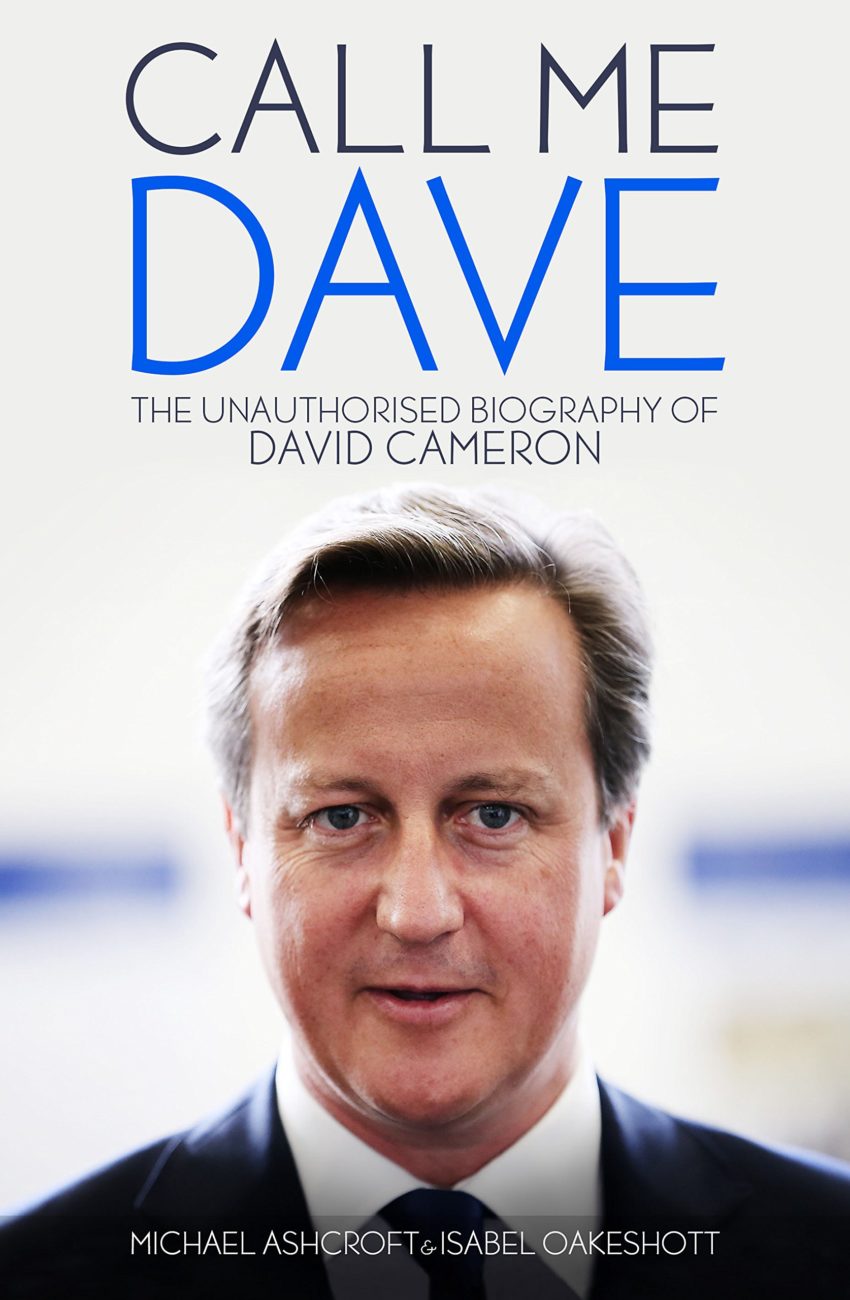
Call me Dave.
The book was published by Biteback Publishing, partly owned by Tory grandee and billionaire Lord Ashcroft, which also released a biography of David Cameron Call Me Dave: The Unauthorised Biography of David Cameron (Bitback, London, 2015), co-written by Ashcroft himself, alongside works attacking the Labour Party under Jeremy Corbyn.
But as any historian is aware, an apparently tainted source may nonetheless yield valuable evidence. Time will tell whether our Prince has erred in allowing damaging material to enter the public domain.
In his review of the book Diarmuid Ferriter drew attention to a passage explaining how Varadkar: ‘floated the idea to one TD of creating anonymous accounts to make positive comments under online stories on popular news websites.’ But it seems likely that this going on in political parties across the board.
Far worse was Varadkar’s conduct while Minister for Social Protection (2016-17), where he launched an advertising campaign against welfare ‘cheats’. In the meantime he used the Department as a launchpad for his leadership bid, after first hatching an escape from the ‘Angola’ of Health.
An unnamed adviser relates how visits to Intreos, Department offices located in every county, were used to further his ambition to lead Fine Gael: ‘Social protection was great for us … We travelled everywhere. We went to every parish hall. Every councillor we got to meet. The campaign indirectly started when we were meeting councillors’ (Ryan and O’Connor, 2018, p.254)
Masquerading as Department business, these were tours on what former Fianna Fáil leader Charlie Haughey called the ‘rubber chicken and chips circuit’ of constituency branches, all at the expense of the Irish taxpayer. Considering Varadkar’s attacks on ‘welfare cheats’, this double-jobbing is the height of hypocrisy. Such conduct may be normal in Irish politics, but that does not make it right.
Unfortunately, doing little, while generating a lot of noise, marked Varadkar’s stint in the Department of Social Protection, as has been the case in his other roles.
What also emerges is just how embedded many of the most influential journalists in the country appear to be. The authors unashamedly reveal how the ‘Taoiseach has made a virtue out of wining and dining journalists who accompany him on international trade missions’, believing, ‘it is important to spend time with them socially’.
During one recent jolly in New York, ‘More than twenty guests, who included journalists from print and broadcast media, joined the Taoiseach and foreign affairs officials for a five-course, three-hour-long meal’. The authors, who may have been present, gleefully recall the guests devouring ‘French onion soup, foie gras, filet mignon and mushroom ravioli dusted with black truffles’, followed by further drinks in Fitzpatrick’s Manhattan Hotel in Midtown; all, we may assume, at the expense of the Irish taxpayer (Ryan and O’Connor, 2018, pp. 321-322).
Few journalists could resist the prospect of such intimacy with a sitting Taoiseach, fewer still could emerge from such lavish entertainments with objectivity intact.
The attitude of one of his predecessors John A. Costello, who inveighed against ‘the era of the expense account … the era of the expensive restaurant (McCullagh, 2010, p.390)’, has long since fallen into abeyance.
It should also raise an eyebrow that Ryan Tubridy, Miriam Callaghan (both of RTE) and Ursula Halligan (of TV3) endorse the book on the back cover.
III – ‘Dr’ Varadkar
In Irish society, as with many others, the position of doctor carries an unmatched aura of respectability. As the son of a respected G.P. Leo had an immediate advantage of name recognition, and respect, in his constituency when he began his political career.
In the meantime he was studying for a medical degree himself, though he admits he was a dilettante student, and perhaps ought to have studied law, that other passport to bourgeois respectability. Nonetheless, training to be a doctor has given this career politician an enduring credibility, and mystique, which still impresses commentators.
As a young councillor, we are told he would travel ‘straight from hospital to the chamber dressed in his medical attire, with a stethoscope around his neck’. He now denies the full extent of this, but the nickname of ‘Scrubs’ that emerged in the local media, was hardly damaging (Ryan and O’Connor, 2018, p.52).
His biographers claim that medicine is among the interests that Leo shares with his partner, Matthew Barrett, who is a practising cardiologist, but as Minister for Health Varadkar showed a discernible lack of interest in staying in the job. An anonymous cabinet colleague remains critical:
The fact he walked away from it after such a short time, I think if you ask most of the parliamentary party, even some of his biggest supporters, they were disappointed with that. It was obviously done with a view to the leadership election. There was obviously a calculation made that you cannot go from health to the Taoiseach’s office. Certainly not in a contested election when you have to go around canvassing (Ryan and O’Connor, 2018, p.235)
One might have expected a young doctor to be brimming with ideas on how to address the major public health questions of our time – just as Dr Noel Browne spearheaded efforts to eradicate T.B. when he was Minister in the late 1940s – or even dismantle the expensive bureaucracy in the health service.
Varadkar’s first decisive move, just two weeks into office, was to abandon the Coalition government’s promise, and long-term Fine Gael commitment, to universal health insurance (Ryan and O’Connor, 2018, p.154). He went on toboast publicly that he had taken out his own private insurance, and urged other young people to follow suit.
The two-tier system would remain, and nor was Varadkar prepared to reform what remained of public provision, and dispense with the Health Service Executive: that layer of bureaucracy insulating a Minister from direct criticism, bequeathed by one of his confidantes, former Minister for Health (2004-11) Mary Harney.
After Kenny’s calamitous election campaign in 2015, when the party lost twenty seats, Varadkar knew his time was nigh. He forced his way out of Health by demanding ‘a large bag of cash and a mandate for sweeping change’, whereby he could bypass the rules surrounding recruitment (Ryan and O’Connor, 2018, p.232). These were demands he knew Kenny would not be accede to. The doctor had more than Health on his mind.
The Reluctant Taoiseach: John A. Costello.
IV – ‘Murph’ and the Whistleblower
It seems the Housing ministry has become the new ‘Angola’ among government Departments, with any Minister operating with fiscal and monetary constraints over which he has no control. The incumbent, whether Simon Coveney or Eoghan Murphy, appears like a hapless pilot frantically playing with the instruments on an already doomed vessel as it descends through the sky.
To make real progress, the Ministry of Housing would have to be develop a construction agency headed by the minister, integrate with the Transport Department, and be given a direct line to Finance. Instead the Housing Building Finance Bill 2018 ‘will provide financing to developers seeking to build viable residential development projects in Ireland on commercial, market equivalent terms and conditions.’
Varadkar’s long-standing resistance to asking those who “pay for everything” to provide any more, does not appear to preclude a revival of the public-private partnerships which were a hallmark of Bertie Aherne’s tenure as Taoiseach.
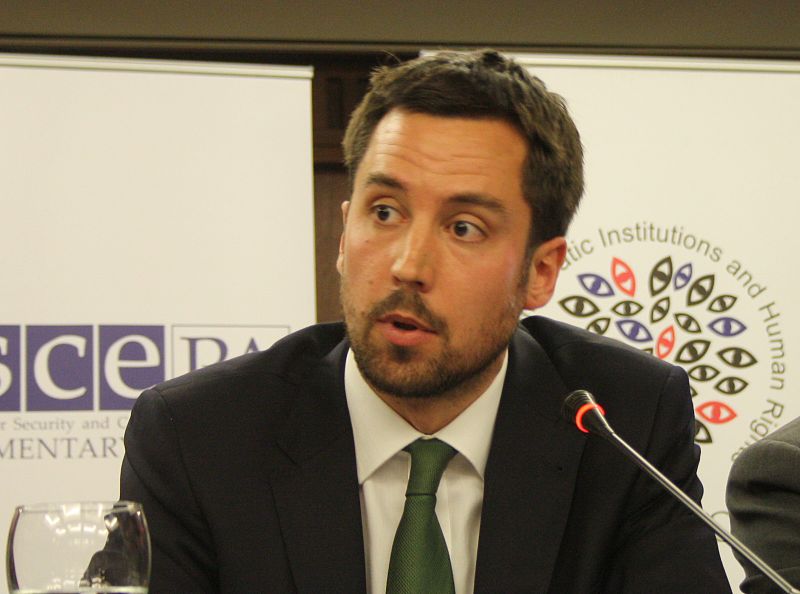
Yet the account of Eoghan Murphy that emerges in this biography does not align with the bumbling, statistic-addled media performer, labelled the ‘Craig Doyle of Irish politics’. He was Leo’s loyal fixer, largely responsible for Varadkar capturing an overwhelming share of the parliamentary party’s vote.
Varadkar’s Fixer: Eoghan Murphy.
According to one of his colleagues: ‘You had to have a multiple ways into people and no one moved into a “solid yes” unless Murphy was 100 per cent satisfied (Ryan and O’Connor, 2018, p.277)’.
Murphy was the founder of the so-called Five-A-Side Club of young Fine Gael TDs and at one point the sole member in Varadkar’s corner. As such, he was crucial to the latter’s rise (Ryan and O’Connor, 2018, p.125).
Murphy’s gregariousness compensated for Varadkar’s frank admission that he ‘probably should not be in politics at all; I am not really a people person (Ryan and O’Connor, 2018, p.112)’. Unlike Varadkar however, and perhaps to his cost, Murphy appears quite serious in his attempts to govern. He will remain a lightning rod for dislike of the government, however, as long as the state continues to shirk a constitutional responsibility to provide affordable accommodation for citizens.
When Enda Kenny finally resigned from office last year, apparently after egotistically ensuring he had surpassed John A. Costello as the longest-serving Fine Gael Taoiseach, Varadkar’s main rival Simon Coveney was hit with a political blitzkrieg, foreclosing any leadership race before a shot had been fired in anger.
From his free-roaming position in Social Protection Varadkar had captured the vast majority of the parliamentary party, making the 65% of the vote Coveney received from the wider political party an irrelevance.
What had brought Kenny down, along with two Ministers for Justice and two Garda Commissioners, is perhaps the greatest scandal in Irish public life since the turn of the century: the alleged framing on charges of child sex abuse of the Garda whistleblower Maurice McCabe after he had revealed industrial scale non-prosecution of drink-driving charges. This has led to the appointment of the first Garda Commissioner from outside the state.
In this regard at least, Varadkar has been on the right side of history, famously referring in the Dáil in 2015 to McCabe (who he had previously met and appraised) as an ‘honourable man’, after his conduct had been described as ‘disgusting’ by then Garda Commissioner Callinan.
The one part of this narrative that rankles, however, flows from the toxic relationship that existed between Varadkar and Alan Shatter, who as Minister for Justice appears to have been mislead by senior Gardaí. Did Varadkar’s own ambitions inhibit him from reaching out to a cabinet colleague? The political cadavers the affair made of so many of the Fine Gael old guard certainly cleared the way for Varadkar.
Nonetheless, Varadkar must be given credit where it is due, and many of his ideological opponents were impressed by his respect for Justice and the Rule of Law. This impression is bolstered by his rejection of an idea floated by the current Minister for Justice Charlie Flanagan for a ban on Gardaí being photographed in the course of their duties.
V – A Land of Opportunity?
It seems de rigeur for any fiscally conservative politician to display a commitment to ‘opportunity-for-all’ when he ascends to high office. Thus, in his acceptance speech Varadkar urged ‘every proud parent in Ireland today’, to dream ‘big dreams for their children’.
He said:
Let that be our mission in Fine Gael, to build in Ireland a republic of opportunity, one in which every individual has the opportunity to realise their potential and every part of the country is given its opportunity to share in our prosperity (Ryan and O’Connor, 2018, p.xi).
Opportunity for Varadkar is distinctly upwardly mobile, along the lines of the American Dream, which has been fools’ gold for many. Nothing is said of those who inevitably fail to live up to their own, or parent’s, aspirations, and depend on the state for help. His approach seems at odds with John A. Costello’s Fine Gael being, ‘for all sections of the Irish people, but particularly for the poor and the weak and the distressed (McCullagh, 2010, p.398)’.
Perhaps the one measure that would achieve the parity of opportunity which Varadkar claims a devotion to, would be to develop a truly equal educational system. But the best model for primary and secondary education seems to be found in Finland, where private schooling is effectively prohibited, and educational attainment among the highest in Europe. Instructively, this socialist society maintains an income tax rate in excess of fifty per cent.
Varadkar has in the past opposed reforming the Irish education system, where the state pays the salaries of teachers in the private institutions, which achieve the highest grades in state examinations. In 2003, he said dividing Ireland ‘into a country of those who pay for everything and receive nothing and those who pay for nothing and receive everything, with only a small minority in between, would deal a fatal blow to what is left of Ireland’s social contract (Ryan and O’Connor, 2018, p.52)’.
There is perhaps no clearer statement by Varadkar of whose interests he would serve in fulfilling his “contractual” role: those who “pay for everything”, the wealthiest strata of society who have throughout the history of the state used educational attainment, including access to careers in medicine and the law, as a barrier to wealth and influence.
That affiliation has been apparent from the beginning of his political career: with his excoriation of the social democratic tradition in his party; it proceeded through an inclination to work with the Republican Party, and sympathy for the Progressive Democrats; it showed in a willingness to dispense with a promise of universal healthcare and accept a two-tier system, and with the shaming of welfare ‘cheats’. It was also apparent in his entreaties on behalf of Donal Trump’s Doonbeg golf course, and open invitation to visit the country.
Leo’s liberalism is uniquely adapted to further his ambitions, and take care of his supporters. The Prince appears to have no plan beyond the end of achieving power, and it trappings.
In a revealing aside in this most beige of biographies we discover him telling colleagues ‘he feels at his most comfortable when holding meetings with other world leaders, some of whom he regularly texts’. Most worryingly perhaps, he has also ‘struck up warm relationships with’ among others the Far Right Hungarian President Viktor Orban (Ryan and O’Connor, 2018, p.319).
*******
Times have changed in Irish politics, where once John A. Costello had to be persuaded to serve as Taoiseach, today a career politician unashamedly plots a course to power. Who would wish to enter this tawdry scene? Micheal O’Siadhail’s insight appears apt that ‘the thieves of power / Come noiselessly in nights of apathy (O’Siadhail, 2018, p.149)’.
Raising political standards in Ireland goes far beyond removing Varadkar, who is a product of a political system informed by clientalism. It requires an evolution in our understanding of the role of government, and a shared acceptance of the need for genuine equality of opportunity, beginning with educational reform.
Varadkar’s own party is now what he and others aspired for it to become: a conservative party, untainted by social democratism, which wields power on behalf of the property-holding, private-school-attending, privately-medically-insured cohort of the population. As long as he remains in power those who “pay for everything” will remain ascendant.
References
David McCullagh, The Reluctant Taoiseach: A Biography of John A. Costello, Gill and MacMillan, Dublin, 2010.
Philip Ryan and Niall O’Connor, Leo: Leo Varadkar – A Very Modern Taoiseach, Biteback Publishing, London, 2018.
Micheal O’Siadhail, The Five Quintets, Baylor, Waco, 2018.
In nineteenth century England, ‘erethism’, or ‘mad hatter disease’, was an occupational hazard for hat makers. The work involved repeated exposure to poisonous mercury vapours, which neurotoxically damaged their brains. Personality flipping, irritability, apathy, depression, memory loss and delirium were the price paid for the debonair upper-class tea-party, where guests relied on lavish hats and extravagant evening gowns to demonstrate grace, formality and decorum.
Appearances of sophistication and elite living were produced through the sacrifice of human spirit and mind. In many ways sharing life with a narcissist is like a Victorian tea party. It is a sham, a show, a veneer masking a pit of perverse and senseless suffering. It is a curated paragon of romantic union, an enviable promised land of relationship bliss. Happiness promised but never delivered.
The Hatter in the story of Alice in Wonderland is trapped in time, in punishment for failing to impress the queen with his song. He had tried but was not good enough, a self-esteem-shattering-back-story all too familiar to those who eventually lose their way in life. He is eccentric, critical, charming, welcoming, exclusionary and at times, a wonderful host to Alice, who quickly finds her ‘in’ by flattering him for his singing.
All ears, he draws Alice close and encourages her with a big smile to tell her story. Then suddenly he bellows, ‘Those are the things that upset me!’. He interrupts her, reprimands her, twists her words and angrily blames her for upsetting the mouse. In just a moment, his mood switches, and he is once again hospitable and engaged. He recites nonsensical prose and delivers unanswerable riddles, and when Alice repeats his own words back to him, he points at her in terror and labels her insane. On a whim, he demands that the whole party move their seats so that he can drink from a clean cup, he being the only one who deserves the privilege. Meanwhile Alice, though repeatedly promised tea, gets none.
I feel like a fool when I look back on the dynamic between my ex-boyfriend and I. Of course it wasn’t normal, of course I should have left him, of course I should have recognised what was happening. The reality is though, when you are in love with someone your brain becomes a masterful tool of self-deception, and it can take forever to see that which does not match your own model of the world.
Even now when I hear about friends meeting him at social occasions I imagine the serene, affable, friendly, popular gent that people love, and I question whether I over-dramatise it all.
It seemed worth enduring the pain of arguments three times over during the times we spent in our blissful joy, and I did not have the strength to remove myself from the nourishment of his love, when he chose to show it to me. I felt that we were so close to happiness, and he was working on himself. If we could just mend the holes as they appeared then perhaps soon there would be no more. I believed him when he told me that, because what we had was almost perfect. Almost.
I thought that my true boyfriend was loving and kind, and that the demon infiltrating his body when he ‘went dark’ had nothing to do with him. What I realised (far too late) with horror, disbelief and sadness, was that I had it the wrong way around. It was his narcissism that played the lead in his life, at least when it came to me, and though he had likable sides, his charm was mainly a means to an end.
Unless we travel through the looking glass and see for ourselves that our world is reversed, backward and upside down, it is natural to believe in the illusion of the Tea Party.
Nobody has prepared us for the madness of the truth. And the truth beckons an unwelcome question: if opening up to love can bring such pain, does seeking a partner make us all just lambs for the slaughter? How could I have protected myself from what I could not detect?
When I reflect with what I know now, I can see with a sense of dismay (and of relief) that his behaviour was not as random – or I as powerless – as it seemed. I simply did not know what I was looking for. For there were signs, a dozen signs, that this would be no ordinary adventure.
The possibility of an association existing between animal protein and cancer goes back at least to the 1960s. At that time in the Philippines, a slowly increasing incidence of liver cancer was taking place amongst children that carried a high mortality rate. Because such cancers were very rare in this age group, news of the outbreak spread to the USA and prompted Virginia Tech. University to send a young nutritional scientist over there to see what was going on. His name was T. Colin Campbell.
Even before this visit took place researchers had already come to the conclusion that dietary factors were the most likely cause of the cancer, as the onset of the disease appeared to coincide with the discovery that large areas of the peanut crop had become infected by a fungus. It was, therefore, believed that the fungus was carcinogenic for the liver, and this theory was considerably reinforced when it was discovered that new cases of the disease plummeted as soon as children were instructed to avoid peanuts from fungus infected areas.
I – Campbell in the Philippines
That was how matters stood when Colin Campbell arrived on the scene. By then, not alone were researchers confident that the exact cause of the cancer was known, they were also satisfied that they could prevent new cases developing, simply by ensuring that peanuts from fungus-infected-areas were not eaten. In fact, all that seemed to remain for Campbell to do was to familiarize himself with the research that had taken place, and to read some of the case histories that had been documented.
It was while this evaluation was taking place, however, that a very puzzling statistic came to the researchers’ attention. It was discovered that it was only children from wealthy families that were dying of the disease; children from poor families, although they appeared to eat just as many peanuts as rich children, did not develop the cancer, much less die of it.
This was such a strange finding that doctors were forced to consider the possibility that factors other than peanuts might also be playing a role in the development of the cancer. It was decided, therefore, to identify all the major dietary differences that existed between the two groups of children. It was a task that proved surprisingly easy as it quickly became apparent that the main dietary difference between them was in the amount of animal protein being consumed.
Children from rich families ate lots of animal protein in the form of milk, cheese, eggs, poultry and all sorts of meats and these were precisely the foods that poorer families often could not afford.
It was a bit of a dilemma. If indeed it was only children of the rich that were developing liver cancer then one would have to conclude that there existed an association existed between the proteins that rich children were eating and the growth of the cancer. Few doctors could have felt entirely comfortable with this assumption, however, as it had long been acknowledged that animal protein was the most nutritious food that money could buy.
When shortly thereafter Campbell headed back to the USA these were the thoughts that were buzzing about in his head. Certainly there was convincing evidence that the liver cancer outbreak in the Philippines was primarily due to a fungal infection of the peanut crop, but what then was one to make of the fact that it was only the children of the rich, eating lots of animal protein, that were dying from the disease?
Bewildering questions sometimes turn out to have very simple answers and this was one such case. It was Colin Campbell that solved the riddle. What occurred to him was that if indeed animal protein was so wonderfully nutritious for the cells of humans and many other animals, then surely they would also be highly nutritious for these same cells should they become malignant. Indeed one might even suspect that cancer cells, with their inherent characteristic of out-of-control-replication, might actually require the nutritional power of animal proteins, if they were to thrive and grow.
II – Laboratory Tests
Once back in the United States, Campbell set to work and began by checking the medical literature, in case some research might have taken place on the subject of liver cancer that had previously escaped his eye.
To his surprise he found that there was one scientific paper published by two Indian researchers in ‘The Archives of Pathology’ from February 1968. These researchers, Madhavan and Gopalan, must have been on much the same track then as Campbell was now. They too were interested in the apparent association between animal protein and liver cancer, and they had carried out research that involved setting up experiments using laboratory rats.
All the rats were first exposed to some well known carcinogens with the intention of causing at least some of their liver cells to develop cancer. One group of the rats was then kept on a diet containing 20% animal protein in the form of casein from cows’ milk, and a second group was fed 5% casein. The results were remarkable in that the cancer cells in every rat fed on the 20% diet began to grow while little change occurred in the cells of rats on 5% casein.
On the strength of this scientific paper from India and his own experiences in The Philippines, Campbell wrote a large number of articles on the subject for top scientific journals in the USA. The articles received a lot of attention but much of this was critical as his suggestion of there being an association between animal protein and cancer was considered too farfetched to be accurate.
Campbell’s reaction was to set up his own experiments using, laboratory rats and the results were almost identical to those achieved by the Indian researchers. By this time he had become Professor of Nutrition and Biochemistry at Cornell University, where he remained for twenty-two years, and while there he carried out many more experiments on rats for the benefit of his students.
One of the more important findings he made during these experiments was that it was entirely possible to switch the growth of cancer on and off, simply by varying the amount of animal protein in the diet. When plant proteins were used in these experiments no such results were achieved.
III – Resistance of Vested Interests
By now Campbell had come to believe that he had a very significant discovery on his hands and attempted in every way possible to get his message across both to the general public and to the medical profession. He continued to write articles and lectured widely on the subject in many universities. He also wrote a number of books. His first and most famous book, The China Study (Dallas, 2005) sold well over two million copies, and was reviewed favourably in The New York Times. Even so, and notwithstanding the fact that he was now a full professor with tenure at one of the major universities in the United States, his work remained unread by the vast majority of medical doctors.
In The China Study Campbell makes no bones about the vested interest groups that confronted him whenever he brought up the subject of a relationship between animal protein and cancer. He listed three main groups.
The very powerful pharmaceutical industry with its enormous influence in practically all areas of medicine headed the list. Their immense wealth comes from the vast sums of money they earn from producing drugs to combat disease. Cancer drugs rank high in this research and so in monetary terms at least, the pharmaceutical industry would have most to lose should Campbell’s ideas prove correct.
Next on the list of vested interests came the farming community and the associated food industries. It was these that produced most of the animal protein that we consume, and needless to say they were none too pleased to find that their products were now being accused not alone of making cancers grow, but also of contributing to the greenhouse gasses responsible for Climate Change.
Ranked third on Campbell’s list of vested interests came the medical profession itself. The surprise here was that doctors were not ranked at number one as down through the years Campbell and his theory had been completely ignored by cancer specialists.
My own feelings are that the entire medical profession have made a very big mistake in not researching the subject. It would have been so easy for them to do so, and all relevant findings could then have been fully established. But such is life, and we all make mistakes. Overwork amongst wealthy, specialist doctors is widespread and while practice sometimes makes perfect, rushing headlong in the wrong direction helps nobody.
IV – Family Doctoring
My credentials are that I had been a family doctor in Ireland for many years and in 2005, after reading The China Study, I became convinced that some sort of relationship existed between animal protein and cancer.
I was sufficiently impressed to ask some cancer specialists that I knew what they thought about Campbell’s theory, but they all had more pressing problems on their minds. It was their lack of response that forced me to consider the possibility of carrying out some research myself. Cancer being such a common disease a busy family doctor could expect to have about seventy cancer patients, at various stages of the disease, attending the practice at any one time. So I had plenty of material to work on.
What I did was simply to bring up the subject of a possible association between animal protein and cancer with every cancer patient that passed through my office. I explained to each of them how I had been influenced by Colin Campbell’s book and suggested that they too should not alone read it, but should seriously consider going on an animal protein-free, plant-based diet, straight away.
It was a big ask, but people generally listen to what a family doctors has to say, and most of my patients decided to give the diet a try. As time went by and everybody became increasingly aware of just how difficult it was to give up eating their favourite foods, attitudes began to change and this was not helped by a lack of support for the diet from cancer specialists. For a time it began to appear that my whole research effort might go down the drain.
V – A ‘Eureka’ Moment
What was becoming evident was that the diet was just too difficult for many people and there did not appear to be much that I could do about it. Making the diet more palatable was the only solution that came to mind but this didn’t appear very realistic. Or was it?
I had a sort of eureka moment when I began to realise that for those that were struggling with the diet, no great harm could be done by allowing fish to be eaten a few times per week. It was not something that I had read about in Professor Campbell’s writings, or anywhere else for that matter, but I had always wondered whether fish might be in a different category to other forms of animal protein.
I explained to patients that little or no direct research had been done on the subject of fish eating and cancer, but pointed out that people living In Japan and other parts of the world with strong fish eating cultures were amongst the most long-lived on the planet, with very low cancer rates. There was also the fact that recent evolutionary research was suggesting that mankind appeared to have evolved walking in or around river estuaries eating plants and shellfish. Perhaps this could offer some explanation as to why fish protein might be an exception to the rule.
It was a bit of a gamble but it appears to have paid off. Certainly the diet with fish included became much easier to follow, and soon it was not only the strugglers that were eating fish a couple of times a week, most of my cancer patients were doing so also while otherwise strictly adhering to a wholefood plant-based regime.
Patients welcomed this small change in the diet, and few if any now lapse. We are all learning as we go along.
Many patients recount how they experience an improved sense of wellbeing after being on the diet for only a matter of weeks. This may just be in the head, but I suggest that improved wellbeing reflects how the cancer cells inside them have stopped replicating.
Improved wellbeing also appears to be associated with a good long term prognosis, and I now suggest to patients that most of them should be able to return to their normal pre-cancer lives, within a matter of weeks and broadly speaking this is what I have seen.
*******
My hope for the future is that all patients diagnosed with any form of cancer will automatically stop eating animal protein as soon as the diagnosis is made. This is a risk-free form of treatment, and far from interfering with treatments given by cancer specialists, makes recovery more rapid and assured.
I also emphasise to patients that by staying on an animal-protein-free, plant-based diet indefinitely that not alone are cancers very unlikely to return but that they also have a much better chance of avoiding most of the chronic diseases we are prone to, including coronary heart disease.
Over the years I have put together a short book explaining why I have gone down the path that I have taken. The book recounts a number of case histories that readers should find helpful. The title is Stop Feeding Your Cancer and it is available for purchase on Amazon.
Dr John Kelly MB.BCh.BAO.DCh.LM.MRCGP jkellypiat@yahoo.com
It is a river vast, both wide and deep that corrals out joy and sadness; lulls to sleep the fretful child, and transforms the darkest landscape of a man depressed into a golden glowing cape.
It is not just the spice of life, but our very life blood, perhaps the central issue in human and animal wellbeing, giving complete absolute freedom, psychologically, inwardly, then outwardly, through singing, dancing or playing instruments.
It arrives with humour, typified by Enbie Blake, the ragtime pianist who, when asked, aged ninety, by Alastair Cooke, for his ‘Letter from America’, what he attributed his longevity to, replied: ‘I guess it was them French fries’. Or Jimi Hendrix, who before he died at twenty-seven quipped: ‘Once you’re dead, you’re made for life’. Likewise Thomas Beecham, the internationally acclaimed British conductor, who once suggested at a choral recording: ‘if the ladies will look more closely at their parts and see where the gentlemen come in, it will make for better reproduction.’
It also inspires poetry, such as the ‘Dance and Provencal Song and Sunburnt mirth’ of Keats’s ‘Ode to a Nightingale’ – ‘While thou art pouring forth thy soul abroad in such an ecstasy’
As my friend Jan Skrdlik put it: ‘Music is a special language to communicate everything from the heart’. Just hear him and his consummate pianist Petra Besa play with a passion, almost unheard-of in contemporary Classical music, to see how valid is that epigram.
Go back two hundred years to the Rev. Sidney Smith, who the American ambassador called ‘the wisest man, if he had not been deemed the wittiest’: for Sidney music was ‘the only cheap and unpunished rapture on earth’, the former unfortunately no longer, considering the price of a ticket to Glastonbury Festival, or Grand Opera.
It is a dazzling world, from the first known song, the Hurrian Hymn no. 6 from 3400 BCE in Syria (would they have song now instead of bullets) to the 1264 pop variants of 2018 AD; if those first singers could see the variety of the folk/ethnic/jazz/blues/soul/RnB/Classical/electronic spheres they would surely gasp in awe. How quickly did it grow?
Of the three main strands, Classical and Rock come from the folk of cottage and hut. Classical Indian ragas, arrived well before the monastic parchments of Europe, which engendered late medieval composers like Lassus (listen to his glory on the Christ Church College Choir recordings, conducted by Simon Preston).
The stream of the Renaissance gave way to the Baroque era of Bach (1650- ) and Handel’s legendary Messiah, a river flowing into the torrent of the Classical Age of Haydn, Mozart and Beethoven (c. 1800); surely the latter brought us to the high water mark of musical expressiveness.
I wonder had any among the thirty thousand who flocked to Beethoven’s funeral heard all nine of his symphonies (including the 9th with its ‘Ode to Joy’), the last five string quartets (Op. 135 the final one, with a slow adagio movement that arrives from no where, has a beauty so simple and pure that perhaps only the Busch, Amadeus and Hollywood quartets have captured its sublime essence in a recording), or his piano sonatas, thirty-two in all with the Op 111 at the end giving one a vision of Paradise, as played by the Jewish-Austrian Artur Schuabel, whose preeminent gifts were expressed in his comment: ‘the notes I handle no better than many pianists. But the pauses between the notes – ah, that is where the resides.’?
The rich Romantic nineteenth century saw a spread of greatness from France to Belgium – Cesar Franck’s violin sonata is unmatched – Spain, Russia (including the universally loved Swan Lake ballet of Tchaikovsky) to Italian opera. No way will we ever have another chain of composers like Rossini, Bellini, Donizetti, Verdi and Puccini; nor Belcanto singers who grew out of their greatness: Melba and Caruso are the best known, but can they rival Claudia Muzio the soprano, Fernando de Lucia the tenor, or Mattia Battistini the baritone?
I – The Irish Mist
Before looking in more detail at outstanding singing, let me dwell on the Irish miracle. From peat bogs, sparse sunlight, tragic potato famine, English oppression, less than five million living there today, the Irish have swept the world with intoxicating jigs and reels: so deft, poised, and elegant in set dances or even integrated with disco dancing, which I discovered at one New Years Eve party in Dublin that is burnt into my memory. It brought to mind Robert Herrick’s poem ‘When as in silks my Julia goes / then, then (methinks) how sweetly flows / the liquefaction of her clothes’.
Did one man, Sean O’Riada, mainly, inspire, from the 1940s and 50s, a flood of famous bands like De Danaan, Planxty, The Chieftains, the Bothy Band and instrumentalists like Jackie Daly who almost reinvented the melodeon; at a recent Milton Malbay Festival I listened to sixteen playing slow airs, with Jackie, Sam Burke and Brendan Begley having me in tears. Also there, during an Irish Set Dance ceilidh, Martin Hayes played such spine-tingling fiddle solos of fantastic grace and fluidity that it is scarcely surprising that his new group ‘The Gloaming’ should have elicited such critical responses as ‘Brilliant’, ‘Exceptional’, ‘Blissful’ and ‘Exquisite’.
At a pub in Spiddal, near Galway, you will find Johnny Óg Connolly, often with his Dad, playing melodeon; after Milton Malbay, you would not dare dream of encountering such rich tone colours, patterns so delicate, and virtuoso runs celestial, imbued with a poetry, arising from his great humanity, characteristic of the Irish in all walks of life. One cannot conceive how many instruments they can play from the utterly haunting uilleann pipes, via bodhrán (with its gentle and imaginative beat) to the tin whistle of Mary Bergin and Packie Byrne. And weekly, you can hear sessions for free in pubs throughout the land, from Kerry to Donegal.
As a singer, both for ballads, lieder and opera, John McCormack alerted with his unsurpassed natural tenor voice how deeply the human voice can delve in to one’s spirit, this mantle now assumed by those like Mary Black, Tommy Fleming, Dolores Keane, along with a unique group of sean-nós singers, uniquely expressed in Gaelic and unaccompanied. The discovery of the year for me was Marianne McAleer at the Sidmouth Folk Festival in England. One of her song moved me to the extent that she stepped forward to hold my hand. No greater testimony to the unifying force of music, and generous Irish nature.
II – Rock ’n’ Roll
Cross the Atlantic for a twentieth century musical revolution, led mainly by African-Americans and Jews. Beginning with the 1920s New Orleans Jazz of bands like Jelly Roll Morton, simultaneously of Leadbelly and other formerly enslaved Blacks who sang the Blues to combat sadness; there sprang up gradually the modern jazz of men such as Charlie Parker, Tamla, Motown, Atlantic Soul, R&B, Trance, Dance, Rap and onwards.
Leadbelly’s ‘Goodnight Irene’, is magnetic like so many Blues numbers, and inspired Johnny Cash and folk supremo Pete Seeger to sing and perform it.
A high point of traditional Jazz was highlighted to me by an Exeter estate agent I once knew bursting into tears after listening to ‘Blue Horizon’ from the 1945 Blue Note recordings of Sidney Bechet, then on the crest of his soprano sax playing career. Dancing to the English Traditional band of Chris Barber in the late sixties, was also an unforgettable experience, confirming what joy Afro-Americans have bestowed on mankind.
From the Atlantic soul most must know the enveloping power of Percy Sledge’s ‘When a Man Loves a Woman’, but few can have sat down to supper with a daughter, Acacia, thinking the cream would be an eight-year-old bottle of Chablis, only for her to press the repeat buttons so as to hear Otis Redding’s ‘Those Arms of Mine’, twenty-seven times!
The legendary Louis Armstrong, trumpet hors concours and entertainer, becomes a symbol of the African-American love of life and laughter, with words like: ‘all music is folk music – I ain’t ever heard no horse sing’.
Erykah Badu is a sublime example of her community’s musical talents; aged seven, given a piano, she wrote twenty songs in the first week, crying ‘Music is kind of sick’. So free from modern constraints that she had three children by different men, home educating them in subjects like quantum physics and rare languages.
But is music now in poor health? And does technology help or hinder?
The early years of American pop/rock/country saw not only Buddy Holly, John Denver, but also Otis Redding die in plane crashes, in part down to having to play too many gigs. Since then, how many stars, and their fans have ruined their lives with drink and drugs, which is almost unthinkable in the folk and Classical spheres?
The deafening, distorting sound of PA equipment is another downside, or thrill, depending on how you respond. The plethora of songs and possibilities for delight is illustrated by my son Hawthorn pointing out how I can put four hundred thousand songs on a hard drive, which he worked out would take thirty-four years, listening three-and-a-half-hours daily, to get through. The fever of this passion is shown by almost two hundred thousand tickets for the Glastonbury Festival selling out within fifty minutes.
III – Musical Contrasts
Two countries can act as a sublime contrast. Have you been lucky enough to hear French chanson or the mystical, almost metaphysical sound of Indian sitar or sarod, grounded by the drone of a tambura, which with the light intricate drumming of a tabla leads to a deeply relaxed meditative state?
Thanks to my third daughter Natasha (you need family, as well as friends, to make you explore music), I tried to learn how to sing. Then sing in a classical raga mode. Talk about a revelation: going back to the first few words about complete absolute freedom, it is almost what singing Indian classical ragas allows, except that you move in the seven note, Sa Re Ga Ma Pa Da Ni scale.
I was taught by a Frenchman Gilles Petit, who can sing, dance, play any instrument from sitar to trumpet like an angel: but then he gives music by many routes a spiritual dimension. However, to learn how to sing ragas is a lifetime’s devotion, as with sitar. So beguiling an instrument that the Beatles combined with Ravi Shankar.
Taking their elegant language, their refinement, joie de vivre, the French gave in Charles Trenet’s ‘La Mer’ an incomparable lightening of heart. Could this be what the seventy-percent of English people, who are reportedly depressed at some point daily, require?
As a young man seeing Maurice Chevalier at the Paris Olympia sing not only with voice but elbow took me into shocked joy; listening to Gilbert Becaud’s ‘Et Maintenant’ was dramatic, thrilling, statement about despair: ‘And now what I am going to do with the rest of my life … All the nights for what, for who / And this morning returns for nothing … I’m going to burn all these nights / In the early morning I will hate you … I really have nothing to do’.
Hardly understanding a word, I was, nonetheless, rivetted. The great signposts in this exhilarating genre are Edith Piaf’s ‘Non, je ne regrette rien’, and Jacque Brel’s ‘Ne me quitte pas’, which offer romanticism gone wild: ‘I will offer you pearls made of rain, coming from countries where it never rains …. I will ride right there to see you dancing and smiling … Let me become the shadow of your shadow.’
Ignore French musical culture at your peril!
IV – Belcanto
An Italian baritone born in 1856 at the crest of the Belcanto age, whose voice was marked by coruscating runs, and an ever-golden tone, Mattia Battistini shone in the French opera of Gounod and his singing of Gomod’s song Le Soir is perfection.
Alas Ed Gardner’s description: ‘Opera is when someone gets stabbed in the back and instead of bleeding he sings’ only hints at how exciting, ravishing that world can be. Through withdrawing from the stage for the three summer months, Battistini, uniquely, practised seven hours a day: how many could have matched his thirty-seven encores after one legendary recital?!
Sadly what was Grand Opera is now a shadow of its spectacular singing: the last truly great tenor Jussi Bjorling died in 1960. But at least the English Touring Opera still capture its magic through superb direction and staging.
I suggested you find De Lucia, the tenor, and Claudia Muzio, the soprano, to discover how expressive this art form can be.
Rarely nowadays one has the luck of hearing a throwback to the golden nineteenth century in the form of Ileana Cotrubas. In an almost unknown opera at Glyndebourne, her singing of Cavalli’s ‘Calisto’ was so warm, beautiful, captivating that she became the recipient of a case of vintage champagne (Louis Roederer, Blanc to Blanc, 1966).
Like Clara Haskil, and Alan Hacker, she has a sublime affinity with Mozart. If you are switched off by Classical piano, I doubt you could have resisted Clara’s playing it, I was certainly converted – in Chartres’s Cathedral Museum!
V – Czech and English
How does one yield to another musical genre? Is it great music or wonderful playing that is the key to Aladdin’s Cave?
Alan Hacker, the clarinetist and conductor, is a glowing example of what is possible. Rather than giving up after being paralysed by a virus from the chest downwards as a young man, he became what William Mann in The Times called ‘a musician to be treasured in our midst’. He was surely the equal of Anton Stadler and Richard Mulhfeld for whom Mozart and Brahms wrote renowned clarinet quintets, equally adept on an 1804 boxwood clarinet and the modern Boehm.
He inspired modern composers, taught so wisely at York Univeristy and Dartington, conducted both symphonies, some with original instruments, and opera – including Mozart in Stuttgart.
When interviewed by the BBC, in saying there were too many notes nowadays, he pinpointed how virtuoso fast runs by players had sidelined the prime of music: tone colour. The descending triplet in the finale of his first recording of Mozart’s Quintet is an exquisite example of his playing. But as the saying goes, ‘Behind every man …’ there is no doubt that his wife Margaret contributed hugely.
If you feel reluctant to move from orchestral to chamber music, begin with Schubert’s String Quintet (the first one that hit me) live from Prades with the Vegh Quartet and Casals, or a 2015 recording of Franck’s violin sonata in its cello version with the aformentioned Jan Skdrlik and Petra Besa. These Czech artists, like many from that land, are quite out of the common run; so don’t visit Prague only for the beer! The Lobkowitz Palace there has both two Canaletto paintings of London in the seventeenth century, and Beethoven manuscripts, surviving there after the court supported him at a critical moment.
Due to Rock/Pop dominance the extraordinarily rich and human folk scene, except in Ireland, is marginalized. However, the English put on almost three hundred folk festivals annually, much enlivened by new young talent and encouraged by the ground-breaking Spiers and Boden.
The breadth on offer is enthralling: Roy Bailey, an Emeritus Professor at Sheffield University, became a pioneer in songs about social justice – ‘Alyandabu’ with haunting harmonica from Rory Mcleod, is about an aboriginal woman who, when her rich husband died, and having had her children confiscated, fights back, is a marvel. Similarly Pete Morton’s ‘Two Brothers’.
I don’t care who started it, I just want to see you play I just want to see you smiling in the glory of his day … Israel give him his hall back. Just stop all the noise I can see your two very overtired little boys … Palestine I saw you kick him, Israel sit still … Put aside all your anger, all the sorrow and all the pain … One day in the future this won’t mean a thing …. …. , as brothers you’ll sing
A tour de force of a prolific, rhythmically-alive singer-songwriter who has transformed traditional songs like ‘Little Musgrave’.
The Folk World in the U.K. breathes balance, with song and dance, moderation and harmony, after the miracle, around 1900, of Cecil Sharp collecting, in only fifteen years, six thousand songs and dances; Rev Sabine Baring Gould got a further thousand plus, while Alfred Williams accumulated hundreds.
Sharp shows what we need to recover in music by noting that at the end of the nineteenth century folk song in rural areas was still an unbroken tradition. Whether labourer, thresher, cowherd, ploughman, pinder, goose woman, woodcutter, shepherd, cress-gatherer or bird-scaring boy, all trudged home to the accompaniment of song. Indeed in 1800, the poet John Clare’s father knew by heart over one hundred ballads.
But English folk’s salient feature is humour. Thus Colum Sands between songs always tells funny tales, including one about his aunt, who, aged seventy-five after getting electricity for the first time, would only turn on the light to find the matches to light the oil lamp. Or when playing to the Inuits of Northern Canada, he met a woman who told him that in her tribe the men outnumbered the women ten to one. So he said: ‘The odds are good then’. She quick as a flash, riposted ‘Yes the odds are good but the goods are odd’. The same element is evident in Roy Bailey’s famous children’s songs: Kangaroos like to hop / Zebras like to run / Horses like to trot / But I like to lie in the sun.
And of course there is Martin Wyndham Read, the great discoverer of Australian folk music, which he sings almost Belcanto; he has a store of hilarious stories from sheep shearers.
https://www.youtube.com/watch?v=M8WXnewzk1M
VI – Musicals
In the world of musicals does ‘Singing in the Rain’ not stand supreme, for making you feel happy? And is that what we seek from it? But as with all music, hearing it live is so much more entrancing.
Umojo, a two hour explosion of South African black singers celebrating a century of music, caused the entire audience to go wild with applause at the end when I went to see it. For your romantic hunger, there is ‘Le Concert’, a French film featuring Tchaikovsky’s Violin Concert; just as pulsating is ‘Strictly Ballroom’ where the pasodoble reigns, amidst much humour.
Without the Jewish people, music would be a shadow of itself, in pop/shows/Classical: Bernstein’s ‘West Side Story’, is one such marvelous testament. Try not to miss hearing Fritz Kreisler the violinist, revered in his time; will one of his stature ever appear again? His 1926 recording of the Beethoven violin Concerto is superlative in a field of one hundred or more versions. Might he give you a longed for musical breakthrough?
*******
A rounded perspective on music is incomplete without surveying other animals. The moving and beautiful film ‘The Story of the Weeping Camel’, set in the Gobi desert of Mongolia features yurts and people in magnificently bright clothing. When a she camel after a long and difficult birth refuses to suckle her new born the small village calls in the town musician with a small cello-like instrument to play, whilst a woman sings. Within minutes a magical transformation is achieved!
Recently Kathryn Roberts began her Cornish recital with the sad tale of the whale that sings at 52 Hertz, a frequency making it impossible to find a mate. And you can hear dolphins in Valencia, City of Arts and Sciences through a PA system singing to one another. How many other living creatures share this staggering gift of ours?
As a farewell, let Beecham take the stage once more. Probably the finest and certainly the wittiest conductor from the UK, and much loved on the Continent by composers and concert-goers alike, at his seventieth birthday celebration the telegrams read out included one from Richard Strauss, whose operas he brought to Covent Garden and Sibelius whom he championed, after which Beecham cried ‘Not Mozart?!’ Has there ever lived a more vivid interpreter of that man’s perfect music? I doubt it.
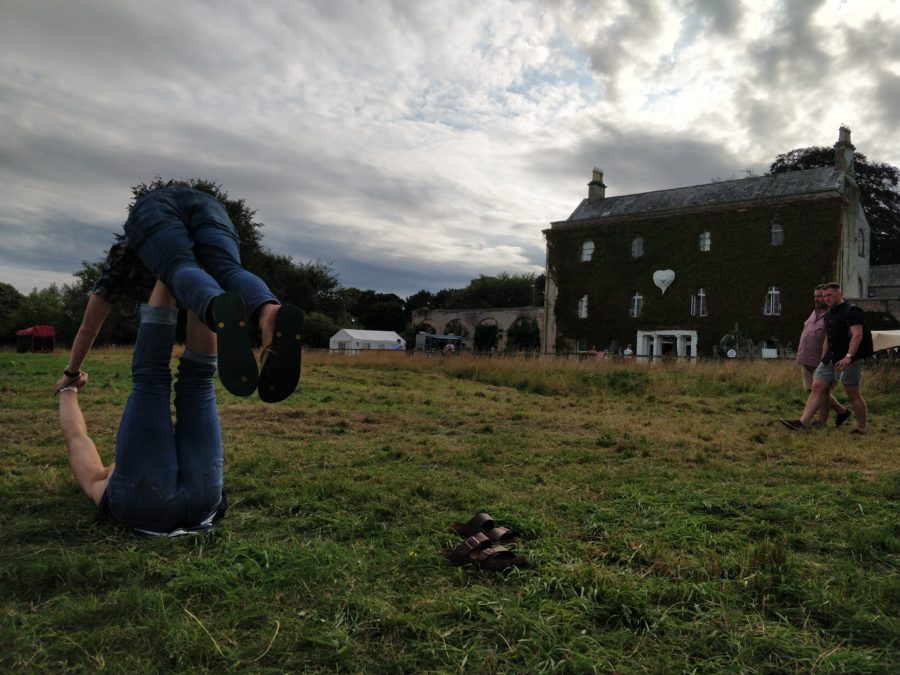
The featured image of Richard Wilson sitting on the shoulders of his son Hawthorn was taken by Toby Sirota at Meribel in Les Trois Vallees, France this year.
This August the Academy of Motion Picture Arts and Sciences announced a new award, honoring outstanding achievements in ‘popular’ film. They did not, however, reveal any criteria for how the award would be made. A month later, after a sustained backlash, they backtracked, declaring the new category was no longer being considered.
Among the criticisms of the ‘most popular category” was the uncertainty around what makes a film ‘popular’, and how this would differ from the criteria applied for the Best Picture category. Last year’s Best Picture nominees, including Dunkirk and The Shape of Water, raked in a measly $63 million. Not one of the top five grossing films last year (Star Wars: The Last Jedi, Beauty and the Beast, Wonder Woman, Jumanji: Welcome to the Jungle, and Guardians of the Galaxy Vol. 2) were included
Was the ‘Popular’ category a way to placate moviegoers of arguably more niche, comic-book or fantasy films, who could not care less about the Oscars, because their favorite films are never acknowledged? It seems the Academy was endeavoring to increase viewership, and reverse a dwindling relevance in the popular culture zeitgeist.
They have failed to accommodate films inspired by comic books – with the rebirth of the genre coinciding with Marvel’s 2008 release of Iron Man – which have been dominant over the last decade.
It is evident that genre movies, like the Marvel films or Star Wars series, generate the big bucks, but do not gain recognition beyond the MTV Movie Awards.
One alternative to the category of ‘achievement in popular film’ would have been to award a special Oscar to the year’s box office champ, along the lines of the existing Honorary Awards, while saving the Best Picture category for typical Oscar-bait, which in recent years have tended to be so-called ‘indie’ films, but are really films with a stuffier audience in mind. The Academy had stated films nominated for the Most Popular category could be nominated for other categories, like Best Picture, but would they have been?
Many fantasy films are feats of storytelling and world-building that have found an extremely receptive audience. But they are invariably excluded from nominations for Best Picture. Although The Lord of the Rings: The Return of the King, did sweep up eleven Oscars, including Best Picture in 2003, in 2010, ‘Avatar’, by far the highest grossing film that year, surprisingly lost out to the somewhat propagandistic The Hurt Locker for Best Picture. There is a precedent for fantasy films being nominated, but it is a rare occurrence.
Other new categories have been created in the past, for instance Best Animated Film. As animated films became more popular, and skillfully made, the category was added to draw attention to the quality of work and craftsmanship in that sphere. Before it was introduced in 2002, just one animated film had been nominated for Best Picture, Beauty and the Beast, in 1992. Since then, only two animated films have been nominated — Up in 2010 and Toy Story 3 in 2011 – despite the wealth of good, if not great, animated movies being released over the years.
The leading candidate for Most Popular this year, combining critical acclaim with box office haul, was probably Black Panther (apologies to Avengers: Infinity War). Indeed, the plucking of the ‘Most Popular’ category out of thin air, might have been born out of fear of a backlash if it had not been nominated for Best Picture.
When blockbusters are good, like Black Panther is, they should be nominated for Best Picture. The film built an entire nation, language, traditions, and introduced some new players into the Marvel Cinematic Universe (MCU), to be revisited in Infinity War. It is a self-contained story of a power struggle between the heir to a throne and outcast royal (harking back to the Shakespeare-inspired, Kenneth Branagh-directed Thor), offering an alternate reality of a wealthy, technologically-advanced African nation untouched by imperialism or colonisation.
At the same time, the characters and setting are weaved seamlessly into the MCU. Failing to nominate this film for Best Picture would be an injustice, but the Oscars are full of injustices; just look at Get Out losing out to The Shape of Water this year.
The new category would have been a way for the Oscars to draw in more viewers, especially younger ones, by nominating more ‘popular’ movies, which would have their own category. But it was a poorly thought out approach.
The Oscars are a lavish extravagance, an opportunity for aging celebrities to pat one another on the back. It is doubtful if a popular category would have halted that slide into obscurity. Once the highest accolade for anyone in the film industry, and most anticipated award show of the year, the Oscars are an increasing irrelevance, especially to millennials.
At a festival recently I fell into the company of an exuberant character in his early twenties. After a while this smiling extrovert revealed he was tripping on LSD. Between performing acro-aerobics, and welcoming lashes from a fly-swatter that generated a temporary tattoo, he declared he was going to take a further dose. I dutifully warned him to consider biding his time, but he laughed off my concerns and threw the tablet down the hatch. Last I saw he was leading a toaster around by its chord, proclaiming – wild-eyed – it was his cat.
Festival frolics.
I wonder has he since returned to a respectable job to draw a wage, that ‘one eyed shrew of the heterosexual dollar’, as Allen Ginsberg puts it in his ‘Howl’, with festive memories sustaining him through the tedium of spread sheets or digital marketing. I pray he has not fallen over the edge into insanity, and like Carl Solomon in Ginsberg’s epic poem of post-modernity, ended up in a mental asylum:
where you scream in a straightjacket that you’re losing the game of the actual pingpong of the abyss
or
where fifty more shocks will return your soul to its body again from its pilgrimage to a cross in the void
To be clear, LSD, or acid, can, in rare circumstances, trigger a first psychotic episode, and should be treated with extreme caution. It is also a controlled substance, with possession or intent to supply ordinarily prohibited in most countries.
But after decades of identification with an orgiastic counterculture – famously with Timothy Leary’s 1960s rallying cry ‘to turn on, tune in and drop out’ – research scientists are returning to examine its profound therapeutic capabilities, including for treatment of seemingly incurable depression.
The ritualistic abandonment that I encountered at that festival is giving way to ‘white coat Shamanism’, where guides reduce the chance of bad trips, and lasting insanity, as well as more measured ingestion, including ‘micro-dosing Fridays’ in Silicon Valley.
Could its use yet realise a paradigm shift in how humanity interacts with the world, such as was hoped for by many of the 1960s evangelists, including Allen Ginsberg himself?
I – LSD and Psilocybin
There are two main varieties of psychedelics, or hallucinogens, in use: lysergic acid diethylamide (LSD or ‘Acid’) , and psilocybin, commonly referred to as ‘magic mushrooms’.
Swiss chemist Albert Hoffman discovered the properties of LSD in 1943, after deriving it from a naturally occurring compound called ergot, a fungus that infects grains, especially rye, exposed to moisture. Indeed, the visions – beatific and diabolic – commonly reported by peasants and others in the Middle Ages, and generally associated with the effects of starvation, have been attributed to this fungal growth in staple foodstuffs (Ferrières, 2006, p.141).
Hoffman himself had little doubt as to the significance of his discovery for humanity, subsequently writing:
the feeling of co-creationism with all things alive should enter our consciousness more fully and materialist and nonsensical technological developments in order to enable us to return to the roses, to the flowers, to nature, where we belong (Pollan, 2018, p.26).
The difficulty, however, for Sandoz, the Swiss laboratory which manufactured it, was to find a practical application for the curious, mind-altering compound. Throughout the 1950s the company responded positively to most requests from bodies engaged in research; this included the CIA’s MK Ultra Programme, involving trials on thousands of participants, mostly without their consent, in order to advance techniques in mind control.
Its discovery also ushered in a new class of anti-depressants, through an understanding of serotonin; and, notably, successful trials on alcoholics, before its use became tied up – inextricably it would seem – with the counterculture of the 1960s, and was prohibited in the U.S.A. from 1966. Timothy Leary believed that if four million people experienced its effects it would bring about major changes to society, in the end only two million gained the experience.
Nonetheless Michael Pollan writes of the period:
LSD truly was an acid, dissolving almost everything with which it came into contact, beginning with the hierarchies of the mind (the superego, ego and unconscious) and going on from there to society’s various structures of authority and then to lines of every imaginable kind between patient and therapist, research and recreation, sickness and health, self and other, subject and object, the spiritual and the material (Pollan, 2018, p.214).
Psilocybin, the other psychedelic in common use, also known as ‘magic mushroom’, is of far more ancient vintage in human culture, especially in the New World. It played a role in Mayan religious ceremonies, to the disgust of the Catholic church, which in 1620 described the use of plants for divination as an act of superstition ‘opposed to the purity and integrity of our Holy Catholic Faith (Pollan, 2018, p.109)’.
Despite the appalling repression by Spanish authorities of this and other aspects of the indigenous culture including foodstuffs like amaranth, the use of these substances survived in popular Mexican religious rituals. These were first brought to the attention of the English-speaking world in a seminal article for Life Magazine written by New York banker R. Gordon Wasson in 1956, entitled ‘Seeking the Magic Mushroom’, which contained the first known use of that term.
Wasson and his wife inveigled there way into one of the secret ceremonies; ultimately to the cost of the healer who was shunned by her village community after the revelations encouraged a steady stream of drug tourists to descend on them.
Terence McKenna has since popularized an hypothesis – ‘the Stoned Ape Theory’ – proposing that consumption of these mushrooms brought an expansion in human brain capacity. The idea is no longer so far-fetched when one learns that several tribes still feed psychoactive plants to their dogs to improve their hunting ability (Pollan, 2018, p.123), although it remains speculative.
Psychedelic mushrooms were also probably used by the Ancient Greeks in the Eleusinian Mysteries, initiations held every year for the cult of Demeter and Persephone. Elsewhere in Europe, the Viking berserkers may also have been under its influence, explaining a disregard for personal safety in battle.
We may safely assume that such a powerful compound was well known across Europe, and probably used in various ceremonies, before the adoption of Christianity appears to have brought an end to its use. Monotheism does not appear compatible with the ambiguity fostered by hallucinogens.
II – The Ego is Stranded
Neuroscientists have isolated a hub of brain activity in the cerebral cortex known as the Default Network Mode (DMN). This performs metacognitive processes such as self-reflection, mental time travel, mental constructions, moral reasoning and ‘theory of mind’, all commonly associated with expression of ego, leading it to be referred to as the ‘me’ network (Pollan, 2018, p.302-4).
Revealingly, the DMN is only operational late in a child’s development, by which time a strong sense of self has been asserted, and a roaming imagination has given way to more ‘sensible’ considerations.
The DMN exerts an inhibitory influence on lower parts of the brain, like emotion and memory, which may help someone maintain a singular focus. According to Marcus Raichle it ‘acts as an uber-conductor to ensure that the cacophonies of competing signals from one system do not interfere with those from another (Pollan, 2018, p.303)’.
In experiments carried out under Robin Carhart-Harris volunteers were given psilocybin in a controlled environment. This revealed that the steepest drops in DMN activity correlated with the subjective experience of ‘ego dissolution’. This disinhibition may explain why thoughts, and even visions, not normally present during waking consciousness float to the surface of our awareness. In this Ted Talk he explains the benefits of the experiments:
As the influence of the DMN is unseated a feelings of connection with other ‘beings’ around us tends to manifest, making us ‘at one’ with Nature, a common experience among those under the influence of psychedelics.
This occurs alongside the disintegration of the visual processing system, allowing thoughts and even music to conjure images. The brain as a whole becomes more integrated as new connections spring up among regions that ordinarily keep to themselves, or were linked only via the central hub of the DMN. As Michael Pollan puts it: ‘The brain appears to become less specialized, and more globally interconnected, with considerably more intercourse, or cross-talk, among its various neighbourhoods (Pollan, 2018, p.316)’.
Franz Vollenweider also refers to ‘neuroplasticity’, whereby a window is opened in which destructive patterns of thought and behaviour are easier to change (Pollan, 2018, p.320).
III – Invention or Creation?
When Michael Pollan consumed magic mushrooms while researching his recent book on psychedelics he finds himself believing the trees in his gardens were the equivalent of his parents. As an atheist, he dismisses the idea there was anything supernatural about this ‘heightened perception’ requiring belief in a divinity, or magic, to explain it (Pollan, 2018, p.136), but his connectedness is nonetheless a fiction without scientific basis.
No great distance would appear to lie between Pollan’s belief in the truth of his mind’s subjective, and unprovable, conjecture, and a religious outlook, which George Steiner defines as ‘an endeavour to grasp, to offer thanks for, the gratuitous miracle of creation (Steiner, 2001, p.128).’
Steiner distinguishes between creation, which he connects to a religious belief in the truth of a fiction, and invention which arrives in science and technology.
Psychedelic drugs appear to play a role in permitting advances in the latter, but, surprisingly, not the former. Among those who tried LSD in the 1960s were technological visionaries in Silicon Valley, who began to revolutionize computers. These engineers relied on LSD in designing circuit chips, finding it helpful for visualising staggering complexities in these dimensions, and holding it all in their heads.
Scientists are not generally associated with mind-altering drugs, but the confounding influence on otherwise highly-rational, even rigid, minds may increase the possibility of technological innovation.
The German poet Johann Wolfgang von Goethe, who who was fascinated by science throughout his life, once mused on the counter-intuitive nature of scientific understanding:
When we try to recognise the idea inherent in a phenomena we are confused by the fact that it frequently – even normally – contradicts our senses. The Copernican system is based on an idea which was hard to grasp; even now it contradicts our senses every day … The metamorphosis of plants contradicts our senses in the same way (Holmes, 2009, p.247).
Quantum Uncertainty is similarly counter-intuitive (how is something simultaneously a wave and a particle?). A fixed appreciation of ‘reality’ often must be set aside in order for a breakthrough to occur, permitting the vision that God plays dice.
What holds for scientific invention does not seem to apply to artistic creativity. The prevalence of LSD in the avant-garde of the 1960s Counterculture dissolved much of our cultural inheritance – not least the literary canon in the eyes of Post Modernists – but since the 1960s it is hard to identify an artistic genre that has advanced in any way comparable to previous movements, such as the Romantics, or even Surrealists, both of whom we continually hark back to in common speech.
In his account of the music of the Beatles Revolution in the Head, Ian MacDonald points to the effect of the LSD on the wider culture:
Though framed into terms of sexual liberation and scaffolded by religious ideas imported from the Orient, the central shift of the counterculture was drugs, and one drug above all: d-lysergic acid diethylamide 25, or LSD.
With the removal of what he describes as ‘the brain’s neural concierge’:
The LSD view of life took the form of a smiling non-judgmentalism which saw ‘straight’ thinking, including political opinion across the board from extreme Left to Right, as basically insane. To those enlightened by the drug, all human problems and divisions were issues, not of substance, but of perception. With LSD, humanity could transcend its ‘primitive state of neurotic irresponsibility’ and, realising the oneness of all creation, proceed directly to utopia.
He continues:
Using it, normal people were able to move directly to the state of ‘oceanic consciousness’ achieved by a mystic only after years of preparation and many intervening stages of growing self-awareness – as a result of which most of them not unnaturally concluded that reality was a chaos of dancing energies without meaning or purpose. There being no way to evaluate such a phenomenon, all one could do was ‘dig it’. Hence at the heart of the counterculture was a moral vacuum: not God, but The Void.
While pop music and television flourished, initially at least, McDonald identified a clear degeneration in older artistic forms. Thus:
Classical music, once an art of expression, became a pseudo-scientific, quasi-architectural craft of technique whose principles of design, opaque to the ear, were appreciable only by examining the ‘blueprint’ of the score. Similarly the rapid succession of conceptual coups in the world of painting and sculpture, so novel at the time, turned out to be merely the end of modernism and, as such, the dying fall of Western art. Overtaken by the ‘artistic discourse’ of post-modernism, art became as literary as post-Wagnerian classical music was visual, producing the arid paradox of paintings to listen to and music to look at. Shorn of their content, art, music, and literature degenerated by increasingly inconsequential stages from art about art, to jokes about art about art, and finally to jokes about art about art (McDonald, Ian, 2005, pp. 15-23).
Artistic creativity has been described as a form of divine madness, in which an immediate reality is dismissed in favour of the constructs of the imagination. Thus the nineteenth century John Ruskin asserted a belief in ‘spiritual powers … genii, fairies, or spirits’, claiming, ‘No true happiness exists, nor is any good work done … but in the sense or imagination of such presences.’ Who in their ‘right mind’ could conceive such an idea, yet such conceit is often a necessary tool for an artist. Whatever brain activity that is going on with the artist it does not appear that her ego needs to be dissolved.
In his essay ‘The Philosophy of Shelley’s Poetry’ (1900) W. B. Yeats refers to the ‘ministering spirits’ evident in his subject matter’s poem ‘Intellectual Beauty’: ‘who correspond to the Devas of the East, and the Elemental Spirits of medieval Europe, and the Sidhe [sic] of ancient Ireland’. In quoting that poem he evokes the mythical síde, nourishing his own Art:
These are ‘gleams of a remoter world which visit us in sleep,’ spiritual essences whose shadows are the delights of the senses, sounds ‘folded in cells of crystal silence,’ ‘visions swift, and sweet, and quaint,’ which lie waiting their moment ‘each in its thin sheath, like a chrysalis,’ ‘odours’ among ‘ever-blooming Eden trees,’ ‘liquors’ that can give ‘happy sleep,’ or can make tears ‘all wonder and delight’; ‘the golden genii who spoke to the poets of Greece in dreams’; ‘the phantoms’ which become the forms of the arts when ‘the mind, arising bright from the embrace of beauty,’ ‘casts on them the gathered rays which are reality’; ‘the guardians’ who move in ‘the atmosphere of human thought,’ as ‘birds within the wind, or the fish within the wave,’
Louis le Brocquy’s Portrait Head of W.B. Yeats.
The vivid fantasy of the creative artist may generate eidetic images, which are a type of mental picture, a vision, not necessarily derived from an actual external event or memory. This sounds much like the experience of someone on LSD, but the chemical manipulation of the brain does not appear to yield the same creative fruits, probably because, as MacDonald opines, it bypasses years of preparation.
IV – Paradigmatic shifts
Michael Pollan suggests that ‘Homo sapiens might have arrived at one of those periods of crisis that calls for some mental and behavioural depatterning’ (Pollan, 2018, p.124), resulting in a greater environmental awareness. Here he rather appears to be reprising Timothy Leary’s suggestion that widespread LSD use would dissolve the stolid social structures of post-War America, But in artistic terms this may prove to be fool’s gold, only leading to further dissolution and isolation.
Unfortunately, a common feature of the perceived wisdom derived from drug visions is its sheer banality: love is all we need, etc. Psychedelics may shake up rigid thinking among scientists, and have important therapeutic capabilities that should be better understood, and utilised, but there seems little prospect of profound artistic departures occurring under their influence.
Art at its best is invariably a hard-won product of intense labour, and drugs are generally a distraction. Thus Yeats opined in ‘Speaking to the Psalter’ (1903): ‘All art is, indeed, a monotony in external things for the sake of an interior variety, a sacrifice of gross effects to subtle effects, an asceticism of the imagination (italics added)’. The best works of art, capable of changing the way we think and act, seem to emerge when a narrow imaginative journey occurs, and LSD would in all likelihood just interfere.
Ginsberg’ ‘Howl’, like Eliot’s ‘Wasteland’, is instructive in this regard. I am guessing he wrote while he was sober, before he had ever sampled LSD, and it is a singular journey and experience that nonetheless is part of a conversation within a canon: ‘Blake-light tragedy among the scholars of war’. He knew intimately the sacred cows of meter and rhyme he appears to be dispensing with, which may not be said for many of those that have followed in his wake.
The paradigmatic shifts we require in order to generate a genuinely “oceanic compassion” will not involve, alas, seeing one’s cat in a toaster at a festival, but will surely demand intense labour, in many artistic forms, in order to overthrow the toxic assumptions of our time.
That is not, however, to say that any state should criminalize these drugs, and drive their use underground. What we need is education. Anyone who embarks on a trip should be aware of what it entails, and certain personality types should be seriously discouraged from making use of them.
Perhaps the greatest irony of LSD is that many of the flighty characters who seek out LSD are precisely those who should avoid it, whereas the rigid personality types, who are unlikely to use it, might actually benefit from its unseating of the ego, and the eureka moments of scientific inspiration it appears to impart.
But unfortunately, as Timothy Leary put it: ‘Psychedelic drugs cause panic and temporary insanity in people who have not taken them’.
References
Madeleine Ferrières’s Sacred Cow, Mad Cow: A History of Food Fears, Columbia University Press, New York, 2006.
Richard Holmes, The Age of Wonder: How the Romantic Generation Discovered the Beauty and Terror of Science, Harper Press, Croydon, 2009.
Ian McDonald, Revolution in the Head: The Beatles’ Records and the 1960s, Pimlico, New York, 2005.
Michael Pollan, How to Change Your Mind: The New Science of Psychedelics, Penguin, New York, 2018.
George Steiner, Grammars of Creation, New Haven CT, Yale University Press, 2001.
In a previous editions of Cassandra Voices we discussed the Russian surveillance system, called SORM, and the far-reaching data privacy impact it may have vis-à-vis private individuals and communication service providers.
Russia is not the only state struggling to strike a balance between national security concerns that often mandate extensive surveillance measures, and the right to data privacy of its citizens. Recently, the approach employed by the UK in this area, specifically, the Regulation of Investigatory Powers Act 2000 that provides a legislative basis for governmental surveillance, was subjected to the scrutiny of the European Court of Human Rights (‘ECHR’) in Strasburg.
In particular, in the case of Big Brother Watch and Others v. the United Kingdom the ECtHR had a chance to opine on the legality of the UK bulk interception regime, its intelligence sharing policy with foreign governments, and the manner in which it may collect data from communications services providers.
Concerns around the UK government surveillance techniques were triggered following Edward Snowden’s allegations about the British Government Communications Headquarters’ (‘GCHQ’) surveillance protocols being even more extensive than the equivalent powers resorted to by the US government. Specifically, Snowden referred to the GCHQ-driven operation codenamed ‘TEMPORA’, which has supposedly facilitated tapping and storing of an unprecedented amount of data about private citizens in the UK. The British government has since neither confirmed nor denied the existence of such an operation.
The issue has been subsequently picked up by civil rights activists, journalists and non-governmental organizations, including Big Brother Watch, Transparency International, Privacy International, Bureau of Investigative Journalism, Open Rights Group etc., with the ECHR passing final judgment on September 13th, 2018.
By five votes to two the ECHR judges ruled that the bulk interception regime adopted by the UK violated Article 8 of the European Convention on Human Rights (‘ECHR’), specifically a right of respect for private and family life/communications, in the absence of sufficient safeguards to prevent abuse. The Court noted that while the bulk interception techniques themselves did not constitute a breach of Article 8, the failure to secure adequate safeguards did.
The Court also held, by six votes to one, that the approach for collecting data from communications service providers breached Article 8, and that both the bulk interception regime and the regime for obtaining data from communications service providers violated Article 10 – the right to freedom of expression and information – of the ECHR, again, due to an absence of safeguards to prevent the abuse of systems, guaranteeing an appropriate level of confidentiality.
Notably, the UK regime for sharing intelligence with foreign governments was found to be in compliance with Articles 8 and 10.
It should be noted that the Court issued its judgement in the context of the Regulation of Investigatory Powers Act 2000 that currently forms a legal basis for surveillance activities pursued by the government in the UK. The Investigatory Powers Act 2016 is a new piece of legislation that was supposed to come into force after the allegations have been made and, therefore, fell outside of the scope of the present case. Once fully in force, this Act is expected to heavily amend the existing regimes with the recent ECHR judgement, hopefully, a timely guidance for this purpose.
During the 1990s the Irish state achieved economic lift-off, with almost double-digit growth each year. Outward migration flows not only halted, but actually reversed, leading to an unforeseen surge in demand for residential and commercial spaces. Notably, much of this pressure occurred in the Greater Dublin Area, where growth was most focused.
A study at the turn of the century noted that the preferences of both businesses and ordinary homeowners were, ‘determined primarily by access to vital infrastructure’. Deficiencies in administrative coordination had already, however, generated substantial urban sprawl, particularly as ‘management of the peripheral development of the region is seen to be inadequate’.
Matched by weak bureaucratic control, low density real estate development associated with sprawl occurred only with ‘the private motor car becoming the preferred or only method of transport in such areas’. The authors concluded that ‘previous commitments made to principles of sustainable development are null and void (Shiels and Williams, 2000).’
I – Sustainable Development
In attempting to resolve this the national policy document Sustainable Development: A Strategy for Ireland (Department of the Environment, 1997), had advocated minimising growth in transport demand, ‘and it was recommended that this be a leading consideration in future land use planning (Murphy, 2004)’.
The National Spatial Strategy (2002) further addressed the unchecked growth, recommending mixed-use and higher density development, which would focus on public transport centres. It also recognised a need to minimise urban sprawl, and maintain physically-compact and public transport-friendly cities. This stated policy of moving away from car-dependent development was refined further in the ‘2004 Regional Planning Guidelines for the Greater Dublin Area, 2004-2016 (Phillips et al, 2004)’, which emphasised the need for new developments to be sited along high qualify transport corridors.
Although access to public transport, and lax planning controls, have been major factors in bringing about car-dependent real estate developments, other aspects of governance have also contributed. Not the least of these have been fiscal policies in the housing area, which ‘have tended to systematically favour and support new building at greenfield locations’, these included inter alia ‘preferential taxation treatment in terms of stamp duty and first-time buyers grants (Williams and Shiels, 2000)’.
Not only are such developments car-dependent, but ‘allied with an increased dependence on edge city retail development encourage car usage and complement the edge city employment pattern in a combination which negates stated policies on sustainability (Wiliams and Shiels, 2000)’. Hence, a vicious circle develops wherein cars are not only required for accessing new developments, but this spawns further car-dependency, both by virtue of the remoteness of the location in the first instance, and because the car becomes, far and away, the most convenient way of getting around.
Between 1994 and 1999, with rising prosperity, rates of car ownership rose by a remarkable 164% in the Dublin area, but this was nothing compared to the exponential increases in outer commuter areas, such as County Louth, where ownership soared by 433.5% (Williams and Shiels, 2000).
With Dublin house prices soaring by 136% between 1994 and 1999 (Department of Environment and Local Government, 2000), a commuter belt emerged spanning an area within ninety kilometres of the city, and encompassing towns such as Gorey, Portlaoise, Mullingar, and Dundalk. Clearly, therefore, it is not that real estate development occurred simply because of road transport access, but because of the absence of affordable housing in central locations.
II – Deindustrialisation of the Urban Core
Another factor has been the deindustrialisation of Dublin’s city centre, in line with international trends, with plants, and hence places of work, relocating to the edge of the city (Murphy, 2004). Such changing commuter patterns have also placed a premium on car-based travel.
The facilitation of real estate development has not, however, been occurring on an entirely ad hoc basis along existing roads; a Dublin Region ‘edge city’ developed along an entirely newly-built road, that now forms ‘the central axis of Dublin’s edge city’, namely the M50 C-ring motorway (Williams and Shiels, 2000).
As with the residential sector, it appears that commercial growth was greatly driven by a lack of supply within the traditional downtown Dublin business district, where in 1999 vacancy – and hence supply – was estimated to be as little as 1.45% (DTZ Sherry FitzGerald, 1999).
The centrality of the M50 to Dublin’s new business axis is referred to in Chaos at the Crossroads by Frank McDonald and James Nix’s polemical account of Ireland’s construction craze. The authors claimed that ‘Gold-plating of greater Dublin through the NDP’s roads programme’ copper-fastened the location’s distinct advantage as the focal point of the new ‘hub and spoke’ motorway network that was rolled out under the NDP’s national roads programme.
Hence, while the Dublin region commercially developed, they contend that many areas were bypassed – albeit new developments could occur along the spokes.
Moreover, the projected cost of the national roads programme began at €6.8 billion, before climbing to €16 billion at the time of McDonald and Nix’s publication, who noted that the Department of Finance in 2002 had warned internally that the ultimate cost would likely rise to €22 billion, an estimate which has since been proved correct.
As subsequently described by the National Roads Authority in ‘A Decade of Progress 2000 – 2010’, overall this has meant ‘All told, over 1,200 kilometres of motorway and over 400 kilometres of single carriageway and link roads were built’, during these years, and also ‘some 100 grade separated junctions’.
III – The Poor Relation
In contrast to the apparently endless cash shovelled into a seemingly never-ending roads programme, not one kilometre of greenfield heavy gauge railway was built. Instead, as noted by McDonald and Nix, additional commuter trains were only laid on in response to demand in outer-lying towns such as Gorey, Portlaoise and Mullingar; matching this was NRA resistance to bus lanes being developed along national routes.
As is noted also by McDonald and Nix, public transport is at a fundamental disadvantage when dispersed development occurs. This leads to ‘empty bus syndrome’ wherein the further a bus has to travel at peak times in order to pick up passengers, the less viable the service becomes.
Hence, when the Gorey Local Area Plan was published in 2002, and the population had risen by 44% between 1996 and 2002, it noted ‘that ‘as much as 70% of the town’s new residents commute to Dublin on a daily basis, mostly by car (McDonald and Nix, 2005)’.
Gorey could be viewed as a microcosm for what was happening elsewhere; McDonald and Nix recall how thirty-seven acres of agricultural land beside an interchange on the new Gorey bypass, belonging to the elderly mother of a Fianna Fáil councillor Lorcan Allen, was rezoned without public consultation, and without any significant repercussions for the councillor.
Thus, the car-dependent pattern of commuter housing along or close to the new motorways, leading away from the main urban centres, became a feature of development in that period – with Killenard off the now M7 in Co. Laois described as the ‘most shocking’ – while separately McDonald and Nix predicted that much of Westmeath’s development would likely be a ‘necklace of villages’ along the M6 route.
Notwithstanding the relationship between property development and new road schemes, the effect of good public transport on the value of real estate also became apparent – albeit belatedly.
A 2008 paper by Karen Mayor et al evaluated the financial impact of suburban rail transport – including the two light rail Luas lines – on the price of nearby property. At the time of the 2007 census a mere 7% of commuters in the Greater Dublin Area travel by rail, in contrast to the 49% traveling by private car.
In total 6,956 house prices ‘covering most of the Dublin area’ were assessed to evaluate appreciation in house value attributable to proximity to the rail network, bearing in mind other environmental amenities, and the structural characteristics of the houses themselves.
They found, ‘properties within 500 metres to 2 kilometres of a light rail station are found to sell for between 7% and 17% more than properties not in proximity of the station’, with proximity being a decisive factor – typically 12–17% when within 500 metres.
Yet when the DART was analysed, the authors found the ‘station premium is approximately 5%’ – a lower figure they attribute to good buses services already existing, and also the antiquated rolling stock. A further complicating factor was that while there seemed to be a correlation between demand and proximity to functional stations, ‘train tracks however are considered a disamenity and reduce the price of a dwelling’.
The authors concluded that ‘rail connections have value to home owners, but also that not all connections are equally valuable (Mayor et al, 2008)’.
IV – One-off Housing
No review of the relationship between property development and transport in Ireland in recent years is complete without some assessment of the phenomenal amount of rural bungalows being built, where ‘single rural dwellings (SRDs) dominate the rural housing profile, accounting for all dwellings in some Electoral Divisions and 80% on average’ (Keaveney, 2007).
Keaveney notes:
Clearly, accessibility to urban centres and by road networks has continually been a driving force in the location of housing. Densities in 2002 reached up to 25 households per square kilometre along the national road network and adjacent to urban centres.
Hence while many of these houses are supposed to be for the benefit of the local economy, it seems reasonable to deduce that a premium is placed on good road access – although this is a variable factor that is probably best determined on a case-by-case basis.
Despite high level official policy statements and aspirations regarding sustainability, the institutions of the state encouraged private car transport in a manner that not only subverted such sentiments, but also opened up virgin lands for property developments that otherwise would have been inaccessible, uneconomic, or both.
While a genuine shortage of supply combined with economic prosperity drove demand, these two factors alone would not have created car dependent outer suburbs and developments. Without aggressive promotion and development of roads by the authorities – usually requiring property developers to provide car spaces – it would not have been possible in many instances to construct the low-quality unsustainable sprawl we now live with.
References
Brendan Williams and Patrick Shiels, ‘Acceleration into Sprawl: Causes and Potential Policy Responses’, ESRI, Dublin, June 2000.
Department of the Environment, Ireland, Sustainable Development: A Strategy for Ireland, Department of the Environment, Dublin, 1997.
Department of Environment and Local Government, Annual Report, 2000.
DTZ Sherry FitzGerald, Annual Report, 1999
Karen Keaveney, ‘Contested Ruralities: Housing in the Irish Countryside’, PhD thesis, National University of Ireland Maynooth, 2007.
Karen Mayor, Seán Lyons, David Duffy and Richard S.J. Tol ‘A Hedonic Analysis of the Value of Rail Transport in the Greater Dublin Area’, Journal of Transport Economics and Policy, January, 2008.
Frank McDonald and James Nix, Chaos at the Crossroads, Gandon Editions, Dublin, 2005.
Enda Murphy, ‘Spatial Restructuring and Commuting Efficiency in Dublin’, Trinity College Dublin Centre for Urban and Regional Studies, 2004.
National Roads Authority, ‘A Decade of Progress 2000 – 2010’, Dublin, 2010.
Tom Phillips, Atkins, the Urban Institute Ireland and Goodbody Economic Consultants, ‘Regional Planning Guidelines for the Greater Dublin Area’, 2004-2016, Dublin 2004.
It was around this time last year that I had arrived back to Dublin after a short trip to Brazil. Prior to embarking on this adventure, I had finally completed my Master’s thesis, which discussed the stylistic development of Western Classical music in Japan. The third chapter focused on the post-war era of the country, specifically on an artistic movement which throughout the 1970s and early 1980s gave rise to many now renowned Japanese composers including Midori Takada, Joe Hisaishi and most importantly for my work, Satoshi Ashikawa.
During my time in the city of Sao Paulo, I was repeatedly overwhelmed by its ever-changing nature. I became obsessed with imagining a music best able to reflect the blending of these modern urban environments. I found an elucidating reflection of this pursuit in the liner notes of Ashikawa’s album, Still Way, where he noted how his concept of an Environmental Music can be understood as an:
object or sound scenery to be listened to casually. Not being music which excites or leads the listener into another world, it should drift like smoke and become part of the environment surrounding the listener’s activity. In other words, it is music which creates an intimate relationship with people in everyday life.
Upon returning to Ireland, my obsession with Environmental Music only grew stronger as it offered me boundless agency for creativity, this is when I started work on my first album, Laistigh den Ghleo. It was during the writing and recording process that I began to realise just how relevant Ashikawa’s concept of Environmental Music had become in modern times.
Instant access to music via streaming sites has changed our day to day relationship with music, resulting in most experiencing this art form in a passive manner. This offers an opportunity for Ashikawa’s concept of a static music to develop into an Environmental Music which blends and reflects our ever-changing environments. An Environmental Music which moves with the listener throughout their day. This is what I have attempted to develop with my last two albums, the aforementioned Laistigh den Ghleo and most recently, Gluaiseacht. In order to reflect the changing environment of the listener, the music that I have written does give into certain dramatic qualities, leaning away from Ashikawa’s concept of a music “which does not excite the listener.” However, I believe this necessary in my pursuit of developing Environmental Music within a modern framework.
My main hope is that Laistigh den Ghleo and Gluaiseacht help the listener reengage with their surrounding environment and also to recognise the multitude of individual pulses that comprise the world around them. Instead of using music as a form of escapism, Environmental Music is instead designed to create an intimate bond with the listener and their everyday life.