Blog

  • Dust in your Eyes: War and its Image

    The bomb might be dropped any time soon now, apparently.

    The end of all ends, a nuclear war, looms among the narratives of where Ukraine and Russia’s war might end. Timothy Snyder warns in this regard that a nuclear bomb ‘would make no decisive military difference’; adding that looking at ‘the mushroom cloud for narrative closure, though, generates anxiety and hinders clear thinking. Focusing on that scenario rather than on the more probable ones prevents us from seeing what is actually happening, and from preparing for the more likely possible futures.’

    As much as we can agree with this statement, and as much as it is nothing but a prediction for one of the possible futures, other geopolitical analysts such as the Italian Lucio Caracciolo warn of the ease with which the nuclear option has entered public discourse, the talk shows and political debate.

    What now seems evident after Ukraine’s successful counter offensive in the north, and the ongoing systematic bombardments on its energy infrastructure, is that hostilities are continously escalating and we should prepare for a new phase in this war. If the unspeakable does happen, it will coincide with a new era of warfare. Maybe the last.

    How we develop historical awareness, and a particular narrative, depends more and more on which side of the Iron Curtain 2.0 we fall. For all our apparent enlightenment, time and again, we show ourselves incapable of building diplomatic bridges without brandishing the Sword of Damocles.

    The Bomb might be dropped anytime now. But a cultural bomb, the normalization of the possibility of nuclear war, has already dropped from the virtual skies that we carry in our pockets; conveying an endless stream of images, produced by and for everyone, but curated and filtered by a few.

    No one can say when it started dropping. Maybe with the invasion of February 24, or maybe 2014. Some say even 2001. Regardless of the date, we join other generations of humans that must now worry about the existence of nuclear weapons; of the apocalypse.

    The first shockwave comes in the form of war’s inevitability as soon as Russia’s tanks began rolling down towards Kiev; until the last moment many, including me, were unconvinced the troops amassed at the border would ever march. The taboo of a land war directly involving nuclear superpowers was still intact.

    We are generally shielded, or not even exposed, to pictures revealing the true horror of warfare. For the most part, what is put in front of us depends on the political agenda of warring superpowers or various forms of commodification of suffering. One wonders whether we are now even capable of autonomously creating our own memories; or freely perceiving the present and past, never mind the future under such conditions of conditioning.

    The effect of an endless flow of images, tailored and auto-curated to arouse emotions – residing alongside our most intimate obsessions – requires acknowledgement. Their capacity to induce fear and trigger desire are the preferred tools of contemporary propaganda and such tools are used by both side of the Iron Curtain 2.0.

    Global Civil War

    The political consequences of a lack of cognitive freedom in response to weaponized imagery and information are not new in history but, as with every historical constant, is a question that ought to be explored.

    The times we live through are what the philosopher Franco ‘Bifo’ Berardi calls the Global Civil War, where:

    ‘[…] relations among individuals are wired and subjected to automatic connections: political power, therefore, is replaced by a system of techno-linguistic automatisms inclined towards the automation of every space of life, cognition and production.

    For example, how we react to the pictures of Nord Stream II’s bubbles or the Crimea Bridge strike, depend mostly on which conveyer belt of opinions and positions (“the techno-linguistic automatisms”) we find ourselves exposed to.

    The same goes for how we perceive the veracity of the images of the massacre of Bucha, as well as Russia’s depiction of neo-Nazism in the Ukrainian armed forces, which was previously extensively covered in our media as well.

    Voraciously consuming images of war – of a particular war – I often consider the extent to which images are being used to perpetuate suffering rather than end it.

    Just like in the times of COVID-19 – if your memory stretches back that far – it now takes a great deal of discipline to regulate the right dose of news consumption, as the induced anxiety can be overwhelming. Never mind the moderation necessary to digest and discuss it; or put ourselves in another’s shoes.

    With a diabolical enemy in our sights, such as our culture demands, as well as a defined timeline of events, wherein we struggle to look past February 24, 2022, we weary of discussing strategic failures – reckless dependence on Russian gas – and broken promises – NATO’s expansion eastwards despite undertakings – over the last two decades by Western governments.

    Are we capable of comprehending and reconciling Russia’s (not just Putin’s) very real phobia around encirclement – something that history teaches us is hundreds of years in the making – alongside Ukraine’s legitimate path to independence, which also goes back centuries? Is there now scope for rational dialogue?

    Filo-Putinisti

    Recently, one of Italy’s most prominent newspaper, Il Corriere Della Sera, published the names and pictures of ‘influencers’ who, allegedly, the Kremlin benefit from. Labelled ‘filo-Putinisti’, among these are independent journalists, academics and politicians, treated as ‘enemies of the people’.

    It is not very different to how Clare Daly and Mick Wallace have been treated by the Irish Times.

    To call for a strategy that would include negotiation with Putin’s regime would be to go against what Italian journalist Nico Piro calls the ‘Pensiero Unico Bellicista’ (Unique Bellicose thought current). Unequivocaly taking NATO’s side is what counts. Whoever doubts the legitimacy or even the sanity of ‘interventionism’, even in the closet, is accused of aiding and abetting the enemy.

    How is it that we have been shielded from what has been happening in the Donbass since 2014? Fourteen thousand died in brutal trench war raging at the edge of Europe. Now, suddenly, we feel the heat of the battle across Europe, and simultaneously wonder whether we will have sufficient energy to heat our homes.

    Let’s keep pretending Putin’s invasion came as a surprise. Countries don’t invade each other anymore. Nuclear superpowers don’t engage in land wars anymore. Right?

    The mnemonic silence over the war in Donbass, has morphed into a cacophony of coverage in the wake of a fully fledge invasion, filling, for months, the void left behind by the receding pandemic, as ominously Europe faithfully follows the dictates of a declining US Empire.

    Actually, it seems that as much as rest of the world is preoccupied and even annoyed with Putin’s invasion, it is now giving the finger to the West, after centuries of exploitation.

    It seems incredible how the US, apparently so tired of being an Empire, and on the retreat elsewhere, is still willing to unleash the most pervasive and subtle of propaganda campaigns, suppressing dissenting opinions in countries it sees as vassals, perhaps in order to preserve itself, or what is left of its power.

    This is no time for negotiation is the message, or better still, there was never time for any. Negotiation cannot occur with a genocidal dictator, or can they?

    The propaganda operates not just to change the narrative of the past; it makes one forget that there was a past; or that the past is always brought to us through competing narratives on the battlefield of time and discourse.

    Now, with our sense of time destroyed, and with that an opportunity to discuss, and possibly negotiate, we become more and more ready, and even eager, to kill one other. This is the paradox of a time we had dared to call the “End of History”.

    The Dust

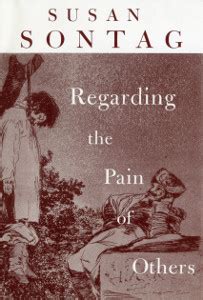
    To remember is, more and more, not to recall a story but to be able to call up a picture.
    Susand Sontag, Regarding the Pain of Others (2003)

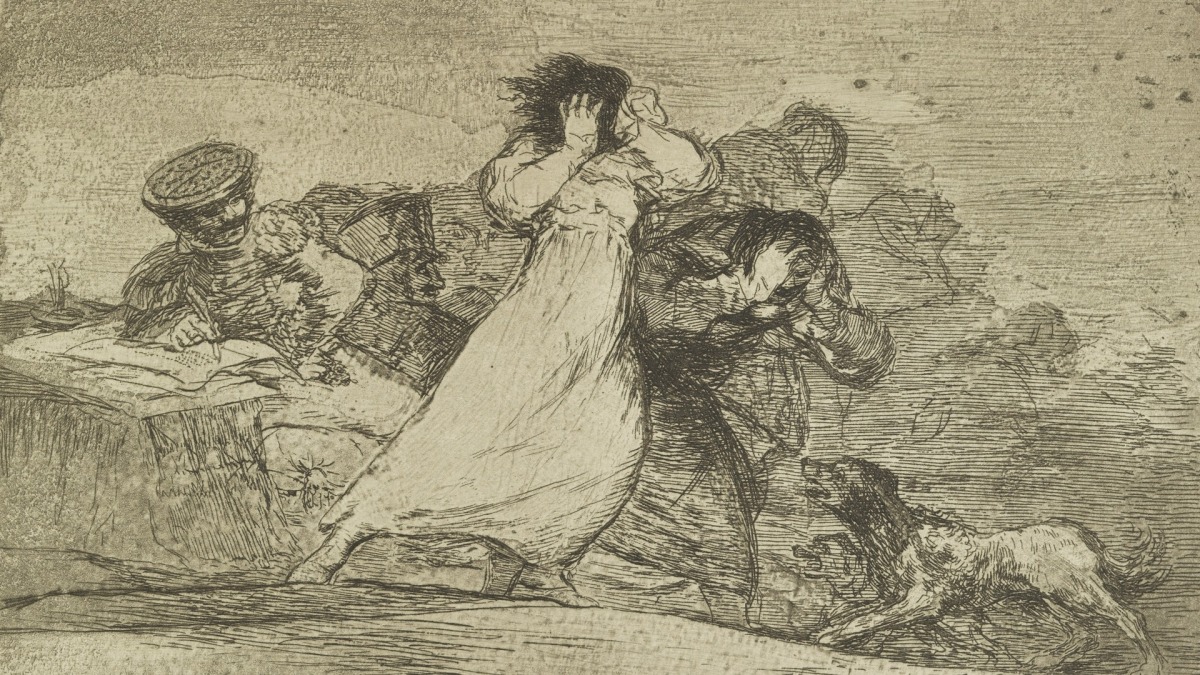
    As Susan Sontag remind us, representations of war and suffering have a long history and contain codes of production and consumption: From Goya’s print series The Disasters of War; to Fenton’s Crimean war pictures; Picasso’s Guernica; and pictures of the 9/11 terrorist attack exhibited in the exhibition ‘Here is New York’.

    Francisco Goya Disasters of War – Museum Boijmans Van Beuningen

    Nonetheless, exposure, or really, the immersion in the infosphere, where the weaponization of images and messages is unprecedented, cannot be compared to any of the previous decades of warfare.

    There is now an overwhelming revival of violence in this all-pervasive info-sphere. The message of its inevitability seems a deliberate imposition to distract us from those past and present voices with a lot more to say than a fleeting frame destined to be rapidly replaced in our compulsive doom-scrolling.

    At the same time, it devalues those frames, often taken by the rare photojournalists who are able to go where it really matters – at great risk to their lives – and actually convey what their subjects are unable to. Often because they are dead.

    The curated, over-mediatic exposure of one tragedy instead of another is not really a novelty in the way we use and experience imagery of a current context of interest, but, as well explored in a recent podcast by the Economist, we live in a radically more transparent battlefield.

    The abundance of what is called Open Source Intelligence data, of which photography is a key component – its democratization as with the latest Iranian protests – is to be welcomed, even if it is a double-edged sword.

    On the one hand, we can say that we have never had as many tools available to us in the search for truth. On the other, the concept of truth, or what is truthful, has never eluded us to such an extent as in recent times.

    In an attempt to clear the view amidst the Fog of War, we create individual, atomized fog, which follows us wherever we go.

    Little wonder that in our so-called liberal-democratic hemisphere we have no idea how to bring democratic oversight to social media platforms; even leading some of us to cheer on the idea of Elon Musk, the richest man on earth, taking control of such a decisive device for dialogue and confrontation as Twitter.

    No amount of moderation, fact-checking, algorithm-driven-filtering or surveillance, can keep pace with the endemic disinformation present in our feeds; as much as no amount of critical thinking, rational argumentation and corroboration can prevail over a propaganda machine built right inside our minds.

    In Vogue

    There’s little doubt that photography carries the popular connotation of bearing truths: ‘the image doesn’t lie.’ But we don’t need not look too hard to work out how easy it is it for a photograph, and its caption, if not to lie, to deceive. If not to manipulate, then to be as alluring as a Vogue feature can be.

    Annie Leibovitz’s photograph of Ukraine’s First Lady Olena Zelenska before a grounded Antonov plane and surrounded by fierce special forces is, in my modest opinion, a photographic masterpiece.

    Having said that, going through Rachel Donadio’s piece, and Leibovitz other pictures I recognise how instrumental this is to the current war struggles. Via the gloss of what many desire – to be a celebrity or to become a hero – the image of a presidential couple of a devasted country becomes something we aspire to.

    With each blast we feel more and more impotent at creating the conditions for dialogue to occur. Is it possible that neither Putin’s Russia and his allies, nor the West, composed of thirty NATO members supporting Ukraine is willing to take a step back from the brink?

    How are we to create the conditions, if the dominant message is one founded on our utter impotence, because it’s always the other sides fault?

    Hannah Arendt remind us in her essay “On Violence” that

    It is often been said that impotence breeds violence, and psychologically this is quite true, at least of persons possessing natural strength, moral or physical. Politically speaking, the point is that loss of power becomes a temptation to substitute violence for power […] and that violence itself results in impotence.

    If we are actually talking about the possible, and rational, use of the most powerful weapon available it is exactly because power is slipping away from the Western alliance, as much as from Putin’s regime.

    Nothing new in that as the re-allocation of power is one of the preoccupations of history itself, seldom unaccompanied by violence. But what does it mean when the existence of nuclear arsenals capable of causing our premature extinction are carelessly normalized as facts of life? Like any other storm. Like any other crisis. Like something we’ll remember. You see the path? And where it leads?

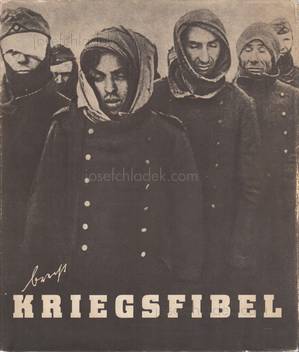
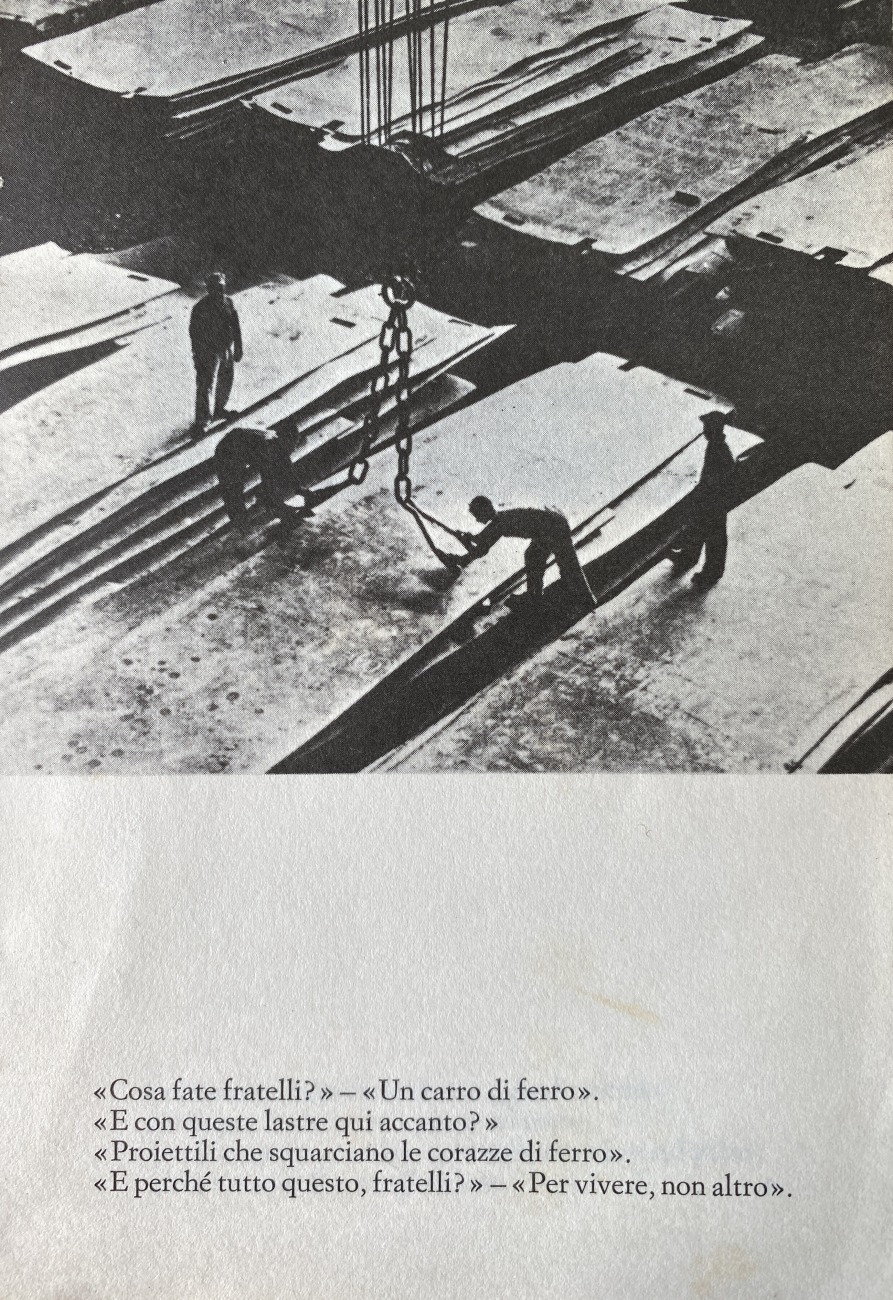
    In 1955, Bertolt Brecht published a book called Kriegsfibel or War Primer. It was a collection of photographs, cut out of newspaper and magazines, which he re-captioned with his own verses.

    Such a document now exists not only thanks to Brecht’s artistic sensibility, but also because new generations survived to look at it again.

    “What are you doing, brothers?”-“An iron tank”.
    “And with these slabs here?”-“Bullets that will pierce those Iron armors”.
    “And why all this brother?”-“To live, nothing else”. From Bertolt Brecht’s Kriegsfibel
  • Musician(s) of the Month: Rezo

    Rezo are long-time friends and musical collaborators Colm O’Connell & Rory McDaid. Colm is based in Dublin, Ireland and Rory in Malaga Spain. Borne largely out of the Covid pandemic (Rezo means “I pray” in Spanish), the pair worked entirely remotely to create their critically acclaimed debut album Travalog which was released in May 2021. They have just released their follow-up, Sew Change. Colm describes how they got here.

    It kind of amazes me that we are putting out a second album less than eighteen months after the first. I’ve been called lots of things in my life but never prolific – and let’s just say my recording output bears testament to that!

    I’ve been smitten by music for as long as I can remember. Santa Claus brought me a second-hand Ferguson 3-in-1 music centre at the age of eight and I don’t think I turned the thing off for ten years!

    Taping from the radio (Soft Cell), pilfering from my older brother’s (Doors-heavy) record collection, or scrimping and saving pocket money for the latest Now That’s What I Call Music, no family occasion or friend’s birthday was safe from my DJ-ing prowess.

    My ability as a musician never quite matched my ambition – long stints singing with a choir as a kid (the Dublin Boy Singers) and endless piano lessons through primary and secondary school brought little in the way of proficiency. But that never held me back and I don’t think there was ever a time in school or in college that I wasn’t in a band of some kind or another.

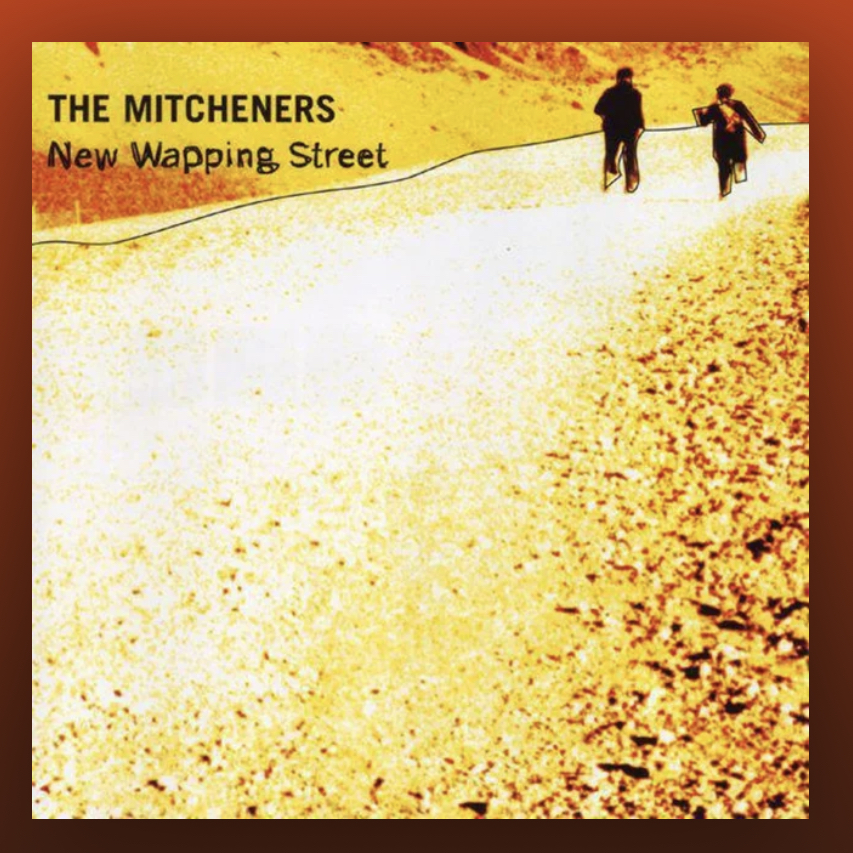
    My first gigging band was The Mitcheners, a college band really, where I first met Rory.  I played self-taught bass and Rory played guitar. We released one album in 2002, New Wapping Street, named after the Docklands street where we rehearsed in an old shipping warehouse – long since demolished for the glitzy office blocks that now populate Dublin’s Financial Quarter.

    Despite some critical acclaim, particularly for the freewheeling slacker-Americana of lead single Cars, we went our separate ways not long afterwards. To do some adult stuff ultimately – like settle down and make a living.

    Spotify link to New Wapping Street

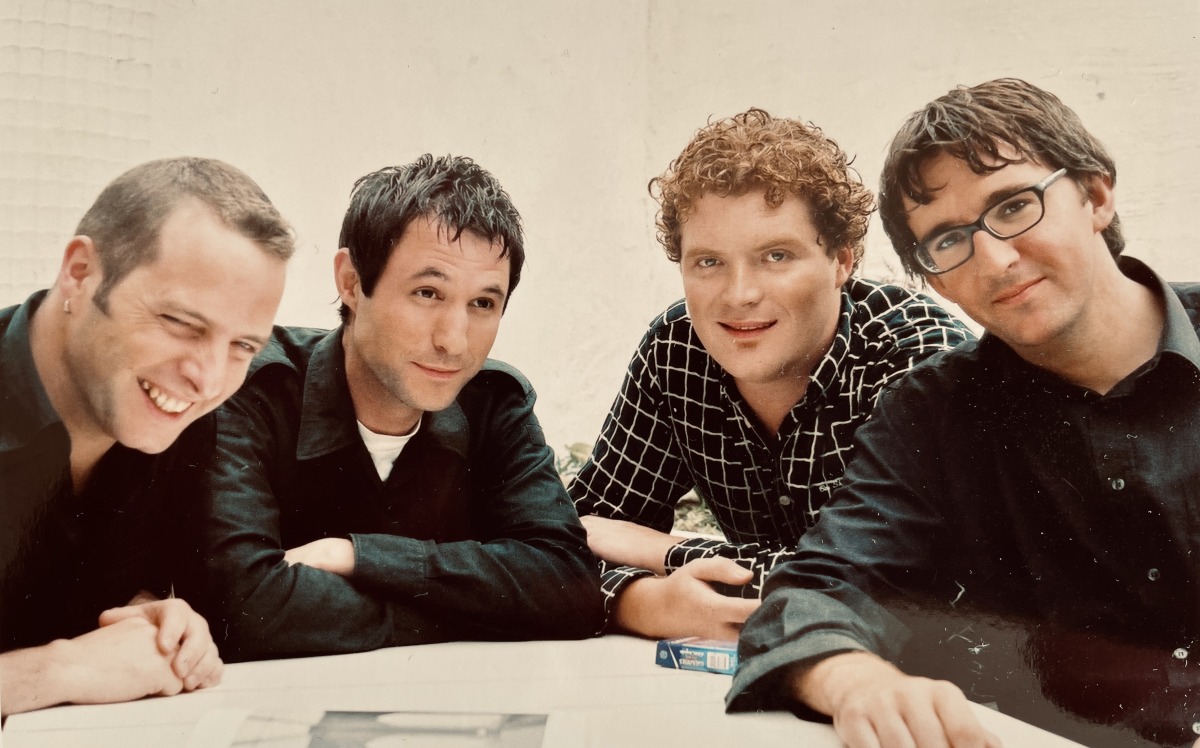
    The Mitcheners (Ronan O’Muirgheasa, Rory McDaid, Michael McCormack & Colm O’Connell).
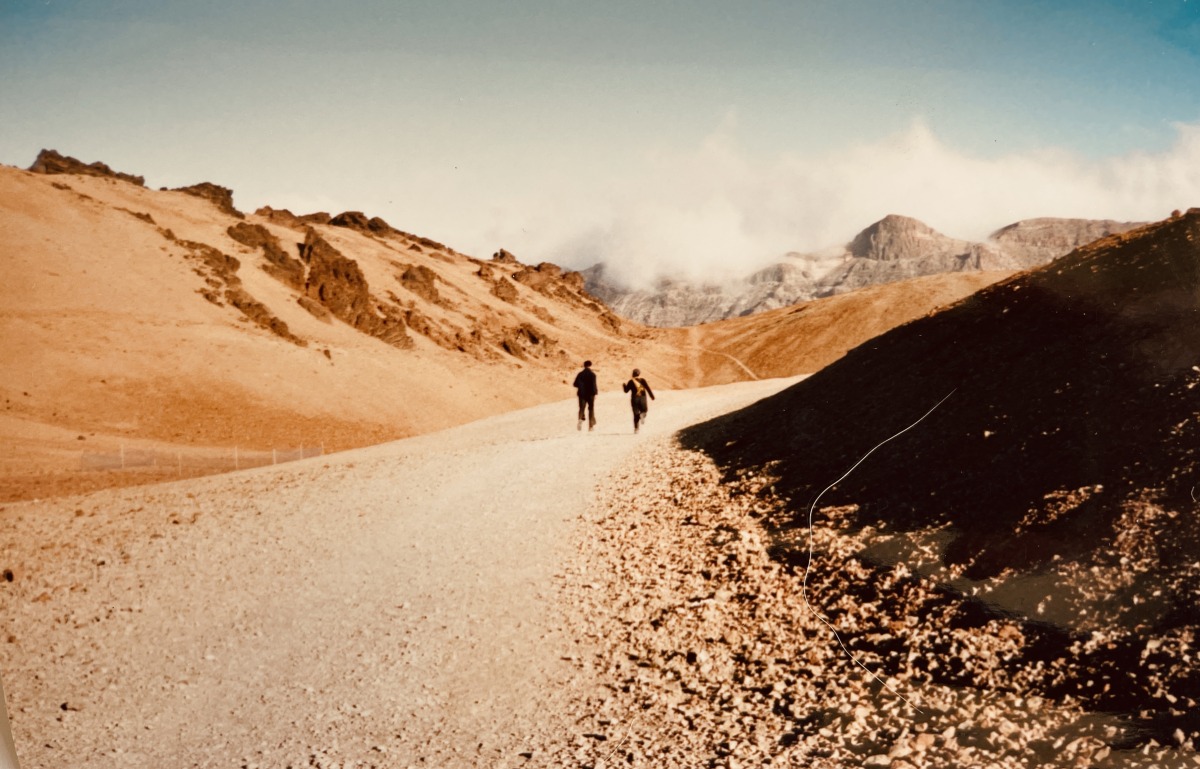
    Rory and friend Jane Farley descending Tenerife’s volcanic Mount Teide – the inspiration for the cover art for New Wapping Street.
    Cover art for New Wapping Street.

    For me, the musical hiatus ended in 2007 with an ambitious project to record a solo record in Andalusia under the moniker Noise.

    Myself and my wife Beth had long coveted the idea of living in Spain, and with two young kids and the prospect of regimented schooling in the offing, decided it was now or never.

    We secured cheap accommodation by the sea in the picturesque “pueblo blanco” of Sanlucar de Barrameda, southwest of Seville and shipped instruments and recording equipment over in advance.

    What followed was a magical immersion into the language and culture of the area – famed for its flamboyant religious processions, fino sherry (or manzanilla) and flamenco music and dance.

    With the help of local musicians as well as visiting friends from home, My Procession was recorded and released in November, 2008 and, to me, remains a document of musical adventure, cultural seduction and the emotional growth of a burgeoning family and all that goes with that.

    Spotify link to My Procession

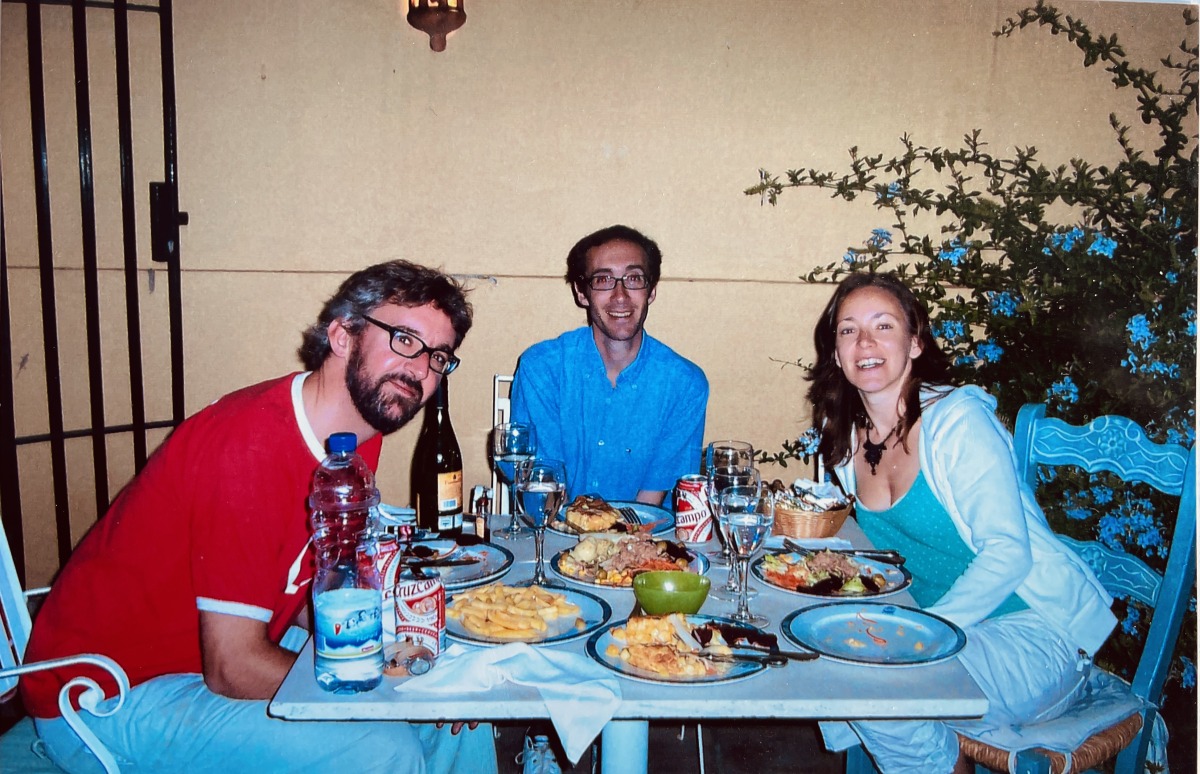
    Living the good life in Andalucia, Spain (with wife Beth and friend Erwan) while recording solo album My Procession.

    Our Mitcheners family, always in touch as mates if not bandmates, decided to reactivate our creative yearnings by joining a producer friend, David Odlum, at Black Box, his studio outside of Nantes, France in 2012.

    This was a bleak time economically in Ireland, following the banking crisis of 2008 and all that followed, and was just the antidote to what had been (and continued to be) a difficult time for all of us in precarious employment, varying levels of impecunity and/or indebtedness and a general malaise or foreboding back home.

    What followed was a joyously creative odyssey – residential living in the countryside with our mates, making music at all hours of the day and night, rekindling friendships with the best of French food and wine.

    The brief was simple – come with a song and a recipe for dinner.  And we all rose to the challenge. For the next five years, it became a staple in the annual calendar and, quite apart from making some really great music, nourished us all spiritually and mentally through the bleakest of times.

    For me, the song that most embodies the spirit of that time and place is Nothing Else, a kind of making-sense song for my daughter Rosa who had recently been born with Downs Syndrome. It sounds corny, I know, but I don’t think I’ve ever felt the peace and the connection with others that was present in the room on the day (and night and following morning!) that we recorded it. All beautifully captured on camera in the video for the tune.

    https://www.youtube.com/watch?v=nzQiFOAK4Ds

    Which takes us to the Rezo project. Rory and I had for many years been exchanging snippets of songs and musical ideas worked up on rudimentary home recording equipment. This continued with a little more frequency as the pandemic hit, both of us now having much more time at home and I guess the creative bandwidth to create.

    It’s fair to say that Rory was the instigator of this chapter – it was he who sent me the folk-country strum and whispered vocal that was to be Rezo – our first lock-down collaboration.

    Both of us using Mixcraft, we traded mixes and remixes over Dropbox – a vocal here, a bass there, some drum loops – building and refining as we went.

    We shared the finished song on YouTube around Easter of 2020 cut to a video shot in the hills above Malaga when I had visited Rory the year previously, and the reaction was amazing. So much so that we decided to do another and another until very quickly we realised we were telling the story of the pandemic, and that we needed an album to do it justice.

    Travalog – a play on the words Travel and Analog recording – was released in May 2021 to glowing reviews from Uncut Magazine and beyond, and, as such, a real vindication of the work that went into creating it, and in some senses the work that preceded it.

    Spotify link to Travalog

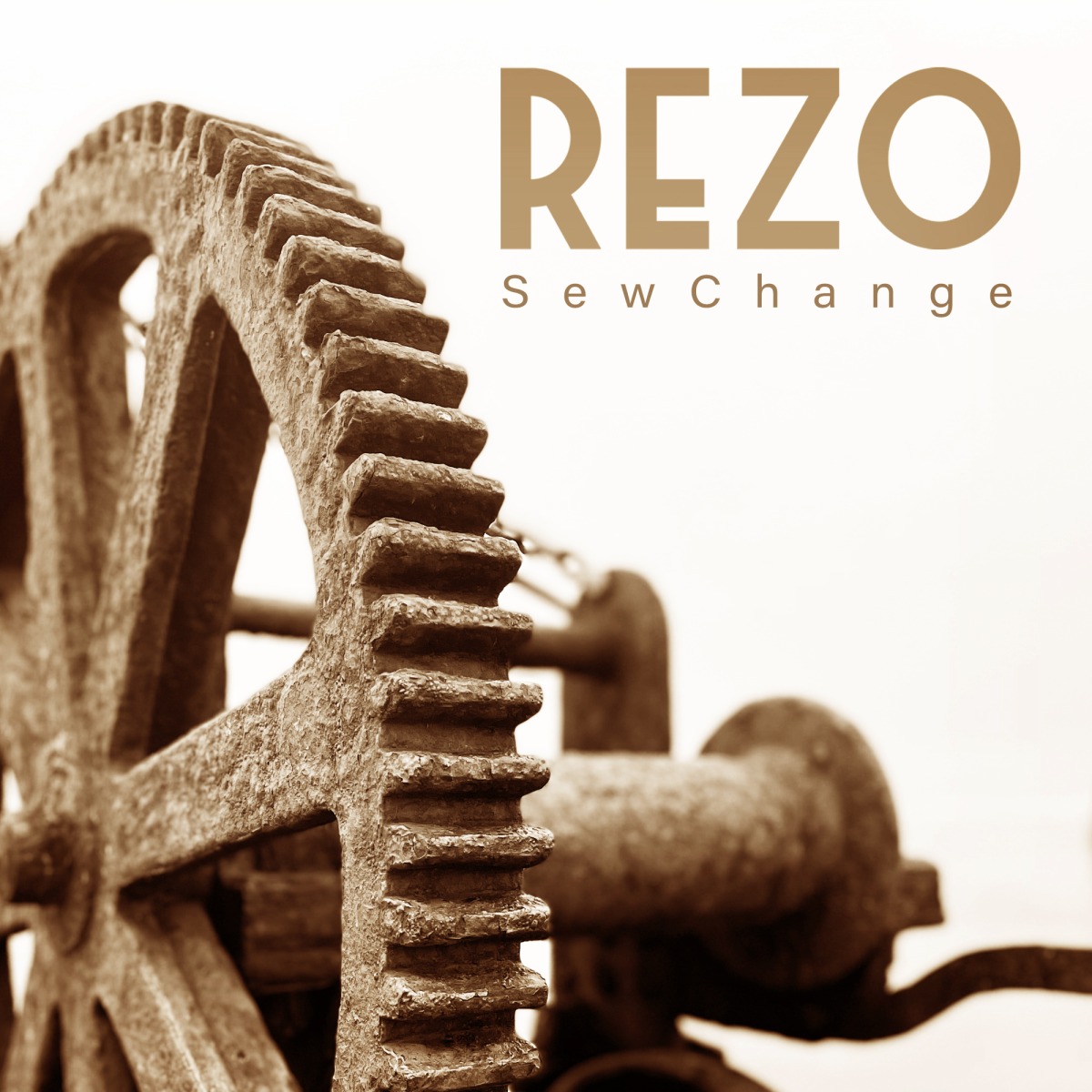
    Our follow-up, Sew Change, has just been released. Folk Radio UK called it “even more remarkable” and “proof that Rezo are still at the forefront of generating fresh and creative collages of sounds.  It shows that when you choose to colour outside the lines, the most interesting shades can sometimes appear.  #This is what great music is capable of being.

    Of course we hope for mass appeal and interest, but ultimately we are guided by our own north star, making music we ourselves would like to listen to, music we are proud of. Everything else is just gravy.

    Spotify link to Sew Change

  • Poetry: Peter O’Neill

    The Bridge
    After Meryon

    Bridge of Be-ing, all arches mirrrored upon
    The river running – Heraclitean ;
    Looming above… turret trumpeting,
    All Barnonial excess, pure 19th century.

    And aligned in sheer proximity the great monolith
    Of glass and concrete, its emphasis
    Presenting a sheer 20th century existentialism.
    Seen from the quays, it’s pure Baudelaire!

    The candelabara of Street lamps whose
    Illuminating auras burnish the passerby
    Ghosting them with their luminance, and lustre.

    Fate drops like a Stone in the water
    Troubling the stillness with ripples outward,
    And whose faces Flow forever onward into the Dark Pool.


    Heidegger’s Dasein 

    There is a philosophy born of storm to encompass Be-ing,
    And it assails in the tumult of the unending assault of the days.
    To storm troop on and over into the assailment of the heavens;
    God forbid, what is left of them those splintering fragments!

    As in the woodwinds onrushing conducive to the Heart-fires
    Still governing, just about, out from the holocaust of Thought.
    Essence at the forefront of being, attuning to the tumult
    Of the Sway, like anyone finding their ground.

    Such as the down and outs rolled up in sleeping bags
    On the public benches on the boardwalk,
    Those pupae, or premature mummies,

    Whose alarm clock would be police siren,
    Heineken clock and other hallucinatory prey,
    And whose breakfast would be coloured by the sweet aroma of Hashish!


    Gothic Landscape 

    Thought’s colour broodingly bleeds through to the skull,
    Seeped to pour and stream into the brain.
    The bridge is moored there through its anchor
    Above the liquified riverbed afflux.

    The skeletal fragments of a backdrop,
    Etched architecture of a Gothic replica.
    Its organic structure today looms out of the fog
    Which to the stoner is a mesmeric enterprise to induce Funk!

    Through the viral air of a city masked,
    Its denizens the very harbingers of their own Hell,
    Introduces the notion of Dantean comeuppance.

    Tramping along on Bachelor’s Walk,
    Crossing the widened Carlisle over Gandon’s hump,
    Only to reach Eden – the irony sits well.


    Roman Noir
    “Dead men are heavier than broken hearts.”
    Raymond Chandler
    For
    Daniel Wade

    John A. Maher, Private Detective, peered out
    The window of the fourth floor of Lafayette,
    His vantage point on par with a Gargoyle!
    The river split the city like a fissure, before him.

    It was a city divided by accent and money.
    On the northside, speech was contracted to the point
    Of almost unintelligibility, which he liked
    Never quite trusting language himself.

    While on the south, it was all accent darling,
    Barring the odd enclave. Maher moves through it all
    Monosyllabic, stony-faced and with mild amusement.

    Humans are weak creatures, so prone to error.
    And some are driven to crime; one needs a hard fist,
    Copious amounts of alcohol, and a certain penchant for metaphysics!

    Feature Image: Lafayette House and O’Connell Bridge © Peter O’Neill

  • The Big House: Censorship of the Medical Profession in Ireland

    From my experience of my patients on the front line since March 2020, I estimate that between 1% and 10% of the Irish population have suffered from a serious traumatic stress disorder, depression and suicidal ideation as a direct result of the government instigated media propaganda and lockdown, which works out at between 48 000 and 480 000 people of this country. This must be seen as a national tragedy, if not a massive crime against the Irish people, perhaps the worst since the great famine..’
    Dr Gerry Waters submission to the High Court, prior to his suspension from the medical register, April 2021 as quoted in the British Medical Journal.

    Looking out upon a ‘snot-green’ sea, I wonder how our ancestors explained the emergence of the craggy rocks and pools. Today we might smile at the idea that the ebb and flow of the tide being the work of ‘spirits’ or gods of sand and stone. Yet perhaps there is a ‘spirit’ of our time? The zeitgeist; a shared belief-system that interprets our world and is the ultimate arbiter of truth itself?  Perhaps it is this ‘spirit’ that future generations might equally recognise as a thing that is drenched in myth and fallacy?

    Lately it seems that truth, like the tide, is constantly shifting. Our mute and collective response to Covid-19 policies suggests we have indeed entered a ‘Post-Truth’ era, where truth has gone the way of video and record stores, to become almost entirely subscription based.

    I was once of the belief that science served to shape and guide public opinion. I have lately come to feel that when science does not align itself with public opinion, it is dismissed as the ramblings of a madman.

    In recent years the most basic scientific principles, even the simple notion of ‘cause and effect’ have been temporarily suspended. Presently, science is in the service of the zeitgeist. It no longer informs public opinion, instead it is used as a drunk might see a lamp post; more for support than illumination.

    Newton’s Third Law…

    During and prior to Covid, Europe and Ireland, enjoyed several years of what economists call ‘quantitative easing’. In layman’s terms this means printing lots of money in order to keep people content, or at least to keep them spending.

    The world is apparently a better place when we are all spending freely. Economists call this ‘economic growth.’ Strangely the cause and effect of this simple expedient is entirely lost on most people. The countless billions that have been pumped into European economies in recent years, now means that money is worth less, which is generally referred to as inflation.

    At home, in addition to inflation, our Covid-related crises: deaths in nursing homes, suicides, mental health, missed cancer diagnoses, along with enormous political blunders, were all effectively obscured by a bonfire of some fifty billion euro.

    The light of that conflagration was bright enough to relegate our home-grown crises into the shadows of relative obscurity.

    The idea that we are experiencing inflation as a consequence of two years of fiscal dissipation is, either roundly ignored or blamed upon other crises.  One does not hear such a strange assertion on RTÉ, which itself received a significant share of that fiscal dissipation for its ‘public service’ broadcasting.

    We hear nothing about the government’s responsibility for social destruction and economic waste. Vladimir Putin’s invasion of Ukraine must have come as a relief. Now the priority is that ‘Putin must go’, an idea seemingly oblivious to the fact that much of the world might have to go down with him.

    All in this together?

    As Minister for Health for the initial phase of our Covid crisis, Simon Harris stated notoriously: “Remember this is coronavirus Covid-19 – that means there have been 18 other coronaviruses and I don’t think they have actually successfully found a vaccine for any.” Less comically, both he and members of NPHET are still protected from any review into nursing home deaths.

    Nor are the main opposition parties, including Sinn Fein, blameless in respect of the temporary madness. I suspect that when they inevitably get hold of the piggy bank they are unlikely to call for any kind of revision to the narrative. We were ‘all in this together’ after all.

    Nonetheless, as inflation continues and war escalates, the appetite for truth will surely grow, albeit at a remove from the big glasshouse on Nutley Lane.

    When it is safe to speak and ask honest questions, and once the capacity for relating cause and effect returns, calls for a review of the past two years of policy might yet begin in earnest.

    Any colour as long as its black..

    Some truths seem to persist for longer than others. Scientific truths endure not because they are more precious than myth, but simply because they are (or they remain) largely inescapable.

    During the Covid years, scientific truths succumbed to a form of relativism. Thus, one could have any scientific ‘truth’, as long as it was consistent with the fear-frenzy and the dominant narrative that Covid was the only challenge our government ought to address.

    In contrast, unpopular truths became the subject of a formal and informal censorship. Science has become strangely ‘right wing’ in its obedience to pharmaceutical companies and its lack of tolerance for essential questions and contrary facts. Yet Karl Popper once argued; ‘the demand for scientific objectivity makes it inevitable that every scientific statement must remain tentative for ever.

    In the presence of industry-led censorship, neither science nor democracy functions properly. Yet many people still believe that the scientific discourse is free. Sadly, unscientific views on masks, lockdowns and administering genetic vaccinations to children and pregnant women are (for the moment at least) considered to accord perfectly with the scientific evidence.

    Entire national policies were based upon a flawed epidemiology of Covid. That epidemiology was described almost everywhere in the context of ‘deaths per million’, despite Covid being from its inception a disease with a cohort-specific mortality.

    Indeed, mortality itself was defined in the context of deaths ‘with’ Covid-19 as opposed to ‘from’ Covid-19. PCR testing remains the gold standard in determining a ‘Covid case’ as opposed to detecting traces of virus in an asymptomatic individual who has recently been exposed to the virus.

    In response to Covid-19, foundational principles of science and epidemiology were turned on their heads to satiate a politically profitable narrative. Such contortions are unsustainable in the long term.

    The majority desperately feared Covid, and so an aggressive cold virus – dangerous to the elderly and infirm – became a disease almost entirely inflated by a politically inflated fear.

    Science was annexed to supply an array of ‘facts’ to substantiate this fear and pursue the enormous wave of Covid ‘research’ funding from a strange marriage between Big Pharma and the State. Fearmongers were given seemingly unlimited time on TV and radio. In contrast, ‘contrarians’ were issued with legal threats and ongoing investigations.

    Latter Day Inquisition

    It is worth bearing in mind that science has generally co-existed with unscientific ideas. Thus, religion and science have jousted for centuries. However, when governments depend upon science to justify draconian laws and unprecedented spending; to question ‘the science’ becomes a direct challenge to the government itself.

    When governments depended on the Church for legitimacy, for anyone to question its religious tenets was a dangerous heresy, rooted out by Inquisition if necessary.

    In respect of the medical profession the government has a powerful tool to silence doctors, which is the Irish Medical Council (IMC). The Medical Regulator acts as ‘Grand Inquisitor’, answerable only to the Minister for Health.

    During the Covid crisis, anyone in my profession who openly criticised the Science associated with policy, was immediately condemned as a ‘conspiracy theorist’.

    These ‘misinformed medics’ represented, (and in most cases still represent) a ‘clear and present danger’ to public health. They were heretics were to be rooted out; removed from society like a cancerous prostate gland.

    The danger we pose is not towards public health, but rather towards the public’s understanding of the issue. The social operation is ongoing, and the IMC remains its enthusiastic surgeon.

    Enemies of the People

    It is not an easy thing for a doctor who spends the best part of his or her working life trying to solve people’s immediate problems, to be suddenly turned into a kind of pathology, and confined to the world of the anti-vaxxer and right-wing conspiracy theorist.

    Yet that is the fate of any doctor who voiced criticism of Covid-policy. We remain under formal investigations, heading towards the end-game of sanctions and potential strike-offs. The personal struggles behind these investigations are given no public attention.

    The necessity of belonging, to a society, to a fraternity of peers, even continuing to belong to one’s own family, all become tenuous when one is considered a pariah. For some, including myself, the isolation has led to a breakdown of sorts. My own ‘crash’ came in the form of simply running out of gas: facing up to the fact that my ‘gas’ is considered as a form of flatulence by most of my colleagues.

    I have worked hard at keeping my family together, and that has been as much as I can handle, finding solace in bee keeping and a polytunnel. For other colleagues and their families, the consequences have been far more devastating.

    In the mid-nineteenth century the Hungarian physician Ignaz Semmelweis suggested that surgeons were spreading disease by not washing their hands between operations. He was ostracised for his conspiratorial assertion. Ridiculed and vilified, he ended his days in a lunatic asylum.

    Irish communities draw their strengths from being close knit, but this can lead to a damaging conformity, as our history with the Catholic Church readily demonstrates. Neighbours and friends soon learn who the ‘anti-vax’ doctor is. A whisper at the school gate or a snub in the supermarket may not qualify as an assault, yet it can be just as hurtful to the spouse or daughter of a ‘dangerous’ doctor.

    There are, and were, many Irish doctors who publicly and privately rejected much of our conflicting and often, frankly, comical Covid policies. Too many to list here.

    However, the pressures brought to bear from without, and the enormous financial incentives for the majority of GPs, were sufficient to ensure that serious questions, or even discussion, in respect of policies, was cancelled from the outset. Some GPs have their bicycle clubs sponsored by Pfizer and were most keen not to bite the hand that feeds.

    https://twitter.com/theRiverField/status/1254488307054120960

    Whistleblower

    I occupy a rather unpleasant space as one of the first to speak out against ‘scientific’ polices that led to upwards of a thousand deaths in Irish nursing homes over a period of a few months in early 2020.

    I stood at bedside and watched my patients die, whilst a spouse or loved one sat crying in the car park or staring through the window outside. I struggled to obtain medicines, oxygen and PPE.  Many, if not most, deaths were the consequence of a policy of dumping untested hospital patients into nursing homes to make way for a Covid-19 ‘tsunami’ that ultimately manifested in empty makeshift hospitals and tic-toc videos of dancing medics.

    An enduring myth in respect of those who died in the nursing homes is that that the ‘tragedy’ occurred everywhere equally. Yet throughout Europe, during the first wave, the highest per capita death toll in care homes occurred in Ireland. We hold the dubious record of being second highest in the world after Canada.

    Those who complained about these deaths to the regulator, became the subject of investigation by the regulator, while those responsible are feted as heroes.

    In March of 2020, I attempted to ‘whistle blow’ on the unfolding catastrophe of incompetence, and deprivation within the nursing homes. I resigned my Ministerial appointment in the hope that the Medical Council might investigate what might be considered as criminal manslaughter.

    Yet they chose to ignore the dead and investigated me instead. In the media I found myself being dismissed as a ‘far right’, ‘conspiracy theorist’ and ‘anti-vaxxer’.

    Far right is funny, as I am proudly left and liberal in my thinking. Anti-vaxxer is even funnier, as I have given more vaccines than I have had hot dinners. But ‘funny’ is perhaps the wrong word because it conceals some of the hurt endured by own family.

    In one article in the Independent I was described as among those doctors giving ‘horse de-wormer’ to Covid patients.

    Propaganda is a powerful tool. The wild accusations came late in the pandemic and seemed designed to highlight the ‘ridiculous’ things going on outside of the general medical adherence to ‘official guidelines’.

    Dr Gerry Waters

    Other Doctors who went much further than I could have gone have suffered more than insult and isolation. They and their loved ones are more courageous, and deserving of a voice that will be heard as soon as science is liberated from the shackles of dominant interests.

    One such man is Dr Gerry Waters who adamantly refused to administer Covid-19 vaccinations to his non-vulnerable patients, and refused to refer patients for farcical PCR testing. From the start of the pandemic, he fully comprehended, who is, and who is not at risk from Covid-19.

    He recognised that masking and injecting children was ethically and scientifically wrong, and fully understood that the essential impartiality of science had been hijacked by politics and media. In a partial validation of Dr Waters’ fears, the Irish public have smelled a rat, and to date, less than 25% of eligible children have taken the vaccine. Our rather expensive over-stock (some 4 million doses) is presently being donated to Mexico and elsewhere. A mere €25 million to be added to the bonfire.

    Dr Waters stayed true to his conviction that, beyond protecting the elderly, Covid lockdown policy was socially destructive and itself seriously pathogenic.

    Doubtless, he was of the same view as a friend of mine, a former dean of medical studies at RCSI, who told me: ‘we would have been far better off, had we done nothing at all.’ Imagine what could have been done to improve the country with the billions that were wasted?

    Some Doctors in Ireland remain convinced that many people, old and young, could be alive today were it not for the inept response and draconian measures. Effectively, what began as a rallying cry to ‘protect the vulnerable’, culminated in policies that effectively threw them under the bus. Instructively, suicide statistics and missed diagnoses, for the Covid period have yet to be released.

    After speaking the truth as he saw it, Dr Waters was rapidly investigated, tried, and subsequently suspended from the medical register; deprived of a livelihood and compelled (it would seem) to live out the remainder of his days in ignominy.

    https://twitter.com/BillyRalph/status/1458052402372923392

    Resigning from my Practice

    I am somewhat pleased that I managed to avoid administering this genetic vaccine. I contend to this day that many or most GPs in Ireland haven’t the faintest clue as to what a genetic vaccine actually is, never mind how they work and what are the potential risks involved. Unlike Dr Waters I took the less courageous step of simply resigning my post, before vaccinations became part of public policy.

    For a time, I had been able to separate my practice of medicine from my convictions. Indeed, I have been doing that for years. I suspect most doctors operate with this contradiction most days, at least when we write prescriptions for medicines that many people don’t require.

    At the start of the pandemic in 2020 I could work within the guidelines; refer for testing; visit my nursing home; wear a silly mask in the supermarket. As long as I showed that I was formally participating in the farce, I was relatively safe from the regulator.

    However soon after resigning, they placed me under investigation, although they could find nothing to hang me with; except my opinion, contradicting NPHET and Professor Luke O’Neill, and a vocal stance in respect of the nursing home dead.

    A lot of people, including many of my former patients were unhappy to see me closing the practice. Yet, regardless of my practical adherence to policy, my position as an advocate of only vaccinating the vulnerable, became untenable.

    Every week I would hear from nurses, teachers, students and employees who were being threatened with dismissal unless they received the vaccine. I have never witnessed such a blatant assault on human rights. I shudder to this day when I recall how so many people were coerced and intimidated by the government, and by members of my profession.

    Formal resignation from the HSE was my only option, as long as I wished to continue working as a GP. Private GPs are not contractually obligated to vaccinate anyone. I could manage by doing private work for a friend, and out of hours work at an on-call centre.

    Formal Censorship

    To state that the IMC was satisfied with silencing whistle-blowers or making an example of Dr Waters would be a gross understatement. Almost every doctor in Ireland who refuted policy and did not resign from their post, was either fired or placed under investigation.

    Thus, Martin Feely a respected surgeon and clinical director of the Dublin Midlands Hospital Group, was forced to resign; Dr Pat Morrisey a principled and dedicated GP in Adare was both fired from the board of Shannon Doc, and placed under ongoing investigation by the Medical Council.

    Offending doctors received written warnings from the then President of the Council, and others were placed under investigation for failing in their new duty to: ‘promote public health guidelines.’

    One legacy of our colonial administration is a very efficient tax system, another is the efficient censorship of heretical opinions.

    After two years as a member of the IMC I am entirely convinced that it is neither fit for purpose, nor does it have a practical leg to stand on when it comes to regulation. For the most part it makes its own work as it presides over a ‘General Register’ with little or no regulation at all.

    Thus, untrained specialists are invited to come to Ireland from almost anywhere in Europe, and practice wherever and however they see fit, without specialist training; a situation that supplies regional and rural hospitals with ‘affordable’ specialists.

    The public must suck up the consequences and the IMC keeps itself busy with the inevitable mistakes and complaints. For unqualified and untrained specialists, the back door into Ireland is through the front door of the IMC.

    How to burn a heretic..

    The most difficult consequence for a doctor who is placed under investigation by the IMC is without a doubt the process of investigation itself. I recognise this as a ‘gamekeeper who has turned poacher’.  Much of my time at the IMC was spent on the Council’s Preliminary Complaints Committee, tasked with conducting the initial investigation into complaints against doctors.

    Once entangled in the Kafkaesque web of a formal inquiry, there is no escape until the investigation is completed. In many cases this takes several years. Formal letters are sent back and forth, requesting clarifications and further information, which must be formally replied to.

    One cannot leave the country to work or volunteer abroad. One cannot easily change job, as any new or prospective employers must be informed that an investigation is ongoing. One’s professional life is essentially frozen beneath a question-mark.

    Doctors who were openly critical of the Covid response, have been under investigation for over two years now. The IMC has chosen (with the notable exception of Dr Waters) to prolong these dissections for as long as possible.

    It seems that what is important for both the government and the Council is that doctors critical of policy should remain under investigation for as long as possible. Anything he or she might say or do, any comment made whilst under investigation, can readily become part of the investigation itself.

    Moreover, to refuse to engage fully with an investigation, to refuse to reply to the regular formal correspondence, is itself grounds for an immediate suspension.

    The absurd basis of the investigation into me, is that I made an appearance at a public demonstration in 2020 and ‘may not have sanitised my hands between hand-shakes.’

    To my knowledge, all of the GPs under investigation are locked into the process based on equally frivolous grounds. The pretext for investigation is unimportant, the investigations are sufficiently punitive and sufficiently censorious, hence their protracted duration.

    Heads Above the Parapet

    Perhaps the main reason for my now coming out of ‘hiding’, to tap impotently upon my keyboard, has been recent correspondence from the IMC. Some doctors have recently been informed that the investigations will now proceed to the next level of ‘formal hearings.’

    After the IMC has finished its investigation process, it can then decide either to close the case, or proceed to a full Fitness to Practice Hearing. In this instance the doctor in question must appear before the Council’s court room, and plead a case for their continued right to earn a living. As these cases relate to a doctor’s opinion rather than any clinical practice, medical insurers have declined to pay for legal representation, and the doctor must pay for his own legal counsel.

    There is a rich irony here, in that most if not all of the doctors under investigation, have themselves lodged formal complaints with the IMC in respect of registered doctors on NPHET, for ‘unscientific policies’ or financial conflicts of interest.

    For example, several Doctors have lodged complaints against the President of the Irish College of General Practitioners in respect of his openly encouraging medical discrimination against non-vaccinated patients.

    Also, at the height of the pandemic, Leo Varadkar re-registered as a doctor, helping to ‘man the phones’ and visit halting sites to test the Travelling Community. It was all a rather vulgar PR stunt lapped up by the media with a relish normally reserved for freshly baked cake.

    However, when Dr Varadkar re-registered he became open to complaints to the IMC, along with Dr Holohan, and several other key policymakers. Without exception, not one of these complaints have been investigated. Instead, it is the doctors who lodged them who find themselves under ongoing investigations.

    At a point when Leo Varadkar was found to have been leaking sensitive and lucrative contract details to a friend in General Practice, the then President of the Medical Council was busy issuing written warnings to fellow GPs that they had an ethical duty ‘promote government policy’.

    Call for Caution

    Some doctors in Ireland felt a moral and scientific obligation to understand how Covid vaccines work prior to administering them. Many advocated caution, particularly in respect of pregnancy and young healthy children.

    My friend in Wexford is one example. A respected GP, a man of science and integrity, he vaccinated all of his elderly and vulnerable patients in keeping with HSE guidelines, but when it came to pregnant women and healthy young children he called for caution.

    He reminded colleagues of their ethical obligation to ‘first do no harm’, and made no secret of his concerns and fears. In doing so he stepped outside of the public health policy, and into the crosshairs of the IMC.

    Each IMC investigation and each insulting article in the media, along with the invective and scorn that is heaped on contrarians from within the profession itself, comes at a cost. In his case, a deep personal cost.

    The most painful barbs are the ones that are cast into one’s private life. Spouses and children are no less attached to a doctor than they are attached to any husband or wife. Even with the best will in the world no doctor can keep the ramifications of an investigation from creeping into the most intimate spaces.

    Those who objected to Covid policies are treated to daily realities that are small thorns: a neighbour looking at you with scorn; former friends crossing to the other side of the street; wives or children being subjected to insult or abuse simply because they are related to the newly christened ‘right-wing’ or ‘anti-vaxx’ doctor.

    My friend in Wexford tried hard to toe the line whilst preserving his integrity and an uncompromising commitment to the welfare of his patients. He has a family and bills to pay. Full resignation from the HSE is not a financial option for all. He tried to work within the guidelines, whilst at the same time urging caution. He continued to work, for the sake of his patients, his family, to pay his mortgage, and help his daughters get through college.

    Were he on his own and without dependants he (and probably me) might have stood tall and offered the Medical Council the two fingered salute, as Gerry Waters had courageously done.

    He (like me), tried desperately for a time to justify his position to our profession, to our colleagues, with articles, references, papers from the most esteemed of Medical Journals etc. He pointed to the lack of safety data on the vaccine during pregnancy and in children. It was to no avail. His position was akin to a lamb trying to convince a pack of wolves of the virtues of vegetarianism.

    Nonetheless, he defended his position upon an internet forum exclusive to GPs; and despite my words of caution, they tore him to pieces.

    A couple of months ago, my brave friend found himself parked in a lonely spot in Wexford. When the authorities located him, he had taken enough pills to silence the wolves forever.

    After two weeks in intensive care and a return from near death, he returned home to count his blessings, recover from his ordeal, and begin a life-long process of recovery.

    Absolute Power

    As a member of the IMC I was always intrigued at the efficacy and authority that a wealthy quango can wield. There is a sense of limitless power within the inner circle – reminiscent of a well-funded Big House – with a special relationship with the Minister.

    At the IMC there is a department devoted to briefing and monitoring the press for issues that relate to the medical profession. Before each Council meeting a member of this office addresses the Council with a summary of what is happening in the media. It runs a little bit like “…and now what it says in the papers.”

    I mention this to highlight that my friend, the Wexford GP, his near death, and the harrowing experience of his family and many of his patients, was highlighted in the national papers and the local press. Having gone missing for some days, news of his disappearance was reported in the national media.

    There can be no doubt that the Medical Council was well-briefed about his ordeal. Yet within a week or two of his discharge from hospital he (and by proxy his family) received his letter from the IMC, informing him that he has been placed under formal investigation for his failure to promote Covid vaccination policy. He now faces an impending fitness to practice hearing, whereupon it will be decided if he too will be deprived of an ability to earn a living.

    In its role as Grand Inquisitor, the Medical Council has destroyed the professional lives of many doctors, before, during and after Covid.

    In my view, Irish Medicine is as rotten as any pathology it might pretend to address. This is a rot reflecting a wider rot in our political system. Perhaps it extends deep into the zeitgeist itself.

    There is much to address in Irish medicine including inter alia our current mental health crisis, polypharmacy, corruption within the medical schools, defective specialist training schemes, deaths in nursing homes, relationship between pharmaceutical companies and research institutions, tensions between the public and private health sectors, and a general lack of regulation, but none of these seem to be of any concern to the IMC.

    When the dust settled at the end of our last national crisis, the banking regulator was ultimately recognised as being guilty of catastrophic failures in respect of its duties and obligations. I suspect that if science is ever liberated from special interests, and media is free from a particular type of agenda, history will be seen to have repeated itself yet again.

    Our teetering or collapsing system of medical care in Ireland is equally the consequence of an incompetent, and morally bankrupt, regulator.  As usual, there is no one to ‘police the police’, only a fickle public opinion, and a Minister who is as much dependent on the regulator as they are answerable to him.

    As a post-colonial society, and in the ‘spirit’ of our times, we tip the cap, with the same deference as ever to the ‘Big House’.
  • Poetry: Michaela Brady

    Uaigneas (Dán do m’athair)

    Crows befriend the bread-handed boy,
    Squawk and battle for a bite.
    Metro wires hiss and wheeze,
    Spite the hills and sun-soaked fields.

    New York blinks its bloodshot stare,
    Recalling you and I were there.
    From azure deli doors,
    Whiffs of baking bread
    Flirt with slow-cook sunburn.

    But now I can be anywhere;
    Western cities groan the same.
    Riding through a London green,
    Gliding through the shadowed dawn;
    I’m convinced it’s just the same.

    But where are you when I awake?
    Where are you, voice beneath music,
    Brimming with stories owned and rented,
    Debates and schemes for woodsy walks.

    Bottled up in bucket seats, we watch
    As worlds of millions catch the day,
    Battle for statues to recall their names.
    We’re facing west to Hudson, south to Thames.

    Do you have a friend these mornings?
    Do you choose to drift and dream?
    Yes, it’s just the same.
    And never is again.

    Feature Image: Daniele Idini

  • Psychedelic Eucharist

    In October 2018, I wrote an article for the Irish Medical Times entitled: ‘Acid Test-are hallucinogens finally shaking off their taboo?’ The impetus came from reading Michael Pollan’s How to Change your Mind (New York, 2018), Michael A.Lee’s Acid Dreams The Complete Social History of LSD: the CIA, the Sixties, and Beyond (New York, 1985) and James Fadiman’s The Psychedelic Explorer’s Guide (Maine, 2011), all of which explore the history, myths and indisputable facts around what has been, over many decades, a highly contentious subject.

    I was surprised that the Irish Medical Times deigned to publish it. After all, these are schedule 1 substances, i.e. ‘dangerous substances with no medical or scientific value’ according to the Misuse of Drugs Act 1977.

    In hindsight, I consider my 2018 article naïve and anachronistic, leading the reader to believe that these substances are, for the most part, recent cultural adjuncts.

    Psychedelic Therapy – “Love is the Glue”

    The Immortality Key

    A recent award-winning book by Brian C. Murareska, The Immortality Key The Secret History of the Religion with No Name (New York, 2020) on the use of ‘mind-manifesting’ (psychedelics) or ‘god-inspiring’ (entheogens) and their use in human cultures for millennia prompts this revisionist take.

    The book explores such practices as the use of kykeon, a plant-infused wine used during the infamous, but little understood, Eleusinian Mysteries; the Vedic traditions of India in which a similar psychedelic substance called soma was consumed; and the cultures of south and central America where ayahuasca, peyote or psilocybin are still used in their religious ceremonies.

    The human desire to ‘turn on, tune in and drop out’ long predates Harvard Universities notorious Professor Timothy O’Leary, once labelled ‘America’s most dangerous man’. Although, this latter titled was supposedly bestowed on him by a President who vowed to bomb an agrarian society ‘back to the stone age’ in the name of democracy.

    What can explain a near universal desire, traversing cultures and millennia, for psychedelics? And why has its practice been vilified, persecuted and legislated against, pushing it into the underworld of crime, rather than exalting and exhibiting it as a means to transcendence and spiritual enlightenment?

    Drug use in the 1960s was portrayed by the media – with help from the CIA – as posing a threat to respectable society – middle class, consumerist values hypocritically portrayed as love of family, country and God. What it really represented was a genuine threat to production of drones for the corporate, industrial and military establishments.

    Evidence of the health benefits of these substances, if used in controlled and supervised environments, were clear, even in the 1960s. By then a thousand research papers were in print demonstrating dramatic therapeutic effects for conditions such as chronic depression, alcohol dependence and anxiety in cancer patients.

    Canadian psychiatrist Humphry Osmond obtained abstinence in 45% of his alcohol dependent patients at one year post treatment. There are no products today in the field of addiction medicine that can produce such impressive results.

    Then all studies were stopped, the substances were deemed dangerous and subsequently made illegal, even in research settings; this despite their non-addictive nature. In fact, repeated dosing has less and less of an effect.

    Yet these are drugs with an excellent safety profile, as it is almost impossible to overdose. They have clear health benefits and provide spiritual insights. Nonetheless, for over thirty years no further research was allowed to be carried out.

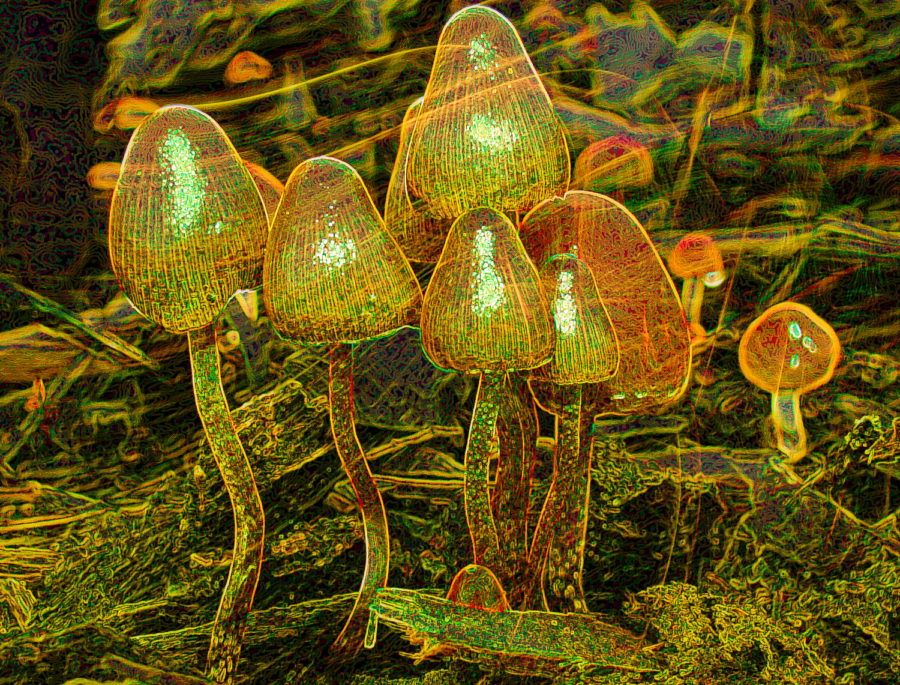
    Finally, in early 2000 Professor Roland Griffiths at St. John’s Hopkins University, Baltimore carried out the first of the latest wave of research using psilocybin (the active ingredient in several species of fungi, P.semilanceata, or Liberty cap mushrooms – that can be found here in Ireland).

    Now Imperial College, London and even Tallaght University Hospital have carried out research using these substances.

    What We Learn On Psychedelics

    Caveats

    Before going any further in extolling the virtues of psychoactive plants from historical, cultural or medicinal standpoints it is worth highlighting serious caveats.

    Psychoactive substances, and that includes alcohol, should not be used by those with immature brains, i.e. those under twenty-five years-of-age. Before this age the prefrontal cortex – that bit of the brain that makes you do the right thing when the right thing is the hard thing to do, according to Robert Sapolsky’s Behave: the Biology of Humans at Our Best and Worst (New York, 2017) – is not fully developed.

    Clearly, as witnessed in our world at large, this maturation process is not inevitable. Two essential conditions for the safe use of these substances are usually absent when young people ‘drop a tab’ washed down with a bottle of vodka on an all-night bender, with equally immature and vulnerable friends.

    These are the set (the mindset) and the setting (an appropriately supervised environment). These substances were never meant to be abused in this way. Indeed, there are so many things in our society that were never meant to be abused – love, trust, community, friendship etc.

    If we broaden out the list of psychoactives, beyond the schedule 1 substances, we do encounter substances as harmless as nutmeg, nausea-inducing fly agaric (the iconic red and white fungus of children’s storybooks), the lethal mandrake (of witch folklore) and Deadly Nightshade. Apart from shamans in Lapland drinking fly agaric laced reindeer urine, who even knows about these substances?

    So why the paternalistic need to protect society? To my mind it is part of a sinister power play between the perceived powers of good, i.e. Church and State and evil i.e. the ungovernable, the anarchistic psychonaut.

    This is of course a nonsense, fairytale for adult consumption. Those who have used and currently use psychadelics responsibly are looking for shortcuts to enlightenment by transcending the world of the everyday perceived consciousness, in order to experience the numinous.

    Anarchy

    Such aspirations are equated with anarchic ideas questioning the need for the boundaries of laws and earthly rules if one experiences transcendence.

    The question may be asked: what need is there to fritter one’s life away in meaningless work to earn valueless money to spend on vacuous consumer goods if one can experience Nirvana?

    And what need would there be for the religious authorities of the world, if one achieves direct access to the heavenly realm whilst still on earth, or if one can die before one dies?

    These very concepts bring us to the main theme of Brian C. Muraresku’s The Immortality Key, exploring various ancient traditions, over three thousand years, in which psychedelic substances were used to achieve these transcendent states.

    These were traditions and practices guided and controlled mainly by women, and they continued up until their brutal eradication by the many Inquisitions of the Catholic Church.

    These psychedelic ceremonies were disruptive because of their use of drugs by women to bypass manmade barriers to transcendence. Muraresku’s research supports The Pagan Continuity Hypothesis that implies that much of Christian and indeed Western culture has borrowed more than it wants to admit from ancient ‘barbarian’ cultures.

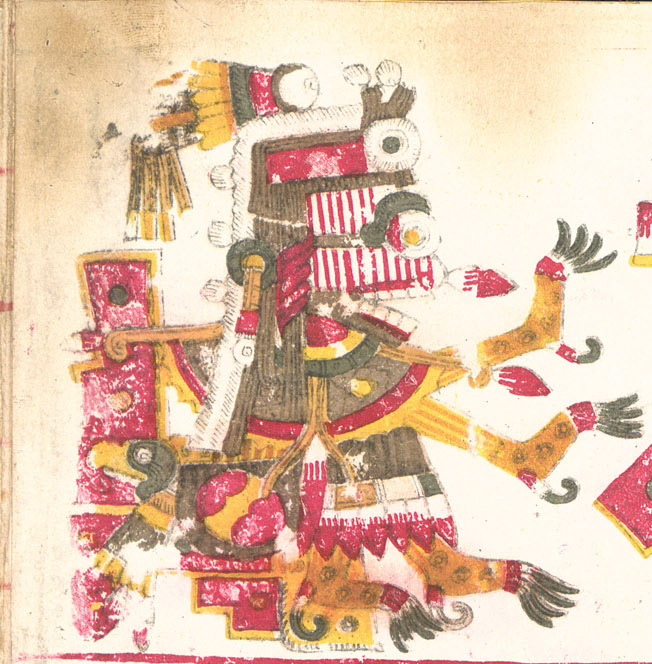
    Depiction of the Aztec goddess Itzpapalotl from the Codex Borgia.

    Role of Women

    The role of women as holders of sacred knowledge was systematically undermined from the eleventh to the seventeenth centuries, especially by the Papacy during the many Inquisitions, and also by the early Protestant churches. Tens of thousands of women were tortured and murdered because of male fears of their sacred, potentially subversive knowledge, and not because they were ‘witches’, wreaking havoc on innocent communities.

    The Church has always feared woman. Mary Magdalen should have become the first Pope ahead of Peter, and spread the word of Jesus, which required no institutions to disseminate, and no male power to dominate.

    Fyodor Dostoyevsky wrote lucidly about the Catholic Church’s dilemma in The Brothers Karamazov. ‘The Grand Inquisitor’ a Jesuit, clearly explains to the returning Jesus why his potentially disruptive presence is unwelcome – and that his religion of personal responsibility on the path to enlightenment could negate the role of all-powerful Church.

    Today our society reflects this loss of spiritual responsibility. Those practising formal religions may read the holy books but generally take them too literally, and often live lives devoid of profound contemplation.

    Many of the flock consume religion like they consume capitalist goods, failing to question the meaning of the texts as they fail to explore the source of their cheap consumer goods surrounding them.

    Similarly, we consume products that are allegedly food, but don’t nourish us; information from media companies that doesn’t inform us; and pharmaceutical products that promise health, but perpetuate illness. All are profiting from a sick society.

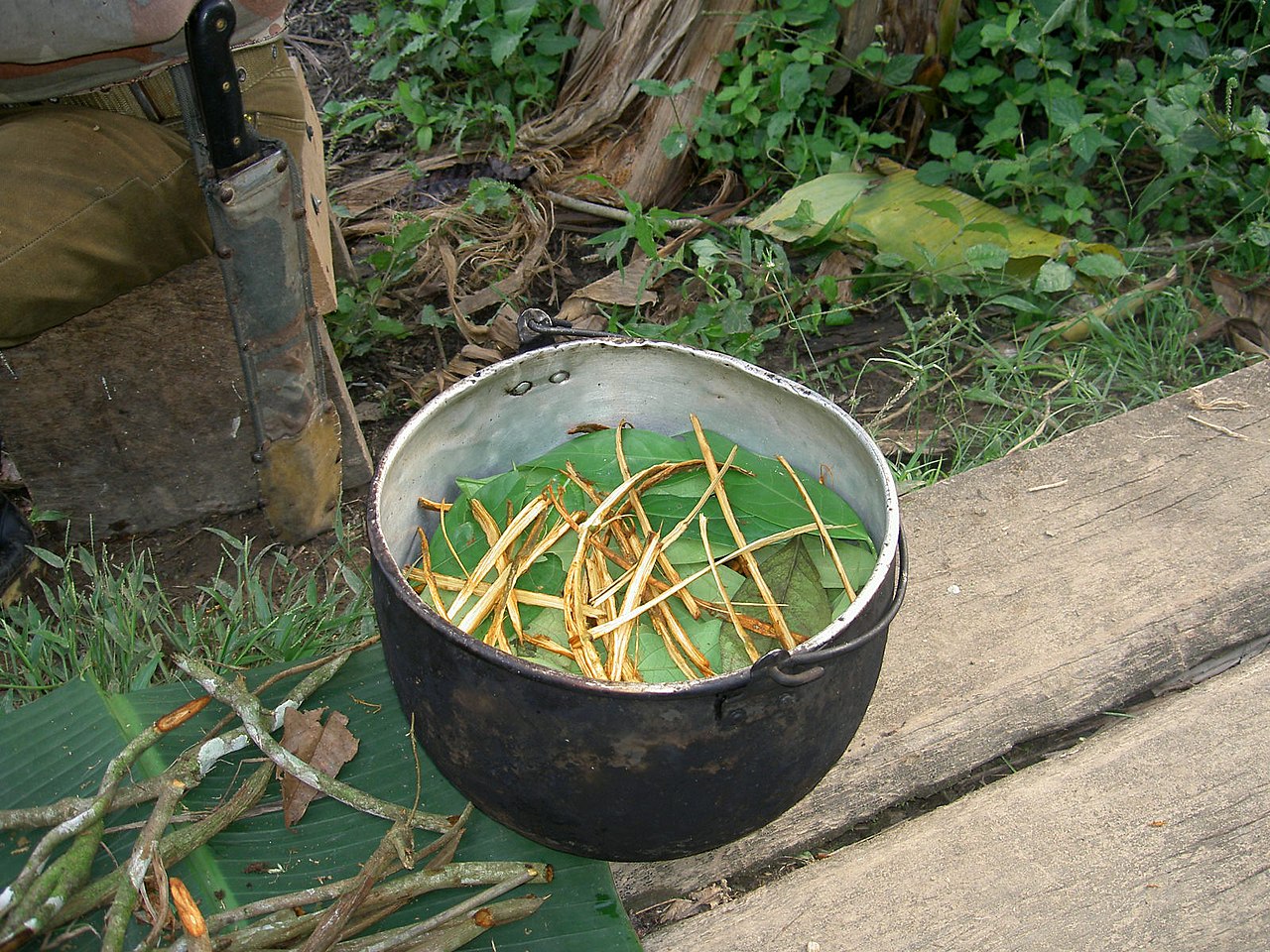
    Preparation of Ayahuasca, Province of Pastaza, Ecuador.

    Full Circle

    What effect would widespread use of psychadelics achieve today? Perhaps a reduction in the level of fear in society; and less social atomisation as we move away from an increasingly locked-in and isolated world of gadgets and home deliveries.

    It could perhaps lead to greater rejection of hierarchical authority, one often based on arbitrary rules and which offer only self-serving explanations about why society should be moulded in one way as opposed to another, more intuitive, way. Psychedelics might even lead to greater self-reliance, and a more human-centred form of socialism.

    The wisdom our ancestors knew, and cherished, which, for the most part, we have arrogantly disregarded in favour of materialist theories in science, offers great insights.

    Perhaps we are coming full circle, as Bernardo Kastrup discusses in his series of essays Science Ideated: the fall of matter and the contours of the next mainstream scientific worldview (New York, 2021).

    Traditionally, science has mistakenly assumed mind and consciousness to be epiphenomena of materialism. However, having reached an impasse, especially in the science of consciousness, we require a revaluation, and perhaps greater humility towards the wisdom of Hinduism, Buddhism and the Sufi tradition of Islam, as we consider what these have to say about mind and consciousness.

    The awakening of an interest in psychedelics, both in academia and in society at large, perhaps reflects an intuitive desire to know more than science can explain, and learn more than fundamentalist religious teachings can reveal, instead validating a felt experience at a deep spiritual level.

  • Poetry: Nicholas Battey

    Last Breath of Leaves

    Cup a pear, hear it abscise,
    number the days until ripe;
    the river chuckles with swollen pride –
    back to a ditch by six,
    drained away to the scaly, selfish sea.

    At dawn there’s steam across the water,
    a cloud of egrets scuds over;
    old and waiting, mud for water,
    leaves for a last breath
    of wind, tremor, helical free fall –

    after life, lope and leap
    to nattering heaps; then left
    to turn to mull, down horizons sift,
    forgotten shades of ochre,
    lignin nets over rheumy, russet stones.

    Fish the shilletts from their dark homes
    in the deep, brown ocean;
    grateful, cosseting crumbs swirl in,
    close and ready for roots:
    succouring limbs of bulb, corm, meristem.

    Here my mulling days are numbered,
    pride in appearance doomed;
    hares teem across the water,
    while clouds of regrets scud over;
    for I am old and loping after life.

  • Classic Paddies

    The music was the code. It was the transliteration of the style. It was not giving a bollocks in a thoroughly musical manner. It was fuck this and fuck that and frankly fuck you. A rockety life came with the territory. You didn’t have to be Irish. Their England had been influenced by that Ireland of the 50’s. Behan, Kavanagh, O’Brien. Roaring Boys all. Drunken, rackety, genius bores. And Shane could be as drunk and boring and rackety or he could write as beautifully as any of them.
    Bob Geldof, Waiting for Herb, 2004.

    Night Crossing

    As the ferry lurched out of Dublin port we reminisced on crossings of yore. In response to regretful talk about the withdrawal of the service out of Dun Laoghaire – which at least had a rail connection – Shane MacGowan recalled, with typical belligerence, “Dun Laoghaire was there before a fucking DART line,” before hissing reassuring laughter.

    He then spoke wistfully of his grandfather telling him about how ‘lower order’ passengers would have to share decks with the livestock on board. It seemed a very different world to a Stena Lounge bereft of passengers on this night crossing, but at least the wine was complimentary, and Tina didn’t mind a few messers on board.

    Indeed, the aesthetic, or anti-aesthetic, of the Pogues was a throwback to a bygone Ireland – and Irish – often scorned by ‘respectable’ people. In particular, those compelled by economic circumstances to take up jobs ‘across the water’.

    Shane MacGowan was born in Tunbridge Wells in Kent in 1957 to Irish immigrant parents, but spent his early youth living with maternal aunts and uncles in Puckane, Co. Tipperary. Formative teenage years were spent in 1970s London.

    For the emerging poet, rural Ireland – for all its faults – seemed a fairy realm, enlivened by song and alcoholic excess, compared to the industrial decay and entrenched class system of England at that time. Having dabbled in punk with The Nipple Erectors he returned to his musical roots, forming the Pogues (from the Irish phrase póg mo thóin, meaning ‘kiss my arse’) in 1982.

    He previously described the ‘Irish look’ the band self-consciously adopted:

    The suits, black suits with white shirts which we wore, were Brendan Behan uniform and that’s why we chose them, not to look smart, but to look as if we could have come from any decade … We could have looked like people from the fifties, sixties, or seventies … we just looked like classic Paddies.[i]

    Extended Fairground

    As the night wore on, in particularly good cheer, Shane began humming a medley, beginning with the ‘Rocky Road to Dublin’, “When off Holyhead wished meself was dead / Or better far instead”, culminating in a vision of Irish inclusivity – at least before the men in the mohair suits moved in – at the ‘Galway Races’:

    There were half a million people there
    Of all denominations
    The Catholic, the Protestant, the Jew,
    The Presbyterian
    Yet not animosity
    No matter what the persuasion
    But failte hospitality
    Inducing fresh acquaintance
    With me wack fol do fol
    The diddle idle day

    This evocation of carnival wherein social hierarchies disappear in joyful Bacchanalia helps understand what Shane MacGowan engendered with the Pogues during the 1980s: a two-fingered reaction to Thatcherism that helped define our Irish identity.

    As the cultural critic Joe Cleary put it in Outrageous Fortune: Capital and Culture in Modern Ireland (Field Day, 2007) in the music of the Pogues: ‘The [Irish] nation is imagined as a kind of extended fairground.’[ii]

    He adds, however, that with the Pogues: ‘this version of carnival is never allowed to become cosily celebratory because it is always shot through with sentiments of anger and aggression, sometimes strident, sometimes more muted.’[iii]

    Hooliganism

    The word hooligan derives from the surname of a fictional rowdy Irish family in a music-hall song from the 1890s. Later, applied to the antics of English football fans, steeped in post-imperial hubris, it took on angry connotations.

    But the Pogues were all about the hoolie – a big noisy party – and unashamedly “Up the RA”, when it was still risqué to be so. Their song ‘Streets of Sorrow / Birmingham Six ‘refers to the plight of the Birmingham Six and Guilford Four and was censored by the BBC.

    Their old school, rumbunctious hooliganism, fused elements of punk and traditional Irish music with the incantations that arouse from Shane MacGowan’s errant soul.

    As Cleary puts it the Pogues, ‘merged the ‘modernist’- and ‘avant-garde’-coded aesthetics of punk with the ‘romantically’-coded idioms of the Irish musical forms.’

    He argues:

    For the Pogues to yoke together … the avant-garde future-orientated metropolitan aesthetics of punk, with the retro aesthetics of céilí and the broadly political edginess of the pub-ballad scene was an inspired act not only of musical synthesis but of semantic sabotage as well.[iv]

    Alongside self-destructive excess there was something serious going on, ‘saving folk from the folkies’ as Elvis Costello put it[v], while asserting a brash, yet accommodating Irish identity – after all, many of the band were not even Irish – notwithstanding an unashamed approval of violent Republicanism, based on a long historical memory of famine, torture and resistance.

    The success of the Pogues and Shane MacGowan – who transcended traditional Irish music to become a rockstar celebrity – may go some way to explaining an enduring, relative openness among Irish people to new cultural encounters – even multiculturalism – at least by comparison with erstwhile colonisers.

    Like it or not, any witness to an average Saturday night in Dublin can testify to the presence of a carnival of sexual deviancy, donnybrooks and nonsensical pranks. This has become a generally inclusive ritual for Irish self-expression.

    In The Dawn of Everything: A New History of Humanity (London, 2021), David Graeber and David Wengrow suggest ‘[t]he really powerful ritual moments are those of collective chaos, effervescence, liminality or creative play, out of which new social forms can come into the world.’[vi] That just about sums up the Pogues’ contribution to Irish culture.

    After the Pogues, along with their precursors and followers, we would wear a distinctively wild Irishness as a badge of honour, invite everyone to the party, then regale each other with far-fetched stories of nights that should have ended sooner, at least before the cops turned up, when the fun really started.

    The Big Red Fun Bus

    With the Irish Sea bathed in pale moonlight on a blissfully calm night, conversation turned to Westerns. With a glint in his eye Shane reeled off his favourites – ‘The Life and Times of Judge Roy Beans’ (1972), ‘The Man Who Shot Liberty Valance’ (1962), “with Jimmy Stewart and John Wayne competing for the same girl”, and ‘The Searchers’ (1956).

    But fittingly for a bard whose songs are steeped in tales of underdogs – like the navigators who ‘died in their hundreds with no sign to mark where / Save the brass in the pocket of the entrepreneur’ – his favourite was the more recent ‘Geronimo: An American Legend’ (1993), in which, unusually, a Native American victim is the hero.

    By now the rest of our posse seemed to be asleep – it must have been passed 4am – but Shane’s mind was racing in this liminal phase. The high life of London beckoned and the rockstar in him was growing giddy.

    We had another Brendan to thank for the drive to London. He and Shane’s full-time carer Elizabeth provide vital assistance and crucially, a sense of humour, in support of Victoria, Shane’s loving wife.

    Once installed in the hotel room there was a chance for more songs, including a few Percy French ditties. Then an overlooked classic from his underrated period with the Popes: a homage to the nineteenth century poet James Clarence Mangan: ‘The Snake with Eyes of Garnett.’

    It begins fittingly:

    Last night as I lay dreaming
    My way across the sea
    James Mangan brought me comfort
    With laudnum and poitin

    The vision moves to the scene of a public execution being held on Stephen’s Green in 1819, before another crossing

    If you miss me on the harbour
    For the boat, it leaves at three
    Take this snake with eyes of garnet
    My mother gave to me!

    The snake is a symbol of renewal, and for Shane perhaps the republican ideal. It also reveals his engagement with the literary canon. After all, he did once earn a scholarship to the exclusive Westminster public school.

    He chimed in:

    This snake cannot be captured
    This snake cannot be tied
    This snake cannot be tortured, or
    Hung or crucified

    It came down through the ages
    It belongs to you and me
    So pass it on and pass it on
    ‘Till all mankind is free

    Contrary to the association of the snake with deceit and temptation – a phallic devil – according to Chevalier and Gheerbant’s Dictionary of Symbols, the serpent is ‘a continuation of the infinite materialization which is none other than primordial formlessness, the storehouse of latency which underlies the manifest world.’

    It is an archetype representing ‘an “Old God”, the first god to be found at the start of all cosmogenesis, before religions of the spirit dethroned him.’[vii]

    This becomes the moving spirit of another vagabond poet, James Clarence Mangan who as a Young Irelander renews the spirt of the nation, suffers and dies, apparently of malnutrition at the height of a cholera epidemic, but re-appears in spectral form.

    He swung, his face went purple
    A roar came from the crowd
    But Mangan laughed and pushed me
    And we got back on the cloud
    He dropped me off in London
    Back in this dying land
    But my eyes were filled with wonder
    At the ring still in my hand

    ‘this dying land’

    Arriving in central London I am struck by the imperial grandeur. The scale and ambition of the architecture makes Dublin seem like a provincial town, but there’s a cold reserve that used to send a shiver down my spine when I lived here.

    So many buildings appear uninhabited; unimaginably grand hotels seem more like fortresses with concierge-sentries posted outside to keep the hoi poloi at bay; uttering “can I help you sir,” with a snarl. We’d have to make our own fun.

    The launch of Shane MacGowans’s art exhibition ‘The Eternal Buzz and the Crock of Gold’ took place at the boutique Andipa gallery in Knightsbridge, a stone’s throw from Harrods, where his art resides alongside that of Banksy’s.

    Walking in I pass Bob Geldof, an unlikely presence, given his aversion to Irish nationalism, but he has credited Shane and the Pogues with awakening an interest in traditional Irish musical forms that he had previously disparaged.

    In the relatively narrow confines of the gallery, with the king sitting contentedly on his throne, a carnival atmosphere asserts itself. He had escaped from all this, but that night he was enjoying a return to the crazy celebrity madness, which in England is built on a bedrock of aristocracy.

    The champagne flowed, as minor celebrities converged – “he’s Liam Gallagher’s brother you know” – when the ocean parted before the eternal beauty of Kate Moss. A face to launch a thousand camera phones, and sell a few paintings.

    Then on to Soho, where the weather at least remained dry. The police were even called. It took seven of them to take old Tom down, or so they say: never let the truth get in the way of a good yearn…

    Critics

    Acording to Joe Cleary:

    Ever since the Great Famine and the Devotional Revolution, and especially when they came to power after the establishment of the Free State, the traditionalists had been concerned to make Irish culture more refined and respectable by filtering out, as ‘inauthentic’ or ‘degraded’, all its more licentious and anarchic or uncouth elements – those very elements that were to make such a whoopingly triumphant return of the repressed in the Pogues’ music.[viii]

    In many respects, the unapologetic Shane MacGowan remains an embarrassment to the Official Ireland narrative, now principally articulated in the Irish Times, which inculcates a new breed of conformity that brooks no divergence.

    Previously, Irish Times journalist Joe Breen suggested that his distaste for the Pogues resembled the attitude of contemporary African-Americans who preferred contemporary music to a musical tradition obsessed with the miseries of slavery and Jim Crow.

    Breen’s reference to American culture betrays the apparent objective of many Irish neoliberal cheerleaders to establish a deracinated Americana in Hibernia, a tax haven for multinationals where the atmosphere of the carnival is strictly commodified. Here, Irish history is reduced to the struggle of modernisers against religious authority – with nothing in between – and where celebration of the national struggle is associated with Populism, or even an exclusive ‘white’ nationalism.

    The art of Shane MacGowan and the Pogues offer a rowdy alternative to a creeping homogenisation. He endures, seemingly just to spite them, and even in the dying land he can still revive the spirit of the carnival.

    [i] Clarke and MacGowan, A Drink with Shane MacGowan, (London, 2001), p.168

    [ii] Cleary, p.283

    [iii] Cleary, p.277

    [iv] Cleary, p.271

    [v] Nuala O’Connor, Bringing it All Back Home: The Influence of Irish Music at Home and Overseas (Dublin, 2001), p.159.

    [vi] Greaber and Wengrow, p.54

    [vii] Jean Chevalier and Alain Gheerbrant, Dictionary of Symbols, trans. John Buchanan, (London, 1996), p.845

    [viii] Cleary, p.290

  • The Candidates Explain

    The Candidate Explains
    after Charlotte Nichols MP

    I didn’t know the meaning
    of “incursion” or “dealt with”
    the negative connotation until this morning.
    Didn’t realise the possible definitions
    of “parasite”, “rubbish dump”, “bad human material”.
    Didn’t know until this morning the connotations
    of “dismantle”, “pikey”, “assimilate”.
    The negative meanings of “scum”,
    “child thief”, “branding iron”.
    Didn’t know “dirty”, “asocial”, “expel”.
    The connotations of “a people involved
    in the manufacture of human freaks.”
    Didn’t know the meaning until now
    of “Rahoonery”, “pollutant”, “Pharajimos”.
    The problematic side of those over the age of five
    being taken away and civilised.
    Didn’t know the meaning of “The Devouring”,
    “The Cutting Up”, or “behind concrete walls”.
    The negative connotation of “whoever kills one,
    shall be guilty of nothing.”
    Didn’t know the meaning of “deport”
    until I saw it done this morning,
    clean as a Police Superintendent’s signature
    or a Councillor’s campaign for re-election.

    Feature Image: Constantino Idini


  • Niall McDevitt (1967-2022)

    The London-based Irish Poet, Art-Activist, Musician and Psychogeographer, Niall McDeviit died at his home in North Kensington, London on Thursday September 29th 2022 aged fifty-five, after a short battle with cancer.

    Born in Limerick in February 1967, McDevitt moved to Dublin as a child. There he was educated at the Jesuit-run Belvedere College secondary school, and read English literature at University College Dublin. Both institutions were also attended by James Joyce, of whom McDevitt was a lifelong devotee.

    Joyce inspired McDevitt to create his popular London Bloomsday Literary Walk, which over the years attracted hundreds of followers to West London.

    Niall was a deep thinker, gifted scholar, poet, actor, writer and art-activist. To some he became almost an urban shaman.

    As a young poet, not long in London, he became the ‘Resident Poet Laureate’ at the Irish Cultural Centre in Hammersmith from 1995 until 2009. There he enthralled audiences with unforgettable live poetry performances.

    Niall was one of the most distinguished poets on London’s avant-garde literary scene. Author of three poetry collections, b/w ((Waterloo Press, 2010), Porterloo (International Times, 2013), and Firing Slits – Jerusalem Colportage (New River Press, 2016).

    McDevitt’s poetry was by turns, solemn and sage, and savagely witty with melancholic romance. He was lauded by fellow poets, including Iain Sinclair, Patti Smith, John Cooper Clark, and Grey Gowrie.

    James Byrne described McDevitt as, ‘arguably the most significant London-Irish poet since W.B. Yeats’.

    Jeremy Reed, an older contemporary who influenced McDevitt’s early style, described him as ‘a luminous custodian of the great poetic mysteries.’

    Niall was also one of London’s most admired and lauded ‘psychgeographers’, leading literary walks across London, with a particular emphasis on the revolutionary poets who called London home, including Arthur Rimbaud, Geoffrey Chaucer and William Shakespeare, as well as Irish writers such as James Joyce, Oscar Wilde and W.B Yeats.

    He recently led a five-part London Literary Walk on his fellow Poet and Visionary, William Blake. Niall himself was regarded as one of the foremost Blakeans of his generation.

    Over lockdown Dublin filmmaker Sé Merry Doyle collaborated closely with Niall to make the films ‘The Battle Of Blythe Road’, which won won the ‘Special Award’ at ‘The Portobello Film Festival’ (2021) is about W.B. Yeats time practising magic at in an ‘Isis Temple’ in West London.

    Another ‘James Joyce – Reluctant Groom’ is about Joyce’s year living in Kensington.

    It’s fitting that Niall’s last collaboration with Sé Merry Doyle was five films, captures Niall leading five walks on the life of William Blake.

    It was an emotional moment, just a few weeks ago, when Niall spoke at the Premiere Screening of the first of those five films, ‘BlakeLand – William Blake and Thomas Paine,’ at the Portobello Film Festival 2022, which was to be his final public appearance.

    As an actor and musician, McDevitt performed in Neil Oram’s twenty-four-hour play ‘The Warp’, Ken Campbell’s ‘Pidgin Macbeth’, John Constable’s ‘The Southwark Mysteries’ and John Arden and Margaretta Darcy’s 24 hour ‘Non-Stop Connolly Show’.

    He was resident Pidgen poet/translator on John Peel’s Home Truths, and appeared on radio shows The Robert Elms Show, The Verb, Bespoken Word, The Poet of Albion and he was a regular guest on Portobello Radio’s ‘Bright Side Of The Road’.

    As an ‘art-activist’ Niall also campaigned to save the Rimbaud-Verlaine house in Mornington Crescent, for the release of poet Saw Wai from Insein prison in Burma, and against overdevelopment of sites near Blake’s burial ground in Bunhill Fields.

    In 2013, he read at Yoko Ono’s Meltdown in the Future Exiles: Poetry and Activism event. In 2016 Niall performed his poetry in Iraq at the Babylon Festival.

    Earlier this year, Niall was invited to read at a special event presented by the Francis Bacon Society, and in May Ireland’s leading photographer John Minihan, invited him to read at the opening of Minihan’s latest exhibition ‘Poet Of The Troubles, a Tribute to The Late Poet Pariac Fiacc’ at The Irish Cultural Centre Hammersmith.

    Niall’s poems have been published in many anthologies, magazines and periodicals, including The London Magazine; Wretched Strangers, an anthology of non-UK born writers; Urban Shamanism, poets from north, west, south and east London; Diamond Cutters, poets in Britain, America and Oceania; and the STRIKE! Anthology. His blogs can still be read at www.poetopography.wordpress.com.

    On the eve of Niall’s death, the final proof of his last collection of poetry London Nation arrived, just in time, in the post from his publishers, New River Press. It will be launched in London in the coming months.

    Niall’s poetry deserves a place alongside the work of other great poets of the past and present. He was on the cusp of greater international recognition.

    Niall McDevitt leaves behind his beloved partner Julie Goldsmith, her son Heathcote Ruthven, Niall’s Mother, Francis McDevitt and siblings Roddy and Yvonne McDevitt.

    Feature Image: Sé Merry Doyle