Blog

  • Donal Fallon’s Burning Question

    Deities or daimons held strong associations with the cities of Classical Rome and Greece, projecting how freemen, and sometimes women, wished to represent their civic virtues. Thus Athena, the patron god of Athens, combined an association with crafts such as weaving and valour on the battlefield.

    The gods of Antiquity yielded to saints or angels in Europe in the Christian era. The twelfth century, Archbishop Lorcán Ó Tuathail is the patron saint of Dublin. He began the construction, in stone, of Christchurch Cathedral and was renowned for making peace between warring groups. Mediating between competing factions to produce lasting building stock might not be the worst attribute to find in a contemporary civic champion.

    Architects are the most obvious authors of cities. The skyline of Dublin is indebted – or otherwise depending on your view – to the varied talents of Gandon, Scott and Stephenson. Craftsmen and builders are generally forgotten, although some see the hidden patterns of freemasonry, while street names still bear the names of the first developers – notwithstanding post-independence re-branding.

    At a deeper level it has been writers, musicians and visual artists that have forged a distinctive consciousness among the inhabitants of the bricks and mortar of Dublin city. Historians, too, have helped impart an essence of place, by joining past and present, lest we forget…

    Donal Fallon is a very modern historian who has used new technology to excellent effect throughout his career, while retaining a commitment to the craft: engagement with sources primary and secondary, and reflections on the role of history and historians. Unusually among his peers, he approaches a mainstream audience without indifference.

    His latest work, Three Castles Burning: A History of Dublin in Twelve Streets (New Island Books, 2022) cleverly uses twelve street as a window on an array of historical episodes, and personalities, which touch on contemporary concerns, notably a housing crisis.

    Numerous themes are explored throughout the book, perhaps most evident is an enduring tension between preservation and development: ‘All cities must develop and grow’, he writes, ‘The balance of development is key’ (p.2). This extends to reconciling an alluring multiculturalism with the cultural distinctiveness of the native-born population.

    Housing

    The first street Fallon surveys is Henrietta Street, the impressive early Georgian terrace that was reduced to squalid tenement-dwellings over the course of the nineteenth century. It found an unlikely champion in the shape of a veteran Republican architect and planner Uinseann MacEoin (1920-2007), who unlike many of his comrades, admired the city’s Anglo-Irish architectural inheritance.

    Henrietta Street also offers a vantage on nearby Henrietta House, one of a number of schemes designed by Dublin Corporation Housing Architect Herbert George Simms (1898-1948). His signature rounded corners and communal courtyards demonstrate that social housing need not necessarily succumb to brutalist functionality.

    In the following chapter on Watling Street, Fallon recalls a 1939 speech by Simms before a Housing Enquiry in City Hall: ‘housing of the working classes would have to be accepted sooner or later as a permanent service, like water or other municipal services.(p.36)’ Simms would surely have despaired at the subsequent financialisation of property led by his countrywoman Margaret Thatcher. Sadly, overwork drove him to suicide.

    Watling Street also allows Fallon to explore the origins of the Liffey Swim, immortalised in the painting of that name by Jack B. Yeats, ‘a piece of work … ingrained in the mind of the city’(p.49).

    Remarkably, women were only permitted to compete for the first time in 1991, seemingly in response to the demands of Archbishop John Charles McQuaid (1895-1973), who maintained that ‘mixed athletics and all cognate immodesties are abuses that right-minded people reprobate, wherever and whenever they exist(p.50).’

    ‘Disturbed Pits’

    A wander down Fishamble Street allows Fallon to transport us to Viking Dublin and also to the controversy over the development of Wood Quay, which became the site for the Dublin City Council offices. As the poet and campaigner against the development Thomas Kinsella put it: ‘Disturbed pits and drains trickled with unease.’

    Fallon takes a characteristically measured stance, arguing that Sam Stephenson’s buildings ‘are an important part of the built heritage of the city … Alas, if only they had been built at less contested sites, we could appreciate them more fully(p.71).’

    Rathmines Road Lower brings Fallon to the affluent suburbs beyond the canals. Rathmines became a staunchly Unionist enclave after becoming a township through an Act of Parliament in the early nineteenth century.

    One contrarian resident of Rathmines prior to independence was Francis Sheehy Skeffington, who was murdered by a deranged British Officer during the 1916 Rising. The social campaigner and pacifist adopted the label of crank with pride. ‘A crank, according to Skeffy, was a small instrument that makes revolutions(p.87).’

    A look at South William Street allows Fallon to enter the legendary hostelry of Grogan’s or The Castle Lounge, which he commends as ‘one of the few pubs in the city continuing to shun unwanted modernity in the lives of drinkers and conversationalists(p.111).’ The pub also holds the distinction for being one of the few in the city during the 1960s to serve unaccompanied women.

    Fallon seems less than impressed with Lovin’ Dublin proclaiming the street to be at the heart of ‘the Hipster Triangle’ and christening it ‘without doubt the hippest street in the city. P.115)’ ‘Such hollow titles can change quickly’ Fallon acerbically notes. Perhaps he would like to see this occur sooner rather than later, which might make it easier to secure a seat in the aforementioned hostelry.

    Next up on Fallon’s tour is Parnell Street East, described as Chinatown on Google Maps. Fallon appears to bridle at the suggestion that the Tech giant should be bestowing the title. He seems more inclined to the Vietnamese food on offer, allowing him to recall the arrival of Vietnamese Boat people in Dublin from 1979 onwards.

    Up to Monto

    Fallon points to ‘a special irony in the renaming of James Joyce Street, formerly Mabbot Street … after a client of Monto (p.137).’ Monto – an area to the east of what is now O’Connell Street – which was Dublin’s notorious red light district, where prostitution was on very public display.

    The city’s notoriety was perhaps deserved. Fallon reveals that in 1870 there were 3,255 arrests for prostitution in the city, compared to just 38 in Belfast, while in London the figure stood at 2,163 (p.141).

    However, the religiously-inspired clearances after independence did little to ameliorate the situation, as Ronan Sheehan recalls In Dublin: The Heart of the City, ‘The unfortunate women did not have reputations to lose. They simply moved elsewhere.’

    Ship (a corruption of Sheep) Street, leads Fallon to engage with the suffragette protests on that street in 1912, when ‘windows belonging to the Castle at Ship Street were smashed by members of the Irish Women’s Franchise League (p.163).’

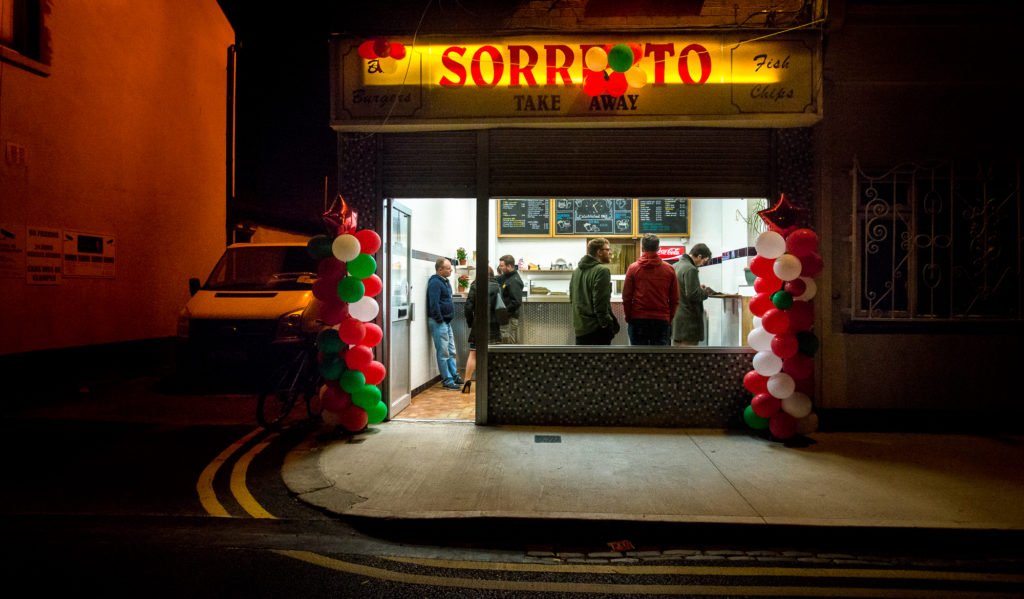
    Also, a nineteenth century resident Giuseppe Cervi ‘is widely credited with opening Dublin’s first fish and chip shop (p.171)’ emphasising the long history of immigrants broadening Dubliners’ paletes, and perhaps their waistlines.

    Divisions

    Church Street was the site of a tenement collapsing in 1913 – inspiring such an incident in Joseph Plunkett’s novel Strumpet City – as well as Dublin’s worst industrial accident in 1878, which claimed fourteen lives.

    Fallon also explores class divisions in Dublin, where ‘traditionally the Liffey itself has been thought of, rightly or wrongly, as a dividing line.’ However, he recalls that ‘there was a time when East-West was a better way of thinking of such things’, adding, in parenthesis, ‘and perhaps it is once more (p.181).’

    At least progress was made after independence with housing. The 1911 census revealed that some 63% of the city were working class, of whom 45% lived in tenement accommodation. It was estimated that some 37,500 Dubliners were ‘housed in dwellings so decayed as to be on the borderline of unfitness for human habitation.’

    Eustace Street in Temple Bar is a notable flash point in terms of the balance of development and preservation. Indeed, former Taoiseach Bertie Ahern once declared that this could be Ireland’s answer to the West Bank.

    More prosaically, the former Dublin City Council planner Paul Kearns argued ‘Dublin has, for far too long, favoured the temporary, often fleeting visitor, over the local urban resident(p.204).’

    Before getting its touristic makeover, Temple Bar was slated for destruction, to be replaced with a bus station. ‘In acquiring the property with the eventual aim of demolition, the bus company began leasing out units at low rents,(p.204)’ which brought a host of artist studios, cutting edge music venues and off-beat retailers.

    Fallon observes that ‘Temple Bar today may not bring ‘neo-bohemian’ to mind, but a surprising array of institutions from that moment of great optimism remain in the district.’ He also lauds ‘the brilliant Meeting House Square(p.205).’

    The penultimate street Fallon considers is Pearse Street (to Westland Row), site of Pearse Street Garda Station, once home to the counter-revolutionary G Division of the Dublin Metropolitan Police. Fallon reveals that the name ‘G’ is simply ‘the seventh letter of the alphabet and these men formed the seventh division(p.226)’ of the DMP.

    Pearse Street was formerly known as Great Brunswick Street, before being re-named in honour of Patrick Pearse the leader of the 1916 Rising, who was born on 27 Great Brunswick Street.

    James Pearse, Patrick’s father, was ‘a Unitarian raised in England [who] … specialised in ecclesiastical and architectural sculptures.’ Patrick fondly wrote of his father’s work, which can be seen in churches across the city: ‘If ever in an Irish church you find, amid a wilderness of bad sculpture, something good and true and lovingly finished you may be sure that it was carved by my father or by one of his pupils.(p.242)’

    Finally, to Moore Street, where Fallon again explores the competing aspiration of breathing new life into an impoverished area and preserving the famous open-air market, along with sites of the 1916 Rising. Fallon wonders whether some kind of ‘proper market’ could prosper on the street in future (p.269).

    Outsiders

    From its foundation as a slave market by Viking raiders Dublin has had a fraught relationship with the rest of the island. The nickname Jackeen is a term of derision applied to ‘West Brit’ Dubliners, who enthusiastically welcomed Queen Victoria with the Union Jack.

    Donal Fallon’s account reminds us that Dublin has long been subject to the ebb and flow of migration, whether Norman, English, Huguenot, Italian, Vietnamese or Chinese. As capital and main entrepot it became an important political, commercial and cultural hub from the seventeenth century. This engendered enduring civic pride, that can spill into arrogance, breeding resentment in rural Ireland, a sentiment which often persists even among those who have made it their long-term home.

    The stereotype of a true Dub is one who regards a cow pat with horror, and any beverage other than a pint of plain with deep suspicion. But such rare specimens now generally feel a profound alienation in a city increasingly dominated by office blocks, hotels and cafes. Dublin is a city of outsiders.

    Today most long- and short-term residents of Dublin don’t live in the city proper – generally considered to be the area between the canals –  but in the sprawling suburbs. Many of us who grew up there are never quite sure where we fit in. Perhaps Donal Fallon will deign to explore this unglamorous hinterland in a subsequent work.

    Feature Image: Daniele Idini
  • Podcast: Brazilian Election Special

    Fellipe Lopes joins Frank Armstrong to discuss the results of the first round of the Brazilian Presidential elections in which former President Lula failed to secure the required 50% to avoid a second round run-off against the incumbent President Jair Bolsonaro. Nonetheless, Lula remains favourite to win in the second round.

    However, Fellipe argues that Bolsonaro “has already won the election”, given that ultraconservative candidates have emerged victorious in state legislatures and the Congress. It will be difficult for Lula to do very much, he says, even if, as assumed, Lula wins the second round.

    The importance of Brazil in the world cannot be overstated. It contains most of Amazonia, the lungs of the world, and a huge, and growing, population of over two hundred million. Many Brazilians are living in Ireland now too.

    Fellipes points to the historic difficulties of Lula’s P.T. (Workers’ Party), arising particularly after the impeachment of President Dilma, and a number of corruption scandals.

    He also looks back at Bolsonaro’s background. For a long time he was an unremarkable representative for Rio de Janeiro, but he was able to connect with the public through cheap jokes and an emphasis on family values and law and order.

    They also discuss the importance of Evangelical Christianity in Brazil, which has been around for a long time in an historically Catholic country. Many pastors are now powerful political figures.

    Fellipe argues that the Brazilian left failed to connect adequately with vulnerable communities, unlike their opponents, who have also been adept at harnessing the power of social media.

    Feature Image: Fellipe Lopes

  • “Shameless” Women of Iran Unite

    Maryam was just a child when one day her parents left her at home alone and took her younger brother to the clinic. They refused to take Maryam, although she insisted.

    When they returned home, Maryam’s brother was in a white skirt in his father’s arms. For some reason they were very happy and congratulated her brother. “You have become a man,” they said. “Well done”. Maryam’s brother was crying, and they went on and on congratulating him on something.

    Maryam wanted to hug her brother and calm him down, but when she approached him, Maryam’s mother immediately pulled her away and said: “What are you doing? Can’t you see he’s in pain? Don’t disturb him until he recovers.”

    Maryam went to her room and plugged her ears so as not to hear his crying. A little later, the whole family – aunts and uncles – came to their house with a lot of gifts and food. Everyone was celebrating and dancing. Maryam’s father bought to her brother a toy car that he promised my brother a long time ago.

    Maryam cautiously asked her mother, “Is it my brother’s birthday today?”

    Her mother answered sharply “no” and left. Maryam was left with many questions in her head: why was everyone rejoicing and congratulating her brother; why was he in a skirt; why was it impossible to approach him? Everyone just said that he had become a man. From that day on, Maryam understood what circumcision meant.

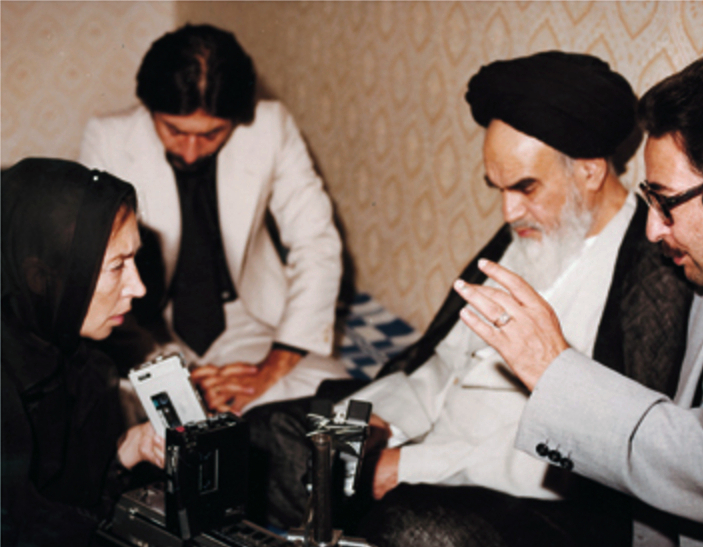
    Ayatollah Ruhollah Khomeini.

    Shameless

    Becoming a woman for Maryam turned into a disaster. Maryam still cries when she remembers the first day of her period. That day was the worst in her life.

    One day, when she was returning home from school, she felt severe pain in her stomach. Maryam writhed in pain. Having somehow made it home, she went to the toilet and saw blood on her underwear. She was shaking with fear, and for some reason she felt very ashamed. Overcoming fear and embarrassment, she called her mother. Suddenly, at the moment when Maryam, trembling with fear, was talking about the blood on her underwear, her mother hit her hard in the face, uttering only the word “behaya”.

    The Persian word “behaya” (بی حیا) is used for those who never listen to the rules of the female role. Usually people use the word “behaya” when describing someone’s behaviour as shameless.

    Maryam was shocked and started to cry: “I felt that all my pride and my personality was crushed, that the world had come crashing down on me. I thought, what did I do wrong?”

    Her mother took her hand, “Calm down, don’t cry, it’s a family tradition to follow when a girl first reports her period.” She added that the slap in the face would stop the girl from being shameless and rebellious in future, and would help her to remain worthy and innocent.

    Her mother began whispering to Maryam what it means to become a woman, and that becoming a woman should be kept secret between women. She explained different ways to hide this secret, and showed how and where to hide the menstrual pad before and after using it.

    Moreover, sometimes, according to the assurances of the mother, the pad must be washed so that none of the men sees menstrual blood. The mother said that when Maryam had her period, the brothers and father should know nothing about it.

    Maryam should not behave in such a way that someone understands that she is on her period. From that day on, she learned to hide her pain for a few days each month so that no one would notice that she was on her period.

    That day there were no gifts, no parties, no congratulations on Maryam becoming a woman. Even that purple toy horse, which Maryam had wanted for many years, and which her parents had promised, was never presented to her.

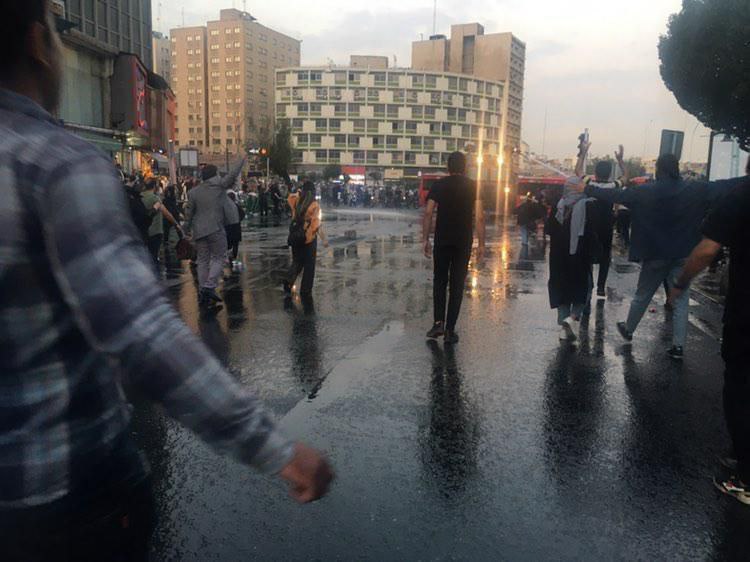
    Iranian protestors on the Keshavrz Boulvard, September, 2022.

    I don’t care even if I get fired or killed

    While Maryam was growing up she had access to the Internet, and at the same time the path to the fight. Masih Alinejad’s “White Wednesdays” campaign on Instagram first showed her this path in 2014. Many women, including Maryam, posted photos without a veil with hashtags.

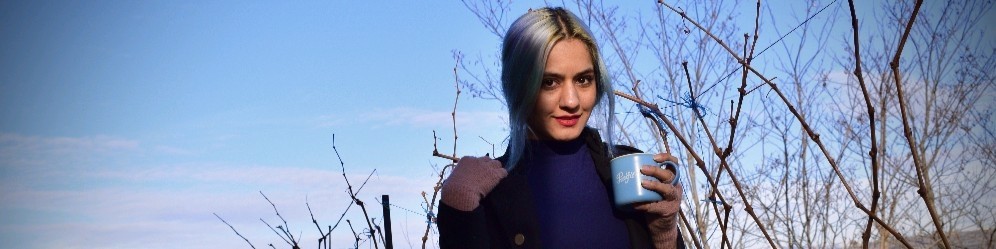
    Since 2015, Maryam has ventured not to wear a veil: “It was much more difficult not to wear a veil in Tehran than in other regions of Iran. I was arrested every week by the morality police in Tehran. I was molested, I was constantly called the most terrible words every day by both the police and religious people. But I didn’t give up.”

    In March 2018, Maryam left Iran. She now lives in Georgia and works for World Vision and UNHCR as a community group facilitator. Now Maryam Sharifi has become a well-known human rights activist. She is one of those who tirelessly disseminate information about all the crimes of the Iranian regime abroad.

    Feminism and feminist activities are against the Islamic laws in Iran. Therefore, there is no organization or feminist community in Iran. Some large cities have boarding houses or women’s shelters, but these are under government control.

    Maryam considers the elimination of taboos against women and informing women about their rights as the first and main priority in her activism:

    “Unfortunately, the number of women who do not even know or do not want their basic human rights in Iran is greater than the number of feminists or women who are aware of their rights. Many women have accepted the traditional, unequal role of mother or daughter in their family, and they believe in all the laws of Islam, the laws of misogyny.”

    Before agreeing to give an interview, Maryam asked not to censor her words: “I am not afraid of anything and do everything for the freedom of women. People around me are always telling me, “Don’t say things like that. This is dangerous. Your life may be in danger or even fired from your job,” but I don’t care if I get fired or killed. I don’t care, I just want to have a better society for future generations.”

    Maryam Sharifi

    We are silenced when we start talking about Islam

    According to Maryam, Islam and the politics of Islamic countries in the world are resisting the struggle of women in the Middle East with all their might and using the media around the world for this, creating a positive image of Islam:

    “Islam is dangerous for the whole world, but people in the West think that Islam only affects the Middle East and has nothing to do with them. They are even afraid of the reaction of Islamic fanatics. They go to compromise. You can see for yourself in Europe, in the West and all over the world, Muslims promote Islam and violence. The media and international forces are silent and give them space. But when we criticize Islam, we are silenced or censored.”

    Maryam has a Muslim colleague who is a facilitator for a community vision group. At one of the meetings, Maryam recalls, her colleague publicly defended patriarchy, where discrimination was discussed, and said that men should have more rights and power because they are the heads of the family.

    “She even told me once that if she saw a same-gender couple expressing their love in front of her, she would want to kill them. I wonder why this woman should work for a human rights organization? They want to show that a Muslim woman in a veil can be successful, but they do not show what dangerous thoughts this woman has and what dangerous children she can raise.”

    Maryam herself is fundamentally against wearing a veil. She is convinced that it has become a symbol of control over women, imposed around the world for millennia to control the body and role of women.

    I’m in this fucking chador

    A few days before the murder of Mahsa Zhina Amini for improperly wearing a hijab by the morality police in Iran, Dilnaz, a student from Saqqez, wrote: “It’s so hot here, at least 30 degrees, and I’m in a fucking chador.”

    At the university, Dilnaz, like all students, is required to wear a chador. But as soon as the opportunity is given, Dilnaz immediately rips off her chador. She posts photos on Instagram in a traditional Kurdish dress. “In Kurdish culture, there is no obligatory wearing of the hijab or veil. What people know about Iran and its laws against women is the ideology of the Islamic government, not the culture of the peoples living here,” Dilnaz explained.

    Dilnaz was raised by a Kurdish grandmother, who passed on many Kurdish traditions to Dilnaz: “When I got my first period, my grandmother told me to anoint my cheeks with menstrual blood so that, as my grandmother said, my cheeks would always be red.”

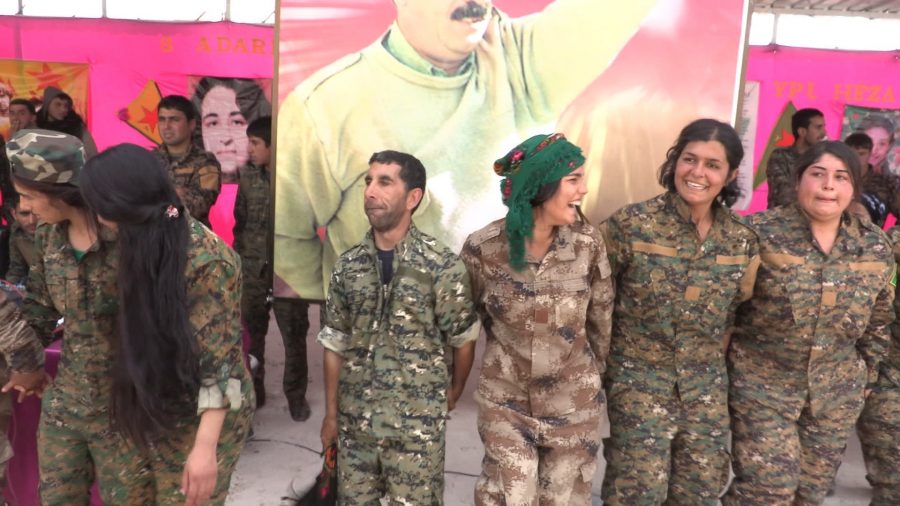
    Now Dilnaz reads with gusto all the news about Rojava in northeastern Syria, where the Kurdish liberation movement has proclaimed a women’s revolution, and consoles herself with the hope that one day she will definitely come to Rojava.

    Rojava. Image: Alexis Daloumis

    I’m scared to be here

    Dilnaz is studying under a contract at the university as an elementary school teacher. During her studies, the state pays her a scholarship, and after graduation, Dilnaz will have to work for several years in Iran.

    If Dilnaz violated this contract and refused to work after training, she would have to pay  compensation of approximately eight thousand dollars, a huge sum for her and her family. Moreover, she will have to leave such an amount as a pledge if she wants to leave the country even for a short time. Those are the terms of the contract.

    In addition, Iranian universities have a quota system that limits the number of female students. Many of Dilnaz’s entourage say that she was lucky. But Dilnaz dreams of leaving: “I’m scared to be here. I don’t see any happy future for myself in this country.”

    Dilnaz has an older sister. Her parents forced her to marry a man who, a few days after the wedding, began to beat her. “My parents were very secular people throughout my childhood. But then my father lost his job, our financial situation worsened, and for some reason, after that, my parents suddenly became very religious. After that, they ruined my sister’s life, and I’m afraid the same thing could happen to me. And no one and nothing will save me,” she said.

    Recently, there have been at least three events that directly related to the status of women in Iran. Shortly before the murder of Mahsa Zhina Amini, in the city of Marivan a girl jumped out of a window in an attempt to escape from an attempted rape.

    Protests began in Marivan demanding that the rapist be punished. A little later a death sentence was passed against two LGBT activists – both women. There was also news about the ban on women in commercials in Iran, which was publicised in some foreign media.

    Women cannot leave Iran without the permission of their father or husband. This is one of many laws restricting the rights of women in Iran.

    The are banned from working in ninety-one professions: they cannot be judges, lawyers, geologists, archaeologists.

    Women are also not allowed to play sports, sing and dance in the presence of men. This is considered “avret” – that is, as Dilnaz explains, something shameful.

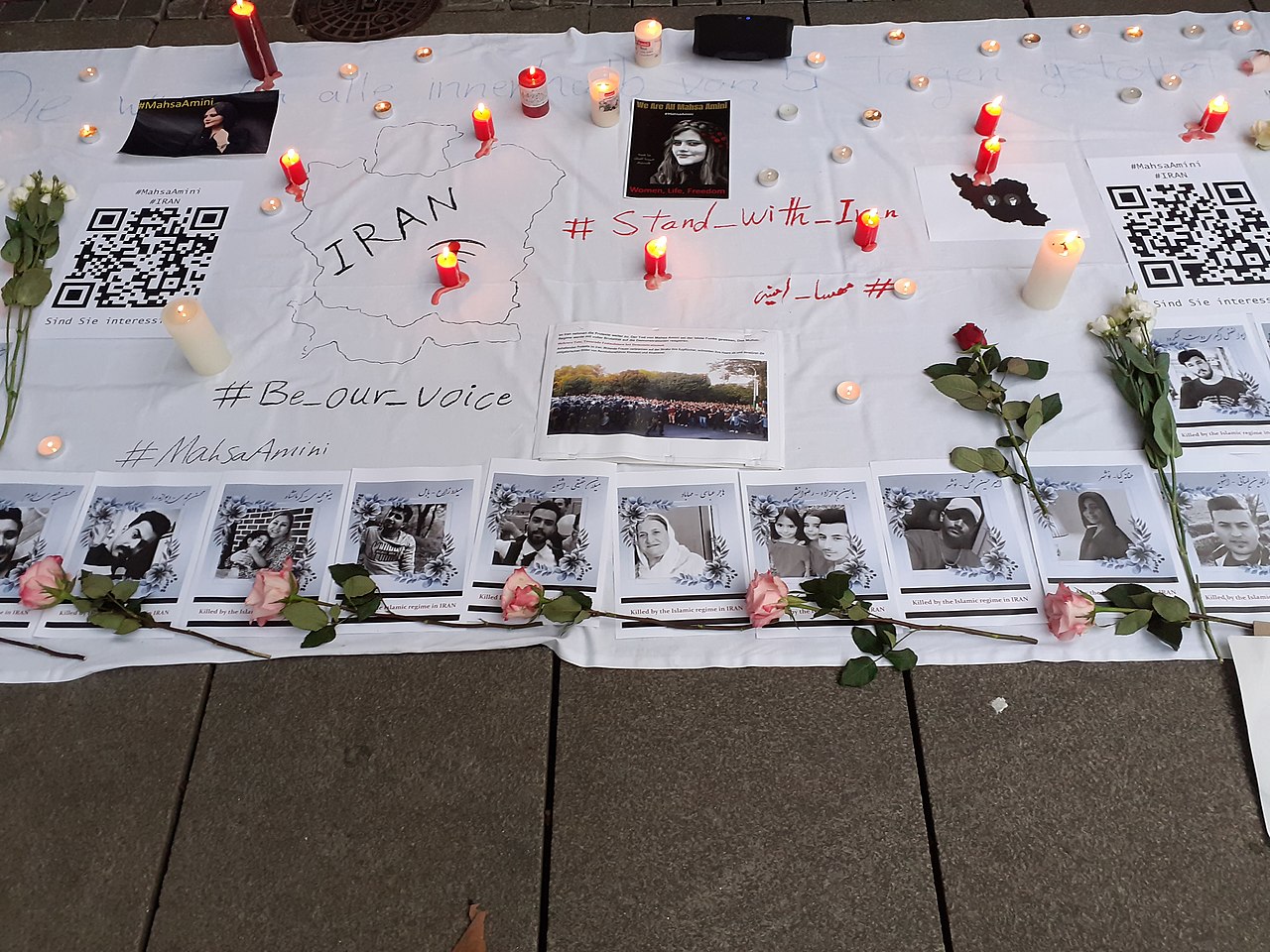
    Commemoration of Iranians killed in anti Regime protests. Mahsa Amini Protests in Stuttgart, Germany.

    I can stand up for myself

    When the protest movement swept across Iran, Dilnaz wrote: “Don’t worry about me, I’m a Kurdish girl, I can stand up for myself.” She went out to protest every day, and when she returned home, she shared her impressions of what was happening with me: “I was very scared. I have never seen such a lot of police brutality and so many injured people.”

    Dilnaz left her phone at home so that if the police caught her they would not have access to the contacts of her friends, protest news sources, and to her instagram account in which there are photos of her and her friends without veils.

    Women have become a symbol of the current protests in Iran, and not only the deceased Mahsa Zhina Amini. Women in Iran and around the world have taken to social media to post videos of themselves ripping off their veil, burning them and cutting off their hair in protest.

    One of the protesters, Hadis Najafi, who tied her hair into a bun before clashes with police, was shot dead. One of the most common protest slogans was “Woman, Life, Freedom”, which originally emerged from the Kurdish liberation movement in Rojava, northeast Syria.

    In Iran itself protests went on for over eleven days in some cities. As she prepared to protest once more, Dilnaz said: “I am sure that these protests will not be easily suppressed. I believe we can make a difference.”

    Then the Internet was turned off all over Iran, and when it was turned back on Dilnaz did not appear online anymore.

    At this stage, according to various sources, more than 76 people have died in the protests in Iran, thousands have been injured, and more than 1200 have been arrested. There are even children among the dead.

    Feature Image: Mahsa Amini Protests in Stuttgart, Germany.

    Follow Liza Shishko on Instagram.

  • Musician of the Month: Bróna McVittie

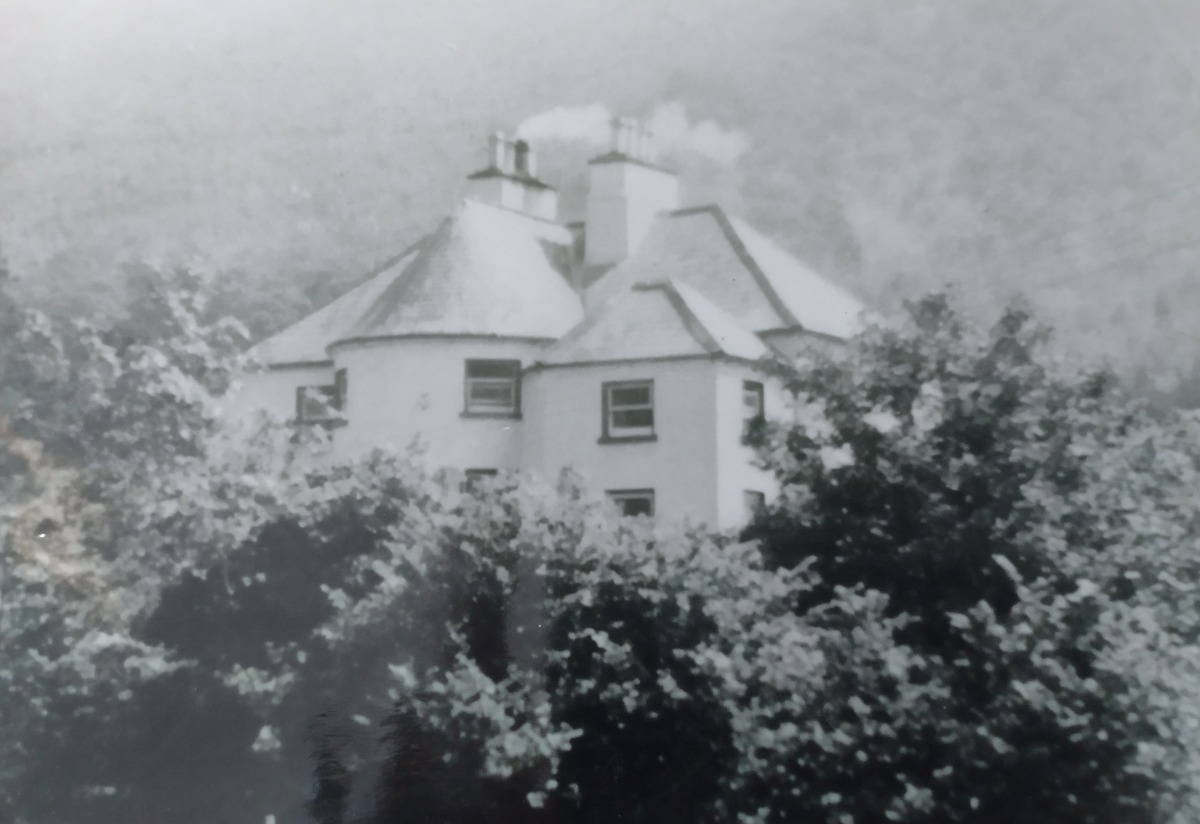
    I grew up in a rambling country house with damp bubbling from the walls and ghosts lurking in the locked rooms. It was big enough for a family of five to lose themselves, each in their own space, occasionally coming together for meals, but not needing to live in each others’ pockets.

    Just beyond the garden boundary were the ruins of an old mill, a remnant of the once thriving linen industry in Ulster. We used to collect frogspawn from the boggy patches there in old jam jars.

    Just beyond the mill walls was (and still is) the Fairy Glen along which we would traipse to primary school. We were always looking out for the fairies. Mum said that if you asked them nicely they would do things for you. So I started with wee things like ‘wake me up in time for school tomorrow’. And they always did. Somehow.

    Forestbrook House.

    Link for The Fairy Glen (Gleann Na Sidhe)

    We got evicted when I was eight-years-old and we moved to a Council House in a nearby estate, the only Protestant family.

    We had a mixed reception. Some friendly and a few spuds thrown at the window to keep us in check. One day our neighbour’s son stole my Dad’s bicycle, but we found it in a field down the way not too long after.

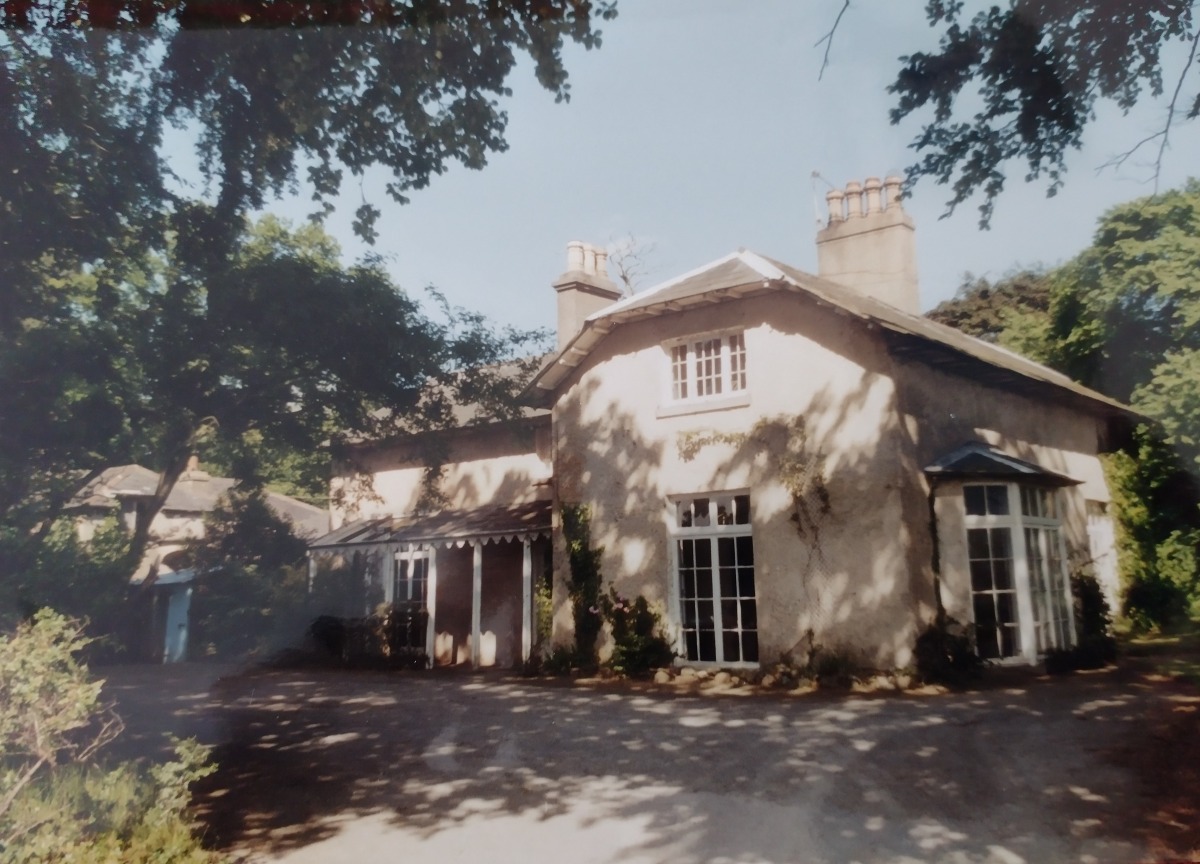
    I don’t recall those being the happiest of days. But four years later my Dad found an old rambling country house to rent, much like the one we’d lived in previously. And we moved.

    The landlord had left an old upright piano in the house and I was instantly smitten. This was where I experienced my first musical urges. I remember being inspired by Mum and Dad’s records, anything from Dolly Parton or Judy Collins was a hit. And Mum had a very cool African record by a band called Osibisa, who I’m very pleased to discover are still going.

    Drumsesk House.

    I got piano lessons from a local eccentric. He was surely more Norman Bates than Norman himself. His mother lived upstairs, although you never saw her. He had four different rooms with pianos. One for each season. His toupee was also changeable. He was an excellent teacher and I even managed to pass a few grades with his help.

    I had started clarinet lessons in school a few years previously, and although it didn’t feel like it at the time, this musical introduction had more than a little to do with my current preoccupation.

    Mr Green taught me how to play jazz clarinet, a very important part of which was keeping the foot tapping. As part of the deal of getting a clarinet ‘for free’ I had to go on Saturdays to play with the South Ulster Youth Band in Portadown. 7am Saturday starts on the bus weren’t popular with me at the time, but looking back on it, it was a tremendous thing for a young person to be involved with.

    It wasn’t until I was almost done with secondary school, and had fallen for a local outcast, musician and romantic, who was a few years my senior and very much ‘not what my parents wanted’, that I was inspired to pick up a guitar and compose.

    I’ll never forget my best friend crying when I played her my first song on the guitar. Only two chords; taught to me by my brother. That’s all I could play, but the lyrics were by W.B. Yeats – the chorus: “Had I the heaven’s embroidered cloths, Enwrought with gold(en) and silver light, The blue and the dim and the dark cloths, Of night and light and the half light.” And the sentiment was deeply earnest. I was in love. And there was no way to unfeel it.

    When I left high school I decided to delay a University degree and headed off to South America as part of an organised voluntary-work overseas initiative. I spent five months living in Ecuador teaching English to primary school children and working at an orphanage, a home for abandoned children and an animal reserve.

    It was an extraordinary experience and opened my eyes to worlds I’d had no notion of. After the placement finished I wandered off alone into Peru and Bolivia with no idea of what I would do or where I would go, and ended up buying my first guitar in La Paz.

    When I eventually arrived at St-Hilda’s College, Oxford I had firmly cemented my relationship with the guitar as a tool for songwriting. It wasn’t until later after graduation, when I moved to London, that I discovered the harp.

    A friend and luthier kindly lent me one of his instruments, which featured on my first album As the Crow Flies recorded under the moniker Forestbrook (after my first family home). That album is as underground today as it ever was. So it delighted me greatly when – after releasing my first solo album We Are the Wildlife a decade later – the press validated my work. Four star reviews from The Guardian, The Independent, Mojo and Uncut Magazine!? So giving up the day job hadn’t been such a bad idea.

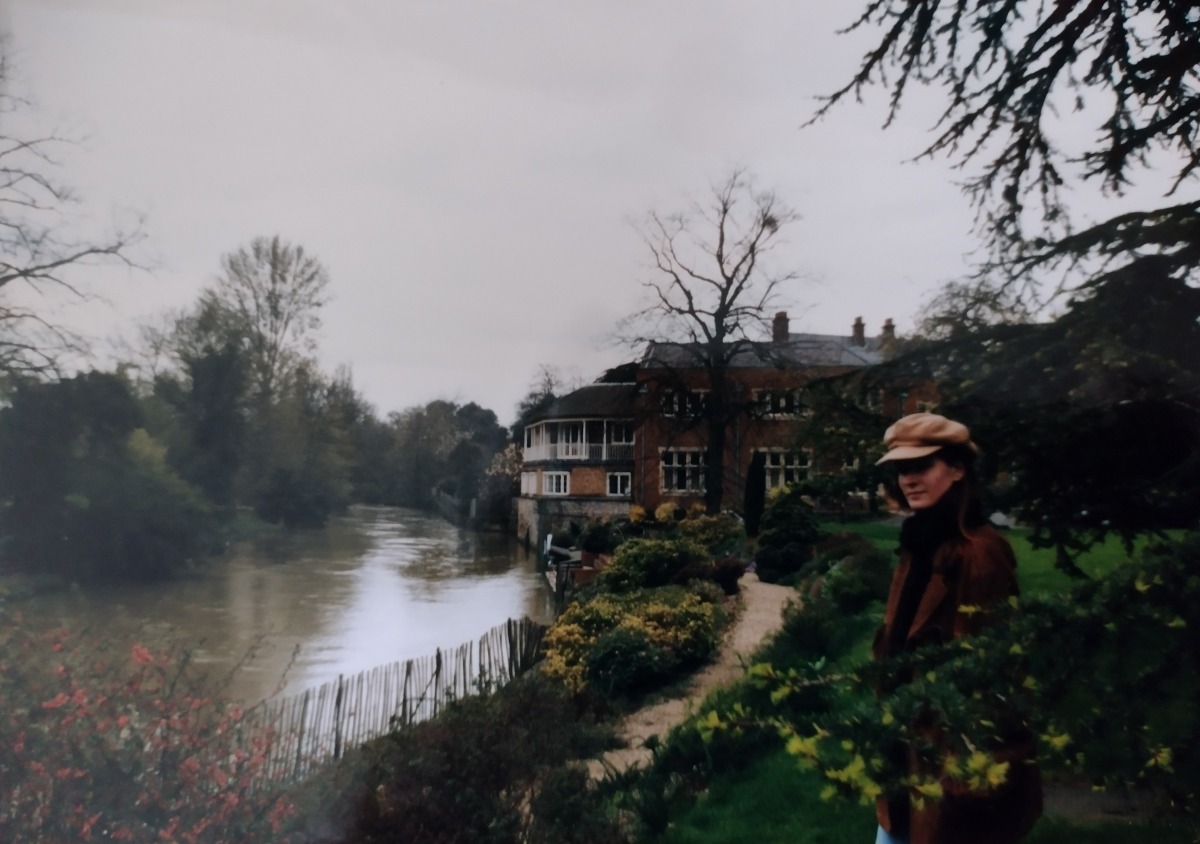
    Bróna at St. Hilda’s.

    It had taken me a while to find my own voice. It wasn’t a sudden occurrence. I still recall Dad’s advice when I would sing a Dolly Parton song in her voice. “Careful with that vibrato! If you start that now, you’ll never be able to stop.”

    What matters most to me now is that I’m not imitating anyone. I am truly enjoying doing what I love, what feels right. But it’s not without great effort. There’s a wealth of technical knowledge, an endless sea of admin, grant applications, petitions to promoters, social media campaigns galore, and very many dull and tedious tasks that go with being a full time artist in your own right.

    As I heard Iarla Ó Lionáird recently concede during a lecture; “I think about giving up this job every single week!” And I know only too well why. If only we artists could simply enjoy doing our art.

    Link to The Woman in the Moon (The Album)

  • Parallel Weekend

    I hadn’t heard from you since Wednesday, the morning before you flew to Copenhagen. You’d messaged me while I was at work “Are you free at all, can I give you a quick ring?” I was the only one in the office and Jen, my manager was in a meeting. “Yeah, go ahead.” You proceeded to tell me your fears about whether you would make your connecting flight from Stansted to Bordeaux. “I’ve left it very fine and I’ll be checking in a bag.” I’d talked it through with you and reasoned that since your flight from Denmark was so early in the morning it was unlikely to be delayed, plus you had four hours to play with in Stansted. “Yeah. Yeah, you’re right. It’ll be fine.” You’d started to list some of the things you still needed to do before heading off, and ended the call.

    Afterwards you sent me a photo of yourself in your suit with the new shirt you’d bought, a white floral number. “What d’ya think?” In the fitted suit you looked like someone else- older, more serious. The long, toned body, normally swaddled in a woolly jumper and loose jeans, was picked out. “You look UNREAL.” The last thing you’d said was, “Thanks”.

    Now I was walking into town on Friday night, for pints in Neary’s, then techno in Tengu. Neary’s was a pub off Grafton Street I’d never been in until a week before, but was now promoting as a summer meeting spot, mainly down to the fact it had a few tables outside that got sun until late. It was still warm, a gorgeous evening coming to its end, and as I walked down Fenian Street I could see the sun, fat and orange, half hidden by the dental hospital, the sky around it stained hot pink. My outfit was a bit of a departure.

    Instead of a soft, flowing shirt tucked into jeans, I had on a tight, short skirt and boots, plus a shiny black top I’d bought that day. I’d gotten my hair cut earlier in the week and I had mascara on. I looked hot and I felt excited to be heading towards town, my friends and dancing. It’s partly to pass some of the ten minutes I had left before I reached Neary’s that I started recording you a voice note. But I also wanted to share my jubilant mood with you.

    I told you about the sunset, the warmth, though not my outfit or the details of where I was going, and said that I hoped you were having an amazing time with your friends and that you were going to totally nail playing fiddle at the wedding.

    Two drinks in at Neary’s, sitting outside with Conor, Rachel and Nessa, I took out my phone to take a photo of a snail we had collectively noticed climbing up the side of a plant on the windowsill. It moved with impressive speed. You had texted me back “Thanks! I having a great time! I love Copenhagen”. There was no need to reply, the “I having” told me you were already fairly on it, so I put my phone away.

    A few hours and several dabs from a bag later, I went upstairs to the bathroom in Tengu. It was hot in the crowd of bodies and I felt sticky but good. We’d been dancing and chatting shite to strangers since midnight. Now, checking my phone while I peed, I saw it was 2.37 and it seemed time to update you.  As fun as the downstairs antics were, I wished you were there. To get to know my friends better and to see me around them, in my element. We mostly spent time with your group where I was an outsider trying to establish myself. “Sounds class, in Tengu. It’s turned into a very gurny evening.”.

    I came out of the bathroom, and as I passed him a guy standing near the top of the stairs called to me, “You look like Amelie Lens”. I stopped beside him. He was cute; tanned with dark hair that fell into his brown eyes. “I don’t know who that is.”

    “She’s a DJ. Look.” He took out his phone and googled her, then held the screen towards me so I could see the photos coming up on screen. A very thin woman, with dark hair and eyes and sharp cheekbones. “Oh, I don’t look like her. I mean she’s very pretty, but I’m nothing like her.”

    “You are,” he said, meeting my blue eyes. “You’re very pretty”.

    “Thanks”, I said stepping back from him. As I did, he said, “My friends and I are going to an after party near Stephen’s Green now, do you want to come?” I stopped again. I hadn’t planned on a big night. I’d been half thinking of catching a train home to see my parents the following day. I hadn’t been near them since the last bank holiday. My friends didn’t know the offer had been made, and I could have just walked away. Of the four of us, I was probably the least likely to take it up. But a voice in my head said, “Go! You’re always letting what you have to do tomorrow decide what you do right now.”

    While I considered the idea, he showed me his phone again, a video on screen this time, panning across a crowd full of people dancing in a dim room, coloured lights falling across them to the rhythm of the techno track I could just about hear, up to a DJ booth I couldn’t see anyone behind. “Looks cool. I’m out with friends, can they come?”

    “Sure.”

    “OK, I’ll go and see if they’re up for it”.

    He took my number, only then did we exchange names, his was Al. “I’ll text you when we’re leaving.” Seconds later I got a message, “Hi Amelie 😊”. I went back downstairs and found the others outside in the smoking area, pupils huge. “I just met this lad outside the toilets who knows about an after session. Would you guys be up for going?”

    A few minutes later we were outside, introducing ourselves to Al and his friends. They were a mix of ages, mostly younger than us, and from abroad, Turkey, South Africa, Spain. After weighing up whether to hail taxis, we started to walk. On the way, we called into the 24-hour Centra on Dame Street to get cash for the door and whatever we wanted to buy inside.

    I fell into step beside Jorge, from Alicante, got talking to him and as we made our way up George’s Street, a couple of younger guys, sensing we were going somewhere besides home as the closing bars around us emptied their contents onto the streets, asked us where we were headed and if we knew of anything open. “Ah come with us,” Rachel said without hesitation.

    We picked up a couple more people this way as we passed the junction with Kevin Street. It felt nice, a troupe of pied pipers drawing in strays just by walking a little faster than those around us. Eventually Jorge noticed we’d lost Al, the only one who knew where we were going and stopped to call him.

    He’d gone ahead to talk to the guy he knew on the door and sent Jorge directions that brought us down a side street to a row of Georgian houses. Al was waiting on the curb and pointed to a house a few doors down. On the bouncer’s orders, only two or three of us could go in at a time. Conor and I went first. I paid his entry as he’d been handing me drugs all evening. The man in a red woolly jumper who took our cash pointed us towards a staircase and once Rachel and Nessa had paid in, we went down to the basement.

    The floor was covered in grime but I didn’t realise until I was taking my boots off several hours later. Downstairs was busy, the scene similar to the video Al had shown me. There was a five deep queue at the bar, which was at the far side of the room, past a crowd dancing in looped movements to the pulsing tune. Rachel and I left Conor and Nessa to queue for drinks, not before we each took another dab from Conor’s bag, and nudged our way into the crowd. We found Al and some of his friends who had come in after us, and he made his way around the circle to me. Leaning in, he asked, “Do you want some coke?”.

    “I’m ok,” I said. I didn’t want the shrillness of coke confusing the soft high I was getting from the MDMA. I also didn’t want to take anything from him while he was still under the impression that I was single.

    “Ok. Well do you want to come upstairs with me for a cigarette?”

    “No thanks.” He cocked his head, frowning and I looked into his eyes. “I should be clear. I have a boyfriend”.

    “Ahhhh”, he shook his head then but smiled. Like for a moment me rejecting him couldn’t have made sense but now there was a reason he could metabolise. “Ah, ok. I understand. “He left then, for a bump or a smoke or both and the rest of us kept dancing. There was a tall guy, dancing near us, pretty out of it but doing nobody any harm. He leaned in towards Rachel and I. “Is this not class?”

    “Yeah, it’s pretty good”, we returned. Kept dancing. A few minutes passed and I felt someone very close behind me, then hands placed on my shoulders. I shifted forward. Again, this time hands around my waist. I reminded myself how high he was and turned my head to him as I stepped forward, “Could you please not do that?” But Jorge and the others had already seen. The group had shifted away from the guy while Jorge came and planted himself between us, so I could move in the same direction, into the middle of the circle.

    He turned to me. “Are you ok?”

    “Yeah, no worries, thanks.”

    We got back to dancing and after a while Jorge said in my ear, “You’re a good dancer, I’ll give you that.”

    I smiled. “Thanks. The trick is to not think about it or give a fuck.”

    “Ah so you just dance like no-one is watching?” I laughed at that.

    “Can I kiss you?” he asked.

    So, he hadn’t heard me tell Al. “I have a boyfriend”.

    “Oh, are we doing that?”

    He thought it was a line. I didn’t mind you not being there anymore. I shouldn’t have to prove your existence to this guy. I looked around, Rachel wasn’t on the dancefloor and suddenly I felt like getting off too.

    I went in search of her and Nessa. I found them in the toilet, which was visible from the corridor as there was a massive hole in the door where there should have been a pane of glass. Nessa and Rachel were blocking the space so a woman with long wavy hair could pee in privacy. When I came in, they did the same for me and from outside, two more women asked if they could come in. While they took turns peeing and Nessa and I once again covered the open space in the door, we got chatting.

    Everyone was gurning a little and we were all extra interested in one another.  The smaller of the two girls, Charlie, said she felt a good energy in here and asked us our star signs. When we told her: Cancer, Pisces and Sagittarius, she started to nod. “Yeah. Yeah, that makes sense.”

    “I’m a Taurus rising”, I added. Not knowing what that meant really, but thinking it might be relevant. The four of us moved into the hallway. We stayed there, for what felt like hours, talking about how we’d ended up at the rave, our jobs, what Dublin used to be like and what was going to happen if rents didn’t somehow magically drop.

    “Are ye single girls?” Charlie asked. “I’m not”, I said.

    “Oh”, Charlie turned towards me, “What’s their star sign?”.

    “Scorpio.”

    You’d told me that on our first date, and when I asked you what Scorpios’ deal was, you said, “Well, raw sexual power”. That was a bold move. I don’t remember anything else you told me about Scorpios after that. But it made me curious, so I’d read up on our compatibility.

    Apparently, Scorpio and Cancer make a seriously good sexual pairing. And that’s what I had found so far. A year in, and I was still just as impatient to be naked with you whenever we met up, as I had been that first night. “Oh, a Scorpio? Really?”.

    “Yeah. He’s a Scorpio. He’s great”.

    “I don’t know,” she said, “I just find Scorpios can be really temperamental, you know? Plus, Scorpios, when they turn on you, It’s brutal.”

    I felt like I had read this exact description of Scorpios in Allure, or some other online magazine, whenever I was scrolling to see if you and I were a good match after that first meet up and decided she was repeating from the same article, rather than speaking from experience.

    “Aw I don’t know; I have two Scorpios in my life and they’re both really sensitive and kind and creative”.

    “That’s fair enough,” she said. “They can be.”

    At that moment she caught sight of a guy with a beard who seemed to have been looking for her. “Sorry Matt, I got talking to these girls in the bathroom.” She introduced us, and I suddenly felt like this was the time to go dancing again, so I caught Nessa’s eye and tilted my head towards the main room.

    “Will we get back in amongst it?”

    Inside we found Conor and Rachel dancing with some of our strays from earlier, the cute young Australians who’d first approached us.

    “Do you want half a yoke?” Conor asked me. I thought for a second. I hadn’t taken a pill in a while…but it was hard to pass up the chance. He’d already bitten into it and was holding the remainder, pink and tiny, towards me. It’s only half. I thought. It mightn’t even do anything after everything else.

    I took it and swallowed and he passed me his drink to wash it down. About ten minutes afterwards, I took my phone out and seeing the time, 6:38, I suddenly just wanted to be home. Looking around the room I felt like all the good juice had been squeezed from the night already. Nothing new was about to happen. I ordered a taxi and told the others I was heading on.

    Getting out of the taxi, I realised I was only coming up from the little bit of yoke. I’d already been acting strange in the car, rubbing my hands up and down my tights, looking out the window as if I’d never seen any of the streets we went down before. I’d caught the taxi driver’s eyes in the mirror and he didn’t look too delighted to have this space cadet as a passenger.

    The rational part of my brain panicked. Why had I left the others? I was just alone and high now. But that concern couldn’t override the feeling of my chest floating upwards and the desire to spread my hands out and touch things with my fingertips. I half ran, half skipped to the door of our building and up the stairs to the flat. It was empty.

    Francesca and Darragh were spending the weekend with Darragh’s parents in Galway. My bedroom door was open, and sunlight was pouring in onto my bed. I walked past to the living room and sat on the couch. I could feel my mouth contorting and twitching, it had been a long time since I’d taken anything that made me gurn that much.

    I took out my phone and laughed at my face in the camera. I took five or six pictures as my lips and cheeks moved involuntarily and the photos made me laugh even more. I was having a good time. I hooked my phone up to the speaker in the living room and put on a playlist I made in January when you were being kind of a dick.

    “Fucking catch”, It’s called. I took my boots off and started to dance, sliding around in my tights on the wooden floor, the curtains open. I thought about the start of the night, walking into town in the still warm summer sun and the turns it had taken since.

    A while later, I’m not sure how long, I got into bed and tried to sleep. Flat on my back, on my side. Duvet on and then kicked off. It wasn’t coming. Even with the curtains shut it was bright enough to read in my room. Around 8.30, I started to feel low. I wished you were there again. This is exactly the kind of moment when I’d been single and regularly recovering from raves that I had wished to be in a couple. Now I was, and you weren’t even there.

    “What is the actual point?” I asked myself. “No, you’re being unfair, It’s not his fault he happens to be away this morning”. I knew it would be hours before I could hang out with anyone and being by myself was making it impossible to ignore how slowly time was moving. I text you “Hey. Feeling a bit ropey, could you give me a call if you’re free”.

    You wrote back, “We’re all busy here. Rushing to get suited and booted and head out for the wedding”.

    “Yeah, I figured it might not be a good time. Have fun. Just feeling a bit edgy/shook here cos I haven’t slept.”

    I texted a few people to see were they about today. The problem with deciding not to go and see my parents was that now I had an empty weekend ahead. Mark had a friend visiting, and he had asked me to go out to Howth to walk the cliff path with them, but I wasn’t feeling up for that. Though maybe in a while I’d change my mind.

    Since the sleep ship had clearly sailed, I decided to get up and shower. It was hot in the room, even with the curtains closed, and I felt like some direct sunlight might do something for my serotonin. The normal joy of morning, waking up hungry and pottering around making breakfast, was absent along with my appetite. I did force down some heavily buttered toast so I could take a couple of Ibuprofen. Again, as you know, on an ordinary day I’d be stopping mid-bite to exclaim how great toast is, but this was purely functional eating.

    “Even food don’t taste that good,” I sang to myself, smiling in spite of the dread. When I’d cleared the dishes away, I got into the shower and let the water run down my head. I’d only washed my hair the day before, but I felt like it was holding onto all of the sweat from the past twelve hours.

    When I was dressed, I put my wallet and a bottle of factor 30 in my little backpack, and headed outside. I didn’t know where I was going to end up, but headphones on, I played the John Prine song you’d shared with me a few weeks before, “That’s the Way That the World Goes Round” and turned on the song radio feature so that Spotify would follow it up with music of a similar mood. Upbeat acceptance of life’s lows as well as highs was what I needed to hear.

    It was still only coming up to 11am, and nothing was giving me joy. It was going to be hard to pass this day. By the time the next track on the list had started to play, I was turning onto that little path by the Dodder near Lansdowne Road. I didn’t know it, but I recognised the voices, and then heard the chorus “How lucky can one man get”, followed by this gorgeous instrumental. And somehow, I remembered that I am lucky. I wasn’t alone. Ok, so nobody was free to immediately come and hang out with me early on a Saturday morning. But I had so many friends I was able to ask. I had someone I loved.

    I was alone now, but that only felt terrifying because I’d had too much fun the night before, and I would feel like myself again soon. Then another song I’d never heard before, The Swimming Song by Loudon Wainwright came on, and the opening bars were just so buoyant and beautiful I forgot I was in a chemical hoop for a couple of minutes. I wished the other people strolling along the boardwalk could hear it.

    At this point, I hooked around to the left and took Newbridge Avenue to head toward Sandymount, thinking I’d walk out to the coast, but then I got a message from Nessa. “Are you awake? I’m in bits. Rachel’s asleep on the couch. Don’t be on your own. Come over.” I was saved.

    I walked back to mine to grab my bike, and listened to the Swimming Song on repeat all the way to Nessa’s flat in Terenure, bouncing out of the saddle to every loud strum of the banjo. People in the horrors should be prescribed Loudon Wainwright and John Prine I thought.

    I got to the estate where Nessa lives with Helen. You’ve never been there but their place is great. It’s a duplex flat and they have a little yard outside that they’ve put a fire pit in, which was great last summer when we were all supposed to be meeting up outside. I went to a lot of parties in that garden while you were away.

    As soon as I saw Nessa, (and Rachel, who was now awake and sitting up on the couch telling us about some guy she’d managed to shift, changed her mind about and escaped without any of us even noticing the night before,) I started to feel better. Appetites now returning, we walked to the deli up the road to get rolls, and then got straight back into the soothing dim of Nessa’s living room where we watched an episode of Peep Show, before deciding it was actually too bleak for our fragile mental state and switching to the American Office.

    Hours later, while we sat in comfortable silence eating takeaway, I said to Nessa “You know, if you’re with someone and you love them, but you don’t think It’s something that can last… Like maybe it’s something that has two or three years in it, but you just don’t think it can go the distance. Is it ok to stay in it and see it out to its natural end? Or is that stupid, like should you cut your losses and finish it?”

    Nessa considered this, probably wondering where this slightly pleading question had come from. “There’s just no way of knowing”, she said.

    I cycled back from Nessa’s, listening to the Swimming Song again. During the day, Aoife had written back to one of those desperate texts for company I’d sent out, to say she wasn’t about today but that she’d love to go for a swim tomorrow. I met her early the next day and we spent the morning chatting. First in the water, after jumping in at the Forty Foot. Then over coffee in Sandycove.

    On the way home, I bought groceries. Back at the flat, I cleaned the bathroom and started on a pie for dinner. Felt better, but still uneasy that I hadn’t heard from you. I’d told Nessa the night before, I didn’t expect to until Monday, when you’d be traveling all day and have some free time. I knew you were with all your friends and wouldn’t be focused on your phone. You aren’t someone who has it out to take pictures. All your friends were there. Besides me, who would you be texting? But you did have me to text. And I’d told you I wasn’t feeling great.

    I woke up on Monday to a message from you. Sent at 6:40. “Just about to head to the airport. Phone is gonna die soon. Hope you’ve had a good weekend. I’d love to talk to ya soon.”

    Great, that was all I needed to know. We would talk soon. Maybe once you were through security and could charge your phone. Or when you landed in London. I texted back that I was heading into work, but that things were quiet. So, you could give me a shout when you had battery.

    I got to the office before 8am and while my laptop was loading, I went out to the bathroom to brush my teeth. Sometimes I wait to do that at work if I need to get out of the house quickly. Today had been like that. I’d been rushing to make it in early, so that I could leave on time for a gym class.

    At the sink, as I gently scrubbed my molars, my gaze unfocused, I had this sudden fear there was something wrong in your message. Why did you want to talk to me? Had something happened at the wedding? I imagined you running into someone there, a person you hadn’t seen in years. An old friend, someone’s sister, or even someone you had hooked up with before we got together and something happening. You were calling to tell me that you’d realised you wanted to be with them, whoever they were, because they were already part of your group of friends and it made more sense. I wouldn’t be able to convince you otherwise.

    I shut my eyes and shook my head. You are being ridiculous. He said he’d love to talk to you. That isn’t exactly suggesting a heavy chat.

    Around quarter to ten, you called. You asked me how my weekend was and I chattered happily about Friday night, the come down, being rescued by Nessa and Rachel. I told you about the Swimming Song. How it had saved me while I walked along the Dodder and helped me enjoy the sun and know I was going to be ok. “I think It’s now my favourite song.”

    “Oh, send it to me,” you said, “I need something like that to cheer me up right now. Feeling very shook.”

    “Ah, ok. How was the wedding?”

    “The wedding was good, yeah. Very Danish. Irish people losing the run of themselves.” Then a pause. “Alice…This is really hard to say.”

    I knew then. You weren’t going to break up with me from departures in Stansted, so it had to be. “What is it?… What happened?” Silence. “Just tell me.”, I said, my voice hard.

    “I kissed someone else at the wedding. An old friend.”

    Staring at the wall opposite the windowsill, I felt like I should react in some way. Cry. But I didn’t feel sad or even angry then. Rather, it was like I’d gone through a door that had disappeared behind me, and now I was stuck in this horrible place I didn’t want to be in. Still on the phone to you.

    “How could you do that to me?” I asked but didn’t actually want to know. There was no answer you could have that would give me any way back to where I’d been before. “I don’t know, Alice I’m sorry I was so drunk, I…”

    “Like, at the wedding? In front of people? In front of your friends?” For some reason, that aspect was the part to bother me. I wasn’t thinking about you flirting with someone else or leaning in towards them. Yet. You had humiliated me in front of those people I’d spent months making an effort with, getting to know. “Yeah. Well yeah, they saw us kiss. It was…”

    “Wait. They saw you kiss? What else happened? Did you sleep with her?”

    Another few seconds where you said nothing and then. “Yes. Alice, I’m so sorry. I’m so sorry. I can’t believe…”

    I hung up. Sank down until I was sitting on the carpeted floor of the office and stared forward. In my hand, my phone started to buzz again, your name lighting up on the screen. I ignored it and went to Spotify. Put on the Swimming Song. And for some reason what I was thinking as it started to play, is that I am someone who tells people my story too easily. I’ll confide in almost anyone if they want to know. But you used to call me mysterious. There are so many things about me you don’t know. That I never told you. Because you never asked.

  • Podcast: Italian Election Special

    In our latest podcast Frank Armstrong is joined by Massimiliano Galli and Daniele Idini to digest the result of the recent Italian general election.

    This has resulted in a resounding victory for a Right or ‘Far Right’ coalition composed of The Brothers of Italy (Fratelli d’Italia) led by Giorgia Meloni, League (Lega) currently under the leadership of Matteo Salvini, and Silvio Berlusconi’s – ‘the Highlander of Italian politics’ – Forza Italia.

    For Massimiliano the result is entirely predictable, as Meloni led the only party that had remained on the side line during the period of Mario Draghi’s unity government. He adds that the only certainty in Italian politics is that the right will always form successful coalitions.

    According to Daniele, Meloni represents a wider movement of European conservative parties. But he expects her government to gain legitimacy, and not rock the boat in terms of European membership or NATO’s involvment in the war in Ukraine. However, he suspects that not much will change for the ordinary person.

    Daniele says: ‘Italian people like to vote for the new thing, even though behind the new thing there is the same people from the last twenty or thirty years.’

    He also draws attention to the electoral law of 2017 which favours coalitions, and which is now favouring the right. Nonetheless, he wonders how the parties will be able to govern effectively given their differences, particularly in terms of foreign relations.

    Massimiliano explores the undercurrent of resentment in Italy that leads to political instability. He draws attention to the low salaries compared to other European countries, and the paradox of working class people voting for parties that oppose a decent system of social welfare.

  • Maasai Forced off Land by UAE Royals

    Forcing indigenous peoples off ancestral lands to create so-called Gardens of Eden, pasture for grazing, or massive dams, is nothing new. It forms the basis of many colonial and neo-colonial projects.

    Recall the clearance of hundreds of thousands of small Irish farmers friom the1840s. Or the formation of the national parks of America, led by John Muir, considered the Daddy of wilderness projects, who openly stated that his nature parks would NOT include people, particularly not the indigenous people whom he regarded as ‘unclean’ blots on his perfect ‘wilderness’.

    Thanks to Muir, thousands of First Nation American Indians were driven off lands they had lived on for hundreds of years, to make way for National Parks; places where they would never be welcome.

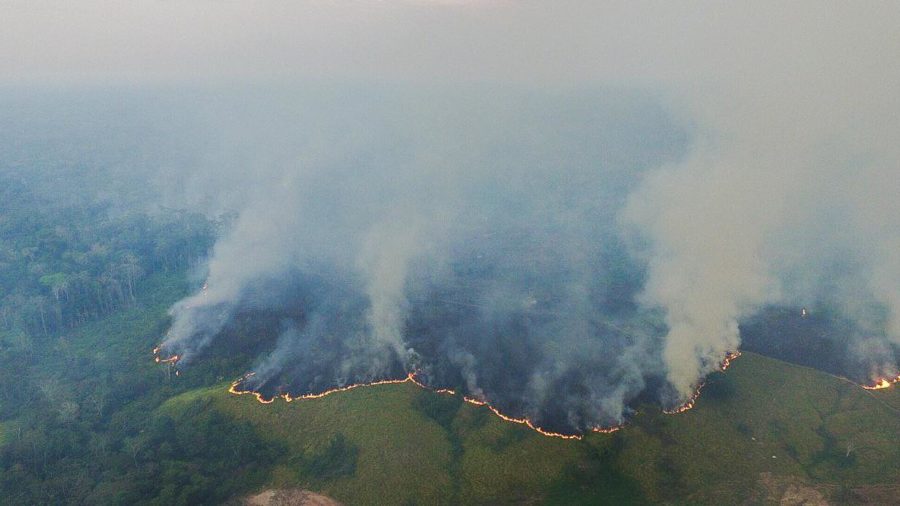
    In more recent days Brazilian President Jair Bolsonaro has been ramping up his rhetoric, encouraging the rape and pillage of the Amazon, forcing thousands of indigenous Indian tribes from their lands.

    Amazonia. © Arison Jardin

    Lovely hey?

    That a similar atrocity is now being visited on the Maasai people who have lived on, and with, their lands in northern Tanzania for hundreds of years, long before Tanzanian independence, to create killing fields for the super-rich Royal family of the UAE is deeply shocking.

    Since the 1980’s a luxury safari company – the Otterlo Business Company (OBC) – has been trying to complete a deal with the Tanzanian government whereby hundreds of thousands of Maasai will be driven from their ancestral lands. 1,700 acres is to be stolen from them to create a private shooting park for the UAE Royal family and their super rich mates.

    Acting for the Royal family, the OBC, a hugely wealthy private safari set up, have had their eyes on privatising thousands of acres of Ngorongoro, and Loliondo, key parts of the Maasai homeland in Northern Tanzania for decades.

    Ironically, part of these lands were actually set aside for royalty under British colonial rule – in the ‘good old days’. These days, thanks to OBC, ‘hundreds of members of Arab royalty and high-flying businessmen spend weeks each year hunting antelope, lion, leopard and other wild animals’.

    The area is leased (under the Otterlo name) by a member of an Emirati royal family who is a senior officer in the UAE defence ministry ministry.

    The OBC is no newcomer to the ‘big game’ slaughter scene. They have been busy in Tanzania’s wildlife parks for decades. Under a deal brokered with the Tanzanian government in 1992, involving the transfer of millions of dollars to Tanzania’s Armed Forces, Maasai homes were burnt down, their cattle stolen or killed, leaving villagers ‘homeless and without food, clothing, land,  water or basic medical needs’. Now they want this deal cemented – and all Maasai removed. Their villages, schools, fields and medical stations destroyed.

    As the leader of the Maasai, Julius Petei Olekitaika, says, ‘Imagine your home being burned in front of you to clear your land for foreigners to hunt. Imagine not being able to graze our cows because the government wants to protect a foreign investor whose only interest is hunting the wildlife.’

    The Tanzanian government, which gets 17% of its GDP from tourism, has made vague gestures towards the Maasai in the past, assuring them they will be protected, but recently pressure has been upped with the government saying the Maasai population is ‘detrimental to wildlife’.

    This is of course nonsense. Hugely wealthy game hunters, with massively powerful rifles,  and virtually no government oversight, have been a good deal more ‘detrimental to wildlife’ than the Maasai.

    Neighbouring Kenya, which banned big game hunting in 1978, says 80% of wildlife which should be funnelling through the corridor between the game parks of Tanzania and Kenya has been affected. Samwel Nangria, a Maasai organiser, says these guys ‘shoot anything they come across’.

    The Maasai on the other hand, famous for their nomadic and pastoral lifestyle that actually depends on maintaining the balance between people, ecology and animals remaining stable, are the ones being demonised, hunted, shot at, and driven from their homes.

    Already impacted by years of racism and bullying to try and get them out, recently the Maasai have had their livelihood​​s further damaged by a blanket ban on planting crops, and by climate change. With a ban on planting, food shortages are now common. In 2022 the Red Cross reported 60,000 of their cattle died.

    In June 2022 the Tanzanian government sent armed soldiers to evict Maasai. Thousands fled. Hundreds were injured as troops opened fire.

    Not that the big game hunters give a damn. All they want is an abundance of animals they can slaughter and to hell with the Maasai. To hell also with climate change.

    For all of us sharing this beautiful planet, and facing our greatest existential crisis – will we actually survive climate breakdown? How can anyone, or any government, justify allowing extraordinarily wealthy men to jet in, with guns, to take the lands, the livelihood and even the lives of a centuries old people so that they the rich ones can kill some of the most beautiful, and some of the most endangered, animals on earth? And probably take photos of themselves doing it.

    ‘For us’ says Samwel Nangiria, ‘the land is a source of knowledge, a source of life, a source of identity’.

    For the hunters one imagines the land is meaningless. Just somewhere to go and kill stuff.

    A few men enriched by this deal may think they’re the smart ones, but wouldn’t Tanzania’s freedom fighting, Socialist, first president, Julius Nyerere, be turning in his grave if he knew?

    I think he would.

    Feature Image: Maasai School, Tanzania, 2009.

  • Forty Footer

    Sixteen years ago, I wandered down to the Forty Foot to take some pictures of winter swimmers, one of the first swimmers I encountered was Tim; every week that winter I took pictures, building my collection and getting to know Tim and the other hardy swimmers, of which there was very few.

    I was going through some personal issues and had just sobered up, so Tim prompted me to give it – swimming – a go. A few months later I took the plunge, and so began my own swimming journey, a now nearly daily addiction.

    I’m now coming up to my sixteen year anniversary, I still bring the camera down and continue my study of swimmers and, more importantly, life down at the Forty Foot.

    In summers it comes alive, a real life West Side Story; the winter tranquility overtaken by hordes of teenagers observing the end of school traditions; jumping into the Forty Foot in uniforms; posturing and shaping in ther gangs; drinking and flirting – the passage to adulthood.

    I exhibited this work last year in the nearby Sandycove Store and Yard, and hope to produce my book next year, on a decade long study of Forty Foot life.

    For many years Tim was absent, and last November he rocked up to Sandycove, dived in and then as he emerged from the water, I captured him. He remarked ‘are you not famous yet ?’

    Early this summer I submitted this picture to the Zurich Portrait prize. I was pleasantly surprised to hear as the summer ended that this picture – Forty Footer – had been shortlisted for the Portrait prize and will hang in our National Gallery from December.

    So I guess I am famous now, thanks Tim, and hopefully will deliver the book ‘Forty Footers’ next year.

    Feature Image (c) Barry Delaney.

  • Alice Rekab: Family Lines

    Just off Nassau Street, a cavernous concrete passageway leads into the modernist Arts Building at Trinity College Dublin. The Douglas Hyde Gallery tucked neatly into its side is the current site of Family Lines, a major solo exhibition by Irish/Sierra Leonean artist Alice Rekab.

    Within, they present a rich and resounding body of work that embraces many lifetimes and life forms. The artist explores and reflects on personal and cultural narratives emerging from their mixed-race identity, uncovering and transforming traces of violence, both private and historical, through multiple mediums, terrestrial and digital.

    Upon entrance a video/installation entitled Migration Sings (2020) tells the story of the movement of peoples as well as the impact of the Atlantic Slave Trade on Sierra Leone.

    Performed in the language of Temne (a Niger-Kordofanian language, West Atlantic group, spoken in central Sierra Leone), lilting tones accompany an animated family photograph on a vertical screen. It includes their grandmother, known as ‘Teta’, just after her evacuation from Freetown following the civil war in the 1990s.

    The importance of the family, especially the matriarch carries through the exhibition and the voice of the Khalilu Gibrill Daneil Conteh floats like a spell over the entire gallery.

    The balcony walkway offers an overview of the main ground floor, and the space generously opens on descent, presenting itself as an arena that allows relationships between artworks to emerge.

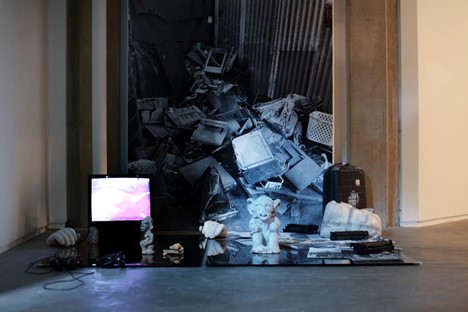
    Drawn to the installation in one corner of the gallery, a monitor displays footage of ‘Nomoli’ and prints of ritual and tribal ceremonies are grouped with talismanic figurines. The Nomoli were used to mark seams of precious minerals in the ground; deposits that have been extracted and exploited for centuries.

    The symbolic sculptures made of soft stone are the only known remains of an empire that stood hundreds of years ago. Josephine Kargbo, the curator of collections at the Sierra Leone National Museum in Freetown, explains that although she has never seen any of their power manifest, she does not rule out their potency.

    This work sets the pulse of the exhibition; it is difficult not to be gripped by the pain and horrors suffered by Teta – to feel that this trans-generational work is somehow healing a deep wound that has been uncovered, just as fissures marked by the Nomoli were. As stated by Bracha Ettinger, “we join in sorrow so that silenced violence will find its echo in our spirit, not by imagination but by artistic vision.”

    What is Nomoli? 2022 Archive Version, 2018-2022, Black and white video (12 mins), Sony cube monitor, stone figure, pottery tools, painted clay, tinted mirrors, black prints and enlarged iPhone photograph on vinyl (210 cm x 168 cm). Work commissioned by Kingston University of London. Image credit; Senija Topcic 2022.

    Placed along the main wall Our Common Ancestor (Five panels of enmeshed historical narrative, 2022, Paint, oil pastel, salvaged wooden boards, clay and digital prints) presents what appears as a series of scars cutting across the panels and terminating in what could be a lightning bolt, meteorite strike or even the primordial beginning of time.

    Could this represent a fissure in the Sierra Leonean earth, one that yielded the blood diamonds that have fuelled the bitter civil war? Opposite, a mirror spawns tentacles that overstep the gallery boundaries. Seen (2019 -2022, Buff and terracotta clay, salvaged wooden board and salvaged mirror) places our selfie loving imago in a precarious position. We do not go unnoticed – we are framed, enveloped, while staring into the portal of another world.

    A painting by the artist’s mother, Louise Meade, and an accompanying print by the artist, hang on an otherwise blank wall of the main level, while Samir’s Prism, (2021, Print of digital drawing, collage and family photo), Finds Mine (2021 digital print) and Analogue Mining (2020, digital print, buff and terracotta clay, plasticine and book) exemplify a long experience of being defined, classified and confined through the interpretation, oppression, and values of the colonialist system.

    Shapeshifting artifacts inhabit the gallery floor – displaying a group of tables, a distinctly anthropomorphic commode, some hot-blooded reptiles with babies and a vintage vacuum cleaner that has mutated into a snake.

    Made from unfired clay, the objects are parched and bone dry. Imprints of the artist’s fingers show an intimacy, malleability and an amount of patience that reflects drought-stricken Sierra Leonean farmers’ unrelenting belief in the spirit world and the promise of a good harvest.

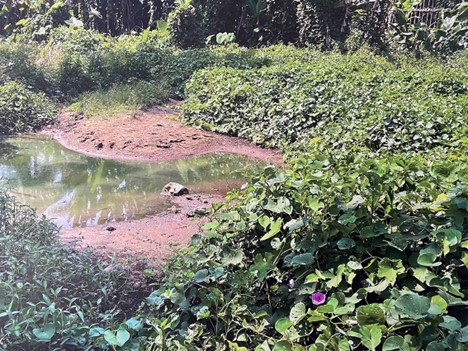
    There is a strong sense of dignity, love, and resilience. A monumental print of a clay pit reminds us of our vulnerability and insignificance in an untameable place, as fantasy, memory and fact collide (Fig 3).

    Nyaguihun Gateway (clay swamp near Bo), 2022, Enlarged iPhone photo on vinyl, 335 cm x 406 cm.

    Turning towards Christmas on Cemetery Road/Hamilton (2021/2022) the video feels intimate, familiar, personal, and magical. As viewers, we are eager to accompany this exploration of interior and exterior space, discovering new sights as imagery moves on into the hot African night.

    Family Lines generates resonant energy, which ought to be observed gently, over time. This exhibition offers an opportunity to witness an encounter with ‘self’ that is deeply embedded in subconscious experience.

    The artist’s exploration of their own identity generates a form of healing. Their art-space uncovers traces of trauma which enable the rebuilding of trust in the other, which in turn adjusts their and our position in the world.

    As we observe this process, some of us may feel compassion, awe and a sense of shared responsibility. We are a part of this history and the legacy of colonialism. We might realise that the real value found in the earth is not diamonds, gold, or iron ore – but in the ground itself – and the respect required to let it be, in the hope of yielding a harvest that can nourish a family.

    Alice Rekab: Family Lines
    Douglas Hyde Gallery, Dublin.
    1 July- 25 September 2022

    Feature Image: Isata an Ee Cat, 2018, Print of digital drawing, collage and family photo, 107.5cm x 151 cm. An edition of this work is in the Collection of the Irish Museum of Modern Art, Purchased 2021.

  • Cost of Living: Digging for Victory

    Standing outside a Dublin hostelry in the drizzle, I fell into conversation with an Ulsterman who arrived with impeccable republican-socialist credentials. I assumed, this would make him sympathetic to the recently vanquished Labour leader Jeremy Corbyn.

    I breezily opined that the long-serving MP for Islington had been the first post-War Labour leader to challenge a neo-colonial consensus in British politics, to which I received a surprising response.

    “He’s just like the rest of them,” he said, pausing before almost spitting out the words, “the allotment,” and muttering “that’s how you can tell.”

    Only on reflection do I recognise the origin of a prejudice against anyone holding an interest in the dark arts of composting, training vines, or even the life cycle of the carrot fly.

    He echoed savage criticism of privileged do-gooders with an evangelical zeal for horticulture, from that most quintessential of English writers, George Orwell.

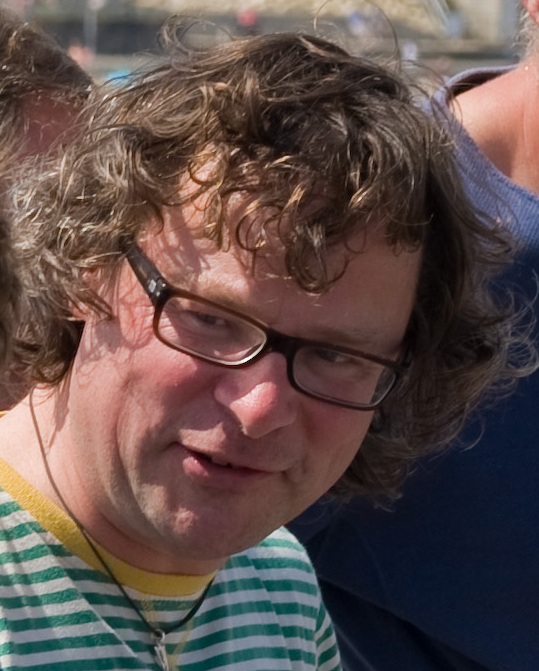
    Hugh Fearnley Whittingstall

    ‘food-crank’

    In The Road to Wigan Pier (1937) Orwell dismissed a certain type of socialist ‘food-crank’, ‘sandal-wearer’, ‘fruit-juice drinker’ as ‘a person willing to cut himself off from human society in hopes of adding five years on to the life of his carcass; that is, a person out of touch with common humanity.’

    He maintained: ‘The ordinary human being would sooner starve than live on brown bread and raw carrots.’ But added, revealingly: ‘the peculiar evil is this, that the less money you have, the less inclined you feel to spend it on wholesome food.’

    Orwell articulated an enduring English working class aversion to a New Age paternalism, which my Republican-Socialist interlocuter outside the pub appeared to share.

    Well-intentioned, but often tone deaf, efforts to instil passion for horticulture continues to emanate from aristocratic scions such as Hugh Fearnley Whittingstall. His Dorset estate became a TV showcase for sustainable gastronomy in a country more renowned for mushy peas and fried batter, washed down with Irn-bru.

    There is, however, a curmudgeonly quality to Orwell’s critique, reflected in a stated preference for Anglo-Saxon words over those of French or Classical origins in ‘The Politics of the English Language’. In England, and not only among working class, plain food, as well as plain words, are generally preferred over anything sophisticated, complex or, worst of all, French.

    However, in my view, Corbyn comes from an honourable lineage of Ragged Trousered Philanthropists: genuine social reformers that secured parliamentary approval through the 1908 Small Holdings and Allotments Act. This brought 1,500,000 plots into cultivation by 1918, thereby ensuring a steady supply of fresh fruit and vegetables in many metropolitan districts.

    It also led to a wide diffusion of gardening skills, which became a valuable resource during World War II when, denied of imports, the population was urged to Dig for Victory, with impressive results.

    Nonetheless, what Orwell acknowledged as “the peculiar evil” of working class people turning their noses up at healthy produce suggests early industrialisation of food production in Britain – particularly the preponderance of refined sugar – had a lasting effect on the British pallet, and sadly the Irish one too.

    In England today organic is a by-word for posh, and unaffordable: “not for the likes of you and me.”

    Sadly, reflecting the colonial experience, Irish tastes are often just as blinkered. This is apparent in a lasting aversion to cultivating fruit and vegetables, which has informed the state’s agricultural priorities since independence.

    Today just one percent of all Irish farms now produce vegetables – for reasons I explore.

    Irish Food

    Notably, the celebration of specifically ‘Irish’ food did not figure prominently among Irish nationalist at the end of the nineteenth century. Crucially, with the inception of the state, agriculture was identified as a primary source of export revenue.

    This perpetuated a pattern of development that can be traced to the end of the Napoleonic wars in 1815, when a reduction in the price of grain on the British market created economic conditions in Ireland favouring raising cattle for export, often ‘on the hoof’.

    The potato has long been identified with the Irish people, but it has not become a cherished foodstuff in the same way rice is to the Japanese for example. Early nationalists were more concerned with promoting self-sufficiency in wheat. Moreover, the Great Famine remains a relatively unexplored trauma, at least in terms of the Irish relationship with food, and the land.

    Tony Kiely describes Dublin working- class meals in the 1950s as follows: ‘Family diets were very basic, consisting in the main of bread, tea, oatmeal, cocoa, potatoes, cabbage, herrings and pairings of cheap meat pieces for stews and soups .…’ While: ‘Bread was both a staple, and a constant companion at all meals.’[i]

    Anthony Farmar suggests that an absolute rule among the Irish middle class in the 1960s was never to talk about food: ‘to enjoy eating as such was unbecoming to a serious person’. He quotes an American commentator who claimed cooking in Ireland was ‘a necessary chore rather than an artistic ceremony, and that in restaurants “‘nine out of ten ordered steak every time with nine out of ten ordering chips with it.”’[ii]

    Among the post-Great Famine diaspora, there is little evidence of recreation of native dishes. Panikos Panayi claims that in Britain: ‘Irish food did not have enough distinction from that of the ethnic majority to warrant the opening of specifically designated food shops.’[iii]

    Regarding nineteenth-century Irish-American immigrants, Hasia R. Diner reveals: ‘They rarely talked about food, neither did they sing about it, nor did it contribute to community institutions and rituals.’[iv]

    Self-consciously Irish recipe books emerged only after independence. Most Irish nationalists did not view eating distinctively Irish food as an important cultural marker, except perhaps when it came to eating bread made from home-grown wheat.

    Thus, in a pamphlet addressed to the women of Ireland, the writer and Irish language activist Mary Butler crafted a list of fifteen ways in which to foster authentic Irishness in their homes. Revealingly, ‘no traditional recipes, foodways, food names, or food practices as instruments for building Irish identity were included.’[v]

    Image (c) Daniele Idini.

    Aping the English

    According to Benedict Anderson, ‘by the second decade of the nineteenth century if not earlier a model of the independent nation state was available for pirating.’[vi]

    This is important in the Irish context as the model most readily available was English or British nationalism, a society that prized letters and sporting prowess, and in which a native culinary tradition had been ‘decapitated’[vii] by the end of the nineteenth century.

    In 1880 the surgeon and polymath Sir Henry Thompson observed:

    On questioning the average middle-class Englishman as to the nature of his food, the all but universal answer is, ‘My living is plain, always roast and boiled’—words which but too clearly indicate the dreary monotony, not to say unwholesomeness, of his daily food; while they furthermore express his satisfaction, such as it is, that he is no luxurious feeder.[viii]

    The disinterest exhibited by the English in cookery and the discussion of food was compounded by the nutritional impoverishment of the working class.

    Sidney Mintz estimates that by 1900 nearly one-fifth of average caloric intake came in the form of refined sugar, which was mainly consumed in tea or jam.[ix] Apart from being nutritionally deficient, this diet lacked variety and bred conservatism as older traditions of food preparation yielded to bland industrial products.

    With no sophisticated models of food consumption to compete against, the Irish cultural elite was not drawn to food as an expression of identity; unlike Italians, for example, situated within the domineering cultural orbit of French cuisine.

    An Irish Peasant Family Discovering the Blight of their Store by Cork artist Daniel MacDonald, c. 1847

    Poverty

    This was compounded by the virtual extinction of many traditional foods as a result of poverty and changes in agricultural production in the wake of the Agricultural Revolution.

    David Dickson ‘suspects that much of what is today regarded as traditional Irish cuisine—soda bread, barm brack, boxty, champ, colcannon etc—’ was only developed in the nineteenth century ‘in the kitchens of the solid farming class.’[x]

    During the Famine, those unaffected by starvation bore witness to suffering on a scale that is hard for those of us living in contemporary Ireland to fathom. Joseph Lee likens its effects to the Jewish experience of the Holocaust and explores a psychological legacy:

    They will have seen corpses, if not in their own dwellings, then on the roads and in the ditches. Many are likely to have felt a degree of guilt, of the type that often afflicts survivors of tragedies, not only of the Holocaust, but of events like earthquakes and mining catastrophes. Why did you survive when others in your family did not? A sense of guilt can simmer below the surface, to perhaps breakout in uncontrollable and, to uncomprehending outside observers, in apparently inexplicable ways.[xi]

    Crawford and Clarkson concur, suggesting that survivors carried psychological scars and that their physical and intellectual developments were stunted.[xii]

    Image (c) Daniele Idini.

    Alternative Crops

    The dominance of the market generated a snobbery directed against foraged foods, which according to Louse M. Cullen acquired a ‘stigma.’[xiii]

    Kevin Myers once mused in his Irishman’s Diary that: ‘It’s almost as if those who live on the land here are culturally and emotionally disengaged from its essence as a living thing.’[xiv]

    The impact of colonisation cannot be overlooked. According to John Feehan: ‘it seems more than likely that the loss of the Gaelic tradition of farming was accompanied by a decline in the lore of wild plants and animals as food or medicine.’[xv]

    Furthermore, the absence of a native ‘improving’ gentry, especially after the Act of Union in 1801, limited experimentation in and demand for ‘alternative’ crops: fruit and vegetables varieties with limited market value.

    By the eve of the Great Famine three million (out of a population of eight million) were living on a mere one million acres of land, which represented just 5% of a the total acreage of 20 million.’[xvi] It is remarkable that until the blight arrived, without modern machinery or chemicals, so many were able to subsist on such small plots .

    Moore Hall, County Mayo.

    Lack of Variety

    Writing in 1971, Rosemary Fennel bemoaned the demise of country markets, saying a ‘frequent complaint in Ireland is the lack of variety of in vegetables for sale and the high prices charged.’[xvii] Media coverage of the subject of food in the form of recipes, reviews and features only really took off in the 1990s.

    It may be that the enduring absence of alternative agriculture and gastronomy owes something to the rejection of the ‘Big House’ in whose walled gardens, orchards and hothouses horticultural experimentation had occurred prior to independence, which precipitated the departure of a significant proportion of what remained of the landlord class.

    In an independent state dominated by a petit -bourgeois farmer class, the Big House, was despised. In 1944 the Minister for Lands Sean Moylan condemned them as ‘tombstones of a departed aristocracy’ remarking ‘the sooner they go down the better. They are no use.’[xviii] More recently Nuala O’Faolain admitted: ‘We cannot, or at least I cannot, look at the Big House without some degree of rage.’[xix]

    Certainly, since independence the focus of the state has been on securing export revenue from agricultural produce. In her history, Mary Daly argues that ‘it is evident that the Department [of Agriculture] has traditionally looked at agricultural matters from the perspective of the producer rather than the consumer.’ She cautions that the identity of interests between farmers and the Irish nation ‘does not necessarily apply on issues such as food policy, or the environment.’[xx]

    Securing land has never been easy. Frank Mitchell and Michael Ryan observed in 1997: ‘In Ireland it is still next to impossible to rent land on a lease of sufficient length to make improvements and where land can be bought it is often in small parcels at too high a price.’[xxi]

    The Irish Breakfast Roll.

    Changing Habits of a Lifetime

    Pierre Bourdieu claims that ‘it is probably in tastes in food that one would find the strongest and most indelible mark of infant learning.’[xxii] Developing a taste for brown bread and carrots perhaps does not come easily if white bread and jam have been childhood staples.

    One way to bring about a shift in Irish tastes could be through increased participation in small scale agriculture. This might lead to wider agricultural reforms, as people gain an appreciation of seasonality and even terroir ­– the unique flavour imparted by the growing environment.

    A gastronomic awakening could lead to the cultivation of gardens across suburban and rural Ireland, and in more built-up areas public allotments – yes “allotments” – ought to be developed, but this will require state intervention.

    More public land should be set aside for allotments given the importance of consuming sufficient fresh fruit and vegetables in our diets; not to mention the potentially huge savings if people were able to grow more of their own. Recall that on the eve of the Great Famine three million were subsisting on a mere one million acres of land!

    My own district of Dun-Laoghaire Rathdown, which contains vast under-utilised parklands has just two public allotment sites available for a population of over two hundred thousand. One at Goatstown with 136 plots and another in Shankhill with 95 plots. Unsurprisingly, both are over-subscribed.

    Meanwhile in the more congested Dublin City Council region, where there is still ample public land availabe, some zoned Z9 for Lands/Green Network, there are nine, again over-subscribed, sites.

    Until there is an adequate distribution of land, horticulture will remain a privilege of property owners with gardens. This has important implications for the endurance of the perception that fresh fruit and vegetables are ‘posh’ food.

    [i] Tony Kiely, “We managed”: reflections on the culinary practices of Dublin’s working class poor in the 1950s’, in Máirtín Mac Con Iomaire and Eamon Maher (eds) Tickling the palate, gastronomy in Irish literature and culture (Oxford, 2014), p.108.

    [ii] Anthony Farmar, Privileged lives: a social history of middle class Ireland 1882-1989, (Dublin, 1989), p.180-2

    [iii] Panikos Panayi, The multicultural history of British food (London, 2008), p.43.

    [iv] Hasia R. Diner, Hungering for America: Italian, Irish and Jewish foodways in the age of migration. (Cambridge, 2002), p.114.

    [v] Ibid, p.84.

    [vi] Benedict Anderson, Imagined Communities: reflections on the origin and spread of nationalism, (London, 1991), p.81.

    [vii] Stephen Mennell, All Manners of Taste: eating and taste in England and France from the Middle Ages to the present (Oxford, 1996) p.214.

    [viii] Ibid, p.296.

    [ix] Sidney Mintz, Sweetness and Power: the place of sugar in modern history, (New York and London, 1985) p.6

    [x] David Dickson, ‘The potato and the Irish diet before the Great Famine’, in Cormac Ó Grada (ed.), Famine 150 commemorative lecture series (Dublin, 1997), p.19.

    [xi] Joseph Lee, ‘The Famine in Irish history’, in Cormac Ó Grada (ed.), Famine 150 commemorative lecture series (Dublin, 1997), pp.168-9

    [xii] Leslie Clarkson and Margaret Crawford, Feast and Famine, (Oxford, 2001), p.134.

    [xiii] Louse M. Cullen, The Emergence of Modern Ireland 1600-1900 (London, 1981), p.173

    [xiv] Irish Times, 30 January 2001.

    [xv] John Feehan, Farming in Ireland, (Dublin, 2003), p.201.

    [xvi] Raymond Crotty, Irish Agricultural Production: Its Volume and Structure, (Cork, 1966), p.63

    [xvii] Rosemary Fennell, ‘The domestic market for Irish agricultural produce’, in Baillie and Sheehy, Irish agriculture in a changing world, p.106.

    [xviii] Terence Dooley, ‘The Big House and Famine memory: Strokestown Park House’, in Crawley, Smith and Murphy, Atlas of the Great Irish Famine, p.625.

    [xix] Ibid, p.628.

    [xx] Mary Daly, The First Department: a history of the Department of Agriculture, (Dublin, 2002), p.428

    [xxi] Frank Mitchell and Michael Ryan, Reading the Irish Landscape (Dublin, 1997), p.356

    [xxii] Pierre Bourdieu, Distinction: a social critique of the judgment of taste, trans. by Richard Nice, (London, 2010), p.71.