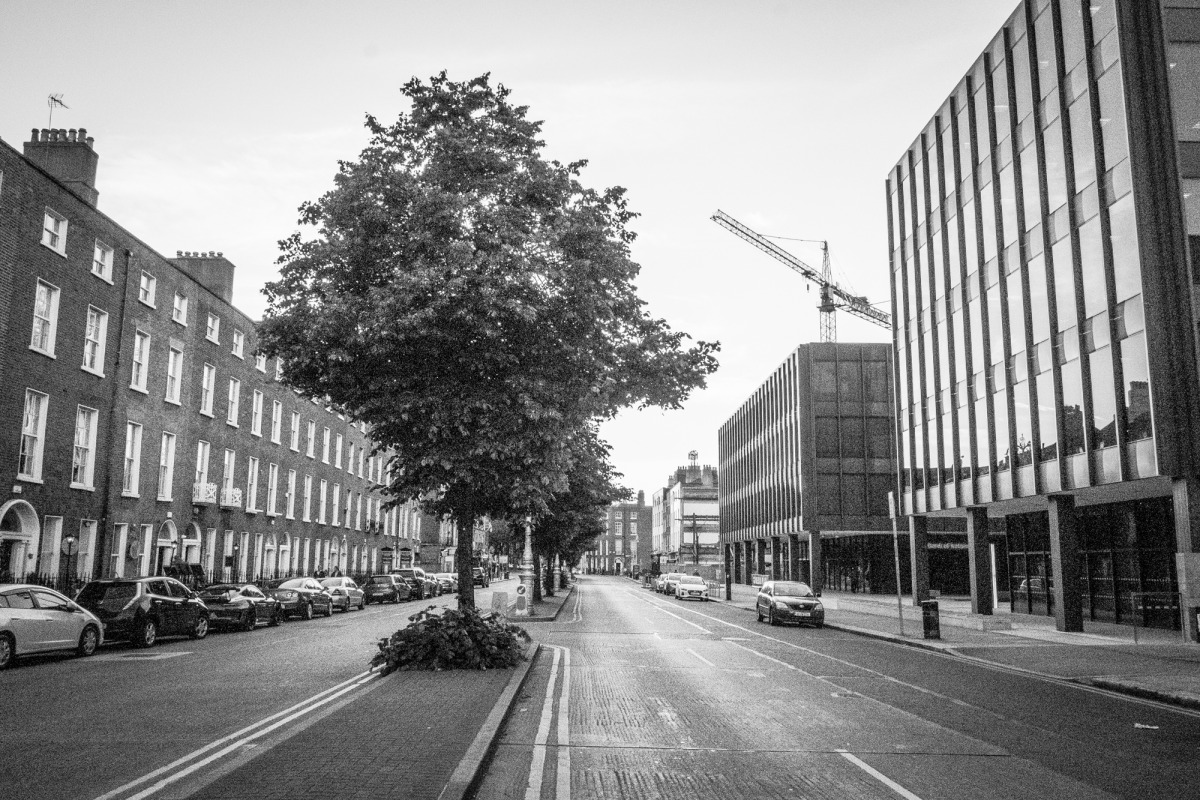
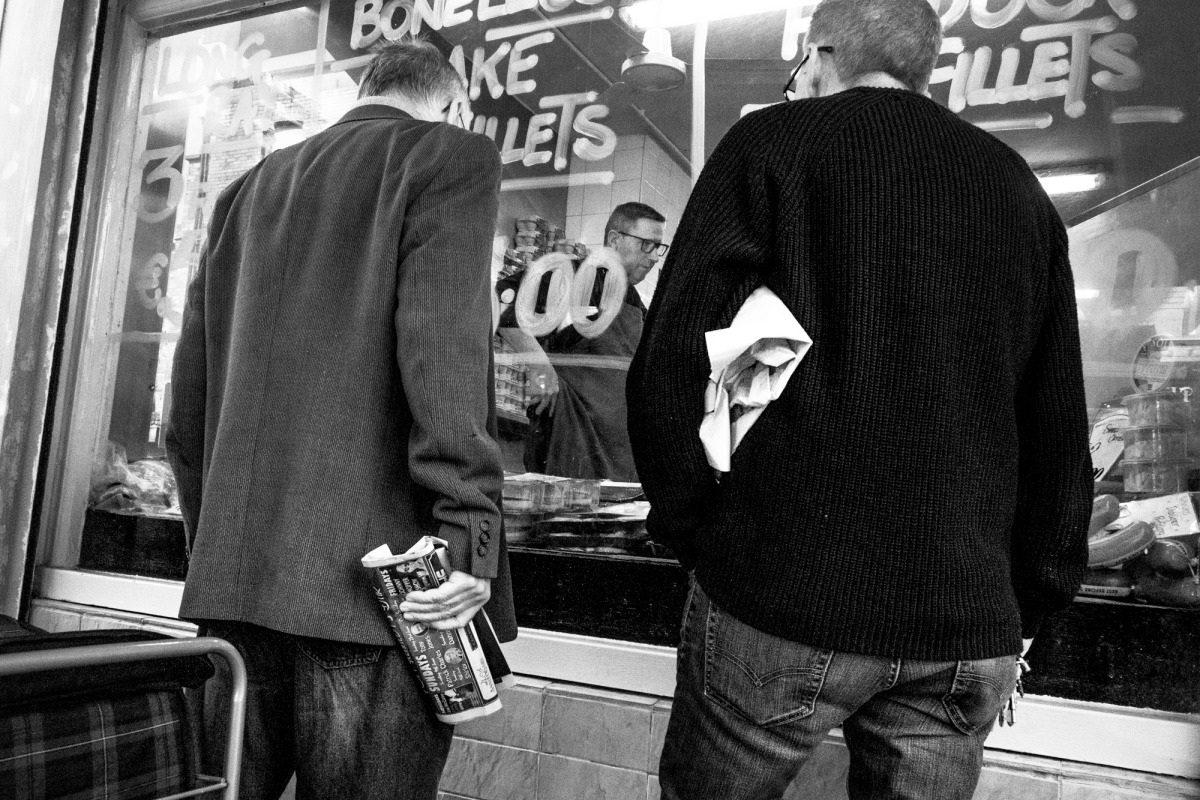
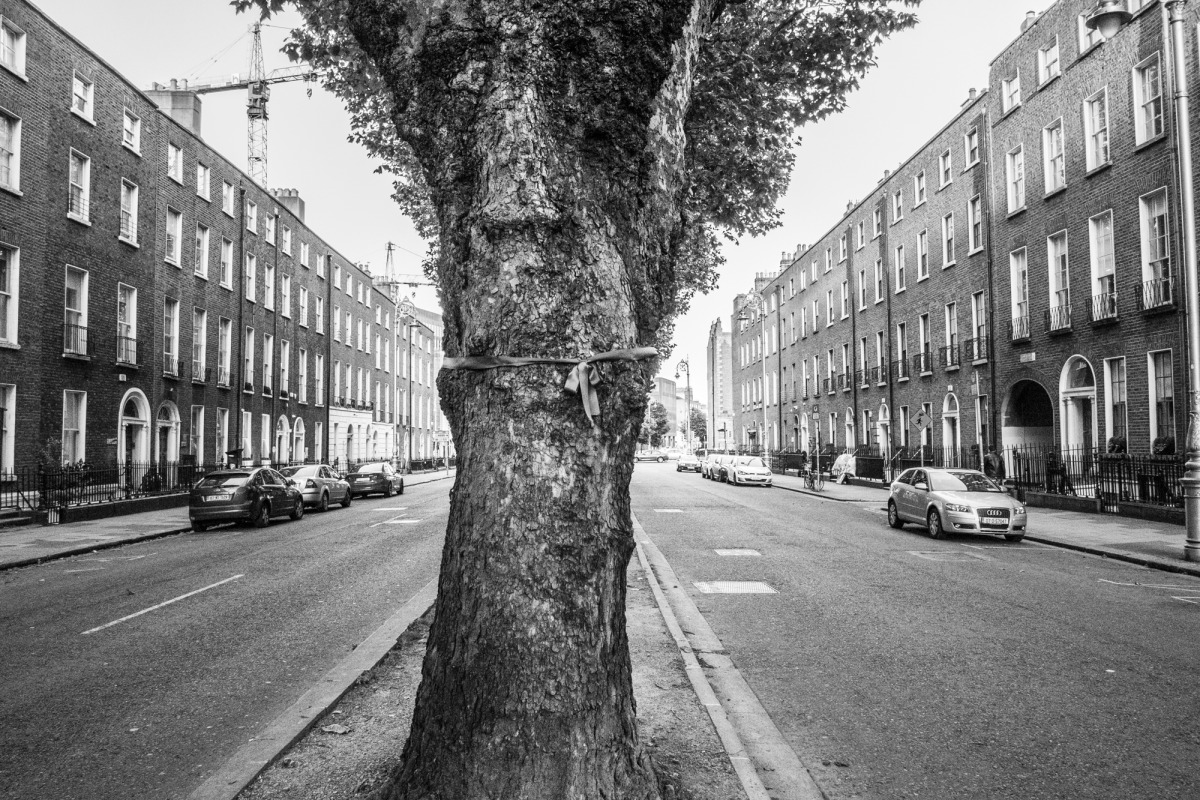
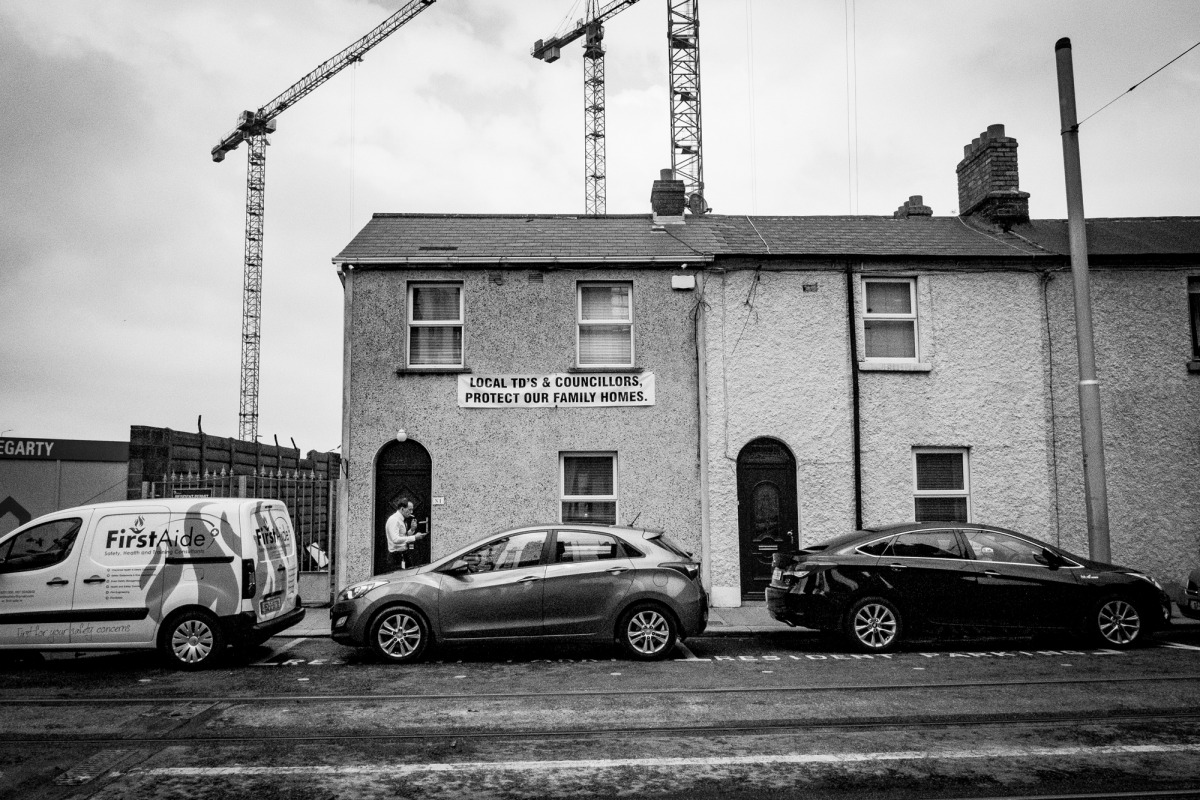
Dublin, that old whore, with her piss -stained pavements
Abruptly transforms into a woman of a certain station.
Such are the, at once, brutal and subtle shifts where
In an instant, Hell aligns in an altogether strict
Congruence… Like when you climb aboard
The final commuter train of the week on a Friday
Evening on Platform One at Pearse Station.
And, as the train finally pulls out, leaving
Behind her the contents of a working week,
Passing images are reflected back to you
Through the compartment windows, revealing
Dune and marram at Portmarnock, to a passing
Lagoon at Malahide, and then the panoply of imagery
Miraculously washes away all of the whoredom from your mind.
The Great Burnishment
Your Pirelli calendar moment must last, at least, twenty score years;
Nobody makes this very important point entirely clear.
So, try to remember, while cavorting in the Sun,
That the memories must endure, and for everyone!
Call it, if you will, the great Burnishment.
When like two figures from a fabled myth or play,
You roam the most remote shores and the very
Earth appears made for you both alone.
It is the cliché – you look on her then and on those mythic shores –
With the aroma of wild rosemary, myrtle and Goat;
Desire bears you both ever onward with its emblazoned sail.
Fast forward two decades now and she stands before you in your kitchen,
And the initial violence of the sun from that first day,
Tell me, do you still feel its impact burning your skin?
The Flies
The two house- flies, Beckett and Joyce, buzz about you
And the TV screen. There they land, buzz again
Before flying off to Memphis copulating
And multiplying on the wing. As a sign of virility,
The Egyptians displayed them on their amulets.
That great race, unlike our own, had a great respect for insects!
Even the Greeks showed a similar respect,
When having a BBQ they offered a sacrifice to Shoo Fly Zeus.
The crabby meat men, in this way, could eat their own
Undisturbed by patrolling swarms and Oxen that had fallen
Were replaced by Lotus Eater, and burning eucalyptus in the Sun.
Now, you look at the books of both these modern sages
That you have been reading for an eternity,
And still you hear the flies buzzing across the pages!
The Vico Road
From the vantage point of Strawberry Hill,
A Victorian Villa recently selling for a cool 5 million,
A place more evocative of Raymond Chandler
Than anything remotely Irish. I am reminded,
Again, of the Neapolitan philosopher who
Peopled his New Science with giants. In fact,
While lunching there on one of the picnic tables,
I had a slightly hallucinatory vision of Gulliver
Striding in 18th century breeches, and croppy hair
Over the Sugar- Loaf Mountain, while
The Lilliputians below discussed the ongoing
Business in the property sector: vulture funds
And NAMA; hedge funds in Texas,
Where the multi-headed Cereberus roars.
A phone surveillance scandal targeting journalists and a prominent politician has been simmering for some time now in Greece.
Friday, August 5 marked a serious escalation, leading to the possibility of early elections. Two resounding resignations within the space of an hour have altered the political landscape, but while most international media initially focused on the resignation of the National Intelligence Service (EYP) Chief, Panagiotis Kontoleon, the other is of greater significance.
Grigoris Dimitriadis, the General Secretary to the Prime Minister Kyriakos Mitsotakis (and also his nephew) has been forced to resign under the weight of the scandal. Since then, and over the following seventy-two hours, his name has consistently been among the top ten trending topics on Greek Twitter.
Apart from Dimitriadis being a close blood relation of Mitsotakis, he was also one of his very closest associates. His right hand man many would say, which might even be an understatement. The former General Secretary was widely regarded as the éminence grise of the government apparatus, and the ruling right-wing party Nea Dimokratia
His resignation was widely seen as an admission of guilt, an interpretation certainly voiced by the leader of Syriza (the main Opposition party), Alexis Tsipras, who seized the opportunity to blame Mitsotakis himself.
Οι ηχηρές παραιτήσεις υπό το βάρος του σκανδάλου των παρακολουθήσεων αποτελούν ομολογία ενοχής και επιβεβαιώνουν τις ευθύνες του ίδιου του Πρωθυπουργού. Ο κ. Μητσοτάκης οφείλει να δώσει εξηγήσεις στον ελληνικό λαό για το δικό του «watergate». Είναι ζήτημα Δημοκρατίας.
— Αλέξης Τσίπρας – Alexis Tsipras (@atsipras) August 5, 2022
It is another political leader, however, who is at the epicenter of this crisis. Nikos Androulakis is the president of the third largest political party in the Greek parliament PASOK (Panhellenic Socialist Movement). He caused consternation on July 26, when he filed a complaint with the Supreme Court of Greece, over an attempt by unknown actors to hack his mobile phone, using illegal Predator spyware.
The attempt was originally uncovered by chance, through a routine security check at the European Parliament, as Androulakis is also an MEP. This revelation made front page news, and brought prime time TV mainstream coverage, to an affair that had been brewing for some time before Androulakis filed his complaint.
There had been extensive reporting away from mainstream media, which was easily dismissed by government spokespeople, on electronic surveillance targeting two journalists, Stavros Malichoudis and Thanasis Koukakis.
What is also at stake here is no less than the freedom and independence of the press. The aforementioned Stavros Malichoudis is a member of Reporters United, an independent network of journalists, integral to the investigative reporting that led to the Dimitriadis and Kontoleon resignations. Their most impactful articles, which put General Secretary Dimitriadis into the frame of the scandal, were also published in the popular left-wing daily newspaper Efimerida ton Syntakton.
Another small media outlet which was involved in the series of revelations is the subscription-based Inside Story, which was the first to publish the findings of Citizen Lab, which broke the story about the hacking of Thanasis Koukakis’s phone with Predator spyware. Koukakis is an internationally published Greek journalist, who was investigating matters of financial corruption.
In November 2019, he published an article in the Financial Times revealing that the Mitsotakis administration had amended legislation in a way that created a more favorable environment for money laundering.
Shortly after stepping down from his position as General Secretary, Grigoris Dimitriadis filed a law suit against Reporters United, Efimerida ton Syntakton and Thanasis Koukakis. This kind of prosecution is the epitome of a SLAPP (Strategic Lawsuit Against Public Participation).
The five worst countries in the EU for media freedom are:
Greece was recently ranked 108th out of 180 countries in the annual World Press Freedom Index released by Reporters Without Borders (RSF) at the end of last April, having dropped a staggering 38 places from last year, thereby becoming the lowest ranked EU member state.
The degree of freedom available to journalists in 180 countries and regions is determined by pooling the responses of experts to a questionnaire devised by RSF. This qualitative analysis is combined with quantitative data on abuses and acts of violence against journalists during the period evaluated. The criteria used in the questionnaire are pluralism, media independence, media environment and self-censorship, legislative framework, transparency, and the quality of the infrastructure that supports the production of news and information.
Reporters Without Borders identified many problematic areas and important violations in regard to media freedom and independence in Greece, with the most shocking being the unresolved murder of the influential journalist Giorgos Karaivaz, who was gunned down in broad daylight outside his home on April 9, 2021, after more than a dozen bullets were shot at him, with ten landing on his body.
The French newspaper Liberationdescribed how he “was investigating a number of cases that concerned members of the ruling party and rings of the criminal underworld.” His most recent investigations right before the assassination “were touching closely upon the function of the State in Greece, such as with the case of Dimitris Lignadis.”
Lignadis, a famous Greek theatre actor/director known for his right-wing leanings “was appointed without transparency [head of the Greek National Theatre], six weeks after the electoral victory of N.D.”
Lignadis was accused and has since been convicted on two counts of raping minors. This scandal had captivated public attention and “for several weeks had undermined the ruling party of Nea Dimokratia, many of whose members were alleged to maintain close personal ties with this man of the theatre”.
The same Liberation article recalls that “according to many observers, Lignadis had political protection, while one day before he was murdered, Giorgos Karaivaz had gone even further, claiming on television that Dimitris Lignadis was given time to destroy critical evidence”.
To this day, the case of his murder remains unsolved and there is a lingering suspicion that it will remain as such.
The case of the Giorgos Karaivaz assassination is merely the tip of an iceberg of an increasingly dangerous environment for the practice of journalism in Greece.
The government of Nea Dimokratia has been repeatedly criticized, within Greece and abroad, for establishing unprecedented control over the vast majority of mainstream media. This is common knowledge to most people living in the country, and a recurring subject on social media platforms where State control is much more limited.
Part of the explanation is merely structural. It has long been this case that the major part of the mainstream media in Greece, especially television channels and legacy newspapers, are owned or controlled indirectly by shipping magnates, whose tentacles reach into various other areas of the economy. These interests naturally align with the ruling party’s neoliberal, deregulating agenda.
🗨️Continued efforts to keep criteria for #PetsaList a secret only increase concerns of #pressfreedom orgs about Greece’s problematic system for financing of media & apparent efforts to disproportionately funnel money to media supportive of the government during #COVID19 crisis. pic.twitter.com/UGOVgQNFRl
— IPI – The Global Network for Independent Media (@globalfreemedia) June 21, 2022
Petsas list
What has been exceptional, however, under the current administration is the extent of the corruption, typified by what became known in Greece as the “Petsas list”, which takes its name from Stelios Petsas, the current Alternate Minister of Interior and former Deputy Minister to the Prime Minister and government spokesman.
This was a list of media outlets – some of which were tiny and insignificant until that point – which, during the pandemic received significant state funding under the pretext of informing the public about Covid-19
The list favored outlets that were already, or were set up to be, staunch supporters of the government. This has been regarded by political opposition and most of civil society as a blatant – and largely successful – attempt to consolidate control over the narrative of public discourse.
At the same time, SLAPPs have become more and more commonplace, with a wide array of targets, ranging from the few remaining antagonistic media, to even individuals on Twitter and other social media platforms.
During demonstrations, photojournalists are increasingly physically assaulted by the police and obstructed as much as possible from recording their brutality, which is more prevalent than ever.
Overall, any reporter scrutinising authority is likely to be treated as an enemy of the State. It is often the case that independent Greek journalists have to quote reputable foreign media to highlight relevant Greek news and analyses that is otherwise buried by the mainstream domestically, or dismissed as fake news and politically motivated defamation.
This wiretapping scandal is a shady and convoluted affair, involving many different actors. Politicians, journalists, businessmen and corporations have all been involved in a sprawling and perplexing web of relations and antagonisms.
The initial coverage from international media has been mostly superficial. This article will endeavour to fill in some gaps. Importantly, there are two different kinds of wiretapping that have been taking place: technically legal ones and those that are entirely illegal.
The legal ones have to be authorized by a District Attorney and are conducted under the authority of the National Intelligence Service (known as EYP). A critical characteristic of these is that they are bound to function in an “old school” way of surveillance that cannot penetrate end-to-end encryption apps such as Signal, Viber, Telegram etc.
Which brings us to the illegal ones. Advanced spyware like Pegasus and Predator have a different penetration capacity, one that completely takes over the device and can monitor any action, including any known kind of encrypted communication, as well as the function of the microphone and camera. Any use of such spyware remains a criminal offence under Greek law.
To lay out the relevant information, we have to go back to the beginning of the current government’s tenure in July 2019. The very first piece of legislation the newly elected government of Kyriakos Mitsotakis passed through the Greek Parliament brought the National Intelligence Service (EYP) and the State Media under direct control of his own office.
This in itself raised some eyebrows, but the nomination of Panagiotis Kontoleon as Chief of EYP generated widespread bafflement and even suspicion. Kontoleon is a man without any higher education degree, prior experience in politics or the law, or any other relevant skills or qualifications for such an office. He is a former private security guard, who ascended the hierarchy of the company he was working for, while always remaining under the patronage of his boss and owner of the company, Andreas Paterakis.
According to sources on the peripheries of mainstream Greek media he was characterised as a “Yes Man” and a “backstabber”. The justification given for his appointment was simply that he was “a person with connections to the American Embassy and a choice of the Mitsotakis environment”.
On August 12, 2020, Thanasis Koukakis filed a complaint to the Hellenic Authority for Communication Security and Privacy (ADAE). He cited reasonable suspicions of having been the target of wiretapping on his phone. He did not receive any response from the Authority until almost a year later.
On March 31, 2021, the government passed legislation, under an emergency procedure which it claimed was in response to the pandemic. Amendment 826/145 changed the rules in regard to legal wiretappings.
ADAE is no longer allowed to inform citizens upon their request as to whether their communications having been monitored by EYP, after the completion of the surveillance period. A crucial detail is that the new law is retroactive, covering complaints filed before its enactment.
On July 29 2021, ADAE finally responded to Thanasis Koukakis’s complaint stating that “no event was found which would constitute a breach of the legislation on the confidentiality of communications.”
Predator
In December 2021 the thread concerning the Predator part of this story begins, when two different researches, one from Toronto University’s Citizen Lab and one from Meta exposed the expansion in the use of Predator spyware in various countries including Greece. The news attracted next to zero attention in mainstream Greek media, even after Inside Story started covering the issue in January 2022.
On April 11, the same outlet uncovered the first verified instance of phone hacking of an EU citizen, as proven by the examination of Citizen Lab. It was Thanasis Koukakis.
A few days later, on April 15, Reporters United published an article on how Thanasis Koukakis was legally wiretapped by the National Intelligence Service before being hacked with Predator. It is also uncovered that this legal surveillance stopped abruptly on August 12, 2020, the exact same day that the journalist had filed his complaint to ADAE.
On May 25, Inside Story struck again with a thorough report, demonstrating the points of connection, though an intricate web of various shady individuals and dubious legal entities, between the Greek State and the Israeli company Intellexa, which is selling the Predator spyware and is established in Greece. Another Greek company called Krikel, founded in Athens in 2017, is also entangled in this web as a connection point to Intellexa.
On June 3, the plot thickened further after Reporters United released another article, which was simultaneously published in Efimerida ton Sintakton. This was the first time that the journalistic investigation placed Grigoris Dimitriadis decisively in the frame of the scandal, highlighting how his business dealings put him in close contact with people directly or indirectly connected to companies which are merchandizing Predator and other spyware; namely the aforementioned Intellexa and Krikel.
On July 26, the issue gained massive traction with all mainstream media and entered the forefront of the political agenda, after Nikos Androulakis officially filed his complaint to the Supreme Court.
On August 4, Reporters United delivered a critical blow to Grigoris Dimitriadis with a new article, in which more evidence surfaced indicating links between the former General Secretary to the Prime Minister and the merchants of the illegal spyware that was used against Androulakis and Koukakis. The key figure in this investigation is the entrepreneur Felix Bizios, who has held managerial and consultant positions in both Intellexa and Krikel. His brother, Panagiotis Bizios appears to have had direct business dealings with Grigoris Dimitriadis.
On August 5, Grigoris Dimitradis stepped down from his office and minutes afterwards, Panagiotis Kontoleon followed suit. At the same time, the government admitted that Androulakis was also legally wiretapped by EYP, while he was campaigning for the presidency of PASOK and until two days after becoming its leader. According to reporting in mainstream Greek media, EYP was under the direct responsibility of Dimitriadis.
Grigoris Dimitriadis has vehemently denied any involvement with the use of the illegal spyware, and the government of Nea Dimokratia has asserted repeatedly that the two cases – of legal and illegal wiretappings – are entirely separate. They have also claimed that both resignations have nothing to do with the Predator affair. The whole spectrum of the opposition, however, remains unconvinced.
Right after stepping down from his position, the former General Secretary took legal action against Efimerida ton Syntakton, Reporters United and Thanasis Koukakis, claiming a total of over half a million euro on the grounds of defamation. International journalist organizations responded with statements of solidarity.
— IPI – The Global Network for Independent Media (@globalfreemedia) August 5, 2022
⚡️#Greece 🇬🇷: RSF is alarmed by the abusive lawsuits initiated by Grigoris Dimitriadis, the nephew of PM @kmitsotakis against journalists who have established a link between him and a company selling #Predator spy software.👇https://t.co/K9pZMenAPn
On the same day, Sophie in ‘t Veld, who is the rapporteur of the PEGA commission, which was formed by the European Parliament to investigate the use of advanced spyware in Europe, gave an interview to Inside Story, where she mentions among other things that there is widespread abuse in several countries, including Greece and that it wouldn’t make sense to assume that the Greek government is not involved, as there is no other serious alternative scenario.
Over the following weekend events took a grim and rather farcical turn as a game of deliberate, yet ultimately clumsy, strategic leaks to government friendly media unfolded, while the Prime Minister Mitsotakis, who had stayed entirely silent throughout the whole affair, was reported (and photographed) while on holiday in Crete.
A rumour had been circulating for some days that Androulakis was spied on by EYP upon the request of foreign intelligence services. It was then leaked that those counties were Ukraine and Armenia and the concern was that as an MEP, Androulakis had had some suspicious contacts with people that represent Chinese interests. Over the weekend, however, both the embassies of Armenia and Ukraine vehemently denied any such request.
1/2 Bizarre times! International organization accuses the victim of war of violating the laws of war. Foreign intelligence accuses Ukraine of tapping on its citizens
Let me point this out – 🇺🇦 has never requested that from Greek counterpart.These claims are divorced from reality
As this awkward diplomatic embarrassment was taking place, another thread of hearsay was unfolding with notable political actors involved.
It primarily revolved around Nikos Romanos, the head of the press bureau of Nea Dimokratia, who made a very dubious statement on the radio, urging Nikos Androulakis to have the courage to reveal the information he would receive at the briefing from EYP in regard to his surveillance; “as some of it is sensitive”, he declared suggestively.
This statement caused further outrage, as it created the strong impression that Romanos himself was aware of some of the content of the surveillance, and it was widely perceived as a thinly veiled attempt at blackmail.
The Press Bureau chief later denied the allegations, claimed that his words were distorted, and that he was a victim of fake news and threatened legal action.
While it is true, that some news outlets added the word “personal” (which he had not used) on top of “sensitive”, his statement still raises serious questions. Moreover, it coincided with another series of events, suggesting a coordinated action.
Thus, Failos Kranidiotis, a far-right politician and former member of Nea Dimokratia, posted a tweet on Saturday that was undoubtedly referring to Nikos Androulakis, implying that he is an abuser of women and had been involved in sexual scandals.
Θεωρητικό κουίζ: Όταν σαπίζεις στο ξύλο τις συντρόφους σου,τις φωτογραφίζεις δαρμένες, η μία σε πήγε δικαστικά, έβαλες την ουρά στα σκέλια να το πνίξεις και άλλη μία σε έχει κάνει ρόμπα και τρέμεις πότε θα σκάσει στα ΜΜΕ, έχεις θέση στην δημόσια ζωή, μούτρα να κάνεις τον τιμητή;
The tweet was retweeted by Omada Alitheias (Truth Group) which is widely regarded as a crucial component of Nea Dimokratia’s propaganda machine on social media, only to be deleted after the backlash it caused. Many lesser right-wing social media accounts were also disseminating the same rumour.
Beyond social media, however, there was also an actual publication. A well-known gossip tabloid called Espresso, published a front page report about a sex scandal involving a “prominent politician” who had had various extramarital affairs, some of which involved physical abuse.
Nikos Androulakis gave an angry response to all the veiled allegations, using very strong language condemning the government.
Τρεις μέρες μετά την αποκάλυψη ότι η ΕΥΠ παρακολουθούσε το κινητό μου τηλέφωνο,την ίδια περίοδο μάλιστα που έγινε απόπειρα παγίδευσης του και με το #Predator, που έχει τη δυνατότητα να σε βιντεοσκοπεί 24 ώρες το 24ωρο,η κυβέρνηση κατακλύζει με χυδαίες διαρροές τον δημόσιο διάλογο
Just a quarter of an hour later, Alexis Tsipras followed suit.
Οι στοχευμένες «διαρροές» του προπαγανδιστικού μηχανισμού της ΝΔ για τον Νίκο Ανδρουλάκη, επιβεβαιώνουν τους χειρότερους φόβους μας: Οι αυτουργοί των παρακολουθήσεων συνδέονται με πρακτικές μαφίας. Ο κ. Μητσοτάκης να κλείσει τη βάνα του οχετού, πριν πνιγεί μέσα του ο ίδιος.
— Αλέξης Τσίπρας – Alexis Tsipras (@atsipras) August 7, 2022
August 9 was the day when the Prime Minister was finally expected to address the issue. At 14.00 hours, Kyriakos Mitsotakis addressed the nation in a short video. He reiterated what had already been asserted by his associates, namely that he knew nothing about the surveillance of Nikos Androulakis, or else he wouldn’t have allowed it and promised to make changes in the way the wiretapping protocol works, as well as in regard to the accountability of EYP.
He also praised EYP’s importance despite what he described as a “slip”, and ominously stated that “there are many enemies of the nation that would prefer a weak National Intelligence Service. And if some dark forces outside of Greece are plotting any scheme to destabilize the country, they should know that Greece is powerful and institutionally ironclad.”
His speech was received very critically, not just by the political opposition, but also by domestic and foreign media, while social media had a field day deconstructing it. He was accused of equivocation and evasiveness, leaving most questions unanswered. We still don’t know why and by whose orders Nikos Androulakis was surveilled – or the two journalists for that matter, which he didn’t refer to.
There is still a lot that remains to be proven in this case. Expect further revelations. What is clear is that something is rotten in the higher echelons of Greece politics.
The government has been eager to divert, as much as possible, any attention from the Predator aspect of this sordid affair and address only the official wiretappings of EYP, which were technically legal, as they assert at every opportunity.
They have repeatedly denied any government involvement in the use of Predator, leaving it to be treated as a criminal affair between private citizens. This explanation seems completely implausible.
It is important that we do not allow the use of such illegal spyware to be ignored. Not only in Greece, but in Hungary, Spain, Poland or anywhere else. The freedom and independence of the press must be upheld. Indeed, these revelations would not have been possible without the perseverance of a handful of investigative journalists.
The bravest ones are now facing the threat of being unable to carry on with their work, through the vindictive use of SLAPPs coming from an offspring of Greek political aristocracy.
The Greek government has grown accustomed to very limited scrutiny and to dominating media discourse. It could be a game changer if they are to receive more critical attention from international media.
It has not been proven (yet) that Grigoris Dimitriadis is guilty of the crimes that he is suspected of. Nor is it the case that all the reporters involved in the coverage of this story are equally independent and true to the mission, especially those that jumped into it only in the last weeks. But what is certain enough, is that there is an encroaching authoritarian corruption attempting to silence, illegally if necessaary, opposition voices.
Dimitriadis’s SLAPP against Reporters United, Efimerida ton Syntakton and Thanasis Koukakis is just such an attempt, and it should be called out for what it is. This is a story is that should be of concern to every reporter in Europe and beyond.
When Cleopatra rolled
Out of the rug, she thought:
Don’t worry! Even if
I do not enjoy your performance,
You will enjoy mine—a lot.
I’d like to credit myself
As an actress, but the truth
About men is: I’ve yet
To meet one unwilling
To believe he is a singularly
Exceptional lover—yeah, baby.
I am your captain aboard the Beguile,
Cruising down that long denial
With no wish to make things
Worse by undeceiving
You—mm, hail Caesar—
I offer half-lidded eyes and
All the right sounds at all
The right times and rely
On the fact that truly
What you pay close attention to
(Unduly) is yourself. You’re watching
Me, but it’s astounding—genuinely—
What you won’t see, though you should— There, right there, that’s good.
Charming, cunning queen, lay the tracks,
Set the stage and land the scene. He’ll believe
Because he wants to—oh, I want you—
And yet you’ll wish that you’d stayed home—
It wasn’t worth the trip to Rome.
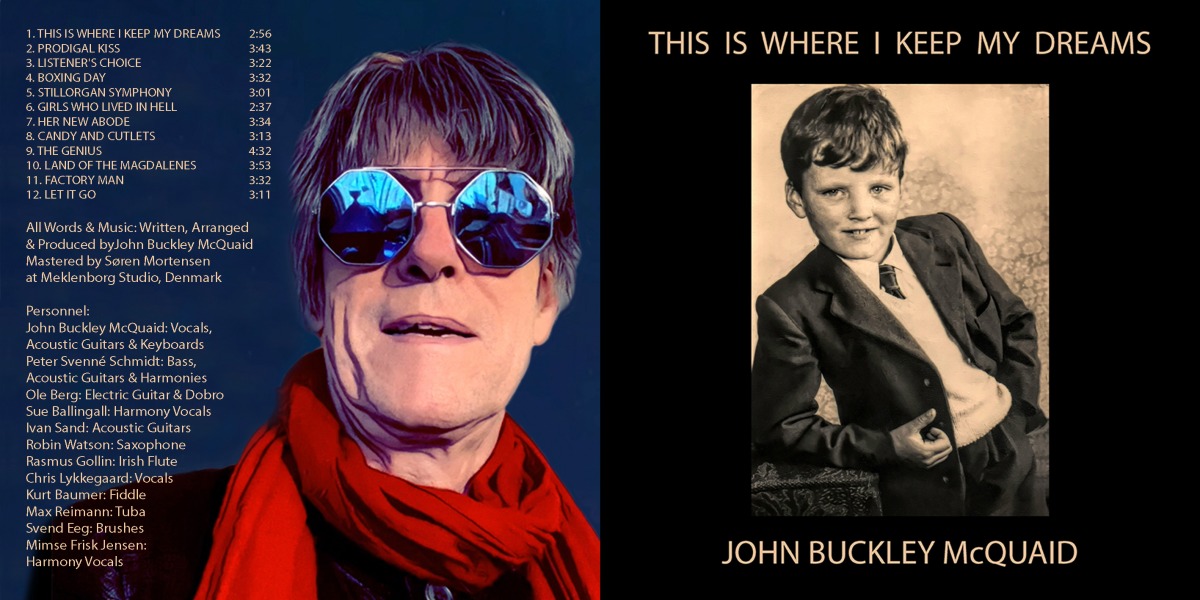
I was born and raised in Dublin, in a house with a piano and a garden. At the bottom of the garden, there were two beautiful chestnut trees, one taller than the other. It was here that I went when I needed to be alone. I always observed the same ritual. I would first climb the smaller of the trees and then the taller. The taller was enormously high. I didn’t dare climb the whole way to the top because the branches didn’t look strong enough to bear my weight.
One day, my curiosity got the better of me and I gathered my courage and climbed to where I’d never climbed before. Sneakers green with chestnut bark and young heart thudding in my elated chest, I clung to the thin, uppermost branches and looked out over the world. A neighbour’s dog danced along the top of the wall between our gardens. I could see the church where I attended Sunday Mass, the school where I lived in daily fear of not being good enough and the shop where I bought acid drops, broken biscuits and, as a teenager, illegal Black Russian cigarettes.
Years later, my father complained about the millions of leaves that the trees shed every autumn, which took him days and days to clear away.
If you promise not to tell anybody, I’ll let you in on a secret. There is a garden at the bottom of which, two chestnut trees stand, magnificently tall and green with leaves. There is a place at the top of the larger tree where the branches look too thin to bear the weight of a curious child; from where the eye can see a church, a school, a shop and a dog that dances along the top of a wall. A place where a child went when he needed to be alone and where one day, his curiosity got the better of his fear and he climbed to where he’d never climbed before.
This is where I keep my dreams.
All children are born creative. This creativity can either be encouraged or suppressed. I was not allowed to paint as a child so I learned to paint with words.
There are basically two kinds of people in the world. Those who are up to their ears in emotional issues, and do their best to get out of them. And those who are up to their ears in emotional issues, and do their best to stay in them.
We are all here to learn.
HUMOUR AND ART
Humour is a wonderful way to communicate – it disarms and enables us to say many things that are otherwise unsayable or unacceptable to the listener.
Isn’t life wonderful, ain’t it a thrill? Drinks on the table, chops on the grill And if you’re not able, we’ll give you a pill If life doesn’t get you, then happiness will.
We, as a nation, have grown up in the shadow of the Confessional, where all our sins have been forgiven on a regular basis, which inspired the following lines:
CONFESSIONS OF A CATHOLIC KID
I used to be a Catholic
Magnificently guilty
The sex was good from Hollywood
To fabulously filthy
Forgive me Lord for I have sinned
I promise not to sin again
Unless of course I get the chance
I beg forgiveness in advance
Mea culpa, mea culpa
Mea maxima culpa
The main lesson we learn from history is that we do not learn from history. Art is not a luxury but a necessity. The artist is the alchemist of our times, who turns the garbage of emotional issues into the gold of creation, reflecting the world’s absurdities. Crises are gifts that tell us who we are.
Once I showed someone a place where I wrote every day. They remarked that the view was not very exciting, to which I replied: “I’m not looking out, I’m looking in.”
“Art should comfort the disturbed and disturb the comfortable.” ― Cesar A. Cruz
Convenience is the byword and the curse of modern society.
The songs were written over a period of 34 years. Not wishing to be pigeon-holed as a certain kind of performer, I waited until last year to record and release the album. The title song, the text of which opens this article, references growing up in the south Dublin suburb of Stillorgan. The song “Prodigal Kiss” imagines Oisín Mac Cumhaill returning to the Ireland of today and taking the Luas. What might he have made of the state of Ireland today? The chorus poses the question: How did we get from the passion and ideals of 1916 to the prevalent malaise of 2022?
And you can be sure that we’ll never forget The culture of vultures and dealers in debt The struggles and Troubles, the gold, white and green So much for our beautiful Nineteen-sixteen.
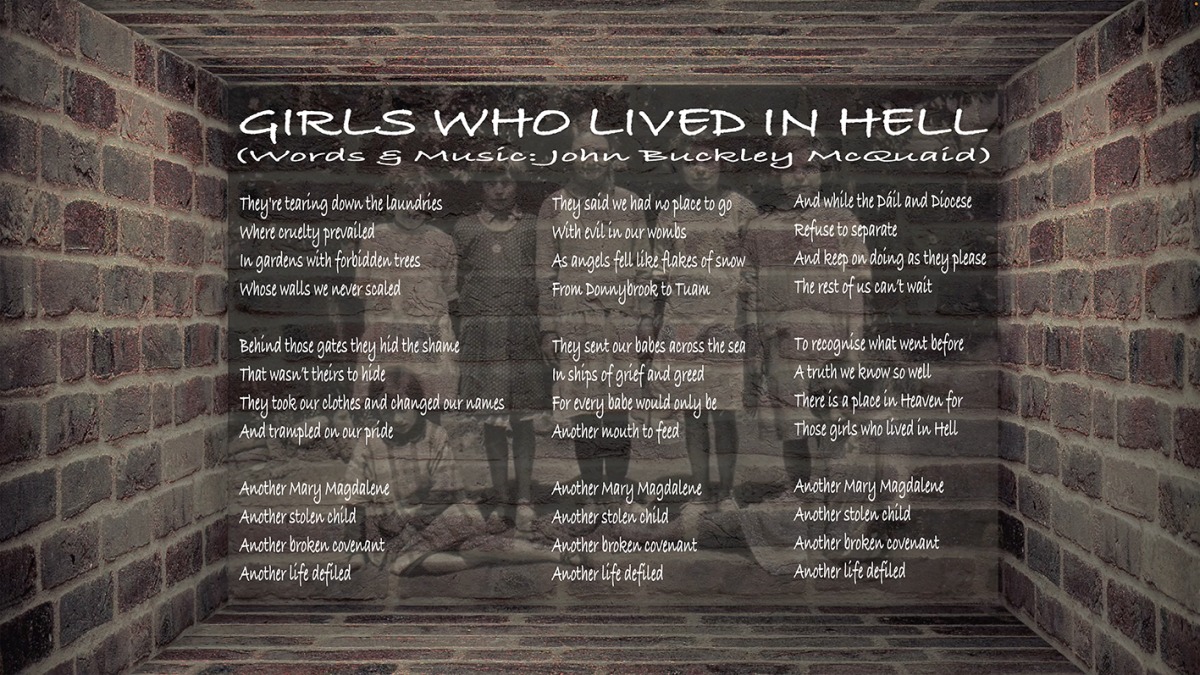
The album is compassionately critical of society – especially in ‘Girls Who Lived In Hell’, a song inspired by and dedicated to the girls who endured the Hell of the Magdalene Laundries and Mother and Baby Homes. The last Magdalene Laundry closed in 1996.
Our country has been delivered into the hands of rogues and scoundrels, Vulture Funds, Rotating Taoiseachs and Landlord TDs, who choose to serve themselves, rather than those they are chosen by and paid to serve. Let there be a separation of Church and State. Let the Church and State pay full redress to all victims and survivors of clerical and governmental abuse. Let the churches pay property tax. Let us pass a law prohibiting TDs from being landlords and/or property speculators. Let us build a society based on compassion, justice and accountability. Let us rise up and take back what is rightfully ours at the next election. Let us stand firm in hope.
We have so much compassion for the downtrodden of other nations, but very little when it comes to ourselves.
HOMELESS HOTELS
I’ll tell you a tale of the Homeless Hotels Those chosen to serve, have us under their spells We live on the streets and we scrounge for a crust And curse the hyenas betraying our trust
They say that there isn’t, we know that there is We’re hungry and fearful and God help the kids They’re lost and they’re lonely and strung out on drugs They turn into monsters that nobody hugs
Ireland, Ireland, Ireland, Ireland Some get cake and some get crumb Ireland, Ireland, Ireland, Ireland What on earth have we become?
The merciless clergy abused and denied For ages the blameless that they crucified They buried them namelessly under the sod And offered novenas in praise of their God
They’re burning down churches on faraway land We may not agree but we do understand We’re drinking and thinking and feeling the shame We don’t have the strength to be doing the same
Ireland, Ireland, Ireland, Ireland Some get cake and some get crumb Ireland, Ireland, Ireland, Ireland What on earth have we become?
Ireland, Ireland, Ireland, Ireland Trotters trotting to the trough Ireland, Ireland, Ireland, Ireland Can’t you see? We’ve had enough!
All lyrics by John Buckley McQuaid
LINKS:
VALENTINE’S DAYS – An e-book in four parts, consisting of 29 songs and 29 videos. A love story, based on actual events, which takes place in Paris, Madrid, Berlin and Aarhus):
This week Cassandra Voices editor Frank Armstrong sat down for a chat with veteran Italian journalist Concetto La Malfa, who has been living in Ireland for almost sixty years.
He initially arrived for a two month work placement with Aer Lingus, before embarking on a chequered career that includes founding a magazine for the Italian community, which he edited for almost thirty years, acting as the Irish correspondent for the Corriere dello Sport, and teaching Italian in UCD.
He continues to work as a journalist, principally throught the site he runs: http://italvideonewstv.net/, where he mainly broadcasts short videos discussing important international events.
Concetto explains how he came to Ireland at a time when the country was still relatively poor, and he says, a little depressing, compared to his native Sicily at least. At that time, Dublin was he says: “a poor capital in a poor country”.
Indeed, he was slightly disturbed to find that there were only five Italian restaurants – four run by the same brothers – and he struggled to adapt to the Irish lifestyle, missing his native cuisine in particular.
Since then, Ireland has developed considerably, economically at least, although Concetto likens the country to a dwarf with a giant heart, given the disproportionate size of Dublin’s c. 1.5 million population compared to the c. 3.5 million in the rest of the country.
Dublin he argues, ‘is a capital city that has grown in a hurry’ and that many things should work better, pointing to the state of the streets and, in particular, the prevalence of street crime.
In terms of Sicily, he asserts that the mafia is as visible as the IRA was to the ordinary Joe Soap in Ireland. Although he acknowledges that organised crime has has hindered development on the island.
He keeps away from the intricacies of Italian politics, preferring to concentrate on the big picture, but cites a telling statistic that there have been 67 governments in just 74 years. He wonders whether this is a sign of a democracy that goes too far.
During his period as correspondent for Corriera dello Sport he became acquainted with Giovanni Trappatoni and Liam Brady, who spent seven seasons in Italy playing for Juventus and Inter Milan.
Finally, Concetto has formed the view that the West is conducting a war by proxy in Ukraine, with the blood of the Ukrainian people, and that every single weapon sent from the West makes the possibility of a diplomatic resolution more distant.
We are an independent media platform dependent on readers’ support. You can make a one-off contribution via Buy Me a Coffee or better still on an ongoing basis through Patreon. Any amount you can afford to contribute is really appreciated.
– O how could I order that tuna and chips, – And sip my beer and gaze at yachts and cruise ships
Beyond the tops of changing booths and beach umbrella tips;
– And glimpse and catch the sea’s soughing of old truths – Through exhaled smoke of bronze Italian youths
And cries of a fat child a made-up plastic granny soothes;
– And not think of a Romantic poet’s pyre, – Or Claude’s Seaport, which Turner set on fire, Or brine-drenched heroes Neptune saved from Aeolus and Juno’s ire.
– But I confess it took an old tourist’s poem, – And my desire to make his tercets my own,
For me to see this sea transcending our own and Aeneas’ Rome.
– When we were on our way down here through Nice – We saw b-boys do flares, headspins, then freeze.
On Friday nights the promenade is checked by Finance Police.
– But all the while, at the sandy edge of sight, – On feathery legs of old, gods roll from the night,
And we would sense them could we still perform the proper rite.
Winifred Barrington, only daughter of Sir Charles Barrington, led a charmed life – far removed from the political and economic struggles of the general population in the 1920s.
The Barrington family, who lived in what was then known as Glenstal Castle, were landed gentry and enjoyed the associated trappings. However, they were well respected as decent landlords, good employers and were not blind to the needs of the community.
For example, they founded Barrington’s Hospital in Limerick City – with the proviso that it be situated in the working area of the community.
The inscription on the foundation plaque reads: This hospital was founded and erected by Joseph Barrington and his sons, Matthew, Daniel, Croker and Samuel, for the relief of the poor of their native city A.D. 1829.
They funded many other community projects, Church of Ireland and Catholic, and in a noble gesture, supplied the site and the building stone for the erection of a new Catholic Church in the nearby village of Murroe.
On a May afternoon in 1921, Winifred, or Winnie as she was known locally, saddled her favourite white pony and rode across the Limerick border to Newport in Co. Tipperary – accompanied, on bicycle, by Miss Coverdale – who was a house guest at Glenstal.
On arrival in Newport, Winnie and Miss Coverdale parked their respective modes of transport and climbed aboard a military vehicle for the final leg of their fishing trip to the Mulcair River at Cimalta House, near Killascully – a few miles from Newport. They were joined in the vehicle by Major Gabbett, who was a friend of the Barrington family, Lieutenant Trengrouse and District Inspector Harry Biggs.
Winifred (Winnie) Barrington.
D.I. Biggs, who was stationed in Newport, was ruthless in the pursuit of his duties and employed some bizarre tactics in hunting down the Volunteers. On one occasion, after morning Mass in the village of Silvermines, he rounded up the congregation and insisted they sing ‘God Save the King’ while shots were fired over their heads. As a result of all this, he was a marked man and a prime target for the Volunteers.
Following the fishing, and after some tea and pleasantries, the party decided to make their way back to Newport. However, their journey came to a sudden and sad finale when their vehicle was ambushed at Coolboreen. When the dust settled and the firing ceased, D.I. Biggs lay dead on the road and Winnie Barrington, who had been a front seat passenger, lay fatally wounded in the ditch.
There were few tears shed for D.I. Biggs, but there was an enormous outpouring of grief for Winnie. Her warmth and friendliness had endeared her to the local community, and she was not averse to dancing at the crossroads in Abington.
Her body was laid out in the castle, surrounded by flowers of the fairest and she was buried in the Church of Ireland Cemetery, Abington on Wednesday, May 16, 1921. The inscription on her headstone reads: “Here lies all that could die of Winifred Frances Barrington, loved and only daughter of Sir Charles Barrington.”
The tragedy cast an air of sadness over the village of Murroe. Every door remained closed with the blinds firmly shut. The bells of the Catholic Church tolled mournfully until the funeral procession passed out of sight.
My maternal grandmother would probably have tolled the bells for Winnie’s funeral as she was clerk of the Catholic Church in Murroe – a task that would later pass to my mother. My paternal grandfather and granduncles were members of the North Tipperary IRA unit. To date, I’ve been unable to ascertain if any of them were involved in the ambush.
The IRA Volunteers in North Tipperary regretted the tragic event, and the condolences of the ambush party were accepted, with quiet dignity, by Winnie’s parents.
After the truce, the parish priest of Murroe refused to re-inter the bodies of two volunteers who had been killed in action and had been interred elsewhere. On hearing of the impasse, Sir Charles Barrington offered his own grave for the burial, at which point, the priest relented, and the request was granted. When the graves were opened in the church grounds they were decorated with mosses and flowers provided by the gardeners of Glenstal – on the instructions of Sir Charles.
In 1925, he offered Glenstal Castle to the Irish Free State as an official residence for any future head of state. He was finally saying good-bye to Ireland and his splendid castle. The proposal was given serious consideration, but the Viceregal lodge at Phoenix Park was chosen instead. The Benedictine order of monks later acquired the castle – where it still remains in their good care and is now known as Glenstal Abbey.
Mario Draghi’s ‘technocratic’ government has fallen, or so we’ve heard. Now it feels like we are facing into the most important election in generations.
And as we approach two months of political campaigning in the middle of the busy tourist season (I suspect there are plenty of cancellations in 5 star resorts…) this could be the right time to ask: how are elections won nowadays. Is it only the votes that counts? Or does social media superiority, which is nothing less than the understanding of current communication trends and technology – often with outside interference – actually determining most democracies’ fates?
With these questions in mind it is worthwhile reminding ourselves how we’ve got here.
I can’t recall a time when Italians believed a government would last its full term. Italy’s apparently chaotic political life has become a cliché, like how beautiful everywhere is to visit, but try living there…
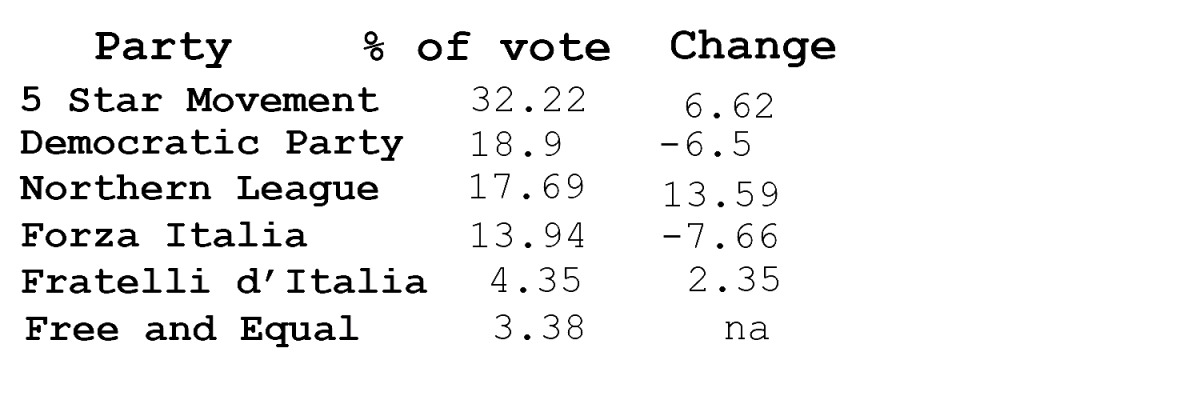
Despite these bleak figures Italy’s economic recovery after Covid-19 was promising, but after the fall of the 5 Star and Democratic Party-led government thanks to a typical palace coup – compliments to Mohammed bin Salman best friend, the Saudi-funded, Matteo Renzi – again a capable leader is needed.
At that point, the authority of a brilliant surgeon was called for in a code red emergency to save the country from spiralling doom. Someone who it was claimed saved the Eurozone from the apocalypse with three words. Someone whose position as Prime Minister seemed like a personal sacrifice, almost a burden to endure in the name of patriotism. In an atmosphere like a coronation, Mario Draghi came to power after the most prestigious career one can think of at the highest echelons of world finance and international banking.
In order to avoid early elections, President Sergio Mattarella called “Super Mario” to the rescue, with a mandate to form a broad coalition of national unity. I remember when Draghi first addressed the Senate as Prime Minister: “Today unity is not an option, it is a duty”, he said, as he prepared to lead one of the broadest coalition ever attempted in Italian political history.
He indicated that Italy is doing just fine, will survive the operation, but that a long recovery period lay ahead. We just needed to be reasonable and support a government of “National Unity” where almost all the political forces were expected to support it from both chambers: Almost 90% from the chamber of deputies and 85% from the senate.
Encompassing Matteo Salvini’s Far-Right Lega, Enrico Letta’s center-left Democratic Party, among others, along with a dash of Berlusconi’s Forza Italia and the Populist 5 Star Movement.
In case you are wondering, there is no definitive consensus as to whether the 5 Stars is left or right wing. This changes depending on where the criticism is coming from.
Its leader, and deposed Prime Minister, Giuseppe Conte, had to share the cabinet table with Matteo Renzi’s Italia Viva – the main instigator in the downfall of the previous government.
What could possibly go wrong?
The only remaining opposition came from a few small parliamentary groups, mainly independents, and Giorgia Meloni’s Brothers of Italy, which is now the strongest far right political party. They are not fascist, or so they say, but it isn’t difficult to find nostalgic sympathy for His Excellency Benito, or even Adolfo, among followers, right up to some of the leadership, as was revealed by last year by FanPage, and is well explained by David Drover in the NYT.
Mario Draghi was, and still is, the leader of a party that does not exist yet he retains extensive sway over how Italy is governed. One can almost recognize a cultist aspect projected by his persona, and now by his ‘agenda’, which has filled the void of political vision formerly filled by both left and right factions.
Now a strange mix of old faces ranging from Enrico Letta, to the former leader of the 5 Star Movement, Luigi Di Maio – and even some ex members of Forza Italia – are his disciples available to spread the word.
In very simplistic terms the unified message that triumphed with Draghi’s government is that the country would not survive without a broad, caretaker government, led by who knows, and that the vast majority of civil society has a moral duty to support him, “Whatever it takes”. Says who? Is that NATO on the line?
The current crisis can be traced to what was the largest party in parliament – until its recent split – the 5 Star Movement, simply attempting to present certain amendments to the bill “Aiuti” or “Help”, to the government, that they deemed necessary in areas such as welfare, tax, ecology; as well as attempts to reconsider Italy’s role in the context of the war in Ukraine.
A range of polls since Russia’s invasion reveal that about half of the Italian population does not support weapons being sent to Ukraine. It’s only natural that political factions seek to capitalize on popular opinions, as much as it would be naïve to believe foreign powers, be they Russia, China or NATO, wouldn’t be attempting to exert influence, especially at a point such as this.
This approach by the 5 Star Movement was apparently ignored, leading to the government’s fall, and to the Lega and Forza Italia seized the opportunity to call for an early election.
It begs the question: why shouldn’t the largest party in government demand reforms for which it has a mandate?
This current crisis could actually be a long delayed awakening of a political system which has remained comatose, at least since Berlusconi’s time.
It’s just a shame that an unholy trinity of Berlusconi’s FI, Meloni’s FDL and Salvini’s Lega may have the numbers to become Italy’s next government coalition. This is the equivalent of Le Pen winning in France, and will surely destabilise all of Europe.
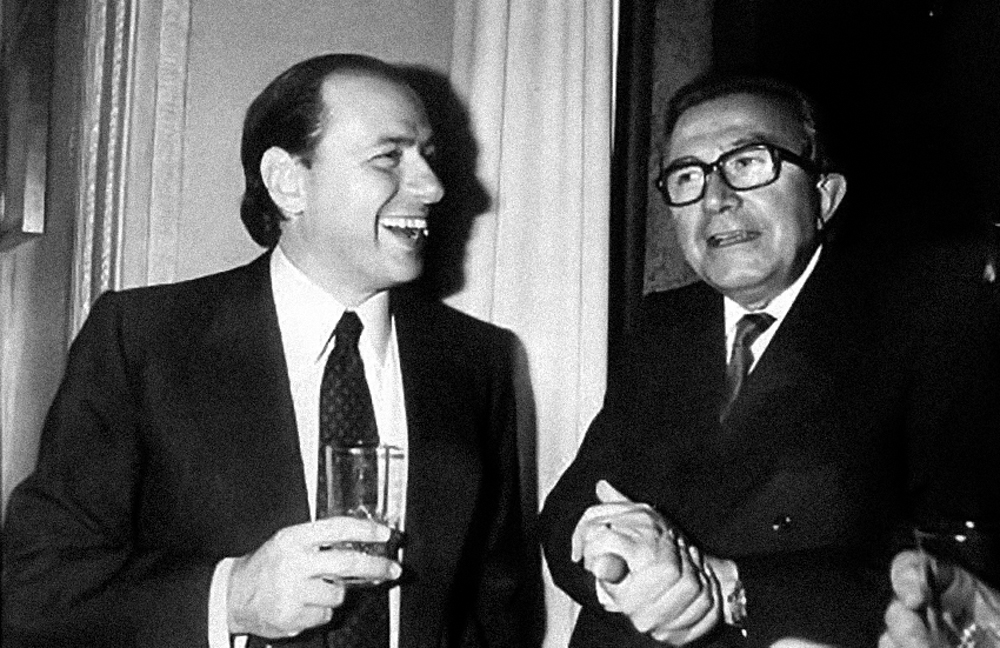
He’s Back! Berlusconi alonside Giulio Andreotti in 1984.
By the way, I did say Berlusconi. Guess what? He’s back! With a pledge to plant one million trees, because his party has always been environmentally conscious after all. It’s a bad case of United States of Amnesia that Italian would consider Burlesconi suitable for the presidency of the republic.
Then again, while he was Prime Minister Conte secured an EU Recovery Package worth about €220 billion, which is expected to flood Italy’s economy with money in the coming years. Who else should we trust to manage this if not the same people, or their disciples, over and over again?
At all times, we may safely assume, with the approval, or background manoeuvring, of a foreign actor.
Is that NATO (or the US government) on the line again there?
We are an independent media platform dependent on readers’ support. You can make a one-off contribution via Buy Me a Coffeeor better still on an ongoing basis through Patreon. Any amount you can afford is really appreciated.
Feature Image is a work by Office of U.S. House Speaker from https://twitter.com/SpeakerPelosi/status/1446579056720416773.
The following is a submission to the Citizens Assembly on Dublin by a former Lord Mayor of Dublin Dermot Lacey, who argues for a new regional approach to Dublin that would include provision for a directly elected mayor with real power and responsibility for the whole city.
Throughout the developed world Regional and Local Government is taking its rightful place at the heart of sustainable decision making. From the Scottish Parliament, the Northern Ireland and Welsh Assemblies in the United Kingdom, to the Federal Parliaments in Germany, the Cantons in Switzerland local-relevant decision-making is growing. One of the founding principles of the European Union is subsidiarity – however that particular guiding principle seems to have been lost somewhere in the Irish Sea.
Here in the Republic of Ireland, with a nod to European Union objectives but a more stellar eye on European money we have invented three new Regional Assemblies; the Southern Regional Assembly, the Northern and Western Regional Assembly and here on the east coast and adjacent counties the Eastern and Midlands Regional Assembly.
Comprised of Councillors from twelve Local Authorities this artificial construct has no real power, no funds, no democratic mandate and Government ignores it at their pleasure. Meanwhile Dublin the only City Region by real international standards and the economic powerhouse of the State is deprived of any co-ordinating body covering the full County. Without such a co-ordinating body, without a Regional Authority for the Dublin area with power and resources Ireland is the principal loser. So, what do I want for Dublin? But then again What Dublin do we mean when we refer to it?
Dublin is often described as the ‘Fair City’ – but is it? Is it a city that treats its people equally? Is it fairly run? Does it treat all its citizens fairly? Does it protect its culture, heritage and environment fairly and sensibly? Is it a democratic city? Is democracy necessary? Or is democratic consultation and decision making central to the future of Dublin. Does any of this matter?
The answer, of course, is that yes, it does matter – or at least it matters to me. Dublin is my home. It always has been and I hope, it always will be. It was and will again, be one of the finest cities of Europe. It is a great and beautiful city, ideally located between the scenic natural beauty of the Dublin Mountains and the incredibly clean and majestic Dublin Bay. A Bay that has been so sadly neglected and indeed damaged by decisions taken by unelected Public Servants and in reality, unaccountable Politicians from outside its borders.
It is a city with a great history and culture; a city of literature and with a genuine appreciation for the arts; above all it is a city and county with a resilient people still enthused by the notion of community.
Unlike Margaret Thatcher, Dubliners do believe there is such a thing as society. This is demonstrated every day of every week in the volume of community work, youth and sports activity and community activism actively engaged in by, and for, Dubliners. Perhaps this has never been expressed so forcibly as it was during the Covid crisis and now in the response to the War in Ukraine.
It is also, however, a city of unnecessary complexity. It is a deeply undemocratic city, with decisions made at a remove from the people of Dublin and, in far too many cases, at a remove from the democratically elected representatives of those people.
It is poorly served by the administrative and governance structures imposed on it by successive national governments. It is scandalously under-funded and under-resourced. It has a confused transport system, unacceptable poverty, inadequate housing and a divided and unequal series of communities. None of this is necessary. We need to imagine a better future for Dublin and we need to create that better future for Dublin.
The tragedy for Dublin and Dubliners is that when times were good and finance available, we had one of the least imaginative, backward looking governments in the history of our state. It is true also that when times were bad and the opportunity for real reform was there that Local Government was set back decades by the pretence of “reform” that was “Putting People First”.
It is why we need a new approach to build a new and better Dublin. It is but one of the many reasons why we need a New Deal for Dublin – a Fair Deal for Dublin. It is also a very clear example of why the model suggested by a few commentators of introducing a Minister for Dublin, is not the answer.
Can we solve Dublin’s problems – yes we can. Can we make it a better place for all – yes we can. Can we have a democratic and inclusive Dublin – yes we can. The pertinent question is how do we achieve at least some of these objectives? How do we make Dublin the inclusive and democratic county that it can be and I want it to be? How do we create our own future for Dublin?
The answer lies in real reform of our local government structures. This should not have had to wait until, as some would have it, the country’s problems are fixed. Local government reform is not an optional extra – it is, in my view, integral to our country’s future. Ireland can be transformed through the reform of local government. We cannot do it any other way. It is not possible to reform our political, economic and public sectors if we do not at the same time reform local government.
In the case of Dublin, my preference would be for a directly elected Mayor and a new Dublin Regional Assembly. In the course of this submission I hope to outline why that is the case.
While Dublin is a changing city and county, it is a city and county that administratively and politically does not work. The city and county does not work for citizens, for business, for communities, or for Ireland. Despite it being the engine of growth for the economy and the fact that, in a European context, it is the only real city-region in the country, the governance of Dublin has largely been ignored and any real reform avoided since the establishment of the State.
The Organisation for Economic Co-operation and Development (OECD) categorises city regions by their population size and the smallest size considered is 1.5million (OECD Territorial Reviews: Competitive Cities in the Global Economy 2006).
Tinkering with the boundaries in breaking up the old County Councils, thereby reducing the power to seriously drive the region, and a collapse in funding have sadly been the hallmarks of government intervention over the last decade or so. Incompetent interference, followed by inertia, has been the closest thing to positive action from those on ‘the inside’ those really in power.
The legislation introduced by former Minister for the Environment, Community and Local Government, Phil Hogan TD, seriously set back local Government in Dublin and abolished the Dublin Regional Authority. While much political comment since has been on his unwise abolition of Town Councils the reality is that it was bad, very bad for Dublin.
Politically it gave more power to bureaucrats, reduced the powers of Councillors, removed a realistic Regional dimension and imposed more work, on more un-asked for Councillors. In doing so the Minister simply compounded the indefensible record of the Department of the Environment, Heritage and Local Government – a Department, which one well known commentator, has described as the one Department of State actively hostile to the three nouns in its [then] title, Environment, Heritage and Local government.
Any real reform proposals must provide for a better future for Dublin because a better future for Ireland will in reality be predicated on Dublin sustaining real economic growth and administrative and governmental cohesiveness.
No doubt any serious changes will meet political, departmental and institutional opposition to real reform. For far too long power and authority in Ireland has rested with unaccountable mandarins in government departments and their agents, whether via quasi-independent agencies or through the city and county managers process.
Real change is, however, necessary. Irish people are open to new ideas and new ways of doing business and exercising governance. With courage and vision, and above all a serious commitment to reform from the top, we can have a meaningful, inclusive, democratic and relevant local government system. We can make Dublin work and in turn make our country work.
Regrettably, what is equally true is that despite all the recent talk of reform, changes to our local government structure hardly featured at all in public debate. Reform of governance at a local level was discussed not at all during recent General Elections. The truth however, in my view, is that is simply impossible to reform our national political and public sectors if we do not start on the ground, in our communities and in the chambers of our city and county councils and the regional authorities.
Before any decisions are taken, or any reforms contemplated, we need agreement on what is meant by local government itself. Quite simply, we need a collective ‘buy in’ on local government. For me, local government is about the delivery of comprehensive public services in a manner required, demanded and agreed to by the local community. It must be about the provision of services, in an accountable and democratic manner, to the people in receipt of, or entitled to, those services. Without these attributes it is neither local nor government. Sadly, here in Ireland, that is the present reality.
Bemoaning the plight of local government is also easy. There are library shelves bursting with reports and analysis. I would like to be more positive and constructive. There are others, more capable than I, who can comment on the national situation. I hope they do. I want to concentrate on Dublin. It is a City I had the privilege to serve as Lord Mayor and a county the privilege to serve, as Cathaoirleach of the Dublin Regional Authority and as Cathaoirleach of the Eastern and Midlands Regional Assembly – the only person to have held the three roles.
In the context of this submission as well as defining local government itself, we need also to define: where and what we mean by Dublin; Is it the City? Is it the County? Is it the Dublin region?; or, as some would have it, is it the larger Metropolitan area? While there are many reasons to define a new governance area as being the greater Dublin area or, as it has been described, the ‘drive-to-work’ Dublin area, my view is that here in Ireland, rightly or wrongly, local identity is important, loyalty is important and a clear definition of boundary, in a governmental context, is important. In all respects, therefore, I believe we should focus on the traditional County of Dublin.
It is this County of Dublin that needs our focus and attention. It is this area that has been and will again be the engine of our economy. Rebuilding and growing that Dublin will help once again to grow our economy and strengthen our society. It will help Ireland grow and develop. Part of my role as an advocate for Dublin, is to dispense with the old and very outdated argument of ‘Dublin versus the rest’. The reality is that what is good for Dublin is invariably good for Ireland. Our future as a people is intertwined. Dublin is our collective capital.
For Ireland’s sake, Dublin needs to run Dublin. That is the very essence of this argument. The present situation, in which disinterested quangos (largely unaccountable state bodies and often disconnected governmental departments) interfere in the affairs of the county without any appreciable knowledge or sympathy, cannot be allowed to continue. Power and authority currently lies with the unelected and the unaccountable, whilst the elected city and county councillors see powers removed on a near daily basis. Dublin deserves better. Ireland needs better.
The existing situation in which more than 60 bodies have responsibility for traffic is the most obvious example of this. At least nine separate bodies are responsible for Dublin Bay and most absurdly national government appoints the St. Patrick’s Day Festival Committee, which largely, though not exclusively, affects Dublin. There are far more examples than this. Surely this cannot continue into the future.
Perhaps, more than anything else, Dublin needs someone who understands how things work, or more accurately, how things do not work, and who will stand up for the city and county. To create that better future that we seek, Dublin needs a spokesperson for the whole community. It needs someone, who can be a political advocate armed with the mandate of direct election. That is why I believe that central to any meaningful reform must be a longer-term Mayor and that direct election would provide the mandate. The Mayor needs to be a champion for Dublin who will market and promote the region internationally and who will stand up for it nationally.
The proposal to have an election for a Mayor of Dublin would give us an opportunity to create that voice. The election campaign itself would provide an opportunity for a collective debate on the future of Dublin.
The visibility and accountability of such an office holder would considerably help inform the public on the choices involved on issues of concern. That is why, with all its imperfections and limited powers, I welcomed the publication by former Minister for the Environment and Local Government, John Gormley of the Local Government (Mayor and Regional Authority of Dublin) Bill draft legislation in 2010. All political institutions grow and evolve over time, and I believe the implementation of that Bill would have proved no exception.
That legislation clarified some issues. It specified the county as the area involved and provided a new structure for the regional authority. The proposal that the Mayor would chair the authority, to whom he or she would be accountable, was, I believe, a rare defect in the draft legislation.
Similarly the proposal to establish a Regional Development Board was unclear, as was its composition and democratic mandate. Unless the public service agencies are accountable to this body, and not equal participating parties as at present, it would not have worked.
The creation of the proposed Dublin Transport Council was inadequate but a significant step in the right direction. Yes, there were deep flaws and absences from the legislation. There was a real lack of integration of services and roles. There was uncertainty about the relationship with the department and the Minister.
It was however an important start – unfortunately one not taken. While some Political Parties are once again raising the issue and this Citizens Assembly has been established it does seem to me to be a “can kicking” exercise and I am not convinced that the permanent Government will do anything to facilitate it happening. Nevertheless, I believe there is still a need for the debate and for the campaign to continue. It remains an aspiration worth pursuing.
The absence of an independent source of funding was a major flaw in previous proposals and must be addressed whenever a future government is serious about reform.
Many believe that we need more than the simple introduction of a directly elected mayor, and they are right. A new mayor can and must drive further reform and a real debate about the future of Dublin.
Two of the arguments used against the introduction of a directly elected mayor are cost and the issue of ‘celebrity’ candidates. Both are bogus. Properly structured, a newly elected Mayor, working with the Dublin Regional Authority, will see the need for many of the existing agencies reduced and or incorporated into the mayoral structure with significant savings.
On the ‘celebrity’ candidate issue, the answer is simple: we are meant to live in a democracy, so let the people decide. I have great faith that, subject to a fair and balanced media presentation, the electorate will decide intelligently. While not the subject of this essay, it is this issue of media coverage of a campaign – the absence of a fair and informed media on Local government matters – that would concern me most.
This is particularly true of the national broadcasting service – RTÉ – whose understanding and knowledge of local government is virtually non-existent and access to the airwaves is a rare privilege accorded only to a chosen few. Clear guidelines for their coverage of a campaign and debate on the issues would be crucial if genuine progress is to be made.
It is clear to anyone interested that our current system of local government requires renewal and reform. Clear too is the fact that the various local councils are directed, unofficially, but in reality, by city and county managers, answerable to the Department of the Environment, Community and Local Government and the permanent officials therein. It is striking that the term of office for a city and county manager is seven years – which can and usually is extended to ten years and that under our current system the term for a mayor is usually one year. Longevity itself is power.
Understanding that relationship is the key to understanding our present problems and breaking that relationship is the key to resolving them for the future. The proposals in the Labour/Fine Gael Programme for Government to abolish the role of county managers and replace them with ‘Chief Executive Officers’ was executed but the change in title was all that was delivered – not a change in role or powers.
None of this should be taken as a personal reflection on the four very fine public servants, Frank Feely, John Fitzgerald, John Tierney and Owen Keegan with whom I have worked during their terms as Dublin City Manager/Chief Executive. They all served Dublin well. It is the structural and relationship issue and problem that need to be resolved.
I believe that Dublin desperately needs a longer term Mayor who would serve for the full local government term, and a Mayor directly elected by the people who would have the authority and mandate needed to serve for such a term. We also need substantial reform of the structure of the four local authorities in the Dublin city and county areas. Such a Mayor working with the members of the Council and with sufficient powers and resources is needed now more than ever to rescue this city and county from the clutching, incompetent and disinterested control of central government and administration.
Shamefully, the sections of the 2001 Local Government Act, enabling this, courageously and correctly introduced by Minister Noel Dempsey, were reversed by his successor, Minister Martin Cullen.
More shamefully, the Green Party Minister, John Gormley, was thwarted in his efforts to introduce plans for a directly elected mayor and Regional Authority. Even more shamefully was the pretence of reform introduced by Minister Phil Hogan at a time when people were crying out for real reform. It was perhaps the greatest wasted opportunity of all.
There are many ways in which real reform could be achieved. I want to propose a simple model that I believe would be in the best interests of the future of Dublin city and county. While there may be debate about the appropriateness of retaining the existing four Dublin local authorities I believe that it is better, for the present, they remain. This would also allow that for a period of five years they would continue to elect their Chairpersons/ (Lord) Mayors in line with current practice.
I propose that the number, jurisdiction and roles of the four existing Local Authorities should be reviewed after a period of five years, or one term of office, of a proposed Dublin Regional Assembly. This period should be used to assess the possibility of introducing a series of genuinely local District Councils – perhaps along the lines of the Municipal District Councils that exist outside Dublin. These would serve populations of approximately 100,000 people each. It would also allow for a timely debate and gradual merging of the roles of Lord Mayor and Mayor. Whilst for many this is an obvious step, I believe that there are distinct roles and we should assess the respective merits of retaining them as separate roles or combining them into one.
Essentially these different roles stem from the unique requirement of the Lord Mayor of the City of Dublin to regularly act as the official host for guests to Dublin and Ireland and often as a sort of unofficial Ambassador for the whole country. There is also the role of Civic Cheer Leader and Ceremonial office holder for appropriate civic occasions. The new role envisaged for a Mayor for Dublin will be more executive and more political. I remain open to persuasion as to which is the best way forward.
Contrary to common perception Ireland has a very low ratio of elected councillor per head of population. The following table gives some idea of the European average. It is worth noting that the UK figures do not take account of the existence of the Scottish Parliament and the Welsh and Northern Ireland Assemblies. These bodies have respectively: Northern Ireland Assembly 108 members; Scottish Parliament 129 members; and the Welsh Assembly 60 members.
Country
Country Population (m)
No. of councils
Average population per council
Population per councillor
France
59.6
36,700
1,600
118
Austria
8.2
2,350
3,500
209
Sweden
8.8
310
28,400
256
Germany
83
15,300
5,400
350
Finland
5.2
452
11,500
410
Italy
57.7
8,100
7,100
608
Spain
40
8,100
4,900
610
Belgium
10.3
589
17,500
811
Greece
10.6
1,033
10,300
1,075
Denmark
5.4
275
19,600
1,115
Portugal
10.1
308
32,800
1,131
Netherlands
16
548
29,000
1,555
Ireland
4
114
35,000
2,500
U.K.
59.6
468
127,350
2,603
Source: Hughes, Clancy, Harris and Beetham (2007), Power to the People: Assessing Democracy in Ireland. New Island.
In Dublin the figure is a staggering figure of 12,400 people to each Councillor.
Such District Councils, as I propose, would, over time, replace the existing, South Dublin, Fingal and Dun Laoghaire-Rathdown County Councils and Dublin City Council. In order to enhance a sense of local identity and ownership, these Councils should be based on real communities of location and interest. Areas such as Tallaght, Lucan, Swords, Dun Laoghaire and Ballyfermot are obvious possibilities for this. With the increasingly global nature of our world real social cohesion in the future can be best enhanced through the promotion of the local and community awareness.
Pending completion of the overall reform project there is no reason why such pilot town or district councils could not be established at an early stage. Composition of these councils should also be used to create greater equality in terms of councillors and population with the rest of the country and a consequential equalisation of Seanad voting rights if the Seanad is to retain its present form.
I am also suggesting that in order to provide a local/national link that the directly elected mayor would be ex-officio member of Seanad Éireann and that a similar provision be made should directly elected mayors be introduced for the other larger cities. This should be done without increasing the overall membership of Seanad Éireann and could be done in tandem with other proposed reforms of the Seanad.
Dublin also needs an over-arching strategic regional approach. In that context I suggest that a new Dublin Regional Assembly be established. Such an assembly would be comprised of about 30 members. This would entail six constituencies electing five members each. In order to ensure best internal regional balance there would be two north-side constituencies, two south-side constituencies and two to the west of the county. This would enable a sufficiently broad based (political and regional) membership to ensure a robust and inclusive assembly. The assembly would have one committee for each of the policy areas listed in the next section.
An alternative model would be to have three such constituencies, north, south and west with five members each leading to the election of what would effectively be a fifteen-member executive for the county. Each policy area would be overseen by three members of the assembly who would have executive responsibility for the area involved. In this scenario, the overall scrutiny and monitoring role would be provided by members drawn from the four Dublin local authorities on a basis similar to the previous Dublin Regional Authority.
The Leader of the Assembly would be the Directly Elected Mayor of Dublin.
I am suggesting that the powers and responsibilities of this suggested assembly would be as follows:
1) Land Use Planning and Strategic Development. This would deal with devising strategic planning guidelines and monitoring and planning development across the region. Responsibility would also include implementation of national spatial strategies and economic development.
2) Traffic and Transport Co-ordination. The assembly would be the Dublin Transport Authority and would provide for an accountable and integrated approach to traffic and transport, including responsibility for all public transport, active mobility and taxi provision and regulation in the Dublin region.
3) Social and Affordable Housing. The assembly would replace the existing agencies in the Dublin area and co-ordinate housing provision and allocation across the Dublin Region. It would also have responsibility for developing new initiatives for housing provision and responding to the issue of homelessness.
4) Dublin Bay, Waterways and Mountains. These great assets of the region are presently largely under-appreciated. The Dublin Mountains Partnership initiated by Dun Laoghaire-Rathdown and South Dublin County Councils has shown the possibility that does exist with imagination in this area.
5)The Assembly would also have a coordinating and/or monitoring role in relation to county-wide services provided by agencies such as the HSE, Education Training Boards, Enterprise Ireland, tourism development, policing and relations with other regional authorities and relevant bodies. One of the first tasks in this area would be to develop coterminous boundaries for all public service providers in the Dublin region.
Some of the above would be done in conjunction and co-operation with the existing local authorities.
I am also suggesting that the Dublin Regional Assembly would provide a forum to which, and in which, the Dublin Members of the European Parliament could report back and consult on issues of relevance to their work. This would significantly enhance engagement with the European institutions and improve the opportunity for Dublin and Dubliners to engage with and benefit from European Union initiatives.
In addition to the elected Assembly I want to see established a Dublin Civic Forum, comprising representatives of civic society across the county. The forum members would receive no payment and would convene as appropriate to advise the Assembly on matters of relevance.
I have previously suggested that the Dublin Regional Assembly should be based in the old Parliament Building on College Green with the remainder of the building housing an Institute for Dublin Affairs and a much-needed Dublin Museum building on the fantastic work of the Little Museum of Dublin. The Institute would be a collaborative model drawing on the expertise of the third-level institutes in Dublin and would act as a policy feeder to the Assembly.
The old Parliament building would also be the location for meetings of the Civic Forum. This could all be done in conjunction with other proposals to develop the building as a National Cultural Centre and the creation of a major Public Plaza to the front of the buildings. Transferring ownership of these former Parliament Building might provide some recompense for the €8.5billion pumped into Bank of Ireland and relocating the bank headquarters to Docklands might help the rejuvenation of that area.
There is also much scope for the development of new forms of democratic participation such as citizens’ juries and participative budgeting. These could be facilitated through the Dublin Regional Assembly office and could enable citizens to engage with public service providers in a meaningful way.
There is a widespread consensus amongst politicians, commentators, academics and the public that we need to reform local government. This is articulated regularly in a general rather than specific sense and is thrown into the wider debate about Political Reform. However, that is where the consensus ends. The promise offered by the optimism of the Better Local Government project initiated by Brendan Howlin TD, and the early enthusiasm of Noel Dempsey TD, were followed by inaction, inertia and, on occasions, outright hostility to democratic local government, by the very ministers and the government department that should have been its champions, reformers and defender.
Of course we need real reform, and of course we need Councillors to take more responsibility. As Lord Mayor of Dublin, in difficult circumstances, I did accept such responsibility in relation to the city budget. Since then the majority in favour of the budget has increased with each passing year.
A directly elected mayor should only be one small – though important – part of a total reform of the failing system of local government. Powers which have been stripped from elected representatives and handed over lock, stock and barrel to city and county managers, effectively, if not officially, answerable to the minister of the day, need to be restored to city and county councillors across the country. If we are truly to build a better future for Dublin and for Ireland, Local government must be the heart that drives that forward.
The issue of the financing of local government also needs extensive review. Quite simply there is no real governance role without independent finance raising responsibilities. There must be a clear link between local spending and local revenue and the accountability of the councillor. The successful operation of the BIDS (Business Improvement District Scheme) scheme in Dublin city centre shows that there is a willingness to work such initiatives if there is sufficient benefit and adequate explanation and consultation. Local government also requires more opportunities to introduce appropriate local taxation, subject of course to the law and the right of the people to comment on same through local election campaigns and possibly local referenda.
At present, Dublin City Council is losing out on millions of euro every year (€30 million for 2022 alone) from commercial rates which Government has abdicated its responsibility to pay. While applicable across the entire country, this has hit Dublin more than anywhere else and is a further example of the cost involved in being the capital city.
Since the expedient abolition of domestic rates in 1977 every local authority has lost significant income. The promise to allocate a sum equal to the amount that would have been raised has been consistently broken. I have calculated that the loss to Dublin City Council since that decision was imposed has been in the order of E8billion. Other decisions imposed such as National Wage Agreements increased that with local government denied any opportunity to participate at the negotiating table. The concept and practice of ‘social partnership’, it would appear, included everyone except the democratically elected arm of local government. Once again, as in so many instances, it was a case of National Government decides but Local Government pays. A proposal some years ago by members of Dublin City Council to introduce a €1 per night hotel/bed tax for all visitors would have, on average, delivered approximately €28million additional resources to the city. Despite the fact that, at the time, some hotels were charging rates of up to €500 per night, the proposal met with outright hostility from the trade and, as ever, a compliant, not to say hostile Department and Government, refused to introduce the necessary legislation. This money could, and would, have been invested directly into providing better experiences and facilities for all, residents and visitors alike, and would, over a four-year period and spread across the Dublin county, have delivered approximately €180million to make Dublin a better place at relatively little cost or inconvenience.
A reduction in the number of agencies and quangos, with their roles and responsibilities transferred to local councils would enable swifter and more ‘on the ground’ decision making. It would ensure a better integration and delivery of services and would also save money.
National Forum on the Financing of Local government
I have previously proposed that a National Forum on the Financing of local government should be established as a matter of urgency. The Forum would draw its membership from the main political parties, the two councillor representative bodies and the social partners. It would be given six months to a year, to agree an approach that would provide sufficient funding, on a nationally agreed basis, and one that would allow some degree in local flexibility as to appropriate local fund raising.
Introducing the direct election of longer- term Mayors is not the panacea for all our problems but it would be a major starting point. Quite simply, the people whom we are meant to serve deserve better. The current mess suits no one except the mandarins in the Custom House and their temporary ministerial masters. This cannot be allowed to prevail. We need to create something better. We need to dream of a better future and to turn those dreams into realities. We need to create and drive forward a Dublin that is all the things we want it to be.
But let us do more than just imagine – let us truly create it. We have an opportunity to put behind us the mistakes and the errors of the past and to learn from them. As a society we need not be bound by old agreements, old alliances or old commitments. Indeed we must not be bound by them. We have the opportunity and duty to fight back and to stand up for real local decision making and to build a truly inclusive, progressive and sustainable city and county. We can and must build a better future for Dublin and Dubliners. In short this Assembly has an opportunity to stand up for Dublin. Let us truly make it “One Dublin for many Dubliners”. In doing so, we are also standing up for Ireland. If we don’t, no one else will.
This is a personal submission from Councillor Dermot Lacey.
We are an independent media platform dependent on readers’ support. You can make a one-off contribution via Buy Me a Coffee or better still on an ongoing basis through Patreon. Any amount you can afford is really appreciated.