Blog

  • North as Religious Experience

    And the people came from far,
    And they came from near,
    To see the troubadours.
    From ‘The Troubadours‘ by
    Van Morrisson.

    I – Lockdown Daze

    I was strung out on the bed, for the zillionth time, listening to a Van Morrison record. For a large part of the lockdown Van’s music played over and over. I walked the driveway at Glenstal Abbey in the evenings with my dogs, mostly in dark. And most of the time, I would side with Van: his music luring me into the ‘viaduct of a dream.’

    The lockdown isolation was anything but a lightning rod for the imagination; but music was a panacea for the humdrum banality of days lurching into each other. Music satiated my thoughts as I wandered up a driveway originally designed by the Barrington family in the nineteenth century. The same estate was handed over to the Irish state in the 1920s and handed over to the Catholic Church later. It is now Glenstal Abbey, a Benedictine monastery and elite boarding school for boys.

    Every day I walked the dogs, one a mature border collie, the other a young puppy of the same breed, to the top of the driveway, I imagined a different century. I would enter the ‘viaduct of a dream’ Van sings about on ‘Astral Weeks’, the song from the album of the same name that has been my guiding light since my teens.

    And to further escape the banality of lockdown my mind would conjure up a time when the young mistress of Glenstal, Winnie Barrington, rode her horse along the driveway, her friend following on a bicycle, en route to Newport.

    There she would encounter the notorious Black and Tan officer, Ronald Biggs and his entourage. They would drive to their death at Coolboreen in Tipperary – killed in a rebel ambush during the War of Independence. Winnie had worked as a nurse during WWI in London, and her savage death – many believe – sparked the familial retreat.

    And as the spirit of Winnie’s seemed, for me, to linger somewhere on the landscape, pushing into my thoughts, Van’s focus on rebirth on the song ‘Astral Weeks’ was like a sumptuous call to the imagination. It triggered my desire to escape the lockdown boredom. I would imagine Winnie, a woman gunned down a century before (May 21st 1921) engulfing the spirit of a puppy called Janey Mac.
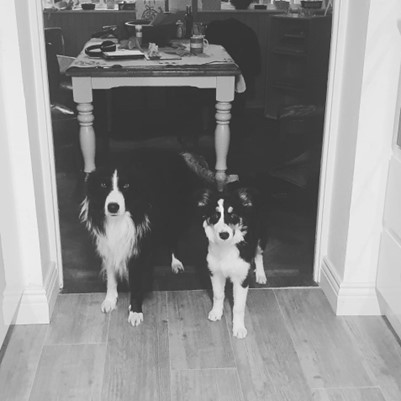
    Janey Mac.

    Janey Mac, a gift from a friend the previous September, was a handful for six months. Border collies are such energetic, intelligent dogs that to raise one is not entirely different to raising a child. A certain level of care and attention is required. They push you to your limits, bite at your ankles at dawn, chew treasured sofas, display an incessant need to engage everything in sight. And then, just as you begin to reach the tether of your wit, along comes a lifelong companion, attentive to every need.

    The tarantula becomes a soul mate, as close to you as a family member. The rain kept pouring down as the dogs pulled me along the former Barrington Estate. I imagined the ghost of a woman dead almost a hundred years to the day passing into the soul of a little collie pup. ‘Could you find me,’ Van sang, ‘could you kiss-a my eyes, lay me down, silence easy, to be born again.’ ‘Born again’? As the Indian mystics say.
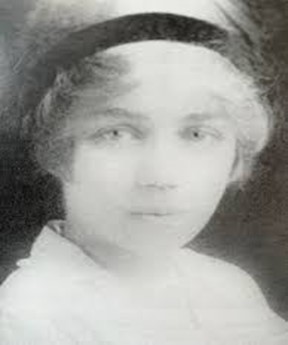
    Winnie Barrington.

    The same evening, I was sprawled on my bed, having just finished a short manuscript that gave expression to these ideas in prose. The manuscript weaved the facts of the assassination on Winnie and Biggs a century prior, into a tapestry of the imagination.

    Janey would embody the young mistresses’ ghost, and I would bear witness to rebirth: the phrase ‘to be born again’ simmering in my thoughts as I walked the driveway each day. In my mind it was no mere coincidence my daily walk with a puppy in tow was taking place a century after the ambush had led to the young woman’s untimely death: it was an arrow pointed in my direction from the angel of history. I would tell her story in my own way.

    I would draw inspiration from music. I lay on the bed googling upcoming Van Morrison concerts, as answers began to trickle in on-screen. For some reason I purchased – tired and wine sodden – and with an electronic swish of the hand, two tickets for a rescheduled festival gig in Derry that coming November. It was still months away. The Delta Wave was consuming the airwaves and the pandemic seemed never-ending. I was nervous. For two years I had been working from home, with intermittent days on site. I was a natural extrovert confined to a small circle of contacts.

    Most of my free time at this time – mostly in the early hours of the day – was taken up writing interconnected stories about the border collies in my life. The second, From This World, is a fiction woven from within the ‘viaduct of a dream’ – the imagined life that hovered like a ghost over the surrounding landscape. I would travel back in time, back to an Ireland before independence – ­when corncrakes sung out in nearly every valley – and when vast swathes of land lay unclaimed by commerce.

    Along the driveway the dial on my phone would always seem to congregate on the name Van Morrison; ‘Crazy Love’, ‘St Dominic’s Preview,’ ‘Sweet Thing’; songs that directed my thought to the story of Winnie like an obsession that would not relent until her death made its way onto the page. I sourced material from journals, sought people from the village from whom the story had been passed as a product of myth as much as truth, visited her grave in the cemetery. I even hovered around the Church of Ireland in Abington thinking of her playing with friends before Sunday service.
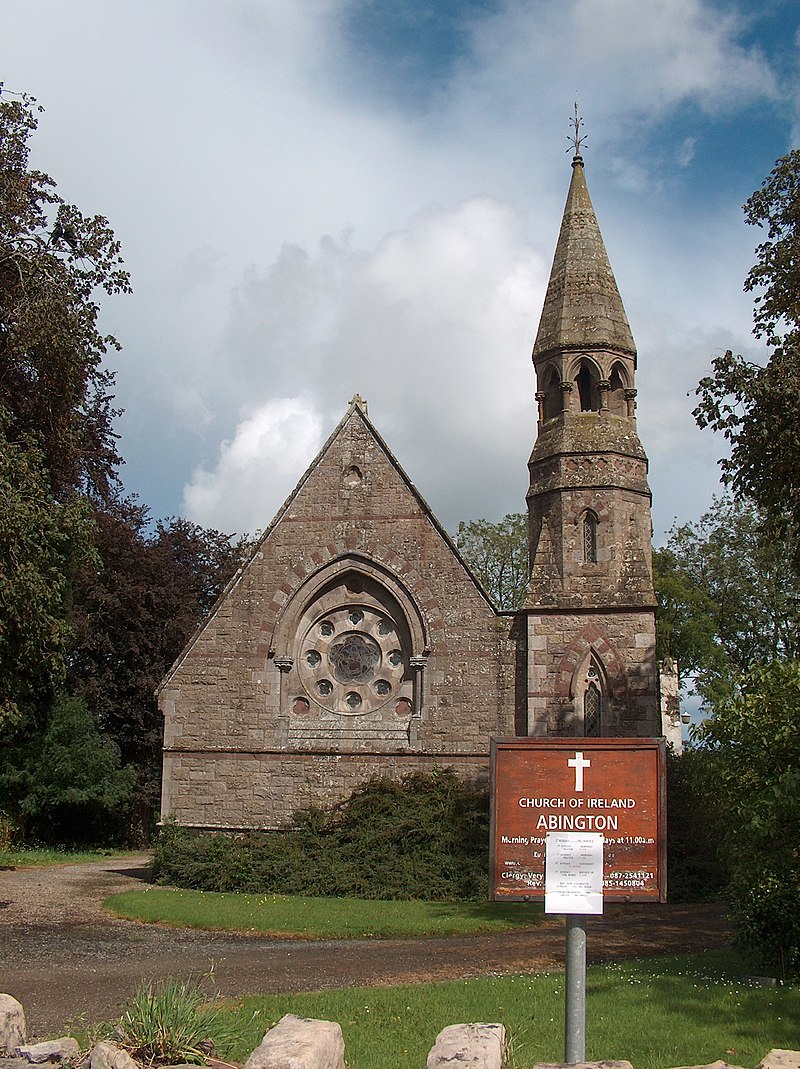
     

    Abington’s Church of Ireland church.

    In the end, the limitations of the factual confronted me. No matter how much rooting I did, how many articles I read, the same hollowed truth edged out: we must always imagine certain details of the past. In uncovering the myths of the ambush, piecing together reasons for Winnie’s motivation in travelling that day into a text worth reading, I would set upon the same thing set upon plodding through the fields listening to ‘Saint Dominic’s Preview’: imagination. I imagined Van wandering the streets of San Francisco, thinking of home. Suddenly, a sign for a forthcoming mass dedicated to peace in Northern Ireland at the Church of St. Dominic appears.

    Entrenched in thought, mystery overcomes him: someone, irrespective of religion, is thinking of his home in a corner of the world. ‘It’s a long way to Belfast city too’ he will later write, San Francisco and Belfast City edging close together in his heart. All around him is a banal conformity, preying on the modern urban city.

    Some otherness of spirit has materialised in this unforseen act of care: prayers offered in a distant church for the Troubles in his homeland. Years later, as if these prayers have been answered, a US envoy helps to broker peace in Northern Ireland. And around the same time, I begin to suspect, Van starts to think about the album he will call The Healing Game. The album is a much-heralded return to form for the singer; a compelling vision of healing in its many forms.

    I was on a long journey through a catalogue of music while dreaming of a dead woman, letting each of Van’s albums spark new ways to think about landscape. The Waiting Game played a role. Alone in my thoughts one evening the first side played through. The song ‘Waiting Game’ shuffled into the light with its recognizable harmonica. ‘I am the observer who is observing’ ushered forth in those enticingly vague lyrics, giving no indication that the song is anything but a personal lament. Perhaps Van is passaging through middle age, seeking ‘the presence deep within you.’ But it is the same presence he calls ‘higher flame,’ in possible reference to the wait for peace in Northern Ireland.  Here’s the thing: it was a spiritual quest I identified with in these songs; a yearning to connect with something beyond the material grist. Is it possible the goal of Van’s search in song is the same thing that I was yearning for?

    In the early days of the pandemic, before Winnie’s story gelled in my mind with the music of Van Morrison, I spoke for some amount of time with a priest about the effects of isolation; the wave of destruction he believed would result from delayed grief. We stood outside a church in conversation.

    My thoughts began to drift back to a time when I had stood in a funeral parlour, shaking hands with the different people who came to pay their respects. My hands were so badly blistered after. Yet the procession of people, their faces contorted in shock, was a panacea for the grief that would begin to manifest in the months that followed. What might have happened without that show of tradition unique to Ireland and its culture, I thought? A delay of sorts. A drift into unfettered pain: a world without others to soften a fall?

    The faces that evening were pillows laid out in time. When removed a body would fall on a cold floor. These thoughts came to me outside a church while I was talking about death with the priest of a religion I no longer practiced, each of us struggling with the covid restrictions in our own interminable way. Our two-bit conversation brought some relief from the sudden descent into a half-life of zoom classes and waited upon DHL deliveries. At that time my social life consisted of one weekly outing: a trip to a supermarket to see those waiting in line.

    Then something strange happened during the lockdown. I was listening to Van Morrison records when Van began speaking out about lockdowns and restrictions on musicians. Rolling Stone ran a story about Van as anti-lockdown.

    Then Van took to YouTube in defense of his views. The comments below his video post unfolded in a spew of hate. He was selfish, inconsiderate in wanting to play live music. He was working on Latest Record Project, a record with a considerable number of protest songs rallying against the state’s incursions into his life.

    For Van, the lockdown policy was a gross overreach, an intervention he felt lacked scientific proof. Fair enough, I thought at the time. Our world is made of different points of view. But then I began to think about these statements in relation to my own frustrations. Was it really that strange that a seventy-five-year-old old man wanted – in whatever way possible – to play live during a pandemic?

    ‘Stay home, stay safe’ was the public health moto of the time but it was far too obtuse in the way it equated isolation with being safe, particularly at a time when the WHO called isolation a major killer. So much public health policy in the period leading up to that time had focused on ageism: attempts to determine a person’s value based on age alone. Van was ageing. He wanted to play the music that defined his profession. Like me, he found it frustrating to stay away from others. Beyond everything, I admired his honesty in speaking.

    But suddenly Van’s name brought the baggage of Covid 19 politics to bear on pop music. Lifelong fans dumped his catalogue in a show of partisanship. Van called out Northern Ireland health minster Robin Swann for intervening in his life. He did not help himself when a video began to circulate of him cavorting with Ian Paisely jnr. in a Belfast hotel. Undoubtedly irked by the ban on music events in Northern Ireland, maybe at his age, I thought, time was slipping away.

    Each minute away from the stage was an incursion into a life of music. Was this selfishness? Was it a lack of concern for those who believed we could defy the virus? Or was his decision to risk his health to perform music for others something eminently admirable in him? I lay on the bed thinking about this, as the needle dropped on a cover of Van’s ‘Sweet Thing’ by The Waterboys from the album Fisherman’s Blues. Then, all at once, the next song played. ‘Strange Boat’ seemed to reach from the past into the present:

    We’re living in a strange time
    Working for a strange goal
    We’re living in a strange time
    Working for a strange goal

    And then – of course – the conclusion:

    We’re turning flesh and body into soul

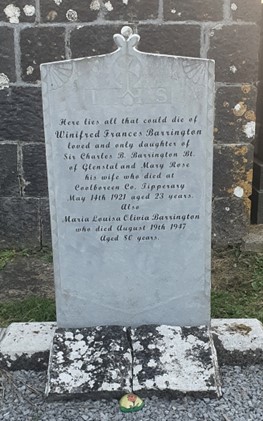
    Things then began to click. At Abington cemetery the epitaph ‘here lies all that could die of Winifred Frances Barrington’ appeared on a newly renovated gravestone. Flesh and bone withered away, leaving something of a ‘soul’? It was an ephemeral quality that had lost currency in our time. And just as The Waterboys turned their strange times into a spiritual quest, it felt I was searching – not even consciously so – for something eternal in a world defined by fear. It was fear directed at a future point; a time that might never even materialise as real. Every evening I walked into the blanket darkness of the pandemic night, the ghost of a dead woman breathed down upon me. I moved into the ‘viaduct of a dream.’ It began to dawn on me I was searching for something that had yet to die, something known in the vernacular as soul. ‘Chambois, cleaning all the windows’, I heard Van sing on ‘Saint Dominic’s Preview’ – a metaphor he returns to on mid-career masterpiece ‘Cleaning Windows’ — before stressing, ‘singin’ songs about Edith Piaf’s soul.’ Maybe Van’s window cleaner is a soul seeker, I thought, cleaning away the grime that prevents us from seeing clearly?
     

    In my imagination Van was standing on a Derry stage singing ‘Cleaning Windows’, the lights shining down. Love, labour, the transcendence sought after in the blues dwindled into rock n roll bliss. Is there a beter celebration of pop as a panacea for the ills of working-class life, I imagined, than a song about a window cleaner who dreams of Jimmy Rodgers? Perhaps not?

    The song, beyond all of Van’s songs, concerns perseverance in the mundane: physical labour typical of urban life. As I started to dream of a journey North, passing from County Limerick to County Derry, passing along the stonewalls of Galway and Mayo, against the looming shadow of Ben Bulben, a crystalline image of a window cleaner formed in my mind. The image ushered me back to a summer spent packing tiles in a Bavarian factory. Loneliness and boredom marked each passing day. What did I dream of then? Was it music? Love? Was it the desire to turn flesh and body into soul?

    All the time away from family and friends during the never-ending pandemic impacted upon on me to such a degree I yearned for some kind of mystical experience: a kind of commune. On ‘Deadbeat Saturday Night’ Van gives voice to a similar craving, a yearning to escape the daily grist and to finally to sing for others. ‘I’m alone, telephone, virtual reality,’ he bristles angrily, ‘it’s no life, no gigs, no choice, no voice.’

    Latest Record Project is made up of protest songs slammed by critics. More online criticism surfaced on its release. Van was called an anti-vaxxer, conspiracy theorist etc. There was even talk of burning his records. It was difficult to express a judgment of Latest Record Project without succumbing to the politics of the pandemic: the pro or anti binary regarding lockdown.

    Rarely had the politics of popular music been so intensely focused on a singular point of view in my lifetime. One evening during the lockdown – long before I began contemplating journeying North – I looked for inspiration in old live albums, turning eventually to Nirvana’s Unplugged.

    As the album played out, all knowledge of the junkie Kurt Cobain became in later life, prisoner of his body, seemed to dissipate in a moment of soul. Beyond the opprobrium of fame and celebrity, beyond the cravings of a drugged body, was a sense of peace. ‘I formulate infinity,’ Kurt sings on the band’s sumptuous cover of The Meat Muppet’s ‘Oh, Me’ cushioning the lines by saying ‘and store it deep inside me.’ Years after death something like a soul still resided as the aura of the physical record: the infinite.

    II – Northbound

    You were only waiting for this moment to be free..
    ‘Blackbird’
    The Beatles.

    The night before the journey North I had two dreams. Both would resurface in my consciousness when driving the next day. In the first dream I was walking in a forest. A metal object in the shape of a breast stared up at me. I turned to look around, peering through the gap in the trees, as the sun made its way in through the branches. A bird swooped down upon me, its lifeforce fading in my presence.

    I picked up the body to see if it was dead, before attempting to replace its breast with the metal object that had been left on the ground. But I was unable to make the object work. Instead, I ran home in tears.

    In the second of the dreams, I was lying on a steel bed in a room that formed part of an office in a university accommodation. Several staff members were welcoming me onto a campus in a country that seemed to be somewhere in Eastern Europe. I mentioned that the lodgings were perfect for my stay and that I planned to stretch my legs. The others got up to leave the room, smiling at me, saying goodbye in a broken English. No sooner had they gone than a sudden urge of excitement – one that travel brings – overcame me. I got up from the bed, grabbed my jacket, and checked around for my keys. I tentatively opened the door to discover the apartment was on ground level, situated at the center of an old Roman university. The door opened to a sea of students moving at pace. They were all bunched together into groups, in deep conversation.

    There was something unusual about the second dream: none of the students wore face coverings. There were just faces, of which no two are the same. It was a thought that heralded my waking up: no two are the same. Life had returned to normal. The lockdown was over. I was on route to Derry, thinking of where to stay in Sligo and of what to do while in Donegal.

    Once I got to Ballyboffey a friend would drive us to Derry. Everything was planned to get to the gig on time but the dreams, so incredibly different in tone, troubled me. I mulled over their content pushing into a turbulent sky. The dying blackbird had brought such sadness I immediately fled the forest of my dream.

    In contrast, the second dream brought some elation. All the months of isolation, unable to identify the faces of people I met in shops, relented into antithetical bliss. Were the dreams an oracle of the future? A wish? And if so, was the blackbird shorn of its essence? Why did faces bring such elation? What did it mean? The time I had spent thinking through the two contrasting dream sequences passed quickly when driving. Then it appeared on the landscape like it always does: a signal of majesty in the land.
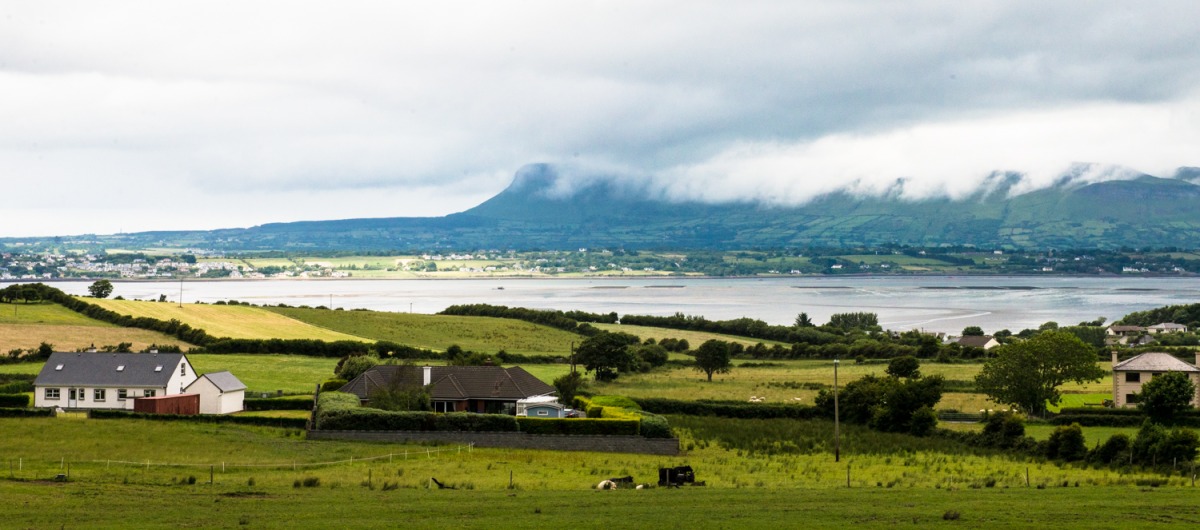
    Image (c) Daniele Idini.

    Ben Bulben towers over the county of Sligo like a beached whale. It interrupts all movements of the gaze. We stand aghast in its shadow. Once it appears the mystery of the landscape also makes itself known.

    As you follow the sign for Bundoran, when bypassing Sligo, Ben Bulben meets your every gaze. I had planned to walk at Mullaghmore, before pulling into a B&B for the night. But no sooner had I arrived at the car park and stepped out of the car to begin walking, then along came a torrential downpour.
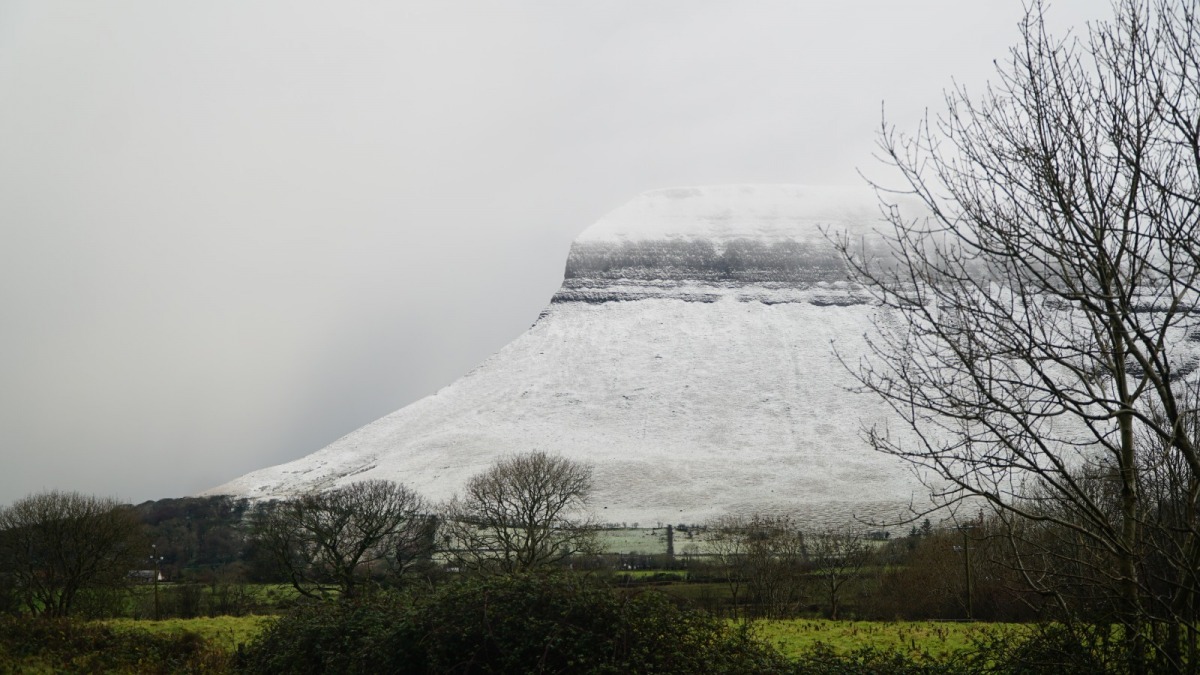
    Image (c) Fellipe Lopes

    It was near impossible to appreciate the views. An elderly woman, decked out in the gear needed to survive the weather, saluted at me while walking with her dog. ‘Not a bad day for a walk’ she said smiling. But I was soaked to the bones, and my jacket was still battling hard to resist the rain. I saluted back at the lady before closing the car door and taking a deep breath. I was glad to escape the weather. Twenty minutes later I drove through a village that, because of the rain, was difficult to make out by name: not knowing whether I had ventured into the North (as Donegal is known in the vernacular). Usually, it is clear: hillside sheep signal an untrammeled beauty in your midst.

    It was at that point a small B&B sheltering a little shebeen-like pub appeared on my eye line. Both establishments seemed like variations on traditional cottage style, devoid of the thatch roof typical of pre-nineteenth century builds (signifiers of an older time persisting in the present).

    I rang the B&B bell a few times before a hunched over woman suddenly appeared inside the door. Her mask concealed a smile, her soft Northern brogue welcoming in tone. A room on the ground floor was available for a night, she said, and a Chinese takeaway would open in the village at seven.

    The pub didn’t do food since reopening, apart from toasted sandwiches, and there was no restaurant in the vicinity. If it was cooked food I was after – I think she meant a gastropub – I would have to drive to Donegal town. Whatever the name of the village – and I didn’t want to know given the point of the journey was to cultivate uncertainty – drinks followed by a takeaway seemed more than an ideal proposition.

    I had a shower in the room, changed clothes and did a little jig to celebrate the unknown breaking through the habitual. The jig was designed to augur in the wrenching back of a spontaneity from the clutches of the Covid pandemic. I was at the pub in minutes, ready to forget the rain.

    It took me some time to locate the cert adopted for pubs and restaurants by the Irish government, before I stumbled in the door. Since the restrictions were introduced, I had hardly ventured near a pub, feeling a certain unease with everything: the virus and the regulations.

    Maybe it was a distrust of authority, a yearning for the old ways. But once I had opened the door, expecting to see one or two people, the artificial light was blinding, like it was battling the darkening of winter. A young man – with a moustache and a Kangal hat turned the wrong way around – appeared on my right behind the bar. A sprightly young woman was stood beside him. The bar was full of drinkers in breach of the protocols. My instinct was to turn away, but the occasion lured me in. It was a ‘life before’ that called to me.

    On the bar counter baskets of sandwiches were sitting beside baskets of cooked food. It seemed like I had interrupted a party. There were people standing at tables, sandwich and sausages baskets untouched, yet no television or music was on that would distract from conversation.

    The lights were blinding bright. I crept to the bar, trying to blend in as best I could. Faces turned in my direction: I was taken aback by the groups of people together. It was like stepping back in time. And then the occasion made itself known. I had arrived at some kind of Irish wake. A blown-up photograph of a man’s face was placed at the cabinet bar.

    It was the familiar that me pushed me in the door. I would come to learn of the man in the photograph’s fate when ordering my first drink, once it had seemed ok to intrude. The people at the bar welcomed me in without any fuss. Although difficult to understand the brogue, to adjust to the old way of life – a culture temporarily replaced with the public health protocols of the Covid pandemic – that had vanished to such a degree in the years that had passed since the pandemic began, I settled in at the bar. It was just folk waking the dead in the only way they knew. Soon I was helping them on their way.

    Public houses, bars subject to much criticism during the years of the pandemic, saw purpose return as a place of communion. We come to drink and remember. We come to raise a glass to the eternal: the soul that lives on after death. A local GAA man, wearing a green and yellow Donegal scarf, returned from the toilet to take his seat beside me. He spoke about a ‘wild sadness’ that had befallen the village.

    But, in truth, it was not all sadness. It was a scene I understood: a ritual of sorts. To raise a glass is to say – in the gesture of a tradition – ‘we miss you.’ You, the other person, one of a community transcending the ‘I.’ The time that I spent in the pub was a sort of unexpected gestural confirmation of what the journey North was meant to affect. All the isolation of the previous months gave way to something immeasurable. I stayed to hear about the man in the photograph; to hear he left the pub in good spirits; waving goodbye to his friends in good health. He was known all around for his wit, the numerous pranks he liked to pull on friends.

    The man’s face stayed with me as an image waiting in the rain beside the local Chinese takeaway in a village that name of which I cannot recall. As I write now, I wonder did the village exist? Did the pub exist?  Or had a dream taken the place of reality?

    Two friends had passed away during the pandemic. When news broke, I walked country roads trying to repress a desire to jump in the car and drive; to pay respects in whatever capacity possible. On one occasion, my group of friends took to a Zoom meeting as a virtual substitute for the pub experience. We wanted to raise a glass to a friend, celebrate his life. But the screen meant to connect people seemed to contradict the message it was meant to impart.

    Cut off from the other, material bodies were mere images, dependent on the vagaries of a Machine. At any point the connection could break, the face of another no longer visible. Presence is shadowed by an imminent threat of absence: a void that can swallow up the connection at any given time.

    I returned to the B&B with a fried rice in one hand and my phone in the other. In the distance Ben Bulben bore down like a God of the mountains. There was such a mystique to its presence: a gateway into the sublime landscape of the Northwest. When driving the same landscape the next day, bypassing Donegal town in the process, I took the decision to stop at Murvagh Beach. I wanted to gaze across the terrain – so impressive in reach – at the cliffs of Slieve League.

    In more accessible counties, the cliffs would attract huge numbers. The morning was taken up in conversation with the proprietor of the B&B, a retired lady in her late 60s, over cups of tea. She said the cliffs viewed from Murvagh are the biggest in Europe.

    A few hours later I was waiting in my friend’s car outside Jackson’s Hotel in Balyboffey for him to return. A river bridge was at my rear, like a postcard. Its autumnal colour seemed designed for the gaze. Tommy would drive that evening, once we had eaten. The last stage of the journey North would see us lost in conversation. Time would pass unnoticed. Darkness soon began to cover the night as our car moved from country roads into Derry’s urban décor, a contrast to the distant bogside. We passed by the new developments along the river, before a P sign stood out for a carpark Tommy said was in walking distance of the Theatre. Once we had parked and arrived at the Theater, the concert goers were waiting outside, ready to enter.

    The venue was practically full when Van and his band arrived on stage. Van was a diminutive figure who had lost a significant amount of weight. He was an elderly man with renewed purpose. From our balcony seats we could gaze at the band from ahigh. Wearing black sunglasses and a trilby hat, Van had the aura of a singer finally given back a stage; happy to know he could do his job again.

    For the duration of the show, he just leapt from song to song, never speaking directly to the audience. He began the gig by playing songs from his most recent album, all – to some degree – commentaries on the stay-at-home orders he was so critical of. But he then went on to play a load of songs from his back catalogue that drew me in so many different directions. ‘Sometimes We Cry’ was a cue for joy, Van moving between numerous instruments during the song, his saxophone like a magical wand.

    Awe of a sort arrived with ‘Baby, Please Don’t Go,’ drifting into a rendition of Muddy Waters’ ‘Got My Mojo Working,’ signaling that we were witness to a great blues musician and testament to a lasting tradition. It was also testament to the power of live music, a feeling the performance of ‘Cleaning Window’ confirmed. I had played the song repeatedly throughout Covid, trying to harness the pleasure of labour and music in our youth. But it soon began to dawn on me, however, as I gazed upon an elderly man singing ‘what’s my life?’ that Van was asking his audience an important question. Is to sing for people – nothing more – a source of our being?

    It was the affecting moment the journey North was intended for: the words ‘no 36’ sang in a soothing Belfast twang. Van has a singular (as an artist) ability to alter intonation to maximize lyrical affect. The way he sings ‘No. 36’ in a Northern accent is one example. But there are many. ‘Angelou’ builds by way of difference and repetition, ‘in the month of May, in the city of Paris’ repeated with intonation amplified each time.

    The music, all the while, builds in tempo. Van left that evening after two hours performing on stage, departing the scene with an affirming rendition of a song that personifies the above-mentioned lyrical affect: ‘Gloria.’ Once he had left the stage the band members went solo for a few minutes. The crowd then began to clap and sing along with the remaining musicians, shouting ‘G-l-o-r-i-a’ in something of a fervour. I looked around, thinking, for no reason, of Winnie, of Janey, of lockdowns and isolation. Then a strange sensation came over me: a grandiose feeling of hope.

    In 1978, ten years after the release of Astral Weeks legendary music critic Lester Bangs wrote,

    My social contacts had dwindled to almost none; the presence of other people made me nervous and paranoid. I spent endless days and nights sunk in an armchair in my bedroom, reading magazines, watching TV, listening to records, staring into space. I had no idea how to improve the situation and probably wouldn’t have done anything about it if I had.

    Lester’s reflections chimed with my own experiences during the stay-at-home policies of the pandemic. The famous critic found in Astral Weeks something of a spiritual retreat: an album that helped release him from paranoia’s clutches. Lester’s was a dilapidating malaise, a condition pushing body and soul into competing realms.

    Astral Weeks was a Godsend. The album helped him to live again. It was a cold and dark winter night when we left the Millennium Theatre once the concert had ended. There was a film crew in situ outside, shooting the latest series of the TV show Derry Girls set in the city. The night, nonetheless, seemed to glisten with possibility. ‘It’s the great search,’ I thought, recalling those writings on Astral Weeks, ‘fuelled by the belief that through these musical and mental processes illumination is attainable.

    Or may at least be glimpsed.’ Illumination, a glimpse of the divine, seemed more than abstraction. Maybe, faithful to Lester’s experience, I too had glimpsed something of the divine, without really knowing, like watching a firefly moving in the sky at dawn.
    We are an independent media platform dependent on readers’ support. You can make a one-off contribution via Buy Me a Coffee or better still on an ongoing basis through Patreon. Any amount you can afford is really appreciated.
  • All Black Inception

    The 2010 film ‘Inception’ has scorched the innermost parts of my brain. This big screen feast had concepts that lit all the senses. Visually it was seeing things like the city of Paris fold in and on itself. Aurally, Edith Piaf’s Je Ne Regrette Rien twisted and reborn as a time bending plot device and a highly memorable if unrecognisable score.

    Christopher Nolan’s cerebral blockbuster may seem a world apart from a rugby contest in store in the Land of the Long White cloud. But the central tenet of the movie, the thing that has stuck with me the most, is that once brought into the world it’s almost impossible to kill an idea.

    It’s that thought that resonates with the mouth-watering sporting clash that awaits us this weekend.

    I’m not sure what the New Zealand team that first toured the British Isle in 1905 would have made of the central idea of Inception. But I suspect they had some inkling that they were creating something special: an idea that would exceed them.

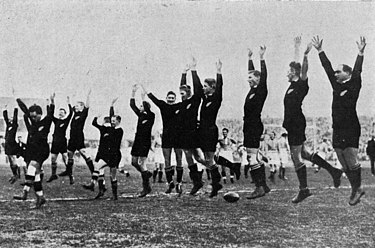
    It is unclear how the touring New Zealand side earned their moniker the ‘All Blacks’ whether through a typographical error – they All played like Backs? – or simply because of the colour of the jersey, which seems most likely. Whatever its origins, this national side made up of native Māori and colonials have been referred to as the All Blacks ever since.

    Coupled with the pre-match ritual of the haka, and their top drawer rugby skills the team’s reputation travelled far and wide. They are easily the most successful national team in the history of the sport.

    The All Blacks at the climax of their haka before a test against France in Paris, January 1925.

    An idea had been born. These New Zealanders were no ordinary rugby team. They were All Blacks and they were unique. Their fans knew it too.

    The Welsh choirs singing Bread of Heaven in the Cardiff drizzle may indeed be a religious occasion, but the relentless chant of ‘All Blacks. All Blacks. All Blacks’ simply demands success.

    It didn’t matter who they faced. What team or colour. Resistance was futile. But one team suffered more than any other. Year after year the team in green were beaten all black, and blue. From that very first tour in 1905 Ireland endured 111 years of shoe pie.

    At best there were crushing last minutes loses. At worst, and usually in response to these ‘near wins’ the humiliation of record score obliterations. In my lifetime it was teams that included the likes of Vinny Cunningham, Keith Wood and Conor Murray from 1992, 2002 and 2012 that typify this. Each poked the All Black bear and suffered brutal and pitiless responses. 56-9. 40-8. 60-0.

    For Ireland, the All Blacks were a giant albatross on our backs, and it took a Kiwi to help bend, and finally break that mystique.

    In just his third game in charge, Joe Schmidt’s Ireland had New Zealand beaten. Until they weren’t. It may have taken the last play of the game and a conversion twice taken, but the All Blacks had beaten Ireland. Like they always did.

    Three years later in Chicago we finally beat New Zealand. This was an end of season game, however, almost an exhibition match, a test played in a neutral, non-rugby venue, against an All Black team lacking recognized second rows.

    The following week they came to Dublin and ‘shoe pie’ resumed. With a violent intensity and no little skill, they beat us into submission once again.

    The victory in 2018 was a more genuine breakthrough. But normal trouncing service was resumed at the subsequent World Cup when it really mattered. Joe out. Busted Flush.

    But something had changed. The aura of invincibility around the All Blacks had disappeared forever. Mythological characters – the McCaws and Carters – were reduced to mortal men – Canes and Barretts.

    When they came here last autumn Ireland obliterated them in the most one-sided, close-margin-victory I’ve ever witnessed. We played them off the park, with the score board somehow saying 29-20 at the end of the match. But make no mistake, the All Blacks had been beasted by Ireland.

    Now, incredibly, Ireland could be the first side in the professional era to win a series in New Zealand. Having largely gifted the first test to the home team, Ireland won comfortably enough last week; although, slightly worryingly, throwing away at least two gilt edge tries to give a final score line that flattered the hosts.

    This is new territory for an Irish rugby fan. But can we actually do it in the third and deciding test? For sure it’s not the best team New Zealand has ever put out, albeit with Sam Whitelock back in the second row they present a more challenging proposition, and they surely won’t be so undisciplined next time out. Ireland are essentially unchanged, but Ringrose’s dashing forays will be missed.

    The rational mind says New Zealand are 7-10 point favourites. They just don’t lose home series. The PTSD of previous bloodbaths suggests there could yet be another dose of shoe-pie.

    And yet, with their aura of invincibility gone forever, another idea is crystallizing, which is that, whisper it, Ireland are becoming New Zealand’s ‘bogey’ team.

    It’s too early for this nascent idea to have much hold. Or power. But win tomorrow and it may start to play tricks on the All Black mind, just like the French have had a habit of doing.

    In all likelihood, come 10am on Saturday morning my foolhardy hopes will be confronted by crushing reality as normal All Black service is resumed. But this is sport, where hope is everything.

    I believe Ireland can make history. And even if i have egg on my face after the final result comes through, non, je ne regrette rien.

    Feature Image: All Blacks rugby union team that toured the United Kingdom in 1905-6.

    We are an independent media platform dependent on readers’ support. You can make a one-off contribution via Buy Me a Coffee or better still on an ongoing basis through Patreon. Any amount you can afford is really appreciated.
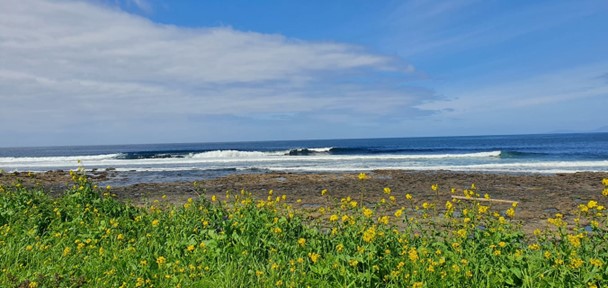
  • Burren Bliss

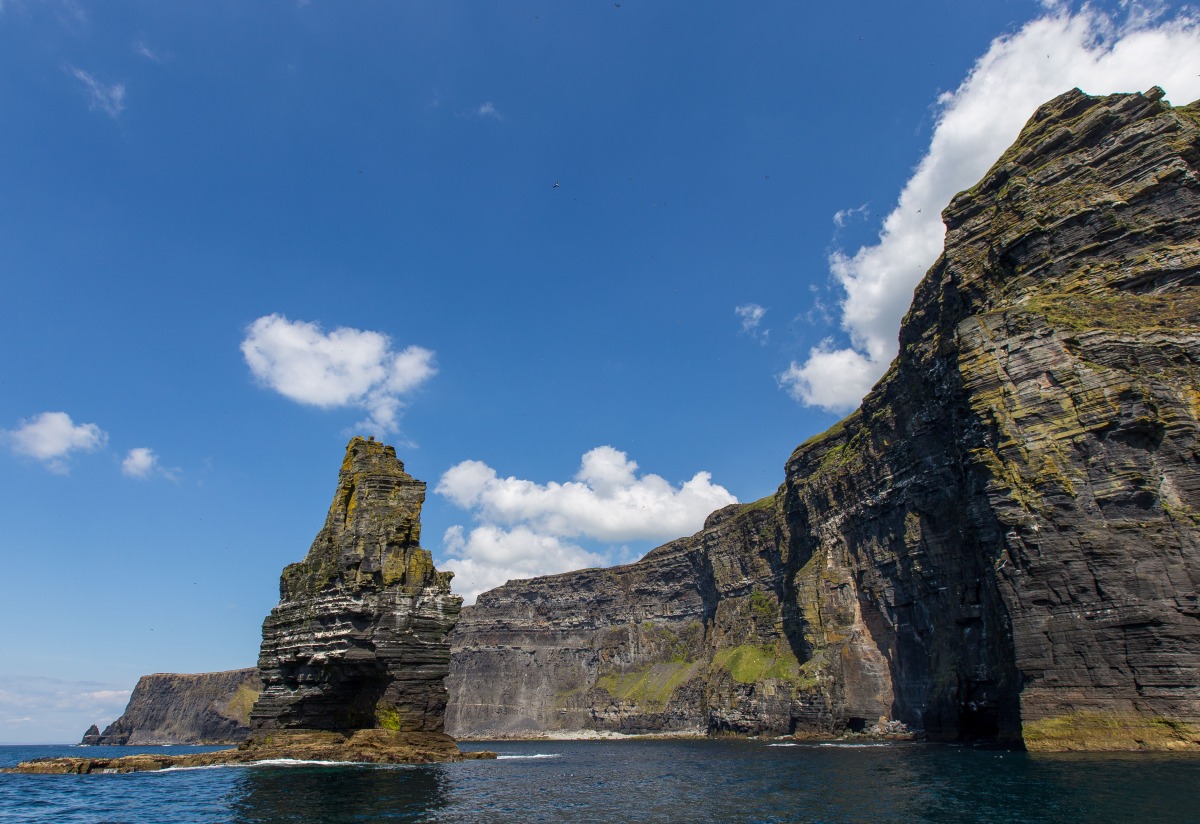
    During a visit to the Burren in County Clare, Oliver Cromwell’s lieutenant-general Edmund Ludlow wrote of the memorable landscape that it had ‘not water enough to drown a man, wood enough to hang one, nor earth enough to bury him’. A spell on a yoga retreat might have opened his eyes to the serene natural beauty around him.

    In 1999, off a small fuchsia-fringed road near the Clare-Galway border, Dave Brocklebank found what he had been looking for at last, a haven from the turbulence of the city, and a place to realise his dream. The Burren Yoga Retreat Centre was born; where the wisdom of the East meets the wild Atlantic West of Ireland.

    Wild Atlantic Way.

    Dave and his wonderful family have invested themselves in the venture with admirable devotion, and no little sacrifice, bringing together a dedicated team to offer a retreat to enhance body and soul. I can testify to the experience affecting lasting, positive change.

    I arrived in the early evening and breathed in the clean, fragrant air. A sylvan pathway led me past moss-covered rocks to the door where I was greeted by Dave, his azure eyes brilliant pools of inner calm.

    He showed me around the recently renovated building; immaculately clean and finished to the highest standard. The objective is to be carbon neutral by 2025. The bedrooms, all newly constructed with fine-quality woodwork, very comfortable beds, and sophisticated modern touches such as underfloor heating and electric window blinds, are ample in size and bright, affording verdant vistas of lush fields and woodland. The bathrooms are sparklingly modern and elegant.

    There is a room for silent relaxation, and one for massage from a therapist who, I was assured by a repeat visitor, has “magic hands”. Upstairs is a cosy nook for reading, with numerous books on yoga and meditation. There is a comfortable lounge in which to take one’s ease and admire the treescape and mountains beyond, or chat with fellow guests. Outside is a circular, stone space for outdoor activities; a nod to our ancient forebearers and the many archaeological sites in the area.

    In the dining room, Ida, our Croatian cook, presented sumptuous and cleansing vegetation and vegan meals, produced from locally sourced and organic ingredients, all washed down with water from the well.

    Gráinne leads a class.

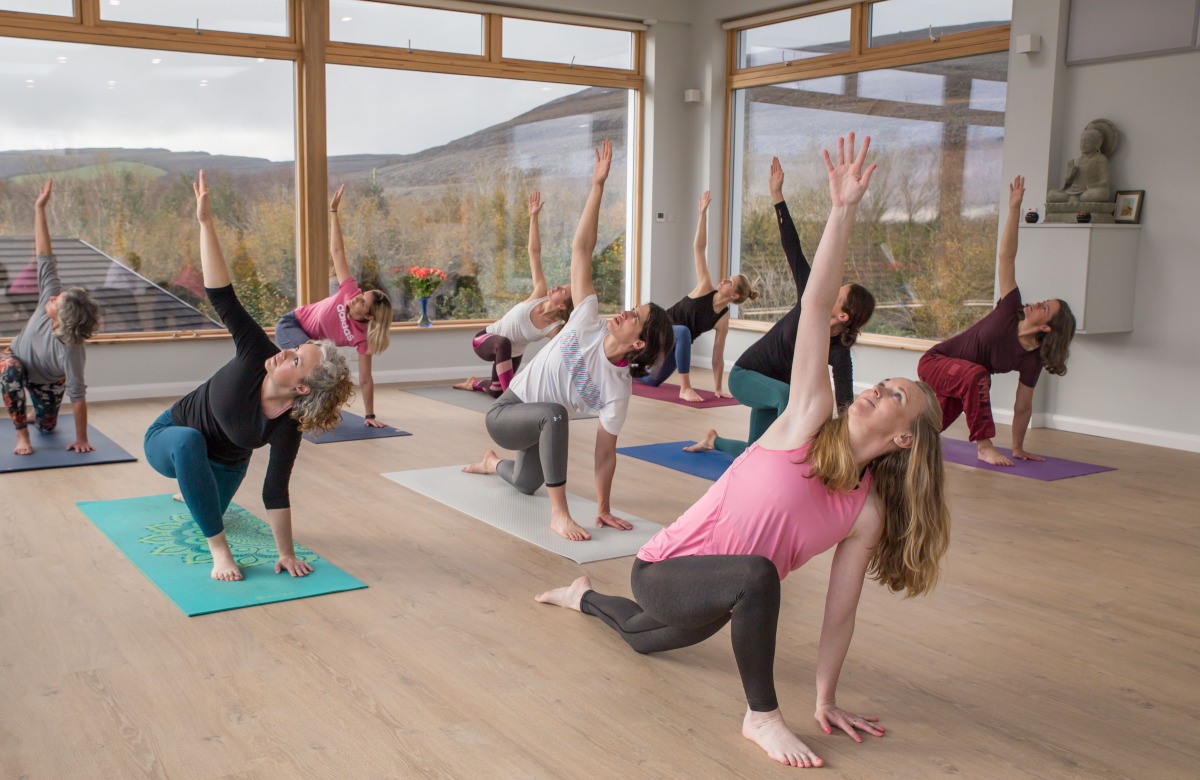
    The pièce de résistance is the brand-new state-of-the-art yoga studio. Here, in this large and well-lit space with enormous windows offering more expansive views of bare mountainside, and trees swaying in the breeze like seaweed in a current – Gráinne, poise and grace incarnate – gave gentle instruction in yoga and meditation, at times bathed in glorious sunlight. She is one of a team of teachers who Dave, over years of careful selection, has chosen to offer the best possible experience to well-practised yogis and novices alike.

    And then there were the daily outings. The first was to mythic Coole Park, once home to Lady Gregory and haunt of Irish literary greats, their names carved into its Copper Beech autograph tree; W. B. Yeats, Bernard Shaw and J.M Synge. We took a stroll by its otherworldly turlough (a disappearing lake), its banks ablaze with vivid green, and along its woodland paths, passing great cypresses and cedars along the way. Then lunch in the pretty market town of Gort, in the charming Gallery Café with paintings by local artists displayed on the walls.

    Clints and grykes.

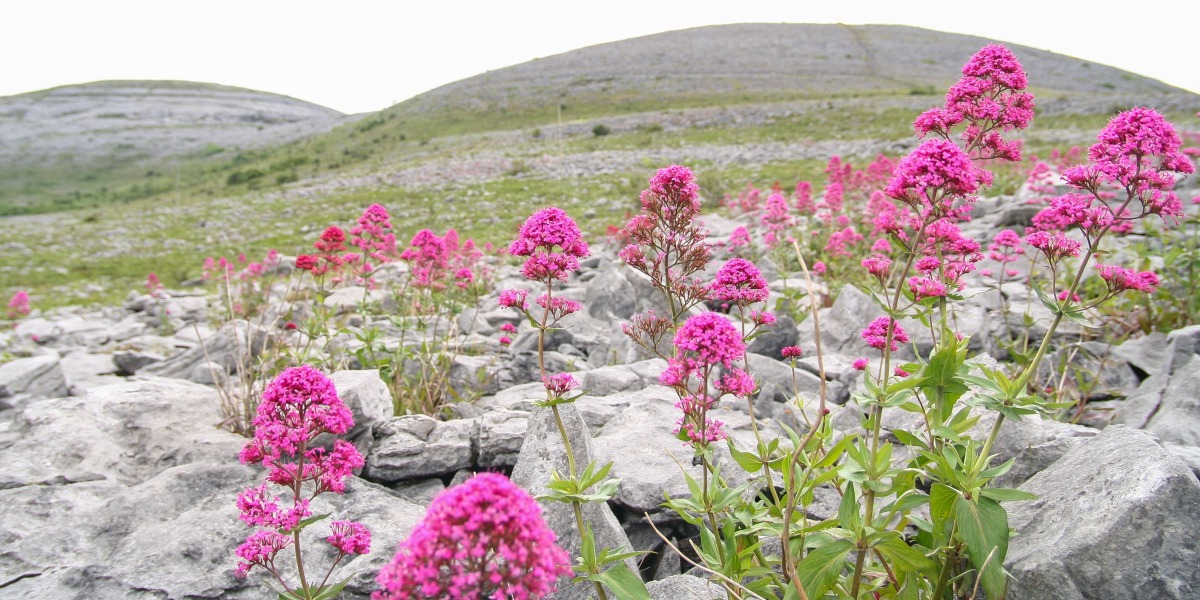
    On the second day, led by radiant, soulful Erin, our guide and bean an tí, we went to Mullaghmore, to explore the renowned karst landscape of the Burren, those primordial tropical seabeds, abrim with petrified corals, urchins, and ammonites, sculpted by glaciers and carved by rainfall into incised pavements of glistening clints and grykes. The latter are fecund with long-ago deposited Connemara soil to create nurseries for the abundant flora (among them orchids, herb Robert, and honeysuckle) to jostle towards the sunlight.

    A dragonfly, tinkerbell wings of shimmering organza, sketched a perimeter around us as we walked. Upwards we climbed to the summit, horizons of wonder before us, it seemed as if we were atop the cerebral grey matter of a submerged giant.

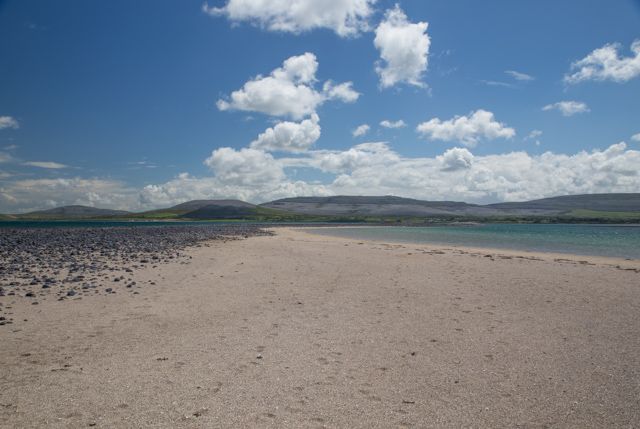
    Returning to the road, we paused to pet some “self-walking” dogs and headed to the shore, via the house which was the location for the irreverent Irish sit-com Father Ted, enjoyed an excellent seafood lunch at Linnane’s in New Quay and later, a swim in the brisk, abluting ocean.

    Back to the centre and a yin yoga session. Given my lack of yoga over the previous months I was reminded of a quote from another famous Clint, who once growled, “a man’s gotta know his limitations”, but I was surprised to feel how my muscles and joints could be coaxed into suppleness in the right environment, and with such expert instruction.

    So if you’ve been thinking of doing yourself the favour of spending some time at a lovingly-envisaged and realised home away from home, with superb food and facilities and nestled in sublime natural beauty then this retreat is for you.

    Personally I have felt a renewed sense of corporeal freedom and am learning to transcend more easily the clints and grykes of my mind, moods, and emotions,  and am discovering a higher plane of consciousness, to operate  in the space between thoughts,

    I carry it still, this moment of bliss in the Burren. And I hope you will too.

    The Burren Yoga Retreat offers full-board stays of various lengths with expert yoga instruction throughout the year.

    All Images courtesy of the Burren Yoga Retreat.

    We are an independent media platform dependent on readers’ support. You can make a one-off contribution via Buy Me a Coffee or better still on an ongoing basis through Patreon. Any amount you can afford is really appreciated.
  • Varadkar off the Hook: Questions Remain

    In response to allegations made against then Taoiseach Leo Varadkar which appeared in Village Magazine, in March 2022 I submitted a formal statement to the Garda investigative team regarding the Official Secrets Act (hencefore OSA); in particular pertaining to the responsibilities of Martin Fraser, then the most senior civil servant in the country.

    I also pointed to an usually-timed departure from precedent in Fraser’s appointment as the next ambassador to London, which is in the gift of Fine Gael’s Simon Coveney as Minister for Foreign Affairs.

    Certain circumstantial evidence remains pertinent to any interrogation by the Oireachtas into what has occurred, namely:

    February 11, 2019: the NAGP union write a threatening letter to Fine Gael HQ warning it would be canvassing against them in upcoming local elections and the forthcoming general election.

    April 10, 2019: the confidential GP contract is couriered from the Taoiseach’s Department to then Taoiseach Leo Varadkar at Baldonnel airport without formal authorisation and with no conditions attached.

    April 25, 2019: an official in that Department of Health warns that ‘Unilateral publication of the Agreement, in the absence of confirmation from the IMO that it is satisfied with the final text, would represent a serious breach of trust.’

    We still do not know which civil servant authorised that initial leak.

    It beggars belief that in the seven months from the time that the revelations appeared in Village Magazine (October 2020), and the case being raised to a criminal investigation (April 2021), that the most senior civil servant in the country – with responsibilities deriving from the OSA including internal breaches – does not appear to have conducted an internal inquiry.

    Bear in mind that if a junior official leaks a confidential file it is usually career suicide, and potentially results in criminal charges.

    I therefore previously argued that it is reasonable to assume that no junior official leaked the document, and that authorisation came from Fraser himself.

    It is important to emphasise that Martin Fraser was one of three Civil Service Commissioners with certain legal powers vested in him that exceed even the Taoiseach of the day.

    The logic underpinning such formidable powers is that they are responsible for the preservation of the institutions, statute and assets of the State beyond the life of any government. Hence the concept of a ‘permanent’ government and its daunting power.

    With such power arrives commensurate responsibility. It became apparent in my dialogue with members of the Garda investigative team that Martin Fraser had not conducted an internal probe, and his role was never under investigation.

    On legal advice I withdrew my statement and was advised that the matter would return to the Oireachtas for clarification and investigation.

    The Duties of the Oireachtas

    Now that the DPP has ruled that Leo Varadkar has no case to answer the matter comes back to the Oireachtas, which ought to clarify the following points before Martin Fraser departs for London. He should be compelled to explain:

    • Why he failed to conduct an internal investigation into the leaked and confidential contract, either in the seven months before the Gardai gave it criminal status or since.
    • If Martin Fraser was indeed responsible for the release of the document, why he didn’t, as cabinet secretary, inform the cabinet. Further to this, it should be asked how and when the cabinet first learned that the contract had been leaked, and was this only through the Village Magazine article.
    • How it is that a Garda investigation spanning eighteen months seemingly never examined the role of Martin Fraser given the strong likelihood the document was released from his Department.

    This affair has set a very damaging precedent whereby the habitual violation of the OSA becomes a risk to the security of the State in the event of future leaks. The DPP decision that Leo Varadkar has no case to answer suggests that sensitive documents may now be casually disseminated.

    The Oireachtas needs to determine, once and for all, on whose authority the contract moved from the Department of Health to the Taoiseach’s Department.

    Mr Fraser should be directly questioned as to whether he authorised that step, using his higher powers as head of the civil service, and commissioner, to demand the release of the document from the then Secretary General of the Department of Health, Jim Breslin to his own Department of the Taoiseach. Mr Breslin would have been obliged to release the document to his superior in the civil service chain-of-command.

    Moreover, the DPP’s decision makes it imperative for the Oireachtas to clarify who is responsible for a breach of the OSA.

    Leo may be off the hook, but important issues surrounding the affair remain opaque. The fundamental matter to be addressed is who precisely within the civil service authorised the initial leak of the document to Leo Varadkar.

    It is quite simply bizarre that Martin Fraser – without previous diplomatic experience in the Department of Foreign Affairs – was appointed ambassador to our most sensitive and prestigious embassy at a time when a criminal probe into a leaked document remained unconcluded; in a matter over which he held overarching responsibility.

    Bernadette Gorman was a civil servant for twenty years and held statutory powers. She worked as an Inspector and a trainer of Inspectors.

    Feature Image: (c) Daniele Idini.

    We are an independent media platform dependent on readers’ support. You can make a one-off contribution via Buy Me a Coffee or better still on an ongoing basis through Patreon. Any amount you can afford is really appreciated.
  • Girl Without Mercy

    My father was a French lumberjack. That’s just a joke. People don’t always know I’m joking. Especially men. They laugh when I’m being serious, then nod or look blank when, well… guess I’m not too good at telling jokes. Now, I know how to act funny. On camera, I mean. In character. From the inside out. If that’s funny, then okay. Wish I could be funny in real life. Witty! I want to be thought witty, but most men look more like they’re waiting for me to get my tits out.

    There I go again, sorry. I’ll be good. Doris Day good. Promise we’ll stick to words you’re allowed to print. What was it you asked me?

    Right… Dad. My father could’ve been anyone, anybody in the whole wide world. When I found out Sylvie is French for of the forest, I figured Mom must’ve shacked up with a French guy, like maybe French Canadian, you know? Because she lived up in Washington State for a while. Before I was born.  She’s not from there. She’s kind of from everywhere. Or nowhere.  But since she did live there, I figured she got mixed up with some forest ranger. Or something. Something to do with trees. Et voila! Sylvie. That was a joke too, by the way. I’ll warn you about the jokes. Maybe, if you wouldn’t mind, you could laugh a little bit?  I mean if you want to. Et voila!

    Once a reporter, not a journalist like yourself, some sleazy newshound, snuck into the hospital to ask Mom who my father was. They say she said, with perfect serenity, that it was her left bedroom slipper. Those were nice soft slippers. Powder blue. I make sure she has nice things.

    Now where was I? Oh yeah… my dad. It’s a fact that all girls are attracted to their fathers, isn’t it? Where that leaves me, I don’t know. Wait, you wanted to ask me about Johnny.

    Johnny was… wow! Valiant. How come that word’s gone out of style? I’m not the only girl who likes valiant, am I? Like, someone who’d come to your rescue? He was no bedroom slipper, I’ll tell you. Had those old-fashioned English manners that make a girl swoon. Of course, the first time I saw him, Johnny was wearing a suit of armour. That was his role in the picture we made together. There he was. A knight in shining armour among the dress racks. I didn’t stand a chance.

    In the movie, I’m this mythical creature, like a fairy-elf, who meets the knight in a summer meadow. And she seduces him!  I did loads to prepare for the role.  Read everything I could find on elves before I had lunch with Hiram, the director. Over the shrimp cocktails, I explained to him how I was going to need special makeup, because elves have oversized eyes and small, pointed ears. I had made a couple sketches. He pushed those sketches right back across the table and gave me a look over his glasses.

    “Syl, Cookie,” Hiram said, “your adoring public are not paying their seventy cents to see you prancing around in a pair of pointy ears.  They’re paying to see Sylvie Davenport. America’s wet dream.” Seeing me droop down, arms crossed over my chest, he said, “It’s a compliment, Cookie.”

    So, they made me up to look the way I always look. Only with longer hair. I wore a sort of gypsy costume. Johnny had to string garlands of flowers in my hair. Around my neck, my waist. The warm summer meadow we were supposed to be in was really Sound Stage Four. Johnny’s breath smelled like sardines. And the garlands were plastic flowers with wire. They snagged my skin.

    But there’s this thing I do, once the camera is on. A place I go inside myself. Where the flowers are real. The sky is a true sky and everything is marvellous. So marvellous I almost can’t stand it. My eyes become like broken windows, with all the light and wind rushing through. People love me. I just have to look at you. You’ll love me. Like he did.

    Johnny followed me into my dressing room after. Pressed himself up against me. He said, “Sorry about the kippers.” No kidding, that’s what he said.

    I stared up into his blue eyes. His noble face. “That’s alright. I like sardines.” Which I don’t, but I didn’t want to break the spell. “Kippers aren’t sardines, they’re herrings,” he said softly. Then he kissed me. He, Johnny, kissed me, Syl. Which was different from the knight kissing the fairy. Mainly in that there was more tongue.

    That was the start. We were together for seven months. Oh, here, take one of mine. There’s an ashtray there, right by your elbow. You want a drink or anything? I make a mean martini. Sure? Have to butter you up, don’t I? Otherwise, you might write nasty things about me.  Aww, that’s sweet of you. You’re nice, too.

    When he spoke, his mouth hardly moved.  I used to kid him it was because he was trying not to spit out all those marbles. He said shag instead of fuck… of course that cracked me up. Johnny liked to quote Shakespeare…and the Greeks. Which was all Greek to me! Oh good, you got that one? See? I can be funny!

    He was a wonderful lover. Passionate. With lots of stamina for a guy his age. That first time, he crushed those stupid plastic flowers. It was heaven.

    “God, you’re amazing,” Johnny said to me once… in bed. “It’s like you have no bones.  Those breasts, that belly, the great big thighs – “

    “Hey!  My thighs aren’t fat!”

    “No, not fat, they’re perfect. All that soft flesh.  It’s like riding a cloud.” He took a drag off his cigarette, slipped it between my lips. I sucked in some smoke, while he twisted a handful of my hair around his knuckles. “All these golden locks…”

    “It’s not natural. The golden…”

    “Well, yes I noticed, but oh Sylvie.”  Eyes on the ceiling, he said, “You’re like America itself. Completely uncomplicated. Open. Welcoming. Saying, Come on in….”

    Okay, Johnny talked a lot of shit. Sorry. He talked a load of baloney, but his accent made it sound less silly.

    Was I in love? I’m always in love. All the time. I wake up, first person I see, I want to paint sunrises. Just for them. My heart comes cheap, you know. But Johnny, he was like an answer to a prayer I hadn’t even got round to praying yet. I felt safe with him. Until I didn’t.

    Know what was funny? He always wanted to go to Chasen’s. I had my own booth there. We went at least twice a week. Johnny didn’t even like American food. But he was always dying to go. So, I’d get all dolled up, and we’d go. The minute our car pulled up, bang! Photographers. Every time. You’ve seen the pictures. Me and Johnny, under the awning at Chasen’s. Me smiling. Showing a little leg. I could pose like that in my sleep. Johnny glaring at the cameras. Clutching my arm. That wasn’t play-acting, by the way. I’d have bruises the next day from him holding on so tight. He hated that whole scene. So, I could never understand why he wanted to go in the first place.

    Life Magazine sent a photographer to my house to take pictures of me in my kitchen. Me stirring a pot. Me staring into the oven. Me chopping carrots. You know the kind of thing.  About how I’m really an ordinary person. How I cook for my man like any normal girl does. Fact is, I am a pretty good cook. Betty, one of my foster moms, taught me. Betty was great to me, but her husband Jim, he…he paid a little too much attention to me. So, I had to leave. But I remember everything she taught me. Dan… the Life photographer… he was surprised I even knew how to turn on my oven. This is another thing: I’m not supposed to be witty, and I’m not supposed to know how to make a pot roast. I don’t know who made these rules. So, I said to Dan, “Actually, you’d be lucky if I made you dinner.”

    “I sure as heck would be,” he said with a grin. He had a sweet, Mickey Rooney sort of face, so he could get away with being flirty.

    “I mean it!” I tapped his arm. “I’m an excellent cook. I’d adore to have someone to make dinner for, but Johnny likes to go out. Well, you know.” Dan had snapped us outside Chasen’s so many times.

    “Poor little movie star,” he chuckled, tucking his camera back inside its case. “But you know, if you were my girl, I’d wanna show you off too.”

    “Oh, he hates all that stuff.  Posing for you guys drives Johnny crazy.”

    “Syl?  How do you think we all know to be there when you get outta your car?”

    My stomach sort of dropped. “Beats me.”

    “He tips us off. His assistant phones up every magazine, every newspaper. She tells us where you’re going. That’s how.”

    “But that doesn’t make any… If Johnny wants his picture taken, why does he get so mad?”

    “Maybe because he’s not the main attraction?  If you weren’t there, we wouldn’t bother.” Slinging his camera bag over a shoulder he says to me, “I’ll be going. Listen, Syl…  uh, Miss Davenport. Thanks a lot. We got some great shots today.”

    “Well, that’s down to you.”

    “Nah, it’s all you.” And Dan was out the door.

    In our movie, Johnny strips his armour off to lie in the grass with his head in my lap. This is the seduction bit. I feed him berries I’ve gathered myself that stain his lips. Bread with wild honey dribbling down, glistening on his knightly chin. My line is, “I love thee true.” I tried different ways of saying it, to make it sound more natural. In the end what worked best was to almost throw the line away. To say it like it was the most obvious thing in the world. I love you; I was made to love you. She’s a fairy, and I think in her mind she has been sent to him. To love him. Help him. She has magic that makes plants grow, makes summer out of winter, and all she wants is to do the same for her knight. To bring back the summertime of his life.

    So, while he’s eating her food and feeling the sun on his skin… while all that’s going on, she sings to him. This little fairy song about love, the blue sky and tra-la-la. They were thinking they’d dub it, but I practiced a lot and, in the end, they used my voice. The song is a spell. As she sings, all the lines disappear from the knight’s face. His hair goes from grey to a warm brown that Gordon, the hairdresser, mixed just for Johnny. And then the knight gets all virile and sexy. It’s my favourite part of the picture. Not for the sexy bit, but the way she’s able to make him feel young again. Like his best self. Shouldn’t love be able to do that?

    The reviews were awful.

    I’ve gotten bad notices before, but these were really stink-a-roo. Thou Hast Made a Flop, is one headline that hurt. They weren’t gonna buy my talking all thee and thy. I feel like if someone could’ve coached me on that, I would’ve got the hang of it. Hiram always said there wasn’t time. Hey… At least they didn’t pan my singing!

    But poor Johnny. Nymph and Gnome in Garden Frolic was the tag line that stuck. Variety said he looked more like my father than a lover. That he should trade in his sword for a walking stick. That it’d take a team of fairies, weaving spells night and day, to make John Sampson Law leading man material again.

    Johnny said it didn’t matter. But it was right around this time he started bruising my arm outside Chasen’s. Then if the photos appeared with the caption, Nymph and Gnome, he’d break things. A glass ashtray. Souvenir plate from San Francisco. A framed photo of my mom. Once he punched a hole in the wall. Right there, by the patio door. Plaster dust drifted down like snow. And so all of a sudden, he started laughing. Worst sound I ever heard. The breaking and punching were easier to bear than that. That laugh.

    I’d hide. Well, not hide exactly. I’d go into the bedroom. Sit on the floor and smoke. I’ve sat on a lot of floors in a lot of bedrooms. Listening for the breaking to stop, or the car to drive away. Guess what I keep wishing for is that there might be a someone somewhere who will want to sit on the floor with me. Someone who can stand me when I’m scared, or crying, or smoking too many…no, wait. Don’t write that down. That’s not… I don’t mean to make too much of it. Everyone has their blue days, right?  Even here, in sunny Los Angeles. Sometimes I wish it’d rain so I could mix a pitcher of martinis and have a good cry. This weather is a lot to live up to.

    Still, we had our good days, Johnny and me. Had some laughs. Sometimes he’d use one of his funny expressions, like don’t get your knickers in a twist and I’d giggle. He’d beam like he won an Oscar. And I’d think, okay. I can do this.

    The last time we were out in public together was that premiere last Christmas. What was the name of that movie?  The Brave Men of… Something or Other. For publicity, the studio had invited some soldiers to watch the picture. The armistice thingy had happened that summer.  So, these were the first boys back home from Korea. They were under the marquee, in their uniforms, posing for photos when we got there. So fresh. So bright and alive. Cheeks like apples. You couldn’t look away from them. Then they saw me, and started chanting. “Syl! Syl! Syl!” Oh, they were boys! But boys with big men’s voices. Shouting my name as I walked right into the middle of them. It was like they each had their own separate engine running inside. The heat. The purr. And all talking at once. Flashbulbs popping all over the place.  I’m smiling. Touching one on the elbow. Another on the shoulder. Cradling one’s face like he was my son, another like my kid brother. “You glad the war is over? Glad to be back home?” Yes, they said, and it was lovely. So sweet, to see how happy they were. It was all so…vivid. I’ll never, ever forget it.

    The crowd started moving, what with everyone going into the theatre. Thinking Johnny had gone in ahead, I was surprised to see him still behind me. Still at the curb, where the car had dropped us off. Just standing there, on his own. Heading over to him, I saw something in his face.  He was white. Eyes blazing. I held out my hand but he wrinkled his nose at it. As if it was rotting meat on a stick. Then he leaned in and hissed into my ear, “Why don’t you just shag them all?” My face went hot. Like I’d been slapped. He smiled that vicious smile of his. Turned and walked away. I watched him go, hands jammed in his tuxedo jacket pockets.  Johnny walked right down the street. No one recognised him. No one noticed him at all.

    When I got home that night, he was here. Sitting here, in the living room. In the dark. Except for the Christmas tree lights blinking on and off, like they do. They’d blink on, and in this reddish light, I saw his face, and his knuckles gripping the arms of his chair. Then they’d blink off and I couldn’t see him at all. I remember thinking it seemed like the scene of an accident. You know, when you pass one on the road? Squad cars, an ambulance. Red and blue lights flashing. I sat down on the sofa. Didn’t even take off my coat.

    “I’ve been having this dream.”  He started as if he was in the middle of a story. “And in this dream… well. I don’t want to upset you, Syl.”

    “I won’t be upset.” My legs were pressed together. Hands on knees, I could feel the cool sheen of my stockings.

    “That’s right.You’re really very strong, aren’t you? Stout Yankee stock. Whereas I…”  He stopped talking and the lights flashed off.

    “Are you sick, Johnny?”

    Again, the laugh. Like a donkey with a chest cold. “Not at all! Kind of you to be concerned. I only meant that I’m old. Very. Very. Old.”

    Then silence, woolly thick. I had a thousand different answers at the ready…  No, you’re not. Don’t be silly. Come here and I’ll make you feel young again. I’d used all of these on him before, and they had mostly worked. This time though, I just couldn’t manage it. I was hurt.  But it wasn’t only that. I was waiting to see how bad this was going to get.

    “So, in this dream,” he said, “you come home from some gay, glittering Hollywood gig. You float in, just as you have tonight. You’re perfect. All hair. Teeth. And tits. That sexy little wiggle when you walk. Wearing some champagne coloured, tighter-than-fuck frock leaving little to the imagination. Because why should it?  Nothing about you, My Darling, is engineered to appeal to Man’s mind. Your aim is…somewhat lower.”

    Johnny was pale. His forehead sweating. And I was holding onto my knee so hard I could feel my nails making half-moons in the flesh.

    “Everything on display. What are shop windows for? Let’s get those punters in!  This is, after all, America.” Arms open as Jolson singing Mammy, the ruddy light made Johnny’s features grotesque.

    “Why weren’t you at the party with me?”

    “Because I’m not wanted.  I’ve got grey pubes and I quote King Lear.  I don’t fit. But you!  You fit right in, and every man fits right in you. And I do mean every man, Syl. I could smell them off you. You came to me. In your frock. You kissed me. And I smelled their spunk on your pretty neck. Tasted it. In your pretty mouth.”

    “I’m going to bed.”

    “Oh no you’re not.”  He stood up, throwing the shadow of a giant on the wall. He was leaning over me, his hands on my shoulders. I couldn’t move. Couldn’t stop looking at his face. His long, noble face. So haggard now. The last thing he’d broken in my house was himself. Into a hundred un-mendable pieces.

    Then Johnny said, “They warned me about you.”

    In our movie, there are ghosts. Two kings, in jewel encrusted crowns and velvet robes. Two knights in full armour but for their helmets, which they carry under their arms. Two who I think are supposed to be princes… tights and swords and shining hair. They appear to Johnny. That is, to his character, when he wakes up in the morning to find I’m gone. He stumbles down to the edge of this pond, rubbing his eyes. Looking around the whole time like he’s wondering where I am. He kneels in the mud to splash cold water on his face. In the close-up, we see droplets beading on his majestic brow as his blue eyes widen in surprise.

    The ghosts are on the far side of the pond. You know right away they’re ghosts because they’re very pale, with dark staring eyes and black, toothless holes where their mouths should be. They appear out of nowhere. This is why Johnny’s character looks so surprised. They start calling out to Johnny, something like, “Beware!  Beware!  She’s got you under her spell!”

    Basically, the ghosts are my ex-boyfriends doing a spooky version of you’re better off without her, Pal. You’d be surprised how many of my movies end like that.  Or maybe you wouldn’t.  I’m bad news, right?

    So, I asked him, “Who, Johnny? Who warned you? About what? What did they say about me?”

    His fingers were drilling down into my shoulders and his breath was hot and stank of booze.  And just when I thought I’d scream, he started saying one word, over and over, in this weird stage whisper.  Just one word, while Johnny’s face turned redder and redder.

    Beware.

    Beware.

    Beware.

    Then he stood, opened his arms again and bellowed, “Beware the girl without mercy!”

    “For God’s sake, Johnny, it was only a movie.”

    He stood right there, in the middle of the room, and he laughed.  Laughed his horrible laugh at me and said, “And I am merely a ghost.” I stood up. Still tall in my heels, and turned to go upstairs. Locked my bedroom door, and cried myself to sleep.


    That was it for us. In the morning Johnny was gone, and we never spoke again. Yeah, just about a year ago now. I haven’t got around to putting up a tree this year. It’s a hassle, isn’t it, all that ‘deck the halls’ stuff? I’m not really in the spirit this year.

    When I heard about his heart attack, I remembered the way his face went all red that night.  And I wondered… I mean, if he was already sick, that might sort of explain? I don’t know.  Maybe not. What else can I tell you? We were happy. For a while.

    No, really, thanks so much for coming. Hope it was okay. Hope I gave you what you need. I’m always nervous until the article comes out! I’m sure it’ll be fine.

    I’m actually going away in January. To Korea. Some of our fellas are still over there, and they’ve asked me to go do a few shows for the troops. Not sure what I’ll do. Thinking I might sing a few songs? I mean I’m no Rosemary Clooney, but I can carry a tune. Well, enough that they won’t throw stuff at me.

    I just think it might be good, you know? How can you be lonely with all those beautiful boys around you?  How can you be sad? With all that youth? All that life?

    Feature Image from the 1928 move Dry Martini.

    We are an independent media platform dependent on readers’ support. You can make a one-off contribution via Buy Me a Coffee or better still on an ongoing basis through Patreon. Any amount you can afford is really appreciated.
  • Wornington Word

    The Royal Borough of Kensington & Chelsea. Knightsbridge. Notting Hill. Property. Harrods. Money. Bourgeoisie. Rolls. Bentley. Chelsea Tractor. White & uptight. Rich.

    A series of stereotypes. A series of assumptions made. A series of images. Of great wealth; of London gentry, all suits and ball gowns; of the richest in society; of politicos and financiers; of big businessmen and banks; of embassies and Royalty.

    An Alternative View

    Wornington Word is about none of these. It is an alternative view of a complex, multi-layered place, as told by the residents who live there, and by reading between the lines of the propaganda of gentrification.

    Pattrina runs the Venture Community Centre & adventure Playground on the estate, which originally started in the 1950s as resident-built play area on a piece of waste ground. © Kevin Percival Photography 2022

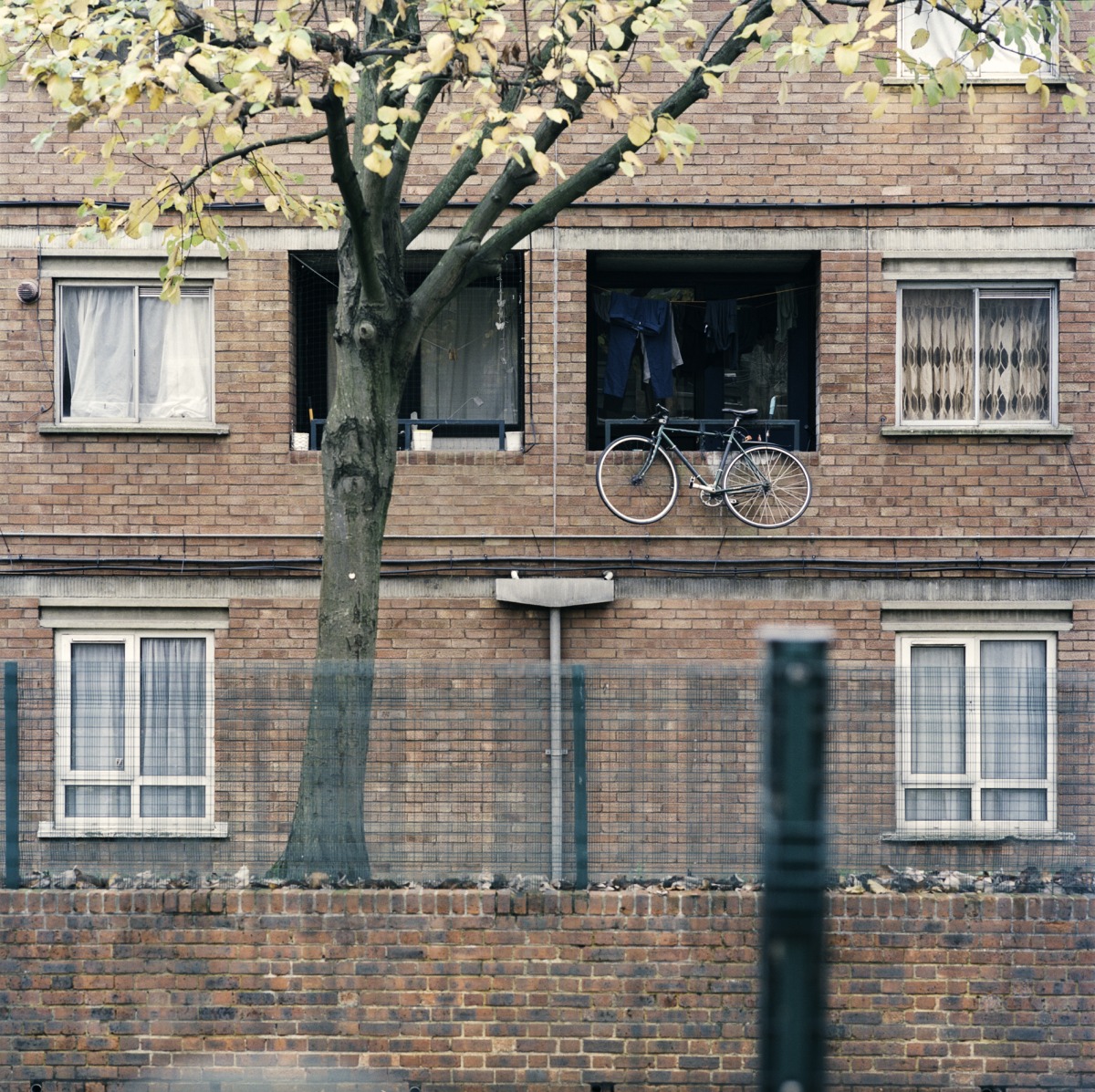
    The project focusses on and celebrates the numerous overlapping communities that make up this diverse area. The gentrification is reflective of broader trends across London, but seen through the specific lens of a single housing estate in the midst of redevelopment.

    Wornington Green is an estate of mixed council and private homes, built between the 1960s and 1980s, comprising of 538 flats, housing approximately 1,700 residents.

    Looking South-East across the estate from Thompson House towards Katherine House. From left to right: Pepler House (left foreground), Katherine House (middle background), Wells House and the community garden, and Rendle House. Winter, 2017. © Kevin Percival Photography 2022

    The regeneration was initiated by what was then Kensington Housing Trust (now Catalyst Housing Ltd), in response to ‘problems arising from both its design and construction methodology; … inherent problems with access, security, poor design and layout of homes.’

    Initially – when the redevelopment was first proposed in the early 2000s – long-term residents, mindful of the shared experiences and community which had flourished, fought hard to save the current buildings on the estate.

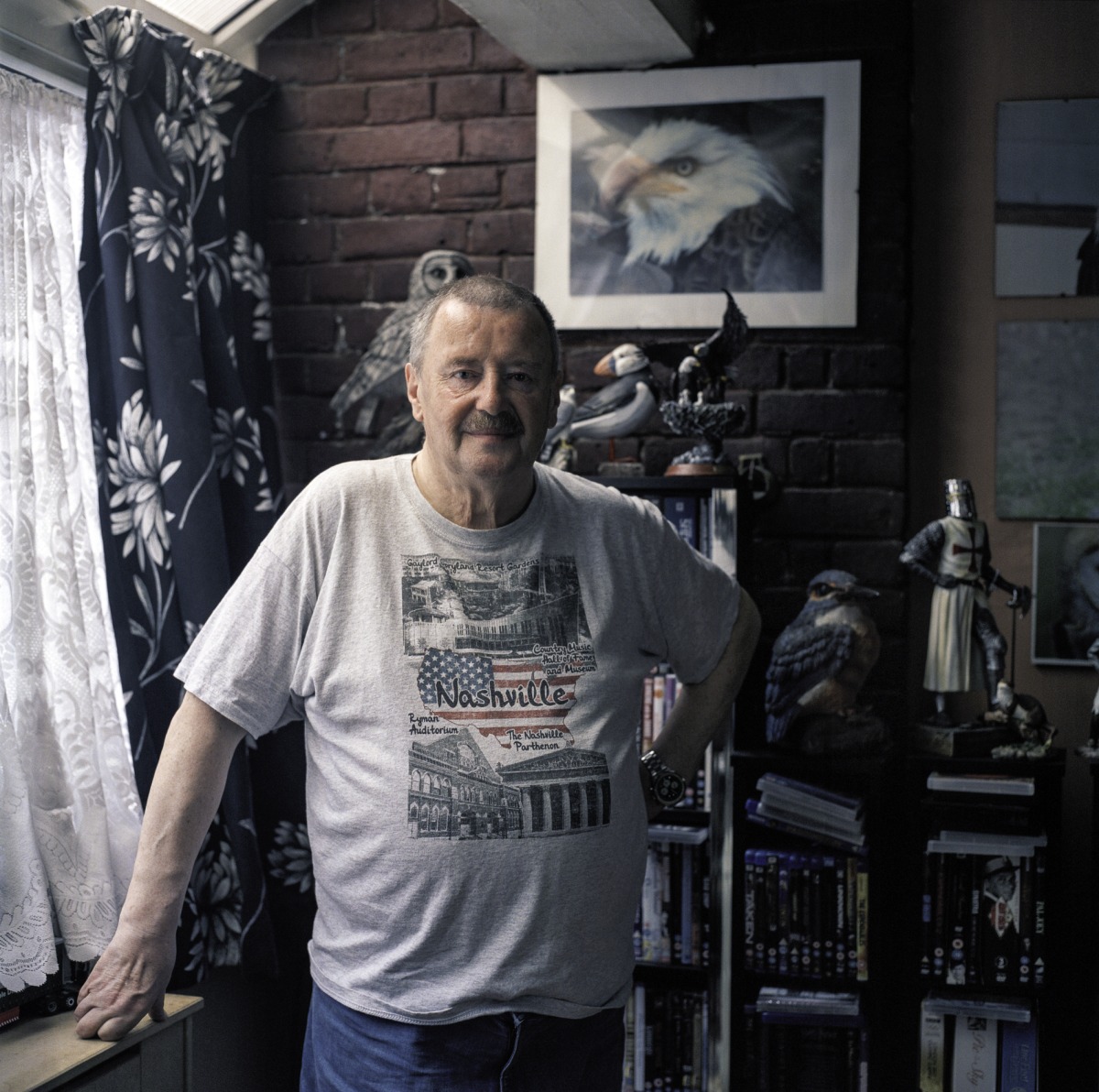
    Keith has lived in the area since 1963 and was one of the first residents on the Wornington Green estate when the first buildings were completed in the 1960s. He was and is very active in a number of local residents’ groups and campaigned to save the estate from demolition in the 80s and 90s. © Kevin Percival Photography 2022

    Keith, former Chairman of the Wornington Green Residents’ Association, has been an active voice in the community since the 60s: ‘These buildings should have lasted a lot longer than this from the 60s and 70s. You shouldn’t be building buildings like this and then have to pull them down again after such a short time. It’s ridiculous. It’s only because they weren’t maintained to a decent living standard.’

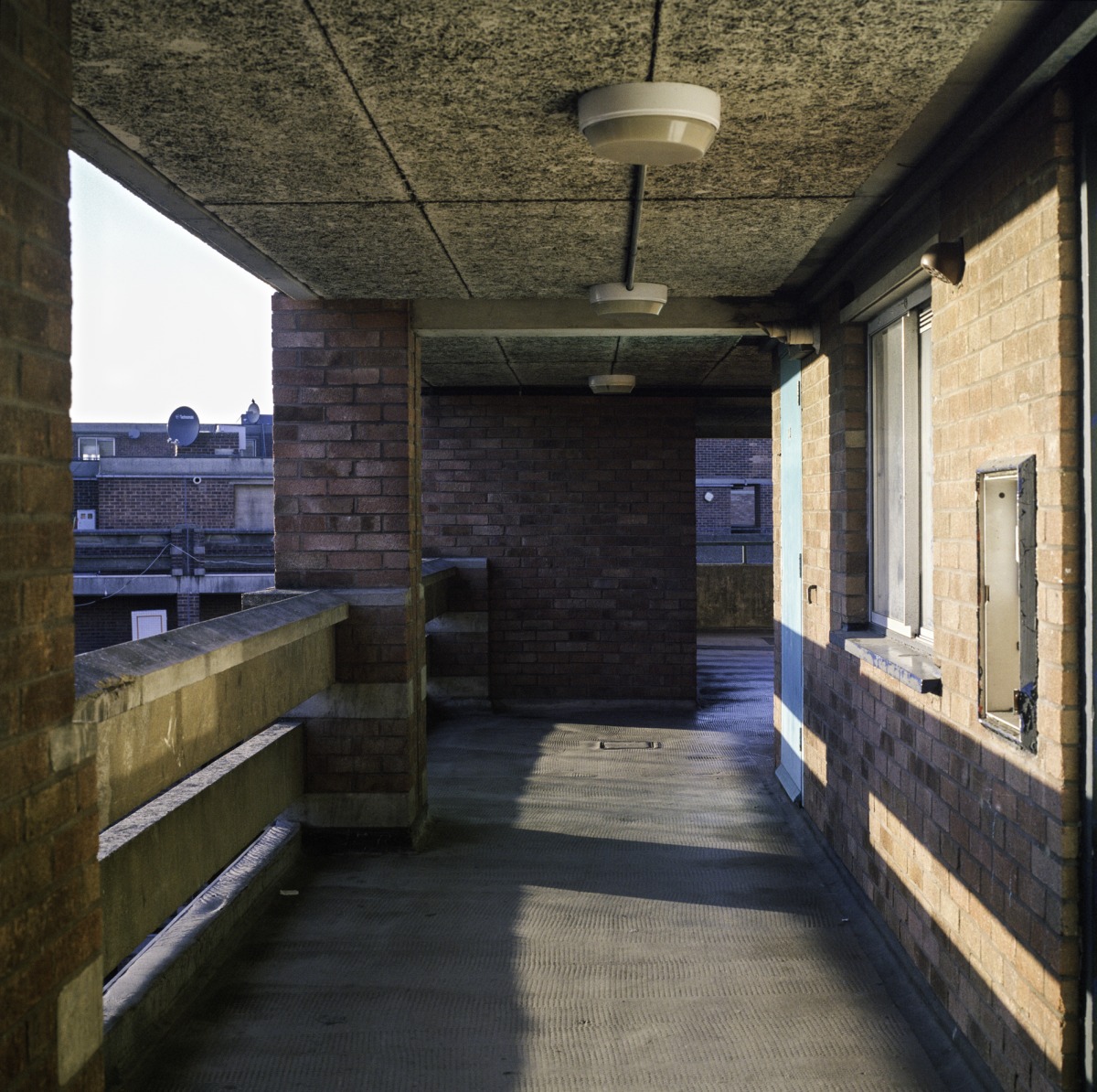
    Raised walkway, Macaulay House. © Kevin Percival Photography 2022

    ‘Changes? Nobody likes changes. We was all in uproar when we heard that they were going to knock it down. My block, which is fortunate for me, is in Phase 3 [of the development] and I love my little flat so I’m hoping they’ll run out of money by the time they get to me, but I know that’s not going to happen,’ adds Cheryl, who has lived in Ladbroke Grove since the 70s, first moving into her current flat in 1975. ‘It’s a nice quiet block I’ve been living in, and I’ve been fortunate to have good neighbours. What I used to like; if anyone in the block died, you’d get someone come and knock and say ‘Oh do you know so and so died’, and they collect money, you can put in 50p,10p, £5 and they’d buy a wreath and say this is from Pepler House …’

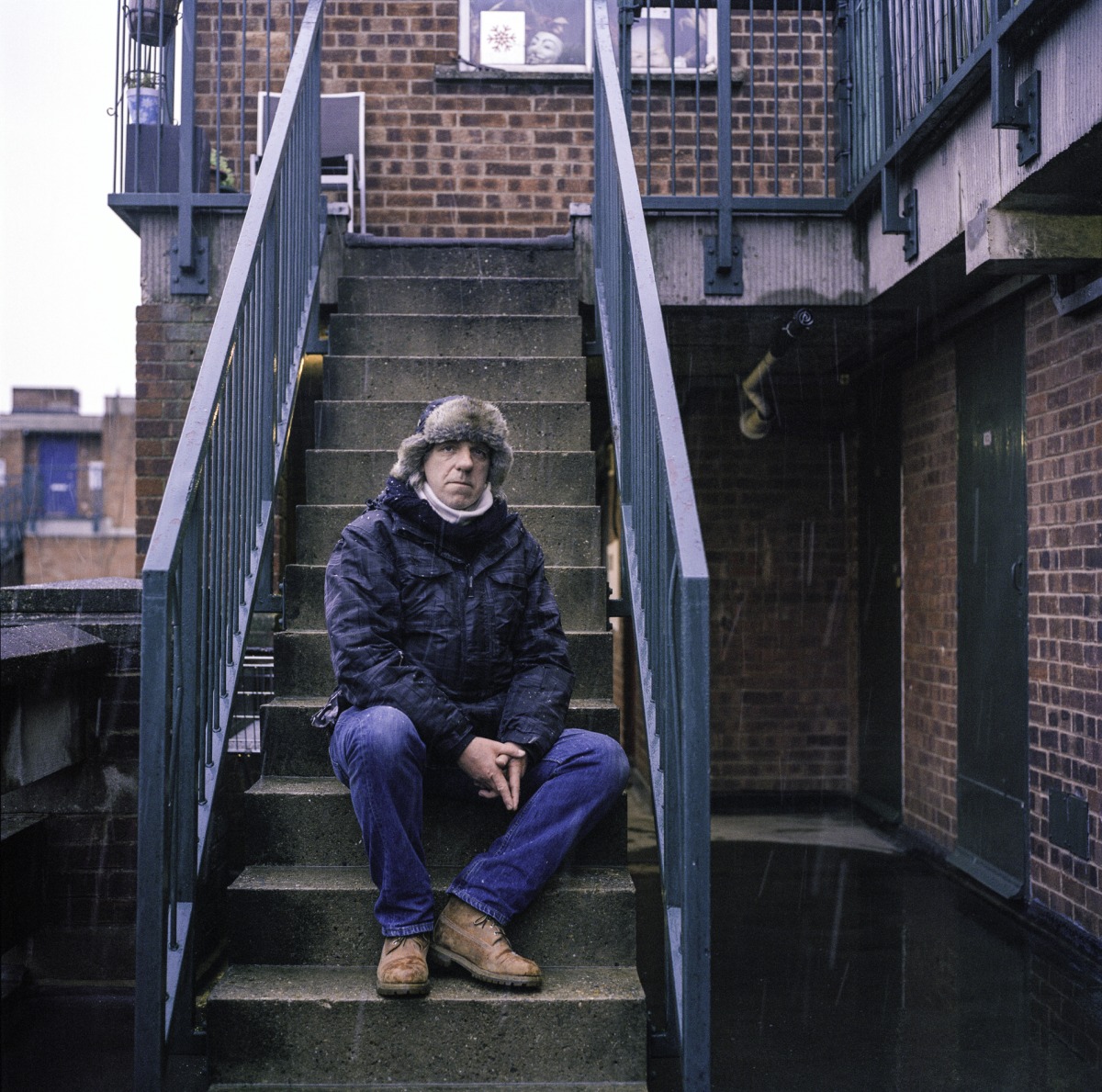
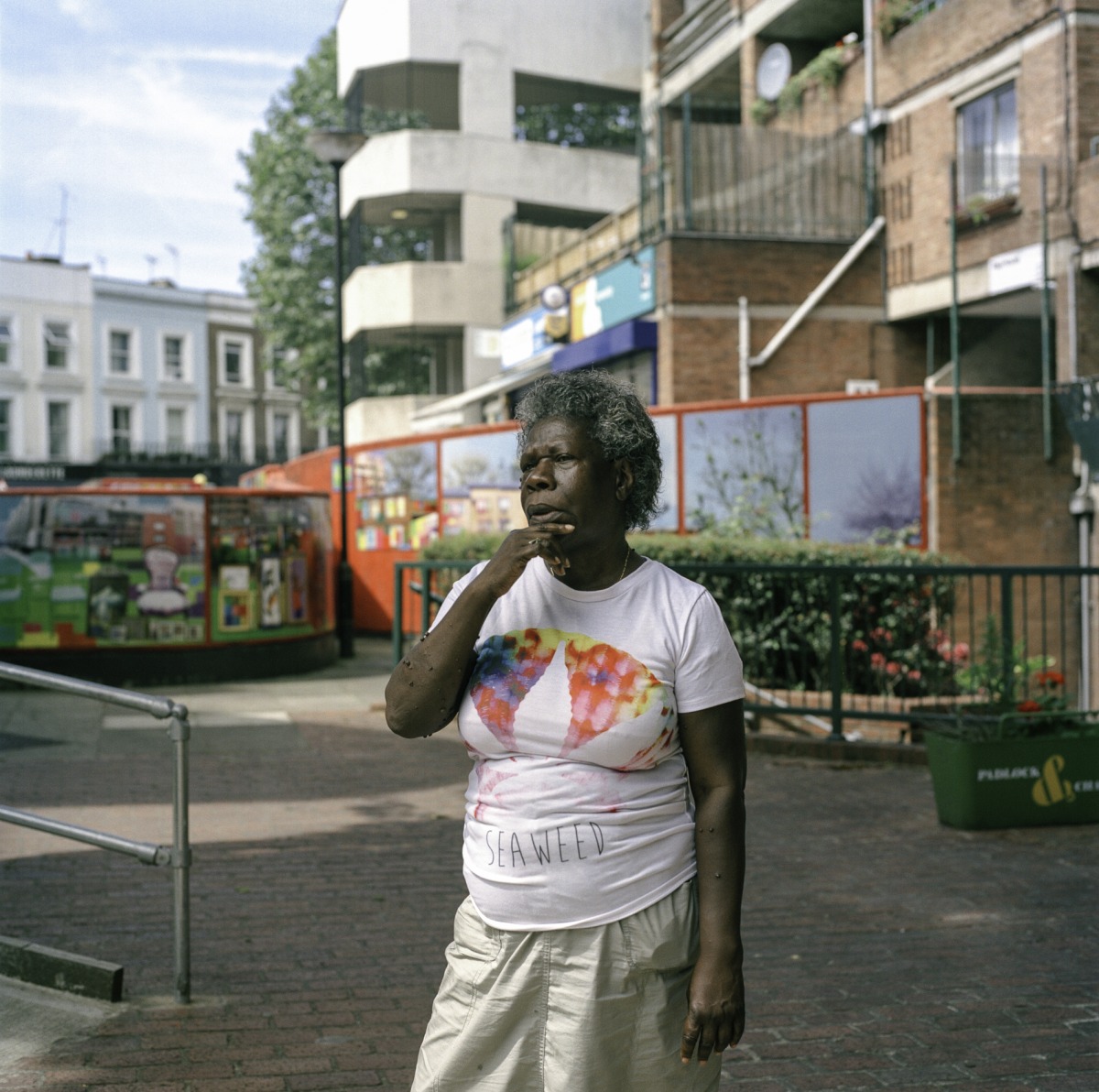
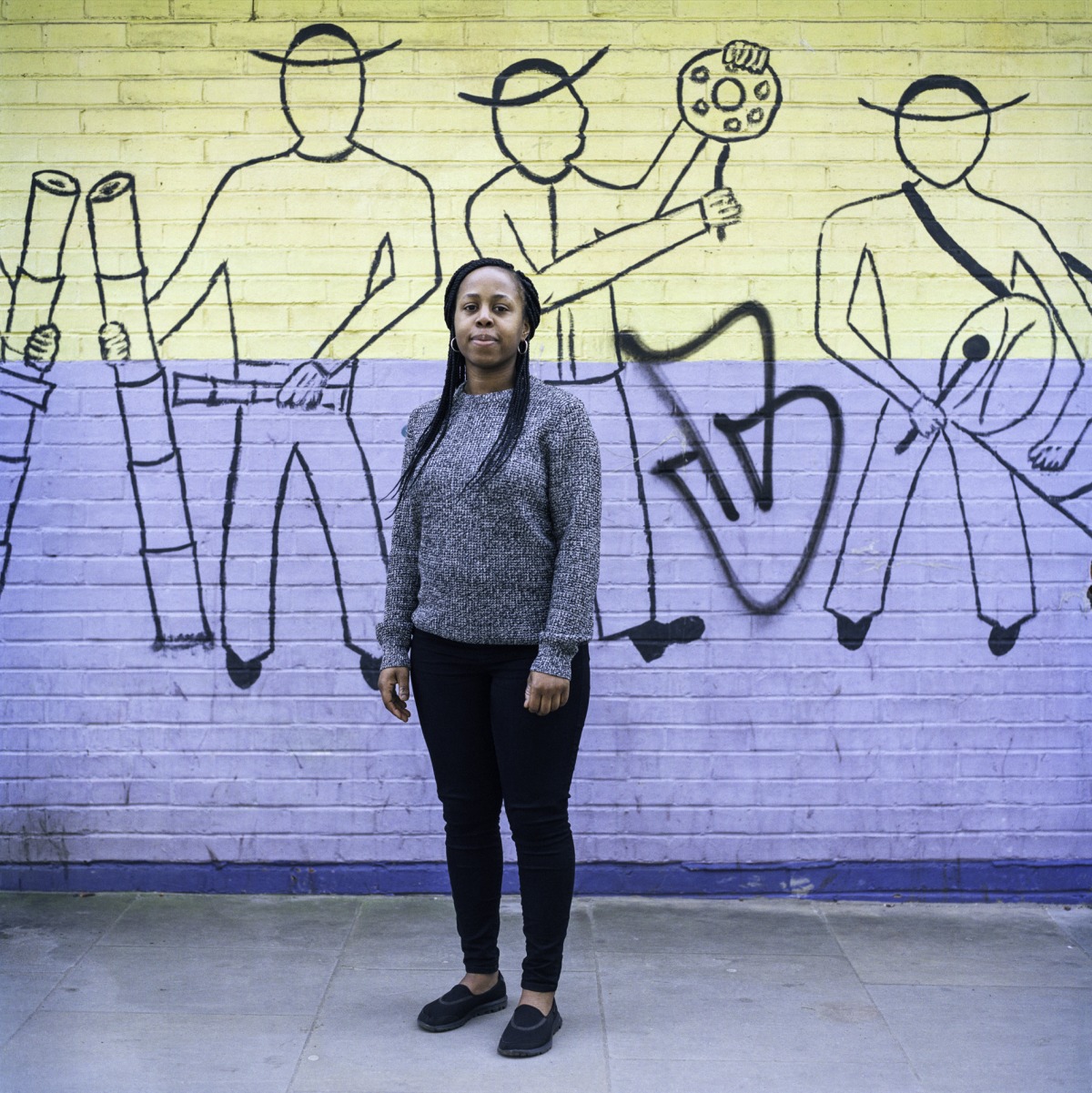
    Peter works as a dog walker and has lived on the estate for many years. We shot a number of images together, this one was his preferred idea. I always prefer to work with a sitter to find a pose and location which suits them and allows them to be portrayed as they wish. © Kevin Percival Photography 2022

    Rehousing

    Many residents have thankfully been rehoused in the new builds on the estate. Vanessa experienced a similar sense of community spirit growing up in Wornington Green in the 1990s: ‘There was a good community feel, very multi-cultural, especially on our floor. We had Moroccans, we had Vietnamese, we had Ethiopians, we had Africans, and us Colombians. So on our grounds, you know you would walk down the corridor you could smell lots of nice food from all around the world… When they were allocating the [new] flats we did try [and make] it so we could be together, next door to each other because that’s all we’ve known. But it didn’t work out that way. So yes, it’s different. We don’t have that same familiarity … We are starting again.’

    Vanessa grew up on Wornington Green, and still regularly visits her mother on the estate (though they have recently been moved into one of the new builds). © Kevin Percival Photography 2022

    Whilst Vanessa has now moved away from her family home to start her own family, housing co-op resident Micky laments the difficulties younger generations have if they want to stay in the local area: ‘…you know they can’t afford to live there, unless they’re living at home with their parents you can’t rent a flat in Notting Hill, it’s really, really expensive.’

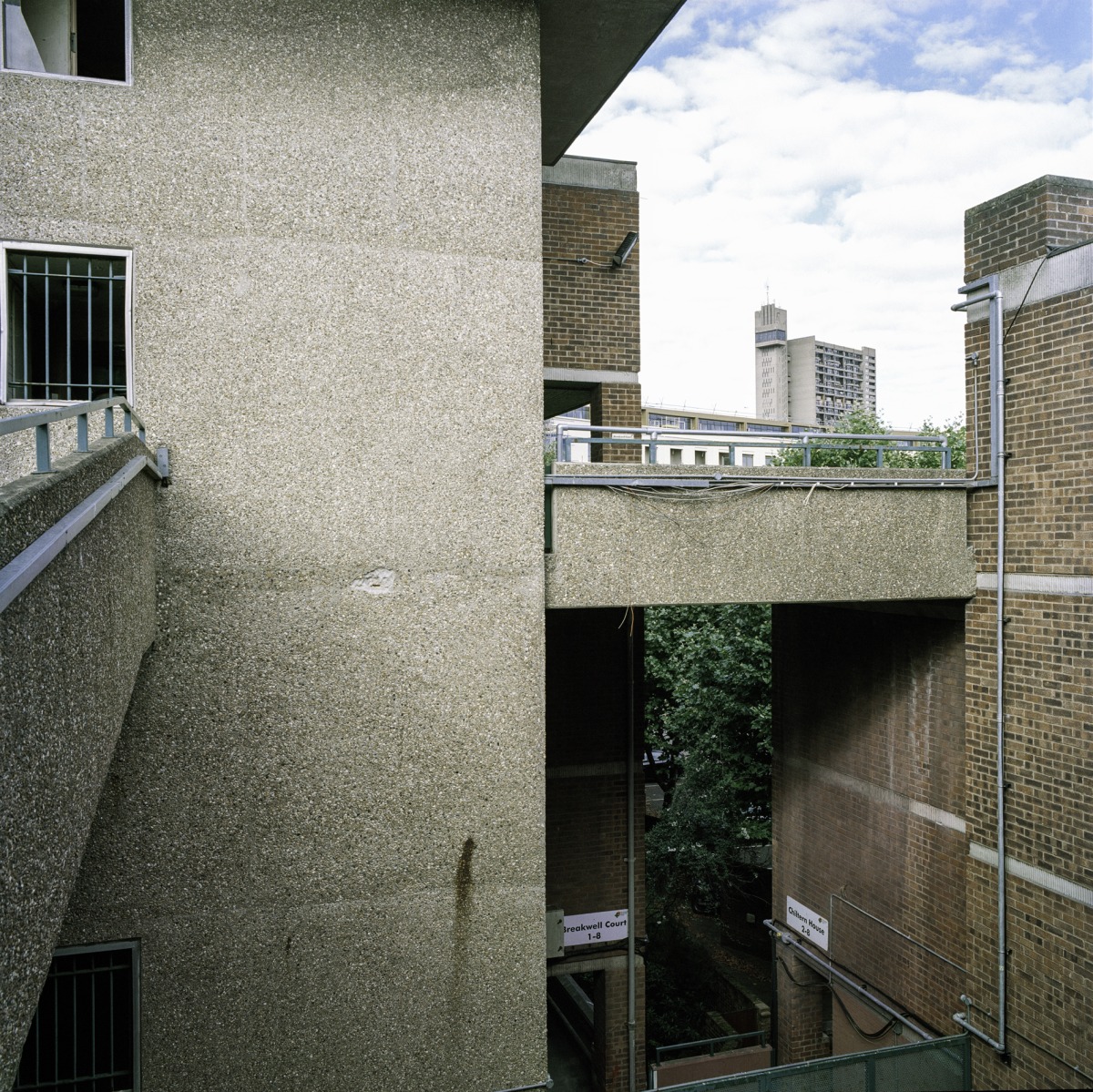
    Raised walkway, Chesterton House. View North-East, towards Trellick Tower. © Kevin Percival Photography 2022

    ‘My fondest memory of the area is bringing up my children here and being happy with the diversity, the different people that they meet, people they play with from all over the world. Really important to me… They’ll talk to anybody, they’ve got no prejudice and I really put that down to living on this estate.’

    Renegade

    This diversity is rarely discussed in relation to Kensington – it is usually only in the context of tragedies such as the Grenfell fire in 2017, or the Notting Hill Carnival that such rich cultural heritage is acknowledged.

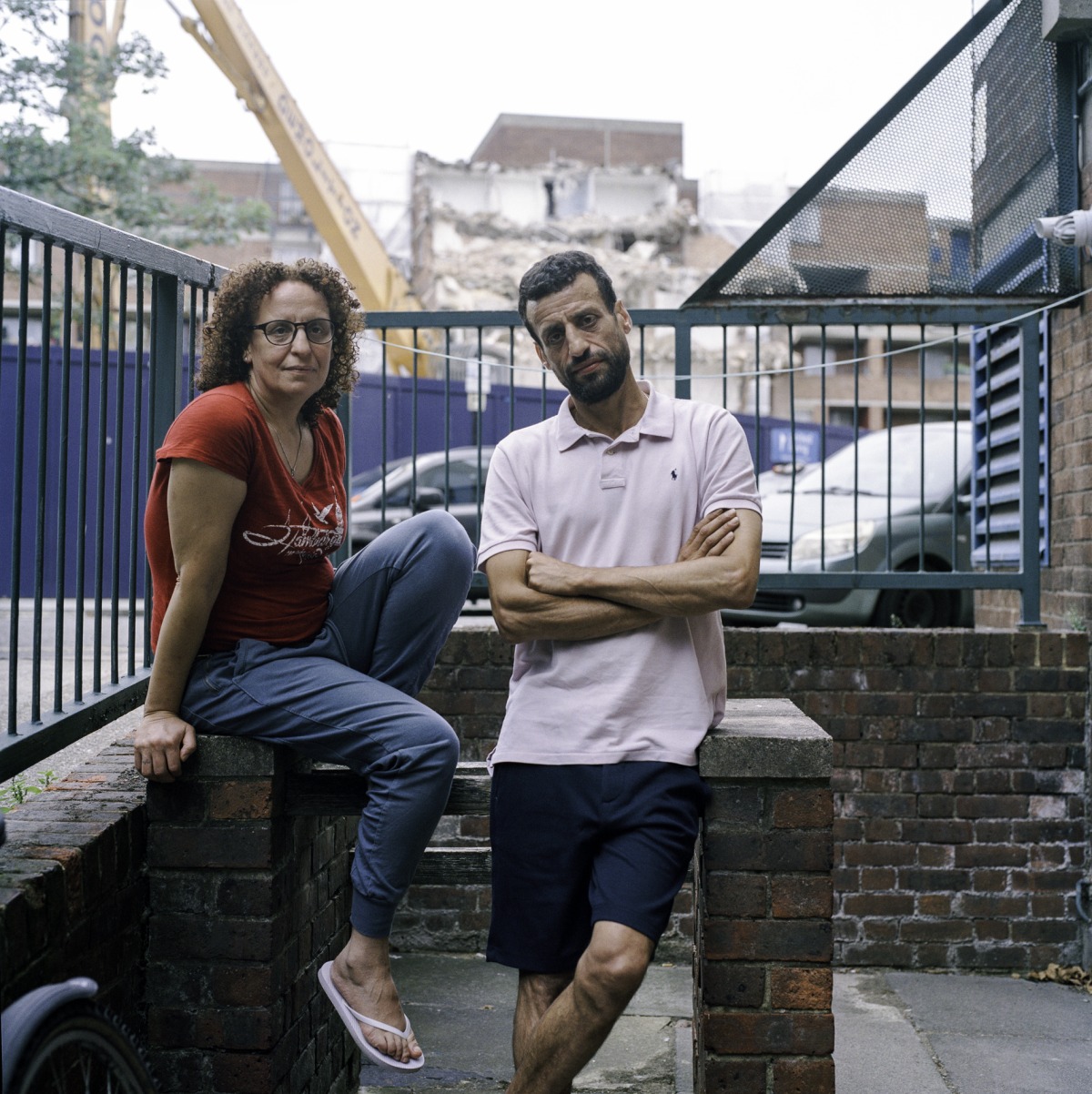
    This brother and sister duo- Rachid and Latifa grew up on the estate and remember running from one side to the other using only the aerial walkways: ‘your feet wouldn’t touch the ground.’ We decided we’d make the portrait to show both their current flat and the on-going demolition behind. © Kevin Percival Photography 2022

    The Wornington Word project, instigated by Renegade Theatre, aims to record and archive the everyday of this diverse community through the history of Wornington Green estate residents, from the 1960s to the present, through a time when the estate was permanently changing.

    The images here were made in partnership with Renegade, to develop a personal documentary response to living on the estate, alongside a programme of residents’ workshops, to capture these stories before they disappear into London’s background hum.

    Natasha of Renegade Theatre managed the project:

    The people who live on the Wornington Green estate have contributed to the diverse, close and distinct character of Portobello and Golborne roads. They are part of North Kensington’s culturally rich fabric and their warmth, experience and history cannot be allowed to fade away. Nor can the estate’s expansive views across London, wide walkways and mature green trees disappear without record. The Wornington Word catches the estate at the end of its era. So that, after the buildings are demolished, it can still be seen, and its unique working-class voices still heard.

    © Kevin Percival Photography 2022

    Two Independent Practices

    The project began through uniting two independent practices. Natasha conceived of the oral history side of the project as a result of her previous community theatre projects and her interest in documentary theatre, whilst I had been documenting the local area and the development on-and-off for several years.

    When Natasha began working on the proposal for Wornington Word, it became clear that she wanted to explore several methods of recording the estate. We began to collaborate together- I donated my existing archive of photographs, and added more as we engaged residents in recording oral histories.

    Cheryl, who has lived in Ladbroke Grove since the 70s, first moved into her current flat in 1975. © Kevin Percival Photography 2022

    We ran workshops for the residents: photography, filmmaking, creative writing, oral history taking, social media training and acting. Part of my role involved documenting the community participation as well as continuing my on-going photography of the estate.

    As we had both lived on the estate for a long time, it was essential to us that the residents be involved throughout the process. At the beginning of 2020 there were three key outcomes: a collection of seventeen oral histories and accompanying portraits, a collection of over two hundred photographs taken by residents, and a forty minute documentary film.

    All of the above were archived on a purpose-built website and at RBKC Local Studies & Archives.

    Crime is cited as a key reason for the estate’s decline, however many residents feel that neglect by both the council and KHT were key contributory factors. © Kevin Percival Photography 2022

    Inequality

    One of the most densely populated regions of the UK, a 2017 study by Trust for London and the New Policy Institute found that, Kensington & Chelsea has the greatest income inequality of any London Borough.

    Private rent is the least affordable in London – yet these communities still exist, in many cases over multiple generations, on the same estates.

    Oumayma still lives on the estate with her mother, in what has been their family home for three generations: ‘I feel like Moroccans in general just decided to stay here and I feel like my grandad made that decision to stay here, because he didn’t have to fear […] experiencing you know racism or anything like that, because it was already quite integrated at the time. Spanish, Portuguese, Jamaican, Caribbean; really mixed which is really good.’

    Grace has lived on the estate since she was 28. ‘There were a lot of families, we’d meet up in Athlone Gardens. I would do the cooking and my friend down the road would do the cake and little Caribbean doughs. So it’s like every weekend, somebody makes something from their country and we go to Athlone Park there, children play, parents are digging into eating…’. © Kevin Percival Photography 2022

    The importance of the diverse community came up time and again in conversations throughout the project, but the reality is that the cost of living in the borough is gradually reducing this diversity and forcing many residents to re-evaluate.

    Though many on the council register will be able to stay in new flats on Wornington Green, their children may find themselves priced out of living locally to their parents. In addition, many of the prejudices shown by RBKC, their contractors and associates during the on-going Grenfell Tower Inquiry, continue to be present in discussions with residents on the Green.

    ‘It’s always been a diverse area.’ Latifa begins very carefully. ‘However, at the moment, people have just come in from other places and [those] people have found that this place is very trendy and they want to claim it for themselves. We were having a viewing of [my mum’s] new flat, her new permanent flat, and my sister and I, were saying that it was, “Oh, it’s a bit small” blah, blah blah. And then somebody turned round and goes, “Do you know how much this cost?  At least £2 million”. Do you know what I mean? So you already feel like somebody’s doing you a favour by letting you stay here.’

    Graffiti found under the Westway. © Kevin Percival Photography 2022

    Strong Preference for Low-Rise

    Latifa’s experience is not unique. When the original plans were drawn up, resident consultation indicated a strong preference for low-rise accommodation at a similar height to the current blocks, and the regeneration was designed accordingly.

    These plans were approved by RBKC (despite fierce resident objection on other grounds), who indicated that the new buildings should not exceed the height of those currently on Wornington Green. Having started in 2006, the final phase is currently under consultation, as the original planning permission was granted so long ago.

    Catalyst are now proposing to include a fifteen-storey tower block in Phase 3 of the regeneration program.

    And the new-build flats already have teething problems. Oumayma’s grandmother moved into one of the new flats and quickly had difficulties: ‘…they build them too quickly, she’s not a massive fan because she’s experienced some issues – no heating, no hot water.’

    Other complaints include burst water pipes and cracking plaster. In 2021, scaffolding was erected around some of the first new builds completed on the grounds of fire-safety.

    Set against a background of austerity and gentrification; crime and poor design are often cited as the primary motivations for the estate redevelopment.

    Though Catalyst do admit that the perception of crime was in many ways far worse than the reality, due to the closeness of the community. However strong the argument for the development, it remains important to acknowledge what will be lost – how residents’ connection to their homes, their place, will be changed.

    Leslie Palmer – Notting Hill Carnival pioneer – in the pan yard at the Venture Centre. The centre was instrumental in both starting and shaping the carnival over the years- both as a meeting place and practice centre for steel bands. The estate is right in the centre of the parade route. © Kevin Percival Photography 2022

    Reduced to Grit

    As I write, the latest phase of demolition is in full-swing outside my window in the blistering June heat (on what will be the hottest day of the year).

    Despite the temperature (nearing 25C at 10am) my windows remain closed. The blocks opposite: five inter-connected low-rises, have been largely reduced to grit.

    Breakwell Court, Macauley House and Katherine House, mid-way through demolition – May/June 2022. © Kevin Percival Photography 2022

    The earth movers grind brick and concrete ever smaller, ever finer in preparation for their final exodus. Dust worries at my ageing glazing and coats cars throughout the estate in sticky layers.

    Gallons of water are sprayed across the grinding diggers and over a procession of cars, in a Sisyphean endeavour to enable residents keep using their vehicles.

    The demolition of Katherine, Macauley, and Chesterton Houses and Breakwell Court. Due to the heat and the dry weather there is a lot of dust produced by the demolition, so gallons of water are sprayed across the site in an attempt to reduce particulates. May 2022. © Kevin Percival Photography 2022

    With some luck the interlocking communities of Wornington Green will continue to exist in west London, but it seems clear that their place will remain forever changed.

    As for my existence on the estate, this will come to an end within the next two years or so, and whilst I’ve enjoyed my time in this community, I will not miss the relentless reminders of gentrification. It seems appropriate to give the final word to estate resident Rashid: ‘We made the estate, and the estate made us.’

    You can hear more of the resident’s stories in their own words and watch the documentary film here: https://worningtonword.renegadetheatre.co.uk/ around the balance of council housing to market flats.

    We are an independent media platform dependent on readers’ support. You can make a one-off contribution via Buy Me a Coffee or better still on an ongoing basis through Patreon. Any amount you can afford is really appreciated.
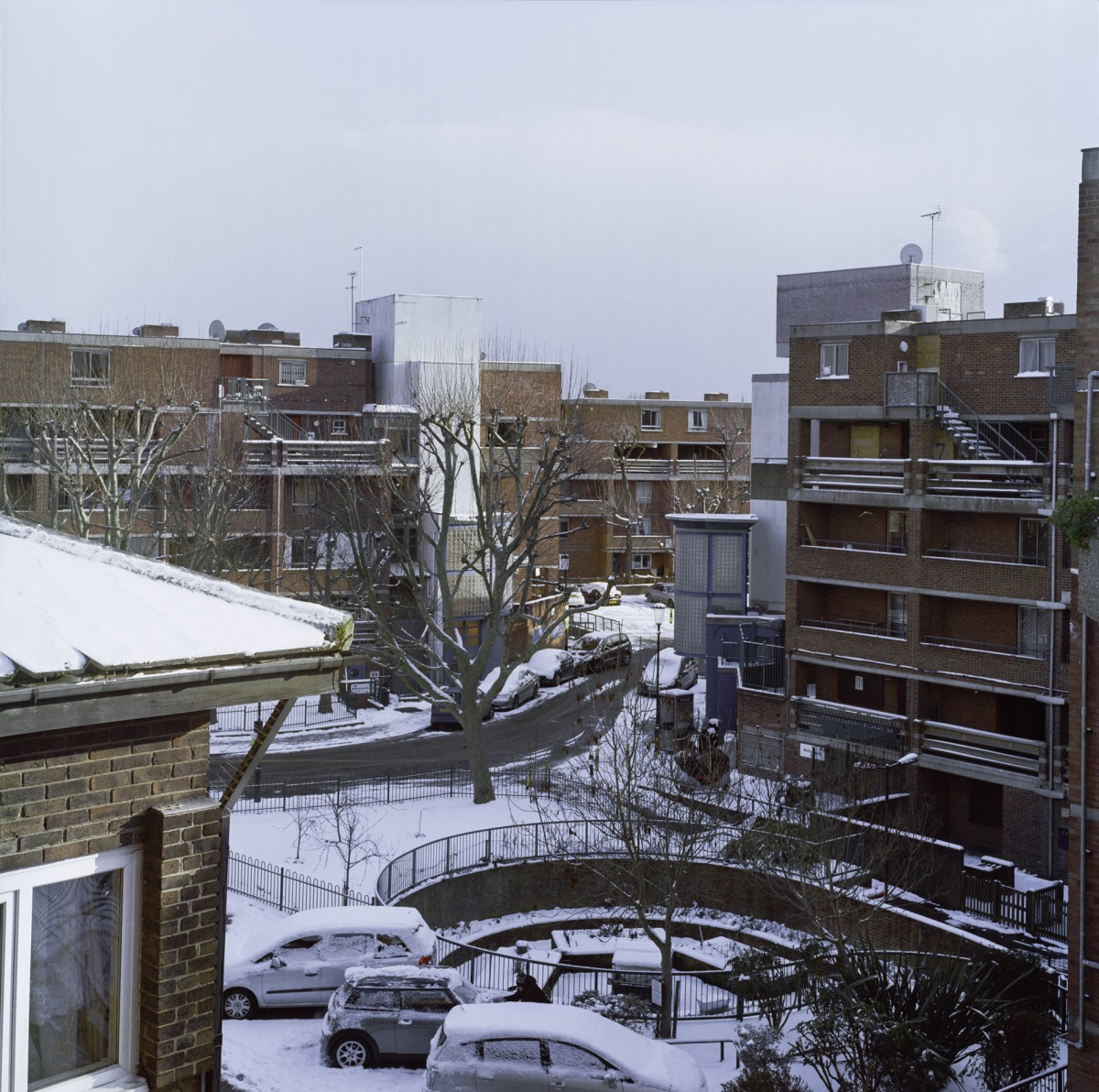
  • Theatre: The Battle of Kildare Place

    There is no fiercer battle than that between sisters. The sibling tension is ever-present in ‘The Battle of Kildare Place’.

    This comedic play is a two-hander between two sisters: a corporate older one married with two children, and a ditzy, free-spirited younger one eking out a living as a proprietor of a small flower shop and architectural tour guide.

    The Battle of Kildare Place

    Cast

    Darina Gallagher

    Sinead Murphy               


    Director

    Costume Design

    Photography

    Graphic Design

    Creative Producer

    Written by


    Meadhbh

    Gráinne


    Michael James Ford

    Bairbre Ní Chaoimh

    Keith Jordan

    Gavin Doyle

    Colm Maher

    Emma Gilleece & Michael James Ford


    The personalities of the women are informed by their namesakes, two formidable Connaught Queens of lore; the real life pirate Queen Gráinne Mhaol, and the warrior Queen Meadhbh from the Táin Bó Cúailnge (Cattle Raid of Cooley).

    The play is set in present day Dublin with Gráinne, the elder sister, played by Sinead Murphy, flying in from London for this rendezvous after an absence of three decades to discuss the potential erection of a plaque in honour of their late father.

    As he died at the height of Covid-restrictions, Meadhbh, played by Darina Gallagher, feels her father has been cruelly robbed of the send-off he deserved, with only twenty-five mourners allowed at the funeral.

    She believes his renown merits the erection a plaque for a lifetime of activism attempting to save Georgian Dublin, including the Battle of Hume Street, which the play pays tribute to in its title. Meadhbh is frozen in a state of unresolved grief with a thirst for justice for her father’s legacy, as witnessed in ‘Electra’ or ‘King Lear’.

    Gráinne implores her sister to separate the legend of the activist from the realities of the absentee father, while pointing out that bad fathering isn’t synonymous with being a bad person.

    The play is written by architectural historian Emma Gilleece and actor Michael James Ford, who is also director. Now based in Dublin, Emma grew up in Limerick city and completed a BA in English & History and an MA in History of Art & Architecture, followed by an MSc in Urban & Building Conservation.

    Michael was closely involved in the genesis of Walkabout Theatre last year in association with Colm Maher, the creative producer for Bewley’s Café Theatre.

    It came about in response to Covid-19 restrictions and the first season featured four new plays presented in historic Dublin locations.

    The team of actors, writers and directors relished the challenge of outdoor performance – competing with inclement weather, traffic noise, wildlife, buskers and rogue cyclists. Walkabout enjoyed capacity audiences and popular and critical acclaim and was subsequently nominated for an Irish Times Judges’ Special Award for “returning audiences to live performances outdoors in 2021.”

    As another example of how limited circumstances can actually foster creativity, it was Emma’s brainwave to use Kildare Place as the setting on the back of a tour she gave.

    “I was invited by the Irish Architecture Foundation to do an twentieth century architectural bus tour, as part of Open House Dublin last October, and my tour had to be along the bus company’s established tour routes with one of these being Kildare Street”, Emma explained.

    “My Open House Dublin tour touched on the vulnerability of our twentieth century building stock, and ironically there is currently planning permission sought to demolished Stephen Court on Stephen’s Green by architect Andy Devane which was part of the tour”.

    Running parallel to this battle of two sisters exploring unhealed childhood wounds is a debate regarding Georgian Dublin accommodating twentieth century insertions. Was this progress or destruction?

    Meadhbh follows in her father’s footsteps taking up the baton for preserving eighteenth and ninetheenth century Dublin, while Gráinne is more forward-looking, arguing that demolition and rebuilding is just part of the life-cycle of a city, asserting the merits of iconic buildings such as Liberty Hall, the former Central Bank and Phibsborough Shopping Centre, amongst a list of familiar divisive buildings.

    The nineteenth and twentieth century buildings of Kildare Street provide a four-sided stage. The architectural gems the audience are directed to include the Department of Enterprise, Trade and Employment (completed in 1942), the National Museum of Ireland (1890) and Agriculture House (1974).

    Being outside makes the audience feel like they are eavesdropping on two sisters meeting on a summer’s afternoon in the city. There are laughs, but also poignant moments where you can feel the actors dive down into a well of decades’ old pain and disappointment. Can these sisters find common ground?

    The Battle of Kildare Place runs from 6 -16 July, Wednesday to Saturday at 1pm and 3pm. Tickets cost €15 and booking is at www.bewleyscafetheatre.com/events/the-battle-of-kildare-place.

    For enquiries call 086 878 4001.

    Feature Image of Darina Gallagher and Sinead Murphy by photographer Keith Jordan.
    We are an independent media platform dependent on readers’ support. You can make a one-off contribution via Buy Me a Coffee or better still on an ongoing basis through Patreon. Any amount is really appreciated.
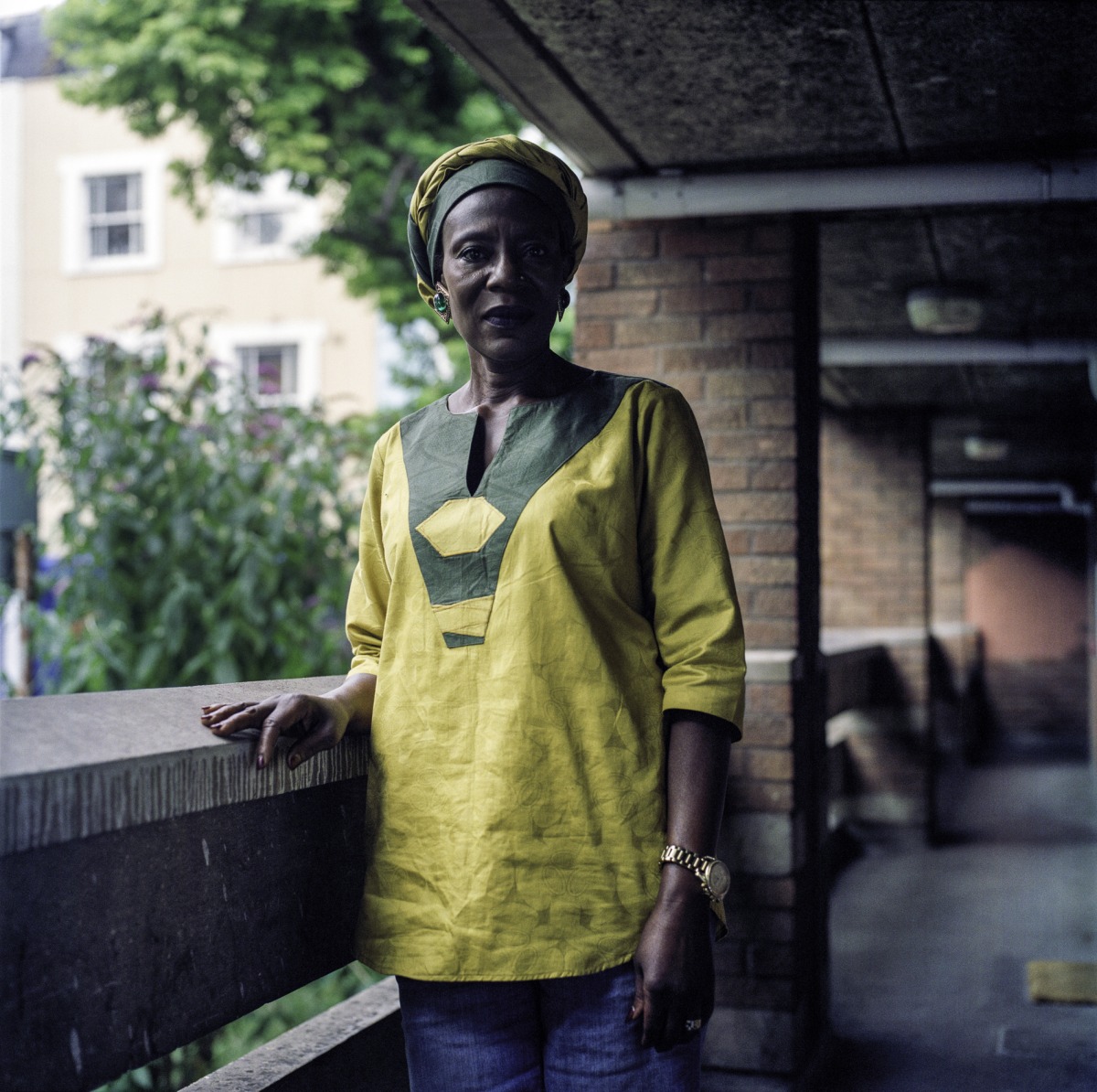
  • Musician of the Month: Dan Trueman

    In my studio here, I have a clavichord, built by my parents in 1971, with a somewhat rococo and amusing backdrop painted by my mother (who otherwise has left us with a stunning body of mostly modernist artwork).

    I grew up with this painfully quiet clavichord, along with a gorgeous harpsichord (also built by my parents, and which I learned to tune by ear, a sign of things to come), countless recorders of various shapes and sizes (both parents were avid and accomplished players), lutes, oboes, guitars, baritone horns, and of course a piano (my older sister, annoyingly, plays pretty much all of these instruments with ease, though piano is her main instrument, so I grew up hearing that repertoire through her practice).

    Clavichord

    The basement of my childhood home on Long Island was filled with various tools, wood scraps, and other evidence of my parent’s instrument building habits (both were amateurs, by the way: during business hours, my father was a theoretical physicist, my mother a painter), and our evenings and weekends were filled with making music together with these instruments (ok, maybe that is a bit of revisionist history there, but we did make a lot of music together with these instruments as a family).

    I didn’t realize at the time that this wasn’t particularly normal. And one of the things that it marked me with is a love of musical instruments for their own sake, and a love of making music in an exploratory way with instruments at the heart of the process, performance relegated to a secondary concern. I performed, for sure, but it wasn’t the driving force behind the music making in my house, and we never performed together as a family.

    It also left me with a clear sense that the instruments themselves were things we made—not immutable, given objects—and thus were potential sites for exploration and revision.

    I loved my own instrument at the time—a somewhat tetchy violin made by the engineer Norman Pickering, himself a researcher of instrument design—though it took me a while to discover that the music I was learning with it—European Classical music—wasn’t, for the most part, what I really wanted to play (the Bach Unaccompanied Sonatas aside, really). Indeed, trying to discover the music that I do really want to play (and hear) has been the driving force behind my work ever since and has led to a number of explorations in musical instrument design itself.

    In my early 20’s, I flailed about trying to find ways to escape the confines of the Classical violin—its repertoire and technical training that leaves such a profound, embodied mark on anyone who goes deep with it—which led to predictable explorations of jazz improvisation and rock music, both of which also felt not quite right, though I learned a lot, and in particular ended up spending time with, of all things, the Flying-V 6-string fretted electric violin by Mark Wood, and an unfretted version made by my father.

    Hardanger fiddle

    Ultimately, I found the sound of the instrument unsatisfying—in spite of my best efforts, including exploring multiple other electric violins, pick-up systems, amplifiers, equalization and signal processing units, and so on—as well as the feel of the instrument—the solid-body electric violin is perversely rigid, and doesn’t seem to actually absorb any of our physical efforts.

    In the midst of these experiences, a composer friend of mine (Gavin Borchert) wrote a piece for me, for the electric violin, and he was inspired by the traditional music of Norway, in particular the Hardanger fiddle; my experience listening to the cassette tape he gave me—a recording of Anund Roheim playing music from Telemark in the 1950s—was one of those I will never forget; I remember where I was sitting, the time of day, the color of the sky, and so on, when I first heard the sounds of this magical, beguiling instrument and its mesmerizing music.

    There is so much I could say about the Hardanger fiddle, but I will focus on the sound and feel of it. Its sympathetic strings (extra strings that run underneath the fingerboard and ring along as you play) create a magical, personal, reverberant space around the player and, in contrast to the solid-body electric violin, it is so clearly responsive to our efforts, absorbing and extending them into this private space; it feels wonderful—physically—to play.

    Adapting my Classically-based technique to the instrument was far more challenging than I expected. The strings are slightly shorter, requiring ever so slightly different finger spacing, something that took months of slow practice to adapt to, especially given my own penchant for playing without vibrato, and for having the intervals ring as purely as possible.

    But even more than that, adapting my bowing technique to the instrument was particularly challenging. The Classical violin is designed to be as loud as possible, to project over an orchestra to the back of a concert hall, and it requires intense arm weight and energy to drive appropriately.

    In contrast, the Hardanger fiddle is designed to ring continuously, and it has a relatively flat bridge, so playing individual strings is difficult, and the strings are under noticeably less tension, so applying intense arm weight is counterproductive, suffocating the instrument rather than activating it. The instrument induces a more empathetic, gentle approach to playing, and I feel like I literally became a different person in transforming my physical technique to play it.

    Musical instruments have a way of bringing people together; indeed, in Norway one of the most common experiences with other fiddlers is simply sitting around, trying each others fiddles, visiting with a maker (many of whom are fiddlers themselves), and so on.

    Collaboration with Caoimhín Ó Raghallaigh

    The instrument itself is at the heart of the matter. The Hardanger fiddle brought me together with Caoimhín Ó Raghallaigh back in 2000; Caoimhín was working in my father’s physics lab, and I’m forever grateful to my father for recognizing that Caoimhín and I might like to meet!

    Another experience I’ll never forget: sitting with Caoimhín that summer (next to the harpsichord my parents built, by the way), playing tunes for each other, trying each other’s instruments, and so on. Subsequent similar sessions with Caoimhín in Dublin led to the discovery that I was using the wrong bow, one that itself was suffocating the Hardanger, and we now both use beautiful bows made by Michel Jamonneau; teaching my body to work with this new bow (actually, more of an old bow, based on Baroque designs) was a whole other transformative experience, far more challenging than I anticipated.

    Before I continue on with where my explorations of the Hardanger fiddle led over the subsequent decades, I will mention that during this time I was also exploring a whole range of other musical instrument design projects: my frustration with electric violin speakers led to collaborations with Perry Cook on the design of spherical speakers, which roughly emulate the way acoustic instruments fill rooms with sound; this itself led to the design of a radical new instrument, BoSSA (the Bowed Sensor Speaker Array), that is a spherical speaker outfitted with digital sensors of various sorts, so you actually bow the speaker itself, the sensors then mapping your physical actions to sound through the spherical speaker (sitting in the lap!) via a computer.

    BoSSA (the Bowed Sensor Speaker Array).

    This led to the establishment of the Princeton Laptop Orchestra (PLOrk), a kind of digital musical instrument design laboratory that remains in force today; which in turn led me to the development of bitKlavier, a kind of prepared digital piano that remains one of my primary projects today.

    The Princeton Laptop Orchestra (PLOrk).

    All that to say that musical instrument design has been at the heart of my artistic practice from the beginning.

    A New Instrument

    Back to the Hardanger fiddle… Some 15 years after my deep dive into the Hardanger fiddle began, I had the pleasure of collaborating with the Old Time fiddler Brittany Haas. Britt plays the 5-string fiddle; the extra string is lower, and she regularly tunes the instrument up in unusual, non-standard ways, which is also common with the Hardanger fiddle—all the open strings invite a drone-based approach to playing, with lots of double-stops (two notes at a time).

    One challenge though: the Hardanger fiddle, with its shorter strings, is usually tuned up quite a bit higher than the conventional fiddle, so when Britt and I would play, all of our open strings would be different from one another! In some cases, this was fodder for creative explorations, but other times was just frustrating and awkward. We did make an album together that I’m tremendously proud of—CrissCross—but the friction between the instrument designs led me to wonder whether there might be a new instrument out there, some kind of cross between the Hardanger fiddle and the 5-string fiddle.

    A pair of Hardanger d’Amores.

    And this is how the Hardanger d’Amore was born. In early 2010, I asked the Norwegian maker Salve Håkedal if he could imagine an instrument that has the ring and feel of the Hardanger fiddle, but is tuned down to where fiddles from the rest of the world are tuned, and also has an extra low string.

    Salve immediately started sending me sketches and ideas, and several months later I traveled to his workshop in southern Norway to pick up the very first Hardanger d’Amore (initially we called it a 5+5, because of its 5 strings on top, and the 5 sympathetic strings, but later Caoimhín dubbed it the Hardanger d’Amore, given its echoes of the Viola d’Amore).

    At the time, I was living in Dublin, and when I returned with the instrument, Caoimhín came by and gave it a try; he ordered #2 the very next day. Earlier this year, Caoimhín and I both got our second d’Amores, #35 and #36, a clear indication of how excited we both are about the instrument, not to mention the other 30+ fiddlers out there who now play one as well.

    Solo Album

    Last year, in the midst of quarantine, I made a solo album of original music for Hardanger d’Amore in my home studio. I generally prefer playing with other people, and am not so interested in playing solo concerts, but the lockdown made both impossible, so I was free to lay down some tracks that I certainly would not have had we not been so isolated by the pandemic.

    The album—Fifty Five—is something of a surprise to me, and it celebrates where I grew up, amongst the instruments that my parents built and played. It also celebrates the instrument itself, trying to reveal and discover some of the nooks and crannies of the soundworld the instrument embodies.

    I recorded these tunes up close, so the listener can hear something close to what I hear, right under my ear; I find it intense and personal but also, I confess, quite beautiful.  I’m also excited about my latest project with Caoimhín, our album The Fate of Bones, which he’s written about here so I will leave it at that.

    We are an independent media platform dependent on readers’ support. You can contribute on an ongoing basis via Patreon or through a one-off contribution via Buy Me a Coffee. Any small amount is hugely appreciated.
     

  • Notes to Self on the Pending Passing of a Loved One

    1. Don’t be prepared.
    2. Honour both the living and the dead.
    3. Be prepared to give offence.
    4. And to take offence.
    5. Stand your ground.
    6. Listen.
    7. Express.
    8. Accept.
    9. Don’t fall into the ground.
    10. Be kind.
    11. Leave it all behind.
    12. Enough said.

    Feature Image: Daniele Idini

    We are an independent media platform dependent on readers’ support. You can contribute on an ongoing basis via Patreon or through a one-off contribution via Buy Me a Coffee. Any small amount is hugely appreciated.
  • All About Amy

    “There are more tears shed over answered prayers than unanswered prayers.”
    Saint Teresa of Avila

    Can’t blame U.S. Supreme Court Associate Justice Barrett for being born Amy Coney. Nor would I fault my fellow New Orleans native for having Irish Catholic parents who, like mine, sent her to St. Mary’s Dominican High School. Back then it was cool. We were both in the same boat. And far as I know, we still are, that is if you’re in the habit of comparing educated middle class white females wielding our kinda funny Louisiana convent French accent. Women’s tuition is typically tubular. What I mean is, it’s wampum well spent.

    Sod it, hatched on the same patch of swamp, Amy n’ me should be two peas in a pod. However, I’m not ashamed to say gun control and reproductive rights are where we part ways. These were fundamental freedoms guaranteed in the Seventies and Eighties, for girls, rich or poor, growing up in The Big Easy. Matters of… deep breath… life and death.

    But in order to begin a coherent conversation on either issue, one must comprehend this. Paired like a couple of chromosomes, the right to bear arms or avail of an abortion are inexorably intertwined.

    The Honorable Amy once penned a unanimous opinion affirming the summary judgement against a claimant in the case Smith vs. The Illinois Department of Transportation, finding while egregious, it was not racial discrimination when a supervisor dismissed an employee for what was later stipulated “poor performance” as, and I quote, being a “stupid ass nigger.” Because they were both black. Thus, perhaps she’ll pardon my French when, with Malthusian enthusiasm, I need point out that, unlike me, Barrett is a breeder.

    The greedy GOP plucked this pro-lifer directly out of her indoctrination by a secretive charismatic Christian cult called People of Praise and would have you, me and Barrett herself believe the proceedings around Roe vs. Wade were about her unqualified opinion. One based on a bizarre Czar-like wish to not squish the least little fish. A sweeping generalization to keep inconsequential caviar in its crevice, no matter how marred things get. So, you see, as women we are now all set. In a bind. Because profoundly blinded by nothing more than good faith, the Sturgeon General’s brand of justice finds it sound.

    This is not my first rodeo. I’ve a habit of being in the right place at the wrong time. Managing marketing and advising on regulations in several sovereign nations for a British boss at a bank based in Hong Kong during a currency crisis and the Handover of our S.A.R. to the P. R. C.. Watching an IPO window slam shut on a tech boom not sparing the white knuckles of a thousand plus entrepreneurs, including Connecticut fat cats, four Finns in Malaysia and more than a couple of Kiwis that like a Trojan camel we tried to pass through the eye of a needle. Not tired, I got hired to launch Tokyo ops for one of the U.S. firms which then perished in their entirety when the Twin Towers fell. Sometimes you might as well call it a day.

    Only to sit spitting nails, like an old spy in from the cold, wearing a crusty trusty power suit at a hedge fund desk high up in the Empire State Building. Swearing my federal tax dollars were squandered by an incompetent Army Corps of Engineers, while Hurricane Katrina’s aftermath sinks New Orleans’ natural defenses into the drink. Five years on, an unfettered BP blast on the Deepwater Horizon drilling rig heaved 200 million gallons of oil in the Gulf of Mexico. Left every last bivalve bereft.

    Thing is, for all the money in a world I can’t unsee as my oyster, I wouldn’t trade this front row seat watching Ireland’s Celtic Tiger tumble, jigging in The George the very night same sex marriage legalized. Seeing medical cannabis and safe abortion made less murky than a transubstantiation of the Magdalene Laundries into this tip top corporate tax haven. And learning how to ask for the Ban Jax.

    Where me and homegirl differ, is before we had graduation under our Prince of Wales plaid chastity belts, God didn’t see fit to show Amy how it felt to be raped at gunpoint and escape.

    Hence, the power of Christ has yet to compel the now anointed Coney concerning exceptionally unsexy circumstances. Those surrounding the sort of nonconsensual contortions likely to lead to a swelling belly aborted.

    Maybe I don’t have a womb with a wide-angle view at high tide, but my bet is Barrett’s not tangled in a “long game” as Margaret Talbot’s New Yorker article subtly suggests. At best she’s a half-baked Trump tumor deposited on the Supreme Court, but what if she’s been groomed Brothers Grimm style? The Manchurian Candidate meets Invasion of the Body Snatchers? She’s one of seven who, come hell or Haitian high water is spawning seven more into a scenario not of her own making. Ingenue actress? Goodbye RBG and Hello All About Eve? Or anchor baby for the alt-right?

    What I ask political strategists who bask in what few filthy cards they’ve slipped up their starched sleeve is a burning question. At what point did conservative Christians earn what they’d always yearned for? Carte blanche to pull up to the Republican bumper, and dive in like Flynn to the D.C. dumpster. When did The Religious Right become your Rumpelstiltskin?

    Knowing the ropes on the lesser navigated, one could almost say, fallopian-like, canals of Venice, I’ll venture vetting Casanova’s confessions is yet an even better trip. I for one am not impervious to stumbling on stuff our nuns neglected having Amy, blessed vessel that she is, translate directly from the French. Simply for shits n’ giggles mightn’t they have wiggled something cunning like Sade in to Sophomore English Lit? Not the sublime Nigerian-born British chanteuse…but the felonious philosopher of freedom. An equally smooth operator. I’ll explain.

    Couple hundred years before we were in high school, if memory serves, the year 1787 saw yes, a libertine, one of Fibonacci proportions, imprisoned in the Bastille. During his two-week incarceration, minus a lick of obscenity, the Marquis de Sade managed to nail a novella he named Justine or the Misfortunes of Virtue. Seems his fictitious femme fatale was willing to bend over. Take one for the team. Don’t know about Amy. Wouldn’t blame her for being game, but, as for me, I’m not. Not anymore. Are you?

    There’s a special place in hell for women who don’t help other women.
    Secretary of State Madeleine Albright

    We are an independent media platform dependent on readers’ support. You can contribute on an ongoing basis via Patreon or through a one-off contribution via Buy Me a Coffee. Any small amount is hugely appreciated.