Blog

  • Unforgettable Year: April 2020

    April is generally associated with fresh flowers and cooling rain showers. It is also the dreaded deadline to file taxes. Whether you were enjoying the foliage or sitting down to calculate your tax refund, I think we can all agree that April was particularly cruel this year due to the Covid-19 pandemic.

    That month Frank Armstrong examined the underlying conditions exacerbating the pandemic in most Western countries:

    The dangers posed by this outbreak, and future ones that nature will throw at us, require a thorough reappraisal of public health priorities. Medical systems in advanced Western countries – especially those dominated by the private sector – tend to prioritise treatment of the symptoms of the main non-contagious diseases. We ‘live’ with cancer and heart disease as opposed to addressing multifarious lifestyle causes, which the virus is now preying on.

    As Boris Johnson’s predicament underlines, anyone is susceptible to Covid-19, but chances of exposure – without recklessly ignoring medical advice – are often determined by social class, which intersects with lower life expectancy already.
    NGO worker Justin Frewen drew on his experience of the Ebola epidemic in Guinea. He recognised that ‘the potential onward transmission of Covid-19 is far greater than for Ebola, as it does not require direct physical contact with the carrier of the virus.’ By that stage, however, it seems it could not ‘be transmitted through the air directly which would greatly increase its range and ease of transmission.’

    Frewen also recalled the failures of the WHO during the Ebola epidemic, and speculated as to whether the organisation had been too slow, again, in controlling the outbreak.
    Meanwhile a pandemic doctor was steeling himself to the arrival of the grim reaper:

    By recognising what death is we recognise what life is. That is maybe why this feels like such a moment of quickening. Death has come knocking at our doors and we are forced to open and acknowledge him. The door will close again, but the collective memory will remain, and when the pandemic is over this may help us to invest life with more meaning.

    Another pandemic doctor surveyed the chaos in Ireland’s care homes, in an article that was subsequently republished on the state broadcaster RTÉ’s website:

    Last I saw her, rendered unrecognisable behind sheets of dehumanising plastic, she clutched at my hand with her failing limbs and begged me not to leave. But in every room, each now unadorned with the usual ersatz trappings of home and identity one finds in nursing homes – photographs, homespun blankets, love letters from grandchildren – fellow residents lie awaiting their rushed assessments. Oxygen saturations, pulse and respiratory rate, a survey of existing co-morbidities, and finally resuscitation and transfer status to be revisited and revised: who might possibly be saved by hospital transfer, and whose last comfort would be the inevitable cocktail of morphine and midazolam, slipped quietly under the skin at intervals until death arrives.
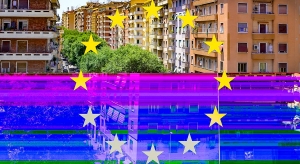
    The pandemic created an enormous burden on the finances of most European States. By April according to Kyran FitzGerald the E.U. was teetering on the brink:

    Across Europe, national Governments have moved to tackle the crisis by propping up incomes. Northern European states tend to have efficient bureaucracies and reasonable resilient national balance sheets. But even in places such as prosperous Denmark, there are concerns that many businesses will not reopen after what is increasingly looking like a long shut down.

    The picture in Southern Europe is as mentioned much more bleak. In Italy and Spain, there is a real sense of let down amid the crisis, though better off nations like Germany have latterly moved to show solidarity by sending supplies and flying some patients from Eastern France and northern Italy to their hospitals for treatment.

    Lockdowns…
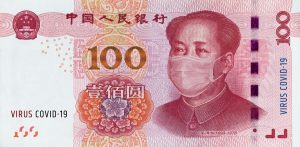
    Dmytro Sidashev / Alamy Stock Photo

    The lockdown will live long in cultural imaginations, and as an instrument of government control; its pros and cons will be debated endlessly. We published an account from China, where the policy first emerged by an anonymous correspondent, who saw it as the beginning of another Cultural Revolution.

    I had booked a hotel – but ended up alongside five families living in a large apartment for seven days. Only two of us were allowed outside to buy food – everyone else had to stay inside. Before leaving we were covered head-to-toe, in gloves, face masks and head coverings. On our return we went through elaborate cleaning procedures before re-entering the apartment. We had to remove our ‘outside’ clothing and spray everything with 75% alcohol.

    No cars with registrations from outside the capital city were allowed in. The schools were on holiday and due to return the first week in March but are still closed all over China. Only students doing important exams at the end of term will be allowed to return initially, which hasn’t happened yet.

    Leaving Beijing, I returned to my home city of ****. You are supposed to scan your phone so they can track potential carriers arriving into the city – which I hadn’t, having used a private firm for the airport collection. This meant my car registration didn’t show up on the cameras. So the next day the authorities were in touch to find out how I made it back from the airport.

    Italy was the first European country to adopt the measure, and from Piedmont Silvia Panizza observed how the confinement was diminishing her physical health:

    Our bodies, already weakened by sedentary lifestyles, are becoming weaker, muscle-mass decreasing quickly through lack of exercise. We do what we can, setting up home gyms, doing yoga in our bedrooms, a few push ups in the morning. No running, swimming, no going for walks; hardly breathing in the fresh air, panting, moving, or sweating. I do a little gardening in pots on the balcony, which I hadn’t done before. All of a sudden tomato seeds seemed the most important item on my shopping list during my weekly, stressful visit to the supermarket.
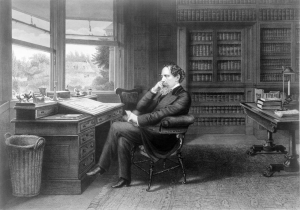
    It was a particularly challenging period for older people who were advised to cocoon in Ireland, another unwelcome neologism from this period. Fergus Armstrong reflected on the experience:

    We can have a gnawing sense that our civilisation got things wrong, that it is being, somehow, punished. A year ago I heard a retreat-giver say that we had lost the ability to read the signs of the times. We had belonged, or thought we belonged, on a planet that although under threat, and although subject to disaster more or less randomly distributed, was broadly on a path of progress, of improvement, even for under-developed regions. Nature mostly provided balance and harmony.

    Modern science reinforces this optimism at the cosmic level. We now know that the total universe that includes our Milky Way as one of nearly a hundred million galaxies has been expanding since the Big Bang. But if the rate of its expansion had been even a millionth of a percent slower, the whole thing would have collapsed, imploded in upon itself. There was fine tuning. Now trust is at issue with a particularly severe jolt for the Western world. It could be said that most of our strategies of coping are in the nature of distraction. To the extent this is so, the underlying unease remains. Call it dis-ease in fact.
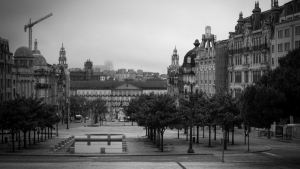
    While over in Porto, Brazilian Fellipe Monteiro observed:

    What I, other immigrants, and the Portuguese hope is that we can return to the life we had before, and be able to leave this prison, without bars, that our homes have become. While we try to renew ourselves, the city is still and visibly lacking the energy and joy of the local population.

    What is most intriguing in this situation, at least for me, is that we are trying to reinvent ourselves. For example, I have started to cook a lot more during these days of confinement, learning new recipes, in addition to adapting the house for new activities we never used to do at home, like dancing and exercising.

    Despite everything I believe that together we will overcome this difficulty, which is happening on a a global scale; staying at home admiring the birds and their songs that echo along with an inaudible cry for freedom from the citizens.

    In Sweden, however, a softer approach was being taken to the pandemic, the merits of which, or otherwise, are also still being fiercely debated. A correspondent based there revealed the philosophy underpinning the policy:

    The Swedish approach to the Covid-19 pandemic is a sign of underlying differences in how they understand morality in the public sphere, and how they relate with each other: this comes from a more utilitarian perspective.

    Utilitarianism has earned a bad reputations as it has been incorrectly conflated with crude capitalism, when it is really about taking peoples’ wellbeing seriously, or ‘the greatest happiness of the greatest number.’ As Jeremy Bentham and John Stuart Mills understood it, utilitarianism is extremely equalitarian .

    Notably, the Swedish government has taken the advice of moral philosophers who come from a moral utilitarian perspective. The core difference between their approach and what we are seeing for the most part elsewhere is they attempt to avoid an understandable reaction to save lives immediately. They put aside an emotional response and consider the future consequences.

    Also, across the water in the United States, Bull Moose was typically bullish about opening up, in a dispatch from Atlanta:

    What the hell? Most people in the U.S. appear to be freaking out about Georgia ending its lockdown before anyone else. Even Trump weighed in, saying he disagreed with Georgia Governor Brian Kemp. As we stand, restaurants here opened yesterday, as have bowling alleys, parks, nail salons and other facilities. The State also just declared its one thousandth death from COVID-19.

    On April 2nd Kemp admitted that he didn’t know that this coronavirus could spread asymptomatically, something the world knew since late January. Kemp may be an idiot, but that doesn’t mean he was wrong to re-open Georgia’s economy. With all respect to those who have lost loved ones or suffered from a bout, it’s time collectively we get back to our new normality.

    Earth Day

    Image (c) Daniele Idini

    April 22nd marked the fiftieth anniversary or Earth Day, and leading environmental writer John Gibbons recalled how this had been closely followed by the creation of the Environmental Protection Agency under Richard Nixon in 1972, along with a host of other key environmental protection legislation, writing:

    Viewed through the political prism of today’s deeply dysfunctional and hyper-partisan U.S. politics, it seems almost quaint to recall a time when people, irrespective of their politics, religion or skin colour, broadly agreed that eliminating deadly toxins from the air that they breathed and the water that their children drank was a good idea.

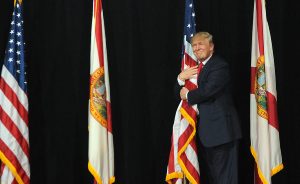
    Fifty years later, the ideologically toxic Trump regime is busily dismantling large chunks of the progressive regulatory framework that the actions of the U.S. environmental movement ushered into being in 1970. Most sane people think it’s probably a bad idea to allow high levels of mercury, a potent and irreversible neurotoxin, to be released into the air from coal-burning plants.
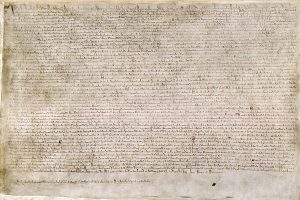
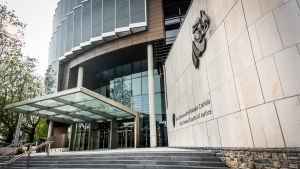
    The Public Intellectual Series continued with assessment by David Langwallner of John Gray, the U.K.’s leading intellectual, and Jonathan Sumption the former U.K. Supreme Court judge who became an outspoken critic of lockdowns, and a defender of civil liberties first formulated in England in the Magna Carta (pictured above).
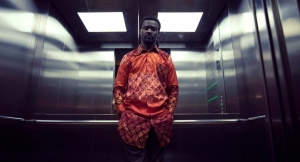
    Meanwhile Musician of the Month Niwel Tsumbu asserted the universality of music:

    It is very strange for me to hear people talk about pure ‘African Music’ that doesn’t exist – unless you go back thousands of years before humans started roaming around the globe. This concept is simply not true, and frankly, it drives me crazy when people, especially African musicians who use equal-tempered tuning with Western instruments, say so.
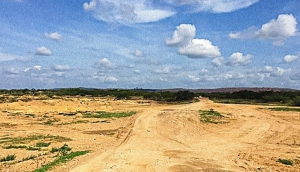
    We also published the lyrics of the song ‘Iguatu’ by Bartholomew Ryan:

    I sauntered up to the sertão
    in the northeast to a town called Iguatu
    to find the river
    where my cousin drowned in 1973
    the name of the river was the Jaguaribe
    they called it the dry river
    but as his sister Joan said –
    ‘there was nothing dry about it that day.’

    One surprisingly popular article explored how the Longford town of Ballinallee featured in the lyrics of Bob Dylan’s song ‘I Contain Multitudes,’ with a suggestion that it may have come about after a night Dylan spent in the company of fellow bard Shane MacGowan.

    Today and tomorrow and yesterday, too,
    The flowers are dyin’ like all things do,
    Follow me close, I’m going to Ballinalee,
    I’ll lose my mind if you don’t come with me.
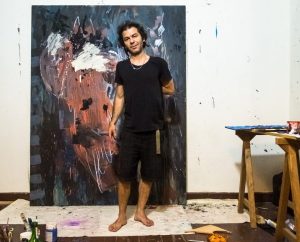
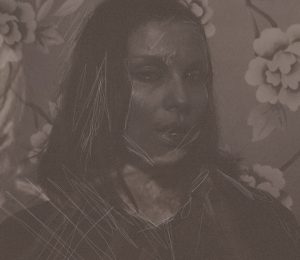
    Uluc Ali Kilic in his studio in Istanbul. Daniele Idini

    Artist of the month was the extraordinary Uluc Ali Kilic from Turkey:

    My subject-matter is often the harm and destruction humanity inflicts on its surroundings, or other traumatic issues occurring in our time, such as the refugee crisis and homelessness. I try to make long-lasting artworks using plastic material which isn’t biodegradable in nature. Likewise, these artworks aim to last long in any viewers’ consciousness.

    In fiction there was the unmistakable style of Ilsa Monique Carter in Dumaine:

    Glacial and dark by design, her house inhaled the heat if by the gliding open of a sliding glass door, its hermetic seal was compromised. And like a large lung, the house then exhaled a quixotic draft of cooler air, which carried me with it out on to the balcony. Before she’d bolted the door behind me, no matter how briskly, and believe me she was… The sweet swelter had swallowed me whole.

    While Gary Grace brought us to the chaotic streets of Dublin to life after a night out in ‘A Slice’:

    Robbie was in what his friends referred to as “swaying tree mode”. This meant the slender greying hipster was pissed, his eyes barely open, and not engaging with anyone but moving slowly side to side, mouthing the lyrics to a song that wasn’t playing.

    There was poetry in English and his native Romanian from Radu Vancu.

    As well as a series of poems to mark Holy Week, including:

    A Corona Sonnet
    by Paul Curran

    With no less haste than the crisis deserves,
    All faces one mask of consternation,
    We’ve learnt, through conversing in spikes and curves,
    This virus respects no race or nation.
    Virgil could not have foreseen the Tiber
    Would fill so fast with the fallen of Rome,
    Hospitals built with sinew and fibre,
    Children in hiding, on their own, at home.
    His toll’s still rising, but Death, if he could,
    Would make no attempt to keep numbers down;
    Warm April predicates wearing no hood,
    His scythe keenly sharpened shines like his crown.
    Unfasten quick this dead pathogen’s trick
    Lest lists of the late outnumber the quick.
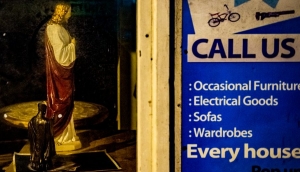
    And another from Billy O Hanluain:

    Stock Pile On Hope

    Walk down the bare,
    trembling aisles of your
    self. Everything dispensible
    is now after its Best Before.
    Pass by the Two for One indulgences
    of fear and doubt. Shelves stripped
    of the superfluous. The tattered packaging
    of novelties that amused us
    fade behind their
    spent Use By dates. Remembered now
    as infatuations bought to distract us.
    Is it time to close shop?
    Turn out the lights?
    Time for the din and dirge of shutters?
    We are open twenty four hours
    and we must never close.
    No matter the Feast Day.
    The Plague or The Hour.
    Turn toward that aisle within,
    so often passed in the hurry
    of what seemed to matter
    there you will find the plenty that
    always was and will be.
    Load your cart, fill your bags,
    weigh your trolley down.
    Stock pile on hope!

    Unforgettable Year: January 2020

    Unforgettable Year: February 2020

    Unforgettable Year: March 2020

  • Unforgettable Year: March 2020

    ‘It’ had well and truly arrived by March, insidiously working its way into our lives like an unwanted guest who slips through the door unbeknownst. Editorially we were looking at the big picture, assessing the implications of what we used to call ‘the coronavirus’ – before becoming COVID-19 on February 11th – through political, legal and cultural lenses; as well as assessing the direct health impact.

    An important contribution came from Duncan Mclean  a senior researcher with the Research Unit on Humanitarian Stakes and Practices, Médecins Sans Frontières Switzerland. He looked back on the history of infectious disease outbreaks and how these can bring out the very worst prejudices, a phenomenon he described as the ‘medical scapegoat.’

    [I]f sickness has historically been portrayed as a punishment for sin, socially excluded groups and minorities have proven most vulnerable. Whether linked to mortality or fear of the unknown, context is key to understanding the long history of how those on the margins of society have been scapegoated.

    Moreover, in light of the introduction of special powers in the wake of the pandemic in Ireland, barrister and lecturer Alice Harrison examined how in Ireland infringements on civil liberties, such as the removal of jury trials in response to perceived threats to the state, have tended to ‘seep’ into ordinary usage.

    Protecting civil liberties, such as the right to jury trial, may seem less important as long as extraordinary powers are not abused. However, the existence of special powers poses the ongoing risk that they may be exploited by unscrupulous, or even tyrannical, politicians or agents of the state.

    Dr Samuel McManus was, however, able to see a ‘silver lining’ to the crisis:

    If there is a silver lining to this crisis it is the revelation of how connected we are to each other, in ways we have almost forgotten. We are a species with special concerns. We cannot afford to operate alone as individuals; to do so is to threaten us all. This realisation is putting into stark relief the way we have organised our societies over the past few decades.

    He averted to the importance of the state delivering public healthcare, as opposed to profit-driven private institutions:

    Some private health care clinics in Dublin are now putting up signs saying they will not accept patients with respiratory symptoms, directing them towards their G.P’s. This is in one way understandable as a means of limiting transmission, but while the public service is taking extra measures to distribute information and organise the response, these private clinics are under no compulsion to do so.

    Frank Armstrong also assessed Ireland’s early response to the pandemic, pointing to inherent weaknesses, and other factors likely to mitigate the worst effects:

    The pandemic has hit Ireland during a period of political instability after a February general election yielded an indecisive result, with Leo Varadkar’s government no longer commanding a Dáil majority. Notwithstanding the challenge of installing a new cabinet under emergency conditions, it sets a dangerous precedent for a caretaker government to be in power for a prolonged period.

    He was also moved to write a poem ‘Coronavirus’, while Sammy Jay dwelt on the prescription of isolation in another moving poem.

    Image Patricio Cassinoni

    Fans of music and poetry were delighted by the release that month of a first single ‘Murder Most Foul’ from Bob Dylan’s new album Rough and Rowdy Ways. It offered a pleasant distraction from the unfolding global pandemic, although it contained a stark message according to David Langwallner

    Dylan has released a new seventeen minute-long song, ostensibly about the murder of John F. Kennedy, but which is also a travelogue through American cultural history, with Prince Hamlet and the great, deranged 1960s American DJ, Wolfman Jack, as our guide.

    Also, Musician of the Month Judith Ring revealed how she transforms everyday ‘noise’ into music, while exploring the sonic possibilities of different timbres; and Brian Dillon discussed the ideas behind his new solo project The Line. His debut album Matter had been released by Bad Soup Records in February.

    Photograph by Laura Sheeran

    In other cultural coverage, we interviewed documentary filmmaker Sé Merry Doyle, and introduced his documentary ‘Patrick Kavanagh – No Man’s Fool.’

    We also published an essay by Eamon Kelly ‘The Rocky Road to a Republic’ that argued:

    You might think of the film ‘The Rocky Road to Dublin’ as some dated artifact, featuring Dub-a-lin in da rare auld times. But many of the cultural assumptions revealed in the film, and which later went towards hindering the film’s reception, are still very much alive in today’s Ireland. The sacred cows may have changed, but the overall cultural relationship with those things deemed sacred is still strikingly similar.

    Image William Murphy

    On a similar theme, David Langwallner called for A Renewed Deal:

    It is clear that we require a Renewed Deal, bringing Keynesian stabilisation measures, including support for small businesses, social safety nets and the shutting down of corporate tax avoidance. The E.U. must desist from imposing austerity under the guise of the Growth and Stability Pact, and reinforce regulatory protection of labour rights and the environment, resisting the lobbying of giant corporations. Courts in Ireland should also recognise a basic human right to housing, including prohibition against arbitrary eviction, as well as healthcare. So let us organise a petition then for an umbrella organisation to bring a Renewed Deal to the world.

    Langwallner also explored the influence of Slavoj Zizek in his Public Intellectual Series.

    ©Basso CANNARSA Opale/Alamy Stock Photo

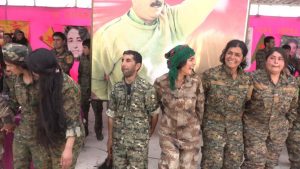
    Meanwhile in international coverage Elliot Moriarty argued for more nuanced treatment of Rojava, the autonomous administration of north and east Syria:.

    Coverage of the region in the Western media tends to refer to the Syrian Democratic Forces (SDF) and ‘the Kurds’ interchangeably. This reinforces a reductive narrative of the SDF as being comprised of fearless but naive nationalists, apparently content to sacrifice themselves in the pursuit of a Kurdish statehood aligned to U.S. interests in the region.

    Image: Alexis Daloumis

    Even further afield in Indonesia, the Hectic Fish was discovering the dubious pleasures of ex-pat life on the island:

    f I end up in prison again, I will enjoy it as much as I did twenty years ago. There is justice at the end of shadows. And there is poetry behind bars. It is bad, but you are worse.

    Another anonymous writer The Man in the Black Pyjamas was bemoaning the impact of the housing crisis on the young people of his generation living in Dublin in ‘Gone’:

    “The country’s changed,” my friend said as we sat in our small, dawn-lit kitchen at half-five in the morning having toast and tea. A month later the landlord raised our rent by 30%, and four years on now we’re all gone from Dublin. Me and my friends, and probably most of the people out drinking in the sun that day. We celebrated equality and left a day or a month or a year later. Off to London or South America or Asia or the Middle East or back down the country or onto friends’ couches or back in with our parents or into homelessness. I wish I could go back to those days, but it’s all gone now: that Dublin, those people, that hope.

    We also had Sarah Hamilton discussing the challenges for aspiring female writers in an interview with Sarah Savitt of Vertigo who said:

    Don’t get too carried away, wasting time on followers and trying to build up clout. You need to know the ecosystem. Spend your time instead learning about how to get an agent, which publishers would suit you, reading work related to them. Follow the submission guidelines that are listed on an agent/publisher’s page. It gives you a better running. Most importantly, keep writing. After all this time, it still really is about the words.

    Furthermore, there was an extraordinary memoir ‘A Rat on the Wall’ from Stephen Mc Randal recalling the ill-treatment of a schoolboy in 1960’s Belfast.

    Illustration by Malina | Artsyfartsy.

    Further poetry came from the irrepressible Kevin Higgins who pointed to enduring fascistic tendencies in Ireland with ‘The Continuing Story of Óglaigh na hÉireann

    On a more celestial note Kathleen Scott Goldinway brought us ‘The Lamps of the Virgins’

    Finally, the third hard copy edition of Cassandra Voices was launched at the end of March, and featured the introduction by Frank Armstrong,

    That new edition contained a memorable essay by Irish human rights campaigner, educator, film-maker and therapist, Caoimhe Butterly on the theme of Displacement:

    I knew that I should be there, in whatever capacity was useful – to witness, accompany and respond, to platform and archive journeys that were defined by such profound and often overwhelming displacement, external and internal.

    Unforgettable Year: January 2020
    Unforgettable Year: February 2020

  • Unforgettable Year: February 2020

    By February 15th there was a scent of danger in Bull Moose’s nostrils. Discussing which Democrat candidate would take on Donald Trump – would Mike Bloomberg have beaten Trump? – he brought our attention to coronavirus, a new viral danger emanating from China, which seemed quite exotic at that point.

    Coronavirus might be the trigger to collapse this deck of cards. How soon? Probably by April, maybe May. The virus is expected to peak around April, but by then the quarterly earnings will have been impacted.

    Should most of us in the U.S. be afraid of Coronavirus? It depends. If you’re healthy and don’t work in healthcare you’ve little to worry about. Based on the limited information we can glean from the Chinese news bubble, people with an otherwise healthy immune system, who are not regularly exposed to the virus, can rest easy. Apparently it is doctors, the elderly and other vulnerable categories who are susceptible to infection.

    But that won’t stop many of us from cancelling cruise ship vacations, holidays to Asia, and even overseas trips to trade fairs. It will also impact global supply chains, which rely heavily on China. All this means lost revenue, which will hit the markets once results first show up on balance sheets in April.

    The length of this market downturn will ultimately decide November’s election result.

    Meanwhile in Ireland, Frank Armstrong was contemplating a ‘political earthquake’ in advance of February’s Irish General Election, with Sinn Féin predicted to become the largest party in the Dáil chamber for the first time. He also charted the emergence of the far right in Ireland.

    For the moment opposition to the centre-right mainstream of Fine Gael and Fianna Fáil is coming from the left, responding in particular to an ongoing Housing Crisis. But Ireland is not immune from the wave of identity politics sweeping far-right Populists into power elsewhere.

    Another recession might easily trigger far-right Populism within the existing framework, bringing together an unholy trinity, seen elsewhere, of xenophobia – including opposition to E.U. membership – climate change denial and opposition to abortion services.

    Elsewhere, Caroline Flack’s untimely death in February prompted consideration by Sarah Hamilton of the shocking grief caused by someone taking their own life.

    Caroline Flack.

    It is a natural reaction for us to want to cast blame somewhere. We point the finger at nameless, faceless entities manifesting greater evil than we would ever be capable of – whether trolls, social media or the tabloids. We assure ourselves these remote actors are the true killers.

    The hardest thing I have ever had to learn – one I am still struggling to get my head around – is that with suicide, we never fully know.

    February was a major month in our music coverage. First, we had renowned fiddler Musician of the Month, Caoimhín Ó Raghallaigh discussing his forthcoming duo album with Dan Trueman called ‘the Fate of Bones’, that would feature his 10-string hardanger d’amore fiddle and a fascinating collaboration with graphic designer Rossi McAuley.

    Then Vincent Dermody clairvoyantly discussed the huge challenges facing musicians in Ireland in a piece entitled: Almost Nobody Speaks For Musicians Anymore.

    Centuries of suffering and persecution of people on this island become a footnote to the realignment of power structures, our identity shrouded in myth and broad sweeps, as bit-part actors in nearly a millennium of recent existence. And I think, an internal struggle between our natural impulses as sardonic inhabitants of a dark, wet and green North Atlantic island.

    The coming wave can be extrapolated to a similar battle in the area of artistic self-expression that has been raging for most of our history. What do we value about ourselves and how should we express that in the public sphere? Is society thriving? If not, then am I hearing this reality represented in the everyday art that I encounter?

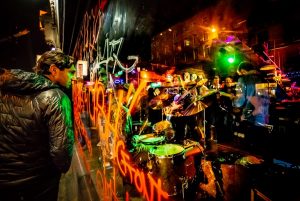
    Live Music in Dame Street, Dublin, October 2019. Pic Daniele Idini

    Paul Gilgunn was also contemplating the challenges involved in creation in the digital era. Thus:

    In an attention economy devised to distract and occupy consciousness, the exponential flow of information generates continual flux in its wake.

    Image: Daniele Idini

    There was also an essay by electro-acoustic composer Roger Doyle who charted his journey into experimental music in A Composer’s Story.

    Young peoples’ lives become filled with music on records, video, in films, on radio and TV, during Saturday nights, in supermarkets, in amusement arcades, on the streets and in concerts. Culturally exploded thus, they sit down to Mr. Beethoven and wonder what on earth this glaring composer from the distant past has to do with the rhythms they feel and the harmonies they hear.

    In his Public Intellectual Series in February David Langwallner’s explored the legacy of Christopher Hitchens, who he once encountered:

    I had a brief encounter with the man himself one enchanting and admittedly drunken evening. Being then youthful I was somewhat dazzled by his presence, yet more so when the bill for the wine and cognac arrived.

    I found Christopher Hitchens almost preternaturally eloquent, even when plastered. Industrial quantities of booze only seemed to inspire him to new heights, as it does many artists. Nonetheless, he was fortunate to have the constitution of an ox – a unique case and liver to boot. Predictably, it was the cigarettes that killed him in the end.

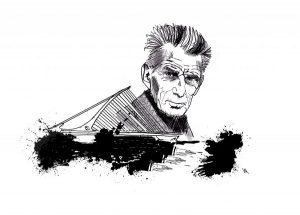
    David Langwallner clearly got around as evidenced by another treatment of Samuel Beckett, who he also encountered:

    I had the good fortune to encounter in the flesh arguably the last in the line of towering figures, Samuel Beckett, in a café in Montparnasse, Paris in 1982.

    Ireland had just won rugby’s Triple Crown in what was then called the Five Nations, before succumbing to the French team at the Parc de Princes, and Beckett was primarily inclined to banter about rugby and cricket with his countrymen. It must be stressed that he was a charmingly convivial person, and while austere, decidedly good company; even when pressed to do so he sedulously avoided discussion of his own work, preferring to muse on the artistic contributions of others.

    That slightly detached dignity, captured in John Minehan’s award-winning photograph was exactly as I found him. A kind and decent man, who concealed a madness arising out of intense creativity. A burning gaze alone revealed the creative fire that raged inside.

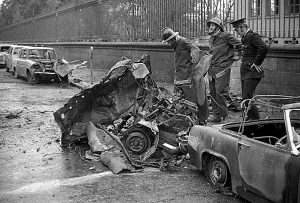
    Ronan Sheehan also drew on personal recollections in his review of Frank Connolly’s novel A Conspiracy of Lies based around the events of the Dublin-Monaghan bombings in 1974.

    Dublin and Monaghan people remember where they were on the 17th May 1974, the day three bombs exploded in Dublin and one in Monaghan. A UCD undergraduate at the time, I was in the library in Belfield when news of the bombs in Parnell Street, Talbot Street and South Leinster Street came through.

    We were shocked. Some rushed from the library. Others, myself included, obeyed a caution from the librarian to stay put. My father’s office at 1 Clare Street faced onto South Leinster Street. When eventually I reached my mother by telephone, I learned he was OK. The blast had smashed all the windows in his office and knocked him over. Otherwise, he was unhurt.

    Image courtesy of Dublin City Public Libraries.

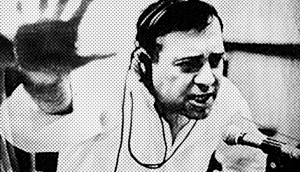
    One of the most amusing articles we have ever published came from Bob Quinn that month in his account of how one summer night in 1956 Gene Shepherd invited his listeners to conspire with him in inventing a book which actually did not exist.

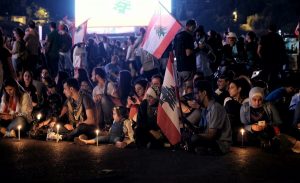
    We also began to cover unfolding events in Lebanon through our correspondent there Luke FitzHerbert as protestors took to the streets to block a key parliamentary vote and bank ceased to issue dollars.

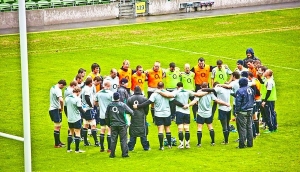
    There was also coverage of rugby from Frank Armstrong, who looked forward to the guilty pleasure of the Four Provinces of Ireland coming together to form the national team:

    I yearn for Six Nations matches at this time of year. Despite my worthier self, I cannot take my eyes off a psychological drama and physical spectacle offering respite from interminable winter.

    The violence is terrible, but it seems life-affirming that these specimens can, for the most part, withstand the battering. At its best, it conveys life-in-action, a primal dance and irrepressible human spirit.

    In what was a frenetic month for Cassandra Voices there also fiction form Daniel Wade, whose Heart of the City evokes the unmistakable atmosphere of Dublin city:

    On O’ Connell Street, rush-hour crowds pitch and roll at traffic lights. She ignores seagulls screeching from the boardwalk, convoys of buses and LUAS clangs, Deliveroo cyclists dodging cycle-lanes, bouncers invigilating in doorways, the fluorescent glare from Supermac’s, haggard junkies lurching between double-yellows and taxi ranks. Under the GPO’s bullet-bejewelled portico, she spots a young girl huddled in a sleeping bag, forlornly holding out a styrofoam cup like an offering. Homeless in her hometown. She leans and drops a few coins in the cup, then keeps on walking, barely hearing the weary “Ah, thanks, Love” the girl murmurs after her. Two guards turn to watch her pass. They notice her scar, but she ignores them. Their high-vis jackets sting her eyes.

    And from Gary Grace, whose Synapse Fire contemplates the excesses of a misspent youth.

    One of the main things I characterize my misspent youth by, is a knack for exploiting the trust my middle-class parents misplaced in me. At seventeen, I was too old to be dragged along with them on what seemed like monthly getaways, but too young to exercise any degree of responsibility or restraint. My folks had a mobile home near Ballymoney beach, which had hosted many a night of debauchery for my older brother and his cronies. He was away in Amsterdam, so I’d decided it was my turn. That bank holiday weekend, I had access to a car, three malleable mates and in the palm of my hand, an assortment of different colored pills.

    There was also poetry from Lynn Caldwell, ‘Holding Velum to the Light

    And from Brendan McCormack ‘omeros is unforgivable’, and ‘midnight in the soupcans of desire.’

    As well ‘Poem Written in Old Age’ by David Hillman:

    The light that streams across the universe
    Brings evidence of other worlds than ours
    Where midst the flux of fields and particles
    Eternal wisdom older than the stars
    Unweaves her web of possibilities
    The patterner experiments and plays.

    Unforgettable Year: January 2020
  • Unforgettable Year: January 2020
    Here begins our journey back through the #unforgettableyear of 2020…

    The drone-strike assassination of Qassem Soleimani on January 3rd, 2020 seems a long time ago now, but to our U.S. columnist Bull Moose it suggested a new phase in U.S. involvement in the Middle East. Who knows what would have happened in that region during an election year, if a certain respiratory pathogen hadn’t risen to such prominence.

    Paul Hennessy/Alamy

    January’s Musician of the Month Hilary Woods also appears to be speaking of a different age, when live music was still to be found in Ireland.

    In October last, I was at a Russian Circles gig in Galway. It gave me a much needed stark reminder of the power of live sound: washing over me, enveloping, reverberating my insides, shaking me out of an internal slumber. Requiring a medium to travel, the body is a conductor for sound. Filtering vibrations moving through it. Sound percolating in time through tissue and sinew, connecting, evading, resonating, confronting, decoding, making pliable.

    I emerged from the show a renewed being: sensorially realigned, perceiving things afresh, and happy I made the effort to go. As Rumi says, ‘whatever purifies you is the right path’.

    Hilary Woods, by the photographer Joshua James Wright.

    Elsewhere Billy O’Hanluain seemed to have been preparing us for the joys of working from home, surrounding by unfinished tasks. ‘Procrastination is a very cunning mistress.’ he wrote, ‘She masquerades so expertly at being a muse; seducing me with an ever expanding array of tantalizing tasks that acquire greater urgency with her every whisper and sensual suggestion.’

    On Procrastination

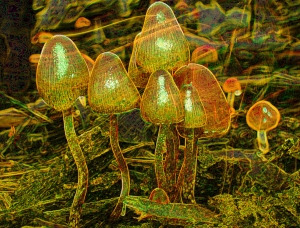
    And if it was a form of escapism you were after last January, Desmond O’Brien’s account of his psilocybin treatment for depression and anxiety would have been the best medicine. During the trip he had the unmistakable feeling that love is the glue holding us together.

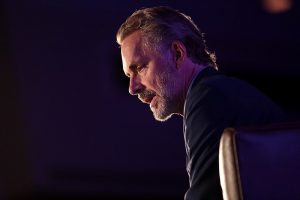
    On a less optimistic note, Frank Armstrong explored how increasing news fatigue had been orchestrated by the likes of Steve Bannon, who targeted followers of Jordan Peterson, who has earned the dubious distinction of being the first internet intellectual.

    Image by Gage Skidmore.

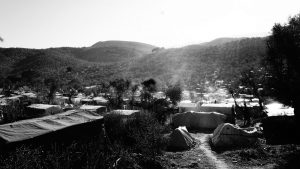
    Among the most important stories we published last year was Fellipe Lopes’s heart-rending account of the rapidly deteriorating conditions for refugees in Camp Moria, Lesbos in Greece. He described murder and rape, but also a strong sense of community.

    The-Smokescreen-of-Moira-Lesbos-December-2020
    The Smokescreen of Moria, Lesbos, December 2020

    Meanwhile, featured artist Keshet Zur aspired to be a photographer but felt heartbrake in the digital era, now she engages with nature and social inclusion through Expressive Art Therapy.

    Keshet Zur

    Bob Quinn’s memoir continued with an account from the 1950s of teaching English in Pforzheim, Germany, where a student Trudie falls for his teaching charms

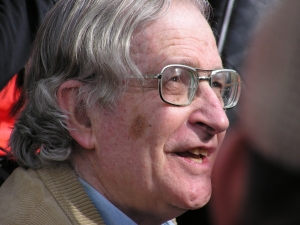
    David Langwallner also continued his public intellectual series with an account of the life and times of Noam Chomsky, with reference to his works Manufacturing Consent, Public Intellectual, Media Control, Henry Kissinger, George Orwell.

    Next there was Frank Armstrong’s Late Risers’ Manifesto 2020, in which he quoted the late great David Graeber to the effect that ‘The real question is how to ratchet down a bit more toward a society where people can live more by working less.’ Graeber further opined that the non-working poor may be ‘pioneers of a new economic order that would not share our current one’s penchant for self-annihilation.’

    In fiction, Siberian Blue by Mick Sobyanin includes childhood memories of Prokopyevsk, Siberia inside the Soviet Union, dating from 1974, including insights into prevailing Russian attitudes towards Volga Germans.

    Lastly we had a satirical poem from the irrepressible Kevin Higgins irreverently portraying the grant application process.


  • Christmas Traditions Old and New

    Ostensibly, Christmas is the occasion when Christians celebrate the birth of Jesus Christ; its origins, however, aren’t Christian at all but Pagan.

    It is no coincidence that Christmas should fall just after the Winter Solstice on December 21st, which is the shortest day of the year. From that point on the days lengthen into ‘a fine stretch in the evening’, as we optimistically portray it in Ireland on December 22nd!

    The importance of the occasion in pre-Christian Ireland is demonstrated by the orientation of the ancient passage tomb at Newgrange, which predates Stonehenge and even the pyramids. The entrance is aligned with the sun rise on the days around December 21st: sunlight floods into the inner chamber through a roofbox located above the entrance to the amazement of the lucky few that have managed to squeeze in.

    Attendance has always been a golden ticket affair confined to an annual lottery, but due to pandemic restrictions no crowd assembled at all this year for this symbolic moment of renewal.

    It has been suggested that when Pagans converted to Christianity, they maintained many of their traditions, switching from a veneration of the sun to a new born son. There is no Biblical evidence for December 25th being the birth date of Jesus Christ.

    So what of the other traditions that grew up around the event?

    Wherever Christmas is celebrated there are different traditions, and even individual families have developed their own idiosyncratic rituals. The standard Western Christmas includes decorative trees, stockings, wreaths, advent calendars, puddings, baked goods, and of course Santa Claus or St. Nicholas; we also find the nativity portrayed in cribs, present-giving and midnight masses. The switching on of municipal lights – to the constant refrain of ‘it gets earlier every year!’ – on prominent shopping streets is also popular. And of course, the Christmas dinner is also a major part of the tradition.

    Lighting of O’Connell Street Christmas Tree, 1988. Dublin City Council Photographic Collection.

    Oh Christmas Tree…

    The practice of putting up and decorating a so-called ‘Christmas’ trees – usually an evergreen conifer – can be traced to the pagan worship of Ancient Rome. Evergreen wreaths were brought into Roman homes during the Saturnalia celebrations (a festival for the god Saturn).

    Non-Roman peoples of the time – barbarians to Roman sophisticates – also brought branches of evergreen trees indoors at this time of year. The evergreen plant was a symbol of fertility and enduring growth. Beliefs of course varied across different cultures and times. For some it symbolised eternal life. Because of its triangular shape it eventually came to represent the Holy Trinity for Christians.

    Decoration of the Christmas Tree as we know it in modern times first began in earnest in sixteenth century Germany. Trees were decorated with coloured paper, apples, wafers, tinsel as well as sweetmeats and other foods. It has been suggested that candles first appeared when the Protestant reformer Martin Luther hung them from an evergreen tree. The fairy lights are the electrical descendent of these candles, and, happily, less of a fire hazard..

    Over time traditions spread throughout Europe and the New World, initially through multinational Royal families and other noble castes.

    Artificial or Real?

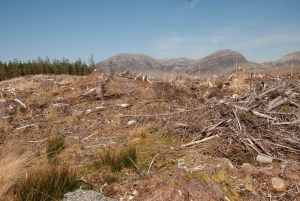
    Clearfelling of sitka plantations near Connemara National Park.

    Artificial trees are an increasingly popular option for those who don’t relish hoovering up needles and disposing of the heavy load of a real one. So what are the pros and cons of each?

    A benefit of an artificial tree is that it can be stored it in their attic from year-to-year, which should make it a one-off-investment. On the other hand, it is made from fire-retardant, but not fire-resistant PVC plastic, and we could do with producing a lot less of this, especially in an era of climate change. Moreover, unfortunately most artificial trees will eventually end up in landfill – hopefully after many years of service – which takes many years to break down.

    On the positive side of using a real tree, while they grow they convert carbon dioxide to oxygen through photosynthesis and are of course recyclable, although the wood would have to be seasoned for at least a year for it to be used as fuel.

    The variety generally used in Ireland, Sitka spruce, is a non-native species, and plantations have a seriously damaging effects on the environment, so their continued use is certainly not ideal.

    One approach could be to grow a tree in a pot and bring it indoors for Christmas, or why not get creative and use loose branches to construct an alternative ‘hipster’ tree!

    Who was the Original Santa Claus?

    Christmas postcard with Santa Claus wearing green robes, carrying full sack, with “Christmas Greetings.” (1909).

    Not much is known about St. Nicholas, the original Santa Claus, who was born in Asia Minor in what is present-day Turkey. He was known for his secret gift-giving and generosity, and became bishop of Myra where one still finds spectacular rock-cut tombs. In the Middle Ages merchants from the city of Bari in Southern Italy plundered his bones and enshrined them in the Basilica di San Nicola.

    Santa Claus is based on of this legendary figure, honoured annually during the Feast of Sinterklaas on the 6th of December in some countries. This feast is celebrated with the giving of gifts on St. Nicholas’ Eve (5th of December) in the Netherlands and on the morning of December 6th, Saint Nicholas Day, in Belgium, Luxembourg and northern France.

    There are countless invocations of Santa in songs and poems. Perhaps the best known is ‘The Night Before Christmas/ A Visit From Saint Nicholas’, by Clement Moore, also known as ‘Twas The Night Before Christmas.’

    https://www.youtube.com/watch?v=19XNS6SBRYA

    Previously depicted wearing tan or green, it has been suggested that Thomas Nast, a German-born American caricaturist, created the modern American version of Santa’s suit that featured in the December 25th, 1866 edition of Harper’s Weekly Magazine. He drew Santa in both red and green, but the new red version proved enduring.

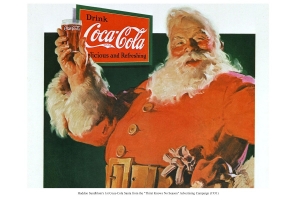
    Beginning with 1930’s advertisements, Coca-Cola has been responsible for the modern version of Santa we are now familiar with. The company created the image of the jolly, bearded, present-giving man wearing his distinctive red and white robes. The artist responsible was an American artist of Finnish and Swedish descent named Haddon Sundblom, who created the legendary figure wearing red with white trimmed fur.

    The tradition of present-giving is likely to have originated in the Roman Feast of Saturnalia, and the legends around St. Nicholas. Notably, the Roman god Saturn was associated with generation, dissolution, plenty, wealth, agriculture, periodic renewal and liberation. The feast took place on December 17th of the Julian calendar, and lasted until the 23rd of the month. This consisted of feasting, role reversals where slaves and masters would swop positions for the day – similar to the medieval ‘festival of fools’ – free speech, gift-giving and general revelry.

    Christmas in Other Monotheistic Faiths

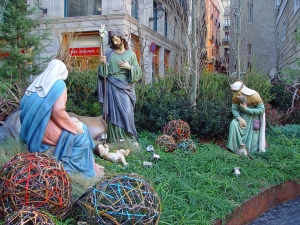
    The Nativity is the Biblical account of the birth of Jesus Christ, and is fundamental to the Christian celebration. At Christmas time many churches incorporate nativity scenes near to the altar. This typically involves Mary, Joseph, the baby Jesus in a manger, assorted farm animals and the three wise men hovering outside with their gifts. The nativity scene is also a theme for school plays coming up to the Christmas holiday.

    Outdoor nativity scene of life-sized figurines in Barcelona (2009).

    The story comes from the New Testament, specifically, the gospels of Luke and Matthew, but how are Mary and Jesus depicted in other religions?

    In Islam, Mary(Maryam) is the only woman mentioned in the Qur’an. She is an honoured figure. The story is essentially the same: Mary becomes pregnant through the will of God – a divine conception –  and gives birth to Jesus. However, other parts of the story differ.

    A palm tree is mentioned in the Qur’an, as well as a voice urging her

    Grieve not! for thy Lord hath provided a rivulet beneath thee; And shake towards thyself the trunk of the palm-tree: It will let fall fresh ripe dates upon thee.

    There is also an account of the baby Jesus prophesising from his cradle of his being brought to a temple. It is also agreed that she remains a virgin throughout her life. She is referred to as the daughter of Imran and the sister of Aaron, but is also associated with a range of other titles.

    In Islam, Jesus’s story is similar to the Biblical tale: he is born of Mary (Īsā ibn Maryam: ‘son of Mary’), performs miracles and is seen as a prophet of God/Allah, who has been sent to guide the Children of Israel. Jesus is followed by disciples, and rejected by the Jewish establishment. Eventually he is raised to heaven. However, unlike in Christianity Jesus isn’t crucified, and nor does the Qur’an refer to him as the son of God, or God incarnate.

    As regards Judaism, Mary does not appear by name in the Talmud, and doesn’t have an exalted status as in other religions. And there are even suggestions of adultery in Jewish traditions.

    Toledot Yeshu, ‘The Generations of Jesus’, a medieval parody of the New Testament, (author and date unknown), reconstructs Mary’s adultery and her son’s tainted paternity. Mary’s husband is referred to as ‘Pappos ben Judah’; Jesus is called the ‘Son of Pandera’, or the ‘Son of Stada’, ‘stada’ refers to a deviant or unfaithful woman.

    Perhaps unsurprisingly, at certain times the Catholic Church censored the Talmud for blasphemous references to Jesus and Mary.

    Altering Traditions?

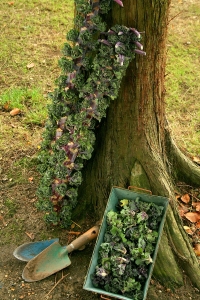
    Kalettes, a trendy addition.

    The Christmas meal varies considerably from country to country. It is either eaten on Christmas Eve or on Christmas Day. The contents also differ considerably. The most popular meal in English-speaking countries include turkey, ham, roast potatoes, gravy, stuffing, and ‘Brussel’s’ sprouts, with a ‘kalettes’ a trendy edition to the repatoire. The dessert include mince pies and so-called Christmas cake.

    The Christmas meal reflects how the U.K. was once a global empire with many dominions. It is not clear exactly when the tradition for all ingredients of the meal began. The turkey first appeared in the U.K. in the seventeenth century under King Henry VIII. However, it wasn’t until the twentieth century that it took over from goose as the dominant dish for carnivores. As the nursery rhyme puts it:

    Christmas is coming, the geese are getting fat
    Please put a penny in the old man’s hat
    If you haven’t got a penny, a ha’penny will do
    If you haven’t got a ha’penny, then God bless you!

    One unpleasant-sounding ritual that grew up around goose was in response to the tuberculosis or ‘consumption’ circulating widely in Ireland until the 1950s. According to one account:

    When Christmas time came you’d put on the goose. Goose was cooked then for Christmas dinner. Your father would make up the goose grease and rub it into your chest going into school. All over your chest and around your back. It was as good as an overcoat to you.[i]

    Christmas meals often give rise to considerable waste, and unfortunately this year it is more difficult to make donations of food directly to those in need. Thus, it might be an idea to avoid stocking up as if World War III was about to commence, and make a charitable donation instead.

    The way in which we give presents could also definitely do with a makeover. I shudder to think of the scale of unwanted gifts that will be discarded, along with reams of wrapping paper, and cards that will be consigned to the bin. Let’s try to recycle wrapping paper, make our own cards, and only buys those that include a charitable donation; reusable gift bags and donating unwanted toys to charities are other worthwhile ideas.

    Presents from Santa and Parents?!

    That a child should receive a gift from both Santa and their parents (which could easily mean another two presents) is a remarkable feat of marketing that increases costs during an already expensive season. It is surely sufficient for Santa alone to give a present! For families with older children, a Secret Santa or kris kingle works fine, and reduces the expense and stress of having to buy for everyone.

    In recent years in Ireland the Catholic Church has made a big effort to attract families with young children to Christmas services. As a child, it always seemed to go on forever – with all those toys at home left unplayed with –  but it was still a part of Christmas. Most attendees would be dressed in their fine new clothes, or in festive jumpers that have grown more outrageous with the years. This year’s restrictions mean the embarrassing show of inebriation witnessed at some midnight masses in the past is unlikely to be repeated.

    Christmas jumpers: more outrageous by the year.

    Unusual Traditions

    Some Christmas traditions from around the world are more unusual than others, and wonderful in their own way. Every December in the Philippines the Giant Lantern Festival is held in the city of San Fernando. Light is highly symbolic for Filipinos: the star is a sign of hope and the most important symbol of the Christmas season.

    Elsewhere, Ukrainians prepare a traditional twelve-course meal. But before everybody sits down to it the youngest child in the family is told to watch through the window for the evening star to appear, which is a signal for the feast to begin.

    Some countries have more sensible traditions than others. Jolabokaflod is the Icelandic tradition of giving books to a loved one on Christmas Eve. It translates as ‘The Christmas Book Flood’.

    A distinctive tradition that has grown increasingly popular in Ireland is for people to swim in the sea on Christmas day. The most famous spot for doing so is the Forty Foot in Dun Laoghaire, Dublin. ‘Swim’ is however an exaggeration for what is really an immersion for most people, followed by a hot chocolate from a thermos flask or something stronger!

    This article has only scrapped the surface of the many Christmas rituals that survive in Ireland and around the world. There are some we could safely dispense with, especially the excess, but there are others that serve a need that people feel to come together at the darkest time of the year.

    [i] Quoted in Ronan Sheehan and Brendan Walshe, Dublin: The Heart of the City, The Lilliput Press, Dublin, 1998 and 2016, p.30

  • Poetry: James Harpur

    Christmas Snow

    Never came that year, and yet
    It came in other ways, remembering the Light;
    As suds frothing in the Garavogue
    Around bridge arches, a scuttled trolley;

    It fell from lamps in Henry Street
    Illuminating tracer-lines of sleet
    And shoppers gripping rods of sleek umbrellas
    As if playing giant straining fish;

    It fell as stars above the Sugar Loaf
    Lit up as cats’ eyes by the gaze
    Of a farmer standing by a gate
    Above Wicklow and its mercury lanes.

    It flickered as a candle in a window
    In the round tower of Timahoe
    But only some could see the eye of flame
    Protecting sleepers in the graveyard.

    And when the sun emerged from night
    Snow came as seagulls spiralling up
    Like bonfire ash behind a tractor chugging
    Through slantwise fields near Baltimore.

    It came as shoals of clouds held still
    In the reflecting depths of Bantry Bay
    And as three harbour swans
    Turning their backs on the Atlantic;

    And as sheets and pillowcases hung on lines
    In Waterville and Elfin
    By women biting clothes pegs, dreaming
    Of visitors arriving from the east.

    And it was found as ironed table-cloths
    And icing knifed on marzipan
    In kitchens dimming into evening
    In Desert Serges and Kilbree.

    It gleamed as circles of the host
    For worshippers in churches lit at midnight
    Amid cities ablaze like fairgrounds
    Or villages as dark as silhouettes;

    And it appeared in moon-insinuated waves
    Unrolling across Long Strand
    Rearing up like angels made of spray,
    Roaring the word in tumbling syllables

    Then sucking in their breath to whisper
    It’s christmas, christmas, christmas …


     The Journey East
    (Winter 2010)

    The car revving up, the three of us
    wiping mist away to find a whiter world.

    Black-ice to Clonakilty –
    cortege of cars behind a spectral hearse.

    Strings of lights in Bandon, sapphire-cold,
    and the stars are moving through the river.

    On Cork’s Victorian viaduct, a train made of snow.
    We steam below the River Lee.

    Cork city crusts behind us;
    three swans on Slatty Water; feathery ice.

    The sun’s last x-ray radiates the trees.
    Lights turn red in Castlemartyr.

    Diesel-slush road. Across the Blackwater
    Waterford has drifted white.

    Inching mile by mile – through Iceland? Greenland?
    Wexford, another country.

    Dungarvan’s glittery square:
    each shop an advent calendar window.

    Beyond the Suir bridge the dark returns …
    but angels are alighting on New Ross.

    Rosslare night; chalet on a ghostly estate.
    Sound of wind in chimney.

    Dawn ferry, sudden vibrations –
    propellers churn the sea to snow.

    The swell-swing up and down and up –
    O let the voyage finish now, and grant us solid earth.

    From Pembroke Wales unfolds in white;
    a postbox in a wall, red as a berry.

    Below the Severn bridge –
    water turned to bone!

    The Somerset Levels, crisp and even;
    the motorway accelerates the dark.

    The night re-icing the Yeovil road –
    not now, not now we’re nearly there.

    Cattistock lumped with snow;
    wood incense, curtains edged with gold.

    A house on Duck Street:
    an outdoor light – a star that’s stopped overhead.


    Epiphany

    For twelve days the sky had been obscured.
    The guiding patterns of the constellations
    Lost behind a mesh of haze;
    Our trackprints filled with sifting sand
    Like a softly fading sequenced memory
    Or the healing drift of doubtfulness.
    Ascending to a ridge I saw the torchfires
    Of Ctesiphon burn like streaming hair
    And taken unawares was struck
    By a sudden longing for my country, my people,
    And such a pang for all things cherished
    For the sunlit gardens of my childhood.
    Releasing tears of deep relief – or grieving –
    I heard the other two spontaneously
    Humming a song of Zarathustra
    As we made our way on down the slope
    Away from the dying vista of the future
    Towards our past, closing in.


    Seraphim of Sarov
    (After a conversation between Nicholas Motovilov
    and Seraphim in November 1831)

    The day was born in twilight,
    grey above the forest glade,
    the earth deepening with snow
    as snow kept falling from the sky;
    the fields pure white below the hill
    beside the River Sarovka.
    I sat on a stump opposite him;
    all I could smell was fir trees.
    ‘The only thing in life,’ he said,
    is to make ourselves a home
    to welcome the holy spirit.
    Nothing more. All else will follow.
    Our souls use words for prayer,
    but when the spirit descends
    we must stay silent …’
    I glanced at him: imagine
    staring at the centre of the sun
    and there you see someone’s face,
    lips moving, eyes expressive,
    and you hear a voice speaking,
    feel your shoulders being held
    by hands you cannot see;
    in fact you do not even see yourself,
    just a dazzling light, diffusing
    and making the glade luminous
    and the snowflakes layering the snow.
    I felt such peace in my soul;
    no words could express it.
    And such warmth.
    No words can express it.

    Feature Image of Ben Bulben, Co. Sligo, Fellipe Lopes.

  • By Hook or By Crook

    People shouldn’t look at the balance sheet all of the time they should think of the future.
    Cyril Collins 2016

    A friend sent a video link to me recently about a community-based project that took place in Ballina in County Mayo. The community turn a wasteland into a forest and then, over time and slow work, they transform the forest into a community walk, allowing residents and visitors to access beautiful Belleek forest.

    The paths offers a space to exercise in a natural wonderland. In these strange COVID-19 times this arrived as a blessing to those from the area. Cyril Collins, the main driver of the forest park, expresses wise sentiments about not worrying about the balance sheet. Instead he urges us to think of the long term, and the benefits of any work to future generations.

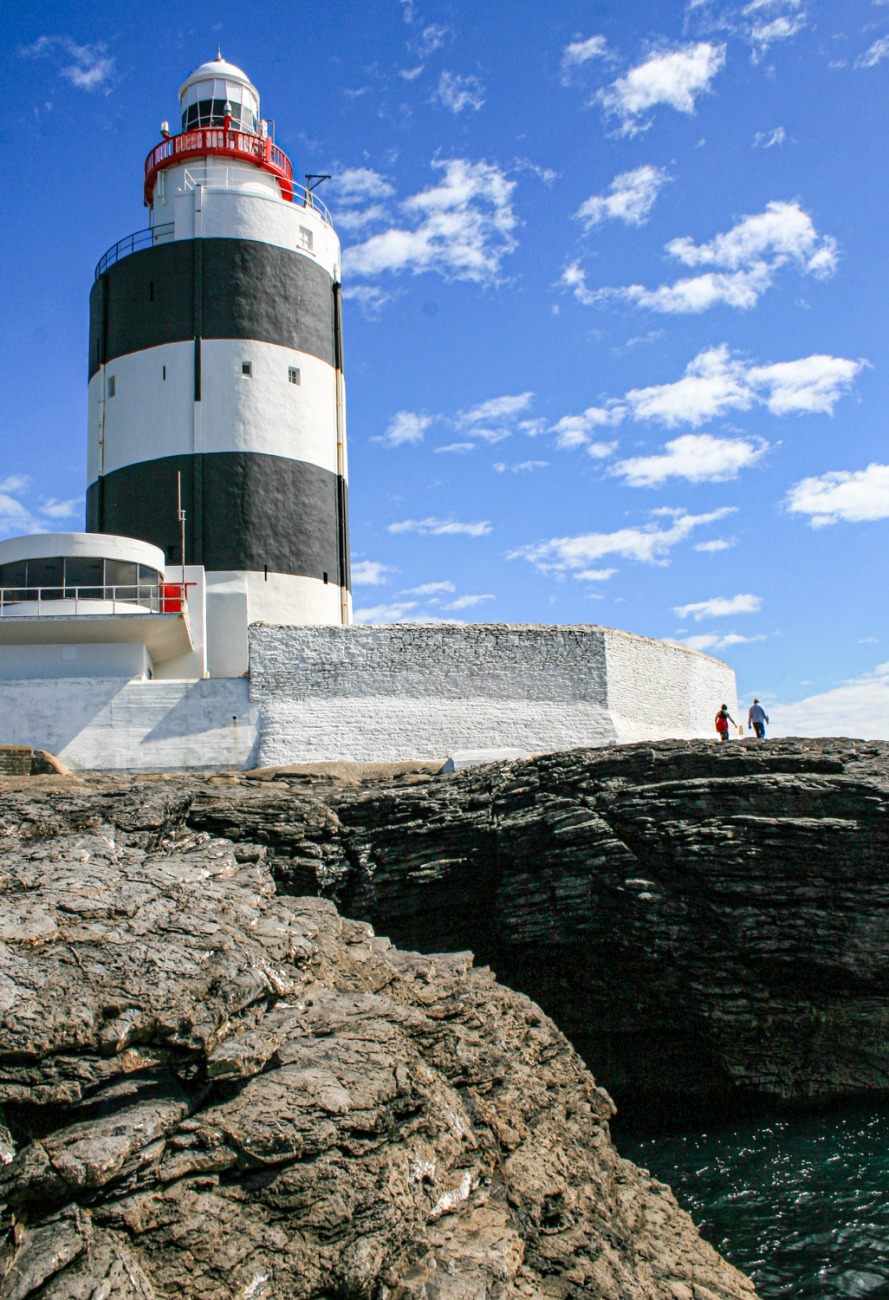
    Listening to the story I was reminded of my favourite dive site on the east coast of Ireland, and the evolution I have watched take place there. It is over twenty years since I first dived ‘the Hook’.

    In 1996 the famous Lighthouse was about to be automated, as was the case with so many of the great lighthouses around Ireland at the time. Personnel were no longer needed to keep watch over lifesaving lights. The arrival new technology meant lights could shine automatically, without the oversight of a permanent keeper on site.

    With evidence of structures on this site on Hook Head dating back fifteen centuries, by this point there was no need for a human lookout. Since then the local community – working hand-in-hand with different state bodies – has taken over the empty structures and turned them into a tourist attraction that includes a popular café. This work, along with the enchanting beauty of the place, makes it one of most visited tourist attractions in the country.

    Over the course of many dive trips to this area I have always received a warm welcome from the local community, and in the seas around this ancient lighthouse experienced some incredible dives.

    The Céad míle fáilte that we divers received in the late 1990s, in what was then a lonely spot remains undimmed today, with upwards of 200,000 visitors arriving from every corner of the world most years.

    Two Ways of Diving

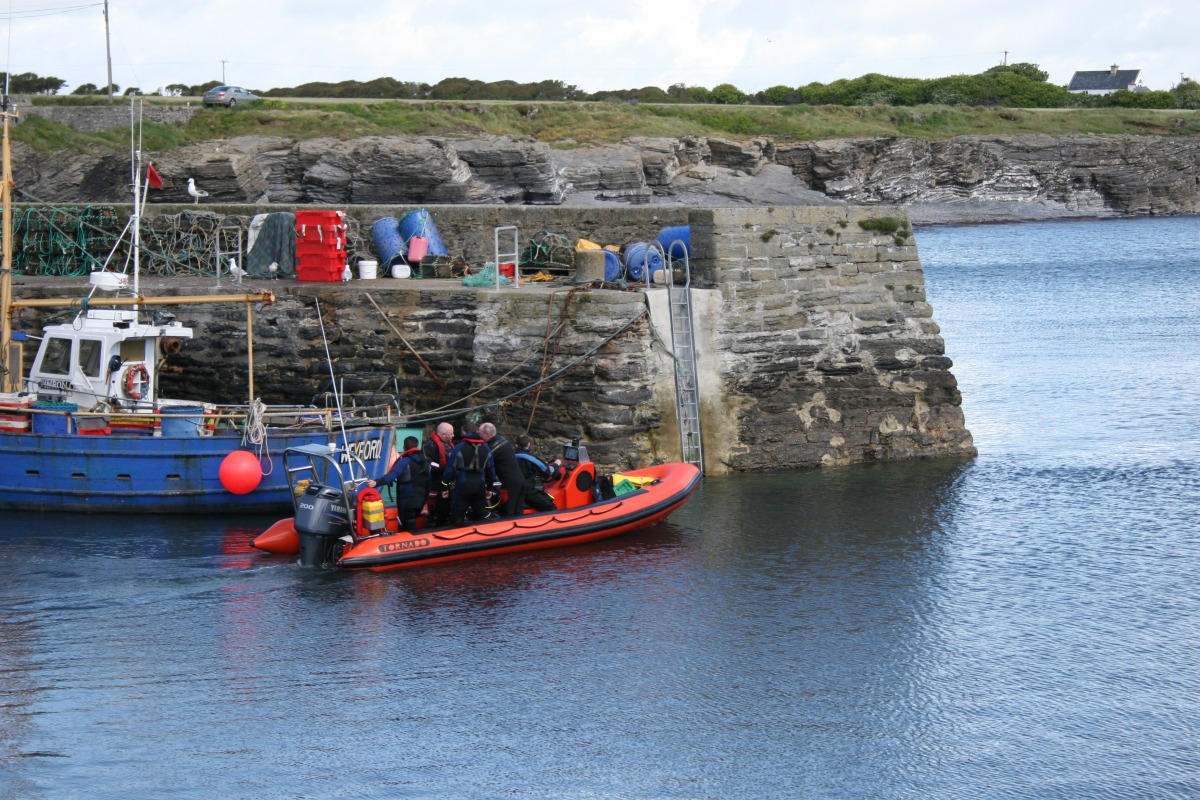
    There are essentially two types of diving: shore diving and boat diving. Most people learn to dive through shore diving, i.e. via direct access from the shore. The second type is from a boat, and is known as boat diving.

    Most training dives – in Ireland at least – are shore dives. This allows new divers to walk directly into the water, uncomplicated by any need to have an understanding of the protocols required when diving off a vessel.

    Although there are distinct disadvantages to diving off the shore, as some of the more spectacular sites are inaccessible, it also has clear advantages. A buddy team is not reliant on a club or dive centre to provide a manned vessel, and there is none of the timing requirements, or costs, associated with boat diving.

    Spread out along the 5,500 kilometres of Irish coastline there are some well-trodden paths that divers take to access the underwater world.

    Hook Head

    The peninsula of Hook, located at the southernmost end of county Wexford, is among my favourite underwater playgrounds, which I make sure to visit every season at least a couple of times.

    It is a distinctive peninsula, marking the end of the narrow straits of the Irish Sea, with the three sister rivers of the Nore, the Suir and the Barrow converging on the southern side. The peninsula is an integral part of the tourist route known as Ireland’s Ancient East.

    Journeying down through Wexford every few miles one meets signs for ancient castles and stately country homes. It speak of a bygone era, when every other Wexford man and woman’s home seems to have been a castle!

    Arriving on the thin peninsula, dotted around the Lighthouse within a few kilometres of each other there are a multitude of dive sites easily accessed from the shore.

    As the area contends with strong currents divers exploring the area must take care. Thus, diving with someone who knows the area is strongly recommended. It is, however, a relatively shallow part of the coastline, meaning basic level divers can enjoy all of the dive sites without exceeding the PADI open water level eighteen-metre mark.

    The sedimentary rocks of the peninsula are festooned with fossils of long departed sea creatures, which creates a very special ambience. These soft rocks have been pounded by violent waves, where the Irish Sea meets the mighty Atlantic.

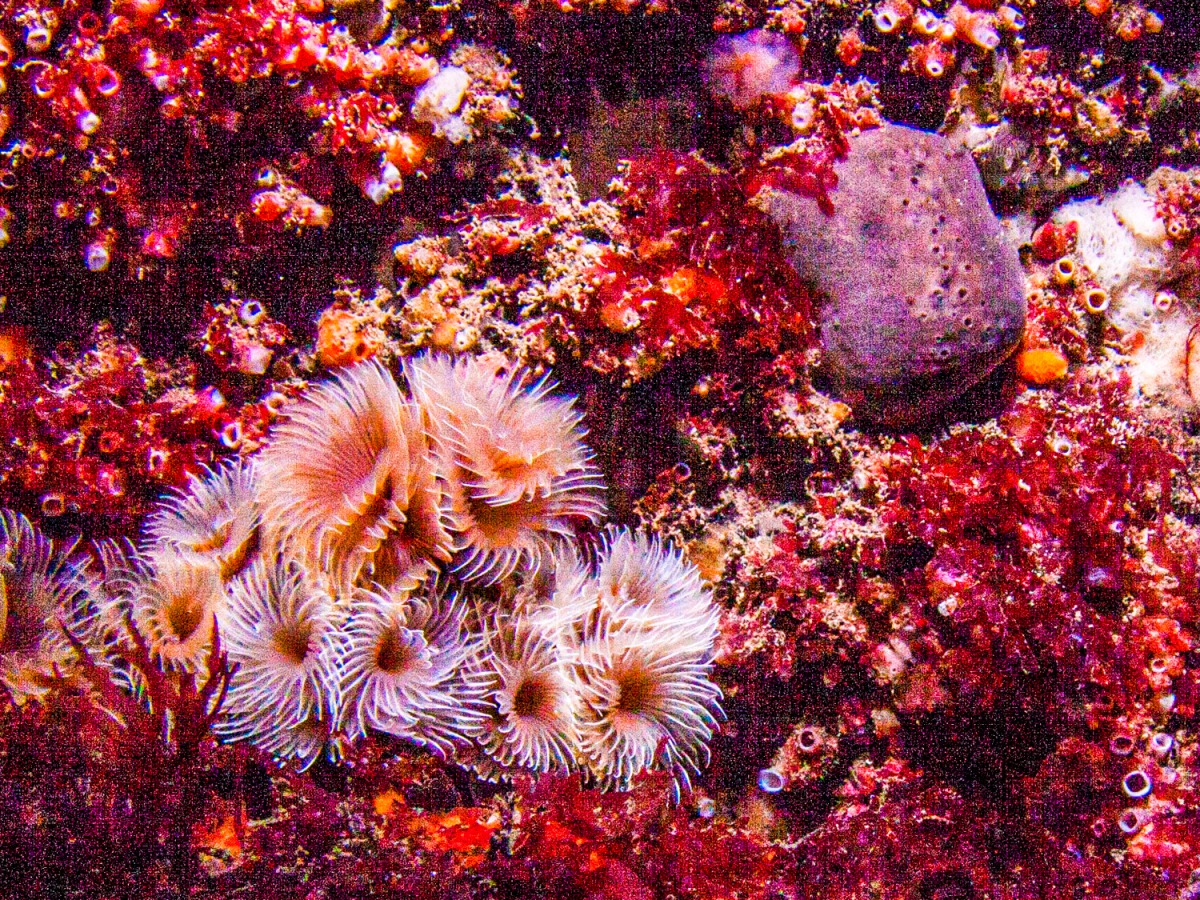
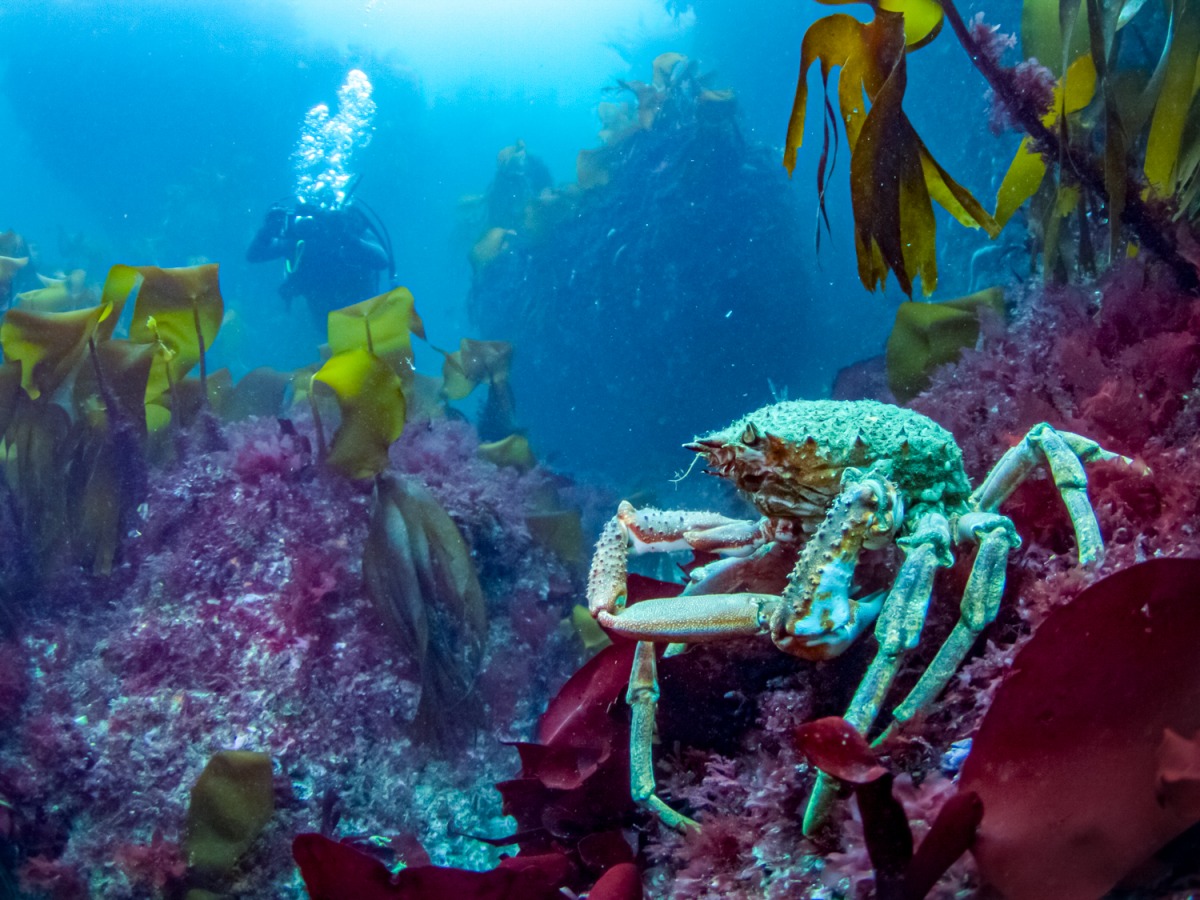
    The Ocean swells have sculpted a labyrinth of gullies and rock walls, encrusted with a cornucopia of multi-coloured sponges and anomies. This unique topography, mixed with the clear waters around the Hook, gives the diver an impression of being on a flight through a surreal landscape.

    Three Main Sites

    There are three main shore dive access points, all of which have ample parking space. I break them down below into three sites, but from these three entry points there are multiple dives available. There are other dive sites along the Hook peninsula, but I am sharing three of the best, which offer some of the most unique shore diving in Ireland.

    Slade Harbour is located on the north side of the peninsula. You get there by taking a left turn at the last roundabout coming up to the Lighthouse. The road takes you to a small fishing harbour that empties out completely at low tide, and where you can park a car. From there divers can reach a number of access points.

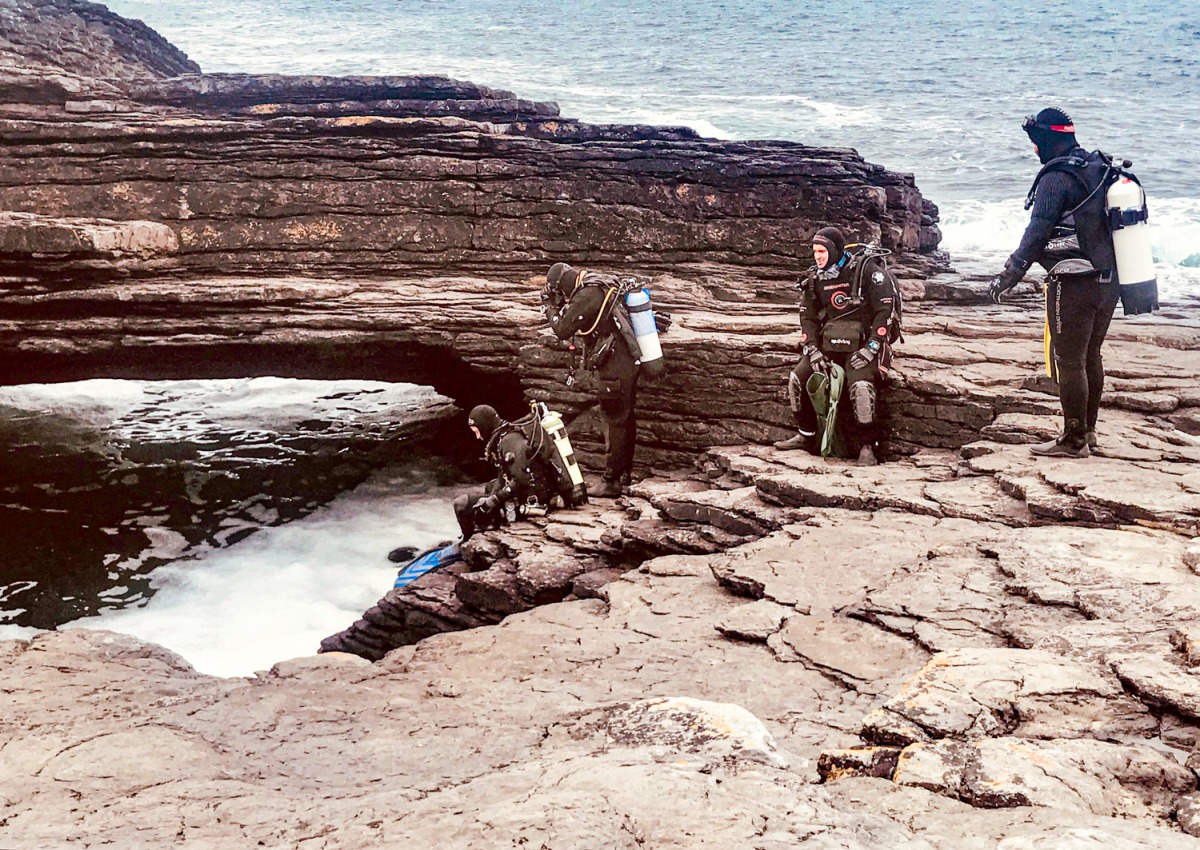
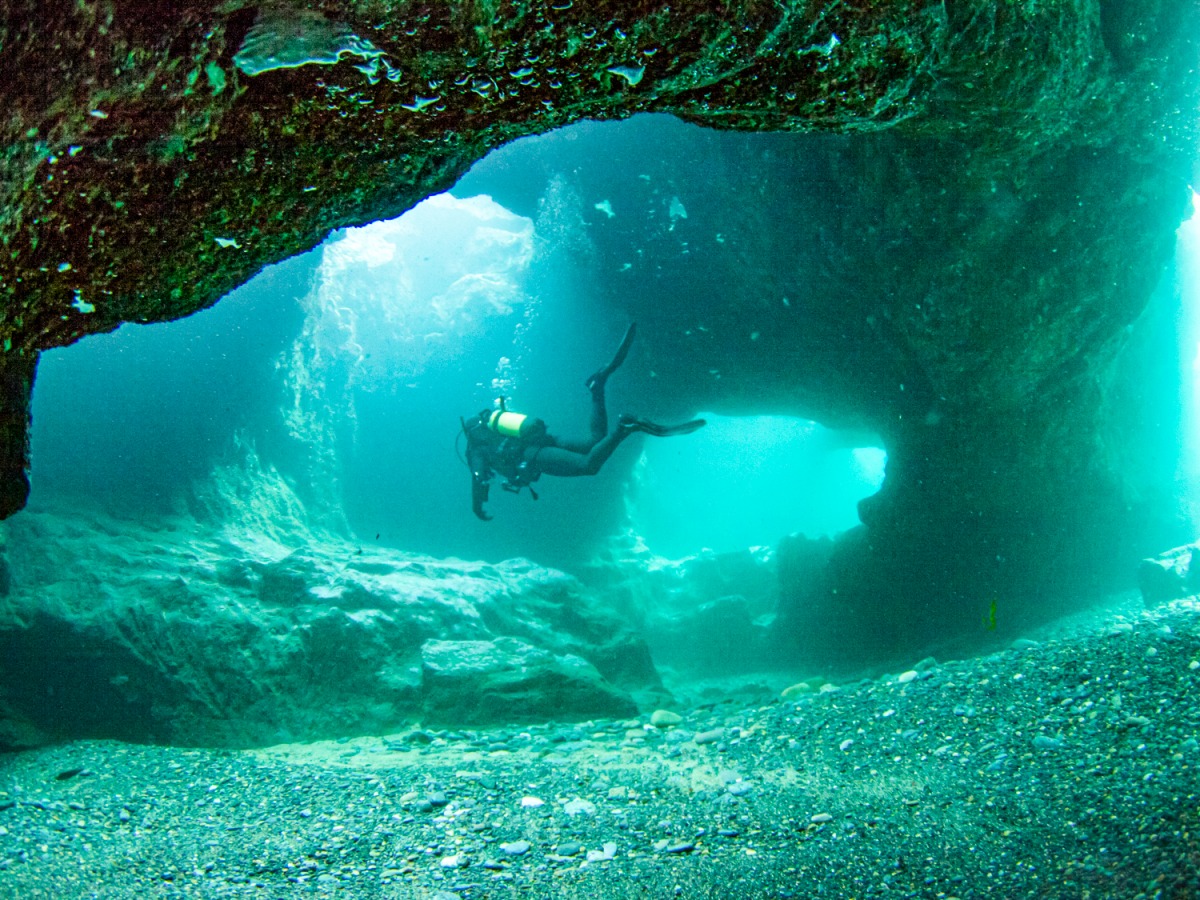
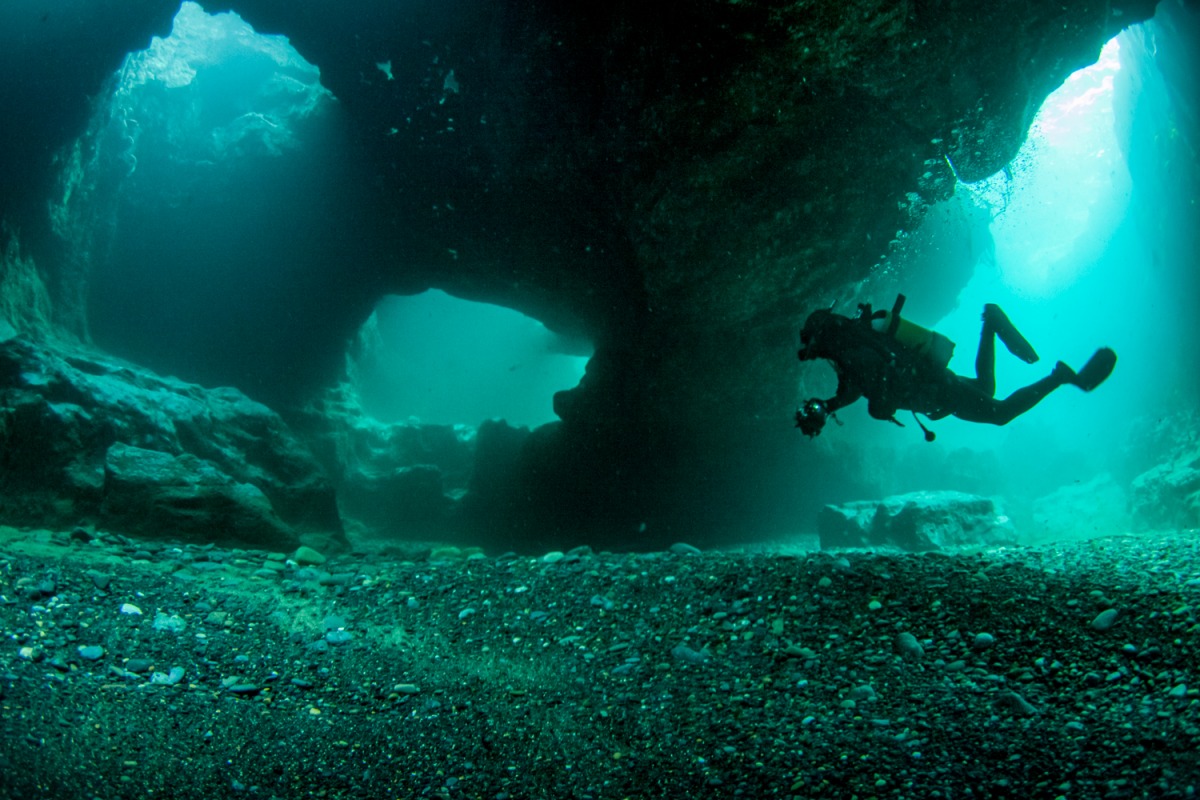
    By far the most impressive site is Solomon’s Hole, which is an incredible sea arch that acts as an entry point into a ten metre gully. This gives the diver a safe exit into deeper water regardless of the swell. The gully leads into kelp gardens where shoals of mackerel are regular visitors during the summer months.

    This side of the peninsula is the easiest to access, and is rarely blown out like the other dive sites. Facing north it is sheltered from the main swells that pound the peninsula, although it is not quite as dramatic as the other sites.

    Hook Lighthouse and Blowholes

    Hook Lighthouse is situated under the main Lighthouse and contains a number of dives that never fail to blow new divers away. With multiple entry points and ample parking, divers are a regular sight, usually seen carefully working their way to the water’s edge.

    Beneath this ancient Lighthouse there are a warren of gullies and caves that offer a labyrinth to explore. With clear water and masses of life about, it’s a rare diver that surfaces without a brimming smile across their face.

    One of the most exciting features is a clear rock pool containing a cave at the back that links to the sea. Coming out of the dark cave into a incredible gully system it is as if one is entering a secret garden below the waves.

    Approaching the Lighthouse there is a pebble beach to the right. Most drive by the Blowholes Dive without even noticing it, there eyes transfixed by the ancient structure ahead.

    Following the coast west from the beach there are a multitude of dives for those who know the way. Underwater there are incredible caves and blowholes to explore, with stunning cathedral lighting, offering divers sites I believe are unparalleled anywhere in the world. There are also multiple shipwrecks scattered in this area that over time have been broken up by the winter storms.

    A Beacon

    Over fifteen centuries this unique site has acted as a beacon to passing ships. Now the contours of the rocks – hewn by raging seas – along with the aged buildings instill a sense of a living past, accessible to the many visitors it attracts.

    When visiting Hook Head I always make sure to stop at the Lighthouse and enjoy the great coffee, nourishing food and incredible views from the café, which has been running on the site for over twenty years now.

    A significant workforce drawn from the local community still mans the Lighthouse. Today instead of errant boats they welcome tourists and divers to the area. This thriving business is now a beacon to passers-by, demonstrating what can be accomplished when the resources of the State are invested in local communities, and the multiplier effect of positivity comes into play.

  • Recalling W.G. Sebald

    The attention in W. G. Sebald’s writing to the fascist era in European history anticipates many of the controlling measures of our time. Images abound throughout his work, leading to observations and recollections both of historical incidents, literary tradition and the lives of friends and immigrants, as well digressions on nature. We find a unique blend of memoir, historical and philosophical disquisitions, and a form of narrative storytelling based on fact with the occasional intrusion of fiction.

    W.G. Sebald

    Sebald’s oeuvre represents a novel semi-fictional genre with precedents in Nabokov’s Speak Memory (1951). In effect, he subverts fiction and its use of metaphor. He may be considered British in the sense that every European émigré from Otto Khan Freund to Sigmund Freud has been, and the speckled observations of an outsider about a new homeland permeate the texts.

    A professor of literature for many years in East Anglia University, Sebald died in a car crash following a brain aneurism. This ended a meteoric rise, and thwarted the possibility of a Nobel Prize for Literature. Albert Camus at least lived to receive the accolade before dying in similar circumstances.

    At many levels, Sebald’s books display a sense of impending mortality and certainly schadenfreude. He invokes a feeling of being among the last of the U.K. émigré intellectuals of cosmopolitan sophistication, and his work merits inclusion in the great Middle European intellectual canon of Franz Kafka, Joseph Roth and Stefan Zweig, among others. There is an abundance of cultural references that recalls this heritage.

    There is also an unmistakable Proustian feel to the descriptions, though oddly that author is never expressly invoked in what is Sebald’s factual narrative of ideas, or of images which play with memory though reflections distinct from Proust’s technique. Thus, we find no attention to high society, or social politics and love affairs, as much as memories of dislocation, a recurring outrage at man’s inhumanity towards his fellow man, and an acute sense of transience and fungibility.

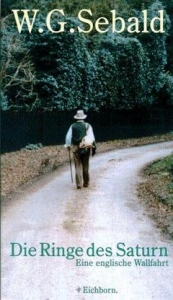
    The Rings of Saturn

    The Rings of Saturn (1995) is the most obvious example of an exhumation of the European intellectual tradition. It begins with an admission that this is a reconstruction of notes a year after a hospital admission.

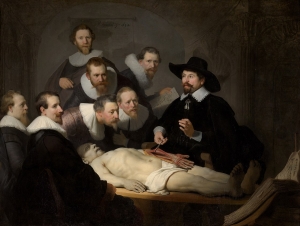
    An evocation of Rembrandt’s painting ‘The Anatomy Lesson of Dr. Nicolaes Tulp’ (1632) suggests more than a brief flirtation with the possibility of his death. He also compares himself to Grigor in Kafka’s Metamorphosis, when he awakens as powerless as a slug, and indeed Kafka is omnipresent throughout his work.

    Rembrandt’s ‘The Anatomy Lesson of Dr. Nicolaes Tulp’

    Visits to the most mundane of buildings or scenery stoke foreboding and evanescence. In a striking passages he visits the British coastline, where he equates declining fish stocks with human destruction and desecration in Belsen. It is a shocking juxtaposition of ecocide with murder and genocide, especially the Shoah or Holocaust, which also pervades this work, and indeed is all-pervasive as a backdrop or synonym.

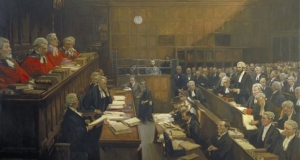
    The great Irish humanitarian revolutionary Roger Casement features heavily in The Rings of Saturn  (1995), with the inherent contradictions in his life – receiving a knighthood prior to negotiating with the Kaiser during World War I – examined thoroughly. Casement’s gun running led to a show trial culminating in his execution, a scene masterfully conveyed in Sir John Lavery’s painting ‘High Treason: The Appeal of Roger Casement’ that hangs in the King’s Inns in Dublin where I lectured for many years. It is a sage warning that sympathy with the oppressed rarely, if ever, coincides with the interests of the establishment.

    High Treason: The Appeal of Roger Casement by Sir John Lavery.

    Vertigo

    Vertigo, (1990) is another non-novel featuring a trip to mainland Europe. It succeeds in stirring the same reflections on human infamy and cruelty as in his other work. This includes a disquisition on the incarceration of Casanova by the authorities for vice. Vertigo represents a grand tour through historical sites, with attendant horrors recollected, and brought into a contemporary frame.

    Italy is a prevalent and semi-fictional narrative chapter where we meet Kafka’s Dr K, before proceeding through personal narratives on friends and relatives disappeared, or driven mad or suicidal, with linkages to landscape and cultural artifacts. Here, we seem to be witnessing the unravelling of the immigrant through displacement.

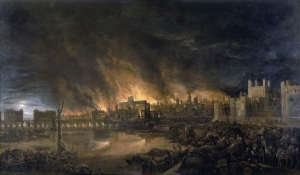
    The book concludes in England with a vertiginous dream of environmental destruction influenced by a passage from Samuel Pepys – a description of the Great Fire of London of 1666.

    It occurs to me that it is exactly the sort of book that fascist authorities, presently resurfacing throughout Europe, would ban or burn. Or perhaps it is more likely to be the victim of a broader loss of historical memory, best described as a social media auto-da-fé.

    The Great Fire of London, depicted by an unknown painter (1675).

    Other Works

    The Emigrants (1992) is a story of dislocation obviously personal, but using the lives of others to show how awfully sad immigrant experiences can be. Suicides are much in evidence along with mental institutions. Cultural adaptation is always difficult for the emigrant.

    Furthermore, the grim industrial buildings of the North of England are wonderfully evoked in an analysis of the life and work patterns of the artist Herbert Ferber, who he met many times in Manchester.

    The book concludes with images of Jewish graves and a fascinating codicil on how even the ghettos maintained an appearance of normalcy, with functioning post offices and judicial systems, throughout the carnage of the war.

    The most famous and lyrical of his books is Austerlitz (2001), stemming from an apparently fictional conversation with a gentleman of that name in Belgium. Among his works, it is the one that most resembles a conventional novel.

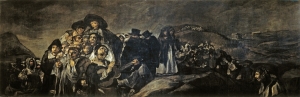
    The oeuvres is virtually unclassifiable, albeit threading through it we find a transplanted and expatriated lens on a European history of cruelty, barbarism and murder – also evoked in Francisco Goya’s black paintings.

    Goya’s (La romería de San Isidro), A Pilgrimage to San Isidro, 1819–1823.

    Through the endurance of his writing, as the perpetual outsider, Sebald operates from outside time to provides a distinct perspective on what is happening in our present age.

    In a clairvoyant way Sebald’s books anticipate the revived relevance of the Holocaust, and spotlights the immigrant experience, while emphasising the importance of civility and culture. He also presage an impending environmental collapse.

    One of the last of the great European intellectuals seems to have anticipated what we are seeing in this period of greatly diminished civil and human rights; yet at a certain level he was merely asking us to remember, in a culture of casual forgetfulness.

    Feature Image: The Liberation of Bergen-belsen Concentration Camp, April 1945 Overview of Camp No 1.

  • Poetry – Edward Clarke

    Assembly

    One morning during the first week of Advent,
    _                                   When I was possessed,
    After a birthday’s dark exhilarations,
    _          By a terrible kind of nervousness,
    We saw, on stage, the judgement of our son,
    Before his class, the Egyptian pantheon.

    I was chosen, he said, to be mummified today:
    _                                    My life was cut short
    While I was out in my papyrus boat,
    _            Hunting hippos (a dangerous sport).
    Then they took the brains out of this son of ours,
    And placed his viscera, like pasta, in cardboard jars.

    As in the womb of Advent, I’d put myself
    _                                   In that small space
    In which they shut him, cured and bandaged up,
    _            And pray to God I feel the grace
    Of Christmas, afloat inside its heavily
    Expectant bustle, remote as a vessel at sea.

    And what strange afterlife shall I find there,
    _                                   On stage, when they lead
    Me out, to weigh my heart against its feather?
    _           Wrapped in swaddling clothes and laid
    In this book’s manger, roughly I perceive
    Angels, livestock, and men, the gifts you’ll leave.


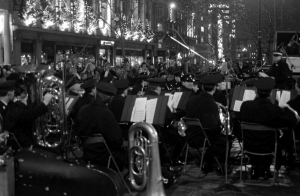
    Image: Lighting of O’Connell Street Christmas Tree, Garda Band (1988), Dublin City Library And Archive.

  • Vendev’s Contest

    Taking advantage of their last night in the city, Boris and Semyon went to a theatre, something neither of them had done since childhood. But as luck would have it, at some point during the show, Boris’s wallet was stolen. He was upset, and more so when the police officers exchanged glances before giving him little hope of its recovery.

    “You see, Sir, we understand that Vendev was working the crowd last night, and Vendev can’t be caught. He is the cleverest thief who has ever operated in Belarus. Sometimes he works the same place for a week, but no one sees the slightest movement in the crowd when someone shouts ‘Stop thief!’ We’ve had dozens of reports and the leisure to compare them. He works alone and only in one place at a time, stealing a maximum of three wallets an hour. As for physical descriptions, he might be anything from a choirboy to Rurik the Varangian. All we know is his name…if that. His name is rumored about with a strange story of the reason that he steals…”

    The two men from Cosen were not comforted. Next morning, Boris couldn’t bring himself to take his train. Instead, he returned to the Pearl Theatre and sat on the terrace of an adjacent café. It was obvious he would not get his wallet back like that, so he must have been merely mourning it, like the simple-hearted fellow he was. A pure and harmless, even touching ritual. One which Semyon did not savor.

    Semyon was the cleverer of the two. Anyone could see that in a glance at those quicker eyes flickering from his expressive face. Impatient with Boris’s ruminative slowness, you could see him there licking and sniffing, as if smelling the humid soil back in Cosen. He was eager to get that train out of this larcenous, immoral town and begin the fall plowing. But Boris could not sense all the strange city things now tickling Semyon’s nose.

    The well-proportioned man in nondescript brown who sauntered out of the café had pleasant brown eyes, and seemed in his late twenties. Upon seeing Boris, he stared as if seeing an old friend, then strode to their table, taking a chair very near indeed to Semyon.

    “Good morning, my fine fellows! So seldom you get up from the farm! From the north, are we?”

    Semyon did not care to be so acutely read by a stranger, and stiffly replied, “From Cosen, Pán Stranger.” Though nearly on Semyon’s lap, the man addressed his conversation to Boris alone.

    “You are from Cosen! A sweet place, Cosen. But shabby. The manufacture? Why, nothing, Sir. Nothing at all!”

    Boris’s pride in Cosen was equal only to his ignorance of everywhere else. “It is not necessary for Cosen to manufacture,” he maintained loudly with a sweet, ingenuous smile. “Cosen is, as everyone knows, engaged in trade. And while Königsberg is boasted for its trade,” he compared his village to a great Baltic port with utter naivete, “A greater variety of food is eaten at all times of the year by people in Cosen than by those in Königsberg.”

    Semyon fidgeted uneasily, increasingly sure that the stranger was not smiling so broadly with Boris, but at him.

    “And you caught the show last night,” continued the young man in a fashion which was nothing short of uncanny. “How did you like it? What sort of performance?”

    “Oh, Madame Yelisaveta Can-Shay,” returned Boris, smiling to Slavicly mangle her name in what he considered a rendering both cultivated and French. “She does all sorts of things. First she acted a skeet,” he tried to say ‘skit,’ “Which I did not understand at all, but Semyon, there, found it funny. Then she danced with a little dog, looking exactly like a priest’s beard on legs…”

    “Madame, or the dog?” offered the young man, causing Boris an attack of laughter that rattled the table.c

    “And then, behind a screen, she moved puppets which looked like tiny people. And talked for them! She didn’t sound a bit like herself. It was miraculous! Afterwards, the theatre director himself walked out on stage, in a splendid suit, looking like a bridegroom! He thanked her, and we clapped like mad. Semyon and I, I mean, for the others were so shy. These city people! And the director seemed to want an encore very much, so I shouted ‘Encore!’ I was the only one, so it was very fortunate I was there, or the director and Panny Can-shay might have felt so badly. She sang Encore for us, which is a song. And that was all.”

    The young man seemed simply overcome by this gallantry towards Madame Canché, and rose to embrace Boris. For the first time since his arrival, Semyon could move his left arm.

    “But it was all dreadful and we should never have come,” said Semyon bitterly, while the young man showed no more partiality for the previous seat set against his ribs, and sat equidistant between the men, “Because Boris’s wallet was stolen and the police don’t think it will be recovered.”

    “Stolen by Vendev!” exclaimed the young man with enthusiasm, leaning forward with brightened eyes. “He was in the Pearl last night. I read it in the paper. By reports, he took six wallets and a lady’s Lyon silk handbag.”

    “The scoundrel!” cried Semyon, his thin knees involuntarily jerking.

    To which the young man sighed deeply. “Do you know nothing of Vendev?”

    “Oh, the police told us everything.” Perhaps it was that note of childish arrogance in Semyon’s voice, but the young man’s full attention, once all Boris’s, was now his. “They say no one ever sees him, that he takes three wallets an hour, that he looks like a choirboy or Rurik the Vavavian, and something odd about him paying a debt to God.”

    “That’s it!” The young man slapped the table. “That’s Vendev. Listen. You mustn’t call him a scoundrel. It’s the strangest story. Many years ago, Vendev, who was an honest man then, made a bet with God. He expected to win, but lost. Don’t ask me what the bet was, because I don’t know. He had to pay the debt with stolen money. Perhaps because he was too poor. Perhaps those were the terms of his penance. He became the finest of pickpockets, and labors year after year, straining to pay his debt and be free. To be an honest man once again. That is Vendev.”

    The young man looked keenly round on his audience, especially Semyon, waiting to see if either pure-hearted Christian peasant would contest the vile theology and viler blasphemy of the tale. But Boris stared, full of wonder and…good land! There were tears in his eyes! While Semyon’s inexpertly controlled face clearly betrayed that though he found the story revolting, Semyon was afraid to criticize a city gentleman’s morals for fear of being called ignorant and out-of-step with the times. The young man’s smile widened in triumph, and as timid Semyon smiled back despite ignorance of the joke, the young man seemed about to be reduced to helpless laughter!

    Then it happened: Semyon’s hand had been automatically seeking his wallet every quarter of an hour for the past eleven, and did so now. It crawled over the rusty woolen vest like an eager crab to caress his pocket, and froze in disbelieving horror before it felt again, fumbling and pinching. A look like death by poison spread over Semyon’s lined face. The young man appeared to see nothing and twitched Boris’s lapel playfully, asking whether he were married. Semyon’s face had grown hard, his stare on the young man’s back like that of a hunter at a fearsome but cornered bear.

    But the young man knew that Semyon’s ideas of how to deal with a thief were as hard, as rigid and formulaic, as his stare. The young man crossed his legs comfortably and laughed when Boris said that yes he was, praise the Lord, married. A thief must know, better than anyone, the little signs that betray a man, for he has more to lose, and Vendev knew that Semyon, even if he could manage to conceive of a thief who did not immediately dart away, was incapable of calling ‘Stop Thief!’ on a sitting man. He would be equally incapable of announcing a thief with any other cry than the time-honored ‘Stop Thief!’ Just as he was incapable of buttoning down his waistcoat in the new fashion, but felt compelled to button it up to his chin. Vendev knew that for as long as he, Vendev, sat on the chair, he was as safe as if in France, and that he could sit in a chair indefinitely. Whereas if the two hardworking farmers tried to sit on chairs in broad daylight, on a weekday, for more than an hour, they would either die or explode.

    Vendev took out a cigarette, which he then lit and enjoyed at leisure, savoring that first bouquet of smoke, a conscience that had been trained not to bother him, and the pleasant weight of Semyon’s wallet. Won the gentleman’s way. In a contest of wits.