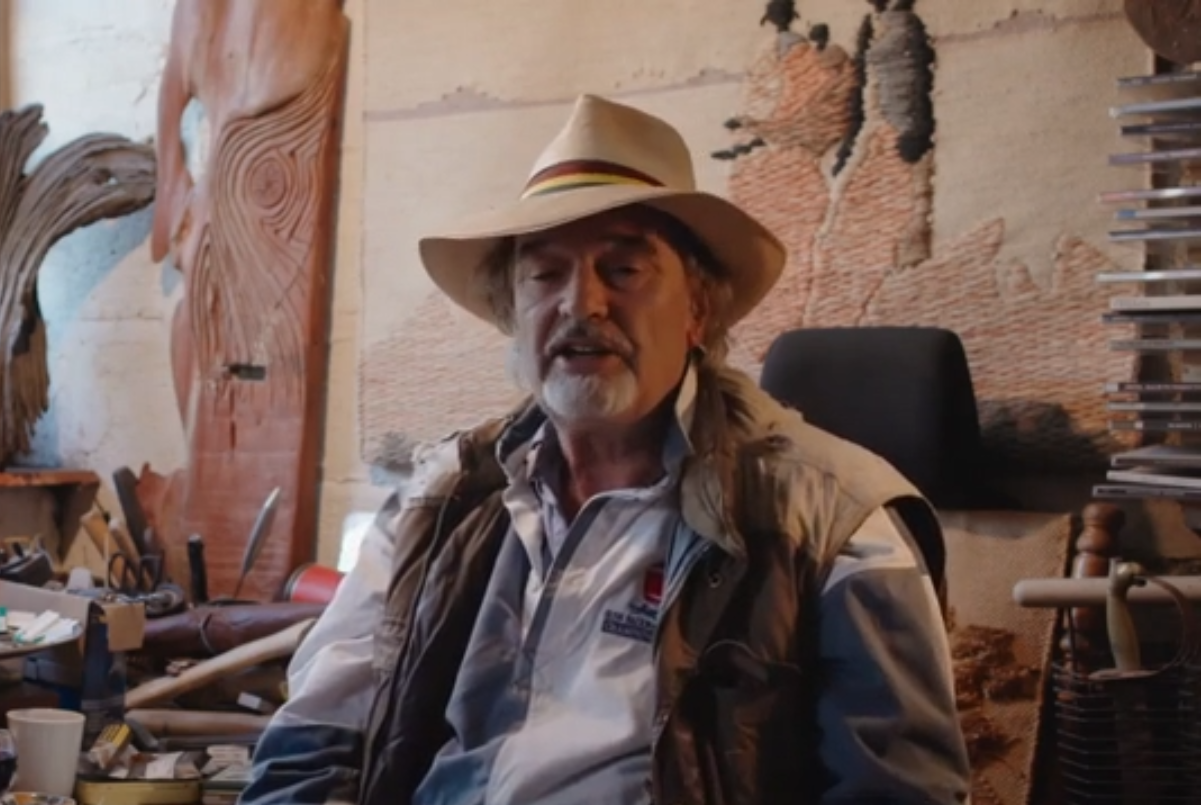
Jim Sheridan condemns the Irish government for handing over the file on the Sophie Toscan du Plantier case to the French authorities, wondering whether we are ‘still an independent country.’ He argues that this should never have been done ‘over the head of the Director of Public Prosecutions’ who concluded there was insufficient evidence to bring Ian Bailey to trial in the wake of the murder, or subsequently.
Sheridan says:
So okay, let’s just send it to France where they won’t allow Maureen Farrell [the witness who retracted her earlier claim that she had seen Ian Bailey with Sophie before the murder] to appear and say that she lied … And we have Francois Macron coming on the television speaking about this murder. Has he nothing better to do? I know the French family probably are trying their hardest … But there needs to be an intake of breath now and stop all this. It’s just too insane.
Sheridan nevertheless claims to have ‘a soft spot’ for Sophie’s son, and ‘his pursuit of justice’, which he describes as ‘heroic’:
But he was on the Late Late Show … and he said Bailey burned his coat on Christmas Day. But even the slightest perusal of the facts shows you that on the Christmas Day Bailey was on the Christmas swim, which is the only piece of video evidence we have.
Jim Sheridan maintains that branding Ian Bailey a murderer, despite no criminal charge ever being made against him in an Irish court, brings shame on Ireland. But he argues there is no shame on West Cork.
Sheridan also refers disparagingly to a 2000 New Yorker Magazine article by John Montague entitled ‘A Devil in the Hills’ – ‘Which meant the murderer had to be in West Cork because of a ludicrous idea that the only a local could know where she lived.’
He believes, ‘we have to look at ourselves and grow up a bit … We can’t replace the French with the British.’
Final Meeting
Sheridan met Bailey two days before Christmas, ‘ostensibly to do an interview, but really just to see him.’ He adds that
an interview with Ian was never of much value because he said the same thing over and over in the same way. He was almost like a child who wanted attention … his height, six four and big bearing and big voice … but when you got past that, there was a little child still there … He was like a big child. So I began to see him as a kid who thought he was in charge of everything … He was the admiral and I was the captain of his ship … he was crazy in a way … But it wasn’t a bad crazy.
In the podcast, Sheridan explores what made Bailey the perfect fall guy or scapegoat:
In that valley where Sophie lived. In 1845 there were probably twenty-seven hamlets. In 1848, there were probably none. So the tribal memory of West Cork is of a disastrous famine.
He reveals how, remarkably, the name of the landlord at that time was Bailey:
It’s almost like the Sophie’s murder in its appearance mirrors the events of the Famine with a body left exposed. And I think it hit a tribal memory of shame and devastation, and somebody had to be responsible. And who’s responsible for the famine? It’s not the potatoes. It’s not a blight. It’s the English … whether they were or not. To name an Englishman was almost perfect, as they say in darts: 180.
He adds that
The Englishman they named was very eccentric and had a sergeant major accent, and he used words and phrases in a very ironic and sarcastic way, almost like a military man.
Sheridan insists:
The only way you can understand sarcasm and irony is in a power structure where even though somebody is saying something you understand, that doesn’t mean what it says. For instance.. [if] the Queen saying to the servants, “I love your shoes this morning,” means he hasn’t polished them. But the servant is so troubled in the power structure he knows exactly that the compliment is the opposite. That produces a dissociation with people in the way we speak and act. And Bailey was English perfection in sarcasm and irony. So, when he’s first asked, when he’s first told that he’s going to be sacked. Like anybody. He’s angry. And like anybody, he’s trying to rationalize it and he asks why. And they say, well, people are saying you’re the killer. At which point Bailey is probably the only journalist who’s really pointing the finger at France, at the husband … correctly or incorrectly, we don’t know. Probably incorrectly, but we leave that aside. [Then to the] editor who is firing him he says people are saying, you did it. And he says: “of course I did it to get a good story” … Which actually means nothing like: “I killed her” It means: “if my objective was to write stories about the murder. And that’s the reason I killed her. It’s not working, is it? I’m being fired.” That’s what it means.
Jim Sheridan is unsure whether the new documentary he has made will blow the case open, but contends that ‘some of the information that I’ve got is very, very interesting … Some of which I got too late to include in the Sky documentary, and some of which I’ve got subsequently.’
Long ago I read a wry assertion that local government in Ireland is ‘central government locally organised’. The writer lamented that local authorities, especially county councils, have limited financial and other powers to provide local services and depend heavily on the financial largesse of central funds allocated by different government departments. It is different in other parts of continental Europe, where local administrations can garner money by levying local taxes and other charges on residents.
In Ireland, councils have to go cap in hand trying to squeeze more money for repairing country roads, bridges and to provide access to historic sites. When it comes to local election campaigns one candidate can say ‘vote for me and I’ll get the rickety stone bridge repaired’, while another in a different townland will promise to fix the potholed road to Ballyhoo. If it is a seaside county, hopeful candidates may focus on a sea erosion or a fishing pier requiring urgent attention.
County council electoral areas are divided into wards and these wards are divided into clusters of townlands allied to towns, villages and parishes. Ah yes, parishes. Too many county councillors are parochial in outlook and activity. They sit on county committees of various kinds, but their constant gaze is on minute details affecting their own electoral base.
Another limiting factor is that no county stands alone. The issues facing people in one county also engage the minds of people in adjacent counties. And the issues spread out into regions and provinces. The regional aspect is acknowledged when a group of county councils agree to co-operate on attracting tourists. Sligo-Leitrim-Donegal tourism is a case in point. The successful national promotion of the Wild Atlantic Way – whoever coined the term deserves to be honoured on a postage stamp – has indeed brought domestic and foreign tourists to the region, but there are problems with accommodation during the high season.
Moreover, while the wild jagged coastline of Donegal enthralls visitors from France and Italy, who cherish fish landed at Killybegs from waters not affected by nuclear power plants, not all county councillors are so enthused; representatives of inland areas hope the Atlantic tourers deviate inland and explore the rolling hills and pristine lakes, and the recreational activities these areas offer.
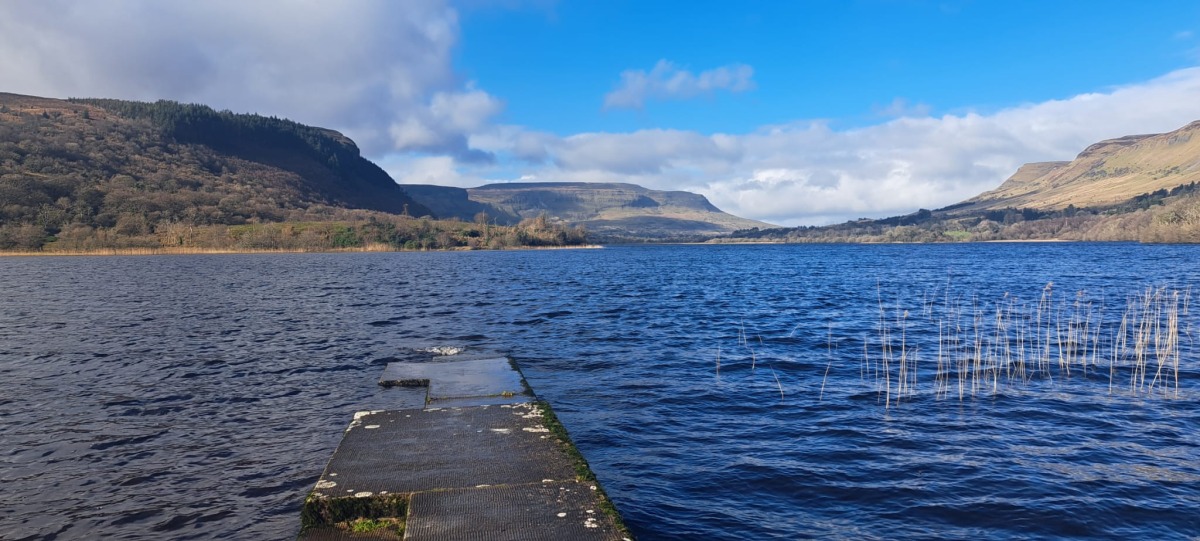
Lough Glenade, County Leitrim.
I know of one councillor, an owner of a pub serving good grub with live music on the weekends, who at his own expense printed brochures with a special map indicating routes for motorists and cyclists around the ward in which he is a public representative.
My view is that elected councillors from neighbouring counties should meet formally at least twice a year to look at the overall regional picture and to consider concerted action on particular issues. Common concerns about infrastructure, social housing, waste disposal, potable water sources and environmental conservation need regional and provincial focus.
Having Individual councils seek extra money for roads or piped water supplies is a recipe for loud speeches in council chambers. Bombastic councillors love these scenarios. They pound on the table to get their mugshots in the local papers.
Such public figures like to pretend that they have a hot phone link to the relevant cabinet ministers. Civil servants in Dublin strengthen this impression by sending copies of new money allocations to T.D.s and councillors affiliated to the party in power. This allows T.D.s and councillors ‘to welcome the announcement by the Minister’. Waving magic wands and claiming special influence with central government is a game of smoke and mirrors.
My plea to county councillors is: Think Regional and act Local.
Please take me to Erin For I am twenty-seven; Reassurance I am in my prime Dwindle in the idle time. So take me to Erin when I am ready, When the everywhere that I have been Weighs like waves upon me. Let me meet her in the pause of night, When the dawn is burning And a murder takes its flight, And I, no longer yearning For the grassy seats of kings, Endless paths of peat and song, Rest my life upon the wind, And in an Otherworldly blaze, pass on.
In entertainment news, reports have surfaced that Jim Sheridan – who directed and co-wrote In the Name of the Father (1993) among other award-winning films – along with his daughter Kirsten Sheridan, have written the screenplay for a new five-part series based on the 1988 Lockerbie bombing. Filming is due to begin in Glasgow later this month
Pan Am Flight 103 (PA103/PAA103) was a transatlantic flight from Frankfurt to Detroit, with stopovers in London and New York City. After taking off from London, at around 7pm on December 21, 1988 – while flying over the Scottish town of Lockerbie – a bomb exploded killing all 243 passengers and 16 crew.
Parts of the aircraft also crashed on Lockerbie itself, killing 11 residents. With a total of 270 deaths, it remains, by some distance, the deadliest terrorist attack in the history of the United Kingdom. By comparison, 56 died in the 7/7 attacks on London in 2005, and 29 died in Omagh in 1999.
Colin Firth is set to portray Dr. Jim Swire. Swire’s daughter, Flora died in the disaster and he, along with his wife Jane, doggedly pursued justice for her and other victims of the bombing.
Following a long investigation, involving UK police and the FBI, arrest warrants were issued for two Libyan nationals in November 1991. Ultimately, in 1999, then Libyan leader Muammar Gaddafi handed the two men over for trial at Camp Zeist, the Netherlands. This followed protracted negotiations and U.N. sanctions.
In 2001, Abdelbaset al-Megrahi, a Libyan intelligence officer, was found guilty and jailed for life for the crime. In August 2009, however, he was released by the Scottish government on compassionate grounds, after being diagnosed with prostate cancer. He died in May 2012. Al-Megrahi remains the only person to have been convicted for the attack.
Then President, Muammar Ghaddafi accepted Libya’s responsibility for the bombing and went on to pay compensation to the victims’ families, although he maintained that he had never given the order for it.
Throughout his long career, Jim Sheridan has combined the role of film maker and activist. In the Name of the Father, which he directed and co-wrote with Terry George, is an account of the Guilford Four, four men falsely convicted of the 1974 Guilford pub bombings. In 1989 they were cleared of all charges and released from prison after serving for nearly fifteen years behind bars.
In a seminal scene at the end of the film Joker (2019) the eponymous character, played by Joaquin Phoenix, is being interviewed by Robert de Niro’s character, the TV talk show host Murray Franklin. The Joker asks: “What do you get when you cross a mentally ill loner with a society that abandons him and treats him like trash? You get what you fucking deserve!” before he shoots Murray Franklin in the head.
My question is this: ‘What do you get when you belittle someone’s work ethic, demean their professionalism, turn it into a tick-box exercise, and laugh at their idealism. “You get a whistleblower.”
After it ended, in May 2023, I received one or two messages from former colleagues who referred to me as “brave” or indeed “very brave”. Honestly, I do not consider myself brave. Pig-headed, stubborn and naively idealistic would be a more accurate assessment; and it’s the ideals that sank me.
Joaquin Phoenix as the Joker.
Origins
This story begins back in 2015 when I accepted a challenge from the daa’s (the commercial semi-state airport company that operates Dublin Airport formerly known as Aer Rianta) then CEO. As an employee of the daa I had been very critical of the behaviour of senior managers, especially the lack of value being accorded to employees. It was during one of these conversations that he challenged me to be part of the solution, rather than continuously carping. He asked me to help reform the organisation’s values.
Having accepted the challenge, I worked with the newly formed values team/committee. A lot of engagement was undertaken to identify what staff valued and were looking for as values in the organisation.
I now suspect it was all done for optics. This is because values only seem important for the daa as long as they do not impact on the bottom line. It is an organisation that seems to be run by accountants, who tend to be fixated on the budget statement at the end of each month. If they did consider values important they would surely have published their last substantive staff survey, conducted with Tower Watson in 2021/2022. That has been buried like it never happened.
I felt that values in the workplace would improve with a more joined-up approach, where people understood how each department worked and that each was reliant on the other.
The daa is a large organisation, reflecting the developing and existing culture of the wider Irish society. What the idealist in me failed to understand was that many people appear content this culture.
There were other impact factors, including the Irish Airlines Superannuation Scheme, long monopolised by Aer Lingus retirees, employees, and executives. I ran for election for one of four places on the Superannuation Committee in October 2008, receiving 1211 votes, 370 short of the last candidate elected, an Aer Lingus Representative.
By this stage the issue of not paying enough into a defined Benefit Scheme had come to a head. This meant that we, as daa employees, like Aer Lingus employees, would become deferred members and enter into separate, defined contribution schemes. A pension product, unlike a defined benefit pension scheme, provides no guarantees.
New entrants into this scheme received (or in some cases had not received) a financial contribution made by the company based on age and role. One such role was being a member of the Airport Fire Service. A medical waiver was required for firemen to benefit from the company’s individual contribution into the new defined contribution scheme.
Having to sign this waiver did not sit well with some of the firemen. A handful refused to sign, and were very poorly treated by daa HR over their principled stance.
Coincidentally, it was around this time that the introduction of the company’s new values initiative was to take place. Two of the values ambassadors were asked to present a short snippet to the fire crew, with the CEO and CFO in attendance. One worked in the daa internal communications team, and I was the other person asked to present.
Sadly, to complicate matters, a senior fire officer rang across on the morning of the presentation to say that the crew were deeply hostile to this presentation and advised that the values ambassadors should not attend.
I was then told that the communications team member would not attend due to this hostility, and was asked, would I? By this stage I had been an Airport Police Fire Officer for about sixteen years and had only recently taken up a full-time role in police training. I understood their anger, but to my mind that pension deal was done, and I was looking towards the future of an organisation aiming to become an aviation security and safety leader. That, at least, was the organisation I envisioned.
So, I went ahead and gave my five-minute presentation. Before I spoke, however, one of the firemen muttered to me that “I would get lackery for this.” I never did, at least to my face anyway.
I bumped into that individual recently, a few months before I was dismissed by the daa, in a coffee shop near Dublin Airport. He had just retired, and not in the manner he had wanted. He looked and sounded broken by the way it had ended. Worst of all, after so many years of spending time with his colleagues, he now had so very few people to talk to.
As part of my values’ journey, I had been asked to attend a company seminar in the Radisson Hotel at Dublin Airport. The then head of airport security and I were interviewed on a stage in front of at least eighty staff, many of them management. I spoke about being ill and conducting a review of myself. I described it as like holding a mirror up to my face and being unhappy with what I saw.
I compared this to the introduction of the organisation’s values assessment – holding up a mirror to the face of the organisation. None of us, I said, could be proud of how the daa had previously behaved, and this was an opportunity to move forward more positively.
Sometime after this I was stopped by a HR manager who told me they loved my speech and analogy about the mirror. They said they had acquired a small mirror and placed at the edge of their desk so that people could see their reflections whenever they were in her office: “to make them look at themselves”, when she was dealing with them.
Image: Daniele Idini.
COVID-19
2020 arrived bringing us COVID-19. Mentally, I was very stretched, having been separated for about a year, back living with my parents, and halfway through my first year studying for a Diploma in Legal Studies in the King’s Inns, which required attendance four evenings per week.
As the country and aviation industry effectively closed down for the first lockdown at the end of March, 2020, I had just managed to get myself through a twenty-four-day course with four other police instructors in Tai Jitsu, conflict management, coaching/teaching, control and restraint and handcuffing techniques.
I had had to book a room in the local airport sports complex – as the daa still has no dedicated facility for many of their aviation training requirements – in order to deliver the course and host the instructor from the UK. On another occasion our room had been double booked and we had to conduct this physical course on half of the usual floor space, as the rest had been set up for a wedding!
When the lockdown led, inevitably, to a voluntary severance scheme, the atmosphere at work darkened. Only months before, staff had voted to reject a management proposal called ‘New Ways of Working’. Many of these conditions were now being foisted on us.
It annoys me that people who want to benefit from a severance scheme get to vote on the terms and conditions of those who wish to remain at work. It was not, however, my fight. I was trying to look beyond COVID-19, having assessed it would take longer than six months.
With that in mind, I asked my brother, a budding artist, to offer an artist’s impression based on what I had told him in a rough sketch. I wrote a one-page business idea, or hook as we call it in training, and argued that now was the time to build for the future of aviation.
I sent these watercolours and the idea to the Chief People Officer in May 2020. The daa head office was based in the Old Central Terminal Building. I left the art work and letter with reception and waited. By this stage, many of the office-based staff had begun to work from home. Understandably, it took him two weeks to get back to me.
He got back to me by email regarding my Aviation Training Centre proposal. I recall he said I had put a lot of thought into the idea and said he had asked one of his team to contact me to discuss it further.
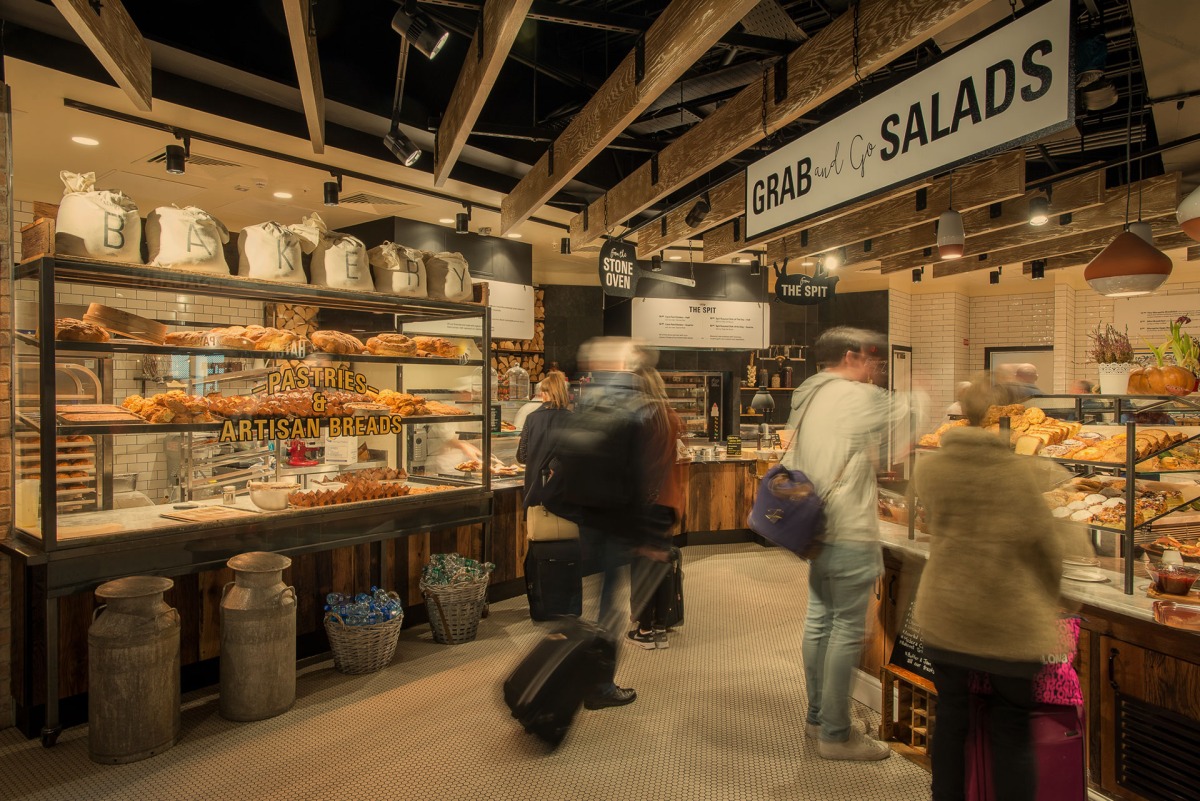
Marqette Food Hall and Bar, Terminal 1, Dublin Airport.
“Oh that”
I never heard back from that team member. A couple of months later, however, I bumped into her while she was queuing for a coffee in Marqette Café in Arrivals in Terminal 1. I said hello and she just about managed to say “Hi” in return. I brought up the idea for a training centre and asked whether she had been asked to speak to me regarding the proposal.
“Oh that” was the response. With that she collected her coffee and walked away. “Oh that”. After all my effort.
By this time I had decided I had had enough, and made a complaint of bullying against the Airport Security Manager. It was based on a number of incidents, which I regarded as an attempt to isolate me as the Police Training Manager.
This complaint was brought to the attention of the daa’s Equality Officer, as my own HR business support felt unable to deal with it. She and the Chief People Officer pushed for an informal meeting to address my complaint after the Chief People Officer had first met with the Airport Security Manager. I agreed. No room was booked, instead a meeting was arranged over a cup of coffee at the AMT Coffee Dock on February 17, 2021. No coffee was bought.
The Airport Security Manager attempted to dissuade me – in what I felt was an intimidating manner – from making the complaint. He stated that he would respond with compliance findings against me. In response, I said I would be continuing to pursue the formal complaint.
I left the table and as I walked away he caught up with me. I felt something pushing into my side, which turned out to be his left elbow. I came to a stop and told him to “get his fucking elbow out of my side”.
I let him pass across to my left and started to walk away. I heard him calling after me “bye Matt, see ya Matt”.
I reported the incident to An Garda Siochana and a file was sent to the DPP. Sadly, I had no witness, and it was not caught on CCTV.
I kept pushing the formal complaint, however, and the company hired an external HR consultant. We agreed terms of reference, one being that the investigator would circulate the completed report back to the Equality Officer, and that a full copy would be circulated to the respondents.
The report confirmed there had been an affront to my dignity at work, although the allegation of bullying was not upheld. It also made three recommendations. However, the first recommendation was redacted by the daa in violation of the terms of reference.
On March 15, 2023, while I was still an employee of the daa, the Chief People Officer sent three daa HR managers into the Workplace Relations Commission to have my referral over the complaint of bullying thrown out on a technicality. The adjudicator did not accept their argument and asked all three what was in the partly redacted report. All three claimed they did not know. The adjudicator requested a two week adjournment, and for the Chief People Officer, the Equality Officer and the Airport Security Manager to appear at the next hearing. That hearing has still not taken place. It has been included in my claim for unfair dismissal and penalisation in the workplace over my Protected Disclosures.
A new date had not been agreed before daa HR seized on my email to the board on April 14 2023, expressing frustration at daa HR’s behaviour, claiming incorrectly that it was a letter of resignation.
My frustration was based on the fact that a potential new employer had sought a reference from the Chief People Officer, which was not forthcoming. What did occur, however, was an attempt to file a disciplinary charge against me.
Protected Disclosure
On June 18, 2022, I wrote a letter which constituted a Protected Disclosure to the Minister for Transport Minister, Eamon Ryan. The primary issue was the security culture fostered by the Airport Security Manager and another senior security manager, which, I contended, was leading to a decline in security training standards.
For twenty years, if a newly hired ASU (Officer with the Airport Search Unit) failed any of the screening exams twice they would not be allowed a third re-sit. Now, however, because of staff shortages, ASU trainees were being put forward – with the Airport Security Manager’s approval – for resits after two fails.
This Protected Disclosure was handed to the Minister in the Dáil Chamber by Deputy Duncan Smith of Labour on the June 29, 2022.
For a long time, I had observed the attitude within the daa deteriorate towards aviation security and safety. In my view, it had become a tick-box exercise, and led to a very toxic workplace.
By this stage, in 2022, I had been with the organisation for twenty-four years, having joined the Airport Police in 1998. To remain working any longer in that environment would have killed me, as I had got nowhere with reforming the values of the organisation.
I was to be left to rot, having been unjustly stripped of the rank of Inspector by another senior security manager. This happened, I was told by someone in the organisation because “I did not manage the people above me”. In other words, I did not tell them what they wanted to hear.
For months I heard nothing from the Minister’s office. Then, on October 6, 2022, I emailed the office directly and received a reply from an official saying that although they did have my name, they had no way of contacting me and had decided the Protected Disclosure did not warrant further investigation.
I challenged this and asked to see the initial review and to be provided with further evidence. I still have not seen that review.
Department of Transport officials informed me on October 19, 2022 that the company secretary of the IAA was the prescribed person under SI 367/2020 who I should be dealing with regarding my Protected Disclosure.
Dublin Airport.
Landside Patrolling Risk
Finally, on January 10, 2023, the Aviation Security Manager with the IAA emailed and we spoke. She and a colleague had been tasked with conducting the initial assessment into my Protected Disclosure. After agreeing terms, I met with them on January 30, 2023, and was interviewed for just over an hour.
At this meeting I also provided and highlighted my concerns regarding the daa’s management of the Airport Security Programme, and how I felt that the failure to risk assess landside areas was a mistake. The landside area of an airport is where non-travelling members of the public have unrestricted access, i.e. before security screening. I provided the IAA with a landside risk assessment that I had provided to police management on November 22, 2022. Although acknowledged, it was ignored by the daa security team.
On Friday, March 24, 2023, the head of policy and compliance for the Airport Police circulated an email to police management and sergeants stating that the IAA had issued an update to the National Risk Assessment for Dublin Airport and Airport Police patrolling, which specifically referred to the landside areas.
I now know, thanks to Senator Tom Clonan, that the IAA commenced their investigation in response to my Protected Disclosure into daa security on March 23, 2023, the day before this email was sent.
Image: Daniele Idini
New Role
As I have said, I planned to move on and had been under consideration for a job in a different organisation since January 2023. This role required an enhanced background security check, which in this State can take over fourteen weeks. And so the wait began.
Senior management seemed to think that COVID-19 would give them the flexibility they were always arguing for when it came to regulation. I recall meeting a senior manager during that period in the Arrival’s Hall of Terminal 1. We were both looking at a very empty Arrivals’ screen, and I brought up the CAR (Commission for Aviation Regulation) thirty-minute queue requirement. I said now would be a good time to look at this – prior to re-opening.
“That’s all gone Matt” was the reply. I asked him did he really think so, and he was adamant that it was gone. It hadn’t gone away, aviation safety and security regulatory requirements remained consistent, but the daa had simply stuck its head in the sand.
I should add that I posted a number of thought-provoking pieces on the daa’s company social network, Yammer. One, on May 1, 2022, about leadership, elicited a query from the then CEO. I posted in exasperation at how I had been asked to step up to the mark on values, but had received no support; and another about how, in my view, the organisation had become so very fake, with employees viewed as the problem by an elitist management team.
My last post was in response to the publication of an official report into the culture of the Irish Army. I posted it on Yammer on March 29: ‘Truly dreadful report published today regarding the degrading behaviour of Irish army officers. Thankfully we don’t have that culture or any of those traits in the daa.’ It included a hand on chin emoji, confused or pensive emoji, depending on how you interpret it.
At around 9:30am, on April 12, I received a phone call from my former chief. He requested that I meet him in his office at 10:15am, and strongly advised I bring a work colleague or union official along with me.
I asked what it was about, and he said my Yammer post of March 29. This was the morning that US President Joe Biden was arriving at Dublin Airport. I thought he would have better things to do and responded that it was very short notice; he replied: “I just need to get this done today.”
As a friend put it: “someone else was blowing up his tyres.” I ended the conversation and emailed back, saying that it was too short notice as I could get no one suitable to attend with me. He rang back at 10:30 and apologised for any confusion, saying that it was not necessary for me to bring someone along, and that he only needed to speak with me for a minute. I asked then whether it was an informal chat. He would not admit that but insisted it would only take a minute.
I felt I had done nothing wrong and called to his office. When I arrived he informed me that he was referring to my Yammer post of March 29 to HR. I asked why. He informed me that “it was offensive.” I asked, “to whom?” He informed me after a pause that he found it offensive. I said “you’re the manager, why don’t you deal with it.’
He refused, saying it was going to HR. I replied, “well that is disappointing,” to which he relied “well people can be disappointed.”
About twenty minutes later my prospective new employer emailed to say I had just cleared the enhanced background security check, and requested permission to contact the daa for a reference. Happy about this, I replied I would do so, giving them the Chief Police Officer’s contact details. I thought I was days away from securing the new position.
The next day, the Head of Security HR, emailed to inform me that I was being brought before an investigative disciplinary meeting regarding my Yammer post. The post about the culture in the Army report must have really hit a nerve with daa senior management. Perhaps it was because the Airport Security Manager was a former Irish Army Officer?
The following day, Friday, April 14, I hit back. I emailed the board of the daa, stating that after twenty-four years I intended to move on, but could not do so without a reference, which HR had not provided.
I also stated that I was the one who had made the Protected Disclosure to the Minister, and that I had also been assaulted in the workplace by the Airport Security Manager. I further stated that in my view the daa HR team were untrustworthy and had acted maliciously. I also offered an exit interview as I wished to offer further insights into the daa.
Before emailing the board, I read the company’s exit policy. It states very clearly that an employee resigns to his or her line manager, or HR business support, and is given a notice period based on their employment contract. I had specifically excluded HR or any local management from my email to the board on April 14.
On Monday morning, April 17, 2023 my line manager arrived at my Office. “I hear you’re leaving,” he said. I asked him where he had heard that. “HR told me,” he replied. I asked him who told them. He replied that he did not know. I then held up a copy of the exit policy that I had printed off and said, “someone has jumped the gun here because I have not resigned, my emails to the board specifically excluded you and HR.”
By then, HR had still not provided a reference. From April 12, until May 12 when I received an email from the Chief People Officer instructing me not to report for duty the following Monday, I, along with the SIPTU Sectorial Organiser, had repeatedly emailed to say I had not formally resigned.
It was the company secretary who had taken my email from the daa board and provided it directly to HR. She informed me herself in an email.
It is important to note that in or around October 2022, the company secretary had been handed a copy of the Protected Disclosure, my anonymity removed, by a worker-director and was directly involved with me on another internal Protected Disclosure which she was overseeing.
Since 2019 I have been a student of law at the Honourable Society of Kings Inns. I am in my final year as a candidate for the barrister-at-law degree. It is both an education and a professional qualification. The majority of tutorials take place in the Philpott-Curran Room located at the top of their building on Henrietta Street. John Philpott Curran (1750-1817) was a lawyer, orator and stateman who defended Irish liberties. He also defended United Irishmen, including Wolf Tone.
As I sit and write, a portrait of Wolf Tone, painted by my mother back in 1991 taken from a secondary school history book hangs on the wall behind me. Life is a long and winding road and if you follow your heart you find steppingstones that put you on the right path. There are many famous sayings attributed to John Philpot Curran, one being: ‘The condition upon which God hath given liberty to man is eternal vigilance.’
I wonder whether it falls to whistleblowers in modern Irish society to maintain that eternal vigilance – crucial to preserving liberty and democracy.
Fact-checking is also surely part of that role. On July 27, 2023, the Irish Times published an article quoting daa sources to the effect that they had been found innocent of any wrongdoing by the IAA, and its subsequent investigation in response to the Protected Disclosure.
This is inaccurate as the IAA amended the National Risk Assessment, in response to issues I raised in my Protected Disclosure, provided to the IAA on January 30, 2023 the day after they commenced their investigation. That issue is now the subject of another Protected Disclosure, one involving the Dáil Transport Committee and the IAA themselves.
The second, partial at least, inaccuracy in that article is the claim that the whistleblower was unhappy over a pay claim. It does not provide context to this. I made the Protected Disclosure on June 22, 2022, and was in receipt of my first negative pay review in twenty-four years on July 26, 2022.
Sadly, most Irish media outlets seem to have no interest in whistleblowers’ accounts. Perhaps they are the victims of bullying by vested interests themselves?
My formative years were spent growing up on a pretty amazing cul-de-sac called Verbena Grove in the north Dublin suburb of Bayside, a 1960s/1970s sprawl of low-rise semis that borders the coast road between the city centre and Howth Head. My Dad, Mick O’Brien was a schoolteacher and is one of Ireland’s leading uilleann pipers. My Mam, Fidelma is a music teacher who comes from a large family of Irish dancers and musicians. Both grandfathers were musicians, My grandad Dinny O’ Brien had a huge influence on us growing up. All of my aunties, uncles and cousins play. Music was water and air to my family. I had it on both sides, there was no escape.
So it started right there in Bayside. Once the parents on the road realised that Mam was a music teacher they came knocking on the door for music lessons. My first memories bring me back to the front room of our house with the children of Verbena Grove sitting around the table with tin whistles, I was often sitting on the table as a baby, watching, listening. Those children were the ones I looked up to, particularly the Peat family across the road who treated me like family from day one. So when Joanne Peat started playing the violin – so did I. I was two years old when I started violin lessons. The rest as they say was history.
Growing up in Dublin, I was very fortunate with the teachers that were available to my siblings and I. We all started on the violin in the Young European School of Music with Maria Keleman and Ronald Masin, to whom I owe my early years of practice and dedication to the violin. Then I was fortunate to study with Maeve Broderick in RIAM, Dublin before finding myself in Nantes, France under the watchful eyes and ears of Constantin Serban and eventually to Leipzig, Germany where I had my forever teacher, Mariana Sirbu. An incredible person, musician and friend. She took care of every student as a person as well as the music. But she was also very tough. She’d make me sweat. I really respected that. I’m not sure anyone had ever understood me as well as she did and I was so fortunate to have her in my life.
Throughout those years of study and practice I was working constantly, a musical gun for hire if you will. There are few gigs I did not do. From the West End to classical recitals and concerti, Bach to Tommie Potts, contemporary music with Crash Ensemble to performances with Baroque ensembles on period instruments, jazz improvisation and jamming in studios with singers and actors. Looking back it has shaped who I am in many ways, but I often wonder what life would have been like if I had chosen one path and dedicated my life to one musical genre.
When I think of those years I have a feeling of imposter syndrome. To exist in both and classical and traditional world musically was difficult to get my head around. Not only from a playing point of view but from a personal point of view. Who was I? And what was I trying to say with my music? Luckily I kept myself so busy I never had time to really dwell on those questions or answers! Then two things happened. A cervical cancer diagnosis put a stop to my worldwide gallivanting. Life got put on hold. Not a month after the final surgery this virus shut down theatres and concert venues all around the world. Now I had time on my hands. Lots of time and nowhere to go.
Fast forward to 2021. Lockdown was still in effect but Other Voices Cardigan were having their festival online and I got asked to play. It was a solo gig at first until the wonderful Philip King called me up and asked would it be possible to collaborate with the Welsh harpist Catrin Finch. “Catrin who?’ I asked. “Google her” said Philip “and call me back”. It was a very quick Google search and an even speedier reply when I called Philip back and said “absolutely 100 percent yes”.
Catrin and I met up to rehearse in Cardiff – no mean feat in lockdown. Test, letters and permission from the BBC just to play a few tunes. It was a hit. Having grown up playing music with my immediate family I knew what the feeling was to have an instant rapport with someone. It’s very rare and something I cherish anywhere that I find it. It all started with Bach, a composer close to both of our hearts. From there we just let the music take us where we wanted it to go and started composing together. We heard things similarly. We speak the same language, but we’re also not afraid to push each other. And I’ve never met anybody I’ve had that instant connection with who was not related to me or a musical friend from childhood. It was really extraordinary. From there the project has turned into our debut album “Double You”. A record I am very proud of as it combines all the elements of our musical lives and meanderings. The different musical accents we have developed over the years.
That is something that I feel explains what I do in music. Accents. My Dublin accent my Irish, my French accent, my German accent. All part of my musical DNA and all unique. In music I knew I could never play one style over the other. I never felt I really had the opportunity to dedicate myself solely to the classical thing because there was always the responsibility to continue with the traditional music, I knew I could never turn my back on what my family gave me as a gift. And that brings us to the here and now. A real melting pot of music and ideas.
The future for me is as winding a road as ever. The next projects include a book on the fiddle player Tommie Potts who was a shining light for me growing up and someone whose recordings taught me a lot and allowed me a freedom I would not otherwise have known existed. A new album with the Goodman Trio (that being Dad and Emer Mayock) as we continue our excavation of the incredible manuscripts. There is an album to be released in the near future with my avant garde string quintet Wooden Elephant and the incredible spoken work artist Moor Mother, a new duo with viola da gamba virtuoso Liam Byrne; a new recording with my childhood friends Eoghan Ó Ceannabháín and Caoimhín Ó Fearghail; as well as a few solo recordings featuring Enescu, Locatelli, Ysaye and some Potts inspired traditional tunes.
It is definitely not an easy task being so in love with classical and traditional music and trying to respect them in their truest form also blending them in live performance to bring the music, regardless of genre to a new audience. I was fortunate enough to perform Shostakovich’s first Violin Concerto in Germany recently and my encore was Enescu into the Maids of Mitchelstown. A few years ago, I would never have had the courage to step up and be so musically blasphemous, but music is music, people are people and if you can convince the audience that what you are playing is informed, authentic and true to who you are as an artist, a musician and as a human – they don’t throw tomatoes, they applaud.
I think the future is bright for music, collaboration and open-mindedness, but, if anything, it takes twice the amount of work and practice, so on that note – I can hear my metronome calling!
Down, down the stairs to the five pillars of pronounced architecture, Five entrances into the forgotten yore, a bridge gutter, the rippling gore.
4. 3. 8. 3. 0. days passed, wind hushed, sins unconfessed, ‘Tis bridge’s structure. There, there the Plaintive Cuckoo lamented immortal spirit marred and impaired; Walked forward, stepped towards a mortal she, it breached time, it whispered— – “Come sleep and take a leap.”
Deep into the Night’s Plutonian mist, she fell asleep; the gutter’s mud gushed, The floor she laid was bare, moldy, musty, the midnight sound rebounded; Waterbrug te Boeloelawang bij 1904, the spirit preached and preached…preached. The mortal woke a shapeless wake, a form unforming, between two worlds—same place. Remember no nepenthe but an absolution after a penance, night fell, she rose. – Quoth the spirit, “Come take a leap.”
Startled in a quietude passivity, her placid bust, barren soul, she spoke In aeolian gust, “Angel,” said she, the spirit sushed. “Thou art death inescapable, Walk I in the depth of night, whole-heartedly hopped myself on to thy’s canoe.” “Hush Dear One, death is mine, life is all yours,” the spirit said, “For the past is mine, The present is yours. For I’m a bread crumb, spared left to confess, now is the time— – Quoth the spirit, “Now take a leap.”
The water washed crime scene in the gutter’s lane, but never the grief, the sins. The sugar cane and paddies trees, plantations, farms, industries— the Netherlands Indies; Told thee the mortal, that unsang yore from a bridge which pillars were made of bones, So the water could travel far reaching the belly of De Rijke, Groskam & Co, the firms. “Time is a lonely silent maiden,” said the mortal she, “For sons she traded, sugar she gets.” – Quoth the spirit, “Leap more.”
“In my bosom’s core, agony is catching. I speak no syllable but ones with sores; Three souls, five souls a week, few were pregnant, deep in impenetrable bushes Of sugar cane, the angels took infants with no names, and the mothers, The sons, the fathers mistook their presences in common farm labor struggles, They mistook death as regular pains. Chop…chop the sounds of their axes.” – Quoth the spirit, “They’ll leap.”
“The current in the gutter grows higher, the seraphim, never they take souls; Just like an epidemic when summer ends, hundred souls a day, in Java— Hundred souls a day—or even more. “‘Tis the grace and glory in East Indies,” The Governor-General’s hymn echoed across the seven seas; Shall he know, some quite wandering souls refuse to rest in peace.” –Quoth she, “Glory won’t leap.”
“Eternally, eternally, I have all the leisure to suffer,” murmured the spirit to she.
“Deaths, like a flock of cranes pass by this very bridge, marching to the Dilated moon shine. I know some—I employed some—I killed many; He who dipped his forehead to the earth’s chest, begging, calling me Master, the Other he who traded his daughter to please the thirst of mine—thirst of mine. – Quoth the spirit, “That leap of mine.”
“Tell me, what thy lowly name is on the yore, rippling gore, the gutter’s fame?” Asked she, “Though pale, singing dirges blue, breathing the breath of a grave’s fume, Though bearing the pains all mankind—victims bore, thou art a bearer of a lore, I sleep and leap—and leap more, down to your essence’s core, events’ shore. Swore Thee no angel but the one who stores—I am no dead man’s chore.- Quoth she, “I leap no more.”
Grim and gaunt the spirit beguiled, it was—he was—master of her kind. “I made myself heard and loud,” answered the spirit, “The unseen is unheard; No more, the unseen have confessed. I am the Governor-General, the butcher, A master a brief once and a sinner for evermore, in eternal tempest tossed And clogged, under the five pillars of forgotten yore, a manslaughter; –Quoth the spirit, “That leap of mine.”
*This poem is inspired by the construction of Waterbrug te Boeloelawang bij Malang, East Java, Indonesia, 1904.
In Ireland and the UK, Anti-vax sentiment, or vaccine hesitancy, along with deteriorating trust in the medical establishment, has set the stage for a coming plague. As a consequence of a recent outbreak of measles in the UK, Irish GP’s are now being encouraged to inform Public Health officials of suspected measles cases. The reasons for this are entirely sensible: records can be kept, cases tracked and the overall situation monitored.
Unlike COVID-19, measles is a risky disease for children, particularly immuno-suppressed ones. Few, if any, doctors dispute that it kills about one in five thousand children, and that six in a thousand will get life-threatening pneumonia or meningitis.
I don’t wish to sound alarmist; on an individual level if one of my own kids contracted measles I would not be overly concerned, but that is mainly down to them having all of the HSE-recommended childhood vaccinations (with the exception of those currently recommended for children in in respect of COVID-19).
As a result of near-universal vaccination coverage, measles presents relatively rarely in General Practice. When it is encountered in a healthy or vaccinated child, it usually causes little apprehension.
In 2017, after three years without a single recorded case in the UK, the WHO declared with great fanfare that a nation had eliminated measles. Unfortunately, Nature is not bound by WHO policy. The (somewhat deluded) party lasted for about two years, after which, cases began to re-appear; but in small enough numbers so as to be of relatively little concern in terms of public health.
Even if a single country does manage to eliminate a particular disease the absence of testing for tourists and overseas travellers makes it impossible to stamp it out completely over the long term. Viruses and bacteria don’t need passports.
Given the paucity of measles cases in Ireland – it had been years since I encountered a case – I was surprised when an email arrived from the authorities reminding me that I should report all cases to the Department of Health, and that, at the weekends, these notifications should be made through the emergency services. I was even more surprised that while working over the February bank holiday weekend to be reporting three suspected cases.
The current outbreak in the UK has yet to be declared an ‘epidemic’. I imagine there are political reasons for this reluctance; but, given the highly contagious nature of the disease and the current level of cases it is perhaps only a matter of time before that changes.
Measles is one of the most highly transmissible viruses. It is far more virulent than COVID-19 and has an infectivity rate of almost 100%. Being in the same room as a child with measles for no more than a few minutes is likely to result in transmission. Again, this is not intended as scaremongering, it is merely to point out that what is now happening in the UK is almost certainly happening in Ireland too.
According to our own HSE, COVID-19 has an infection fatality rate of 0.17 deaths per 100,000 cases (roughly one death in a million cases) in children. Measles has an infection fatality rate of 300 per 100,000 cases in children under five-years-old. The reason I trust the medical consensus on this is that measles has been the subject of research and study for decades. The same cannot be said for COVID-19.
When a population is vaccinated against measles to a level of about 95%, the remaining 5% of unvaccinated children remain safe, as a consequence of the much-abused term, ‘herd-immunity’. This simply refers to the fact that those not immunised or vaccinated enjoy immunity by virtue of the majority of other people around them having immunity.
Immunity can come from vaccination, or from having contracted the disease. With herd immunity, measles (much like COVID-19) can’t spread as easily to those more vulnerable to the disease. This is because, even though naturally immune or vaccinated people will get the virus, their symptoms should be relatively minor. The duration of their infection should be briefer, and thus the potential spread to the vulnerable, or the 5% of unvaccinated, becomes less likely.
There comes a tipping point when vaccination or immunity levels fall below a threshold of 95%. Then herd-immunity fails and the unvaccinated and vulnerable are no longer protected. Infections become not only more common among the vaccinated, but, importantly, potentially dangerous to the unvaccinated. It is believed that in the UK for 2022-2023 the vaccination uptake (in respect of the MMR) is currently running at less than 85%. There were 1603 suspected cases of measles reported in the UK in 2023.
The current outbreak in the UK poses a number of questions, in particular: what will the consequences of a measles epidemic be in the UK and Ireland, especially for unvaccinated and immunocompromised children? As measles is presently part of an MMR vaccine, is it not reasonable to expected similar outbreaks of Mumps and Rubella?
For Measles (unlike COVID-19) there are reliable statistics going back several decades. This is research that has stood the test of time and consistent scientific review. However, after the scaremongering associated with the COVID-19 vaccination program, it is likely that many people are now sceptical about the fatality rate being talked about. Most readers will be familiar with the story of the boy who cried wolf.
In respect of morbidity and mortality the evidence in relation to measles is relatively incontestable. The risks are real, particularly for immuno-suppressed children such as those undergoing chemotherapy.
In many ways, vaccinating our own healthy kids against measles is a kind of social duty that almost all parents participate in for the greater good. It is a duty that is entirely contingent on trust in HSE vaccination advice.
After vaccination, the overwhelming majority of kids will survive a measles epidemic, however a small but significant percentage of children will suffer needlessly, and many will die.
I don’t question that there is such a thing as a vaccine injury. However, most of us take this risk and make this decision on behalf of our children, not just for their sake but, in particular, for the sake of the vulnerable. Thus, it is a reasonable expectation that all parents should shoulder some of the burden, some of the ‘risk’, and fully engage with the childhood immunisation programme.
No vaccine is ‘risk free’, sticking an empty syringe into someone’s arm comes with the very real risk of infection, cellulitis, anaphylaxis, shock etc. Indeed, no medical intervention is entirely without risk. We parents tolerate those risks because we trust the medical profession and the HSE. Throughout the pandemic, and particularly in its aftermath – where we are yet to see a formal inquiry into policies and consequences – that trust has been quite seriously eroded.
A recent (2023) IPSOS poll found that with regards to the medical profession, surprisingly, it was the local pharmacist, and not the doctor or nurse, who topped the poll in respect of public trust.
Although fears persists over a discredited study in the late 1990s linking the MMR vaccine to autism, this was investigated and debunked. Nonetheless, damage has been done and residual hesitancy and mistrust in respect of the MMR vaccine exists to this day.
Personally and as a physician, I feel that even in the unlikely event of a tiny risk of autism associated with the MMR, I would still reluctantly have my kids vaccinated; if I thought that it would avoid death and suffering in a greater number of kids.
As stated, all vaccines come with risks that we share as parents and as a society. But that risk is contingent on trust in the medical profession, and mine has certainly been shaken in recent years.
Simple, deductive reasoning would relate the current fall in vaccine uptake to a decline of confidence in public health guidance. How has this come about?
In March/April, 2020 elderly nursing home residents were thrown under the bus, as untested hospital patients were dumped into the nursing home sector, and do not resuscitate orders (DNRs) were made. All of this carry on is now common knowledge.
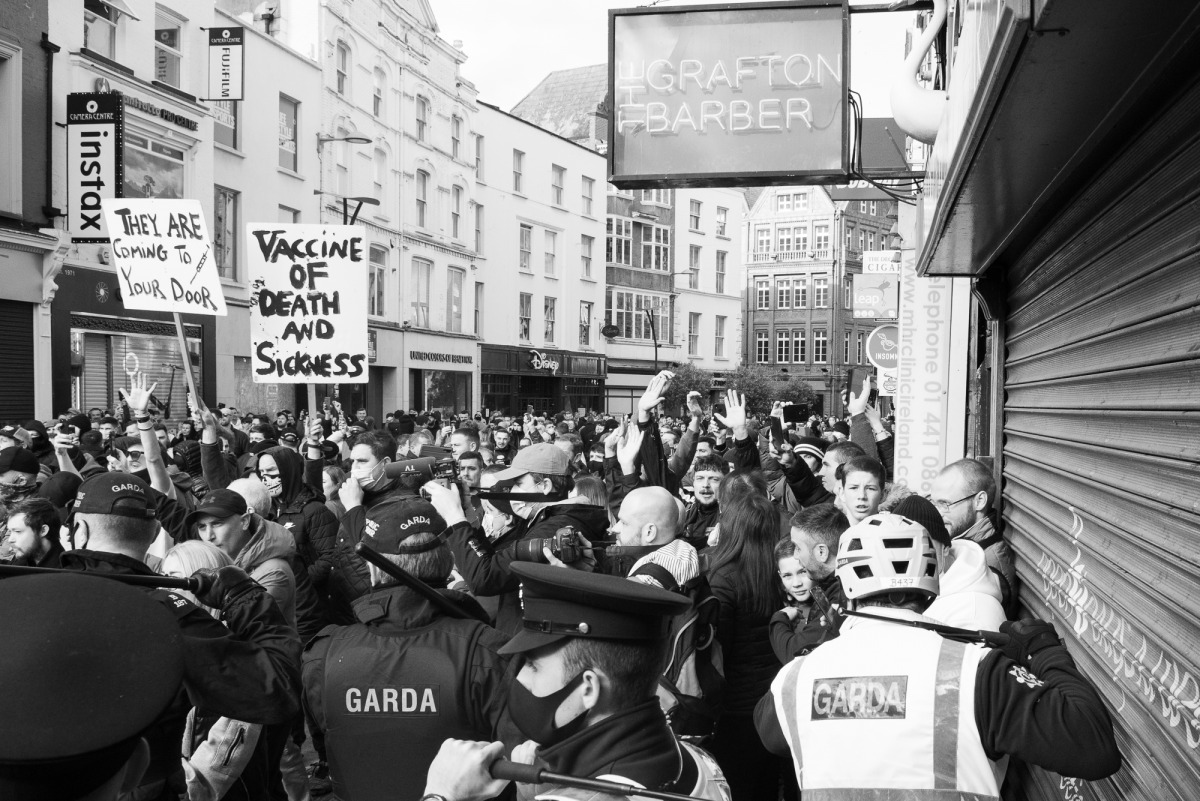
Even the Zero-Covid fanatics must have raised an eyebrow at policies that linked the transmissibility of a virus to the amount of money spent in a pub. The COVID-19 vaccines were, unequivocally, forced on non-vulnerable people throughout the pandemic. The levels of coercion applied in terms of mandates and passports was absolutely unprecedented. This was reinforced by the public vilification of any individual who dared to decline or expressed fears over taking the vaccine
There were many stark warnings of censure from the regulator (IMC) for any doctor in Ireland who failed in his or her “duty to follow and promote NPHET policy.”
Now that the dust has begun to settle, many people have come to recognise that the use of the word ‘vaccine’ to describe the COVID-19 jab, was (and is) problematic. COVID-19 ‘vaccines’ are, technically speaking, not vaccines in the traditional sense. They are pieces of genetic material (DNA, mRNA) that work in an entirely different manner to traditional vaccines. They are more correctly referred to as ‘gene therapy’ or ‘genetic vaccinations’ and prior to COVID-19 they had never been permitted for use in the general public.
Calling the injections ‘vaccinations’ from the outset, effectively (but rather deviously) attached this novel technology to all of the antecedent good that traditional sub-unit vaccines have accomplished throughout the centuries. Language is a powerful weapon.
As more people have had the time to look into the difference between a ‘Covid jab’ and a traditional vaccine, the ‘lie’ or at least the misappropriation of the term ‘vaccine’ has become increasingly apparent.
Two of the original four genetic vaccines (the two DNA vaccines) were quietly removed from circulation within the first few months of use. Although at the time the government declared (in an Orwellian way) that this was because they were in “short supply”. In truth, it had become clear that they were associated with significantly higher level of side effects than the mRNA type. This difference was not apparent to a frightened public during the pandemic, but more people are aware of that difference today, and that awareness is growing, in spite of the semantics.
One of the difficulties in respect of ‘the science’, ‘the facts’ or the ‘data’, during the pandemic, has been over problems with interpretation. For example: the meaning of a ‘Covid death’. Was that unfortunate death caused by COVID-19? Or was it an expected death in a very elderly person from pneumonia? Or someone who simply had a positive PCR test within the preceding two weeks? We must remember too that emergency COVID-19 funding for the nursing home sector was contingent on the reported number of COVID-19 cases.
Then there is the cycle threshold of the PCR test itself, detecting the presence of traces of the virus, as opposed to clinically relevant infections; and then plastering these dodgy ‘facts’ before a frightened public, day after day and night after night.
The overall effect of COVID-19 upon nations has invariably been described in terms of deaths per million. This metric was applied in spite of how COVID-19 mortality being overwhelmingly confined to over sixty-fives. Different countries have vastly different demographic structures, making the famous ‘deaths per million’ statistic, almost entirely irrelevant.
Many doctors tried to point these contrary facts out throughout the pandemic; all were silenced with anti-vax and even ‘right wing’ slurs. One GP was suspended and many more (including myself) were put on trial by the regulator and are awaiting sentencing. Therefore, it is important (to myself and my “anti-vax” colleagues) to unpack the accusation before we are also blamed by the regulator for the coming plague.
It may surprise people to learn that so far this season, between 18/9/23 and 16/01/2024, 82% of Ireland’s Healthcare Workers (including Doctors and Nurses) have NOT taken the COVID-19 vaccination booster.
If that is not bad enough, 64% of Healthcare Workers have not taken the influenza vaccine either, which is NOT a genetic vaccine. This is a truly shocking statistic as it would imply that the vast majority of healthcare workers, who are responsible for promoting and administering the COVID-19 and influenza vaccines, have not availed of either themselves.
Uptake of Autumn Booster & Seasonal Influenza doses by HSE HCWs since 18/09/2023 to 16/01/2024
In total 109,136 records for HSE HCWs were included in the analysis.
Overall Uptake • 19,843 received COVID-19 vaccine, an uptake of 18.2%
39,719 received influenza vaccine, an uptake of 36.4%
The fact that myself and several of my GP colleagues are presently being prosecuted by the regulator for being critical of what purports to be a ‘vaccine’, which is currently being avoided by 82% of our colleagues, tells a story in itself, one that is very political and very Eyrish.
In the nursing home sector, where those most vulnerable to death from COVID-19 currently reside, 22% of residents have not availed of the COVID-19 vaccine and 16% have not availed of the influenza vaccine. 82% of the workers who care for them have not been vaccinated against either.
If we were living in a democracy, as opposed to a corporate-ocracy, these figures would represent a resounding vote of ‘no confidence’ in any Minister. Silence in the mainstream media clearly shows (once again) who is actually paying the piper.
Unbelievable as it may seem, the situation becomes even more bleak (or ridiculous depending on your perspective) when one considers the current public health advice in respect of COVID-19 vaccines for children. The HSE’s website as of 06/02/24 outlines the following guidance:
Irish children over the age of six months are apparently in need of vaccination: ‘to give them protection against serious Covid-19 illness.’
Despite the scaremongering, many parents are now aware that this advice is tantamount to a ‘lie’, or at the very least, a gross exaggeration. It is vanishingly rare for COVID-19 to cause “serious illness” in children.
Most people are surely wondering why this misinformation continues? If the HSE cannot be trusted in respect of the COVID-19 vaccine advice, people may also wonder whether it can be trusted in respect of other vaccines.
What the above (HSE) table shows is that the uptake of COVID-19 vaccination this season for people between the ages of six months and fifty years of age is 2.8%, i.e., more than 97% of people in that age category have not availed of a COVID-19 vaccines this winter, in spite of HSE advice to do so.
The numbers become even more stark when one looks at the uptake in kids between twelve and seventeen: a mere 0.3%. As these figures are derived from 2022 census data the actual uptake is likely to be even lower, as the population has increased since 2022!
The salient point is that 82% of health care workers have thus far declined the vaccine, and 97% of those under the age of fifty have also declined it, while 99.7% of the parents of twelve to seventeen year olds. All of these ‘Anti-vaxers’ have declined, despite advice from the HSE. Now what does this say in respect of confidence in the advice from the Minister or the HSE?
I sincerely hope that most people are capable of distinguishing between advice as it pertains to COVID-19 vaccines, and advice that relates to tried and trusted vaccines included in the childhood immunisation programme. There can be no doubt in anyone’s mind that this resounding national rejection of HSE guidance by members of the general public, and by an overwhelming majority of healthcare workers, reflects a lack of confidence, which is bound to have an impact on the uptake of vaccines in general.
As alluded to, in the case of measles it merely takes a fall below 90-95% uptake of vaccines before herd immunity becomes ineffective at preventing outbreaks and even epidemics.
Excess Mortality
Another contributor to the current lack of confidence in the government’s health policies has been the recent emergence of OECD mortality analysis. Unlike the equivocation that might surround data points in respect of ‘cause of death’, ‘PCR cases’ and various other data sets, there is almost no equivocation surrounding mortality figures themselves.
Sadly, when someone dies, they are dead. There is little occasion for debate, confusion or obfuscation in that regard. The number of people who die in Ireland each year is a number that cannot really be interfered with by vested interests. Whilst there might be debate about cause and diagnosis, the date and occurrence of deaths are unequivocal.
Every year in Ireland c. 55,000 babies are born and approximately 32,000 people die. The numbers fluctuate a little in line with population increases etc., but the ‘death rate’ and the ‘birth rate’ generally remain the same. If the death rate increases unexpectedly, as one would expect following a disaster of some kind, like; an earthquake, a tsunami or a pandemic for example, the increase in deaths are then referred to as ‘excess mortality.’
For almost two straight years during the COVID-19-era, the Irish people were subjected to a nightly announcement on RTE news – ‘ringing out the dead’– pointing to the catastrophic daily loss of life that was occurring across the nation. To this day the official figure in respect of COVID-19 deaths stands at almost ten thousand.
One would think that a tragedy that has resulted in so much death will naturally register in respect of our mortality figures? That there will of course be a massive increase in excess mortality during the pandemic? The straight answer here is no! It seems there was no increase in excess mortality for the years 2020, 2021 and 2022. A truth that is fully accepted and even embraced by the government!
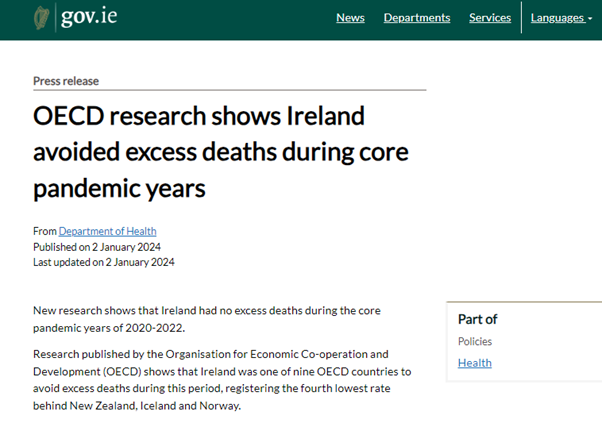
In 2023 the OECD analysed mortality figures in Ireland and elsewhere for the duration of the pandemic. They came to the conclusion that for the years 2020, 2021, and 2022 there was NO excess mortality in ireland, i.e. during the years of the pandemic there was no increase in the number of expected deaths.
An immediate reaction might be to assume that the OECD crowd are a bunch of ‘Plandemic’ conspiracy nuts! Perhaps they got something seriously wrong? Truth is that the OECD is one of the most credible sources of data on the planet. And yes, they did make all the appropriate calculations for an increase in the population due to immigration etc.
Remember, Ireland had a census in 2022, so they had the most up-to-date figures to hand. You can’t get a more accurate assessment than the OECD findings.
So where did the ten thousand COVID-19 deaths go? All of the reported deaths within the nursing home sector were real. I witnessed this myself as fourteen of my own nursing home patients died in the space of a couple of months.
Tragic as any death is, the majority in this case were part of the expected mortality in each given year, hastened by several months as a consequence of inept government policy. Most of the COVID-19 deaths that occurred outside the nursing home sector were recorded in people with a positive PCR test, as opposed to having died as a direct consequence of Covid-19.
The official figure of almost ten thousand deaths from COVID-19represents about a third of the total deaths one would expect to see in Ireland in a given year. Those deaths must surely have affected our mortality figures in some observable way? They did not because they were part of the (tragic) but entirely ‘normal’ number of deaths that Ireland experiences each year.
What the OECD figures tell quite clearly is that if the pandemic was not a “hoax” then its effect was systematically exaggerated. A claim that in spite of the figures, remains confined to the realm of conspiracy and far from any danger of a public inquiry.
So what does the Government have to say in respect of the OECD findings? For three long years we were informed that we were enduring the worst pandemic in living memory. Policies aimed at reducing loss of life cost the exchequer thirty billion euro for the first two years. Yet there was no excess loss of life and the ten thousand ‘COVID-19 deaths’ melt into the normal yearly mortality figures?
Obviously both positions are mutually exclusive: one cannot have a pandemic with ten thousand deaths and have no increase in excess mortality.
Unfortunately for the Government there is absolutely no point in trying to deny the OECD findings. So they decided to embrace warmly, gratuitously even, their analysis, asserting that the reason there had been no excess deaths was because of the “success” of government policies throughout the pandemic. Their response is only two pages long and I would urge everyone to read it in its entirety.
It is truly frightening in terms of the paucity of credit it extends to the intelligence of the Irish people. Minister Donnelly said:
Ireland asked a lot of its population during this time and the restrictions that were put in place had a profound impact on us all.
These figures point to the success of Ireland’s public health measures, and to the strong uptake of our COVID-19 vaccination programme.
Chief Medical Officer Professor Breda Smyth said:
The OECD Working Paper highlights some of the important caveats associated with previously published estimates on excess mortality during the core pandemic years.
The population in Ireland demonstrated a strong adherence to public health measures during this time, and Ireland’s COVID-19 vaccination programme has been one of the most successful in the world, with 96% of the adult population receiving their primary vaccinations.
We know that vaccines save lives, as well as preventing serious illness and hospitalisations.
COVID is still with us, and immunity wanes over time, so I would like to remind all those who are eligible to top up their protection with a COVID booster this winter, as well as keeping up to date with their flu vaccine.
The mysterious Cheshire cat-like presence and disappearance of ten thousand COVID-19 deaths is almost magical. It (the cat) appears when the Government wishes to justify lockdowns, vaccine passports and additional billions in expenditure. But in response to the OECD findings its voice is drowned out by a cacophony of self-praise.
The disappearance of excess mortality is explained by the public’s (96%) enthusiasm for a (effectively mandatory) vaccine. But wait a minute! If there were no excess deaths in 2020, and the vaccine did not arrive in Ireland until 2021, how could the vaccine possibly account for no excess deaths in 2020?
In fact, by February 2021 at the height of ‘the second wave’ a mere ten per cent of the population had been vaccinated. I doubt whether most people in Ireland are gullible enough to believe in vanishing cats, but I could be wrong. Certainly trust in journalism appears to have plummeted to just 40% according to a recent survey.
Interestingly, in respect of the OECD findings, there has been a real increase in mortality figures yet this only arrives after the pandemic, in 2023. Myself and many others attribute this ‘spike’ in excess deaths in 2023 to the palpable consequence of missed diagnoses, closed clinics and screening programmes during the lockdowns.
There is of course a growing school of thought that associates the increase in excess mortality in 2023 with side effects from the ‘vaccine’ itself. I am more sceptical on this account. However, it is a hypothesis that is difficult to dismiss out of hand.
Determining this issue is not helped by the barriers people face in trying to record a vaccine-related side-effect or death in Ireland. Beyond logging on to an obscure HPRA website and filling out a seven-page form, there is neither the observable means, nor any degree of encouragement, for doctors, or the general public, to report adverse reactions to the COVID-19 vaccines. Unlike a ‘COVID-19 death’, deaths that occurs within two weeks of a COVID-19 vaccine are not recorded as a ‘vaccine-related death’. In such cases the vaccine does not even get a mention.
The HSE are currently running a campaign informing people how to recognise a thrombosis (a recognised potential side effect of mRNA vaccines), yet there is not a single poster in a single medical office in the entire country that might explain how to record or report a side effect related to the vaccine itself.
I suspect that a growing number of people in Ireland are aware of the official misinformation in relation to COVID-19. Many of us understand that what occurred during the pandemic was based on lies and deception. The most immediate question we must attempt to answer is not whether we were lied to – that much is obvious – the real question is why? Who are the people who have profited from those lies? If we follow the chem-trails in the wake of the thirty billion euros where will this lead us?
Blame the regulator
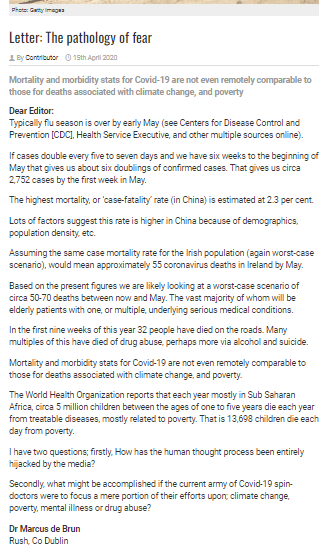
Four years ago on 15/04/2020, shortly after the arrival of COVID-19 in Ireland I published the above letter in the Irish Medical Times; a paper predominately read by Irish doctors. I tried to debunk the COVID-19 myth before it got off the ground, estimating a total of no more than fifty-five COVID-19 deaths for the first five months of 2020. It was the beginning of the end of my career in General Practice. I was pilloried and vilified[ by a small, but highly influential, clique, some of whom are the Taoiseach’s chums. The attacks were such that colleagues (with a few exceptions) who might have harboured similar suspicions, learned very quickly, to keep very quiet.
At the time a large payout for General Practice was unfolding before our eyes, beginning with a payment for each time we answered the telephone. In April, 2020, before the full extent of the neglect in the nursing homes had become apparent, I resigned from the Irish Medical Council in an attempt to highlight what was happening. My resignation was ignored by the Medical Council, who then lied to the media, saying that I had resigned for “personal reasons”.
It might seem petty to complain about the description, “for personal reasons”, but it was targeted to a specific audience of colleagues and journalists. My credibility as a doctor was being undermined. I was “not fit for purpose.” Thus, anything I might have to say on the issue of COVID-19 or nursing home deaths was tainted.
Shortly after my resignation, I was placed under investigation by the IMC and am presently awaiting a date for my fitness-to-practice hearing. One colleague Dr. Gerry Waters (a braver man than I) has already been suspended for calling the pandemic a ‘hoax’ right from the start. Myself and several others have been compelled to wait on the equivalent of a professional ‘death row’ for several years now.
I am probably somewhat biased in my conviction that the cause of professional compliance with an at times deadly and at times idiotic array of policies, lies with the regulator: the Irish Medical Council.
Numerous people complained to them throughout the pandemic about registered doctors (Holohan, Varadkar himself and many more), who were behind the policies. The Irish Medical Council answers directly to the Minister of Health. The word from the top was clearly that rebel doctors should be silenced.
At one point the head of the Irish College of General Practitioner’s was actively encouraging discrimination against those patients who had been unable or unwilling to take the vaccine. Several doctors and members of the public lodged complaints with the regulator in respect of policies and even overt discrimination, all of it was ignored:
Without exception, every single whistleblower, every single complaint in respect of medically registered policymakers, tendered to the regulator during the pandemic was completely ignored.
Should we see an inevitable rise in disease and deaths as a consequence of the current lack of confidence in HSE guidance, it is because we learned absolutely nothing from the Banking Crisis. We have not learned that crises in Ireland stem from the unfettered power of institutions, the friendship ties between those institutions; and the abject failure of regulators who are themselves in bed with those institutions.
Should there be an increase in mortality amongst our children, those deaths might not disappear quite as easily and as mysteriously as the Cheshire Cat.
Summer was winding to its natural end but the evenings were still warm in London as Michael Maybrick made his way on foot through a crowded Covent Garden on his way to Long Acre. He was immaculately dressed, wearing a black evening suit with a velvet bow tie, polished to the shine black shoes and a smart top hat. His moustache was trimmed to perfection and the rest of his face was freshly shaved, knowing this was to be an important meeting at the grand lodge. A pretty young prostitute approached him with a basket of flowers to disguise her intentions and offered him ‘relief from his hard day and trouble.’ He stopped and turned to greet her eye to eye. The face that glared out under the rim of the hat froze the young woman’s soul. His expression, as intense as it was vacant, sent a sudden shock of fear through her. She had the morbid sensation someone was laying flowers on her grave. He saw fear in her eyes and a smile cracked side to side on his lips. There was a malice lurking. He turned his head away without saying a word, and with a tap of his cane on the cobbles, disappeared into the London crowd. The woman looked down at her flowers disconcertedly as Maybrick performed a pirouette in a strange, uncoordinated way.
Maybrick was a musician by profession and was a well-respected member of his Masonic lodge. He was seen by his brethren as a decent sort of fellow but his brooding and melancholy moods had been commented upon. On one occasion he had struck a bell boy around the face for merely being late with his luggage. He had been rumoured about by some of his colleagues. “Given to fits of anger” was how one of his fellow Masons described him at a lodge meeting in Marylebone, a meeting at which Sir Charles Wheeler, the head of the Metropolitan police at that time, was present. It had been noted in the minutes.
When Maybrick reached the corner of Neal Street and Long Acre he stopped still. He reached into his pocket and pulled out his cigarette case on which was inscribed the letters “TALJ” and then placed it back in his pocket. He put a cigarette in his right hand with an empty box of matches. The case had been a gift from a fellow Mason of high ranking who was grooming him for promotion. He pushed the box open with his thumb and saw that there were no matches left. Again, as if the city were made for the thing, a pretty young woman on the street corner selling matches caught his eye. This time, as he watched her standing on the street corner watching the crowd go by, a cloud of hate itched under his black hat.
He approached her slowly from out of the shade of an awning and put his hand in his pocket to reach for a half penny. With his eyes obscured by the rim of his hat she handed him the box of matches and he put the coin in the palm of her hand. He gently folded her fingers back over the ha’penny so her hand was making a fist and clasped it between his large, strong hands. He began to squeeze her hand, gently at first, but then gradually harder. And then harder still.
“Please sir, no!” She said in a squeal as she tried to wriggle her hand free. He began to laugh and then let her go. He turned his back and then lit his thin cigar before making his way on. She looked for a policeman but to no avail. The London crowd milled along Long Acre, behaving as the London crowd always does, as if it were somehow immortal. It does what it does fearlessly and without worry of ends. Two thousand years is only the opening chapter. As long as humanity lives on this planet, there will be London, bathing in the dark and the light. As Maybrick was fond of saying “The pure soul lives in light, the eternal soul under night.”
He walked on with purpose, gripping his cane tight in a hand. He was riddled with nerves but as he approached the grand lodge he began to take hold of his emotions. He became endowed with a sense of reverence as he entered the building. Filled with fluxing passion he entered the great hall and slowly craned his head backward. He gazed upward at the all-seeing eye. They met each other in an unshakeable stare, back and forth from heaven to earth. The eye sat proudly and distinctly at the centre of the ceiling. Unblinking. He took his hat off and then craned his neck back further still and marvelled at the image for the thousandth time. His heart soared to see it. It was for the glory of God he lived, and through the lodge he had made a solemn vow to work most diligently for his glory. It would be his life’s work. In the stillness of the quiet, near empty chamber, he heard the voice of God speaking to him directly through the great all-seeing eye.
“Go forth and do my work.” Said the voice. “Obey my command and you shall live with me forever in glory.” The great booming words echoed around his head. Tears welled in his eyes. They fomented through his ecstasy dilating pupils giving an extra sparkle to their blackness. And then they changed. The joy in his eyes turned to fear and he trembled.
“Yes” he said, with a solemnity that brimmed with emotion. One of his brethren, who had been reading quietly on one of the pews, looked up and peered over the top of his reading glasses. He was a journalist at The Times called Graveney. He saw Maybrick in a trance like state, staring wild eyed, up at the image in the ceiling.
“I shall do thy bidding.” Said Maybrick softly, and the fear in his expression suddenly turned back to joy.
“Maybrick! Maybrick there!!” Shouted Graveney. Maybrick looked over at him with a start, as he was suddenly jolted from his trance. The dreamlike state of his aloneness with God, his state of grace, had been punctured.
“Everything alright Maybrick?” Asked Graveney.
“Yes. Quite alright” He replied, attempting calm. Graveney noticed the sweat on Maybrick’s brow. Maybrick discreetly wiped his forehead, regained his composure, and returned the hat to his head.
“Good fellow.” Said Graveney encouragingly, even though he was now tinged with suspicion. His brethren colleague was certainly acting in an odd manner, one certainly unaccustomed to the lodge. Maybrick nodded at him calmly and made his way to the study to prepare himself before that evening’s meeting began. As he went to leave, he turned to Graveney and said unexpectedly,
“Call me Jack.” He smiled, turned and walked away leaving Graveney in a state of slight discombobulation, and definite concern.
When the meeting was over and the brethren were milling about in idle conversation, Maybrick, without informing anyone there, left quietly and made his way clicking down the marble stairs to the back entrance of the Masonic head-quarters in Long Acre. It had begun to rain so he waited a while in the porch for an opportunity to hail a cab. By the end of a thin cigar the cab had arrived and the horses were whinnying in front of him. He opened the door and turned to the driver whose face was covered by a large hood that he wore to protect him from the downpour. Maybrick said one word at him. “Whitechapel.”
He shut the door behind him and pulled the curtain to, leaving just enough space that he could peer out at the street through the slit. The driver whipped the horses and soon there was nothing in Michael Maybrick’s head but the sound of the wheels and the hooves on the cobbles. It was as if he were void of consciousness. As they made their way east along the Roman road, the summer air began to turn foul.
Within the east end of London was the pitilessness of human existence manifest. The warren of streets were dark and labyrinthine. It was easy to disappear from sight. Maybrick placed his index finger gently on to the curtain and pulled it back slowly to give himself a better look. He saw two prostitutes talking on a street corner and a sudden volcanic surge of sexual energy coursed through his veins. He could feel his blood heating up in the furnace of his rage and supressed himself from crying out by putting his forearm firmly against his mouth to muffle his excitement. He bit into the arm of his coat hard as the ecstasy turned to euphoria.
Soon enough they had reached the east end as the pubs were shutting. The quiet of the city night approached. He tapped his cane hard three times on the roof of the cab and it came to a halt half way down the Commercial Road East. He was about to get out but the heavy rain changed his mind. He had somehow lost his nerve. He shouted to take him to the west end where he lived and told the driver he would tip him when they arrived. He looked at the women talking and then closed the curtain and then rested his head back with his eyes closed.
“Soon.” He said. And with a huge grin that exposed all his large rotting teeth and his blood red gums, and with his eyes as wide as could be, he sat there between his imagination and his reality, conjuring the future images of what he conceived to be the genius of his diabolical game.
———
Warm days passed by. Then on the 31st of August 1888 Maybrick left his house, and shut the door carefully behind him, humming the melody to a song he had written entitled “They All Love Jack.” Night had fallen but before long he hailed a cab and asked again to be taken to Whitechapel. The night was cloudless and there was no sign of rain. He looked at his pocket watch as the cab began to move. It was just after 11pm. He wore a long coat with deep pockets and about it a black cape and by his feet was a dark carpet bag. That night he wore a bowler hat which was tilted slightly forward. On the inside on his pocket watch was a depiction of the all-seeing eye and when he saw it he went into a kind of flux. His head began to shake softly and his eyes rolled back to a hypnotised state. “God’s work’ said the voice, “Gods work” again until a jolt of the cab’s wheel on an upturned cobble awoke him. He rubbed his face and lit a cigarette and then carefully, as he had done a few nights before, he pulled the curtain back an inch and looked out. If it wasn’t for the noise of the city he would have been able to hear the thumping of his heart. Adrenaline seeped through him, but then diminished, leaving him unfilled in the charging moment, the unrequited eroticism begging him towards the fire. Making sure the curtains were pulled shut he unsheathed one of the knives he was carrying, allowing himself for a moment to admire the sharpness of the glinting blade. He then put it back in its sheath and concealed it in the specially made pocket in the inside lining of his cloak.
When Maybrick arrived in Whitechapel it was just past midnight and the pubs were beginning to empty. “Hehe” he giggled in a mad way. The sound of his own laughter let off a madness in him that he boiled to repress, sinking his face into his hands and then scratching the back of his head with dug in nails. He rocked backwards and forwards a little. A sweat had began to form around the edges of his hair. His eyes were so dilated they were nearly totally black when he opened them. He got out of the cab and paid the driver, taking care to obscure his face. He thanked him and said goodbye. There was life sounding out of the various pubs and a few people milled around including a drunk, swaying on gin, holding on to a wall to keep himself upright.
Although the road was badly lit there was still enough light. Not like the side streets and back alleys that were lit by the stars and moon. A light that could be doused by the movement of clouds, plunging the back alleys and courts into pitch blackness. As he stepped down onto the cobbles a man walked past him with wild, incendiary eyes. The man’s name was Kosminski, one of the many immigrants that had arrived in east London, causing the city itself to swell. Maybrick had once commented that the east end was like a bloated abdomen. Rats and sewage festered. Conditions and sanitation in some places, especially the doss houses, were unfit for living, and the stench in places so bad, especially in summer, as to make an unsuspecting visitor retch. But London could cope, as it always has and always will, with change and misery.
The two men caught each-other’s eye. Their madness met in a fleeting glance. There was a sudden moment, as there is before fights, fuelled by adrenaline. But they turned their heads away from each other and there was no conflict. They had out-madded each other. Kominski carried on, muttering to himself as he walked down Commercial Road East and Maybrick carried on into the sullen heart of Whitechapel, to be among the night wanderers.
One of those night wanderers was a woman by the name of Mary Anne Nichols. She had been turned out of her lodgings and needed to go and make some money to pay for her bed. She said to the woman that ran the doss house “With me pretty bonnet I’ll soon get me doss money” and she left the place with her shawl wrapped tightly over her shoulders. She had been drinking that day and had a head full of booze but was compos mentis in terms of what she felt she had to do. She staggered a little when she walked but not too much. Almost an hour passed without her getting any business. As she slowly sobered up the night became quiet. The badly lit street where she waited offered no sound. It was almost half-way through the night when she smiled at the opportunity of her luck changing. Walking towards her across the empty road was a tall man with his hands in the pockets of his long dark cloak and with a bowler hat tilted forward. As he crossed the street towards Buck’s Row and to Mary, he said to himself in a controlled monotone way:
“All this I most solemnly, sincerely promise and swear, with a firm and steady resolution to perform the same, without any hesitation, myself, under no less penalty than that of having my body severed in two, my bowels taken from thence and burned to ashes, the ashes scattered before the four winds of heaven, that no more remembrance might be had of so vile and wicked a wretch as I would be, should I ever, knowingly, violate this my Master Mason’s obligation. So help me God, and keep me steadfast in the due performance of the same.”
This was a part of his Masonic oath. An oath to which his mad mind clung. By the time he was close enough to speak to her he had stopped speaking. She didn’t hear him say a word. When he arrived he stood two feet away from her and waited for her to make an offer.
“Hello kind sir. I’m hoping I can be of service. How do you like my new bonnet?” He lifted his head up and looked at her from under the rim of his hat. The moonlight caught his face. She looked back at him and paused as she registered his glare. In a fleeting moment she thought she may have seen some sadness there, some forlorn soul within. However, she was eager to get paid and back to her lodgings to sleep.
“Yes.” He said. Where can we go?”
“Just here by the gates. No one can see us.” She said. He followed her calmly into the darkness.
In Buck’s Row by the stable door she turned and faced him and they looked into each other’s eyes. She knew who he was. That is certain. As did the other four. The canonical five as they eventually came to be known. Including the ripper himself there are six people to know his identity for sure, six that we know of. To actually know his face and his eyes.
As they looked at each other and she put her hand in his belt he put his hand over her mouth and taking the large knife from his pocket slit her throat causing blood to spill onto his maniacal face. She tried to cry murder but he muffled her cries and she bled out as he began to slash and stab wildly at her if indeed making some crazed attempt to cleave her in two. He stabbed her vagina on purpose. For four minutes he cut and hacked, nearly salivating as the intensity of the moment started to dry the roof of his mouth. Four minutes that felt to his soulless soul like the release of a life-long prisoner, repressed and caged. The laughter had gone out of him, extinguishing some remnant goodness with every vicious slash of the knife. He shook violently as the life left her body. Looking up to the heavens he gave thanks. With his power over life he was now in direct communion with God.
He suddenly heard the sound of footsteps and dropped her lifeless cadaver to the floor where she fell with a thud. Her eyes remained open though she was now dead. The ripper fell back into the shadows. A man called Charles Cross walked up Buck’s Row on his way to the early shift at work. He was used to walking this street through the dark of the night and saw what at first he thought to be a discarded tarpaulin.
“A tarpaulin’ he said aloud as he came near, but the moonlight revealed something sinister.
“Oh Jesus” he said. The ripper heard him speak as he stood motionless in a pitch-black alcove with his back to the street less than fifteen feet away. Within a few moments another man named Robert Paul who was also on his way to work saw Cross standing there and curious at the scene approached, unaware of the grim spectacle that lay in store. Cross touched her face which was still warm with life but her hands were deathly cold. With her eyes open in the bad light there was some confusion between the two whether she was dead or merely unconscious.
“Let’s find a peeler” Said Paul to Cross “I’m late for work as it is.” This piece of information did not go unnoticed by the man in the shadows. He closed his eyes and concentrated intensely on his hearing. He listened to two pairs of feet making away, and when the sound had disappeared around the corner the ripper emerged from the blackness, ignoring the carnage he had made as he made his way swiftly in the opposite direction through the rabbit warren of Whitechapel’s streets which he had learned so intimately, making his way west on foot in the wake of the rising sun.
In the lodge of the Freemasons in Great Queen Street Sir Charles Wheeler sat with five other men, including Graveney who had witnessed Michael Maybrick’s bizarre trance like behaviour a few weeks before.
“Odd kind of fellow” said one man.
“But he is one of us.” Said another.
“And a fine musician I hear.” Wheeler sat pensively averting his eyes from the ceiling. Then he spoke.
“Don’t be troubled. It seems he was having an episode. Thank-you for informing me and I would be grateful if you could all monitor the situation and keep me informed of any developments. Both Maybrick and the Whitechapel murders. It’s possible……. they are connected. Remember, he is one of the brethren and for that he WILL receive our undivided loyalty. No matter what. Do I make myself clear?”
“On our honour.” They all replied to him in unison.
Wheeler learned of the second murder soon after it had occurred. Her name was Annie Chapman. The mutilation was even more vicious than the last and initial reports said the two murders were connected. But there were other pieces of information from the first report he received that perturbed him greatly. Things that may connect the murders to themselves. It was about her abdomen. It had been removed by the killer and placed over her shoulder. At once Wheeler thought of the Masonic oath. Then he thought of Maybrick. When the double murder occurred he had personally rushed to Whitechapel and had seen above the bloody apron of Catherine Eddowes the graffiti on the wall which ran ‘The Juwes are the men that will not be blamed for nothing.’ Wheeler had personally ordered the writing to be removed.
He suggested to himself it may have been coincidental, but he was in reality overwhelmed with doubt. But then he learned about the farthing coins that had been laid deliberately and ceremonially around the body. When Wheeler found this out a grim, unflexing look of despair came over his face. He immediately sent word to the commanding officers on the case and demanded that everyone with knowledge of this event must not tell a soul. Any details with Masonic connections must be excluded from the reports. Wheeler said specifically to those involved in the investigation, especially those who were in liaison with the press that the facts about the meticulous arrangement of the coins and the entrails being placed over the shoulder must be kept secret from the public as it might jeopardise the investigation.
That was the official line. In private, he recommended caution and vigilance to the brethren of the lodge concerning the Whitechapel murders and then disbanded the meeting. He sat alone that night looking out of the window brooding on the recent horrors. One thought obsessed him and one thought alone. If the killer was a Mason he would have the most solemn task of keeping these despicable events from in anyway tainting the brotherhoods good reputation. Again he thought of Maybrick. At first, each hour, then each minute, then each second until the whole business began to obsess his mind. Graveney, the journalist-Mason that worked on the Times said to Wheeler “If we can make the killer out to be a fool of some kind… the important thing is….. that we are in control. Perhaps I can invent a character for this murderer to live up to. Create some publicity. As a diversion. A crafted idiot, a dunce with a vicious soul. Something for the masses to wonder about. I can put them off the scent. It will be good for us in any event.” He smiled a broad smile. Wheeler looked at him and with a slight nod of his head, gave his tacit approval.
“But remember” said Wheeler “this is no cause of laughter.” Graveney knew as well as Wheeler that if news got out about the macabre nature of the carefully placed farthings, or the compasses that had been carved into the flesh of the victim, or indeed the fact that the small intestines had been placed over the right shoulder, then it may bring the eye of suspicion on their fellowship. It was this line of thinking that led him to his ingenious idea. He would create a character that would divert public scrutiny. They could benefit from the confusion. He would have to create someone stupid and semi-literate in their ways of thinking. If he made him a Cockney the East Enders might start bickering among themselves, and stoke the fires of suspicion. Then, in Whitechapel, they would need the police even more. They would seek protection. Their power would be upheld.
One night before the double murder Sir Charles Wheeler looked out of the window of his high office at the lodge down on to the west end street below and saw Michael Maybrick himself standing quite still on the other side of road, staring skywards into the night as he puffed away on a cigar that hung on his lips. Slowly Maybrick began to sway and then to the surprise of Wheeler began to dance slowly with his arm up as if he was doing a waltz with an invisible woman. Wheeler looked down at him from the high window noticing that rain was beginning to hit the pane. But that didn’t stop his dancing.
Graveney approached Wheeler and stood by him at the window with a blank sheet of paper in his hand. He looked down out of the window with his brethren friend and also witnessed the spectacle, the two of them looking down at the street in silence, through the rainy glass. Graveney turned and went over to the desk, leaving Wheeler by the window. He was unable to hide the smile of inspiration in his expression. Then he dipped his pen in the red ink pot that he had especially purchased and bent over the table as he began to write;
Dear Boss,
I keep on hearing the police have caught me but they wont fix me just yet. I have laughed when they look so clever and talk about being on the right track. That joke about Leather Apron gave me real fits. I am down on whores and I shant quit ripping them till I do get buckled. Grand work the last job was. I gave the lady no time to squeal. How can they catch me now. I love my work and want to start again. You will soon hear of me with my funny little games. I saved some of the proper red stuff in a ginger beer bottle over the last job to write with but it went thick like glue and I cant use it. Red ink is fit enough I hope ha. ha. The next job I do I shall clip the ladys ears off and send to the police officers just for jolly wouldn’t you. Keep this letter back till I do a bit more work, then give it out straight. My knife’s so nice and sharp I want to get to work right away if I get a chance. Good Luck. Yours truly Jack the Ripper
Dont mind me giving the trade name
PS Wasnt good enough to post this before I got all the red ink off my hands curse it. No luck yet. They say I’m a doctor now. ha ha[5]
When it was done he showed the letter to Wheeler who then called the most high ranking Masons into his office to share his proposal. When he finished reading the letter out loud to the brethren they cheered heartily. ‘Well done that man!’ Said one of the Mason’s.
“I will send it to the central news agency now, should take some of the heat off brother Maybrick.” They said to him “well done old chap” again and in celebration of Graveney’s moment of creativity Sir Charles Wheeler opened a bottle of Glenfiddich and began to pour. When their glasses were filled he went over to the window to close the curtains, and looking down on the street, noticed that Maybrick had gone.
Feature Image: Michael Maybrick (1841–1913), English composer and singer, best known under the pseudonym of Stephen Adams who composed “The Holy City“, one of the most popular religious songs in English.
I was 29, he was 72
We were building up a stone wall
That a Hereford bullock knocked
When trying to leap over
Our hands went for the same stone
Then both pulled back
I was embarrassed
That’s how he raised me
He said after 7 hours
‘Ah we will leave the rest till tomorrow’
I was shocked
It was the first time in my life
I heard him say such treasonous words
In the car on the way home
I realised that some day, within my lifetime
He was going to die on me
Leaving me unable to hold anything in my hands
Except cold dead stones