Blog

  • White Christmas

    Editor’s Note: Readers of a sensitive disposition may find aspects of this account of drug-taking and sex difficult to stomach, but we believe this is a story worth telling. Our mission is to provide a home for independent voices that inspire new thinking.

    *****

    I awake, into my usual morning of panic but today might be different. My first non-family Christmas. However festive, starting it is with booze first thing in Ireland, to pang off the alcoholism beyond in the making, it’s amazing in Northern California. I am so fortunate of the micro-climate of the Mission District here in San Francisco, and its extension to my locale of Bernal Heights. The tourist map doesn’t stretch as far as here, somewhat making me more of an authentic character in my adopted city,

    It is the ideal temperature for walking off a hangover.

    Third fag in the sun, having skulled a coffee, a beer, and sipping another of the latter in the pre-spring morning sunshine – I’m feeling pretty good all in all. It’s amazing how well you learn to ride out the cocaine heart failure in the making. I’m a lot tougher than I give myself credit for.

    Even that it gives you a nameable blight for these wretched feelings helps: you can blame it all on something rather than the general suffering of existence.

    A quick reboot of last night’s misadventure: the fuck buddy of sorts with odd strings dumped me again last night. She’s no doubt an attractive lady to anyone, but she’s more man than I’ll ever be. She’d mentioned the week or so previous, having a heavy period. I asked, “Are your hangovers not so much worse?” Legs spread, practically scratching her nuts, drinking neat whiskey, she cackled, cartoon-like fag hanging out of her mouth, ‘’Women are pussy’s’’.

    Our relationship, in its fast and loose umbrella, has more basis in a Jerry Springer omnibus than anything resembling love or how it’s sold. We’re short on domestic violence, as long as you don’t count hers on me, and I promise you, I bring it on myself. An uncivilized drinking partner that eats cunt like me is probably not without its charm.

    But don’t ever sit on my chest, rub one out till I break through the straps to devour the offerings, and expect me not to crack jokes. Assessment of the night before damage concludes with only Evelyn rightfully popping the dive bar lovers’ bubble.

    Until this morning, Christmas meant a tense mother slaving in the kitchen far too much, but refusing all help till she’s screaming, “No one helps her!” Similar to any bigger family meal, only exasperated by a dead god on this occasion. For reasons that make no sense to us secular, but we get dragged, come leap in, all the same.

    This is not isolated to this home economic task either. In all my youth and my on-and-off living with my parents, an always state of arrested development, I was never ever permitted to use the washing machine, even for my own clothes.

    Absorbing all this tension from my mother, about decades of meal times is likely where I have some flecks of an eating disorder to this day, which must be a riot to hear for anyone who can see my midriff.

    The walk to the house we were celebrating in was brief. I’d been primed along the quiet streets that Christmas, for the most part, doesn’t really happen here, something I was fairly excited about.

    I’d some brain fog to match the city fog that late morning. Or early afternoon for the non-living for the weekend types.

    This winter was some of the hottest San Francisco gets, but today I was feeling the icy fog it’s known for, outside of the Mission District. Cooling my perspiration compared to my morning ritual, all the seasons in a day here are much more pleasant than in Ireland.

    All folk present had a mostly infectious festivity, likely though, was that none of us had work to go to for at least a day. Before I know it, it’s dinner time with my adopted family of ragtag heroes. Each one of them seems to be plucked out of a collection of good guys, the wild aces that could have gone the other way and sometimes ended up villains.

    This food is so far beyond my class. There’s cheese in front of me that retails for fifty dollars, and it’s only the size of the coked-up wank wad I’d be creating right now were not I here.

    I finally get the don’t cut the cheese joke but my initial thought is: “This smells like anal and I’m not convinced I want to be a part of it.”

    The crackers alone cost more than I’d spend on food in a given day.

    I got a great cop-out of what to bring to dinner, myself, and my primary guide-come shaman of the whole adventure, split the cost of the prime rib along with his brother, another home economically challenged come-lazy soul.

    With it’s roasting someone else’s responsibility, my sole responsibility to myself or anyone was not to drink so much that I couldn’t eat sufficiently. And I failed.

    I ate, sure, I even didn’t start the morning wrenching from alcohol poisoning – that being the common way to spoil this day, but I didn’t sufficiently consume my favourite meal of the year all the same.

    Me and Evelyn, the cheesy proprietor, exchange many an awkwardness in the run-up to our first chat of the day. I felt her pity for me made it challenging to tell me to feck off as harshly as I needed to hear, or her say it. I am like a puppy who needs a boot, but we don’t because of compassionate society and all that wank that will lead to China ruling us all.

    The booze pours festively and rapidly it becomes a whiter Christmas than I’ve ever known. I had nearly no experience with Peruvian powders two months ago now I’m hitting it with the power and comedy of a staged drunk on reality TV.

    You know you’ve a problem when the most degenerate drug user you’ve known the Christian name of says: “Jesus, O’Dowd! Go easy on the sneachta!”

    All my co-workers, and even suppliers, were Mexican so maybe I was Jeh-sus O Dowd

    ***BLACK***

    Around 18 hours later my investigative skills found me suddenly in a bad, bad dive bar. A menacing, not affectionately labelled dive. My resurface into consciousness is like coming up on psychedelics. But I’m by no means psychotic.

    I’ve an odd if valuable ability to for the most part know what’s real and isn’t, even when experiencing lots of unreal. Things here have a melted quality. Fortunate of my previous jaunts to this bar, I knew already it had a Lynchian, “between dream and nightmare” feeling to it mostly caused by how fucked up you have to be called to the district’s only 6 am opening bar.

    Cheese trader Evelyn is back and forth at the bar with a dealer trying to work herself up to the purchase. Women like foreplay. Men like a job done.

    I smack my glass hard on the bar, spilling it down to my hands about the base making a mess: “Mr barman sir, who sells sneachta in here?”, stressing a H sound like my Sligonian heritage demands of me.

    He smiles, like one does at a moron, and nods to some gentlemen playing pool. Remember those red and blue gangs who were all the rage in the 90s? Well, these were the reds, or at least pretending to be.

    The meaner looking of the two with the facial artwork brought me into the toilets, then the cubicle for the exchange. This was commonplace. I believe there must be a legality in no one actually witnessing the exchange.

    Even if everyone knows exactly what’s happening behind 35mm of chipboard, flashed with hospital baby blue laminate, certainly bought for a bargain. I request, with a combination of question, statement, and just general Celtic mangling of Germanic sentence structure: “Does he do 50 bags?”

    He appears amused by the utter shambles before him. He has the sorely required zip lock, out in a moment, while I’m pulling fistfuls of every denomination of US dollar out of every crevice I am aware of having on my person. I must flash 300 plus dollars in front of him.

    You’d be wrong to assume I was flush. This had to last me almost another month till my flight home. Why the hell didn’t he rob me? What sort of opportunist, outside the law, is he?

    He’s the reason China is our future dominant global power but bless his tear-drop tattoo heart all the same. Or maybe he cherishes this date more traditionally than I do. As I step out my dear friend Fionn steps right in. Evelyn looks rather peeved at this.

    ***BLACK***

    It’s suddenly many hours later, I’m in an Irish bar I know, but not this messed up. Certainly when I’m pretty sure there’s daylight out those windows. In all the years of it, I’ve never felt as scummy as being really impaired during daylight.

    There’s possibly latent Catholic guilt that I shouldn’t enjoy myself till all childer are in bed. Everyone present is new excluding Evelyn. Everyone including Evelyn is knee-slapping at whatever I am uttering.

    I can surmise she is her variant of back into me again, a token nod of hand deep in my inner thigh. It, however, would be a Christmas miracle for me to make any use of that scenario with the Colombian blizzard I have been battling through.

    ***BLACK***

    Some incalculable time later. We’re as naked as the bed, with no sheets, pillows, duvet, or comforter (when in Rome), about us. Illuminated by street lights coming in the window like a synthetic moon, all of our phones are dead, including my burner brick which I thought was immortal till now.

    Even the clock is dead. Is this a nightmare? She is freaked. You ought to be in your own gaff in this confusion, let alone next to me again. Why is the hair dryer broken in this room rather than working in the bathroom? Why does the house smell of piss? Why are our clothes all over the flat? Why is the shower broken?

    All I can do is offer to look at the shower and realise. I am not a man. I masquerade as a man, but I am no man. The last thing I fixed was a VCR which must have been in the 90s.

    She’s overdone now. This is too much for anyone without a lashing of “Mother’s Little Helper” to counter whatever chemicals we’re out of. She takes charge.

    “My folks are away,” she states, “we’ll go there and watch cable till we can handle the situation.”

    Pack up and go down the stairs to realise, she doesn’t have her keys, and she doesn’t know whose she has instead. We’re too distraught to deal with any of this. She’s going to have to replace both hers and her folk’s locks. For the second time. This winter.

    But these others obtained along the way are really getting her briefs in a braid. We decided to order a Chinese and survive one more day. This was the first, truly, deeply, menacing come-down I had experienced here. The first that mirrored true depression to the point I feared I might actually be depressed.

    Many friends, come-corrupted acquaintances, have asked me how I can hit, and hard, the class A narcotics when I suffer from a “medication for the rest of my days”, mood disorder. It’s nothing on real depression.

    You still have enough introspection, even after the unholiest binge, to know that this too shall pass. You don’t get that luxury with the real thing.

    With the genuine darkness reigning down on you, the best bargaining you can do with yourself is “this too shall pass.” With a firmer, maybe, “you fight”, entering your head. But even with manageable bouts of the garden varieties of utter despair, it will come back again. And again. Like Terminator sequels.

    It never truly goes away, it just leaves you for a holiday. This experience was that traumatic, we should have been soul mates after this. Alas, we’re not even friends who share memes

    I meet Fionn, the big spender, soon after for drinks. He seemed plenty chirpy till we began to converse in our cubby. I tell him how little I remember in a jovial way. His gate takes a shift downward. Around his eyes grows black, and baggy, skin turning jaundiced in pigmentation, losing elasticity.

    His voice cackles with a poor handle on his life. “You don’t remember, do you? Fuck you don’t!”

    Once we purchased our narcotics in the twisted dive bar, sometime the morning after Xmas dinner, we’re not so sure, we went out on the somewhat busy street to consume them with pinches and keys. Away in our world together we are shot back into the real world where the war on drugs is very, scarily, real.

    And suddenly, I too recall at least this brief window of time. Siren’s tear through the, I wish, night. Blue and red bounce about the nearer buildings Fionn pelts back into the bar in fits of internal shrieking. Chucks his big spender 100 bag under a stool, and hops on a chair in the farthest corner, knees to chest rocking and now audibly panicking.

    “Oh fuck I’m going to prison, I’ll never meet my daughter!”

    “Oh fuck, Brian is definitely going to prison, they’ll never stop raping him!”

    And I return to the busy bar to loudly proclaim,

    “FUCK ME THAT’S GOOD SNEACHTA!”

    Later that very night I got home and Evelyn called to fill me in on her recovered memories since we parted ways after the Chinese.

    Kenneth had rung her to apologise and tell her he was paying for a new mattress and whatever else, and it had all flooded back to her. More of a trickle for me.

    Deep in the darkness, engulfed in the memory bank, a mini party kicked off at hers at some stage, and Kenneth was put to bed as we went off gallivanting into whatever time of day it was. When we returned sometime later, Kenneth had pissed her bed and was trying to dry his jeans with the hair dryer. He burnt it out, trying to hurry through our giggles.

    When he left we had a deep meaningful conversation, which she thought would be better not to bring up, stated with a tone that meant never. I performed an act of great kindness on her there in the living area before bed, like the gentleman I am, and off to bed we go. But she can’t relax in the piss-soaked sheets, so we strip the bed and proceed to have sex in the shower

    Naturally, we break the shower, in what could only be awful, uncoordinated, glamourless, aqua-bonking. And the mystery of the keys is solved. Kenneth’s wife and Evelyn were powdering their noses in the deviant little girl’s room, and each of their keys wound up in the others’ bags. No need to change security systems after all!

    Nollaig bán shona dhaoibh

    Feature Image: Swing near the top of Bernal Heights Park, looking east.

  • Fiction: Yer Man

    Inside the castle’s gift shop stood White, reading the biography of the artist whose work was on exhibit. She was not a local. White had expected as much. It was often the case. Arts councils promote the work of foreign writers and artists, liminal beings that they are.

    Yes, I mean, why else would they have done it? Artists are, after all, liminal beings forever inhabiting society’s margins, and that is why so many among their number are consigned to travel abroad. Even on foreign shores their natural domain is to live out on the perimeter. So to be permanently precarious, is in a sense, an ontological grounding for them, of sorts.

    The work on display was surprising and novel, he thought. Artistic tropes were being explored in both complex and perhaps popular ways. A Bacchic display of human like heads whose hair had been transformed into great tresses of grapes at once reminded him of those chiseled river gods which adorned so many public buildings and bridges in the inner city, or humorous reworkings of the once risqué Sheela na gig, now easily hung on the walls of someone’s room. But whose?

    No, there was something not quite right there. White considered the surrounding geography, the demographics of the local populace. What used to be thought of as middle class couples;  a dying breed that were the glue cementing a working class on one end to the rich on another.

    How were they immediately indentifiable, the middle class? Typically, two cars. The drive- way foregoing any semblance of lawn or front garden as now the mortgage payments to maintain a three-bedroom plaster board edifice made it imperative that both parents work. Which meant two cars despite one’s carbon footprint on the environment. What an utter sham, and it had happened almost overnight. The newspapers had just announced an average cost now for these three-bedroom abodes was over half a million euros.

    White couldn’t afford one and he was convinced that this was one of the reasons why his father had only ever stepped foot in his place once during the last decade, out of shame. Although, unless pressed on a drunken night, he would never dare admit to it.

    Appearances were everything. Post-colonial societies were a bloody nightmare. The REP was no different. REP was White’s name for The Republic of Ireland, which was such a fucking mouthful, that if you uttered the phrase it was as if your mouth was overflowing with snot and phlegm.

    The elderly woman behind the gift shop’s small counter remained on the phone. White hung about now just trying to get a bit of information on the whereabouts of a local writer’s group he had once been a part of, so many years ago. Well, being a part of was perhaps too strong a word for it. White had long since ceased being a joiner. He was the most liminal of them all.

    A stroll might reveal if there was any indication at all of the existence of the writer’s group to be found in the shop. He had already checked the walls in the hall leading into the café but to no avail. Then, hovering by the counter, he noticed a few paperbacks placed on a corner table by an entrance leading into the castle itself. Sure enough, he found what he had been looking for. Two titles were by members of the writers group. One was a local who had been a tradesman all his life in the inner city who upon retirement had moved out to Sker to settle down in a three-bedroom house built in the nineties. An older housing estate to the one where White lived.

    John Freed was the man’s name. White had met him about a decade ago when attending the writer’s group one Saturday morning. John was almost mono-syllabic at the time, but that was what was attractive about him back then. Now, emboldened by so many open mic sessions, and with the latest coup of finally getting a book out, John had left behind his former persona filled with quiet reticence and smouldering frustration, a rather charming cocktail White had thought, only to replace the former qualities with a newfound confidence and stupidity that filled White with despair.

    What is it about society these days? he thought. Everyone’s a poet or an artist. You would see it on their LinkedIn accounts; Profession: Poet at Writer. How many poets actually made a living from writing poetry? With six published collections behind him, White wouldn’t put Poet as his profession. In thirty years of writing, he had earned about six thousand euros. In all that time.

    White felt the furies coming on, so he made for the door of the gift shop and got the fuck out. Far as he could away from that place. Anything might set him off.

    On the way, he would message John and ask him about the possibility of a gig. He was going up to the castle on a regular basis now, particularly as he was using the rose garden in the castle grounds as a centre-piece, in a sense, to the new novel that he was working on. So, it made perfect sense to reach out and enquire about facilitating a reading or a workshop of some kind. Readings and workshops! Hardly were the words out of his mouth and he was again driven to the depths of despair. Christ, but what a god-awful fucking society they had become!

    Looking downhill on the whole surrounding territory before him, White sent a brief message to Freed enquiring about the possibility of a reading followed by a workshop or something and a nominal fee of fifty euro or so. Should he invite Freed out for a drink down in the bill local where they both used to read together? White liked Freed, as a person. He simply hated what he had become and this was more a societal thing as Freed was just caught up in it all.

    White’s iPhone addiction was getting to the point that he would find himself either reading texts or making audio messages while he was out in the middle of one of his hikes. But now he stopped on the pathway that interrupted the flow of the descent. The view was simply overwhelming if you actually took the time to take it in.

    His surroundings went back to the mid-seventeenth century. A main house and an estate which had been cleared of woodland. But the castle itself had really only come into its own at the beginning of the eighteenth century and then was further developed in the early 19th. It was easy to imagine, White reflected, looking around him at the great expanse of sea before him. The little harbour floating illusory upon the waves of sometime mercury only to be replaced by emeralds and aquamarine when the sunlight danced upon it. Sker’s own micro-climate could be summer-like which White was experiencing just now, only for the skies to suddenly cloud, and he would beat a retreat back into the woods from whence he came.

    Yes, it was very easy to think back to the early 19th century, the time of Jane Austen and Napoleon. Or Ludwig van Beethoven, who White once listened to for years on an old Walkman. Until that ancient machine finally gave up the ghost. It had been a kind of statement. His stubborn refusal to use Spotify. Somehow, playing compact discs, which he carried around in a special satchel, allowed him to keep connected to the eighties and nineties, to a mythical past when he had attained his apex.

    Now, most certainly, he was in the grips of irreversible decline, which was fine. One could not reverse the inevitable. That would be folly. Acceptance then? Nay! Embrace, rather. One had to embrace one’s age. One’s own and also that age into which one was born.

    Besides, White thought, it had all really started, his decline, in his early thirties. That had been the start of it. Age thirty-three to be precise. The age of Christ! What a fucking joke. It was too rich really, but then, life had always been surprising and rich in irony. White recommenced his walk. The slow decent of the hill sped him gently on his way. Freed had responded by a thumbs up. Detestable habit. What a cunt, White thought, laughing to himself through the almost audible strains of the Eroica booming again in his ears.


  • False Prophecy

    Imaginative fiction offers invaluable insights into everything from national characteristics to institutional malaise and pathological violence. The musings of psychologists, philosophers and historians often appear clumsy and verbose beside the epiphanies that flow from the creative hand. Thus, the visions of long dead novelists continue to colour our understanding of who we are, and where we’re heading.

    We can draw a distinction between imaginative fiction and the fantasy genre. The latter according to Iain McGilchrist ‘merely recombines what we are already familiar with in a new way,’[i] (p.340) whereas works of imagination bring new experiences into being. ‘A defining quality of the artistic process’ he argues ‘is its implacable opposition to the inauthentic.’[ii]

    Authenticity should be distinguished from realism. Mythology and indeed allegory – as in the The Lord of the Rings – are distinct from fantasy. A myth is not a lie, as many, including our Taoiseach, seem to assume. Rather, as Northrop Frye put it: ‘It is obvious that the world we want to live in is mythological. That is, the world we construct is built to the model of a common social vision produced by the imagination.’[iii]

    Besides a lack of authenticity, fantasy does not reveal a common social vision. Usually, it aims at entertainment – a gripping thriller for example – often featuring cardboard cut-out characters representing a particular virtue or vice. At worst, we find simplistic manifestations of good and evil in a synthetic world.

    This review explores whether Paul Lynch’s Booker Prize-winning novel, Prophet Song (One World, London, 2023) belongs to the genre of fantasy. My motivation is to assess the artistic value of a recipient of a prestigious prize, and further examine why such an accolade might have been bestowed.

    Successively Increasing Violence

    The novel charts the struggles of a middle-class Irish family – seen mostly through the eyes of the mother Eilish – living under a far-right, fascist and, according to the headline writer in the Irish Times, totalitarian regime inhabiting what is recognisably Dublin. Here, constitutional rights no longer apply, and a malevolent Garda Síochana are imprisoning, without trial, opponents of a government we learn little about.

    Members of the family are subjected to successively increasing levels of violence perpetrated by agents of the state, beginning with the arrest of the father of the house Larry, a mild-mannered trade unionist. It is certainly not fantastical to assume that a trade unionist would be targeted by a fascist regime. During the 1930s many were imprisoned and sent to Concentration Camps in Nazi Germany, but especially under Mussolini in Italy ‘many even held key posts.’

    A more subtle, and perhaps credible, account could have explored how a fascist regime co-opts individuals in positions such as that occupied by Larry – or even Eilish, a scientist working for a bio-tech firm. Larry does not appear to hold particularly radical views. He comes from the same background as an interrogating Garda, who he claims to have played GAA against while in UCD (p.9). Foregrounding the character of a trade unionist seems like a device allowing the author to proceed with his gory account.

    Thus, we find police with batons ‘beating the marchers into grovelling shapes’ (p.30); ‘talk of internment camps in the Curragh (p.36); journalists being imprisoned (p.36); government control of the judiciary (p.58); and unmarked cars pulling up silently to lift people off the street (p.76).

    What is seriously lacking in the novel, however, is any attempt to portray the insidious soft power of a fascist regime, which historically appealed to a bourgeois desire for stability and prosperity. Subtle forms of this were evident under Salazar in Portugal, who demanded that literary works observe ‘certain limitations,’ and embrace guidelines defined by the New State’s ‘moral and patriotic principle.’

    Further, Nazi Germany’s Minister of Propaganda Josef Goebbels saw maintaining a feel-good factor as the essential role of propaganda. He did not want even der Fuhrer to appear in cinema news reels, believing that a subservient people should not be over-exposed to politics. Although conditions did worsen dramatically in Nazi Germany after the invasion of the Soviet Union in 1941, throughout much of their rule the Nazis maintained high living standards, only inflicting extreme cruelty on minorities and ideological opponents among the German people.

    In contrast, Prophet Song portrays a cascade of violence carried out by agents of the state in public spaces, alongside a rapidly failing economy, where food commodities run scarce. This culminates in what seems to be the wanton murder of the adolescent child Bailey: ‘The skin before her clouded with bruising, the missing and broken teeth… nails torn from his hands and feet … a drill through the front of his knee… the cigarette burns along the torso’ (p.272). The purpose of this horrifying sequence is unclear. Perhaps it reflects the author’s dark broodings on the latent malevolence of the human condition. Later, revealingly, we are informed that insurgents are ‘just as bad as the regime. (p.206)’

    True believers, such as Mrs Stamp (the wife of the nominatively determined Garda Stamp), are colourless stooges, while Eilish’s new boss, the Teutonic-sounding Paul Feisner speaks ‘not the company speak but the cant of the party, about an age of change and reformation, an evolution of the national spirit, of dominion leading into expansion.’ (p.71) These are formulaic utterances, anachronistically recalling the 1930s. However, we find none of the magnetic charisma we might expect in a fascist leader, or the stored-up resentment and scapegoating that fuel their rise.

    At best, we have Larry telling Eilish that ‘the NAP is trying to change what you and I call reality, they want to muddy it like water, if you say one thing is another thing and say it enough times, then it must be so (p.20). But we can only wonder why anyone would accept such lies. There is no evidence of the infectious cynicism that Hannah Arendt observes in The Origins of Totalitarianism (1951):

    The totalitarian mass leaders based their propaganda on the correct psychological assumption that, under such conditions, one could make people believe the most fantastic statements one day, and trust that if the next day they were given irrefutable proof of their falsehood, they would take refuge in cynicism; instead of deserting the leaders who had lied to them, they would protest that they had known all along that the statement was a lie and would admire the leaders for their tactical cleverness.

    Ignorant Savages

    Supporters of the regime are portrayed as ignorant savages: ‘tattoos emblazoning arms and throat … the man bringing down a bat upon the windscreen … [he] takes out his sex and urinates on the car, the apish laughing teeth as the man zips up and jumps down the gravel (p.139); who are barely literate: ‘the word TRAITER sprayed again and again in red paint.’

    Thus, we find support for the regime emanating from unfortunate people at the bottom of the social ladder: ‘Two civilians are helping to build the checkpoint and she knows one of them, an odd-jobs man from the flats nearby, an ex-junkie with hardly a tooth in his mouth.’ (p.187)

    There are suggestions that those in power are targeting minorities – such as when we learn that a certain Rohit Singh has been arrested – but no account is offered from the perspective of any minority group. A novel should not be an exercise in empowerment, but the prevailing cultural homogeneity in Prophet Song hardly diminishes the deadness of this account.

    There are also apparent endorsements of an Irish economic model that produces galloping growth rates amidst a housing crisis and rampant homelessness. A sign, therefore, of the country’s decline in the novel is where ‘every day another international firm closes its doors and makes its excuses’. (p.124) We must assume the presence of multinational corporations in Ireland is ipso facto a good thing, rather than underlying the development of a two-tier society, now generating serious social cleavages.

    There are nods to contemporary concerns, such as when Larry points to the ceiling and warns his wife to keep her voice down (p.5), but the characters rarely appear concerned about creeping surveillance, as violence is largely inflicted in random fashion.

    Raqqa, Syria.

    Depicting Another Country?

    Prophet Song is a novel that seems better suited to the depiction of a post-colonial country, where a distinct ethnic or religious group has assumed control over the levers of power and monopolises violence in a divided society. It might have been written about Syria, where army and state have long been dominated by a distinct religious group.

    It provides no insight into the insidious means by which a fascist government could take power in Ireland. The regime is a resident evil inflicting at times wanton suffering. Any such government would surely only appeal to the most base or desperate. This may reflect the author’s assessment of the human condition, but even if we accept there is a murderer in us all, it is surely incumbent on a fictional account to demonstrate how any diabolic metamorphosis occurs. Here the main characters are simply victims. In the absence of authenticity or a common social vision it should be consigned to the fantasy genre.

    I do wonder why the novel has received critical acclaim, and the accolade of a Booker Prize? Aside from a general neoliberal degeneracy now infecting most cultural organisations that place a higher premium on sales potential than artistic expression, the best explanation I can think of is that it reflects, and arguably exploits, the anxieties of the British cultural establishment in the wake of Brexit and Trump, making it ‘crucial reading according to the The Guardian.

    Essentially, it is a politically correct thriller ungrounded in political reality. Contrary to the feverish headlines, the November Dublin riot can be traced to decades of government neglect of the inner city; sporadic attacks on refugee housing do not reveal a broad-based political movement on the brink of power in Ireland. Perhaps the panel of Booker judges are oblivious to how – unlike many European countries – Ireland has not seen an upsurge in support for far-right parties. Even to suggest that we face the prospect of fascist, totalitarian governments across Europe stretches credulity.

    With shifts in technology, contemporary forms of totalitarianism may be very different to what we have witnessed in the past, which is not to dismiss the relevance of dystopian prophecies such as Alduous Huxley’s Brave New World (1931) and George Orwell’s Animal Farm (1945) and 1984 (1949). Sadly, Prophet Song offers no such timeless lessons.

    Why does any of this matter? In an interview in 1994 Harold Bloom argued that what he described as a school of resentment had destroyed the art of reading, marginalising three thousand years of imaginative literature. He added ominously that if shallow authors are promoted for political reasons you will not augment memory or cause the mind to grow and that ultimately this would impoverish our imaginations.

    [i] Iain McGilchrist, The Master and his Emissary (Yale, 2009), p.341

    [ii] Ibid, p.374

    [iii] Northrop Frye, Spiritus Mundi – Essays on Literary, Myth and Society, (Indiana University Press, 1976), p.89

    Feature Image: The Devil whispers to the Antichrist; detail from Sermons and Deeds of the Antichrist, Luca Signorelli, 1501, Orvieto Cathedral.

  • Poem – ‘Psalm’

    Psalm

    The light and the wind on the water these wild winter days are breath of it
    The cardinal sun below cumulus flaring up skybeams a pulse
    Gathers the gloom but high in the east celestial moon unhides behind heart-racing clouds
    All in the arms of physics and this is heaven we are blessed to happen in

    Feature Image: Daniele Idini

  • My Team / Your Team

    In the first part of his essay concerning his enduring lifelong fandom of Manchester City FC, and the club’s current owners’ wealth vis-á-vis his left-wing politics, Desmond Traynor recounts his origin story as a supporter of the club, and offers a critique of the Irish soccer commentariat’s biased attitude to City’s success.

    After many years in which the world has afforded me many experiences, what I know most surely in the long run about morality and obligations, I owe to football.
    Albert Camus, article in Racing Universitaire Algerios club’s alumni magazine (1957)

    Looking back, I can see that my attraction in starting to support Manchester City F.C. in 1968, at the age of seven, was perhaps the first indication of a budding contrarianism. Not that I had enough self-consciousness at the time to recognise it as such. What is interesting about certain decisions one makes as a child, adolescent, and even as a young adult, is that they are usually made prior to one having the full story, about oneself or others, or in general about this thing we call Life – if, indeed we ever get the full story. They tend to be instinctual, or even pre-cognitive, and so revealing of particular bedrock character traits in a still-forming personality. However, lest we kick off on the wrong foot, please note that I have not bestowed this questionable epithet on myself; rather, it has been attached to me by others. I do not necessarily think of myself as a contrarian, or even contrary. I just like different things than other people do, or have different reasons for liking the same things that other people also like. Which, obviously, could be said of anyone else’s idiosyncratic likes and dislikes. It’s called Taste, and there is no accounting for it – good or bad.

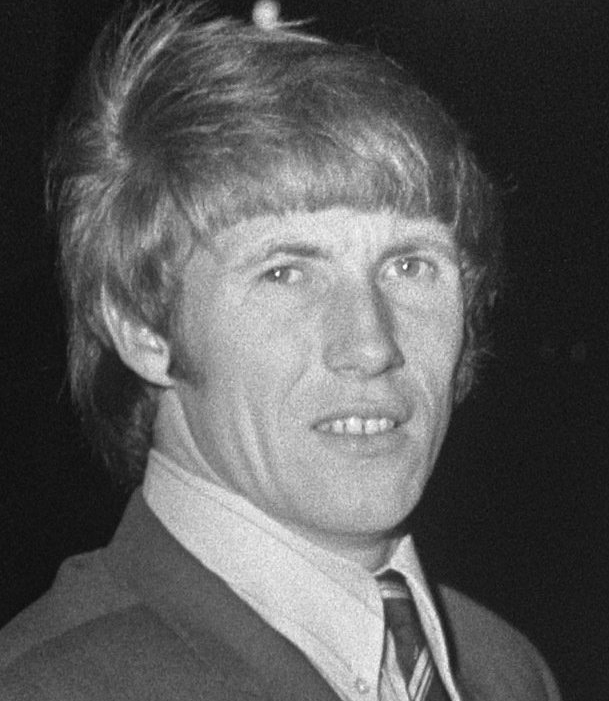
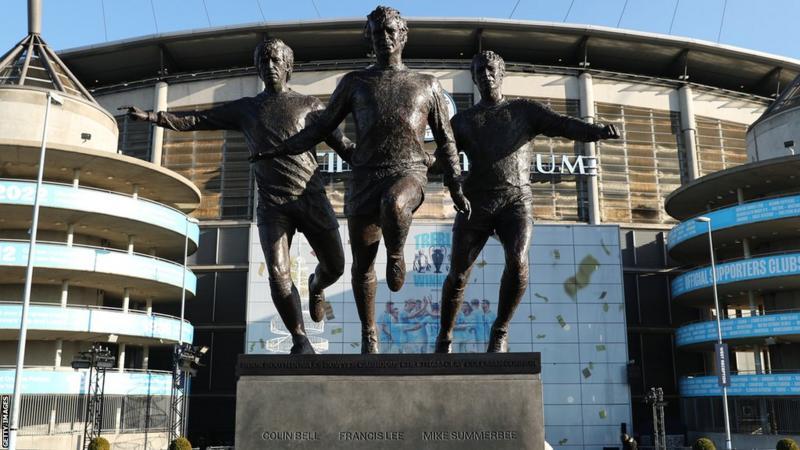
    The origin story runs like this: 1968 was the year Manchester United won the European Cup, and almost everyone in Ireland who was not already a fan of that club became one. They captured the floating voters. I thought to myself: ‘Screw this for a game of soldiers, I’ll be a Manchester City fan’. This was not merely, or only, evidence of a latent, wilful desire to be atypical or antagonistic, or the product of a childish caprice: we had a good side then, and won the League that same year, the F.A. Cup the following season, and the European Cup Winners’ Cup and the League Cup in the 1969/70 campaign. The team was full of gifted players, heroes whose magical names rolled off the tongue, which still resonate today (among City fans, at any rate): Francis Lee, Mike Summerbee, Neil Young (no, not that one!), Tony Book, Joe Corrigan. Best of all was Colin Bell, one of the greatest midfield playmakers England has ever produced. Shrewd, languid, possessed of incredible stamina (his nickname was Nijinsky – after the racehorse, although ballet dancers require considerable stamina too), he could run box to box, but he didn’t always need to, as he could pick out a defence-shredding pass from forty yards. He was the definition of ‘silky skills’. Such was my infatuation that, as a fledgling player, I modelled myself on his example. I even persuaded my mother to sew a number 8 onto the back of my boyhood City jersey, in his honour. (Speaking of jerseys, another reason for my plumping for City was that I preferred the sky blue they wore to the red sported by the Red Devils.) Bell’s career was cut short in November 1975 when, at the age of 29, his right knee was severely injured in a challenge by Manchester United’s captain Martin Buchan, during a League Cup derby at Maine Road.

    But then, apart from winning the League Cup in 1976 with a victory over Newcastle United at Wembley, we had a bad forty years or so at the office, with mid-table mediocrity gradually giving way to spells in the old Second Division (1983–1985, 1987–1989, 1996–1998, 1999–2000 and 2001–2002), yo-yoing between the top flight and what is now the Championship. We even endured the ignominy of being relegated to Division 3 for a year in 1998–1999 – as chronicled by Mark Hodkinson in a weekly column for The Times, later collected together in his book Blue Moon: Down Among The Dead Men With Manchester City (2011). Thus did the phrase ‘long-suffering’ come to be applied whenever City fans were spoken of by those of other allegiances. Hell, we even bestowed it on ourselves, often adding the equally derisive ‘typical Citeh’. In some unfathomably fatalistic way, it seemed I had been destined to support this club: its ethos suited the wry resignation of my ‘What can you do about it?’ temperament, with early promise curdling in to the predictable compromises of average adult living.

    Colin Bell b. 1946,

    City of Lost Souls

    All that has changed now, of course. ‘When City are great again…’ wrote Mancunian music critic and lifelong City fan Paul Morley, in a short article titled ‘City of Lost Souls’ (Arena, November 1998), and lo it has come to pass. In August 2008, City were purchased by the Abu Dhabi United Group, and massive investment ensued – not only in transfer spend on players, but on infrastructure, the youth academy, and the regeneration of east Manchester with facilities for the local community. Gradually, results began to match the upturn in player and managerial quality. 2011 saw City secure their first trophy in thirty-five years, with a 1-0 win over Stoke City in the FA Cup final. 2012 brought our first League (by then Premiership) title in forty-four years, with the famous two goals in injury time against relegation threatened Queens Park Rangers to turn a 1-2 deficit into a 3-2 victory in the last minute, thus beating United into second place on goal difference (having already thrown down a marker by thrashing them 6-1 at Old Trafford earlier in the season). Every City fan remembers where they were at 93:20 on that sunny Sunday afternoon in May, otherwise known as the ‘Agüeroooo!’ moment. Me, I kept watching replays of Sergio’s winning goal for a week afterwards, in an effort to make sure that I hadn’t developed mild psychosis and entered an alternative reality. It confirmed for me that football provided the last vestiges of Greek drama in contemporary society, except that this was aleatoric theatre – a pop-up, if you will – for if you wrote it as fiction no one would suspend disbelief at this patently manufactured deus ex machina finale. Just when we thought it was going to be another case of ‘Typical City’, we emerged into a bright new sky blue dawn. The second Golden Era, it seemed, was well underway.

    City won the Premiership again in 2013–14 under Manuel Pellegrini, who had replaced Roberto Mancini, the man who had presided over the beginnings of our historic resurgence. The arrival of tactician extraordinaire Pep Guardiola as coach in 2016 signalled the start of a period of sustained success for the club. City have won five out of a possible six Premiership titles between the 2017–18 and 2022–23 seasons, only finishing second behind Liverpool in 2019–20. 2018–19 saw City complete an unprecedented domestic treble of English men’s titles – the Premiership, F.A. Cup and League Cup. Add in a rake of League Cups over the same period, and the rosy picture is almost complete. But 2022–23 turned out to be the greatest season in our club’s history, as we not only won our third consecutive Premier League title, but also the F.A. Cup final against old foes Manchester United, and the long-awaited supposed Holy Grail, our first European Champions League Cup, in a final versus Inter Milan (incidentally, my favourite Italian team – almost a win-win situation, if there is such a thing), thereby achieving a rare feat – the continental treble.

    Which just goes to show: if you wait long enough, everything comes around.

    Envy and Ire

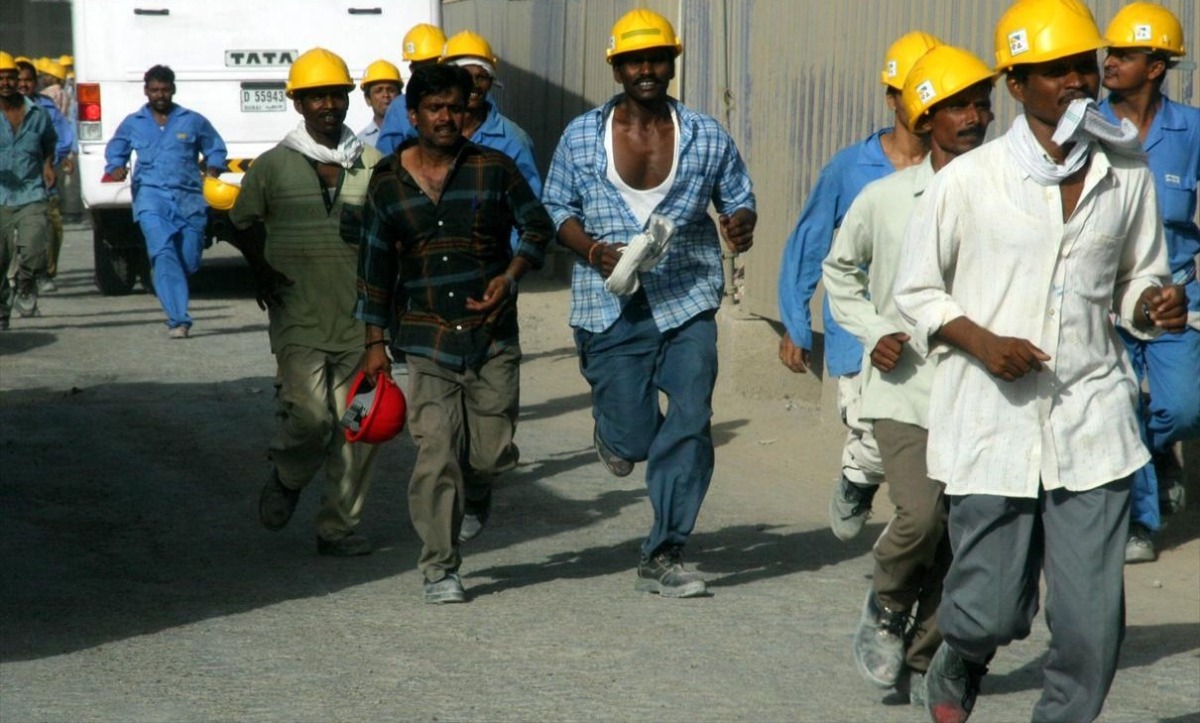
    Unsurprisingly, the influx of such vast resources, and the on-field dominance it has brought, has aroused the envy and ire of supporters of other clubs. (I hesitate to use the term ‘rivals’, as it suggests that there are teams capable of challenging us on a consistent basis; in this case, can we settle on ‘competitors’ as the designation least offensive to all parties?) This discontent at City’s serial successes is exacerbated by a sense of injustice, as accusations of City’s breaching of both UEFA’s and the English Football Association’s Financial Fair Play rules fuel feelings that the club has bought its way to the top, due to the deep pockets of its owners and their skulduggery in the dark arts of creative accounting. Furthermore, there is the implication that because said proprietors are one of the ruling families of the United Arab Emirates, and the U.A.E.’s human rights record is less than pristine, then City’s wealth is tainted and its fans are hypocrites. Friends and acquaintances have asked me, often goadingly: how I can profess to be any kind of socialist and yet continue to support a team which represents the triumph of monied elitism? What kind of cognitive dissonance is involved in advocating for Boycott, Divestment and Sanctions against apartheid Israel, when migrant workers are routinely treated appallingly in Abu Dhabi, and reports circulate of government critics of the U.A.E.’s repressive regime being imprisoned and tortured? Am I ultra-selective in the causes I choose to espouse? One of the things this essay is, is an attempt to address, and hopefully explain – if not quite reconcile – some of these apparent contradictions.

    This air of grievance is felt especially acutely in Ireland. There is a sketch by comedy trio Foil, Arms and Hog, where an applicant for Irish citizenship is asked a catalogue of questions as a test of knowledge for eligibility. One of the queries goes: ‘What are the two main religions in Ireland?’ Our candidate doesn’t miss a beat, responding with the quip, ‘Manchester United and Liverpool’.

    While there are devout members of other denominations – for example, Chelsea, Arsenal, Spurs, Leeds, Everton, Aston Villa and West Ham all enjoy healthy fanbases on these shores, and I have even met the odd adherent of exquisitely eccentric sects like Ipswich Town and Stoke City – the overwhelming majority of Irish soccer fandom of English clubs is comprised of faithful followers of either United or Liverpool. To be sure, there are often sound reasons for such gargantuan support, such as family tradition or connections with one or other of the clubs, or the presence of many Irish players or players of Irish extraction in current or previous squads. Yet, just as often, Irish people attach themselves to an English club for motives which are almost entirely arbitrary – the colour of a jersey or the first game they ever saw or a favourite player. (This is true of sporting loyalties, including football, everywhere. Although a Mancunian born and bred, qualified lawyer and professional investigative sports journalist David Conn, while hailing from a predominantly United family, became a City fan almost by accident, rather than orneriness: when he was six years old, and asked to choose between the two local clubs, he looked at their respective badges – United’s a red devil with horns, City’s a rose beneath a ship – and opted for light blue. Incidentally, Conn’s Richer Than God: Manchester City, Modern Football and Growing Up (2012) remains one of the best books about football ever written – and not just for City fans – combining as it does a forensic trawl through City’s financial dealings with the changing attitudes and mixed emotions of a lifelong fan witnessing the monetisation of the modern game. In many ways, my own effort here is just a pale imitation of Conn’s achievement, albeit from an Irish fan’s perspective.)

    But the most common explanation for the popularity of Liverpool and Manchester United in Ireland is, I submit, because both clubs were, in the past, serial winners, just as City have become today. Many of these could be termed ‘legacy fans’ (the same is true of Arsenal, Chelsea and Leeds) – relics of when their clubs were much more successful, which was when they started supporting them. It’s easy to back a winner, and there is safety – and solidarity – in numbers. The herd instinct kicks in. This is why one notices a more than average quota of fair-weather fans among their number. When their team of choice hit a bad run of form, or their trophy haul is depleted, you will hear all kinds of excuses for slackening of interest, and the declaration ‘The game is gone for me’ because of the deleterious influence of floods of cash, or the introduction of VAR, or the corruption of governing bodies, or whatever.

    Yet, if I had a penny for every ardent United or Liverpool fan I’ve ever met, and inquired of ‘Have you ever been to Old Trafford / Anfield?’, and drawn a blank – well, I would have a lot more pennies than I do today. For, as Paul Morley put it in his piece mentioned above: ‘To support United is too easy. It’s convenience supporting. It makes life too easy. There is no challenge. It is a cowardly form of escapism, a sell-out to the forces of evil…to support them is heroism in a can.’ Since the wheel of fortune has spun kindly in the direction of what legendary former United manager Sir Alex Fergusson once called their ‘noisy neighbours’, doubtless many United fans now feel exactly the same way about City. In United’s glory days, there used to be a loose coalition of fans of many other clubs congealed around the banner of ‘ABU’: Anyone But United. Nowadays, it has been supplanted by the amended acronym, ‘ABC’: Anyone But City. Fans of every club are inclined to partisan paranoia when they feel things are not going their way. But here’s the twist: there are far more Liverpool and Manchester United fans in Ireland than City fans. Is it any wonder that we City fans sometimes feel like a persecuted minority? And all for the crime of playing exciting, entertaining football – at a level rarely, if ever, seen before.

    Etihad Stadium, Manchester.

    Anti-City Bias

    This anti-City bias is not confined to the foot soldiers of the red hordes (as I tend to think of the innumerable fans of these two clubs found in evidence hereabouts – rather than envisioning groups of radical revolutionaries huddled under beds around the country), but is also noticeably visible and voluble among the many high priests of their persuasion present in the Irish soccer media – hardly surprising when one realises that the majority of sports reporters and analysts here are drawn from the ranks of one or the other red menace. Clearly, fans of other clubs, and their public representatives, frequently hate on us too. But the gross preponderance of Reds’ affiliates in the make-up of the national football commentariat is not difficult to account for: if Ireland as a nation has large contingents of Liverpool and United fans, then print and broadcast media – dependent as they are on advertising revenue – will broadly pander to and reflect the views of that massive target audience which, in a classic case of vicious circle marketing, comprises a large section of its readership and viewership.

    It is difficult to delineate this prejudice without mentioning some names. Certainly, the old guard were dead against us, with Eamon Dunphy publicly venting his dislike of ‘the City project’ when he was a freelance contributor on RTE television. Presenters such as Joanne Cantwell regularly goaded him on. But then, he used to play for Manchester United.

    Of the current crop, Ken Early’s latent loyalties are easily identifiable from his Irish Times article headlined ‘Manchester City’s dominance a reminder the rich always get their way’ (20/01/22). Among many contentious statements contained therein, a pair of standouts were, ‘Most of us don’t watch football for technical quality or tactical intrigue. We’re watching because we want to feel something – and the risk of defeat adds savour to the joy of victory’, which he then linked to the ludicrous claim, ‘Look at the joy Manchester United have given the world these last several years. Lurching from crisis to crisis, they continue to be more watchable than City’s vastly superior team.’ The first is an appalling admission from a paid pundit, whose job it is to keep abreast of the strategic evolution of the game. Besides which, Manchester City still and always will be beatable – just like any other team – and watching them gives rise to a great variety of emotions in me, and other City fans. Plus, discerning neutrals can and do admire the precision of a well-executed game plan which City provide. As for the second, even diehard but cleareyed United fans know it is not true. They would acknowledge that United have for some time – since the retirement of Sir Alex – been a mismanaged laughing stock, which is why many of them have flocked to green-and-gold wearing protest club, Newton Heath. While there may be considerable schadenfreude to be derived by fans of other clubs in watching United’s steady decline into a comedic soap opera, they are surely no longer heading to Old Trafford to witness object lessons in how the Beautiful Game should be played. At the time of Early’s salvo, I wrote a fulsome rebuttal to the Letters page of the IT which was not, as was only to be expected, selected for publication. I subsequently penned a one sentence rejoinder, quoting his ‘more watchable’ assertion, which did see the light of day. It simply read: ‘Would it be impertinent to inquire as to what (red) planet he is living on?’

    Meanwhile, the Sunday Independent is a virtual Liverpool FC fanzine, platforming as it does the Scouse-loving triumvirate of Dion Fanning, Eamonn Sweeney, and Declan Lynch.

    Of the three, Fanning is the most measured and fact-based (evidently qualities not much valued at the Sindo, as his work is now more often to be found in the pages of the Irish Examiner, and he has been involved with podcasts for Joe.ie and The Currency.ie) in his criticisms. But his allegiances are easily discerned from a piece like the one headlined ‘A different Liverpool story in a parallel universe’, with standfirst ‘Liverpool’s golden age is ending but is it any consolation if one day they discover they were cheated?’ (The Irish Examiner, April Fool’s Day, 2023). Ineluctably, he highlights that City have been ‘charged by the Premier League with 115 breaches of financial regulations’, and refers to claims that City have ‘used shadow contracts to pay players’. However, he fails to address the argument that such ‘artificial rules’ are designed to protect the existing elite, other than to counter that ‘most rules in sport are absurd and all clubs in the Premier League agreed to these ones.’ Nor does he mention that City had since won their appeal against UEFA at the Court of Arbitration for Sport, for the alleged use of such shadow contracts, and for the alleged hiding of owner investment as sponsorship money – even if the Premier League charges have still to be answered. In fairness, Fanning could not have known at that point that Rui Pinto, the hacker who made public his ‘Football Leaks’ revelations, which were subsequently covered by German news magazine Der Spiegel, and led to the initial UEFA two-year ban on European competition for City, would be sentenced to a four-year suspended prison term for his crimes, including extortion, in September 2023.

    Sweeney is a different case entirely, as he is the source of the most vicious and sustained attacks on Manchester City in this Mediahaus organ. A brief selection of sample headlines from recent years will suffice to illustrate his naked animosity: ‘Looks like Guardiola’s best days are in the past’ (10/11/2019) (that one wore well); ‘Man City’s manager is the figurehead for an organisation which represents all that stinks about modern sport’, the intro of which reads ‘Manchester City are football’s most despicable club and Pep Guardiola its most despicable manager’ (18/07/2020); ‘Soulless City will win title, but Liverpool have hearts and minds of fans’ (19/12/2021); ‘A classless man in charge of a classless club run by classless people’ (22/05/2022); ‘Ugly truth behind the success of City’ (29/04/2023). Without parsing each article word for word, take my word for it that, in any other context – and undoubtedly if it were directed against his preferred Liverpool or many others’ preferred Manchester United – his bile would be widely regarded as libellous incitement to hatred.

    As for Hot Press alumnus Lynch, one is never quite sure as to what extent his tongue is firmly in his cheek or how much he actually means it (probably some weird admixture of the two), due to his unremitting deployment of ironic overstatement. In ‘Big Money meets Big Football meets Big Law’ (26/05/2019), having bemoaned the evils of leveraged buy-outs of clubs by ‘rich-guys-with-no-money’, he continues: ‘Now we’ve got rich-guys-with-money, indeed the problem with the rich guys who own City is not just that they are considerably richer than the rich guys who own Liverpool or Spurs, they are limitlessly rich as only oil-rich countries can be, they are ludicrously, crushingly rich. And still… still they’re in trouble with UEFA, accused of breaking rules in relation to Financial Fair Play.’ As though rich-guys-with-no-money are somehow preferrable to rich-guys-with-money. He endeavours to bolster his case by arguing, ‘One is reminded of the fact that football of the American kind is considered so important, it is rigged like some socialist experiment’, when it could just as easily be framed as being so important that it is rigged like a capitalist experiment – like the rest of U.S. society. By-the-by, he concludes that week’s column with analysis which lays the blame for Brexit firmly at Jeremy Corbyn’s door, a good indication of where his ideological sympathies lie.  This is what passes for informed, astute political commentary in the reputed highest-circulation Irish Sunday newspaper. In ‘Don’t mention the war: filthy rich Manchester City were once hilarious losers just like Basil Fawlty’ (11/02/2023) he states: ‘There are complexities within this story of the Premier League charging Manchester City with breaking 115 financial fair play rules…But there are great simplicities to the case too, the most obvious of which is this: I don’t know any fans of Manchester City. I know fans of Man United, Liverpool, Arsenal, Chelsea, Spurs, Aston Villa, Everton, Leeds United and West Ham. I even know a Nottingham Forest fan. But I don’t know any fans of Manchester City.’ Maybe Lynch should get out more. He is welcome to attend one of the triweekly meetings of the City Supporters Club – Dublin Branch (of which more anon) to check out how many City fans there really are hiding in plain sight in his midst. But it is in the terseness of his tweets that Lynch gives himself revealing free reign: ‘City are not a good side’ is a gnomically reiterated mantra of his; while ‘Would love to see the Arsenal winning the league obvs, yet I fear City* have aimed for a narrow win this season to maintain the illusion that the competitive structure hasn’t been wrecked by their incessant, hydra-headed cheating’ (8/05/2023); ‘Interesting to see comments about the Arsenal ‘bottling’ it from football writers who “bottle” the mention of those 115 charges against Man City* every day of the week’ (18/04/2023); and ‘No, the biggest bottle in history is the abject failure of so many English journalists and broadcasters to even mention that City* are facing 115 charges of cheating’ (15/05/2023) enter the realms of conspiracy theory nonsense. (It took a while for me to figure out why Lynch habitually places an asterisk after every obsessive mention of City, but eventually Merriam-Webster furnished what I presume is the answer: ‘the character * thought of as being appended to something (such as an athletic accomplishment included in a record book) typically in order to indicate that there is a limiting fact or consideration which makes that thing less important or impressive than it would otherwise be.’

    John Aldridge

    John Aldridge

        The Sunday World features a ghost-written column by ex-Liverpool and Republic of Ireland stalwart John Aldridge. Week in week out, in plain man’s language, he trumpets Liverpool’s cause: the reason they are not able to compete is City’s perfidy. He is quoted in an interview with Kevin Palmer headlined, ‘It’s time to hammer Man City if they are found guilty’ (9/02/2023): ‘Everyone knows this has gone on from day one. They have done well to get away with it for so long. We will have to see what comes out in the wash and give themselves a chance to prove their innocence.’ Was no subeditor at the SW alive to the patent contradiction covered in the space of those three short sentences? In his own ventriloquised voice, in ‘Surprise guys can claim a Champions League spot’, he tells his red readership, ‘As I’ve mentioned in my Sunday World column, Manchester City’s dominance at the top of the Premier League table is a big problem for the English game, as interest will wane if they win the title by a mile every year’ (24/9/2023). Even if City have succeeded by nefarious means, is that even true? The Bundesliga attracts more than fans of serial winners Bayern Munich (eleven consecutive titles, and counting).

    But perhaps the most egregious example of anti-City vilification comes courtesy of Miguel Delaney, who works for the London Independent but is of part-Irish extraction, and a known Liverpool aficionado. (He claims to support one Irish club and one Spanish club, but no Premiership club) Delaney tends to adopt the moral high ground, focusing more on the U.A.E.’s campaign of ‘sportswashing’ – an attempt to render their human rights abuses more palatable to the world – rather than on the resources the owners’ wealth places at City’s disposal. I will tackle these problems in due course, but for now, here is a smattering of Delaney’s critique. In his consideration of City’s 2023 title win, headlined, ‘Five titles in six years: Are Manchester City destroying the Premier League?’ over a standfirst of ‘Pep Guardiola has been given limitless funds to create the perfect team in laboratory conditions, and the result has been an almost total eradication of competition at the top of the Premier League’ (22/05/2023), he declares, ‘City have brutalised the very idea of sporting competition. There’s been no tension. There’s been no drama’, going on to assert, ludicrously, ‘That has meant there haven’t been any real memorable moments, beyond some great goals and the repeated image of Haaland and De Bruyne tearing at goal.’ Those images were, precisely, memorable moments. He concludes with, ‘The reality is all of City’s success is ultimately explained by the fact they are a state project.’ Prior to that, writing in his newsletter (17/05/2023) in the wake of City’s 4-0 win over European giants Real Madrid in the Champions League semi-final, second-leg at The Ethiad (a game I was lucky enough to attend), Delaney revealed that ‘sources within the game (and with Delaney, it is always unnamed ‘sources within the game’) are growing concerned with how City are brushing all before them aside.’ It is little wonder that Declan Lynch has commended Delaney on X (formerly Twitter), praising him for ‘doing God’s own work’. However, while other top clubs may be aggravated by City’s dominance, it is fair to say that City fans are rejoicing in it.

    It might be a good idea if all those engaged in public discourse around football in Ireland were required to declare their interests before being allowed to comment. On second thoughts, perhaps there is no need for this measure as, as has been demonstrated, many of them already do this freely, yet their outpourings are not met with the requisite scepticism – because they are preaching to the converted, and their favouritism is plain for all to see.

    In Part II Desmond Traynor continues his analysis of the financial and political morality of top flight English soccer, and attempts several rebuttals of the frequently voiced criticisms of Manchester City’s current success.

  • My Team / Your Team III

    In the final part of his essay on the joys and woes of being an Irish Manchester City fan, Desmond Traynor delves into psychological and emotional reasons for sustaining sporting allegiances, through thick and thin.

    Even if nothing in the foregoing fact-based rant convinces City-sceptics, it is not the main plank of my justification for my continuing City fandom. Facts don’t care about your feelings; but, equally, feelings don’t care about the facts. Support for City, or any sporting association, is an unchanging and unchallengeable tribal loyalty – it is instinctual. Economics is science, albeit it a dismal one – it aspires to rationality. These impulses speak to very different parts of our nature as human beings. Despite the discipline designation ‘Political Science’, politics is where instinct and reason try to intersect – and usually fail. The personal is political; but the political is also personal. My love for City is emotional – like the feelings of fans of any other sports club – and I will present the facts to suit my feelings as much as they do, because I love every single bedbug in the mattress I’ve chosen to lie on as much as they love whatever bloodsuckers are infesting theirs.

    My hero Michel de Montaigne wrote: ‘Mistrust a man who takes games too seriously; it means he doesn’t take life seriously enough.’ Perhaps this is true. But, then, it means there are an awful lot of people (and not only men) who don’t take life seriously enough – myself included. Noam Chomsky goes further in his criticism of sport. In one interview in his book Manufacturing Consent: Noam Chomsky and the Media (1988), the linguist and social commentator asserted that sport is one of the means by which capitalist ‘special interests’ that dominate government control public opinion, providing a distraction from more important and meaningful matters, after the manner of Roman ‘Bread and Circuses’ (food and entertainment) to mollify the unwashed masses. However, it is worth noting that Chomsky’s analysis was formulated before English football, as the late lynchpin of Manchester musical legends The Fall and lifelong City fan, Mark E. Smith, put it, ‘went middle class’, with all-seater stadiums replacing the terraces of old because of health and safety concerns following several crowd disasters at matches, the formation of the Premiership to replace the League and the Champions League to replace the European Cup, and the sale of television rights to the highest bidder (predominantly Rupert Murdoch’s Sky TV) – all accompanied by the concomitant rise in ticket prices to the exorbitant levels of today. What was once a boozy day out for a bunch of lads is now fireside family entertainment, or an adventure in corporate hospitality. Granted, many of those enjoying the Thatcherite dream of ‘everyone his own home-owning, sole-trading, small business operating entrepreneur’ middle-class heaven may have sprung from working-class backgrounds, but they could have chosen to spend their new found disposable income elsewhere.

    Besides which, such reductive critiques ignore the sublimatory social functions of sport. After all, battling each other on a soccer pitch, even in a particularly dirty game, is better than waging all-out war between countries. For example, for many nationals of both nations, England’s 4-2 victory over West Germany in the 1966 World Cup final signalled the real end of the Second World War. (It doesn’t always work, of course: football as metaphor for war can occasionally turn into actual war. As every schoolboy knows, the immediate casus belli for the so-called 1969 ‘Soccer War’ between El Salvador and Honduras was the two-legged World Cup qualifier and subsequent play-off the two countries played against each other, in preparation of the 1970 World Cup hosted by Mexico. But, in truth, longstanding tensions already existed between these two small and very poor Central American countries. For more than a century they had been accumulating reasons to distrust one another. Each had always served as the magical explanation for the other’s problems. Hondurans have no work? Because Salvadorans come and take their jobs. Salvadorans are hungry? Because Hondurans mistreat them. Both countries believed their neighbour was the enemy, and the relentless military dictatorships of each, forged at a U.S. factory called the School of the Americas, did all they could to perpetuate the error. El Salvador suffered about 900 mostly civilian dead. Honduras lost 250 combat troops and over 2,000 civilians during the four-day war.) Here, I cannot help but succumb to the temptation to quote one of former Liverpool manager (from 1959 to 1974), the late, great Bill Shankly’s most famous pronouncements: ‘Some people believe football is a matter of life and death, I am very disappointed with that attitude. I can assure you it is much, much more important than that.’

    Football is a serious business, then, for many. But what differentiates City fans from those of sundry other clubs, in my opinion, is that we retain an ability to see the funny side, to laugh at ourselves. Apart from their ubiquity, my other chief gripe against supporters of Liverpool and Manchester United is their ingrained sense of entitlement. They take it very seriously. Despite City’s accumulating successes over the past ten years, I cannot as yet detect the slightest note of triumphalism among our fanbase. Sure, we like to indulge in ‘the bants’ (as it is abbreviated) as much as the next person with a strong affiliation, a practice posh people call ‘schadenfreude’ but which is known locally by the more colloquial term ‘slagging’. While this practice can degenerate into mere trolling, that is largely a matter of perspective, as to how seriously one takes the banter. Where is the line, and when does it get crossed? Irish practitioners of the two major English footballing religions seem especially quick to take offence. But then, they are fundamentalists, who follow the one true faith. If you are looking for an illustration of real, blatant, vicious trolling, there used to be a banner United fans would unfurl across the Stretford End at Old Trafford for every single home match, in the form of a mock digital clock, a wind-up to commemorate the number of years their cross-town neighbours – us – had not won a trophy. This ticking Date/Time reminder was finally retired in 2011, with the notch stuck between 34 and 35, after we lifted the FA Cup v Stoke.

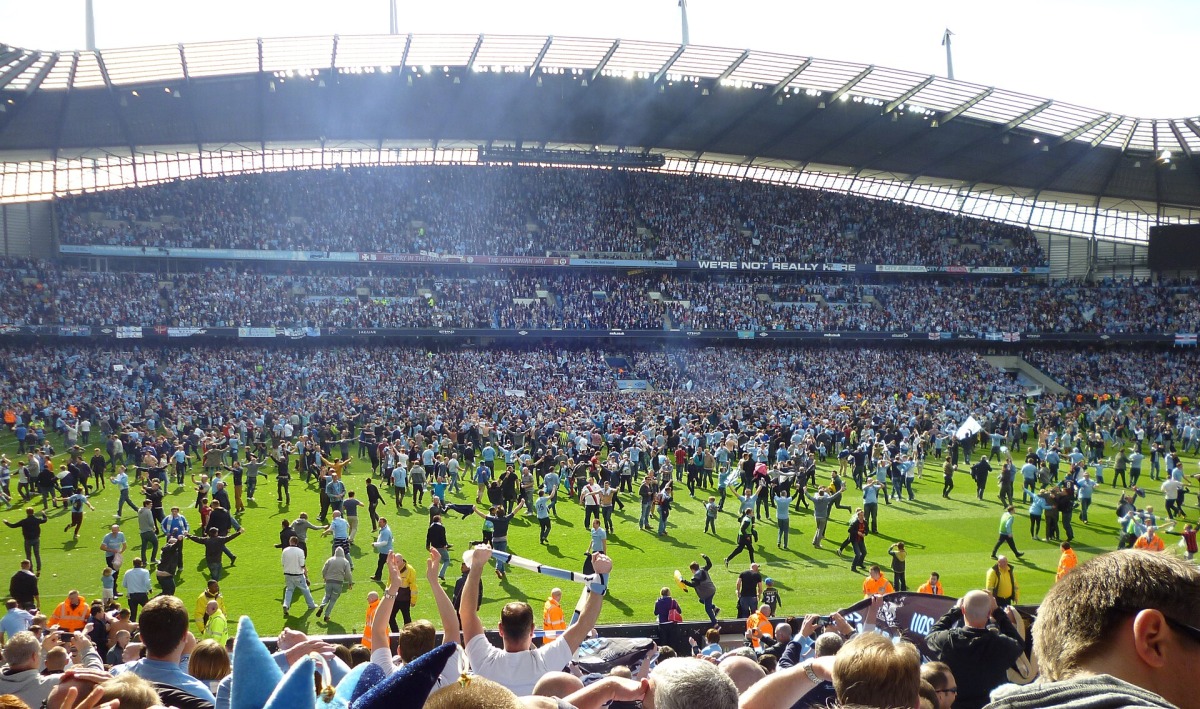
    Manchester City supporters invade the pitch following their 2011–12 Premier League title victory.

    Underhand Spying

    Worse than trolling was stealthy, underhand spying, as exemplified by Liverpool FC employees allegedly hacking into City’s scouting platform in 2013, to gain access to its database, resulting in an out-of-court settlement of £1m being paid by Liverpool to Manchester City – without any admission of guilt. Worse than that again was the attack by Liverpool supporters on the Manchester City team coach in 2018 (‘Let’s show them what money can’t buy’ ran the rabble-rousing rallying cry on their social media groups) as it made its way to Anfield for the Champions League quarter final first leg. Bottles, coins, flares and cans were thrown by home fans, rendering the City bus ‘unusable’ for the return journey. All the while the Liverpool Metropolitan Constabulary – who publicised the route the bus would take in advance – were noticeably uninterested in intervening in any potential standoff between supporters of either club, or in bringing any of the perpetrators of this criminal activity to justice. Liverpool FA were subsequently fined a paltry £20,000 by UEFA on foot of the incident.

    City was, and is, a club with a heart and a sense of humour, which is often turned on itself for good measure. They say we have ‘no history’. But every football club in existence has a history, from Grimsby Town to Leyton Orient to Wycombe Wanderers to your local GAA Under-15s squad. What they really mean is, ‘you have no history of winning big, important competitions’ – an approach curiously akin to the ‘great men’ methodology of historiography. Yet, as outlined above, even that is not true either, as we have won League titles and Cups in the past. As with most history, it all depends on how far back you want to go. Granted, no matter how far into the distant past you care to venture, until recently we’ve had no history in the European Cup/Champions League, as they are constantly fond of reminding us. So what? Neither have Arsenal or Spurs or Newcastle United. Nor Grimsby.

    We are an eccentric club, to be sure, with a neat line in self-deprecation – something I didn’t know when I became a devotee aged seven, but which I find is congruent with my personality now. Helen Turner, a flower-seller outside Manchester Royal Infirmary, would sit in the front rows of the North Stand and offer Joe Corrigan a sprig of lucky heather before every game, and then thunder her bell every time City won a corner. In 1978 the club bought Kaziu Deyna, the Polish World Cup captain, for a consignment of toasters and fridges, a deal arranged by electrical goods magnate and megalomaniac chairman Peter Swales. Someone once stumbled onto the away terrace at West Brom with an inflatable banana and, within weeks, there were thousands of them at every game, joined by paddling pools, crocodiles and fried eggs. (Such playthings have long since been banned by the F.A. as a health & safety hazard. It’s not the same in an all-seater stadium anyway.)

    https://www.youtube.com/watch?v=V5RtnXcQ_lw

    Poznan

    Then there is our adoption of the Poznan, a celebratory dance which involves supporters turning their backs to the pitch, linking arms and jumping up and down while singing favourite songs or chanting in unison. It all began in 2010, when City were playing in the same Europa League group as Polish side Lech Poznan, who came to the City of Manchester Stadium on October 21st of that year. Throughout the game the Poznan fans impressed with their noise, organisation and creativity. While City fans were initially unimpressed with the backs-turned bounce, they were gradually won over and soon appropriated it as a mark of respect. The Poznan supporters are still widely thought to be among the best away fans ever to have visited Eastlands. We acknowledge the debt by retaining the name. Now we ‘break out the Poznan’ when we score, or simply when we are dominating play. The explanation – if one is needed – seems to be that it is done in order to taunt the opposing side, as much as to say, ‘Our team is so good that we don’t even need to watch what is happening: we know we’ll win.’

    If more evidence is needed that nothing is quite as appealing to City fans as the irreverent and the absurd, consider some of our oldest terrace chants. For example, ‘We never win at home and we never win away/We lost last week and we lost today/We don’t give a fuck/’Cos we’re all pissed up/MCFC OK’ did sterling service when we were ‘down among the dead men’. Another song of denial, Camusian in its sense of existential dread, was, ‘We are not, we’re not really here/We are not, we’re not really here/Just like the fans of the Invisible man/We’re not really here’ (sung to the tune of ‘We Shall Not Be Moved’). Various myths circulate about the origin of this one. Some say it began at Luton Town in the 1980s, when away fans were banned, while others claim it was a reaction to media claims that City had no fans. Another story is that the City fans who defied the ban on away fans at Millwall’s notorious Den began singing it after managing to sneak into the ground – although it is unlikely anyone who did that would survive to tell the tale. At first it was a fitting reflection on the woes and misfortune of the old City, a big club that found itself wallowing in the murky depths of English football. But in the last ten years it has metamorphosed into an ode to hope and joy, an expression of incredulity at the transformation wrought at the club by Sheikh Mansour’s takeover. Again, equally an expression of chronic insecurity as an affirmation of fragile or grounded identity, there is, ‘I’m City till I die/I’m City till I die/I know I am/I’m sure I am/I’m City till I die.’ Like a character from Samuel Beckett’s work, the verbal reiteration might just make it true, even if you’re not so sure. Then there is our official club anthem, the Rodgers and Hart standard, ‘Blue Moon’. With its narrative trajectory over three short verses and a bridge from the yearning loneliness of searching for ‘Someone I really could care for’ to finding ‘The only one my arms will hold’ and the Blue Moon turning to gold, it would seem perfectly to encapsulate City’s recent journey – although it was adopted as long ago as 1989. The fact that the first verse is sung as a slow-tempo forlorn ballad and the second verse speeded up to the breakneck pace of hardcore punk adds to the sense that it represents a reversal of fortunes.

    Finally, mention must be made of that recurring two-word phrase which has become a byword among City fans for the club’s travails: ‘Typical Citeh’. The Urban Dictionary sums it up well: ‘When Manchester City somehow mess up an easily winnable situation and everyone is disappointed but not surprised.’ We have never done it the easy way. Even the Agüero moment was ‘Typical Citeh’ after a fashion, although on that occasion we just about managed to win. It may have less currency now, yet it is part of the fabric of Manchester City, because it is living and breathing in every single one of the fans who can remember anything before 2010.

    Sadly, there is a feeling that, mixed in with all this hilarity, it was a product of a time when City had become a joke team. Fans of other clubs generally warmed to us, but there was a sense in which they were just patronising the lovable-losers. We were told we had a great sense of humour – a humour that was used, as so much humour is, to hide massive hurt – but secretly they were laughing at us, not with us. Well, no one is laughing now. Except City fans. They liked us when we were struggling. They don’t like us now that we are strong.

    Dublin Branch

    I have been a member of the Manchester City Supporters Club – Dublin Branch since 2011. Prior to that, I had thought I was ‘the only City fan in the village’. But the branch, founded in 1975, currently has 104 members, and there are other branches all over the country. A quick Google search helped me to unearth it – social media is useful for something. We meet every three weeks on a Monday evening in an upstairs room in a city centre pub. Apart from the social interaction, the branch is mainly a focal point for topping up one’s account and ordering match tickets – although, post-Covid, these functions have gradually shifted online. We travel to matches together, organise trips and social outings, yak about City. I enjoy the comradery. It is an egalitarian freemasonry – guys help relative strangers out, with lifts, loans, mortgages, that sort of thing, like any other mutual benefit society – with a conducive absence of petty politicking, where the only qualification for acceptance when you walk through the door is that you support City. (Liverpool-loving Declan Lynch is still welcome to visit, if only for research purposes.) You meet people from all walks of life, whom you might never encounter elsewhere. The brain surgeon mingles with the binman, the senior civil servant with the rank-and-file bank or post office clerk. Plus we have your usual quota of cops and taxi-drivers, your ex-cops who are now tax-drivers, or freelance ‘security consultants’. We have an accountant, a chef, and a postman (who used to be a car salesman). We even have déclassé, would-be literary intellectuals like myself. We are prepared for every eventuality.

    My feeling of welcome and at-homeness in the Supporters Club is all the more noteworthy because I am not, and have never been, a great joiner. Also, I tend to lack a competitive spirit. (Maybe I was more driven, once upon a time, but I can’t remember.) But I admire it in others – at least when there is something tangible at stake, be it as arbitrary as club affiliation, national pride, even individual will. As an inveterate observer, I am fascinated by people of action and ambition, probably because they seem to be animated by a force that I do not possess.

    In Crowds and Power (1960) Elias Canetti explored the recurring battle between individuality and the urge to lose ourselves in crowds. He writes:

    A crowd isn’t just a large number of people – it’s a mass in which members identify with one another. When that happens, people enter into something that’s greater than the sum of their individual parts: a crowd. In that moment, there’s a sense of equality. Every member enjoys the same standing, regardless of previous differences.

    Attendees at football matches and music concerts are more than familiar with this feeling. It is the same impulse which motives religious people to undertake pilgrimage so they can gather to be present at Mass offered by the Pope in St. Peter’s Basilica in Rome, or to go on Hajj so they can circle the Kaaba in the Al-Masjid Al-Haram Mosque in Mecca counter-clockwise seven times, in both cases blending in and losing themselves in the throng of their fellow faithful. Some may even be aware of the great paradox at the heart of such gatherings: how many times have we heard popular singers on stage in a large auditorium or stadium exhorting tens of thousands of their hysterical fans to ‘embrace their individuality’ and ‘just be themselves’? Canetti continues:

    Only together can men free themselves from their burdens of distance; and this, precisely, is what happens in a crowd… Each man is as near the other as he is to himself; and an immense feeling of relief ensues. It is for the sake of this blessed moment, when no-one is greater or better than another, that people become a crowd.

    Musicians, too, are cognisant of this transcendent feeling – not only in witnessing the euphoria of the audience, but also in the experience of playing with their peers. It may not happen often, but occasionally all egos dissolve in the performance of a piece, as it comes to seem that the music is playing itself rather than being executed by each individual participant. As with team sport when enacted with unselfconscious fluidity, it becomes a synergistic endeavour where everyone contributes to achieve something which is not only beyond what they could produce by themselves, but much more than what the ensemble could be expected – on paper – to realise as a functionally competent unit. Alas, this form of collaborative creative magic is one to which solitary writers are not privy.

    And so, I can understand the desire to gather, to club together, to compete, and to win (if only voyeuristically and vicariously) – even if, for me, it is largely confined to my support for a football club I was attracted to before I could rationalise my attraction to it. What I share with my fellow countrymen and women who are fans of Liverpool and Manchester United, and any other instance of the Not-Manchester City, is not only our common humanity, but the fact that we all have a passion. They have just chosen different – if more popular – sides in the pursuit of the same goal: the ecstasy of being part of a winning crowd.

    We are all party to the truth of group sport: when the tedium vitae hits, even when you think you’ve lost everything, even when you have lost everything, when you are at the lowest of your lows (as well as the highest of your highs) there is always your team, and your fellow supporters. As a means of developing a social network, and sometimes life-long friendships, it seems relatively benign. Even if, at least for the time being, my team is magic and yours is rubbish, or not as good as ours. In Ireland, you may be many, and we are few. But I realise that all I am really saying here is that, due to a penchant for independent thinking, my group affiliation in this land is more uncommon and less of a legion than your group of choice – and therefore partakes of the cachet that derives from esoteric exclusivity. My support betokens more rugged individualism than yours, which is, or was – relatively speaking – an easier route to glory. You just want to be on the side that’s winning, and for a long time you were. So, deep down, did we; and now, surprisingly, we are.

    So there: I have removed my fig leaf, transformed it into an olive branch, and am offering it to all of you now. Let us practice peaceful coexistence.

    All empires crumble. For my part, I hope City’s reign lasts for a thousand years. It won’t, of course. Is there any need to quote Shelley here?

    And on the pedestal, these words appear:
    My name is Ozymandias, King of Kings;
    Look on my Works, ye Mighty, and despair!
    Nothing beside remains. Round the decay
    Of that colossal Wreck, boundless and bare
    The lone and level sands stretch far away.

    But should City someday in the not so distant future wind up back in the Championship, or worse, League 1, stripped of every trophy we have won over the last decade, with all our star players hotfooting it to the exit doors for clubs where they can compete for top honours (and earn wages comparable to what they now rake in) – because we have been adjudged guilty of one or more of the infamous alleged 115 breaches of Financial Fair Play rules against us – I for one, and many others, will still be following them. To reiterate: I was there when we were shit. And I’ll be there again if we are shit again. Blood is thicker than principle when it comes to football. Your team is your team is your team, as much when it embarrasses or shames you as when it delights and gratifies you. How could I walk away from my team after all these years? Remember those words again, previously sung with shy ambivalence, now with full-throated force: ‘I’m City ’til I die/I’m City ’til I die/I know I am/I’m sure I am/I’m City ’Til I Die.’ And, who knows, maybe even after that.

    And that is how I can be Red-as-they-come politically, but when it comes to football, ‘once a Blue, always a Blue.’

  • My Team / Your Team II

    Desmond Traynor continues his analysis of the financial and political morality of top flight English soccer, and attempts several rebuttals of the frequently voiced criticisms of Manchester City’s current success.

    That was the attack. Here is the defence – bearing in mind that attack is often the best means of defence. (The middle ground will be contested later.) Let’s talk about the filthy lucre first, before moving on to the human rights issues – although the two are surely not unrelated, and are in fact inextricably linked.

    Regarding the lavish wealth, there is the glaringly obvious riposte to the criticisms outlined above that City’s accelerated spending was merely conducted in an effort to catch up with clubs which had previously always spent heavily. From this perspective, Financial Fair Play rules – as instituted by both the European governing body U.E.F.A., and the Football Association governing the domestic English Premier League – were introduced solely as a form of protectionism, under pressure from the then so-called ‘elite’ clubs who felt their positions at the top table were under threat. So, cordon off gains made, syphon off profits, pull up the drawbridge, and stop others following. But this circling-of-the-prestigious-wagons method was also the reason for the foundation of the Premier League itself in 1992 (replacing the old Division 1), and the Champions League too in the same year (supplanting the old European Cup). Both competitions came into being to prevent the threat of breakaway movements (‘super leagues’) by the crème de la crème clubs, and to maximise their bargaining positions when the contracts for television coverage came up for renewal. The counterargument to any aspersions cast at the motives for FFP goes that the already established clubs generate their own income, rather than depending on investment, but this line of thinking does not stand up to much scrutiny. FFP punishes spending, not debt, because this is the best mechanism for the elite clubs to ‘pull up the ladder’. Besides which, since when are business owners not allowed to pump personal funds into their own businesses to keep them afloat – even if they are throwing good money after bad? Few people complain about Jack Walker ‘buying’ the Premiership title for Blackburn Rovers in 1995 – but that was before FFP reared its questionable head. As for those who say that City signed up to FFP and must abide by it like everyone else, one could ask: what alternative did we, or anyone else, have? It was a gun to the head, if you wanted to keep competing.

    There is a trope in circulation that the Premier League is becoming, or has become, about as competitive as the Bundesliga, where Bayern Munich have won the title every year since Jesus was a boy. This ‘Bundesligafication’ states that nobody can cope with City’s ‘high ceiling’ (if in fact there is a ceiling at all), since they can ‘spend what they like’. Generally, it’s just not fair, we are constantly told. While some arguments carry a little more weight than others, this is one that does not convince for a minute. Since a Jurgen Klopp-inspired Dortmund carried off the German title in 2011-12 (ironically the same month Mancini delivered City’s first Premier League win since the fateful year of 1968), Bayern have been champions in the Bundesliga every single year. That is eleven consecutive titles. In the same period in England, Manchester United, Chelsea, Liverpool, Leicester and City have finished first. City have won seven of the twelve titles on offer and, admittedly, five of the last six, giving critics the chance to say this is the fast-moving ossification process of the domestic game. But Liverpool enjoyed similar dominance in the ’70s and early ’80s and were feted for it, while United in the ’90s and noughties did the same and were similarly acclaimed. If comparisons with the Bundesliga are valid, then it is worth looking east for a minute. Klopp, after all, managed in the top echelons in Germany for many years and was a serious challenger for honours at Borussia Dortmund between 2008 and 2015. Dortmund collected two titles in his time there and also reached the Champions League final. However, the club also sold Mario Gotze, Robert Lewandowki and Matts Hummels to Bayern, which would roughly correspond to City’s Director of Football Txiki Begiristain descending upon Anfield Road and splashing out for Mo Salah, Virgil van Dijk and Trent Alexander-Arnold. Those that tell us the Premier League is heading towards a closed shop may be right in a sense, but it has been on this trajectory since the mid-80s when what then constituted ‘the Big Five’ started their Machiavellian journey towards what we see today.

    City have, on the whole, spent very wisely. Liverpool, United and Chelsea have spent massively for decades, but if anyone else dare flash the cash, they are ‘ruining football’. After City’s initial splurge to gain access to the higher echelons, the last five years have seen spending on players and wages broadly bottom out to meet that of their nearest competitors. The dreaded net spend puts City at the bottom of a league table currently being ‘won’ by neighbours United. Judicious spending has been the answer at the Etihad, not careless overspending. Whilst City avoided the car crashes of Sánchez, Maguire and Ronaldo, United piled in regardless. While City refused to pay over the odds for Kane and waited for Haaland, Liverpool shelled out nervously on Núñez. While City offloaded the inconsistent scoring exploits of Raheem Sterling and Gabriel Jesus, they settled on Haaland to do the job. Maybe we should be asking how Liverpool, United and Chelsea can get their respective transfer policies so disastrously wrong and how City can more often than not get it right, nine times out of ten spending less. That City’s massive wealth has been put to better use than Liverpool’s massive wealth, and Chelsea’s massive wealth has been spent almost as willy nilly as Manchester United’s massive wealth, is neither City’s fault nor the dastardly work of a tilted playing field, but rather the application of dedicated professionals at the top of their game, on and off the Etihad pitch. If we consider budgets, all the sides in what currently constitutes the top six should be competing, and competing hard. Throw in the biggest spenders of the lot, Manchester United, and you have – potentially – as fascinating and thrilling a title race as those of the early 1970s that so many people now nostalgically eulogise. If City continue to be serial title winners the clamour of feedback noise will steadily increase to fever pitch. Money will surely be the ruination of the sport, we will hear. Perhaps it has already done untold damage, but the road to this bleak scenario can be traced way back to 1986, or 1992, not to the arrival of City in the game’s corridors of power in 2008; and the money ruining professional football is being spent on players who fail, not those who succeed. Besides all of which, what City are doing may be different in extent, but it is not different in kind. You either go along with the global monetisation of soccer, appalling as it surely is, or you don’t. But you can’t back out simply because another club suddenly has more money than you do.

    Malcolm Glazer (1928-2014).

    A Merchandise Club Based on ‘History’

    Erstwhile United manager Louis van Gaal (they’ve had six since Sir Alex Fergusson retired in May 2013 – including one ‘interim’, plus two ‘caretakers’ – all dispensations ending in tears) surely had it right when he asserted that his former employers were a merchandise club based on ‘history’. The owners, the six Glazer children of the late Malcolm Glazer, who bought the club outright in 2005, do not care about what happens on the pitch – or only insofar as it might effect revenue. Given that the club’s only discernible (business rather than footballing) policy is one of recruiting tactically ill-fitting star-name players to wear their jerseys, resulting in shirt sales remaining a marketable money spinner, this is hardly surprising. But such short-sightedness has come home to roost. Real Manchester United supporters know this, which is why they resurrected the original  United club Newton Heath as a breakaway protest against the club they follow being run into the ground. Already one sees fewer red United jerseys around Dublin, unless one is a regular frequenter of charity shops, their fans being too ashamed to parade them in public because of the ridicule they will invite. Most of the capital used by Glazer to purchase Manchester United came in the form of loans – rather than from his own funds – the majority of which were secured against the club’s assets in what is termed a ‘leveraged buyout’, incurring interest payments of over £60 million per annum. The remainder came in the form of payment-in-kind loans, which were later sold to hedge funds. It has been estimated that the Glazer buyout has cost the club more than £1 billion in interest and other expenses over the years. At the end of 2019, the club had a net debt of nearly £400 million.

    All the while, United were lashing out exorbitant sums for players who failed to do the business on the field after they arrived at the Theatre of Dreams. The flops include a club-record £89m for Paul Pogba, £85.5m for Antony, £75m for Romelu Lukaku, £73m for Jadon Sancho, £59.7m for Angel Di Maria, £44.5m for Anthony Martial and £40m for Donny van de Beek. (See John Brewin’s ‘From Sánchez to Sancho: Manchester United’s Lost Boys in decade of waste’. The Guardian, 6/10/2023). In fact, Manchester United have the highest transfer spend in world football since 2017, at £765m net. Sir Jim Ratcliffe, who has just bought a 25% stake in the club for 1.3 billion, is eager to find out how the organisation has blown £1.4 billion in the transfer market since 2013, for such little return. Their trophy haul since they last won the League in that year, Fergusson’s last, is: one FA Cup in 2016; one Europa League in 2017; and two League/EFL Cups in 2017 and 2023 – but most importantly, no title.

    When John Aldridge played for Liverpool in their heyday, every summer Liverpool would buy a couple of the best players around and pay what were, for the time, huge wages. Judging from his Sunday World columns, it seems Aldridge thinks this practice was okay then, but somehow not fair now. As for saying they could afford it because they were serial Champions, Liverpool were in fact on the brink of administration due to years of reckless spending and mismanagement, and were only rescued when Boston’s Fenway Sports Group purchased the club in 2010. Since then, they have not been shy about making record signings, which include: Alisson Becker (£65m from Roma in 2018) – then the most expensive goalkeeper in Premiership history; Virgil Van Dijk (£75m from Southampton, also in 2018) – then the most expensive defender in Premiership history; and Darwin Nuñez (£85.36m from Benfica in 2022) – the most expensive signing in the club’s history.

    United and Liverpool fans complain about their respective owners – United’s about the debt and lack of investment in infrastructure like their increasingly dilapidated stadium, Very Old Trafford; Liverpool’s about perceived parsimony in the transfer market (only really in comparison with City’s funds) – and want them out, yet they decry City’s owners, who run the project very well, and not exclusively for the purpose of financial profit. It is enough to make you suspect that jealousy is the chief motive for their rabid dislike of City, rather than any sudden faux concern for fairness, equality, level playing pitches, or human rights. It would seem that the glib rejoinder frequently mumbled among City fans is correct: ‘they hate us ’cuz they ain’t us’.

    Which brings us to the other main counterargument often voiced in opposition to City’s success: that there is a fundamental difference between clubs being owned by private individuals and companies (with finite resources), and those owned by a state (with infinite resources), especially when that state is using the club as a public relations exercise to camouflage its dodgy human rights record – a practice dubbed ‘sportswashing’. The flawed logic runs something like this: in a liberal democracy – such as the United States purports to be – private individuals are allowed to own private property, whereas in an elective monarchy like the U.A.E., theoretically the royal family owns everything. Therefore, private individuals in the United States are not directly responsible for the policies and actions of their government on the world stage, whereas the Abu Dhabi United Group (itself a private equity company and the official owners of Manchester City FC, which insists it is separate from the Abu Dhabi government – even if it is owned by Sheikh Mansour bin Zayed Al Nahyan, member of the Abu Dhabi Royal Family and Minister of Presidential Affairs for the U.A.E.) is directly responsible for all the policies and actions of its country. To me, this is merely the semantics of ownership. Does it mean that no tax-paying U.S. private citizen is ultimately responsible for any of their country’s misdeeds; or, indeed, that no U.S. citizen is above and beyond personal reproach? Conversely, does it implicate every U.A.E. national in responsibility for their country’s offences? Besides all of which, the resources of Abu Dhabi may be vast, but they are not infinite.

    Construction workers at the Burj Dubai.

    Human Rights Abuses

    As to the human rights abuses themselves, they concern both the Emirates’ domestic and foreign policies. Internally, between 80 to 90 percent of the U.A.E.’s over nine million population consists of foreign nationals – most of whom are low-waged, semi-skilled workers from Africa, Asia, and elsewhere in the Middle East – so the country’s economy is heavily dependent on migrant workers.

    According to Human Rights Watch, their wages are low, payments are made infrequently, and living, working and sanitary conditions are poor. Passports are routinely confiscated, either at the airport on arrival, or subsequently by the employers. The workers inevitably fall into situations of debt bondage and find themselves compelled to accept the terms and conditions imposed on them by contracts they signed without fully understanding them. This is particularly common among construction, domestic, and lower-level service workers. The U.A.E.’s labour laws exclude domestic workers from protections, and they face a range of abuses, from unpaid wages, confinement to the house, and workdays of up to twenty-one hours, to physical and sexual assault by employers. The ‘kafala’ sponsorship system ties migrant workers’ visas to their employers, preventing them from changing or leaving employers without permission. Those who do leave without permission face punishment for ‘absconding’, including fines, arrest, detention, and deportation, all without any due process guarantees. Many low-paid migrant workers are acutely vulnerable to forced labour. At the same time, Human Rights Watch also reports that ‘Scores of activists, academics, and lawyers are serving lengthy sentences in U.A.E. prisons, following unfair trials on vague and broad charges that violate their rights to free expression and association.’ Add to this laws which heavily discriminate against women and LGBT people, and you have what is regarded under western eyes as a toxic cocktail which should be roundly called out.

    But, and it’s a big BUT… (to anyone who will take me to task here for the crime of ‘whataboutery’: 90% of philosophical discourse depends on ‘What about?’; the other 10% originates in ‘What if?’) …it can be argued that we in the West are in no position to throw stones, considering the glasshouses in which we live. Here are three examples, chosen relatively at random.

    1) U.A.E. has many western accomplices. According to the Harvard International Review (29/07/2022): ‘Altrad, the French multinational construction company, is only one of the many Western establishments that seem to forget the laws and regulations of the countries they are based in once they start operations abroad in the UAE. Altrad is joined by New York University (NYU), Hilton, the Louvre, Guggenheim, and the British Museum in conducting alleged malpractice against migrant workers’. On this score, it might interest those occupying the high moral ground, especially Liverpool FC fans, to know that Fenway Sports Group’s third biggest shareholder RedBird are in business partnerships with Abu Dhabi.

    2) In the Republic of Ireland, we operate a system of Direct Provision for asylum seekers who are waiting for the outcome of their applications for refugee status. It has been criticised by human rights organisations as illegal, inhuman and degrading. The main bone of contention is the length of time people spend in direct provision, with the Irish Human Rights and Equality Commission calling the delays faced by asylum applicants as ‘systemic and pernicious’. The accommodation centres are run by private sector hospitality and catering companies under contract with the Irish government, and so living conditions and food provided are basic, so that these suppliers can maximise profits. Other problems include: not having permission to work until you have been waiting for six months for the result of your application; a paltry living allowance of €38.80 for each adult and €29.80 for each child, plus meals; overcrowding and consequent health concerns; and stringent sign-in and sign-out regulations and regular room searches by management and staff. People are robbed not only of agency, but privacy. Plans were underway to introduce a new system in 2024, whereby applicants for international protection will stay in a ‘reception and integration centre’ for no more than four months, with new centres run by non-profit organisations. However, this initiative looks set to be shelved in light of continuing accommodation pressures exacerbated by the influx of refugees from the Russian invasion of Ukraine. Given that direct provision was originally introduced as an emergency measure in 1999, these changes are long overdue. But, as Masha Gessen wrote in The New Yorker (‘Ireland’s Strange, Cruel System for Asylum Seekers’, 4/06/2019), ‘There are worse places than Ireland to be a person in need of international protection. The U.S. is one such place. In this country, people are routinely incarcerated in so-called detention centers.’

    3) The U.S. is also not a great place to be black, or from a disadvantaged background. The mass incarceration of African-Americans today is a continuum of America’s original sins of chattel slavery, which fostered ideas of white supremacy and black inferiority. Economic gain was the fundamental underpinning of slavery. In many ways, the contemporary prison industrial complex has similarly become an economic venture, with the emergence of private prisons in many states. The prison industry did not become a form of compelled, low-cost labour overnight: prison labour’s historical roots show how officials intended to use prison labour to counteract the elimination of slave labour and rebuild economies across the South. Slavery was an essential industry in early America. Slave labour allowed landowners and businessmen to expand their enterprises without paying workers. After the Civil War, that free labour source dried up. But many states were entrenched in an economic model that relied on free labour. Prisons offered a convenient and official way to maintain segregation, use free labour to drive industry, and largely eliminate black citizens from the American labour market. The expansion of the U.S. inmate population has resulted in economic profit and political influence for private prisons and other companies that build and maintain such facilities, and supply goods and services to government prison agencies. The U.S. continues to lead the world in per capita incarceration of its citizenry. The reach of the criminal justice system on American society is vast, as 70m Americans, representing one in three adults, have a criminal record of some description. There are circa 3m people in prison in the U.S. today, far outpacing population growth and crime. Between 1980 and 2015, the number of people incarcerated increased from roughly 500,000 to 2.2. million. Despite making up close to 5% of the global population, the U.S. has nearly 25% of the world’s prison population. 32% of the U.S. population is represented by African-Americans and Hispanics, compared to 56% of the U.S. incarcerated population being represented by African-Americans and Hispanics. In 2014, African-Americans constituted 2.3 million, or 34%, of the total 6.8 million correctional population. African-Americans are incarcerated at more than five times the rate of whites. The imprisonment rate for African-American women is twice that of white women. 7% of adults in the U.S. are under correctional supervision. That equates to one out of every 37 adults in the United States. In 2012 alone, the United States spent nearly $81 billion on corrections. Since 1991 the rate of violent crime in the United States has fallen by about 20%, while the number of people in prison or jail has risen by 50%. If African-Americans and Hispanics were incarcerated at the same rates as whites, prison and jail populations would decline by almost 40%. If this is not institutionalised racism, what is? At the same time, the death penalty continues to flourish in the U.S., both at the federal and state levels, and especially in southern states. Muslim countries are regularly castigated in the west for the severity of their horrific punishments of those found guilty of contravening their laws; but can you think of many methods of execution more barbaric than the electric chair?

    Ibrahim Hashem addressing the crowd at the Irish anti-war movement on the 26/03/22 in front of the GPO.

    Yemen

    Externally, the U.A.E. is criticised for its part in the Saudi-led coalition waging an ongoing war against the Houthi-dominated government in Yemen. However, in truth, the hostilities in the Arabian Peninsula between the Houthis in Sana’a and the Saudi opposition are part of a complex proxy war, essentially between Saudi Arabia and Iran, but with several other actors. Ironically, in this geopolitical situation, the Houthi rebels have links to Iran, while the Saudi coalition of which U.A.E. was a part, has U.S. logistical and intelligence support, and occasional direct military intervention. Criticising the U.A.E.’s participation in this Saudi-led coalition is akin to castigating Iran for its support of Palestine, which is an understandable counterweight to the U.S.’s backing and bankrolling of apartheid Israel, especially given the fact that the U.S. and Saudi are ostensible allies. I do not pretend to be an expert in this knotty arrangement of alliances, but I’d wager neither are the likes of Miguel Delaney. Besides which, in another instance of my ‘whataboutery’, are we being asked to conveniently forget that the United States has been involved in foreign interventions throughout its history – both through overt outright invasion and covert destabilising of democratically elected governments – too numerous to detail here? By the broadest definition of military intervention (including non-combative C.I.A. ‘psy ops’), the U.S. has engaged in nearly 400 such operations between 1776 and 2023, with half of these occurring since 1950, and over a quarter in the post-Cold War period. Of course, John Henry of the Fenway Sports Group or the Glazer kids are not in any way directly responsible for these overt and covert operations, and their ownership of soccer clubs is strictly business, and nothing to do with sportswashing.

    As outlined above, Delaney has been amongst the most vocal in bringing up the U.A.E.’s human rights record when highlighting the unfairness of City’s ongoing successes. It might be revealing to ask him if he feels conflicted by the fact that he is employed by Alexander Lebedev, formerly of the K.G.B., and Sultan Muhammad Abuljadayel, currently of Saudi Arabia – both major shareholders in the London Independent? It could be asserted that his conflicts-of-interest make his biased opinions extremely suspect. He regurgitates this geo-political guff every time City hand some team he favours (Liverpool? Real Madrid?) a hiding, or lift a fresh trophy. He spouts his sanctimonious codswallop while supporting Generalissimo Franco’s state sponsored Real Madrid, which is highly ironic, since Real are the original ‘sportswashing’ project, if ever there was one. Yet hypocrites like Delaney or Ken Early have few qualms about travelling to Qatar to cover the World Cup – because they are ‘only doing their job’. They attend, and then express their reservations – whereas if they had an iota of moral courage between them, they would have boycotted the whole affair.

    Fact: Ireland receives over €8 billion per annum in investment from Saudi, Israel and U.A.E. – but boo Manchester City for benefiting from such deals. Manchester United’s and Liverpool’s owners have made their billions from the fruits of North American free market capitalism – which never hurt anyone, right? At least ‘sportswashing’ has the virtue of the commitment of the owners to entertaining, class football, and to the ongoing development of the club which produces it. Also, if the project at City is being conducted as just a soft power PR campaign, as detractors allege, it appears to be singularly unsuccessful in achieving its intention: fans of rival clubs (or, more accurately, our closest rivals) still condemn us. How can something be ‘sportswashing’ when every time Abu Dhabi, Qatar or Saudi Arabia are mentioned in the sports media, the coverage is uniformly negative? Are there opinion polls which indicate that the public attitude to these countries has improved due to ownership of football clubs, or hosting of World Cups? Critics behave as though ‘oil money’ is somehow more reprehensible than the rewards of American neoliberal capitalism. Yet I’d sooner take my chances with oil-rich Arab sheiks than rapacious, profit-driven American (late) capitalists. Such is the relentlessness of the demonisation of these Middle Eastern states’ investment in football among the Irish soccer media mafia that it is enough to raise suspicions that the root cause of it is simply good old-fashioned Islamophobia.

    Neville receiving an honorary doctorate from the University of Salford in 2014.

    Gary Neville

    I disliked Gary Neville as a Manchester United player (for perhaps entirely subjective reasons), but have come to respect him as a pundit. His pronouncements in an interview last year (FourFourTwo, September 16, 2022) are noteworthy because they are refreshingly different from the typical anti-City jibes, particularly prevalent in Ireland but found across the water as well. Also, they affirm the arguments I have rehearsed above. (Like most people, I like it when people agree with me – especially when the agreement comes from an unlikely source.) Highlights include:

    I have more problems with American investment owners than with nation states. Nation states don’t want to mess with the format or rules or ethos of the game. American owners want to change the rules and structure of the whole game.

    American investment funds take and don’t give. They’re not involved in urban regeneration like what happened in East Manchester.

    Financial Fair Play was brought in out of self-interest and greed, to prevent other clubs emerging as competitive forces. There needs to be a space for Chelsea, Manchester City, Leicester and others to compete and win, otherwise it would have been Liverpool, Arsenal, and Manchester United at the top for ninety-nine years.

    Admittedly, it is hard to paint your club’s fanbase in Ireland as an oppressed and beleaguered minority, when you are so cash and asset rich, and are ‘winning everything’. How can you be leading a revolutionary charge when you are so patently nouveau riche? (On the other hand, rarely winning anything must be soothed somewhat by being part of a ‘moral majority’, when every second person you meet follows the same club as you. If misery – or a sense of injustice – loves company, then there is plenty of it to be found in this country.) But it wasn’t always thus. I was there when we were shit. Personally, I’m proud to be the football club supporting equivalent of a working class Lotto winner. What is more, it would take a propagandistic fascist show of strength along the lines of the 1936 Berlin Olympics as hosted by Nazi Germany to make me disavow my commitment to Manchester City as an abstract entity, simply because of whoever its owners might happen to be at a given time. One set of monied scoundrels – if such they be – is as good or as bad as another, and adopting a sliding scale of moral turpitude is to embark on a slippery slope – and it is foolhardy trying to get to the top, or slide to the bottom, of it. And I haven’t even got started on ventilating the argument that even if City’s current owners are an entirely unscrupulous bunch of cheats, great art – such as City are now producing – has always depended on generous patronage. The Medici and Borgia families, including the Popes they spawned, were not famed for having ‘clean hands’; but without them there would have been no funding for the Italian Renaissance. Que Anton Karas’ iconic The Third Man soundtrack theme tune, while Orson Welles delivers Harry Lime’s ‘Swiss cuckoo clocks’ speech.

    In the final part of his essay on the joys and woes of being an Irish Manchester City fan, Desmond Traynor delves into psychological and emotional reasons for sustaining sporting allegiances, through thick and thin.

  • The Passing of Shane MacGowan

    I sat for a while by the gap in the wall
    Found a rusty tin can and an old hurley ball
    Heard the cards being dealt and the rosary called
    And a fiddle playing “Sean Dun Na Ngall”
    lyrics from ‘The Broad Majestic Shannon’ by Shane MacGowan.

    I wasn’t close to Shane – celebrity brings an understandable reserve – but he was someone I hung out with in latter years, travelled alongside, and helped take care for a short time.

    I have also been told he gave a typically back-handed compliment to an article I wrote describing his last trip to London for the launch of an exhibition of his art work: “God he’s a windbag, but then so was James Joyce.” Needless to say, I am still chuffed. Alas, he was rather less enamoured by my amateurish songwriting – which I recall later in this piece. This at least provides some reassurance that he wouldn’t give a compliment unless he meant it.

    Shane MacGowans funeral mass on Friday, December 8 might have re-awakened a Catholic faith in its most ardent opponents, while conservatives regard it as scandalous. Who else could have summoned leading mourners into dancing joyously before the altar, after a sublime ceremony that merged tradition with frivolity, and formality with raucousness? In death, as in life…

    Shane MacGowan’s Madonna.

    Holy Mary Mother of God / pray for us sinners / now until the hour of our death…

    In Shane’s mind, Mary was a powerful female icon. A warrior woman, ‘Calming her people’. He was capable of reconciling – as only a poet can – anger at the Church over covering up paedophilia, and what he viewed as a betrayal of the Irish Revolution, with a simple Catholic faith.

    As with many second-generation Irish emigrants, Catholicism seemed intrinsic to his identity. Importantly, this was a choice rather than an imposition. However, while his heart throbbed with a paradoxically profane Catholicism, this was not to the exclusion of other faiths and traditions. The array of deities, daemons and angels festooning his mantlepiece suggested syncretic beliefs. Spiritual nourishment was maintained by a steady supply of pre-blessed Eucharists, ferried up from Nenagh. Shane could always get his hands on the best stuff.

    Importantly, once the wild touring years with The Pogues had drawn to a close, he decided to move to Ireland to take up residence in his mother Therese’s (née Lynch) ancestral cottage in Carney Commons, County Tipperary.

    Having been born in Kent, he could easily have lived out his days in England, mournfully recalling the old country, but Shane remained ‘Loyal, true and faithful’; coming home like a Fenian prisoner ‘From dying in foreign nations’. Even the demise of The Pogues can partly be attributed to his insistent Irishness: creative differences emerged when others in the band, many of them with no Irish background, proposed moving beyond an Irish sound, as the documentary If I Should Fall From the Grace of God – The Shane MacGowan Story reveals.

    He returned, as he saw it, to Ireland when the Celtic Tiger was in full roar, restricting the pre-modern society he had encountered as a youth to the margins. It’s fair to say he struggled to reconcile himself to a brash, individualistic and increasingly homogenous society, but never departed.

    https://www.youtube.com/watch?v=LfEuXYpMIYc

    Patrician and Spailpín

    The Romantic poet W.B. Yeats and the Punk singer Shane MacGowan might be viewed as being at opposite points on a spectrum of Irishness: one epitomising a patrician Anglo-Irish literary tradition; the other a performer representing what Joe Cleary has described as the ‘spailpín [lit. ‘journeyman’] culture’ of ‘hard labour and hard living, of wandering and exile, resentment and loss … nurtured by two languages.’

    Thus, when declaring his will in The Tower (1928), Yeats portentously claimed to be one of the ‘people of [Edmund] Burke and of [Henry] Grattan’. He also scorned ‘Porter-drinkers’ randy laughter’ and the ‘base born products of base beds’ in his valedictory ‘Under Ben Bulben (1928).

    In contrast, Shane MacGowan explicitly portrays ‘the slaves that were spat on’ from the Tower in his song – based on personal experience – about rent boys, ‘The Old Main Drag’ where the protagonist is ‘spat on, and shat on and raped and abused’. His oeuvre positively celebrates intoxication and fornication, although he was in many respects even more of a romantic, as tracks such as ‘A Pair of Brown Eyes’ and ‘The Song with No Name’ attest.

    I heard Shane express his dislike of the Anglo-Irish poet – although he did record a version of Yeats’s anti-war poem An Irish Airman Foresees His Death. He preferred the aesthetic of Brendan Behan in particular.

    There is, nonetheless, a striking parallel. Both poets while living in London a century apart, consciously embraced their Irishness, which helped each of them develop distinctive voices. Yeats would no longer simply be a Romantic poet in the mould of Wordsworth: he forged a distinctively Irish Romantic tradition. Likewise, MacGowan would no longer be another Punk singer in the shadow of Johnny Rotten: he became an Irish Punk balladeer, and an inspiration to a rising generation of distinctively Irish song-writers.

    In his autobiography, Yeats describes walking homesick through Fleet Street in the 1880s and hearing a little tinkle of water, whereupon he saw a fountain in a shop window which balanced a little ball on its jet that reminded him of lake water. ‘From that sudden remembrance’, he wrote, ‘came my poem “Inisfree,” my first lyric with anything in its rhythm of my own music.’

    A body of water provides the title for perhaps MacGowan’s most poetic song, ‘The Broad Majestic Shannon’, which features an aging Irishman dwelling on his youth in County Tipperary after many years of living in London. The rusty tin can and the old hurley ball is Shane recalling his own childhood. It’s a song that also conveys homesickness, joining Shane MacGowan’s soul to the great river of Ireland flowing through Tipperary – where his ashes are to be scattered – just as places in Sligo will forever be identified with Yeats.

    Perhaps one day tourists will flock to The MacGowan county, just as they travel from far and wide to The Yeats County.

    Protest Song

    A few years ago a good friend of Shane’s and I took a song we had composed to him. It was a naive protest song about the government’s inaction on public transport that appropriated a melody from another song about trains popularised by Johnny Cash, called City of New Orleans. I added a few verses in a different key and thought perhaps it could work.

    I continue to maintain that my friend’s decision to bellow it a capela was fatal to its reception. A little guitar might have taken the edge off it. In any case, Shane became apoplectic, demanding he stop singing, and immediately identified the source of the melody.

    I guess you don’t become one of the leading lyricists in the world without having finely honed critical faculties. Having trawled my hard drive I can find no evidence of the recording I made of it, which is probably for the best!

    It would have been nice to sing more songs with Shane, but he seemed depressed a lot of the time, and expressed frustration at a writer’s block that was inhibiting him. At least when we were travelling to London there were a few sing-songs, but it was clear then that the isolation and inactivity of the Covid years had taken a toll.

    The scene before the funeral mass of Shane MacGowan in Nenagh.

    Regrets

    I hung on Shane’s every word, but he wasn’t the easiest of company. At times, I felt awkward about not being able to make out exactly what he was saying. A self-preservation instinct may also have inhibited me from being drawn too closely into his orbit. The atmosphere could be heavy and a bit self-destructive if you weren’t careful.

    It wasn’t that he was drunk all the time. As he once put it, tongue-in-cheek, on the Late Late Show when he was interviewed by Pat Kenny: “in England I’d be regarded as an alcoholic but in Ireland I am a sissy drinker”.

    He always seemed to have a drink in front of him, but was a sipper, abiding by certain rules agreed with Victoria. As she alluded to in her remarkable eulogy at the funeral, there are lessons on addiction to be drawn from Shane’s example.

    Being drunk – playing the fool – might also have been part of Shane’s public persona. Exhibiting intoxication could also mask the insecurities of a savant or autodidact, who was expelled from school in his early teens. His reading and creativity were haphazard and unsystematic, and worn lightly. I suspect he would have been intimidated by haughty scholars interrogating his work.

    Shane spent most of his final months in hospital, but I didn’t feel up to visiting him as my own father had passed away in the same hospital the year before. Anyway, I had the impression that a steady stream of friends and admirers were at hand.

    Eternal rest grant unto them, O Lord, and let perpetual light shine upon them. May the souls of all the faithful departed, through the mercy of God, rest in peace.

  • A Poem for Refaat Alareer

    A Poem for Refaat Alareer

    In the poem your butchers
    fear to breathe, the murdered nurseries

    are clean, the brimming
    table-top restored – your every room

    aflush with idleness again,
    a bowl of flying spices

    near to hand, the oven-bread
    uplifted through the haze: a feast

    the windy air will sing
    from the open-hearted balcony

    to the salted promenade below,
    where a boy

    is counting ripples out to sea,
    and the market-men

    are bundling their wares,
    the coming dark

    a gentleness
    and rustling of wings:

    no raining heat
    or carnage to allay,

    the waterways unpoisoned
    by cruelty or death.

    You see – the dream
    your fingers fashioned like a sail

    is soaring in the breeze;
    your pen

    outlives the bullets
    of the eviscerator’s gun.


    The Palestinian poet Refaat Alareer (1979-2023) was killed along with his family in Gaza on December 6th. His final broadcasted poem, “If I must die” makes reference to his statement in an interview that if soldiers arrived on his doorstep he would fling his pen, his only weapon, in their faces. 
  • Musician of the Month: Cara Coyle

    The music I am performing at the moment mostly came from three different sets of songs that I began writing in 2018. The first batch I wrote when I was living in a small cabin my dad built near my family home in Donegal.

    At the time, I felt the songs come to me and I just wrote them down. I never experienced songwriting like that before. I did write in my early twenties, but It felt different with these songs.

    Since then, another batch of songs came to me in 2020 just after Covid hit. I realised that each set of songs felt that they had their own colours. The early batch felt black with bits of white. So I refer to them as the black and white songs. The songs that arrived in May of 2020 are mostly orange and my most recent songs have mostly been pink. I’ve got lots of pink songs.

    Sharing Music

    I never meant to share my music with others in the way that I am now. I was quite wary of doing so for a long time. If I shared them it was just for the fun of playing and experimenting with friends.

    There are two acts that currently inspire me to write and perform my music to others – Rónán Ó Snodaigh and Shakalak.

    At the moment I feel particularly moved by live music and feel very lucky that my favourite acts are Irish. When I go and see Rónán or Shakalak perform I want to go straight home afterwards and make something new to share. They make me feel like strengthening my inner voice and using it more.

    Their example shows how transformative live music can be and each time I’ve heard them perform I feel that I have learnt something new about myself or about the world we’re in. They remind me that music can bring us closer together. That we are all going through similar things in different ways, and we can relate to each other through our art. They continuously inspire me to bring what I have inside of me out into the world.

    Returning to Dublin

    When I came to Dublin in 2018 – having spent two years in Donegal – I began playing my music at open mic nights in the city. This helped me to integrate back into city life. I didn’t realise it would take a while for Dublin to feel like a home again.

    Playing in venues helped me connect with others and so began the feeling of community. One of the most valuable rewards of playing music has been witnessing the community that comes with it and watching that community grow. I have got to meet so many beautiful people and feel genuinely supported and encouraged by them.

    During Covid – whenever it was possible to do so – I began to play my orange tunes with a talented and intuitive drummer, Jason McNamara. Last year I was granted an Agility Award and with it I wrote more pink tunes.

    It was strange for me to sit down and say “ok, I need to write some songs” because prior to this the songs came about very naturally. It worked out though, and I’m currently enjoying hearing these songs grow legs and arms and gain a life of their own on the stage.

    Self-Expression

    Rather than pursuing music as a career, I have always just been interested in music as a way to express myself. It’s an art form for me. I feel I get to see myself grow through making art in ways that I might not find the space for in day-to-day life.

    Performing live is what I enjoy most. I did a small bit of work in theatre in the past and loved that a play would be this live, living and breathing thing for a little while.

    It existed just for the people who showed up to see it and then it would be gone. I often feel that my music was written as if it were made for the theatre stage.

    For years I have played music on the street for fun, and for experience. There, I learned how to project my voice; perform with confidence; receive a compliment; to be rejected; experiment with other artists; and connect with all kinds of people. A lot of my own music would have debuted on the streets of Dublin.

    Image: Daniele Idini

    On the Liffey

    Once Covid ended I started to make changes that meant I was playing my music to others quite frequently. In 2022 I was offered a beautiful gig that runs in the summer called ‘Music under the bridges’ by a company called City Kayaking.

    The gig usually starts under Capel Street Bridge where a group of people on kayaks gather to listen to a musician sitting on a little dingy under the bridge. The setting is just beautiful and different every time. Nature dictates the stage. Sometimes bringing sunlight that hits off the water and projects on to the arches. Sometimes you might catch a seal listening in. It’s magic no matter what the weather is like.

    The very kind and lovely thing about this company is that they hire artists to play their original music, which meant that I was suddenly playing my music to an audience on a weekly basis.

    From playing on the Liffey, things seemed to progress like a rolling stone. Next, I found myself playing at mini festivals and events in the city and beyond.

    I started to meet more artists and felt inspired to continue to create and find more ways to spend my time playing music in my days.

    At the beginning of this year I was introduced to the opportunity of playing music in nursing homes which I still do now on a regular basis. I was delighted to stumble into this area. It’s really grounding and the exchange with the people there can be very rewarding.

    At the moment I am considering some projects for 2024. I have a little studio in the city centre that I work away in. I haven’t recorded a lot of music yet since I’ve been more interested in performing live, but It seems it might be a next step for me.

    There’s talk of collaborating with an artist to make a music video for my song ‘Paper Thin Woman’ which would be magic! I’m starting to play with a wonderful bass player now as well as Jason on drums. This is new and exciting territory for me. I look forward to the adventure ahead!

    Follow Cara Coyle on Instagram.