Blog

  • Putin’s Priorities: Toilets, Gay Pride and WWIII

    In mid-January, St. Petersburg’s governor, Alexander Beglov, stated in his blog that Russian soldiers returning from the frontlines “know what they are fighting for” after witnessing gender-neutral toilets in Ukraine.

    “These guys who saw toilets in schools where instead of two rooms, for girls and boys, there are three rooms – for girls, boys and gender-neutral ones, they don’t need to be explained what values we stand for,” Beglov said, referring to the values associated with gender-neutral facilities.

    The governor’s statement caused a stir on social media and confused even supporters of the war. The attempt to awaken patriotic feelings was met with ridicule. Many thought it was inappropriate to justify modern Russia’s bloodiest war with toilets.

    “What kind of talent does one have to have to explain the war with Ukraine by the fact that there supposedly are transgender toilets in schools (most likely, confusing them with toilets for teachers),” exiled Russian opposition politician Leonid Gozman sneered in his column.

    However, soon Putin himself adopted the toilet rhetoric, claiming at a public event that ‘common toilets’ were a reason for many Russians returning from abroad en masse.

    “It is difficult to raise children in the conditions that are created in some Western countries today. Sorry, having shared toilets for boys and girls, things like that. This has already become commonplace,” Putin explained. It is not entirely clear what exactly surprised the president so much. If Governor Beglov was upset about the ‘third toilets,’ Putin was surprised by the shared bathrooms, common in many Russian homes and apartments.

    The topic of toilets has concerned Russian authorities in the past as well. In December 2022, Russian Foreign Minister Sergei Lavrov expressed indignation about the shared toilet at the OSCE summit in Sweden, concluding that it was ‘not humane.’ However, toilets have never before been used as a justification for war.

    Image: Alexander Grey

    The fight against gay pride…

    Not only politicians but also the clergy are discussing the supposed “true” motivations behind the Russian invasion in Ukraine. In early 2022, the head of the Russian Orthodox Church, Patriarch Kirill, asserted that the war in Ukraine stemmed from the West’s attempt to impose foreign values, notably “gay parades.”

    “Today, there is a loyalty test to this (Western) government, a kind of ticket to that ‘happy’ world, the world of excessive consumption, the world of apparent ‘freedom.’ Do you know what this test entails? The test is very simple yet terrible – it’s a gay pride parade,” the patriarch said in his sermon.

    “To join the club of those countries, one must hold a gay pride parade. Not to make a political statement of ‘we are with you,’ not to sign agreements, but to hold a gay pride parade,” he added. Vladimir Putin also addressed the West’s attempt to forcibly introduce what he described as “newfangled” gay trends in Ukraine.

    The gender and LGBT agenda suddenly became one of the main topics in Russia. In 2023, authorities officially banned gender transition surgeries and ordered the annulment of marriages where one partner requested a change of gender marker in official documents. Additionally, “propaganda of same-sex relationships” was outlawed, and the acronym LGBT was labeled as “an extremist movement organized in the United States” and deemed a threat to constitutional order.
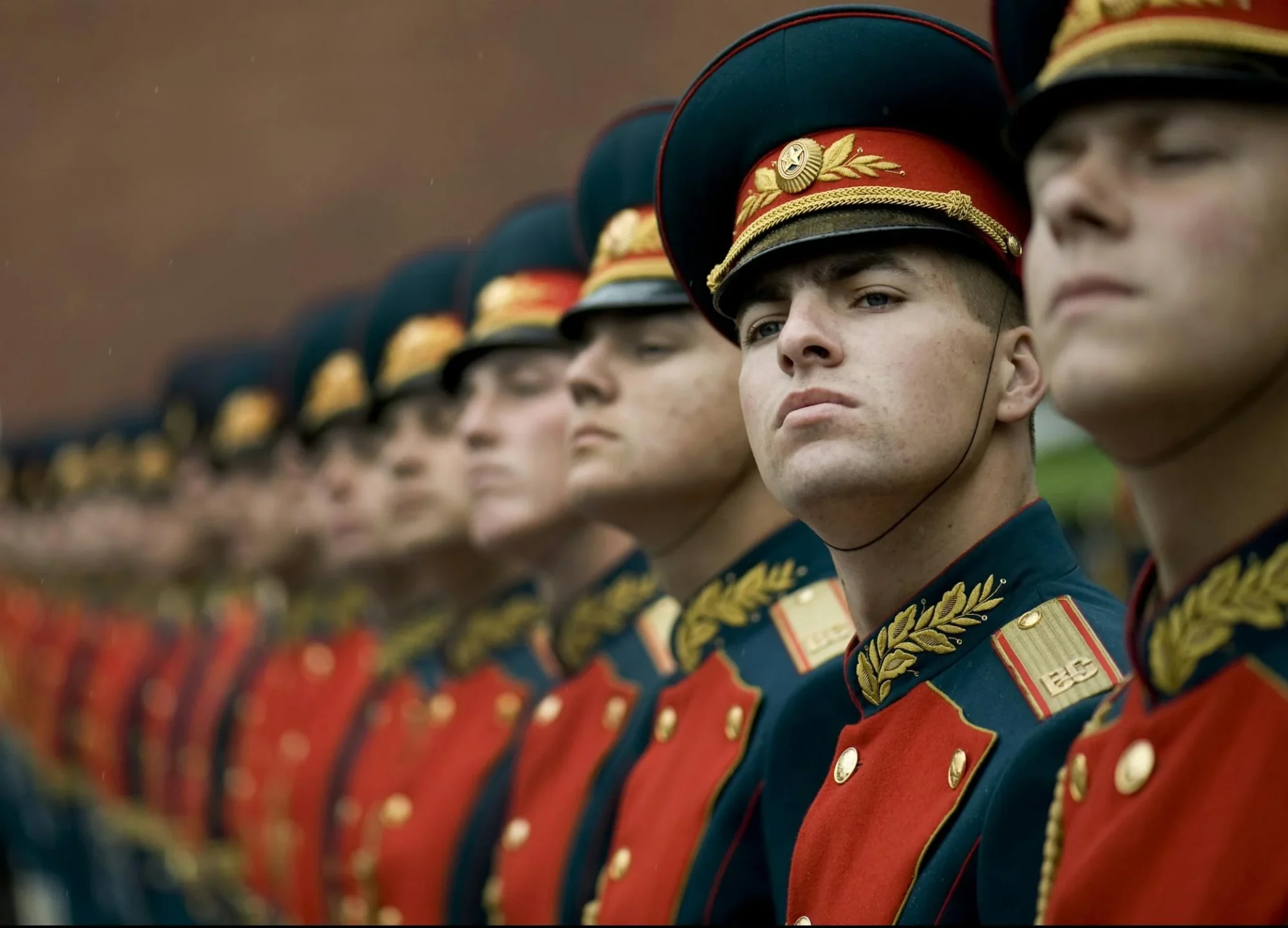
    Russian soldiers, 2009.

    Preventing World War III

    However, the ongoing war encompasses more than just discussions about toilets and gay pride. Russian officials at various levels cite other reasons, including the prevention of a third world war, as justification for their actions.

    “Colleagues, the commencement of a special military operation prevented the onset of a third world war. Consider what could have ensued? A humanitarian catastrophe, millions of casualties. This scenario was averted for one reason—our soldiers and officers are combating Nazism, safeguarding the peace and tranquility not only of Russian citizens but also of citizens in other states, particularly those in European nations,” stated Vyacheslav Volodin, Chairman of the Russian Parliament, in January.

    Of course, the credit for averting global carnage is personally attributed to Putin.

    “In essence, the third world war was averted due to his (Putin’s) competent decisions and actions,” stated the representative of the Ukrainian separatists in the “DPR,” Artem Zhoga. Towards the end of 2022, he publicly appealed to Putin to run for his fifth presidential term. Аfter sighing and throwing up his hands the Russian president agreed…

    Although Putin refrains from portraying himself as the world’s savior, he certainly views his decisions on a grand scale. For instance, in the fall of 2023, he asserted that the Russian military was combating colonialism in Ukraine.

    “The West, fundamentally, does not desire such a vast and diverse country like Russia. The multitude of cultures, traditions, languages, and ethnic groups simply does not align with the mindset of racists and colonialists,” explained the Russian leader.

    “It is this genuine freedom that the fighters in the special operation zone are defending today,” he added.
    Image: Наташа Нирамайя

    A Nonexistent Future

    By the end of 2023, polls indicated a declining level of support for the war among Russians.The country faces sanctions, ongoing casualties, and a stalemate in the invasion. Neither side appears capable of achieving significant progress on the front lines.

    So, what is the path forward? The Kremlin lacks a clear vision for the future. The only strategy offered by the authorities is to escalate hate speech — enemies in Kyiv, enemies in the West, and enemies within the country. Following crackdowns on journalists and opposition figures, persecution has extended to writers, artists, and, more recently, celebrities (traditionally loyal to the regime).

    Putin has wagered on perpetual war, as political scientist Tatyana Stanovaya asserted in one of her columns. She believes that aggressive militarism is increasingly defining Russian daily life.

    “This choice will exacerbate conservative trends, accelerate repression and make Russian politics more intolerant and ruthless,” Stanovaya wrote.

    This is evident in Russia’s campaign against LGBT. Officials, from mayors to the president, have suddenly focused on topics like gay pride and gender-neutral toilets, using similar language as if following a script.

    Is this topic truly a major concern for Russians? Analysis of the “anxiety index” for 2023 reveals that people’s primary fears revolve around various factors, including declining living standards, rising prices, and the threat of new mobilization.

    In March, Russia will hold presidential elections, where Putin is expected to secure the desired outcome. However, he will have to deal with mounting problems.

    Despite the repression and purging of opposition figures in Russia, protests continue to erupt sporadically. In Moscow, the wives of mobilized men are demanding the return of their husbands, residents in Bashkortostan (A Muslim-majority republic located between the Volga River and the Ural Mountains) are outraged over the conviction of an environmental activist, and recent protests erupted in Yakutsk (east Siberia) following a domestic murder. Moreover, the situation is exacerbated by increasing instances of drones attacks and shelling occurring in different country regions.

    But the most unsettling development for the Kremlin was the emergence of widespread support for Boris Nadezhdin’s campaign. As a representative of the systemic opposition, Nadezhdin aims to enter the elections with a straightforward message: stop the war and initiate negotiations. Surprisingly, these objectives resonated with a vast number of Russians.

    Thousands of people across the country (and even beyond its borders) queued for hours to provide their signatures in support of Nadezhdin. In fact, this marked the largest anti-war action in the last two years. Nadezhdin’s supporters don’t expect his victory but are glad to express their stance in the only legally possible manner. Ultimately, Nadezhdin succeeded in gathering over 150 thousand signatures required for nomination. However, this doesn’t guarantee his eligibility to compete.

    Will Putin find new arguments to justify the need to continue the war? It is quite possible, but it is already clear that for this he will have to come up with something better than the threat of gay pride and gender-neutral toilets.

    Feature Image: Maxim Shklyaev
  • Protected: EP1.BONUS Believe Nothing Until it is Officially Denied! With guest Patrick Cockburn

    This content is password-protected. To view it, please enter the password below.

  • Podcast: Believe Nothing Until it is Officially Denied! With guest Patrick Cockburn

    The first Cassandra Voices Podcast, hosted by Luke Sheahan, features a long form interview with the veteran journalist Patrick Cockburn. Patrick’s father Claud, a leading British Communist member and journalist fought in the Spanish Civil War and eventually settled in Ireland. Patrick says of his father:

    He used to say the big battalion commanders want to convince the small battalions, the weaker, the less wealthy that there’s absolutely no point in resisting the big powers, they might as well give up. Claude believed exactly the opposite, the big powers are always more fragile, that they had points of vulnerability and you can attack them, and that’s why I have just published this book, which will be published later this year which is a biography of my father which is called Believe Nothing Until it is Officially Denied.

    Following in his father’s footsteps, for fifty years Patrick Cockburn has been practicing the art of journalism with integrity and persistence: a specialist on the Middle East, he has written extensively on wars and political machinations from Beirut to Belfast and Baghdad.

    Within books like The Occupation and Saddam Hussein: An American Obsession (2002) (written with his brother Andrew), Patrick Cockburn has revealed the workings of Arab dictatorships and Western Imperialism alike. Over the last decade, he has also created a separate, no less distinguished profile as a memoirist: The Broken Boy (2022) describes his survival of a Polio epidemic in 1950s Cork, while Henry’s Demons (2011) co-authored with his son, immerses the reader into the pain of psychosis.

    For our conversation with Patrick Cockburn, we sought to sketch out the lives and work of two independent-minded writers: both himself and his father, Claud. As indicated, Claud’s fifty-year career brought him around the world, from Civil War Spain to Wall Street during the crash of 1929,  back to 1930s London, where his newsletter The Week both documented and fought the rise of Fascism. It was only after WW2 that Claud moved to Ireland, where Patrick and his siblings would be born from the 50s onwards.

    Making use of unclassified MI5 files, and an abundance of material directly remembered from his late father, Patrick spoke to Cassandra Voices as he was preparing the final manuscript of a new memoir, covering Claud’s life.

    Patrick also spoke out passionately about coverage of the war in Gaza:

    Evil becomes normalised … and a lot of the governments don’t want to recognise and the papers and those outlets that support the governments don’t want to go on about it. So it’s perfectly reasonable that we should have a big story about the Russians firing some rockets into a city in Ukraine and half a dozen people are killed and others injured. That is wrong and that gets a lot of publicity. Then several hundred people are killed in Gaza and that’s on the bottom of the page now, if it’s mentioned at all.

    The first part of the podcast is freely available. You can listen to part two by subscribing on Apple podcasts. We will also be sending the second half of the show to our loyal Patreon supporters in the next few days. The decision to charge for the second half comes from our determination to maintain our independence.

    Episode One: Believe Nothing Until it is Officially Denied! With guest Patrick Cockburn.
    Listen on Apple Podcasts or Spotify
    Host: Luke Sheehan
    Music: Loafing Heroes: ​​https://theloafingheroes.bandcamp.com
    Produced by Massimiliano Galli: https://www.massimilianogalli.com
    Feature Image: Daniele Idini

  • Poem: Fragments of a Litany

    Fragments of a Litany
    Gaza, 2023-24
    Grieve with the butchered gods of love
    for Layan al-Baz, the young, the strong,
    her soft arms cut by shrapnel,
    her wounded leg a stump.

    May the world record unquietly
    the wordless eyes of Abdul,

    of Kenza, and Karam – who buried
    their mothers in a barren yard.

    And remember the nameless orphan, too:
    removed from the rubble of a screaming ward  –

    blood in the mouth, her vision blurred.
    Sow seeds, oh poem, for the baby, Salma,

    and her shock-haired sister, Alma, twin,
    mewling by the roadside when the brutal rains abate.

    Feature Image: Aftermath of an Israeli airstrike on the El-Remal area of Gaza City, October 9, 2023

  • Ivor Browne R.I.P

    It’s hard for those of us who work in the field of psychedelic-assisted therapy to put into words how much of a visionary Dr. Ivor Browne was. He was a pioneer of LSD psychedelic-assisted therapy in San Francisco and London in the 1950s. He also pioneered the therapeutic use of LSD, ketamine and holotropic breathwork in the 1980s in Dublin, when he was the Chief Psychiatrist at the Eastern Health Board, and ​​Professor of Psychiatry at University College Dublin.

    He worked with LSD and ketamine group therapy in St Brendan’s Psychiatric Hospital in Dublin in the 1970s, 80s and 90s. Dr. Ivor Browne was a maverick and, I would say, a truly great man, in many ways a man before his time.

    I had the privilege of getting to know him personally when he was running a regular meditation group every Tuesday in the Lantern Centre Dublin City near where I lived. Even though he was in his late eighties or early nineties at the time, his wisdom, compassion and wicked sense of humour radiated when in his presence. Despite showing up every week, I recall that he could never remember my name, due to his great age, failing hearing, and the staggering amount of people he had met over his lifetime; yet he greeted me and all the other participants each week with a beaming smile, like we were long lost friends.

    Browne’s work on trauma

    In his book Ivor Browne, the Psychiatrist: Music and Madness, based on work he had originally published in 1985, he speaks of the concept of trauma stored in the body as ‘the frozen present,’ which involves unprocessed emotions. To help process the unprocessed he referred to the use of altered states of consciousness, cathartic states, music and group therapy.

    This concept received very little attention from the psychiatric profession at the time, and a paper he published in the Irish Journal of Psychiatry, entitled ‘Psychological Trauma, or Unexperienced Experience’ in 1985, received zero citations at the time. This work, nonetheless, paved the way for the subsequent work of Dr. Gabor Mate, Dr. Peter Levine and Dr. Bessel Van der Kolk on trauma, somatic trauma therapy and psychedelic assisted therapy. In the 1980s – in recognition of the importance of his pioneering work – Dr. Stan Grof came to Dublin to collaborate with Dr. Ivor Browne, as did R.D. Laing.

    Thus, decades before later-day pioneers on somatic trauma therapy like Dr. Gabor Mate, Dr. Peter Levine and Dr. Bessel Van Der Kolk, Browne was speaking of trauma as the ‘frozen present’, using altered states of consciousness to help people process trauma frozen in their bodies, and using group psychotherapy, breath-work, bodywork and music as a means to do this.

    In a 2017 article published in Network Ireland magazine, Browne explains his attitude to trauma :

    Once that shut down (through a traumatic experience) happens, then that experience is frozen. So it is not a case of a threatening memory being repressed, it is that it has never gotten in properly. Once it is frozen it is outside of time, so twenty years later this can activate – some everyday event can trigger it – and you then experience it as if it is happening now. You don’t think about it and remember it – you feel it and experience it. And, of course, at that point you think you are going nuts because you look around and nothing traumatic is happening, yet you experience this traumatic feeling. That is why I called it “the frozen present”, because when it comes, it comes through as the present, not as the past. Eventually when it works its way through and you experience it a few times then it moves into the past.

    He continued:

    The best example is grief. If you have lost someone you have to do a lot of work over time in order to integrate that to allow it to become a memory. Then it becomes less threatening. When my wife died five years ago, the first year was absolute hell, and I couldn’t imagine feeling any joy. The second year was bad, but not quite as bad as the first. Now after five years I am quite contented. I have a different life. By processing the trauma, it has shifted into memory, but this approach is not possible in the current psychiatric model.

    Vocal critic

    Browne was a  vocal critic of the reductionist, purely bio-medical model of psychiatry. An outspoken critic of the mental health discourse, he said: ‘we are living in a society that is driving people mad’, emphasising that

    Psychiatry is a reductionist system that explains everything by the parts……The tragedy of psychiatry is that this is the only way you can think. Because in the psychiatric model you cannot ask how the behaviour or upbringing of a person is affecting their biochemistry – you can only ask how is the biochemistry effecting the person. Psychiatrists don’t take a history, so they don’t understand the problem in the context of the individual’s life.

    What is even more extraordinary is that he did this at a time when Irish society was incredibly conservative and the Catholic Church still held tremendous power. Professor Ivor Browne was censured by the Medical Council over his role in the Father Michael Cleary affair in 1996 after he had spoke out in support of one of his patients, Phyllis Hamilton, who revealed her affair with Fr. Cleary.

    The relationship with the heart

    He also proposed the heart, rather than the head, as being of central importance in mental health, and wellbeing, and that love was essential in the processing of trauma:

    Key to processing trauma is cultivating a relationship that allows it to be processed, and that ultimately involves love, and the deepest traumas we can experience involve a separation from love.. the truth of all this is that the heart is the centre, and if our heart is closed we cannot experience love.. if your heart opens, then you can connect.

    A deeply spiritual man, who became a devotee of an Indian spiritual guru, Browne believed, ‘These are the kind of things that we can talk about through poetry, or through the therapeutic model, but we can’t deal with these concepts through the psychiatric model. At the deepest level, a lot of our problems are spiritual.’

    In Ireland, we sometimes do not celebrate our own. Today we celebrate Dr. Ivor Browne as a truly great man. He was offered a professorship at Harvard University, and I have no doubt if he had taken it he would be much more well known outside of Ireland.

    Instead, he choose a life of service, helping his patients, and reforming the psychiatric services in Ireland, and Greece. Browne also played an important role in the closure of the infamous Leros island psychiatric hospital in Greece, infamous as one of the most brutal psychiatric hospitals in Europe.

    Here is a link to a paper he co-wrote in 1960 with Dr. Joshua Bierer, the pioneer of social psychiatry in the UK, on the therapeutic use of LSD and group psychotherapy.

    Browne also recognised the healing power of psilocybin, and the ancestral Irish use of magic mushrooms, mentioning in a podcast in 2017 that: ‘Magic mushrooms were probably available to the druids, back at that time, so several thousand years later, similar, to the sort of relationship you have (with ayahuasca) in Peru or Brazil.’

    Freud reputedly said that the Irish were the only people impervious to psychoanalysis, and that may be true, certainly in previous generations due to the ancestral trauma that was so prevalent. But Ivor Browne is the closest thing we have to an Irish Sigmund Freud or Carl Jung.

    Thank you Dr. Ivor Browne, from all the people you helped and for your visionary qualities.

  • The Emerald Delusion

    Let no feeling of vengeance presume to defile
    The cause of, or men of, the Emerald Isle.
    From William Drennan’s ‘When Erin First Rose.’ (1795).

    The intense green colour of much of the landscape of Ireland – the so-called “Emerald Isle” – bears testimony to Garrett Hardin’s assessment that ‘As a rational being, each herdsman seeks to maximize his gain’[i]. The predominance of highly verdant grassland across most of Ireland is not a natural phenomenon. In most regions hazel and oak are the summit vegetation. The synthetic fertiliser used on the abundant pastures creates an artificial glow. An outsider might assume that the absence of a ‘strong state’ is to blame for an unwieldy agricultural system dedicated to the production of meat and dairy for export, but this is not necessarily the case. This essay argues that state intervention, in the form of a land tax, could provide an important means of ameliorating a system that rewards a shrinking number of farmers, at a high environmental cost. The state can also facilitate the development of ‘alternative agriculture’, involving more sustainable environmental practices, higher employment, improved health outcomes and a reduction in the cost of living for the wider population, but this must allow farmers as Silke Helfrich puts it ‘to act like entrepreneurs on a local scale’[ii].

    On the climatic periphery of grain cultivation, and with a wet climate, over millennia farmers, mainly seeking new grazing land, steadily removed most of Ireland’s native tree cover. Thus, according to Mitchell and Ryan in Reading the Irish Landscape: ‘from about five thousand years ago when the first tree-felling axes made woodland clearance possible man’s hands have borne down ever more heavily on the Irish landscape’[iii]. This left a mere twelve per cent of native woodland by the 1400s. An intensive period of British colonisation from the seventeenth century removed much of what was left, leading to the extinction of native fauna, including the wolf. The loss of access to woodland also presented enormous difficulties to a native population subjected to land seizure and discriminatory colonial laws. By the eighteenth century the poet Aodhagan Ó Rathaille asks “cad a dhéanfaifimd feasta gan adhmaid / tá deireadh na gcoillte ar lár” (Now what will we do for timber, / With the last of the woods laid low?). Today, despite ideal conditions, Ireland still has the third lowest coverage of forestry in the EU after Malta and the Netherlands, and much of that is in the form of non-native Sitka Spruce plantations that do further damage to the ecology.

    Contemporary Irish agriculture is dedicated to the production of food commodities for export, principally beef and dairy that fuel climate change (the Irish agriculture sector was directly responsible for 38.4% of national Greenhouse Gases (GHGs) emissions in 2022). Despite excellent growing conditions, largescale horticulture is rare – and small-scale allotments are few in number – while public health authorities contend with a host of ‘lifestyle diseases’, linked to obesity and sedentarism. Irish agriculture is far from being the result of a free market. The system is underpinned by EU subsidies, and other regulations, which often do more harm than good.

    An Irish Peasant Family Discovering the Blight of their Store by Cork artist Daniel MacDonald, c. 1847

    Thus far we have not referred to the (non-native) staple crop most identified with Ireland, which appears to serve as a vivid illustration of the tragedy of the commons, and the pessimistic view of Thomas Malthus that food production fails to keep pace with population growth over time. Ireland was the first European country to adopt the potato (solanum tuberosum) as a widespread staple. This was an inauspicious development, according to John Reader, as ‘the innocent potato has facilitated exploitation wherever it has been introduced and cultivated’[iv]. The catalyst for the potato’s successful adoption was the traumatic wars of the seventeenth century especially Oliver Cromwell’s subjugation of Ireland (1649-53) since ‘the potato could both be cultivated and stored in a manner which might intuit the spirit of destruction, and the malevolence of the enemy’[v]. However, Henry Hobhouse argues that ‘of all the havoc wrought by [Oliver] Cromwell in Ireland, the by-product, the lazybed, was in the end the most damaging’[vi]. Another author, A. T. Lucas denigrated the ‘dark reign of the potato’ for ‘banishing’ most other foods from the table.[vii]

    For the Irish peasant farmer the advantages of the potato far outweighed its disadvantages. The remarkable growth of the population in the eighteenth and early nineteenth centuries from approximately two million to over eight million is unlikely to have occurred without the availability of a subsistence crop whose yield exceeds that of wheat, and which was suited to Ireland’s moist, friable soil. The potato has a nutritional profile that allows for almost exclusive long-term consumption unlike most cereals, which lack the essential amino acid lysine; although the tuber has the drawback of a high glycaemic load. At the start of the nineteenth century Irishmen’s heights were greater than those of equivalent Englishmen in a variety of occupations and situations, and life expectancy was higher than most Europeans of that time. Daly has described it as ‘a wonder crop the only subsistence foodstuff which provides a nearly perfect diet, a crop which would feed a family on very little land, in almost all types of Irish soil, irrespective of rain or lack of sunshine’[viii].

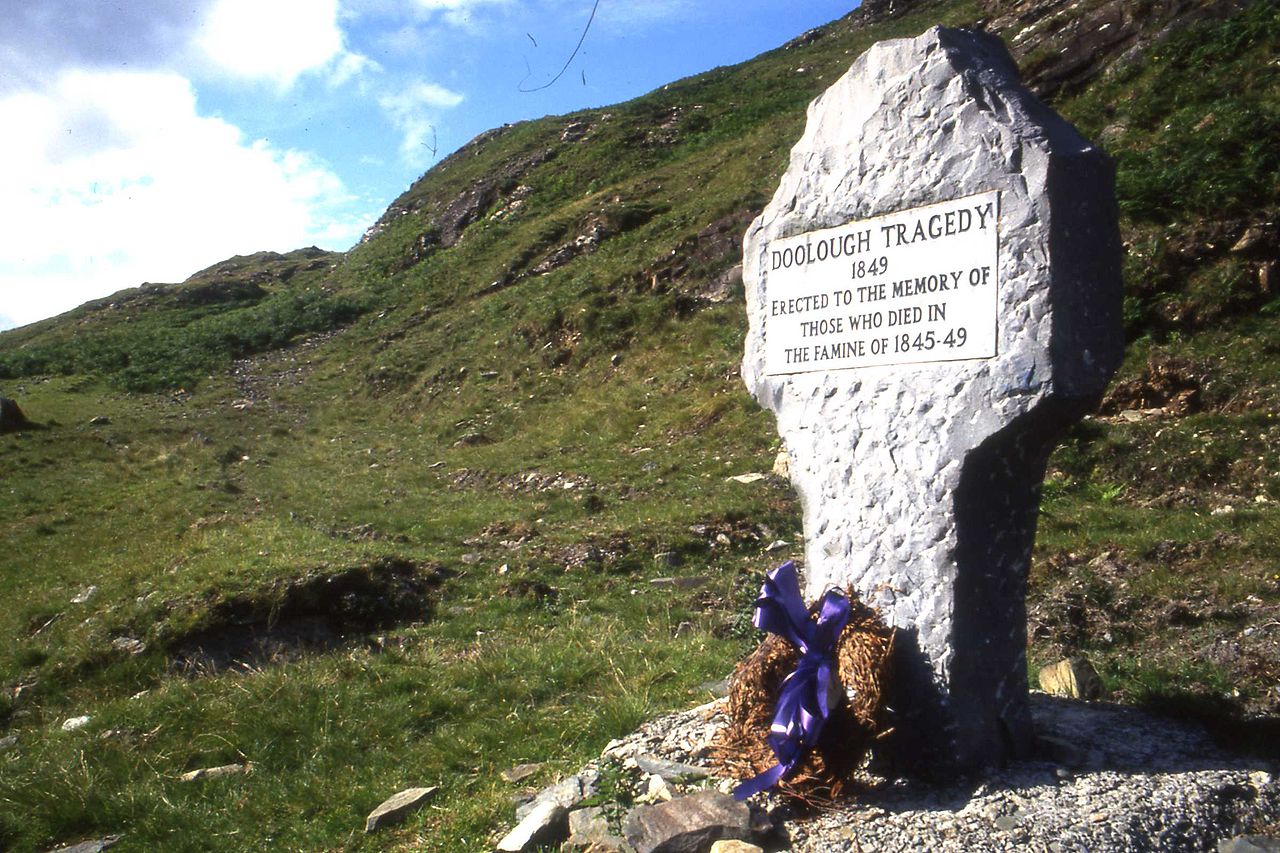
    As any student of Irish history knows the story ended in tragedy with the Great Famine of 1845-51. The potato blight (phytophthora infestans) proved devastating for the three million out of a population of eight million almost exclusively dependent on it. According to Sen: ‘In no other famine in the world [was] the proportion of people killed . . . as large as in the Irish famine of the 1840s’[ix].  This was because by the eve of the Great Famine three million (out of a population of eight) were living on just one million acres of land which represented a mere five per cent of the total acreage of twenty million. Crotty argues that ‘with twenty million, instead of one million, acres of land available for the production of the population’s food requirements even with the worst conceivable crop failures, an abundance of food could have been grown to feed eight or more millions of people’[x]. This view is endorsed by Mokyr who argues that Ireland was not overpopulated on the eve of the Great Famine.[xi] Perhaps uniquely in the world, the population of Ireland has never scaled similar heights.

    Over generations, peasant proprietors would have noticed that holdings were being continuously sub-divided, and that sustenance was increasing dependent on the unpalatable but prolific Lumper variety of potato. Yet the pattern of early marriage and large families endured; gynaecological brakes were not applied as seems to have occurred in other European peasant societies at that time. Importantly, during these decades of unprecedented fecundity, political activism was lacking, even in the face of the continued injustices of the Penal Laws. Notably, most of the leadership of the first republican independence movement, the United Irishmen, were from Protestant and Dissenter minorities in Dublin and, in particular, Ulster, the northern province. A Catholic society denuded of its native leadership (the Earls flew in 1607 and ‘the Wild Geese’ in 1691) failed to mobilise politically.

    Surprisingly, Crotty laments the tenant land purchase schemes of the late nineteenth and early twentieth century as: ‘[t]he abandonment of competitive rent in favour of a system of peasant proprietorship naturally introduces an element of immobility into the allocation of land among farmers’. He argues that: ‘[t]here are reasons to believe that under Irish conditions this immobility is likely to be particularly severe, leading in turn to serious misallocation of land’.[xii] Thus, between 1850 and 1900 the number of cattle on Irish farms increased by over 60% and the number of sheep more than doubled. The area under tillage declined from 4.3 to 2.4 million acres, but the rural population fell from 5.3 to 3 million. The revolutionary socialist James Connolly identified the effect on rural Ireland: ‘Where a hundred families had reaped a sustenance from their small farms, or by hiring out their labour to the owners of large farms, a dozen shepherds now occupied their places’[xiii]. Crotty argues that:

    concentration on cattle and sheep . . . has had an extremely harmful effect on Irish agriculture and on the whole Irish economy. While on the one hand is has led to the enrichment of the numerically small landed interest, on the other it has given rise first to famine and subsequently to chronic emigration and to very slow economic progress for the numerically much greater non-land-owning section of the population’[xiv].

    The successful movement for land reform in the late nineteenth century created a society with a preponderance of peasant proprietors who maintained a model of production that offered few employment or investment opportunities.

    According to Crotty: ‘The structure of the agriculture, characterized by the predominance of beef-cattle and sheep, provided little opportunity for the employment of labour or capital and with a static volume of output these opportunities did not improve’. He further contends that the interests of farmers, or landowners, and the nation ‘are essentially conflicting’; because: ‘[t]he scope for intensifying grassland beef production is very limited. The profitability of the system depends on a low rate of expenditure’[xv]. Thus, the Irish population continued to decline after independence, while the price of food tended to be at least as high as in Britain, despite far lower population density, and greater possibilities for local production.

    Patrick Hogan 1891-1936.

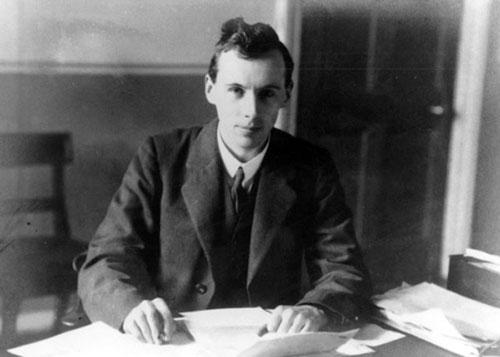
    Independence brought little change in agricultural priorities with Ireland remaining a primary producer of livestock products and cattle often exported ‘on the hoof’ to Britain. This was driven by the first Minister for Agriculture Patrick Hogan (1922-32) whose sympathy lay with large cattle farmers. The early commercialisation of agriculture has cast a long shadow as farmers have continued to produce commodities for the international market, and purchase their own food from the same anonymous source. In an address to Macra na Feirme in 1974, the psychiatrist Ivor Browne observed the irrational scenario of: ‘a small farmer in Mayo taking his calf to the town to sell and his wife asking him to pick up a chicken for dinner in the supermarket while he is there; he manages to sell his calf for £1 and pays £1.50 for the chicken for dinner’[xvi]. Similarly, writing in 1968, Fennell bemoaned the demise of country markets and how a ‘frequent complaint in Ireland is the lack of variety of in vegetables for sale and the high prices charged’[xvii].

    From 1972 the European Community’s Common Agricultural Policy (CAP) perpetuated this pastoral model, generating further specialisation and reducing the unprotected horticultural sector which struggled, as a result, to compete with cheap, often subsidised, imports after the removal of trade barriers. Farm supports did allow large farmers to earn incomes comparable often to urban dwellers but generated further imbalance: a miniscule proportion of Irish farmland is devoted to tillage, much of it used as animal feed; there are over seven million cattle and almost six million sheep in the country.

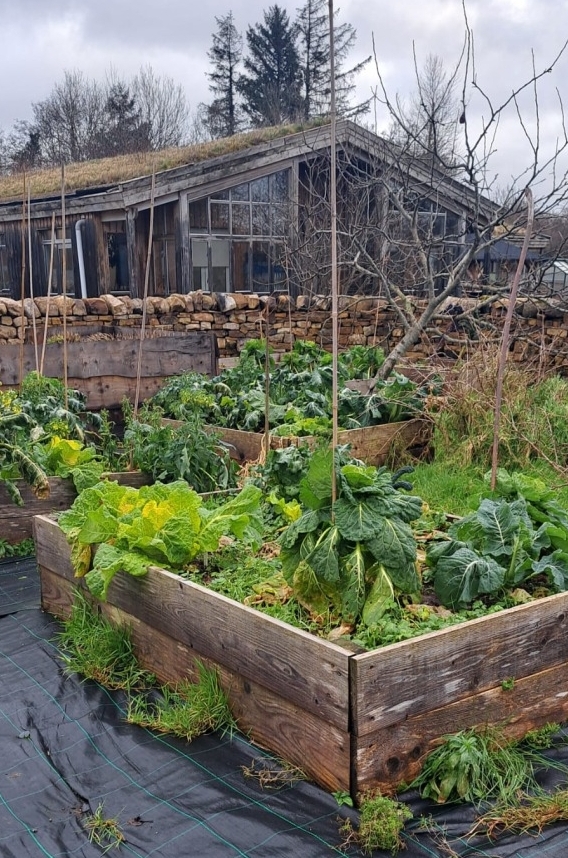
    The Organic Centre, Rossinver, Co. Leitrim.

    The adoption of agricultural alternatives from a variety of international ‘toolkits’ could confer significant advantages through reduced dependency on imported food, and increased employment in more labour-intensive tillage and horticulture as well as raising the health of a population that is beset by lifestyle diseases linked to a stunted food culture. One challenge for alternative agriculture is the historic inflexibility in the land market which thwarts diversification. It remains the case, as Mitchell and Ryan observed that ‘In Ireland it is still next to impossible to rent land on a lease of sufficient length to make improvements and where land can be bought it is often in small parcels at too high a price’[xviii]. The CAP subsidy regime maintains the high cost of land, as farmers are guaranteed incomes from privileged pastoral farming.

    Any alternative agriculture should involve far wider direct participation than is the case today. Farmers and farm workers could work on a part-time or seasonal basis. The hinterland of cities would be especially important. Crotty argued that: ‘A land-tax offers the only means of reconciling future increases in cattle and sheep prices, relative to those of other farm products, with the general welfare’[xix]. This would involve the broadening of the property tax to encompass agricultural land. Taxation revenue emanating from any land tax could be redistributed in the form of low-interest loans, allowing enterprising individuals or cooperatives to acquire land. However, the involvement of government agencies should be restricted as according to Thirsk:

    [T]he strong assumption of our age that omniscient governments will lead the way out of economic problems will not in practice serve. The solutions are more likely to come from below, from the initiatives of individuals, singly or in groups, groping their way, after many trials and errors, towards fresh undertakings. They will follow their own hunches, ideals and inspirations, and obsessions, and along the way some will even be dismissed as harmless lunatics. The state may help indirectly, but it is unlikely to initiate, or select for support the best strategies; and, out of ignorance or lack of imagination, it may positively hinder.[xx]

    Thus, it will be important for farmers to “act like entrepreneurs on a local scale”.

    A relatively sparsely populated island such as Ireland ought to be equipped for self-sufficiency as we enter a turbulent era in human history. Above all, for this to occur, we require a political leadership representing the interests of the people in alignment with entrepreneurial opportunities and environmental constraints. The introduction of a land tax could allow for a more equitable distribution of land, revenues from which could be used to allow individuals or cooperatives to acquire land. Any government should be mindful, however, that over-regulation may hinder development. The role of the state should be to provide access to land. Thereafter, farmers should be allowed to experiment. The history of Irish agriculture prior to the Famine, when three million were subsisting off just one million acres without artificial fertilisers or machinery, demonstrates how fertile Ireland can be. It will be necessary, however, for farmers to avoid dependence on a single staple, and for the state to insist on an increase in the coverage of native trees which provide additional ‘services’, including clean water and air.

    [i] Hardin G. (1968): The tragedy of the commons.  Science, New Series, 162 (3859), S.1243-1248, doi:  http://www.jstor.org/stable/1724745

    [ii] Helfrich S. (2009): Gemeingüter sind nicht, sie werden gemacht. In: Ostrom E. (2009): Was mehr wird, wenn wir teilen. München: oekom, S.11-19. (Helfrich 2009, p.13)

    [iii] Mitchell, F. and Ryan, M., Reading the Irish landscape (Dublin, 1997), p.8.

    [iv] Reader, J., The untold history of the potato (London, 2009). p.14

    [v] Salaman, R., The history and social influence of the potato (Cambridge, 1949). p.215

    [vi] Hobhouse, H. Seeds of change: six plants that changed mankind (London, 1985), 253..

    [vii] Lucas, A. T., ‘Irish food before the Famine’, Gwerin 3 (1962)

    [viii]Daly, M. ‘Farming and the Famine’, in O´ Grada, Famine 150 commemorative lecture series., p.39.

    [ix] Sen, A., Identity and violence: the delusions of destiny (New York, 2006), p.105.

    [x] Crotty, R., Irish agricultural production (Cork, 1966), p.63.

    [xi] Mokyr, J., Why Ireland starved: an analytical and quantitative history of the Irish economy 18401850 (New York, 1985), p.291.

    [xii] Crotty, 1966, p.93.

    [xiii] Connolly, J., Labour in Irish history (Dublin, 1973). p.15-16)

    [xiv] Crotty, 1966, p.236.

    [xv] Crotty, 1966, p.117.

    [xvi]  Brown, I., The writings of Ivor Browne: steps along the road: the evolution of a slow learner (Cork, 2013), p 90.

    [xvii]  Fennell, R. ‘The domestic market for Irish agricultural produce’, in Baillie and Sheehy, Irish agriculture in a changing world, (Dublin, 1968). p. 106.

    [xviii] Mitchell and Ryan, 1997, p.356.

    [xix] Crotty, 1967, p.236.

    [xx] Thirsk, J, Alternative agriculture: a history from the Black Death to the present day (Oxford 1997), p.256.

  • Musician of the Month: Shortsleeve Conor

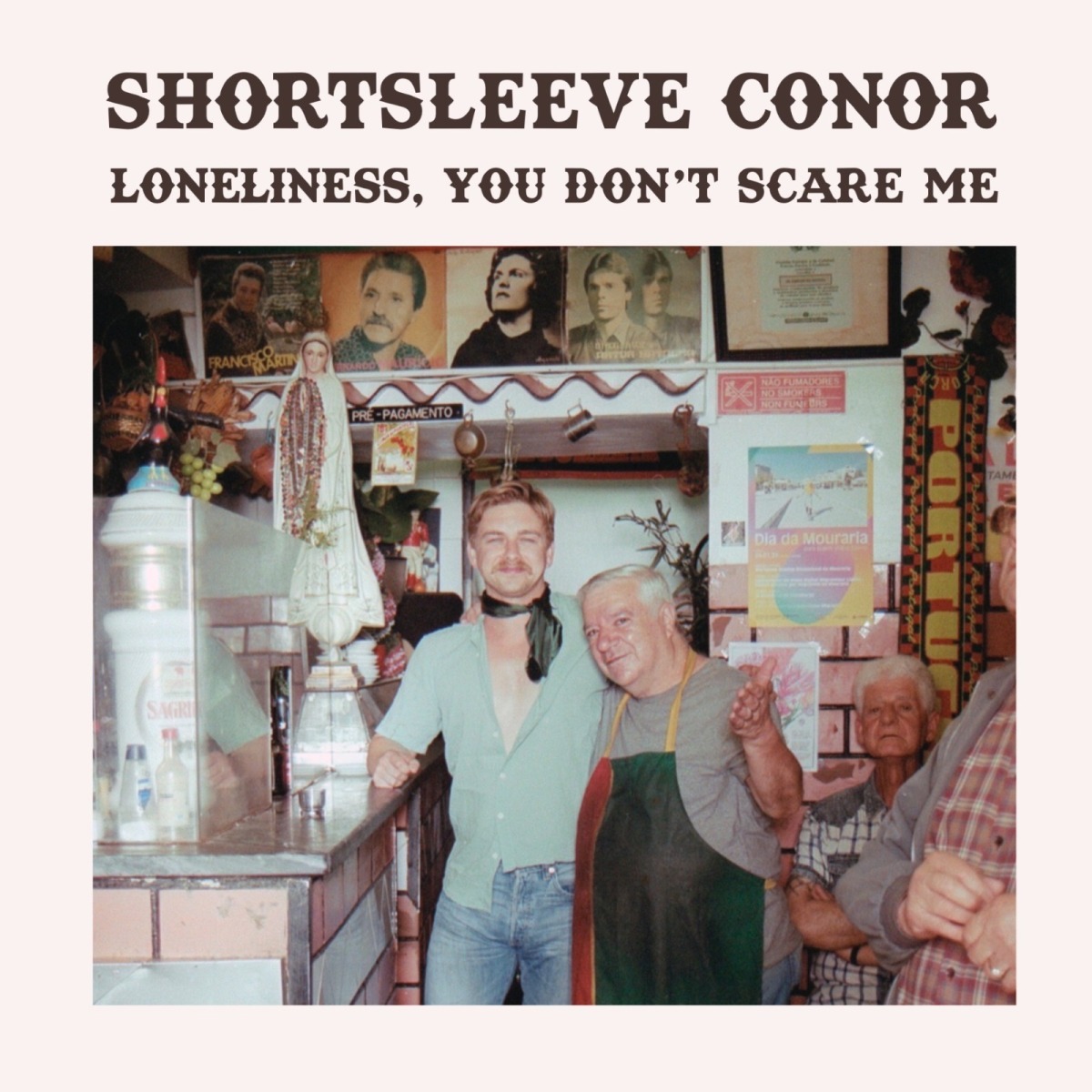
    Shortsleeve Conor was born in Lisbon, but started playing in Aberdeen when I was a 21-year-old pizza chef. One Sunday, after finishing the close, the team headed over to a pub nearby called the Prince of Wales. We walked through the double doors to be met by the most joyous music I’d ever experienced. Fiddles, banjos, guitars, loud chattering, singing, tin whistles, flutes, pints pouring and a saxophone. I fell in love with trad and folk music right then.

    My family is Irish, though I grew up in the U.K. on the Wirral, so I already knew the music but hadn’t really experienced it. I was at that time a DJ playing house and disco. Now I decided folk music was something I wanted to pursue. The next week I brought my guitar to the session and asked if I could join in. Everyone was really nice and I think I sang Raglan Road or something. I listened to lots of the Dubliners, the Pogues, Margaret Barry, Hamish Imlach and the Fureys around that time.

    There was a fella who played in the session called Sandy Cheyne, who I now know is an artist and brilliant banjo picker. He soon showed me it was more useful to play a five-string than a guitar in this environment, because there are so many of the latter to compete with.

    He encouraged me to adapt old Scottish tunes to be played on the five-string banjo. Sandy had a huge influence on my musical direction. I started listening to all sorts of country music and learnt about the roots it had in Scottish and Irish.

    I listened to lots of on musicians like Bob Dylan, Dock Boggs, Ola Belle Reed, Jean Ritchie, Doc Watson, Clarence Ashley, Nathan Abshire and too many other names to mention. But it was the trad session approach to music which had the biggest influence on me.

    I learned how to entertain a crowd, often using humour in the songs. It also showed me how to be vulnerable with my writing. Things I like to talk about in my songs are non-traditional relationships, mental health issues, class politics and the end of the world. Also love. Lots about love.

    I moved to Lisbon to study in 2021 and did what I always did when I moved to a new place: looked for the music. Funnily enough the only Irish trad session in town was a five-minute walk from my new home.

    By then I had a few songs under my belt and wanted to take them to some open mics. I was then introduced to a musician called the Mighty String at the city’s oldest open mic in a nice venue called Camones. We decided to do some terracing – where you busk to tables at restaurants – and became mates. He sat me down one day and told me I need a new name. Conor Riordan was too difficult to pronounce over there and he’d always noticed I wore short sleeve t-shirts. Shortsleeve Conor was born.

    I’m a really lucky person. When things are not meant to work out they usually do. So when I moved to Lisbon I wasn’t expecting there to be a blossoming folk music scene I could jump straight into. But I soon made a great group of friends, who all happened to be excellent musicians.

    I’m also really lucky that I didn’t have to pursue the Shortsleeve project too hard. Gigs just seemed to happen and the response was generally encouraging. But there was always one problem question: “Have you got any of your music online?” I didn’t and I didn’t really have a plan to. But I had a friend who had just decided to start a record label to capture this special moment in the city’s cultural history.

    Cheap Wine Records was founded by Lee Squires with the ambition of promoting Lisbon’s folk music scene. It also aims to nurture future talent, showcasing their work so they can tour and go on to bigger things. Shortsleeve Conor was one of the first projects, so again I was very lucky.

    The album – ‘Whatever that means’ – was put together at Estudio Roma 49 in Lisbon, with my friends and fellow musicians coming together to make it happen. The same goes for the production, marketing and funding. This community-led approach to the music made me feel right at home. It’s the same mindset as being back in the Prince of Wales, sitting in a circle playing tunes over a few pints. Only now I was blessed with a hot Portuguese sun, instead of the freezing North Sea winds.

    I’m writing this the day the Doomsday Clock moved 90 seconds closer to midnight, the closest it’s ever been. It doesn’t feel like there’s a lot going on in the world to be happy about. But being from northern England I have to find what’s funny in everything. It takes the edge off. That’s why in my writing I contrast the rise of fascism with not being able to get a parking space in my song Pink Champagne. That’s why my song about being in an abusive relationship is so upbeat.

    I like to write about these things, but to add some humour into them. It helps because I also really struggle to express how I feel, which can be really frustrating when I’m in a relationship. I’m only at my most vulnerable when I’m telling an audience how I feel about someone who should have heard it first. I really try to leave nothing to the imagination with lyrics.

    Now my album is out I don’t really know what to do. I hope to use it to travel with my music and meet new people. When we started this record project the Mighty String asked me to write down what my long-term goal was for the album. I said I’d like for it to be well appreciated in a small but enthusiastic audience so I could disappear into anonymity without worrying about it too much and become a furniture painter or something. Then in forty years I’d like for it to be rediscovered and for it become a country classic so I can go on tour with it globally in my seventies.

    Follow Shortsleeve Conor on Spotify.


  • Allen Jones: Pulling the Trigger

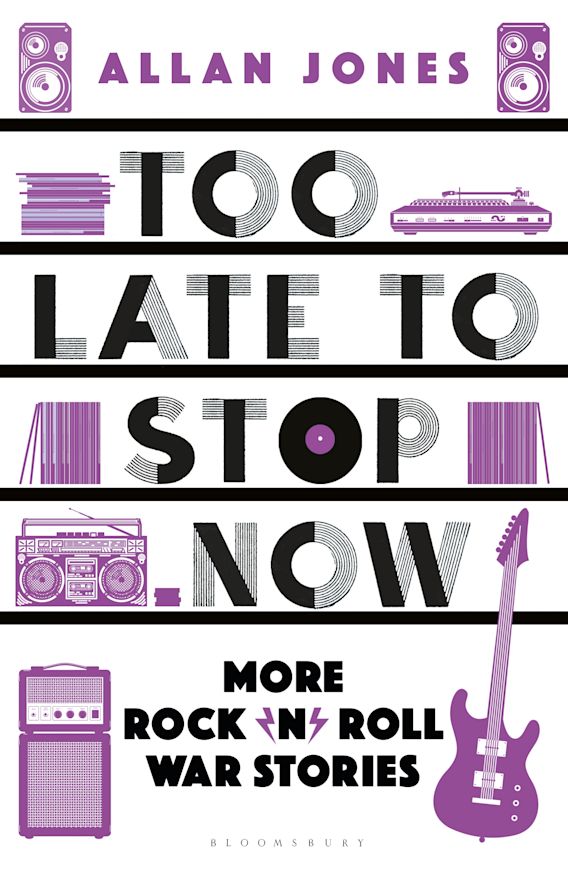
    When it comes to veteran rock journalists, few could lay more genuine claim to the title than Allan Jones. After joining Melody Maker as cub reporter in 1974, with no previous writing experience, but an application letter which concluded: ‘Melody Maker needs a bullet up its arse. I’m the gun – pull the trigger’, he rose to editing the magazine ten year later. On leaving the fabled inky at the height of the excesses of Brit Pop – about which he was less than enthusiastic – he founded and edited Uncut, providing a British-based forum for the emerging Americana/New Country scene. Now in semi-retirement, he has produced two volumes of rock’n’roll anecdotage – 2017’s Can’t Stand Up for Falling Down, and the recently published Too Late To Stop Now. Des Traynor caught up with him to discuss these and sundry other matters at last year’s Kilkenny Rhythm’n’Roots Festival (a.k.a. ‘the best little weekend music festival in Ireland – and the known universe’), now celebrating its 25th anniversary.

    It seems like there are more lengthy pieces in this book than the last one?

    Yeah, partly due to the circumstances in which it was written. The first book they were interested more in a compilation of the stories as they were already written, and I didn’t really think of elaborating on them. I just packed the book with as many stories as possible, which meant that a lot of them had to be shorter than they could have been. I started writing stories for the second one just at the beginning of the first lockdown. As I explained in the book, I thought people would be using their time productively – you know, learning the harpsichord or how to juggle or a foreign language, whatever.

    You didn’t want to emerge empty-handed?

    Yes, I mean, I could quite happily have spent lockdown getting stoned and watching Netflix, there’s loads of movies. I’ve got a link to the BFI player. So, endless hours of viewing available, and a vast record collection I could reacquaint myself with – but when I started writing the stories there was no inhibition in terms of words, so I tended to let the stories dictate the length they would be.

    Were you always confident about your own abilities as a writer and critic, or did you feel like maybe you were a bit out of your depth when you started?

    I had loads of opinions. I wouldn’t call them well-informed in a lot of instances, but they were opinions and I wasn’t shy about sharing them. That came out of an Art School background. If there was one thing that Art School taught me, it was that you had to stand up for your work and your opinions, and be unfazed by criticism. So I hadn’t realised that at the time, but it did give me a lot of confidence, more bravado and bluff really.

    But you could do the work?

    It was very simple. I wasn’t stupid. I’d read Melody Maker for years. I’d recognised the basic template of writing a 2000 word feature on somebody who’d just had a chart hit. You went in, you established the fact that they had a new single, let them tell you how it was different from the last single, how it was a step forward, how it was a new vision for the band or whatever. That usually took about five minutes. To liven things up, you’d hope that one of the band’s chart rivals had a new single out. So you’d ask them for an opinion on that, hopefully it would be a bit controversial, they’d slag it, which would give Ray Coleman the chance to put a big headline on the cover: ‘Sweet slam Rubettes’, or ‘Shawaddywaddy slam Glitter’. And all they would say, basically, was ‘I’m not really keen on it’, or ‘It’s not very good’. But that was enough: that stirred up a bit of controversy.

    The other thing I learned to get a band talking was to tell them that you’d heard a rumour that one of them was leaving, or doing a solo album. And sometimes they’d go: ‘How did you know that?’ ‘Oh, just a wild guess.’ But it would get them talking about band dynamics. But I found that, a band like Mud for instance, who were really sweet guys, they were used to churning out these interviews, very pat answers. They weren’t really engaged with the interview process. But if you stopped for a drink with them, after they got this contractual obligation out of the way, I’d start asking them about their early days: anecdotes galore! Fucking brilliant stuff! Les Gray: really a very funny man. So I started to introduce some of those anecdotes to change the shape of the copy that was expected. At first they’d just get cut out, ‘Stick to the news story that you’ve been sent to do.’ So I just started to fracture that as much as I could. And although I hadn’t read Lester Bangs or people like that, I had read Tom Wolfe, and I’d read Hunter S. Thompson. I had an idea of what the new journalism was: contravening traditional journalistic rules about not involving yourself in the story. So I started introducing myself as a character. At first, they were the bits that would be cut. But as I became more successful at that kind of integration, the opportunities opened up. I mean, at that time, I would accept anything they asked me to do. I’d never written before, and I had to learn how to write well and quickly. So ‘I’ll do anybody, just send me out, I’ll do it. I’ll come back and I’ll write it up and see where we go from there.’ And once as the readers’ responses started to come in…

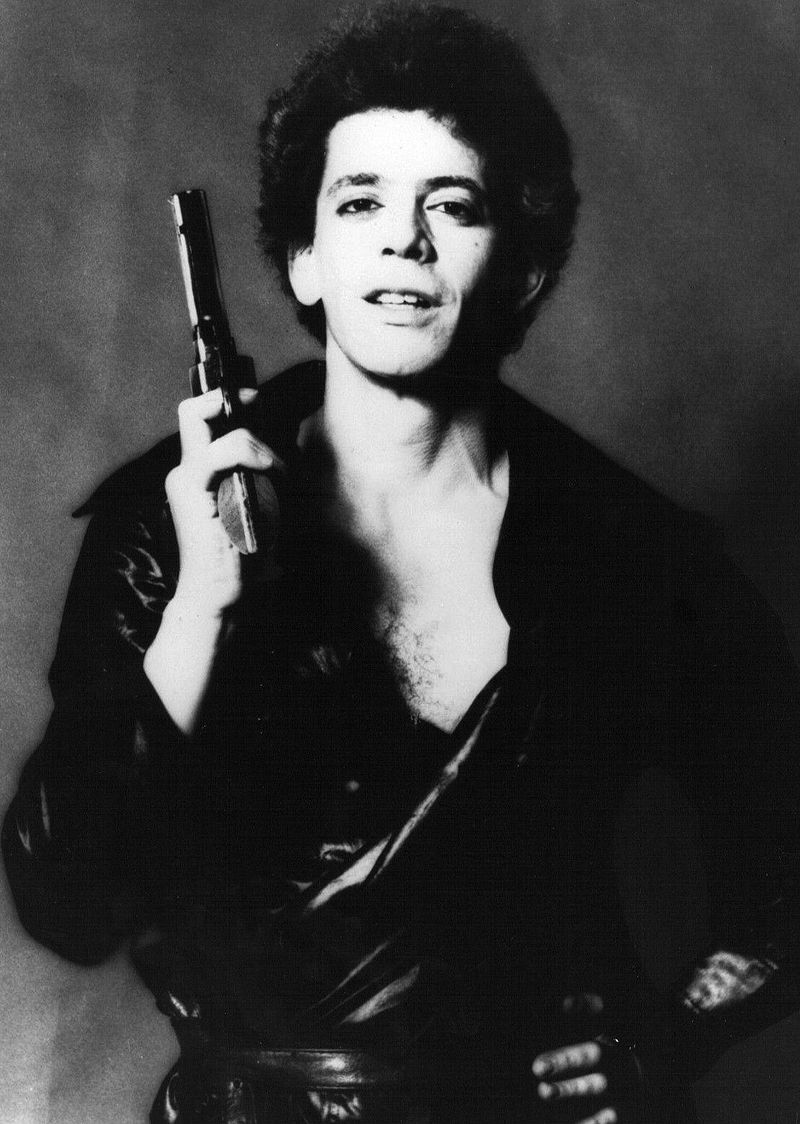
    Lou Reed in 1977.

    You hit it off with Lou Reed?

    How extraordinary was that? I could have wept. I was such a huge, huge Velvets’ fan.

    Why do you think he took a shine to you?

    When I walked in, with some presence of mind, I pressed record on my tape recorder. And for twenty minutes there was just this torrent of abuse. His first words to me were, ‘Do you know your head is too big for your body?’ And ‘What toilet did Melody Maker find you in, faggot?’ It was effortless on his part. It just went off. But I was just laughing. This was the Lou Reed I wanted. I could feel the piece writing itself. And I thought even if he tells me to fuck off when he’s finished this tirade, I’m gonna have enough to write something.

    I then took a breath. And I just said something like, ‘Are you doing this because this is what you think I expected Lou Reed to be like? Or is this you being Lou Reed? Or are you just turning it on because, you know, you think this is how the public want to see you?’ And he thought about that, and he said, ‘Sit down’. So I sat down, and he said, ‘Drink?’, and pulled out a bottle of Johnnie Walker Red, the first of two that we got through that day. I think, because I had a sense of humour, and I wasn’t intimidated by him, he just liked it. And I wasn’t deferential to him, and I think he liked that as well.

    And at the end of the interview, when the chief of press came in, Lou said, ‘By the way, book Allan into the hotel I’m staying in in Sweden. You’re coming on the road with me.’ And I thought he’d forget about it, but come the next Tuesday, there was a fucking limo outside my flat, drove me to the airport, got on a flight to Stockholm, there was a car waiting at Stockholm airport, took me straight to the hotel, and Lou is waiting in the lobby, saying, ‘Where have you been?’

    What about Van Morrison, whose music you obviously love, but all your encounters with him were ‘difficult’.

    Well, the first one especially, it was backstage at Knebworth, not ideal. He’d just come off stage, in a sulky mood. In the end, I just said, ‘Fuck it, man. If you’re not gonna chat, you know, we’re wasting time. I’ve got things to do, you’ve got things to do, I’m gonna leave.’ I was fuming, absolutely fuming. But I must say it never dented my admiration or love for his work. His work transcends any personal faults that he has, and to this day it does.

    He is a paranoid fucker.

    He’s always been like that. People who know him better than I would will trace it back to the way he was treated in the early part of his career. So comprehensively ripped off that he just hates the music business, which has offered him such success. So I can understand that level of bitterness. But five minutes in the presence of virtually anything that Van’s recorded, and any kind of negative thoughts that I have about him as a person  immediately evaporate. I saw four gigs over three months, that they played just after COVID, at the Palladium, Hampton Court, a small Dingwall’s gig he did, and then at the Theatre Royal in Drury Lane. And he was just incredible each time, absolutely astonishing.

    Do you think that there’s a lot of compromise in reviewing now, that rock journalism has become an extension of PR?

    Well, I think that is true to a certain extent: it’s certainly not the kind of confrontational journalism that I became attached to. Also, the idea that the writer as a character becomes involved in the story isn’t much encouraged, it seems to me, from current reading of Mojo or Uncut. There seems to be a greater deference to artists these days.

    Are there any younger writers now that you particularly like?

    I don’t read so much that I could say. But here’s a point that addresses your thinking about the PR nature of it, and the way the writing has changed since my days. I can read a whole issue of Uncut, and if it didn’t have byline names on the page, I wouldn’t really know who had written it. They really are quite interchangeable. There is a template that everybody adheres to. It’s not compromising the features, which are good in themselves. But what I miss is an individual, indeed, an idiosyncratic, voice. It’s just not there. However, there’s a writer in Uncut called Damian Love, who I really, really like – probably because his taste and mine are  really similar. And another writer who doesn’t appear as much as he should in Uncut, because he’s got a separate career as a political commentator and broadcaster is Andrew Mueller, who has written a couple of very, very good books – one about his life as a political foreign correspondent, and the other a memoir of his career as a music journalist, including coming over from Australia.

    I really enjoyed the books, not just in terms of subject matter, but because they are so funny, especially the way you often describe things in exaggerated terms.

    Well, I think that came out of not having any musical training and not knowing anything about musical theory. So I can’t break down a piece of music into something well informed about the actual musical content like, you know, Richard Williams was able to do, in the old Melody Maker.

    Did you ever try learning an instrument, or playing?

    No. At school – first year, comprehensive – we had to do music as a subject, and apparently to get good grades in that exam you had to play an instrument. And it wasn’t the kind of school where you wanted to be seen carrying a violin. So I thought: what comes in something square that looks like it’s a suitcase? So I ended up supposedly learning the trumpet. But when I went to the first lesson and I just couldn’t a noise out of the fucking thing. I was just blowing and blowing, I believe so hard that I burst a blood vessel in my nose and had to be taken to hospital. So I never went back for the second lesson.

    The end of your musical career.

    Indeed.

    And with that ripping yarn, so characteristic of the man, he’s off for a fun-filled afternoon with his old mucker, B.P. Fallon.

    Too Late To Stop Now: More Rock’n’Roll War Stories was published by Bloomsbury, on May 25th. Available in all good book shops.

  • Responsible Business

    The ten principles of the U.N. Global Compact, formed in 2000, sought to realign business as a force for good. They include compliance and support for human rights; upholding good labour practices and eliminating discriminatory and forced labour; taking up proactive environmental stewardship; and fighting corruption.

    Several institutions across the planet joined the Compact, including large corporations, SMEs, universities and think-tanks. These principles are now starting to inform corporate, business, and operational level actions and strategies. In some cases, these principles are considered at every stage and improved responsible practices have been introduced.

    Broadly, ‘responsible businesses’ that embed sustainable practices take a number of different initiatives. These can firstly be classified under actions that do not harm people or the planet while making profitsecondly, those that focus on their ESG (environmental, social, governance) investments.

    In order to make a larger impact on society and the environment, businesses can work on improving the lives of the people they impact. e.g. by creating green services, and making value chains more sustainable and inclusive.

    This could also come about through investments that promote and support social sustainability. Also, firms in any given sector may consider choosing to work with ‘responsible businesses’ who are their partners, investors, and suppliers. So, in the end, it is not only about the firm in question, but also its partners and wider associates, who share similar values and goals.

    Businesses caring about their wider stakeholder groups and not simply shareholder wealth, has led to increasing recognition and action around people-planet-profit, or The Triple Bottom Line. Some of the largest corporations, including Amazon, IBM, and TESLA have all set net-zero targets and micro-level reduction of carbon footprints. In addition to this, business goals such as using only ethically sourced materials, becoming more energy efficient, streamlining logistics practicesand applying the components of industry 4.0, offer the prospect of ‘win-win’ situations.

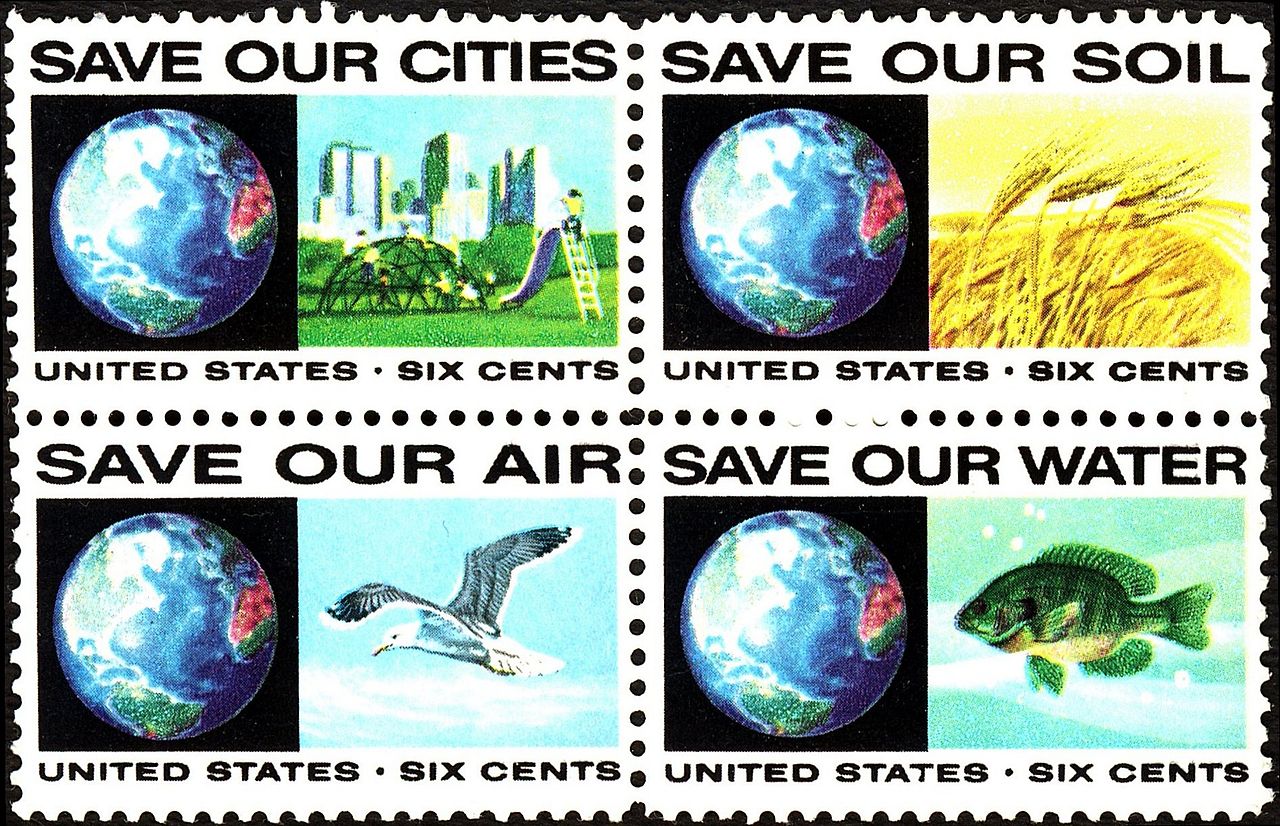
    Environmentalism on United States stamps.

    People-Planet-Profit

    Empirically, high shareholder value is considered an indicator of success. Today, however, more than ever, it’s about scoring highly on indices such as sustainability, managing employees responsibly, supporting (instead of exploiting) other stakeholders in the supply chain, and looking after the well-being of community members.

    Values-driven business tends to have better public perception and P.R. images than traditional ones with a narrow focus on profit. These are important variables that feed into success today.

    In 2017, a sustainability survey by Cox Conserves, revealed that 88% of small and midsize businesses, across various sectors have already implemented sustainable activities. It can be argued that the triple bottom line needs to be a part of every company’s culture and values to be successful in the long run, and to manifest responsible practices in various forms.

    Broadly, ‘The triple bottom line’ can be defined as a sustainability framework that examines a company’s social, environmental, and economic impact. The following definitions in this context might prove useful.

    People: the positive and negative impact an organisation has on its most important stakeholders.

    Planet: the positive and negative impact an organisation has on its natural environment (reducing its carbon footprint, responsible usage of natural resources, etc).

    Profit: the positive and negative impact an organisation has on the local, national and international economy (includes creating employment, generating innovation, and paying taxes, amongst others). It is important to remember that organisations need to remain solvent in order to do good! Hence ‘profit’ remains integral to success.

    Managing the paradox…

    The question, therefore remains: how can the Triple Bottom Line [“3BL”] be a lucrative and long-term strategy?

    Well, for starters, having 3BL raises transparency that mitigates shareholders’ concerns about concealed information. In fact, it helps fulfil one of the pillars of corporate governance too – transparency. Moreover, it involves accountability around organisations’ actions, while delivering growth and improved economic situations/opportunities for a business

    It also lines up a business to be a part of ‘world betterment’. At a local level this should translate into boosting community development through better practice. Finally, 3BL improves a company’s competitive advantage vis-à-vis its peers.

    For most businesses implementing reforms come at a cost, thereby creating a paradoxical scenario. There are paradox theories that identify such conflicting situations and which argue that organisational tensions remain latent until environmental factors of scarcity, plurality, and change demonstrate the contradictory nature of the tensions, making them salient to organisational actors.

    Conditions of scarcity refer to limitations on the resources available to the organisation, such as factors of production and finances. Plurality represents conditions of uncertainty as to organisational goals and the strategies necessary to achieve them. For example, as mentioned earlier in the article – the 3BL need to become part of the values, culture, and strategy of an organisation to function effectively in most markets. Finally, change signifies shifts in contextual conditions, which leads organisations to adapt and adopt new practices.

    A paradoxical approach understands that long-term success requires continuous efforts to meet multiple demands, not by trading off or prioritising one goal over others, but by a dynamic process of splitting and synthesis, as explored in a study by Smith and Lewis in 2011. However, synthesis means that this short-term splitting process is repeated cyclically, with new priorities emerging in each cycle, and in the long run, a dynamic equilibrium emerges.

    This involves “purposeful iterations between alternatives in order to ensure simultaneous attention to them over time”. In essence, this means that organisations can attend to the competing demands of the triple bottom line to varying degrees over time, thereby reaching a dynamic equilibrium to effectively manage all three objectives.

    Doing so promotes “…a virtuous cycle of tension and resolution as the firm responds dynamically to the changing and competing demands of sustainability management”. This is one way to overcome the paradox, which is applicable in many circumstances.

    Former tennis player Anna Kournikova in 2009.

    Become a role model…

    It pays to be good! A study surveying thirty thousand people in sixty countries conducted by Neilson explores the factors shaping consumer perception towards brands. One of the key findings of this work was that about two-thirds of the respondents would be willing to pay for sustainable products.

    Particularly, the millennial groups are willing to pay between ten and twenty-five per cent more for sustainable products, and be grouped under ‘responsible consumers’. However, the results were not consistent in certain advanced economies, where some of the major social ills are less evident, such as income inequality, limited job opportunities, and a lack of safety at the workplace.

    Good business practice builds a competitive advantage for firms. Selected large corporations address inter-connected global goals and improve their operations, some being more innovative and cost-efficient than others.

    This is generally reflected in an improving share price over time. The competitive advantage arrives not only from how businesses are conducting their operations more responsibly but also from increased stakeholder engagement. Sustainable businesses, who tend to normally fall within the ‘responsible business’ category anyway, create value for all stakeholders, including employees, supply chain partners and wider associates, civil society, and the environment.

    Michael Porter and Mark Kramer proposed the ‘shared value creation’ theory proposing exactly the above, i.e. that a business can be a force for good and simultaneously generate economic value by identifying and addressing social problems which intersect with their business.

    The struggle is often to balance the trade-off which makes a few stakeholders better off at the cost of others. There is rarely a pure ‘win-win’ scenario. However, regular dialogue with stakeholders should lead to reduced conflicts and increased cooperation. Revising business practices and running new iterations gradually helps a company to be better positioned and maintain its niche competitive advantage, aligned with a core sustainability agenda.

    Finally, another critical advantage to working closely with wider stakeholders on ESG issues helps build critical support mass over the long term. This also allows businesses to deal with external forces that assists with risk management strategies.

    Besides a focus on planet welfare, alongside keeping shareholders content, consumer interest in sustainable products is another significant dimension. Consumers value transparency, fairness, and explore the global impact of brands they associate themselves with. This has become a matter of perception, in the sense that there is no real scorecard that is used to measure these impacts quantitatively.

    However, the footprints of large corporations in particular is far easier to identify today than a generation ago. Several studies by Deloitte and Global Economic Forum demonstrate that consumers are more loyal to brands that have a positive ESG image. Another study shows that about two-thirds of consumers studied in six countries believe they “have a responsibility to purchase products that are good for the environment and society” — 82% in emerging markets and 42% in developed markets.

    We await a reliable scorecard…

    Moving forward with such sustainability and social strategies is a requirement for almost all businesses nowadays. Thus, organisations are creating newer forms of partnerships, and alliances with other actors such as governments, local agencies, and community groups to work together and contribute towards larger objectives.

    It is advisable that companies do not over-promise on these wider societal goals, and instead focus on delivering on a small number of actionable ones that leave an obvious impact. This is largely, also, because the resources of any organisation are limited. Therefore, investing selected key resources aimed at a few high-impact goals will also maintain shareholder confidence.

    Companies should consider re-framing their sustainability strategies in the current global economic environment, where the complexity of change is increasingly overwhelming. What is still missing, however, are more reliable scorecards that convince stakeholders and consumers. The challenge remains to quantify evidence of ‘where is the impact’.

    Feature Image: The California Academy of Sciences, San Francisco, California, is a sustainable building designed by Renzo Piano.

  • Being Irish

    This Ireland exists. And should one travel there and not find it, then they have not looked closely enough..
    Hugo Hamilton: The Island of Talking – In the footsteps of Heinrich Boll

    #IrelandisFull: the migration of this phrase from the far-right into the mainstream is an awful feature of our woe-begotten times. It begs the question: what does it mean to be Irish? Ireland is of course full at one level; full of gaslighting and bullshit, not least from people who subscribe to these views, and those who have created the conditions for them to flourish.

    One is not more Irish because your grandfather was in the GPO. That your name is Lenehan, Murphy, Barrington, Finlay, Kelly, Doyle, or conversely, Langwallner, Smith, Varadkar, Naidoo, Bacik should make no difference to your claim. It is not where you come from, or your name, it is about who you are, what you do and why you do it.

    It should make no difference whether it was an immigrant who assaulted a child, given many Irish thugs are wont to do the same. And recall it was a Brazilian delivery driver that rescued her. Thuggish criminals come from all breeds and nationalities. And those who riot and attack people with baseball bats are simply thugs, as are those who spread hatred against Johnny Foreigner from whatever vector in whatever country.

    Consider the words of Kipling, often considered a jingoistic nationalist:

    Now in Injia’s sunny clime,
    Where I used to spend my time
    A-servin’ of ’Er Majesty the Queen,
    Of all them blackfaced crew
    The finest man I knew
    Was our regimental bhisti, Gunga Din

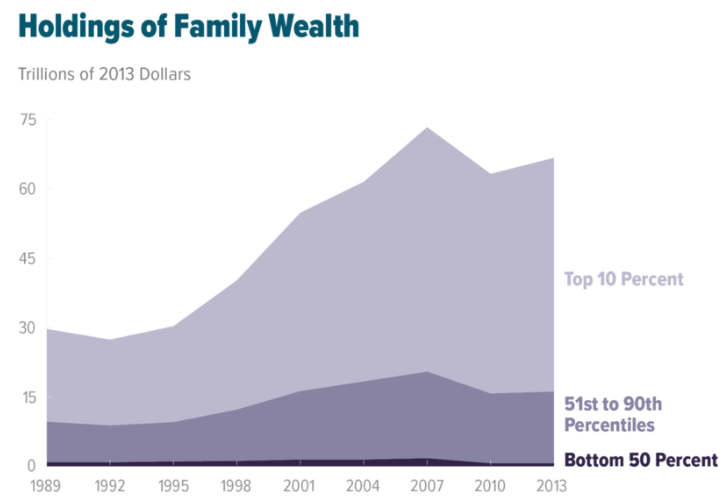
    Wealth inequality in the United States increased from 1989 to 2013.

    Under Neoliberalism

    Under a rampant neoliberalism, we now see overt far-right fascism, but also a structural form underpinning the centre-right, which is overseeing the impoverishment of all but the super-rich, while maintaining a veneer of inclusivity.

    Now, with an economic and environmental meltdown on the horizon, it is time to assert universal Enlightenment values, and fairly allocate the resources of the Earth, and of Ireland, while leaving room for diversity and even eccentricity. It is the time for those, such as the legendary mixed race writer Albert Camus, to assert the values of moderation against all forms of extremism.

    The phrase keep ‘Ireland for the Irish’ is one I have heard in family law proceedings. Sadly, it speaks of a widespread, generally unacknowledged, intolerance.

    In recent times we have become a nation of bean counters. Between 1996 and 2012 the number of qualified accountants in the state grew by a staggering eight-three percent to number 27,112.[i]

    Ireland has always been run by a privileged elite, a comprador class of money men and lawyers that facilitate exploitation. The Four Courts still operates with vestiges of primogeniture. So resentment should be targeted against the elites who perpetuate inequality, not the poor huddled masses from Ukraine seeking refuge, which of course was offered to Irish emigrants in the recent past.

    Racism, tribalism, and irredentism are worrying signs of fascism, which seems to be the way things are heading. A fascist corporate authoritarian state is on the horizon. The extreme economic doctrine of neoliberalism is breeding autarkic extremism.

    One’s nationality, whether Irish, Russian or American, is not an indication of exceptionalism. That you are Irish does not give you an entitlement to despise outsiders. It cannot justify thuggery. Irish lives matter is an empty phrase. The far-right at its most extreme propounds truly crazy fictions. Thus. anyone daring to disagree is labelled a paedo, destroying family values. Jesus wept.

    Of course this is linked to the dark money of the evangelical Christian Right. Perceptively, Noam Chomsky once described the U.S. Republican Party as the most dangerous organisation in human history.

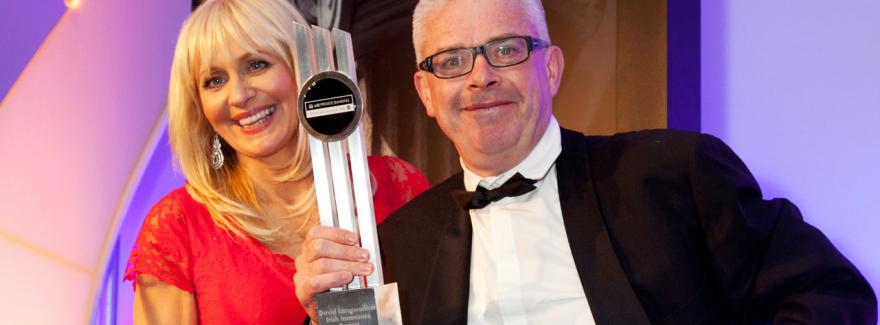
    David Langwallner receiving the prize from Miriam O’Callaghan for Pro Bono & Public Interest Team/Lawyer of the Year at the AIB Private Banking Irish Law Awards 2015.

    Nein Danke Herr Langwallner

    As a speckled person myself, like Hugo Hamilton, half-Irish, half Austrian, I was confronted in my school days with comments like “go back to Austria Adolf”. Moreover, during a debate in that crucible of Irish corporate narrow-mindedness which is UCD, I was greeted with the rebuke on an unanswerable point of information: Nein Danke Herr Langwallner.

    Much laughter flowed from the thuggish mobocracy. That body included at least one present judge, along with a managing partner of a leading law firm. Thugs and or criminals thus come in all shapes and hues in fact. Many are to be found among our corporate and legal so-called professional classes.

    Now what is pure Irish blood? Garrett Fitzgerald, the reformist Blueshirt, was a contradiction in terms. He once described the intellectually superior Charles J. Haughey as having a flawed pedigree. Haughey had his faults but note the class snobbery, and arguably racism, of the comment.

    The blue blood Tories of Fine Gael are sustained by a sense of dynastic entitlement, evident with judicial appointments, where a kind of rabbit disease like myxomatosis seems to have created an overwhelming mediocrity.

    The name Fitzgerald of course comes from the Vikings who raped and pillaged Celtic Ireland – plus ca change. The only difference is the violations are now financial, which is spawning far right-wing fascism.

    One of the heroes of the Irish Revolution, Countess Markievicz was actually born in England and married a Polish-Ukrainian count. Even the long-shadowed Éamon de Valera had a Cuban father and was born in New York. If only he had stayed. The bloodline of pure Irishness has thus always been corrupted. Garret FitzGerald should have understood that being Irish is not akin to a dog breeding competition.

    In more recent times, if we are supposed to hate immigrants based on their skin colour or ethnicity, are we to hate the greatest Irish football player of all time, the Black Pearl of Inchicore, Paul McGrath or Phillip Lynott the lead singer of Thin Lizzy similarly?

    Are we to add Irish Protestants and Jews to the hate list? Samuel Beckett was a Protestant and so was Justice Kingsmill Moore. A few more Protestant judges might have been beneficial over the history of the state.

    Or consider those to whom we have given welcome: the great Austrian philosopher Ludwig Wittgenstein – one of the most significant minds of the twentieth century – is honoured by a plaque in the Ashling Hotel. The great German writer Heinreich Boll lived in Ireland and was favourably disposed, while the Rolling Stones have had a shadowy presence among the Guinness family. In short, emigres, non-nationals, or “half-castes” enrich our public discourse and provide diversity.

    And if we hate the English, should we hate Shane McGowan or John Lennon, both of Irish extraction or if we hate the Yanks, what about Eugene O Neill or F. Scott Fitzgerald, two of the greatest writers who have ever lived, who were of Irish lineage. It might be said that the former’s posthumously published play A Long Day’s Journey into Night captures perfectly at one level what it is to be Irish: alcoholism, mental illness and abuse are the central characteristics of our national polity and governing classes.

    Irish and proud..

    Who are these people and why are they terrorising poor immigrants? The Fianna Fáil councillors who seek to condone must understand they are spreading the seeds of fascism. To hate the other because he or she is different is a disgrace, and you have forfeited your legitimacy to remain in public office.

    Yes, there is a need for a more nuanced immigration system. But proportionately we do not attract as many as elsewhere. Let us not forget that many of these people have experienced horrific scenes we can only imagine. But I fear that Ukrainian refugees on slender social support have gone from the frying pan into the fire.

    To fail to understand how much diversity adds to any society is to demonise and exclude. The shocking truth, however, is that exclusion is to be found at the highest reaches of the Irish establishment, who display classic attributes of colonialism as Fritz Fannon describes this phenomenon. Exclusion from the good life enjoyed by a few extends to many native sons.

    And if we are to dislike other nationalities let us avoid making it global or universal. I love the Italian film director Fellini but hate Meloni because she is a proto-fascist. I adore the writer Dostoevsky, but cannot approve of Putin. I love the African writer Achebe but not the African dictator Mugabe. Nor should one hate the Irish.

    Sinn Fein have been brave in sticking to a non-racist stance, particularly as many of its constituents misguidedly move elsewhere, and if they are to be a party of government they should ignore the electoral consequences and stick to their principles.

    Featured image by David Kernan (Creative Commons Licence).

    [i] Tony Farmar, The History of Irish Book Publishing, Stroud, The History Press, 2018, p.12