I spent four years teaching English in Changchun, a city of six million people in Jilin Province in the far north-east of China, about nine hundred kilometres south of China’s border with southern Siberia. Changchun literally means ‘long spring’, a misnomer. The months from November to April are a long cold winter, when daytime temperatures fall to -17 degrees Celsius if midday skies are blue, with midnight temperatures often plunging to -25.
Trudging along foot paths in freezing snow is an endurance test; an invitation too to slip on hardened ice and break a leg. I acclimatised, managing to avoid slipping, dressed in appropriate padded clothing and footwear.
During free days on the weekend, when not teaching TEFL classes in the university campus, I sometimes earned extra money by giving private tuition. Foreign TEFL teachers earn modest salaries, live in small free apartments and have their return airfares paid on satisfactory completion of a twelve-month contract.
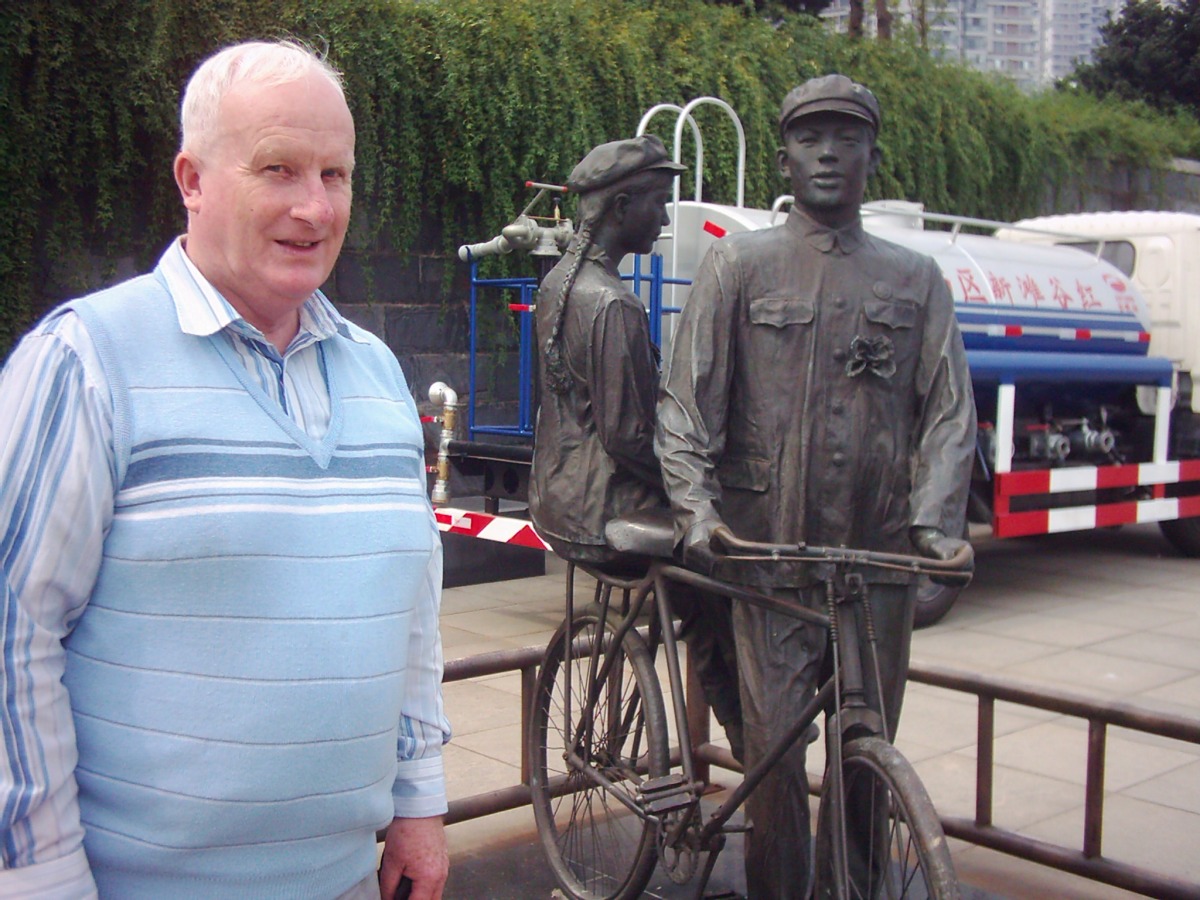
Nanchang wedding bike, 2007.
One lady, referred to me by the Foreign Students office, came once a week for English-speaking sessions at my centrally heated apartment. I spoke about life in Ireland, Irish attitudes towards marriage and children, traditional music festivals, the arts, horse racing, football and the like.
It was either May, when early summer temperatures arrive, or October, when late autumn glows moderately before winter descends that she invited me in her small car to visit the World Sculpture Park about an hour away.
It seemed a grandiose name for a park in a provincial city, but when I got there I realized that the name was no exaggeration. Parking the car on a nearby street, we walked in through the main gate and proceeded along paved footpaths that went sometimes in straight lines and alternately in rambling directions around patches of planted trees and shrubs. The area, covering ninety-two hectares, contains 441 works of 397 sculptors from 212 countries and regions.
Changung Sculpture Park, 2013.
Along these paths were sculptures in stone, bronze, sheet metal and chemically treated wood. The works were by sculptors from around China and other parts of the world, notably Africa, the Caribbean and countries like Brazil. American, British, European and other sculptors had also contributed to the park display. A lake fed by a small stream stretches along centrally.
World Sculpture Park was officially opened in 2003, but since the mid-1970s there had been a simpler version, with less trees, of works by Chinese sculptors.
In a central raised area stood a tall monument dedicated to world peace – the kind of state-approved monument one might expect to find in a Communist country. I am, however, happy to relate that since the early 2000s the park has evolved in an eclectic and generally non-propagandist manner.
Changchun World Sculpture Park adopts both Chinese and foreign gardening styles. It now teems with individual sculptures in multiple styles and shapes. The long lake is a central focal feature, with green areas dotted around. In the background, outside the park railings, loom tall functional buildings of the expanding modern city. Within the park creative diversity seems to contend with the city’s high-rise architectural functionality.
Changung Sculpture Park, 2013.
Why African Sculptures?
The city authorities have invited sculptors from Africa, North America and elsewhere to visit the city and spend a few months designing and preparing their works before having them finished in bronze casting foundries and other buildings before returning, with ample financial rewards and certificates, to their home countries.
The visiting sculptors work during the warm periods of the year. It would be impossible to accomplish anything significant during the months of sub-zero temperatures.
Why African sculptors especially? The answer lies inside the sculpture museum beside the main park entrance. This museum is heated in winter and cooled by air conditioners when outside temperatures soar. In one room there is a shelved display of ebony woodcarvings from coastal towns of Southern Tanzania. These were brought back to Changchun city by citizens who had worked in that country and travelled during holiday time. They donated the artifacts to the park museum.
Having paid our modest entry fee, my female English learner escorted me around sections of the park and I took photos which I hope speak for themselves.
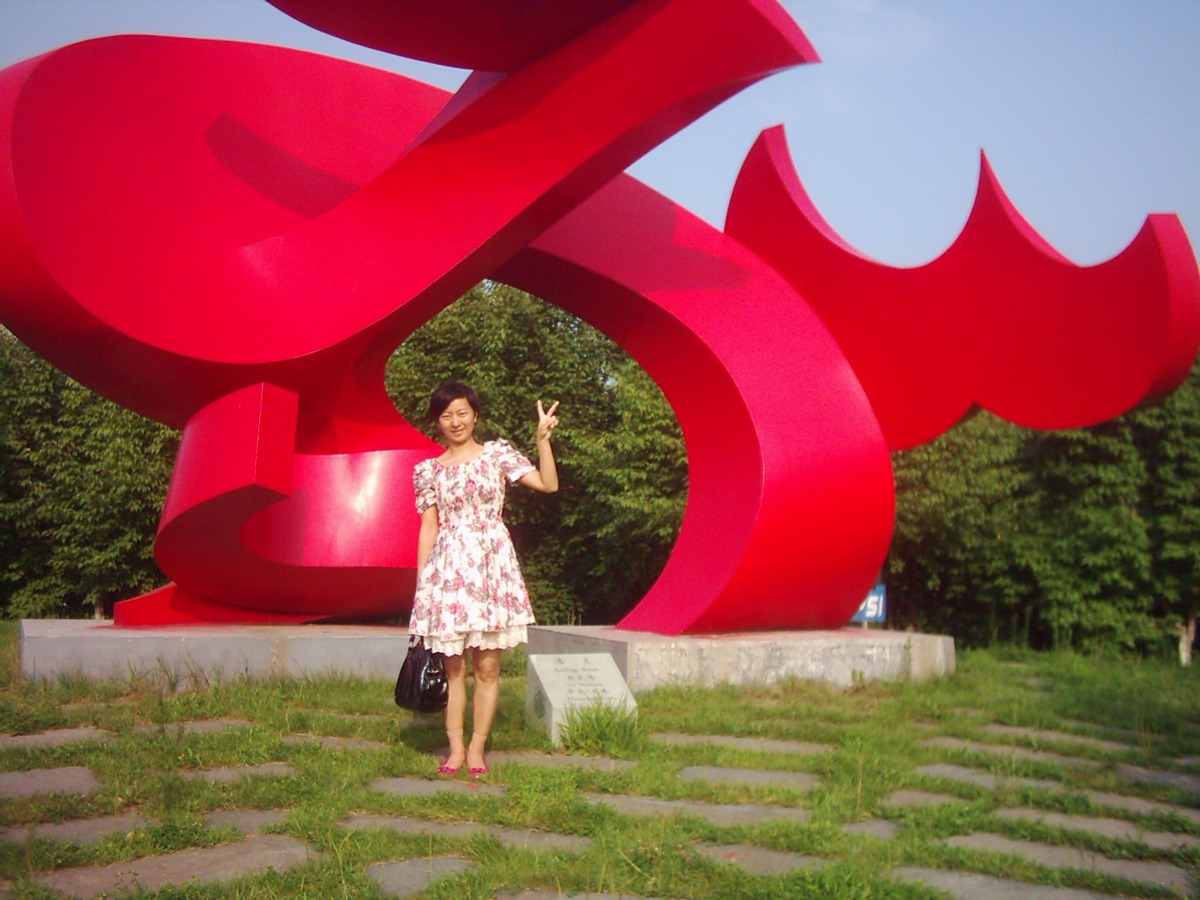
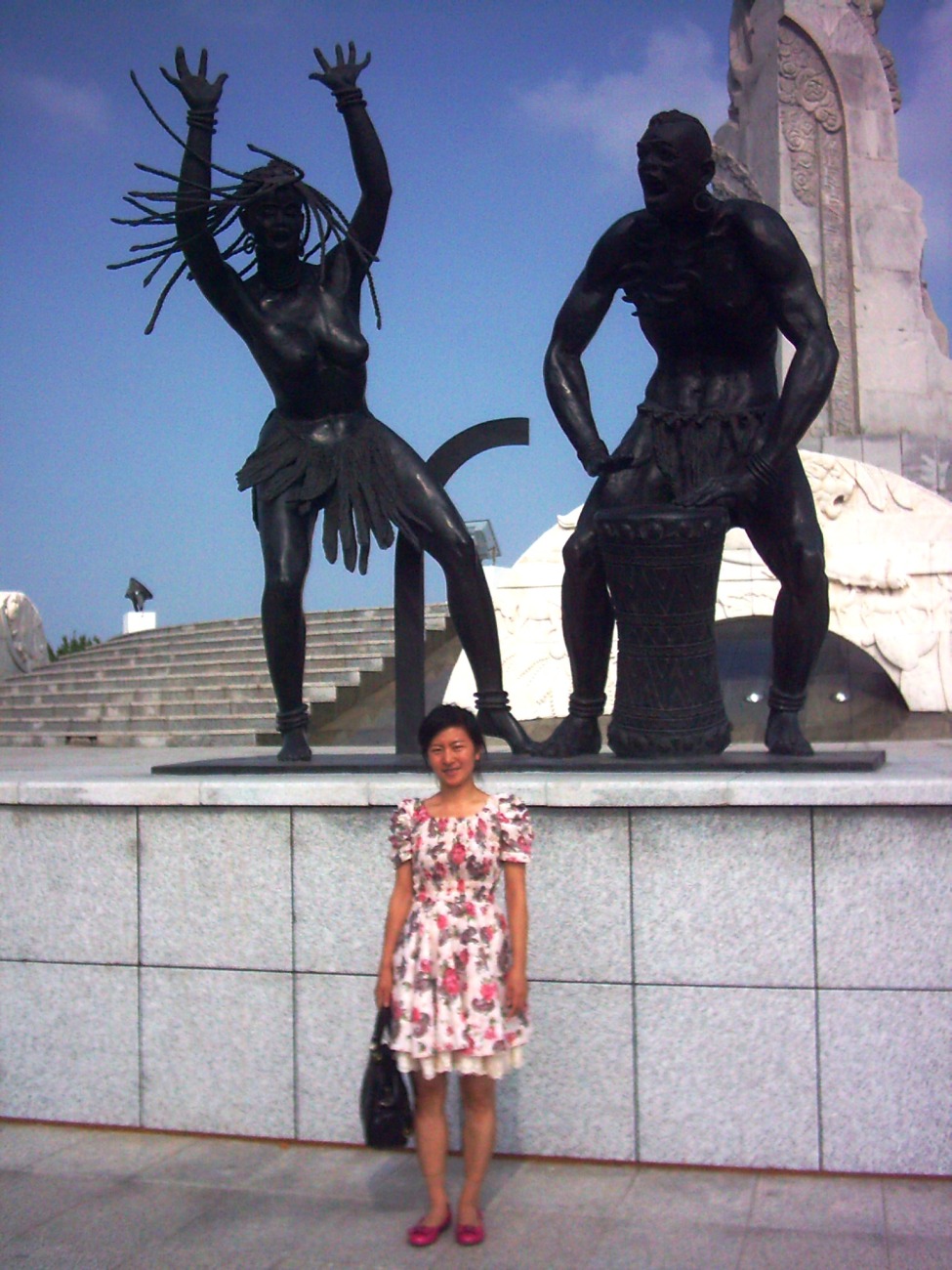
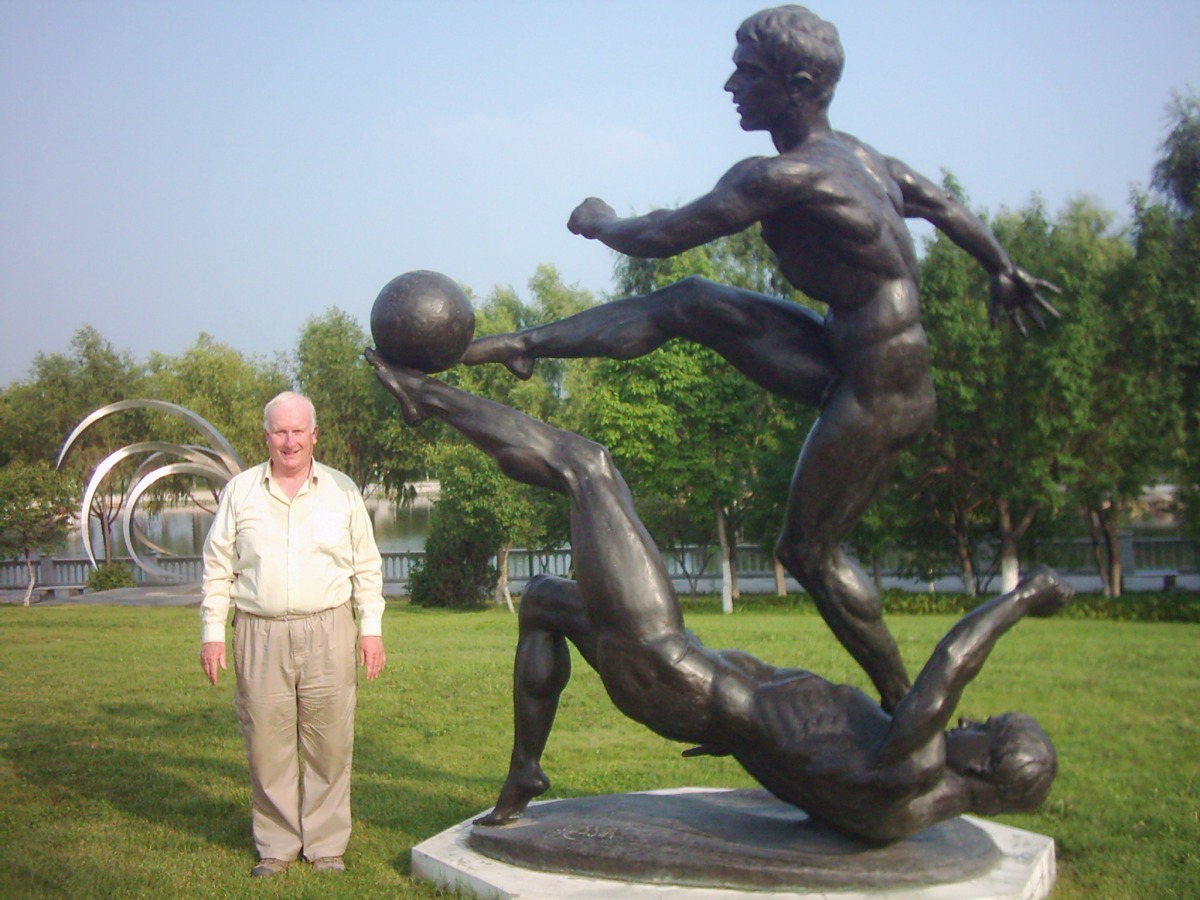
African dancers in dark bronze, a calypso band from the Caribbean, (only the sunny, rhythmic steel band sound is missing), football feet kicking, yes, a football, a giant red abstract done in sheet metal, and children playing. I only took a few photos and regret not taking more.
Changchun Sculpture Park, 2013.
In coastal Tanzania and along the north coast of Mozambique African wood carvings, known as Makonde carvings, are generally honed from ebony wood, with a deep brown and black colour. Many such carvings are actually carved from the African blackwood tree. Known locally as mpingo, it is found widely in East Africa. Carvings are made from a single block of wood in different sizes. Large pieces are sold for export at upmarket prices.
Today in my home I have a few woodcarvings from parts of Tanzania that are not in the expensive Makonde style. These and wood carvings from Zambia and Kenya are appropriate reminders of my African years.
Mashona stone sculpture in Zimbabwe is also spectacular. It is traditional in families and passed on from father to son – I don’t know if interested daughters can get involved too. Works in soapstone, marble and granite are highly prized. Some pieces are abstract while others portray human figures.
Today, commercial galleries in England, Germany, France and North America import Zimbabwean sculpture and sell them to high-end art buyers. My understanding is that Zimbabwean sculptors have worked in Changchun’s World Sculpture Park, but my few hours there did not enable me to find an example.
I think it would be interesting if one of the smaller Irish cities such as Cork, Limerick, Galway, Sligo or Derry, could embark on creating a World Sculpture Park along the non-political lines pursued since the early 2000s by Changchun.
With students and New Irish citizens from many countries and ethnic origins, Ireland has become a multicultural society. An Irish World Sculpture Park would be an inspiring tourist attraction. It might also inspire the New Irish to take an interest in the sculptural creativity of the countries from which they are descended.
Belfast writer, and poet, Ciaran Carson carried a black flute with silver keys on its main body, which he would screw together to play sometimes. In class. At Queen’s University, Belfast.
He once asked me, “What would you have liked to become in life?”
I answered: “Either a master carpenter, a mathematician, or a pianist.”
“I agree with the master carpentry, I wanted to become one of those myself.” Ciaran replied earnestly.
Once in a writing group – the infamous Group – he gave me a lot of advice on a poem, which was inspired by the infamous Blackbird of Belfast Lough poem, putting his own literary stamp on it. To this I responded: “Ah, but Ciaran, that wouldn’t be my poem anymore, it would be yours.”
He considered this for a moment and said, “Maybe, maybe.” A couple of attendees came up to me afterwards and said: “You did well to challenge him there.”
You see, Ciaran, sometimes could get inside a person’s work, kick its rafters down and plant new foundations – his own. That didn’t really endear him to some participants. I think he resented my protestation, but on reflection probably thought I was correct. A person’s writing can become a surrogacy, so they can be precious about it. If someone wrestles that babe in arms from them it creates difficulties.
Ciaran was a dichotomy, like myself; as we all can be. Blowing warm one moment, cold the next. I recall him with his horn-rimmed glasses, tweed blazers, and pork pie hat. Like a detective from a 1950s novel, set in middle England; or possibly a character from Z-Cars.
He amused me. I suppose I amused him sometimes, when he wasn’t bewildered by my anxious nature at that time. I felt a lot of social anxiety which I was not in control of. He too stuttered and became nervous. It jammed him up. I was jammed up in my own head, so, I related to that. I empathised by nodding.
I thoroughly enjoyed read his interesting book Shamrock Tea.
His take on Dante was widely embraced and commended internationally. He spoke to me one day about when he was in Italy, where learned folk indulged him, calling him Professore or Maestro! But when he got back home he was still just a “specky bastard.”’ So he mused, with a smile on his face. Such is the iron-raw vernacular of back home.
In his poem Snowthe tic-tac-toe meter and the pat-pat of the table-tennis bat, of the flicking rhythm of the flakes at his window, was successfully achieved.
Ciaran’s mind was shaped by the conflict. How could it not be?
I recall one Presbyterian writer at the Seamus Heaney Group aligning Ciaran with Republicanism because he was from West Belfast – even though he had the same surname as one of the founders of Ulster Edward Carson. But West Belfast was a good enough reason for him. He thought Paisley was right, the IRA needed to go around in sackcloth and ashes to atone for their sins.
That barbaric violence, as he saw it, was only inflicted on the Unionist community. But there was little mention of redress for the Loyalist pogroms against the Nationalist community since the 1920s.
Ciaran didn’t respond too much, but I knew the association would have encroached on him. I once had read in an Irish newspaper piece that Ciaran was asked why didn’t he join the struggle. He answered honestly: “I was too scared.”
He had Protestants in his family background. Also, I am sure, some Republicans but that’s the dichotomy of Belfast. Grey areas. Not black and white. Not binary. Coded. Just a miasma of deeply ingrained historical decisions made, and mandated, by people who have long since passed on and probably don’t give a Frenchman’s fart now.
There was one which I have lost now about, well, it was my take on John Masefield’s Cargoes set in Latin America during the period of the Aztecs and Montezuma. At least that’s what one of his students on the Master’s course, a Brazilian lady, told me after class one day.
Inevitably I became persona non grata at Queen’s because I would not suck up to those with a modicum of power and who were established writers there.
I recall one senior person looking at me one day in a one-to-one like I was a piece of cake. I wondered about his heterosexuality, felt uncomfortable, excused myself, and left. It was confusing and I did not go back. Doubtless, he verbally discredited me to his peers.
Another established writer was angry that I got onto a post-grad course that they were running and more-or-less told me so in a sit down meeting: “There’s the door. You don’t belong here.” Because I did not worship them and their work. And I struggled with my English composition (Some change there, huh?).
That was hard to take. I was hurt by that. I was embittered for a while, but I had experienced a lot of rejection already by that stage in my life. In truth I was in the depths of alcoholism at the time, and found it a real strain to really buckle down and focus. But I still had a creative brain, and a universal beat.
I think Ciaran sensed that because it was his partial reference, and another’s, who got me on to that post-grad course, but that annoyed some people. Power struggles, ego, and insecurity all played a part in the mentality of the Seamus Heaney Centre.
The last time I met Ciaran was in 2017, I was homeless, again, and limping from out of the Industrial temps’ office in Shaftesbury Square, securing some work in a bakery in East Belfast, he looked at me, and I looked back, but we both headed on our separate paths.
I emailed him a while later but he did not respond. I had heard he was seriously ill by then. He was a heavy smoker and so was I.
When he passed away, I wondered about the fait accompli eulogies by those in the narrow academic world in Belfast. I wondered about his dichotomous way of being.
Ciaran wasn’t perfect – who is? But I am richer from the experience of meeting him, interacting with him, and learning from him. He was a very sound writer, read extensively, questioned, loved his music, and knew his literary onions.
The bed had been positioned deliberately near the window so the artist had a view of the sky. The sky embodied eternity. Our creations change with every era, each century brings a new art, but the sky, on a cloudless blue day or in the grey rain, appears as it did to our most remote ancestors. The wind on their skin feels the same to us. He lay there dying, looking up through the window with the eyes of his childhood self. The sky was a glimpse at something death cannot kill. On that day, the day of his death, the sun was shining over London and the artist was filled with joy.
His health was deteriorating and with each passing hour it seemed to his wife Catherine more rapid. Her hope of a recovery was fading. They had been married these past forty-five years and she knew him better than anyone, enough to know he was always capable of the unexpected, and for that, hope remained kindled as it waned. They had caused a stir walking around their garden in Lambeth naked together. They had shocked their neighbours, and the respectable people of the street thought them to be strange at least, others said they were patently mad. The Blakes had refused to bow to the outcry and continued with their nudism throughout the warm summer days. There was one neighbour in particular, a very old lady in the highest room of a nearby house that would sit there in her rocking chair and watch them dance among the azaleas and foxgloves with her long-ago youth flickering in her eyes. Seeing him lying there with his poorly head emerging from the blankets she smiled to remember it. He was a rebel by soul.
Then there was the time they ate in a soup those strange mushrooms that Flaxman had brought up from the West Country in a small wooden box decorated with golden flowers. They had a psychedelic effect. The artist ate the soup, enjoyed the evening and laughed until it was time for bed. The next morning he went for a walk and when he returned full of thoughtfulness he said to his wife over cups of tea and bread and butter that ‘he wouldn’t be doing it again’ as he ‘had no need for them.’ Some years later she remembered out of the blue that he recalled the experience to her and said matter-of-factly that whatever ‘grows on God’s earth must be God’s creation.’ She had no reason to argue with his logic. She herself had enjoyed that evening very much.
Catherine took the bowl of water and placed it on the bedside table before soaking the flannel and resting it on his forehead. The wet cold of the material opened the artist’s resting eyes and he smiled to see her and the sunshine flooding in behind her. Just the vision of her standing there, her face, filled him with happiness. She leant forward and he could see over her shoulder toward the window. He noticed a thousand colours in the dust particles in the air, each one with its own divinity, each one a galaxy. He watched carefully the movement of the dust in the beam of sunlight, slowly synchronising each angled manoeuvre until it became an entire day of his childhood. It was never difficult for him remembering being a child, how it actually felt, the lineaments of thought he once had and soaring of feeling he often experienced. And then his brother Robert died when he was still a boy which only served to intensify the clarity of his visions. He remembered everything. It was on Saturday mornings in the warm spring when his parents allowed him to go off roaming on his own that his relation with the eternal was born. Now this simple, sparse room in which he lay dying was to the artist a realm in itself. With his eyes closed he dreamt like all of us do, with his eyes open he saw worlds beyond worlds and time beyond time.
Blinking slowly he opened his eyes and looked at Catherine’s eyes for a while. When she noticed, she held his stare. With a slight croak in his voice he began to speak.
“Thank you.”
“For what?”
“For my life.” She didn’t quite know what he meant but inferred the meaning ‘I love you.’ She had never doubted it. Tears welled in their eyes. And then suddenly, seeing him lying there so ill, made her deeply sad. It was like a void, an almost violent, unexpected misery that befell her. After all those many long years of marriage she would soon find herself alone. It was only then, on that bright sunny day, that she really felt it for the first time, the potential of loneliness, and when it fell on her it fell hard and pitiful. But he was determined her future happiness reigned over their parting.
The artist began to cough and splutter a little so she put a cup of water to his mouth which he drank from with difficulty. “Sit me up Catherine, I would like to see the river again.” There from the window he looked out at the Thames. Old father Thames was right, it had given birth, knowingly or unknowingly, to every Londoner there ever was or ever will be. “Look” he said “it shines like a bar of gold.”
“It does at that.’ Catherine answered. They both sat there a while looking at the sunlight playing on the water, brave, complete, magically alive. He looked at it for a time and knew for certain that the pangs and pains of death could never crush his spirit. There was just no chance. It seems perhaps unreasonable now, but it was true. Blindingly, obviously true. He, she, we, are nature. The sun beam glittering in the bough of the tree like the melody of the crashing waves on the shingle, or a full bellied peregrine falcon with nothing else to do but fly, make up one whole. The artist leant his head back on the pillow and smiled.
There was a wrap on the door. When Catherine opened it she saw it was one of the artist’s ‘disciples’ and a member of The Ancients, a young man named George Richmond. The Ancients were a group of painters that included Edward Calvert and Samuel Palmer, brought together in brotherly kinship by the love and admiration for the artist, whose life was now drawing to a sad close as he lay on the bed by the window at Fountain Court.
“How is he?” Asked Richmond as Catherine ushered him in from the street.
“He is gravely ill, and coming in and out of consciousness.” She began to cry. Richmond tried to give some kind words of consolation, but soon realised his words could not suffice. He rested his hand on her shoulder in an attempt to comfort her, as he himself now feared the worse. As they entered the room, the drifting of a cloud let a sharp burst of sunlight in. The artist heard the footsteps and his head turned with open eyes as they both entered the room. He recognised the young man immediately.
“Ah. Richmond my boy! Welcome.”
“William. Mr. Blake.” The sight of the dying man made him tremble suddenly. Richmond was only eighteen at this time and death to him, quite rightly, was an abstraction, a fake. He sat down in a chair by the bedside and saw the artists almost pug-like face, frail, wan, and devoid of rosiness.
“How are you feeling Mr. Blake?”
“Ha!” The artist looked over at Richmond and smiled. “I am dying. But do not be troubled. I am travelling to that country I have always wanted to visit!” Then, surprisingly to those present, Blake began to sing. It wasn’t the singing voice of a dying man, but rather someone bursting with life. Catherine became full of delight as the artist went on singing psalms and hymns and for a time she forgot about death, and suffering. He sang ‘Jesus Christ the apple tree’ ‘Come, oh thou traveller unknown’ and ‘Hark the Herald Angels Sing’ among others. He had always loved to sing. Always. Both Catherine and Richmond wept with joy when they sat witnessing these moments. These perhaps final moments.
Then, as one hymn ended, the artist took a sharp intake of breath. His head rocked gently on the pillow. “Quick Catherine, get me my drawing things. I will paint a picture of you! You have been an angel to me.” He looked up at the ceiling and his eyes widened to their fullest extent, dilating with ecstasy. His mouth opened slightly in a sigh of joy. “Behold! The angels!” His mind cried out, but no words came, the only thing audible was the rhythm of his last breaths. Above him he saw his brother Robert in angelic form, bathed in white light beckoning him on, for his spirit to rise, and he saw the archangel Gabriel, smiling as old friends do. He looked at Catherine and thought ‘We will meet again.”
And then, on that summer day, by the river of London, he died. A look of serenity came over his face, and his eyes were open, keen and eager at the last. The death mask that was made reminded The Ancient’s of one the good emperors, full of calm and wisdom. Richmond placed his thumb and middle finger on the artists eyes, and closed them gently. Catherine was still weeping as she showed Richmond out, and as a slight evening summer rain came down, Richmond himself began to cry and continued to cry through the streets and all the way home. Somewhere in those sad joyful tears with the rain wetting his head, he knew the words he would write to Palmer. So strange, in the eyes of the young man, how the artist had greeted death. The absence of fear. The way he sang.
Feature Image: Oberon, Titania and Puck with Fairies Dancing (1786) by William Blake
The Irish people have a long-standing relationship with ‘numinous presences in the landscape’, often referred to as the little people, or faeries. The literature provides a complex set of illusions. The writer, philosopher and independent scholar, my friend, Patrick Healy on a recent visitation tendered me a painting of Mad Sweeney (buile shuibhne), which forms part of his forthcoming exhibition in Amsterdam.
It made me consider the enduring relevance of the faeries, although I now live in Leatherhead in leafy Surrey, where the little people are well hidden.
In H.G. Welles’ remarkable parable of the future invasion by aliens from outer space, The War of the Worlds, we find the ultimate understanding of an existential threat. When Orson Welles put out his infamous 1938 broadcast, he set it in New York, causing a level of consternation that led some to flee to the nearby hills. The original book is of course set in Leatherhead, which is clearly not immune to faery tales.
Most contemporary faery tales often provide binary messages of good and evil for children – or even child-adults susceptible to manipulation – who see battles between good and evil and a Manichean Universe. Thus, children and adult minds can be manipulated, and often nefarious agendas can be set using their effect.
According to the plagiarised – but well received at the time – work of the psychologist Bruno Bethlehem The Uses of Enchantment, faery tales help children resolve Freudian oedipal conflicts. But on whose behalf? They are cautioned to stay safe from ‘evil’, but the meaning of good and evil is far from clear in this day and age.
Historically, faery tales contain a surprising level of terrifying violence, often involving gruesome acts such as cannibalism, witchcraft, and bodily metamorphosis, as with werewolves. They play to latent fears that can be deployed to manipulate or control the human psyche.
I will now draw out some crucial messages for the profound structural ways we organise our present lives around faery tales.
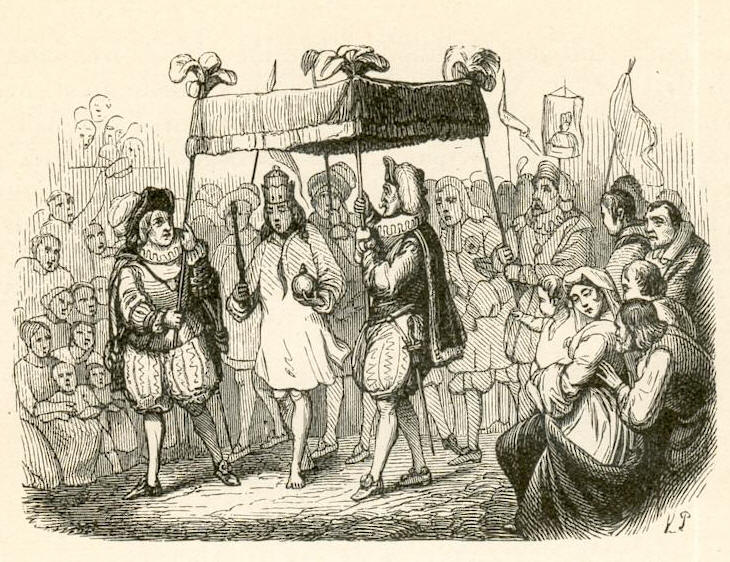
Illustration of “The Emperor’s New Clothes.” by Vilhelm Pedersen (1820 – 1859).
The Emperor’s New Clothes
Hans Christian Andersen’s 1837 tale is based on a 1335 story from the Libro de los ejemplos (or El Conde Lucanor). It is short and alarmingly precise, involving an emperor of such vanity and so susceptible to flattery that his dressmakers get him to pose and preen naked.
It seems to me that most of the politicians of Ireland, the UK, the EU, and the world at large are the vain inheritors’ of the Emperor’s new clothes, with fake experts and insiders flattering and manipulating them. Political leadership is always subject to vanity and therefore susceptible to flattery.
Juxtaposition and Commentary
Where there is no leadership, the people perish. Proverbs 29.18.
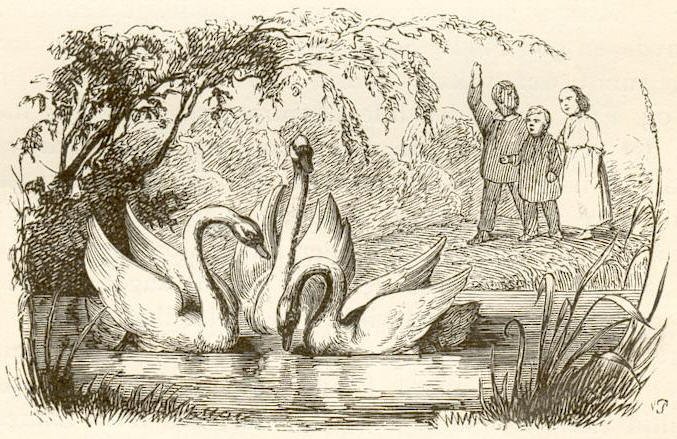
Vilhelm Pedersen illustration for “Ugly Duckling”
The Ugly Duckling
This 1843 tale by Hans Christian Anderson is perhaps my favourite faery tale. Anderson was not a transcriber of faery tales – as the Brothers Grimm were – but a great creative artist. Here the eponymous ugly duckling is hounded out of the tribe, simply for being ugly, but a new tribe welcomes her as she is really a swan, not an ugly duckling at all. At one level this is about finding your niche and not associating with quacks – including those who force you out of town.
Juxtaposition and Commentary
‘Beauty is in the eye of the beholder.’
H. G. Welles
What we need now are more ugly ducklings, and not clean-cut conformists – the inappropriate adults in the room.
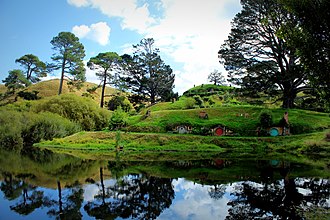
Hobbit holes or smials as depicted in Peter Jackson’s The Lord of the Rings film trilogy.
The Hobbit
In J.R.R. Tolkien’s 1937 fantasy classic, an insignificant shire hobbit, Bilbo Baggins with the aid of dwarves and a magician defeats the dark forces in the battle of the five armies. Written just before World War II, it anticipated an Allied victory against the dark forces of fascism. A parable for that time and our own, which is elaborated upon in The Lord of The Rings.
Juxtaposition and Commentary
‘We burned to death 100,000 Japanese civilians in Tokyo, men women men women and children recognised that what was doing would be thought immoral if his side had lost. Lemay said if we HAD lost we’d all have been prosecuted as war criminals, and was right’
Robert McNamara, ‘The Fog of War’
Always keep in mind who the dark forces are, and that winning is not everything, or not always. Manichean battle between good and evil rarely occur. Who is evil today? Is it just Vladimir Putin or those who seek to prolong the war? And if Mr Putin is a war criminal, what of Bush, Blair and Biden?
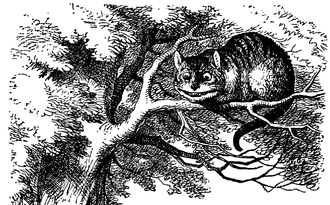
The Cheshire Cat.
Alice Adventures in Wonderland
In Lewis Carrol’s famous 1865 story Alice falls into a rabbit hole, and witnesses a succession of fantastical creatures, including The Queen of Spades who conducts a trial in breach of due process: sentence first, verdict later.
Juxtaposition and Commentary
This cannot be improved upon in terms of a commentary on this age of prejudgement and guilt by social media, or in the wake of any accusation.
One modern version occurred when then Spanish minister Donna Luzon in advance of the Catalonia trials referred to those accused as the ‘convicted.’ We continue to find prejudgement of pre-crime, and conviction by association of those we disagree with. Quasi-internment. Deportations and extraditions. The obliteration of due process. The end of human rights. Endgame. Off with your head or to Rwanda.
Well mercifully the Court of Appeal disagrees in the U.K.. But what about Julian Assange’s final appeal?
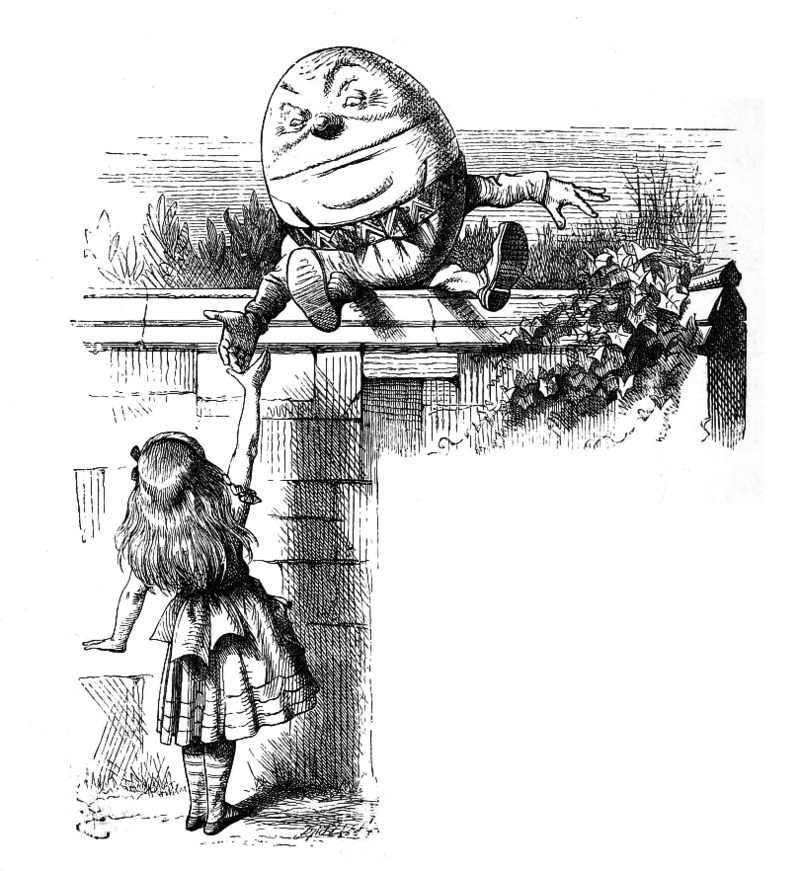
Humpty Dumpty and Alice, from Through the Looking-Glass. Illustration by John Tenniel.
Alice Through the Looking Glass
The second Wonderland visit is best interpreted as being about language and the distortion of tradition.
Juxtaposition and Commentary
‘I know of only one authority which might justify the suggested method of construction. “When I use a word,” Humpty Dumpty said, in a scornful tone, “it means just what I choose it to mean, neither more nor less.”
“The question is,” said Alice, “whether you can make words mean so many different things.” “The question is,” said Humpty Dumpty, “which is to be the master, that’s all.” After all this long discussion the question is whether the words “If a man has” can mean “If a man thinks he has”. I have an opinion that they cannot, and the case should be decided accordingly.’
The above quote comes from Lord Atkin in his dissenting judgment in Liversidge v Anderson(1942). It concerned the decision to intern someone as a subversive without due process. Thus we find a direct transcription from the book in the great English language decision upholding due process at the height of the Second World War. A sole dissenting judgment from a man and lawyer in touch with working class sensibilities
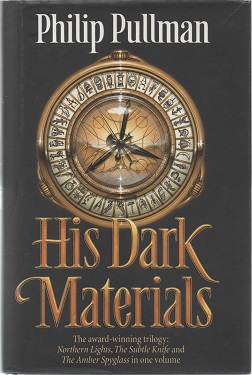
First combined edition (publ. Ted Smart, 2000)
Northern Light / His Dark Materials
The ultimate anticipation of medievalism, with orcs seeking to undermine our hero Lyra, with her supportive, if ambiguous, daemons. Here we find the oppressive authority of organised religion and the death of the great bear Irek Brisson, who has fought so valiantly on her side.
Philip Pullman was clearly influenced by John Milton’s Paradise Lost (1667), where Lucifer seems to be seeking to save humanity from institutional religion – as opposed to Christian belief which is a force of good – thereby undermining the satanic myth of the fallen state from Original Sin.
Original Intent interpreting a legal document from its inception, and not dynamically. Thus, America recognises the right to bear arms because it was acceptable over two hundred years ago. As Amy Coney Barrett put it after her appointment to the U.S. Supreme Court: ‘[Catholic judges] are obliged by oath, professional commitment, and the demands of citizenship to enforce the death penalty. They are also obliged to adhere to their church’s teaching on moral matters.’
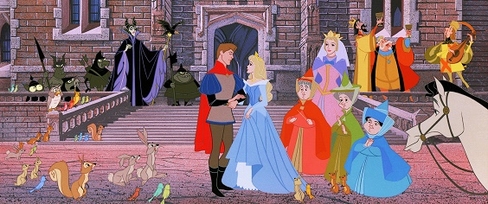
From Sleeping Beauty (1959 film).
Sleeping Beauty
Based on the faery tale ‘La Belle Au Bois Dormant, published in 1697 by Charles Perrault, this story has been sanitised for popular consumption. In Disney’s retelling, the kiss of the prince awakens the sleeping beauty, but in the original telling of the tale she is not roused, and he falls in love with her body and essentially rapes her.
It is only at the birth of her twins when one of the babies suckles at her breast that she wakes up. The prince then tells her what has happened. As if all this was not bad enough it turns out that the prince’s mother is an ogress, who is longing to eat her grandchildren. The tale first appeared in England in 1729 in Stories or Faery Tales from Past Times.
Pantomimes and Disney have thus obliterated everything but the kiss.
Juxtaposition and Commentary
The idea of a prince coming to the rescue is also a theme in Rumpelstiltskin, and is the driving force in Cinderella too, although what makes for a prince is far from clear. Is it a man who abuses women or a coercive structure which abuses men and woman? Or worse still, those individuals who rape the earth. Thus, we should be careful about what and who we consent to, whether princes or princesses. Stay safe from sexual predators if you can.
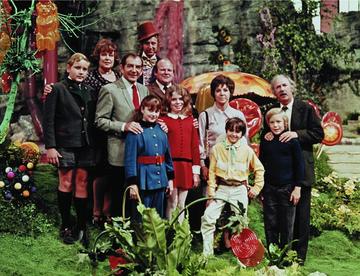
The main cast during filming in 1970.
Willie Wonka and The Chocolate Factory
Let us remind ourselves of the plot of the 1971 movie (based on Roald Dahl’s novel), in which Willie Wonka owns a chocolate factory, but has closed it down, because of espionage and betrayal. Here a race of Oompah Lumpas work under him, who seem like incorruptible souls, like Norwegians perhaps or Icelanders.
So, in seclusion he creates the Wonka chocolate bars containing elusive golden tickets to a factory for a competition, as he is getting old and realises that someone else needs to take over the place.
The children lucky are given a series of tests, for he only trusts uncorrupted children to run the business. He is a man-child adult himself, or a magician or sorcerer. But he finds that the children have also been corrupted. Fallen angels in a world of illusions.
Charlie Buckets is the last recipient of the golden ticket. He fails because after cheating along with his grandfather. But is redeemable, as Wonka comes to the conclusion that the ideal child to run the chocolate factory is working-class. At one level his poverty has produced an element of dishonesty.
Juxtaposition and Commentary
Let us be wary of the inappropriate adults in the room and conscious of how poverty and social exclusion are an increasing feature of our time. So let us also be wary of going it alone, for the poor fall into traps set by the rich. And in an age of limited mobility to escape the debt trap, let us be wary of how and by what mechanisms the poor can inherit the earth or even achieve a basic income.
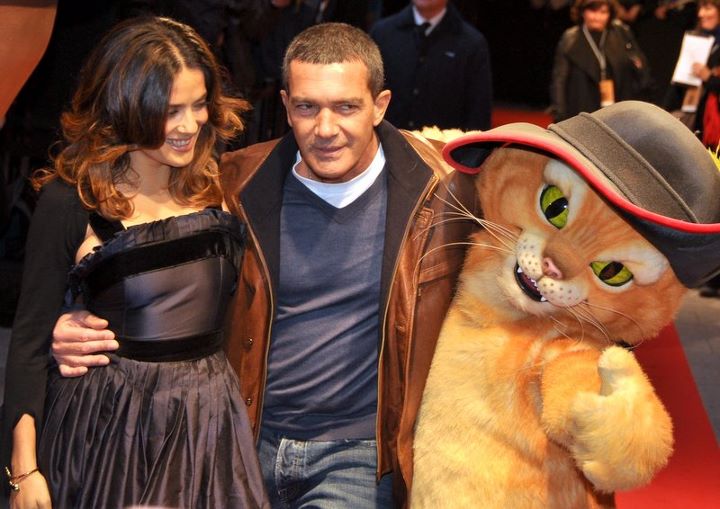
Puss in Boots
The oldest written telling version is Costantino Fortunato (Italian for “Lucky Costantino”) by Italian author Giovanni Francesco Straparola.
Charles Perrault’s transcription is about a miller’s son who is left a cat in his father’s will. The miller’s son is none too delighted with his inheritance until the cat assures him that he can make the young man’s fortune. All the cat needs to accomplish this is a pair of boots. Thereafter, the cat makes him richer than his wildest dreams, and he marries the most beautiful princess.
Juxtaposition and Commentary
Beware of charming con men who claim they will make you rich, a lesson learnt by as all those who suffered from subprime mortgages and banking misrepresentations from the wolves of Wall Street in Ireland and elsewhere. Lies and misrepresentations that have been rubber stamped by the courts.
Beware of dynamic self-made monsters such as the unlamented Peter Sutherland for they have destroyed and pillaged the earth.
Readers should by now understand how we have been manipulated since childhood by faery tales in a deeply structural way, through the creation of a simplified world of good and evil.
Wilde Encounters…
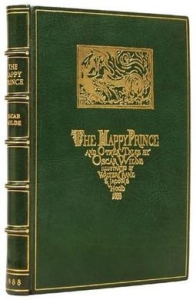
I recently acquired a first edition Oscar Wilde’s Salome with illustrations by Beardsley. Now as I alight daily in Clapham Junction station on my way to court there is a plaque to Oscar Wilde as I change trains. I am reminded of being an aspiring young thespian in Trinity College 1989 where I played Edward Carson opposite to Patrick Healy as Wilde. So I conclude with Oscar Wilde’s faery tales – above all ‘The Nightingale’, along with ‘The Rose’, ‘The Happy Prince’ and ‘The Selfish Giant’.
By serving their masters selflessly, the swallow and the rose die and only the selfish giant gains a measure of redemption through the generosity of his soul. He had allowed Christ or Christ’s emblem into his garden and now he gains the garden of paradise, or is it the kingdom of heaven?
Feature Image: The Fomorians, as depicted by John Duncan (1912).
When I was five, I made myself a paper flute. I played it sitting on a stone in the Danish summer. My parents later gave me a real flute and I played it fervently until my teacher said it was time I learned some more instruments. I didn‘t consider myself a musician. I just loved to play.
My main instrument today is the harp, but it took me a while. Living near the Alps, it should have been easy. Alpine music is full of string instruments. But I played the flute, and loved folk music which was not from Germany. I didn‘t know at that point how fine German folk music can be. I thought Volksmusik was a lot about brass, and yodeling, and mostly for loud men in leather pants.
Growing up in the Catholic Bavarian countryside can be an ambivalent experience. Like singing in the local church band while dreaming of travelling with a circus. My first idea for a future profession was to be a woodturner, or a carpenter, which earned me comments like, girls should not work as carpenters. This was in the 1990s.
One day, I learned about an instrument maker in the region who taught people how to build historical harps by themselves. I was thrilled. This is how it started. I participated without being able to play one note on my new harp. In my head, making it came first.
This self-made, improvised kind of doing things is a quality I like a lot about folk music. Generally, about this thing called Kleinkunst in German, small art. In the beginning, there often is just the longing to play. A tiny stage, a handful of people, you did‘t even plan it, and suddenly, there is magic in the air. Like in a song by the Portuguese band Deolinda:
He passed and smiled at me and all of a sudden, the ugly face of the town changed, everything was covered in flowers … what would happen if we talked to each other?
Passou por mim e sorriu (gerda vejle):
Travelling musician
What qualifies you to be an artist? If you make a living of it? Or is it a particular way to be in the world? If you manage to transform the ordinary into beauty? Tell a story in a manner that opens a new perspective on the world, which others can relate to?
For me, it has to do with connecting. Connecting people, places and perspectives. I play a harp model called Bohemian Harp. It is neither a Celtic nor a classical harp. It is an instrument of travelling people, linked to the tradition of travelling dance musicians. Especially in the nineteenth century, there were small orchestras of Bohemian harp players, often women, who though poor managed to make an autonomous living by playing music travelling from place to place.
I too had been travelling for some time when I arrived in Berlin, a place of many perspectives and travelling existences. Studying music therapy there and later with fantastic harp player and teacher Uschi Laar, I learned something important: That music is not something you show off. Music can be something that saves you. Sometimes it is the only continuity you have. It can give voice to the unspoken, transform depth into lightness. And it has a great inclusive power.
I then met a storyteller, Ana Rhukiz. We started a travelling duo project, performing barefoot under the open sky, in tiny villages, on smaller and bigger stages, for young and old, few and many. We connected composition and performance, art and nature. What I like about fairy tales is that they often transport a hidden wisdom over time. One piece was about making rain. Drought had fallen upon humanity because nature had been disrespected. During the piece we would say the rain spell together with the audience. Often, it would rain for real, even on a sunny day.
The Lucky Accident
One element of improvisation is accident. And, at the right moment, Kairos.
Do you know Kairos? The Greek God of the lucky accident. A harp maker in Berlin told me the story of Kairos: he has just one hair and is fast. When he passes your way, you have to be lucky to grasp him at his one hair before the moment is gone.
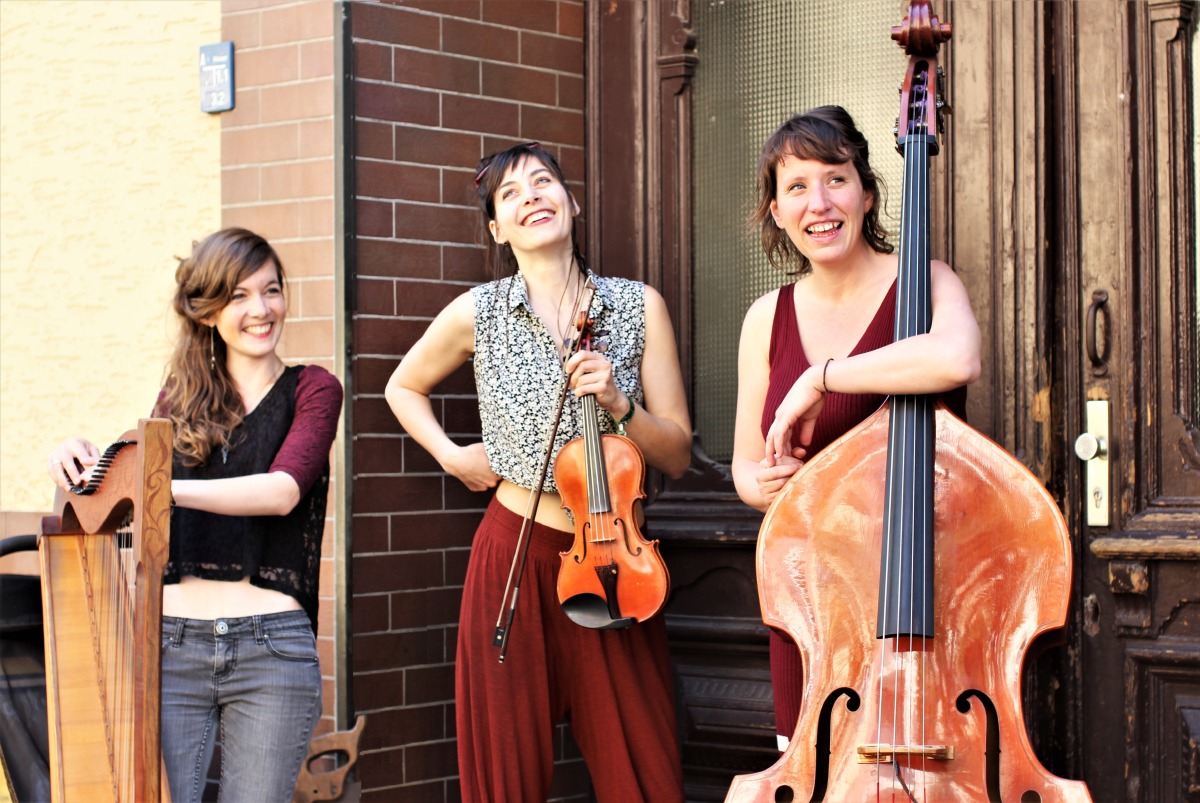
Meeting violinist Judith Retzlik might have been one such moment of Kairos: I had placed one single note on a black board at university saying I was a harp player looking for other musicians. Our band was completed by double bass player Anne Drees, who gave the warm grounding to our violin, harp and voices improvisation. We named ourselves gerda vejle.
In concerts, people ask: Who of you is Gerda? And we smile and say: all of us. Gerda is an imaginative woman. She is creative. She might change her identity now and then. She loves to try out new things, be it styles or genres. She certainly is a feminist.
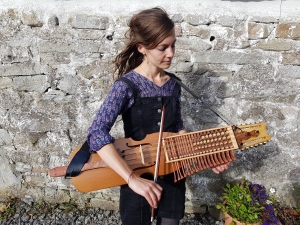
Over time, gerda has grown. She was drawn to idyllic and disastrous moments at the beginning. Much of heartbreak and rebellion. More themes arouse over time. Less drama, more questions. More laughing also. We made and discovered more instruments. The nyckelharpa, the trumpet, the ukulele. We sing in many languages, merging songs, mostly unplugged. I moved to Austria for some time, the yodeling came back to me from childhood days. I am not a great yodelist. It is a fun way to give credit to something that belongs to me without taking it too seriously.
The Layers Beneath, and Beyond
Gerda vejle is also often asked: Are you a cover band? And in fact, we play mostly songs that already exist. In the beginning, I had the ethos that we should be making our own tunes. But nowadays I would say I proudly cover. In folk music, like in oral tradition, the origin of a tune cannot always be figured out. And many true stories have been truly told before you entered stage. What gerda vejle is doing is collecting them, retelling them, giving her own voices and character to them.
What I learned when I studied literature and ever more working with storytellers is that very text, be it written or spoken, is woven from other texts. Likewise, music is a texture of relations and worlds. It is a vibrant body with many layers under the surface. Folk pieces never get finished. You just keep on crafting them over and over again.
Making music feels like exploring these layers by time. I seldom seek for ideas with a plan. They are hidden in the music, and sometimes quite somewhere else.
With the pandemic and other crises, I am asking myself more questions. What is the role art should play in a time of transformation? Which responsibility falls upon artists when there is so much confusion, and where values are challenged and resources running scarce? Should art be more political, and if so, in which way? Or could artists become people you turn to in confusion, as they often have lived through confusion and hardship themselves? For me, art is not something you add to your life when everything else is fixed. Rather, it is something that can give you another perspective to look at during bumpy times, a bit like humour.
So, one idea I found so far: there should be lightness in the heaviness. Thus, never forget the playfulness. When I teach music, I try to remind people they can be playful. I don‘t believe in the unmusical child. I believe everyone can enjoy creativity. You have to find the language. And a way to play around the bumpiness. Make a song of it. Make it fly.
The first thing that distinguishes a writer is that he is most alive when alone. Martin Amis, in an interview with TheParis Review (1998)
The empty streets, quiet from dawn to dusk and beyond. No noisy, polluting rush hour traffic, or at any other time of the day. No shuffling, stifling crowds of commuters on packed public transport, or gaga revellers in sweaty pubs and clubs. Not having to go to work, and feeling okay about it because most everyone else was not obliged to either (there’s social solidarity, if ever I saw it). Getting a modest stipend from the government for staying at home. Being able to do whatever you wanted to all day long (within the law, and a five kilometre radius of your residence). If you were living alone or parenting alone you could even pair with one other household as part of a support bubble, and two households could meet outdoors within the travel limit. If you were a renter, no threat of imminent eviction by a rapacious or capricious landlord; if you had a mortgage, a temporary freeze on payments. In short, what utter bliss.
I was alive during lockdown, and I was alone – and although maybe ‘most alive’ is a stretch, I grew to love the sequestered state, to the extent that I still have not fully readjusted to things being ‘back to normal’. But it troubles me that perhaps ‘most alive’ is not quite the same thing as being good, or even happy. I liked lockdown: does that make me a bad person?
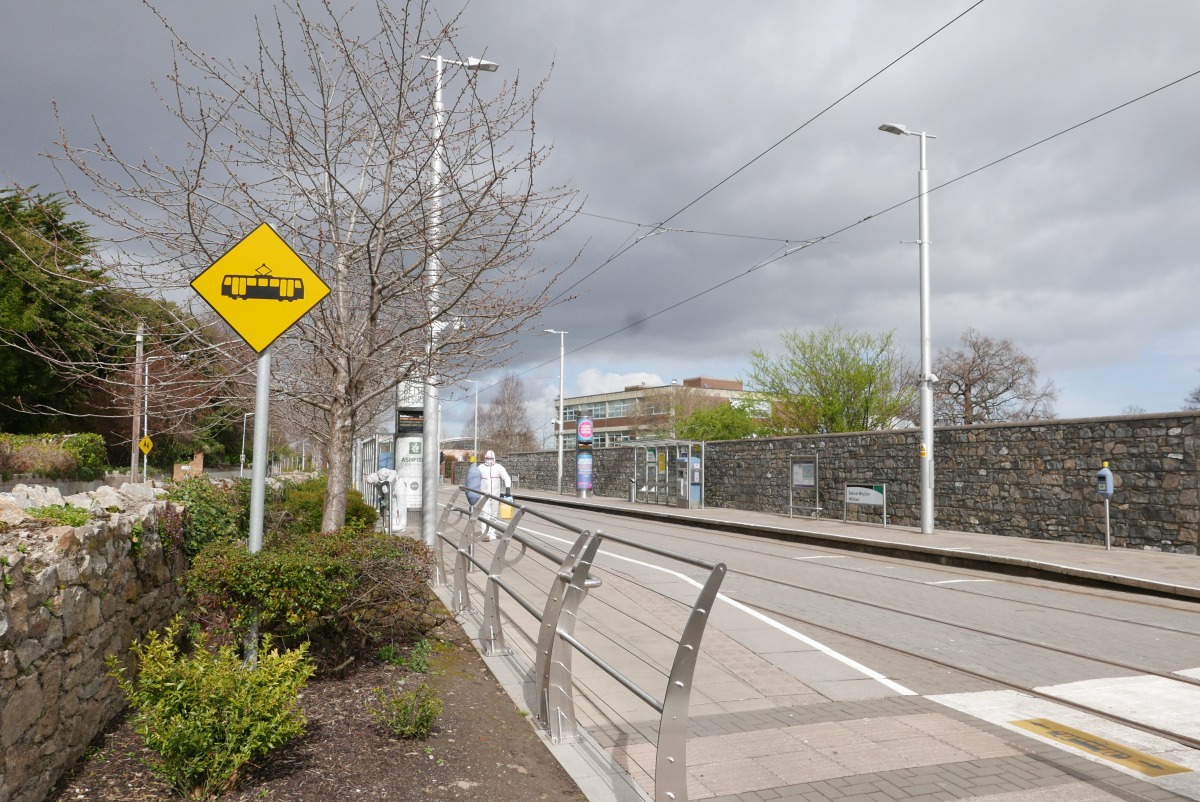
Dublin, April, 2020.
Of course it was bewildering at first, and a little frightening – because no one really knew how severe the pandemic might be, or for how long it could last. (Let’s get our priorities straight here: there was a run on toilet rolls.) But after a few weeks, we settled into it. What I missed most upon entering the altered reality: 1) being able to meet friends face-to-face in the flesh; 2) being able to experience the giddy, healing rush of live music I get from going to concerts; 3) being able to travel, if and when I wanted. But I soon adapted to the new dispensation. After all, we now have all these wonderful machines with screens to help us keep in touch with people electronically, if we feel the need for company without risking the possibility of infection. Plus, we can use them to purchase pretty much anything we might want, as long as we are in funds or have access to lines of credit, and have said items delivered directly to our doors, thus obviating the need to ever stir outside, whether we are permitted to or not.
I thought of Oceane in Tibor Fischer’s Voyage to The End of The Room (2003) (itself a riff on the antisocial aesthete Des Esseintes in J. K. Huysmans’s A Rebours (1884)); and, more recently, of the unnamed narrator of Ottessa Moshfegh’s My Year of Rest and Relaxation (2018): both protagonists who have, insofar as is practicable, retired from social interaction. I thought of many of Cormac McCarthy’s heroes – men invariably configured as some variation on the theme of first or last person on earth. Mainly, I thought of Kate in David Markson’s Wittgenstein’s Mistress (1988), who either is, or imagines herself to be, the last woman on earth. All in some way extend the trope, with its origins in science fiction, of the depopulated world, brought to perfection in the dirty metaphysics of J. G. Ballard’s best work. To put it more simply, as a reclusive friend once described his habitual living circumstances to me, it was ‘Howard Hughes without the money.’
Obviously, there were downsides. For a start, people were dying – often the poorest and oldest and most vulnerable in other ways. Then, some people still had to work, whether they wanted to or not, and not only health care professionals, but supermarket staff and take-away deliverers were deemed ‘essential’ or ‘key’ or ‘front line’ operatives – thus risking sickness and death for minimal reward. Yet others were acting like idiots, with their bizarre conspiracy theories and their deliberate flouting of restrictions. Personally, my greatest hassle was the way my eyeglasses steamed up every time I masked up.
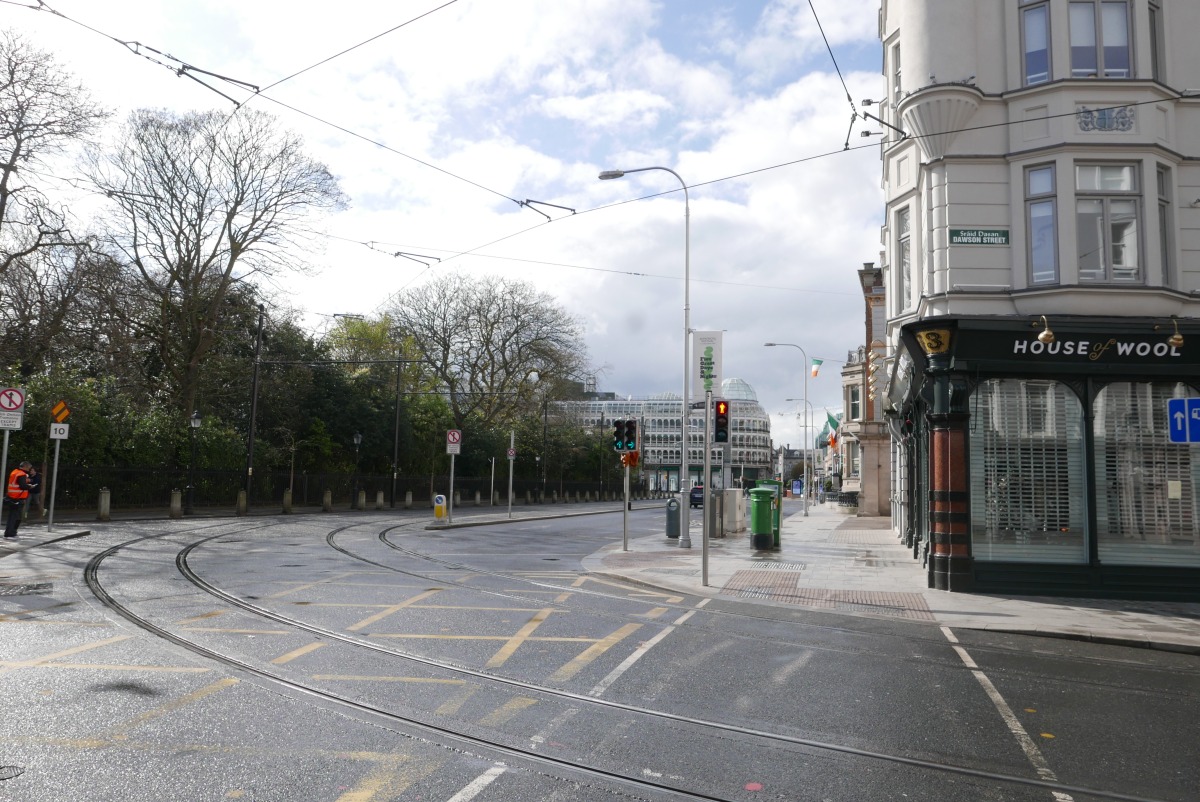
Dublin, April, 2020.
But I was lucky: I had a house to myself with a garden, and a car and a bike and a fridge and a freezer, and a television and a hi-fi system and internet access, and I was mobile and could venture to shops when supplies ran low, or take long walks and cycles for exercise. Roaming around the Hellfire Club or the adjacent Massy’s Wood for hours on end, while listening to Éliane Radigue’s Trilogie de la Mort on the headphones, was a favourite pastime, if I felt the need to get out of the house and blow the cobwebs off – not something I would necessarily have done if I’d been working five days a week. Furthermore, I did not have any very youthful or very elderly dependents relying on me for their daily needs or morale-boosting support. Reports of domestic abuse among those living in cramped, overcrowded conditions circulated and increased steadily, and I pitied anyone trapped in a fraught, tension-filled environment. My nutjob survivalist’s instinct began to kick in.
I was alone because my wife had taken up a job abroad a few months pre-pandemic. When rumours of imminent lockdown first hit she had wanted to return home, but I managed to dissuade her. We had been going through an elongated rocky patch, and I reasoned that a) if forced isolation was short-lived, then it wasn’t worth her while uprooting herself all over again; and b) if having to stay indoors lasted for a longer time, then sooner or later we might well drive each other to distraction, if ensconced under the same roof for such a lengthy period. We were then trying to establish independent lives, and in retrospect I still feel my decision was the correct one – in as much as later we experienced a ‘Covid-bounce’ and were reconciled. Not that coming together again was a direct consequence of being apart, but being together under duress certainly wouldn’t have helped us in resolving our difficulties. Does anyone really need to be with a partner/lover every hour of every day? Each time I saw him/I couldn’t wait to see him again (‘Then He Kissed Me’ by The Crystals, 1963) is the stuff of teen anthems and first love. Constant companionship in a confined space may even be detrimental, if not wholly destructive, to a relationship. Or, at least, to one with me. Am I a bad person?
In Middlemarch (1872) George Eliot has her ‘godless’ heroine Dorothea Brooke suggest that if religion were actually true and God existed, and achieving eternal salvation (and avoiding a similarly enduring damnation) was our main priority, then we should all devote our whole lives to this pursuit as cloistered contemplatives, rather than just leaving it at attending church on Sunday and doing a few good works. One of the few modern-era Catholic writers I can read with pleasure and profit, the Trappist monk Thomas Merton (1915-1968), wrote in Thoughts in Solitude (1956): ‘We cannot see things in perspective until we cease to hug them to our bosom.’ He continues:
When society is made up of men who know no interior solitude it can no longer be held together by love: and consequently it is held together by a violent and abusive authority. But when men are violently deprived of the solitude and freedom which are their due, the society in which they live becomes putrid, it festers with servility, resentment and hate.
Still, not all of us can become Trappist monks, or opt to lead a comparably ascetic life. For one thing, belief in God, or some conception of divine transcendence, appears to be a necessary, if not quite sufficient, prerequisite. For another, the need for sex, or even the search for secular love, does require one to be ‘out there’, however nominally. As my wife once opined, ‘You should have been a monk – except you like sex too much.’ Not that a vow of celibacy is always mandatory for the anchoritic life, or acts as an insuperable impediment to a long withdrawal – at any rate not nowadays, and not outside of the western tradition. For example, it is on record that the flexible arrangements surrounding Leonard Cohen’s five year stint living at the Mount Baldy Buddhist retreat centre, where he was given the name ‘Jikan’, meaning ‘Silence’, did not preclude female callers, or indeed boozing marathons with his Zen Master teacher, Old Roshi. But he was Leonard Cohen, not your average seeker after enlightenment, and Mount Baldy is located outside L.A., not Kyoto, so exceptions were made and such privileges extended.
But even setting aside the vagaries of libidinal desire, ultimately I think monastic life, which for many people lockdown could be said to have resembled, would be too social for me, certainly in its Cenobitic, or community form, if not in its Eremitic, or solitary practice. I like doing things – eating, sleeping, writing, reading – when I feel like doing them, rather than adhering to a strict schedule with other devotees. Interestingly, the Trappists, who are an essentially cenobitical order (in contrast to, say, the enclosed Carthusians), maintain a custom under which individual monks or nuns who have reached a required level of maturity within the community may pursue a hermitical lifestyle on monastery grounds under the supervision of the abbot or abbess. Merton was one such allowed to undertake this mode of living. Yet even then he fell into an earthly love, with Margie Smith, a student nurse assigned to his care while he was recuperating in a Louisville hospital from surgery he underwent in April 1966, to treat debilitating back pain. She was twenty-five, petite and demure; he was fifty-one, stocky and bald, with a wandering intellect and a boisterous laugh. Although in several diary entries (see Learning to Love: Exploring Solitude and Freedom, The Journals of Thomas Merton, Volume Six: 1966-67) he expressly denies sexual consummation, on July 12th he wrote:
Yet there is no question I love her deeply … I keep remembering her body, her nakedness, the day at Wygal’s (the office of his psychologist, which he ‘borrowed’ for a tryst on June 11th – the diary entry for which day notes that they shared a bottle of champagne), and it haunts me … I could have been enslaved to the need for her body after all.
A previous entry for June 14th notes his discussions with his abbot about this affair, and his intent to follow the instruction to end it. When he did, he still remained in occasional contact with Margie, and some recent Merton scholars have even argued that the monk regretted giving her up so much, and was so remorseful that she had married someone else (a doctor in Ohio, with whom she raised three sons), that he no longer felt life was worth living.
Also, incidentally, according to The Seven Storey Mountain (1948) the youthful Merton loved jazz, but by the time he began his first teaching job he had forsaken all but ‘peaceful’ music. Later in life, whenever he was permitted to leave the Abbey of Our Lady of Gethsemani, Kentucky, for medical or monastic reasons, he would catch what live jazz he could, in Louisville or New York. So maybe there is hope for me yet, to entertain a life of socially sanctioned solitude (with sporadic forays to musical events) – although I fear I would not take kindly to that clerical ‘supervision’.
More to the point: I am not under thirty, or even under forty – so I would not expect those in that demographic, who are eagerly trying to establish relationships and careers and lives, to share my guarded enthusiasm for society grinding to a halt, or for taking a lifelong holiday from it. I have managed to attain some perspective on matters carnal, and on those of the heart (not to mention on my fluctuating sources of income) – even if this equanimity is, I suspect, largely hormonally determined, rather than an intellectual or emotional insight. Having said that, while I may still be partial to the odd ride, much less to a touch of romance, it was not impossible to hook up during lockdown, with a little technological aid, and within certain geographical limitations. Much like ordinary times.
Dublin, April, 2020.
Naturally, I reread Albert Camus’ The Plague (1947) during the time of Covid, like many others. For, whether the surge in its popularity consisted chiefly of first-timers or revisitors, in this activity I was hardly alone, as publishers reported a huge worldwide increase in sales of the novel, once the virus had taken hold. Figures for the English translation went up by 150% in the last week of February 2020 as compared with the same period in the preceding year, while the original French version rose in number by a staggering 300%. (Boccaccio’s Decameron (1348-1353) and Defoe’s Journal Of The Plague Year (1722) enjoyed similar stupendous bumps up the charts, courtesy of the reading public.)
What I discovered about The Plague was that it could have been written yesterday. So accurately did its descriptions of how individuals, and the general populace, behave in Oran during that escalating crisis chime with contemporary events, many passages could have been culled from the newspaper headlines and news bulletins of 2020-21. Which tends to make one despair of human nature, and embrace the cliché that it doesn’t change much. Here are three choice snippets, in case you didn’t get around to it this time:
‘There have been as many plagues in the history of the world as there have been wars; yet always plagues and wars find people equally unprepared.’
‘How should they have given a thought to anything like plague, which rules out any future, cancels journeys, silences the exchange of views? They fancied themselves free, and no one will ever be free so long as there are pestilences.’
‘The truth is that nothing is less sensational than pestilence, and by reason of their very duration great misfortunes are monotonous.’
Compiling lists was something else which really caught on, and if you hunt around the internet you will turn up the catalogues of my favourite novels, favourite albums, favourite films, worst jobs, and all that. Everyone started baking sourdough or banana bread, and posting photos of the results on social media, me included. If it hadn’t been for lockdown, I doubt I’d have got through nearly every one of the over twenty films directed by the prolific Sion Sono (the Japanese David Lynch), or worked my way through as many of The Guardian’s ‘Top 20 J-horror films – ranked!’ as I could find, or rewatched all of Michael Haneke’s filmography in chronological order, or lapped up the entire boxset of The Wire for the third time (which I would gladly do again), or discovered the best of Dario Argento (and what, really, had been so important in my previous life as to account for this grievous omission?). I played online chess with a couple of musician acquaintances, and some anonymous randomers (happy to report that my game improved exponentially). I even recorded my versions of every song on Bob Dylan’s Blood On The Tracks (1974) and had the temerity to upload the attempts to YouTube.
All of which prompts the question: what had we all been doing with ourselves before the plague descended?
Mainly, lockdown was a boon for me because I started writing again, having lost my way – aside from journalism and reviews – for a number of years. But this time it was not fiction, as previously, but rather essays, akin to this one. Martin Amis is not alone among writers when, in the epigraph to this piece, he expresses the tribe’s preference for solitude. Here’s James Baldwin, writing in ‘The Creative Process’ (1962): ‘The primary distinction of the artist is that he must actively cultivate that state which most men, necessarily, must avoid: the state of being alone.’ It’s almost enough to convince you that seclusion is an indispensable component of creation (although theatre, film, music and dance are clearly collaborative arts – and even desk-bound writers engage with agents, editors and publishers). But, perhaps in common with painters more than any other arts practitioners, writers live in their heads, and are solipsists par excellence. The interior world of imagination is always more stimulating to them than what Roland Barthes referred to dismissively as ‘The trivial kitchenry of doing.’ As for living, our servants can do that for us – if only we had servants.
When I first had notions of becoming a writer, one of the most appealing aspects of the calling was the option of anonymity: like J. D. Salinger or Thomas Pynchon, you could be famous, or let’s say influential, without anyone recognising you in the street or bothering you in public. Nowadays, however, one has to be ready to be interviewed at the drop of a hat, and take a strenuous part in one’s own publicity campaign (“What? No social media presence?”). One is also expected to become a member of ‘the writing community’ – whatever that is, and wherever it lives. So many of today’s writers spend so much of their time being on television and radio and going to literature festivals – in other words, promoting themselves and their work – that it is difficult to imagine how and when and where they ever manage to get any writing done. You might as well be in a touring rock band. (And when do they do their songwriting? At soundchecks? In hotel rooms? In the recording studio? I suppose they are not on the road all the time – but since the digitalisation and free filesharing of music, needs must to make a living, which means playing live and selling merch.)
In more recent years – primarily due to the ubiquity of television and the rise of the internet – writers have at times been presented – many of them willingly – as another type of media celebrity. Yet, in the not so distant past it was still quite difficult to reach an author from outside the circuit of the publishing world. Writers used to be identified mostly through their written work, and it was the norm for a reader to be aware of an author, to like or even love their work, and continue to be fully ignorant of their physical appearance, and also unaware of most of the biographical information that now is routinely accessed. One could scarcely imagine Franz Kafka or Fernando Pessoagiving an interview. Indeed, it is legitimate to question if individuals with such reclusive personalities would, in today’s climate, be offered a publishing deal at all.
Publishing is a business, and a publishing house is unlikely to invest in a writer’s work if it stands to lose money, or to not make very much (unless a few hugely commercially viable wordsmiths subsidise all the ne’er-do-wells). Yet writers are, arguably, very different from performers of popular entertainment. In practice, of course, not many authors differ significantly from performance artists, and what they say on stage is at least as vital to their process as what they write on the page. But to bring about an increase in links between the two activities, whether intentionally or unwittingly, will certainly result in fewer published authors who are characterised by acute introversion.
Now, it may be argued that the attraction of retreating inside a Proustian cork-lined study to do one’s writing means that the work produced will have a very narrow focus, and that you will have fewer stories to tell, except the ones about yourself. Such confinement implies that your daily ‘life experience’ will be extraordinarily circumscribed. However, in my opinion, most people have more than enough ‘life experience’ by the time they are twenty-five or thirty to be going on with for the remainder of their lives. If, indeed, life experience is really a requirement for writing well at all, especially in comparison with the transformative power of the imagination – for those who have one. That ‘smiling public man’, Senator W. B. Yeats, in ‘The Fascination of What’s Difficult’ (1912), bemoaned the distracting vicissitudes of ‘Theatre business, management of men’ which he had earlier so eagerly embraced, and also elsewhere wrote ‘Why should we honour those that die upon the field of battle? A man may show as reckless a courage in entering into the abyss of himself.’ Or, as has been remarked with reference to Jorge Luis Borges: ‘A man may lead an exciting life without ever leaving his desk.’
(Note to television and radio producers, and festival organisers: I am now available for any interviews or promotional junkets going, and I promise to wax eloquent about the topic of this essay, or any other subjects about which I have written.)
Dublin, April, 2020.
Does much of the foregoing sound like plain old misanthropy? I do not regard myself as overly misanthropic, even if I have a low opinion of much of the human race. I still like the people I like, and like them a lot. It’s when people organise themselves into groups that my suspicions are raised. As Jonathan Swift wrote, in a letter to Alexander Pope, ‘I have ever hated all nations, professions, and communities, and all my love is toward individuals.’ Doubtless the proponents of wellness fads, and associated quackery, will diagnose me as ‘anti-social’, and conclude that I ‘lack empathy’. Not so. If anything, I’m more asocial than anti-social, and I can have oodles of empathy, when I want. Granted, maybe I should ‘want’ more. However, I do not place quite so high a value on empathy as an attribute as the esteem with which it is held in the current discourse appears to require. Too much empathy can get you into all sorts of bother.
Nor am I agoraphobic (from Ancient Greek ἀγορά, meaning ‘an assembly of the People’, or ‘a marketplace’ (the typical spot for such an assembly); and φόβος, meaning ‘fear’) – although I do have a problem with ‘the market’ as a determinant of value, and therefore fear it. People who had known me in a previous life might even have described me as a bonvivant or man about town, such was my propensity for attending live artistic happenings, chiefly concerts. (In fact, there are those who would say that I have only two settings when it comes to my preferred mode of being: the quiet fragility of tremulous silence, or the overpowering loudness of raucousness sound. Signal to noise ratio.) However – and I don’t know if it is attributable to incipient old age, or whether it has been accelerated by quarantine – I now no longer need to be out all the time. Maybe I had always been a potential hermit, who simply lacked the courage of his convictions. Still, it’s quite a momentous revelation when you realise that you could get used to being content enough never seeing anyone for the rest of your life. ‘Man is a social animal’ Aristotle tells us in his Politics. ‘Virtue is social’ admonishes a voice in Philip Larkin’s astute poem on this theme, ‘Vers de Société’. Yet there is such a creature as a gregarious recluse, however paradoxical that might sound. Lots of animals hibernate for winter: why can’t homo sapiens (wise man!) do it for three or four months annually, if not for the whole year? But what of the need for company and companionship, if only to stave off the loneliness? The answer to this objection is that being alone and feeling lonely are two entirely different conditions. Some people feel lonely at the heart of a crowd of people; others are at peace staring at the stars by themselves.
So, am I a bad person? Not really, although I may concede to selfishness. But all artists are selfish, or certainly no more or less so than the majority of the rest of humankind. There are fully socialised reasons for being selfish, just as there exist selfish reasons for being social. How bad a person does selfishness make you?
I repeat: am I a bad person? No, I’m just an introvert – and there is nothing wrong with that. (Note to self: future essay comparing the relative merits and demerits of introversion and extroversion.)
Mostly, I can’t be bothered arguing and debating with people much anymore. I mean, I kind of like it, sometimes, when it takes place at a level I consider ‘intelligent and informed’, but most discussion, it seems to me, exists at a standard that makes it hardly worth talking about or engaging in, and amounts to nothing more than people repeating their opinions and beliefs at each other at contrasting pitches. I guess this view makes me a snob, and of the worst kind – an ‘intellectual’ one. But really, as is in the nature of friendship, I like being with people who agree with or broadly share my worldview, and I get irritated being around people who are coming from the opposite end of the religious or political or literary or whatever spectrum. Perhaps that is my great character flaw; but it’s tiring, to the point of exhaustion, always being called on to defend yourself. And yet, it is ingrained that we can only change things (or maintain the status quo) through exchange of ideas in a public forum. That’s how much vaunted democracy, such as it is, functions. However, as far as I can make out, people who talk too much have nothing much to say. Or, at least, one has to put in quite a shift to discern what it is they are actually trying to express. Talk is cheap. A still tongue in a wise head. Have we gleaned nothing from Wittgenstein’s dictum: ‘Whereof we cannot speak, thereof we must be silent’? Or have we not heard the sagacious Borges’ counsel: ‘Don’t talk unless you can improve the silence’?
But even I am human. I have slowly crept back to attending gigs, going to the cinema and theatre, meeting friends, even going to parties, and making a couple of journeys abroad – although I did suffer from Covid-hesitancy at first. The intensity of crazed moshing at black midi in Vicar Street was disconcerting, as was the surprise that Mitski Miyawaki had morphed from being an act with a relatively mature audience of twenty and thirty-somethings to a TikTok sensation for fifteen-year-old girls queueing around the corner at the same venue, before it opened its evening doors. In both cases, I forsook my usual front row vantage point, and retreated to the back of the hall.
I have noticed a greater than usual degree of incompetence on my part, in almost every piece of daily business that I do. Nothing feels the same as it did, in The Before Times. When you step off the carousel, you are not sure you want to get back on again – finally acknowledging that it may have really been a treadmill all along. I returned to work, because I had to, but more than ever before was plagued (apologies) by the nagging question ‘What am I doing?’ (with my time, with my life, with my endless numbered days), asked with an existential weight that was spirit-crushing. It was back to the small talk, or as its components are also called, pleasantries. Some colleagues were in agreement with me that we have all become ‘a little more Zen’, post-hiatus. Although there is an underlying apprehension that we are just dazed and confused zombies. After all, how could we tell the difference?
Inevitably, and in spite of obeying all official directives and taking all reasonable precautions, I contracted the plague myself, having successfully dodged it for over two years. The perils of being out and about, mixing with the throng, instead of sheltering safely at home. I may even have picked up some form of Long Covid, given my occasional breathlessness and sudden bouts of tiredness, and general brain fog and word soup. What is all this mad rushing around for?
Dublin, June, 2020.
The most disappointing thing about the easing of lockdown is that it seems, both individually and as a society, that we have learned nothing from the experience. We are still pursuing the mythic chimera of endless economic ‘progress’; we are still subjecting ourselves, or being subjected to, lives of pointless wage-slavery; we are still pillaging the planet’s natural resources for short-term solutions and private gain. We still have not learned that we are not landlords here on earth. We are not even tenants. We are guests, just passing through. At the time of our leave-taking, wouldn’t it be preferable to know that we had made things a little better, or at least no worse, for all present and all of those to come, rather than just making sure that we took as much of the world’s bounty as we could get for ourselves and our own, and had as a good time as possible while doing so, at the expense of others?
Maybe I did not feel ‘most alive’ during lockdown, but I do feel ‘most alive’ when writing, and lockdown facilitated me towards that end. Therefore, it was one of the happiest times of my life, and it is little wonder that I harbour residual nostalgia for those halcyon days. In fact, it is tempting to declare: that’s what life should be. In ‘The Choice’ (1933), Yeats tells us ‘The intellect of man is forced to choose/Perfection of the life, or of the work.’ In response, Derek Mahon takes issue with this high-flown assertion, in ‘Knut Hamsun in Old Age’ (1980):
One fortunate in both would have us choose “Perfection of the life or of the work.” Nonsense, you work best on a full stomach As everybody over thirty knows – For who, unbreakfasted, will love the lark? Prepare your protein-fed epiphanies, Your heavenly mansions blazing in the dark.
So, should I get out more? No, not if going out means writing less – which, in my case, it usually does. ‘No man is an island’ averred John Donne, in a phrase which that mischievous mystic Merton referenced when he took it as the title for one of his finest essay collections. Alas, just as it is not given to everyone to be a monk, not all of us are writers or artists. My only hope garnered from lockdown is that I can retain the writerly momentum I gained during it, now that the world has opened its doors and windows once again, and everything is returning to a not-so-very-new ‘normal’.
He had thousands of kodachromes
when he died. Nowadays they’d be snaps
stored on the cloud, given back
tritely as memories by some iphone.
Anyway, they went in the bin,
regardless of what they meant to him.
I have chameleon words, collections of notes,
playing the same role: tie it down —
capture it. What? You, me, the sound
it makes to live; not bringing old stuff close
again (that was bad enough back then),
but the dazzle of being able to comprehend.
Of course, insects don’t waste being alive
worrying about themselves;
they continue to batter themselves
against windows, the life of the hive
before their own; or fanatically nest
under stones, enslaving aphids and the rest.
And rabbits are the same, chewing and getting rattled.
All have better things to countenance
than their own permanance.
It’s baffling that we are so saddled,
knocked over by the whole picture.
What it says in the Scripture
at the start — about Adam and Eve:
it’s not really about sex and so on;
it’s about seeing yourself, alone.
Waking up. To what you may believe.
I glared that first night as she vaunted perks
And spoke in winding roads; uncouth she pried
About my grade and cut. Around her stride,
I feel as though I’m drunk. I miss her quirks.
The nights we stargaze drag on. I should work.
I see her down the bar, then on my floor.
Embracing tears outside her dawn-lit door,
I waste my time deciphering her smirk.
She trembles when I pet her hair,
She conceals what I have learned to love.
With every fight I lose her brazen flair,
Reveal a girl who claims life’s unfair.
But she’s a worrying one, a single dove,
A dress-up doll that yearns to care.
Featured Image: Louis Jamnot (1814-1892), Le Vol de l’âme
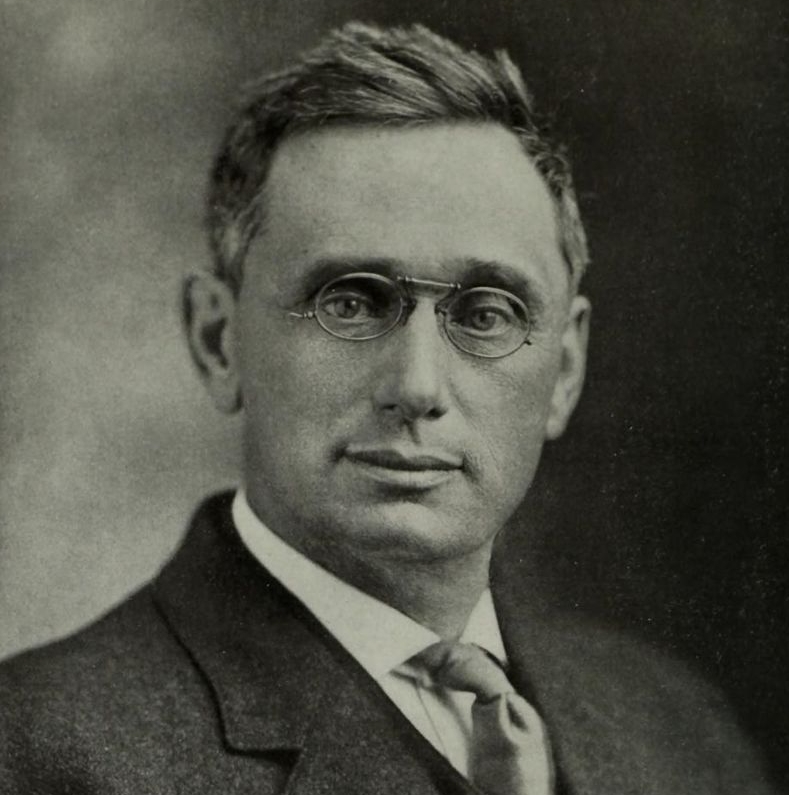
Both as a lawyer and Supreme Court judge, Louis Brandeis was an inveterate opponent of big business interests. Less well known than his other contributions, is that he a co-authored a text in the 1890 Harvard Law Review that invented a privacy right, which has steadily been eroded in criminal justice.
Indeed, as a judge in Olmstead v US Brandeis extended the privacy right to what he termed ‘the dirty business of the state’. In that case, without judicial approval, federal agents had installed wiretaps in the basement of Olmstead’s office and in the streets near his home.
Culminating in the recent Quirke case, in Ireland, a right to privacy in criminal proceedings has now reached a juncture of virtual nonexistence.
In my last article I referred to Irish Supreme Court Justice Gerard Hogan’s opinion that for thirty years the Irish Courts have failed to enforce due process under Article 38 of the Irish Constitution. The Quirke case delivers us to the terminus, facilitating the dirty business of the state.
In that case, evidence gleaned from a computer unlawfully seized from Patrick Quirke’s home was deemed admissible. Jurors in Quirke’s original trial were informed that Quirke’s computer was used for internet searches on the decomposition of human remains and limitations of forensic DNA. Quirke was found guilty of murder based on circumstantial evidence.
No Statutory Safeguards
In Ireland we now enjoy no statutory safeguards, other than Judges’ Rules, whereas in the U.K. Section 76 and Section 78 of PACE (The Police and Criminal Evidence Act 1984) are actively enforced to exclude coercive and inappropriate tricks or force, and that which impacts on the fairness of the proceedings. I know from experience that judges in the U.K. are vigilant at throwing out a case in the event of an abuse of process.
The murmurings by the Irish government about the implementation of the Special Criminal Court recommendations is a space which should be carefully watched. Most likely, in my view, is that an institutional preference for non-jury courts will be given ever-wider jurisdiction.
It is a sign of how we are entering an inquisitorial rather than adversarial age worldwide, not just in Ireland, which suits the interests of many of our elites. Our own, and other states, are sidestepping the Rule of Law in the interests of big business, often at the expense of the sometimes-innocent lives of others.
Furthermore, it is noticeable that the seven judges of the Supreme Court selected to adjudicate on the Quirke case did not include the state’s leading constitutional lawyer. Gerard Hogan’s absence was his presence.
One can only wonder why Hogan was, deliberately or otherwise, excluded. Perhaps to preserve a show of strength through unanimity? Or maybe Hogan would rather colleagues were unanimously wrong, and wanted no hand nor part in it.
While on the High Court Peter Charleton was the architect of the nefarious JC case. His judgment in Quirke expressly reinforces that case, and fails to over-rule it as doctrinally unsound. He also sidesteps accepted breaches of EU and ECHR data protection under the privacy right. The judgment effectively subsumes a right to privacy at the expense of public order considerations, and legitimates the dirty business of the state.
Hardiman’s absence is also his presence. The shade of a forgotten ancestor. His dissent is not even addressed in any satisfactory detail in Quirke. This failure to address Hardiman’s reasoning is not dissimilar to the way the State treats whistleblowers, who are demonised, ignored, trivialised or excluded. If all else fails, as in the McCabe inquiry which Charlton presided over, the State endeavours to deflect, invoking the shabby excuse of inadvertence – at least until confronted by the stark truth.
Then, only after being caught with your legal pants down, do you cobble together a shabby deal involving a multimillion pound pay out. With a confidentiality agreement of course.
Image: Daniele Idini
Factual Matrix
The factual matrix of Quirke may go some way towards suggesting that it was an inadvertent mistake, but that is not a typical pattern, as various sources, including the Morris Tribunal, and Hardiman’s eviscerating judgment in JC, demonstrate that discipline – and it might be said ethics – are barely apparent in the Irish police force: An Garda Síochana.
It is not a case of – as I can testify – simply of incompetence, though this is undoubtedly part of the problem. It is a combination of tunnel vision, or cognitive bias, coupled with active attempts to frame those deemed to be threats, or perceived threats.
Whistleblowers, including and especially internal ones, are a particular target, but human rights lawyers or defence counsels may also be in their line of fire.
There is no point having the symmetrical precision contained in Charleton’s detailed judgment and in some of the majority judgments in the JC case. This is not a case about shipping or guarantees where rules can be implemented precisely with clear consequences; and where high commercial stakes demand clarity and precision, which can then be cross-checked against best practice in industry.
The rules in criminal proceedings must be matched up with, and adapted to, social realities. A member of An Garda Síochana may describe something as inadvertence when it was a reckless or deliberate violation of constitutional rights. There is a consistent tendency to lie or cover up. That is what the Morris Tribunal and other reports demonstrate. Things have got worse not better. This was not dealt with adequately in the Report of the Fennelly Commission.
Image: Daniele Idini.
The Path of The Law
In one of his most celebrated contributions to legal discourse Brandeis created the so-called Brandeis Brief, which is often used in cases involving the death penalty, and others. This involves the marshalling of economic and sociological data, historical experience, and expert opinions to support legal propositions, i.e. judgments must be cross-checked against social realities.
Therefore, in Ireland the behaviour of the police does not warrant a watering down of the strict exclusionary rule. In Ireland we require a high standard. Discretionary rules will not be applied.
If the police are afforded the excuse of inadvertence, they will happily paper over illegality.
Rules must be informed by social realities. It was recently alleged in the High Court that a number of officers supervised the importation of drugs, and controlled the flow of shipments to dealers. Woe betide anyone who has the temerity to stand in their way.
Charleton by implication, and expressly, suggests that a factual inquiry into the bona fides or honesty of a police action and decision can be made in a specific context. But given the present Special Criminal Court dispensation, accepting uncorroborated police evidence, that inquiry must be very limited and conditioned by the judgement of subjective officialdom.
The acceptance of a Garda evidence in even securing a warrant without adversarial scrutiny is unacceptable. Safeguards need to be built into the system.
The Quirke judgment is a travesty: a neatly-ordered, precise and tidy travesty – as is Charleton’s want. We should not be facilitating the dirty business of the state but enforcing the privacy right.
In the insular, it felt like it at times, enforced statelet of Northern Ireland, sexual repression was a thing. (And probably still is.)
Faggot. Queer. Bent. Gayboy. Bender. Fruit. OOOOooooooooo like an effeminate caricature: going around, mincing, limp-wristed, and nothing but a bum-watching, bumboy. These were some of the names I heard levied at me when I was eighteen and on into my twenties.
At the time, my mental health was on skid row. I had depression, was low on self-confidence; suffered terrible social anxiety, and an alcoholic experimenting with harmful drugs . I did not realise at the time that I was in pain due to my background. Yes, family and subsequent cognitive development. Impaired. Yes. Immaturity. And I was unwell. Really. I did not stand up for myself. I had no response to these verbal demarcations.
They used to say, ‘Burnsy, why haven’t you got a girlfriend then?’ And I would take – as the colloquialism goes – a reddener. Pure scarlet. Flustered and embarrassed and already a wreck. I started to think maybe I was. One of them, and I was struggling with my sexual identity. My gayness was trying to come up to the surface and out. But I was suppressing it.
Image: Daniele Idini.
I can recall some twenty years later, sitting in a working-class bar, one Saturday afternoon two decades ago, in Belfast, alone at a table with a drink, and coming to the end of the line on the subject – asking myself: ‘Am I gay? Do I really want to be in a relationship with a man?’
I knew that this situation had become a neurosis in my mind. And I had to venture out there to find out. I went online and looked at Transexual escorts in Belfast. I picked one. Of an Asian background. I went to a hotel the next week and found out that I was not gay after all. The physicality of what is a man’s frame/body and the presentation gender of a man, was, is, something that I was not attracted to. At all. And that’s fine.
My sexual identity had very little bearing on my mind’s stunted growth. It was all familial.
Image: Marina Azzaro
There was the time whilst I was living in Dublin that I went along to a reading group after being asked by a guy who is gay. I knew he was gay and did not have an issue with it. I did not have a secret fantasy or agenda to get better acquainted. During the reading, he tried to play footsie, or, leggsy, rather, under the table with me and I did not reciprocate. From then on, he has given me the old round around and does not converse or communicate and I thought that was rather selfish, but there you are.
Indoctrinated media draws very clear lines on the subject of sexuality: binary codes, definitions and stereotypes.
I do wonder about the repression back home, though, the religious doctrines and institutions which repressed people and silenced others. The subsequent abuses.
I did wonder for a long time about homophobia and innate homosexuality and violence meted out in manifest self-anger as one reads and hears so often about attacks on gay men. Gay women. Gay people.
People are people they have their preferences and proclivities.
I went on a trip to Berlin a couple of years ago to visit the museums and check out the city. Cut to a Friday evening; there was slight drizzle and when I was walking down through Rosa Luxemburg-Platz, I saw a man in full-make-up, a pink latex jacket, leather biker’s hat, a black mesh over his face, black leather trousers, and black boots, and to me, he looked happy.Free. I was happy for his freedom and thought to myself, ‘You wouldn’t see that in certain areas of Belfast on a Friday night. Sadly.’
You just don’t know the great struggles people have in their lives.