Blog

  • Hitching the Plough to the Stars

    Paul O’Brien’s biography, Sean O’Casey, Political Activist and Writer (Cork University Press) is a timely re-assessment of an often controversial, figure whose place in the literary canon is, O’Brien argues, is insufficiently acclaimed.

    It coincides with the hundredth anniversary of Druid’s production of O’Casey’s Dublin Trilogy: ‘The Plough and The Stars’, ‘Juno and the Paycock’ and ‘The Shadow of a Gunman’ which opened recently at the Galway Arts’ Festival and will tour Belfast before coming to The Abbey in September. But, with the publication of Timothy Murtagh’s new book Spectral Mansions on how the once graciously lofty Henrietta Street turned into tenements adding to the mountain of scholarship about Dublin tenement life, O’Casey’s plays, are, on that basis alone, destined for immortality.

    As enduring testimonies of the unflinching reality of Dublin tenement life, no playwright evokes and captures the life of Dublin’s tenements as does O’Casey and that is the central theme of this tour-de-force of scholarship.

    Sean O’Casey was born in 1880 into a lower middle class Protestant family – the youngest of eight children – and was raised in Lower Dorset Street, where the family enjoyed a relatively comfortable lower middle-class life until after his father’s death in 1886. His father had been employed in the Irish Church Mission and his older brothers attended the Central Model School in Marlboro Street for which a small fee was required.

    In reduced circumstances after his father death, and when O’Casey was nine, the family moved to the East Wall – a hot bed of the Irish Citizen Army (ICA) and the ITGWU. His entire oeuvre dramatizes with unflinching realism and lack of sentimentality the grim realities of tenement life in Dublin, infusing his characters with compassion and humanity.

    By the 1930s, Dublin’s tenements were among the worst slums in Europe with a very high mortality rate, rampant prostitution and disease reflected in ‘The Plough and The Stars’ in the character Mossler Gogan dying of TB and the prostitute Rosie Redmond. Indeed, according to O’Brien ‘[i]n 1914 it was believed that tenement dwellers had a better chance of survival on the Western Front than in the diseased-ridden hovels of Dublin.’  Thus, O’Casey became ‘a life-long activist for the preferment of dwellers of tenements, reflecting their lives with scrupulous realism and compassion, their humanity always shone through as did their heroism and their promise.’
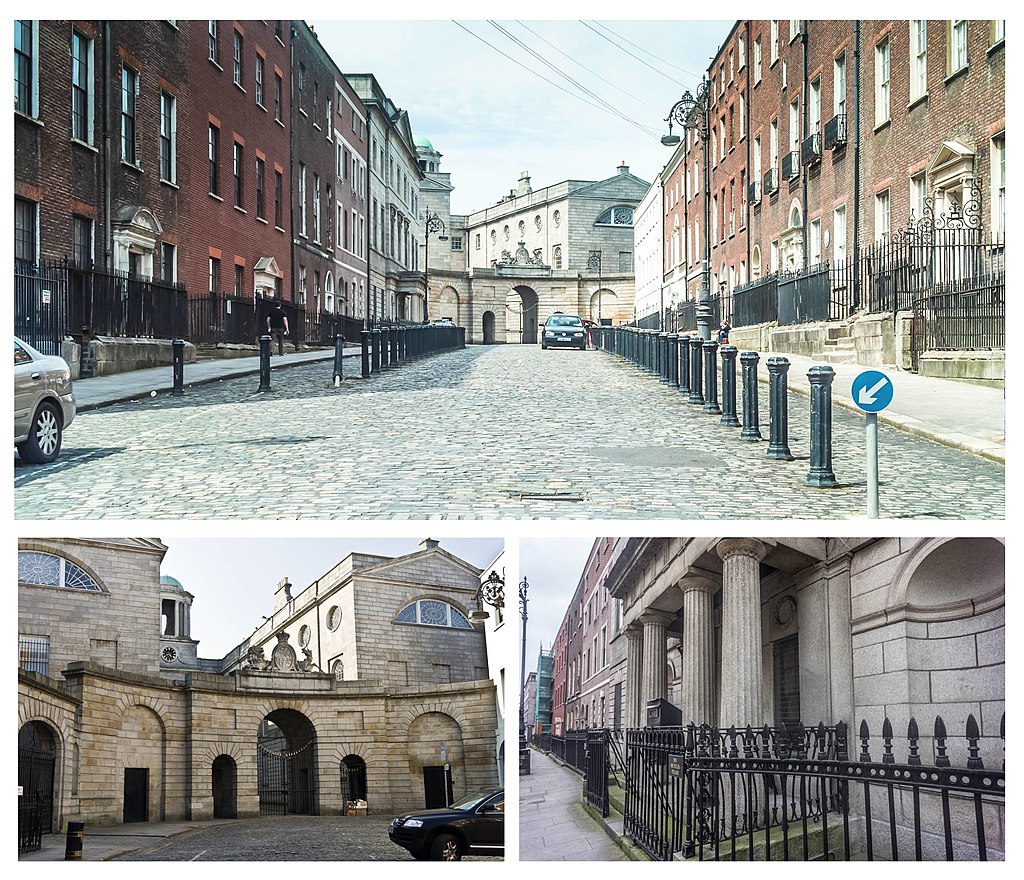
    Henrietta Street, Dublin.

    Excruciating Detail

    Paul O’Brien biography on O’Casey charts with intense and excruciating detail the development of O’Casey’s politics and how those politics fused and informed his writings, especially his dramatic works. In that sense, O’Brien’s book takes a thematic rather than a chronological approach to O’Casey’s life.

    While O’Casey’s older brothers attended the model school in Marlboro Street, Sean, a delicate child was largely home schooled, self-taught and, for a time, taught by his older sister, a teacher. Later, O’Casey was immersed in all the key political movements of his time, the ICA, the Gaelic League, the GAA and was a big admirer of, and influenced by, Parnell.

    He mastered Irish, hence the change in his birth name from John to Sean and he studied the Classics. From early in his life, he was interested in the national movement but it was the emergent labour movement, gaining momentum under his life-long hero, James Larkin that really gripped him and the entire dynamic of his subsequent political and writing life revolved around his failure to find a synthesis between Irish Republicanism and the international struggle of the working classes.

    In other words he never could accommodated the ‘green’ of Nationalism with the ‘red’ of Labour and this unreconciled tension remained the central dilemma of his entire life and, in exploring it in minute intensity, Paul O’Brien uncloaks it as both the triumph and tragedy of O’Casey’s life too. While Paul O’Brien clearly admires his subject, he is candid about the unjustified personal animosity of O’Casey towards James Connolly. O’Brien does not shirk from revealing any of O’Casey’s flaws in judgement and personality, while never losing sight of his overall genius.

    Imbrications between the cause of the working classes in Dublin and accelerating nationalism were unavoidable after Parnell and were so fused as to often be indistinguishable; the overlaps were everywhere, not least in the Irish Citizen Army (ICS) of which O’Casey was a member until he finally severed all ties in 1914. He also derided the Irish Volunteers which emerged in the South, in parallel with the formation of the Ulster Volunteers in response to the Home Rule Bill of 1912.
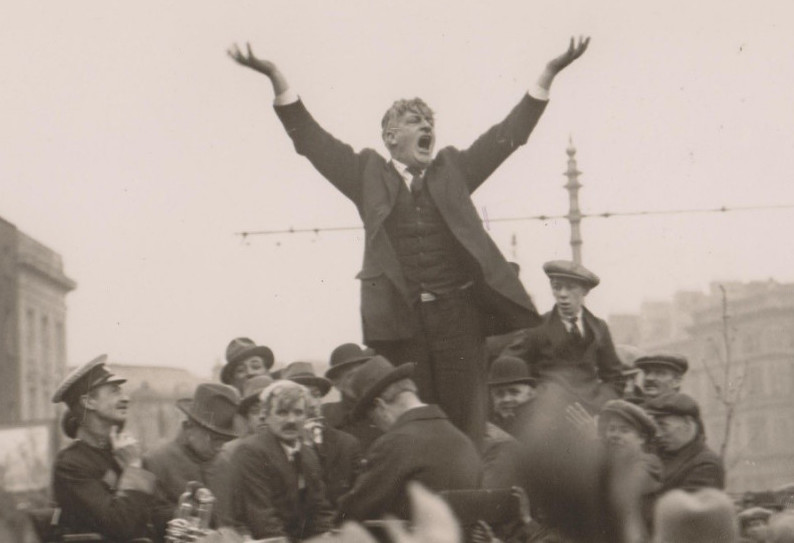
    James Larkin.

    James Larkin

    James Larkin arrived in Dublin in 1907 and inspired O’Casey to use ‘words as weapons against exploiters of the Dublin poor.’ O’Casey first gave vent to his rage in Larkin’s paper The Irish Worker. Later, in his biographies, O’Casey lacerated the corruption of Dublin Corporation.

    From an early age, O’Casey’s love of literature was manifest. The hope that Irish life would be transformed died with the early and tragic death of Parnell in October 1891. In the aftermath, the prospect of peaceful evolution along the lines of Dominion Status enjoyed by Canada and Australia receded.

    O’Casey saw Larkin as the greatest Irishman since Parnell. ‘The Plough and The Stars’, O’Casey’s most controversial play premiered in the Abbey in 1926 and was well received on its first night. But on the second night, a combination of 1916 widows and Republicans escalated into full blown riots with added moral consternation at the prostitute Rosie Redmond awaiting clients and the un-named figure in the window, identifiably Patrick Pearse extolling the sanctity of bloodshed.

    The first two acts of the play are set in 1915 looking forward to the liberation of Ireland, but the second two acts are set during the 1916 Easter Rising.

    In the evolution of his political ideals, O’Casey had a number of influences aside from Parnell; the writings of James Fintan Lalor (1809-1849) and John Mitchell (1915-1875) influence him. The 1913 Lockout in Dublin was a watershed moment for O’Casey.

    Parnell had provided a vision for Ireland with no conflict between the Protestant religion and the principles of freedom which had a democratic and libertarian pulse, rooted in Constitutionalism. But contemporary conditions would sweep O’Casey away from family and Protestant traditions.

    A Dublin Tram conductor and an Abbey actor introduced him to rawer politics. This, combined with the ICA and the ITGWU provided different currents on O’Casey’s development. In terms of his literary work, Dion Boucicault remained a strong influence in how he used songs and comedy to lighten the tragedy of his own writings. (O’Casey wrote many, long forgotten, ballads)  While Boucicault’s plays are traditional melodramas there is also a ‘political ambivalence that challenges the stereotypical image of the stage Irishman; ‘Arrah-Na-Pogue’ and ‘Peep O’Day’ are about the 1798 rebellion. Boucicault created a more trustworthy image of the Irish, replacing the racial stereotype in English literature which was finally killed off by George Bernard Shaw in Larry Doyle in ‘John Bull’s Other Ireland.’ O’Casey draws on the techniques of Boucicault, Shakespeare’s history plays and on Shaw to create a unique synthesis of his own. O’Brien argues that O’Casey’s conclusions are ‘open-ended.’
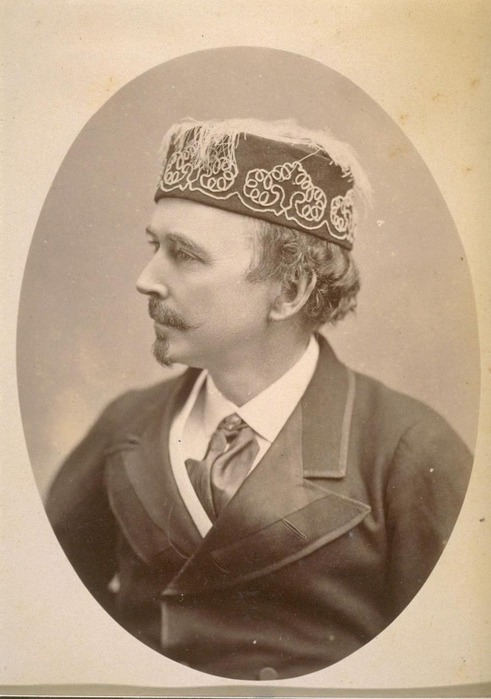
    Dion Boucicault.

    The Boer War

    Defining nationhood was intensified by anti-British sentiments after the Boer War, the centenary celebrations of 1798 and the Jubilee celebrations in 1889.

    O’Casey imbibed the sentiments of the Gaelic League like many other Protestants. The plough and the stars was the flag of the Irish Citizen Army, and O’Brien identifies O’Casey’s problem was to ‘hitch the plough to the stars.’

    He joined the Gaelic league in 1901 and took up hurling. He became an apprentice bricklayer and worked for a number of years on the Great Northern Railway Line. In 1908, he became secretary to the Drumcondra branch of the Gaelic League and spent ten years promoting Irish language and culture but increasingly he saw the chief enemy as the crushing force of capitalism, and, as he matured, he rejected romantic nationalism.

    James Connolly was able to unite nationalism and socialism, but O’Casey could never fuse them into a cohesive theory remaining haunted by the voice of the urban poor. O’Casey resigned from the IRB in 1913 when they refused to take the workers’ side in the Great Lockout.

    He ditched the Gaelic League for Larkin and the momentum behind Larkin radical labour movement became the driving force for his plays. This transition is reflected in his earlier plays The Harvest Festival, The Stars Turn Red and Red Roses For Me which deal with the labour history of the 1913-1914 Lockout. After the failure of the Great Lockout O’Casey’s views were crystallised into the view that the ‘struggle was not one of English Imperialism versus Irish Republicanism but between international capitalism and the workers of the world’ and this is reflected uncompromisingly in his plays.

    In 1914, Larkin went to America to organise the international workers of the world and was jailed for criminal anarchy. The Ulster Covenant saw 4,000 Ulster volunteers sign up and the respondent Irish Volunteers were despised by O’Casey who saw it as dominated by ‘overfed aristocrats’.

    He clashed with Tom Kettle and Pearse and wrongly accused them of not supporting workers. In 1914, along with Larkin, he drafted a new constitution for the ICA but the problems of aligning the red of Labour with the green of nationalism persisted for O’Casey.
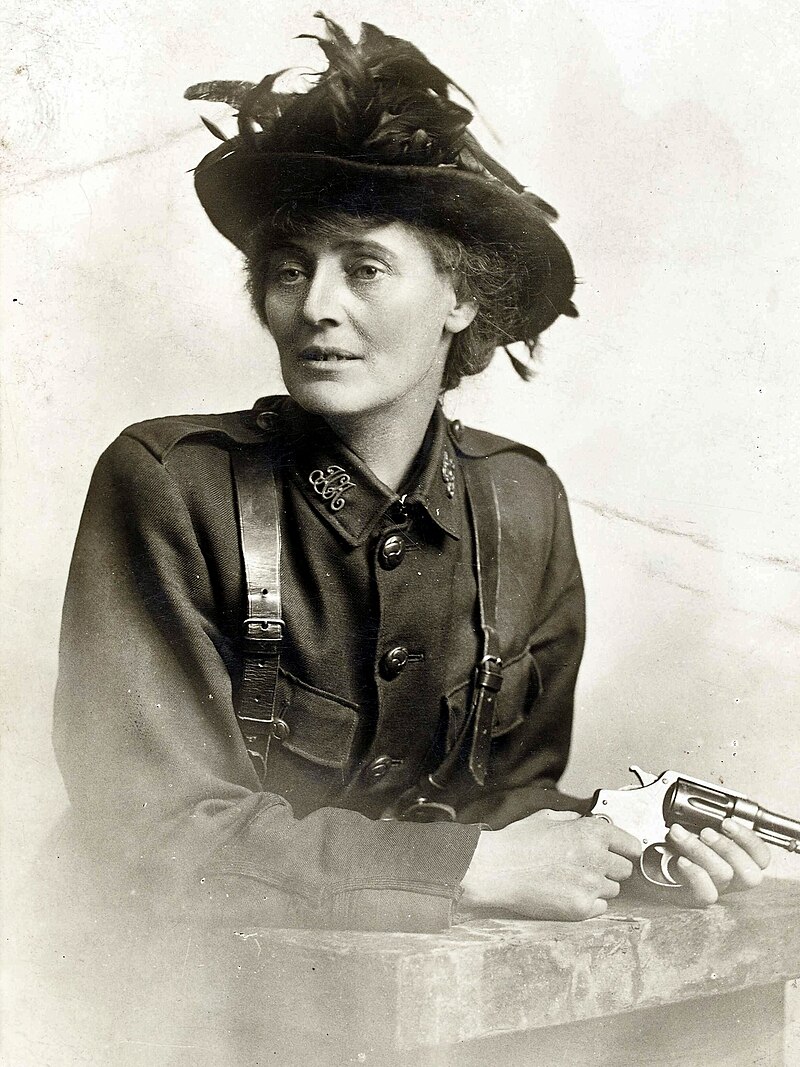
    Countess Constance Markiewicz.

    ‘a spluttering Catherine Wheel of irresponsibility.’

    When Connolly expressed his vision for the re-conquest of Ireland in a pamphlet in 1915, O’Casey saw it as Connolly lowering the red flag in favour of the green and made a sudden and final split with the ICA. The Countess Markievicz joined the Irish Volunteers and the ICA.

    O’Casey was intensely hostile to her ‘hauteur’: ‘she whirled into a meeting and whirled out again a spluttering Catherine Wheel of irresponsibility.’ His motion, however, to expel her from the ICA failed. According to O’Brien ‘he rushed headlong into one dispute after another, damaging himself and alienating his friends.’

    O’Casey published a book on the ICA in 1919 but, according to O’Brien it lacks balance and is saturated with vitriol and opinions. His core argument was that nationalism gained and labour lost as a result of the ICA’s involvement with 1916. ‘O’Casey was alone is seeing Irish history from a working-class perspective when, after 1916, The Labour movement was subsumed into the struggle for independence.’

    When Connolly joined the Volunteers in 1916 it completed the fusion with the ICA. 220 members of the ICA rose on Easter Monday 1916, but 1,200 Irish Volunteers did. As O’Brien points out, Connolly had little choice but to fight on nationalist terms in 1916.

    Connolly had grasped the importance of a united front where O’Casey failed. O’Casey never acknowledged Connolly’s attempts to unite Labour and Nationalism but in later years he did acknowledge Connolly’s standing in the Labour movement but ‘he never lost an opportunity to denigrate Connolly in favour of Larkin.’

    O’Casey became ‘a disgruntled outside, a hurler on the ditch, shouting the odds as history passed him by.’ Many critics put O’Casey’s vitriol against 1916 in ‘The Plough and the Stars’ down to ‘survivor’s guilt.’ The summary execution of Francis Sheehy Skeffington, a socialist and passivist abhorred him. He felt successful revolution on nationalist terms only empowered the new Irish ruling classes – the very people who had reduced the Dublin poor to abject poverty.

    O’Casey was in sympathy with the views of Ernie O’Malley who resented the legendary status that emerged in the aftermath of the 1916 martyrs as they were twisted and idealised by a new state to consolidate its position. O’Brien argues that ultimately O’Casey neither deified or vilified the 1916 heroes but rather projected the realities of the new Free State that emerged, and, in that, he saw it as advancing commerce over the plight of the poor.

    In ‘The Plough and The Stars’ he ‘inverted the nationalist myth … and summoned his characters from the margins of history and placed them in the spotlight.’

    ‘The Shadow of a Gunman’ was influenced by Ernie O’Malley’s views in the character of Davoren, an opportunistic carpetbagger who capitalised in the new Free State which the play mocks. The rhetoric of romantic nationalism is ridiculed and critiqued.

    In all of O’Casey’s plays his characters are overwhelmed by events outside of their control. Unlike ‘The Dublin Trilogy’ his plays ‘The Cooing of the Doves’ and ‘Kathleen Listens In’ supports the pro-treaty side. Kathleen also counters the glorification of dead heroes and martyrdom.
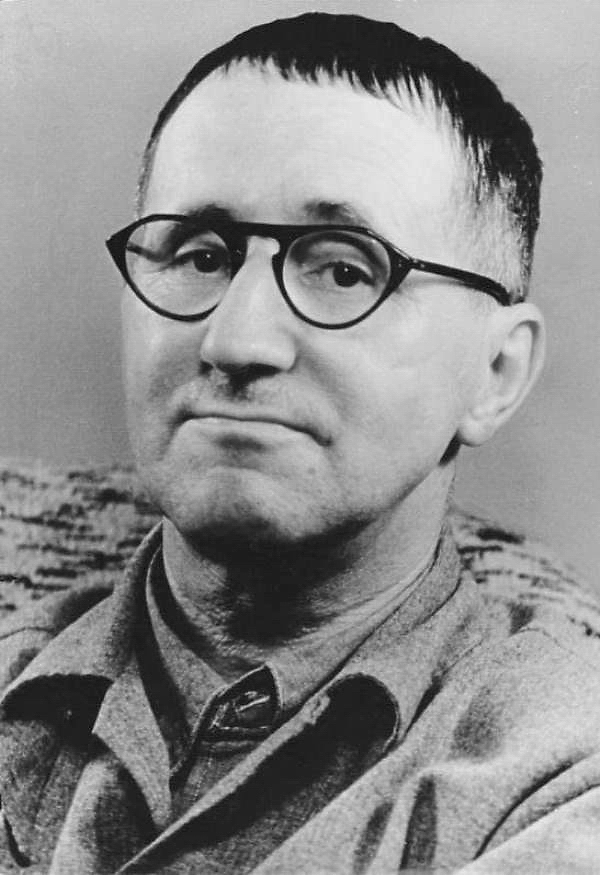
    Bertolt Brecht.

    Influenced by Brecht

    ‘Juno and the Paycock’ (Abbey 1924) fuses tragedy and comedy: Captain Boyle, a figure broken by poverty and drink is still a sympathetic character. The life of the tenements is always pitched against the life outside and many saw the play as a condemnation of all war.

    Juno too has been seen as an attack on the Republican movement. The character Juno is Brecht’s Mother Courage of Dublin with her strength and humanity. O’Casey was influenced by Brecht, Ibsen and other experimental dramatist.  In common with Shaw and Joyce, he despised the cult of Cathleen Ni Houlihan as symbol of Ireland. In a feminist twist, Juno does leave her abusive husband and goes off to make a new life with her unwed pregnant daughter.

    O’Casey moved to London in 1926 to receive the Hawthornden prize and produce the London production of Juno. He met and fell in love with actress Eileen Carey and he married her and the couple moved to Devon where they went on to have three children.

    Yeats refused to produce The Silver Tassie at the Abbey in 1928 causing an irrevocable breach between the Abbey and its most successful playwright. When Juno opened in London O’Casey was a minor celebrity and controversially hobnobbed with a succession of high society grandees, especially with Lord and Lady Londonderry, even spending a week at their residence, Mount Stewart, on the Ards Peninsula in 1934.

    They were the direct descendants of Lord Castlereagh, ruthless executioner of the United Irishmen in 1798. He rubbed shoulders with figures as controversial as Oswald Mosely. On the other hand, his Communist activities led him to clashes with George Orwell who, in 1949 supplied O’Casey’s name as part of a secret list of about a hundred writers, artists and intellectuals who should not become ‘cheerleaders in Britian’s fight against communism’ to British intelligence (see issue 3, History Ireland, Autumn 1998).

    O’Casey’s was unable to deal objectively with the Stalinist pogroms and took the Russian side against Hungary in the uprising of 1956. For all his human lapses, O’Casey emerges largely as mostly being on the right side of history and was an ardent supporter of Noel Browne. His later plays too were polemics against Nazism and Fascism. He was bitterly disappointed by the failures of his expressionist plays, ‘The Silver Tassie’ and ‘Within the Gates’.
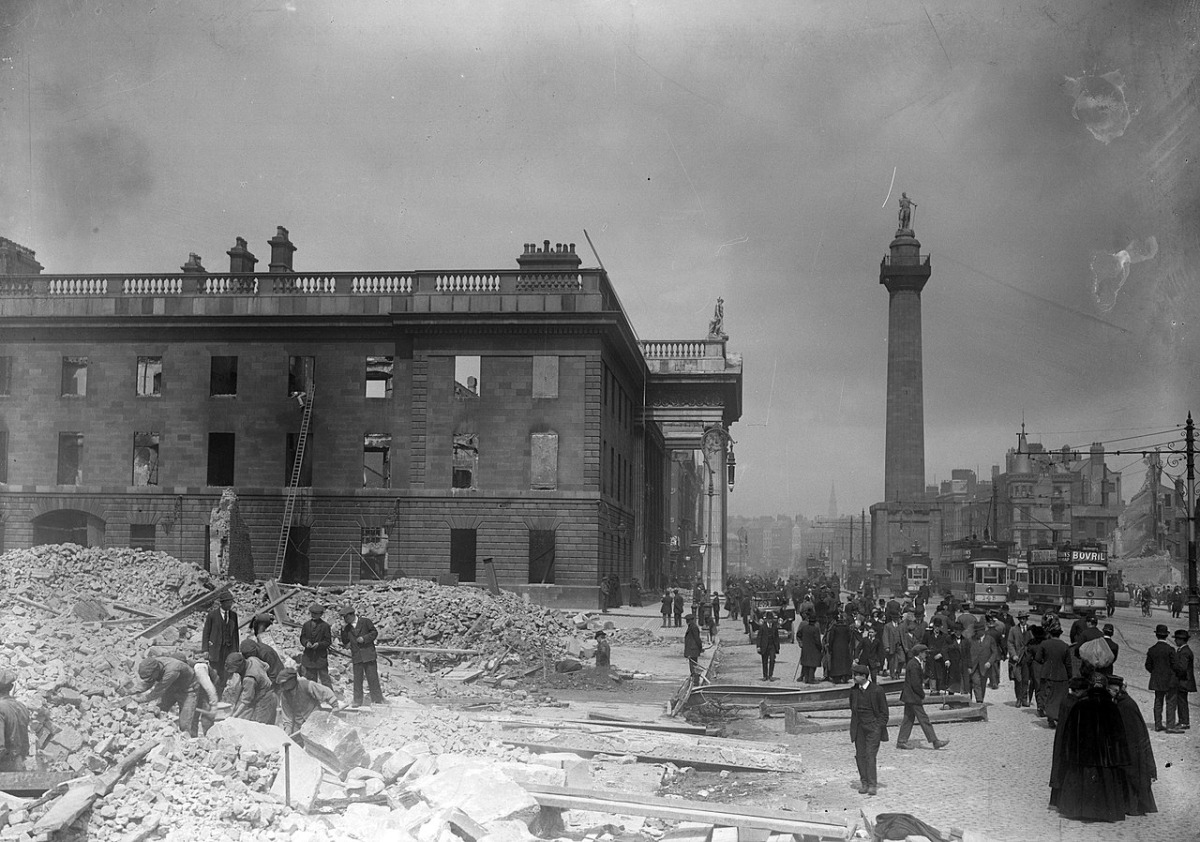
    Dublin, 1916.

    An Exhaustive Feat

    Paul O’Brien’s book, with some occasional unavoidable repetition is an exhaustive feat of research and scholarship that should become an indispensable handbook to all aficionados, practitioners, academics and teachers of Irish drama. In addition to existing scholarship, O’Brien opens a new window of insight into O’Casey’s passion, commitment and motivations while never eschewing his human flaws.

    This is also an indispensable history of the development of the Irish labour and nationalist movements and their fraught and intricate interface in the aftermath of Parnell and into the early twentieth century; through The Easter Rising, The War of Independence, The Civil War and its aftermath.

    As a writer, O’Casey developed his own unique style and never failed to move with the modernism of Ibsen, the Expressionism of Ernst Toller – the German anti-Nazi playwright – Brecht and Shaw who were early influences. He disliked pessimistic theatre but made an exception with Beckett. Paul O’Brien makes a compelling case that O’Casey’s expressionist and modernist plays are overlooked. His book certainly inspires a fresh look at O’Casey overall oeuvre.

    With ‘The Dublin Trilogy’ currently enjoying a successful run as part of the decade of centenaries his place in the pantheon of Irish dramatists seems assured, and, as the history of Dublin tenement life continues to burgeon, his plays are set to endure as visceral, dramatic slices of that life. Perhaps the most astute accolade O’Brien accords O’Casey is to observe that; ‘he was one of the most sensual writers of his era’ where ‘sexual love is always presented as positive, joyful and life affirming’ and that was the common humanity that placed the characters of Dublin’s tenements on a par, as O’Brien suggests, with ‘Maud Gonne, the Countess and their aristocratic circle.’

    Paul O’Brien richly deserves the accolade of O’Casey’s biographer, Dr Christopher Murray, Emeritus Professor of Drama at UCD who greeted, ‘An extraordinary achievement bringing O’Casey centre-stage again with supreme skill. Bravo!’

    Sean O’Casey Political Activist and Writer by Paul O’Brien is published by Cork University Press in hardback at €49. It is 297 pages with a Foreword by Shivaun O’Casey. There are an additional 100 pages of notes, bibliography and index.

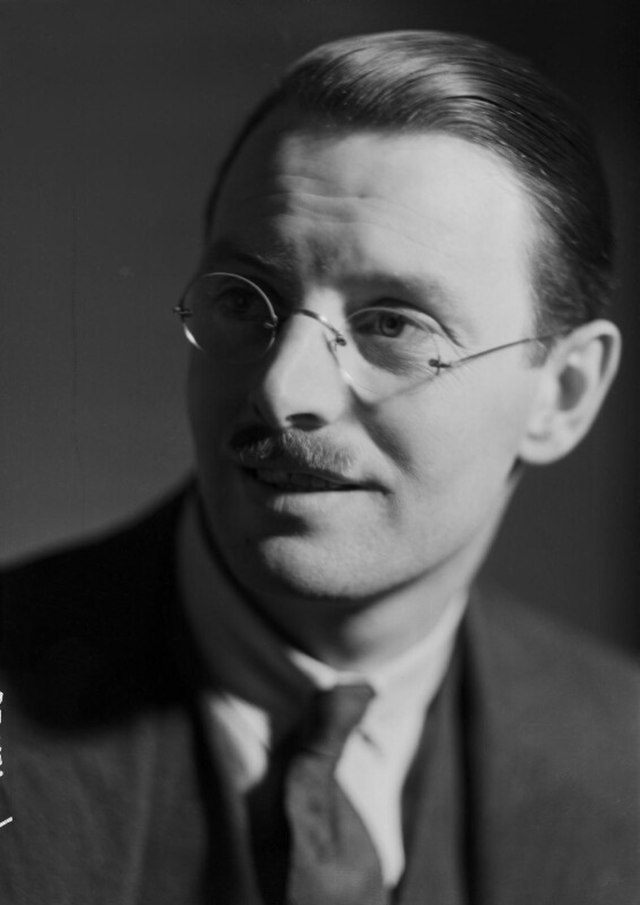
    Feature Image: Study of Seán O’Casey by Dublin artist Reginald Gray, for The New York Times (1966)
  • The Secret Garden

    The leaves of Greenwich Park were the soul of Autumn as I walked slowly up the hill to the secret garden in the quiet rain. I opened the gate and entered to find there was no one there. Maybe there was nobody in the whole park. A red squirrel went on eating in the middle of the wet lawn, untroubled by my presence. Above me sat the Observatory on its perch, a great seat of learning. An opportunity for humankind to understand the universe. Once upon a time you could see the stars from here on a clear night, but not now. Not since industry. Not since work.

    I opened a can of beer and lit up and made my way on through the drizzle wet, and felt lonely but not sad, this feeling of rain, delving sublime, richer than silk indigo was Inigo in ideas, deeper than feeling, in my own world almost auto stick, non-verbal, who are the same as us and yet not the same. One with everything, if only those little beauties could understand. I can’t. I went over and sat on the damp bench at the picnic table, content to be alone, for now at least. I had the plants and the trees and rain for company and that was all I needed. It’s a good time to think about people, when there’s no-one there.

    I don’t remember how long I spent in the secret garden. The time pieces of Greenwich had all floated clocks among the rainclouds tick-tock until sun’s return. The great orange ball at the top of the Observatory was obscured by mist. I noticed the clouds after that and drank deeply and rolled the cherry on the edge of the wooden bench, the place was damp so nothing could set fire. I put my hood up and felt the unmistakeable tingling of comfort. My eyes were good, and ears, and legs and arms and heart, nothing appeared to be dying. Nothing at all, not even the hiding sun.

    It felt good to finish the can of beer and crush the empty can in my fist. Especially as I had another one in my bag. Plenty I believe the word to be. It can be a good thing, better than drought. The trick to life is appreciation, in knowing when enough is enough, but knowing what enough is, has always been hard for me, because the memory of the shit never goes, so let the good times roll. There is a great beauty in this world of ours, remember, the world that created us, against all the naysayers. Yes, it’s beauty I made sure before I died.

    The squirrel has gone and I am alone with the half Red Stripe. Keep on smoking, careful not to get it wet as the rain isn’t easing. Under the picnic table with the paper and the tobacco and then the filter and finally the lick and flip. The new lighter is a good feeling and works first time producing a burst of smoke in the downpour. Maybe shelter soon but not just yet. I can hear the rain on my rain proof hood like music. Sit a while.

    I’ll leave this place before the rain lifts. I stand up and then rattle the can. I spy a bin and move towards it to leave my mark. I look around and think the place was worth visiting in all seasons, in all weathers. I am a little drunk, it was a long night, a good night, but genuinely, peaceful reader, nothing I can’t handle yet, my body holds out still as fifty approaches like an old friend I have fallen out with. The things that can’t be avoided must be confronted, who said that? Good mothers probably.

    And so on up to the top of the park and the General Wolfe statue who must have defeated the French in Canada. Let’s build a statue to remember wars won. Then it will have meaning, if it is remembered. But only then. I can see the days of Nelson from where I stand, and the days of Raleigh on the riverbank and we can see what happened when we hear the toothpaste advert from the other side of oceans, in a different accent of course. Why all the war, all the carnage, all the misery and death? Something to do I suppose. “Man cannot stand a meaningless life.”

    I can see all of London, but better to stay in the park and nature and rain. Different company. Maybe a teenager is being stabbed out there but maybe not, it doesn’t happen every second or every minute. Not enough for the politicians to get involved. Ten million people and a couple of hundred slaughtered youth on the street, lying in pools of their own blood. Nothing to see here, nothing to see here. Nothing to see.

    I turn and make my way past the pavilion and into the Flower Garden. Good name. The Flower Garden. Rain is letting up now. They had a good drink today. Strange thing, that nature has no control over itself, it spreads where it can when it has a chance, and now beyond where was once impossible. I spy the Observatory again over the brow. Let’s build monuments to war and keep the deers in the enclosure, they’ll be safe there. Good idea. One of them looks over at me through the fence. Through the misty rain. It’s free in its own world. Like me. Maybe a prisoner could be free if he had the right mind. If he was in control of his imagination, then where would he be?

    The Flower Garden is beautiful. The rain has returned so I put my hood back up. I remember I was here one hot summers day in nineteen eighty-five. Wouldn’t it be a thing to have dates for those childhood days of summer. They are now lost in time, they are time. The only time we know. The pinnacle of childhood, using imagination on everything. I look at the tree that has changed less than me since then. It is magnificent then and now. The tree, nature’s gifted form, blown about by the winds but always rooted. Only disaster and time can kill it. Like us. The rain is back for sure. I put my hood up and leave through the gate on Maze Hill. Back into the world, for now.

    Feature Image: Royal Observatory, Greenwich

  • Poem: A Partial Epitaph

    A Partial Epitaph

    My friend, with many an article and book
    saved in the Cloud, would censure Robert Emmet
    for attitudinising in the dock.

    We’re most of us the beneficiaries
    of ordered states; opinion-formers wanting
    Emmet stopped is something that one sees. 

    But this rant? Picture him in middle age,
    pardoned, respectable, like Thomas Moore
    a frequent guest at the Vice-Regal Lodge.

    Which to begin with doesn’t get Tom Moore,
    friend of the stranger, dining with Zacchaeus,
    his harp a bow strung for the indigenous poor.

    I leave them to it – their vast carelessness,
    their Twitter feeds correct and comfortable
    above the whole world’s pitiable distress.

    Those by whom Robert Emmet was condemned
    no doubt imagined some long-term improvement
    in how the poor lived. Difficult for them,

    his edge, his relevancy; or to foretell,
    in cabins and coffin-ships we’d breathe his name;
    our grá for justice his memorial.

    Feature Image: Depiction of Robert Emmet’s trial (Image is available from the United States Library of Congress‘s Prints and Photographs division under the digital ID pga.02521)

  • Disturbing Developments in Criminal Justice in Ireland

    All persons and authorities within the state, whether public or private, should be bound by, and entitled to, the benefit of laws publicly and prospectively promulgated and publicly administered in the courts.
    Lord Bingham, ‘The Rule of Law‘, Sir David Williams Lecture, Cambridge, 2006.

    I have written extensively about the whittling away of due process in Ireland. This is derived from Article 38 of the Constitution, which states: No person shall be tried on any criminal charge save in due course of law.

    In 2017 Supreme Court Justice Gerard Hogan at least had the courage to argue that the Irish Courts have, in effect, failed to enforce due process, constitutional rights in Ireland for the past thirty years. ‘Moves’, he said, to reduce the scope of ‘the most fundamental constitutional safeguard of all‘ — the habeas corpus guarantee in Article 40.4.2 – ‘speaks volumes regarding the prevailing constitutional zeitgeist.’ That zeitgeist has only become more illiberal, especially with the advent of emergency powers in response to Covid-19.

    Indeed, we have no equivalent to the UK’s Police and Criminal Evidence Act 1984 giving statutory protection to anyone suspected of a crime.

    The particular violations of due process have been exposed in the J.C. Case (2015) where the Supreme Court – notwithstanding what was probably Adrian Hardiman’s most brilliant dissenting judgment – effectively allowed the police to characterise as an accident, what seems to have been a purposeful and deliberate breach of constitutional rights.

    We have also witnessed the subordination of privacy rights to considerations of public order in the Dwyer Case on appeal to the Supreme Court. There, the Court simply sidestepped the State’s breaches of directly applicable EU data protection legislation, rendering privacy rights a dead duck.

    But if these developments aren’t sinister enough, consider what is happening now for the liberty of the subject.

    Adrian Hardiman.

    In Camera Proceedings

    The term in camera in legal and juridical terms is about a hearing being held in private. It is a pragmatic feature of civil or industrial processes, such as patent violations or family law proceedings. It has various implications, including that the names and identities of the parties to the suit are kept out of the public gaze, and reporting restrictions are in place, including press coverage and conventional law reporting. A judgment could be published, and context made clear, but details may be kept out, redacted or anonymised.

    The intra-jurisdictional consensus – a fundamental principle of international law – is that when a process or a piece of legislation or an executive decree is adjudicated without there being independent representation or scrutiny it is of dubious authority, as it has not been adequately challenged.

    In camera proceedings can be a shortcut to secretive laws, which were even condemned by the Nazi jurist Carl Schmidt. Schmidt’s view is echoed in the minority report on the future of the Special Criminal Court.

    So-called emergency powers have a nasty habit of becoming permanent, everywhere. In the face of opposition, however, the UK government repealed its controversial law, giving police the right to apprehend people suspected (hence ‘sus’) of ‘intent to commit an arrestable offence.’

    Within Lord Bingham’s summary of the Rule of Law is the idea that the law ‘should be publicly administered in the courts.’ It is crucial for any democracy that all judgments become a matter of public record or, failing that, only partial elements are excluded, and then only by implication, after independent representations of counsel.

    This is violated when in camera proceedings occur. Justice, as Bingham said, cannot be achieved behind closed doors.

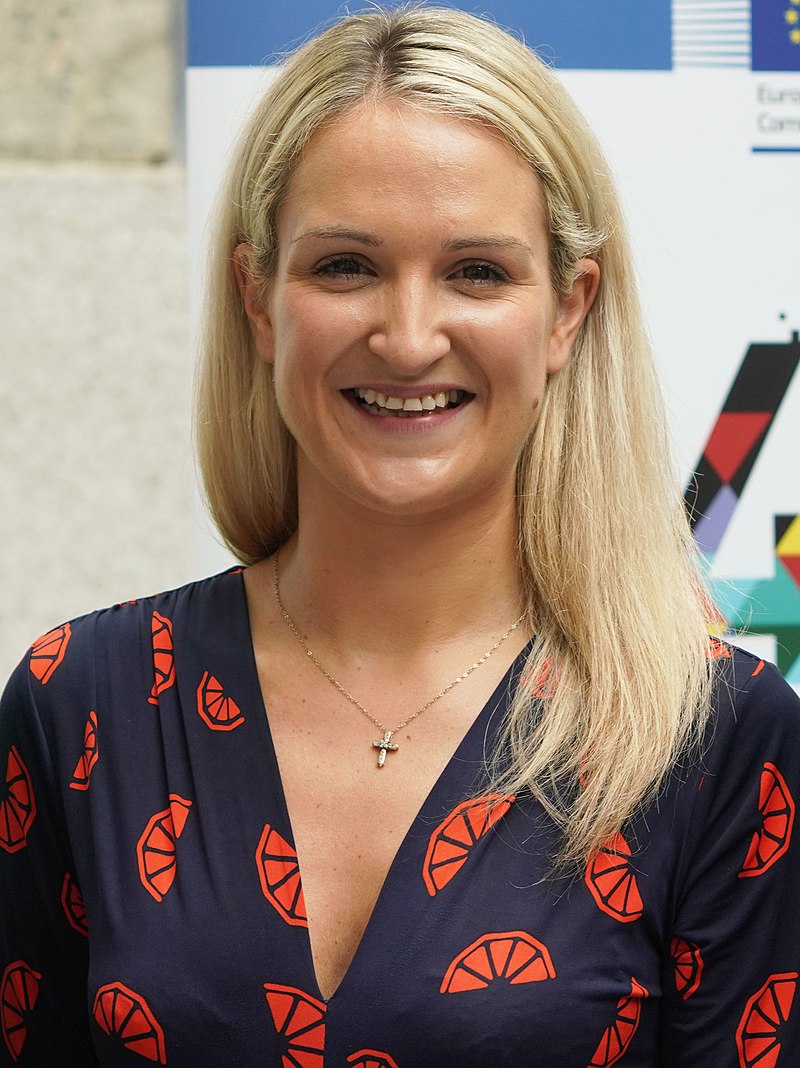
    The current Minister for Justice Helen McEntee TD has, nonetheless, obtained a High Court order from Justice Owens requiring telecommunications service providers to retain certain data – including user, traffic and location data – for a period of twelve months, for the purpose of safeguarding the security of the State.

    The Communications (Retention of Data) (Amendment) Act 2022 came into operation on June 26, 2023. Under the terms of the Act, the Minister for Justice must have been satisfied that there exists a serious and genuine, present or foreseeable, threat to the security of the State.

    She also, presumably, had regard to the necessity and proportionality of the retention of Schedule 2 data, and how this could potentially impact on the fundamental rights of citizens under the Constitution. Justice Owens was obviously persuaded by her arguments, which are not in the public domain, for reasons of state security; do you see where this is going?

    It should also be noted that the Minister consulted with the Garda Commissioner prior to making the application. The Act was, in effect, a transposition of an EU Directive, but no scrutiny has been permitted. No independent counsel. No counterweight.

    So what could this threat to the security of the state amount to? Minister McEntee also recently stated that Sinn Féin presents a threat to the criminal justice system because they timorously suggested adopting suggestions of the review group on the Special Criminal Court.

    The Yam Case of 2020, which Geoffrey Robertson QC litigated before the ECHR under Article 6, clearly identified that even partial exclusion under the in camera rule and partial reportage invites scrutiny.

    Thus, T.J. McIntyre from the Sutherland School of Law in UCD argued that Ireland’s new mass surveillance regime is ‘certain’ to be challenged in the European courts. He said the government’s decision to seek a High Court order was madebehind closed doors, without any consultation with the data protection commissioner, with civil society, or with the industry’ and, importantly with no detail provided on the supposed national security threat.

    In a damning assessment he stated:

    The 2022 Act has to be treated as of no legal value … You can’t have a measure that’s supposed to authorise mass surveillance of the entire population, and be the basis for criminal investigations and prosecutions for years to come, where its foundation is so uncertain. It’s grossly irresponsible to do that.

    Thomas Bingham, Baron Bingham of Cornhill 1933-2010.

    Special Justice

    The Special Criminal Court is a three-judge criminal court, convened without a jury to avoid any potential intimidation of its members. It is enabled by the Offences Against the State Act, the first of which was published in 1939 to prosecute members of the IRA and declare any similar organisations unlawful. More recently, the Court has been used to deal with the deadly rise in gangland crime and organised criminal syndicates.

    The legislation, and its Court, have been criticised by Amnesty International, the United Nations and the Irish Council of Civil Liberties over the last number of decades and at its inception by Mary Robinson.

    Most of the recent review group concluded that the use of a non-jury court is ‘justified’ and that the court is needed to counter ‘a real risk to juror intimidations.’ However, the review added, contradictorily, that there is ‘an absence of concrete evidence’ on the nature and extent of the risk posed to jurors today. The review added that a non-jury court should only be used in ‘an exceptional case.’

    One way that the review recommended this should be done is through abolishing ‘scheduled offences’ – where certain offences are automatically tried by a non-jury court – and placing the decision in the hands of the Director of Public Prosecutions (DPP), which, it should be noted, is a political appointment.

    As an additional safeguard, the majority review recommended the appointment of a judge to review whether the correct procedure has been followed by the DPP, and whether the decision had been made based on of the evidence heard in that case alone. This would mean, under the new Court, that the DPP would decide whether it is suitable that a citizen, who stands accused of a crime, be tried in a non-jury court based on the evidence in the case, regardless of the case’s threat to national security.

    Accompanying the majority review, there is also a minority review which argues that the establishment of a permanent non-jury court is ‘constitutionally inappropriate’. The minority review said: ‘Just because something can be done does not mean it should be done, we are in danger in all sorts of way as Iseult O’Malley of the Irish Supreme Court said of becoming ‘overly habituated to the abnormal.’

    Commenting on the recommendation to replace the SCC with a new Special Criminal Court Minister for Justice Helen McEntee said that the Special Criminal Court eliminates the very real risk to jurors and potential jurors posed by subversives and organised criminal groups. She said that the recommendation from the review group ‘requires serious consideration’ due to the importance of the Special Criminal Court and its place in the Irish judicial system.

    Minister for Justice Helen McEntee.

    ‘Belief Evidence’

    As well as non-jury trials, the SCC has special powers to accept ‘belief-evidence’. This allows the belief of a Garda Chief Superintendent that a person is a member of an illegal organisation to be used and accepted as evidence of that person’s membership. While the majority’s report recommends that new legislation be created to provide more regulation around the use of non-jury courts, they have deemed the continuation of belief-evidence ‘appropriate’.

    While the report says that belief-evidence can continue to be used, it adds that someone must not be prosecuted ‘solely on the basis of that evidence.’ There needs to be corroboration. The minority simply notes that the UK police did not need belief evidence to prosecute and recommends its abolition.

    Last month, Minister Simon Harris, who took over as Justice Minister while McEntee was on maternity leave, received approval to propose the resolutions to extend the legislation. A Government spokesperson said Harris considered that there remained ‘a real and persistent threat from terrorist activity, primarily from so-called ‘dissident’ republican paramilitary groups.’

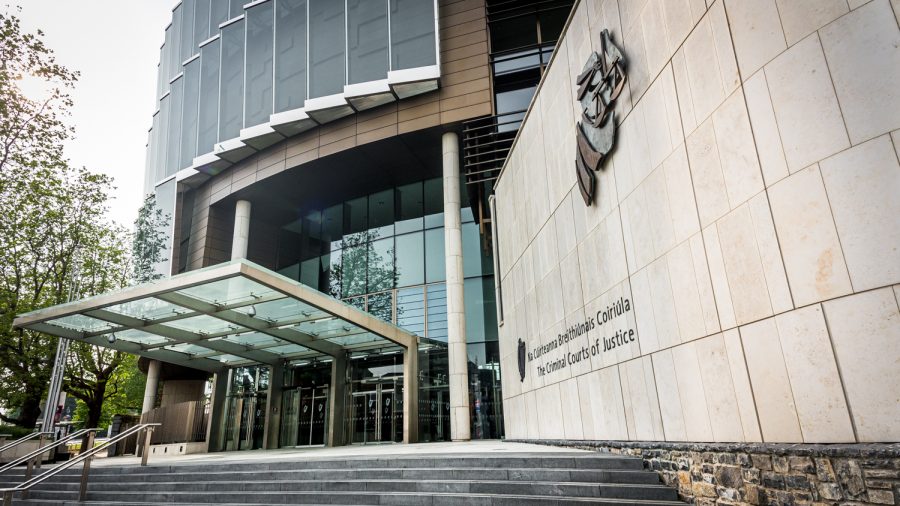
    The criminal court of justice, Dublin. Daniele Idini/Cassandra Voices

    Conclusion

    We appear to be witnessing a serious regression in the Rule of Law in Ireland, where unspecified threats to the state are decided in camera, and an extension to the use of judges without jury with police belief evidence continuing to be accepted. All of this twenty-five years after the signature of the Good Friday Agreement which effectively ended the Troubles.

  • Open

    The boy was wretched. He sat on the bed in shorts and T-shirt his hair a tangled mess. I noticed they had put him in a single room, the last on the corridor beside the fire escape. I examined his chart, apart from the nurse’s hourly checks no one had spoken to him since he had been admitted three days ago. I introduced myself.

    ‘I’m Dr Peter Philips your doctor.’

    The boy looked at me. He had piercing blue eyes and an odd way of tilting his head as if he was asking a question. There was no hostility, but it was obvious he was terrified.

    ‘Do you hear voices?’, I asked.

    He looked puzzled.

    ‘I mean do you hear voices other than your own in your head?’

    He still didn’t seem to understand what I was asking. I tried something else.

    ‘Your mother said you threw yourself from an upstairs window. Were you trying to kill yourself?’

    ‘No, I just wasn’t ready.’

    I withdrew from this cryptic comment and closed the interview.

    Later that day I looked through his case notes. He was involuntarily admitted, his mother had brought him in. The duty registrar had done the paperwork noting that the boy was unwashed, and he rambled on about a bird, a pet bird maybe? He was delusional with suicidal tendencies. Normally I would move on to treatment, but something about the boy bothered me. He obviously didn’t suffer from auditory hallucinations and there was something odd about his suicide attempt. I looked at the other entries on his file. He had never been in trouble with the Guards not even a scrap on the street. His mother had been interviewed separately. She was unwilling to say too much and appeared to be overwhelmed by what was going on. She did say her son had become obsessed by birds of prey. I didn’t draw any conclusions from this I was satisfied he was delusional.

    Nightfall, a nurse came into the room with a tray of medication. The boy took the pills and turned to the wall.

    ‘Alright Pat?’

    ‘Yeah’, he muttered.

    The night was windy, and a twig tapped on the window, a message tap, tap, tap. A message from the trees whipped by the wind. The boy listened curiously; he tapped his knee in time. Then there was a lull in the wind and the tapping stopped. In the morning there was porridge for breakfast. The dining room was full. Pat looked around at the other patients most of them were concentrating on eating. After breakfast there wasn’t very much to do, the day gaped like a long empty corridor.

    We had a team meeting the morning after I interviewed the boy. I set out the psychopharmaceutical position to murmurs of assent. There was a girl at the conference table. She introduced herself as the new occupational therapist on the ward.

    ‘His mother said he’s quite good at drawing. Could we provide him with paper and pens and see what he comes up with?’

    I was sceptical at first, the fact that he was suicidal created all sorts of problems, but then so far, my attempts to interview him had proved unproductive so I gave her the OK on the paper and pens.

    The day was slipping past, it was already afternoon, the lunch things cleared away. A smell of boiled potatoes hung limply in the air. Sunlight streaked the floor tyles and Pat let it land on his T-shirt and his legs. He felt restless as if something was boiling away inside him. He could see the sky through the high windows and a bird only a speck above the city. For a moment he felt pure joy then behind him a nurse said:

    ‘Time for you medication Pat.’

    It was almost time for the night shift to come on duty when she came through the door. She was wearing baggy black pants and she carried a bag. The doctor he had seen the first night was with her and they stood talking at the other end of the ward. Pat looked at her carefully. Her fine red hair was clipped back in a ponytail. Then she laughed a small nervous laugh, barely parting her lips. She put her hand on the man’s shoulder and said something Pat couldn’t hear. The man pointed towards Pat, and she came over to him. When she reached him, she held out her hand:

    ‘My name’s Anna, I’m the ward occupational therapist. I’m told you’re interested in birds.’

    Pat mumbled something. She smelled sweet like honeysuckle and her eyes were the colour of morning sky. He wanted to tell her everything, the peace, the freedom, to be up there looking down. Instead, she opened her bag and took out paper and pens. She was saying something like draw what you see, put down what you feel. He hardly heard her; he was so happy.

    At first it was a tremor, a flash of light a sweeping glance across the landscape. He was fifteen when it first came over him crouched at his window ready to fly. That time it only lasted minutes, but he was already caught willing it to happen again. In his sleep he dreamt of a huge black bird that soared above the fields. He became impatient and tried jumping from the windowsill, that landed him in hospital with a broken shoulder and a fractured knee. Remembering the first time, he imagined the bird and the wind beneath him, now he could see with the bird’s eyes. He sat still in his room focusing on the breath, waiting, waiting for the flash of light. Without knowing how he knew he was ready; he opened the window, and everything was there. With raised arms, the wind rushed past his face, and he could hear rustling feathers. Nothing could stop him, his feet lifted off the sill and effortlessly he cleared the treetops, the shifting breeze carried him into the clear blue sky. He wheeled around and headed back home gracefully landing again where he had left.

    The drawings were spread out on my desk. Some were remarkable pictures of birds. Others were indecipherable. I picked one up.

    ‘What’s this supposed to be?’

    ‘Well,’ Anna said tentatively. ‘At first I thought it was some kind of pattern and then I came across drone footage, and I realised it was a drawing from the air.’

    ‘So, he can imagine what things look like from the air?’

    ‘Yes, it’s amazing, isn’t it?’

    ‘But you’re not suggesting he can actually fly?’

    Anna sank back in her chair.

    ‘Look our job is to treat his symptoms. He needs to take his place in society, get a job, fit in. Maybe you’re too close to him someone else can take over.’

    Pat hung around the ward pretending he wasn’t waiting for anything. By lunchtime he wondered why she hadn’t come. Then it was three in the afternoon and when the ward door opened  it was his mother looking anxious and distracted. They sat in his room without speaking. Eventually she took out a bottle of fruit juice and put it on his bedside locker along with sixty euros in twenty euro notes. She was crying and took him in her arms:

    ‘Be a good boy,’ she said.

    Pat waited the excruciating hours until bedtime and still she didn’t come. In the morning at breakfast a nurse said quietly to him:

    ‘Dr Philips wants to see you as soon as you’re ready.’

    I saw him in my office first thing. He looked tired and hung his head as I went through his notes.

    ‘You’ve been doing some work with Anna. She’s been transferred to another ward, from now on you’ll be dealing with Carl,’.

    The boy looked shocked, and I made a note that he should be monitored carefully.

    When the nurse went into Pat’s room in the morning the small window over his bed was open. There was no sign of Pat. They never found him; he couldn’t have crawled out the opening the window afforded. Dr Philips maintained the door to the fire escape must have been left unlocked. Anna asked to see the room. She looked under the bed and lying there innocently waiting to be found was a glossy black feather. She held it up to the light and admired it, then she slipped it into her bag.

    Feature Image: AI Art Generator.

  • Julian Lloyd: Pure Luck and Happenstance

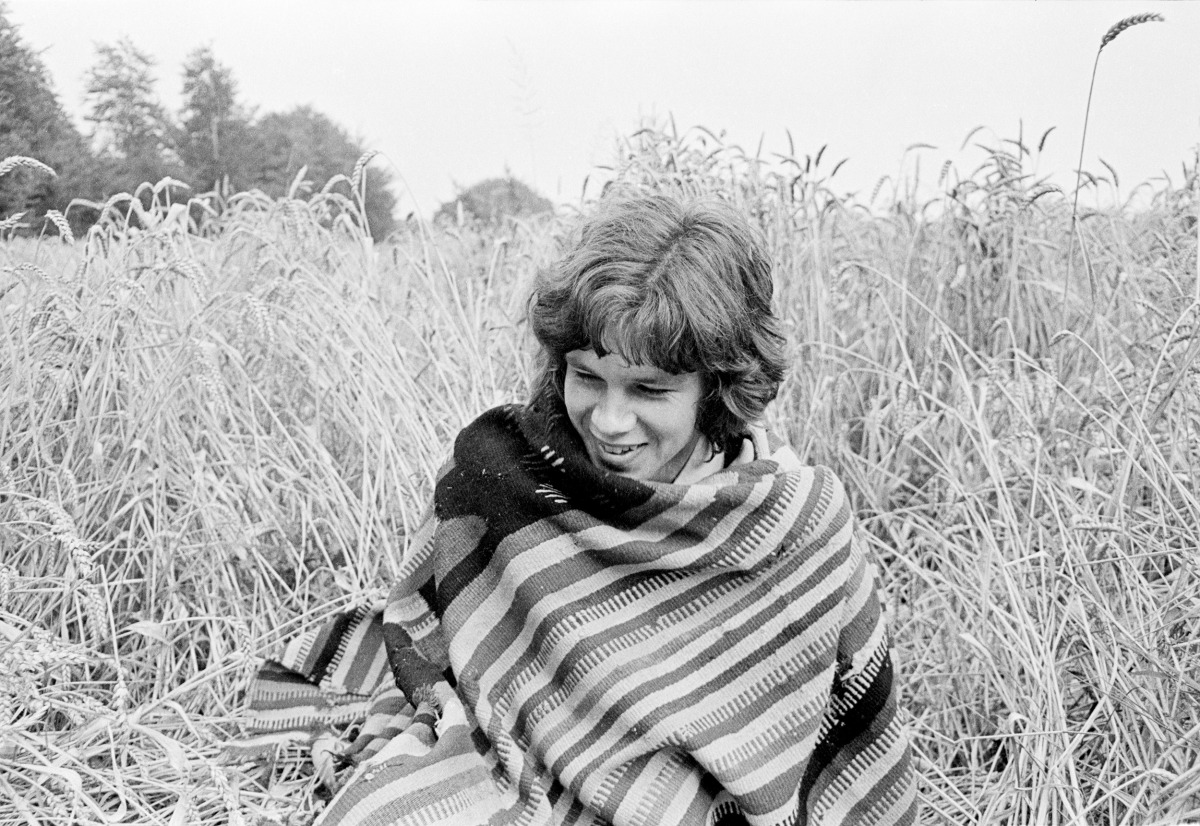
    Julian Lloyd’s iconic portrait of Nick Drake now forms part of the U.K.’s National Portrait Gallery’s photographic collection. Lloyd’s friendship with the archetypal singer-songwriter, who died, tragically, aged just twenty-six in 1974, permits a rare intimacy between photographer and an elusive subject.

    In some photos Drake looks to be at peace with himself and his surroundings, but in others of the doomed troubadour – featuring in Lloyd’s new exhibition running in the Horse Gallery, Dublin 1, from July 6th to July 17th we find a less playful figure, with Drake brooding beneath a heavy coat on a Welsh beach, inhaling urgently.

    Nick Drake, Selbourne 1968. © Julian Lloyd

    Lloyd says Drake was “a nice, easy going, companionable man, very private, but not particularly buttoned-up. Obviously he became ill – a cruel mental illness which locked him up and made him miserable. Nick was just one of the gang, but obviously he had a talent.” The budding artist, who only achieved posthumous fame, was “happy to play in front of a few of us in a room. Never anything boastful or show-offy about him.”

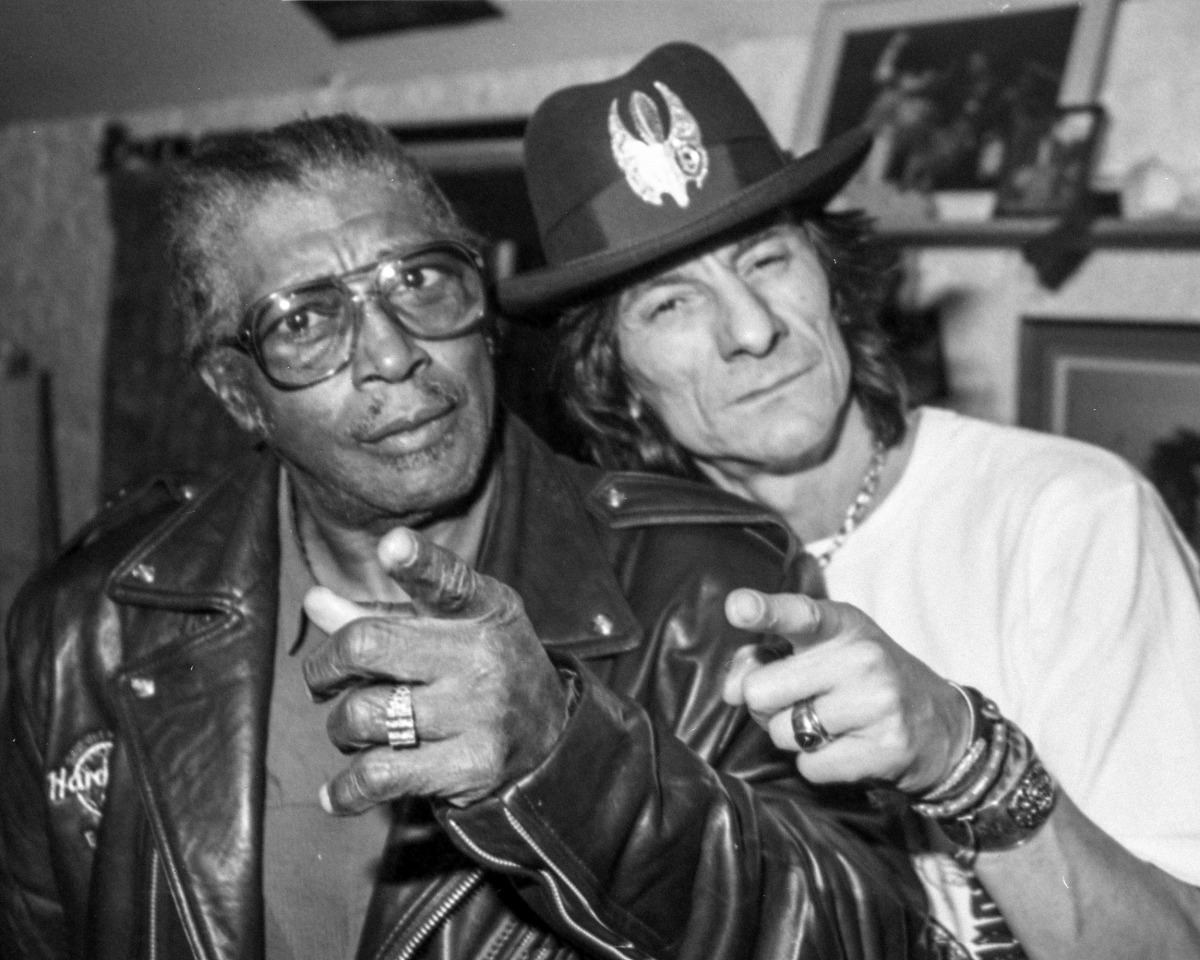
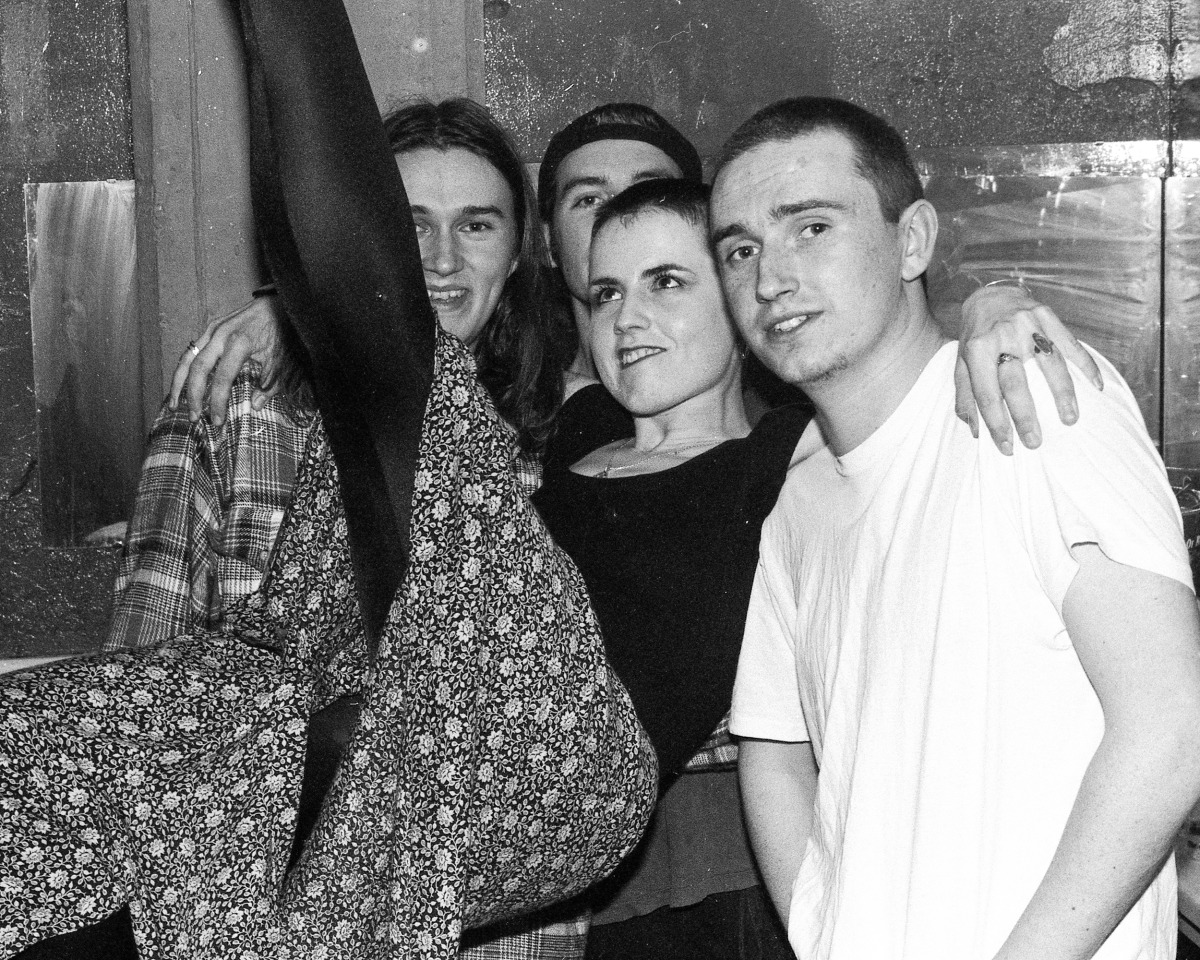
    Lloyd claims that it was “pure luck and happenstance” that brought him into the same social circles as figures such as Drake, and later, after he moved to Ireland – to work with horses – musicians such as Ronnie Wood and Dolores O’Riordan, along with actors such as John Hurt.

    Bo Diddley and Ronnie Wood, Sandymount House 2002. © Julian Lloyd

    Despite many of his subjects being celebrity figures, there is a lightness to the work. You really get the impression that Julian Lloyd was simply a photographer among friends.

    Crystallising Memories

    Julian Lloyd clearly possesses a keen eye for the poignancy of a fleeting moment in time, crystallising memories, whether at a carefree party or even outside a funeral, which is the hallmark of great photography, and art more broadly. Choosing when to take out the camera and start shooting is a fraught exercise, as a subject may recoil or put on a false persona before the lens. Lloyd seems to have a knack of timing this to perfection.

    Dolores Oriordan and the Cranberries, Tivoli Theatre, Dublin, 1993. © Julian Lloyd

    Lloyd is not in the least bit precious about his photography, confiding that on occasion he is not averse to having a few drinks at a party, and allowing auto-focus to prevent any mishaps. Nor does he feel threatened by the ubiquity of smart phone photography, recalling the insight of the American photographer David LaChapelle, who put it to an audience that while everybody in the world has access to pen and paper, few writers attain the level of Shakespeare.

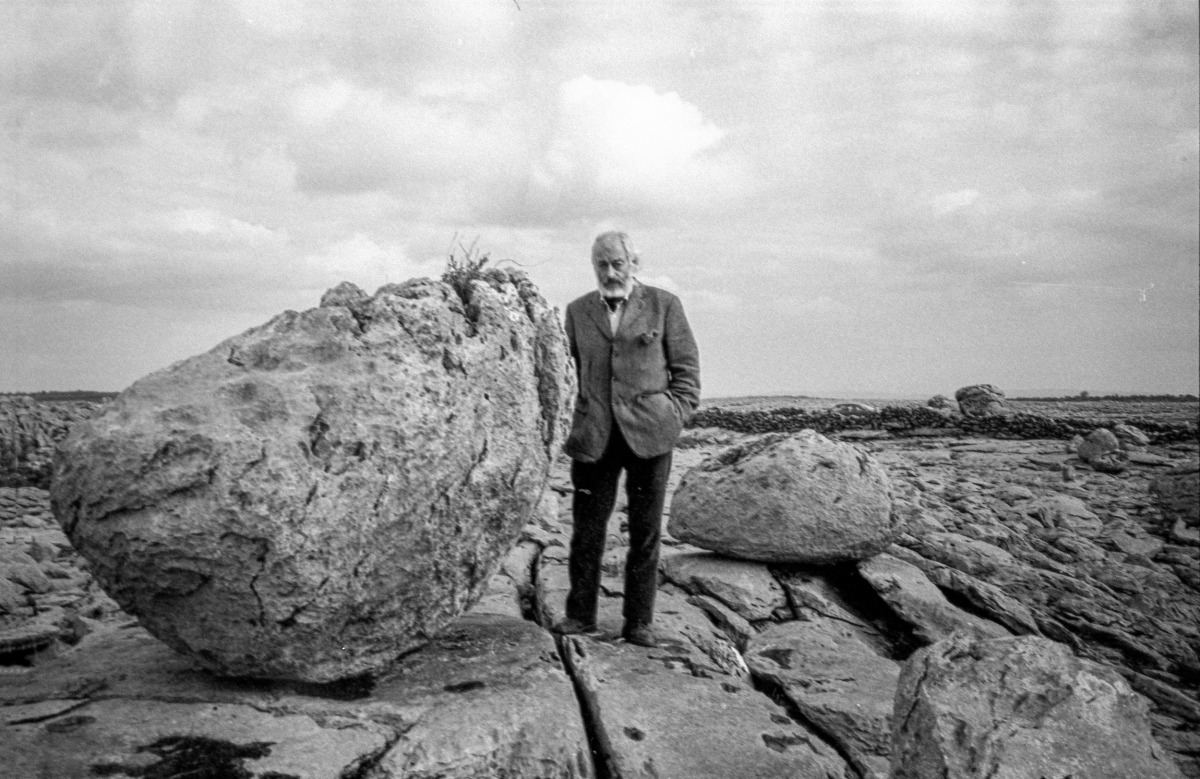
    J.P. Donleavy, The Burren. © Julian Lloyd

    He also dismisses the idea that photographers conform to a particular personality type, recalling meeting with “ebullient, chatty, noisy photographers, and also furtive ones, who creep around in corners.” His own work has been in “fits and starts”. He was pretty broke for periods, and had no camera to work with after a theft for some time.

    Hippie Trail

    Apart from the glamour of his rock ‘n’ roll and aristocratic subjects, we also find an abiding love for Ireland in the collection, especially the characters he encountered along the way, such as the parking attendant at the Cliffs of Moher who sold tin whistles on the side.

    After leaving school he first plied his photographic trade for a local newspaper in Northumberland near the English-Scottish border, where ships would occasionally pull in undetonated World War II mines for him to photograph.

    He then moved to ‘Swinging Sixties’ London, where he secured a job in a photographic studio, and met his future wife Victoria, whose sister was going out with Eric Clapton at the time. George Harrison was also on the scene.

    There reached a point, however, when, like other hippie idealists, he wanted to move to the country. Back then “people would set off in barrel topped wagons.” He and Victoria followed suit, found one for themselves and purchased a mare to take it from Swindon to Somerset.

    This proved a life-changing experience. Despite no family or other background with horses, he grew fond of the mare and “the whole relationship with horses.” Later he found a job with a horse dealer, learning the business “from the ground up.”

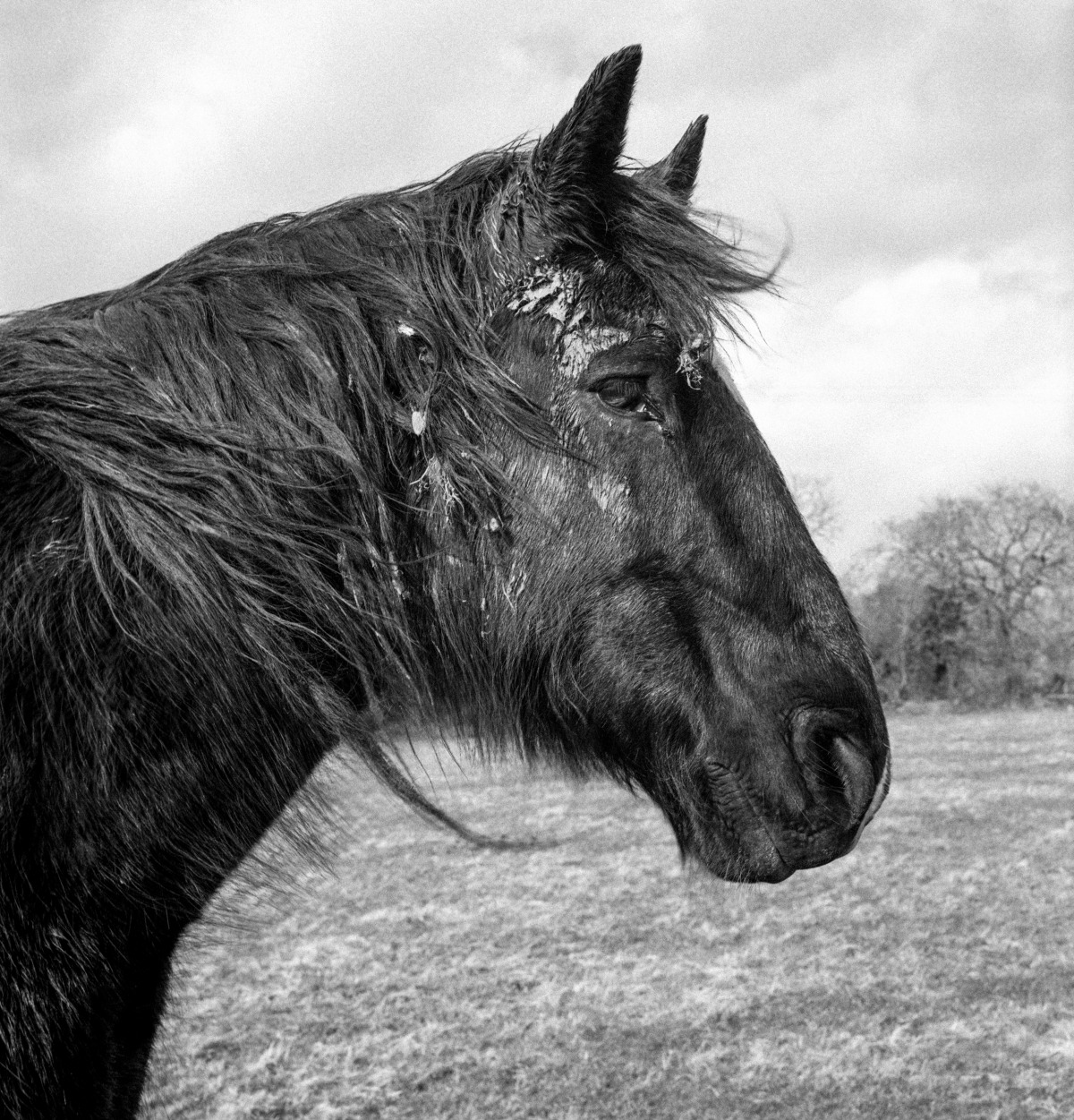
    Boxer, His final winter, Leixlip, 1989. © Julian Lloyd

    Lloyd’s unusual hippie trail eventually brought him to Ireland. This was he says “a very vivid experience.” He and Victoria found “a very different culture living in Ireland than it was in Britain. It was very, very attractive.”

    In 1975 he came to work for Tim Rogers in Lucan in county Dublin, who had, he says “the best stallion operation in Europe at the time.” It would be over forty-five years before he finally returned to the U.K.. He has recently moved to live in Shropshire near the Welsh border, where Victoria’s family is from.

    He recalls a friend, Sean Doyle saying to him that “to succeed in life you must have an unfair advantage.” But unlike the relatively easy world around his photography, Lloyd enjoyed no unfair advantage when it came to horses, making it “very, very difficult.” It was a seven day a week job, to which he “gave it everything” and possessed “the zeal of the convert”. Nonetheless, he spent “plenty of years skint” during a time when it was “very, very hard to make a living.” If photography was a playful mistress, the breeding and raising of horses was a demanding master.

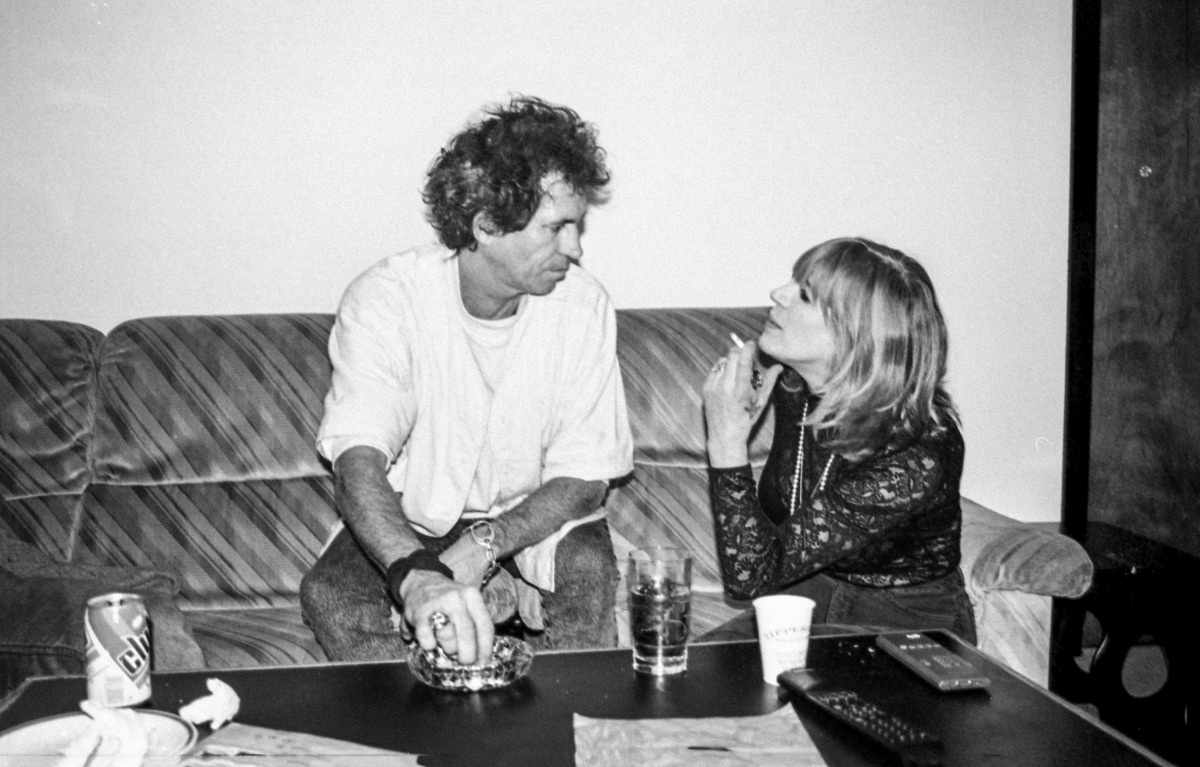
    Mirianne Faithfull and Keith Richards, Windmill Lane Studios, Dublin, 1994. © Julian Lloyd

    Safe Haven

    Lloyd describes Ireland as “a safe haven” – away from a prying media – for many of the English musicians and other artists who took up residence here from the 1970s. Some like Marian Faithfull found a more receptive audience for their work.

    Julian Lloyd’s photography captures that carefree world, which existed, unimpeded, alongside surviving remnants of a peasant society, which also features in his work. It was perhaps to his great advantage that he did not depend on photography for an income, but could instead indulge a passion in intimate settings, where he could blend in seamlessly with the crowd.

    Julian Lloyd’s Photography is on display in the Horse Gallery, 3 Bethesda Place, Rotunda, Dublin, D01 EY29, from July 6th-16th.

  • The End of RTÉ’s “Drive Time” Omertá

    And so, the omertà as to the RTÉ personnel getting ‘freebie’ cars has finally broken. It’s no coincidence that this was the only outlet probing this matter five years ago. We knew the topic was highly unlikely to be picked up by media reliant on revenue streams from advertising cars.

    We also knew that covering the topic was unlikely to win any friends for this publication in the state broadcaster – generally not a wise move for a fledgling operation trying to make it in the Irish media landscape. Despite the obvious pitfalls, the editor published my original piece – and then followed up the matter in his own stoic fashion.

    Sure enough, five years on, despite countless topics having been forensically covered by Cassandra Voices, and despite the editor having previously appeared on prime time RTÉ shows, they have never contacted him or this outlet regarding any topic featured herein. Cassandra was ‘cancelled’ almost as soon as she commenced.

    Drive Time: The Irish Media’s Message

    Accounts and Accountability

    Over the last week a series of details have emerged of a culture in RTÉ of personnel entering ‘side-deals’ where they benefit either by additional cash payments, or in kind – by way of high-value items such as cars or other luxury outings to prestigious sporting fixtures. Nice if you can get it.

    This has come as a revelation to most Irish people – yet readers of this publication know that there has been a serious issue going back two decades. Unlike commercial operators, there is an onus on RTÉ to be accountable to the public as it relies on approximately €150 million in state funding via the licence fee each year.

    Hence, it has long seemed apparent that there is a clear need for transparency to avoid conflicts of interest, especially when RTÉ employees engage in extra-curricular commercial arrangements.

    RTÉ: Wrap Your Troubles in Dreams

    Á la CaRTÉ?

    Cassandra Voices has long since called on RTÉ to release an easily accessible register of interests, as occurs with personnel who work at the BBC. Yet RTÉ have steadfastly refused to countenance such a notion – and for that, they are now having to answer.

    It is now of crucial importance to assess whether a Freedom of Information (FOI) request filed by Cassandra Voices with RTÉ in 2018 was answered with full and proper disclosure, as required by law.

    At the time, RTÉ were asked to disclose records of payments, or payments-in-kind, from car dealership to leading RTÉ stars, approved by RTÉ ’s management since January 1st, 2017 under the Personal and Public Activities Guidance.

    RTÉ’s FOI officer responded to say there was no record of any such payments or payments-in-kind. That FOI request was filed with RTÉ following an article by this writer, in which we outlined instances where RTÉ presenters had vilified other road users, notably cyclists – without making it clear to their audiences that they had ‘side-deals’ with car companies.

    It seemed obvious to us that there was an ongoing culture of side-deals with car companies, especially given there had been previous public references to this by the then Labour TD, Tommy Broughan.

    In hindsight, it was very brave of Broughan to raise the topic, given that TDs depend on media coverage to be elected. Today it turns out, courtesy of the Independent that there are in fact numerous side-deals between many RTÉ personnel and car companies. How credible is the FOI officer’s claim in 2018 that no such deals existed when asked by this small, independent media outlet?

    BMW i3

    Buy a Car to Save the Environment…

    The real problem is not that personnel have enjoyed such arrangements, but that there is a lack of transparency – and that this coincides with an apparent de facto black-out of transport issues being covered in an adequate manner.

    Dublin has been rated as the worst European capital among thirty for public transport by Greenpeace in 2023. Moreover, last year the OECD issued a stern assessment that castigated the Irish authorities for transport policy that is dependent on electric cars and mega-projects.

    Yet there seems to have been little probing by RTÉ into the strategic issues underpinning this malaise. Instead we find the blithe assumption that the airport metro will be a panacea, and in the meantime, sure why not buy an electric car to save the environment?

    New cars, by their nature, are of course bad for the environment – and electric cars bring their own set of problems, not least issues relating to mining for batteries, disposal of same, and, potentially, greater erosion of road surfaces, arising from the increased weight.

    In many instances, it may make sense to keep an older vehicle, used infrequently, on the road – rather than buying a new car.

    It is understandable, if lamentable, that commercial media should shy away from damning stories as it may scare advertisers. That is why the role of a public broadcaster working in the public interest is so important.

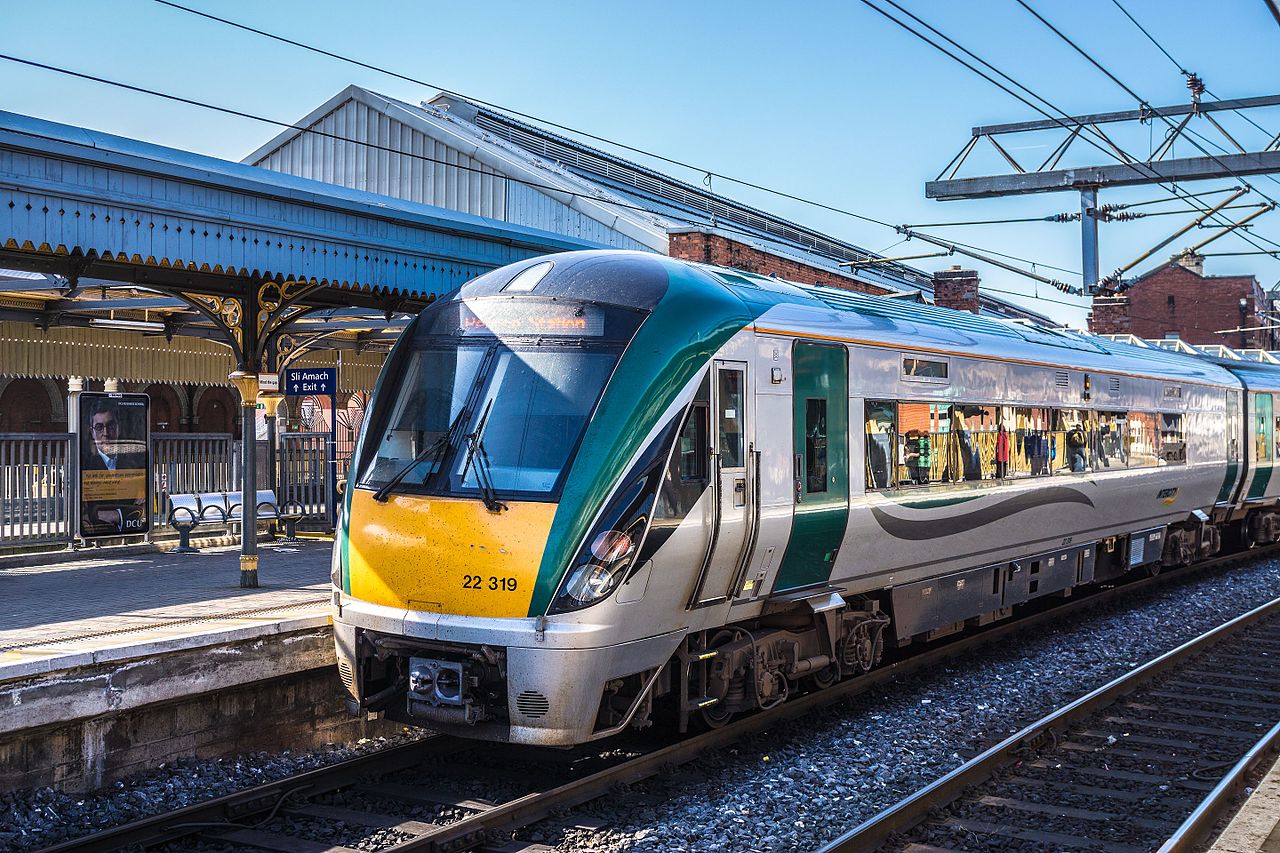
    Train In Connolly Station – Dublin.

    Fail Rail

    A good example of how RTÉ operates is how they covered the ‘re-opening’ of the railway that passes through the Phoenix Park tunnel in Dublin. That railway connects the two main railway termini in Dublin, Heuston and Connolly Stations, linking the Cork and south-west commuter line from Heuston, through the north city centre, onto the Sligo and north-west commuter line that runs into Connolly.

    The railway has been present for over a century, and for years, carried passenger trains between the two termini – provided the trains were empty. At the same time, Irish Rail, were proposing a multi-billion euro tunnel, DART Underground, so as to create a new link from Heuston around to the lines linking into Connolly.

    Hence there was a line that could have been used, which Irish Rail were effectively refusing to use – but were instead proposing to spend billions. Why wasn’t RTÉ probing this matter?

    Ultimately, the Phoenix Park line was brought into use in 2017, but the new operation is not without problems. Most obvious is that although trains now run between Connolly and Heuston Stations, the services do not stop at Heuston Station – and instead simply fly by an idle platform!

    Although the new service passes through some of the most densely populated areas in the state, such as Ballyfermot, Inchicore, Cabra, and Phibsborough – the train only stops once in fifteen kilometres at Drumcondra, between Connolly and Park West Stations. A fit-for-purpose public broadcaster would surely have examined the issues involved, flagged to the RTÉ Dublin correspondent John Kilraine at the time.

    Instead, having studiously ignored the existence of this railway for many years, on the day of the re-opening of the tunnel to passenger services, the matter was simply presented as a ‘good news’ story.

    The modus operandi of RTÉ in this instance appears to have amounted to a suppression of the facts, until state policy mandated a change, where upon it was a case of ‘hooray for happy days’. Such an approach is not good enough. Irish Rail would not have been able to obscure the existence of that key railway had RTÉ been doing its job properly.

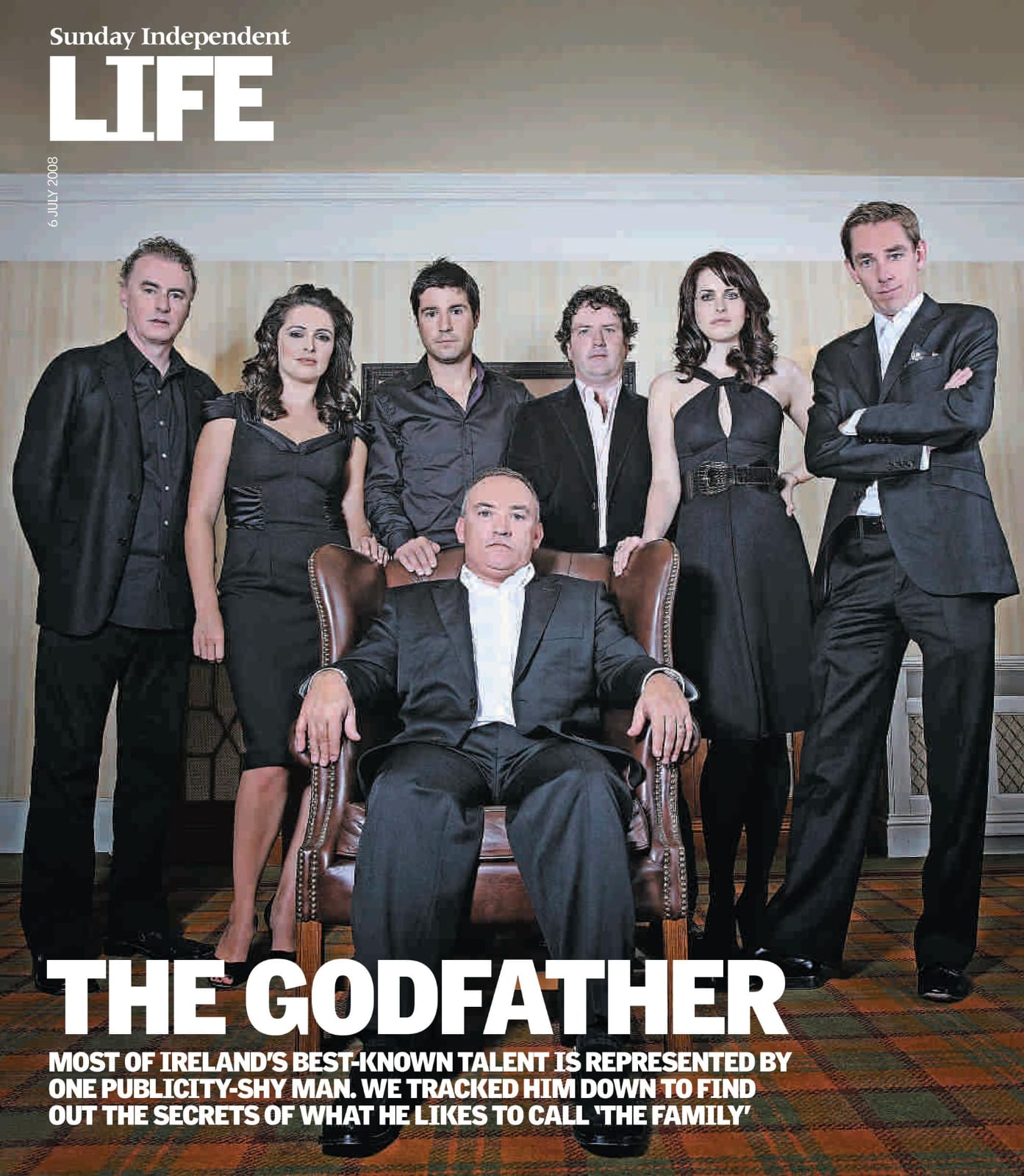
    Irish Independent, 2008.

    UnchaRTEd territory?

    It remains to be seen if RTÉ staff can redeem the reputation of the state broadcaster. This week’s outings to the Dáil did not inspire much confidence – particularly when the Chief Financial Officer was unable to recall his own payment levels; two hundred thousand euro, as we subsequently learned.

    As RTÉ correspondent Paul Cunningham observed, it turns out that there has been a ‘special arrangement for special people’.

    Although Cassandra was the lone voice raising such unpopular questions a few years ago, the levee has now properly broken, and it has emerged there have been all sorts of ‘side-deals’ and unusual accounting procedures that have facilitated junkets, luxury outings, ‘freebie cars’ and hidden payments. It will be interesting to see what else comes out. The public deserves a lot better from its national broadcaster.

    Feature Image: Daniele Idini

  • Unmasking the Tawdry Yarns

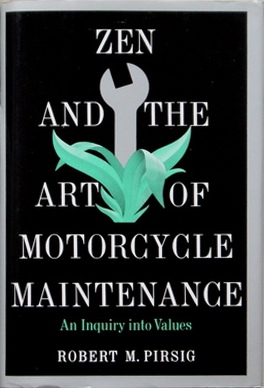
    In the essential Boomer text, Zen and the Art of Motorcycle Maintenance one of the chief ideas was the difficulty of defining what we mean by “quality”. Almost everyone knows what quality is and can easily spot the presence or lack of it in something. But the word itself, the concept, the thing of it, is difficult to describe. So, in the absence of a clear definition, the presence of quality can become a claim by a person selling a thing which, their patter maintains, possesses the elusive attribute.

    So even though everyone knows what quality is, it is possible, with a good enough story, to convince someone that something which may not actually possess quality, does possess quality. The key is the story. With a good enough story, anything is anything. You can even sow doubt in a person’s mind, making them believe that they actually lack the ability to discern quality, but that luckily, you are there to help them; for a small fee.

    The old story of the emperor’s new clothes is an illustration of what happens when a lie reaches critical mass to leave an entire herd deluded. If everyone claims to be able to discern the quality of the invisible garment, it takes balls to go against the herd, and, herds being what they are, the balls to differ is rare. So, an attribute which is difficult to define, leaves wriggle room for the unscrupulous and the potential danger of delusion for the naïve. You can almost hear Arthur Daly or Dell Boy spin it, “Look at that! That’s quali’y that is.”

    Value

    This is where Mariana Mazzucato starts out from in her book on economics, The Value of Everything: Making and Taking in the Global Economy. In Mazzucato’s thesis the word “value” is in many ways a synonym for “quality”, and she shows how some clever-clever salespeople have sold a pup to the entire world with a fancy story that somehow has the effect of equating value with price: if a thing is expensive it must be good, right? “Look at that! Now that’s quali’y.”

    Mazzucato shows how this simple con has allowed the Arthur Dalys of big finance to enrich themselves and their friends by extracting value from goods created by the wider working community. They do this primarily by blurring the distinction between value creation and value extraction. This is the Making and Taking aspect of the book.

    We see it all the time in the arts. Irish musicians and actors will be more than familiar with the publican who asks them to work for nothing because, unlike him, they “enjoy” their work. Therefore, so his thinking goes, that is reward enough and the publican can extract the economic value from the skills of the artistes. The story the publican spins in this transaction is the implicit suggestion that the arts are actually worthless.

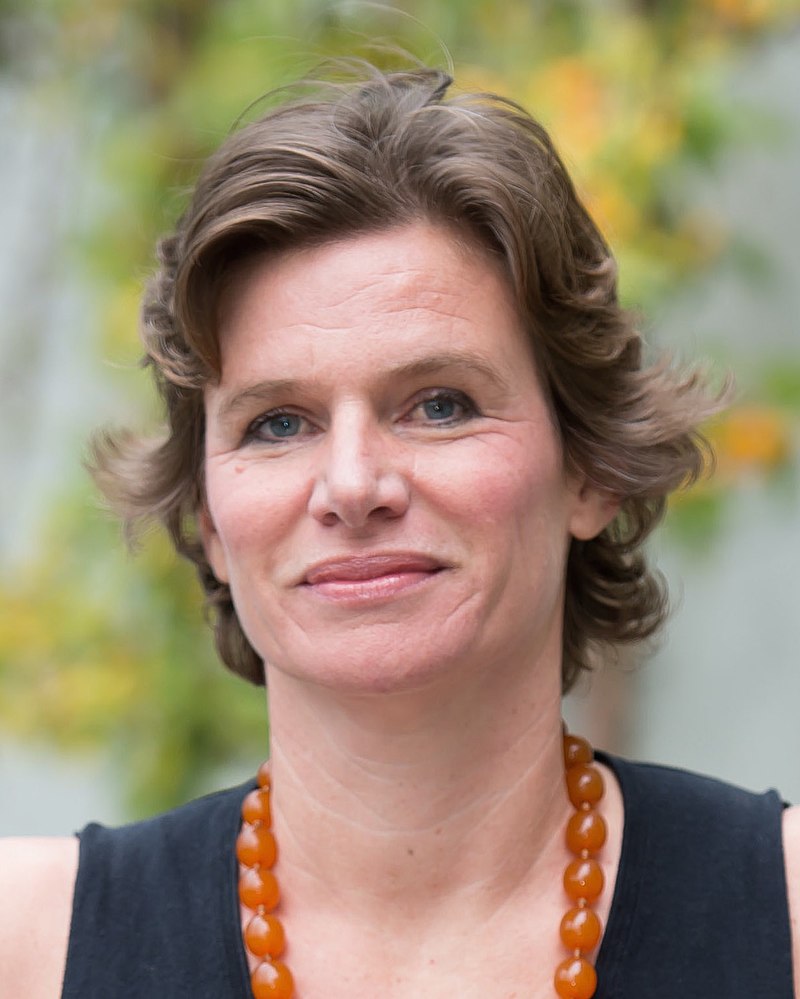
    Mariana Mazzucato 2016.

    The Con

    Everyone can see the con when it’s that glaring, but in the wider world of high finance it’s all a bit faster and meaner: worker’s wages stagnate while shareholders extract fat bonuses. Energy company shareholders holiday in the sun while families decide between food and heat. Mazzucato’s book is a reveal of the stories and patter and understandings used and exploited by corporations and swallowed by the public and by governments, that results in wealth being sucked to the top while wages stagnate and inequality increases.

    Mazzucato’s goal is to unmask the tawdry yarns of modern capitalism’s snake-oil salesmen who profess to be the high priests of identifying value: the bankers and corporations essentially claiming welfare in the form of tax breaks while creaming from the top of community-created wealth to transfer to their shareholders, all with the connivance of a bought-out political class, many of whom are corporate shareholders themselves. She writes:

    “If the assumption that value is in the eye of the beholder is not questioned, some activities will be deemed to be value creating and others will not, simply because someone – usually someone with a vested interest – says so, perhaps more eloquently than others… If bankers, estate agents and bookmakers claim to create value rather than extract it, mainstream economics offers no basis on which to challenge them, even though the public might view their claims with scepticism.”

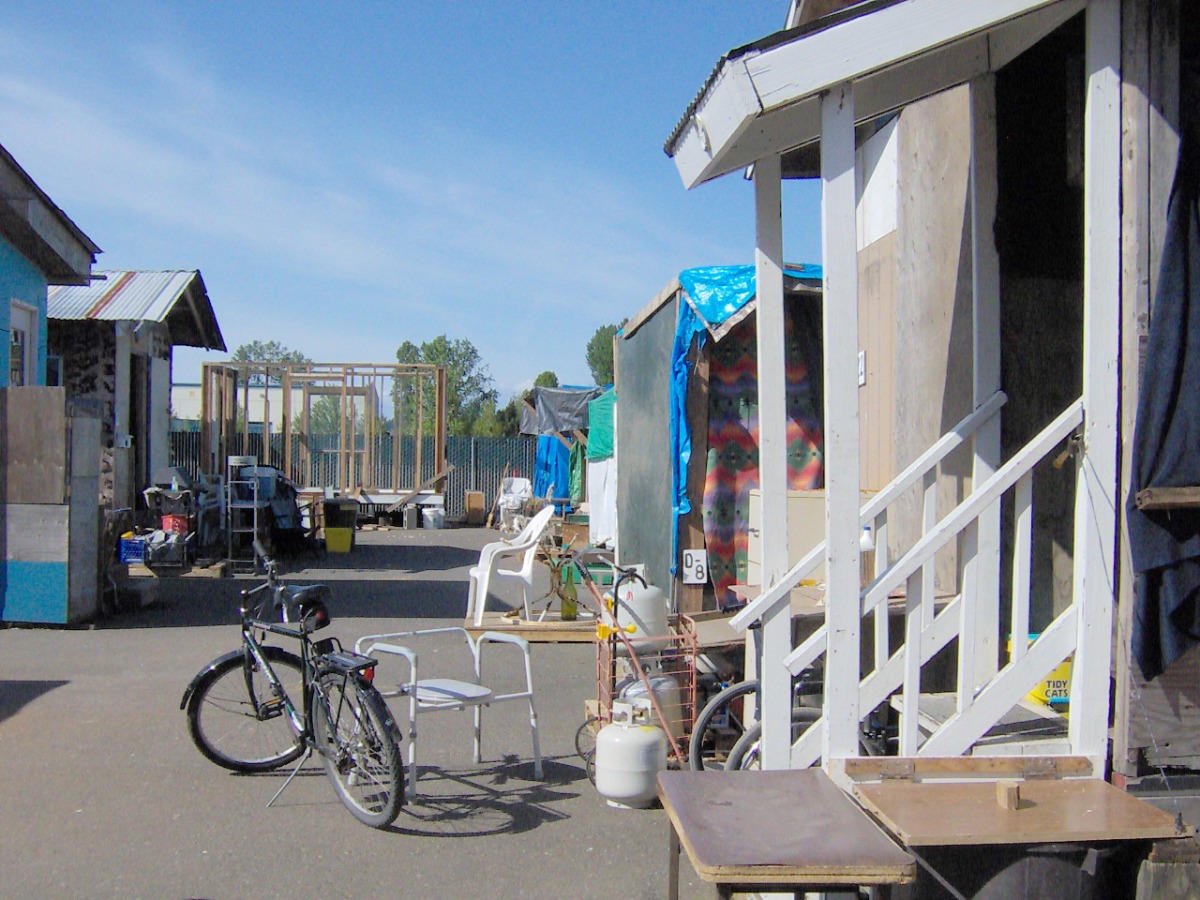
    Side Street in Dignity Village, Portland, Oregon.

    Fake Stories

    Derelict American cities are a living example of wealth extraction, leaving a trail of destruction in its wake while the top 1% live the high life. It is in untangling these stories, these modern myths of economics, that Mazzucato hopes to bring clarity in the necessary project to somehow reimagine capitalism, so that it works once more for the benefit of all, creating a thriving world rather than a dying one.

    At the centre of this entanglement of fake stories, spun by the elite like so many spider-webs, she shows that what is afoot is nothing more than a cheap con being perpetrated by groups of people with stories so shoddy that as soon as you see the move and the angle you can’t unsee it. Theirs is a strategy that depends essentially on the manipulation of one human weakness: convincing people that they are solely to blame for their own condition. Not the system. But their own character defects.

    And people buy it, every time. It’s not unlike the original sin the church used to so successfully sell. In the end, they claim, it’s all your own fault. So, while the poor sit self-tortured in self-flagellation for their own condition, which is almost always an outcome of social and economic inequality, the sales shaman steals away with the pensions and anything else he can manage to capture.

    Quality

    Robert Pirsig, author of Zen and the Art of Motorcycle Maintenance spent a book trying to get a grasp on the meaning of the term “quality”, an attribute whose presence or absence is clear to everyone. That was the mystery he was trying to pin down. How is it everyone knows when something has quality but can’t quite describe it?

    In the same way, you don’t need a PhD in economics to see that the attribute of quality is severely lacking in today’s capitalism. You have only to look at the manner in which business is being conducted that it is delivering neither quality nor value, just endless bonuses to a select few and endless grinding poverty to the many, no matter how hard they might work.

    Marianna Mazzucato has unmasked the shoddy yarn driving this fountain-pen theft of communal wealth, in a book so timely and revealing that it simultaneously exudes the twin attributes of quality and value while providing much-needed insights into the vexing question: why is capitalism only really working for a select few? The answer is simple: the herd has been deluded by clever economic patter: “That’s quali’y, tha’ is.”

  • RTÉ: Wrap Your Troubles in Dreams

    The significance of Joe Duffy (Liveline, June 26, 2023) insisting that Ryan Tubridy (from 12.30) “really is a unique talent” should not be overlooked.

    It isn’t simply that Joe and Ryan (along with a host of RTÉ’s household names) share Noel Kelly as an agent. It also reveals Joe’s interest in maintaining a near-feudal pay structure, rewarding “unique talent”.

    This seems to reflect Joe’s assessment of his own qualities, justifying a salary of €350,000 per year. Does it really take a “unique talent” to field complaints from parents about having to pay €60 for a child’s confirmation?

    Notably, Joe is fixated on maintaining high ratings for his show. As he put it in 2017: ‘One of the reasons I say that we have to have our numbers up [is] because it only works when the numbers are up.’

    The Joe Duffy Show is a careful balancing act between heart-rending accounts appealing to an older, pearl-clutching, audience – often sparking moral panic – and outright absurdity or light entertainment (including ‘Funny Fridays’). That is not to say that the show never addresses important issues or even breaks stories, but the formula is clearly calibrated by experienced – and even talented – producers. That’s why other presenters seamlessly ‘take the chair.’

    Undoubtedly, the issues they choose to lead on arise from careful consideration. Joe doesn’t simply allow members of the public to have their say. This certainly seemed evident during the June 26 programme, as a succession of callers ‘spoke out’ in favour of Ryan Tubridy.  At a point when most of the country was up in arms, wagons were circling.

    Joe’s particular skill lies in not offending anyone that matters; this extends to the car company sponsoring his show, but crucially finds him reinforcing key government messages.

    For example, during Covid, rather than allowing for a reasoned debate among experts on the thorny question of vaccination policy, Joe chose to platform an individual claiming the vaccine was a ‘mark of the beast.’ Naturally, reasonable Joe rode to the rescue to restore our collective sanity.

    Latterly, he has weighed in with belligerent statements on Russia-Ukraine that align with the government’s response. Thus in May, 2023 he opined: ‘War only ends primarily when one side is beaten by the other side.’ As Mick Heaney put it in the Irish Times: ‘He’s so impassioned that callers with mildly divergent views struggle to get a word in edgeways at times. Talk to Joe? Not when he’s in this form.’

    RTE Kitsch: Room to Improve.

    Tubridy’s Unique Ability?

    During his 9am radio slot and as presenter of the Late Late Show Ryan was rarely overtly political, although he was happy to endorse a complimentary biography of Leo Varadkar, and chose to interview Micheál Martin on his penultimate outing as Late Late Show host.

    Tubridy plays a different role to Joe Duffy, which I have previously argued is essential to a distinctively Irish propaganda. This is to maintain the feel-good factor. Light entertainment on the airwaves provides a comfort blanket for all sorts of troubles, from Covid to the cost of living. Indeed, Tubridy’s relentless chirpiness recalls the Depression-era song, popularised by Bing Crosby: ‘Wrap Your Troubles in Dreams (and Dream your Troubles Away)

    Almost uniquely on RTÉ Radio 1 – the Ray D’Arcy show has a similarly vacuous quality – Tubridy’s programmes became an extended commercial: a kind of dream factory or Late Late Toy Show for adults. Rather than engaging in tiresome arguments over our response to climate change, listeners and viewers are subliminally guided into treating themselves to the latest car model. Smile, it’s easy.

    In this argument-free zone, the mask occasionally slipped, as where Tubridy suggested on the Late Late Show in 2018 that cyclists who (legally) cycle two abreast should be ‘binned’.

    How Irish Propaganda Operates.

    RTÉ’s Peasant Revolt

    A significant proportion of the Irish public ignore RTÉ, and aren’t in the least bit surprised by the revelations. The real outrage emanated from RTÉ staff who did not take kindly to their highest earner being over-paid in an underhand fashion. This arrived at a time when, presumably, many are feeling the pinch during an extended Cost of Living and Housing Crisis.

    RTÉ staff are a formidable and influential body that seem to have gained control of the news rooms, even if the likes of the Joe Duffy Show may be acting in the interest of Tubridy. The sans culottes seemed determined to eviscerate the ancien regime. Whether the defenestrations of Dee Forbes and Ryan Tubridy will be sufficient remains to be seen.

    The looming question is whether these RTÉ journalists, who appear to be led by Education Correspondent Emma O’Kelly are committed to a long overdue overhaul of public service broadcasting. This ought to entail an end to programming that serves as a vehicle for so-called ‘talent’. Notably, BBC Radio 4’s schedule does not contain a single programme that takes its name from a presenter.

    But RTÉ staff may have to be prepared to cut their cloth further. It is unclear whether public service broadcasting is compatible with selling advertising space.

    A fully state-funded model would also bring its own problems – as we witnessed during the Covid-era when RTÉ often became a conduit for government propaganda – but safeguards, as in the BBC’s commitment to impartiality, could be put in place. A slimmed down model – with a primary focus on current affairs and high culture – would surely represent an improvement on the kind of schlock – epitomised by Ryan Tubridy – we have become accustomed to.

    A Basic Requirement

    In 2017 I lodged a Freedom of Information (FOI) request seeking details of payments by third parties to a number of RTÉ stars, including Ryan Tubridy, approved by RTÉ management falling under the Personal and Public Activities Guidance for 2017.

    The officer refused to divulge precise details, claiming this could be advantageous to competitors, might result in financial loss to contractors, and potentially ‘prejudice RTÉ ’s contractual negotiations in respect of future engagements with independent contractors’.

    He revealed, however, that ‘the total number of requests to engage in external ventures that RTÉ received was 122. Of that number, 114 were approved and 8 were refused. Of those granted, 97 were independent contractor requests and 1 was a RTÉ employee request. Of those refused, 7 were independent contractor requests and 17 were RTÉ employee requests.’

    That the vast majority of requests were approved, particularly to independent contractors, demonstrated that the organisation was taking a permissive approach on conflicts of interest.

    RTÉ claimed the majority of payments were for ‘non-commercial events, and mostly in support of charitable or other not-for-profit organisations’. In the absence of further details, however, it was impossible to verify this claim. If their work really was benign, why were they withholding the information?

    The claim that divulging information would “prejudice RTÉ ’s contractual negotiations” suggests the likes of Ryan Tubridy would have been lost to commercial competitors if information entered the public domain. That contention may be questioned, in the case of Tubridy at least. After moonlighting with the BBC in 2016 Tubridy admitted he had found connecting with UK listeners difficult, while leaving for Newstalk or TV3 would have represented a career regression.

    Most of RTÉ ’s household names found fame, and fortune, through extended exposure on RTÉ. The failure of Pat Kenny to draw a substantial number of his former listeners away from the station, when he departed for Newstalk, indicates most people are in the habit of tuning into the state broadcaster, rather than to listen to the unique talent.

    Transparency?

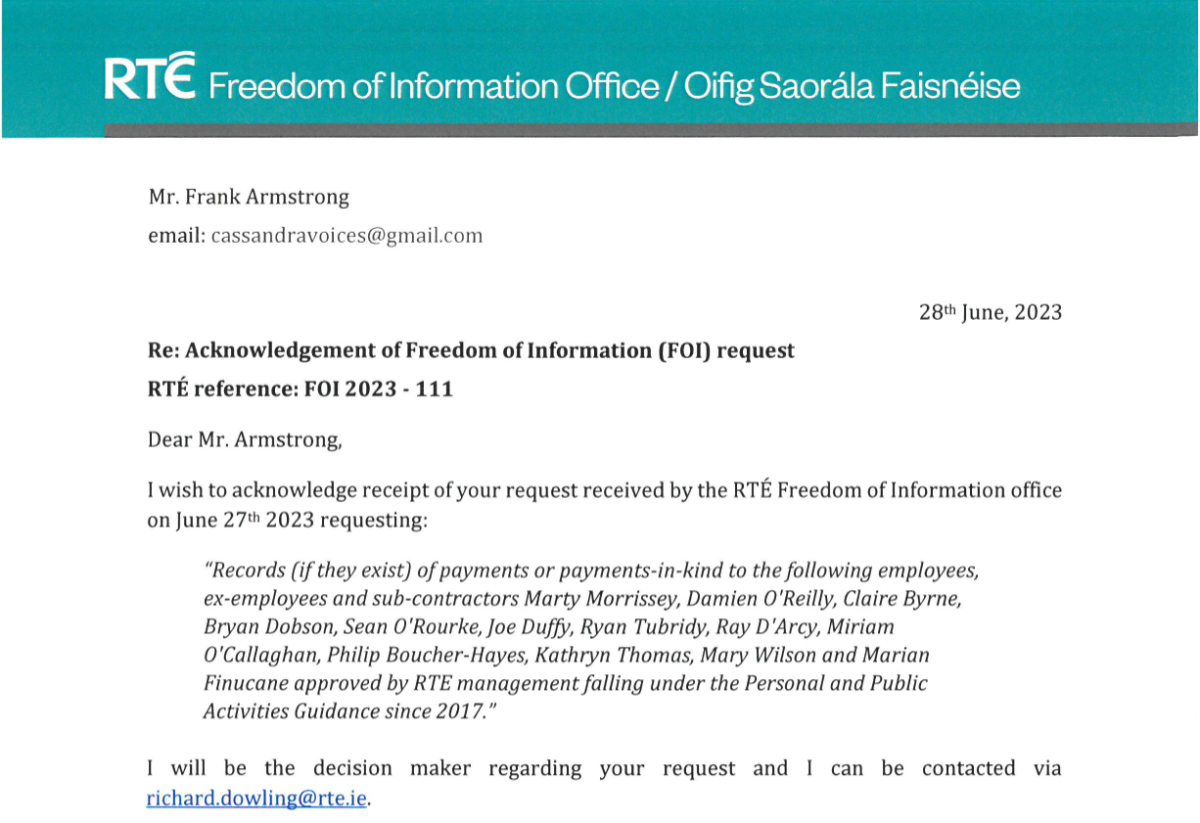
    This week I sent in another FOI seeking records (if they exist) of payments or payments-in-kind to the same ‘stars’, approved by RTE management falling under the Personal and Public Activities Guidance since 2017. It will be interesting to find out whether transparency is now given a higher priority than “contractual negotiations”.

  • John Betjeman’s Love Affair with Ireland

    The colourful humourist and English poet laureate, Sir John Betjeman (1906-1984) is the subject of Dominic Moseley’s Betjeman in Ireland (Somerville Press, 2023), which is lavishly illustrated with photographs.

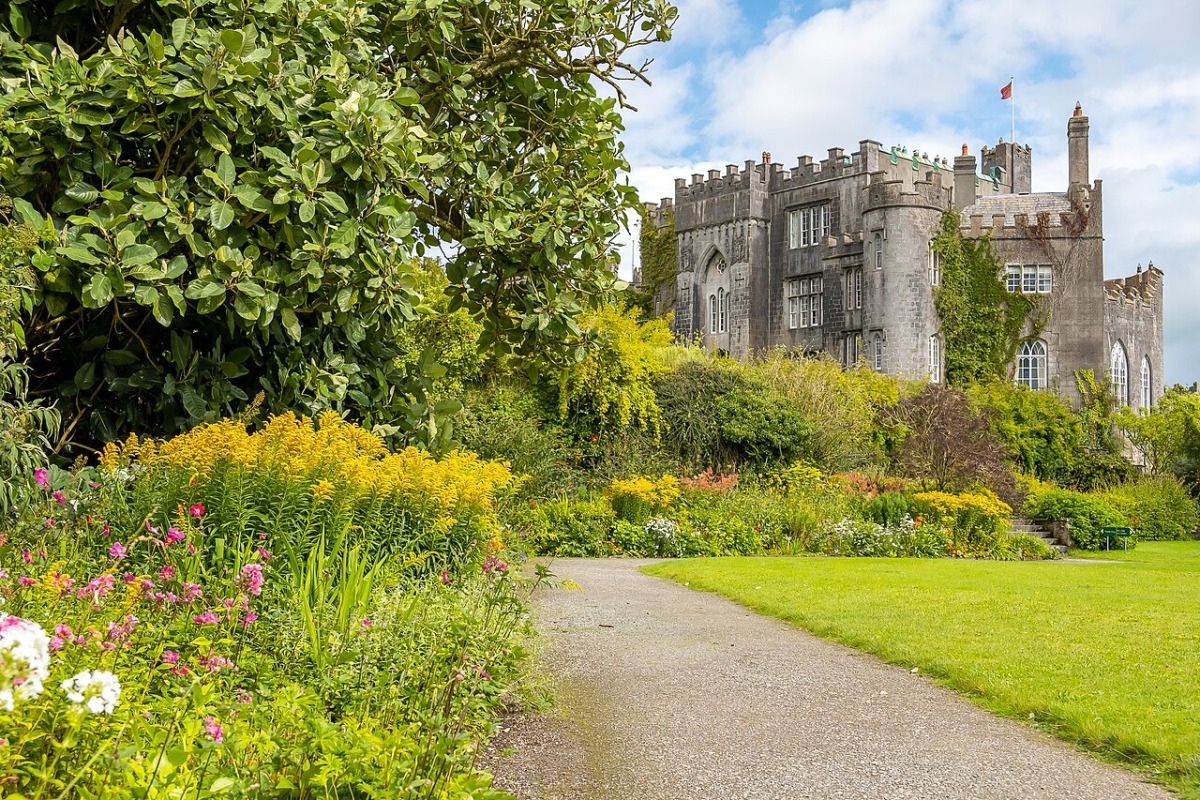
    Betjeman, who took his teddy bear, Alfie with him to Oxford in 1925 was the inspiration for the character of Sebastian Flyte in Evelyn Waugh’s Brideshead Revisited. Posted to Dublin as press attaché in the British Embassy during World War II from early 1941 to autumn 1943, his love affair with Ireland had begun two decades earlier in Oxford. There he met, and had a unique affinity with, the remnants of the Irish Ascendancy in all their fading glory. Chief among them was Edward Pakenham, 6th Earl of Longford who lived in what is now, Tullynally Castle in Co. Westmeath. It was Pakenham who first brought Betjeman to Ireland in 1925.

    An unapologetic social climber, Betjeman was the son of a furniture manufacturer from North London. Yet he was often ridiculed for his remorseless snobbery and his upwardly mobile pursuits. He finally enrolled in Magdalen College, Oxford after some difficulty in 1925, and it was in Oxford he met influential people such as C.S. Lewis and Maurice Bowra and Evelyn Waugh but also members of the Anglo-Irish Ascendancy who held a unique charm for him and with whom he formed a special bond. Indeed, his road to social success seems to have been through the back door of the Irish Ascendancy.

    Betjeman nourished an abiding fascination with Ireland from his Oxford days, especially the Irish Aristocracy – the more eccentric the better. He declared his ‘particular’ fondness for ‘people who had gone to seed’.

    Others in the roll call of Betjeman’s Irish friends were Lord Rosse of Birr Castle, Basil Ava of Clandeboy House, Co Down Northern Ireland. His life-long love affair with Ireland was cemented in 1951 when, aged forty-six, he met the twenty-year-old Elizabeth Cavendish of Lismore Castle, who became his lifelong mistress and muse, causing occasional, great misery to his aristocratic wife Penelope.

    It was through such aristocrats that Betjeman got his first taste of Ireland and when he arrived in Dublin as press attaché in 1941, whereupon he immersed himself further into that circle. Described affectionately by Moseley as ‘an ambitious social alpinist’ who ‘dearly loved a lord and lady’ he shamelessly cultivated them. Indeed, his enthusiasm for the Irish upper crust bordered on sycophantic.

    Moseley chronicles an awesome litany of love affairs, flirtations and dalliances indulged in by Betjeman. But this larger than life, affable, and energetic figure could still say, incredibly, in later life that the one regret he had was not ‘having had more sex.’

    It was possibly because of Betjeman’s popularity among Ireland’s Ascendancy he was chosen as press attaché. He soon became an instant hit among the literati of the Palace Bar, on Fleet Street in Dublin. This helped fulfil his mission ‘to ameliorate the anti-Irish tone of British press and to dilute the anti-English sentiments of the Irish press.’

    In the Palace Bar the influential editor of the Irish Times, RM Smyllie ‘held court’ among a wide audience. Betjeman charmed a formidable array of artists and writers such as Sean O’Faolain, Frank O’Connor, Brinsley MacNamara, Flann O’Brien, Patrick Kavanagh, Austin Clarke, Terence de Vere White, Maurice Craig, Cyril Cusack and numerous others from the world of literature who also wielded a lot of influence.

    He was no less popular among the artists he befriended such as, Paul Henry, Jack B. Yeats, Harry Kernoff, Sean O’Sullivan and numerous others. This group was ‘the locus of soft power’ in Ireland and once Betjeman was accepted and esteemed in this circle his success in Ireland was assured.

    Portrait of Seán Ó Faoláin by Howard Coster, 1930’s

    Ireland could easily have become a strong ally for Germany against Britain. Betjeman had ‘stepped into a historical minefield with little resources except his natural affability’. He certainly seems to have had a major diplomatic impact, and his friendship with the writer, Elizabeth Bowen – herself working for the British Ministry of Information and an on-off lover of Sean O’Faolain – was sure to have helped Betjeman.

    It was Betjeman’s easy charm, wit and affability that made him a huge success in Ireland and his encounters with the Irish politicians of the day, including Éamon de Valera were very successful too: he had a sympathy with the problems posed by partition in the North, but this did not prevent the IRA classifying him, for a time, as a person of ‘menace’, although the plot to assassinated him was later dropped.

    In 1942, he used his influence to get the English Horizon literary and artistic magazine to do an Irish number, featuring among others, Sean O’Faolain, Frank O’Connor, Patrick Kavanagh and Jack B Yeats.

    What this entertaining page turner underscores is that John Betjeman was first and foremost a gifted poet who ‘celebrated every aspect of the idea of love’ and was especially ‘a poet of place whether it be the home counties, Oxford, Ireland or his beloved Cornwall.’

    Unsurprisingly, he had a particular affinity with, and admiration for, Patrick Kavanagh where a sense of place is always foremost in the latter’s poems.

    A major early influence was Goldsmith’s ‘Deserted Village.’ Betjeman’s passion for place, for architecture, for locations, for churches and old ruins saturates his poems and this is very much the case regarding his most celebrated Irish poem ‘Ireland With Emily’ where place fuses with his unrequited passion for Emily Hemphill of Tulira Castle in Galway (later to become Emily Villiers-Stuart of Dromana House, Waterford). It is one of his finest and most evocative poems about Ireland.

    Betjeman’s passion for architecture flourished in Ireland too and his love of stately houses often outstripped his passion for their occupants, albeit he later wondered ‘how many linen sheets in the houses of Ireland received his lustful limbs.’ The combination of place with the erotic in his poems is described as a ‘potent brew’.

    He waxed erotically about Furness House, Kildare, Shelton Abbey, Wicklow, Woodbrook House, Portarlington, Pakenham Hall, Westmeath and numerous others. Betjeman even learned the Irish language and frequently signed himself Sean O’Betjemán. His heart-rending Irish poem ‘A Lament for Moira McCavendish’ is another fine example of how place and love conflates in a way unique to Betjeman.

    He might, as the author suggest, ‘have by his association with Elizabeth Cavendish, ascended to the highest rung’ socially but the portrait that emerges in this book is of a complex, flawed but likeable, warm human being with a large-hearted humanity and a unique generosity of spirit. It was that quality that made him the perfect diplomat in Ireland at the time.

    A devout Anglican who feared the afterlife he emerges as the most loveable of ‘sinners’ in this book. His ‘Ballad of the Small Town in Ireland’ is likened to a Thomas Moore melody in which he celebrates the ordinary life of fair days, burned barracks, elegant squares, neglected graves, ruined churches and court houses.

    Above all, Betjeman’s pre-eminence as a poet of merit is vigorously reclaimed in this study. The author notes how the ‘Modernism’ in poetry championed by T.S. Eliot and E.E. Cummings paved the way for an, often ‘graceless poetry devoid of scansion, rhyme, metre and original thought’.

    As a traditionalist Betjeman is often dismissed as a ‘trite poet’ and, lamentably, does not feature today on school and college syllabi. None of this takes from the fact that his Collected Poems sold over two million copies and that when he died in 1984, he had been England’s poet laureate for twelve years, from 1972.

    This book is not just an inspirational, charming and entertaining account of Beckett’s time in, and life-long love affair with, Ireland but it is a passionate command to restore him as a major poet of the English language.

    Betjeman In Ireland by Dominic Moseley is published in paperback by Somerville Press and costs €15.