Earlier this month I released The Blue Light, a selection of solo piano and chamber pieces spanning the last decade, performed by pianist Michael McHale and musicians from Crash Ensemble. The album offers a range of sound-worlds, and I like to think that I am open to the possibility of my music changing, but I realise that there seem to be some constants in what I am doing: I want to create highly concentrated, meditative – even ritualistic – experiences. Maybe I always will.
In 2006, I co-founded a record label and music production company called Ergodos with composer Benedict Schlepper-Connolly. We have co-curated dozens of projects together, and my work as a composer has often involved composing for specific contexts (such as, e.g., the Ergodos Musicians project I Call to You). For The Blue Light, my first solo album, I wanted to try to keep a sense of curated “coherence” across the record, even though the album is essentially a compilation.
The album opens with a solo piano piece composed last year: Und weinen, und lächeln. This short toccata takes its inspiration from “Des Fischers Liebesglück”, a song by Franz Schubert with words by Karl Gottfried von Leitner. The final stanza reads: “Und weinen / Und lächeln, / Und meinen, / Enthoben / Der Erde, / Schon oben, / Schon drüben zu sein.” An English translation: “Weeping, / smiling, / we think / we are relieved of the earth, / and are already up above, / in another place.”
Audio embed: use code below to embed “Des Fischers Liebesglück” by Franz Schubert from Spotify
Audio embed: use code below to embed Und weinen, und lächeln by Garrett Sholdice from Bandcamp
St Dunstan-in-the-East for piano, two violins, viola & cello was also composed last year, although the idea for the piece was sparked several years ago, whilst visiting London. St Dunstan-in-the-East was a church on St Dunstan’s hill in the City of London. It was mostly destroyed by bombing during the Second World War. After the war, the decision was taken to turn the ruins into a public garden. The space is unassuming and beautiful.
St Dunstan in the East, City of London.
My piece St Dunstan-in-the-East represents an attempt to create meaning out of fragmentary materials, perhaps in a way that is resonant with the idea of transforming a ruined building into a public urban space. Looking back over the notebook I used whilst sketching the piece, I noticed the following entry: “where is it going / what is it made from / why is it here / thick / thin / husks / the beauty of damaged, fragmentary things…”
Sketches for St Dunstan-in-the-East, from the composer’s notebook, 2022.
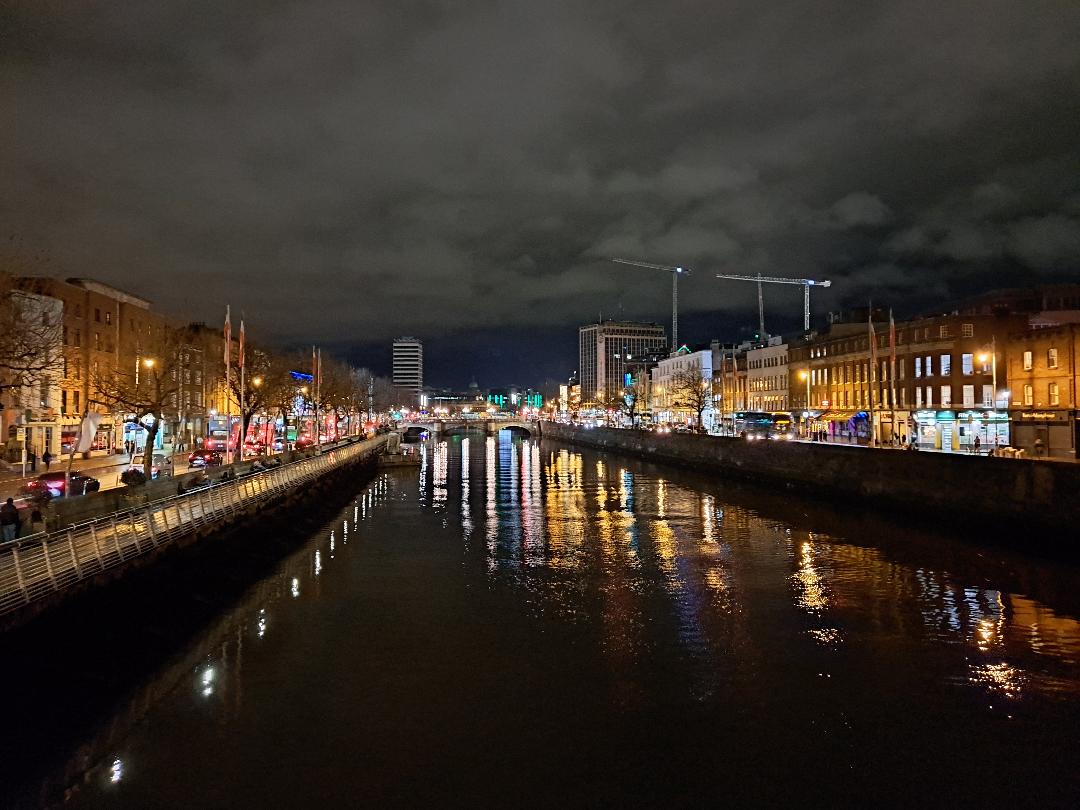
The next work on the album, Das blaue Licht for two violins, viola & cello dates from 2013, when I was based in Berlin. The title (which means “the blue light” in German) refers to the luminous blue of the sky above Danziger Strasse in northeast Berlin, during the hot July weeks in which I wrote the piece. The first part of Das blaue Licht features intricate pizzicato “hocketing”: a brief (ec)static dance. In the second part a series of chordal “breaths” eventually lead to a gentle song inspired by Javanese gamelan.
Berlin, Danziger Straße.
Often, at the ends of my pieces, melodies emerge as if finally remembered or unearthed. (This can be heard in the second part of Das blaue Licht.) I think this comes from my earliest musical experiences as a boy chorister in St Patrick’s Cathedral, Dublin, where sung melody was a daily experience. It was here that I first got to know choral music of the late Renaissance, such as William Byrd and Thomas Tallis. The weaving of melodic lines in this music always seems somehow miraculous to me.
At the beginning of the Tallis excerpt above, the soprano part (“S. P.” = “sexta pars”) and alto part (“Sup.” = “superius”) are both “divided” into two, a technique known as “gymel” in Medieval and Renaissance vocal music. This technique was the inspiration for my viola and cello duet, Gymel, composed in 2018. In my piece, the cello and viola begin in unison, singing as one. This unison line then bifurcates, and the individual personalities of the two instruments emerge.
The album closes, as it opens, with a solo piano piece: Prelude No. 12, composed in 2017. This is a soliloquy: just me, spinning out a single unbroken melodic line. The American poet Frank O’Hara talked about writing “personal poems”; this is maybe a “personal piece”. When I wrote it, I prefaced the score with these lines from his poem, “To Gottfried Benn”: “Poetry is not instruments / that work at times / then walk out on you / laugh at you old / get drunk on you young / poetry’s part of yourself”.
For me, as a composer working with notation in the classical tradition, the score is not the music – only the performers can create this. It has been my good fortune to work with such extraordinary performers for this record: pianist Michael McHale, and musicians from Crash Ensemble – violinists Diamanda La Berge Dramm and Larissa O’Grady, violist Ed Creedon and cellist Kate Ellis. The sensitivity with which they interpreted these scores was more than I could hope for.
Similarly, I am in indebted to the most diligent and incisive audio team: assistant producer Caterina Schembri, recording and post-production engineer Eduardo Prado, and mastering engineer Christoph Stickel. Often, for my music, the challenge is to somehow translate the atmosphere of a live acoustic performance experience into a digital recording. Thanks to this team, the intimacy and ritual of live performance comes across on this record.
Album cover for The Blue Light by Garrett Sholdice, featuring a watercolour by Neil Sholdice. (Cábán i n-aice na coille, Loch Coirib, 2019)
U.K. lawmakers, unlike their Irish counterparts, are currently agonising over the Online Safety Bill 2023. It is far less draconian than the recent Irish Bill, which I recently assessed.
This is currently being reviewed in the House or Lords – a body not to be automatically dismissed. This archaic assembly is still capable of acting as a real corrective to the excesses of Parliament. They can delay and amend, but also, crucially, awaken moral authority to invite reconsideration, as with Tony Blair’s draconian anti-terror legislation.
Thus, the U.K. is not passing a misguided and extremist Hate Speech Act, as in Ireland, but will continue to rely on its existing empiric and specific Protection Against Hatred legislation.
The core differences between the Irish legislation and that being considered for the U.K. are as follows:
First, the U.K.’s Online Safety Bill is primarily concerned with protecting underage minors from harmful content online. Assuming material is not subject to an existing criminal sanction, adults are allowed to be self-regulating, when viewing, for example, pornography or extremist political content. This is a sensible response that recognises that censorship can often be counter-productive, and treats adults as adults.
Secondly, the U.K. is not establishing a potentially political controlled commission in Ireland which will fine, pressurise, and finally enforce compliance.
Finally, the U.K. legislation is primarily concerned with taming the Wild West of the internet and social media, not established media. The Irish legislations targets all media.
At one level this shows that the British state is confident in the conformity of established vectors of public opinion. But there is a world of difference between the rambunctious content found in, for example, the right-wing Telegraph or the left-wing New Statesman, and servile and increasingly anodyne content found in legacy Irish media. However, the Overton window is narrowing over on Fleet Street too.
The era of Covid-19 has witnessed unprecedented conformity, censorship of scientists and censorship-by-omission. This dangerous trend recalls Clarence Darrow’s speech in the Scopes Monkey Trial in which a high school teacher, John T. Scopes, was accused of violating Tennessee’s Butler Act, which had made it illegal for teachers to teach human evolution in any state-funded school is apposite:
Today it is the public-school teachers, tomorrow the private. The next day the preachers and the lectures, the magazines, the books, the newspapers. After a while, your honour, it is the setting of man against man and creed against creed until with flying banners and beating drums we are marching backward to the glorious ages of the sixteenth century weights burdened the men who dared to bring any intelligence and enlightenment and culture to the human mind.
The British have a long tradition of being protective of intellect and permissible disagreement, which is, arguably, innate to Protestantism. They have never been subject to Savonarola figures, as in culturally Catholic countries like Ireland. Today civil society in the U.K. has not uniformly approved of a glossary of politically correct terms – as we seem to have in Ireland, where the Bishop’s crozier has been replaced by the corporate induction.
The recent criminalisation of the mere possession of offensive materials in Ireland is akin to the banning of books from libraries in the U.S. Bible Belt.
Yet remarkably, when the Irish government consulted the public over 70% of those who responded suggested they should not enact it. The rubber-stamping exercise had backfired. In response, Leo Varadkar airily claimed ‘the vast majority of people, don’t make submissions to public consultations’, meaning they’re ‘not necessarily reflective of public opinion.’ So why bother with the exercise?
Yet it is clear the Irish establishment does not appreciate expert independent opinion when this diverges from an intended outcome – an opinion recently expressed by Supreme Court Justice Charleton. Intelligent opinion cannot be allowed to upset vested absurdity. There really is nothing worse than a so-called moral principle cloaking a vested interest.
The ultra-censorious Archbishop of Dublin John Charles McQuaid offers an interesting case study in this context. He was like Richelieu or Talleyrand – more important than the monarch du jour. In Ireland today religiously ordained censorship has been replaced by proto-corporate social control. Fintan O’Toole’s is probably the leading ideologue in Ireland today.
Sinn Féin’s unwillingness to oppose the Bill demonstrates a distinct lack of judgment, naivete and even a certain quality of turkeys voting for Christmas, as we the inexorable crisis in what Jürgen Habermas calls participatory democracy continues.
I suspect that prior to the forthcoming 2025 election the new law will be used to nullify dissent, perhaps extending to opposition to support for the War in Ukraine. Sinn Féin may wish to become the arbiters of acceptable speech, but they must get into power first. That ought to have led to a cautionary opposition.
It is of course necessary for the State to regulate the Promethean capacity of the internet and, in particular, protect children from harmful content. The question is how to police and monitor it. One solution that China offers is complete censorship. It is fair to say that Ireland is veering in that direction.
The question is thus one of nuance and balance. The U.K.’s Online Safety Bill seeks to protect children in a variety of ways from accessing illegal content, by providing for risk assessments and modes of entry, including age identification.
But the Irish act applies this restrictive approach to adults and established media and then sets up a commission of politically appointed individuals to determine whether the content provider is to be fined or prosecuted.
The Irish polity has never trusted independent adults to form their own opinions, and the current legislation reflects that paternalistic attitude. A chill wind blows in the U.K. but a hurricane is raging in Ireland, with the steady denudation of what Habermas has called the civic space.
Last November, in one of his final outings as Taoiseach, Micheál Martin delivered the annual Romanes Lecture at Oxford University. It’s unusual to find a senior Irish politician laying out a political philosophy, and for this he deserves credit, even if I take issue with his claim to occupying a ‘liberal’ middle ground.
Since the nadir of the 2011 election, when Fianna Fáil won just 20 seats with 17.6% of the vote, Martin has steadied that ship; winning 44 seats with 24.3% of the vote in 2016, and 38 seats with 22.2% in 2020, in the face of Sinn Fein’s surge.
Importantly, during this holding pattern, Martin has restored the party’s access to levers of power and patronage. A romantic yearning for an overall majority associated with the leadership of Charles J. Haughey is a distant memory. In its place, we find steely pragmatism under Martin.
One commentator recently argued that Martin, ‘has remade Fianna Fáil from a party with pretensions of national leadership into a reduced but successful vehicle for its leader.’ This seems unfair. It is difficult to imagine any leader re-invigorating the party sufficiently to remain ‘the natural governing party’ after the car crash years of Bertie Ahern and Brian Cowen.
Whatever about the morality of the issue, Martin’s decision to endorse the Repeal of the Eighth Amendment in 2018 – in contrast to the majority of his parliamentary colleagues – was politically astute, given the low age profile of the ‘yes’ vote.
Nevertheless, Fianna Fail is still struggling to attract younger voters, remains moribund in Dublin and vulnerable to rural independents. It is still being argued that a party lacking obvious rising stars could cease to exist. A competent leader, however, cannot be blamed for the relative mediocrity of his colleagues.
Martin’s relationship to his lieutenants recalls a story about Charlie Haughey bringing his cabinet to the exclusive Coq Hardi restaurant. The princely Haughey ordered Steak Tartar, and when asked, “what about for the vegetables?”, replied “they won’t be dining.”
Moreover, Martin’s personal approval ratings consistently exceed those of the gaff-prone Leo Varadkar. This has implications for the forthcoming general election, when we may expect presidential campaigning, with relentless media focus on the strengths and weaknesses of the main party leaders.
Finally, when it comes to deciding the composition of the next government, Martin’s Fianna Fáil is in less of an ideological straightjacket than Fine Gael. With an election looming, Martin may be happy to occupy a putative political centre, while watching sparks fly between Sinn Féin and Fine Gael.
Charles J. Haughey in 1989.
Embattled
Thus, in the Romanes Lecture Martin lays claim to what he describes as an ‘embattled liberal middle ground’, pointing to threats posed by the technological rupture of the Internet and nefarious Russian interference in our democracy. These developments he ties to the recent political earthquakes of Brexit and the Trump Presidency, as well as the expression of conspiracy theories.
This familiar narrative contains some truth, but ‘an angry public discourse’ in most countries can be traced primarily to a decline in manufacturing and heavy industry, the widening gap between rich and poor and a global housing crisis.
Martin nonetheless contends: ‘In terms of basic concerns such as incomes, life expectancy and education, the scale of progress over the last century is beyond anything which was predicted, yet this is largely absent from the public discourse’.
This idea that we have ‘never had it so good’ ignores that since the 1970s real wages have barely budged; life expectancy now appears to be declining, in the U.S. at least; and how in Ireland we have an education system designed to produce nothing more than ‘second class robots’, according to an OECD expert. And that is to ignore more existential threats such as climate change.
He weakly recalls ‘the best’ losing ‘all conviction’ from W.B. Yeats’s ‘The Second Coming’, a poem anticipating the victorious march of ideologies such as Communism and Fascism in the 1920s. Today, in contrast, we find a distinct absence of fixed ideologies animating the ‘Populist’ movements Martin decries.
Thus, Martin’s broad-brush account of Populism joins left (including Sinn Féin presumably) opposition with that on the right, to a point where, it seems as if anything other than his own centre-right viewpoint is, at best, fiscally irresponsibility, or, at worst, a ‘threat to core principles of liberal democracy.’
Implicitly, any deviation from a neoliberal consensus reigning ascendant in Washington and Brussels is illegitimate. This amounts to a denial of a core principle of democracy: the sovereignty of the people in determining policy decisions through their elected representatives; as opposed to politicians facilitating a permanent government of unelected civil servants and unaccountable corporations.
Martin with Ukrainian President Volodymyr Zelenskyy in Kyiv, Ukraine in July 2022.
Undermining Democracy?
Furthermore, Martin’s assessment that ‘the efforts by autocratic governments to undermine democracies is a relatively recent development in terms of its scale and ambition’ absolves the U.S. from responsibility for its long-standing interference in democracies, including Ukraine. He expresses no condemnation for the U.S. hatching coups.
Moreover, according to the American Bar Association: ‘Special counsel Robert Mueller’s investigation did not find sufficient evidence that President Donald Trump’s campaign coordinated with Russia to influence the United States’ 2016 election and did not take a clear position on whether Trump obstructed justice.’ Thus, to insinuate otherwise is simply a conspiracy theory.
A lack of perspective is also evident in his contention that ‘Russia’s escalation of its eight-year war against Ukraine draws on a vision of restored imperial grandeur, but it is ultimately more about the desire to prevent liberal democracy succeeding in a former imperial domain.’
This disregards an obvious reason for the invasion, anticipated by, among others, George Kennan the architect of containment: the prospect of NATO expanding as far as the Russian frontier. Democratically elected, or otherwise, any Russian leader would object to this. This is not to justify the invasion, but to explain it.
We might reasonably expect greater historical insight from a holder of an MA in the subject. Approval for Timothy Snyder’s ‘wonderful work in linking historical insight to contemporary action’ suggests he is not reading widely enough.
A withering 2018 assessment of Snyder by Research Professor and Director of the Institute for European, Russian and Eurasian Studies at the George Washington University Dr Marlene Laruelle is worth recalling:
The fact that Timothy Snyder is an influential public intellectual and respected historian is no reason for scholars not to challenge his facile and polemical analysis of the contemporary Russian state … Distortions, inaccuracies, and selective interpretations do not help illuminate what motivates the Russian leadership’s self-positioning on the international, and in particular the European, scene. Simplistic reductionist techniques and invalid reasoning further confuse the analysis—and bias policy responses.
The hawkish Snyder recently dismissed the danger of nuclear weapons being used in the Russian-Ukrainian conflict, blithely claiming a nuclear bomb ‘would make no decisive military difference.’
Martin meets with U.S. President Joe Biden at Carlingford Castle in April 2023.
Atlanticist
It might be noted that in 2003, immediately after the illegal U.S. invasion of Iraq that caused up to one million deaths, as Minister for Health and Children, Micheal Martin voted alongside his government in favour of a motion endorsing ‘the long-standing arrangements for the overflight and landing in Ireland of US military and civilian aircraft’ – essentially sanctioning the refuelling of U.S. jets in Shannon.
During that debate then Fine Gael leader Enda Kenny warned perceptively that the U.S. invasion invited anarchy in the global system. Indeed, it is believed to have had a significant effect on the psychological and political climate in Russia.
It should also be noted that as chair of the U.S. Senate Committee on Foreign Relations then Senator Joe Biden actively championed the invasion of Iraq. As President he has included in his cabinet neoconservative hawks, such as Assistant Secretary of State Victoria Nuland, who was U.S. Permanent Representative to NATO from 2005 to 2008. In early 2008, NATO promised Ukraine and Georgia they would one day join the alliance ‘after rebuffing U.S. demands to put the former Soviet republics on an immediate path to membership.’
Both as Taoiseach and now as Foreign Minister Martin has proved a staunch ally to the Biden administration, using Ireland’s platform as a member of UN Security Council to argue that Russia’s conduct could not be reconciled with its place on the Security Council. This hardly enhances the prospect of Ireland ever using its non-aligned status to work as an intermediary for a negotiated settlement to the war.
Any Irish leader is likely to bow to realpolitik considerations, but Martin might have done well to peruse the response of his former party colleague, and Minister for Foreign (or External) Affairs, Frank Aiken to the U.S.-funded Bay of Pigs invasion of Cuba in 1961.
In the U.N., Ireland supported the U.S. position, but Aiken also expressed an understanding of the Cuban reaction. He counselled the Cubans on the fundamentals of de Valera’s neutrality policy, specifically towards our own large neighbour: ‘That principle was that under no circumstances would we allow our country to be used as a base for attack against our neighbour Britain … It has special validity in the case of small countries placed beside powerful neighbours with whom they have disputes or disagreements.’
The same logic might apply to a smaller country such as Ukraine, offering a base from which NATO could attack its powerful Russian neighbour. Martin might have let it be known that Ireland favoured de-escalation, acknowledging Russia’s anxieties arising out of a collective memory of World War II, when the Soviet Union suffered up to 27 million deaths at the hands of the Nazis and their allies. Instead, we hear unrelenting belligerence towards Russia – including an apparent disavowal of Irish neutrality.
Also in that lecture, Martin referenced the apparently undifferentiated views of the people of Ukraine:
Just as they did in 2014, the people of Ukraine have been willing to sacrifice everything because they want to secure a free and prosperous future for their country.
In the Romane Lecture, Martin argues that the liberalism he espouses ‘is a set of values which inherently respect the legitimacy of diverse political and social views.’ But this hardly tallies with his record as Taoiseach.
The reaction of the Irish state under Martin as Taoiseach to Covid-19 can hardly be described as liberal. Lockdowns, vaccine passes and forced quarantine for travellers in reception facilities were unprecedented interventions by the State into people’s private lives.
Doubtless, he would argue that a test of proportionality applied. In the lecture he maintains that COVID-19 ‘presented just as serious a threat to governments and institutions’ as the Spanish Influenza pandemic.
The Spanish Influenza (H1N1) pandemic of 1918-19 carried off an astonishing fifty million people, most of whom were in the prime of their lives. In contrast, globally, there have been just under seven million confirmed deaths ‘with’ Covid, the vast majority over seventy years of age and suffering from significant co-morbidities. This at a time when the global population is six times that of 1918.
We find further pieties from Martin such as condemnation of ‘widespread attempts to question core public health advice and to spread doubt about the efficacy of vaccines and the intent behind them.’ Unrestrained scientific debate is surely a key feature of liberalism.
The Irish economic model remains highly dependent on foreign direct investment, including from pharmaceutical companies such as Pfizer. Martin may consider preserving their goodwill to be his priority. But it leaves him open to the accusation that he is, at the very least, inadequately attentive to the conduct of companies with a long record of corruption, and criminality.
Martin showed poor judgment as Taoiseach during Covid-19, invariably resorting to draconian interventions. Thus, Ireland became the first European country to re-enter lockdown in October, 2020, based on speculative projections. Then he promised a ‘meaningful Christmas’ later that year, when opening up prior to the annual winter respiratory season, generating the world’s highest Covid rate.
Commendably, Martin ‘placed an unrivalled emphasis on keeping schools open,’ but he played a curious role in the introduction of face mask mandates. In Pandemonium: Power, Politics and Ireland’s Pandemic by Jack Horgan-Jones and Hugh O’Connell we learn that Martin’s phone had been ‘buzzing with texts from his sister-in-law in Singapore. ‘Masks, masks, masks,’ she told him.’ Earlier, however, Professor Martin Cormican informed NPHET that, ‘if there is a benefit, it is very small’, and that ‘widespread mask use also rapidly degenerates with poor practice, which could increase the risk of Covid-19 transmission.’
We also learn of Angela Merkel ringing up the Taoiseach to air her concerns about the Irish case trajectory in the Christmas of 2020, and Martin recalling her bringing this up again ‘at the bloody EU Council meeting.’ Merkel appeared to be demanding a level of stringency in other European states that ignored wider impacts. Just as during the era of austerity, the Irish government under Martin endeavoured to be the best boy in the European class and disregarded the consequences.
Paddy Cosgrave in 2022.
Pervasive Division
As a politician who has survived in government, and as leader of Fianna Fáil, for longer than most, Martin obviously recognises the importance of maintaining warm relations with the press corps. Critical, or investigative, journalism, however, would hardly be a welcome intrusion into his affairs. The press, as the editor of the Times wrote in 1852, ‘lives by disclosure … The statesman’s duty is precisely the reverse.’
Martin nonetheless said:
Support for professional and independent journalism has become an urgent need in our societies. We can see what happens when we no longer put value on journalism which takes time, involves expertise and operates to high ethical standards. The dominance of current affairs by partisan media or by a limited number of the wealthiest in our societies is always destructive.
His recent broadside, however, impugning the motivations of Paddy Cosgrave, Chay Bowes and The Ditch, delivered under Dáil privilege, is more revealing of his attitude. This further lapse into participation in “an angry public discourse” was criticised by the National Union of Journalists.
Associating the Ditch’s impressive record of exposing corruption with Russian interference is a worrying sign of Martin being prepared to employ ‘McCarthyite’ tactics.
Martin refers to ‘a pervasive division in public discourse is directly undermining the ability to develop effective responses to complex problems.’ His problem is that young people, in particular, angrily contest the effectiveness of his government’s response to these complex problems.
In his role as Minister for Foreign Affairs and Tánaiste Micheál Martin may be somewhat insulated from the enduring failure of the Irish government to deliver on housing, which is now being preyed on by an incipient far right. But possessing an ability to survive in Irish politics is surely not the only epitaph he craves.
Micheál Martin may only consent to his epitaph being written once a majority of the young people of Ireland look forward optimistically to a reasonable standard of living under a Fianna Fáil-led government. Unless there is a significant change in circumstances, however, any second coming for him as Taoiseach appears remote.
Outrage is the currency of the times. Nearly everyone in New York City and a healthy proportion of Americans are by now aware of the latest outrage to command Gotham headlines: the tragic death of a mentally ill ‘black’ man on an NYC subway after being choked out by a ‘white’ ex-marine. Some said the victim died while pinioned in the arms of his attacker. Others said he died later, on arrival at the hospital. After questioning the police let the marine go, and he vanished into the night. He was later arrested for homicide.
I italicize the words above because they are not factually derived descriptions so much as ideologically derived. Another common recap of the event puts it differently: A derangedcriminal, arrested forty times and released each time by Democratic government, threatened violence to innocent subway passengers. A heroic ex-marine approached him, put him in a headlock and, in UFC parlance, put him to sleep. The individual later died in hospital. Cause of death as yet unknown.
A Jesuit priest once said that nobody argues about reality; rather we argue about our interpretation of reality. The former interpretation is the version of events embraced by most liberals, the latter by most conservatives and many independents. The liberals have come under intense criticism for their—some would say—extremist approach to policing, or rather not policing.
In liberal capitals, prosecutors no longer prosecute misdemeanors, and hoodlums of all kinds are released back into the public despite their offenses. Police are decried for systemic racism. Immigration is embraced without question. Whites are reviled. Men are despised. Trans people are celebrated without rest and anyone who objects is deemed transphobic. Gender pronouns are enforced. Anyone expressing traditional values or ways of communicating are labeled with a battery of accusations, including being patriarchal, privileged, racist, sexist, and of committing horrid microaggressions. Social media has been aflame with predictable hot takes from both sides of the proverbial aisle.
‘A fundamental difference between modern dictatorships and all other tyrannies of the past is that terror is no longer used as a means to exterminate and frighten opponents but as an instrument to rule masses of people who are perfectly obedient.’ Hannah Arendt, The Origins of Totalitarianism (1966)
Apogee of liberal decadence?
It makes one wonder if we are witnessing the apogee of liberal decadence. A bonfire of ideals. Something of the kind that emerged in Weimar Germany before it fecklessly succumbed to the National Socialists. It seems the liberal ideology of multiculturalism and identity politics has run its course. As I understand it, it was first encouraged in the Sixties as a left counterbalance to the Communist left and, crucially, a form of progressivism that didn’t threaten capitalist profiteering the way Soviet socialism did. From there it progressed through the mild discomfort of political correctness to the full-blown hysteria of misgendering crimes.
We are now witnessing a liberalism that is by many accounts excusing crime at the expense of its victims. A liberalism that is practicing an extreme form of social engineering, attempting to hire for diversity sometimes at the expense of merit, forwarding reparations legislation as the middle class drowns in debt, and driving immigration even as homelessness among citizens swells. In short, racism and sexism mean that minorities and women are blameless and ought to be privileged at the expense of whites and males.
I am reminded of passages in Saul Bellow’s Humboldt’s Gift. After being extorted by a small-time crook with mafia connections, the narrator, Charlie Citrine, an effete and wealthy writer and intellectual, is subjected to regular visits from the criminal, who sees an opportunity to expand his horizon of scams. Citrine comments:
Rinaldo was ticking me off for my decadence. Damaged instincts. I wouldn’t defend myself. His ideas probably went back to Sorel (acts of exalted violence by dedicated ideologists to shock the bourgeoisie and regenerate its dying nerve)…Maybe this was in part a phenomenon of modern capitalist society with its commitment to personal freedom for all, ready to sympathize with and even to subsidize the mortal enemies of the leading class, as Schumpeter says, actively sympathetic with real or faked suffering, ready to accept peculiar character-distortions and burdens. It was true that people felt it gave them moral distinction to be patient with criminals and psychopaths. To understand! We love to understand, to have compassion! And there I was.
Later he notes that “Goethe was afraid the modern world might turn into a hospital. Every citizen unwell.”
Seems Bellow—a Nobel Prize winner and one of America’s great pulse readers—had identified decadent virtue signaling liberalism in its infancy. In the name of progress, of multiculturalism and diversity as progress, liberals find themselves surrendering their class privileges and even the conventions of societal security and law and order since these must by definition not be civilization guardrails but instruments of oppression for which we, via our ancestors (sins of the father, in the old language), are wholly responsible.
Saul Bellow.
Reenacting Oppression
What is lamentable in this capitulation is that the minorities—at least in the public realm—to whom bourgeois liberals are ceding every cultural corner seem to have few better ideas than to reverse and reenact the oppression itself, driving toward a mythical notion of equality of outcome that confuses inequality with unfairness. Many have critiqued the ideology, even a small minority of liberals, on a variety of grounds including evolution. Is this justice or thinly veiled vengeance?
The entertainment industry is perhaps Exhibit A in this phenomenon. Hence the relentless insertion of minority actors into the old vestments of oppression worn by white people in the near and distant past. Blazoned across the marquee of my Netflix app is, “Queen Charlotte,” a beautiful black woman adorned in royal vestments. At once the show denies the historical accuracy of the British/Irish queen and repurposes the oppressed as the oppressor, as though it were some sort of social progress. It is progress in the cinematic universe, as people of color are now playing characters previously withheld for white actors in the interest of historical accuracy. But now fidelity to history has been discarded to advance minority representation in film and television. Soon we will march to make the executioners’ union more diverse. More females manning the gallows. Be careful not to misgender your local hangperson.
In his prescient comments, Bellow notes Sorel and paraphrases Goethe. Then he cuts to the chase, hoping to explain the feebleness of liberal society, “Dostoevski’s Grand Inquisitor who said: mankind is frail, needs bread, cannot bear freedom but requires miracle, mystery, and authority.”
Too true. One can trace the need for the miraculous to the liberals’ desperate embrace of draconian public health mandates and a swift demonization of anyone that resisted. As the hysteria of the pandemic has worn away, the public health response is increasingly seen to have been a series of disastrous dictates from compromised public health institutions beholden to amoral industry. A society of the unwell, gratefully heeding the guidance of benighted institutions. Goethe and Dostoevsky together confirm the worst elements of mankind, realized in the 21st century.
Featured Image: A member of the Peruvian Army with a police dog enforcing curfew on 31 March 2020.
Pandemic
The pandemic revealed the open sore of liberal credulity, as it clutched the hems of the CDC and NHS and the other infallible acronyms of our salvation. But liberals had been trending in this direction for some time. The unforgivable original sin committed by unlettered philistines in flyover states and incalcitrant financiers in coastal megacities was the denial of Hillary Clinton of her rightful coronation—which was to be the capstone achievement of liberal Boomers of the old identity politics left.
Elevating a black man and a woman to the highest rank in consecutive terms would have been the ultimate confirmation of their identity politics. In the wake of this catastrophic defeat for liberals (a catastrophe in their worldview), the bourgeoisie dropped their long-held antipathy for federal intelligence agencies and embraced the CIA, NSA, and DIA, taking their word as gospel in the prosecution of Donald Trump. How easily they forgot Cointelpro, the slaughter of the Panthers, not to mention their murky proximity to the deaths of both Kennedys and King. So the miraculous authority of the daddy state has once more taken hold of a significant portion of the population.
It is a perhaps positive sign that on Rotten Tomatoes, Queen Charlotte scored an all-time low audience score of 1 percent (spilled popcorn icon) and just 11 percent with critics. Though it must be noted in fairness that the series has tripled its ratings among viewers since then, now subsisting at three percent approvals. Likewise, the disastrous Bud Light campaign using a deeply controversial minor trans celebrity has thus far engendered some $15.7 billion in losses. Thanks in part to its line of Pride month clothing for toddlers, Target has watched $9B vanish from its coffers in like fashion.
But the mainstream media wages its holy war. Vogue furiously said of Queen Cleopatra criticism, “Let’s call it what it is: racism.” The Guardian said, “…the idea that you need a white actor is utterly insidious.” The New York Times couched the negative critiques as revealing, “Fear of a Black Cleopatra,” and offered its usual casuistic evasions by declaring nobody meaningfully identified as white in Cleopatra’s time. (Note, of course, how identifying as a race supersedes being a member of an actual race. Of course, liberals have long argued there is no such thing as race, much as transgender activists often argue there is no such thing as biology, aside from a patriarchal construct ginned up by mad misogynists.)
Writer A.J. Kay nicely summarized the movement as, “The rigid moral paradigm in which anything short of ‘affirmation’ is bigoted and hateful.” It is an ideology of total affirmation of ethnic minorities, sexual minorities, and women, behavior notwithstanding. Its flip side is the total condemnation of whites and males, behavior notwithstanding. If white, one’s only recourse is to don the sackcloth and ashes, fall to one’s knees, and beg forgiveness from one’s victims. Their response is immaterial. One must atone.
This stridency is born of extreme ideological bias. We are no longer a united states. We now live in a society of seething ire beset by social division, with a doddering senior citizen in charge, a carnival barker awaiting a second act, a legacy of Camelot calling for a great renewal. Everyone angry. Everyone lost. Some blinded by despair, some by rage. The collapsing scenery is perhaps more Shakespearean than Bellovian, Recall the opening scenes of King Lear, “In cities, mutinies; in countries, discord; in palaces, treason; and the bond crack’d ‘twist son and father… We have seen the best of our time.” As an infamous communist once wrote: history repeats itself, first as tragedy, then as farce.
Julien Charles is a critic, corporate drone, and New Yorker hoping to call attention to the authoritarian drift of states across the Western world, and the narratives promoted to gain consensus for such measures. He has been published in, Off-Guardian and The Hampton Institute, among other publications.
I always considered myself a late bloomer when it came to music. Growing up, I didn’t have many opportunities to play instruments, and I chose to focus on art rather than music during my secondary school years. Becoming a better musician seemed like a mysterious journey with no obvious roadmap.
I credit my Dad for introducing me to some incredible artists like Led Zeppelin, Queen, Pink Floyd & Jethro Tull. In return, I introduced him to the captivating sounds of Radiohead, a band which played a pivotal role in developing my appreciation of interesting chord progressions and ambiguous harmony.
We listened to a lot of music together and aged fourteen my Dad surprised me with my very first guitar – an SX acoustic steel string. I remember eagerly trying to bend those strings in the style of Jimmy Page, with no great success. It would be some years before I would get round to purchasing my first electric guitar.
I struggled as a teenager to envisage my future career. I was less concerned with money, status, or even moral virtue. Instead, I found myself preoccupied with what the day-to-day experience would be like. I would ponder different paths, like the idea of becoming a doctor – helping people, earning a good income, a respectable profession. But then I would wonder, ‘What would the minute-to-minute reality be like?’ Would it involve blood, guts, and smelly feet? High stakes with people’s lives on the line?
That’s why I find myself where I am today – as a musician and a teacher. I derive immense joy from the everyday moments in my career. It’s not about the grand aspirations; it’s the day-to-day experience that fulfils me. Whether I’m playing music or sharing my knowledge as a teacher, I find deep satisfaction in the present moment.
Revelation!
Not long after finishing school, I stumbled upon a YouTube video of Beethoven’s ‘Moonlight Sonata’ arranged for solo classical guitar. It instantly captivated me, and I dedicated that entire summer to learning the piece from start to finish. The experience brought me an unparalleled joy – the intricate polyphony, the interplay between the upper and lower voices, and the sublime harmonic movements, all projected from my own instrument! It was a revelation – I had finally found something I could pour hours into.
I discovered I had a knack for memorizing lengthy pieces, so I embarked on expanding my repertoire. Attending classical guitar recitals at the National Concert Hall became a regular thing, as I aimed to immerse myself in the rich tapestry of the classical guitar world. By the time I enrolled for lessons with Leslie Cassidy at the DIT Conservatory of Music and Drama in 2013, I had already delved into the works of various composers, including Villa Lobos, Tarrega, Barrios, Koshkin, and Albeniz. This played a pivotal role in shaping my technique and opened my ears to a more contemporary range of harmonies as I explored the guitar repertoire from the romantic period onwards.
My time with Leslie was absolutely crucial to my growth as a musician. I eagerly looked forward to our weekly Saturday morning lessons, where he meticulously reviewed every piece I had learned, correcting my mistakes and helping me break free from bad habits – especially my woeful right hand technique. Though my time with Les lasted only two years, he was an incredibly supportive and motivating mentor and teacher. I miss him dearly, and I often wonder what it would be like to have a conversation with him today, at this stage of my musical journey.
Everything in Its Right Place…
Regardless of my skill level as a musician, I’ve always been drawn to composing. It just felt right and has always been a natural part of how I absorb new musical ideas. I aim to combine elements that I find appealing in a way that feels satisfying—a blend of the familiar and the unpredictable. There’s a certain joy that comes with seeing a well-developed idea come to life, as if putting something in its rightful place.
I knew I lacked many of the skills and understanding necessary to compose music at the level I desired. Even though I was already composing for my band BiG Fridge, I wanted a deeper understanding of my own music to better develop and convey my ideas. That’s why I decided to enroll in the Bachelor’s program in Jazz Performance at the Newpark Academy of Music. Despite knowing little to nothing about jazz, I discovered that this foreign musical idiom shared many of the same values that resonated with me.
Attending Newpark was a humbling experience. I had never before been surrounded by so many individuals who loved and took music as seriously, if not more so, than I did. I met amazing people who possessed qualities I aspired to, and learned a great deal from them, both as individuals and musicians. Tommy Halferty, my teacher, was truly remarkable. He encouraged me to embrace my own strengths and musical voice, always pushing me to work harder and give my best.
Although I often felt out of my depth, the further I progressed at Newpark, the more I realized that I had ended up exactly where I needed to be. I was exposed to new and exciting forms of music, and I acquired not only the skills and knowledge I sought in harmony, arranging, improvisation, and composition, but also a common language to effectively communicate my ideas with my peers.
Moreover, the experience gave me a glimpse into the vast realms of what I didn’t yet know. It provided me with the terminology and techniques that empowered me to delve deeper into these subjects even after completing my degree. While at the time, the degree felt all-encompassing, I later realized it was merely scratching the surface of music theory.
Harmony Takes Centre Stage
If there’s one quality that takes center stage in my own music, it would be the harmonic content. Reflecting on my own compositions, I’ve discovered that I can learn a great deal about myself and my personal taste through retrospective analysis. This understanding of harmony is crucial for me to achieve that. It’s simply the aspect of music that I find most fascinating and exhilarating.
Much of the music I create is either modal or strives to fully explore the relationship between two loosely related chords. I aim to employ parsimonious voice leading as a means of generating new movements that sound fresh and captivating to my ears.
After completing college, I set about forming the instrumental ensemble known as Rynx Laneran, with the goal of developing and performing my latest compositions. I joined forces with Andy O’Farrell and Alex Delogu, both of whom I had the good fortune of meeting at Newpark. The music we create is deeply influenced by my admiration for artists like Portishead, as well as renowned film composers such as Bernard Hermann and Lalo Shiffrin. Our sound also takes inspiration from the captivating style of Mulatu Astatke’s music.
I’m incredibly proud of the music we have crafted together thus far, and I eagerly look forward to returning to live performances this summer. Additionally, we have plans to release more music later in the year, and I couldn’t be more excited about sharing it with our audience.
Irish Music
My fascination with traditional Irish music began with a chance encounter at a party where I met guitarist Chris Cole. Chris took me under his wing and introduced me to the fundamentals of his rhythmic approach when playing traditional music on the guitar. He generously shared his insights into arranging tunes for the instrument, and as my repertoire grew, I started creating my own solo guitar arrangements of Irish tunes, drawing on my knowledge of classical technique.
Last year, I received a tremendous validation for my efforts when the Arts Council awarded me the Music Agility Award, enabling me to develop twelve original arrangements of traditional Irish tunes for contemporary Irish classical guitar.
Currently, I’m exploring how to merge different genres from around the world by applying scales from folkloric music such as Ethiopian music to the Irish tunes I’ve arranged. I’ve recently completed three “Ethiopian Jigs,” as I’m currently referring to them, and they possess a unique quality that is both familiar and exotic. I’m excited to see where this compositional approach will take me next.
These days, my schedule is busier than ever, and I’m constantly learning and expanding my musical horizons. I consider myself fortunate to have encountered a diverse range of musicians who have allowed me to pursue my various musical interests, no matter how niche they may be. I’ve never wanted to limit myself strictly to classical or jazz music; my love for different genres is vast, and I aspire to play them all.
In the past year, I’ve arranged numerous classical pieces by some of my favorite composers, which I perform as a duo with bassist Alex Delogu. Additionally, I formed a gypsy jazz quartet called The Tenters with fellow guitarist John Mahon, bassist Dave Mooney, and violist Brendan Lawless, and we regularly perform around Dublin.
I thoroughly enjoy my role as a session guitarist, collaborating with various artists such as Christian Wethered, Adam Nolan, and Yankari Afrobeat Collective. Each experience adds to my musical journey and presents unique challenges that I embrace as a contributing member.
As I reflect upon my career as a musician, I feel incredibly lucky to have dedicated myself to the study of the guitar. It may sound unbelievable, but it often feels like every positive thing in my life has either directly or indirectly stemmed from my commitment to this instrument. It serves as my meditation, my hobby, and my livelihood. It’s what motivates me to get out of bed each day. The impact it has had on my life is immeasurable. I’ve discovered an endless game, a never-ending journey that reflects my approach to life, one of constant learning and growth, an outlook that I intend to maintain throughout my life and journey as a musician.
Covid is a nightmare from which we are still trying to awake. But whether the unprecedented response represents a singularity, or the beginning of an era of authoritarian capitalism, is unclear.
Many of us remain incapable of distinguishing a reliable version of reality from lonely projections. Thankfully, telling insights arrive in a new publication: The Covid Consensus: The Global Assault on Democracy and the Poor – A Critique from the Left. Authors Toby Green (a professor of African history and culture) and Thomas Fazi (a writer and journalist) navigate a path through the scientific thickets, to reveal the socio-economic and cultural factors that shaped the pandemic response.
The temporary elevation of public health officials in many countries to positions of almost unfettered power led the Mozambique writer Pedrito Cambrao to observe that ‘the secular West has essentially turned science into a religion and scientists and healthcare workers into a priestly caste that cannot be challenged. (p.346)’
Media, new and old, brought unrelenting focus to a single challenge, while only rarely surveying accumulating evidence of collateral damage. As in Albert Camus’s great novel, The Plague: ‘Rats died in the street; men in their homes. And newspapers are concerned only with the street.’[i]
Additionally, as I propose in this review, a “left-brained” positivism appears to have informed the Covid Consensus that Green and Fazi define.
Positivism is a philosophical system recognizing only that which can be scientifically verified, or which is capable of logical or mathematical proof, but this can lead to a narrowing of perspective. Thus, long-standing challenges yielded to a singular metric, the waxing and waning of “the virus” – as defined by the PCR test, a dubious diagnostic tool that accounts for exaggerated mortality statistics.
Positivism is identified with the nineteenth century philosopher Auguste Comte (d.1857), whose conclusions, according to Albert Camus, ‘are curiously like those finally accepted by scientific socialism.’
Comte conceived of a hierarchical society that looks similar to what we witnessed over the course of the Covid Consensus:
[S]cientists would be priests, two thousand bankers and technicians ruling over a Europe of one hundred and twenty million inhabitants where private life would be absolutely identified with public life, where absolute obedience ‘of action, of thought, and of feeling’ would be given to the high priests who reign over everything.[ii]
In our time, technocratic rule relied on an underlying hysteria founded on a generally irrational fear of premature death, whipped up by social media in particular.
Only once this dissipated – arguably when wide availability of rapid antigen tests revealed the widespread prevalence of basically harmless infections – was normality restored. As in Camus’s novel The Plague: ‘Once the faintest stirring of hope became possible, the dominion of the plague was ended.’[iii]
Questioning Authority
The paucity of left-wing lockdown critiques, ignoring the plight of Global South, where more than one hundred million people fell below the poverty line (p.286), despite the minimal impact of the virus itself, demonstrates an intellectual impoverishment in a broad-based movement that achieved extraordinary progress during the twentieth century, by questioning established authority in terms or wealth, gender and race.
In contrast, the veteran Greek socialist Panagiotis Sotiris observed that what went missing during the pandemic was an understanding that ‘science and technology are not neutral’.
All too many who identify as left-wing, Green and Fazi argue failed to recognise, ‘something much more profound than a straightforward conflict between left and right’, but instead,
a struggle at the heart of capitalism between the traditional press and business interests it has always represented (hotels, restaurants, high street shops) and the new corporate giants which did not require such promotion. (p.19)
A sympathetic explanation might trace broad left-wing approval for what were ineffectual lockdowns to the accompanying state largesse. Below the surface, however, a huge transfer of wealth occurred to billionaire owners of giant corporations. Thus, the ten richest men in the world doubled their fortunes during the pandemic, while supports to workers proved transient, and were based on unsustainable quantitative easing, which has, predictably, given way to inflation.
Through effective control over online content, including outright censorship, and regulatory capture – including of the WHO – the corporate giants successfully narrowed the Overton Window of acceptable discourse. Dissenters from a dominant narrative were stigmatised as far-right, libertarian or conspiracy theorists.
Importantly, statements of President Donald Trump were weaponised by architects of the Consensus. Green and Fazi contend that it was ‘no longer possible for left-leaning progressives to question ‘the science’ since that is what Trump had done. (p.78)’
Various conspiracy theories purport to explain the decisions of governments to quarantine almost half of humanity for almost two years to inhibit (rather than eliminate) a virus with a median infection fatality rate of c. 0.27% (the figure for Spanish Influenza in 1918-19 was > 2.5%) that posed a vanishingly low risk of death to anyone under the age of seventy, prior to the arrival of vaccines that were not designed to save lives.
The Covid Consensus addresses a more interesting question however, namely: why did Western populations overwhelmingly consent to unprecedented infringements on civil liberties, culminating in the population-wide, medical coercion of vaccine mandates and passports?
Indeed, leading experts seem to have been surprised at the power they wielded. Thus, after the British government adopted Chinese lockdown policy, Professer Neil Ferguson observed: ‘It’s a communist, one-party state, we said. We couldn’t get away with it in Europe, we thought. And then Italy did it. And we realised we could.’
It should also be noted that any idea of locking down healthy people was contrary to best practice in global health prior to 2020. An article from 2014 on the history of quarantine, ‘Gold, fire and gallows: quarantine in history’ by Médecins Sans Frontières’s Duncan Mclean found:
There is limited and far from definitive research on quarantine effectiveness and far too many other factors at play that are difficult to ascertain from the historical record. Yet while present understanding about the pathology and transmission of hostile pathogens is far advanced on centuries past, there are some basic conclusions that can be made. For example, it is fairly certain that isolating a healthy population alongside an unhealthy population risks causing more harm than good, especially when access to food, water and medical care is taken into account. For quarantine to be successful, it requires perfect compliance and transmission without symptoms.
Moreover, notwithstanding the dubious achievement of temporarily excluding Covid-19 from certain countries through a Zero Covid policy, the idea that a highly infectious respiratory pathogen causing a low level of morbidity (a U.K. study from October, 2020 found 76.5% of a random sample who tested positive reported no symptoms and 86.1% reported none specific to COVID-19) could have been eliminated was never a serious proposition.
The lockdown-to-vaccine strategy was also predicated on a misplaced article of faith, which is that vaccines – what Boris Johnson referred to as “the scientific cavalry” – would essentially eliminate Covid-19, or at least the transmission of the virus. The progressive – or “left-wing” – argument to take vaccines for the sake of others never stood up to serious scrutiny from the outset; but mainstream media had suspended critical assessment as part of what was immediately likened to a war-time effort.
Despite failing to achieve what most people assumed it would, i.e. block transmission, which its inventor claimed it could achieve, seemingly pre-planned measures were rolled out, while serious harms largely went unreported in a mainstream media dangerously reliant on ‘philanthro-capitalism’.
According to the authors of the Covid Consensus the pandemic ‘provided a radical continuity of many trends which had been latent in global society.’ They point to a steady growth over many years in social inequality, ‘the power of computing, information wars, and the shift towards increasingly authoritarian forms of capitalism across the world had all been growing.(p.2)’ Arguing:
we should perhaps consider the troubling hypothesis that the Chinese and Western regimes, far from representing two opposites may actually have come to embody two different types of authoritarianism, conflictual but symbiotic at the same time – as the striking convergent responses to the pandemic would seem to suggest. (p.398)
Notwithstanding the similarities Green and Fazi point to, the approaches of East and West did diverge in one significant respect: China’s early adoption of a highly authoritarian Zero Covid policy ensured life continued for most of the time “as normal”, whereas Western governments promoted a more consensual social distancing approach that relied on an unprecedented propaganda campaign.
The disturbing effects of social distancing might be viewed as the apotheosis of neo-liberalism. The virus seems to have provided a welcome pretext for the wealthy to remove themselves from the hoi polloi.
Covid-19 also laid bare the widespread out-sourcing of manufacturing to lower wage economies (such as China). Lockdowns demonstrated that many workers in the West were no longer in productive employment, and instead engaged in what the late David Graeber called ‘bullshit jobs’, often as part of swollen bureaucracies.
Thus, Green and Fazi identify the lockdown response as ‘a symptom of the ever-increasing removal of people in wealthier societies from economic production. (p.2)’ For many Western consumers concern for ‘the implications of lost harvests, ruptured supply chains, and abandoned industrial plant machines was not as real as the threat of a new virus to this group of disproportionately influential people. (p.3)’
An important cultural facet the authors refer to is a crippling fear of death. Over many decades Western governments have cleansed ‘the dead from daily life’ (p.11). This contrasts with the far more obvious folk rituals and religious practices attending a person passing away in the Global South.
A collective inability to reconcile ourselves to death best explains the panic generated by coverage of events in Lombardy, Italy in February, 2020: as ‘the shadow loomed of death re-entering the normal spaces of society people sought to seal themselves away from something which terrified them. (p.11)’
Ferguson’s candid testimony suggests it is highly unlikely that anyone in power anticipated the propaganda value of “the scenes in Italy”. Indeed, many governments displayed little appetite for lockdowns initially. Most quickly rolled over, however in the face of an enduring hysteria; even after initial mortality projections of 0.9% (used by Ferguson in his infamous paper) had been show to be seriously inflated.
A fear of premature death is most obvious explanation for why peopled consented to unprecedented infringements on their civil liberties.
Left-brained?
Another cultural factor the authors point to is ‘the undermining of social science and humanities degrees by governments … in favour of STEM subjects’. They contend that ‘these subjects were routinely ignored in the shaping of major policy decisions by both government and the media. (p.14)’
This educational trend, I would argue, reflects a longer term tendency in advanced industrialised societies (now including China) to perceive the world disproportionately through the left hemisphere of the brain, which has yielded a distinctive version of reality.
McGilchrist argues that since antiquity we find an ‘increasingly mechanistic, fragmented, decontextualised world, marked by unwarranted optimism mixed with paranoia and a feeling of emptiness.’[iv] This sounds suspiciously like the prevailing state of mind under lockdown.
McGilchrist also averts to the totalitarian regimes of the twentieth century, arguing the real horror of the Concentration Camps lay in ‘the detachment with which the detailed plans of the extermination camps were developed, often relying on expertise of engineers, physicians and psychiatrists that makes the Holocaust so chilling.’[v]
It is inappropriate to compare those who promoted lockdowns to the architects of the Final Solution, or the Gulags for that matter. Indeed, many lockdown agitators were probably motivated by a misplaced altruism. The architecture of lockdowns, however, also required a detachment from the far-reaching consequences of shuttering societies and undermining community life.
Lockdowns and vaccine roll-outs depended on (“left-brained”) technical approaches – relying on engineers, physicians and psychiatrists for disease modelling, track and trace and “psy-ops”. In an era of positivism, the role of governments essentially narrowed to curbing the spread of Covid-19. This obscured “big picture” determinants of health and well-being such as social connection, as well as causing almost incalculable educational loss by closing schools for up to two years in some countries.
An acknowledged tendency to mislead the public over the course of the pandemic may also be traced to the left hemisphere; as McGilchrist puts it: ‘The left hemisphere is the equivalent of the person who, when asked for directions, prefers to make something up rather than admitting to not knowing the way.’
Thus, more proportionate policies, such as those followed in Sweden, were sadly lacking in the response. The consequences of a detachment from other determinants of health and well-being seem to be reflected in the troubling excess death statistics we are now witnessing.
The belated repeal of emergency powers in most countries indicates that we have not entered a prolonged period of government led by public health officials. Indeed, conversely, there are strong arguments for greater emphasis on health initiatives to contend with other, more profound, challenges such as the obesity pandemic.
However, the overnight shift from blanket coverage of the virus to the War in Ukraine suggests we may have entered an era of ‘permanent crisis.’ This, according to Green and Fazi, ‘means being stuck in a perpetual present where all energies are focused on the fight against the enemy of the moment. (p.397)’
As with the response to Covid-19, the populations of Europe and America are presented with a single prescription – here a total victory for Ukraine – seemingly at all cost. This is, arguably, indicative of an ascendant “left-brained” positivism, which narrows or simplifies the range of possibilities to the “enemy of the moment”.
Moreover, our dependence on compromised technology accelerated under lockdown. This increases a susceptibility to propaganda, although freedom of association blunts the insidious power of the smart phone device.
Also, fear of Putin and Russia has not awakened a similar hysteria to that generated by Covid-19, although the plight of Ukrainians has certainly been used to garner sympathy for the war effort. A major difference, is that many, though certainly not all, on the left in Europe are questioning a dominant narrative; alert to the fingerprints of the military industrial complex; in contrast to the Covid response – where the role of Big Pharma was generally overlooked.
My concern is not simply that the billionaire class is enriching itself through proximity to power. It is also with the dominance of a “left-brained” caste of mind reigning ascendant in both the West and the East.
Perhaps Bobby Kennedy Jr’s bid for the Democratic nomination will bring greater attention to the influence of the corporate money men in power. An outspoken critic of the pharmaceutical industry and the military industrial complex over many years, Kennedy might previously have been easily dismissed as an “anti-vaxxer”, but that term may have lost its valency in the wake of Covid.
Unless, or until, there is a thorough evaluation of what has occurred during Covid-19, the possibility of a renewed assault on basic liberties at the behest of the billionaire class remains. Green and Fazi’s Covid Consensus represents an important first draft of history, which should inform that inquiry.
Feature Image: A classroom with socially distanced desks.
According to Western medical science I suffer from a condition called depression. And from my perspective, I suffer. The conditions of my reality are such that sometimes no matter the environment – with loved ones, by myself, in mediation or not, eating or fasting, sleeping or awake – I feel a sense of dissociation, dread and low energy levels in my body. It comes and it goes and the time it stays can never be predicted. It’s not a comfortable existence.
Practicing yoga has been a wonderful way to help with depression. Lonely and isolating thoughts can’t intrude when those thoughts have been stilled: yogas chitta vritta nirodha [trans: yoga is the stilling of the movements of the mind].
When I told a good friend recently that my yoga practice didn’t seem to be helping with the symptoms of my depressions, as it had in the past, she said, “maybe it’s not working? Maybe you should try something else? Like a hobby?”
My instant reaction was, “how dare you question my practice?” I got defensive. She didn’t understand. She’s not a yogi. These practices are fundamental to my life. Yoga has helped me overcome substance abuse, break ups, a mid-life crisis, and poor work/life balance. What do you mean “it’s not working”?
As it turns out, she was both right and wrong. She was right: the yoga wasn’t working. She was also wrong: yoga always works.
My yoga practice wasn’t working because I was expecting it to alleviate my suffering like a drug alleviates the symptoms of disease. I practice and I stop suffering. Like buying a salad at a restaurant. Like purchasing a bicycle. A contract.
I was offering my dedication and daily practice and expected to receive something (bliss, freedom, insight) in return of equal or greater value. And the harder and longer I practice, the more and more rewards I receive. In this case, I expected to be delivered from my depression in return for my yoga practice: daily meditation, kriya and pranayama, and Japa practices.
So, my friend was right: yoga wasn’t working because that is not the way yoga works. In a spiritual practice, the investment is the return. The discipline, the devotion, the surrender, these are the practices AND the results. And this includes surrendering any expectation that your suffering will end just because you practice yoga.
Our daily lives are comprised of contracts or agreements. We aren’t aware of this most of the time. We work to make money. We use money to pay for food and shelter. These are transactional agreements we make many times a day.
I use money to buy a thing and I expect a thing in return for payment. The expectation is of something foreseeable with pretty good accuracy: I see an orange, I pay money, I go home with the orange.
Let’s go further. The dentist says if I brush my teeth, I won’t get cavities. Doctor says If I eat a healthy diet, I’ll avoid heart disease. I shower to keep my body free of germs. I eat to nourish my body. My friend and I agree to meet for lunch at 12:30pm.
These are what we might call causal agreements: I do one act and expect a certain result or effect in the future in return. The expectation is foreseeable based on past experience and current knowledge with reasonable accuracy: if I brush my teeth, it is reasonable to expect that I will get fewer cavities than if I did not.
The Wrong Dressing…
Sometimes the orange you buy isn’t ripe, or the salad you purchase doesn’t have the right dressing. You can bring it back and get a refund or buy another orange or salad. Sometimes no matter how much you brush your teeth, you get a cavity. And sometimes your friend texts you a half hour before lunch to cancels.
In the manifest world, events are sometimes out of our control and agreements are broken. That’s why we have contracts: to incentivize performance and provide a reasonable expectation of performance in the future. With incentive (cause) the seemingly chaotic world develops a certain stability (effect).
I was seeing my yoga practice as just another transaction. As with buying an orange, I assume that if I practiced hard and consistently enough, I would see a change in my mood, my health, and my overall happiness would improve. As if there were some sort of Rewards program that grants more freedom and happiness the more we meditate, perform religious rituals, and/or bend ourselves into pretzels.
This contract is made with our egos, “I” want to avoid suffering so I will practice āsana. I want to achieve enlightenment so I will meditate every day. If I practice this kriyā long enough I’ll feel refreshed when I am done.
Spiritual (not religious) work is done internally. By definition, it should always be under our control. So why is there no guarantee that the spiritual work you do today will pay off tomorrow? Because spiritual work is not transactional: if it were, we’d always have a return because we are the only ones that need to perform.
A refined spiritual practice transcends the ego and the deal-making we engage in with it. Part of that transcendence is letting go of expectations and the ego incentives that feed them. All of the practices and the effects of yoga happen only if I commit totally and let go of “I.” And the practice of letting go of “I” never ends.
In moments of union or yoga we experience totality. There is no lack. There is no restriction. We are liberated, filled with vast silence. This can last seconds, minutes, days, weeks, months or years depending on the effort involved, if we can let go of the ego and its tendencies.
And so there is no need for a contract in the first place; there is no lack to be fulfilled. But to do that there must be constant effort and a discipline that becomes devotion. Resistance that arises from conditioning must become love. So that the act becomes the gift itself in the present instead of something to be had in the future.
Hunger
If I am hungry, I need food to satisfy hunger. This is a basic function of the body. As long as the body is alive we must eat to keep it nourished. Hunger will always arise though, and needs to be dealt with (food is but one option, actually). There is no such biological prerequisite for the ego, however. And yet most of us feel there is, and this is one source of suffering.
The ego will never be satisfied, no matter how much you feed it. Ego hunger, like actual hunger, will never go away unless we transcend it through practice.
There is no causal/transactional link between the practice and the state of union or state of “no lack”. The practice is the state, and the state is the practice.
Transcendence as a result of practice involves moving past the perceived separation between cause and effect, between past and present, and present and future. A strong spiritual practice never ceases, there is no past and now and future. There is only now. And now. And now. And now.
We are humans and it is human nature to suffer, to make mistakes, to lie, to steal, to cheat, to hurt others just as it is human nature to tell the truth, give to others, to love and to forgive.
We have a great capacity for growth as well as destruction. That will never change. The gift of a spiritual practice is not the removal of depression, lying, cheating or suffering from your experience but the transcendence of how you perceive them.
As long as I perceive my yoga practice as something to be bartered with it will forever be one half of a transaction with my ego, and my suffering will only increase.
Image: Daniele Idini
Separateness
One need not be a Hindu or even a yogi to have a spiritual practice. Many faiths lead to a transcendence of the ego and cause and effect in the material world. Prayer, service, devotion and keen insight require total commitment of your being and isn’t just an intellectual exercise.
Much of the modern world is based on an intellectual concept – the presumed individuality of existence. Each of our bodies are a thing with a brain that controls it and heart that sustains it.
One aspect of this view is actually the contract: by definition, there must be two parties to a contract. So, we view each other as separate and separate ourselves on a daily basis, many times a day. This point of view will always lead to internal and external conflict because conflict requires two parties as well.
Separateness is one of the great illusions of the modern world. It is a belief that is reinforced again and again. A belief is an intellectual understanding based on assumptions. You see this everywhere. People “believe” in lots of “things.”
Again, two parties must exist: me and the concept. This is totally different to Faith. Faith is a knowingness, a surrender to what is: that there is no separation.
In a state of Oneness there is no contract. There is no conflict. It takes discipline to overcome the feeling of separateness created by our conditioning and our ego. That constant discipline is devotion. In that state of constant effort, we are free from the suffering of separateness.
And so my friend was also wrong. It was the practice which led me to these insights about my condition. All the benefits of a spiritual practice happen now, not sometime in the future as a return on the investment of your practice.
The promise of yoga IS the sustained practice: be that pranayama, meditation, yamas and niyamas, āsana or puja. Yes, you may reach an enlightened state sometime in your life.
Yes, it may happen in the future. Yes, daily practice can make enlightenment more likely to happen. Yes, sometimes your friend cancels and you are disappointed. Yes, sometimes you will feel like you want a spiritual refund. But that’s not the point. A spiritual practice, once started, never ends. It is action, not passively waiting for suffering to end.
I never knew myself to have a Persian beard, now,
This is odd, this will need some explanation
So too the crown and concubines and all these
Half-drunk vessels from the house of God
Isn’t it 2023 or 2022—was I not, just now,
Pulling up in a Subaru or whatever it is I
Get myself around in? In fact I’m quite certain
My father was born in 1959 and hardly Nebuchadnezzar,
Though it is his second term as village president
(He ran unopposed this time) for the Most High God
Set him over it. TEKEL
Says the writing on the wall of my lordly mind, haunting,
TEKEL—you have been weighed in the balance
And found wanting
God I am always wanting
Wanting wanting wanting I am
Always wanting in or out of the balance,
And there is no wisdom in these Chaldeans
I have summoned to advise me, these useless
Fuckwitted Chaldeans with parlor tricks who break
My words with sticks and hurt me thus. How many more,
(I wonder!!) how many more misdeeds before my kingdom
Is divided, and given to the Medes?
It has also been branded “insane” by Donald Trump Junior, which was used as a distorted form of justification for the law by Minister Simon Harris. However, criticism has also come from Paul Murphy of People Before Profit from the opposite end of the political spectrum to the Trump family. There has also been criticism from human rights bodies.
The crucial provisions are Section 7 and Section 8.
Section 7 is the mechanism by which offences against those of protected characteristics can be criminalised. At one level it is an admirable measure. Indeed, I have represented people with disabilities, who are one of the categories included.
More controversially, transgenderism is one of the protected categories. It was surely not hate speech for the feminist author Germaine Greer to say that a man who becomes a woman can never really understand what it is to be a woman.
In my view it was a serious violation of fair comment to no platform Greer for the comments – no matter whether one agrees with her ideas or not. To criminalise such a statement would be a return to the Dark Ages of the Papal Index.
One hopes that a statement such as that made by Greer would be protected as legitimate political or cultural criticism, which are important delimiters and qualifiers contained in the Act, but the defence would arise only if the matter actually came to Court. The existence of a criminal charge might still be bandied about to damage the reputation of an individual or publisher. Malicious prosecutions are not unheard of in the Emerald Isle.
Perhaps what really stoked the ire was Greer also stating “because he does not have a smelly vagina”. This brings us to the subject of ridicule. Ronald Dworkin wrote an article on the right to ridicule inspired by the Danish Cartoons incident.
ridicule is a distinct kind of expression: its substance cannot be repackaged in a less offensive rhetorical form without expressing something very different from what was intended….
So, in a democracy no one, however powerful or important, enjoys a right not to be insulted or offended. Christopher Hitchens and the English judge Stephan Sedley have also remarked that any freedom to speak inoffensively is worthless.
In more carefree times, political opponents Gore Vidal and William F. Buckley came together as pundits at the behest of a failing network for the 1968 Democratic and Republican Party Conventions. This has recently been documented in a film called ‘Best of Enemies’, which is now a West End play by the same name.
William F. Buckley was the archangel of neo-conservatism, while Gore Vidal was an embodiment of what now seems an excessive liberalism. They deliberated on a state of siege, with riots in Chicago and democratic legitimation in question. America, along with the rest of the world, was on the brink, just like today.
The debate famously culminated after the Republican Convention nominating Richard Nixon, who now seems a more sympathetic figure when compared to what followed him. Indeed, Nixon’s statement in 1969 that government has a great role to play in health care, ‘but we must always make sure that our doctors will be working for their patients and not for the federal government,’ is perhaps an idea that still has some merit; especially when one considers the damage of the top-down, dictatorial approach taken by many governments in response to Covid-19.
In front of a live TV audience of millions, Buckley vented an anger, which he later regretted, calling Vidal ‘a queer’; in response to Vidal describing Buckley as a crypto-Nazi.
Let’s consider both comments in the light of the current Irish legislation, Section 7 and Section 8 in particular. Buckley’s comment is arguably hate speech directed against a protected characteristic, i.e. gay people, although a term that was originally meant as an insult has since been appropriated by the gay community as almost a badge of honour, in a way similar to the artistic licence taken with the “n-word” among African-American (or Black?) communities. Can offensive terms be used by those with a protected characteristic?
Moreover, in a 1974 essay for the New York Review of Books ‘Fascinating Fascism’ on Leni Riefenstahl, Susan Sontag wondered how it had come about that ‘a regime which persecuted homosexuals [had] become a gay turn-on?’ Under the current legislation would it be a crime to suggest that the Nazi (anti-)aesthetic could be ‘a turn on’ to a gay person?
A latter-day Gore Vidal might also be prosecuted for branding a right-wing Republican such as Buckley a crypto-Nazi, as Section 8 criminalises grossly trivialising genocide, crimes against humanity and peace.
Crucially Section 11 of the act allows for a defence of criticism with respect to protected characteristics. But this does not apply, remarkably, to crimes against humanity under Section 8. To this we now turn.
The language of Section 8 which criminalises inter alia crimes against humanity may be desirable in principle, although the overly broad language sets off alarm bells.
Arguably, condoning or negating such crimes ought to be a criminal offence. Imagine being an Armenian and having to listen to Turkish propaganda justifying what is considered the first orchestrated attempt to eliminate a national group in the twentieth century?
But this may easily become a legitimate subject for debate, such as exploring whether the Malthusian policies of the British Crown in Ireland during the Famine of 1845-51 should be described as a genocide.
Also, who decides whether a genocide has taken place, a body of historians, or a court of law? Do we need to allow the fog of war to dissipate before any such adjudications with criminal ramifications are determined?
Could it now be an offence to claim that Putin’s war in the Ukraine is really about Great Powers competing for resources rather than an attempt to eliminate Ukrainian national identity? By assessing the attendant brutality of the war in terms of Great Power politics, would a publisher or individual then be “trivialising” a crime against humanity.
A measured denial of genocide – such as claims that the ICC’s Putin arrest warrant was based on State Department funded report that debunked itself – is completely different to an ahistorical assessment of a wide range of primary sources. The crucial issue here is adherence to the facts. It must be open for historians, journalists and lawyers to scrutinise questionable narratives around controversial events, such as the Kennedy Assassination. A distinction perhaps is that crimes against humanity are generally on a scale such as to make them undeniable.
Criminalising that which grossly trivialises crimes against humanity is far too opaque and subjective a ground for a prosecution. The Act ought to be challenged under Article 40.6.1 of the Irish Constitution: ‘The right of the citizens to express freely their convictions and opinions.’
An Article 26 Reference (by the President to the Supreme Court required within seven days of his receiving it) poses the risk however that if is unsuccessful there will be no further opportunity challenge any aspect of it in an Irish court.
There may, however, be certain unintended consequences of the Act that could be used to advance progressive causes.
In international law there are established candidates which are part of customary international law so called lex lata (established principles of customary international law), and more speculative controversial candidates over which there is an increasing lack of consensus, called in international law terms de lega ferenda (not yet firmly established).
Thus, for example, one potential crime against humanity supported from the 1970’s proposed by Richard A. Falk is ecocide or crimes against the environment. Since such a crime involves various forms of intent and can include a conspiracy, it would involve at least the meeting of minds of the major oil and gas companies, and those who profit from them, including legislators.
There is also a potential new crime against humanity for which there is less authority to date of economicide. Perhaps all of those who peddle a neoliberal world view, or support vulture or cuckoo fund, or allowed wealth to be siphoned off by Big Pharma during Covid-19 could and should be prosecuted!
It could be said that the lifting of the eviction ban by the government is a form of economicide, as it is indirectly fuelling far-right wing extremism, led by gangsters attacking people with baseball bats. Thus, arguably, government policies, or the lack thereof, have indirectly generated racial hatred, and racism (speech directed against a protected characteristic) is criminalised by the Act.
The framing of the innocent is also a de ledge ferenda candidate as a crime against humanity. One might argue that the Garda and/or the Department of Justice have condoned or been in denial of this.
The Act is also likely to be challenged, and is subject to the jurisprudence of the European Court of Human Rights. Irish courts are bound, but rarely properly observe the Charter, despite the interpretative obligation. In reality we follow the ECHR selectively, ignoring it if it is too awkward, as in the nefarious Dwyer case.
In a number of cases such as Jersild v Denmark (1994) and Lingens v Austria (1986) the ECHR have indicated under Article 10 of the Convention that speech encompasses a right to outrage and shock. These are deemed hallmarks of pluralism, tolerance and broad-mindedness in a society.
Not everything is permitted. Thus, Holocaust denial or racist speech are excluded from protection, but the parameters are wide and restricted categories do not go quite as far as this Act.
The crucial case of Lehideux and Isorni v France (1998) is particularly instructive. Here Le Monde newspaper were protected under Article 10 of the Convention for publishing an article celebrating the career of Marshall Pétain, the Vichy French leader who collaborated with the Nazis. The content was not set out in a way to negate or revise clearly established facts.
It should also be noted that no action of publication or broadcast of hateful material is required, bringing us into the territory of thought crimes. The much-trumpeted defence of legitimate artistic and political criticism only applies to possession of such material.
Considering the imposition of close to absolute liability for the distribution of so-called offensive material on the internet, and even a reversal of the burden of proof, it is no wonder Elton Musk is concerned. He may be put out of business!
Moreover, the term ‘may be prosecuted’ is very loose statutory language. On whose behest?
Let us stress test the crucial sections of the Act against potential scenarios.
Stating that Leo Varadkar is like Verruca Salz from Willie Wonka’s Chocolate Factory, a spoilt privileged brat, and a wart on the body politic offence falls short of being a criminal offence on a literal interpretation of the Act. But what if one called him a crypto-Nazi or inferred that Nazism could be a turn-on to him? Would that be grossly trivialising crimes against humanity or demeaning to a protected category? Crucially, the defence of political criticism is unavailable for crimes against humanity.
Adrian Hardiman, our finest judge since Declan Costello, once addressed my King’s Inn class to defend his decision in the Portmanock Golf Club case (2009) where he sanctioned the barring of women members from the club, much to the distress of the Equality Authority, which had taken the case. He then argued that a lesbian rugby club should not be obliged to accept him as a member given he was not a lesbian and couldn’t play rugby. These comments by a Supreme Court judge were in a public place. We may have to shut down, or sanitise beyond recognition, the hallowed debating societies of Ireland in response to this Act.
Is Michael O’ Leary the Chairman of Ryanair in his denial of man-made climate change grossly trivialising the crime against humanity that is ecocide? Or what if one were to say that supposed climate change activists including the IMF and Bill Gates are themselves guilty of crimes against humanity for condoning Malthusian practices, rather than focusing on regulating the extractive corporations devouring the planet?
I have been a book collector of first editions since I was sixteen. One book in my collection is a first edition of Vladimir Nabokov Lolita, (1959) which narrates in baroque language an affair between a middle-aged man and an under-age girl. I also possess a first edition of the notorious fascist writer Louis-Ferdinand Céline’s Journey to the End of Night (1932). In possessing works that seemingly supports crimes against humanity, and another that undermines protected characteristics am I guilty of an offence?
Even if I am not prosecuted, does the very existence of such an offence generate opprobrium towards great literature?
One fears that even the great Dostoevsky’s books may soon be de-platformed if any of these are deemed a “Kremlin-favoured work.”
Simon Harris has suggested that there is no conspiracy, or campaign being orchestrated against free speech in response to condemnation. The jury is still decidedly out on that question. Perhaps what we see at work is a coalition of interests, or a just a confederacy of dunces.
A chill wind blows. Slow train coming and more acts to follow.
Evolution by natural election is the ‘greatest idea ever’ — a view which has been well set out by Julian Huxley (1961, 1964) and which I share. It is, In my view, the greatest idea as it provides a key concept to make sense of us and our world. In its essence it is simple, but breathtaking in its subtlety.
It is accepted by biologists and by those in many other disciplines. In other words, evolution is a key ‘organising principle’ for many branches of knowledge. More than that, — as Huxley argued — an evolutionary world-view offers a coherent view of our world and our future and therefore is of fundamental importance to humankind.
In this article I attempt to do two things: first, to set out the main features of the process of evolution by natural selection and why it is so widely accepted; second, to summarise its implications for our view of ourselves, our societies and our future.
Of course, many excellent writers have described the workings and wonder of evolution, most notably Richard Dawkins (2009) in The Greatest Show on Earth.
Charles Darwin in 1868.
Not Just His Theory
Before I discuss the Theory of Evolution by Natural Selection, as described by Charles Darwin in The Origin of Species by Natural Selection (1859) and modified in the light of later knowledge, let me dispose of one false idea which is used to try to undermine the concept of evolution.
‘Theory’ does not mean that it is not accepted; it is not ‘only his theory’, as I once heard it described. In science, a tentative idea is referred to as an hypothesis or conjecture.
‘Theory’ means that the idea has survived repeated testing and it is now the consensus. ‘Theory’ replaces the older idea of natural ‘laws’, fixed and immutable. (In science all theories are formally tentative and liable to change in the light of new evidence.) The strength of any theory depends on three things: the rigour of the testing it survives, the number of phenomena it accounts for and the accuracy of the predictions that arise from it.
Sea shells, Rosses Point, County Sligo, Ireland.
Variation in Living Things
Variation in living things is the basis of all evolution, so I want to briefly explain the sources of variation. There are two main sources: genetic variation and ‘environmental variation. Genes provide the basic instructions for the assembly and function of living things. An individual’s genetic endowment comes from their parents. Sexual reproduction involves the shuffling of the parents’ genes so that each individual gets a virtually unique combination of genes. Genes are subject to chemical changes or mutations, which may alter their function. (On average we each have about 150 genetic mutations compared to our parents.)
The degree of genetic control varies greatly. In some conditions it approaches 100% (sickle-cell trait, blood groups), but in many other conditions hundreds or even thousands of genes are involved in a particular trait (intelligence, height). In the latter case each gene has only a minute effect on the trait. Genetic instructions are also fairly general. For example, in brain development genes ‘direct’ a particular bundle of nerve fibres to connect to a particular group of nerve cells; but which individual fibre goes to which individual cell is not specified. The precise connections during development at that local level are a matter of chance (Mitchell, 2018).
But the ’environment’ is also a major source of variation and plays a huge part in the ultimate results of the genes. By ‘environment’ I mean the environment inside cells where genes are ‘translated’, the environment within the developing body, and also the environment in which the living creature exists. For humans this includes all life experience from family, education, illness, social interactions and everything else.
What is Evolution?
Evolution means the adaptive changes in living things which fit them to their environment. This is quite distinct from the development of the embryo or its voguish use for any change over time. Charles Darwin spent decades gathering evidence to support his idea of evolution by natural selection. Just like any other idea it has undergone changes to fit in with new knowledge, but Darwin’s description remains at the core of evolutionary thinking.
Essentially, Darwin proposed five key ideas, summarised by Ernst Mayer (1991) in One Long Argument. I’ll summarise each in turn.
Evolution/Change: Darwin had to overcome the contemporary view that the world was recently created and species were unchanging. In the 19th century it was becoming clear that the Earth is more than a few thousand years old. We can have great confidence in this idea because it is established using several completely independent measures, which all show that the Earth is about 4.5 billion years old (Dawkins, 2019).
This great age of the Earth is crucial to evolution because vast periods of time are necessary for genetic changes (mutations) to occur and for their consequences to be tested in the real world by ‘Natural Selection’. This vast expanse of time also evens out the effects of random events so that major trends can predominate. Just think of the thousands of seeds produced by a single plant: perhaps only one will end up in a spot that is suitable to allow it to reach maturity and produce offspring. Over an extended time period the best adapted to the local conditions will come to predominate. That’s how randomness works: a huge numbers of opportunities arising over long periods of time.
During the 19th century the discovery and examination of fossils showed that some species had become extinct while others had evolved and left modern descendants. These studies also showed that different vertebrate species shared a common body plan, albeit significantly modified in some cases. For example, compare the human forelimb with that of a horse or bat. The plan is the same, but each is massively modified to adapt the animal to its way of life (Huxley, 1863). Darwin also used evidence from the ‘artificial selection’ by animal and plant breeders of his own time, which showed that living species could change significantly at a much greater rate than could occur by chance in nature.
Common Descent: Darwin called this ‘descent with modification’, so that offspring resemble their parents but are not identical. (Darwin had no knowledge of the mechanism of inheritance and mutation.) The genetic differences arising from mutation and genetic shuffling during sexual reproduction are the basis of evolution. Differing circumstances will favour certain genetic variants over others, leading to differential distribution of genes throughout the population.
Descent with modification implies that all organisms come from a single common ancestor. The more closely related two species are, the more recent is their common ancestor.
Natural Selection: Darwin inferred this from descent with modification and the fact that there are generally far more offspring than are needed for mere replacement of the population, leading to competition for resources and mates, so that over vast time spans the offspring best ‘fitted’ to their circumstance tend to survive and reproduce. In this way favourable mutations persist and become distributed through a population. This comes about by natural selection acting on variations that occur by chance.
Natural selection is the most important element of evolutionary theory and perhaps the hardest to grasp, so I’ll present the example of the evolution of human skin colour in some detail. The earliest humans in Africa had dark skin which gave protection against strong sunlight. (Apart from sunburn, strong sun can also cause mutations which might lead to skin cancer.) In that environment dark skin clearly has an adaptive advantage. However, as human populations migrated northwards — over tens of thousands of years — darker skin became disadvantageous because it is less able to synthesise vitamin D, which requires sunlight. (Vitamin D is required for heathy bone growth.) Darker skin was no longer adaptive but had a selective disadvantage while paler skin was advantageous. In genetic terms, genes which altered the skin to a lighter hue were favoured and became more widespread in the population as a whole. In other words, those with paler skin were better adapted to thrive and pass on their genes to the next generation.
Species Multiply: A species is usually defined as a group of organisms that commonly interbreed and rarely, or never, interbreed with other members of related species. The simplest mechanism for forming new species is geographical isolation — by oceans or mountains for example — so that interbreeding is no longer possible and the separate populations diverge by adapting to different foods or acquiring different mating behaviours — adaptations which are inherited. Eventually the populations become so different that they can no longer interbreed, even if reunited.
‘Darwin’s Finches’ in the Galápagos islands are a classic example. When the Galápagos islands were formed by volcanoes they were colonised by a single species of finch from the South American mainland. They diverged over thousands of years acquiring mutations affecting, for example, beak shapes which adapted them to consume new foods. Eventually the differences were so great that they became different species incapable of interbreeding.
Gradualism: There are no sudden leaps in evolution; new types do not suddenly arise, but are formed by the gradual accumulation of beneficial mutations and adaptations.
‘Nothing in Biology Makes Sense Except in the Light of Evolution’. Theodosius Dobzhansky (1973) American Biology Teacher, 35 (3): 125–129.]
This summary of the main processes of evolution by natural selection shows that the workings of random processes with no purpose result in increasing levels of adaptation of living things to their environment. This is based on the fact that individuals vary and much of the variation is inherited. In competition for resources any slight advantage will be retained and spread through successive generations. In this way small changes can pile up to lead to large changes and eventually to new forms and new ways of life.
Julian Huxley in 1922.
The Modern Synthesis
In Darwin’s time there was no understanding of the mechanism of heredity which makes it all the more remarkable that he was able to take his ideas so far. Gregor Mendel first published his work in 1886 in an obscure journal and showed that heredity was in discrete units which were passed down the generations and combined in consistent ways (you can find a summary here). His revolutionary work was not rediscovered until the early years of the 20th century when the mechanisms of mutation and the spread of variant genes through populations were clarified. This work was brought together into a coherent whole by Julian Huxley (1942) in Evolution: The Modern Synthesis, generating what is sometimes called ‘Neo-Darwinism’. At that time this book was described as ‘the outstanding evolutionary treatise of the decade, perhaps the century.’
Daniel Dennett in 2008.
Implications of Evolution by Natural Selection: Here we explore some of the main implications of what Daniel Dennett (1995) called ‘Darwin’s dangerous idea’ for our understanding of ourselves and our world. We’ll consider the wide application pf evolutionary thinking in a variety of fields of human endeavour, then outline its impact on religion. After that we’ll look at ‘man’s place in nature’ and the special features of humans which result in our responsibility for the future evolution of ourselves and other living things on Planet Earth.
Applications of Evolution to Different Fields of Learning. One of the tests of an idea is how widely it serves as an ‘organising principle’, helping to examine and explain a wide range of phenomena. The evolutionary principles of variation and differential survival are considered essential in many disciplines outside biology from astronomy and cosmology to philology. (Indeed, philologists, who study the origins of words and languages, were ‘early adopters’ in the 19th century and nowadays some even use genetic models to build family trees of languages.)
In the sense that all fields of learning — indeed all human activities — are products of living things, namely humans, it is not surprising that the concept of evolution has proved so useful. It is all Biology after all (see Cultural Evolution below).
Religions: The earliest supporters of evolution recognised that there would be conflict with religion for two main reasons. First, because of the demonstration of the extinction and change of species, contrary to the belief in a single creation of fixed species. Second, evolution by natural selection is sufficient to explain both the ever more refined adaptation of organisms to their environment and also the intricacy of structure (Dennett’s ‘engine for complexity’). Hence it removes both the need for a creator god and the argument from design which asserts that intricate structures must have had a designer.’ Hence it removes both the need for a creator god and an argument for intelligent design which asserts that intricate structures must have had a designer. Some religious groups will accept most evolutionary ideas but insist that humans are special in that they have separately and divinely created souls. We will see that humans are special, but we can account for this in purely evolutionary terms.
‘Man’s Place in Nature’; (The title of an 1863 book by TH Huxley, that fierce 19th-century supporter of evolution.) The principle of descent with modification leads to the idea that all living things (including humans) are related. We are not separate from nature; we are part of nature, another type of animal, descended from other animals. (The Last Universal Common Ancestor (LUCA) of all living things was about 3.9 billion years ago; the last common ancestor of the human species was about 250,000 years ago.) In evolutionary terms that makes us all practically cousins and we should strive to co-operate. As Bertrand Russell and Albert Einstein (1995) wrote: ‘…remember your humanity and forget the rest…’
Dublin, Ireland.
Uniqueness of Humans — Cultural Evolution
Although we are undeniably part of the living world, an animal among other animals, we are however, special — indeed unique — in that we have the most complex brains, advanced language and writing. These qualities move us out of the two slow earlier phases of evolution recognised by JS Huxley sixty years ago. The first, Inorganic phase took billions of years for the formation of stars and the larger atoms, such as iron, carbon etc. The second, Organic phase took hundreds of millions of years during which the more complex molecules were formed until eventually some could reproduce themselves. Essentially this is the forming of the first living things which increased slowly in their complexity (under the influence of natural selection) until humans appeared.
In a few thousand years humans have evolved within Huxley’s Psychosocial phase of evolution in which change is extremely rapid: humans can rapidly transmit ideas of all kinds: technology, social structures — in short, all the cultural products of human societies. (I prefer the term cultural evolution for this process and I suspect that Huxley only called it ’psychosocial’ because he was addressing psychologists at the time.)
Cultural evolution means that humans can understand their place in the world, determine desirable goals and set a course towards those goals. For Huxley the next great evolutionary advance will be humanity’s agreement about its ‘destiny’, based on rational scientific thought and evolutionary principles. Our understanding of cultural evolution has profound consequences for our view of ourselves because we can see that we are responsible for ourselves and our actions including their effects on other living things and on our environment. This in turn has implications for our view on the value of the individual and hence for the way we organise our societies. We will explore these aspects in the rest of this article.
‘Every one of us is precious in the cosmic perspective. If a human disagrees with you, let him live. In a hundred billion galaxies, you will not find another.’ Carl Sagan, astronomer and writer (1981). Cosmos McDonald & Co, GB
The Value of the Individual
This is the great existential question for humans. An individual’s life of a few decades is as nothing on a cosmic time-scale of billions of years. In the face of this fact it is easy to feel daunted and despairing. Throughout human history many religions have addressed this question by promises of a blissful after-life or the suggestion that we are serving some supernatural being’s purpose — which is often depicted as unknowable and beyond question. Such views are unsupported by any useful evidence; they are matters of faith.
However, the evolutionary view described above — what we may call evolutionary humanism — gives a much more optimistic perspective. On this view every individual has value precisely because we are the ‘agents of evolution’. Each individual human has the potential to contribute to the betterment of our species, all living things and our environment. The evolutionary view is supported by all the weight of modern biology, the fact of evolution and our knowledge about ourselves.
In evolutionary humanism every individual is valued for two main reasons. First, in any evolutionary view diversity is prized in and of itself. As we have seen, diversity, or variation, is the stuff of evolution; without it evolution ceases. A population with a narrow range of possibilities and no variation is likely to become stranded by changes in the environment, unable to adapt — an evolutionary dead-end.
Second, we cannot know what problems lie ahead of us and what skills and aptitudes will be required to survive. Happily, humans are wonderfully diverse. Every individual should be encouraged to seek personal fulfilment to the highest possible degree. This is not a recipe for hedonistic self-indulgence, but rather a strategy for fostering the widest range of skills and aptitudes as a kind of evolutionary insurance policy.
Oslo, Norway.
Implications for Societies
Recall that variations in the effects of an individual’s virtually unique genetic endowment can occur during development and as a result of the ‘environment’ inside cells and the life-experience of an individual. Developmental effects are beyond our control, as is the genetic predisposition (at any given the moment). But the environment can be manipulated to produce optimum development of individuals. By environment I mean all experiences throughout life. This includes nutrition, exposure to infection and many other factors. For humans, perhaps the most important environmental factor is education (in its broadest sense). This is where we gain much of our knowledge of the wider world and learn how to think. It is in education that there is the most potential for enhancing our super-powers of abstract thought, communication and planning our goals and working out how to get there.
Given this knowledge of our development and an evolutionary overview which values each individual, we can get some clear pointers about how we should organise our societies for the best results on an evolutionary scale. In a society organised on the principles of evolutionary humanism, all individuals will have support and opportunities according to their needs so that they can maximise their potential. This means reducing poverty, providing efficient healthcare and the opportunities for education according to ability and attitude. As J. S. Huxley pointed out, our environment should include beauty and wonder. (George Orwell’s novel, 1984, shows how to do precisely the opposite.)
Societies are extremely complex but evolutionary humanism provides a set of general guidelines to help work out the details at a local level. For our present purposes, it is sufficient to say that this is extremely important work and it will draw on many strands of human thought.
Afterword:In attempting this summary of evolution and its implications, I am aware that almost every paragraph could be a topic for further detailed discussion of this fascinating and complex subject. Let the last words be those attributed by Francis Crick to Leslie Orgel: ‘Evolution is cleverer than you are.’
Acknowledgements
I am grateful to David McConnell and Tom Miniter for commenting on early drafts.
References
Bashford, A (2022). An Intimate History of Evolution: The Story of the Huxley Family. (An excellent account of JS and TH Huxley and their intellectual and personal milieux.)
Dawkins, R (2009). The Greatest Show on Earth: The Evidence for Evolution.
Dennett, DC (1995). Darwin’s Dangerous Idea: Evolution and the Meanings of Life.
Huxley, JS (1961). The Humanist Frame (See the essay of the same title.
(1964). Essays of Humanist
(Much of JS Huxley’s work is now out of print although some of it can be read online, and scanned copies are available.)
Huxley, TH (1863). Man’s Place in Nature and Other Essays. (Often reprinted but now out of print; available in scanned versions.)
Mayr, E (1991). One Long Argument: Charles Darwin and the Genesis of Modern Evolutionary Thought.
Mitchell. K (2018) — Innate: How the Wiring of Our Brains Makes Us What We Are.

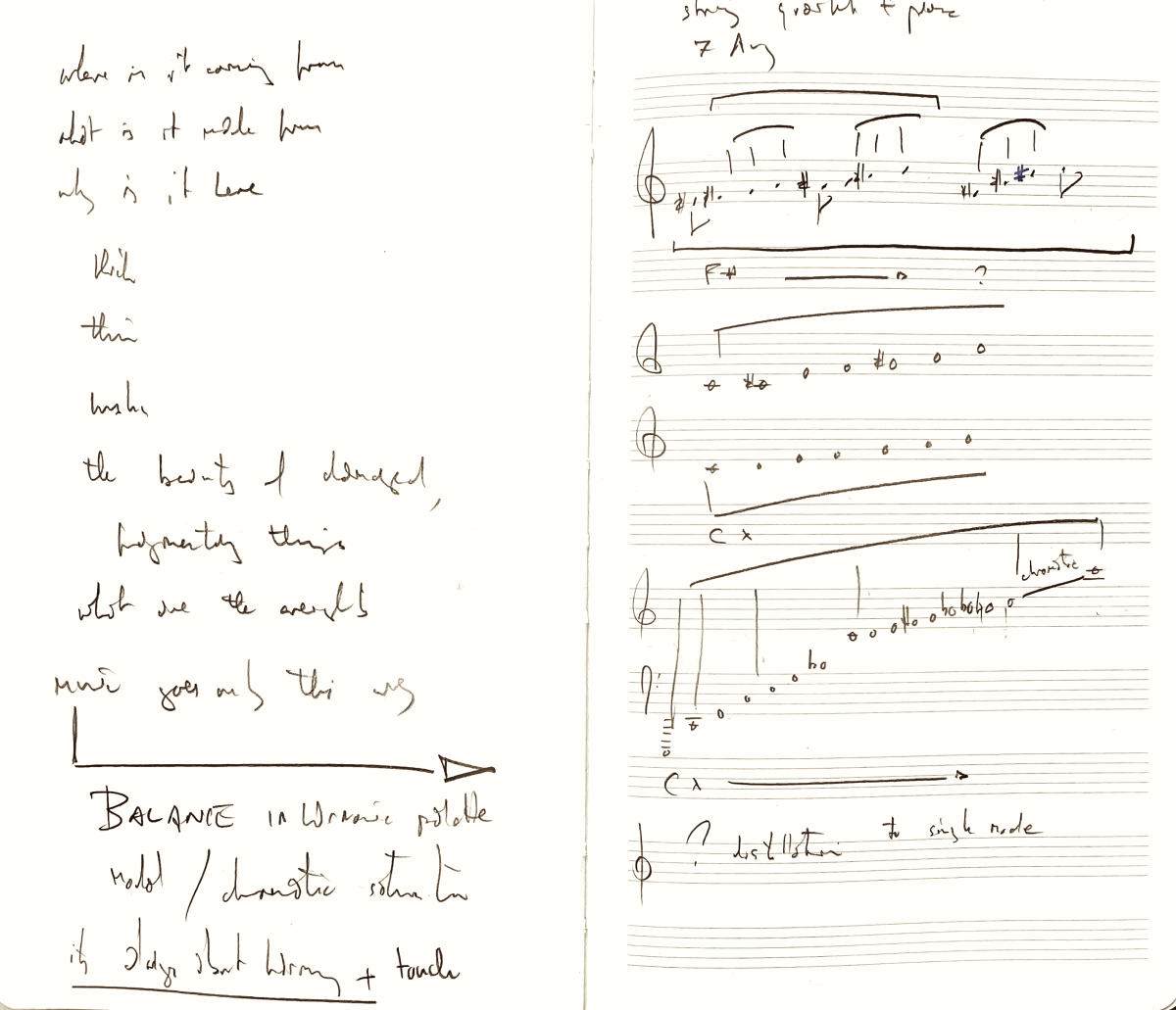
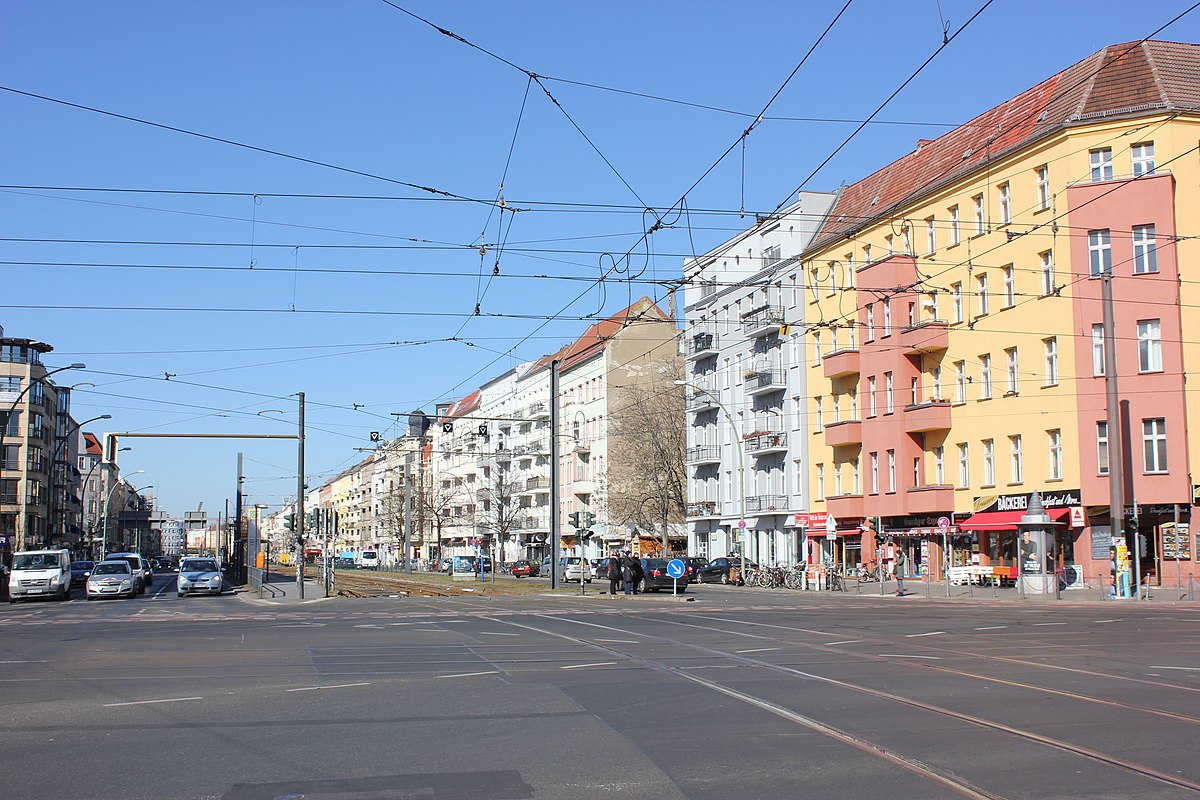
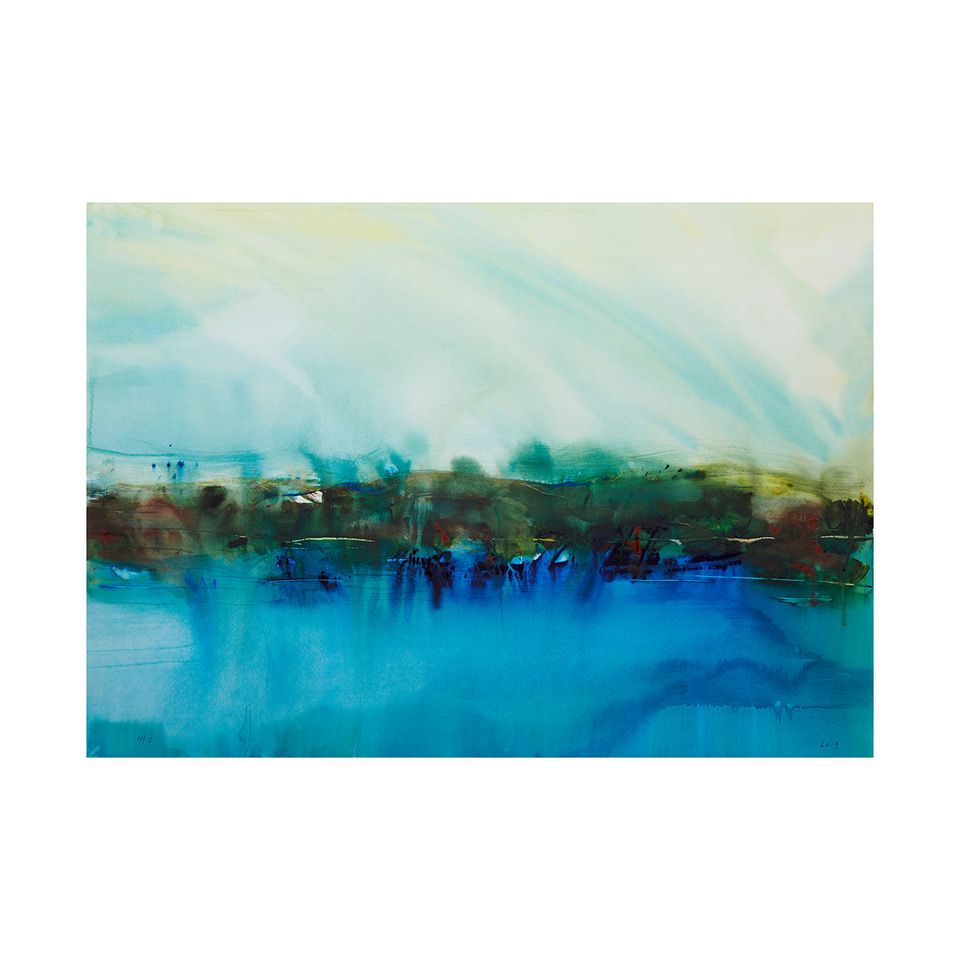
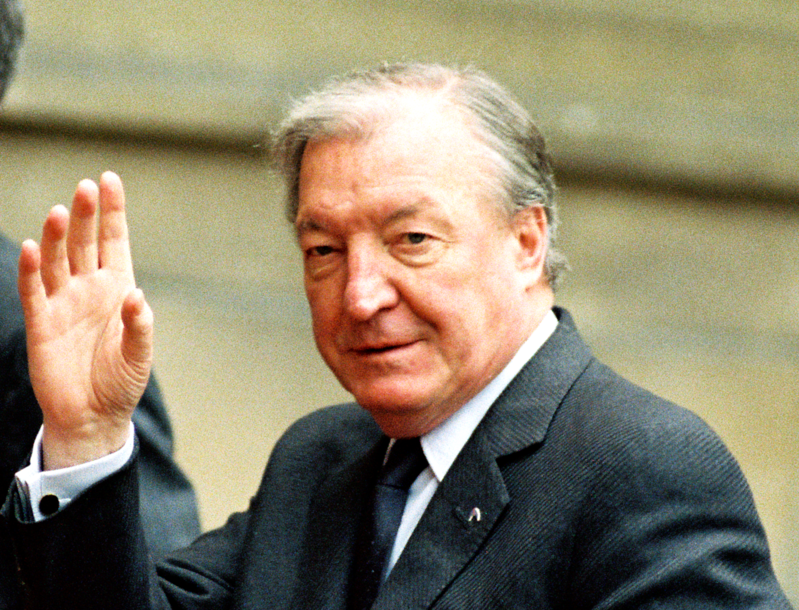
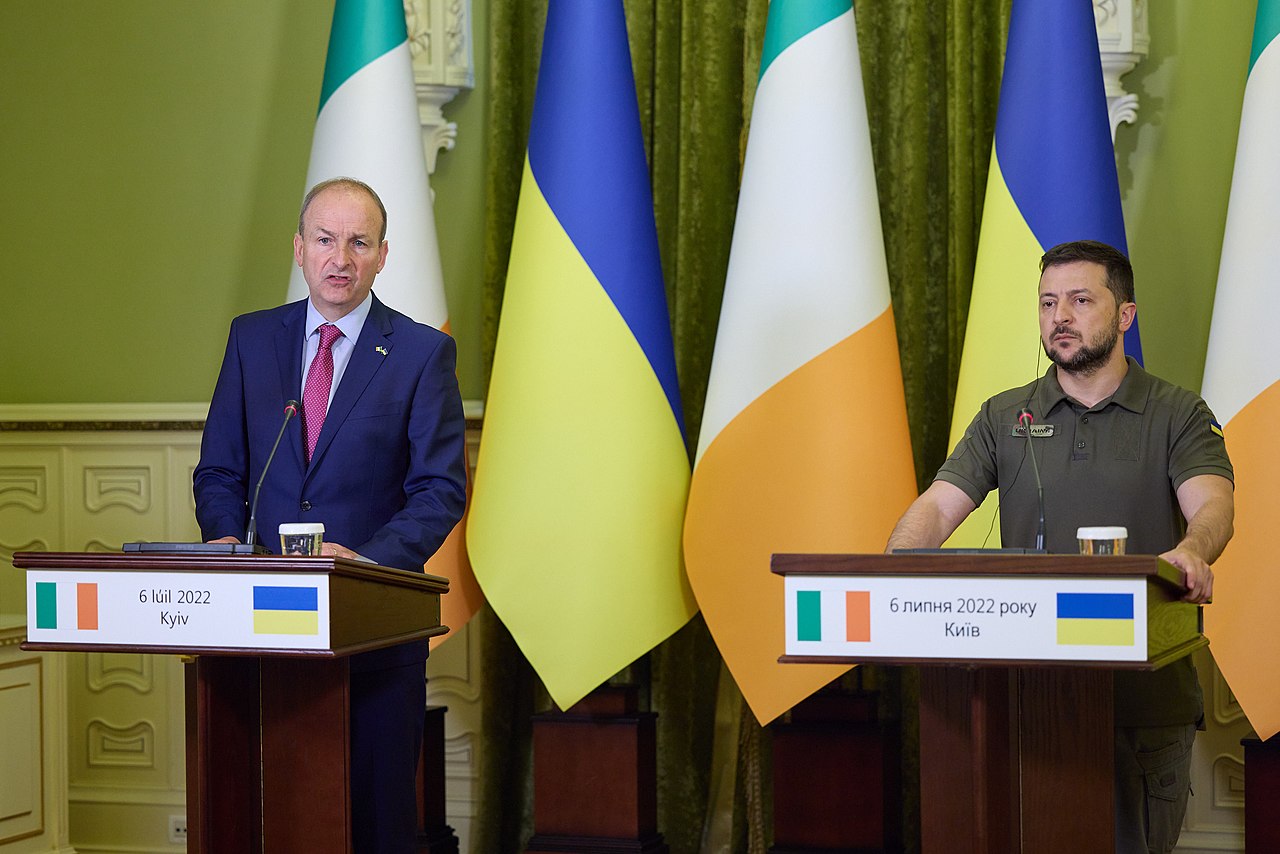
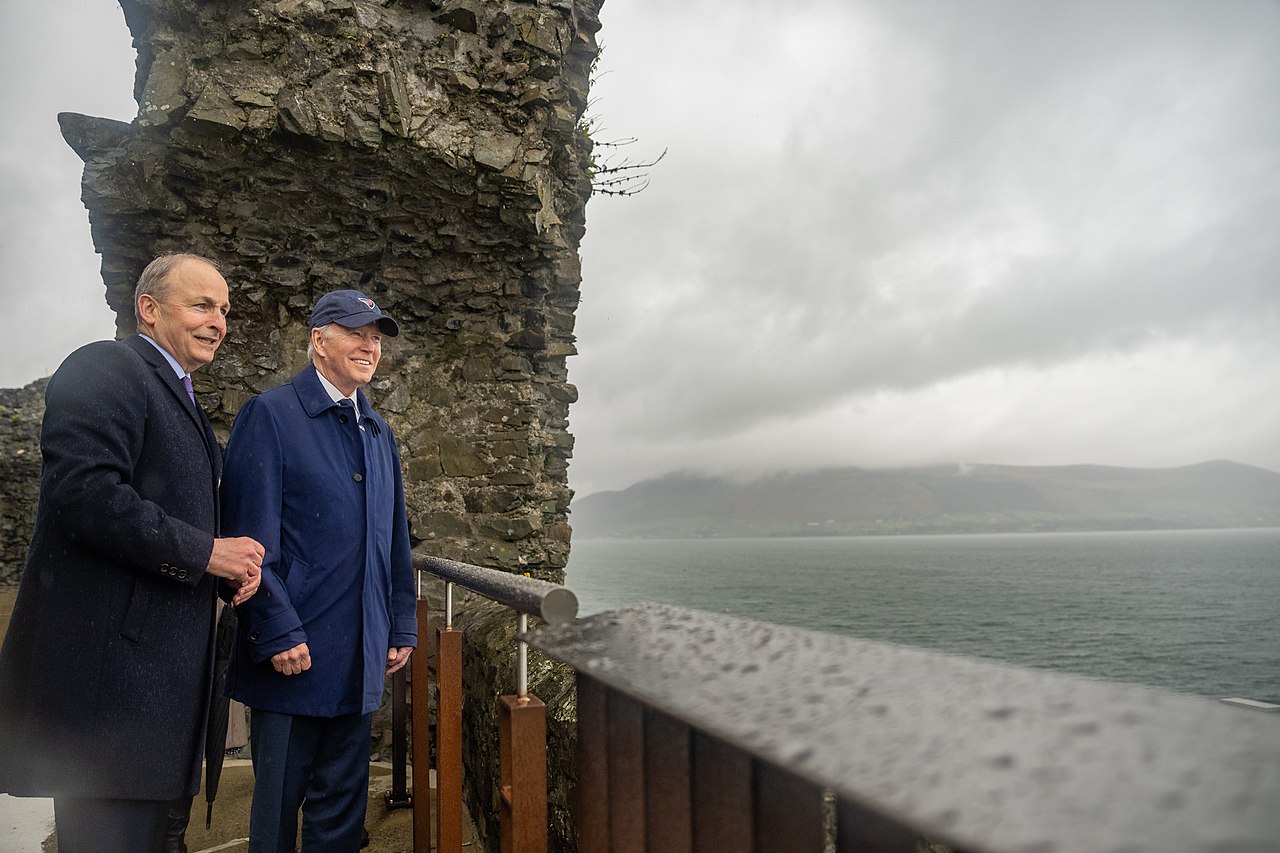
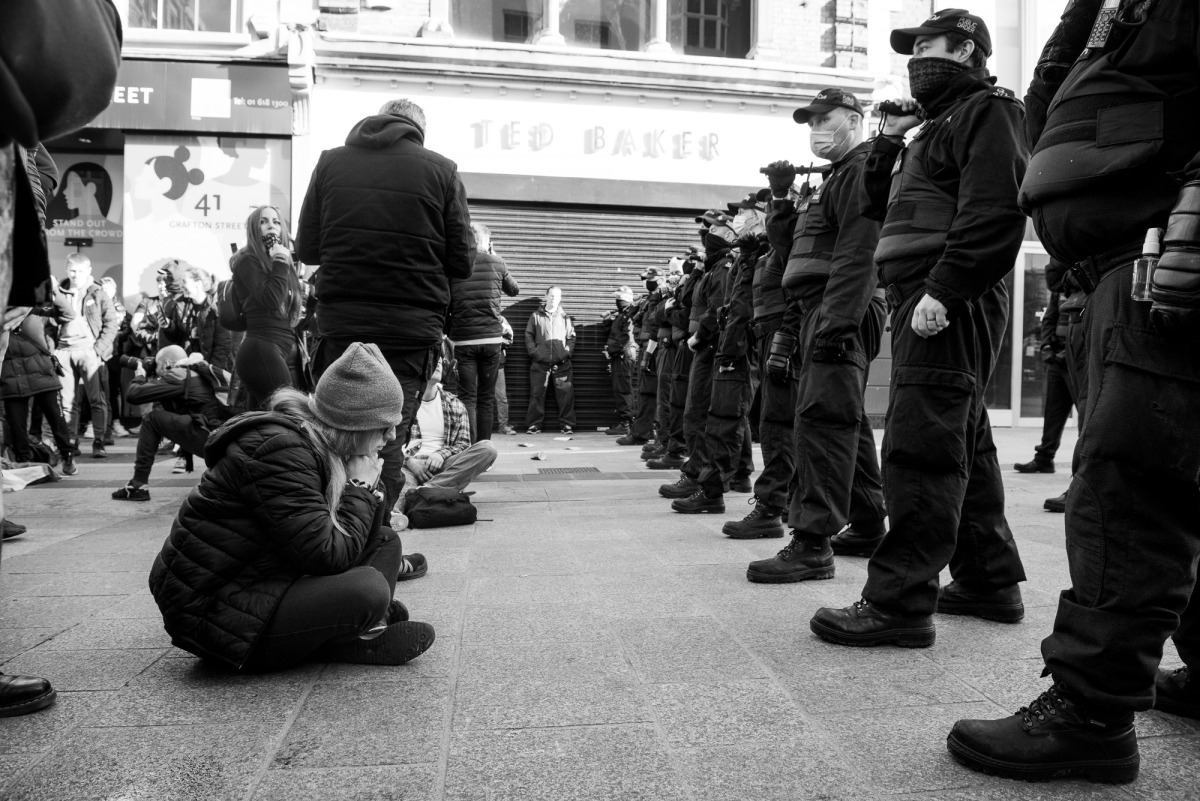
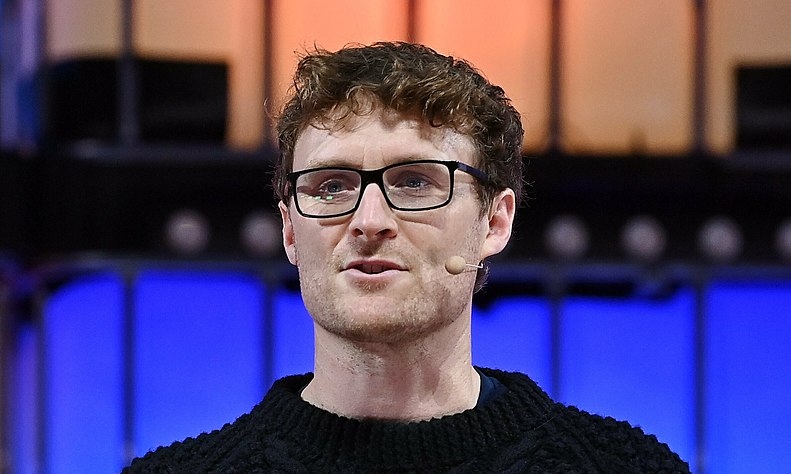
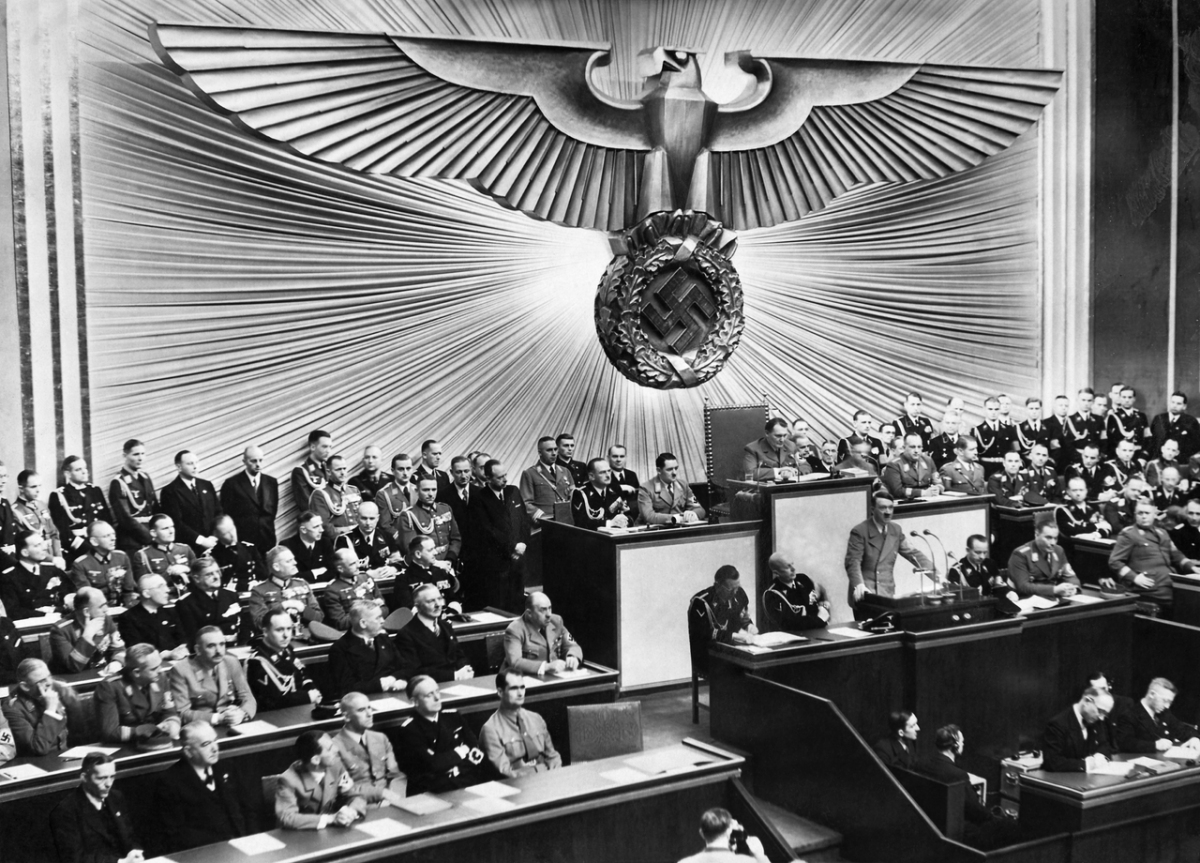
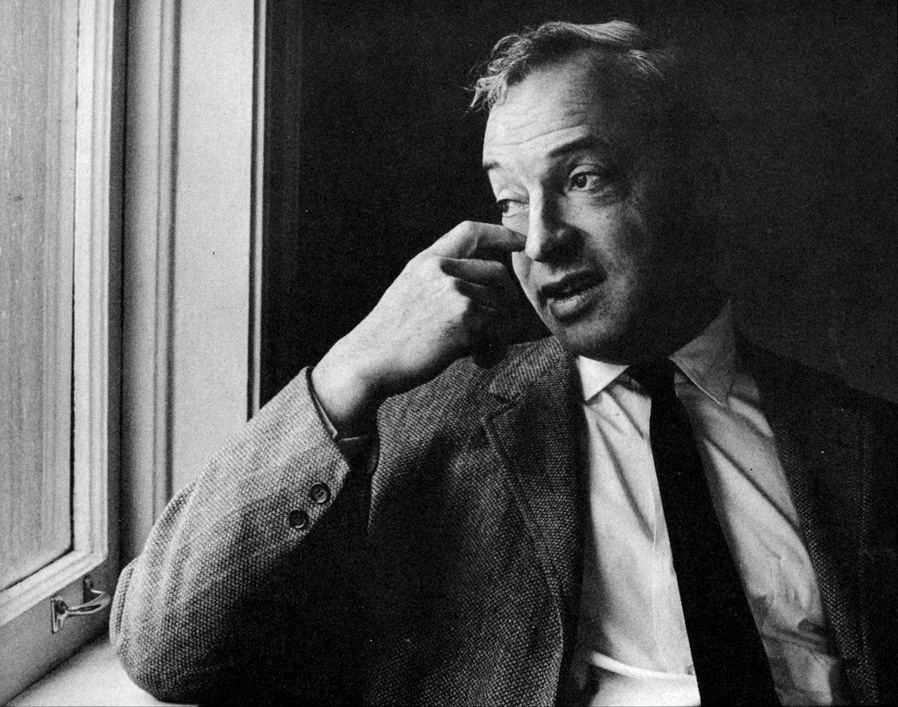
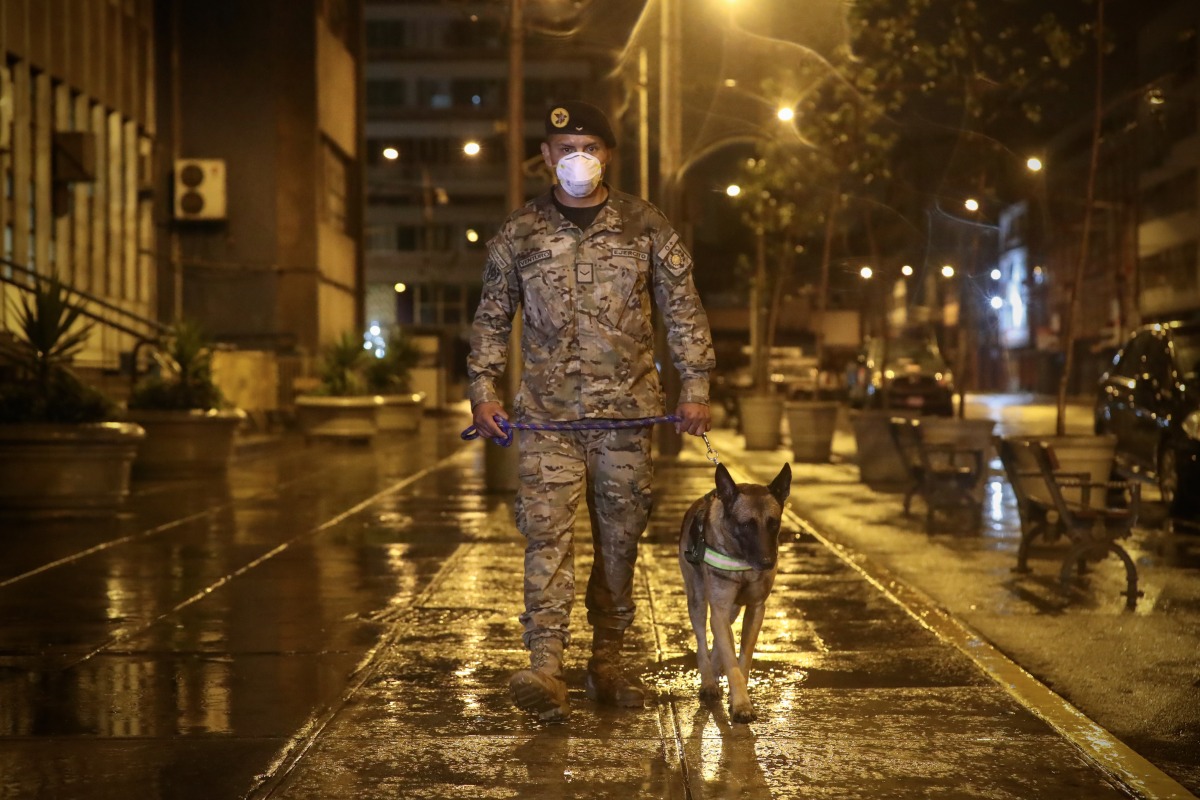
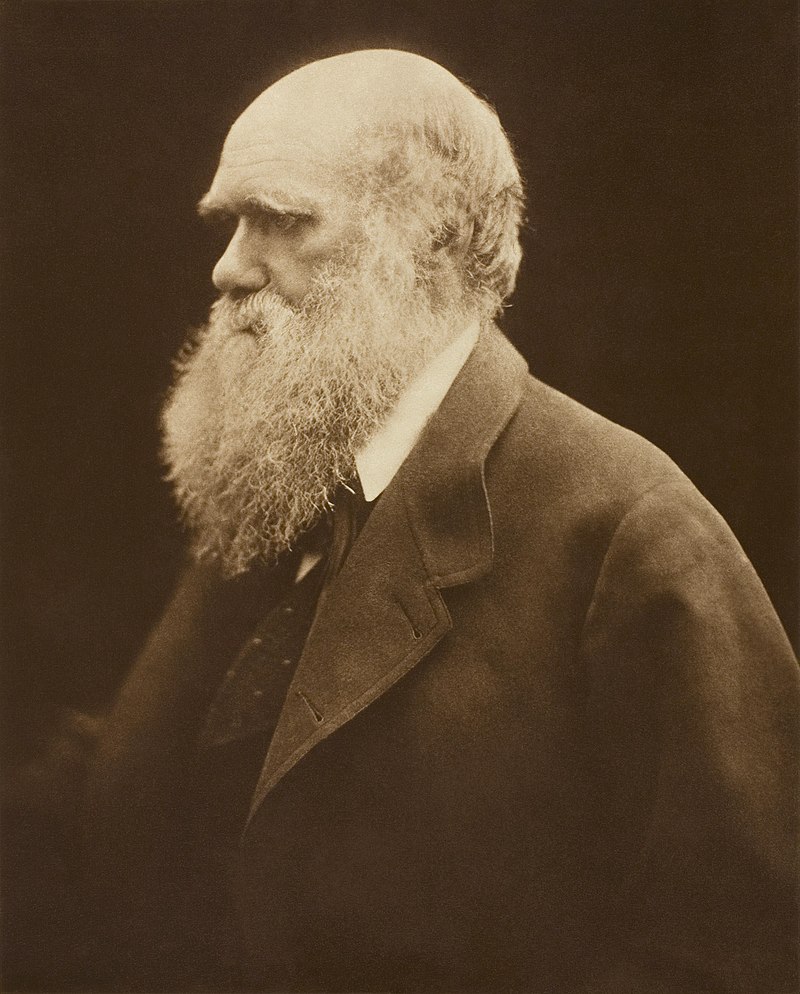

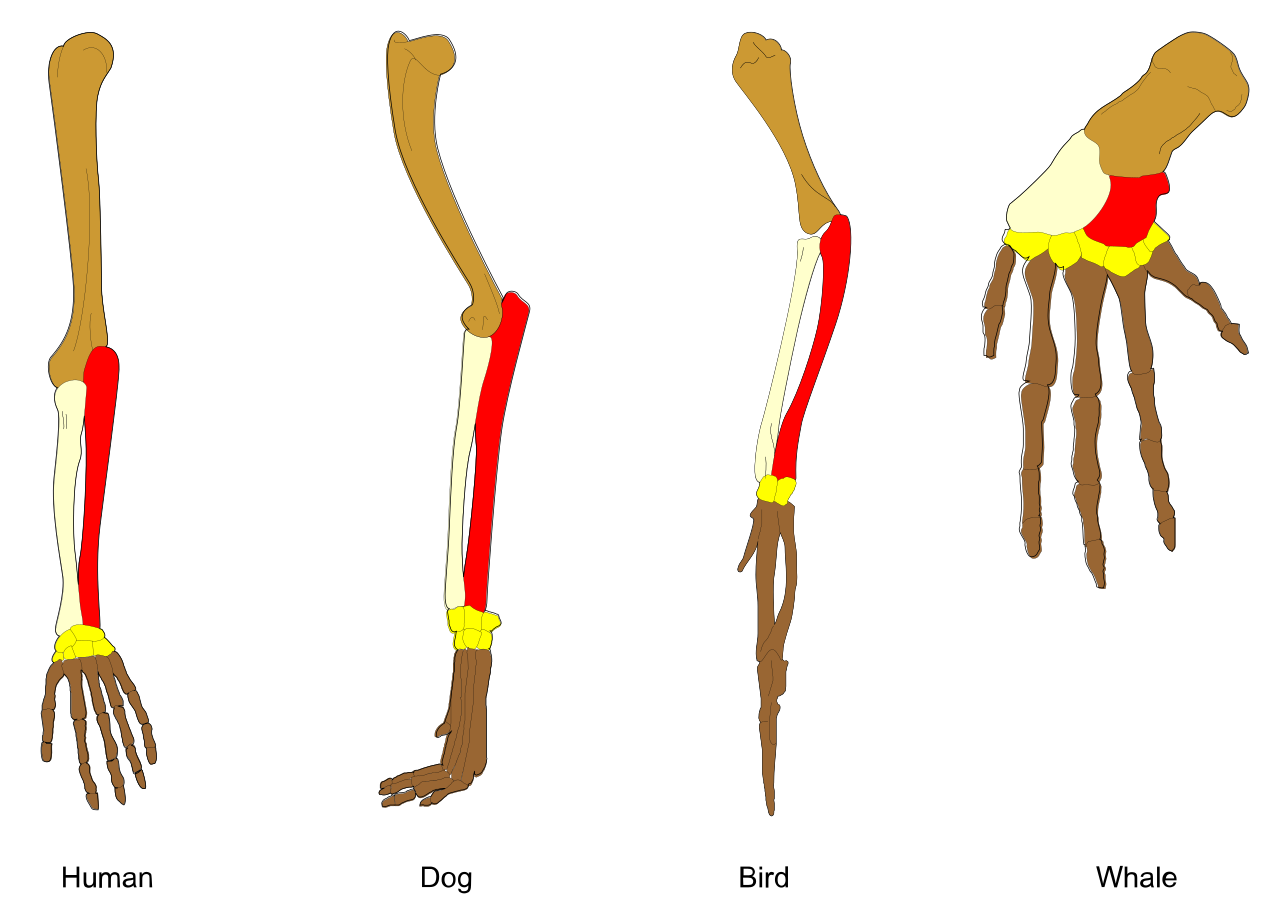 What is Evolution?