Blog

  • Eviction Ban: Towards an Unjust Society

    An earlier version of this article was recently published in the Irish World newspaper, we commend the courage of the editor Bernard Purcell for doing so, but a week is a long time in politics and we felt it required updating and a short addendum on the possibility of a legal challenge.

    Indirectly, the failure to deal with the issue of housing and homelessness has led to the rise of far-right protests, tar­geting immigrants in temporary accommodation. This is the slippery slope to fascism.

    Housing is the defining issue of this Irish generation. By extension, it is the defining issue of Ireland’s next general election.

    One slender thread of hope to ensure matters did not decline further was Ire­land’s temporary ban on evic­tions. But that has been re­scinded.

    In contrast, Scotland had the good sense to extend its own evic­tions ban until September. But in the midst of the worst housing shortage in the country’s history, the Irish government is prioritising the financial interests of land­lords.

    Ireland’s recently ap­pointed Attorney General Rossa Fanning SC had advised the Irish government that landlords’ groups could mount a constitutional chal­lenge to the extension of the ban. But the Irish government subsequently insisted its de­cision to revoke the evictions ban was a political one, rather than one based on the AG’s advice.

    Nevertheless, the Irish governments have frequently hidden behind the issue of constitutionality. It’s the first line of de­fence whenever the question of genuine rent control is pro­posed, and the last line of de­fence when the calls for the introduction of the eviction ban were first made.

    Constitutional Problem?

    We believe there is a constitu­tional solution to a suppos­edly intractable constitutional problem. The origin of the problem is that in Blake v Madigan (1982) The Rent Restrictions Act 1960, (1981) limited the amount of rent which could be charged on certain con­trolled dwellings.

    It also made it difficult for a landlord to recover posses­sion of a dwelling affected by the legislation. Landlords argued that the legislation amounted to an unjust attack on their property rights.

    The Irish Supreme Court agreed, referring to how the scheme operated in an arbitrary manner, with no means testing of either landlord or tenant, and that no compensation was available for the restriction of the prop­erty rights of the landlords af­fected.

    So, under the Constitu­tion, the right to property is to be protected against “un­just attack and the landlords’ rights unjustly attacked.”

    But constitutionally, this idea of an unjust attack is sub­ject to the proviso that the rights of landlords must give way to the common good – where the legislature is informed by Directive Principles of Social Policy set out in Article 45  – and also that the means used to intrude on property rights are proportionate.

    Social and Affordable Housing

    The social justice and common good arguments for maintaining an eviction ban are, in our view, overwhelming. But, of course, this would limit and restrict the property rights of landlords in an increasingly neolib­eral Ireland.

    Compulsory purchase schemes have, however, been upheld in such cases as Dreher [984], with the suggestion that sometimes there is no need to pay any compensation.

    In Re Article 26 and Part V of the Planning and Devel­opment Bill [2000] 2 IR321, Part V of the Bill aimed to provide affordable housing and social integration, imposing a con­dition that planning permis­sion for residential developments would either have to cede some of the de­velopment for affordable housing, or instead pay com­pensation.

    There was no require­ment that the State pay com­pensation to the developer under the scheme, which was upheld by the Supreme Court in a judgment which focused largely on the reasons for the restriction on property rights.

    The Court noted that the restriction on property rights was justified and proportion­ate to the objectives of the Bill.

    Based on this precedent, today the government could acquire properties at less than market rates, paying a measure of compensation to the landlords and thus avoid­ing the unappeal­ing vista of increased homelessness, leading to further social divisions further social divisions, and creating conditions for the rise of a far-right fas­cism, which may serve the interests of this neoliberal coalition, and its apolo­gists.

    It could also have a wel­come deflationary impact on the price of property which now exceed Celtic Tiger levels.

    Shared Equity

    Alas, it appears the Irish government does not want this and has pro­posed an alternative. They are currently drawing up leg­islation which in effect will extend their Shared Equity scheme to second hand homes where the land­lord wishes to sell but has a tenant in situ.

    The drive to introduce this Shared Equity scheme came from the two main property lobby groups – Property Industry Ireland and the Irish Institu­tional Property.

    Neither group came up with the idea itself. It is based on an English scheme which research by the London School of Eco­nomics (LSE) found pushed up London house prices by 9per cent.

    In effect, it operates as a dual mortgage, whereby the tenant in situ would have a mortgage to a bank and also be required to repay the State who would take an “equity stake” in the property.

    This is unlikely to work, or even be ready in time, for the forthcoming wave of Irish evictions. A simpler proposal is to follow the South African model of amending the Consti­tution to include an enforce­able right to housing in an emergency context.

    The Irish government’s promise of a housing referen­dum has foundered on a dis­agreement about the wording. We suspect that it will not implement what is needed for an immediately enforce­able emergency housing right, as is enforceable in other jurisdic­tions.

    A Just Society?

    We doubt the pre­sent government has the po­litical will for meaningful action on housing. But there is an al­ternative, which is to launch a constitutional challenge so the Supreme Court can recant on such ne­farious cases as O’Reilly v. Limerick Corporation [1989] in which Mr Justice Declan Costello (1926-2011) held that he lacked jurisdiction to compel the defendant to pro­vide the plaintiffs with ade­quately serviced halting sites, because this was a question of distributive justice.

    Such matters of social justice, he intimated, were for Leinster House, not the Four Courts. Importantly, he recanted the O’Reilly decision a few years later in the case of O’Brien v Wicklow UDC [1994].

    Costello (1926-2011), the son of former Taoiseach John A Costello, was a former Fine Gael TD, Attorney General, barrister and judge, who served as President of the Irish High Court from 1995to 1998.

    As a politician he was the author of Towards a Just Society, a policy document which shifted Fine Gael towards the left and social justice, and which made Fine Gael a more at­tractive coalition partner for the Irish Labour Party.

    Costello also created Ire­land’s Office of the Director of Public Prosecutions and the Law Reform Commis­sion, making him the most effective and consequential Irish Attorney General in the history of the State.

    He was a thoroughly de­cent man, and a visionary, but also a product of his background. Fine Gael has long since parted company with Costello’s vision of the Just Society for Ireland. Just like Fianna Fáil, it has been completely cap­tured by business interests, landlords and property de­velopers.

    Their politics is little more than the shadow cast upon society by big business, as the American philosopher John Dewey (1859-1952) might have said.

    The portents for a constitutional challenge in this period of an unprecedented housing emergency are not, however, all bad. In a fledgling way recent judgments have hinted at a more interventionist approach, in pro­portionate terms where there is recklessness or bad faith.

    Well, if throwing people out on the street, disrupting family units with no afford­able place to go, is not reck­less, what is?

    The very fabric of Irish society frays, as dust is left to gather on those copies of Just Society which remain shelved and unread in Fine Gael’s basement.

    The current crop of Fine Gael TDs have no interest in reading that document, but are happy to deploy it for public relations purposes when it suits them.

    Last week Sinn Féin forced a vote on the govern­ment’s lifting of the eviction ban, which led to one Green T.D.’s Nessa Hourigan breaking ranks and voting against the government.

    As the doomsday sce­nario for terrified tenants looms large, and the Irish government looks on with complete indifference to such pain, we are reminded of the word of a Christy Moore song- “the spirit that dwelt within, now sleeps out in the rain”.

    Addendum

    With the government’s rejection of last week’s motion from Sinn Féin to extend the eviction ban, and with the help of certain “independent” TDs, the same result is now likely to be reached today. The Labour Party’s no confidence motion has also fallen short.

    This government and its drive to break all homelessness records is bruised and battered, but not unbroken. In our view the last remaining hope for the thousands facing eviction rests upon the kind of last-minute legal challenge our initial article set out.

    Papers could potentially be lodged on Thursday seeking an interim injunction for violations by the government of Article 43, Article 40.3 and Article 45 of the constitution. This will require state-sponsored lawyers to show cause, and seek a return date for a fully-fledged interlocutory hearing with skeleton arguments and detailed consideration.

    The logic is that the implementation of the lifting of the eviction moratorium on Friday would not happen as mandatory relief and an injunction would be sought against the lifting. This would require careful judicial consideration, and thus time for cool judicial heads to resolve whether it could be secured.

    If a lawyer cannot be enabled to seek an interim injunction on such short notice any member of the public can do so.

    However, a powerful symbol would be the representatives of the opposition in Dáil Eireann coming together, in conjunction with some of those currently facing eviction, to try and avert the inevitable prospect of a humanitarian catastrophe on our streets in the months to come.

    A new Socialist Lawyers’ Association of Ireland announced its establishment in January of this year, so perhaps they might even want to lend a hand. There are also organisation likes CATU and other campaigning groups. But time is of the essence.

    Our conservative political classes seem to have either sleep-walked or deliberately created this unprecedented housing crisis and its dysfunctional property market. Sterile and detached cost benefit analysis where households are units and people products lead to the increasing dehumanisation of those impacted by policy decisions.

    Even the most basic rights we can think of like housing and a safe and secure upbringing seem to wither on the vine. To quote someone who Fine Gael should know well:

    We are not living in a just society. This fact must be understood, and complacency must be dispelled, and enthusiasm created to remedy the social injustices in our midst.”

    Those are the words of the late Declan Costello former Fine Gael TD, Attorney General and author of the “Just Society”. They seem to ring truer than ever.

    The time has come for a Housing challenge, for we the people.

    David Langwallner is an Irish Barrister based in London. Cillian Doyle is a political economist and policy advisor. The views expressed are their own.

    Feature Image: Daniele Idini
  • COVID-19: Shame on You

    A new book COVID-19 and Shame: Political Emotions and Public Health in the UK (Bloomsbury, 2023) co-authored by Fred Cooper, Luna Dolezal and Arthur Rose explores how the British government under Boris Johnson used shame as an instrument of coercive control during the pandemic.

    ‘Shame’, the authors contend, ‘is commonly understood to be a personal experience that arises when one feels judged by another or others (whether they are present, imagined or internalized) to have transgressed or broken a social rule or norm.’

    It appears to exert a particular force in Westminster politics where cries of “shame” or “shame on you” are regularly hurled across the floor of the House of Commons. An anthropologist might trace this to the public school upbringing of a significant proportion number of MPs – David Cameron recalls in his biography, ‘At bath time we had to line up naked in front of a row of Victorian metal baths and wait for the headmaster’ – or a proletarian habituation through spectator sport.

    The stigmatisation of apparently errant behaviour through shaming is not, however, unique to English (or British) culture.

    Over the course of the lockdown in the U.K. the authors argue that shaming became ‘an important component of the ‘collective suffering, exacerbating and complicating other negative experiences and emotions.’ Those that stepped out of line were dubbed ‘covidiots’, while people questioning canonical scientific accounts could be dismissed as a ‘conspiracy theorists’, belonging to the ‘tin-foil hat brigade’.

    Arguably, a drawback of the work is a tendency to assign primary responsibility to the bumbling and often insidious response of the British government, as opposed to a wider international consensus around COVID-19 within which that government’s face-saving policies emerged.

    The authors also seem reluctant to criticize a medical profession, which, they argue, were subjected to widespread shaming. Surely governments lionised ‘front line’ doctors, albeit for their own ends?

    Moreover, some doctors even participated in the shaming effort, agitating for stringent measures that often were not based on cost-benefit analyses, while demonising ‘granny-killing’ objectors.

    The book contains important insights into the lives of ordinary people, many of whom suffered in silence as a result of a British government strategy that often relied on ‘Second World War kitsch.’

    Social Media

    Gabor Maté describes neuromarketing as ‘a strategic invasion of human consciousness.’[i] The extent of the role of social media companies in generating fear and curbing dissent is only now being revealed. The authors draw attention to its enabling role:

    Pandemic shaming was enabled by the rapid formation and spread of virtual groups on Facebook and WhatsApp, created by physical neighbours to stay in touch and help each other out during lockdown.

    They recall that, ‘[a]lthough often started with the noblest of intentions, solidarity and shaming frequently inhabited the same virtual spaces.’

    ‘At times,’ they observe,the groups became mediums for ‘curtain twitching’, or the unspoken, unofficial surveillance or monitoring of one’s neighbours.’

    Thus, ‘So-called pandemic ‘transgressions’ … were  documented by ordinary citizens on these platforms and elsewhere, presumably looking out for themselves and other concerned members of their community.’

    It should also be noted that social media companies platformed so-called fact checkers that were responsible for disseminating misinformation that cast opposition to a dominant narrative as simultaneously absurd and sinister. A ‘Strawman Conspiracy Theorist’ was used to stifle reasonable scientific debate.

    ‘Covidiots’

    When historians get around to providing an account of the pandemic response – that increasingly seems like a bad dream – the cartoon villains of Johnson and Trump will surely figure prominently.

    Thus, the authors observe that when the term covidiot began trending on social media in early March, ‘there seemed to be only one covidiot for Anglophone Twitter, and that was Trump.’

    They say this ‘gave the earliest iterations of the term a political valency: it offered an insult that the otherwise powerless might use as a means to humiliate a powerful individual.’

    They argue:

    [this] relied upon a historical tendency to portray Trump as morally and intellectually deficient throughout his candidacy for, and eventual elevation to, the US presidency. Seen in this light, the neologism owed its first success to the ease with which it fitted into an existing paradigm, as a novel shorthand for describing an existing situation.

    Whatever came out of Trump’s mouth was consigned to covidiocy, even if he, occasionally, made sensible suggestions such as that the cure should not be worse than the disease. Profound antipathy towards Trump seems to have been exploited by lockdown evangelists, which caused profound damage, especially in developing countries such as India.

    The book provides harrowing accounts of ordinary people caught in the crossfire of what became a culture war. The authors point to poignant accounts of the effect on society from the Mass Observation project:

    I went out on Tuesday, with my son, to buy stamps. I sensed a slight hostility. People who would usually smile and let you through a door now avoid eye contact and stay their distance. The woman working in the Post Office was expressing her anger at people who had congregated on the beach the previous day. She hadn’t seen it herself, she said; but it was on Facebook (it must be true!) She said they were idiotic. It differed from her usual affable small-talk and it made me un-easy. I said we had been ourselves on Sunday and there was no-one around.

    Irish Experience

    In Ireland we witnessed similar shaming tactics. Thus, in the so-called ‘paper of record’ the Irish Times, a column from Dr Padraig Moran from November, 2020, arrived with the by-line: ‘Mindless rule-flouting behaviour is the real problem in the pandemic.’ Another article by Kathy Sheridan from 2020 referred to ‘maskless ignoramuses with Trumpian belief systems.’

    A grandmother was even jailed in Ireland for refusing to wear a mask in shops and restaurants.

    Unsurprisingly, we have seen no retractions or reassessments on the subject of those “maskless ignoramuses”, despite a Cochrane review stating that the ‘pooled results of RCTs did not show a clear reduction in respiratory viral infection with the use of medical/surgical masks.’

    The shaming reached a crescendo in Ireland with vaccine passes and the scapegoating of an unvaccinated minority by politicians and prominent journalists in late 2021.

    Gabor Maté provides a fitting description of the political class that exploited the virus for their own ends:

    The system works with cyclic elegance: a culture founded on mistaken beliefs regarding who and what we are creates conditions that frustrate basic needs, breeding a populace in pain, disconnected from itself, others and meaning. A select few – especially those with the sort of coping mechanisms that prime the to deny reality, block out empathy, fear and vulnerability, mute their own sense of right and wrong, and abjure looking at themselves too closely – will be elevated to power.[ii]

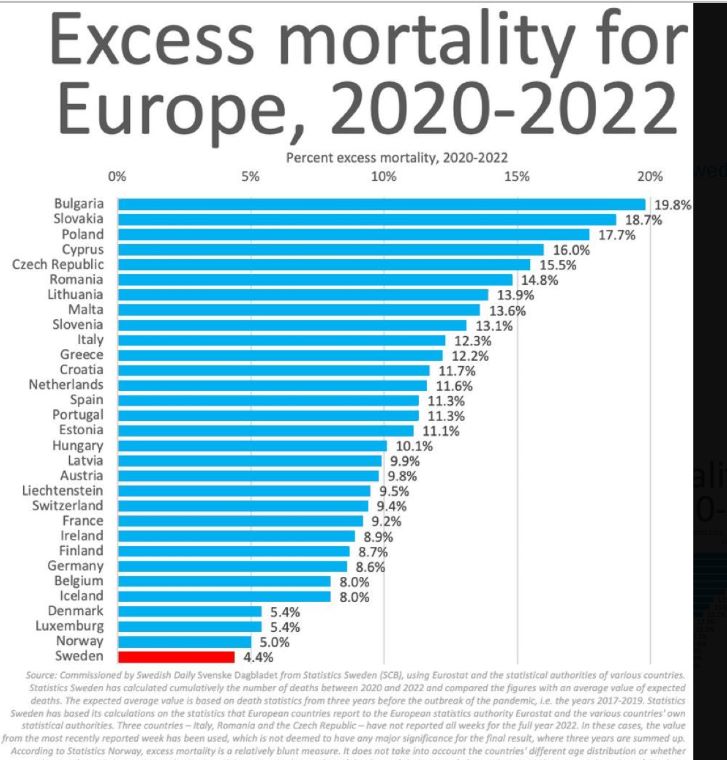
    Sadly, many among the medical profession were fully on board with this effort, disregarding the traumas caused by lockdowns, which seems to be contributing to the excess deaths we are witnessing in the wake of the pandemic. The fact that Sweden has experienced the lowest level of excess death in Europe over the period is widely ignored by those that condemned that country as a pariah state.

    This is perhaps unsurprisingly given Gabor Maté’s observation that, ‘[a]t present there remains powerful resistance to trauma awareness on the part of the medical profession’[iii]

    Given so much of what we saw during the pandemic in the U.K. and beyond was guided by the medical profession it seems, as Jon Jureidini and Leemon B. McHenry put it ‘a complete revolution in medicine is exactly what is required.’[iv]

    [i] Gabor Maté, The Myth of Normal: Trauma, Illness, & Healing in a Toxic Culture, New York, 2022, p.299

    [ii] Ibid, p.357

    [iii] Ibid, p.277

    [iv] Jon Jureidini and Leemon B. McHenry, The Illusion of Evidence-Based Medicine: Exposing the crisis of credibility in clinical research, Wakefield Press, South Australia, 2020, p.198.

    Feature Image: Village stocks in Bramhall, England, c. 1900.

  • Poem: Hope in Despair

    Hope in Despair

    I have always loved museums, no doubt having a kind of prophetic disposition I realised the somewhat terrible and prodigious potency that was entombed in their almost sterile yet  paradoxically life-affirming grace. Loss, chronic loss, is the ultimate domain of all humans.

    It seems to me that the problems here below on Earth have reached such an escalatory saturation point that we have been probing space, and for quite some time now, in an almost frantic bid to escape, but, as William Shatner recently said, and I merely paraphrase, space is just full of more cold, dark and hostile matter.

    The tremor of the tympany, the delicate frisson which all ten digits can bring, the storm of sounds trembling just as you are standing alone, right there on the brink…

    Slow read. Be not fraught with the weight and trouble of your servitude, but rather cherish the day and be more aware of it harbouring amplitude.

    Feature Image: The National Museum of Ireland – Natural History, Dublin, sometimes called the Dead Zoo.

  • The Cruel End Result of the Affair

    In the wake of Taoiseach Leo Varadkar’s extraordinary gaffe in Washington the day before Paddy’s Day, I‘ve been thinking about Monica Lewinsky, the intern he so crassly referred to in his ‘off the cuff’ remark.

    So who was Monica Lewinsky? What went on between herself and Bill Clinton, then the most powerful man in the world, and twenty-seven years her senior? And what were the outcomes for her. And for him.

    Back to when it all kicked off. She was a bright, freshly minted grad who jumped at the chance of an internship at the White House. She developed a ‘crush’ on Bill and soon the ever-opportunistic Mr. President was inviting her into the Oval Office for an increasingly intense sexual affair.

    Not only was the affair ‘reckless’ on his side, it took place as the Republican Party were gathering forces under a new, viscously partisan cabal made up of right-wing parliamentarians, partnered with a shadowy group of lawyers and key professionals known as ‘the Elves’, all desperate to bring this Democratic Love God down.

    This nasty lot had cosied up to a distraught young woman Bill had exposed himself to, and asked to, eh, kiss the mighty phallus.

    At the same time a years long, $70 million trawl conducted by Judge Kevin Starr into Bill and Hilary’s involvement in a land deal in Little Rock, had pretty much come to a dead end, when the circling sharks were handed live meat: forget the girl asked to kiss yer man’s pee pee, currently the President of the United States is shagging a twenty-two-year-old intern. In the White House.

    But, Monica Lewinsky was no longer in the White House. Her superiors, worried by this semi-blatant affair, had shunted her off to the Pentagon, where aged twenty-two, miserable, heartbroken and horribly confused – why wasn’t her powerful lover bringing her back to him? – she confided her woes in a tough older woman, named Linda Tripp.

    Tripp by name and Tripp by nature, the lovely Linda, surely spotting gold was to be made, began taping her conversations with the distraught young intern and doing the rounds of literary agents, and journos with dynamite tale in hand.

    It’s still blood chilling to hear this older woman advice a confused and clearly lovestruck Lewinsky to keep every gift the President has given her, make sure NOT to dry clean the blue dress with the President’s semen still on it, and not to worry, all will be well. All the while taping the conversations, leading the young woman deeper and deeper into a trap.

    Next, the judge who’d unsuccessfully spent millions trying to entrap the Clintons via a land deal in Little Rock, was tipped off by a helpful member of ‘The Elves’ as to what was going on.  Smelling blood in the water, he pounced. This could actually bring the President down.

    The sting took place one day in a shopping mall where Linda and Monica were to meet for coffee. Linda approached, flanked by FBI, and a terrified Monica was escorted to a pre-prepared upstairs hotel room where lawyers for Mr. Starr awaited.

    Monica, refused a lawyer, refused even a call to a lawyer, still unaware that all her conversations had been taped, and shared, was told she MUST co-operate fully and agree to wear a wiretap to entrap the President, and unnamed others. The alternative was years in jail. Jail perhaps also for her Mum and Dad?

    She was alone, terrified, mortified, suicidal.

    God love her, she refused to co-operate. She still loved Bill.

    Eventually, after hours of this travesty of justice, she was allowed phone her Mum.

    Her Mum, very sensibly, urged co-operation. Her Dad got a lawyer. Eventually she and her Mum were allowed creep off, battered and exhausted, to her Mum’s apartment where they holed up for months, the press camped outside their window.

    The big guns now turned their sights on the Pres.

    For months the American media, public, and Congress were convulsed  with fascinated horror as the details of the affair tumbled out.

    In thanks for her co-operation every snog, every orgasm, every breathless gush, pace Linda Tripp’s tapes, was made public. All detailed by Monica herself.

    The President eventually slithered free: ‘I did NOT have sex with that woman’.  Went on to finish his term, write a bestselling memoir, charge hundreds of thousands of dollars for speeches, and keep his marriage. Hilary her hair coiffed to within an inch of its life as the drama dragged on, standing by her man: ‘He was a hard dog to keep on the porch’. The hard dog grinning away, delighted with himself, doling out settlements for hundreds of thousands of dollars for women he’d sexually harassed to women he’d outright raped.

    Monica meantime was universally pilloried.

    She became a national joke. ‘A slut’. ‘A Bimbo’. ‘An over sexed blabbermouth who couldn’t keep her mouth shut’.

    Even solid gold feminists and lefties like Gloria Steinem and Michael Moore got stuck in.

    She was fair game.

    For years, in her own words, she ‘floundered’. She tried celebrity schlock. Handbag design. Dieting endorsements. But eventually removed herself from the public eye. She went to the London School of Economics and did a Masters in Social Psychology . She decided to take control of her story. She co-authored a book. She supported MeToo. ¸She did a Ted Talk. She became an ambassador for anti-bullying, helping ‘survivors of the shame game’. She openly criticised the ex-President who to this day likes to cast himself as the helpless boy and she ‘just a buffet and he couldn’t resist the desert’.

    It’s a tale Shakespearian in its breadth. And tragedy. But she is the one who has  emerged with flying colours. The President, and sadly his wife, once a proud feminist, and the cohort of savage Republican lawyers and parliamentarians, do not come out of this so well.  Oh no.

    So perhaps next time Leo goes off piste in one of his speeches he might do a little background reading first. Make certain who is the butt of his jokes, made only hours after cosying up to Mrs. Clinton.

    Fuck the Patriarchy. Let the Patriarchs starve.

    Feature Image: Clinton with Lewinsky in February 1997.

  • Leitrim’s Glass Half-Full

    In a recent article Frank Armstrong traces the historic decline in the population of Leitrim, triggered by the Famine of the mid-19th century. He notes that Leitrim County Council’s recent attempts to encourage people to buy and rehabilitate derelict cottages has been disappointing.

    This analysis is based on cogent statistical analysis. ESRI analysts have reached similar conclusions. As somebody who first became acquainted with Leitrim and the North-West of Ireland in the early 1980s – I went on to purchase a house through a non-profit housing organisation in the mid-1980s – I would have agreed with the glass-half-empty-pessimism.

    Decades later, however, as an inside-outsider with a physical stake in the county, I would argue that the historic decline has shifted and if only government and non-state actors can push the pull the right levers I am optimistic about the future.

    My childhood was spent in a Kildare village near the Curragh. After five years studying in Dublin I spent almost three-and-a-half years teaching English and promoting school agriculture in a remote boarding school in Zambia. After further book-learning I returned to a town school in Zambia and again promoted school food production in addition to my English language teaching duties.

    I grabbed an opportunity to leave the urban bubble of Dublin early in 1981 and took up a development education post based in Sligo. Much of my emphasis was on cultural education, using slides and attractive artifacts, touring schools and a few Irish Country Women’s groups in counties Sligo, Leitrim, Donegal and north Mayo.

    I spent six years until 1987 travelling around in a second-hand Renault van – the model then driven by An Post mail delivery personnel – organising hotel and community hall exhibitions in Sligo, Letterkenny and Ballina on development challenges in the Third World.

    Deserted Villages

    Enough about me. The visual and socio-emotional feel West of the Shannon was different from what I was accustomed to in Leinster.

    The rural hinterland, small villages and stagnating towns, had Third World characteristics, minus famine and ethnic wars. On crooked country boreens I came across ‘deserted villages’ with derelict schools and abandoned cottages.

    Oliver Goldsmith’s long poem The Deserted Village about Sweet Auburn came to mind. I thought parts of the North-West could figuratively be termed “a Sahel with rain”. Figurative language is colourful but has its limitations.

    At the same time, however, I saw positive attempts by blow-ins (incomers) from other parts of Ireland, the UK, Germany, the Netherlands, France – even a few from Italy – to restore dilapidated cottages with a few acres around them.

    Such in-comers had begun arrived in dribs and drabs from the 1970s. They cleared scrub and stones from small plots of land, brought in topsoil and grew unusual vegetables in things called polytunnels.

    Indigenous locals knew the “pollies” were different from friable glass houses that the gentry in Big Houses used in walled gardens. Sceptical locals also thought that reconditioning the soil for vegetable tunnels and trying to make ends meet by keeping she-goats for milk and cheese was a hopeless enterprise.

    They were right. Some in-comers worked their guts out, became ill in mind and body and returned to their urban societies.

    I tried to paint a broad picture of this, the North-West, the West and the South-West mostly, in a 2007 article published in a fringe pacifist magazine edited by a friend in Belfast. Read it see what you think. Link: Blow-in rural settlers made an impact in Ireland (innatenonviolence.org).

    Relative Affluence

    Relative affluence came to Leitrim and nearby counties when Ireland became awash with EU money and foreign direct investment, systematically enabled by the Industrial Development Authority (IDA).

    We were told that the housing boom of the 1990s until the financial meltdown of September 2008 filled the coffers of county councils and gave local employment. Polish and other immigrant workers aided the indigenous workforce. The intelligent Poles remitted money; some repatriated savings for business start-ups; a few married Irish locals – beneficial to both societies.

    I know of country folk who never caught sight of the money sloshing about in ‘the economy’ of the Celtic Tiger era. They lived frugally to the end of their days. Then dispersed relatives either left the ancestral cottage to rot or sold it off to divide the money.

    An originally German real estate agency, Schiller & Schiller, sold lots of derelict cottages in Leitrim and Sligo. Dublin-based Sherry FitzGerald did its business. Leitrim and Sligo agencies sold many places. Sites near towns and important roads sold well. Off-road properties in the back of beyond were left to dereliction.

    Urban statistical numbers crunchers don’t realize that North Leitrim (from Ballinamore to Kinlough and Kiltyclogher) differs in developmental growth from South Leitrim.

    The county town of Carrick-on-the-Shannon is ideally situated on the Shannon with its cabin cruiser tourism. The Sligo to Dublin railway line and the frequent bus services are an added boon. Dromod, Jamestown and Rooskey have also experienced increases in population along with opportunities in the food and hospitality sector. Rooskey alas witnessed recent hostility to an empty hotel being made ready for refugee and asylum seekers. There was mysterious arson, possibly with involvement by outside racists.

    Kurds

    Carrick-on-Shannon was the major hub of Leitrim’s housing boom. Before the bust government agencies leased new houses to settle Kurdish refugees from Iraq and nearby danger zones. Asylum seekers from Africa and elsewhere also arrived in the town. Some Kurdish families settled into a low income working class estate where I saw children happily running around with Irish peers.

    We may assume they went through the local schooling system and acquired local accents. In downtown Carrick a Kurdish shop selling foodstuffs of oriental and Middle Eastern provenance opened and did good business until Covid restrictions.

    Meanwhile asylum seekers, who later took out Irish nationality and became members of the New Irish, sought group cohesion through Sunday services with a London-linked African apostolic faith group, held in a hired hotel room. African Baptists and independents found fellowship with relevant communities around town. Catholics blended into schools and parish life – along with believing Polish residents.

    Drumshanbo, linked by canal to the nearby Shannon, is half an hour’s drive north of Carrick. It was the site for Lairds Jams factory. The factory is long closed, but during the recent past has been regenerated as an industrial park.

    Whiskey and gin distilling are among new enterprises. Gunpowder gin has become a famous export. Has it arrived in Hong Kong to take its place on supermarket shelves beside the local Gunpowder Tea I wonder?

    Drumshanbo is the only town that continues to stage an An Tostal (“Ireland at Home”) festival – now named after Councillor Joe Mooney who promoted it – which governments during the depressed years of 1953-54 encouraged to drum up (excuse the pun) flagging national morale.

    The town holds another festival featuring delightful temporary sculptures made from hay and silage bales. Drumshanbo is on the way up because it has a self-confident community spirit and entrepreneurs making deft use of government-assisted inducement grants.

    Image: Morgan Bolger

    Northern Stasis

    By contrast, North Leitrim has seemed to languish in a glass half-empty stasis. Manorhamilton is the main town. Its name derives from Hamilton’s Castle built during the period of the Cromwellian conquest. Originally it was known as Cluainín Ui Ruaric – O’Rourke’s Meadows.

    This Gaelic chieftain was executed at the Tower of London for failing to submit to the colonial authority of Elizabeth I. Manorhamilton became a run-down town especially after the privately owned The Sligo, Leitrim and Northern Counties Railway (SL&NCR) railway line that operated between Enniskillen and Sligo closed down in October 1957. This and containerization radically affected the cattle trade. Old family run shops closed. The main street today has numerous boarded up shops, while the old Central Hotel is no longer in operation.

    But in the wake of Covid, Manorhamilton is slowly clawing its way back. A few factories established with IDA grants have offered job opportunities.

    A number of strongly motivated entrepreneurs have sunk big bucks into developing off a side street what is called the W8 Centre. Modern buildings with a good restaurant on ground floor and self-catering apartments on the top floors have been designed to attract holiday makers from Dublin and beyond.

    Moreover, local history and heritage activists are pushing for Manorhamilton, with old buildings and historic political associations, to be declared a National Heritage Town.

    The town also has the Leitrim Sculpture Centre. A few people from Dublin and England who did ten-month sculpture courses – previously financed by FĀS – fell in love with the area and settled into renovated cottages.

    Today the Centre has residencies for emerging sculptors and they add to the lake and woodland landscape with site-appropriate sculpture trails. The Glens Centre caters for visual arts and drama in an old Methodist Church that was replaced due to a diminishing congregation by a smaller church nearby.

    One sporting innovation is the revival of handball, with encouragement and training of local girls and boys, using a reconditioned handball alley that fell into neglect a few decades ago.

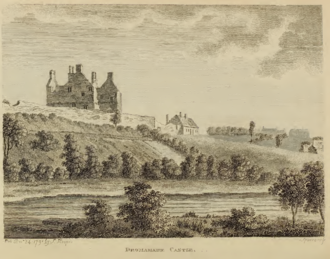
    Dromahair Castle, 1791.

    Dromahair

    The village of Dromahair, with close job links to nearby Sligo town, grew considerably during the housing boom. Sadly, one still sees some houses that weren’t completed before the 2008 bust that vacant.

    It seems the Council is powerless to do anything. Would a constitutional amendment to Article 15 on property rights give local authorities effective powers to sort out the empty property syndrome?

    Dromahair has benefited from the practical talents of several incomers. One German national who restored old cottages in the area set up a successful candle making enterprise. Read here my interview with him: Pete Kern – Craft candle maker – BeesWax Candles Ireland

    In 2017 Rosemary Kerrigan and some other local like-minded colleagues were pleased to dress up in period costume and witness the official opening opposite the old railway station of a 1.2km demonstration Greenway on the old line that connected the village with other places.

    The Big Dream, of Kerrigan and the small group who labored to create the demonstration is that state backing will soon enable governments in Dublin and Belfast to develop a cross-border Greenway for cyclists and walkers linking Sligo, Collooney, Ballintogher, Dromahair, Manorhamilton, Glenfarne, Blacklion, Belcoo and Enniskillen.

    This Greenway will invite domestic and foreign tourists to savour the scenic and cultural joys of Sligo, Leitrim, Cavan and Fermanagh. The demonstration stretch, bordered by trees and hedges protecting a SAC, has convinced British, Irish and EU dispensing inter-regional and peace funding to act. Monies have been voted and statutory consultations are taking place before work commences.

    Local Campaigns

    North Leitrim’s potential is thwarted by bureaucratic and material blockages. Decisions made and policies pursued by officialdom and companies have aroused suspicion and dismay.

    Protest groups have responded to some unwelcome phenomena. Take the decision to allow private companies to prospect for gold on Leitrim hills and along river concourses.

    Treasure Leitrim holds area meetings, distributes information brochures with maps and warns of what gold mining has done in other countries. Love Leitrim is an active anti-fracking campaign group.

    Another concern is about the visual and health impact of hillside electricity generation clusters.  Some windmillification has occurred, often by stealth, taking residents by surprise. Windmills emit a ‘white noise’ that campaigners say badly affects hearing and sleeping patterns.

    Yet another concern is about the tree planting policies of Coillte and its links with foreign investors. The curse of sitka spruce tree planting and short-term harvesting, leading to soil acidification, is decried.

    Ecological activists are happy that Coillte is steadily laying out forest trails for public recreation access in many localities, but say that indigenous tree species such as hazel, sycamore, alder, Scots pine, elm and so on, are under-appreciated. There is anger and distrust; government spokespersons and Coillte personnel argue with campaigning critics.

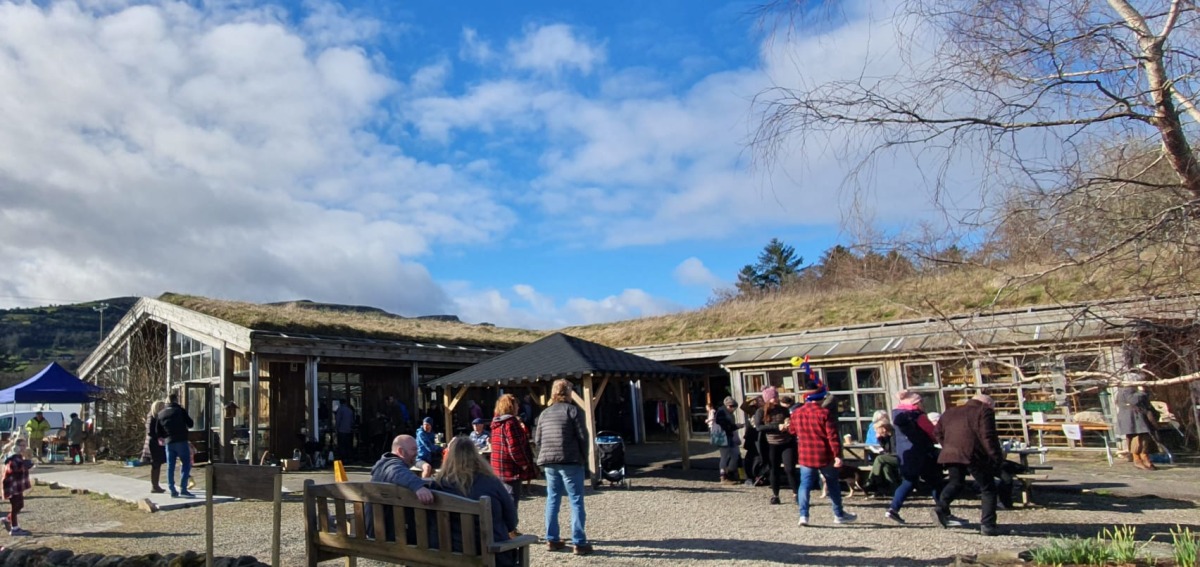
    The Organic Centre, Rossinver. Image: Morgan Bolger

    Organic Centre

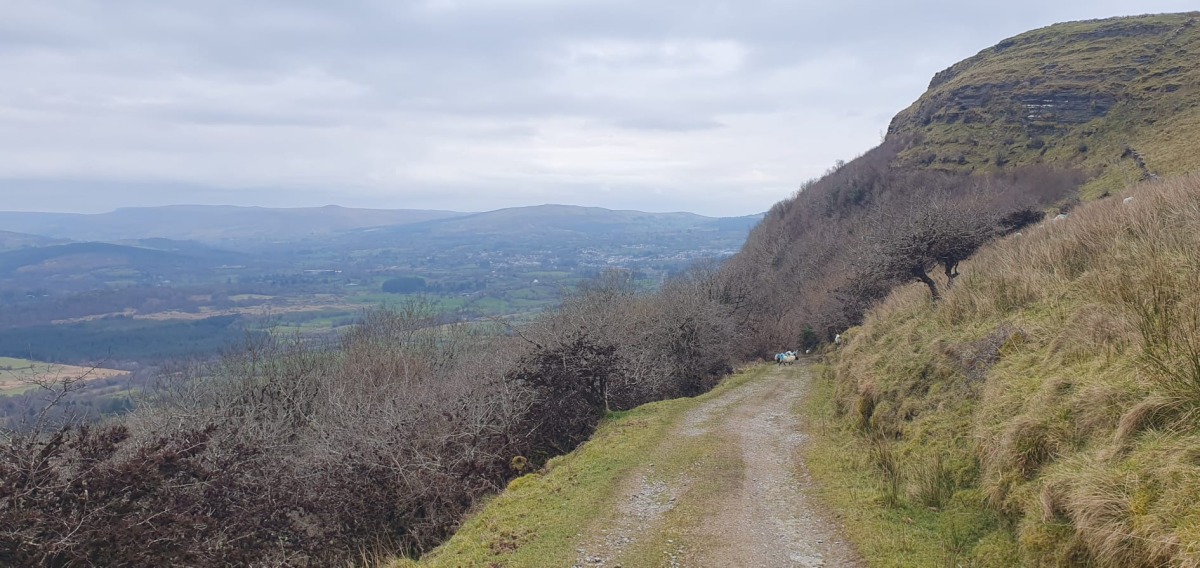
    Individuals from the UK and Leinster who settled in North Leitrim (and many other counties of course) from the 1970s onwards went on to establish the Organic Centre at Rossinver, adjacent to Lough Melvin and the border with Fermanagh.

    The Organic Centre is on ordinary land with outside and enclosed spaces – polytunnels and a catering and classroom building featuring a live grass all-weather roof.

    It is purposely family friendly with play corners for children. Despite the practical achievements of the Organic Centre and the organic farming of UK and continental settlers throughout the county, attempts by Green Party candidates to win votes in local and general elections have been in vain.

    Farmers are set in their ways and suspicious of Green Party influence. Fine Gael and Fianna Fail, the two largest parties historically, and increasingly Sinn Fein attract most support, while a few strong independents win Council seats.

    What does Leitrim need? People need to branch out into new farming methods and recommence growing fruit and vegetables (as in the old days) while continuing to reduce livestock numbers and thereby reduce emissions.

    People need to see that similar challenges also face adjoining counties – West Cavan, Roscommon, Mayo and Donegal for example.

    In his pioneering work, Small is Beautiful: economics as if people mattered (1973) the eco-economist E. F. Schumacher developed the slogan Think Global and Act Local. For Leitrim today it might be adapted to Think Regional and Act Local.

    Slogans are catchy but are no substitute for reversal of unwanted policies. Parochial thinking is prevalent among elected representatives. Many promise to drain the flood rivers, to fix the roads or to save the rural post offices. Tá said ag snamh in agaidh easa with some promises. Vain promises should never be made and only keep the glass half empty.

    Feature Image: Morgan Bolger

  • Poetry: Marc Di Saverio

    SONNET XIV
    for Diane Windsor

    When I was still the husband of the wind —
    when I was Leopardi-sure I’d never
    know a woman’s body’s ways — when I
    was nineteen – when I was Prufrock-positive
    of mermaids never singing to me, either,
    of a life without betrothal or progeny –
                when I was one of the hideously-bodied —
                When I was still the husband of the wind,
                I would dream, like Pygmalion, of my donna perfetta,
                One whose soul was as beauteous as her body,
                One whose nature was sublime but unlikely,
                and I would dream that she would come to life,
                that she would meet me at the brow, and love me, and now,
                beside you, awake while you sleep, I see: she is you.


    FRAGMENT FOR A HEAVEN-FARER

    for Diane Windsor

    According to that Acolyte who some say saw the Second Coming —
               no greater love can a man have than this —
              than to lay down his life for his friend;
    According to that Acolyte who some say saw the Gallops of Glory —
    no greater love can a man have than mine –
    I’m warming outside James Street store-fronts where once
                        our sea-sky-lips would,
    stunning passers-by, horizon their romance-less eyes with
                                          each of our own perfect kisses;
    I’m slumming throughout air-stung hoar-frosts where once
                         our sea-sky lids would,
    shunning passers-by, thunderclap their romance-less hearts with
                                           each of our own perfect visions –
    Yet, take thought: the adversary’s maximum extensions are harpoons
                                      he swears are darts of amities knee-
                        jerkingly flung automatically as beams toward their
                                      midnight moons, or smiles of mothers
        whose conditionless love so helplessly blooms in the faces
                of red-eyed teens all synch-ly slouching at their court-hearing.
    I surmise The Devil has not heard, and I hope, Diane, you’ll finally know:
                         calm can only come by the one called
                         that violet-eye-light-beaming Jesus Christ –
             and, that, Lucifer, like a late autumn wasp with stinging wings
                            frosting in the twilight, KNOWS his death is near,
        so he quavers in fright, privately, yet, publicly,  like he does now,
    jabs a maximum of souls, which he considers his birthright;
    And, take thought: I often wonder if you,
    yes, Job-long-suffering you, weeping-willow-boughs
    -amid-the-winter-wind-unassuming you, ever
               owned the value to wonder: Might I be one to write as
    fast as the Almighty
    speaks, might I be the Stenographer of the Lord, never even needing
    any breaks (O Lucifer,  YOU believe
                                       that you will beat her hand at any sort
               of duel? Her hand is guided by the hand of God! O Lucifer,
                              she is ready!) So, Di, when you face him, Eastwood-easy,
                                                                DRAW!;
    And, take thought: the force that drives my spirit drives your own,
    yet the spirit of Satan dives
    like Iscariot dove from the rope-ripped-bough throughout the Hour
                                                               Of Shadows.  Remember,
    Satan, regardless of his wishes, despite being SMALL g god of this
    world, is merely the prop-foil-prelude
    secondary of so many myriad dualities created by
    The Trinity, his eventual Bermuda Triangle, until whose disappearance,
                                         is the mere adversary, the saw-weight
                         of the see-saw, the one alone the Lord esteems enough
             to consider the clearest, but maybe not His most fearsome opponent,
                                                    who has darkness both behind and before
         him! So how, Diane, is he even a Light-Bearer,
                                 since, wherefrom comes his light? He KNOWS
                             he is finite – he worships the finite, so how can he be
          bright — especially in the face of your light, woman-of-my-dreams-
                             and-of-the-the-dreams-within-my-dreams?


    SONNET XIII
    For Diane Windsor

    Even the time I spend apart from you
    is yours. Even scarcely tenable
    quavers of your smiles are seen to the
    whole world inside my electric soul,
    even the memory of your voice’s lower-
    most echo, blasts away any noises, accompan-
    ies me through the loneliest, hollow silences.
    Even your Galatean shadow is bodied – and souled —
    in my heart. Even the time I spend apart
    from you is yours.  Even others with
    your name, are more forgivable
    to me. Even Angels of the Light
    discuss us, I believe. Even
    awake beside you sleeping, I cannot dream.


    A SONNET ON EPHESIANS 5:25
    for Diane Windsor

    And how you modern readers wonder why I call her thee?
    It is because you’ve never seen or known her apogee.

    And at the crucifixion-slow-mo-mentioning
    of me and you, the lovers of future Valentine’s
    Days will wonder, Romeo and who? No greater
    love can a man have than this: than to lay down his life for his friend;
    No greater love can a man have than mine; for you I laid
    down my life, and for you I’d lay it again – able by
    the aegis of the Lord, without whom I would be gone…
               If I did not, if I do not, if I
               would not so strive to love you just as Jesus
               loves His Bride, I’d flee from thee as the Devil
               fled the moment after he thirdly sought
               to tempt I AM; Calvary’s my only
               guide to loving thee, so my heart beats
               Di-ane, Di-ane, Di-ane, Di-ane, Di-ane.

  • Greece: An Accident Waiting to Happen

    Public anger has erupted over a lack of political accountability in the wake of the tragic train crash near the city of Larissa in Greece.

    On Wednesday, March 8, after a general strike had been proclaimed for that day, a massive crowd gathered in the centre of Athens. Avenues connecting Syntagma Square, right outside the Parliament, all the way to Omonoia Square (the second central square of Athens) were packed with people.

    It was unquestionably the largest demonstration in over a decade, with an estimated crowd of up to one hundred thousand. Public anger had reached a tipping point, and it took only a spark for an extended, severe riot to break out.

    The protest was in response to the tragic train crash, which happened the previous Tuesday night, February 28. The exact number of casualties is yet to be determined. Fifty-seven have been pronounced dead so far, with many more injured. Wednesday’s demonstration wasn’t the first of its kind, but rather the culmination of protests all over Greece since the previous Wednesday, March 1.

    At first glance at the news, a foreign reader might be puzzled by why a tragedy of this sort would be politicized to such an extent, but to the majority of the Greek public this wasn’t just a horrific misfortunate. It was, as the graffiti reads in Greece these days, “A Crime of the State”.

    The events of February 28, definitely involve human error. A passenger train ended up in the same track as a cargo carrier coming from the opposite direction. For twelve whole minutes the two trains were speeding towards each other at 166km/h, eventually crashing in a nightmarish head on collision, at Tempi, just outside the city of Larissa.

    Video Links

    https://www.facebook.com/KouletsiouNikol/videos/2234748540038197

    https://www.facebook.com/lazos.papazisis.5/videos/1359454877954621

    The fifty-nine-year-old station master of Larissa has since been arrested and charged with multiple counts of manslaughter, and disruption to public transport security.

    His lawyer made the following statement on Thursday, March 2, hinting clearly at the broad scope of responsibility for the disaster: “The accused is literally devastated (…) He has assumed the share of responsibility that is proportionate to him, within the frame of responsibility that he should have and he does, but beyond that, we should not focus on the tree when there is a whole forest behind it.”

    On the same day, the rail workers held a strike, blaming all governments and especially the current one of Nea Dimokratia, for criminal neglect that led to the tragic events. Union representatives have been appearing on national television, exclaiming that they have warned about such dangers repeatedly, protesting against poor working conditions, chronic under-staffing and a failure to implement basic infrastructure upgrades.

    However, whenever they have attempted to strike over this in the last few years, these were deemed illegal, based on new legislation introduced by Nea Dimokratia Minister Kostas Hatzidakis.

    Public debate in Greece has also focused on the damage to the railroad system caused by privatization, which was always championed by the current right-wing government, but was in fact signed into law by the previous left-wing SYRIZA government.

    The leader of MERA 25 (another left-wing party in Parliament) and former finance minister Yanis Varoufakis tweeted on Wednesday, March 1: “Now is the moment to grieve and to look after the injured and the victims’ families. But soon we shall bring to Greece’s parliament the underlying issue: yet another tragedy caused by a hideous railway privatization. Paddington 1999, Larissa 2023.”

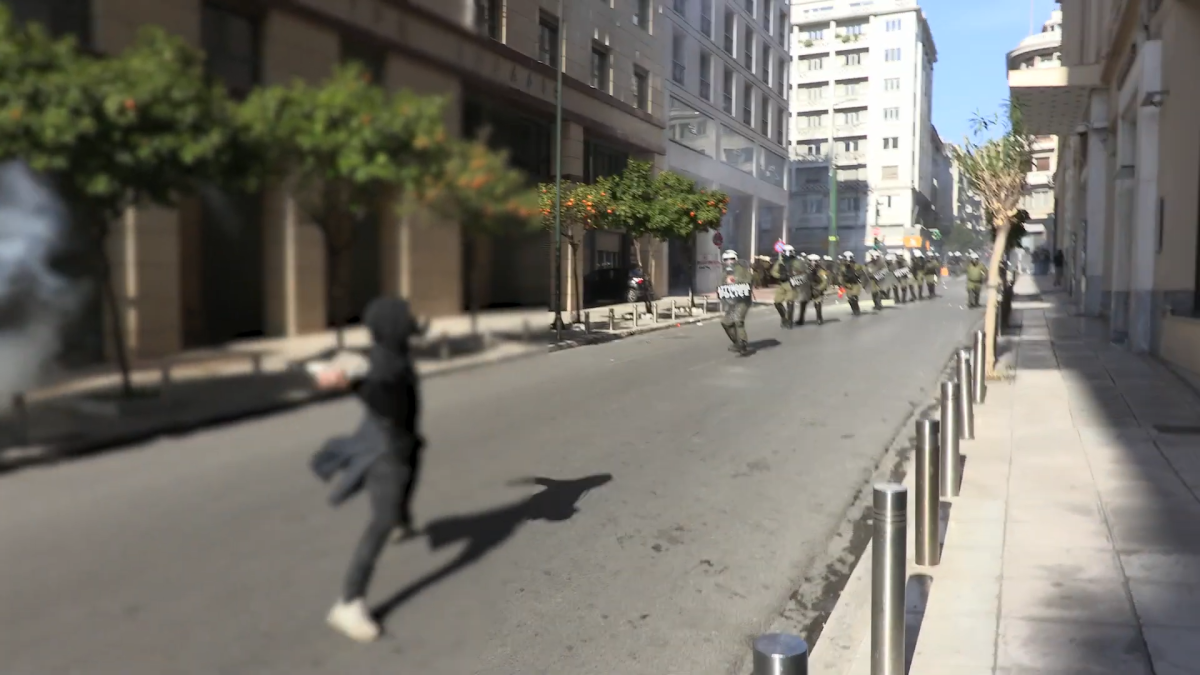
    Already on that same day, protests had started, with violent clashes erupting in Athens between riot police and protesters.

    The Government followed a tactic of heavily policing every relevant gathering, even in situations where people were grieving peacefully. The sadly predictable Greek standard of police brutality ensued, further fueling the public’s anger.

    More demonstrations were held on Thursday and Friday. There was a call out to more than twenty cities across Greece, with heavy clashes erupting again in Athens and Thessaloniki.

    The situation kept escalating and on Sunday, March 5, a thirty-thousand-strong-crowd gathered in Syntagma Square and went on to march through the centre of Athens. Once again, violent riots broke out and spread throughout the city centre.

    Another aspect of the tragedy, which has stoked public anger, has been the mainstream media coverage, which in many cases has been simply to parrot all the talking points of the Nea Dimokratia government about the crash.

    The media situation in Greece is exceptionally dire under the current administration, which has consolidated an unprecedented amount of control over it, which is only broken by social media, as has been explained in a previous article.

    In the aftermath of the train crash we have seen one of the most blatant manifestations of such corrupt journalism. But in this case it seems the public is not buying it, to a greater extent than ever before.

    A video from a popular YouTube channel, mocking several well-known TV journalists for their coverage of the disaster, has gone viral, trending #1 for several days as it received over six hundred thousand views in less than two days. A huge figure bearing in mind Greece’s population is ten million.

    The communication strategy of the government and its client media in terms of damage limitation, has been primarily to scapegoat the Larissa station master and secondarily – when the first approach fails – to make the case that this is a chronic problem, and not the responsibility of the current government. But the information that has been coming to light is damning to this narrative.

    According to multiple testimonies of people who are or had been working in the railway in various positions there was a significant drop in security precautions – which were already incomplete and defective – since Nea Dimokratia took office.

    Staff numbers have been cut, resulting in there being just one station master working the shift instead of two. Also, there were monitoring systems in operation until the summer of 2019, when Nea Dimokratia came to power.

    Finally, even the communication tactic of pushing all the blame onto the station master has backfired, as it was proven he was recently hired and put in his position despite lacking qualifications, in a typical Greek manner of “rousfeti”, which refers to politicians doing favors to win over influential constituents.

    The Minister of Transportation, Achileas Karamanlis, a member of one of the three  major political “clans” of Greece, was forced to resign. His resignation however, seems blatantly tokenistic, as he is still included in the Nea Dimokratia ballots to be reelected MP in the forthcoming election.

    Reflecting particularly badly on him is a video of his speech before Parliament, which surfaced a few days after the tragic events. Just one week before the accident, Karamanlis is heard castigating members of the opposition for even implying that there could be a problem with safety in the railway system.

    The Nea Dimokratia government has shifted its communication strategy and primary narrative a few times already, in an effort to adapt it to the public’s negative reception. But this in itself has undermined their credibility, creating an impression that they are solely focusing on a communication strategy, relying on shills within the mainstream media.

    The situation is still unfolding as the street protests have not finished. There is another general strike proclaimed for Thursday, March 16 and that will be the point when it can be determined whether we are looking at a seismic popular revolt or a de-escalation.

    Whatever the outcome, the Mitsotakis government has suffered a severe blow to their image at the worst possible moment. They are now likely to try and push out the date of the elections as far as May. This is the latest date permitted, but it’s unlikely to leave sufficient time for this affair to blow over.

  • Musician of the Month: Magdalena Jacob

    My musical journey started with a lot of Church organ and Bohemian brass music in a tiny village in Bavaria –  and when I say village I really mean it.

    At the age of five I developed a desperate desire to learn the guitar, because my mum had one (for her kindergarten group and she knew about four chords). At the age of five I wanted to be exactly like my mum, a genius.

    After three years I hated the guitar because after too many odd versions of Beatles covers I was just really bored and annoyed. I quit because, in the mean time, I desperately wanted to learn a random brass instrument, which I never actually managed to do.

    This tiny village where I grew up in had an unwritten rule that every kid had to learn a brass instrument to later play in the local youth brass band, in order to be part of the game. I learned the guitar and later the bass, because my dad was desperately looking for a bass player for his church band, so I was rather out of the game (and it’s nice to be able to blame the string instruments for it instead of myself).

    As a child I didn’t really think about becoming a musician. I didn’t think it was a real job anyway. I wanted to become a vet, then a kindergarten teacher, then a writer – which somehow I considered a real job.

    That one person at the party nobody gets…

    As long as I can remember, I have always been that one person at the party nobody gets. According to certain rumours, some believed I was a genius. Others were convinced that I was just really high (yes, even as a child).

    Once I came dressed up to a costume party as a tasteless dressmaker. It was supposed to be funny, but in the end people just thought I was mental.

    If a costume is too close to reality, people tend to confuse it for reality. And then the costume fails and protects me at the same time. The perfect illusion is to create a mask that looks exactly like your real face. It’s still a mask then. But it’s also a protective shield. And it’s still you, right?

    At the age of eleven I re-discovered the guitar because we randomly founded a band at some children’s birthday party of a friend in order to be cool or something, and I started to compose a couple of love songs about a guy I was pretending to be in love with at the time.

    Ten years later I moved to Berlin to become a full-time musician. I married my band mate at the time and we moved into a tiny room in a flat share together. I was actually more like a half-time busker, half-time film student and the weekends we spent touring (mostly hitchhiking) around Germany, busking and playing in bars as a guitar-duo that played sad, experimental guitar music for two guitars.

    After three years we broke up and I became a full-time film student and started to produce electronic pop music with weird spoken word elements. I was twenty-five and I felt like starting a completely new life.

    The gay clown on the moon…

    I recently came out as a clown which is due to the fact that I can’t take myself seriously any longer. How could I write sad, dramatic poems and scream them into the world when everything my white privileged ass can possibly emotionally understand are luxury problems?

    I made myself comfortable with being ridiculous and it was quite a liberation to be stupid, and not to expect anyone to take myself seriously anymore.

    My music now is sad, but funny. It’s cute. Still a lot of people don’t get it and sometimes they leave the room during concerts because I’m making fun about stuff that isn’t funny to them.

    Sometimes they insult me because in their ears, I’m not doing music. Which is true, because what I’m actually doing is theatre, or some kind of performance art that people would watch at night time on Arte, and be like “what the hell made her become like that?”.

    I sometimes ask myself the same question. But I realized people are mostly not really interested in honest answers.

    Therapy

    Music is therapy and I will make the audience my therapists as long as someone is willing to listen to my random brainfarts. Sometimes I’m scared that if too many people start listening to me I will never shut the fuck up ever again. And I’m also scared they would all just stop listening completely at some point.

    Sometimes living in Berlin is scary. The city is so loud because everyone is trying to find someone to listen to them.  And nobody is possibly getting enough of the attention they deserve. And unlike the village: most people are not trying to hide their problems from anyone. I mean, why should they do so?

    Life makes no sense in a city like that and is beautiful and liberating (in summer), but it’s also random and scary (in winter).

    I’ve recently become a half-time film maker, a half-time musician and a babysitter and a cat and a dog sitter, and a clown.

    Sometimes I’m not sure if I can ever go back to a serious approach to making music. Parts of me just always want to remain a clown on a tiny stage that creates something weird and funny and magical in the moment.

    Parts of me want to be an accordion-playing clown with an orchestra on their back, performing slutty lyrics in a church and crying all the time on stage. Parts of me also just want to become insta-famous or a tik-tok-star or this weird actress that is doing kind of everything and nothing at the same time and no-one knows what she’s actually famous for.

    What I want to achieve next is to move to space and live-stream arthouse cinema from the moon. Make friends with many more cats. Grow my own potatoes and save the world by growing potatoes.

    Generally saving the world would be great actually. Maybe that’s also possible from my treehouse on the moon.

    www.solarpoweredmoontown.de

    https://www.instagram.com/solarpoweredmoontown/

  • OPLA: An Oireachtas within the Oireachtas

    Since my last article detailing the manner in which the Office of Parliamentary Legal Advisor (OPLA) has been eroding Irish democracy, I have become acquainted with the Dunning Report (Capacity Review of the Office of the Parliamentary Legal Advisor (OPLA) of the Houses of the Oireachtas) of December 2016.

    This recommends a very modest expansion to the Office. Its main recommendations have, however, been ignored. The Office we are left with is an authoritarian, over-sized entity that inhibits the capacity of elected representatives to ask parliamentary questions, at a significant cost to the exchequer and in breach of the separation of powers.

    Moreover, there is little evidence, as we will see, that its ostensible purpose of assisting Dáil deputies – unaligned or from minority groupings – to pass private members bills is being fulfilled.

    The key recommendations of the Dunning Report are as follows:

    • That OPLA, which then had eight legal staff, should not be put on a statutory footing.
    • That OPLA should remain an independent entity.
    • That OPLA should be expanded incrementally, over a number of years
    • That this should be reviewed eighteen months after its modest expansion.
    • That it would go from the eight legal personnel in 2016 to a maximum of eleven, and that two additional administrative staff should also be assigned.
    • That the cost of this modest expansion should not exceed a quarter of a million euro per annum.

    The Dunning report allegedly emerged out of a sub-committee on Dáil Reform, chaired by Cheann Comhairle Seán Ó Fearghaíl in 2016. The sub-committee met for the last time in May 2016. Dunning worked on their recommendation. The key recommendation was for a modest expansion to OPLA to assist with Private Members Bills.

    However, by 2018 OPLA had already taken on an additional sixteen legal personnel from eight to twenty-four, thirteen more than Dunning had recommended. The high cost of this was signed off on by the Department of Public Expenditure and Reform, under Robert Watt as Secretary General and Accounting Officer.

    OPLA appears to be the creation of the Dáil Clerk Peter Finnegan and the incumbent Cheann Comhairle Seán Ó Fearghaíl, who have completely departed from the Dunning recommendations.

    Remarkably, the required legislation received no scrutiny and there were no committee stages. It was signed into law by the President on December 27, 2018. Its effect is that the Oireachtas is now often limited to rubber-stamping bills.

    I have written to Seán Ó Fearghaíl several times since last November regarding my own inability to have the Dáil records corrected, where parliamentary questions have been undermined for over two years now. He has not replied.

    Constitutional Crisis

    It is no exaggeration to say we are in the midst of a constitutional crisis, and that the Cheann Comhairle, the Leas Cheann Comhairle and the Dáil Clerk are all involved.

    In its current configuration OPLA is an unconstitutional, legal hit squad, sabotaging the operation of the Oireachtas. It has no business involving itself in parliamentary questions or committees. Its role ought to be confined to giving legal advice to members drafting Private Members Bills.

    Having failed to conform to the Dunning recommendation, it should now be disbanded forthwith. Its chief officer Melissa English should not be working with and reporting to the Dáil Clerk, and nor according to Dunning should she have statutory powers.

    It seems that anyone now raising parliamentary questions (PQs) on any matter that senior civil servants wish to hush up are being undermined by the Cheann Comhairle, the Leas Cheann Comhairle and the Dáil Clerk, as well as OPLA.

    I previously (unsuccessfully) attempted to ascertain via PQs how many bogus doctors have been used across state agencies over the past three decades. This caused the legal heavy gang to fire off threats in an area over which they have no jurisdiction.

    Standing Orders were infringed in the replies to my PQs. I tried to have that infringement rectified by the Committee for Parliamentary Oversights and Privileges (CPPO). However, members of the Committee informed me that my submission was never circulated or heard.

    I even wrote to Micheál Martin as Taoiseach to make him aware of this. His response was to say that the Cheann Comhairle is a constitutionally independent office.

    Melissa English, the head of OPLA in an article for Eolas Magazine in March 2019 said the OPLA had been extended and put on a statutory footing following the Dunning report of December 2016.  The Dunning report allegedly followed on from recommendation of a “final report of the Sub-Committee on Dail Reform in May 2016.”

    The case for OPLA’s expansion was, according to Dunning, based on a huge increase in the number of Private Members Bills (PMBs) tabled by opposition TDs, especially independents. OPLA was conceived of as an entity that would assist all non-Government TDs and Senators in Leinster House to perform their jobs.

    The overall argument for the expansion of OPLA was to speed-up the through-put of such bills to legislative completeness, so that the legislative process would operate more smoothly. It was felt to be unfair that legislation brought in by Government had the resources of the office of the Attorney General and expert parliamentary drafters, while opposition TDs from small parties and groupings had no such legal expertise at their disposal.

    The focus of the Dunning report is on the role of OPLA in private members’ bills. He noted that there may be issues with opposition groupings and independents taking up the services of OPLA. For that reason Dunning recommended that it was vital that that OPLA remain independent. He also explicitly recommended that it should not be put on a statutory footing as previously stated.

    Even more to the point, he recommended that the operation of a modestly expanded OPLA be “implemented incrementally”, when referring to an OPLA with only three additional legal personnel – that is eleven in all.

    It begs the question: how did it go from eight to twenty-four personnel in two years, and why was it put on a statutory footing in defiance of Dunning’s recommendations? Its growth is certainly not commensurate with an increase in the number of private members bills. Instead, it has become a sinister entity designed to muzzle democracy.

    Dunning also recommended that it should be reviewed eighteen months after implementation, rather than being guillotined onto the statute books just before Christmas 2018, after virtually no Dáil debate, and certainly no pre-legislative scrutiny.

    Rapid Expansion

    Furthermore, Dunning recommended that the head of OPLA should be upgraded to Assistant Secretary rank and for the appointment of three legal experts in the rank of Principal Officer (PO) and a third in the rank of PO, who would be an expert legal drafter. Dunning also recommended two additional administrative staff at middle ranking civil service grades. 

    At the time of Dunning report there were already eight lawyers, two legal researchers and two further administrative staff. Thus, the report recommended a total of eleven lawyers and four administrative staff. Yet by 2018 OPLA had expanded, according to Melissa English in the Eolas article of March 2019, to twenty-four legal personnel creating a total staff of thirty-five, along with a further eleven administrative staff.

    Dunning also recommended that the head of an expanded OPLA (upgraded to Assistant Secretary rank and pay scale) should be filled through an open competition. This also didn’t happen. The murky legislation in the 2018 Houses of the Oireachtas Commission Amendment Act provided for the appointment to be made by the Dáil Clerk himself.

    Perhaps the most alarming aspect of all this is the manner in which legislation putting OPLA on a statutory footing was passed into law: the Houses of the Oireachtas Commission Amendment Act 2018 does not seem to have gone through a committee stage, or pre-legislative scrutiny.

    A member of the sub-committee I spoke to claims it didn’t go through the Dáil or any pre-legislative scrutiny and suggested that this was done by the Houses of the Oireachtas Commission. However, the Houses of the Oireachtas Commission is not vested with the authority to pass legislation.

    The Houses of the Oireachtas Commission was established in 2004 following the passing of the Houses by the Oireachtas Commission Act 2003. It made provision for a committee of eight members of the Dáil and Seanad, along with the Cheann Comhairle, and Cathaoirleach of the Seanad.

    Crucially, Dáil Clerk Peter Finnegan is also an ex-officio member of this Commission and, even more importantly, he heads the management board of the Houses of the Oireachtas Commission – a civil service entity, comprising the Clerk of the Dáil, the Clerk of the Seanad, Martin Groves, and four more Assistant Secretaries, one of whom is, since 2018, Melissa English as head of OPLA, one external member and one Principal Officer.

    To add to the confusion, the Houses of the Oireachtas Commission also has an audit committee, comprising three different TDs and four more senior civil servants. Prior to the Houses of the Oireachtas Commission being established in 2004 the Houses of the Oireachtas was run and staffed in accordance with the Houses of the Oireachtas Act 1959 and the Civil Service Commissioners Act 1954.

    Cheann ComhairleSean Ó Fearghaíl

    Stages of the Bill

    Having by-passed the committee stage the bill was deemed to have passed a series of almost phantom stages in the Dáil and Seanad in late December 2018 at a point when the Dáil was rising for the Christmas recess, although the then Fine Gael junior minister in the Department of Expenditure and Public Reform did announce the Bill in the Dáil and Senator Gerard Craughwell backed it in the Seanad.

    It was deemed to have passed the first stage in the Dáil and Seanad on Monday 10 December 2018 yet, bizarrely, the Dáil record shows neither House sat that day!

    Nonetheless, all five stages of the bill were deemed to have been passed on Tuesday December 18, and the Dáil website supports this, despite the Dáil sittings record showing the bill was not even considered.

    The President of Ireland, Michael D Higgins signed the Act into law on 27th December 2018. The entire process was a violation of the Constitution, as legislation appears to have been  slipped in via the channel of the Houses of the Oireachtas Commission, a body entirely dominated by a supporting management committee of civil servants under the auspices of the Dáil Clerk, Peter Finnegan. To be clear, the Houses of the Oireachtas Commission has no constitutional authority to pass legislation.

    Two personalities are a constant in this constitutional travesty: Seán Ó Fearghaíl as Cheann Comhairle and chair of the sub-committee leading to Dunning’s review, and Peter Finnegan, Dáil Clerk. Ó Fearghaíl chaired the sub-committee on Dail reform, which allegedly provided the justification for OPLA’s vast expansion on a statutory basis under the Dail Clerk, in defiance of the recommendations of the Dunning report.

    Ó Fearghaíl and Peter Finnegan are also members of the Houses of the Oireachtas Commission, of which Finnegan is the Manager, as well as being head of the management team of the Houses of the Oireachtas supporting the Commission, comprising five top civil servants.

    It would appear that the Houses of the Oireachtas Commission has un-constitutionally created an Oireachtas within the Oireachtas.

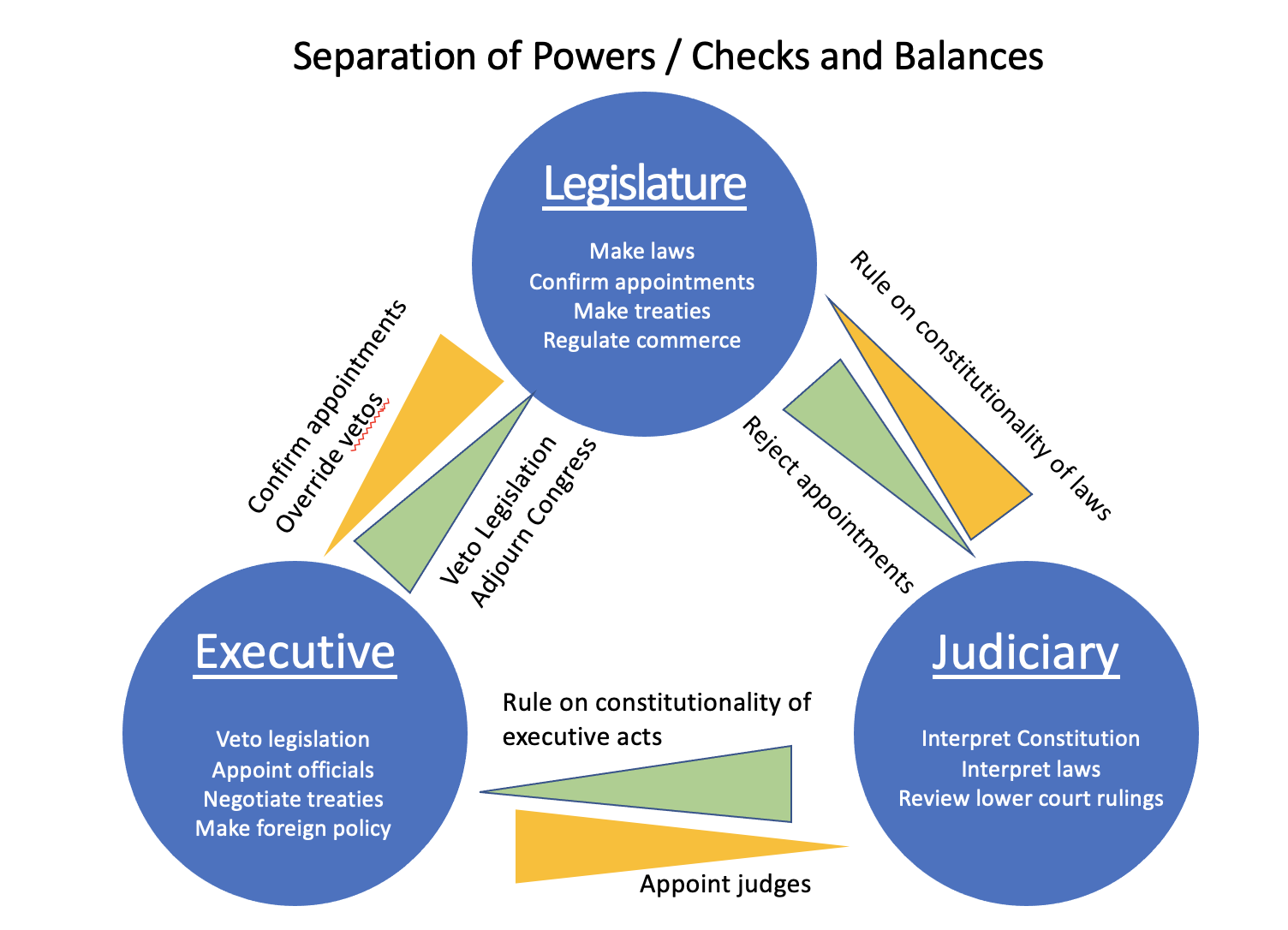
    Violation of Separation of Powers?

    Very grave questions arise from the use of OPLA as a legal heavy gang punching down unlawfully. It has regularly exceeded its remit since the passing of the Houses of the Oireachtas Commission Amendment Act 2018.

    Arguably, this amounts to a constitutional crisis. Mr Finnegan has been reported to SIPO and to the TLAC civil service Commissioners who have not acted. But then he’s on the SIPO Commission, which is another conflict of interest.

    Apart from the unscrupulous expansion of OPLA, well in excess of Dunning’s recommendations, the take-up of the OPLA services in Private Members Bills (PMBs), anticipated by Dunning, has not happened. Nor has there been any discernible increase in the passing of PMBs.

    A glance at the Houses of the Oireachtas annual reports reveals no expansion into service by OPLA in PMBs. In 2021 there were a total of 113 PMB, but OPLA only gave advice on 56 of these, and only provided drafting service to 36. None of the bills successfully passed.

    The statistics for OPLA’s work show that most of its “advices” are to the Houses of the Oireachtas service itself and of the 639 “advices” it provided in 2021, 493 were to the service itself and 143 were advice to committees.

    In addition, they are heavily involved in Protected Disclosures, FOI requests and Employment Law. None of this was envisaged by Dunning.

    So, how did a vastly bloated, OPLA pass into law in a manner contrary to the recommendations of the Dunning report? How and why was it put on a statutory footing under the Clerk of the Dáil in 2018, when Dunning recommended that it shouldn’t be put on a statutory footing?

    It seems as if OPLA has become an unconstitutional, authoritarian entity designed to snuff out an essential feature of Irish democracy. Under the pretence of a pressing need for legal assistance in PMBs, a legal monstrosity has been installed in the Houses of the Oireachtas.

    OPLA violates not just the Dunning report, but the Separation of Powers under the Constitution, as it has been integrated into the executive wing of Government under the Dáil Clerk, all at vast cost to the taxpayer.

  • A Golden Shower

    I would imagine I am no different to many people in that I suffer from a degree of anxiety. Prior to 2019, this usually manifested in a mild degree of agoraphobia. I could manage a packed train or a bus whenever necessary, but concerts, bustling streets, or shopping malls were always places to be avoided.

    In recent years I have found that my tendency to avoid crowds, has become a more acute need, extending to the company of people whom I don’t know very well. On a ‘one to one’ basis I don’t mind engaging – my misanthropic default is often proven wrong – as I encounter people whose ideas emanate from outside the RTÉ news bubble.

    As such, attending for my car’s NCT test last week was not an impossible task, but something I was not looking forward to.

    Leitrim Life

    I moved from Dublin to county Leitrim some months ago, and as a consequence my agoraphobia is almost entirely under wraps. There are very few people where I live, down a little laneway off a quiet road, just outside the small town of Ballinamore, in the shadow of the Iron Mountains.

    Leitrim is relatively unmolested by the excesses of modernity. The population of the county would only half fill Croke Park. Forestry, fracking, semi-abandoned villages with neglected vernacular architecture, garbage in the hedgerows and ugly one-off houses, are among the few assaults a sensitive soul must endure.

    I am very fortunate to live across the road from an entire family of agoraphobics; an IRA veteran and his wife and family. They home-school their kids and similarly hide from the world; wary of its narrow materialistic ideals, the ongoing romance with consumption and superfluous technology.

    The two eldest sons of this family spend their days tinkering about with old cars: painting, sanding, welding bits of metal and fixing engines. Unemployed but gainfully so. Like me, they hide from a world they are somewhat apprehensive and mistrustful of.

    The evenings in my garden are quiet enough to hear an owl hoot in the twilight. The old Gods still reside here. Sometimes I join my neighbours across the lane for a smoke and a cup of tea, free of judgements. I gaze in wonder at the mechanical heaps of rust and rot they are about to resuscitate.

    The ‘lads’ did a service on my Yaris to get her ready for the NCT, changing the oil and brake pads. My wife hoovered it out, and I was ordered to give it a power-wash and click the rear seatbelts in place, as they are supposed to be visible – all in preparation for the big day.

    Since resigning my Dublin medical practice in protest at the mad Covid Policies, and as a means of avoiding injecting children with the stuff that was called a ‘vaccine’, I have had a lot more time to myself.

    Time to devote to bees, a polytunnel, NCT’s and other hitherto trivial things. Indeed, my wife was most concerned that the car should pass, as our son needs to use it for his driving test next month.

    Coiled Again…

    The test centre in Carrick-on-Shannon is about a forty minute drive from our cottage. As you have probably guessed, despite the attention of the two lads and all the hoovering and power-washing, the car failed. A front coil-spring wasn’t up to scratch, and one brake bulb was brighter than the other.

    I wasn’t surprised given the car is ten years old. When I told the lads the news they laughed and told me to get the parts and they would address the ‘problems.’ This I did, and after finishing the work they showed me the old coil-spring. Apparently (they informed me) a coil spring is one of the suspension springs for the car.

    They put the the old one before me and said that it was perfect, save for a bit of rust at the tip of one end. They insisted that this would cause no problem to the car, saying that the spring was tested under the heading of ‘suspension’; that it passed the physical test and that this was printed on the fault sheet that had been returned to me.

    I then asked: “if it passed the actual test of its integrity and function, how did it fail the test?”  They informed me that the chap who was looking underneath the car, saw rust on the spring and that it was a ‘visual failure’.

    The lads aren’t highly educated by any means, so what would they know? They insist that for the most part the NCT is just “a multi-million money making racket”, an enormous source of revenue for a few people, and a way for government and car dealers to get perfectly decent cars off the road and replaced by new ones.

    Buying new cars is, of course, really good for the environment, particularly if they have big lithium batteries. Across Dublin suburbia, dizzying heights of environmental virtue can be scaled at the bottle bank if one can pull up in a battery powered car.

    Nonetheless, I find it hard to get too worked up about the nefarious powers behind the NCT network. The ideals of capitalism are pretty much universal at this stage. I was happy enough that the bulb and spring had been replaced and the car was ready for her retest. I had already devoted an afternoon to the first one.

    The following week I returned for the re-test at my scheduled time of 4.30pm. The little waiting room was packed. The tests were running behind time. They didn’t get to my car until well after 5pm. I had plenty of time to listen to the people around me come and go, sharing their stories of success and failure.

    Wayward Bus

    Some years ago I read The Wayward Bus, a little known work by John Steinbeck. It’s one of my favourite stories, concerning a group of people travelling on a bus, all from different social and cultural backgrounds.

    The bus breaks down on a lonely road, and when it does the barriers that normally separate people also break down.

    As a consequence of either boredom or necessity, when these barriers come down we may be compelled to get to know one another. I suspect that most people have had the subliminal experience of finding themselves stuck somewhere in the company of strangers, united by unforeseen circumstance.

    The experience was also recently masterfully explored and brought to a beautiful conclusion in the film ‘Triangle of Sadness’. In that passengers and crew of a luxury yacht find themselves stranded on a beach and are compelled to get to know each other after the boat sinks.

    Stripped of the relevance of their wealth and station, all must rely on actual abilities to survive. It’s a wonderful film with some great twists. Perhaps when the ship of humanity flounders, if we have time, we might pause and get to know each other a little better?

    The Moment of Truth

    As we sat in the waiting room of the NCT office I dealt with my agoraphobia by going outside for a smoke, at the point when people were getting to know each other, and social interaction seemed imminent.

    There was no public toilet in the centre and no coffee machine, nowhere to run and nowhere to hide. It was cold outside and a cigarette doesn’t last as long as an NCT test.

    There were about ten of us seated in the plastic chairs around the wall of the waiting room. Occasionally the NCT man would magically appear at the empty hatch and call out a name for one of us. The chit-chat and various horror stories associated with tests and re-tests had brought us together, to the point where success or failure of one’s test became a shared experience.

    Soon, a round of applause was being awarded to each successful testee (no pun intended). Commiserations and a few empathetic sighs were offered to the failures.

    At last my name was called and I went to the Perspex hatch to receive the news. The man taped on his computer, and I caught a glimpse of the green and yellow of a new NCT cert emerge from the printer. The few who remained in the waiting room were anxious to know if I was deserving of applause or commiserations.

    Not wishing to be a sour-hole, I turned to the row of seats and gave my comrades two-thumbs up, informing all that I had joined the ranks of the victorious. A round of applause was tendered, and a middle-aged lady seated with her daughter offered me a handshake – which seemed a little over the top!

    Her daughter should have been heartily confused but seemed rather amused, the rules that applied to strangers were out the window.

    Small Print

    As I took the certificate, however, I noticed that the date on the new cert was only valid until May 2023. So, I had passed the test, but my car was deemed roadworthy for less than four months, at which time it would have to be retested. I felt certain this was a mistake, and brought it to the attention of the attendant.

    “This cert is only valid for four months,” I said. “I thought the test would be valid for at least a year?”

    He took the forms back from me and looked them over. “Your last test is out of date for over six months,” he replied, by way of explanation.

    By then I was a bit irked, having paid for a test, and then having paid for a re-test, and now being expected to test the car again in four months’ time.

    There was a three month wait for my first test, so, effectively, I would have to book the car in next week in order to be on time for the next test!

    Despite being conscious of the fact that he was only the messenger, I still wished to shoot him (metaphorically speaking of course).

    I replied: “but you are not testing the forms, you are testing the car, and the car has passed the test.”

    Unfortunately, the starter motor was jammed, the spark plug failed to ignite and the attendant hadn’t a clue what I was banging on about. He smiled and then disappeared from behind the screen like the cat from Alice in Wonderland.

    Flashbacks..

    My questioning and dissatisfaction did not go unnoticed by the small crowd in the waiting room. I looked about their faces as I departed with my Pyrrhic ‘victory’ in hand. One or two of the faces appeared sympathetic to my plight, others seemed mildly indignant that despite having passed the test, I still seemed unhappy – making a fuss and potentially causing a delay.

    I felt the breath quicken in my chest. It was as though, for a moment I had been plunged back into the near forgotten Covid days of ‘put up and shut up’, because we are ‘all in this together’.

    As I departed a large poster on the pane of the waiting room door said ‘goodbye.’  The poster was covered with smiley emojis encouraging people to buy an NCT disc-pocket that sticks in the window and holds ones new cert. ‘Hooray! I passed my NCT’.  I wonder do people actually buy these gimmicks on top of paying for their test?

    The poster reminded me of the smiley buttons that the HSE were dispensing to the vaccinated during Covid. I also recalled the free iodine tablets that were dispensed by the Government when they worried about the Sellafield nuclear reactor exploding, and that then reminded me of the Millennium Candle that came in the post at the turn of the century.

    I’m not sure how or why I should feel that these little tokens are related in some indistinct manner – all buttons and smiley faces to stick in the window or upon one’s chest. I recalled where I had wanted to stick the candle when it arrived in the post.

    The phrase ‘all in this together’ still makes me nauseous. As an old farmer in Rush where I once had my surgery used to say: “Don’t piss on my back and tell me it’s raining.”

    Just Political Deserts

    I suspect that for many people it’s always raining in Ireland, a golden shower that moves from Leinster House, and then on to Mizen Head and Malin Head, each day of the year. Yet I am perhaps cynical enough to believe that we get our just political deserts.

    One need only watch the recent rebranding of Bertie Ahern as the population is groomed into accepting him being provided with an armchair in the Áras. Or that recent RTÉ documentary that had Sean Quinn weeping, and staring wistfully out upon the lakes of Cavan, from the third story of his palace, like Ozymandias King of Kings.

    One of the impossibilities of democracy – perhaps its greatest limitation – is a tendency to elect politicians who tell us what we want to hear. Nowadays our cast of chosen doctors – like the bishops of old – tell us what we want to hear, and give us the pills we have been groomed to demand.  Should they venture outside of this brief and tell us what we need to hear, the ice generally thins beneath their feet.

    Perhaps the greatest evil in the world is in the realms of paedophilia, and when this was exposed within the Church, it ended many people’s belief in and respect for Catholicism.

    There is of course a sinister underbelly to our scandals, and that is the strangely complicit nature of “we the people”, whether it’s in the pew, or in the waiting room at the NCT centre.

    I recall, as I made my confirmation at the National School in Swords County Dublin, how my classmates and I innocently queued down the church aisle to partake in the ritual honour of kneeling and kissing the Bishop’s ring.

    We did it because we were sent up to do it by our parents. I also remember answering proudly in the affirmative when my grandmother asked me if I had I kissed the ring.

    I was also an alter boy for a time, a role that was foisted on me by my grandmother, with the full and enthusiastic backing of my parents. Had I perhaps returned home and informed them that something ‘bad’ had happened, that I had been ‘interfered’ with, I probably would have been given a clip on the ear, or simply told to shut up.

    Most kids who were victims of abuse, said nothing to their parents, and the reasons for this are rarely ever spoken about in Ireland. You can perhaps find traces of this in the NCT centre, or see it on the face of a teenager who is sent home from school because he has had his ear pierced.

    My parents were not bad parents, they were just typical of their time. My point here is that in Ireland we like to think that paedophilia within the Church was entirely the fault of the Church and the priests. I tend to disagree. Parents, the state and society at large were as much a part of the problem, perhaps the bigger part. ‘We the people’ were invested in the scandal as much as the perpetrators. It seems that all too often we are ‘all in this together’.

    Facing Up

    Ireland will never be capable of really face up to the abuse scandals because we will never accept the blame for our own part. We will never question our gullibility, but our children might, as they are less likely to suffer from our co-dependence upon RTÉ.

    In all likelihood, we will never explain the scandal of Covid policies, the waste and the suicides, because we the people were so invested in the narrative; a tsunami of indignant virtue in the midst of a state sanctioned pogrom in the nursing home sector.

    What has this to do with my NCT? Perhaps nothing. But the lads were right, it is indeed just a racket for making money and taking perfectly decent cars off the road – another racket that we are all complicit in.

    It’s no different to the Covid racket where billions in potential hospitals, schools and footpaths, were foolishly handed over to Big Pharma and men in yachts. In Ireland being ‘all in this together’ comes with an unspoken historical warning : you are either with us or against us.

    Against us, and you run the gauntlet of vilification or exclusion, at best being depicted as a weirdo, at worst a bad apple. If you are with us, ‘there is one for everyone in the audience’, and any ‘minor inconveniences’ one might be compelled to endure becomes just another shower of golden rain.

    Feature Image: Daniele Idini