Blog

  • Walking at Night

    Night Walking Deserves a Quiet Night

    I’ve always walked alone in the city after dark. Recently, it’s with my dog, along the banks of the Royal Canal. Of a winter evening, the path is quieter than during the day, when bikes and scooters fly by, and the dog’s senses are lit up by the city wildlife revealed in the still of night.

    Last week, as we strolled along a quiet stretch, a man entered the canal path from the road and began walking towards us. Something wasn’t right about him.

    For so many women, there is an understanding, so quietly absorbed that we don’t even give it much thought, that there are risks attached to walking alone at night: of physical violence, of sexual violence, of harassment. It’s the water in which women swim. It’s the reason why our male loved ones show concern for us over their male counterparts when out walking alone – because we all know there are greater risks to it by virtue of being a woman.

    I saw a post on social media, in the aftermath of the recent shocking murder of Ashling Murphy. It was by a male journalist who decried the blaming by women of men ‘en masse’ for individual atrocities by men against women.

    The ‘not all men’ mantra seems to me as dull-minded as it is deflective, for whoever made the claim that it was?

    The perpetrator is the person to blame. What is being called to account in women decrying male violence against women is a culture that means all women, including female children, swim in the waters of often unconscious fear when facing the public world of men, from a young age.

    In this world, we know what it is to go from feeling safe to on edge in the blink of an eye, from puberty on, if not before – when we flinch in the face of that first catcall, or unsolicited approach on the street. Ani DiFranco sings of it in her resonant song ‘The Story’:

    I would’ve returned your greeting

    if it weren’t for the way you were looking at me.

    Only men can change that.

    It doesn’t make all men to blame; but it does make them potential agents of change for the better.

    The man who began walking towards me last week was young and, as I said, something wasn’t right about him. His behaviour was heightened, edgy. Maybe he was high. He shouted greetings at the dog, but it didn’t sound friendly. My adrenaline kicked in. I furtively glanced behind to see if I was alone. I was.

    I braced myself for his approach. It wasn’t that I thought the worst, it was that I knew that whatever came to pass on this canal path with nowhere to escape to, I was to a fair degree at his mercy. I gripped my key between my fingers – that reflexive move women make even if only to feel safer.

    The whole thing probably unfolded in less than thirty seconds but it felt longer. He knew that I was the vulnerable one and I sensed his knowledge as he approached. He came closer than he needed to. ‘How are you, love?’ Spoken loudly, into my face. We both knew it wasn’t a genuine question.

    I answered as friendly-casual as I could. Not too nice, not too nonchalant. Definitely no hint of aggression. In my voice I was trying to impart lots of things. I’m relaxed. I don’t see you as a threat. I’m friendly (whatever the nature of your problem is, I don’t judge you). That wasn’t true. I did judge him – for getting his kicks from being able to be scary towards a lone woman just by virtue of being a man. Any soothing note my tone might have imparted was tactical.

    After he passed, I slow-counted to twenty. I was afraid to turn around too soon in case it gave him cause to return. I glanced over my shoulder, then exhaled slowly, relieved to see he had continued on this path – and I was nearing the road.

    Perhaps the most remarkable thing is that I don’t think I’d even have committed the incident to memory, let alone mentioned it to anyone, if I hadn’t returned home to the devastating news that a young woman had been murdered while out jogging on a Tullamore canal path. Ashling Murphy was a beautiful, talented, generous spirit, with her life in front of her. But this is the water in which women swim, the air in which we walk, or run – where risks, conscious and unconscious, sometimes, brutally, come to pass.

    The particular attributes of her murder – that it took place in broad daylight, that it looks to have been an attack by a stranger– make it ripe for description as a tipping-point event, and the outpouring of grief and anger in its wake suggest this may be so. Time will tell.

    For while the cold threat of such an attack may strike the greatest fear into most women, the reality remains that for victims of male violence, the perpetrator is rarely a stranger.

    Per the Women’s Aid Annual Impact Report 2020, since 1996, 236 women have died violently in the Republic of Ireland. 61% were killed in their own homes; 55% were killed by a partner or ex (of the resolved cases) and almost nine in ten knew their killer.

    And while domestic and gender-based violence prevails across social class, often its victims face higher rates of social inequity, including homelessness – in a European study some 92% of homeless women had experienced violence or abuse throughout their lives.

    For society at large, the issue of gender-based violence is one that remains behind closed doors, dealt with within the confines of the private rather than public domain. Charities that support victims of gender-based violence consistently struggle from underfunding, and consecutive governments have treated the issue as one of low priority.

    Lockdowns have been shown to create the most serious impacts for the socially disadvantaged, so it is no surprise that the 2020 Women’s Aid report reveals a startling 43% increase in contacts with their services, compared to 2019. The Covid-19 pandemic and its measures have had an ‘unprecedented and exhausting impact’ on victims of abuse. Surely this and other social inequities of lockdowns must be given consideration as Covid-19 policy shapes itself towards the future.

    As the government quickens pace to steer through its new strategy on domestic and gender-based violence, due to be published in March – its stated goal being a zero-tolerance approach – time will tell what it delivers on a structural level, and we can only hope that it signals meaningful change.

    Whatever comes to pass, it remains the case that on a societal level, all men do have a role in changing the waters within which women swim, along with the air within which we walk, run, and carry out our lives – private and public. And owning that fact may be what separates the men from the boys.

  • Musician of the Month: Hugo Vasco Reis

    The process of discovering sounds has always been an aspect of music I’ve been connected to, even when I wasn’t aware of its potential and possibilities. During childhood and adolescence, I experimented with instruments, recorded and improvised. It was a somewhat chaotic, intuitive process without pretensions.

    In my early teens my parents offered me a classical guitar and a few weeks later a friend lent me an electric one. With these instruments, my conscious interest in music really began. I mostly listened to heavy metal bands.

    I began subscribing to guitar magazines, mainly from Germany and the United States, with exercises by Steve Vai and Joe Satriani, and spent hours listening to the solos of Metallica and other bands I liked.

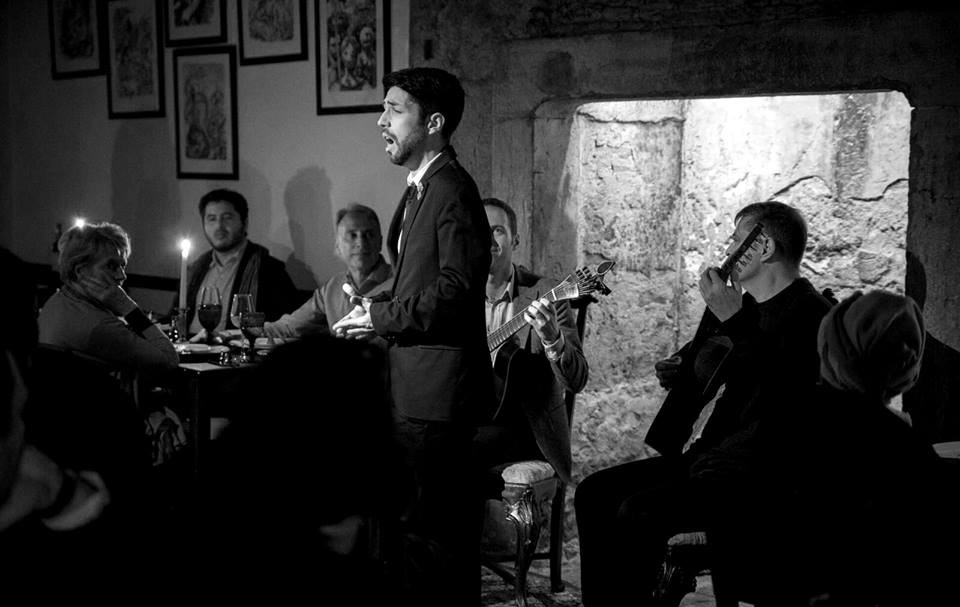
    When I went to university to study civil engineering in Porto, Portugal, in addition to academic studies, I attended to the Porto Jazz School (electric guitar) and later the Conservatory of Music of Porto (Portuguese guitar – the instrument I play currently).

    I completed the civil engineering course and worked for seven years in this sector. During this period, I was always connected to music, but the time came when I decided to reduce my engineering activity and dedicate myself fully to music.

    I wanted to deepen my knowledge in composition. So I moved from Porto to Lisbon to study composition at the Escola Superior de Música de Lisboa. During this time, I studied contemporary music during the day, and played Portuguese guitar in Fado houses at night. The musical scope was very wide, as these two musical universes have many differences. Sometimes I had difficulty dealing with it but on the other hand it was also an effective way of not being absorbed in the same music all the time.

    After that I studied for a Master in composition in Switzerland with Isabel Mundry at the Zurich University of Arts, with a scholarship from the Fondation Nicati-de Luze, and in Germany with Stefan Prins and Mark André at the Hochschule für Musik Carl Maria von Weber Dresden.

    I also had private classes and masterclasses with composers Toshio Hosokawa, Chaya Czernowin, Hans Tutschku, Dieter Ammann, Franck Bedrossian, Zigmunt Krauze, Åke Parmerud, Carola Bauckholt, Klaus Lang, Peter Ablinger, among others.

    During my studies in composition, I investigated different forms of musical creation, their relationship with other arts, and had my works performed. It was a new and exciting world.

    Currently, I’m working on contemporary music daily and methodically, which implies research, listening, reading and trans-disciplinarity. I’m based in Zurich (Switzerland) and Porto (Portugal), and travelling regularly around Europe to collaborate with musicians, ensembles, fine and visual artists performing and recording my works. I’m also researching on surrounding sounds: from figuration to deformation.

    Website: www.hugovascoreis.com

    Instagram: https://www.instagram.com/hugo_vasco_reis/

    Bandcamp: https://hugovascoreis.bandcamp.com/

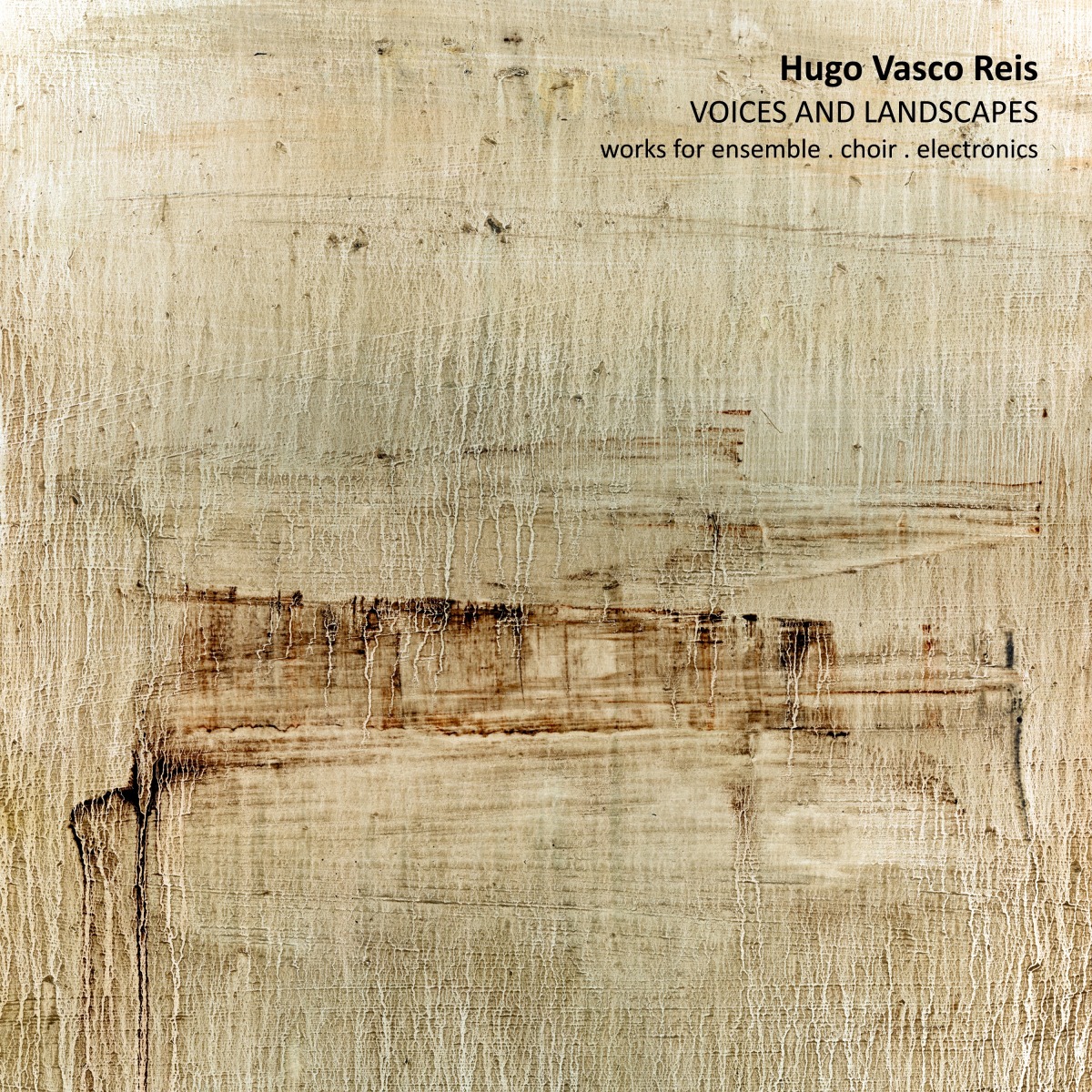
    Cover artwork by Yari Ostovany

    About New Album: “Voices and Landscapes”

    “Voices and Landscapes” is an album that includes five works, composed for different instrumentations, in which the voice is the common element, present in all the pieces.

    The central theme of this album is the landscape, which led me to research diversified sounds ranging from nature to urban places, totally shaped by human action. I was also influenced by poems by Antero de Quental and Fernando Pessoa.

    The work was supported by Ministry of Culture of Portugal, DGArtes, SPAutores and Antena 2 (Portuguese classical radio).

    Programme Notes

    ‘Some Lines Mixing a Color’

    for soprano, saxophone, accordion, viola and violoncello

    performed by Síntese GMC

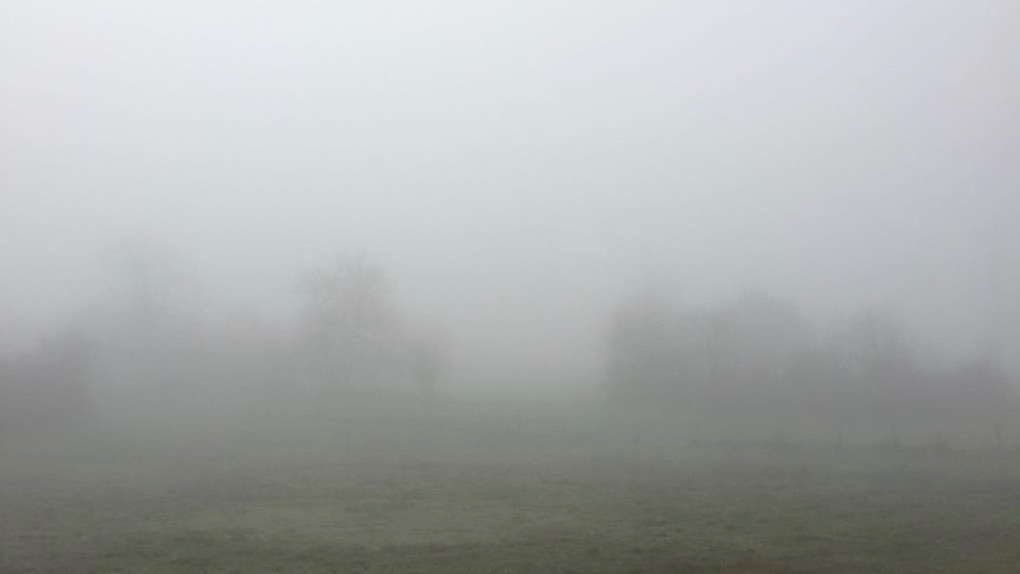
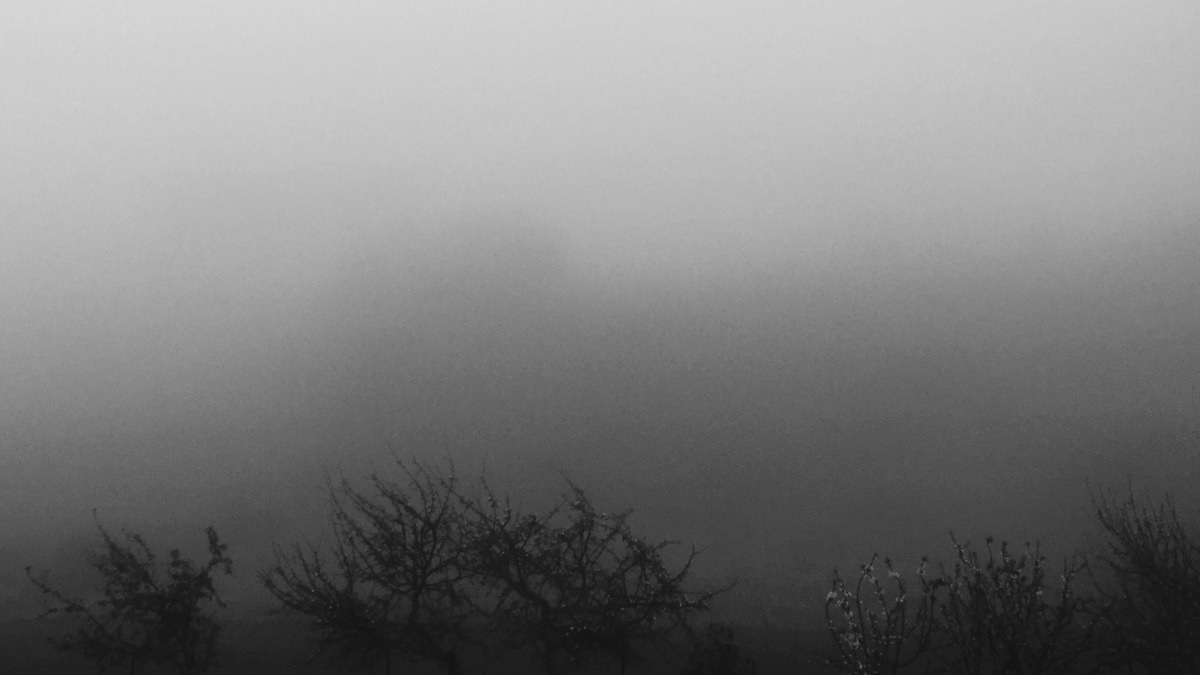
    ‘Some Lines Mixing a Color’ is a work that started from a photograph taken by the composer during a rigorous winter day, where the dense fog covered the shapes of nature. This piece addresses the influence of the invisible in relation to the human perception of the image. By mediating the image with the sound, dense lines and random structures were created, that coexist in the same space with fine lines and organized sound material, leading perception and memory to different places, in a dialogue of counterpoint, gestures, intuition and events, which shape time and form.

    listen here: https://hugovascoreis.bandcamp.com/track/some-lines-mixing-a-color

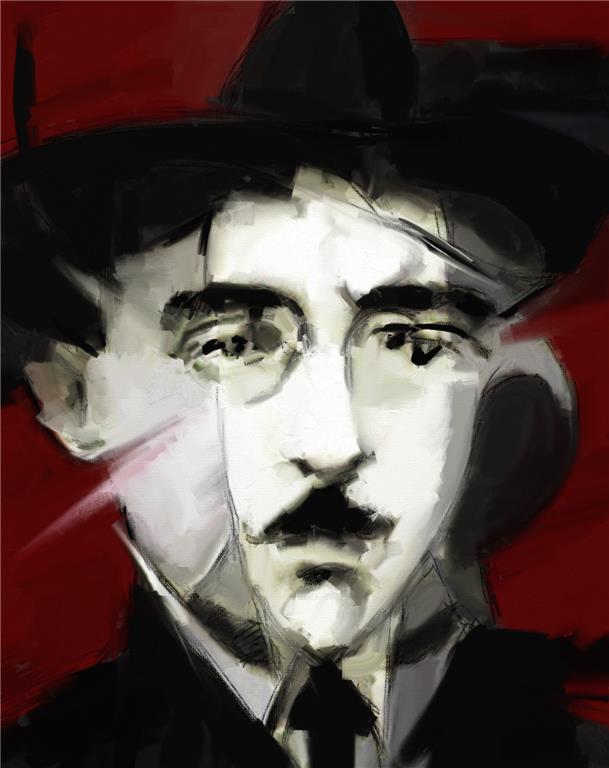
    Fernando Pessoa em pintura de Bottelho

    ‘Paisagens, Quero-as Comigo’

    for flute, clarinet, percussion, harp, piano, mezzo-soprano, violin, viola and violoncello

    Performed by Grupo de Música Contemporânea de Lisboa

    Conducted by Pedro Neves

    Based on the poem ‘Paisagens, Quero-as Comigo’ by Fernando Pessoa, this is a work composed for an ensemble of nine musicians. “Landscapes, I want them with me / Landscapes, pictures that are… / Waving wheat laurel, / Sun beacons that I follow, / Bad sky, reeds, solitude… / Some by the hand of God, / Others by the hands of fairies, / Others by chance of mine, / Others by memories given… / Landscapes… Memories, / Because even what you see / With first impressions / At some point was what it is, / In the cycle of sensations. / Landscapes… Anyway, the content / Of what is here is the street / Where the good sun of torpor / That insinuates in my soul / I don’t see anything better.” by Fernando Pessoa.

    listen here

    https://hugovascoreis.bandcamp.com/track/paisagens-quero-as-comigo

    ‘Sleeping Landscapes’

    for choir

    Performed by Nova Era Vocal Ensemble

    Conducted by João Barros

    ‘Sleeping Landscapes’ is a piece for choir inspired by excerpts from poems by Bernardo Soares, taken from Livro do Desassossego (The Book of Disquiet). It was composed in Tronco, a small village in the municipality of Chaves (Portugal), where contact with the natural landscape is permanent and, at times, because it feels so original, it seems to be asleep.

    I came from prodigious lands, from landscapes more beautiful than life itself, but I never spoke of those lands, except to myself, and told no one of the landscapes glimpsed in dreams. … I see my dreamed landscapes as clearly as I see the real ones. When I lean over to look into my dreams, I am leaning over something real. When I see life passing, I am also dreaming something.
    Bernardo Soares.

    listen here:

    https://hugovascoreis.bandcamp.com/track/sleeping-landscapes

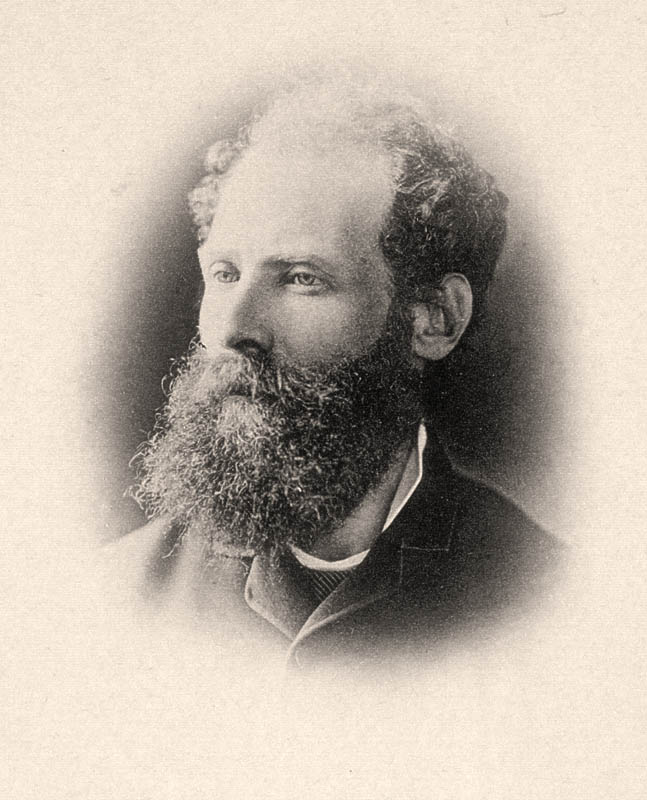
    Photograph of Antero de Quental, c. 1887.

    ‘Oceano Nox’

    for soprano, flute, violoncello and piano

    Performed by Borealis Ensemble

    Based on the poem ‘Oceano Nox’ by Antero de Quental, this is a work composed for a chamber group that includes soprano, bass flute, cello and piano, where gestures, timbre, the phenomenon of object/event and transformation of sound through resonance are the criteria that mediate the poem and the sound. “Beside the sea, which hoarsely sent its great / The tragic voice to landward, while the wind / It passed like the flight of a thought / Which seeks and hesitates, restless and intermittent, / Beside the sea I sate disconsolate, / Scanning the sullen sky with mist-clouds lined, / And, in my revery, questioned the lament / That rose from things, vaguely… / What restless whim disquiets you, / O forces obscure, and beings that begin to be? / What thought is that which moves you in your courses? / But from the vast horizon, where doth hide / Forever the Unconscious, comes to me / A roar, a distant plaint, and naught beside…” by Antero de Quental.

    listen here:

    https://hugovascoreis.bandcamp.com/track/oceano-nox

    ‘Polyphonic Mass’

    for speaking voices and electronics

    Performed by Hugo Vasco Reis and Choir of Native Speakers

    ‘Polyphonic Mass’ is a work of field recordings that aims to investigate and understand the properties of common sounds we hear in everyday life, which, in principle, are neglected, as they do not assume a major importance in our hearing. These field recordings are also an opportunity to create a distancing from traditional patterns, looking for a different plan to work the sound and make the collected material detach from a image or situation in particular, joining sounds that are apparently unrelated. The perception of neglected sounds creates a status quo phenomenon, as a criterion for the creation of this work, which goes from figuration to sound deformation. Thus, elements of a present time and a place, or several places, are combined, which convey the fragility of everyday situations, their ritualization, polyphony, impulse, density and prosody as elements of musical discourse.

    listen here:

    https://hugovascoreis.bandcamp.com/track/polyphonic-mass

  • The Perpetual Villa

    Il y a longtemps,” I repeated. “A long time ago.” My French felt clumsier every minute.

    Renard Busquet, leading me through the pearl-gray dimness of the silent east wing, let his own native Poitevin French drop like a thin stream of Vouvray wine. “A long time… Tell me again how your honored ancestor sat in the back lawn.”

    “It was in 1871,” I recounted. (Busquet twisted the glass knob of the glass-paned door without a sound, and held it open for me, smiling amiably.) “―In 1871, my great-great-grandfather, Florian Busquet, was nineteen. He had made up his mind; he would not remain in Poitier, as his brothers and fathers, everyone in his family, had done from the time the family first received its arms from Charles VIII; he would go to America. He knew no trade; he had nothing but the small sum his father (your great-great-grandfather, recall, Monsieur) would settle on him; nothing but those francs and his own youth and boundless optimism.”

    Renard led the way across a pavement of terra-cotta-colored bricks. I had never seen such bricks, let alone been in France; and yet the remarkably clean, peach-hued bricks, tightly fitted without a weed or even traces of moss in between, gave me a fleeting sense of familiarity. “―It was evening,” I continued. “The evening of his last day at Villa Busquet, where he, and his father before him, and his father, were born and raised… dinner was over, and the family were sitting on rattan chairs on the back lawn. My great-great-grandfather’s older brother, the heir, Phillippe… always sat with his legs crossed; my great-great-grandfather remembered clearly every detail of the scene, the last time he saw his family, in the setting of their beautiful home. Phillippe sat with his legs crossed. The rattan table…”

    Renard gestured with an unhurried hand to the rattan chairs set on the uneven grass. “Take a chair, take a chair. Ah yes, Phillippe sat with his hands crossed, and the table…”

    He, the current heir of Busquet, sat down and crossed his legs. “Do go on!”

    “My grandfather was seated nearest to the terrace,” I said. “Then a funny thing happened. The dog… a little foxhound with plumy ears and tail, which they called Charlot, came around the corner of the house, just over there. He was carrying…”

    A small, energetic shape rounded the corner of the conservatory. A foxhound pelted gaily toward us, its feathery ears and tail waving; it bounded up to Renard’s legs, and―horrors!―it was carrying a very large, bloody rat.

    “Charlot!” scolded Renard. “Put that down, at once! Get away with you, ridiculous animal!”

    I could not have moved if Charlot had shoved the rat in my face.

    As Charlot slunk off with his quarry, the slim Poitevin, seated in the rattan chair with his legs crossed, invited mildly, “You were saying?”

    “Charlot was carrying a rat,” I managed, after a moment. “The ancient Charlot. In 1871. He carried a rat up to my great-great-uncle Phillippe, who was sitting with crossed legs, just there―”

    “I am told it is a family trait,” said Renard; he did not uncross his comfortable limbs. “Every foxhound here is called Charlot.”

    I did not tell him the rest of that scene, which my great-great-grandfather had remembered and recounted nostalgically so many times. What need was there to describe the rattan table with a plate of biscuits, the uneven turf and emerald-colored short grass, the myrtle trees and the cuckoos, or Phillippe’s graceful, deliberate figure―when they were all before me?

    I had thought all my life that I understood why Florian Busquet had left the Old World; but now I felt at my core his nauseous urgency, to escape the vacuum, the place without time.

    I had thought all my life that I understood why Phillipe Busquet had remained in the Old World; but now I felt at my core the overpowering seduction of the place without time.

    My cousin smiled amiably, and I was motionless in my chair, pulled in half.

    Feature Image: an Arcachon villa or Arcachonnaise.

  • Poetry: Kevin Higgins ‘Safe to Say’

    Safe To Say

    How ghastly the day before yesterday was
    now everyone associated with it is dead.
    In the future I’ll be against
    what’s going on now.
    I’ll be on the television,
    horrified. But not yet.

    As a civilised person,
    I’m absolutely in favour of the nice policeman now,
    one hundred percent against the tear gas and dogs
    you forced him to use on you back then.

    Sometime the century after next.
    I’ll be against giving the children of Bethlehem
    something from Lockheed Martin
    to occupy themselves with for Christmas.
    Like I was against rhino-whipping the blacks
    into line in Port Elizabeth, Ladysmith, Pietermaritzburg
    after it stopped happening.
    But, for now, see no alternative.

    Feature image: police dog during a demonstration in England.

  • Getting Away

    Margaret didn’t like Walls, so why had she agreed to go walking with him in the mountains, and afterwards for a drink in a remote hotel bar? She had no self-control, she broke all her promises, she was weak and gormless. Flaws she contemplated, unlacing her boots at the fireplace.

    “You should take off your socks too,” said Walls. “So that your feet dry off properly. Hang them off the mantlepiece, here.”

    “Can we just do that?”

    “Do you think we have to behave ourselves in this dump?”

    Margaret smiled with warm disapproval. It wasn’t a dump, but she liked that he wanted better for her. She felt nice; she felt a sense of belonging. It was the end of December and it was a strange, antique hotel – empty, save for some old people at the collapsing little bar. The chairs shook. The evergreen strung along the mantlepiece looked feeble, picked clean by time, and even the fish in the boxes on the walls were dead.

    “Evening.” A narrow-faced unsmiling man lowered a tray of hot ports to their table.

    “Thank you, Sir,” said Walls. “Hits the spot – we feel we deserve it, too. We were out at Glendalough today, hillwalking with the best of them. Busy, here, this time of year?”

    As the men found things to say Margaret cupped the port in her hands and dipped her nose to the bitter scent of liquor, lemon and cloves. She took a long drink, gazing affectionately around. The empty floral armchairs sat facing each other, backs reclining, arms outstretched as if caught in a ghostly confab. A grandfather clock sounded. The clock was strict, censorious, like a clacking tongue.

    “It’s just so pleasant here.”

    “It’s a nice place to come and disgrace yourself anyway.” Walls picked up The Shooting Gazette and read from a story about gundogs and winter grouse, making Margaret laugh. He propped the ankle of his desert boot up on his bulky knee and leaned back, testing all the strength of his chair. His legs were long and sturdy. How much were the rooms here anyway? She didn’t have to decide on anything yet. Margaret gulped her port, sinking back, sinking further inside an evening she’d never imagined she’d agree to.

    On Christmas Eve she’d sat on a kerb on Dawson Street with her bags of shopping spread around her and into her phone typed: “Not only do I not love you, I don’t even like you, now get away from me.” She sat in the sleety cold, reading back through all their texts: the block paragraphs of his voluble accusations alternating with her neatly edited retorts. She did not feel safe. The shadows of ruthless passers-by bore over her, feet thumped, her ass froze on the cold stone.

    Margaret pressed send, then put up her furry hood and fled the streets. Their love was over, and it hadn’t even been. On Christmas day, she kept her phone switched off for discipline with the benefit of also torturing him. On Boxing Day, she turned back on her phone to face three new emails from him. One sad belated Groupon offer for ice-skating – even the offer had expired. A press release for a pantomime, subject headed ‘Matinée with me?’ Then a sonnet, typed into the body of his email and evidently authored by him too in some dismal late-night rage: the couplet ended with the words ‘dishonour!’ and ‘suicide?’. (His punctuation).

    Then on the 27th of December, she wrote that she hoped he had had a good Christmas. He wrote back that it was awful. ‘Awful’, he wrote. ‘I’m sorry,’ she replied, not knowing what for. On the 28th they chatted all day about themselves. Now we find the former soulmates on the 29th December in a hotel with buffalo horns displayed in the creaking hallway – something about the Boer War, the unsmiling concierge had told Walls – and sullen photographs of aristocrats in sporting gear. Why had she come all this way? Because that morning she’d opened her curtains to a bright winter sky booming down on her. ‘Beautiful day’, she texted, and exactly an hour later she pulled into the traffic island opposite Donnybrook church, grinning and waving at Walls as if he was a friend. He got into the car, bulky and ungainly as the wrong jigsaw piece. He looked so suspect, checking around him – always guilty, stigmatised by some certain yet unclear wrongdoing. She liked the boyish glint, the boyish smile – he was terrible, incorrigible – he was her punished pupil. They got along well. They both liked walking in the mountains, they liked wine, books, planes. He liked politics, man’s worlds. Both liked the idea of causing trouble – of escalating something, shocking other people. He edited a little online magazine in his spare time and she’d been his intern and his girlfriend the past year. His protégée, unpaid apprentice, the weirdo in the corner of his study eying him while he worked, blushing at his glances, her amorous eyes – though never undressing him there and then. Their fantasies remained just that, ethereal, abstract ideas transacting between them, through a fug of newspapers, laptops, coffee cups, vape and sandwich wrappers. All physical sex was had after dark and in the dark. About once a week, or twice a week, one of them would say something pointed and disruptive and they would argue. Arguing would last hours or days. Arguing became yelling, slamming, became toxic waste – life was flammable and unhinged, something she couldn’t control. Once, on holidays abroad, he drove her drunk late and night and told her he had the power to kill the both of them. He speeded up the car and scared the shit out of her. Then he slowed down the car. She never asked him about it afterwards, she told the story only to herself, she reasoned with its oddness; it was all bluster, wind-up. A joke – just a stupid joke.

    At Glendalough, the surrounding hills were plush and velvety with deep colours, and snow lit up the mountain peaks. The cold air blanched her face as the soles of her shoes gripped the railway sleeper tracks along their path. They chatted happily, normally, like decent people, offering nods to ruddy-cheeked women and their dogs. The sky grew dark and the hikers dispersed, leaving them alone in the mountain ranges. She felt shy and elated; she wondered if they would touch. When her ankle turned on a rock along the track, she almost fell, but he grabbed her wrist and held her glove, looking at her with tender fright. After that she let him hold her ungloved hand.

    The man came carrying two more ports, and a Christmas cake, encased in white marzipan, with little mince pies in paper cases laid out on a doily, their pastry tops dusted with icing sugar. Margaret spooned whipped cream all over a mince pie and ate it.

    “I adore whipped cream! I think whipped cream must be my greatest pleasure. If I had cream every night I’d be happy for the rest of my life.” She licked her lips of cream and sugar powder.

    “We could actually eat before we go,” he said.

    “We could. But the ice. Would the ice be dangerous?” She had no interest in the answer to her question, a formality in the resistance she would need to provide. Her limbs felt heavy, her skin baked in the heat of the flames.

    “They have a table, if we want.”

    “Oh, you already asked them?”

    She tilted her head as if she was considering something. “I suppose I am very hungry.”

    The grandfather clock ticked, jaunty, like horses galloping. Tick-tick-tick-tick-tick-tick-TICK, it went. So percussive, so repetitive it couldn’t possibly signal change, or progress.

    “Leave your boots.”


    The dining room was a solemn rectangle with every table set and nobody there. Serviettes were ironed into fans, candlesticks loomed unlit. Margaret admired a very big fork, and touched the white table cloth as if it was a sheet of gold. “This is all so nice!” She gave a histrionic shiver and at this cue, Walls took off his suit jacket and tossed it on her shoulder. The jacket buried her in warmth, and as the chill eased from her body a big bottle of red wine came. The bottle did seem bigger, fatter than an average bottle, and she assumed it was expensive. Getting home was going to be impossible, though they both had a history of reckless driving – she was chaos, did not take care with things. Food arrived with the rapid pace of an establishment with very little to do: scrolls of ham with out-of-season melon cut in half moons, thick slabs of game terrine. A blue fish with a crispy eye was placed in front of Walls and for Margaret, a duckling’s breast stewed in dark juices.

    “How are we going to make it back? I’m so tired for driving,” Margaret announced after a time.

    “Look, the rooms are fine, if you want.”

    “You think.” She let her voice trail off – she would not contribute any more to this discussion.

    “Only €75 a head, dinner included,” he said. “And it’s on me.”

    “You don’t have to.”

    “I owe you anyway.”

    “That’s separate.”

    “Sure.”

    He must have been referring to the fee he normally paid for two articles, for which she had invoiced him, and which he still hadn’t paid her for. She sliced a piece of meat in two and ate quickly and unhappily the morsels on her plate. Next week, she’d have to send him the invoice again, for the third time. They sat in silence for too long. Walls sloshed wine into her glass, and she drank as much as she could in a mouthful.

    “Let’s order dessert. Apple and rhubarb pie, sticky toffee pudding, blancmange, or – oh goodie. Baked Alaska. Or did you see the cheese on the trolly earlier? I think I saw cheese.”

    The door brushed over the carpet, and in came the serving lady and behind them, a tall fair-haired couple in handsome coats. Margaret’s head lifted and turned as the man and the woman crossed the room. Her eyes were tugged, locked, as the man pulled off his hat to reveal a face that was as familiar to her as it was intimidating, in its classic lines of beauty and clear, healthy skin. His name was Antonio, and he was the tech millionaire who had taken her to the party where she first met Walls. Millionaire, or billionare. Secret investor – someone of great worth, great wealth. She didn’t care about wealth, but. Antonio, she knew, moved easily in the world, had experiences. He had fulfilled more of his dreams than, for instance, Margaret.

    Walls was saying something.

    “Sorry, what?” she was dazed. “Sorry – It’s – did you see, who just came in?

    Antonio and the woman had seated themselves at the furthest corner, leaving a barricade of empty tables between them and the suddenly inferior, suddenly scruffy Walls and Margaret. Margaret touched her hair, damp and unbrushed, and seized a silver spoon to check her reflection – she had the face of a bumpkin, nose, lips, eyes blown up. She tilted in her chair, trying to catch Antonio’s eye while also paying Walls extra attention.

    “Did you see the dessert menu?”

    “All I saw was you staring at him.”

    As ever, it came in a single rough blow.

    “I wasn’t – ”

    “You were.”

    “But – ”

    “You were staring at him like a little girl in a shop window.” Her cheeks were hot, and her heart beat in a way that hammered, weighted her. Superglued to where they sat, stitched into the furniture, she felt that life would run on, this way, facing Walls, answering to Walls. She looked around her, so as not to have to look at him, and Antonio turned around just in time.

    “Ah!” He said, and stood from his seat.

    Both men faced each other, chests puffed as they shook hands. Antonio kissed Margaret’s cheek, and the other woman and Margaret kissed politely. “Pearl,” she said. “Pearl,” Margaret said, forgetting, for a moment, her own name. Pearl and Margaret talked for a few minutes about their jobs.

    “I’m hoping to specialise in equine law,” Pearl finished.

    Margaret dropped into her chair to see puddings and cheeses all laid out in front of her.

    “This is really great” said Walls. “I’d have to say the food has really been first class, you wouldn’t have thought it.” Hunched forwards, he sawed into his tart. “Taste, here.”

    Margaret recoiled. Like a child she shut her lips to the advance of his laden fork.

    “What? Oh, are you annoyed or something? Because I teased you for looking at Antonio? Come on, weren’t you? Don’t tell me you weren’t staring at him doe-eyed – don’t tell me you’re not mesmerised. I don’t blame you – he’s a handsome guy. You know, who cares. I’m not annoyed with you. Are you? Are you annoyed with me or something?”

    “No.” Margaret smiled politely, and then did something strange. She asked the serving lady for the bill, and she paid it using her credit card. She zipped up her wallet, threw his jacket on his lap.

    “That was very generous,” he said.

    “I’m feeling generous.” An eerie pause. She started to laugh. “Because I’m so happy. Really, you have no idea how happy I am. Because I remembered something, just there. I’ll never, ever have to do this again. I’ll never have to see you again. You have nothing to do with me anymore. You are a hole – you don’t exist. Oh, this is a relief” She tore a handful of grapes off a branch and popped the grapes between her laughing jaws. “And you know maybe I was looking over there. Maybe I wasn’t. I can actually look at people, ha ha, I can look at whoever I want, whenever.”

    Margaret hacked out a wedge of yellow cheese and lined up three crackers. “And you know I will think about all these other people, other men maybe. I might even kiss them too, on the lips.”

    “Yeah!? he goaded.

    “Yeah! I will probably go to bed with them!” Margaret flashed her eyes at her defeated lover. “And then, well, who knows what might happen? Once I’m alone with them.” She leaned over a debris of cheese rinds and blue crumbs and broken biscuits. “I’ll take my clothes off, everything. One by one. Down to my underwear, and then I’ll sit on the bed, with no clothes on, and they will look at me. Oh! I am so young, and you are not. I am so young and free, and you are so irrelevant!”

    Should she go on. Tell him all the things that she could do, with these imaginary men, or just carry on insulting him, get all the bile out on the table. No, someone had to drive them home. Margaret was over the limit. And she knew enough not to eliminate the fear that he could try and kill her, or at the very least, threaten to do so, which is also blood-chilling. She drew in a series of deep, imperious breaths, then picked up the wine bottle and upturned it in her glass. She drank the rest and sat up.

    “I’ve to go.”

    “Go,” he repeated. “Just go, just like that.”

    “Yes, now.”

    “And you probably want to go home without me, do you.”

    “Oh god yes.”

    “I booked a room. But you don’t care.”

    “Nope.”

    “That isn’t very nice – I thought we.”

    “Nope. Cut it out now. I want to go. Now. And you should drive, because I’m too drunk. And I don’t feel like driving.”

    Margaret handed Walls the key to her car, or rather, her mother’s car.

    In the dark of the courtyard, he turned the key. The engine breathed, and omitted a lengthy energetic death rattle, then cut out. He tried again. It cut out again.

    “Look,” he said. “I know you think I was out of order –”

    “Start the car.”

    “I was just going to say.”

    “Start the car.”

    He stamped his foot and the sound of pumped gas wheezed, then thinned into the night air. Tree branches crouched behind them.


    Later, under her duvet, fully clothed and shivering with adrenaline, Margaret’s head raced. With outrage, disbelief. Revulsion. She felt excited by the hate in her, enriched with its potency. She was free and alive, shot of him – what had she been thinking; of course, he never would have killed her, not like that.

    New year came, like a homecoming, a beneficent place of safety. And as the years passed, she still triumphed in the afterglow, the feeling of survival. But he came with her, he lived in her. His voice was in her mind, talking and lecturing and murmuring and making her laugh. It was his face that hovered in her dreams, his eyes that spotted her in a crowd, or narrowed on her in quiet moments. ‘Get away from me!’ But he wouldn’t get away. She couldn’t get away. She couldn’t get him out.
  • Homer

    He who fights with monsters should look to it
    that he himself does not become a monster…
    when you look into the abyss the abyss also
    gazes into you.
    Friedrich Nietzsche

    Day 1.

    On the question of the one against the many, as opposed to the many against the one, White was decidedly with the former after having proven, to himself at least, that his poor father was a lost one without any direction having given himself to the latter and now, after spending his life among his own, was fundamentally on his own more than ever, isolated more so than White himself was, for whereas White had taken the conscious decision to oppose the many by choice, thus accepting to lead a life of solitude, whereas his poor father by accepting to choose a life among the many, sharing their so called ‘core values’, White’s father, all his life, would go on and on about shared values; now, at the end of the day, nearing his end, ironically he was perhaps more alone now than he ever was! This was something that White, to a certain degree, could take satisfaction in. The fact that no matter what way you decided to lead your life, in the end, you always ended up on your own. Solitude was, in this sense, always the end result. Of course, this is something that White had always taken into consideration. It is, you could say, the reason why he chose to accept a life of solitude in the first place. If the truth were known, White was always intensely anti-political, which is why he hated groups. He always had. So, the idea of any kind of group consensus was anathema to him. Family being the first! The first group. He had always hated being apart of it, at least since he started to see through it. That is to say when he first started to question it when he was a very young man.

    Even White’s friends, some of whom were considered to be quite wild, were shocked by White’s initial coldness. White would refer to certain animals who would leave the family to fend for themselves. Why did humans insist on remaining in contact with their parents? Out of all the animals on the earth, only humans, as far as he could see, remained in such close proximity to their parents, and at what cost?

    Of course, White’s whole vision of the world had been profoundly altered or shaped by the tragic death of his brother. His brother had committed suicide when White was still a very young man, and this act had such an incredible knock-on effect on everything that White would do. This act had fundamentally altered White. Utterly, you could say. It wasn’t the only act to have had such a powerful effect on him, there was another, but it was the first event rather which was to have such a radical impact on his whole worldview, if one could say that White did have such a thing, a view of the world, as it were. I should probably say what the second event was now after having already alluded to it and in this way setting out the trajectory of the present tale. Building up the horizon, as it were.

    The second great event to influence White, after his brother’s suicide, was when he eventually was to separate from his wife, whom he was to eventually divorce. This was the second great event in his life. The second of the great Ds. So, first Death and secondly Divorce. Life was made up of a series of Ds, White had noticed. The 3 Ds, he called them. White being Irish, alcohol, or Drink, was the 3rd. It was a so- called coping mechanism. The results, of course, were disastrous as a man who has already been struck by two of Life’s greatest events, Death and Divorce, to then resort to Drink to get over them is simply asking for even more trouble, and of course this is what this story is all about. Stories all involve trouble, the interesting ones at least.

    I’d like to get back to White’s father now, after having presented you, the Reader, with an overview of the overall substance of the narrative of the following tale, having thus fulfilled, to a certain degree, the duties of the Author – ha, dead me arse!

    If there was one person in the world who was to have such a singular effect on White, apart from his late brother and former wife that is, it was the old pater familias. God, what an absolute cunt! A curse on his kind, indeed, as that is in fact what he was, White had surmised. The Patriarch! The cunt! The superlative arsehole of the Universe! The sum total of all his woes! As when it came to the Patriarch, the many were truly the One. They all conformed to the same depths of depravity. Hitler being the superlative. You had to nail your colours to the mast.

    Because of the dire nature of White’s relationship with his father, to a large degree White’s relations with men in general were pretty shitty. Indeed, it was rare that he actually liked one. Though not an impossibility too, having said that. He had had great friendships with some men, over the years. But, in general, White was more a Woman’s man than he was a Man’s man and this was primarily to do with the whole very complex relationship that he had had with his parents. White’s poor mother, for example, had been a martyr to all women as she had come from that very particular generation of women in Ireland who simply stood by their men, come hell or any amount of assorted high water! High water indeed, the expression was literally true now, now that they were all expecting a biblical like deluge to submerge them all due to global warming. Patriarchy and Fossil Fuels, now how many academic papers were headed in such a way in Humanity Departments in progressive universities all around the world?

    One could dream of Noah and his drunkenness. White saw again Uccello’s depiction, all cascading in glorious Rouge, or Reds….

    The fact of the matter was, no matter how you wished to look at it the situation was truly awful. The man had been the worst possible fucking cunt of his kind. There were no redeemable qualities, the more he looked the more shit was uncovered. How many could say the same? These shits, shits of their kind, this kind, this kind of shit kind, the shitty fucking shit kind, the kind of shitty fucking shit that you wouldn’t want to shit next to nor sit beside mind, that kind, mind your backside! The fucking shitty shitters and their fucking shitty shitting shits! Those kind of shitty fucking shitters… That Kind!

    End of Day One!

    Day 2

    Now White hadn’t always been an aggressive son of a gun. He had become one. His nature then was historic, you could say. Informed as it had been by the unending deluge of experience that had gone on over his time in the world. Planet Earth. What they had done to it! It was nothing short of disastrous. The so-called strong men. What a bunch of dipshits. Strong men my ass. Show me a man and I’ll show you an ass, that is what White would say. As he had lived with one. Oh yeah, he had survived him too. Mister Universe spinning around in his tight leopard skin briefs. Bikini briefs! God forbid. It was infectious. The briefs that is. “Be brief!” Puts a whole new context on it…

    When he thought about his childhood, which was rare, White remembered particularly the long torturous dinners which went on in the depths of winter. The family, all six of them, surrounded the table upon which the food had been placed. Every Patriarch worthy of the name has his place at the table and mealtimes are a particular pleasure for control freaks of this nature as these events allow for a certain element of theatricality and ceremony. Placing people at the table involves a whole network of categorisation. Hierarchy within families, for example. Directors on Boards. They all involve systems of power, and so invoke a little ceremony.

    White, for example, used to sit at the head of the table directly opposite his older brother who eventually committed suicide. White was the second in command, following the patriarchal hierarchy. His sister sat beside his mother on the left side, important detail, as you came in the door and then on the right- hand side sat the Father and on his right side his youngest son whom neither White’s older brother nor sister could stand. He was the porte parole while the eldest brother was the weakest link. White could see it all, how he had been set up to fail. As he was not a natural leader, White’s eldest brother. This had been his great tragedy and which was to kill him, literally, in the end. It would have been better, in many respects, if White had been the eldest as he had leadership qualities but then they had been acquired by White from a sustained practice of observation. This is how White seemed to have learned everything, from the point of observation. Seeing how Not to do something, typically then in everything in later life also the very point of departure.

    White could remember the hours spent at the kitchen table listening to the voice of God drone on endlessly about some subject matter. Omnipotence. This was a key idea in the pater familias. The all seeing all knowing One, like the Sun. The King without a throne. The King looking down at his subjects, all knowing, all condescending! And oh God how he would go on and on and on and on and on and on and on…in a monotone.

    Of course, the atmosphere around the table would be unbearable. I have read accounts of Hitler at the dinner table, apparently he gave these endless monologues talking for hours and hours and hours and hours. Omnipotent. All knowing, addressing all kinds of subjects. Not really knowing all of the subjects at all, and so talking absolute horse shite half of the time. Can you imagine it? One of the World’s Most Important Figures Talking Absolute Horse Shit. And for hours!

    Yes. In retrospect, White had been well prepared. All his life. For his Life. LIFE. In screaming capitals. He could take great pleasure in that fact. That it had all, all the horror, all the boredom, all the manic pain and apparently pointless suffering. It all had some kind of purpose, in the end! It was preposterous, really. And for what? By what grand design had it all been arranged for?

    Were there reasons for it all, after all? Some universal truth? There in the great black firmament, shot through with countless stars for millennia, in the great abstraction of the night of the cosmos was there, after all, some kind cosmic arrangement where the infinitely, infinitely small and inconsequential, most insignificant of beings finds a place after all in the great scheme of things?…

    No answer. Silence. The kind of silence that could sink whole nations. A Black Hole. You are on the event horizon. Don’t fall in. Or perhaps we are already in and have come out the wrong end? That would make sense.

    Platitudes

    The people who live here will never get bored with the beautiful views
    The truth is they do, and this kind of explains the whole god-awful mess.
    Whether it is the young man who, having finally won over his ‘beautiful
    Princess’, starts focusing now on her bad breath and tiresome habit of
    Complaining already after only two years in and who will,
    After breaking up with her one year later, dreams only about bottling that
    Same horrendous breath and keeping it as a heady perfume
    To remind him of his most cherished memories.

    Loss, that great Optician, Loss, and absence its partner,
    Are the great rose-coloured lenses that truly help us to SEE
    The many-splendored colours of the world.
    Seeing through the cracked lens offers alone true vision.

    (There’s one  for SpecSavers!)

    Day 3.

    White never actually liked his parents, if the truth were known. How could he? His mother, after all, was not very intelligent. She was smart, and quite pretty. Actually, very beautiful when she was young, but she was also extremely subservient, not very curious, she could be a real bitch and was not at all tactile, so not prone to showing any kind of affection to White nor his siblings. This was hardly surprising considering the fact that her mother before her was a horrible woman who was hysterical, fanatically religious, cunning, cruel, malicious and spiteful. In fact, whenever White did think about her, which was rare, ugly was the word he would use to describe her. Such were his memories.

    As for his father… It was even less pretty, the picture. He was a profoundly vain and ignorant man and it was this twin display of vanity and ignorance that were particularly horrendous to behold; the latter of course cancelling any reason for the former to exist, you would think! But no, the ignorance was such that it apparently clouded all judgement in the so-called thinking subject, as it had no awareness of its own faults, and what was even worse, if it did, and sometimes it seemed to show some inkling of awareness (For example, when it was eating at the dinner table, it had the habit of chewing its food with its mouth open, a truly odious habit, and then, seeing that White was actually observing it, instead of closing its mouth like any normal person would, it instead continued to masticate its food in an even more exaggerated manner like some ghoulish creature, which is why I am speaking about it as opposed to him.) but even so continued its ghoulish behaviour nonetheless. That is when White started to think of his father in terms of the mythic creature fabricated by Homer.

    The Cyclops was, at least for White, the most truly amazing poetic metaphor in all of western creation. White never ceased to be amazed by Homer’s creative genius when he did think about it, which was a lot due to his particularly horrendous relationship with his father. White wondered was he alone, in this, and, by the fact that Homer’s metaphoric beast was being re-invented time and time again for generations and generations of people down through the millennia so that they too could understand the truly epic horror show that they were dealing with which was, in a word, PATRIARCHY

    There it was. The bullet stopped here. This ten- letter word fell off of the pen or the tongue with all of the monumental obstinacy of the one-eyed monster himself. The cave dweller of old, horribly blinded by the clever and equally intelligent Odysseus himself. It is this twin pillar of cleverness And intelligence that had made Odysseus the truly remarkable hero that he is and again this is a further testament to Homer, or the Greeks, their incredibly astute insight into man’s nature. In other words, what it meant to be a Man. A Real Man, that is, as opposed to some One-Eyed King of some barren cave dwelling along the coast. You could of course say, perhaps must, here we have the two kinds of man, in the end. The Cyclopean Monster, or what we would call in modern parlance – The Narcissistic Toxic Male. TNT M. Nietzschean dynamite. All metaphors being carved specifically from the finite, as good old Friedrich knew.

    Back at the kitchen table, White could only look upon the creature before him as the Cyclops personified. There before him, that grotesque vision of the creature masticating on the meat before him. Contemptuous, almost, of him. The beastly couldn’t give a FUCK look of him. I AM THE KING. The Cock-eyed face of power on him. Tunnel vision. Hence the voice. HMV. His Master’s Voice. Lacanian. Tripping on the Real. The lexical field filled with metaphors is far more really lasting then the mere sports field with all its associated bruises and weather stains, for they will all be memories. Whereas, the symbolism will reign eternal. Such then is the very potent power of poetry. This is why the intelligent princes feared it. Not only the Greeks but in every culture.

    White saw again his Irish Master incontinent with piss- stained grey pants, his face a travesty of a man. More a Terminator in decline, his rusting member leaking out like some old oil well. Grotesquerie. For teenage boys a male mockery.

    White would go home alone and strip and slip into his mother’s room would steal, like countless boys before him, tights and underclothes. Fetishes that he would take away to his cave where he would sit alone unmanned and Freudian.

    Enter the imagery of Salvador Dali. The Great Masturbator. Eros and Thanatos. Sex and Death. Such were the twin pillars guarding the Exit, from the mad man’s lair. Such was the wonder of her hair. The other worldly feminine. That offered some kind of safe-haven. From IT. From Him.

    Enter then the Muse.

    Feature Image: The blinded Polyphemus seeks vengeance on Odysseus: Guido Reni‘s painting in the Capitoline Museums.

  • The Fight for Water in a Thirsty World

    La Soif Du Monde (‘A Thirsty World’) and ‘The Fight for Water: A Farm Worker Strugglewere two 2012 documentaries based on true stories, anticipating further struggles for water, or lack thereof.

    Environmentalist Erik Stokstad once remarked that ‘H2O – is there any other molecule so vital, and so problematic, for people?

    The UN estimates that around 1.2 billion people, or 20 per cent of the world’s population, live in areas where the limits of sustainable water use have already either been reached, or breached. It is high time the issue sits as a priority on the global agenda. There may still be enough for us all, if only we can keep it clean and share it.

    WHO Report

    Below are a few takeaways from a World Health Organization report on the global water scenario:

    • In 2017, 5.3 billion people used a safely managed drinking-water service (i.e., one located on-premises and free from contamination)
    • 6.8 billion people used at least a basic service. Basic service is an improved drinking-water source, within a round trip of 30 minutes, to collect water.
    • 785 million people lack even a basic drinking-water service, including 144 million people who are dependent on surface water.
    • About 2 billion people use a drinking water source contaminated with faeces.
    • Contaminated water can transmit diseases such as diarrhea, cholera, dysentery, typhoid, and polio. Contaminated drinking water is estimated to cause 485 000 diarrheal deaths each year.
    • By 2025, half of the world’s population will be living in water-stressed areas.
    • In the least developed countries, 22% of health care facilities have no water service, 21% no sanitation service, and 22% no waste management service.

    Water use has been increasing globally by about 1% every year since the 1980s. This is due to population growth, socio-economic development and changing consumption patterns. Global water demand is set to rise at a similar pace until 2050, accounting for an increase of 20-30% above the current level of use with increased demand from both industrial and domestic sectors.

    About two billion people live in countries experiencing high water stress, and four billion people experience severe water scarcity for at least a month every year.

    Water stress is defined as the ratio between water withdrawals (i.e., domestic, agricultural, and industrial water uses) and available renewable water supplies.

    Water scarcity means scarce availability (i.e., physical shortage) due to the failure of institutions to ensure a regular supply or due to a lack of adequate infrastructure. Safe drinking water and sanitation are basic human rights, indispensable to sustaining healthy livelihoods and fundamental to maintaining the dignity of all human beings.

    International Human Rights law obliges states to work towards achieving universal access to water and sanitation for all, without discrimination, while prioritizing those most in need. Fulfilment requires that services be safely available, physically accessible, equitably affordable. Water availability depends upon the amount of water physically available, and also how it is stored, managed and allocated to various users.

    It, therefore, relates to surface water and groundwater management, alongside water recycling and reuse. Water management for smallholder family farmers needs to consider both rainfed and irrigated agriculture. Approximately 80% of global cropland is rainfed, and 60% of the world’s food is produced on rainfed land.

    The 2019 UN-Water initiative called ‘Leaving No One Behind’ suggested how improvements in water resources management and access to water supply and sanitation services are essential to addressing various social and economic inequities. Water scarcity is entwined with environmental protection, poverty alleviation and promoting development; globally more than 2.5 billion people live in the most abysmal standards of hygiene and sanitation.

    Wastage of water and absence of regular clean water supply is evident not only in burgeoning metropolises but also in huge rural regions. The mighty Colorado river, North America, seldom meets the sea. One-third of the US and one-fifth of Spain still suffer from water stress. Central Africa’s Lake Chad, supporting thirty million-plus people has already shrunk to one-tenth of its former size, the negative contributory factors include inter alia climate change, drought, poor management and overuse.

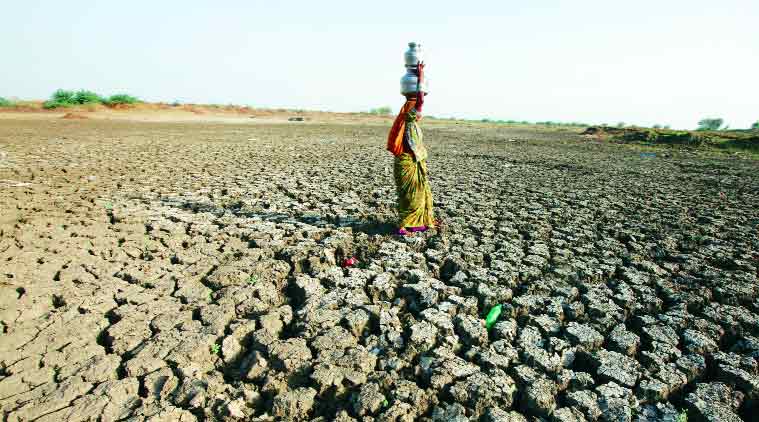
    South Asian woman carrying water on her head, 2016.

    India

    In India accessibility to drinking water has increased considerably over the last decade in particular. However, around 10 per cent of the rural and urban populations still don’t have access to regular safe drinking water.

    The available annual utilizable water in the country (surface as well as ground) stands at 1100b cubic meters.

    World Bank data shows that the total cost of environmental damage in India amounts to 4.5 per cent of GDP and of this 59 per cent results from the health impact of water pollution!

    Another cause of anxiety is that unsatisfactory availability of safe drinking water. Though water contains organic and inorganic impurities, the main source of diseases are the organic impurities that enter into the water through the soil from cesspools, through manure, or through sewers emptying their contents into the rivers – from which many cities, in particular, get their drinking water supply.

    Additionally, inadequate home piping systems including unclean water tanks, improper drainage, and waste disposal systems, also contribute to impure or contaminated water. Again, the presence of excessive inorganic matters (iron, lead salts, etc.) leads to diseases like constipation, dyspepsia, colic, paralysis, and kidney disease, sometimes resulting in death. Dangerous bacteria produce deadly diseases of jaundice, cholera, typhoid, diphtheria, kidney problems, nervous system problems and even lead to an increased risk of cancer.

    Contrary to popular perception, the hardness of water is not a risk to health so long it does not contain disease-causing pathogens and bacteria. Especially, during summer and rainy seasons, the position goes from bad to worse, as water-borne diseases become rampant. The extreme heat and humid environments are favourable to bacteria. The immediate need is thus to invest in timely, reliable, proven and advanced water purification systems[xiv] that guarantees the public safe and pure drinking water at all times.

    Efforts to enhance drinking water supply must move at a greater speed so as to cover all of the villages in the developing bloc with adequate potable water connection and supply.

    Technology plays a vital role in terms of meeting people’s basic needs in a sustained manner. Naturally, protecting freshwater reserves, watershed development, chemical treatments following the safety norms, tackling the arsenic and fluoride contamination, among others, could offer rich dividends.

    Strategies for Managing Water

    The former Secretary-General of the United Nations Ban Ki-moon once said:

    we need to begin thinking about better strategies for managing water – for using it efficiently and sharing it fairly. This means partnerships involving not just governments but civil society groups, individuals and businesses.

    This is a realistic approach, which is not achieved by hiding in conference rooms and observing world water day.

    Responsibility lies with both government and the private sector, and involves: checking the unrestricted exploitation of groundwater; encouraging planned urbanization; optimisation of use; restricting the flow of effluents from industrial units to the rivers, with stricter governance.

    We must nurture new scientific knowledge in order to understand the evolution of water systems that involve the relationship between man and nature. But also integrate local knowledge into scientific research to address user needs, and put in place more effective mechanisms to translate scientific knowledge into societal action.

    The challenges of addressing the water-food-climate-change-nexus could be mitigated if collaborative approaches are taken up, which depend on political will, market mechanisms and innovative technology.

    For example, market forces could work well under a cap-and-trade approach similar to those applied to carbon dioxide. Creating mechanisms for market forces to play a role in the management of scarce water could be a major leap forward.

    Developing an inclusive institutional structure to establish multi-stakeholder dialogue and cooperation is essential to ensuring equitable access to sustainable water supply and sanitation services.

    When governments’ roles are geared towards policy setting and regulation, the actual provision of services is carried out by non-state actors or independent departments. Well-functioning accountability mechanisms help institutions with sufficient capacity fulfil their mandates to monitor and enforce the obligations of the service providers.[xvi]

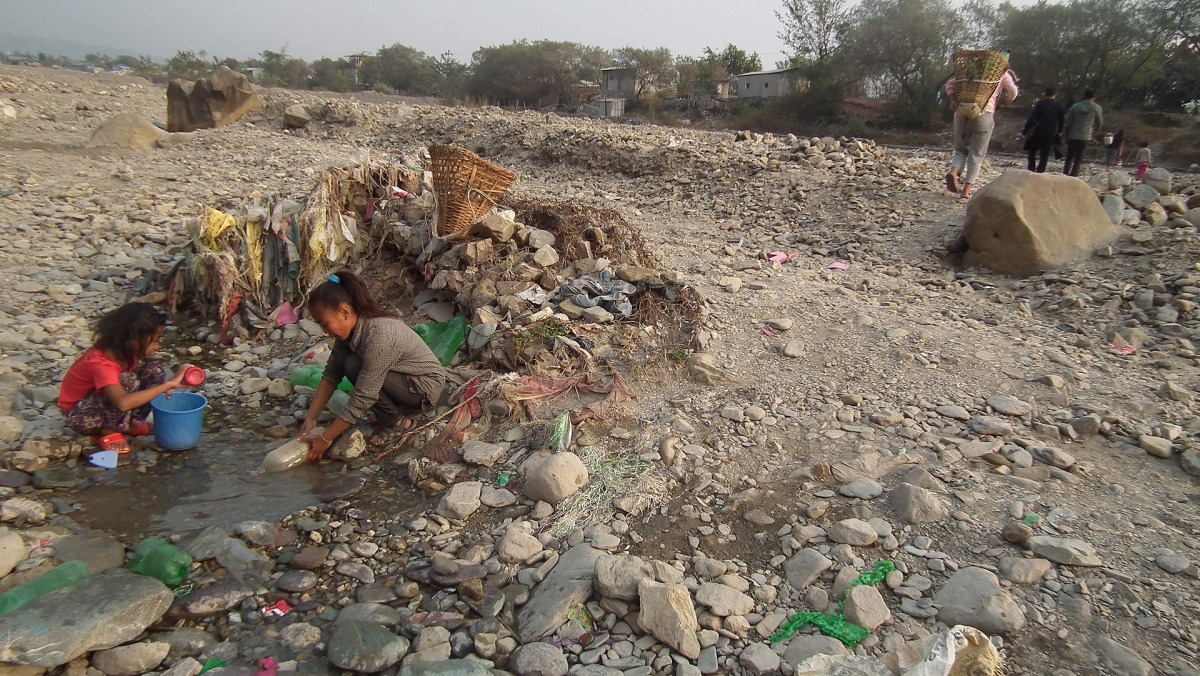
    Girls of squatter settlement in Dharan collect water from river.

    Towards a Sustainable and Efficient Water Resource Strategy

    Every year, several millions of people die from drinking contaminated water. To help address these challenges related to freshwater, scientists in many disciplines are applying new tools and techniques. One way has been to understand the impact of climate change on water quantity and quality and predict future needs and threats. Another way has been to explore making use of water—for drinking or industrial purposes—from sources that are otherwise considered unusable.

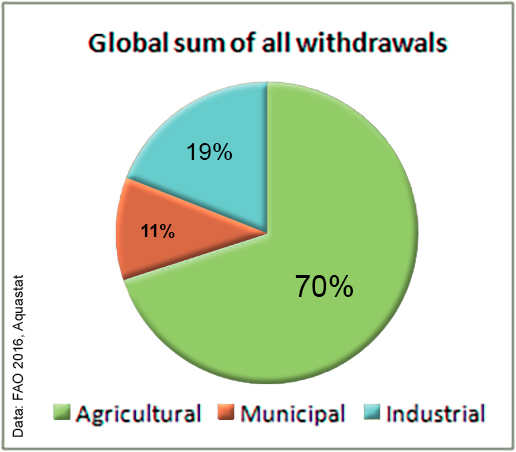
    An emerging area is the ecological impact of activities related to the energy industry such as fracking or carbon sequestration. Other researchers are trying to increase the efficiency of farms and factories – the biggest consumers. Water scarcity already poses a great threat to economic growth, human rights and national security.

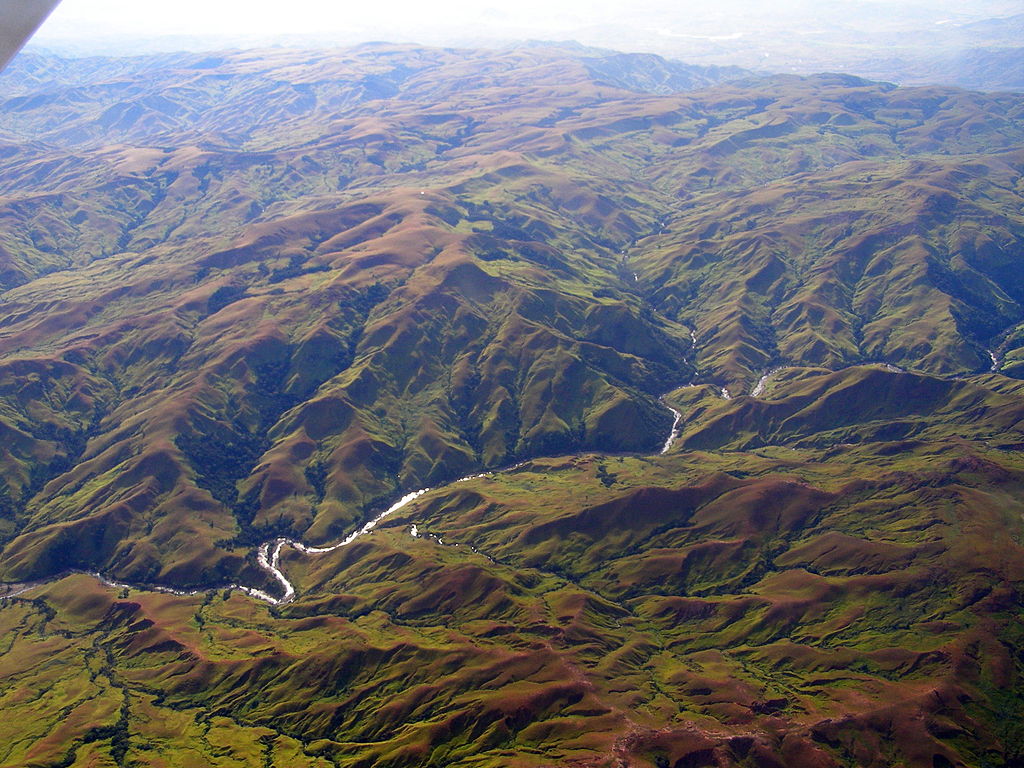
    Deforestation of the Madagascar Highland Plateau has led to extensive siltation and unstable flows.

    A Global Phenomenon requiring Local action – a ‘Glocal’ focus for the road ahead!

    Water recycling and finding better ways to remove salt from seawater could be of key importance. Population growth could cause global demand for water to outpace supply by mid-century if current levels of consumption continue, according to a recent study.

    Periods of increased demand for water – often coinciding with population growth or other major demographic and social changes – were followed by periods of rapid innovation of new water technologies that helped end or ease any shortages.

    Using a delayed-feedback mathematical model that analyses historic data to help project future trends, some studies have identified a regularly recurring pattern of global water use in recent centuries. Based on this recurring pattern, researchers from Duke University predict a similar period of innovation could occur in the coming decades.

    There is thus an immediate need to invest in a reliable, proven and advanced water purification system that guarantees the public – in both rural and urban areas – safe and pure drinking water at all times.

    State of the art technology must be extensively made use of in a time-bound manner to protect the triple bottom (planet, people, profit)[i] from threats emanating from various forms of pollution.

    PROACTIVE over REACTIVE use of water technologies

    It is worth noting that companies are proactively taking initiatives and are stepping up steadily. One company called Ecolab intends to further leverage lot and machine learning to enhance its proactive services to ensure water is conserved and available to both businesses and the communities they operate in.

    They have provided their service to about 40,000 customers in more than 170 countries around the world to maximize available resources. There is a positive impact on process efficiency too.

    Hopefully, the next-generation 3D TRASAR technology reduces reuses and recycles water. The technology can not only monitor the water usage at a customer’s site and alert us should it get out of control, but it can also take remedial actions based on the stress levels on the systems, and induce chemicals or reduce water usage to maximize the life of the asset and minimize usage.

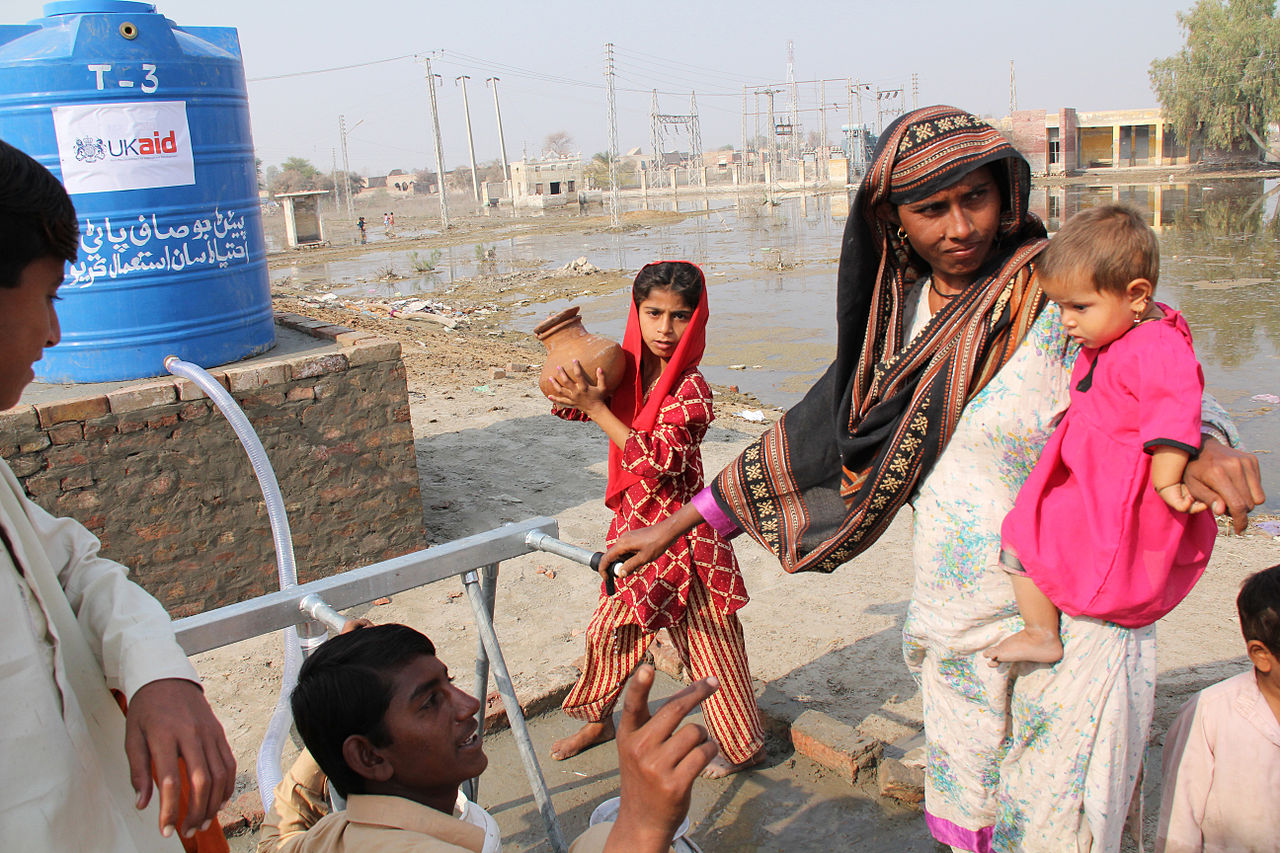
    People collect clean drinking water from a tapstand in the town of Ghari Kharo, in western Sindh Province in Pakistan.

    Population Growth

    Population growth puts strain on the per capita availability of water. In the developing world, efforts to enhance drinking water supply must move at a greater speed so as to cover all of the villages with adequate potable water connection/supply.

    New technology should play a bigger role in such a context to meet people’s basic needs in a sustainable manner. Naturally, protecting freshwater reserves, watershed development, chemical treatments following the safety norms, tackling the arsenic and fluoride contamination, among others, could also offer rich dividends for private companies.

    Water limits are close to being breached in several countries, while food output has to increase by up to 100 per cent by 2050 to sustain a growing world population, according to the United Nations.

    We must holistically manage water and energy usage. Further efforts must be intensified to maximize the use of technology in order to proactively conserve water and improve performance in water-intensive industries.

    A progressive, realistic plan should therefore focus on:

    (A) improving data collection on the location and types of water resources.

    (B) promoting water-saving farming technologies.

    (C) developing sewage treatment facilities alongside water projects.

    (D) establishing a national monitoring body and a new legal framework for the sector.

    As we can’t expand in a quantitative sense, we have to expand by using our water more carefully.

    Feature Image: Abandoned ship near Aral, Kazakhstan.

  • Lessons from the Great Depression (II)

    Ger-mania…

    Extraordinarily, Germany appears on the brink of following the lead of Austria in mandating a vaccination against COVID-19, as segregation of the unvaccinated continues. We seem to have entered what Gore Vidal described as the United States of Amnesia, as all history is forgotten. So let us cast our mind back.

    I maintain the German Weimar Republic (1919-1933), more than even the U.S. Great Depression, remains the emblem of our age. The comparison is not exact of course, as all analogies break down through the shifting sands of time, but it is useful to review the literature of that period and draw parallels.

    After World War I, when misguided reparations, and a war guilt clause, were inflicted by the victors – with the French and Clemenceau in particular in the driving seat – Germany was crippled with war debts, but crept along until the banking collapse. The period up to 1929 and shortly afterwards was a triumph against great odds of a fledgling social democracy: the Weimar Republic.

    The period is associated with great creativity, and indeed became a synonym for decadence and sexual libertarianism, which made it a soft target for Nazi thuggery. The bonfire of the vanities and the burning of the books was the fascist exhalation of degenerate art.

    Likewise our own Age of Austerity in the wake of the Financial Crisis of 08 has destablised the social and economic structures. We also have had a period of relative freedom, despite the economic pain, but now operate in most countries under a grinding authoritarianism in the face of collapsing health care systems corroded by decades of neoliberalism.

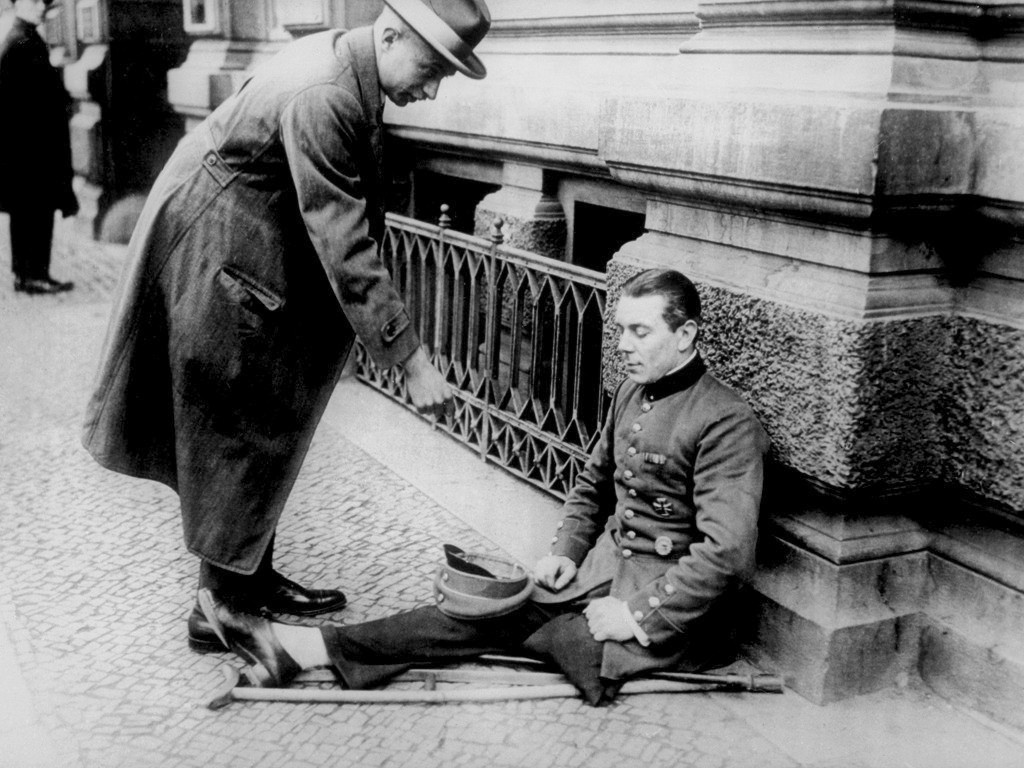
    A begging disabled WW I veteran (Berlin, 1923).

    Tomorrow Belongs to Me

    The Bob Fosse film ‘Cabaret’ (1972) has the fictionally represented Christopher Isherwood in Weimar times represented as leaving Berlin after he hears the Nazi youth sing ‘Tomorrow Belongs to Me’, one of the most chilling songs in a popular film ever recorded; an even more sinister version of the Horst Wessel Song.

    In fact, in the book Goodbye to Berlin (1939) nothing quite as dramatic as that epiphany occurs, just the sense of the persecution of the Jewish community, Communists, dissidents and degenerate races in a sedulous and incremental fashion. This was a fascist authoritarian creep as economic destruction creates victims, but also the externalisation of hatred. The demonisation and demonetisation of the other, crucial also in our own age of unfettered rage and lack of moderation.

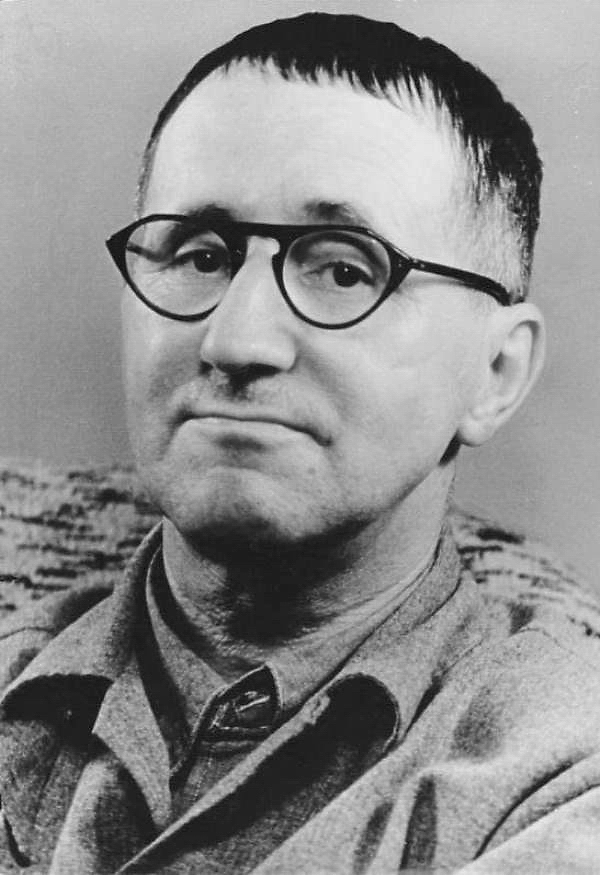
    Bertolt Brecht

    The Aesthetics of Resistance

    Peter Weiss made a similar point in his after the event masterpiece, The Aesthetics of Resistance, where in cold retrospect he saw how those with idealism were destroyed.  His masterpiece of memory ends with the execution of his comrades in the Frankfurt Trials; executed and left to hang on fishhooks.

    Bertolt Brecht also saw in genesis and with mystical precision the bloodletting to come in The Threepenny Opera:

    When the shark bites with his teeth dear
    Scarlet billows start to spread
    Fancy gloves though wears Macbeth dear
    So there is not a trace of red

    Now again many want no trace of red. Just bright blue colours. No shades of grey just sanctimonious conservatism.

    The sense of unfolding chaos at the effects of the Great Depression in Germany is well documented in Victor Klemperer’s diary Let Us Bear Witness dating from 1933. He was peculiarly well placed with a protected Christian wife and a Jewish convert to Christianity. Dismissed from his job; furloughed but not sent to a Concentration Camp.

    The rise of fascism was a consequence, then and now, of economic collapse and that is the difference between the American Depression and the German equivalent, but it was a narrow escape for America.

    Roosevelt as a social democrat saved America. but as Philip Roth’s excursus in counter-factual history amply demonstrates there was no shortage of fascist demagogues who could have unseated him, including the folk hero Charles Lindberg. Such is The Plot Against America, where a fascist becomes President. Not then of course, but now?

    But that is getting ahead of ourselves to the endgame. Let us at least anticipate and make plans in the light of a project endgame called The Great Reset, a phrase unerring close to the great leap forward as we enter Chinese corporate feudal times.

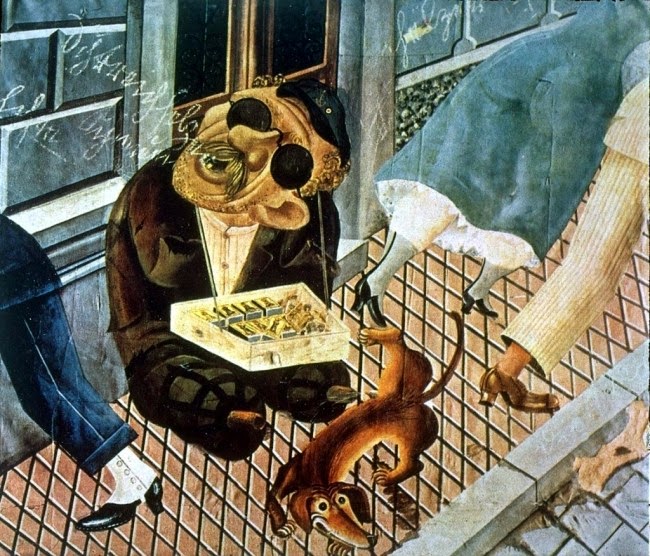
    The sense of impending chaos in the Weimar Republic is also well documented by caricaturists such as George Grosz, Otto Dix, and others, many of whose greatest paintings hang as a reminder in Berlin.

    If you look at Grosz’s inelegantly titled Pillars of Society (1926), with the subtitle Shit for Brains, you will see one of the paragons of virtue. It anticipates disaster as the economy collapsed, and the Nazi judges and commissars who would work hand in glove with their jackboot associates.

    Ripe for Collapse

    On its current trajectory, the EU, as Varoufakis recently indicated, is likely to collapse, sooner rather than later, with a pan-Germanic latter day Hanseatic League altready taking its place. Few should mourn it in Ireland and Greece where the social structure has been destroyed through the impoverishment of large cohorts of the population who have falled into homelessness. Ireland is now controlled by hedge funds as a kind of sub-Indonesian corporate client state.

    And what do corporate judges, bankers, lawyers, and politicians do? Well, enforce further austerity in the shape of lockdowns on a docile and far too accepting population. Socially distanced and self-isolated for the near future without a prospect of stability, a sustainable living structure, or affordable rent or housing.

    And what does Weimar art reveal about intellectuals? That they are useless panderers. The paintings of Otto Dix perfectly captures bohemian delirium and ineffectiveness.

    In effect our contemporary consensus neoliberal spouters are spectators on a society falling apart; the collective fiddling as Rome burns. McWilliams in his wine bar.

    So, hand in glove with economic collapse we witness the destruction of the very concept of human rights. The seepage of emergency powers and executive action, documented in the eariler period by the great jurist Carl Schmidt, with disproportionate and excessive measures. Just as the Reichstag fire was used to end democracy in Germany.

    As far as social and economic rights and Weimar was a disaster. Banknote were printed in billion increments with which you could barely buy a loaf of bread.

    Berlin Alexanderplatz

    Perhaps the greatest German novel of the Depression era is Berlin Alexanderplatz by Alfred Döblin, although his neglected earlier novel Mountains Oceans Giants also presages our times, with its harbingers of environmental collapse.

    Döblin also utilises other 1920s anxieties — Malthus, Suffragettes, miscegenation, decolonization — onto the 27th century where Europe is under siege from “hordes” of migrants “flooding” from the Global South. “India-China-Japan” rises as a rival bloc to the New York-London “Anglo-Saxon Imperium,” while fierce clans of women find success in an “unending struggle against patriarchy,” even preferring “taboo” relationships with the alien migrants.

    Science fiction then but becoming recognisable today. The demonisation and demonetisation of others and the migrant. Not one of us.

    Berlin Alexanderplatz was dramatized by Werner Fassbinder in the peritectic chronicle of its everyman German Franz Bide Kopf, convict, pimp, worker; through the swathes of the Weimar republic.

    It is at one level a chronicle of our own time. Dubious associations, flirting with fascism and in passages most relevant and redolent, a panegyric against erstwhile Communist friends, which shows how the everyman is seduced by Utopian ideals:

    We’ve got to have order, order, I’m telling you, order—and put that in your pipes and smoke it, order and nothing else . . . and if anybody comes and starts a revolution now and don’t leave us in peace, they ought to be strung up all along the street . . . then they’ll get theirs, when they swing, yes, sir. You might remember that whatever you do, you criminals.

    Law and Order the totalitarian clarion call. The most important passages are the slaughterhouse and abattoir scenes, which are most unsettling and relevant to our times. Equating the costing of microscopic slaughter of the animals with human slaughter. The expiration of man and beast, or cost-benefit analysis of life. Compulsory vaccination for the herd.

    The Weimar Republic echoes through the ages. and Germany is reverting primitively and Gothically. Atavistic tendencies can be seen with the arrival of compulsory vaccination and vaccine segregation. Austerity unleased dark forces, and there is no genuine social democratic corrective in sight. The Weimar republic ripples through the ages.

    Feature Image: Joseph Goebbels views the Degenerate Art Exhibition.

  • A Fairy Tale of Dún Laoghaire 2

    I knew the game was up when my mother told me that Santy had given her a list. I had heard about his many imitators and knew they were just benign North Pole ambassadors who lacked his Arctic magic.

    I met one of them once in Lee’s on the main street of Dun Laoghaire, in a family sized camper tent with a strip of silver tinsel stretched around the entrance. His cotton wool beard dangling on an ear-itching elastic band as his nicotine coloured fingers rummaged in a plastic laundry basket that was loaded with presents. There were two baskets, one dark blue for boys and one pale blue for girls.

    He sounded just like the driver of the 7A bus who brought me home from school every day. “Ah, son have ye been a good lad?” It was like First Confession all over again except with different costumes and just like my first time in the confession box armed with a few well-rehearsed sins, I told him that apart from puncturing my neighbour’s bike I had been a good boy. He coughed and scratched the stubble under his beard. “Ah, you’re a decent lad, a fine fella….” He was a little unsteady in the deck chair where he was sitting and I was afraid he might fall over and injure himself. That wouldn’t do, not with it so close to Christmas; there was lot of work to be done yet. That’s how Santy was in Lee’s. Or was he one of the ambassadors? I couldn’t tell. Whoever it was, he seemed very anxious to leave George’s St as soon as he could and get back to The North Pole. This was the busiest time of year and every hour spent here in Lee’s was time lost from directing operations in his snow drifted toy factory, far from Dun Laoghaire. All of that cold and blizzard white frightened me, I imagined the North Pole as a television screen of swirling frozen static, with no button anywhere that could ever switch it off.

    Why had he ended out living in such a desolate place? Something eerie hovered around Santy. Who was he really? Had he done some terrible thing? He spent his life making toys in the world’s most inhospitable place. Was he trying to say sorry for something? And who were the elves? The only dwarf I’d ever seen for real was the one who sold newspapers outside Glasthule church on Sundays. He frightened me; I’d take my mother’s hand and cling to it like a gold ringed shield as we walked inside. My mind chalked up questions. How had a team of news-paper-men ended out working with Santy? How had they met?

    Then one night, a few days before Christmas, a dream came to me that put me right about so many things. There were seven other dwarfs I’d heard of before; the ones who lived with Snow White. I always liked that story but felt it ended very unfairly for them, with all their joy taken away from them by a tall Prince on horse. Each time I read it, I hoped that she would stay with them, that she would explain to the Prince that he’d have to find another story but she always rode off with him, leaving them behind, unhappily ever after.

    In the warm cinemascope of my pillow, I saw the seven of them trekking towards the world’s darkest corners and everywhere they went they wept for losing her and cursed themselves for being short.  Their tears froze when they fell to the ground. Everywhere they went to forget their sadness; they’d leave behind acres of ice and snow, a dark white continent of loss that spread out behind them like a cape that would never be big enough to conceal their seven tiny broken hearts.  And that was how I learnt that The North Pole had come to be.

    Trailing far behind them I saw a man, who looked like a drawing from a story book, swaying in the cold and losing his balance on huge grey mirrors of ice. He was weeping too and cursing what he had done years before. He had let go of a rope that dangled deep down into a well. Children used to speed up and down the well, like a thrill ride, collecting pebbles down below but one day he, the village well man, had let go of the rope, his trembling hands not sure of themselves and two children were drowned. I learnt at age eight that the saddest people wander the furthest.

    And so the world’s saddest tall person and the shortest tearful seven met each other and started on this strange enterprise together. Santy was forever lamenting what he’d done and the dwarves learned to forget just a little, the young woman who’d once danced through their days, as they helped him build his toys in the cold.

    I was always relieved when a dream put me at ease and whispered some new part of an old truth to me. I’d add it to the old truth and for a moment my mind would ring clear as bell with fresh understanding. It was as if I saw further and more clearly how things really were. I kept these truths, the old and the new, like nuggets, deep in my story pockets, to help me along my way.

    When I was leaving the tent in Lee’s he handed me a package from one of the baskets. I pointed at him and asked him, “Santy, did you really once work at a well? I know how The North Pole was born.”

    “Am I well? Sure, Santy is always well, off with ye now”

    My mother pulled impatiently at the hood of my duffel coat.

    “Ah, what are you saying to the man, Billy…?”

    She had said it, “The Man.”

    So he was not Santy, he was “a man”

    I knew that Santy wept most days for what he had done.

    I tore my package open and saw that he had mistaken me for a girl; a string of plastic pearls, a tiny mirror and a comb.

    I went home, put on my necklace and waited for the real Father Sadness to come.

    Feature Image: O’Connell Street, Dublin, Christmas Tree, Lord Mayor Ben Briscoe, Santa Claus, Dublin Photographic Archive, 1988.

  • Hooray for Jolly January!

    It is coming up to one of the best times of the year; those early days of January following the sixth – a period I cheerfully refer to as ‘The Anti-Christmas’!

    Alas December has first to be endured. It is a month dominated by two types of people: those who project that the time is fun for commercial purpose; and those who do so for social advantage. Although each was a monstrous individual, nonetheless Joe Stalin and Ollie Cromwell may have each separately been onto something – in so far as they both banned aspects of Christmas.

    As if an orgy of collective consumerism can offset the unrelenting bleakness of the year’s dullest days? On a more serious note, it is sad that the ‘festive season’ correlates with an annual spike in altercations, hospital admissions, relationship break-ups, etc.

    There is no other way to put it: December fills me with dread. Daylight dropping by a few minutes each day, and worse if cloudy when even the shadows refuse to come out to play amid grim gloom. The rain that fell yesterday does not seem dry on these grey days, as thermometers shiver with the temperatures in single digits. For certain, these must count as the bleakest weeks of the calendar.

    All too often, people behave in a manner unacceptable at any other time of the year. One only has to cross a street during these weeks to witness the manic impatience – and occasional dangerous behaviour – by countless drivers.

    Yet just a few weeks later, the streets are quieter, calmer, and indeed sometimes serene. The same individual who was driving crazily is often a character transformed, taking far more care on the road.

    Maybe it is the guilt-trips associated with December that are most objectionable. These generally take two forms. There is the necessary attendance of social occasions – so as it is less likely to be perceived as an antisocial malcontent – and then there are those innumerable good causes seeking charitable donations. It can be a hard challenge to simply battle on, but it’s vital all the same.

    The usual routes for psychological escape, however, tend to be stymied. Anything outdoors involves cold or damp. Try turning on a radio or TV and you are bombarded with advertising, promising either unbelievable joys after a purchase, or else soliciting charity for desperate heart-breaking catastrophes; a choice between strychnine smiles and poor unfortunates suffering dreadful distress. Possibly not a great recipe for people’s mental health, I suspect.

    Fortunately, the crescendo of craziness usually peaks in the days leading up to Christmas Eve. By then, the sloppiness associated with the Christmas office party mobs has mostly dissipated. Nitwits likely to attempt to attend twelve pubs are also typically in retreat, having succeeded or failed in their valiant missions.

    New Years’ Eve can pose a threat, but usually it just amounts to an Amateurs’ Night, where chaos is confined to those determined to participate. And unless one is unfortunate to live where Orthodox Christmas occurs, the future gets brighter – literally!

    From around January seventh our world starts becoming more pleasant and civilised. It is by then nearly four weeks since earliest nightfall! Contrary to common perception, daylight in evening time begins to extend around the thirteenth of December – although mornings continue getting darker until the thirty-first, hence the twenty-first being the day with least daylight overall. Thus, a week into January, it is bright for nearly an hour longer than the depressing days of mid-December.

    All the nonsense and excess of previous weeks is thankfully finished with for another year. Coca-cola put away their crappy red cloaked Santa Clauses until its annual marketing requirement ten months later –likewise the other big brands that have rendered bland any sense of occasion the time of year ever contained. With January’s arrival, the phrase ‘Sure, it’s Christmas’ becomes invalid, and can no longer be cited in defence of unsatisfactory actions, or lack thereof.

    There is a defence made about Christmas having a ‘real’ meaning before it was commercially hijacked. Yet there again, it is worth noting it was an annual pagan festival before it was pilfered or ‘culturally appropriated’ by Christians. It used to help sell Rome; now it sells Coca-cola.

    All too often, securing a restaurant table in December is a competitive heat, where the victors’ spoils consist of queues and confined spaces, served-up with a dollop of top-dollar prices by overworked staff at the end of their tether. Yet walk into the same establishment in January – at least in ‘normal times’ – and savour the personal attention you are likely to receive from staff glad of the custom. The January lunch or supper liberates the individual; company is by choice rather than obligation.

    It is not that January is the winter tunnel’s end – but an unmistakable brightness is beginning to hove into view. There will be further dark days ahead, but none darker than those past; the dreariness is finally passing. Media continues to push commercial adverts, but those flogging insurance and holidays tend to use far less shrill ditties than those carried at Christmas time. In January, the hard sells are off, enforced engagement is over; and we can escape – we can get away from the maddening crowd.

    It is understandable then why the period around January the sixth has long  been known in Ireland as ‘Little Christmas’ or ‘Nollaig na mBan’, meaning ‘Women’s Christmas’.

    I may call it ‘The Anti-Christmas’ – but perhaps the older title is better, luring buy-in from erstwhile festive fanatics. This is the moment when reasonable people breath a sigh of relief, safe in the knowledge they are as far as possible on the calendar from the annual madness of the ‘holiday season’.

    A light is there on the horizon, beckoning us forth, promising a beginning of better and brighter days: Hooray for Jolly January!

    Feature Image: Daniele Idinin