Cassandra Voices is an independent Irish media outlet, specialising in long reads on politics, art and contemporary culture. It was founded in 2017 by Frank Armstrong, an established Irish journalist and law graduate, and Daniele Idini, an Italian photographer and trade unionist. Produced in Dublin, Cassandra Voices has featured writers from around the globe.
The magazine aims to provide a non-partisan platform for voices across the political spectrum to inspire new thinking, while allowing for critiques and discussion on topics often overlooked in mainstream media.
Apart from the online platform, the magazine has also released three print editions, as well as a book of poetry, and hopes, through readers’ contributions, to produce more in the near future.
As an independent journalistic enterprise, Cassandra Voices depends on readers’ ongoing support through Patreon and one-off donations from as little as $2 through Buy Me a Coffee. All contributions work towards sustaining a diverse media ecosystem, essential in the current climate.
Helping Hands for €4.50 a month: this tier is for anyone looking to extend the hand of friendship to a relatively new, independent media organisation.
Long Haulers for €9.50 per month: this tier is for those who wish to express a committed support for the continued work and growth of Cassandra Voices.
Patron of the Artsfor €43.50 per month: this tier is for the happy few who wish to contribute substantially and support our work and safeguard our independence.
Our final bit of news is that we are delighted to welcome Ben Pantrey on board as a contributing editor.
Ben is a young writer from Mullingar, Co. Westmeath. His creative work, including poetry and an Irish-language short story ‘Eibhlín’ have appeared in student magazines such as Scáthán and Grass. As a non-fiction writer, he wrote a number of pieces for the music section of TN2 magazine, and later worked as deputy music editor for the same publication from April 2020. In Trinity College Dublin, he took an English Studies course, graduating with a Bachelor of Arts in 2021.
It was about one in the afternoon by the time I reached 23 Prussia street. Earlier in the day I had received a group text saying: ‘Illegal eviction, Help Needed’!
By then a human wall had formed outside the front door to Sunnyvale and the mood was upbeat. I was told the police had tried to break up the crowd but failed miserably. Instead some of them had been absorbed into the crowd, swamped by it. Now clinging to the wall, under the heat of both sun and crowd, they were sweating hard.
‘Illegal eviction’, cried a voice from the crowd. A cheer rang out.
Another voice called out, this time singing: ‘Who protects landlords’?
‘GARDS PROTECT LANDLORDS’, the crowd sang back.
Who protects landlords?
GARDS PROTECT LANDLORDS!
As the singing continued, I asked around to find out what had happened. Everybody was telling the same story.
Morning Raid
When they came, they came spitting flame, vitriol, and all sorts of hatred. No eviction notice for this one; no ‘please-fuck-off’ letter through the door; no legal nicities this time. Just a dozen thugs or so, swinging two-by-fours and crowbars: aiming for window and skull.
The sun had not yet risen when they arrived, cutting power in the dark, before stealthily scaling the back wall. Thieves in the night, and bailiffs come dawn – bollocks to the lot.
Sent by Paschal Donohoe’s former ministerial driver and Fine Gael constituency treasurer Martin Sadlier of the McGrath Group, these men were ‘just doing their job’. Yanking folk outta their homes and destroying whatever remained. It’s nothing new. The same job has been done for centuries.
After finishing with the residents and cutting the power, they had gone to work on the roofs, walls and plumbing. Making certain there was nothing left of the homes that were there before – sure it’s nice work if you can get it.
A Sudden Melee
In front of me a Garda screams frantically, ‘Get back, GET BACK’! Meanwhile other Gardaí are picking people up and throwing them aside. ‘Get off me, a young man screams, GET THE FUCK OFF ME!’
At that point I felt confused, as until then things had been relatively calm. The Gardaí had been allowed to get by the human barricade at the front door, which had by then moved in front of the back entrance.
The Gardaí had merely been observing until that point, standing around in groups of two and three. But I could see something was afoot, when they all clustered around the Garda who seemed to be in charge. After he gave the word, all eighteen of them turned back towards the crowd and started forcefully breaking it up.
‘GET BACK’, the Gardaí screamed, shoving people out of their way, ‘GET BACK’!
‘I’m just here to make sure nobody gets hurt’, responded a man that had just been shoved off his feet by the incandescent Gard.
‘Get, Back,’ said the Gard, ‘nobody’s gonna get hurt’, he says.
‘I don’t know about that,’ said the man, brushing himself off, and gesturing to the surrounding melee. ‘Yous have a reputation for reefing people out of it and breaking their arms. Know what I mean’?
State Protection
I was still trying to figure out why the Gardaí only decided at that point to break the crowd up. Then I noticed the back gate had been opened, and realised they were clearing a path; which hit me like a punch I should’ve seen coming. Instead I had walked straight into a door.
The Gardaí weren’t there to keep the peace, but to seize a landlord’s property. McGrath’s security men must have been getting hungry. I figured they were allowing the Gardaí take charge, knowing they had done their work for the day. Having smashed up the premises, they were now ready to leave.
On cue, two white builders’ vans rolled out, full up with them, state protection on either side, as Gardaí pushed back the throng of protesters trying to stop the vans from leaving.
Hard questions to answer
Transcript:
Yous assist evictions, know what I mean kicking people out of their homes, is that why you joined the Guards?
It’s a hard question to answer but that’s the truth isn’t it?
Illegal evictions, with thugs, smashing people up and all. Like I just think it’s tragic,know what I mean? And I think you do too, and you keep the mask up and you keep your arms crossed and you tuck them into your vest. Trying to keep up the facade that you don’t care… I just think it’s tragic. And very easily you could have been in the same situation these people are in where they were without a home. Now they’re gettin reefed out of it… easily could’ve been any of yous.
It’s sad, you have jobs and you need your jobs to live. But… I don’t think you thought this was what being in the Guards was gonna be. I mean you probably thought you were gonna be helping I’m sure, but you’re clearly not doing a service to the community. You’re doing a service to landlords and people who have been making millions and billions out of this crisis that we’ve been in for the last ten, fifteen, twenty years! All you’re doing is helping that.
You can’t actually justify it, so you keep your mouth shut. You know back in the day, like a hundred years ago? When people were brought in to help evictions, they were socially ostracised. Know why? They were betraying their people, and everyone knew it. You’re working people right? Well, you’re betraying other working people. It’s as simple as that!
Community
Once McGrath’s men were safely escorted off the premises the Gardaí also took their leave. Their job was done. To take action against any illegal eviction that may have occurred was apparently not under their remit. They were there to protect the safety of the men who had reefed people out of their beds in the dark and thrown them out on the street. To protect McGrath’s men, who had smashed up a home out of spite.
Once they left the residents of Sunnyvale re-entered their now broken home. Oil had been thrown over all the surfaces, walls had been smashed, support beams destroyed … an horrific scene to behold. Nonetheless they persevered and began to clean up the mess. A community clean up was organised and the long road to recovery began. Of course, without resources it’s not an easy road to walk.
People sat around a fire that night talking over the day’s happenings. I didn’t make it myself, but imagine it felt good, despite all the shit.
There’s a piece of public art that for a year or more languished on the edges of Union Square in Manhattan, before moving to a more innocuous location in Midtown.
It’s a piece of bronze and laser cut steel in the form of a thick-waisted businessman, peering up into the sky. The statue, by Jim Rennert, is called, “Think Big.” This rotund figure struck me as a bizarre but predictable contrast with Union Square itself, site of labor protests, political demonstrations, and various working class events over the past century and a half.
Then, on its cusp, a fattened, besuited, becalmed, moronic middle-manager stands, gazing into the clouds wonderingly. The figure itself looks like the Everyman of modern capital, depicted in the altruistic framing of business propaganda: a harmless, innocent, well-intentioned, exceedingly milquetoast middle-aged man of the people who does his earnest best to help his genteel corporation make a tidy profit, and drawing his modest share of the revenues to support his family. What could be wrong with that?
Aside from the stomach-churning inanity of it, the statue has elided every conceivable aspect of its form that might imply or evince the raging class war between workers and suit-wearing corporate servants, themselves alighted like parasites on the broad husk of the Big Capital. A class war that is blood-soaked and pitiless.
Yet our statue goes to great lengths to present the antithesis: the anodyne complacency of the humming mid-century office space, a hive of drones doing their daily duty. It is truly nondenominational, reflecting the most catholic of images, the most generic.
“Think Big is a sculpture that serves to inspire everyone who works hard every day to achieve their dreams and goals. The towering businessman gazes upward at the Manhattan skyline, contemplating the possibilities that lay within his vast surroundings and reminding us that if we “think big” any dream is attainable.” – jimrennert.com
Ersatz Replica
Philosopher and aphorist E.M. Cioran once wrote that, “Existing is plagiarism.” If to be is to simply be an ersatz replica of the palatable, then why exist, either as individual, artist, or work of ‘art’? Nobody has asked Rennert.
The statue, the name of which is like much modern advertising – quite clearly it is the first name that entered the brain of the artist (or advertiser, as the case may be). Thinking big, as it were, entails thinking big on behalf of the corporation for which you work; the ideas are not truly your own; the mission of the business is not your mission (unless you internalize it); and the life trajectory, even, is one set by the whim of the corporate market to which you sell your labor.
Rather differently, the labor strikes and protests that once occurred in this space, were fuelled by men and women fighting to have all of the things elided by the statue, shaved away by the sculptor’s judicious hand: your own mission; your own ideas; your own life and career trajectory. Thus, Herbert Marcuse wrote: ‘Men do not live their own lives but perform pre-established functions. While they work, they do not fulfill their own needs and faculties, but work in alienation.’
How well the Think Big man resembles this perception: a drone, like others in appearance and wardrobe and function, alienated from his own desires, subordinated to those of a faceless overlord of industry. As a representation of the Professional Managerial Class (PMC), it is equally apt, as that class sits as a bourgeois buffer between elitism and populism, between a secular aristocracy and the abject proletariat, both classes growing exponentially so that the metaphorical abyss widens in two senses: vertically and horizontally.
This bourgeois buffer provides an aesthetic disguise for the dirty business of capitalism. They are not the sweat-drenched coltan miners in the Congo, but the svelte marketers who ply the ether with iPhone ads. His hard edges have been sanded down; he is perfectly polished, nonthreatening, inoffensively bland.
In her book Virtue Hoarders, Catherine Liu historicizes this class. As the Socialist Left in America was progressively destroyed by the public relations efforts of big business, the haute bourgeoisie sided with capital. She writes:
When the tide turned against American workers, the PMC preferred to fight culture wars against the classes below while currying the favor of capitalists it once despised. The culture war was always a proxy economic war, but the 1960s divided the country into the allegedly enlightened and the allegedly benighted, with the PMC able to separate itself from its economic inferiors in a way that seemed morally justifiable.
She describes them as ‘salaried mental workers,’ including doctors, lawyers, advertising managers, IT professionals, and bank managers who reproduce the status quo, having abandoned political radicalism in favor of cultural wars and careerism.
This is the buffer class, idealized in the sanitized vision of Think Big. Yet Think Big betrays the idea of simple reproduction, revealing the compulsion of neoliberalism to shave cost to stave a falling rate of profit. As Liu puts it:
In the United States, generations of allegedly neutral experts have hollowed out public goods, degraded the public sphere, facilitated the monetization of everything from health to aptitude, and indebted generations of Americans in a fantasy of meritocracy enhanced social mobility. Liberals have sat by while finance capital and corporate interests gutted the public treasury.
E.M. Cioran says Western societies are beholden to – fatally obsessed with – technology, innovation, and the drive of capitalism for rapid obsoletion, and the process of ceaseless enhancement and replacement. He says they are in a state of ‘delirium,’ but adds (in Drawn and Quartered) that this kind of breathless preoccupation with novelty is itself relatively new in history:
Archaic societies have lasted so long because they know nothing of the desire to innovate, to grovel before ever-new simulacra. If you change images with each generation, you cannot anticipate historical longevity. Classical Greece and modern Europe typify civilizations stricken by a precocious death, following a greed for metamorphosis and an excessive consumption of gods, and of the surrogates for gods. Ancient China and Egypt wallowed for millennia in a magnificent sclerosis. As did African societies, before contact with the West.
Given that societies are anchored in historical circumstance, they are subject to the same iron law of all civilizations, that they will eventually ‘sag and settle’ as the initial dynamism dies. How much more likely in a society built on an idée fixe, a fetishistic mania.
And yet – small consolation for those whose lives are on a far faster downward trajectory than civilization itself.
Hence the siren call of rebellion will continue to outline itself precisely against this insipid, pulseless figure paradoxically anchored at the center of a monomaniacal society. A society the signature of which is the fixity of its preoccupation with profit – and the consumption that enables it.
U.S. President Donald Trump displays the signed Executive Order for the Establishment of a Presidential Advisory Commission on Election Integrity on May 11, 2017.
The American Dream and Authenticity
This cultural underbelly outlined above is eviscerated not just by the corporate art we are confronted with, but by the modern narrative of the American Dream™ ; this statue is just a recent embodiment of it.
Anyone, color and creed aside, through their efforts and ingenuity, can do or be anything they wish to be. No material circumstances obtain in their pursuit of happiness. Class is a byword of another era, trampled underfoot by the ascent of free-market capitalism, which brooks no discriminatory practice in its market-rendered even-playing field.
As any sentient being can observe, this is a historical fiction, a deceit reproduced daily through the channels of mass media and its advertising, entertainment, and news content, all of which is owned and operated by elite capital and managed by its flyblown class of sycophants.
Essayist and playwright John Steppling gets at much the same thing in his book Aesthetic ResistanceAnd Dis-Interest(2016). He writes, in the context of the dissolution of art as an anchor of culture, of the loss of art’s radical conscience in favor of corporate cliche.
Steppling would despise the ‘Think Big’ statue. Its banality is that of a Jeff Koons work, the more celebrated the less memorable. He argues that mass electronic screen culture has destroyed something critical in the collective consciousness, namely the space for authentic art.
He also notes that art is radical insofar as it refuses to adopt particular meanings, just as space is forever unyoked to purpose, yet radically ratifies none, and is the necessary background to all purpose.
He quotes Robert Kullot-Kentor, biographer of Theodor Adorno, ‘Art’s truth appears guaranteed more by its denial of any meaning in organized society…’ As Steppling later adds, ‘It’s purposelessness is its radical expression.’
And again: ‘Art is self destructive. It is guided by impulses that are anti-social, but only insofar as they question the status quo, because the status quo cannot survive history or memory.’
What artists like Rennet and Koons produce is effortlessly mainstream; it doesn’t challenge the status quo but rather reifies it. It is therefore not art. There is no question posed by the skygazing statue, no threat emerges. It is the reproduction of the placid mind of endless consumption, of ceaseless salesmanship, the mind of the individual cog in a system that it neither sees nor questions. Deification of the quotidian.
Steppling says the clue to the decay of society is the sense that culture is themed by ‘the inauthentic and counterfeit.’
That sensibility, that sinking feeling, for me, is most evident in the hypocrisy of modern advertising. Ads relentlessly tell us they are making commodities to make our lives better – that is their mission and purpose. Yet that is a half-truth at best, a full-blown deceit on a bad day.
Products are produced for profit, first and foremost. They are made to solve the sometimes real but largely artificial needs of consumers only insofar as they must. The initial aim of the product line is the MVP, or Minimally Viable Product.
This is the industry jargon for a commodity that meets the minimum threshold for sale-ability. Beyond that – innovations that improve the product – are seen as incurred costs, unnecessary but sometimes preferable if the cost-benefit analysis predicts higher profits with higher quality. This corrosive smile that fronts modern culture is the clue to the erosion of meaning but also somehow echoes the voice of the Cassandra exposing its desiccated spirit, having submitted itself to the hegemonic ideal, represented by the bland everyman that serves none but the needs of blind profit.
Alongside the denuded character of the Think Big skygazer – alongside the erasure of individuality, i.e., authenticity, in its homogeneity – is its infantile sensibility; yes, the only quality it truly has.
Its puffy childlike hands loose at its side; its rounded babyface; its gaze more wondrous than critical. Steppling says the infantile is a product of capitalist culture.
To paraphrase: the Oedipal narrative of the child overcoming his father as a path to self-actualization is denied by modern neoliberal society.
Neoliberalism denies meaningful work in a race to the bottom rungs of servitude. It denies meaningful leisure as labor is stripped evermore of its rightful surplus, no small measure of that margin being lost time. And it ultimately leaves in its infectious wake a featureless figure, bereft of purpose and means, a man unable to exceed or even succeed the father.
In such a state, the man opts for a permanent infantilism. Hence our recidivist culture that seems to drag us back, back, back toward childhood, finally into the warmth of the womb, the original safe space, protected by ignorance just as ignorance is unconscious bliss.
Benjamin Barber was an earlier prophet of our devolution. His seminal work Consumed detailed the ways in which commodity culture manufactures artificial needs beyond the realm of actual needs, an entirely predictable eventuality given the desperation of capital to continuously expand the marketplace of consumption.
Industry compels consumers to confuse needs with wants and then promises happiness through the instant gratification of that wanting. As one reviewer astutely noted, Barber, ‘…ably identified many of the contributing factors, not the least of which are our collective cultural boredom and our naive but doomed expectations of fulfillment via uncontrolled acquisition.’
The consequence of unlimited choice and acquisition is an infantile impatience with what one has as one is perpetually enthralled by novelty, the tradition-destroying feature Cioran lamented.
We see this trend everywhere. Often in Hollywood, which has found a stupendous revenue stream in the marketing of superhero comics to adults. Once, Superman was a movie for kids; now it is a movie for adults who have yet to put away childish things. Which is all of us.
As Steppling notes, the superhero story is the dream of childish omnipotence, a kind of puerile fantasy that adults once shed by the time they exited their teens. Now the happy myth persists well into adulthood. Its Manichean quality is a mirror of the imperial narratives of the state: one side is all good and the other all bad.
This reductive dichotomy is the cornerstone of modern consumer narratives, whether in entertainment or news, and has been instantiated in the programming strategies of major media entities.
Another feature of the infantile is what Stuart Jeffries alludes to in Grand Hotel Abyss (2016), his biography of the Frankfurt School. Namely, the infantile nature of modern man as his culture radicalizes identity politics by the insistence that its demands be instantaneously gratified, less an urgency than an hysteria. What more emblematic aspect of childhood than the baby that screams when denied what it wants?
But we see it in advertising, especially, and in general marketing. What does a professional basketball franchise ask its roster of players when interviewing them for promotion? [Giggling] What would your superpower be (if you could have a superpower)? As game show music plays in the background.
Likewise in broadcast advertising. A bank commercial shows a middle-aged father dancing around in a virtual reality headset while his more mature daughter plays on her mobile. Faces of consumers are increasingly banal in disposition, blank gazes, wide innocent eyes, awaiting information from the sales shill embedded in the commercial, the messiah of commerce. In the idealized playground of consumerism, modern man is a tabula rasa at 35, eyes awaiting the advent of the next shiny distraction.
If the endless spectacle of mathematically correct diversity casting is defended as reflecting the social ideal, and hence instructive, what is the repetition of the unsophisticated and simpleminded consumer in ads but an admonition?
Steppling interestingly notes that the infant mindset in adults feels incomplete, perhaps through its Oedipal failure to assert its worth and power. As such it must deny many facets of reality that might undermine its fragile psyche.
It must turn away from the wars raging, the coming barbarities narrated by arbiters of power, the afterthought that is endemic poverty and illness. We must turn to safer, more simplistic answers and the narratives that attempt to legitimate them; the ones espoused by the cult of decrepit professional liberalism, window-dresser of society’s distemper, pollyanna in purgatory, to whom we light a votive every day at dusk.
As an art theorist, Steppling notes a simple dichotomy in art that applies more broadly: good art, or art, shows an artificial reality and then shows the actuality beneath it; bad art, or non art, just show the artificial reality. In this sense, most broadcast advertising is bad art, or non art. It normalizes artificiality, the uncritical acceptance of every sales pitch, taking the pitch at face value.
This is reflected in bourgeoisie art criticism, which seems to again and again strip art of its system critique and either reinterpret it as a celebration of industry or a critique of individual foibles within a benign landscape of earnest employee/consumers.
Hence the narrative of history is penned not by the victors but by their dutiful scribes, the professional parasitic class who earn their livelihood through sycophancy and servitude. In service to the status quo.
Fold your hands behind your back and think big—on their behalf. Your passage through will be as frictionless as first class air travel. But say bon voyage to your dreams. This is inimical to the artist. Because art undermines. Art challenges. Art unsettles. There is no safe space in art. No diversity calculus. No appeasement of the herd.
We are thus left with a modern culture which no longer understands the term ‘sell-out’, which sees brand partnerships as a path to social uplift, not recognizing the inherent contradiction of allying with the perpetrator of inequity in order to rectify inequity. The irony is lost on us because there is no irony. The artificial is all. Irony would require a second perspective. In the marketplace of consensus, no second opinions exist.
Jason Hirthler is a writer, media critic, and veteran of the digital media industry. He has published in a variety of progressive publications including CounterPunch, Dissident Voice and The Hampton Institute.
One Big Union is a self-published collection of essays by Irish poet Ciarán O’Rourke.The essays, many of which have been previously published in such outlets as Poetry Ireland Review, Irish Marxist Review, and indeed, Cassandra Voices herself, are a mix of literary criticism, political theory, and personal writing.
The book’s introduction locates itself in the burgeoning genre of pandemic writing. Thus he writes:
Between the winter of 2019 and the summer of 2021, a period of cascading social and ecological crises, I found myself returning to the work of a number of poets, artists, and political firebrands, with a fresh sense of discovery and gratitude. This miscellany of essays is the result.
In essence, this book is a polished version of a reading diary, with O’Rourke responding to the artists he was confined with over quarantine. As such, it’s an intensely personal and vulnerable work, even when the directly autobiographical material is minimal.
You finish the book with the impression that Percy Bysshe Shelley plays a leading role in O’Rourke’s inner life ; that Irishness is something O’Rourke feels strongly attached to; and that he is passionately devoted to left-wing political ideals, even though he finds the atmosphere of devoted Communist organisations mentally stultifying.
This is a lot to know about a relative stranger, and it’s a testament to O’Rourke’s ability as a writer that this distinct, personal voice is present throughout, even in moments when the subject matter veers into academic territory.
Hole in the Wall Blues
Perhaps it’s scholarly fatigue, but I must admit I found the moments of personal, autobiographical writing the most compelling parts of the book.
In ‘Hole in the Wall Blues’, O’Rourke writes about a topic made timely by the Save the Cobblestone protest – the erosion of Dublin’s cultural geography – in an endearingly personal way.
The example he uses is the Screen cinema on Townsend street, now a building site for what O’Rourke believes will be a “rental hub”.
It wasn’t like the Screen cinema was some beautiful location, he argues. No, it was dingy, cheap, and outmoded. But, O’Rourke writes, “just by being there and providing the service it did, this rather run-down space had made the city a home of sorts”.
In another essay, ‘Sea Music’, he talks about the strange intimacy that has grown between himself and the other regular bathers at Seapoint. These accounts of his private life made me care about the more abstract essays, helping me, as a reader, trace the thread of emotional necessity behind his discussions of Percy Shelley or Langston Hughes.
Although most of these essays are ruminative and introspective, there are a few that pack a satisfying punch. My favourite is ‘Smashing the Mirror’, where O’Rourke excoriates Poetry Ireland’s toothless humility in front of the strong arms of cultural hegemony, exemplified in their partnership with the Dublin office of Facebook for national poetry day in 2017, and their use of a video of Joe Biden giving a merry, public-relations-approved speech about the beauty of Irish poetry for their fundraising campaign in 2019.
What does it mean for the institutions of Irish poetry to flatter the centres of power so shamelessly? O’Rourke is excitingly sharp in his rhetorical denouncement:
The emerald glint in Biden’s eyes, the nostalgic quaver in his voice, is meant to reinforce, for voters at home and lackeys elsewhere, a relation (between lord and vassal, say, or centre and outpost) that each of these circumstances also exemplifies – all under the guise of celebrating Irish poetry. And Poetry Ireland, it seems, is happy to play along: cosying up to power, for the sake of PR, and presumably on the long-term promise of cash.Admission of Bias
I may be biased when it comes to reviewing this book. In the first year of my English Studies course in Trinity College, Ciarán O’Rourke was working as a teaching assistant while he finished his phD, and I happened to be placed in his Romanticism tutorials.
Ciarán was a wonderful teacher, with a gift for generating class discussion. He also had the touch of eccentricity required to deliver a course on Romanticism. At one point he had the whole class stand up and communally reciteShelley’s ‘Ode to the West Wind’in early Spring; as if we could hurry the pace of the seasons through the right incantation of the words.
With that said, I had no idea I was reading my former teacher’s book until after I had read through the collection. From the tone of the writing, and the subjects covered (bathing in Dun Laoghaire, Marxist politics, nineteenth century poets), I had assumed the author was in his fifties or sixties. I imagined a Terry Eagleton type – hip enough to know about Ursula Le Guin, but whose outlook on life has been shaped by figures from a deeper past. Then I looked up some interviews, and, with a jolt, recognised the fresh-faced, tall figure of my Romanticism tutor.
Critique
One criticism I have is in relation to the structure of the book. First, it lacks certain features of a professionally published work. There is no publication date. The cover image, by Lewis Hine, is not credited on the back cover, or on one of the first pages, but in the ‘Introduction and Acknowledgements’ section.
These may seem minor issues, but by failing to follow conventions, it becomes harder to work with, and conveys an attitude of slight carelessness, unbefitting of its important contents.
My second criticism is of the repetition between essays. As many of the essays were published in different publications, it appears the author was unconcerned at repeating a few key points. When gathered together in a book, however, these repetitions jar on the reader.
For example, several pieces of information related to Shelley in the essay entitled ‘Shelley’s Revolutionary Year’ are duplicated without development in the title essay ‘One Big Union’, for example. This certainly conveys the extent of Shelley’s psychological importance to the author, but it doesn’t expand on the issue.
Overall, this is an intriguing collection of essays from a young Irish poet. Those interested in O’Rourke’s poetrywill gain insights into his artistic influences, and anyone looking for topical cultural critiques will be well served by some of the later essays in particular. Its main value is as a political statement of purpose for the poet. It also represents an opportunity for those interested to support a promising Irish writer, whose work has been hitherto largely available to readers for free.
One Big Union is available for purchase through Ciarán O’Rourke’s website, ragpickerpoetry.net
An age away, the scented evergreens are still, a lucent wave commits to hush, the sun emits a breath, as the noon-deep labourings commence: the slender, severed necks are tossed, the throttled mouths are mounted in the heat, and inch by inch the fragrant earth is stripped of human foliage, an evacuated island glinting in the sun, whose high, in- sinuating witness, too, is whittled down by windy-deep sea-distances traversed by golden ships, the agony drowned out, the heady deaths annulled – a complicated commerce that finds its second lustre here, in the satin cheeks and quiffed moustache of the Laughing Cavalier, the fluorescent cuffs and florid sash a single flow and glimmering, his canny, quiet eyes a-gleam, two tiny pools of blue and black, pricked by the light of the world.
Featured Image: The Laughing Cavalier (1624) by Frans Hals
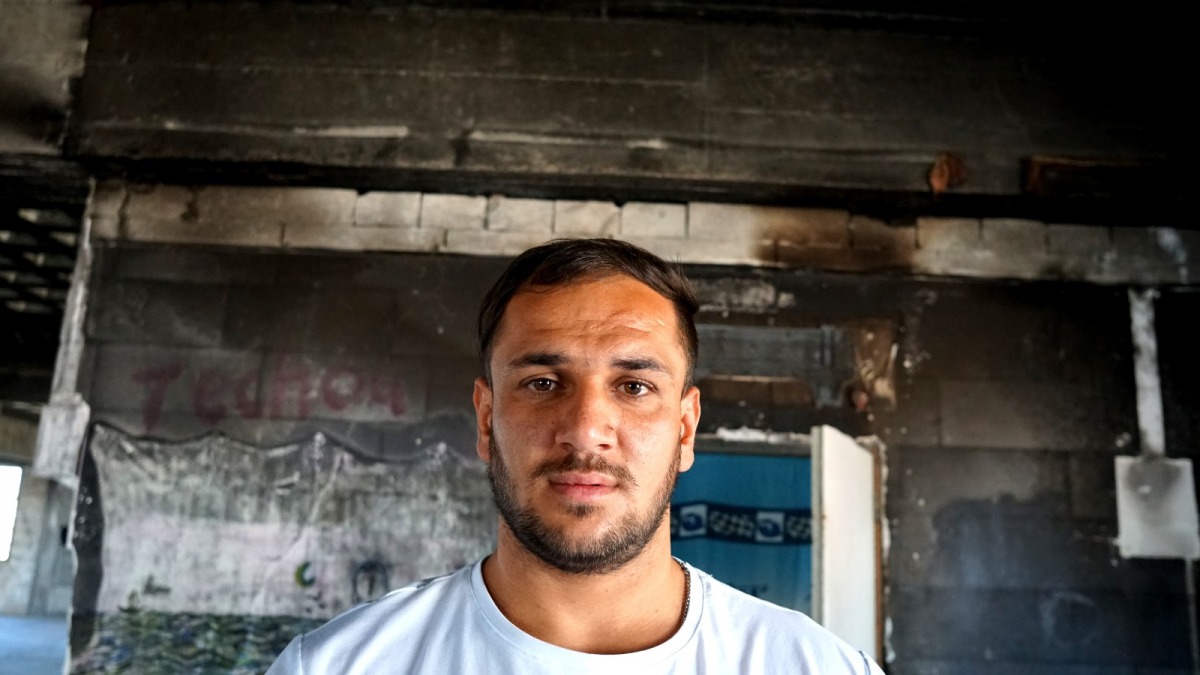
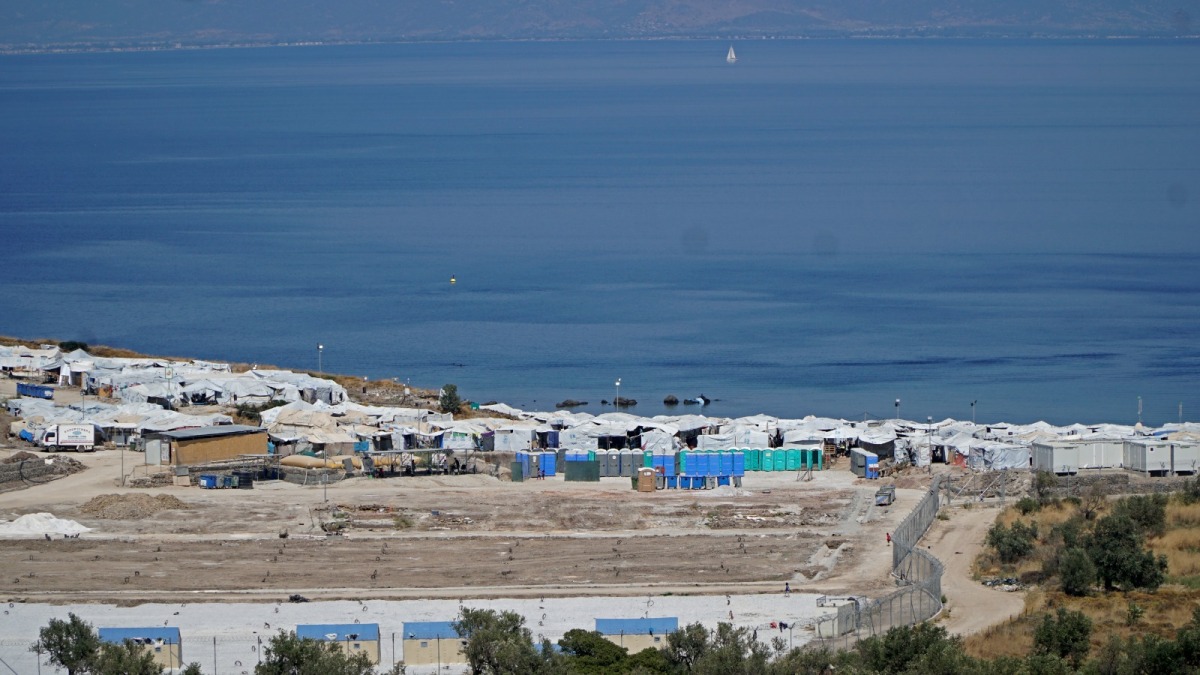
“Nuances”is a work in progress by South American documentary maker Fellipe Lopes. Since May 2021, Lopes has been on the ground in some of the most notorious refugee camps in Europe, on the Greek island of Lesvos (Lesbos), just off the coast of Turkey.
“Nuances” seeks to understand the ‘refugee crisis’ from the perspective of asylum seekers and refugees, and their relationship with humanitarian workers and volunteers living and working on the island. Lopes is soon to finish the interviews and the recording of the documentary. Until now, Lopes has been working voluntarily, at his own expense. He has now started a Kickstarter to crowdsource €7,000 for the next stage of the project, including post production and distribution.
Daniele Idini (DI): How long have you been in Lesvos now and what’s the situation like?
Fellipe Lopes (FL): So I have been in Lesvos for the last six months and working on this documentary since I arrived. This documentary is a collection of interviews with asylum seekers, refugees, migrants explaining the challenges they are facing. It seems like they basically have only one option when it comes to work, which is basically to work as an interpreter. And this is not something that makes all the migrants and refugees happy because they are revisiting all the trauma through other people’s experience.
DI: So basically, you are saying this work is, in a way, necessary for the camp’s operation, but is, in a way, preventing migrants from escaping the camp’s system,.
FL: Exactly. These migrants are well suited to this kind of work, because they often speak the necessary languages – it might be Farsi, or Arabic, Lingala or French. They also can understand the struggles other refugees have been through, having experienced similar things themselves. On the other hand, however, they have ended up working in the humanitarian sector when they actually need humanitarian support.
This is one of the topics covered in the documentary. Another issue, is the kind of social and legal challenges humanitarian workers are facing here. It’s about the authorities. The role of the police force and the army in regards to upholding the right of media coverage.
The documentary is set with the island of Lesvos, and its capital Myteline, in the background. But the documentary centres on the stories that happen inside the camp, stories that happens outside of the camp, and the reasons and motivations for those asylum seekers coming to Greece. And as well, we have a really interesting part of the documentary that examines the pushback happening here in the Aegean Sea, which divides Turkey and Greece.
We have a lawyer who’s been working around issues related to pushbacks for the last five years. We also have a German journalist who’s been covering all the pushbacks as well for the last three years. Obviously, the situation in Lesbos is so dynamic and things are changing rapidly. It’s been really challenging for me to keep up with this story. Things have moved so fast, and that’s maybe the reason I’m still here, and will stay a little bit longer, because these are stories that are developing.
The dynamics in the camps are changing, which is new. They call this the new camp, which is where they’re trying to reduce the number of asylum seekers. Since the fire that happened last year, the government promised to build a new camp. But this never happened, basically because the local community are against new camps in the area. As a result, the temporary camps have become the de facto new camp.
DI: So your documentary also tackles the relationship between the refugee camps and the local community?
FL: Yes. I spoke with locals. Some are understanding of the necessity for a new camp. With that said, whether there is a new one or not, there are still 3,000 migrants on the island awaiting resolution of their cases. – building a new camp won’t solve the problem. they need to be processed
Obviously, the freedom of these people is highly restricted.
In the end, everything goes back to the camp. It isn’t a liveable reality. There are no schools in the camp and there’s only precarious legal and medical support.
Last week, a woman passed away inside of the camp, for example. This is the reality that is happening in Lesvos. And everybody expects another massive wave of asylum seekers coming to Greece due to the situation in Afghanistan. Less and less will reach the Greek shore, however, because of the increased activity of the Greek coastguard and the European Frontex.
Demonstration in support to Afghanistan.
DI: Why should the general public support the making of this documentary?
FL: It’s an overview of a situation that’s happening in Europe; it’s happening in Greece, through Greek laws, through the Greek system. But there are comparable problems in terms of the pushback between Bosnia and Croatia. The same thing is happening between Belarus and Poland. The same thing is happening in the Mediterranean Sea, between Libya and Italy, in Libya itself, and in Spain.
This documentary shows that there is still a massive flood of refugees coming to Europe and obviously the policies in place are not facilitating those asylum seekers to claim asylum in Greece. This documentary is set in Lesvos, but it records something that is happening throughout Europe’s borders.
People keep using this term a ‘refugee crisis’. This is a mistake. More than a refugee crisis, there is a policy crisis.
What we’re witnessing is a series of legal decisions that are impacting the lives of those who are exercising a right to apply for asylum in Europe. These people are not criminals. The Geneva Convention guarantees them a right to apply for asylum. But this right is not being upheld properly. People are waiting one, two, three, or even over five years to have their claims processed.
Interview edited for brevity and clarity by Ben Pantrey.
To tell you the truth, I could easily have been a father, and I would be a father now, had my wife J not miscarried a baby we once made. This was in 2002, so he or she would have been eighteen by now. So strange to envisage it: another life – for me, for J, and for that life. And had that bundle of multiplying cells survived to become an independent living being, would it have fundamentally altered the attitudes I am expressing now? Or confirmed them? Although I have to confess that for the most part I was just going along with the whole plan for J’s sake.
Women feel motherhood from the time of conception. Men don’t feel fatherhood until they are holding their child. I even remember a trip to Holles Street Maternity Hospital to make a sperm donation, so that it could be tested for any abnormalities, due to side effects from other medical treatment I had been receiving. The next time I went to that place was to visit J in a ward when she was recovering from losing the baby. She hadn’t even known that she was pregnant.
I said terrible things to her, while she’d been campaigning for me to father her child, before I acquiesced. I’d told her she was only making love in order to conceive. I’d told her she would be a terrible mother.
Despite having her own human foibles, I was wrong – if for no other reason than the fact that she is nothing like my mother. Just as I am nothing like her father – a fear she speculatively expressed early in our relationship. Of course, she could have been a bad mother for entirely different reasons than my mother was, but, just as equally, possibly not. And how will we ever know, now?
All she ever wanted was for us to be a family. All she wanted was to nurture, to have some extension of herself to love. I was not mature enough at the time to grasp that. Instead, I’d asked her, fearing for our freedom, “What will you do with this baby?” To which she’d replied, not seeing any problem, “Love it.” (‘What you get married for if you don’t want children?’ T. S. Eliot, The Wasteland, II. A Game of Chess. Companionship, Tom?) I can only excuse such wretched behaviour by pointing to Paul Stewart’s study of Beckett, Sex and Aesthetics in Samuel Beckett’s Work (2011), where he deflects accusations of misogyny in the maestro’s oeuvre by positing that because for him women represent the threat of progeny, they are therefore simultaneously desired and reviled.
Speaking of women, not to be upstaged, my mother chose to end her time on Planet Earth while J was miscarrying (which began before but ended after Mam died). Had J gone on to discover that she was pregnant, and had we given birth to a healthy baby, I would have read that as my mother giving us a parting gift, almost a reincarnation of her spirit.
As it turned out, I see it as my mother robbing us of our unborn child, taking our unformed baby away with her, instead of leaving it to us – as though we were unworthy, as though she didn’t trust us with it: the last thing she took from me. My mother was always terrified that I’d get someone pregnant out of wedlock. Hey Ma, not to worry: I didn’t. But when I did get married and make my wife pregnant, nothing came of it. Is that some kind of subtle revenge? And if so, by who on whom?
I could still be a father now. But not if I can help it. J can no longer be a mother. If this is still a source of sadness and regret for her, I apologise profoundly and profusely.
Foreign Adventures
Freedom?
‘Fearing for our freedom.’ Did we do so much more with it, than the breeders in our circle of friends and acquaintances? Sure, we were able to holiday in Italy, Portugal, Spain, Greece, Morocco and India, while they had to settle for annual summer trips to the Aran Islands; and we were able to take weekend city breaks to Paris, Amsterdam, Delft, Bruges, Ghent, Prague and Tallinn, while they were not kicking back but rather gearing up to arrange play dates and other activities to keep the children occupied during the days off, and ferrying them to and fro – because we didn’t have to worry about getting kids on and off aeroplanes, and because we had more disposable income.
Not that we had that much more: we just didn’t have to make as much, and what we had went further. I certainly got to go to way more gigs than my peers, not having to worry about sourcing competent and reliable babysitters and being able to afford to pay them. I’ve probably read a lot more books than someone preoccupied with childcare.
If you think the trade-off wasn’t worth it, then prove me wrong.
Paternal Bonding
Son or Daughter?
If I had had children, would I have preferred a son or a daughter? The latter, hands down. Fathers favour daughters, mothers favour sons (and, generally, vice versa) – or rather, a parents’ relationship with a same sex child is usually more complex and fraught than it is with a child of the opposite sex.
Shakespeare was fond of daughters as redeeming of all fathers’ misdeeds, at least in the later ‘romances’ (Pericles’ Marina, The Winter’s Tale’s Perdita, Cymbeline’s Imogen, The Tempest’s Miranda). However, his earlier King Lear, that most mistreated of parents – even if he did bring much of it on himself – also had daughters, and it didn’t really work out so well with the first two.
Admittedly, he did have one loving, dutiful daughter, notably getting it right with the youngest, to compensate for the elder two cruel, self-interested termagants he also spawned. One out of three ain’t bad. But Cordelia dies anyway. That’s the difference between romance and tragedy. But while there may be some slim hope for a daughter, becoming a father of a son instantly marks you out as a bad guy, to be rebelled against and toppled – even, if we are to take the story of Oedipus literally rather than metaphorically, to be killed.
While much depends on the extent of your offspring’s sedition, it is kind of impossible to win, as a Dad. No way am I re-enacting that particular little domestic yet universal drama. Some may say I am merely operating out of fear of failure as a father, and am crippled by such anxiety, which is itself a kind of self-fulfilling prophecy: because I think I will fail as a father, I will fail as a father. But all fathers, and mothers, fail, to a greater or lesser extent.
To recast a favourite formulation from Beckett: to be a parent is to fail, as no other dare fail. Then again, ‘Try again, fail again, fail better.’ But how many0 chances do you get in one life to succeed? Maybe better not to try at all. Others may posit that my lack of progeny, because of distaste at the world, because of its inherent unfairness, is also a self-fulfilling prophecy: that is, because I view the world as distasteful because it is unfair, having progeny would have turned out to be distasteful and unfair too, for me and also for them – rather than redemptive. And, indeed, it is true that one has to somehow believe in life, and the future, to have children. Or, at least, it helps. But for those who identify with Miguel de Unamuno’s Tragic Sense Of Life, the whole enterprise can seem somewhat futile. In any case, I view the failure of parenthood as inevitable – because even the most conscientious of parents will tell you that you can look after your children only up to a certain point, and you can’t stop them from making all those stupid mistakes that you made (even those you know about).
Actually, I think I would be – or rather – would have been, a pretty good father, all told. But what if, for a myriad of unforeseen reasons and circumstances, I wasn’t? I see no reason to make an irreversible bet on finding out. I don’t think the odds are great, and I still don’t see the percentage in it.
The Act of Parturition
I have always found the thought of the act of parturition, that is giving birth by pushing a baby out into the world, vaguely repulsive, definitely messy and probably very painful.
How do women do it? Maybe I’m just a wimp. Or maybe not, since quite apart from all the blood and guts involved, you can even die while doing it. (Is it really any wonder that 10 to 15 per cent of women suffer some form of postnatal depression, and that one in a thousand develop puerperal psychosis, given the utter physical trauma attendant on forcing yet another member of the next generation out into this hostile world?)
It has always reminded me of the chestburster scene in Ridley Scott’s Alien (1979), a sequence specifically designed to prey on male fears, according to critic David McIntee in his Beautiful Monsters: The Unofficial and Unauthorized Guide to the Alien and Predator Films (2005). ‘On one level, it’s about an intriguing alien threat. On one level it’s about parasitism and disease. And on the level that was most important to the writers and director, it’s about sex, and reproduction by non-consensual means. And it’s about this happening to a man.’ He notes how the film plays on men’s fear and misunderstanding of pregnancy and childbirth, while also giving women a glimpse into these fears.
Similarly, David Lynch’s Eraserhead (1977) taps into themes of tokophobia and fear of fatherhood, while Roman Polanski’s Rosemary’s Baby (1968) envisions pregnancy and childbirth as a form of Satanic possession.
But birth is where we all come from (unless we’ve been cloned, or are the products of in vitro fertilisation, without the subsequent implantation in a uterus – a far safer and more sensible way of doing things, in my opinion), so there must be nothing to it. (Ducks and runs for cover.) I’m joking, of course.
Any account of giving birth I’ve heard or read makes it sound like it takes place in a low circle of hell. (‘They don’t call it labour for nothing’, etc. ‘Push! Push!’ Adam’s – and, more’s to the point, Eve’s – Curse.) Anne Enright, Claire Kilroy, Sinead Gleeson and Jessica Traynor have all written eloquently on the vicissitudes of accouchement (some more affirmatively than others), but the prize for most visceral description must go to Shulamith Firestone, who in The Dialectic of Sex: The Case for Feminist Revolution (1971) wrote that ‘…childbirth is at best necessary and tolerable. It is not fun. (Like shitting a pumpkin, a friend of mine told me when I inquired about the Great-Experience-You-Are-Missing.)’
Always allowing for the possibility that those describing the process are exaggerating for effect in order to elicit kudos, there still has to be a better way of doing the thing – if doing the thing must be done. Indeed, it is the same Firestone who was an early proponent of cyberfeminism, that is the idea that women need technology in order to free themselves from the obligation of reproducing, thus pointing to a future in which individuals are more androgynous and views of the female body are reconstructed. Her arguments have been subsequently developed by Donna Haraway, who in A Cyborg Manifesto (1985) sought to challenge the necessity for categorisation of gender, positing that gender constructs should be eliminated as categories for identity.
About the many and various sexual acts I have performed, I can attest to no corresponding squeamishness, or horror of bodily functions, on my part.
Stroller or Buggy?
I also have a morbid fear of the vehicles known variously as Buggies (European English), or Strollers (American English). Can we settle on the more universal and neutral Pushchairs, or the perhaps posher Perambulators? – although which term we employ can create some ambiguity as regards signifier and signified: are we referring to the smaller, fold-up apparatuses where the baby sits facing away from the pusher; or the larger, more solidly built contraptions resembling nothing so much as a Sherman tank going into battle, where the little stranger faces their means of locomotion?
Whatever you care to call them – and in any case it is both I have in mind – I defiantly distance myself from them in the street and in supermarkets, full sure that they have no other purpose or mission than to nip at my heels, or crash into my shins, or crush my toes. Those in charge of them should really be more careful. Perhaps these ‘go-cars’ and ‘prams’ should come with a health warning; or better still, be licensed.
Cyril Connolly famously singled out ‘the pram in the hall’ as one of his Enemies Of Promise (1938), a phrase, along with ‘the tares of domesticity’, that has been seized on by a subsequent generation of feminist criticism as blatantly misogynistic (although maybe not so anti-women as previously thought: vide the reference to Sheila Heti’s Motherhood above). ‘The overarching theme of the book…’, according to that ever-reliable critic Wikipedia, ‘is the search for understanding why Connolly, though he was widely recognised as a leading man of letters and a highly distinguished critic, failed to produce a major work of literature.’ And we think we invented ‘creative non-fiction’? The full quotation from Connelly reads: ‘There is no more sombre enemy of good art than the pram in the hall.’ Me? I don’t even have that excuse.
Bouncy Castle
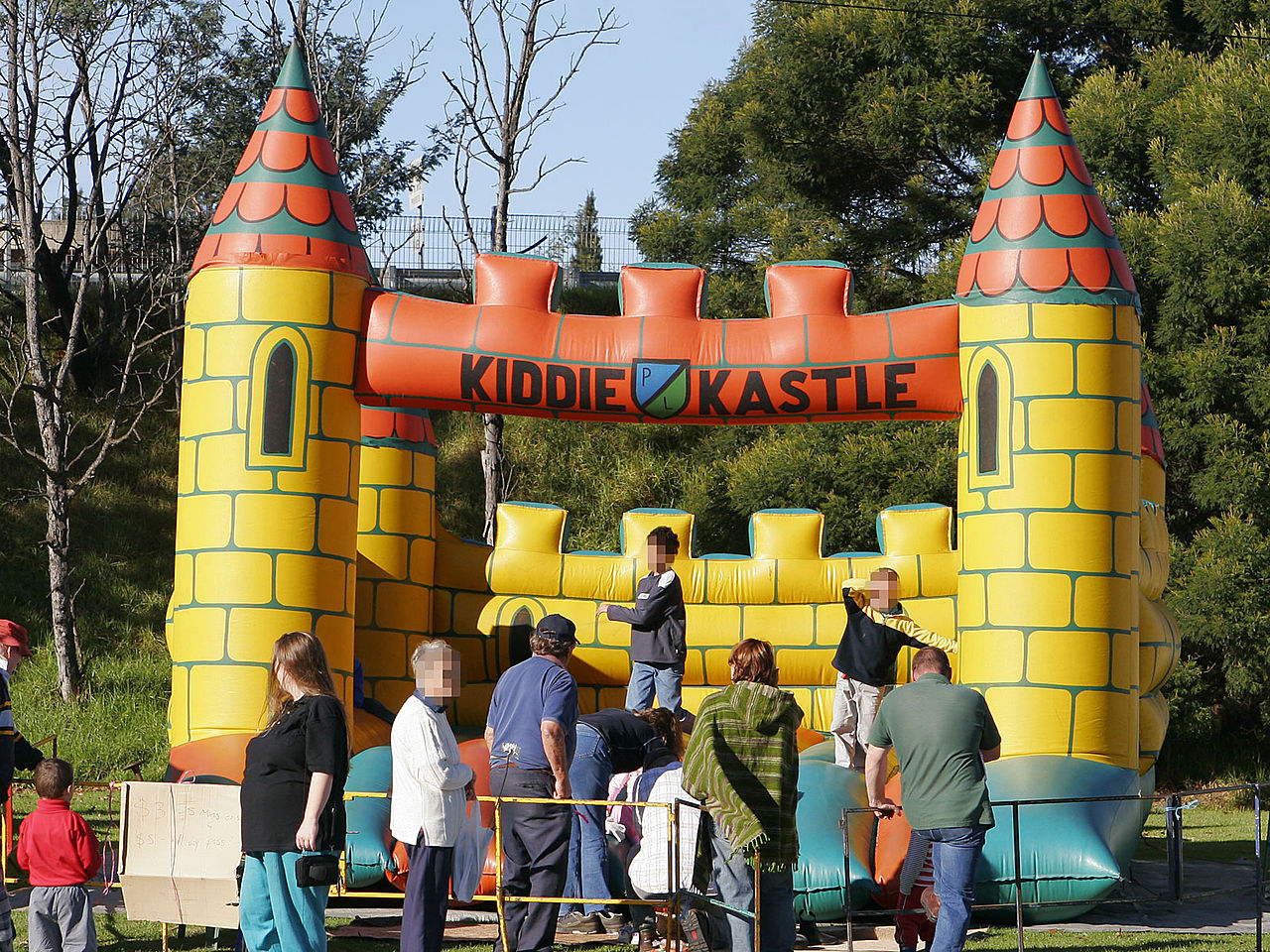
While we’re on subject of loathsome objects best avoided, here are two words guaranteed to strike fear into the heart of any prospective parent: bouncy castle. Also, on the positive side, it’s an unalloyed boon that I will never be obliged to read the Harry Potter books, and pretend to like them. For these small blessings, much thanks.
Most young parents of my acquaintance seem to spend their lives merely running a busy creche with someone they used to go out with (or ‘date’, as the Yanks say). More generally, openly declaring oneself an anti-natalist from the outset (out of the closet!) does help to circumvent that tiresome “Where is this relationship going?” discussion, raised at a certain point in most fledgling liaisons – at least by people whose main objective in their amatory affairs is to conduct a round of interviews for potential husbands and fathers (or wives and mothers); while furthermore, in the longer term, contributing to the avoidance of the workmanlike rigours of ‘trying for a baby’ (those daily doses of folic acid!), which can only turn what should be a spontaneous pleasure into a meticulously planned duty roster.
Imagine even having to attend a Parent/Teacher Meeting – as a parent or as a teacher. To listen to your hope for the future be praised or blamed by a jobsworth who probably hasn’t as broad an education or as much life experience as you.
Or to listen to a pushy parent, convinced their little tyke is a genius, and that the fault for any deficiencies the scamp may manifest is to be placed firmly at your door. That’s the difference between school when I was going through it, and school now: back then, parents deferred to teachers, and sat there and took it; nowadays teachers are constantly on trial by parents, and everything their little darlings say is believed. Rate My Teacher? Nah, Rate My Student, more like; or, more’s to the point, Rate That Parent.
Again, I have personal experience of this phenomenon: my mother wouldn’t talk to me for a week after my educators informed her at one such confab that “He’s only using half his ability.” I wonder whose fault that was? The teachers’ or my mother’s? The school’s or my home’s? It certainly wasn’t mine, at that age.
ChildrenofMen
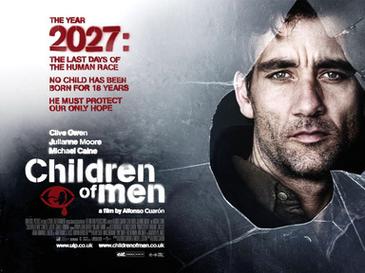
Children of Men
The literary and filmic genre most concerned with human extinction is dystopic science fiction. Alfonso Cuarón’s Children Of Men (2006) (based on P. D. James’ 1992 novel of the same name, with the addition of the definite article) envisages the world of 2027, when two decades of human infertility have left society on the brink of collapse.
The narrative arc of both book and film is a journey from despair to hope, sponsored by the notion that any such hope depends on the birth of future generations. Otherwise, all we can look forward to is despair, chaos and anarchy.
It is, in many ways, a modern-day nativity story, where the birth of a child is elevated to the status of The Coming Of The Saviour, who will redeem humanity from its many sins and vices. James herself has referred to her book as ‘a Christian fable’.
Denis Villeneuve’s Blade Runner 2049 (2017) (a sequel to Ridley Scott’s Blade Runner (1992), which was in turn based loosely on Philip K. Dick’s 1968 novel Do Androids Dream of Electric Sheep?) makes great issue of fertility as a prerequisite for, or at least an indicator of, humanity: the ability to reproduce makes replicants more human-like, and therefore more sympathetic and relatable.
Thus, if Deckard (whose standing as human/replicant is left ambiguous) has fathered a daughter with Rachael (a replicant), it renders the termination of replicants not only futile, but unethical and murderous. In the novel, the android antagonists can indeed be seen as more human than the human (?) protagonist. They are a mirror held up to human action, contrasted with a culture losing its own humanity (that is, ‘humanity’ taken to mean the positive aspects of humanity).
Klaus Benesch examined Do Androids Dream of Electric Sheep? in connection with Jacques Lacan’s ‘mirror stage’. Lacan claims that the formation and reassurance of the self depends on the construction of an Other through imagery, beginning with a double as seen in a mirror. The androids, Benesch argues, perform a doubling function similar to the mirror image of the self, but they do this on a social, not an individual, level.
Therefore, human anxiety about androids expresses uncertainty about human identity and society itself, just as in the original film the administration of an ‘empathy test’, to determine if a character is human or android, produces many false positives. Either the Voigt-Kampff test is flawed, or replicants are pretty good at being human (or, perhaps, better than human).
This perplexity first found an explanation in Japanese roboticist Masahiro Mori’s influential essay The Uncanny Valley (1970), in which he hypothesised that human response to human-like robots would abruptly shift from empathy to revulsion as a robot approached, but failed to attain, a life-like appearance, due to subtle imperfections in design. He termed this descent into eeriness ‘the uncanny valley’, and the phrase is now widely used to describe the characteristic dip in emotional response that happens when we encounter an entity that is almost, but not quite, human.
But if human-likeness increased beyond this nearly human point, and came very close to human, the emotional response would revert to being positive. However, the observation led Mori to recommend that robot builders should not attempt to attain the goal of making their creations overly life-like in appearance and motion, but instead aim for a design, ‘which results in a moderate degree of human likeness and a considerable sense of affinity. In fact, I predict it is possible to create a safe level of affinity by deliberately pursuing a non-human design.’
Brave New World
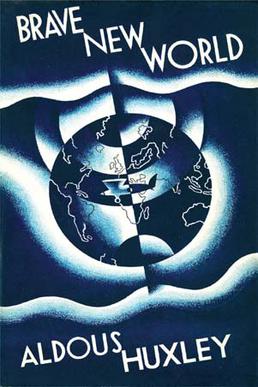
Aldous Huxley’s Brave New World (1932) paints a dire picture of society in 2540, rendered selfish, consumerist and emotionally passive through the (mis)application by a ruling elite of huge scientific advancements in reproductive technology (prefiguring that tabloid terror, ‘test tube babies’) and narco-conditioning.
But what if these grim prognostications about the disappearance of humanity, either literally or metaphorically, could be turned on their head? In fact, they have been. This horrifying dystopia could without too much trouble and just a little finessing be flipped into a much-to-be-aspired-to utopia, as Huxley himself attempted in Island, the 1962 revision of his more famous work.
This exploration of the possibilities opened up by biochemistry and genetic engineering for curing man, the sick animal, of his desires, violence and neuroses, sometime in the distant future, is taken up in more depth by Michel Houellebecq in The Possibility of an Island (2005). The distant descendants of Daniel have been culled from his DNA, with all the annoyingly rancorous human traits ironed out of the mix. So, we are transported to 2000 years in the future, where Daniel25, like the rest of these ‘neohumans’, passes his days in neutral tranquillity, adding his commentary to his ancestor’s personal history, striving to understand what could have made him so unhappy, while the remnants of the old human race roam in primitive packs outside his secure compound.
It’s a startlingly beautiful planet, Mother Earth. But we are royally fucking Mother Nature up, big time. We don’t deserve it, or her. An analogy can certainly be drawn between the harm humankind has caused to its own environment, and the harm that parents do to their own children. High time we terminated those relationships; or, at the very least, radically recalibrated them.
How do you explain to a child a world in which Donald Trump was the President of the United States of America for four years? And that his cabal of ghouls, grifters and vampires – many of them members of his own brood – held sway? And that seventy million people still voted for him a second time around? Worse, what if that child grows up thinking that state of affairs is somehow normal? Worst, what if s/he grows up into the kind of person who would vote for him or his ilk themselves, despite your best parental efforts at instruction, guidance or influence? That such people are even permitted to exercise the franchise, let alone allowed to breed, is deeply disturbing (because they would seek to curb your voting and reproductive rights). What if you, however inadvertently, breed one of them?
But, irony of ironies: to my father, I would be a failson, in terms of passing on his values and beliefs, the thing he held most dear: his Roman Catholic faith. Devotion to God sorted everything out for him, made sense of his world. God never meant much to me, after a certain age, except for the hassle encountered if you admitted to scepticism regarding his existence.
Donald Trump is a person who could have an infinitive number of pejorative adjectives affixed to his name, but none of them are necessary: everyone already knows what he is; yet many people voted for him regardless, either because they endorse this, or in spite of this. The same is true of Boris Johnson as Prime Minister in the United Kingdom, where 40 per cent of the British electorate will always vote Tory, no matter what! Tell that to the children. Or, given the questionable quality of the main opposition to either Trump or Johnson, try telling them that two-party democracy is somehow a good idea. Perhaps I am just losing it. Maybe I am at the end of my tether.
Have I missed out? Undoubtedly, parenthood is a common human experience I will not share. But I don’t feel particularly bad or bereft about it, especially when I look at the hassles of child-rearing, and the often fractured relationships and tensions between my peers and their offspring (although I will concede that I estimate that this generation is making a better fist of fostering good relations with their children than the previous generation did – a vast generalisation, I know, but something in the air due in some part to less authoritarian parenting styles. I’m thinking here about witnessing a good friend of mine taking a phone call from his thirteen-year-old son, and promising when prompted to send on a copy of Led Zeppelin IV for his boy’s delectation). I read in an interview with poet Michael Longley where he said that having children was the most profound thing he’s ever done, more so than all the poetry. But would I have felt the same way? There is no guarantee.
There is the question, already broached, of who will look after me in my old age? Peasants are supposed to churn out lots of nippers, as the kind of security provided by insurance policies. (Aristos don’t need as many, because they can already rely on their inherited wealth, which will be duly passed down to their heir and the spare, which was all that was necessary and sufficient for them to sire.) But these days, such indemnification is more likely to have relocated to Australia than to be on hand for your decay and demise. They could even predecease you. The idea that your children will be a comfort to you in your old age is at best a cosmic gamble – as is bringing them into the world in the first place. It is fruitless to speculate on whether or not your offspring can or will help to alleviate the indignities and sufferings of your senescence. Such mortifications, and how I manage them, may be something I am only beginning to find out. As I would have had to do anyway, with or without children.
If I had children, would I be writing this? No, and for more than just the obvious reason (that is, that I don’t have children). Odds on I’d be so busy looking after them and preoccupied about their welfare and their future that I wouldn’t have the time, energy or inclination to write at all (just as Sheila Heti speculates). Which leads to a further consideration concerning children as a form of sublimation for personal ambition, as a kind of compensation for lacks and voids and failures in your own life up until you have them. You may believe that they complete you, but is that fair on them? Or on the world? For whom, or for what, do these proud parents think they are doing a favour? The world, or themselves? Whatever their justification, the answer is neither, I suspect.
We were all kids once. Would we really like to go back there?
Maybe it all comes down to Eros and Thanatos. What if the death instinct is stronger than the sex instinct? It always is, in the end. Love doesn’t conquer all. It doesn’t conquer Death. Unless you are talking about what you leave behind, after your own extinction. For many people, for good or ill, that is their children. But there are other things you can leave behind. Even if it is only a form of negative space. I still regard my childlessness as almost unquestionably my greatest achievement. It is part of what I will leave behind. It is my gift to the world. I bequeath to all my unborn children, imagined and unrealised, forever unsullied and unfulfilled, mercifully untainted by human existence, all my Love.
Feature Image: Three daughters of King Lear byGustav Pope
As evidenced by fossilized pollen, it was once covered by annual grasses and low shrubs, It was green, verdant, populated by antelopes, giraffes, rhinoceros, supporting all life forms including settled human beings. Cave drawings in southern Algeria (Tassili) testify to this lifestyle.
Disaster came in the year 3,440 B.C..
According to carbon-14 dating of cores from the Atlantic coast of Senegal as well as from Lake Koa in Chad, Summer temperatures increased sharply in the Sahara region and precipitation decreased. This event devastated the people and their socio-economic systems. The recently-introduced farming techniques no longer supported life.
It was a case of global warming in a specific place.
According to climate theoretician, Dr. Martin Claussen of the Max Planck Institue, the disaster was partially initiated by one of the regular changes in the Earth’s orbit and the tilt of its axis (earth wobble). July happened in January!
The ensuing warming and feedback effects on Vegetation and Atmosphere in this particular area combined to produce a sudden, localised desertification which resulted in the Sahara.
This transition to the Sahara’s present arid climate was not gradual, but occurred in two specific episodes. The first, which was less severe, occurred between 6,700 and 5,500 years ago (4,700 B.C. and 3,500 B.C.). The second, which was brutal, lasted from 2,000 B.C.to 1,600 years ago.
What has this to do with Ireland?
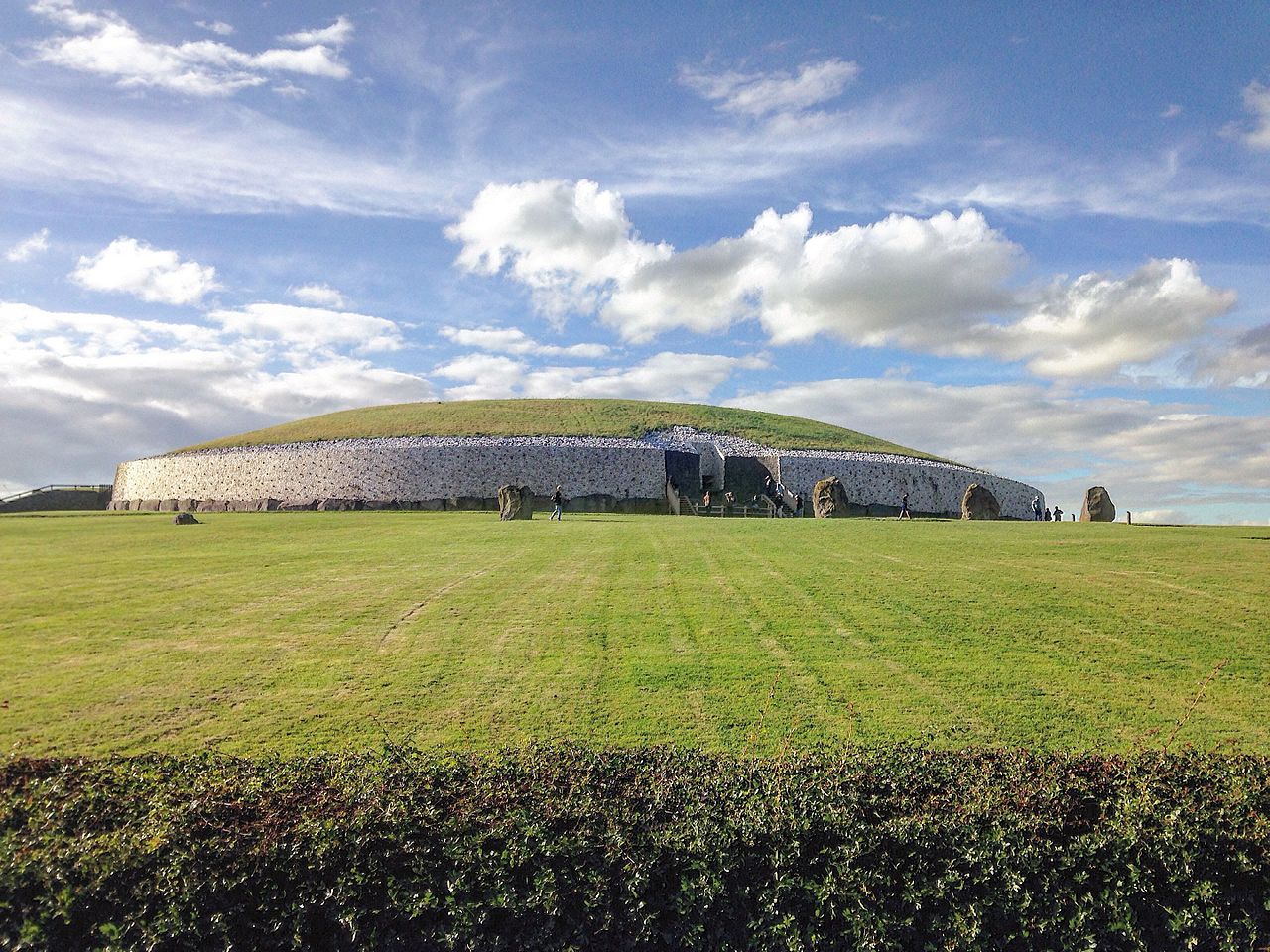
Newgrange (Brú na Bóinne)
Newgrange (Brú na Bóinne), the finest and greatest Megalithic structure (earlier than Stonehenge) in Europe, was built by ‘unknown farmers’ in approx. 3000 B.C.
At the same time the first Egyptian dynasties were founded.
It is my thesis that Newgrange and the Egyptian dynasties were developed by a long-civilised and cultured people whose origins were in the Sahel of North Africa.
Where to?
Once their lifestyle was destroyed, where did the people of the Sahara go? Many escaped northwards to the still fertile coasts of North Africa and eastwards to the Nile. This sudden incursion created extreme pressure on the existing inhabitants of the thin North African coastal littoral. Something had to give. What did they do?
In approx. 3000 B.C. they took to the sea. Their DNA traces (E1b1b1- Y) are to be found in the southern regions of most Mediterranean countries. Far from being a far-fetched idea, a North African Berber DNA haplotype is shared by, among others, people as faraway as the the Pasiegos of Cantabria in Northern Spain and the Saami people of Finland!.
Newgrange in Ireland is the oldest and finest example of a megalithic culture that spread along the Atlantic coast from North Africa to the Baltic.
Newgrange has been dated to 3000 B.C. and is slightly older than the Pyramids of Egypt. It and Ireland’s impressive megalithic heritage were built in about the same period as the desertification of the Sahara. The megalithic culture spread up the Atlantic coasts from North Africa where similar structures proliferate.
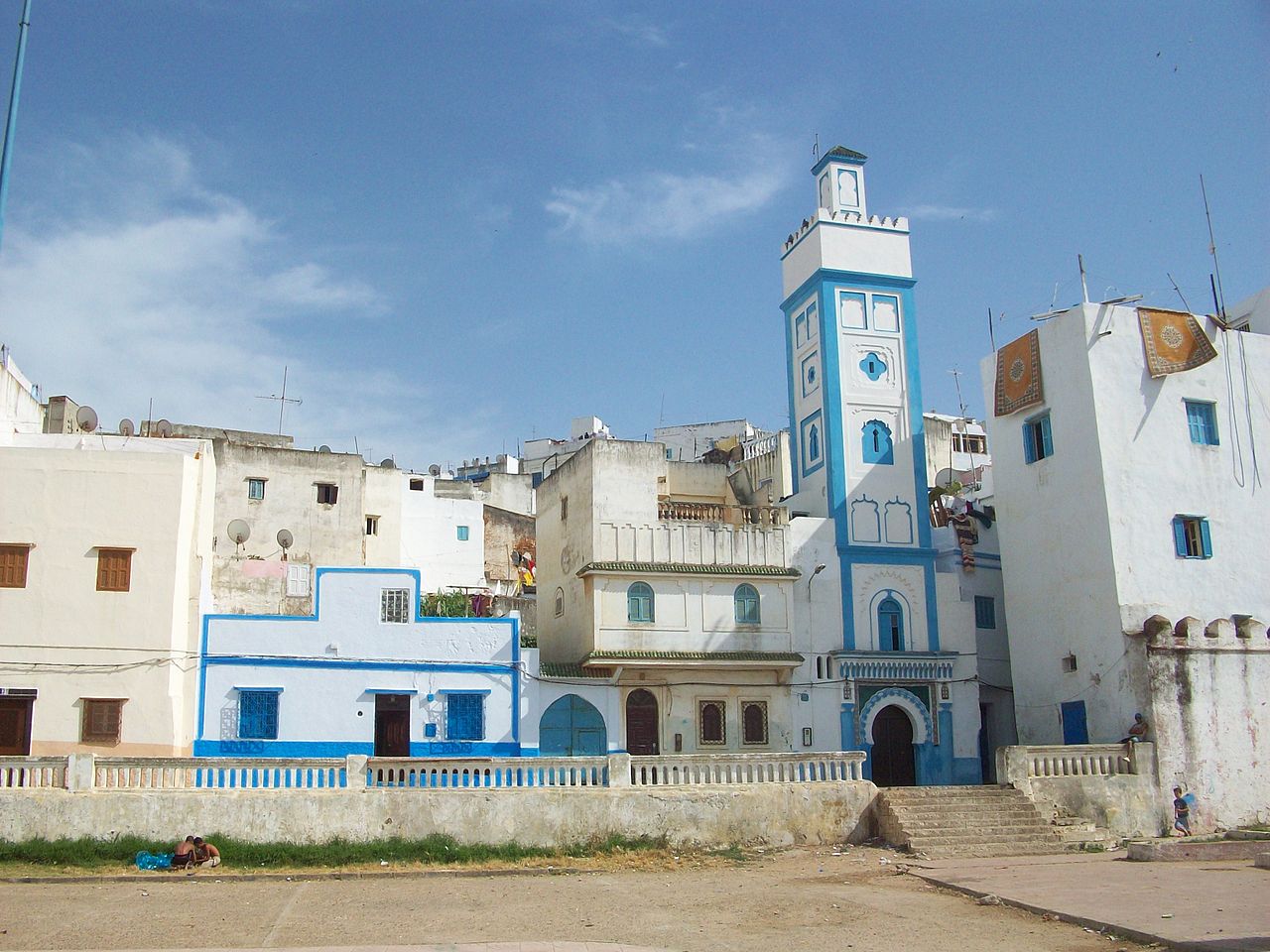
Thirty years ago this writer found the equivalent of Newgrange in Larache, Morocco – which was also colonised by Phoenicians after 800 B.C. – and indicates a continuity of Atlantic coastal movement.
Medina of Larache, Morrocco.
The Sea is Key
Professor John T. Koch of the University of Aberystwith wrote the following in Celtic from the West:
No one has taken the possibility of Celtic coming from ‘Hispania’ to the other Celtic countries seriously since we stopped taking Lebor Gabála Érenn seriously, but it is now at least worth pausing to review what it is we think we know that makes that impossible.
Professor Barry Cunliffe (Oxford) co-editor of the same collection of essays, repeats his long-held advocacy of the reality of an Atlantic coastal trading community, active at least as long ago as the Bronze Age – and probably much earlier – along which people moved and shared languages and cultures. The area in question stretches from Scandinavia as far south as Mogador – which was once a Phoenician colony. The sea is, as always, the key to such perspectives. The sea connects, does not divide.
Linguists such as Heinrich Wagner, Pokorny, Orin Gensler, Vennemannet alia have long held that there is a substratum of North African languages (Hamito-Semitic) underneath the first official language of Ireland – Gaelic.
The Grandfather Clause is a legal entity in Western Law. It is an exemption in which an old rule continues to apply to some existing situations. Sometimes, the exemption is limited; it may extend for a set period of time, or it may be lost under certain circumstances.
It means that traditional customs and rights cannot be arbitrarily abolished by new legislation.
The simplest example is a claim to a traditional right-of-way through private property. The courts often entertain such claims.
Suppose that a North African appeals for asylum in Ireland, is refused and threatened with deportation. Might he/she invoke the Grandfather Clause?
He/she might perhaps claim that when the ice melted his/her ancestors were the first tentative inhabitants of Northern Europe – including Ireland – 10,000 years ago and that in Ireland there exists physical, linguistic and literary evidence of a continuity of such seaborne immigration and occupation by his/her ancestors down the years – seven thousand years! This continuity would embrace the first Neolithic farmers, then the Phoenicians, then the Algerian Corsairs of the seventeenth century. Could it be recognised as a legal, or at least a moral, precedent?
The science of genetics i.e. evidence from the human genome project would support such a proposition.
The argument would be that his/her ancestors arrived here long before we were the ‘Irish’ and took possession of the island. Therefore he/she, as a putative descendant of, say, the Fomorians, the Fir Bolg’s or the De Dannan, the Phoenicians, had a right to stay here! The fact that their occupation predated the concept of Land Deeds is relevant. (Of course the abused rights of native American Indians – who also had no land deeds – are also relevant to the case.)
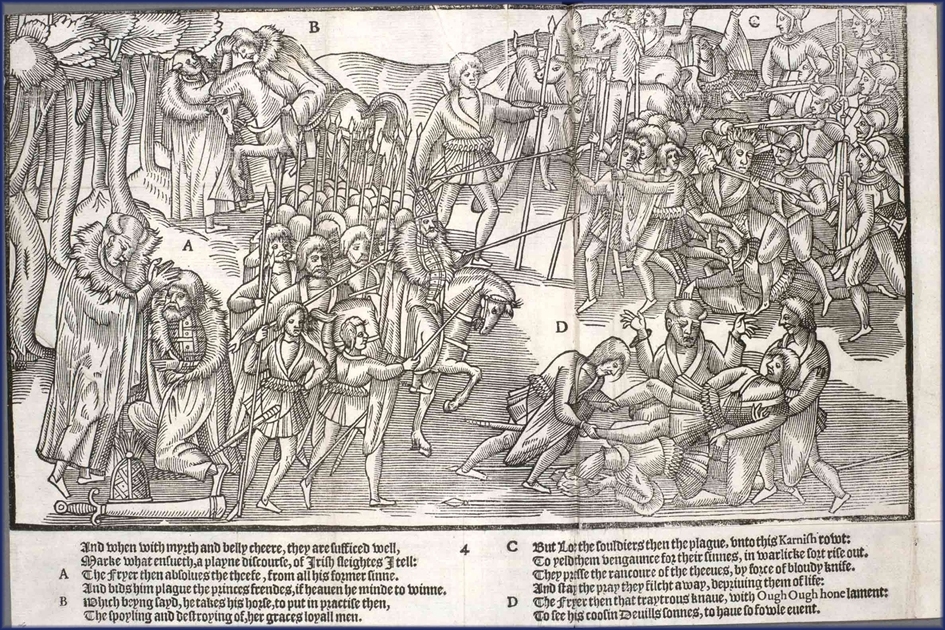
he Irish Gaelic chieftain receives the priest’s blessing before departing to fight the English.
A More Recent Analogy
In the sixteenth and seventeenth centuries Elizabethan and Cromwellian soldiers came to Ireland and were paid off with stolen tracts of Irish land. Nevertheless, after four centuries of such (often absentee) ownership no one could realistically take a case challenging the rights of the Anglo-Irish descendants of those soldiers. The suggestion that the Irish State might repossess such lands and forcibly deport the descendants without compensation would be treated as absurd – as well as inciting violence! It would be a stretching of the Grandfather Clause which only a despairing defense lawyer might use as a persuasive metaphor.
However, the rehearsal of the above asylum seeker’s argument – before being laughed out of court – would be an opportunity to reveal the complex background of colonialism and racism that has resulted in attitudes to immigrants of colour. In Ireland, native biodiversity is considered sacrosanct. Foreigners (esp. black) are considered an invasive and basically threatening species.
The ancient Europa is now Fortress Europe!
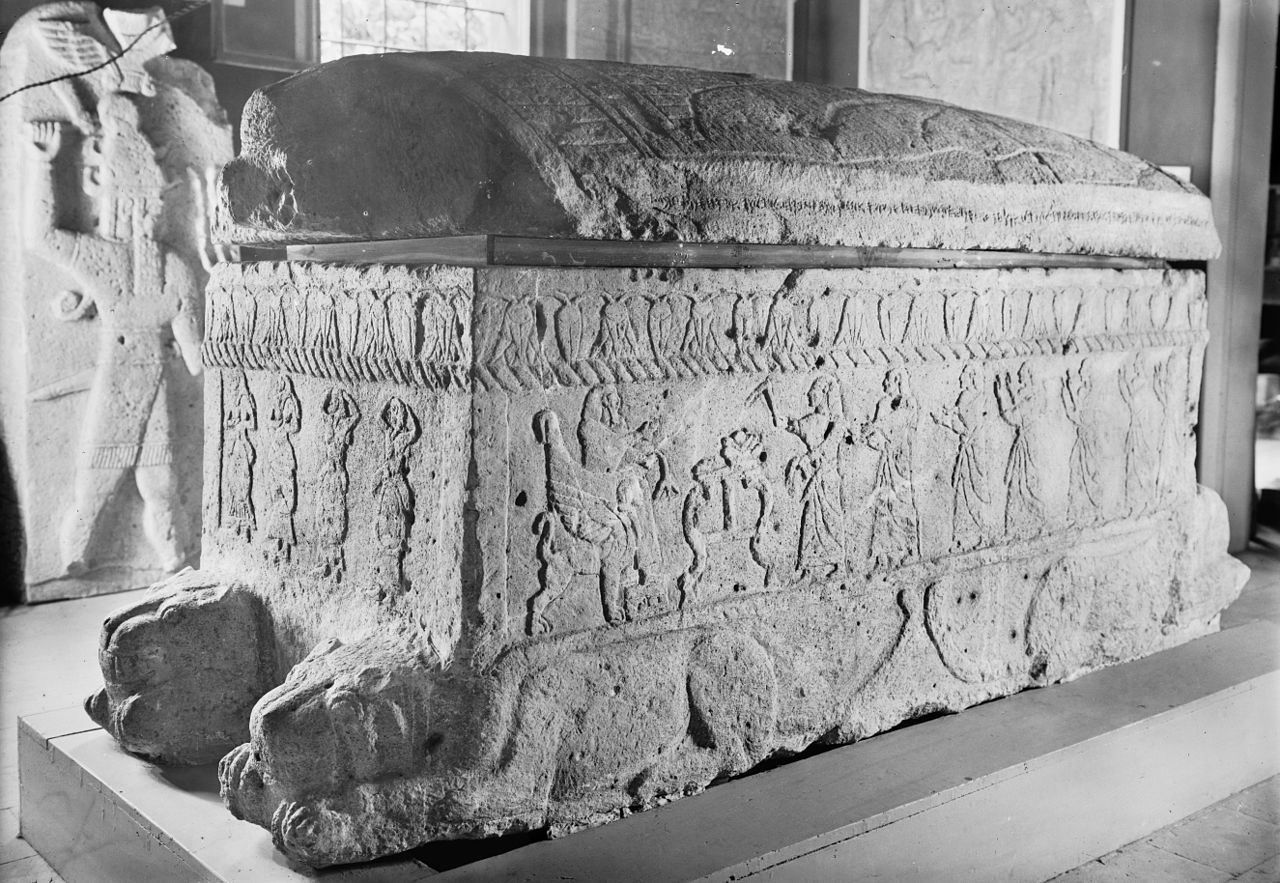
Sarcophagus of Ahiram, which bears the oldest inscription of the Phoenician alphabet (Beirut, Lebanon).
The Phoenicians
The Phoenicians were a classic case of a such a blackguarded culture and people. Although prominent in the Bible, they were written out of history by Greek and Roman authors. However, an ancient and deep-rooted anti-semitism also informed the historical prejudice against those Canaanite pioneers whom some accounts say reached these northern islands in the late Bronze Age – approx. 600 B.C. An extensive tin trade with Cornwall is widely believed.
Examining the Phoenicians can be an illuminating approach to Irish identity as well as European attitudes and racism in general.
Irish passports have in the recent past been doled out for cash, thereby entitling rich Saudis and their families to come and go as they please. This is not an unusual practice. At one time the Cypriot president Präsident Nikos Anastasiades is offering citizenship as compensation to rich foreign (i.e Russian) investors. In modern usage, Irish international sports teams liberally use the ‘granny rule’ to acquire talented non-Irish players.
There is nothing immutably sacred about Irish or any national citizenship. The arguments for excluding or including certain ethnic types are implacably economic but can raise questions of discrimination on ethnic grounds.
After working and living in Ireland for a certain number of years many ‘non-nationals’ are granted Irish citizenship. What is the essential difference between these favoured ones and those asylum-seekers who may have endured living for three/four/five years in prison-like circumstances on this island? Those who are forbidden to work, who are given pocket money of €19.10 per week?
A court hearing as hypothetical as the above might reveal the shaky grounds on which our historical assumptions of identity are based.
Suppose the old, once-sacred, Irish legends of immigration from Africa and Spain, the Fomorians from Africa, the Milesians from Spain, the De Danaan, the Fir Bolg are not entirely mythical?
Suppose that seventeenth and eighteenth century Irish scholars who believed in the literal truth of those legends were not entirely mistaken?
Suppose that modern Irish writers (Heaney, McGuinness, Friel, Durkan et al) were not entirely taking artistic license or imagining things when they invoked the Carthaginians as an anti-colonial metaphor?
Tradition is never entirely true but never entirely false.
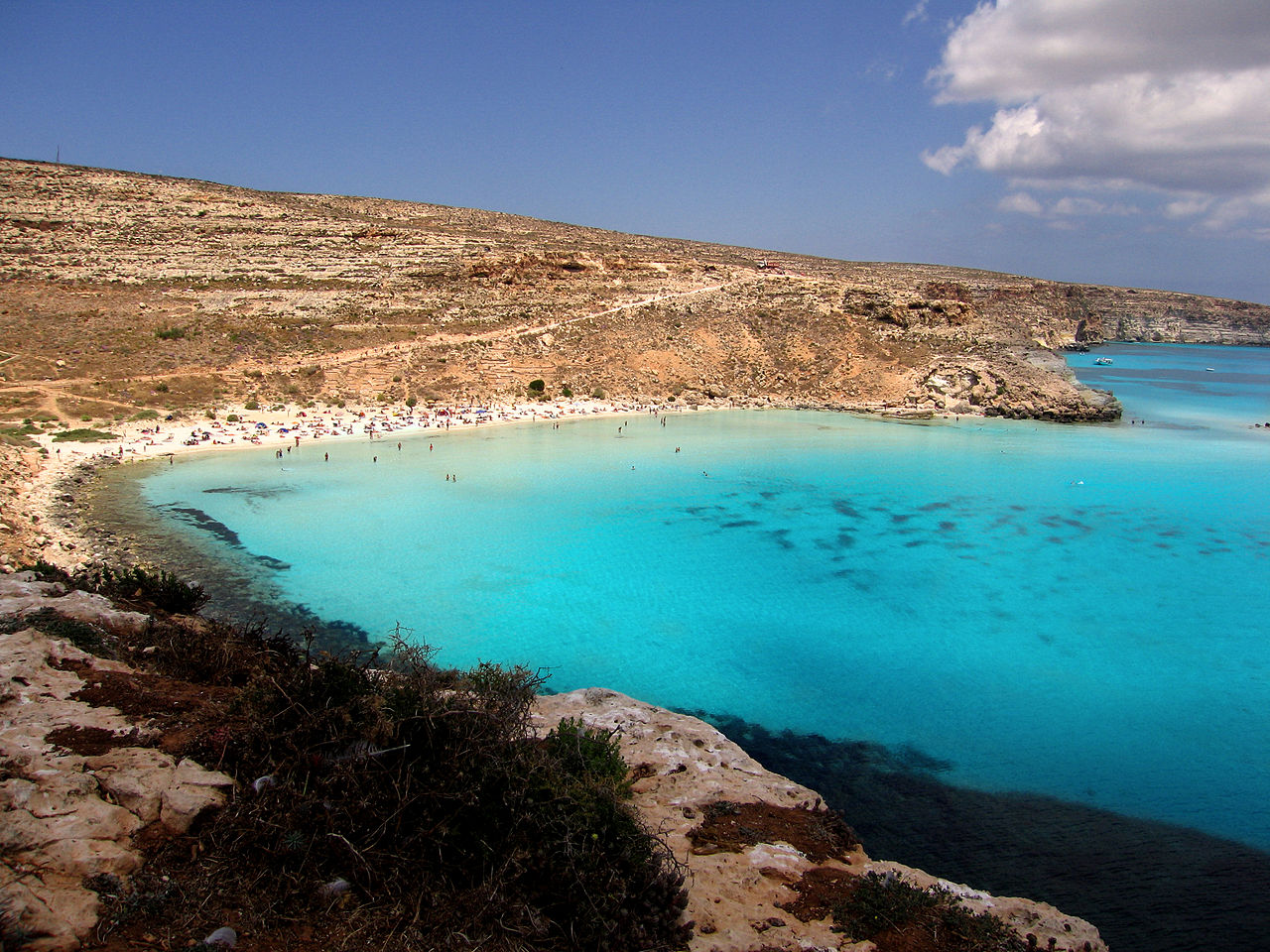
Rabbit Beach in the southern part of the island of Lampedusa.
In recent years the island of Lampedusa and the ancient island of Ireland have had this in common: the incursion of desperate people from the other side of the Mediterranean, particularly from North Africa.
Note
The changes in Earth’s orbit occurred gradually, whereas the evolution of North Africa’s climate and vegetation were abrupt. Martin Claussen and his colleagues believe that various feedback mechanisms within Earth’s climate system amplified and modified the effects touched off by the orbital changes. By modelling the impact of climate, oceans, and vegetation both separately and in various combinations, the researchers concluded that oceans played only a minor role in the Sahara’s desertification. The earths axis wobbled. The desertification of North Africa began abruptly 5,440 years ago (+/- 30 years). Before that time, the Sahara was covered by annual grasses and low shrubs, as evidenced by fossilized pollen.
The Sahel is the ecoclimatic and biogeographic zone of transition between the Sahara desert in the North and the Sudanian Savannas in the south, having a semi-arid climate. It stretches across the north of the African continent between the Atlantic Ocean and the Red Sea. In Arabic the word Sahel means ‘a coastline’ which delimits the sand of the Sahara.
The Sahel covers parts of (from west to east) Senegal, southern Mauritania, central Mali, southern Algeria and Niger, central Chad, southern Sudan, northern South Sudan and Eritrea.
In the history of this planet geologists say there have been five major Ice Ages, each lasting hundreds of thousands, even millions, of years. There have been periods when this entire planet was covered in ice. At other periods the tectonic plates supporting continents were all jammed together in the southern hemisphere and Ireland was located below the equator – beside the African tropical zone. We were all neighbours once.
An ice age is defined as when both polar caps are covered in ice. We are presently in an ‘ice age’.
There have been hundreds of ‘inter-glacials’ or global warmings. During one of the interglacial periods – perhaps fifty million years ago – conditions favoured the emergence of the first primitive life forms.
In another, more recent, period the sudden desertification of the Sahara occurred. This event had a dramatic and long-lasting effect on population movements around the Mediterranean.
Featured Image: Landscape of the Erg Chebbi, Morrocco.
In the controversy surrounding the leaking of a confidential document by then Taoiseach Leo Varadkar last year, a key point has been missed regarding whistleblower Chay Bowes’s motivations. As an insider and former head of the VHI Homecare division Bowes gained significant insights into the operation of the Irish health system, especially the HSE. This interview probes into the obstacles he faced in attempting to deliver an effective model of community care away from overcrowded hospitals. He argues the HSE perpetuates dysfunction to the benefit of the private system.
Chay Bowes first interfaced with medicine through the Irish Army Medical Corps in 1988. This stoked a passion for healthcare which led him to take up a job as a phlebotomist, where he encountered an older generation of hospitals, such as St James’s, where he worked with elderly patients in the country’s public health system.
This experience coloured his view of the health system as it evolved to become, as he puts it, ‘more focused on financial outcome rather than patient outcome,’ and led him to set up his own company, focused on clinical work in people’s homes.
He had found that general hospitals tended to be ‘Victorian constructs, where we put all the sick people who are susceptible to infections, so that they can mix with other sick people.’ He concluded ‘that much of what happens in the hospitals doesn’t really need to happen there, and a huge volume of those patients could be treated at home in a cheaper and safer holistic fashion.’
After the dismantling of small, community hospitals Bowes observed ‘pressure building on the larger general hospitals to become the catchall for all kinds of diseases and complexities,’ and that this ‘contributed to the ongoing perpetual dysfunction which is today what we call the HSE.’
Taking out a bank loan, he purchased a van to move around the nursing homes, taking blood samples. By that stage he had observed thousands of elderly arriving into hospital in taxis and ambulances for routine blood samples. There they were catching flus and colds, so he said to himself: “why don’t I develop a system to treat those people out in the community?” This was back in 2004-2005, but he was told that’s not how things are done.
Undeterred, he decided to take an extended leave of absence from the hospital to set up a service doing these blood tests in the community, which proved very successful. The only limitation was that he was working alone.
At that point, he expanded his service to give vaccinations in the community too and took on a few employees. The first company evolved into another, leading to a contract with the HSE in 2007 worth €14 million. That business was focused on patients with chronic obstructive pulmonary disease and chest diseases. Its rationale was to keep various types of patients in the community, who were repeatedly being admitted to hospital with lung diseases.
‘So, they didn’t go into a hospital, where people tend to get sicker, particularly those with lung diseases. It also helped these patients,’ he says, ‘that their social networks were intact.’ Soon there were two hundred working for the company.
Resuscitation room bed after a trauma intervention.
Tara Healthcare
At that point he brought Dr. Gerry McElvaney on board, ‘a really patient focused guy,’ he says, ‘who was highly intelligent and super-committed to doing things differently.’
Together, they pushed forward with what became Tara Healthcare. When patients were surveyed, he says, ‘ninety-eight percent preferred to remain in the community under our scheme rather than go into hospital: all the data was saying that this was a much safer.’ It was also cheaper to deliver, and the patients’ families were delighted to remain with their loved ones.’
He argues that they had created a perfect example of how a community-based scheme could be delivered cheaper with better patient outcomes, and where staff were really happy too, as they could get out of the acute hospitals.
However, he encountered, ‘an incredible level of scepticism around innovation in Irish healthcare.’ In one case, he says, there was a hospital in Dublin, which ‘wouldn’t send patients to this new service, because they didn’t like our medical director because he came from another hospital group. Professional rivalry is rife in Irish Medicine, sometimes to the detriment of patients.’
HSE Logic
Time and again he was met with the perverse HSE logic of ‘it’s doing really well, so let’s shut it down and send all these patients back into the hospital.’
The HSE’s reaction to the Financial Crisis of 2008 was just like its dysfunctional approach to COVID-19 he argues. They closed his operation down because hospitals ‘which were in perpetual crisis wanted us to move this service into their area.’ A senior HSE figure told him directly that ‘“what you’ve done in Dublin is almost too good. Everyone’s going to want it. They’re going to want it in Galway. They’re going to want it in Limerick” So, they wouldn’t fund it because they were already funding the dysfunction.’
The agency funds the dysfunction to a certain level of service with tens of billions of euros. And when something outside of the system comes along and demonstrates efficacy, financial viability, and good patient outcomes, that’s irrelevant because they still have to fund the dysfunction. It’s like trying to repair an airliner in mid-air – you don’t want to land because it could expose the rottenness of the system.
So, we sent the patients back to hospital, further highlighting the dysfunction of the HSE at the time. They had to pay us a penalty for terminating the contract prematurely, which cost them more than running it for the subsequent two years.
Working for the HSE he found innovation was met with suspicion: ‘the hospitals want to hold onto patients because without patients occupying beds, they can’t justify their budgets.’
And because budgets are pinned to occupancy and the size of the facility, hospitals seemed slow to manage overcrowding at the cost of lesser funding.
Fair Deal?
He argues that we should ‘evolve to a place where we simply don’t treat people with certain uncomplicated infections in hospitals, like in Canada and Australia.’
Now, he says, the only fast track for vulnerable patients is into a state or private nursing home, which is excessively expensive, ‘or their home is taken from them in what the government very cynically calls a Fair Deal:
someone works all their life, pays taxes, builds a home for their family, and contributes to the state and to society. But when they get ill, go into a nursing home or require dignified care the state wants to take their home from them to pay for that care.
Moreover, despite earning huge praise from patients, peers and when he presented the scheme to the NHS in the UK, he found the HSE ‘were always finding fault with what we were doing.’
‘I became used to that,’ he says ‘and very quickly realized the only thing the Irish public system does very well is perpetual dysfunction. It manages to procure massive budgets from the State, and despite this consistently overspends,’ despite ‘terrible outcomes for patients.’
He suggests that it takes ‘a concerted effort to continually do health as badly as we do in Ireland’, a system of public health, ‘with such huge budgets for such a small population.’
He says it is important to question why, given a very small and young population, ‘half of that population pays out of pocket expenses, approaching €2 billion, for private health insurance.’ He reckons this is ‘to protect ourselves from the dysfunction of the public system.’
🚨A record 908,519 people in Ireland are now on some form of a public hospital waiting list to be treated or assessed by a consultant. Meanwhile Gov lacks meaningful action on addressing capacity deficits #CareCantWait @DonnellyStephen @mmcgrathtdhttps://t.co/8ye5e4DoWw
‘It’s a very simple problem,’ he says, ‘too many of the same actors are involved in the public and private systems.’ The analogy he uses is of two separate doorways in a clinic: the public and the private:
You knock on the public door, and say, “Look, doc, I’ve got a terrible hip. It’s really hurting me. And he goes: “Yeah, you need a relatively simple, hip replacement, but it’s going to be probably three, three and-a-half years, because the system is overloaded.”
But the doctor adds unless of course you’ve got health insurance. So you say, “OK, I’ll go and get health insurance.” But by this stage you are too old to avail of this. But what are you going to do now, as your hip is only going to get worse?
You’ve been to the first door, where you met the doctor in the public system about the hip, who we’ll refer to as Dr Jim. Then you go ten feet down the corridor and knock on the door. “Who’s there? Why it’s Dr Jim again!’” And you say “Hey, Dr Jim, you just told me that you couldn’t fix my hip for three years.” and he responds: “not exactly. I can fix it if you pay me via your insurer.”
In a country of five million people, we have almost one million people waiting for care of one sort or another in a public system, which is one of the best funded systems in the developed world.
And, Bowes says, ‘it just so happens that the man running the show, Paul Reid, has no specific health care experience, for example. The UK’s NHS employs around 1.4 million people to serve a population of nearly 67 million. Its CEO Simon Stevens is paid €210,000 a year, while Ireland’s HSE employs around 102,000 people with a population of only 4.9 million, Reid is astoundingly paid over €426,000 a year.’
We have hundreds of people who work for the agency on long term sick leave. The dysfunction runs into every fractional part, IT, training, resourcing, recruitment, and services. The dysfunction is almost at a cellular level. But again, we are consistently told that we can’t land the jumbo jet to fix it, because if we do that, what will happen?
COVID-19
When COVID-19 landed, Bowes says, ‘with the stroke of a pen, we bought up every single private bed in the State. This occurred despite people saying since the foundation of the State, “Oh, you know, you can’t publicize the private, it would never work, but it was done overnight because the will existed.’
Health policy in Ireland, he says, reflects:
the laissez faire attitude of a class of people who are running the medical system, advising the agency and the legal system. They of course all have health insurance. I don’t know anybody who served on the board of the VHI or any doctor working in the system who doesn’t have private healthcare. I myself have to admit that I took out private health insurance purely because I know how difficult it is to access care via the public system. It’s sad but true and I am lucky enough to be able to pay, unlike more than 50% of the most needy In our society who cannot.
‘Irish People’ he says are dying ‘for the lack of basic diagnostic care.
Bowes muses on how: ‘The further up the pyramid you go around a health product in Ireland, the less you hear about the patients. And when you get to the board level, patient outcomes are in some way superfluous to the real issues, which are profit and the market.’ He argues that there ‘isn’t a single private provider in the country here’ which ‘isn’t preoccupied with profit.’
He says:
We’re happy to ostensibly starve a public system and propagate a private system which is absolutely predatory on the dysfunction in the public system. And in many, many cases, the people providing the care in the public system also have been or currently are providing care in the private system.
That’s our medieval, dysfunction and immoral system. It’s actually, and I don’t use this term lightly, an apartheid system. We have a segregated, apartheid system in health care. It simply isn’t based on needs of the patients. Ok, obviously, if someone’s at death’s door, they’re going to get seen, but I’m talking about this grinding dysfunction, where both sides are nodding to each other as they pass each other in the night, knowing that it’s so wrong. It’s so wrong. There are super doctors out there, super surgeons, super nurses and staff operating in the health system. It’s definitely a case of lions being led by donkeys.
Really encouraged by response of a leading figure in Irish culture over the past 50 years. "Daniele's interview with Fr.McVerry is classic. Cassandra is rapidly becoming the most important vehicle for ideas in the land." ***@danieleidiniph1@BowesChayhttps://t.co/7N1bz38X77
Bowes muses ‘I have no problem with doctors wanting to make a decent living. You’ve got to pay people appropriately. But now we’re flooding the system with locums from overseas who are often poorly trained and have poor English and patient interaction skills .’
And points to another ‘incredible dysfunction, which is again, state sponsored.’
We train more doctors than any other country of our size in the world, but we export them to Australia, New Zealand and the UK. It costs the state a significant amount to train these guys, and then they can just catch a plane to Bondi Beach. Of course, we can’t force people to work here – no more that we can force a health care worker to take a vaccine – but there are ways to incentivize the system, and develop better methods of training doctors, because we still use the archaic Leaving Cert as the basis for deciding who we train as doctors.
He also wonders:
How is it that while we train more doctors than anyone else that we are importing more doctors and nurses than anyone else? Countries like the Philippines, India and others are being bled of their precious nursing and medical staff to come to Ireland to look after our sick. There’s something wrong, right? But in the Irish system nothing changes. No wants to take on the vested interests. No one wants to take on the big personalities in health care and medicine. The political nexus between medicine, law and politics in Ireland is so tight because of insular practices and local allegiances trumping national welfare with some of the biggest political donors and influencers being waist deep in the sector.
He wonders ‘Who’s going to challenge the vested interests and speak out for vulnerable patients? The CEO of the HSE? Absolutely not. The past CEOs of the HSE seem to be only good at one thing, which is saying, “We’re trying…” But they walk out at the end of the end of their contracts with a big pension and usually into guess where? Yes, you guessed it, the private sector.’
He reveals how ‘a former CEO of the agency said to my face that he was the most powerless man in the health system.’
Image (c) Daniele Idini
Dysfunction Funds Profit
Bowes wonders:
How can you operate a business with a hundred and twenty thousand employees and seem to be powerless to sack people for not delivering, or in many cases simply doing their job wrong? Where’s the accountability in that system?
How can you amalgamate numerous health boards which are operating as satellites into a single “dynamic entity” and nobody loses their job? Not one manager is made redundant. Not one of them is even sanctioned.
How can a health system pay out tens and tens of millions in malpractice claims for egregious malpractice and incompetence in both governance and clinical care? For essentially killing women who are pregnant by denying them an abortion? By condemning young women to terrible life ending illness by failing to diagnose their cancers? How can you pay out these tens and tens of millions again and again, year after year, and nobody is sanctioned for it? How does that work?
It works because the dysfunction funds profit, and that profit is harvested by vulture funds, by private hospitals and private investors, by their legal advisors, some of whom don’t even pay taxes in this country, and who pays the price? The citizens that languish on public waiting lists accruing ill-health because they can’t pay for treatment. The man with the simple requirement for treatment, he’s invisible to the system, he is superfluous to the profit motive.
The poor he says have no bargaining power because:
the bargaining power is money and influence, and the people who have the influence to change the system are receiving huge salaries to manage and essentially perpetuate dysfunction. Again, the private system predates on the mismanagement of the public system. If it functioned there would be no need for a private system, right? Therefore, you have to wonder, who does the current dysfunction benefit? It’s an easy one: the private providers. But nobody who is of the machine is working against it. No one in Leinster House is saying to the CEO of the HSE: “What are you doing for your four hundred grand? We’ve got less intensive care beds per capita than Lithuania or Latvia. Two years into a pandemic, we still don’t have a dedicated COVID hospital which is just insane.
Apparatchiks of a state system who’ve worked, like Paul Reid in state jobs are seen as a safe bet. They’re nominated in as managers, managers of dysfunction, gatekeepers for their political sponsors and marked for future cushy roles on the private side of the wall.
Image (c) Daniele Idini.
Perpetual Crisis
He adds that ‘things like this mysterious and much vaunted “Cyber Attack”, which apparently “destroyed the abilities of the system” seem to be a perfect excuse to deflect from the internal failures of HSE management and external incompetence of its political masters.’
Bowes says: ’what I know, and anyone that has worked in the system knows, is that there was and is no viable system to attack.’ The HSE have ruminated for decades on the implantation of an electronic patient record: they have spent millions evaluating, re-evaluating, procrastinating, and failing to implement a viable solution.
Months after this “Attack”, you’re still running Windows 1998. Somebody needs to be held accountable.
But, he says: ‘the Minister doesn’t talk to the to the HSE, the relationships between the “Three Masters” of Health are utterly flawed, the Department of Health is cumbersome and cautious, the HSE is a lumbering leviathan with no real direction other than self-preservation, and the Minister is preoccupied with surviving a potentially career ending stint in the mire of the Irish Health system.’
Consider this, with such a huge annual Health budget and such poor outcomes for patients alongside such terrible value for money, the dysfunction and paying for it becomes central to the rational of the organisation. They actually need this dysfunction. Without the dysfunction, they’d be screwed because there would be an open accounting of what we’re doing in a system which is delivering horrendous results.
He also criticises Stephen Donnelly’s policy of giving more money to the National Treatment Purchase Fund, which sends public patient overseas for treatment, arguing that ‘this is not the same as a really equitable national health system where everybody gets treated on the basis of need.’
He says that people could argue that in a free-market economy if someone wants to purchase health insurance it’s up to them: ‘However, that’s different to paying almost half a million a year to a CEO to perpetuate a dysfunctional system.’
He says the HSE is only interested in crises, ‘in things like COVID’ and saying ‘but COVID is why the system is screwed, or we’re dealing with the cyber attack, which has caused this perpetual dysfunction, which is, you know, all entirely untrue.’
His conclusion is ‘the managers, architects and political apologists for the segregated and morally bankrupt system have done an exceptional job of screwing the Irish people out of their tax dollar and their rights to health and dignity. I’m not sure they are capable of doing anything else. It’s time to demolish and rebuild.’
My work begins with a consideration of how one begins to look – an exercise of empathy with you, dear reader. When a work of art is placed in front of me, I have a whole range of responses as a viewer and I remember this when I start to make a new piece. I consider my role as artist and I consider your role as reader/viewer equally. They stand on an equal footing, a plateau.
Poem #11. Tomato Poetry House Series. 2021.
I have a friend who calls me to talk about artists and their work. We have categories for types of artists:
The magicians, who are all about persona, their work changes or improves your life and your life was lacking until their work fixed it – think Joseph Beuys, Marina Abromovic; the factors, those whose work is inspired by or responds to something that already happened – think Goshka Macuga, Aslan Gasimov; the intelligentsia, who make you feel like you’ll never be smart enough to understand their supersoaked insights – think Seth Price, Micol Assael; and the decor (I’ll let you figure that one out).
There are more categories that we invent as time goes on, but the purpose serves well, to open our critical and loving heads to talking art. We analyze and consider different artists and their trajectories, what they’re putting out now versus a few years ago, and where they might go down the line. The thing that stands out most, for me, is that I have been all four different types at some stage, and indeed, the more I talk about it with other artists, the more confirmations I get that the same applies to them.
The Ella who showed the work ‘Anemic Circles’ at The Emergency Pavilion at the Venice Biennale of 2013 is different from the Ella who had a solo show ‘Flat as the Tongue Lies’ at The University of California in 2018, is different from the Ella writing this text. I have grown as a human and as such my work has grown too. Some of my furies have tempered into cooler flames, while some of my damp wood has dried into a patient but furious kindle. The one anchored point however, is the work.
Act II. Flat As The Tongue Lies. UCLA Irvine, California. 2018.
I have always been fascinated with the viewing process. How ‘we’ (-who’s we?) act as ‘viewer,’ and how ‘we’ learnt to look that way, both as an individual and a community. Coming from Ireland, I am always in awe of the GAA and how in a relatively short space of time a structure was created whereby every family in every town had access to play hurling and/or football, to view it and to participate in critical conversation with peers, of analysis, predictions and strategy. The same could be done with art.
Choir (Haar). Kunstenfeest Watou. 2021. Photo by Dirk Pauwels.
With gestures, sculpture and poetry, I create performative work that combs through these issues. Coming from the position of being a cis-female, white woman I am inspired by the history of womanhood, the struggles, the victories. I have an imaginary coven who I sporadically turn to for strength, inspiration and help. Some have names, such as Biddy Early, Hildegaard of Bingen, Cassandra and Joan of Ark, and some don’t, such as the women in the Magdalene Laundries.
During the pandemic I heard on the radio that the women lace makers of Headford, Galway were not affected by cholera and typhoid during the 19th Century because they had to wash their hands so often. The money they earned was crucial to their families and if there was one speck of dirt on the lace piece then it would be worthless.
Choir (Doh Soh). Newbridge House. 2021. Photo by Louis Hawk.
I was in awe and in shock to think about how a century after these industrious women making money from lace to feed their families, there came 20th century women who were torn away from their families and incarcerated in the Magdalene Laundries, set to work knotting lace, string after string – maybe even listening to radio programmes about women from Headford, Galway while they worked.
Now we’re here in the 21st Century, and women’s labour is still underpaid, often unpaid, and the labouring women unseen, unheard. A person’s voice is a source of great power, and those who gain from suppressing that power have spent centuries sewing throats shut. Landlords, priests, politicians, misogynists, the cast of characters hasn’t changed.
Lettuce Síle. 2021
I created a cast of embroidered throats standing in the gesture that fans out from headless sackcloth bodies. The headless straw women, disembodied anatomies, could represent the Headford women making lace or the Magdalene women incarcerated in the laundries, they could be representations of viewers today observing the work or they could be me.
These voiceless throats and sightless spectators are woven into a spatial, figurative, yet ambiguous relation of dependence and power. Some of this body of work was shown in ‘Guest’ at Newbridge House, Fingal, during the Summer of 2021, a group show curated by Marysia Wieckiewicz-Carroll, while other parts were shown at the Kunstenfestival Watou, in Belgium, curated by Chantal Pattyn and Benedicte Goesaert.
Tomtom’s (watercolour and tomatoes) 2021.
During the Summer I also grew my own tomatoes and read feminist poems to them. You are what you eat. I would prefer to eat food that does not prop up the poisonous economic structure so harmful to our environment. These tomatoes became my audience during the pandemic, conditioned by my tastes, my carefully curated poetry show. And when they were ripe, I ate them under the full moon.
Vodka Blue Pope. (Watercolour, eggshells and Lunaria annua) 2021
More recently I have been imagining the potions and magic remedies created by Biddy Early while painting an inventory of the plants growing in my garden. I mash up the painted flower and add it to the image of what was there. When assembled, I imagine this body of work as an art apothecary, with different combinations of the ingredients creating different viewing cures. Some of this work will be shown online in Kevin Kavanagh Gallery in November/December 2021.
It’s easy enough to describe how I got to this point, artistically, professionally and humanly, but going forward is more opaque. Actually, in thinking of this word ‘opaque,’ I often get stuck. In photoshop there is a tool called ‘opacity,’ which, when at its highest percentage, renders the image totally visible. In real life, it means obscure of sense, invisible. But I often get the two mixed up, and I think that this strange double meaning kind of fits when I use it to describe my future. I know I’ll still be making the work, I just don’t know where you will be.
Defiance (Roof Without Walls.) 2017. This work is in the collection of the Irish Arts Council.
My work has been supported by the Irish Arts Council, Askeaton Contemporary Arts, Fingal County Council and Culture Ireland. Most recently I was the recipient of a Platform 31 Award for County Laois. I am currently pursuing a PhD at KU Leuven entitled ‘Modes of Viewing: How to Act.’

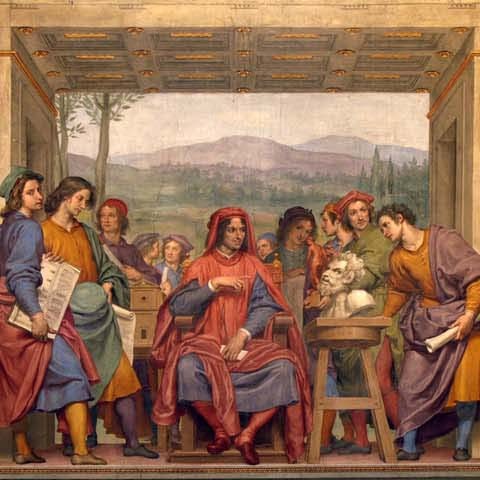 Patron of the Arts for €43.50 per month: this tier is for the happy few who wish to contribute substantially and support our work and safeguard our independence.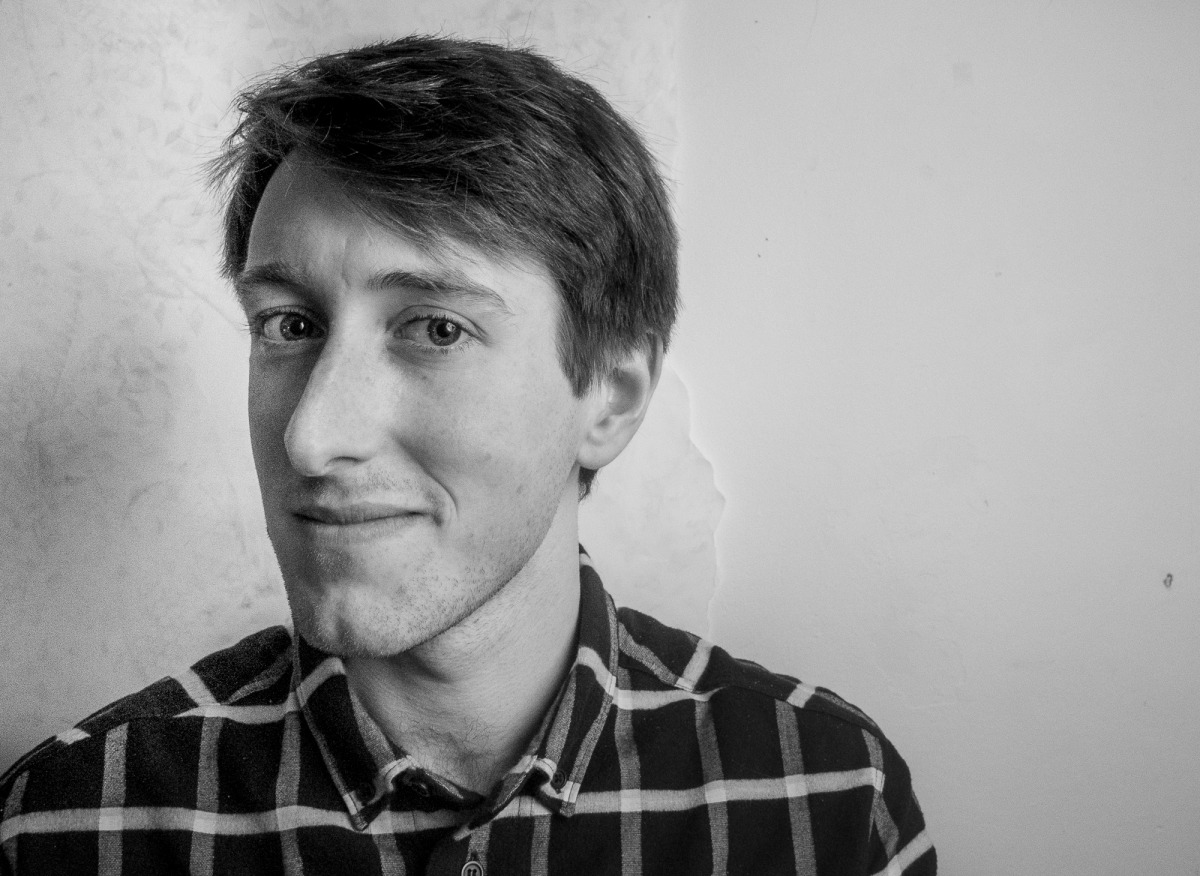
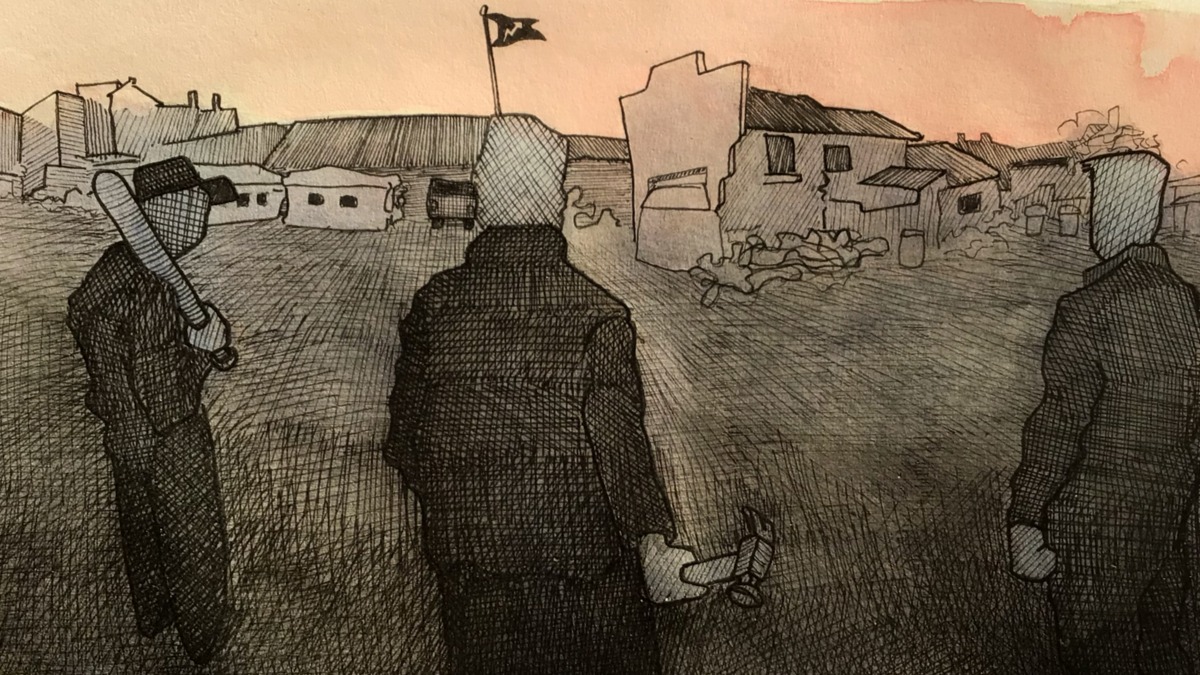
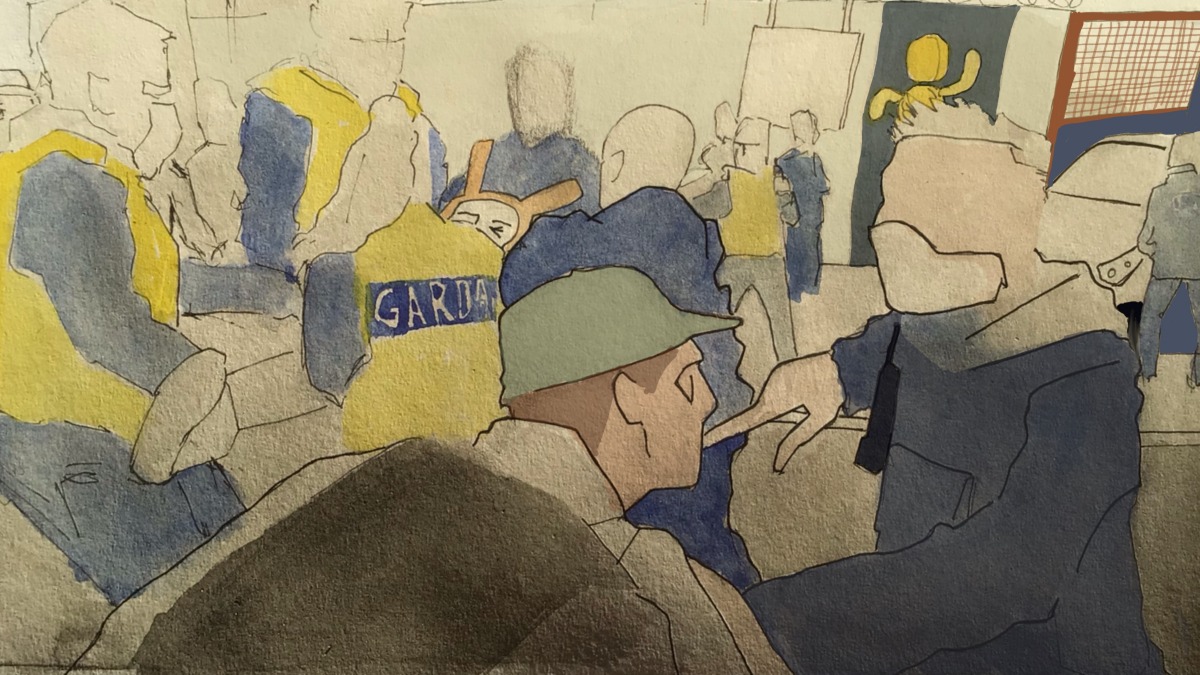
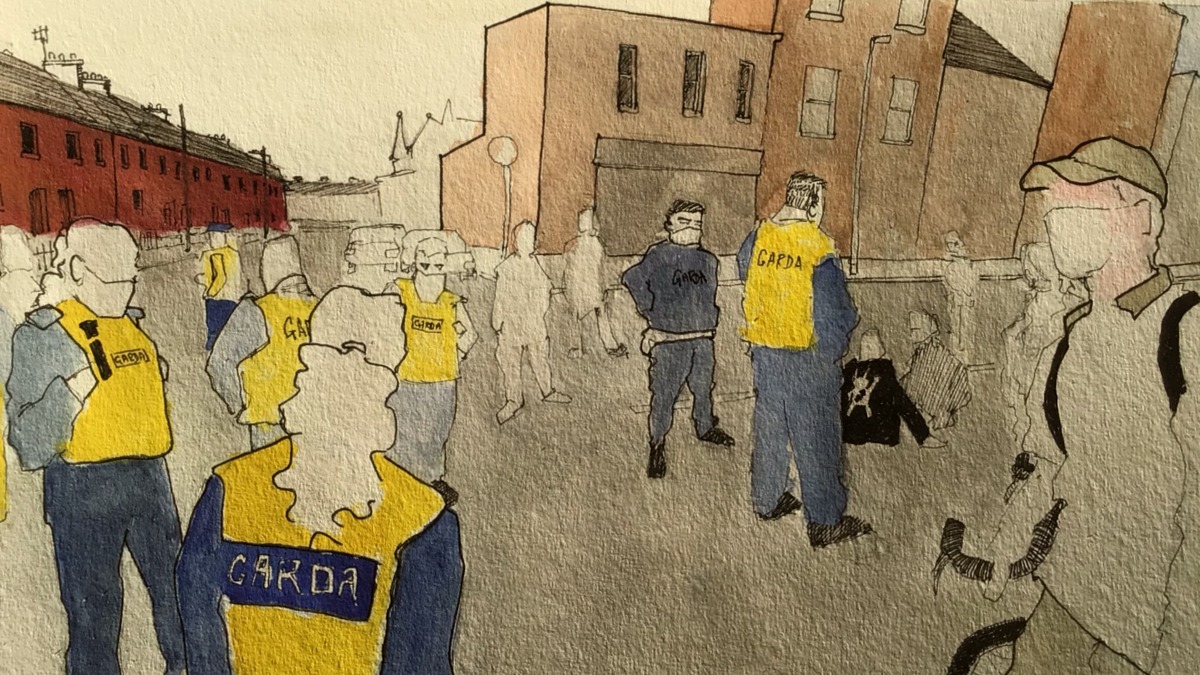
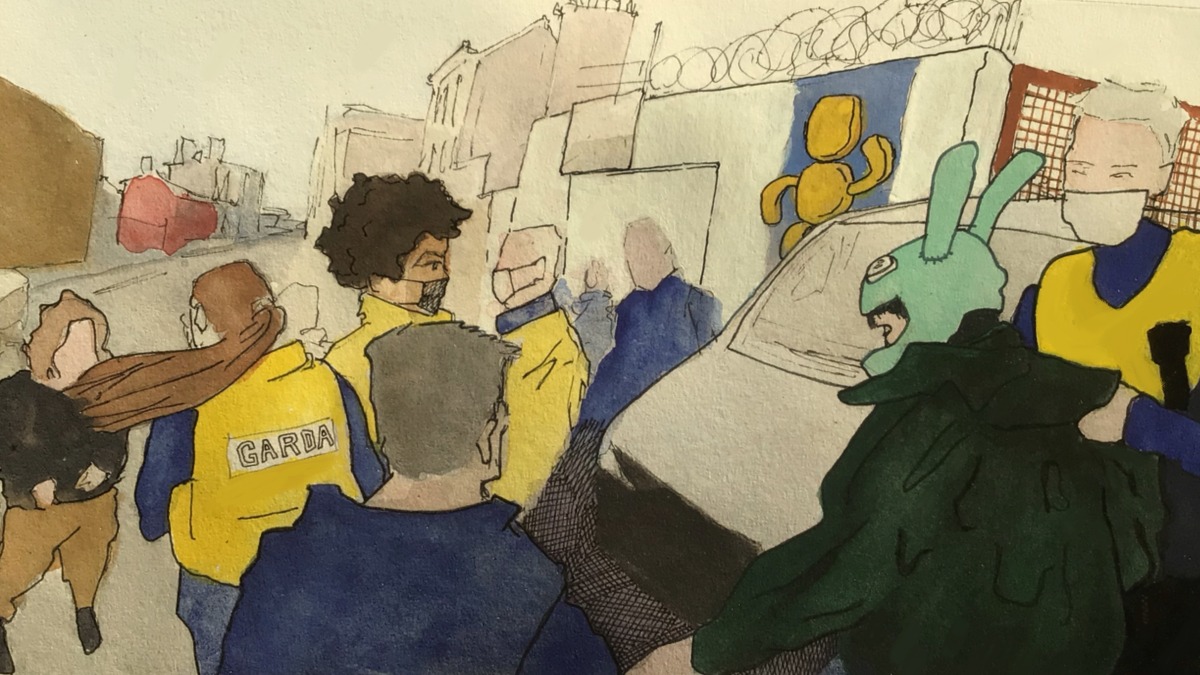
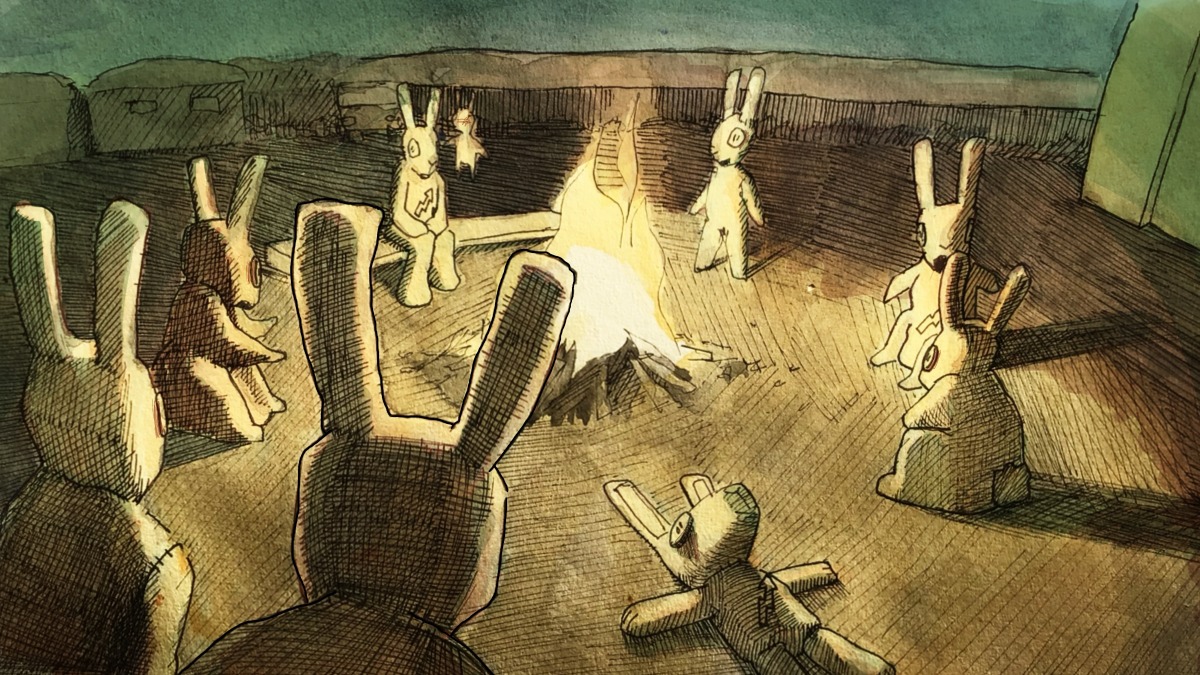
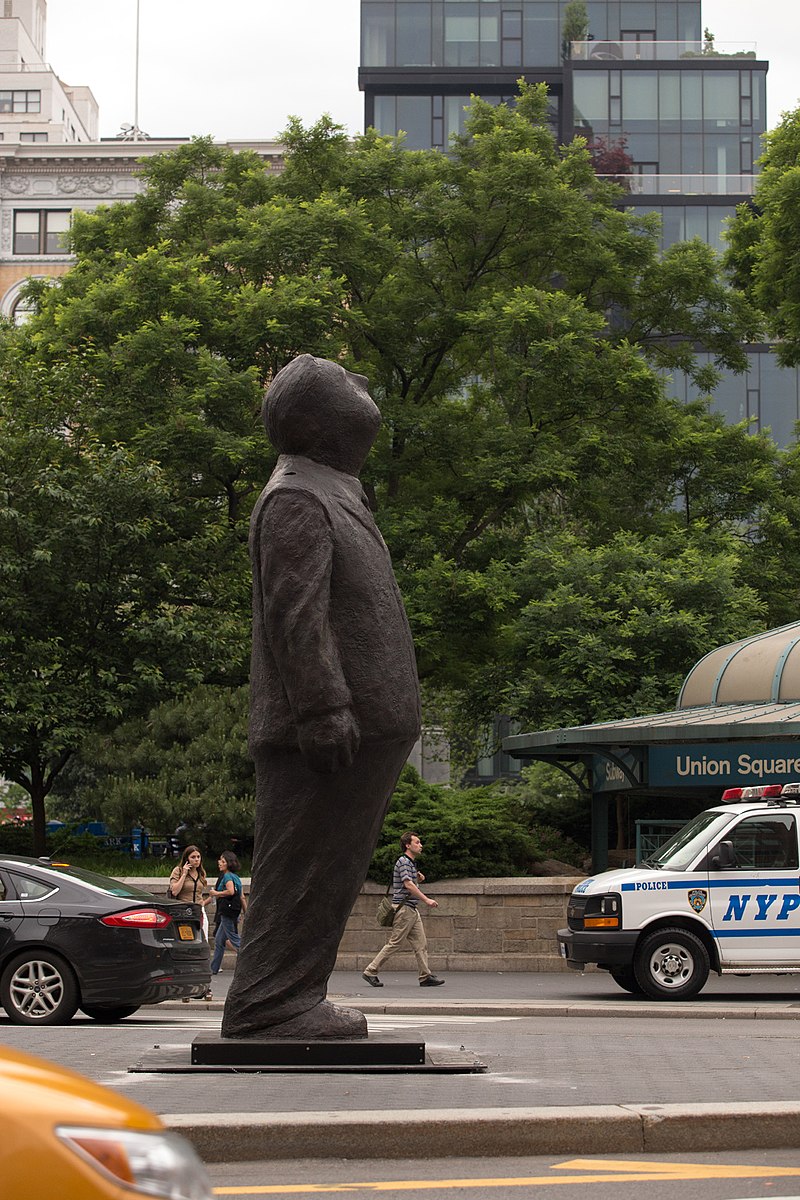

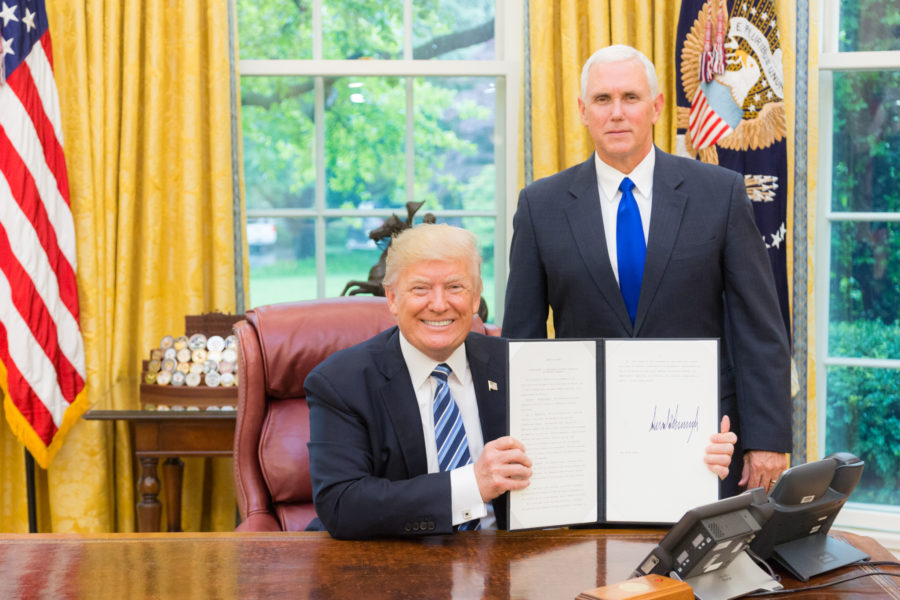
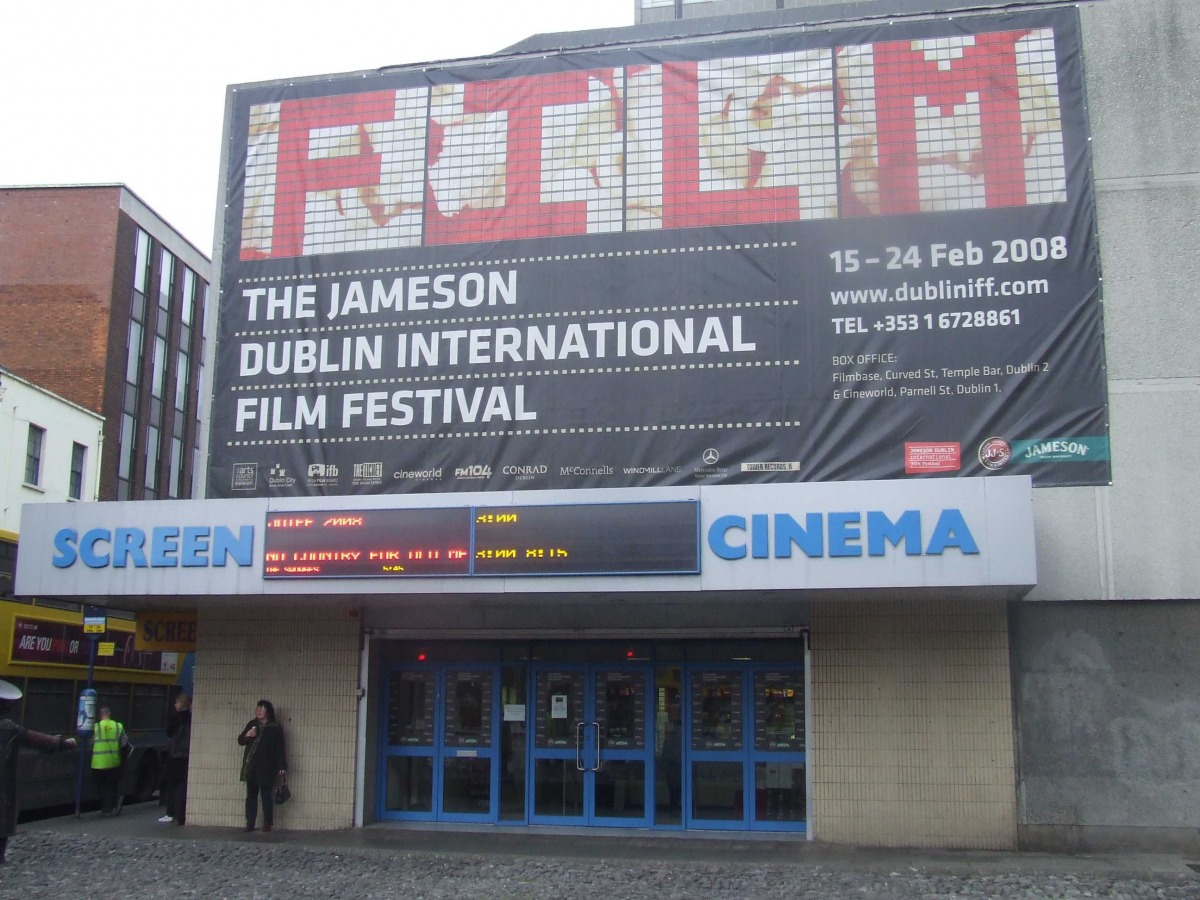
 Admission of Bias