It was the very last shot on the roll
Before the film disappeared into the spool –
You, sitting on the terrace, on a three-legged stool.
That night, you felt too tired, you said
For a glass of vinho verde, and headed to bed
At half-past eight. We had spent the days
In the laurel-girded hills, trekking the levadas
Clinging, for dear life, to a mountain edge
Until you had come to rest on that hotel ledge –
Serene, in jeans and a flower-print tee.
Next day, we went to Boca da Corrida by taxi
So you could ascend, one last time, to the sky.
Grace
If you wander down Platform Four, it’s still there:
The Waiting Room. But Grace can’t be seen anywhere –
Grace, the Queen of the Ladies Waiting Room.
Who polished the tall arched windows and doors?
Who waxed the oak benches and parquet floors?
Grace, the Queen of the Ladies Waiting Room.
Who stacked the long vases with sword lilies and mums?
Who filled the sills with soapwort and sweet williams?
Grace, the Queen of the Ladies Waiting Room.
Who tended the men before, on their way to War?
With barms, tea and blankets, on Platform Four?
Grace, and four hundred more, in the Ladies Waiting Room.
The four hundred are recalled – at the eleventh hour
But who remembers Grace, and her flower-filled bower?
Who will put a white carnation for Grace
In the Ladies Waiting Room?
What can be created, can be destroyed
In Wordsworth’s time, they surveyed the land,
Men in stove-pipe hats and coats with tails,
To plot a way to Bowness, and beyond –
And ply the green between with iron rails.
From all around, they came, to speculate
As company shares begat more, still more –
And rails were laid right next to Bassenthwaite
Bringing Durham coal to smelt the lakeland ore.
By Larkin’s day, they came with balance sheets,
Men in grey trench coats and bowler hats,
And pronounced the railway could not compete –
With their consultant’s report and doctored stats.
In panelled rooms, behind spectacled smiles,
They approve yet more motorway miles –
See, now they’ve tarmacked Bassenthwaite’s shore
So we can drive right up to Wordsworth’s door.
Division
At ten, our year was divided in two, A and B
and then, A was divided again, and we,
our half of A (a quarter of the year)
practised verbal reasoning for the remainder
of our time at primary school, till we sat
the eleven-plus exam, and half of those that
sat the exam went to the grammar school
and the rest to secondary modern school,
so that our group at grammar was one eighth
of our year at ten. At grammar, we were split again
into A, B and C, and one-third of us
were in A, which was one-twenty-fourth of us
who were all together at ten. At sixteen,
we were joined by some people from secondary modern,
including my friend. He said he was one
of those told he had failed at eleven –
a ball that didn’t bounce, one of those written
off. I was one of those that bounced,
but by eighteen I was well and truly trounced
by my friend, who went to study history at university
(while I went to work at the Pennine Hygienic Laundry).
Two Limeys in a Carolina town
As the afternoon heat gave way to evening’s humid pall
We headed cross-town to the Hummingbird motel
Following the streets through the sprawling grid
Walk, Don’t Walk; cross Main, First, Second, Third
And past the all-night liquor store, where a no-tooth man
Says, hey you, honkies (bony hand proffers a bottle of gin)
We return a grin, and then a light – blue, blue, blue –
Whirligigged, as two cops stepped into view
Wanted to know what we were doin’ in this vicinity
Realised we were two limeys, didn’t know the city
Where one ‘hood ended, and another ‘hood began
How urban foxes scented the streets where they ran
Said you walk there, you don’t walk here (had a word
In our ear), then drove us right up to the Hummingbird.
Portage
The Indians tramped the eight miles,
a crow-fly line from the squalling waters
of the Cuyahoga, to the eponymous
Tuscarawas – boats on their shoulders.
That eight-mile tramp along the portage path
joined four worlds: Erie to the north,
and the Great Lakes; the Ohio
below – and the Gulf, deeper south.
We landed in the Indians’ wake,
came to the portage path to study –
to learn how the trail became a canal,
became a road – multiplied – grew to be a city.
Two years on, we took once more to the sky,
carried our researches across the ocean,
then on our backs, to a town, down home –
to rest there, with us, or perhaps be born again.
Feature Image: Wordsworth House on Main St, Cockermouth, Cumbria, U.K.
My arse was born before my head. I’m told I shouldn’t remember, but I do. I recall my skull being stuck in the warm, wet cave that’d been home for nine months; recall, as well, starting the struggle to breathe. With all my infant might I managed to shimmy out backward, so the rest of me could join my bum in the chilly dominion of which it had become a citizen. The cold air was terrifying yet so sweet to my lungs when I finally slid free. My left foot was curled in, my left leg being shorter than its mate. My left hip is dodgy as well. With my crutch I’m alright, indeed faster than many. That was my beginning, and curses on any who don’t believe me.
Twenty years later I went through it again; the yearning, that is, to leave what was cosy and safe in search of a place where I could properly breathe. The cosy place was this place: Cobb’s Hole, North Yorkshire. Thatched cottages huddled together in the shadow of massive sandstone cliffs. At the bottom of our cobbled street yawns the North Sea, big and cold as the world itself. Tiny boats sliding about on its great black waves. And there was I, stuck again in a womb on the edge of wildness.
Father was a fisherman and mother was a mother. Near every house had the same matched set. The fathers spoke little, but when they did it was to say something that sounded thoughtful and wise. The mothers were worn out with work and worry. Brothers joined fathers just as soon as they were big enough. Like all daughters, I was given a needle and taught to mend the nets. I’ve heard folk talk of weaving nets, but in truth it’s not so much weaving as knitting. Instead of two thin needles you have one fat netting needle and a gauge that decides the size of the mesh. The nose of the needle dips over and down, over and down, and the flax unwinds into this pattern, this web, that grows and grows beneath your fingers. It’s simple but not easy, if you see what I mean. You can’t be larking about. A fisherman depends on his net, and a net depends on its knots. But here, I’ve gone right past the thing I wanted to talk about. I wanted to talk about when I was twenty.
And Rosanna.
Rosanna was a ladies’ maid at the Verinder estate, about two miles northwest of Cobb’s Hole. She had Friday afternoons off, and the groom would bring the two of us into Frizinghall. Rosanna might buy hairpins and bows. I’d get the latest issue of the Northern Star and Leeds General Advertiser. If it was dry we’d sit on the grass in the park and I’d read to her about suffrage and strikes. Her small face would squint up at me from under her straw bonnet. “What is to happen, Lucy?” she’d say, as if I was reading her a fairy story. “There is such suffering in the world,” she’d say, and pull her grey cloak closer about her shoulders as if the thought made her cold. She had a way of making such remarks, simple on the surface, but coming from such a tender part of her heart that you’d shiver to hear them expressed in her tiny bird’s voice.
When you’re young you think the world has only been waiting for you to turn up and put it right. We read with great excitement of the Chartist camp on Bingley Moor – so close by! The great crowds, the fiery speeches. Then the arrests. It was frightening and glorious to feel ourselves on the cusp of revolution, and we grew very dear to each other as we sat there, braiding blades of early spring grass, waiting for mobs of angry workers to march past us on their way to storm the Magistrates’ Court. I tell you, we could nearly hear their boots on the cobbles. “England is like a pot on the boil,” she’d say, into the green stillness. They were champion, those afternoons with Rosanna.
She was not beautiful; nothing so ordinary. Just good, through and through. She believed in a sort of sunlit decency that nothing in her experience gave her reason to expect. She was from London, orphaned when she was only eight. Her curled shoulders told of her suffering; her lovely fingers, gesturing, making ecstatic pictures in the air, told of her faith.
I had shagged women already. Two, to be exact. One was much older than me and gave me lots of instructions. The other was my own age, and those meetings were much friendlier but fumbly and quick, usually hands under clothes rather than clothes off. From the first time I met Rosanna I felt if I could once sink inside her creamy flesh, could penetrate to the heat beneath that sweet nature, that it would change me. Would set summat free inside me. I don’t know how better to say it than that. It was a young sort of love, in which you want to have the person and be the person all at the same time. And somehow this will make everything right. Oh, why must I try to explain it? I loved her. With all I had, I loved her.
I kissed her once. Just once. It was among the firs on the path that leads to the cove. Her back was to a tree and I pressed her into it, pinned her with my hips and chest and arms, felt her breath fluttering against my neck. Smelled her private smells, stroked her hair, lifted her chin with my hand. And kissed her. There was no surprise in her. She had known how I felt, had seen it, and had shown neither excitement nor revulsion but only a shy acceptance of my love. We had often held hands, embraced, even danced together playfully. But to kiss her. To open those pretty lips with my tongue, explore the inside of her, to breathe into that angel mouth. I feel it still.
But our ending came wrapped in our beginning. For beneath my lips, my hands, I felt her submitting to me. Not desiring me, holding me; just allowing me to do what I liked with her. The world, after all, had done what it liked with her and I was merely a part of the world. Nothing more. She could take herself away, could make herself open and empty. I almost hated her for it. Why withhold herself from me, the one person who saw her true worth? Why could she not at least try to love me?
The answer was Blake.
Blake was nobody, some well-travelled third cousin of the Verinders who ended up marrying their daughter. Rich people always marry their cousins, they haven’t enough imagination for anything else, and besides, it keeps all that lovely money within the family. I met him once, and found him to be your standard upper-class halfwit. Not really a worthy subject of either her love or my hatred. But we were young. Our feelings were flames we couldn’t stop staring into.
I still get a knot in my stomach when I remember that last day. Summer it was, and proper hot. Rosanna appeared in my room, and she was shaking all over and looked like she might be sick. She had seen something, some proof that Blake fancied the Verinder woman. I sat her down on my bed, and her breath turned to sobs. She wept into my shoulder because her love was unrequited. The irony! I suddenly laughed; a low, bitter chuckle.
She backed away. Gaped at me, like a mouse who’s just discovered her best mate is a cat. “How can you snicker at my broken heart?”
I lifted her chin with my finger, reminding us both of our one kiss. “How can you ignore mine?” I asked softly.
She looked away then. I knew it was hopeless, I knew. Still I pressed on, daft and love-struck as I was. “We should get away from here.”
Her dark eyes widened. “What do you mean?”
“To London. Together. I’ve money saved. We could live like sisters. We talk proper, write proper, we’re good with our needles. We could make a living. We could make a life.” It came out all higgledy-piggledy, I’d been wanting to say it for so long.
Rosanna’s eyebrows went that high, they nearly disappeared into the black tangle of her hair. Then she abruptly looked down at her hands. Her eyes grew wet. “Lucy, you are a dear friend.”
“Give over.”
“You’re kinder to me than anyone ever has been.” She raised herself, trembling, to her feet. “But where I’m going, you cannot follow.” And with that, she turned and left. I heard her footsteps going downstairs, heard the door slam shut.
I didn’t cry. Sometimes summat hits you as though you’ve walked straight into the sea, and you’re left gasping, cold all over. I knew, somehow, that this was the end of Rosanna and me.
When the letter came, arriving with autumn’s swollen moon, her small, careful printing on the envelope made my breath stick in my throat. Maybe, possibly, she was writing from someplace warm and bright. Maybe she was sitting in the grass, under a kindly sun, waiting for me. Cruel hope made me tear open the letter, only to learn that Rosanna was dead. By her own hand. The letter an apology and a goodbye.
Everything was strange. The scars in our table, the salty smell of the broth my mother stirred. My father’s tuneless whistle, carried by the wind up our narrow street. A cold wind it was, and the rumble of waves beneath it, and in among these things that meant home, I was alone. The letter shook in my hand. The final line mocked me. I will forever be, your Rosanna.
By year’s end, the blaze of revolt had gone to ash in the grate. The Chartists had largely given up. Men like Blake held the world like a ball between their soft hands. I’d have gladly belted Blake in the bollocks with my crutch. But to what end? It seemed there was no cause left to join. I had missed everything.
Life had shown me what could be and then had shut the door. No, it said, you cannot have your love returned by a lass so gentle it’d make you weep. No, you cannot make things better for your mother or your father; take some of the worry off their brows, help them stand a bit straighter. No, you cannot put warm food in kiddies’ bellies or make sure the men get a fair price for their catch. That was all a joke, m’love. In truth, life is long, lonesome and grey and it reeks of fish, dampness and despair. Yearning gets you nowt but an ache in your ribs every time you try to take a clean breath. This is all there is, pet. Your fault for dreaming.
All that winter I trudged along the shoreline, wind burning my face, sand stinging my eyes and gritting my hair. On the one side of me, cobbled paths and firelight glimpsed through windows, and chimney smoke rising like song over our little village. On the other, the sea. Dark and wild and promising an end to remembering. Unable to choose between them, I’d walk until the ache in my hip was blinding me. Then, emptied for a time of sadness and longing, I’d hobble back to our house and up the stairs to my small bed.
Mary Silkey’s husband Tom died in late December. He died on land – his heart, they said – so she was able to have him laid out proper, his red hair all tidied in the coffin as it never was in life. A body at a fisherman’s wake is a rare thing. With that and Christmas just past, the village was in a mood to give Tom a good send-off.
Mary’s youngest, Jane, was stuck in Scarborough as the tracks were flooded, so the burial was delayed for her. Life arranged itself around the Silkey cottage for those three days. The mourning started out sombre but grew raucous, as it will do. I had played with Jane when we were little but had quite lost touch with her since; the rest of the Silkeys were, to me, fair and freckled nodding neighbours. There were sprigs of rosemary all around the coffin, for remembrance and to mask the scent of death. Nothing, however, to cover the sweat-and-whiskey smell of the living. There’s little worse than feeling lonesome in a crowd. By the time the music started, I was itching to be elsewhere.
At the centre of things was Mary, her stout figure being helped into chairs, helped to a cup of tea or glass of whiskey or a bit of cake. May God forgive me, but I was fiercely jealous of Mary then. She who was waited on hand and foot. She who told stories about her Tom that’d bore the arse off the most Christian soul; yet the villagers greedily drank in every word. I had held my grief for Rosanna close, and it had pained me all the more for that. If Rosanna had been Robert, would I have been invited to share it? Would I have eaten cake and told tedious stories too?
On the fourth day, a Sunday, Tom was brought to the churchyard and I went home, limping up the stairs to my room and shutting the door. I settled into the chair by the window and watched the little patch of sky that belonged to me. It was quiet, apart from the seagulls, the creak of moored boats, and the shush-shush of the sea, like a mother soothing her child.
The needle was on the bedside locker, and then it was in my hand. The sheen of the flax against my fingers was truth, or what I know of it. And then the solid, warm wood of the gauge. The first knot stitched me to the work. After that, everything fell away but the practical dance of the needle. My hands were strong and quick and I fell into a trance watching them. It was as though there was a curtain of loops and ties that was there all along, a glimmer in the air that I could coax and tame into a simple, needed thing.
Hours passed; the sky lost its shyness and deepened to an afternoon blue.
A net works by trapping what’s worth summat and letting what isn’t move through. It doesn’t try to hold everything. It might be that as I sat there, the net growing length and heft and draping itself across my lap, I was also starting to let things move through. Maybe that was when my self-pity drowned; to the surface came the knowing that Rosanna was never for me, any more than Blake was for her. Oh, it still hurt to think of her. But it got to be less like a wound and more like a tender place. Summat I could maybe live with.
A net gathers in what you need. As the light dimmed and the waves swelled, I thought I could feel mine gathering the broken parts of me from where they’d been scattered, across the ocean floor of my mind. During that sleepless night I fastened myself back together again. One strong knot at a time.
When pink clouds marbled the morning sky, my father came to find me. He pushed on the door, but it couldn’t open all the way. Overnight, the net had crept across the floor and over the bed; it had filled the whole room. I’d tied the last knot and slipped the gauge free, and now was sat against the wall, my creation heavy on my legs. I felt peaceful.
My father peeked round the door. He was amazed at what he saw. I knew this because one of his white eyebrows went up a bit and he began to stroke his beard. “Here,” he said. “What’s this?”
“I’ve made a net.”
“Aye, I can see that,” he said. “Did you not think to make it out of doors?”
“No,” I admitted. I didn’t really think at all. How was the burial?”
“Fine, lass.” He crouched down and rubbed the flax between two fingers. “It’s good work, is this.”
“It’s a bloody queer size and shape.”
“E’en so, we’ll make use of it. Mind you, we’ll have to get it nearer to the fish than this.” He stood up slowly, his knees stiff. “If I start from this end and roll it up, like a rug – if I roll it tight enough, we can shove it out that window.”
And that is the end of the story, though it’s also the beginning of another. For, when we did push it out the window to the path below, who do you suppose was on that path? Only Jane Silkey, paying us a call during her visit home from Scarborough. The net unrolled a bit in the air and landed right on top of her. She screeched and fell backward onto her arse. From above, we could see her dark dress and yellow hair spread out, her arms and legs wriggling about beneath the mesh.
“Flippin’ ‘eck,” said my father.
I hopped downstairs and out the door. “Sorry sorry sorry!” said I, as I tried to free her.
And what did Jane do? She could’ve cried. She could’ve boxed my ears, once her arms weren’t pinned. She could’ve said, “Lucy Yolland, I always knew you’d grow up to be a heathen and a menace!” And I wouldn’t have blamed her one bit.
Instead of which, she laughed. As I lifted the net’s hem over her head, she looked right at me with her lively grey eyes and she laughed like a mad thing.
And I knew.
Featured Image of the Great Chartist Meeting on Kennington Common, London in 1848
On February 15th, 2021, John Buckley McQuaid, released an album of original songs about Ireland, This Is Where I Keep My Dreams, to a thundering silence from the media.
Long have I missed albums from Irish artists that address our present situation of apathy and indifference. Could it be that the media is ignoring such releases or could it be that such releases have so little commercial appeal, that artists refrain from recording and releasing them?
The situation for musicians is desperate, between Spotify and COVID-19, many musicians have thrown in the towel and have had to find other means of supporting themselves.
This brings me to ‘This Is Is Where I Keep My Dreams’, which delves into Irish history and has many comments, both critical and compassionate to make on the present situation. Mr. McQuaid (no relation to the late Archbishop!) is saying something that needs to be heard – now, more than ever! He has also created videos which add wonderful visuals to accompany many of the songs (links provided).
Here’s to the island of saints and of scholars ere’s to the biblical beasts of the field Here’s to the kingdom of clerical collars Here’s to the wounds that may never be healed. John Buckley McQuaid, ‘Land Of The Magdalenes’
‘Land Of The Magdalenes’ is a tale of the Diaspora, echoing James Joyce, a man who would not bend the knee to either Church or State, who referred to Irish art as ‘the cracked looking glass of a servant’ – an image of colonial subjugation.
Joyce himself went into exile in Europe, not being a man to play popinjay to an English court. He was guilty of the cardinal sin of pride, the sin of the devil – the defiant Joycean stance is still a reproach to any servile attitude towards Church, State, or a twisted, demonic God, who may, even now, be making Joyce pay throughout all eternity for his defiance.
Today the image in the servant’s looking glass is that of a post-colonial pig in lipstick smirking at its own reflection, aping its betters, mired in its own moral excrement, the sow rolling merrily on its young.
Rosary Beads and Respectability
Instead of rosary beads and respectability, we have the brash, vulgar, ignorant Castle Catholics, educating their children in private schools, a new pernicious breed of self-interested professionals and the very wealthy, whose aspirations are status, the acquisition of wealth, and self-advancement.
Give us this day lord, our villas in Spain, Lord Give us our castles with breakfast in bed
Give us a case of expensive champagne Lord,
Give us a place Lord, to lay down our heads. John Buckley McQuaid ‘Dear Mister Taoiseach’
All a far cry from the childhood of the late Frank McCourt, who wrote of having to conceal a pig’s head under newspaper walking home for fear he’d be mocked at Christmas, as they couldn’t afford a turkey.
When the brash Celtic Tiger gave way to the Crash; in a pub one afternoon, I noticed a couple walk in with Brown Thomas bags and noted their instinct to conceal them. People did not approve.
Today the Brown Thomas Brigade no longer care – the sale of luxury goods goes up and up, and the divide between the wealthy and the poor has widened and widened, decimating an already struggling middle class.
And you can be sure that we’ll never forget The culture of vultures and dealers and debt The struggles and troubles, the gold, white and green So much for our beautiful 1916 John Buckley McQuaid ‘Prodigal Kiss’
So we have replaced foreign oppressors with our own.
Class Solidarity
Class solidarity and resistance against oppression is necessary around the world today, but this nation has an extremely important role to play, and is surely judged by how it treats its vulnerable – the young – sure stick them in hotel bedrooms where they can’t even learn how to crawl – the sick – let them drop dead on waiting lists – and the old – let them die in nursing homes.
As capitalism consumes itself, we witness the consequences globally, increasingly powerful vested interests hold sway in so called democracies, polarising the divide, the social fabric disintegrates, and the world begins to convulse.
We have witnessed Brexit, Trump, civil unrest, our own electoral shifts, the established powers clinging on as the centre weakens, and the left and the right finding themselves curious bedfellows in opposing the establishment. All the while in this country, we have:
Trotters trotting to the trough. John Buckley McQuaid ‘Homeless Hotels’ (unpublished)
So what would a visitor from the past witness here? If Oisin were to return from the land of his youth:
His heart is still young ‘though he’s long in the tooth For want of a horse, he’ll be taking the Luas He used to be cool now he’s yesterday’s news. John Buckley McQuaid ‘Prodigal Kiss’
Maybe he’d notice the cherished children of the nation queueing outside the GPO. Maybe he’d
notice the obscenity of the tents in the city and the spectral figures begging for money. He might not even be sure what century he was in. He might notice the undeserving child eating its dinner off the ground outside the GPO.
So we had the Mother and Baby homes, the Industrial schools, the orphanages, the Magdalene laundries, the lunatic asylums, the Ferns report, the Ryan report…. those Girls who lived in hell:
Where cruelty prevailed
In gardens with forbidden trees
Whose walls we never scaled
John Buckley McQuaid ‘Girls Who Lived In Hell
What of the babies they left on our doorsteps What of the innocent girls that they shamed What of the idols they fearfully worshipped What of the bones that they buried unnamed What of the tears they pretend not to notice What of the orphanage blood in our veins What of the postcards that nobody posted Telling us where they could find the remains? John Buckley McQuaid ‘Dear Mister Taoiseach
Today we have our homeless hostels:
Children living on the street, leave these premises by ten, Every day’s a new defeat, seven, they’ll be back again John Buckley McQuaid ‘Here In Deirdre Land’
The homeless, who are forced:
To scrounge for a crust, and curse the hyenas betraying our trust. John Buckley McQuaid ‘Homeless Hotels’
Today we live in an open air Magdalene laundry, again sanctioned by the State, (and there are no high walls,) where the vulnerable are shoved into single rooms in hotels, battened on by private interests – if they’re in the way, they can be shovelled into a machine to clear them off the streets.
In the land of polished halos, nothing ever changes….
Undercurrent of Sadness
The undercurrent of sadness on this album by John Buckley McQuaid, himself an emigrant who lives in Denmark, is something that will actually suck you in, challenging the paralysis, indifference and passivity here, the ongoing connivance with the Church:
There’s a crowd of ghosts on O Connell Street And a spire where a pillar used to be Now the city boasts a mighty tourist fleet While the Liffey’s full of longing for the sea…. John Buckley McQuaid ‘Prodigal Kiss’
Nothing ever changes. Nothing ever changes, in the land of polished halos…….
Comfort’s a terribly cruel addiction, Comfort may never be cured, Comfort is closing its eyes to affliction Comfort just won’t be disturbed John Buckley McQuaid ‘Comfort Just Won’t Be Disturbed’ (unpublished lyric)
The prod of a pitchfork might cure it.
There’s a distant sound of drumming From the prisons of the poor Soon the pitchforks will be coming To administer the cure.
We should hang ourselves in private
For the greater common good And they dared us to survive it Or to write it down in blood. John Buckley McQuaid ‘Likes Of You And Me’ (unpublished lyric)
The depressed souls in our world serve a useful function – the first to be picked off in a dysfunctional, valueless world – as an unheeded warning to the stampeding herd hurtling over a cliff.
Sins of the Father
The children of the Celtic rodent may bang away on their pianos, but the Sins of the Father will be visited on them.
Dreams may be real for the freaks and the fools Finding employments like winning the pools Thats why we sent him to all the right schools Freedom is freedom to follow our rules John Buckley McQuaid ‘Follow Our Rules’ (unpublished lyric)
And what of this boy? I’m looking for a child With a heart of gold Stars in his eyes And a long way to go. John Buckley McQuaid ‘Looking For A Child’ (from the album Call It Love)
The Dreams of a child. The Dreams of a nation. Who dreams of being a pig?
Take a look in that cracked looking glass, and you may see the reflection of a lipsticked pig, possibly your own. You might ask yourself the question: is compassion possible in a land with a legacy of Church and State being so inextricably intertwined?
The adventure, the great adventure is every day to see something new emerge in the same face, and this is greater than any journey around the world Alberto Giacometti
Finishing a piece is complicated. The decision is sometimes based on whether there are enough lines and shades on the page; everything is balanced. This generally means it is, compositionally, a good work or drawing.
If you are fighting with it and grappling with too much shade or darkness, it can get tricky. In my process, I often cut up or crop drawings to improve their composition or remove an element that is not working – it’s the last effort at salvaging a piece – and it doesn’t always work.
Some pieces stay in folders, unseen, invisible. Then there are drawings that can take less than ten minutes to complete – a quick adjustment in perspective or switch from pen to brush can alleviate any problems that were caused from the first attempt. In drawing, there is no right or wrong approach, and experimentation plays a crucial role in the process.
Seeing images from different perspectives is fascinating. It was Goethe that said every new object, well observed discloses a new organ within us.
So something new gets created or ‘disclosed’ when I photograph River House – a concrete office block near the Liffey in Dublin. When I collect the 35mm prints another new organ is disclosed.
Original 35mm print.
River House I.
Same goes for when I sketch from the photographs, perhaps more than once, and when I unwrap said picture from the framer.
Another new organ can be disclosed when I see the picture in different surroundings hanging perhaps on an unfamiliar wall.
River House has since been demolished to make way for a hotel, another new object I suppose. Both the photograph and the drawing become part of the architectural history of Dublin, in a way an archive of an ever-changing city.
It is often the architecture of cities that I am interested in, whether that be bridges, historical buildings, or their infrastructure.
The Process of Creation
Every new object, clearly seen, opens up a new organ of perception in us
Goethe
River House II.Site of River House since demolition.
This process of creation, image-making or mark making, changes how I see the original location. Having photographed and painted the interior of Dublin’s General Post Office or Busáras, one of Ireland’s most important modernist buildings, it is a treat to return to these spaces and see how they have changed.
The experience of image-making changes my perception of the spaces also – having observed the object (for example the GPO main hall) I have the ‘new organ of perception’ is present when I revisit.
Bertrand Russell (1872-1970) posited sense data as “third things”, standing between material objects and perceivers, and serving as the immediate objects of perception.
Sense data are the things that are immediately known in sensation: such things as colours, sounds, smells, and so on.
Russell used the object of the table as an example: ‘The real table, if there is one, is not the same as what we immediately experience by sight or touch or hearing, is not immediately known to us at all, but must be an inference from what is immediately known.’
Russell wanted a new connection between sense-data and objects; a new conception of objects as logical constructions built out of or referred from sense-data.
Objects themselves cannot be viewed as substances without sense-data, they alone are invisible. Everything we see is an image itself – a projection.
My work is this third thing – the immediate object of perception. It is an effort to understand objects and how the brain perceives them by slowing down the process of visual perception, picture by picture.
Turlough Rynne is an artist based in Ireland. For more information visit www.turloughrynne.com
Further Reading
Giacometti: Sculpture Painting Drawing, Thames and Hudson 1972 Goethe and the Evolution of Science Stanford Encyclopedia of Philosophy The Great Philosophers, Arcturus Publishing 2008
For a number of years now, I’ve been convinced (too fervently, in the opinion of some of my friends!) that Lana Del Rey ranks among America’s most challenging and skillful of contemporary wordsmiths: a singer-poet with a unique (and often unsettling) talent for cultural imagining.
Stylish, intelligent, irreverent, and vulnerable, her music packs a poetic punch, while also drawing on traditions of literature, film, and popular song, ranging from Bruce Springsteen’s glimmering highways of folk-rock to the Beat generation’s boundary-breaking visions of an embodied (and renewed) American spirit.
What “I really got from [Allen] Ginsberg was that you can tell a story [by] painting pictures with words”, Del Rey has said of her early song-writing practice: “It just became my passion immediately, playing with words and poetry”, as a means of personal self-definition. The result has been a body of literary-musical work at once socially subversive and emotionally profound.
If Arthur Penn could envisage Bonnie and Clyde as icons of a generalised counter-cultural romance in the mid-sixties, painting the seductions of sexual liberation against a lavish panorama of eruptive killing, Del Rey’s albums adopt the motifs and then test the limits of that project (and projection), weaving the visceral mythologies of youthful passion and big dreams into a tapestry, scorched and frayed at the edges, of insidious and often compulsive “ultraviolence”. “He hit me and it felt like a kiss”, simmers her song of that name.
https://www.youtube.com/watch?v=LbT30a7U0Cs
And lest we mistake such provocations for a merely personal fetish, we’re reminded of America’s own deep-running attachment to such obsessive fantasies. “Blessed is this union”, Del Rey lilts: “I’m your jazz singer, / And you’re my cult leader, / I’ll love you forever.” On “the dark side / of the American dream”, harm can seem heavenly, and the visions of art become entangled, intimately, with the realities of pain: Ultraviolence.
Some critics have objected to this album, interpreting it (and her work more broadly) as a glorification of domestic and patriarchal abuse. Others have accused Del Rey herself of misogyny, infantilising her female personae and reinforcing an already pernicious culture of male intimidation and exploitation against women. For all their persistence, however, these critiques frequently misread (or miss entirely) the complexity of cultural portraiture that Del Rey is attempting.
Del Rey’s back catalogue stands as a tour-de-force in self-invention, but also offers a subtle (and disturbing) diagnosis of the society she claims, always, as her own – “like an American.” “Elvis is my Daddy, Marilyn my Mother”, she says, in an artistic gestalt both parodic in its appropriations and compelling, in its assurance: “Jesus is my bestest friend.”
https://www.youtube.com/watch?v=9hCX86y8a9w
In the USA, that most image-saturated and fame-hungry of republics, Del Rey is a symbol striving to become a myth – in which we see ourselves in a new light, dreamily nightmared. “Every time I close my eyes”, she sings (partly in tribute to F. Scott Fitzgerald), “It’s like a dark paradise.” To condemn Lana Del Rey, the singer posits, would be akin to renouncing America itself, love it or loathe it.
Del Rey, of course, famously featured on the score of Baz Luhrmann’s The Great Gatsby, crooning a two-dimensional, Daisy-esque plea to be loved forever “like a little child.” In its complicated glamour and wounded awareness of the pitfalls and attractions of “burning at both ends”, however, her work may be seen to inherit and examine (with an equal intensity) those same concerns dramatised by Fitzgerald, not to mention Enda St Vincent Millay, the originator of that smoky apothegm:
My candle burns at both ends; It will not last the night; But ah, my foes, and oh, my friends— It gives a lovely light!
There has always been more of Gatsby (whose most usual reiteration has resembled Don Draper in Mad Men) than Daisy in Del Rey’s song of herself, despite what her detractors may suggest. Like her, Fitzgerald’s titular everyman is, fundamentally, nobody special, who created the name, wealth, identity, and charisma he is mythically remembered for: something from nothing, and in his case, all for a long-gone lover, out of the past. Lana Del Rey likewise is a carefully curated, highly stylised, all-encompassing fiction (invented by Elizabeth Grant) – a romance, but one at the same time more palpably real than pop music, her chosen genre, can traditionally contain.
There’s a comparable sophistication of psychological portraiture in the work of both figures. The triumph of Fitzgerald’s late masterpiece, Tender is the Night, is not the protracted revelation of Dick Diver’s inner life and escalating crisis, which so fills the novel, but the later, briefer revelation of Nicole’s astute ability to see and dissect the manipulations and (self-)deceptions of her magnetic husband for what they are. Unbeknownst to him, she notes
[how] something was developing behind [his] silence, behind the hard, blue eyes […] it was as though an incalculable story was telling itself inside him, about which she could only guess at in the moments when it broke through the surface. [She saw now that] his eyes focussed upon her gradually as upon a chessman to be moved; in the same slow manner he caught her wrist and drew her near.
Del Rey’s music shines with similar moments of life-altering clarity, seeing in the heroic other she once loved the havoc of destructions he, or their relationship, has become. “But I can’t fix him, can’t make him better, / I can’t do nothing about / His strange weather”. Her songs are dramas of mutual recognition and breakdown, of shared compulsions and irrevocable severance, or what Robert Lowell called (in his own poetry) Life Studies.
It is typical of Del Rey, moreover, that she can cite – too blithely, in the view of some critics – both Sylvia Plath (in “Hope is a dangerous thing…”) and Billie Holiday (in “The Blackest Day”) as inspirations for her own work, which also includes a cover of a track made famous by Nina Simone, “The Other Woman”. “I contain multitudes”, she has said, quoting Walt Whitman – and it is perhaps this audacious hybridity that generates the aura of authentic originality that surrounds her work.
Whitman himself is a resplendent ghost, looming at the margins of Del Rey’s amatory vision. “I Sing the Body Electric” is a direct quotation from his poetry, while “Music to Watch Boys To” might be taken as a riff on that section of “Song of Myself” in which a woman (a stand-in for the author) experiences a sensation of powerful erotic arousal when watching “Twenty-eight young men bathe by the shore”.
Walt Whitman.
Del Rey’s song, similarly, is suffused with sexual desire – albeit prefaced by the vital, and conscious, assertion, “I know what only the girls know” (emphasis mine).
The same recognition, both vulnerable and electrifying, deepens what would otherwise be the merely referential adaptations from Leonard Cohen elsewhere in her repertoire: when she embraces his (male) mantra as her own, “I’m your man”, and in offering her own haunted rendition of “Chelsea Hotel, No. 2” (which recalls a now-estranged lover “giving me head / on the unmade bed”). Far from perpetuating the presumptions of “the male gaze”, or solidifying its social perceptions, Del Rey subverts its power, wielding it for her personal self-expression (as one of “the girls”).
Relatedly, the blend of ecstatic remembrance and heart-sick yearning that pulses through Del Rey’s music has, at times, an explicitly religious (if also somewhat Nietzschean) dimension. “Faith, don’t fail me now”, as one prayerful, foreboding love song has it: even though, as star-split lovers, “we were born to die.” To wander for any length of time among Del Rey’s American monuments is to witness the singer herself repeatedly reaching for and casting off the old idols, in an atmosphere of passionate sexual and self-awakening that might, we’re lead to imagine, suffice where a previous “faith” (or love) has indeed foundered. “God’s dead, / I said: baby, that’s alright with me”, rings one propulsive credo. “When I’m down on my knees, you’re how I pray”, eddies another. And for the huddled, nameless voyeurs, her listeners (whose apparently insatiable “groupie love” hovers as a backdrop to all her songs), Del Rey reserves a glancing blue note: “Walk in the way of my sweet resurrection”.
As here, for all her sardonic self-awareness, Del Rey seems to claim De Profundis as an unspoken motto for her music: a cry “out of the depths”. When her shadowy voice rises – in a sudden, sky-coloured lift – with the plea and invocation, “Let there be light”, we believe not only in the force of her desire but in the power of song itself, to utter our truths.
Lana del Ray in 2014.
Her persona also displays a Wildean flair, a delicious ease, in skewering the prevailing moral codes and injunctions of her society. Del Rey expresses, with a kind of controlled but abundant intensity, what she sees as the psyche of American life, with the result that we can glance if we wish to, in the falling crystal of her music, what political militants have called the system, with its permeating paradoxes and devastations.
Del Rey frequently appears as both prophet and survivor of a Beat-like realm of experience, lived on the edge (or “on that open road”, as she has it), known only to the beautiful and damned. “In the land of Gods and Monsters / I was an angel”, she moons, “wanting to be fucked hard”. In her words, Del Rey is the self-described product – in the full and possibly uneasy sense of that term – of “a freshman generation / Of degenerate beauty queens”:
With our drugs, and our love, And our dreams, and our rage, Blurring the lines Between real and the fake…
Latent cultural pieties concerning (female) sex and celebrity, individuality and personal choice, are deployed and then exploded; whenever Del Rey looks in the mirror, we see all of America in vivid close-up, simultaneously trapped and liberated in a dream-landscape where drifters survive by “living like Jim Morrison”, made “degenerate” and luminous by yearning.
Part of what makes this extravagant concoction so fascinating is the combined subtlety and hellion irreverence with which the singer-songwriter theorises (and questions) the meaning of her own star-power. “Life imitates Art”, she declares, before exploring the full implications of such a behavioural pattern, in songs (like those above) as beguiling in their soundscape as they are troubling in the vistas they evoke – where culturally approved aspirations (towards fame or material self-satisfaction, for instance) can dissolve in bathetic fantasies at once lurid and seductive. “There’s nothing wrong”, she chants, as we find ourselves “contemplating God / Under the chemtrails over the country club.”
This is a music that sets out, with an appropriately expansive sense of cultural ambition, to dismantle and then re-conjure the edifice of American civilization in its own image, soaring to celestial heights of song and emotion, as the hell-fires of contemporary history burn on. “I can see my baby swinging”, Del Rey sings, in sweeping glissando: “His parliament’s on fire, and his hands are up.”
The potentially destructive fevers of young love are likened to, indeed are made to encompass and elucidate, the act and aftermath of a failed rebellion, in an image that also calls to mind the USA’s (literally incendiary) geopolitical relationship with Central and South American nations. Amid the ruins of a vaguely defined but still palpable political cataclysm, the cries of revolution are distilled down to a sultry whisper – for Del Rey, their essence – “I’m in love.” “Real love”, we likewise learn elsewhere, “is like smiling when the firing squad’s against ya, / but you stay lined up.”
And yet, the mythological potency of such images is counteracted by competing narratives, streaming through the work as a whole, of quest and longing, which elaborate, in turn, Del Rey’s self-styled brand of American hope. “I’m still looking for my own version of America,” she sings, drawing on both John Lennon’s “Imagine” and Simon & Garfunkel’s “America”: “One without the gun, where the flag can freely fly.”
While the atmosphere that most lingers in and around these tracks is of cinematic nostalgia, the intensities of past (or lost) intimacy montageing with the possibility of a redeemed, future love, the tone is in fact remarkably flexible, varying from elegaic to playful. “God Damn Man-child”, is the headline (the opening lyric) of Norman Fucking Rockwell!, a Trump-era album that may be read as a sometimes bemused, often probing investigation into American maleness and its social manifestations. “I watch the guys getting high as they fight / for the things that they hold dear”, Del Rey observes, adding characteristic nuance to the scene: “[as they fight] to forget the things they fear.” “There’s a new revolution”, we hear in another, more unsettling track, attuned to the #MeToo movement and its critique of an entertainment industry dominated by powerful, exploitative, and sexually rapacious men – a culture, in her words, “born of confusion / and quiet collusion / of which mostly I’ve known”:
Cause I’ve got Monsters still under my bed That I could never fight off (A gatekeeper carelessly dropping The keys on my nights off).
Such candid, emotionally complex confessionalism, and with regard to so intimate (and apparently traumatic) an experience of “gatekeeper” culture, arguably problematises critical arguments that cast the singer either as an apologist for patriarchal systems, or “tone-deaf” to the concerns and testimonies of women survivors. If anything, Del Rey has been consistently vivid and challenging in her portrayals of the music business – as well as American life more broadly – and in her capacity both to articulate and critique the promises of “Money, Power, Glory” that fuel it. “I Fucked My Way Up to the Top” can be understood as a deliberately inflammatory declaration of artistic self-fashioning, but also as a retort to a professional media prone to judging and dismissing female artists – an example of an indomitable diva taking ownership of the demeaning stereotypes and derisory language used against her.
“Hope is a dangerous thing for a woman like me to have”, Del Rey sings, in almost a whisper, “But I have it.” Her music subverts the preconceptions and prejudices of the narratives (concerning love, femininity, power, and song itself) that underpin Western modernity, even as it translates their key appeals into a new register of cultural emotion.
Listening to Lana, we see America’s most deep-rooted degradations and exultations writ large; but we also learn to view life itself as a lover’s covenant, demanding that we intuit, and then go on to risk, the shining path before us – leading, perhaps, to a more shareable world. “No bombs in the sky (only fireworks, when you and I collide): / It’s just a dream I had in mind.” Long may the dream continue.
Before a recent online poetry reading I was invited to meet with other international participants. I assumed the purpose was to gain a little insight into the other writers’ work. In fact, one of the main reasons – I was informed by our overtly gracious American host – was to establish which pronouns we would feel happiest to have ourselves described with.
It was the first time that I had experienced first-hand the increasingly bizarre world of contemporary gender politics. While the subsequent exchange of pronouns went on its way, I couldn’t help thinking of Martin Heidegger’s radical alternative to Descartes cogito.
Shortly after the reading I took down again my English translation, a first edition, of Beiträge zur Philosophie ( Vom Ereignis ), written between 1936 and 1938, though not appearing in print in Germany until 1989 – at Heidegger’s insistence thirteen years after his death – and Contributions to Philosophy ( From Enowning ), which was also published posthumously in 1999.
For the purposes of the present essay, I would like to contrast some of my findings on From Enowning, also known as Of the Event due to a later translation by Richard Rojcewicz and Daniela Vallega-Neu (2012), with those of Charles Bambach, who published a book called Heidegger’s Roots; Nietzsche, National Socialism, and the Greeks (Cornell University Press, 2003). I believe this may be useful in the context of identity politics today – as illustrated in the anecdote above.
As I see it, Heidegger’s ideas on Be-ing, along with other useful insights, have been completely railroaded through the excesses of so-called Woke culture. These ideas could have profound implications as we confront contemporary challenges, including climate change.
Peter O’Neill. Image (c) Victor Dragomiretchi.
Nazism and Wider Work
Among the most sinister aspects of contemporary academia is a declining rigor in argument. Thus, for example Heidegger’s undoubted Nazism is being used to undermine all aspects of his work which are simply unparalleled in the context of modern philosophical ideas is. As his former, Jewish, student Hannah Arendt put it:
The gale that blows through Heidegger’s thinking – like that which still, after thousands of years, blows to us from Plato’s work – is not of our century. It comes from the primordial, and what it leaves behind is something perfect which, like everything perfect, falls back to the primordial.
In Heidegger’s Roots[1], however, Charles Bambach attempts to demonstrate that the political ideology of the Nazis infects all of Heidegger’s thought, and so, by implication, this thinker can have very little to contribute to society. Nothing could be further from the truth.
I take the case of Bambach here in this essay, but he is just one of many over the last few years who have jumped on the “Heidegger was a Nazi” bandwagon, which may be located within the context of woke ‘cancel culture.’ Against this I argue that if one reads the books Heidegger wrote during the 1930’s – and indeed also during the war – you find his thought has actually nothing to do with Nazi ideology.
I will be making this case based on two books here, one written in the mid- to late- 1930’s, which I will be referring to as Vom Ereignis/From Enowning[2]; and another from the early 1940’s, at the height of the war as the fate of Stalingrad was being decided, written on the subject of the Greek philosopher Heraclitus.[3]
But let us begin with Bambach in Heidegger’s Roots, who discusses Heidegger’s now infamous Rectoral Address at Freiberg University in 1933, after he had been appointed to the position with the support of the Nazi party. Bambach states that unlike other academics he will actually read the text as a serious piece of philosophical writing, wholly consistent with his Heidegger’s overall contribution to philosophy.
This is the substance of Bambach’s book: that Heidegger’s politics is an intimate extension of his entire philosophical outlook and that one cannot distinguish between the Nazis and his thought, as they come from the same source. This is a very interesting idea, and Bambach puts up a meticulous case, at least when it comes to this very questionable period in Heidegger’s life and thought.
Under the Influence
Even as late as 1935, with the publication of Introduction to Metaphysics[4], there are still pro-Nazi passages, deeply shocking to read today, revealing the extent to which Heidegger was under the influence of Nazi ideology, and how he tried to use it to promote his own ideas.
I remember putting this particular book down, despite having been excited by Heidegger’s notions on early Greek thinkers, such as Heraclitus. I simply found the cheap Nazi sentiment really difficult to stomach.
Bambach is very good when explaining the mood of the times, and the extent to which Heidegger was carried along by Hitler being made Chancellor of Germany, thus legitimating the Nazis as the most powerful party in all of Germany, an idea unthinkable in the 1920’s.
If other Germans responded to the National Socialist takeover with “a widely held feeling of redemption and liberation from democracy”and felt relief that an incompetent and petty-minded government would no longer be left to solve the profound crisis of the times, Heidegger concerned himself with greater issues. He interpreted the events of early 1933 not as a political transfer of power, but as an epochal shift within being itself, a radical awakening from the slumbers of Weimar politics as usual.[5]
Two years later, in the summer of 1935, still as Rector of the University of Freiburg, Heidegger, while offering an interpretation of Heraclitus’s fragment number 59 – generally translated as ‘War/conflict is the Father and King of all,’ – claims that ‘along with the German language, Greek (in regard to the possibilities of thinking) is at once the most powerful and the most spiritual of languages.’
This is just one quote among many peppering a text written in the context of German rearmament that would culminate in World War II, which makes for very unsavoury reading, particularly when considering his standing in German academia.[6]
Heidegger in 1960.
Change of Track
One year later, however, after the Introduction to Metaphysics, in 1936, one meets a radically different text: Contributions to Philosophy (From Enowning).
It is as if the book is written by a different author altogether. Gone is the hyperbole. The very register and tone are completely different. But, most importantly, there is no mention of German supremacy. There is no mention of Germany at all!
Along with Sein und Zeit (1926) or Being and Time, VomEreignis or FromEnowning (1936) this is the most important of all Heidegger’s texts and the one that he considered the most important of all his books.[7]
Ten years earlier in Being and Time Heidegger claimed that his task was to ‘destroy’ the history of Ontology, or Western metaphysics as we know it; in other words Descartes cogito by replacing it with Dasein or Be-ing, in VomEreignis/ from enowning/ of the Event. Here Heidegger sets out, for the first time, a philosophical structure in six parts, in which he attempts, using the concept of Be-ing/ Dasein, to return to inceptual Greek thinking.
This will become the most important concept for Heidegger to put down in writing. Bambach actually acknowledges this shift , but with nothing like the emphasis it deserves.
The contents of VomEreignis/From Enowning/Of the Event retains real significance for us today, particularly considering our current environmental crisis – a crisis even more severe than the one that Heidegger confronted in the 1930s in Nazi Germany; given today we face actual extinction if we do not radically change the way we live as a species (Dasein) on planet Earth.
Machination
One of Heidegger’s central concerns with the world of men he expresses in VomEreignis is machination. In part two of the book Echo, Heidegger attempts to grasp inceptual historic thinking originating from the Greeks.
This involves an attempt at recuperating Be-ing which has been abandoned as he sees it, as opposed to following cause and effect metaphysics, which are the result of Christian thinking.
There are whole passages in this text which are profoundly at odds with Nazi German policy at the time of the book’s composition, and which, frankly, apart from a mere sentence acknowledging this fact, Bambach largely ignores in this his most fundamental work. It is, after all, referred to as ‘the turn’ or the seminal event in his thinking, in which he decisively takes his own path in philosophical thinking, which remains completely unparalleled today.
One is accustomed to calling the epoch of “civilisation” one of dis-enchantment, and this seems for its part exclusively to be the same as the total lack of questioning. However, it is exactly the opposite. One has only to know from where the enchantment comes. The answer: from the unrestrained domination of machination.[8]
Notably, at the time of writing, in March and in June 1936, the German army had marched into the Rhineland, and were also supplying General Franco with ‘several formations of Junkers 52’s’.[9]
The German military was to become one of the most technologically advanced armies in the world. Heidegger was not only critical of this particular phenomenon, but in the same passage, he continues:
The bewitchment by technicity and its constantly self-surpassing progress are only one sign of this enchantment, by virtue of which everything presses forth into calculation, usage, breeding, manageability, and regulation. Even “taste” now becomes a matter for this regulation, and everything depends on a “good ambiance”.[10]
Joseph Goebbels views the Degenerate Art Exhibition.
Degenerate Art
The Degenerate Art Exhibition (Die Ausstellung “Entartete Kunst ) took place from July to November of 1937, while Heidegger was working on his masterwork VomEreignis – From Enowning – Of the Event.
Heidegger’s use of the term ‘bewitchment’ is interesting considering the mesmeric effect Hitler had on the masses at Nurnberg. During the same year, 1937, the ‘Rally of Labour’ was held (Reichsparteitag der Arbeit) in which masses of people converged on the city.
In the Pathé newsreels of the time you can see the machination of people converging in the stadium. They are marching just like machines. Heidegger repeats the phrase again, even placing it in italics in the text: ‘theepoch of total lack of questioning of all things and of all machinations.’[11]Heidegger did not allow the book to be published for fifty years after its composition. So far, it has been translated into English twice. It is the most extraordinary testament to Martin Heidegger’s thought, as it is a complete break with Western metaphysical thinking.
Regenerative Ideas
Having begun this essay with a discussion of the use of pronouns today, in terms of gender identity, I now consider Heidegger’s concept of Dasein or Be-ing in English as an alternative designator for the subject.
Heidegger is an Aristotelian in his thinking, who views the multiple in the One, Be-ing as representative of all living creatures, regardless of race, sex etc. It is a wonderfully free and natural idea, totally revolutionary in concept, and here is the thing: the majority of people living in the world today have absolutely no sense of the existence of such a rich philosophical idea
People are far more interested in banging on about an extremely regrettable period in the German thinker’s career. But if we are really serious as a species, in other words if we are really serious about surviving as opposed to going extinct, we had better put such petty notions of self aside, and concentrate instead on regenerative ideas on the way we perceive one another as Dasein.
Pinacoteca Querini Stampalia – Heraclitus (believed to be Democritus) 1652-53 – Luca Giordano
Heraclitus
As stated in the introduction, I want to speak about two of Heidegger’s works. The second book that I turn to is Heraclitus: The Inception of Occidental Thinking and Logic: Heraclitus’s Doctrine of the Logos[12] which was originally written at a point when the Wehrmacht met disaster at Stalingrad in 1943.
One of the first things I noticed was, again, the register or tone of the book. Especially considering when it was written, it is a miraculously peaceful work. None of the posturing that appeared in Introduction to Metaphysics is on display in this book.
Bambach does not refer to this work as it was only published in English for the first time in 2018. So a period of fifteen years separates the publication of his 2003 book and this second posthumous work.
My focus here is Heidegger’s beautiful meditation on a god so synonymous with Heraclitus, who is of course Artemis, goddess of the hunt.
Heidegger refers to fragment number 51 which he translates as, ‘The jointure (namely, the self differentiating) unfolds drawing – back, as shows itself in the image of the bow and lyre.’
This meditation is taken from the first section of the book, whose title is The Inception of Occidental Thinking. This point is important to underline as it forms a continuum with Contributions to Philosophy (From Enowning).
Heidegger sets out in the former work the six ways to inceptual thinking (1. Preview, 2. Echo, 3. Playing Forth, 4. Leap, 5. Grounding and finally 6. The Last God.). He rejects all causality in place of what he defines as inceptual Greek thinking. In other words, pre-Platonic.
Nietzsche had already made this distinction in his lectures from Basel in the 1870s,[13] so Heidegger was following his former master in many respects. For Heidegger, the elegance of this fragment, contrasting the bow and the lyre, is emblematic of all of Heraclitus’s essential doctrine of unity in opposites.
Drawing on the laws of attraction, Heidegger uses the terms ‘submerging’ and ‘emerging’ to remarkable effect. He draws out the subtlety of Heraclitus’s thought in his own very particular way through the idea of unconcealment, which for Heidegger is the essence of authentic Greek thinking before Plato.
At that point truth was emerging from the abiding sway of Be-ing and could only be perceived in the clearing of the mind momentarily, before being obscured again. There is something profoundly sensual about Heidegger’s engagement with the Artemis fragment, and it is a testament to the translators who have managed to capture the wonderful poetry of the meditation throughout the entire work.
Therefore, she roams, as the huntress, the entirety of what we call ‘nature’. We certainly must not think about the essence of ‘tension’ in modern dynamical and quantitative terms, but rather as the lightened apartness of an expanse that is, at the same time, held together. In emerging, emerging receives the self-concealing in itself, because it can emerge as emerging only out of self-concealing: it draws back into this. [14]
Again, as in Contributions to Philosophy ( From Enowning ), in Hercalitus, Heidegger departs from the twentieth century and all of its woes – its abandonment of Dasein Be-ing – in order to return to historic thought.
Image Daniel Idini (c)
The Turn
Such is ‘the Turn’ – at least what has become known as ‘the Turn’ – in his thinking. When Heidegger abandoned not only Nazi ideology, at least in the thinking expressed in these books, but also Western metaphysics from Plato to Nietzsche. The results are simply extraordinary.
This is why I feel compelled, living in a world that seems to have abandoned all sense, to critique writers like Charles Bambach, who focus myopically on the very negative elements in Heidegger’s work, but which seems to me much more a part of the man, the lesser part, as distinct from the essential work.
[1] Bambach, Charles: Heidegger’s Roots – Nietzsche, National Socialism, and the Greeks, Cornell University Press, London, 2003.
[2] Heidegger, Martin: Contributions from Philosophy ( From Enowning ), Translated by Parvis Emad and Kenneth Maly, Indiana University Press, 1999.
[3] Heidegger, Martin: Heraclitus – The Inception of Occidental Thinking and Logic: Heraclitus’s Doctrine of the Logos, Translated by Julia Assaiante and S. Montgomery Ewegen, Bloomsbury Academic, London, 2018.
[4] Heidegger, Martin: Introduction to Metaphysics, New Translation by Gregory Fried and Richard Polt, Yale Nota Bene, Yale University Press, 2000.
[5] Bambach, Charles: Heidegger’s Roots; Nietzsche, National Socialism, and the Greeks, Cornell University Press, 2003, p.70.
[6] The German TV miniseries Generation War ( Unsere Mütter, unsere Vätter ) has one of the leading characters mention the possibility of attending a lecture by Heidegger when he gets his leave and he can return to Germany from the Eastern Front. Once can only imagine the very powerful feelings generated in the minds of young Germans who were exposed to such very powerful and interesting ideas, yet which were put to the service of National Socialism.
[7] In a marginal note of Letter on Humanism, the Editor F.-W. von Hermann notes, that Heidegger wrote the following; “enowning” has been since 1936 the guiding word of my thinking’.
Heidegger, Martin: Contributions to Philosophy ( From Enowning ) – p.364.
[8] Heidegger, Martin: Contributions From Philosophy ( From Enowning ), Translated by Parvis Emad and Kenneth Maly, Indiana University Press, 1999, p.86.
[10] Heidegger, Martin: Contributions From Philosophy ( From Enowning ), Translated by Parvis Emad and Kenneth Maly, Indiana University Press, 1999, p. 87.
[12] Heidegger, Martin: Heraclitus, Translated by Julia Goesser Assainte and S. Montgomery Ewegen, Bloomsbury, London, 2018, p.115.
[13] Nietzsche, Friedrich: The Pre-Platonic Philosophers, Translated from the German and Edited, with an Introduction and Commentary, by Greg Whitlock, University of Illinois Press, First Paperback Edition, 2006.
[14] Heidegger, Martin: Heraclitus, Translated by Julia Goesser Assainte and S. Montgomery Ewegen, Bloomsbury, London, 2018, p.116.
I realised that I really like writing through doing this, and that there’s plenty more to write, but for now here are a few aspects I’d like to share with you.
Vision
Something I’ve learned, beyond a doubt is how essential it is for any musician, artist or human being to cultivate a vision for yourself. Have an inner vision and find ways to develop it. It’s for you alone and gives you confidence and uniqueness. Working on craft matters too. But for me, vision comes first and is fundamental. It’s what inspires the consistent work. It animates practise, creativity, relationships, and brings wellness in ways that are hard to see except when it is absent.
Influences
I grew up in the rural coastal Donegal community of Clooney, one of the most beautiful places in the world. Our horizons growing up were both small and vast. From the top of our hill you look out over the Atlantic, with Iniskeel, Arainn mhór and Roaninish islands, the incredible Gaoth Beara river estuary, Cashelgoland and Narin strand; the magical Bluestacks, the south Donegal mountains sometimes called the Sliabh Aduaidh range, and a huge blanket bog that stretches from our house to Donegal town.
In terms of the wider world and a vision of that, our doorway was TV. But we lived in a bubble really. It was honestly an amazing upbringing. Our parents gave us a lot of trust and freedom to wander and explore. There was a hazel wood beside our house and we were the only people that were ever in in it, apart from our neighbour farmer when he was looking for cattle.
At the bottom of our lane is an old and vibrant oak bush growing out of the centre of a boulder.
It’s a well-known local landmark especially with elderly people who said it was a parting stone for emigrants when they were leaving their families. There were fairy bushes, deer, seals, wild geese and winter swans, enchanted and haunted places, and really funny local characters.
Our school had forty kids and two teachers. I tell stories to my friends about growing up, and, as the decades go by, I realise there’s a great book in it.
This upbringing and environment is probably my biggest musical influence. Many other forms and shapes of music and experience have also influenced me but something in this is fundamental. When I’m daydreaming or even just dreaming, it’s this landscape: hazel woods, the hill, the mountains, the sea, the bog, the beach and the lake: this is my dreaming.
Going Home, from my first album Convergence:
The next greatest influence on me is the people and musicians I’ve had the joy of developing relationships and spending time with. But that’s for another time.
As a teen, the bubble opened, and the wider world started to show me what else was there. I liked hip hop and loved metal and electronic music. Then I left the bubble. Moving to Dublin, I quickly realised how much I love music. No Internet in those days, so magazines, record shops, word-of-mouth and hanging out with people were the main ways of finding out about new music and interesting things.
And so, around this time the djembe came along.
My percussion group RITHIM:
Djembe
My beloved djembe, an ancient instrument that’s young in Ireland. Learning to play the djembe has taught me how to play music in a way that I could never otherwise have experienced. Djembe music, constructed in parts and played for hours, is really ingenious.
Hand-drumming gave me a spiritual body experience that I loved. I wanted to learn how to have that experience all the time. It took me to places and to people I couldn’t have imagined meeting. I trained mainly in and around West African drumming for twenty-five years, learning what I could.
My vision throughout was and still is to harness the drum’s energy, power and beauty as an artist, to make my own music and collaborate with others. Being Irish and having many worlds of inspiration, I was always going to do my own thing.
A piece entitled Macaomh Mór inspired from the Irish folktale Young Conall of Howth:
Envisioning
I practice meditation. In this, everything in our awareness – thoughts, emotions, physical sensation – is observed from a place of stillness. This place of stillness and peace is always available. In this moment your vision emerges and develops. It is here where the freshness and originality is.
It can inform on a micro level like with a musical idea, an arrangement, a video or a difficult conversation. It can be on a macro level with longer range aspects: albums, career moves, relationships. The crazy human world typically doesn’t support a process involving stillness so it can be easy to forget about it. But hey, don’t.
One thing I can say for sure is that it always works for me and it’s life-changing.
In a non-stop changing world it shows me that one thing doesn’t change. My essence, your essence, is always the same.
The vision that emerges is completely unique to you. I say you can trust it, it’s yours, and enjoy it.
Treelan: The Long Walk:
Éamonn Cagney is currently working on his second solo album, teaches percussion in The Irish World Academy of Music and Dance at University of Limerick, and is about to release a collaboration album with Congolese guitar maestro Niwel Tsumbu.
while becoming towards it
the tide patterns paper tigers
on the wet silent sand
oblivious of the night short-lived
naked in a pristine bath
Magherabeg glistens with gold;
straight after a single breath
a far-flung rest of the wind
the waves slow to an interlude
extended by awe, by the vision
of today’s displaying. (the journey within the light of the day we followed, peaked at midday for a blinding gaze at the fields of Ireland, thriving) Passed a hundred lakes
we reach the line of an edge
at Aughrusbeg, silver pledge
welcoming pot of mussels
and a lamb under the sand
tendered by hot round stones
Feasting by the rippling shore
mouthes to thank the gods for
a shot of whisky, a shot of vinegar
and the songs shouted to sea,
with the eyes at rest on the last red view
of today displayed.
As a barrister I am given to quoting from Shakespeare’s plays in closing speeches. This may seem pretentious, but I find his acute observations on the human condition continue to speak to juries, and judges. He remains highly relevant to legal education, and indeed the practice of law. I would go so far as to say that a good knowledge of his work provides a real advantage to any practitioner.
William Shakespeare’s Birthplace.
Stratford-upon-Avon
Recently, I was delighted to have the opportunity to appear in a rare in-person trial in Royal Leamington Spa, which is in Shakespeare’s home county of Warwickshire. I recalled John Betjeman’s poem about dying in the town, whose name conjures images of Bertie Wooster on a bucolic retreat:
oh, you know that the stucco is peeling.
Do you know that the heart will stop?
From those yellow Italianate arches
Do you hear the plaster drop?
Times have changed. To my chagrin, Leamington Spa is not actually a spa town – any longer at least – but is just a short hop from Stratford-on-Avon, Shakespeare’s birthplace, where I stayed for the duration of proceedings.
Thehouse where Shakespeare was born was previously an ale house and is now a museum. Nearby, in The Holy Trinity Church, lies his grave, which contains a stern warning that his bones should remain in situ.
Unfortunately, the well-preserved Anne Hathaway House was closed for the duration of my stay, but the exterior and gardens were at least visible. Likewise, the complex of theatres – home to the Royal Shakespeare Company – were also no go in this bleak period for the performing arts.
Shakespeare’s era was marked by recurring plague, tyranny and civil strife, themes according to Stephen Greenbelt’s Tyrant: Shakespeare on Politics (2018) the Bard approached obliquely, for fear of persecution. Under conditions of tyranny, public art may still be an outlet for mockery of the powerful. Thus we find in Percy Bysshe Shelley’s ‘Ozymandias’
Half sunk a shattered visage lies, whose frown,
And wrinkled lip, and sneer of cold command,
Tell that its sculptor well those passions read
In what follows I recite some of Shakespeare’s lines that inform my understanding of our present world.
Neither a borrower nor a lender be. (Polonius, Hamlet)
In the light of the bailing out of toxic banks – socialism for the mega rich – and the infliction of austerity, being indebted now brings serious dangers. With so much crime linked to social exclusion and poverty, it is as if we are returning to an era of Debtors’ Prisons, ubiquitous in Shakespeare’s day.
The late David Graeber’s excellent book Debt: the First 5,000 Years(2011) precisely illustrates how debt, and now student debt in particular, is creating a permanent rentier class with no educational outlet for upward mobility, and low prospects of home ownership, at least for those who don’t have access to the bank of Mum and Dad.
The power of bankers in contemporary society should lead to consideration of The Merchant of Venice, which, apart from dreadful antisemitism – Shakespeare often expressed the prejudices of his day – provides a searing attack on the sin of usury, the existence of which is conveniently ignored by far right Christians today.
In the play, Portia (Bassano’s betrothed who finds himself in a spot of bother after taking on a debt on unfavourable terms from Shylock) presents herself in court, disguised as a male lawyer, and pleads for mercy against the enforcement of the bond, which is the extraction of a pound of flesh.
Shylock and Portia (1835) by Thomas Sully
In a famous passage she argues:
The quality of mercy is not strained, it dropped as the gentle rain from heaven upon the place beneath: it is twice blessed, it blessed him that gives, and him that takes, tis mightiest in the mightiest, it becomes the throned monarch better than his crown, His sceptre shows the force of temporal power, the attribute to awe and majesty, wherein doth sit the dread and fear of kings: But mercy is above this sceptred sway, it is enthroned in the heart of kings, it is an attribute to God himself; and earthly power doth then show likes god’s, when mercy seasons justice…
Shylock responds with a narrow vision of justice that sadly is all too familiar in our time of dispossessions:
I crave the law, the penalty and forfeit of my bond.
Portia then shifts ground and cleverly argues that the bond should be enforced but:
The bond gives thee there no jot of blood – The words expressly are a pound of flesh … Then take they bond, take thou thy pound of flesh, but in the cutting it, if thou dost shed one drop of Christian blood, thy lands and goods are by the laws of Venice confiscate … For as thou urge justice, be assured, thou shalt have justice more than thou deserts.
In this morality tale, therefore, Shylock – unlike our contemporary bankers in most cases – is forestalled in his extraction of the pound of flesh. If only such arguments against the extraction of financial flesh were available to barristers defending the disposed today.
Three daughters of King Lear by Gustav Pope
The True Criminals
So who are the true criminals today? Shakespeare offered an answer through the medium of the wise Fool in Kind Lear:
What art mad. A man may see how this world goes with no eyes. Look with thine ears see how yon justice rails upon yon simple thief. Hark in thine ear, change places, and handy dandy, what is the justice which is the thief.
Governments bail out Goldman Sachs and other banks. There are no repercussions for their reckless lending, save in Nordic countries like Iceland. But If Jean Valjean steals a loaf of bread, they pursue him to the ends of the Earth to extract the pound of flesh.
Similarly, if you become a whistle-blower and reveal the machinations of the powerful such as Julian Assange, then you are turned into a criminal, while Messrs Blair, Kissinger, and indeed Varadkar, are never forced to face the music.
Amanda Knox
The lady doth protest too much, methinks, (Hamlet, Act 3, Scene 2).
Stacey Schiff’s Witches: Salem 1692 (2015) observes how the hysteria of witch hunts appear to represent a sublimation of pre-existing grievances, and envy. This remains the case for modern day witch hunts such as that directed against Amanda Knox, which have been highlighted by the Innocence Project.
The book makes clear that children can be manipulated into holding false belief, even to the extent that they incriminate themselves. False allegations are also linked to hysterical parents or authority figures. As occurred in Amanda Knox’s case, young minds are easily turned to mush by persistent questioning, fear of authority, and interaction with nefarious police officers and social workers.
This is what is referred to as falsely implanted memory syndrome, on which subject Elizabeth Loftus and Maggie Bruck are experts.
Categorising someone as a witch or a warlock also reflects jealousy if that person holds a gift you do not possess. Seen in Freudian terms, it is a form of transference of perceived inadequacies.
All that glisters is not gold. (The Merchant of Venice, Act 2, Scene 7)
This zeitgeist is one of post-truth amorality, a phenomenon with long antecedents. In King Lear we hear that ‘a scurvy politician seems to see the thing thou does not’; while Henry VI speaks of: ‘Stuffing the ears of men with false reports’, which seems curiously relevant to Covid Times.
Purveyors of nonsense and incomprehensible prose – the structuralists and post-modernists who took over the universities – represent a movement, or grouping, united in their rejection of universal values. Relativism leads to the dismissal of evidence, rationality, science, rigour, precision and all the integrative forces that tie society together, as Noam Chomsky has observed: ‘if I am missing something, then show me what it is, in terms I can understand.’
The first point to note about the post modernists nonsense is that it has encouraged a distrust of the truth and an atmosphere of looseness and imprecision, wherein any old argument, or moral position, is accorded equal weight.
In 2005 the lateDavid Foster Wallace observed that this created an epistemic free-for-all in which any truth is seen from the vantage of perspective and agenda.
Relativistic and structuralist ideas such as the indeterminacy of texts, alternative ways of knowing and the instability of language fed into Trump and his aides saying that every word he utters should not be taken literally. Just as a text by Derrida could contradict itself, similarly Trump can jump from one inconsistency to the next.
The work of The Innocence Project is littered with examples of perjured evidence, false and fabricated claims and cognitive and confirmation bias by experts or pseudo experts, which have led to wrongful convictions. All too many innocent people are incarcerated on the basis of lies. With the embrace of subjectivity, we are celebrating opinion over knowledge, feelings over facts.
Confirmation bias applies where people rush to judgment, and give into their prejudices, rather than evaluating evidence.
According to Evan Davies in his recent book Post Truth, one aspect of all this bullshit is a desire to believe something unreasonable to be true. Pope Francis sagely remarked that ‘There is no such thing as harmless disinformation: trusting in falsehood can have dire consequences.’
There is no such thing as harmless disinformation; trusting in falsehood can have dire consequences.
To thine own self be true, and it must follow, as the night the day, thou canst not then be false to any man. (Hamlet, Act 1, Scene 3)
In general, social media is weaving a web of deceit and destroying the social fabric through lies, disinformation, smears, and character assassination. Pierre Omidyar a founder of eBay argued that the monetization and manipulation of information is rapidly tearing us apart.
Trolls and bots were unleased by Trump, Bannon, and Cambridge Analytica to spread disinformation in the U.S presidential election, undermining democratic institutions and fact-driven debates.
Now the social media platforms have moved on to shilling for Big Pharma – laying the ground for a Screen New Deal – while shutting down alternative assessments of the pandemic, and unprofitable treatments.
It leads me to an unhappy conclusion that we increasingly developing a generation of technocratic fascist, selfish, materialistic ultra-conformists receptive to post-truth deception. The silos they occupy reinforce their prejudices. It is less important now to establish the truth than to ask whose side you are on.
As Cicero, a minor character in Julius Caesar remarks:
Indeed, it is as strange, disposed time but men may construe things after their fashion clean from the purpose of things themselves.
Lies in fact have become intrinsic to commercial and business interaction. In The People of the Lie(1983) Scott Peck contends that Evil is untruth, undermining life and liveliness. Such people operate by covert means. Evil people, Peck argues, scapegoat others, and cover up their misdeeds. They prevent the rest of us from making informed choices. Evil is also linked to a self-image of respectability and, as Peck defines it, the exercise of coercive power, often by authority figures. Evil is also surprisingly obedient to authority.
In contrast, in times of stress those who genuinely good people, even in times of acute stress, do not desert principles.
Hannah Arendt presaged our Brave New World.
The ideal subject for totalitarian rule is not the convinced Nazi or the convinced communist, but people for whom the distinction between fact and fiction (the reality of experience) and the distinction between true and false (standards of thought) no longer exists.
Cry “havoc!” and let slip the dogs of war, (Mark Antony, Julius Caesar)
The film, Wag the Dog witnesses the beginning of a fake war. Today, apart from military engagements that are generally played out on our television screens – such as Iraq and Afghanistan – there are new types of fake wars. The War on Drugs is a smokescreen that obscures failure to deal with the root causes in poverty and austerity. Now the war on the virus – a disproportionate reaction to a significant but not overwhelming public health crisis – has generated unprecedented panic.
People are told to comply or face gruesome death. But how safe are we really in these circumstances? We will not be safe in authoritarian police states with restrictions on liberty, freedom of movement, privacy and associational or community ties. Nor will we be necessarily safe from a plethora of hastily tested pharmaceutical products, enforced by so-called vaccine passports.
How to subjugate the world population? Create a hyper real sense of emergency. Engender panic, leading to compliance and deference
Should we disassociate ourselves from the unvaccinated? Even putting it in these terms shows how admen dominate the discourse.
The disproportionate response to the pandemic represents a fascist creep. People are desensitized to loss of liberty once they are in fear of their lives, and increasingly dependent on the state for the pile of gruel it so generously provides, having removed any prospect of employment for hundreds of thousands in precarious work.
Meanwhile, the corporate law firms and mega rich have won big in our new version of disaster capitalism usingModern Money Theory to oil the chains of patronage.
Thus, whether centrally orchestrated, or more likely arising out a coalition of vested interests, and made possible through an increasingly uneducated, desperate and compliant population, COVID-19 has brought us the Shock Doctrine par excellence.
Procession of Characters from Shakespeare’s Plays. Artist unkown.
The evil that men do lives after them; The good is oft interred with their bones. (Mark Anthony, Julius Caesar)
The problem of evil in our times is embodied in extremism, fundamentalism, draconian laws, high consumerism, and the negation of the rule of law. Today, unselfish communal behaviour go unrewarded, while the innocent are framed.
What is left of compassion, sincerity, truth, community, and optimism? Well at least we can still find it in the poetry of Shakespeare.
Shall I compare thee to a summer’s day?
Thou art more lovely and more temperate:
Rough winds do shake the darling buds of May,
And summer’s lease hath all too short a date.
Sometime too hot the eye of heaven shines,
And often is his gold complexion dimmed.
And every fair from fair sometime declines,
By chance or nature’s changing course untrimmed.
But thy eternal summer shall not fade,
Nor lose possession of that fair thou owls.
Nor shall death brag thou wander in his shade,
When in eternal lines to time thou grow’s:
So long as men can breathe or eyes can see,
So long lives this, and this gives life to thee.
Put simply, love conquers all. Or should. The Bard of Avon has much to say in these troubled times.
Featured Image: Lear and Cordelia by William Blake.
ODE TO THE MOUNTAIN BROW (dedicated to Richard Greene)
Cliff-topped at dawn in a euphoria so high
I Paradise-verily see your wan white Pisa-
Towering street-lights well-tipping utmost fealty
to me, one I electrify back toward
you with this Ode I compose under cadaver-
soullessly blackening clouds — street-lights well-tipping
with dew-new currency of gray-brown fogs and truth-
pellucid allusions to Expressionist movies I adore.
Now, forthwith, I live throughout those movies while I
stroll throughout you till I disremember
your entendres and see I’m new-born-baby tender, stepping
through actuality, through you, not a film-
set, O Mountain Brow, where I’ll never be panorama-
spoiling, nor granted-takingly peripheralizing
you, while I’m here with others; to others I sing
your graces and discuss your day, that I may sing my
soul-eternal ardour for you – for your verve in a time
of dying – so you may over-hear and feel
esteemed, welcome, invited, O Mountain Brow, where I sing
the Scenic mansions you visit in forms of flower-
blended balmy breezes. I whisperingly sing to
your peach-blooms flashback-fast-bursting in the stilling
air. Pilgrimaging you amid the crimsoning
Staghorn Sumacs swaying, I see: you mean
measurelessly more to me than city-views for
which most others come to you…Vultures,
after cliff-side-congregations – seemingly
free-wheeling feelingly — beat their wings in time
to the water-fall’s phantom-eerie hiccuping, to which
anyone may calibrate. O Mountain
Brow, remember those nights, at the Flat Rock, with the San
Boys who hallucinated hundreds of faces
on your Orcus-shadowy crags. How many
first kisses transpire at this look-out — beyond the Ravine-
bounds — where-on I behold the high-wind-blown-stone-for-a-second-
seeming roses, O Mountain Brow, whose Scenic
Drive is never littered as much as other parts
of Hamilton — sometimes Elysium-seemingly
clean? O Mountain Brow, the greying Italian bocce-
ballers playing in the twilight sometimes
soften their footfalls, as though they have concluded
you feel, as you do. O Mountain Brow, I even proposed
to a yes-exclaiming girl upon your north-most Ravine-
opposing bench, one time, O Mountain Brow,
where I kneel in prayer upon the purple-bluing pond-
shore sands, O Mountain Brow, where your back-to-life-
welcoming-warm wind once spoke to me through evening
rustles of the oak-leaves’: “life-long-seeming
kisses will electrify the lilies of
the cliff until they shiver in the fervour
you’ll soon feel in this same place.” O Mountain Brow,
let us share this daybreak before other
Mountain Browers come…crag-magnetized since boyhood,
I so wish to share this dawn with you, alone.
___________________________
A SONNET TO THE TRINITY
O Violet-Eye-Light-Beaming Trinity,
O how Your Bride of Saints so speed the butterfly-
turning of souls toward You; O how our slavery —
O Star-Far-Eye-Near One — twilights our children to infinity-
incalculably embracing their bondage — to proclaiming
they are free, when, all-the-astral-projection-immeasurable
while, they are slaves who will not free themselves —
slaves who’ll wish to rename constellations;
slaves who’ll wish for numbering to replace naming;
slaves who’ll wish to replace freedom with shaming;
slaves who’ll wish for their own cancellations;
therefore, O Redeemer, in your name I am reclaiming
myself for these slaves’ reclaimants; in your name I’d die as You’ve
in mine; help me die like a lion when time to prove!
________________
JUDGMENT DAY
When ray-right-rain-fair Judgment Day does break;
when, upon a purple carpet of cloud-bursts — the moon setting —
the Maker nears His aurora Throne in the wake
of Saint-Cecile-conducted Seraphim trumpeting
His every quintessential motion; When He does
sit on air and deem our every thought and action,
whose names among ours will be sung from the slim Book of Life?
How morning star-core-white-and-burning is your faith in the Son?
When the violet-eye-light-beaming Redeemer does
return, on whom among us will He shine his rife
rays? When you wake soon or sleep unto your
deaths — will you suffice for the Paradise of our Creator?
when Shadows will be cast but no sun will beam,
will you ascend in lonely Lord-light gleaming supreme?
_________________
A TRANSLATION OF EMILE NELLIGAN’S ‘WINTER SENTIMENTS’
So now I drink the liquors of your eyes!
Don’t soil yourself while gazing at the masses!
A blast from Norway turns the fields to steel!
May hearts turn warm when the cold wind passes!
Like soldiers mourning level sands at Thebes
so let us always court our rancours
and, despising life, with its sophistic song,
Let Death lead us to Orcus, where we belong.
You’ll visit like an icy spectre; we won’t be old,
but already so weary of living we will fold;
O Death, take us out on such an afternoon
when I’m etherized by my lover’s guitars,
whose dreamy motifs and ambient bars
keep time to our ennui on the waltz to the end!
__________________
WHILE BEGGING UNDER FEBRUARY STARS
While begging under February stars
that I might be my closest to the beggars
and scatter my soul through the forecasted storm
and brave them on toward the laze and warm
of spring, a stinging wind ascended and engraved
in my ear the whimper of a girl I had saved
from her own hand, inside her freshman dorm;
then nursed, at once, from her childhood wars.
She whispered, “please reverse the weather in my
eyes,” empty as two open sunless graves,
which simply realigned the little troth
I’d sided for the sewing of my wounds
back to the Father and the snow then falling
on the woman in my arms, no longer calling.
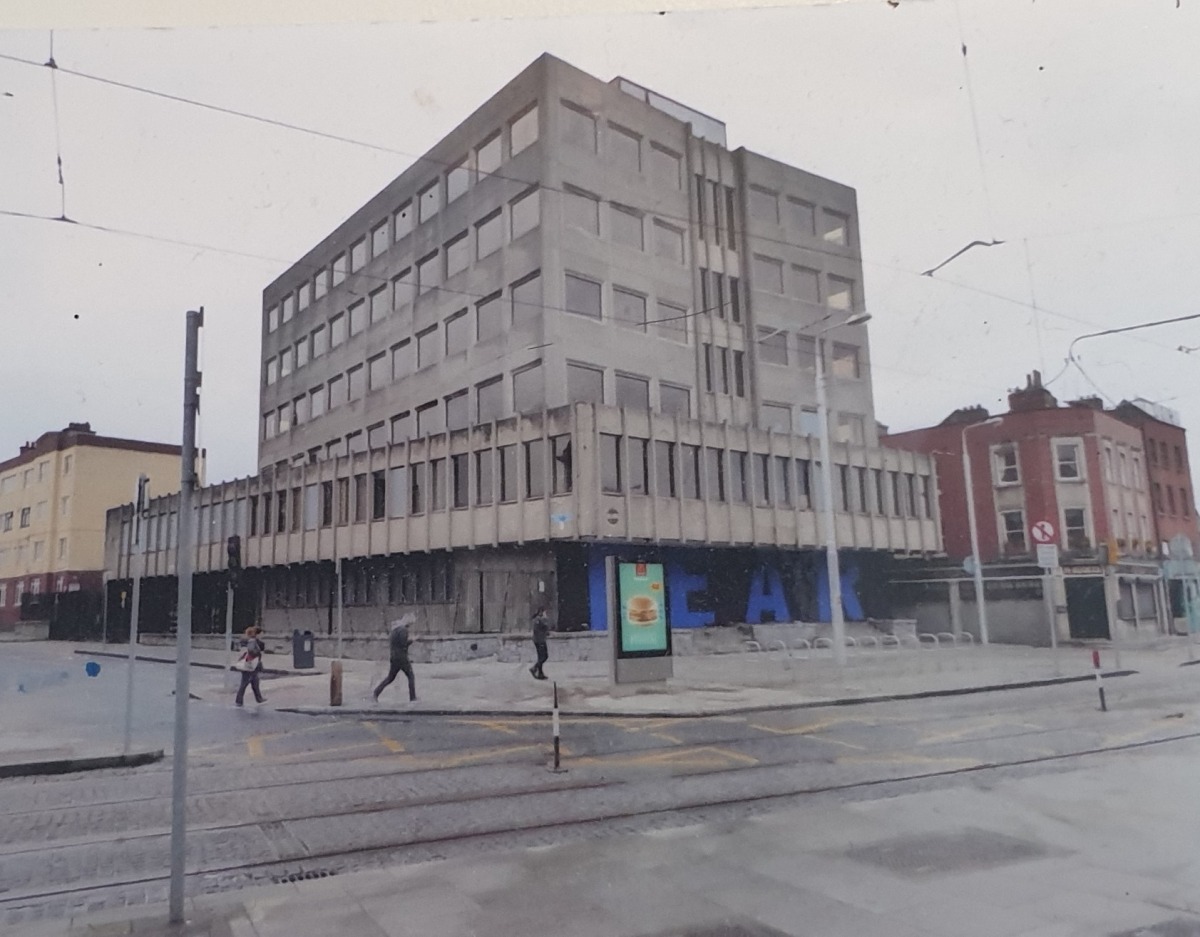
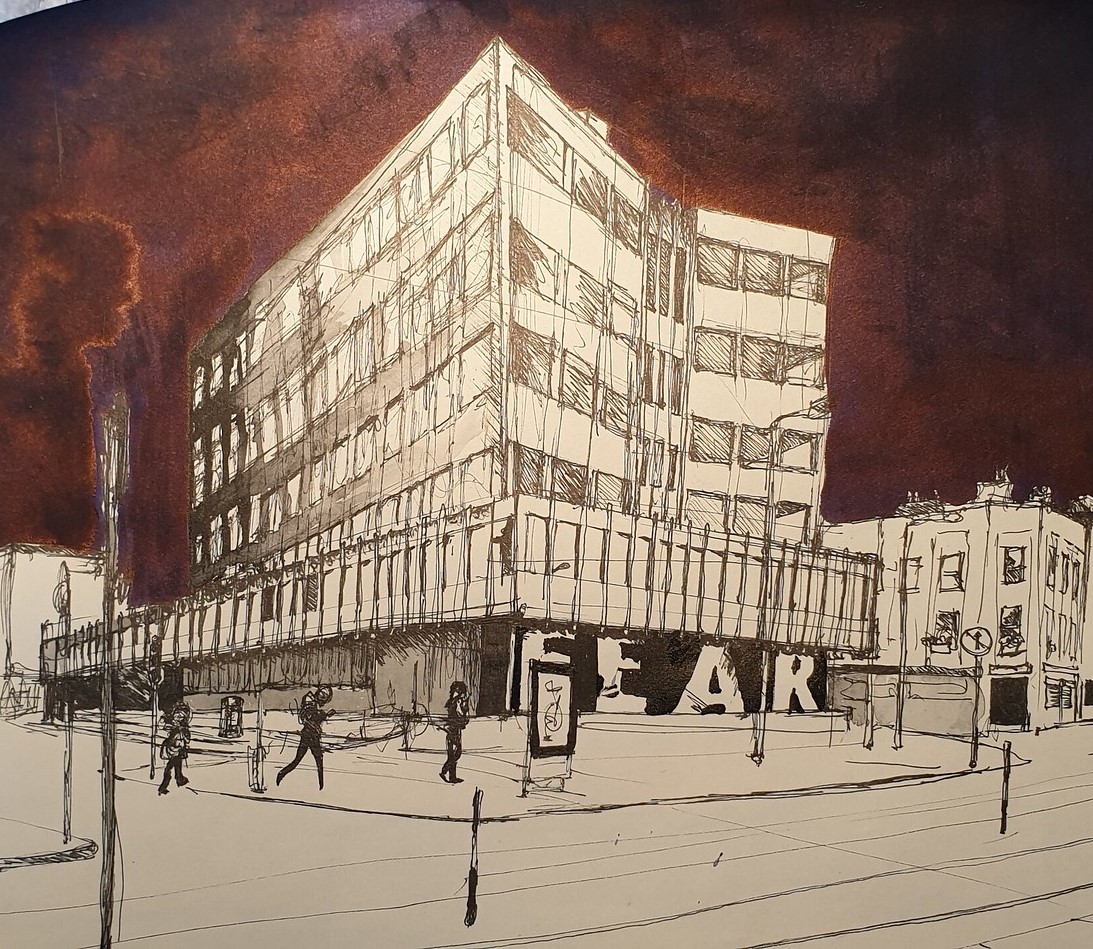
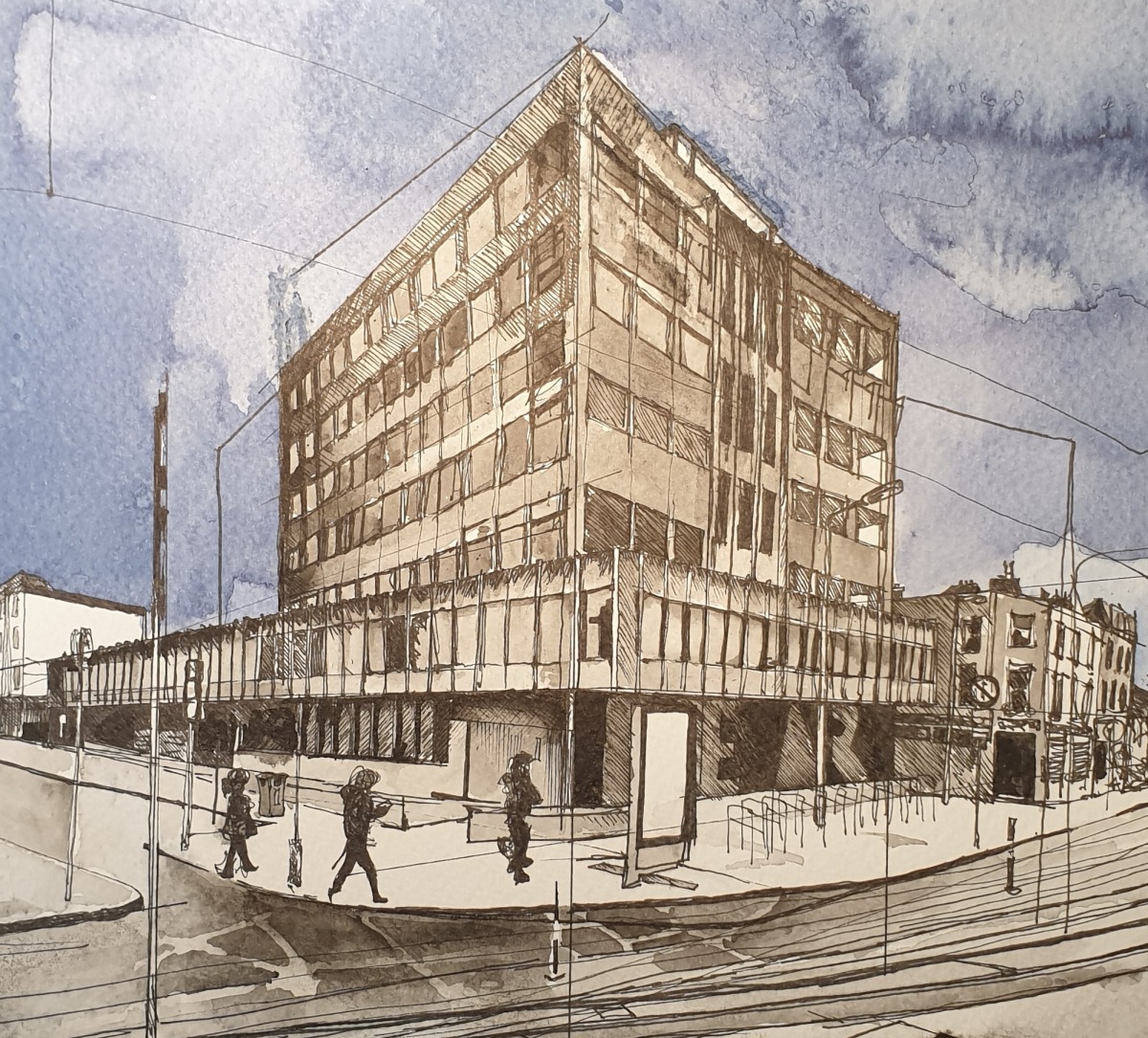

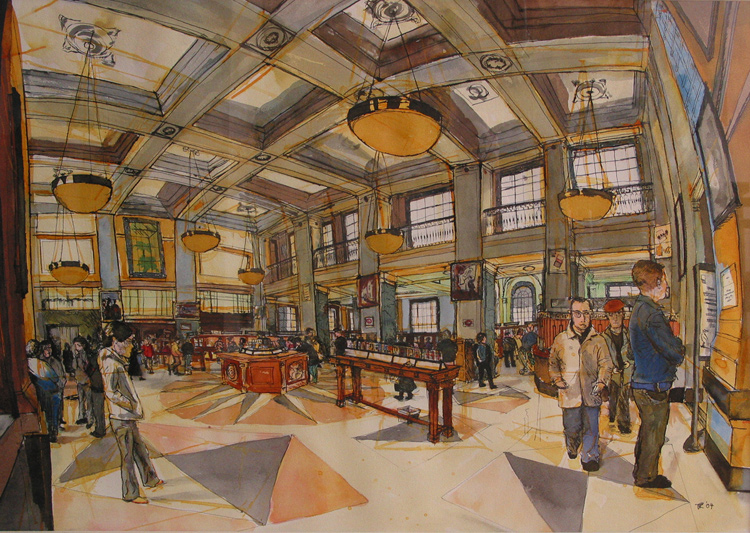
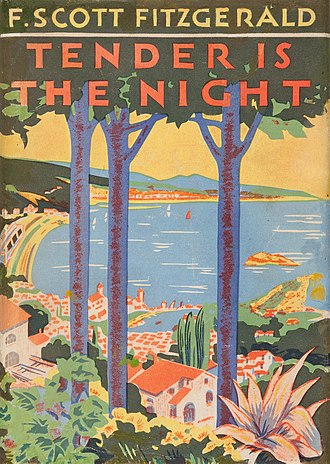
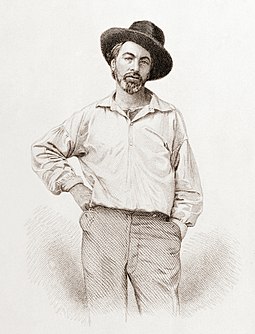

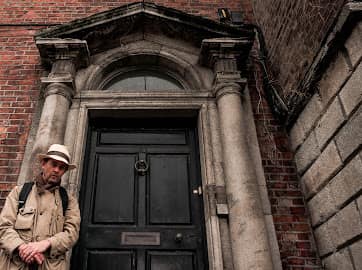
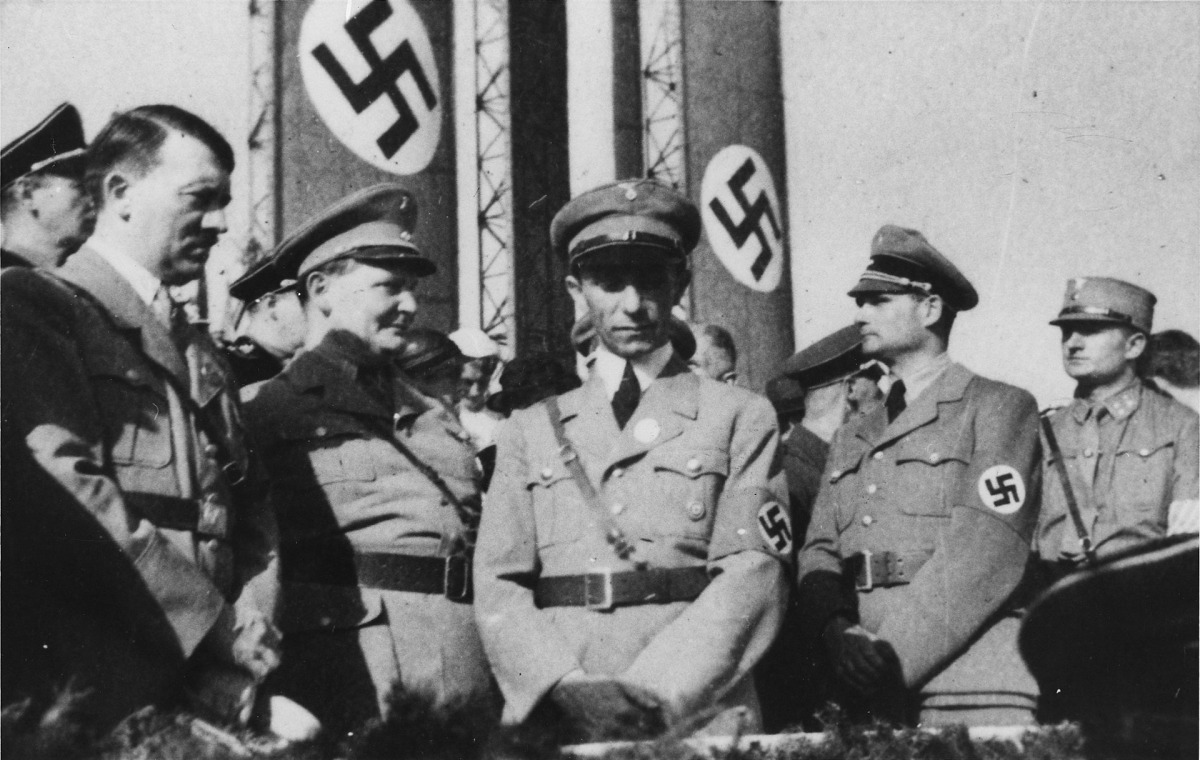
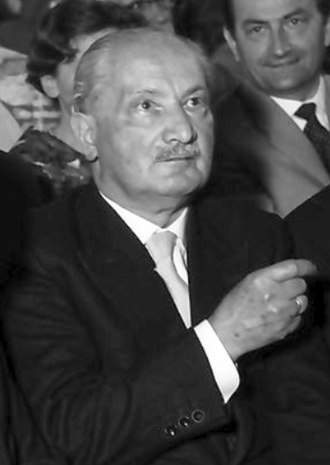

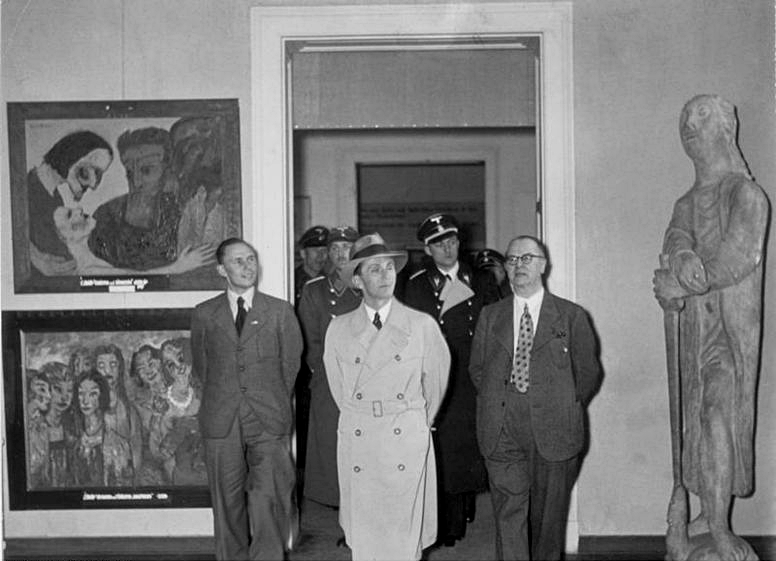
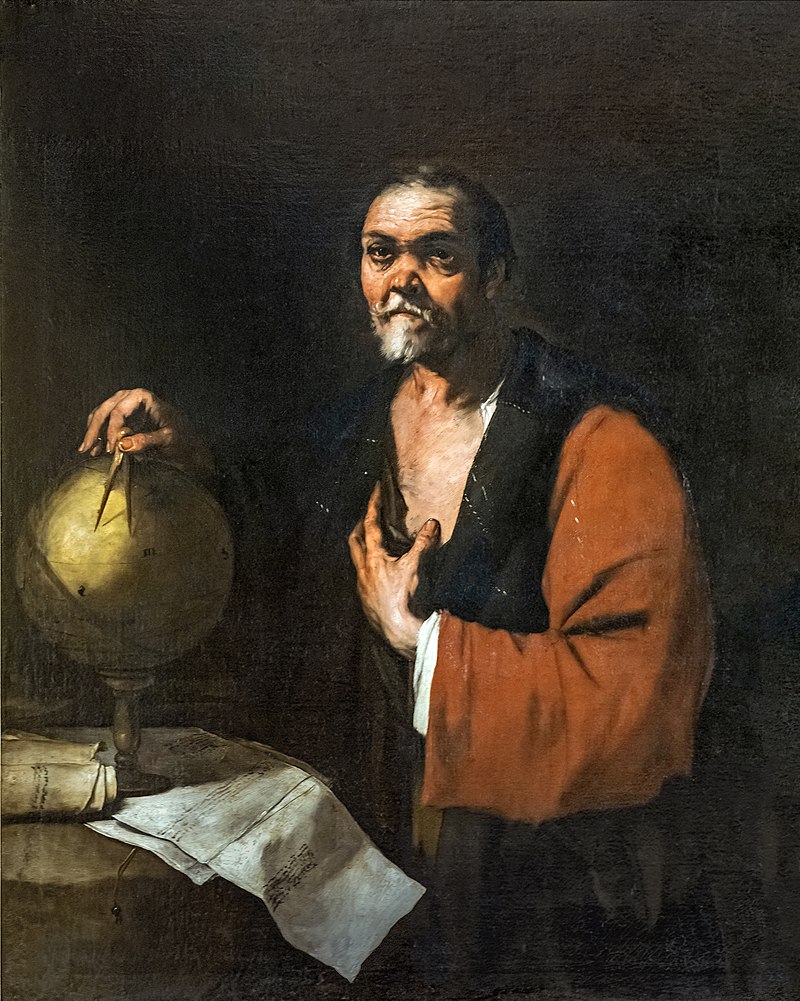


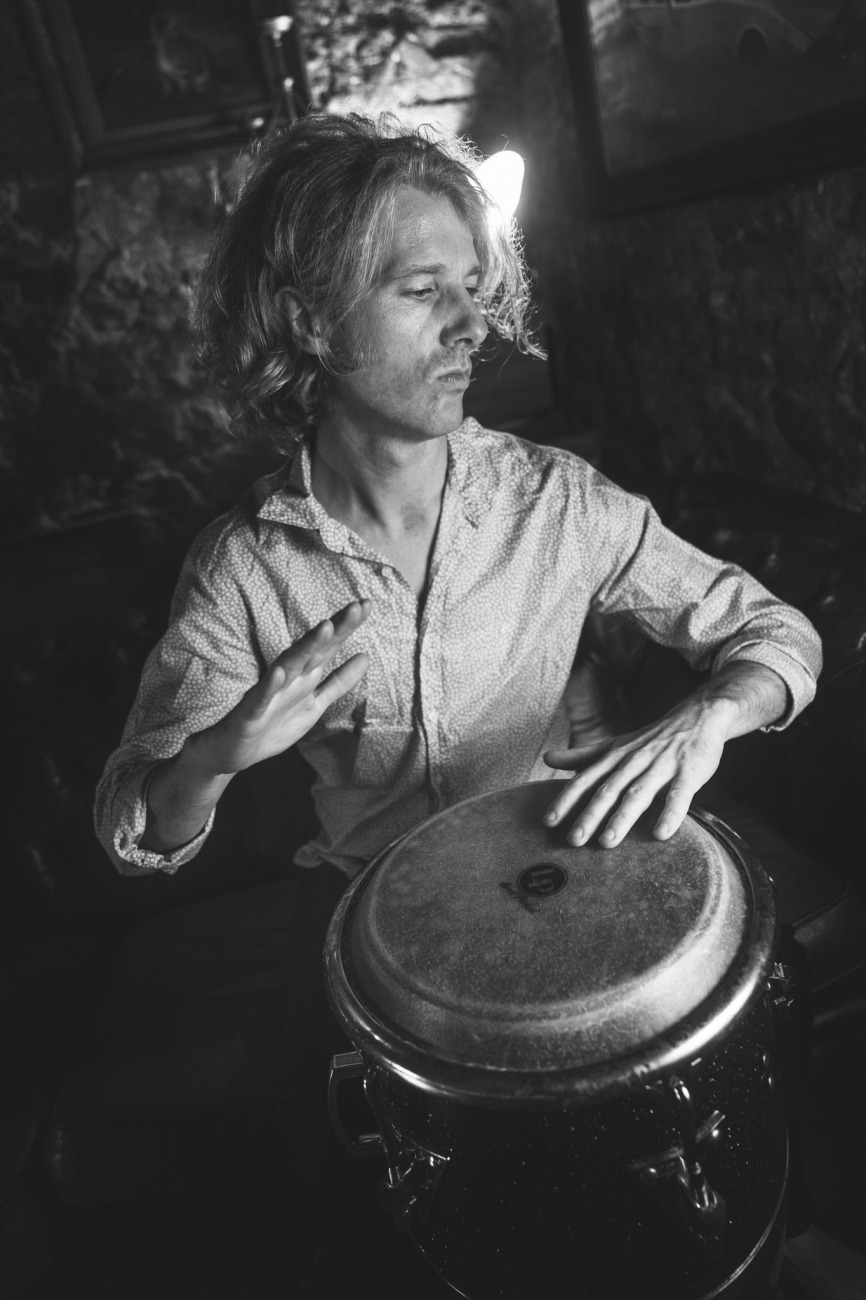
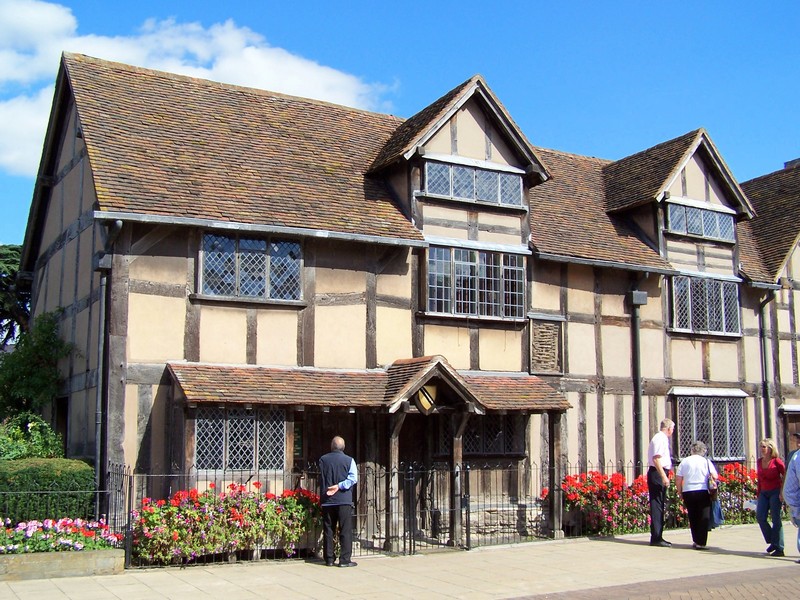
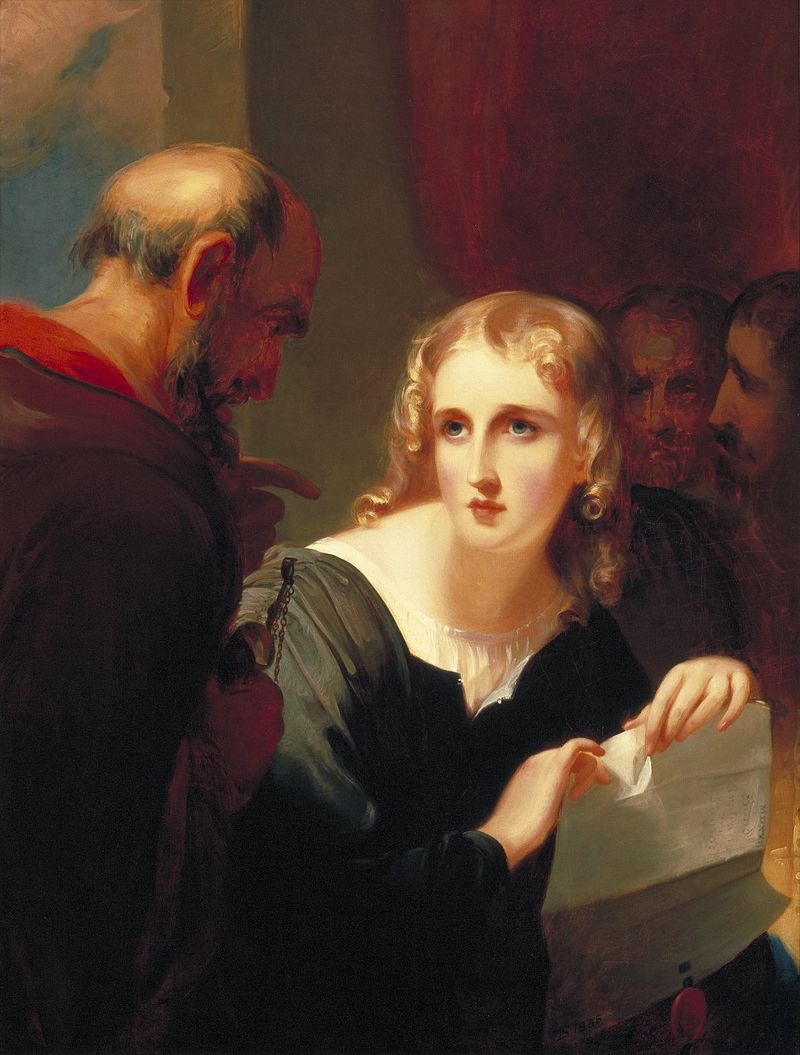
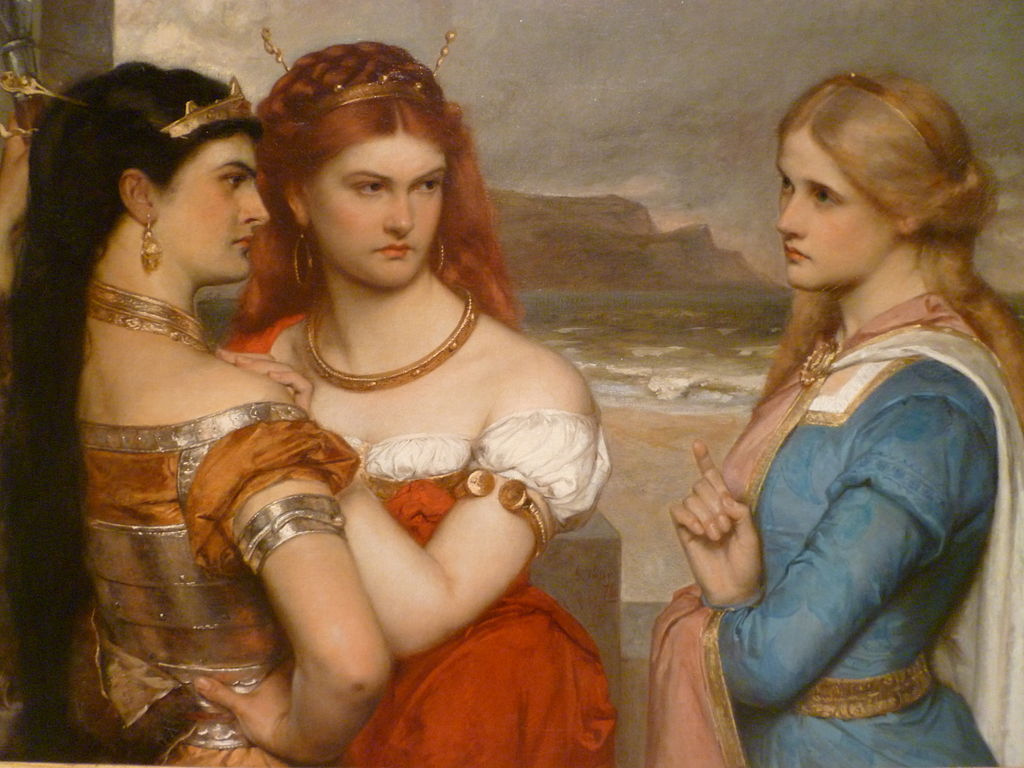

 The first point to note about the post modernists nonsense is that it has encouraged a distrust of the truth and an atmosphere of looseness and imprecision, wherein any old argument, or moral position, is accorded equal weight.