Blog

  • The Daymaker

    For my Aunt Josie.

    Mamma died today, last year, at this very hour. I took care of her “Like an angel,” she would say, and I would never cry within her sight, nor anywhere in earshot, so that, at her funeral, and she died on the eve of her fortieth birthday, my eyes felt like eternal springs.

    Earlier this morning, after Dr. Dziurdzy had just signed my Weekend Pass, I strode a mile to the mall where I buy blue roses, and a bouquet in hand, descended the stairs of the Hamilton Mountain. From there, I pressed on, a pied, all the way to The Holy Sepulchre Cemetery. I only stopped at Sassoon’s Cafe, just before the James Street Bridge – to make Mamma a card.

    Across from me, in the form of a marble statue of herself signed by Michelangelo, sat St Dhymphna. Typically, whenever we’ve completed an exchange, and it is time for us to part, she lingers with me a while, in one form or another, once even, as the lily-like scent of her long flaxen hair, perhaps to stave my loneliness.

    It was so sweltering in Sassoon’s café that I swear I saw some sweat-beads glisten on St. Dymphna’s smooth marble brow. A barista fanned herself with the menu, placing before me my café au lait. She sighed over her shoulder at the young man sitting stiffly in one of the booths, wearing a camouflaged hat. I surmised him to be “ the soldier” St. Dymphna had mentioned to anticipate, “the soldier who resembles your father in that photo of him in the viridian shirt – the one where he barely resembles himself.”

    Like other frequenters of Sassoon’s Café, the soldier was in mid-conversation; but what bothered the barista was that the seat he faced was empty.  In his white t-shirt, gray dress pants, and black Wallabees, he placed before him, on the table for two, an open notebook and what appeared to be an emerald-green fountain pen.  The soldier wore a week-old beard so handsomely I wondered if that was his intention; I wondered if it was a look he was going for, or if he simply did not shave that often. Beyond the notebook, and farthest from him, lay his laptop, closed and recharging.

    “Send one platoon west, and one platoon south; over,” he ordered, after which, for about ten seconds, he seemed to listen attentively to a response, carefully, his eyes barely blinking, but dilated; then, he continued his orders. The barista, with hands contrived on hips, took three steps, robotically stopped, then glared down at the soldier. With calculated firmness, she coldly stated:

    “Excuse me, Sir. I’m afraid, I’m going to have to…Ask you to leave”

    A loaded silence reigned in the room.

    “Why, exactly?” asked the soldier.

    “Why do I have to go?”

    Again the barista glared down at him.

    “Why?” he demanded of her for the third time, after some intense silence.

    “There’ve been complaints. More than one. About your…behaviour.”

    “My behaviour?”

    “Yes, Sir.”

    In the silence of Sassoon’s, that soldier and I simultaneously stood up. We were moving slower than two war-weary battle-horses who had once galloped wild. Lifeless as ping-pong balls, all eyes in Sassoon’s Cafe bounced between the soldier and me.

    “My name is Avi Baxter,” said the soldier with warmth, to the entire room.

    “I’m sorry, Sir. But you have to go.” continued the barista. “My manager makes the calls.”

    “Where’s the manager?” asked Avi.

    The barista nodded toward the kitchen’s swinging door, and from behind it the manager could be heard yelling.

    “I’ve called the police!”

    I’d been leaning on a pillar, but now facing Avi, I stood at attention.

    “My name is Carlo, Carlo Di Carra,” I said to Avi, alone. And turning toward the barista, “Leave him alone. He’s done nothing wrong.”

    “Do you have a Thursday edition of the Hamilton Spectator?” asked Avi, peering hard at the newspaper piles. “I’m in no condition to defend myself, cause I’m in and out, so…”

    The barista didn’t answer, but I darted toward the bunch of newspapers to locate the Thursday edition.

    “Avi, here it is.”

    “Thank you, Carlo.

    Anticipating the police, for a few moments I looked outside the window. When I turned around, Avi’s pupils were dilated again. In a tone as solemn as it was dolorous, he whispered a few words I couldn’t understand.

    “Avi,” I said. “Avi?’ I repeated, but he didn’t respond.

    I looked outside and back at Avi, whose eyes were now serene.

    “Could you please open the newspaper to A2?” Avi asked.

    “Yes, of course.”

    Opening the newspaper, there before me was a large picture of Avi in military fatigues. I showed the article around, from table to table, ensuring everyone could see the published picture of the very veteran among us. Avi stepped toward me.

    “Could you please read the article out loud? Cause, like I said, I’m in and out these days. I’d be forever grateful to you, Good Samaritan.”

    There was no time to answer, since the police were on their way. So I launched straight into the article:

    “The headline reads: The Language of Madness: A Conversation with Avi Lyon Baxter. Written by Kimberly Stone.

    “Over coffee, I asked acclaimed Hamilton poet, Avi Lyon Baxter, 27, questions regarding literature, politics, and family, but it was when I asked him about the effects of warfare, that Baxter seemed most engaged, most ardent, and most poignant. ‘The years of warfare triggered what my doctor calls schizoaffective disorder, which runs in my family. I also suffer from PTSD.’ Baxter has been hospitalized for his conditions several times; during his admissions, he became acquainted with what he calls ‘the culture of the patients,’ and also ‘the struggle of the patients.’”

    I stopped for a moment and looked up at Avi. He’d slipped into another trance.

    “Through our conversation, a polarity arose. That of language as a saviour for those suffering from severe mental illnesses, like in Baxter’s case, and language as a dehumanizing force that is inflicted, often unknowingly, on the psychotically ill. ‘Too often, those who consider themselves politically correct loosely use words like psycho, nutjob, and crazy. Now, hear me: I think freedom of speech should reign supreme. I am against language policing, since I believe it divides people, as it is designed to do. Yet, at the same time, I have a huge problem with the hypocrisy.’”

    “The hypocrisy is that of how the so-called politically correct treat various groups in routine language, and the discrepancies in political correctness. While they treat many demographics with sensitivity, like people of the LGBT community for instance, the language of mental illness and, Baxter notes, specifically psychotic disorders, continues to colour their conversational speech. ‘If policing language, shouldn’t that extend sensitivity to anyone who needs it, not just to those dictated by a biased media?”

    “While I wouldn’t recommend injecting offensive terms into one’s vocabulary to correct the imbalance, those who do choose to be mindful of political correctness might consider how they cherry-pick which terms to be mindful of, and the message they’re sending to those left out of their apparently progressive dialogue.”

    “Baxter says the effect is that many of those who suffer from psychotic disorders ‘feel like people treat them as sub-humans.’ Especially in the context of individuals whose own minds are often frightening places for them, having others in society express to them, through their word choice, that their condition does not warrant sensitivity, is further dehumanizing.”

    “‘There’s no safe space for them,’ laments Baxter. ‘If you have been granted equality you have not received it. If you want equality, you must take it. True equality is something taken, never given.’”

    Here I paused and peered into the faces of the café customers and out the window. No police.

    “Why should we care? Well, because the connection between mental illness and creativity is not just one founded on an outlet for suffering. There is also an innate relationship between mental illness and creative genius, and this combination has historically brought great works of art, and important inventions of many kinds, into the world. The image of the brooding or unhinged artist has merit beyond the stereotype.”

    “Baxter explains, ‘there is an infinitesimally fine line between madness and genius since, recently, scientists have proven that the two share a similar genetic makeup, called Neuregulin 1. We revere and adore Van Gogh, Nash, Plath, Schumann, Beethoven, Cobain, Hemingway, Pound, Nelligan, Blake, and other great minds affected by mood disorders or schizophrenia. We love our mad geniuses. We’re eager to take their gifts, but we most often reject the very illness that spawned the gift, and thereby reject the person.’”

    A lump rose in my throat and I wanted to cry, but resisted my instinct. I searched everyone’s eyes, none of which were holding back tears, none of which shone with the dimmest twinkle.

    Confronted with an aura of indifference in the room, Ari’s eyes welled up before closing as he took a deep breath. I too took a deep breath. But when my head bowed the way an iris’s bloom will, when weighed down by too many dew drops, my eyes were open and staring at the image of Ari, printed on the page.

    “Those with the combined traits of creativity and psychiatric instability who can harness and channel them into careers are the fortunate ones, who were able to take challenging life states, and make from them a thing of beauty to share with the world. However, these are, more than likely, the people you avoid on the street, or snicker at on the bus, as they grapple with untreated psychotic symptoms.”

    “Baxter’s critically hailed debut book of poems, The Flowers of My Battles, became a bestseller in both Canada and the United States. The book won both the Governor General Award For Poetry and the T.S. Eliot Prize. He is currently nominated for a Trillium Award, the gala of which will be held this fall. In The Walrus magazine, critic and poet Dylan Yardly called Baxter’s debut ‘the greatest poetry debut of the past 25 years. Baxter is perhaps the most commanding and relevant war poet since Wilfred Owen.’ Last year he was awarded the Medal of Sacrifice, for his brave fighting during the War in Afghanistan.”

    “Though often debilitated, Baxter has established a career that allows him to share his insight, and lend his voice to others struggling with mental illness, so many of whom are silenced rather than celebrated.”

    I savoured that article to the extent I could, while all around me, a palpable aura of indifference persisted. When I checked on Baxter, he was beyond reach. Pupils dilated and tears streaming down his cheeks. That’s when, through the window, I spotted two police cruisers pull up and park.

    By the time both officers entered Sassoon’s, Saint Dymphna’s presence, manifested in the form of a marble statue had, alas, vanished. Avi was consumed by one of his hallucinations. And as for me, I encountered the kind of anxiety a blue iris must, when its growth flourishes from the protection of a private garden, to project out onto the unsympathetic surface of a well-traveled urban sidewalk. Mind you, unaccompanied by any other backyard blue irises and at the mercy of the masses.

    Or was it more that loneliness two horses might feel when, without warning, their riders steer them away from each other. Often so fast that neither has a chance to neigh good-bye.  Avi and I stood side by side. Solid as two pillars. Sympatico as high-school students passing doobies around a fire-pit party.

    “And, furthermore, I bet you’ve been completely off your meds?” continued the first officer, who wore short sleeves.

    “Now listen, Avi.” began the second officer, who wore long sleeves, “I sympathize with you, for real. I’m saddened as hell by your tears. And I get why having to leave this café may be troublesome for you, but it is time to go now. One way or another.”

    The officers made eye-contact. As did Avi and I. On Baxter’s table, a book lay open to pages 33 and 34. It was The Soldier, by Rupert Brooke, and next to it was Disabled, by Wilfred Owen.

    “Do you really want us using force to get you out of this place?” asked the first officer.

    “Do you really want to rip away the integrity of a veteran?” I interjected.

    “I’m warning you, Boy. Shut it!” exclaimed the first officer. “Are you gonna leave this place peacefully, on your own, or do you want to be taken out of here violently, by two cops? Which would most certainly be bad for your integrity, too.” the first officer demanded of Avi.

    “We don’t want to have to call C.O.A.S.T. on you. You’re well aware that C.O.A.S.T. will cuff you. And drag you straight to St. Joe’s for psychological assessment. Oh, and then, they’ll

    send you for a grand ole stay at the Mountain Sanatorium.” pressed the second officer.

    “What is C.O.A.S.T.?” I had to inquire.

    “It’s a…Well, it’s a special police unit that comes around collecting the crazies. You know, psychopaths and such. So they can go to the hospital for …For treatment or whatever the fuck.” hissed the second officer to me, so Avi couldn’t hear. Anyway, Avi had zoned out again.

    “Uh…but what does C.O.A.S.T. stand for?” I asked.

    “Crisis Outreach And Support Team,” officer one said with a smirk.

    At that, Avi’s head drooped like a raindrop burdened daisy blooming on a starless, moonless night. Moments later, Avi raised his head. He gathered his materials and gripping his satchel, pivoted like a ship points to a lighthouse to lock eyes with me.

    The two of us paused in a dilapidated and vacant parkette, where we were surrounded by spiralling lilies shedding their wealth of pure white petals in the morning sunlight.

    “What’s your name, again?” Avi asked.

    “Carlo Di Carra,” I replied.

    “How old are you, Son?”

    “Nineteen.”

    A warm wind wafted.

    “Carlo, I feel a strange paroxysm of utmost thankfulness toward you, and utmost loathsomeness toward them.” That said, he spat into a nearby patch of grass, “You showed me more support in ten minutes than most people have shown me in ten years, and so: SALUTE! Salute to you! Salute to the mercy you shared with me! Salute to you, the Stranger’s angel!” Then, forthwith, his eyes dilated into a thousand-mile stare, while he commenced. “No, Sergeant, I am not a coward. I’m just human. There are civilians in that building. I cannot open fire as you have just ordered, Sir.”

    Then…

    “No! No! Stop pointing that at me, Sergeant! Please, Sir! Okay! Okay! Okay!” Avi screamed. Then he started aiming his invisible machine gun, whose trigger he repeatedly pulled, until finally, he emerged from his fugue.

    “Anyway Carlo, as I was saying, SALUTE to you, Salute to you and your blood of love!”

    After Carlo finished his exclamatory salutations, he paused, then started: “My will to electrify the Patients Movement is hella stronger now that I’ve endured what happened today .Thank God for this shock I feel. Which will, I hope, continue to numb me from the memory of what we witnessed in Sassoon’s Café. I must affix and delight in the numbness that a proper shock provides. Wretchedly, must I revel in an inner glade which exists between my… self, and what has occurred. Yes, the dictatorship of the psychiatric patient will be commandeered so much sooner now.  Do you, by chance, believe in God?”

    Yes, very much so.”

    “And do you believe Jesus of Nazareth to be the Messiah?”

    “Yes. I do.”

    “Ok. In the name of Jesus of Nazareth, swear that you will never repeat anything I’m saying here. Promise me. In his name.”

    “I swear, in the name of Jesus Christ, that I will not repeat anything you are saying here.  I promise. In His name.”

    “Say this: May I go straight to Hell if I repeat anything Avi Lyon Baxter tells me in this lilied parkette near James Street North”

    “May I go straight to Hell if I repeat anything Avi Lyon Baxter tells me in this lilied parkette near James Street North.”

    Avi sighed.

    “In the name of my own vengeance to a world that treats me as a sub-species. In the name of what I think is right and essential. In the name of any and all oppressed psychotics, the Psychiatric System will be dismantled and rebuilt. From within and without. There will be both predetermined and spontaneous uprisings at St Joe’s, and there will be simultaneous intifadas coordinated inside the world’s most prominent psychiatric institutions. In all three arenas, our revolution will detonate simultaneously and worldwide!”

    “Then the revolution, or shall we refer to it as The Rev? At any rate, under its own steam, the movement will spread to other sanatoriums like pollen does. In a vigorous wind. To neighbouring towns. All insurgents bound by sheer conviction to The Rev. To a common list of demands. Rights refrained, again and again, by ambassadors representing the revolution. And in these aforementioned, simultaneous, pre-plotted intifadas, guerrilla patients will take fellow guerrilla patients, hostage, consensually of course. Both hostage and hostage-taker will shadow each other into dual defense from our enemy. And, the revolutionaries, from Port-Au-Prince to Toronto, will be disciplined to shoot our enemies: security guards, soldiers, and officers. Below the waist.”

    “My cugino, Armando, a made guy who lives in Palermo, will arm our rebels. And may very well agree to advance us, in solidarity, whatever we need. See, he’s been hospitalized. Numerous times. For schizophrenia. He can fathom our marginalization.”

    “So you’re half-Italian. On your mother’s side, I’m assuming?”

    “Yes,” Avi replied. “Listen, Carl…”

    “It’s Carlo.”

    “Carlo, please. Don’t interrupt my precarious stream of consciousness. It’s the sole palisade between me and that trauma-induced platoon following me even as we speak.”

    “I’m so sorry, Avi. Forgive me.”

    Avi nodded his head, even smiling slightly.  It had been a relatively long respite since he’d fallen into a fugue.

    “I can’t wait to blow up the bubble rooms! To terrify the snakes of The System. Homicidal doctors signing off on premature discharges. Knowing full well they’ll end their lives thereafter! Rapist nurses fondling their way out of the night-room rounds. All of whom we will kidnap and try in a court presided over by psychotics!

    Our ransom for the prisoners will be a list of demands, including but not limited to:

    1) Swift implementation of a law worded as follows: That to be granted a psychiatric license, doctors must score in the top percentile on a standardized emotional intelligence test.

    2) Food service and accomodation to be modernized and upgraded so as to adhere to hospitality standards.

    3) Establishment of a fund dedicated to the disbursal of victim reparations, and immediate handover of similar criminals currently working under the evil administration, regardless of rank.

    4) Definitive discharges for select patients, such as political prisoners, for example.

    5) Smoking priviliges and designated areas for doing so to be reinstated.

    6) Redistribution of psychiatric authority, via the Vortex Accords initiated by me last summer.

    7) Pass executive orders composed by me on my bus ride to Montreal last year.

    “To be elaborated. Just so long as that list of demands can wrap my soul’s wide wound, like a bandage, the way forward seems somewhat possible. I’ll not, like a mummy, lie petrified inside the tomb that is my basement bedroom. If even a few of the uprisings succeed, the world would suddenly know the patients’ collective power, now wouldn’t they? Who would ever fuck with us again, if we executed what I’ve just proposed? Yes, us. Do you think I cannot see that you are struggling with your own psychosis? Who would still suppose the diagnosed insane are wholly powerless? We will assume our equality, which is the only way we can truly receive it. And the world, even the blasted, double-edged mass media, will finally see that we will no longer tolerate being abused, raped, and used by our own so-called ‘caretakers.” Shamed, despite the fact that it is we who open the doors of invention for humanity.”

    One glance at Avi’s eyes, twinkling as they were with zeal, and I saw his essential place in the universe.

    “I see a Million Man March of the mad!” Avi exclaimed. “And, as for the aforementioned Patient’s Revolution, I will recruit guerrilla-patients from the many online psych ward whisper networks. Plus, I’ll recruit my friends from Mad Pride, who know it is impossible for a person to be proud of one’s self, when not only openly, directly and indirectly, being discriminated against, but also scorned, mocked, hated, abused, mistrusted, beaten, and murdered.”

    Avi jolted, his mind seemingly struck by sheet lightning of afflatus, which is better than being struck by the vipers of his traumas. Again, he shook off the fog that dogged him to refocus anew.

    “You see, Carlo, not only will the psych world be faced with the patient’s revolution, but so will anyone outside the system. Who treats us as a subspecies. Who thinks we are not worth as much as the so-called sane. And that means a whole lot of motherfucking people. And they will answer to us. To the insurgents.

    “Reports of rape, assault, degradation, and other forms of ill treatment occurring in the Sanatorium never reach the minds of the masses. More and more mental health activists are therefore going underground. Radicalizing into revolutionaries. It is time for the Patients’ Revolution.”

    “I’ll seek out like-minded patients. O Carlo! O Patients! Hear my voice! We must leap from our closets, lest too many of us die by our own world-guided hand, to explode upon the world that jeers us! Like, who really cares about patient rights and their little lives? How many

    souls are suffering downtown in the streets, alleys, and alcoves; poor, dilapidated, ‘vile bodies’ for whom no one weeps.”

    “And so, now with intifada’s force, at last, at last, at last, the ‘Ship of fools,’ will dock at the Bay of Honour and Equality. At last, at last, at last, the ‘ship of fools,’ captained by revolving ‘crazies,’ will barge between the large and empty yachts of the fogless harbour, to crash ashore this society that has exiled us. At last, at last, at last, this listing and trimming of the ship will end and, for the first time, we will stand stable upon sturdy earth. This will be our Santa Clara!”

    “The hospital will soon be ours! A guerrilla unit of eighty patients! The world will know the patients’ powers! Viva la revolución de los pacientes!” Avi yawped, so the whole parkette could hear, though no one, besides us, was there. “Viva-a-a-a-a!” Avi bellowed, the echo of his voice blasting beyond the boundaries of the parkette.”

    Remember, you promised never to repeat anything I’ve said. Will you keep your promise?”

    “I will keep my promise because none of this can ever happen.”

    “What the hell are you saying, on?”

    “Don’t you see? If you do what you have planned, you will only FURTHER the divide, the apartheid, between those presumed sane and those diagnosed insane.  Avi, you will sow hatred in the hearts of the “Insane,” and shame in the minds of the “sane”.  Your idea is an understandable but regrettable one.”

    “Oh really? Well what the fuck are you going to do about it, Carlo?”

    “I want you to make a deal with me. A pact.”

    “What the fuck are you talking about?”

    “We are going to make a deal.”

    “A deal?”

    “Yeah. Look, I’ll, I’ll…“

    “You’ll?”

    “Ari, I’ll take away your illness if you promise not to carry out the Patients’ Revolution.”

    “What?” asked an almost ferocious Avi.

    Taking great strides, he headed for the gates of the parkette. That is until I caught up to him, and stopped Avi from leaving. I convinced him to return within the parkette, where we had been talking, among the still spiraling lilies.

    “Please explain to me what the hell you mean by proposing this pact. Like, what the fuck are you talking about, Son?”

    I sighed.

    “Listen, Avi. Inside that eerie bedlam by the bluffs, you could clean that place with all its tears, I struggle to fathom who I am. Rest assured, I’m going somewhere. So, anyway, check this out. I was born on Christmas Day, my mother on the Summer Solstice.  My Father was born on an Easter Sunday morning.  My father’s name, numerically, equals 137; my mother’s name, numerically, equals 137. I was raised on San Francisco Avenue, in the San neighbourhood, near the West Mountain Brow, where the streets are named after saints. The 33 Sanatorium bus still winds through these streets. It can be heard from my childhood home, at number 1101.”

    “Throughout my life, countless people have testified that I either; saved their souls, their minds, or their corporeal lives. In my boyhood, I endured a connective tissue disorder that ensured the onset of Pectus Excavatum, which means the malformation of cartilages, near my sternum. By age thirteen, this condition eventuated the grotesque caving in of my chest. An audible gasping for each breath deepened with every passing day. Gradationally, I was asphyxiating.

    And this body’s hideousness couldn’t have been more excruciating to my mind. Dashing what was left of my self-image, it spent my self-worth. To such an extent, that since I nearly never spoke, my nickname in high school became ‘The Mute.’”

    “For five years, not once did I smile, dragging myself through the days like a half blind horse too old to be drawing anything but air. At age eighteen, I underwent The Nuss Procedure. That being an experimental operation, to possibly truss the excavatum into convexity. A one-foot-long, one-inch-thick, bowed steel bar, was forced through my right side, then inside my pulmonary cavity, converting asphyxiation to easy breathing, concavity to convexity, disfiguration to beauty. After a week of recovery, I was released from the hospital just in time to celebrate my nineteenth birthday. Where my right side was penetrated, the Nuss Procedure left a 3-inch-scar. One still very visible.”

    Raising the hem of my shirt, I showed Avi the scar on my side.

    “Earlier this year I heard what identified itself as being ‘The Voice of the Father from the Three Personned God.’ He said…Well, what he said was this; that I would be henceforth transmuting into a secret being, whose identity I too, alas, would not know until my absolute transfiguration. Sublime and vivacious, this voice disclosed that I’d soon be in the hospital healing patients. It said that seraphim would shield me from demons. That soon, as I should be, I’d sermonize to the patients unfettered. And that I’d never have to worry about corporeal repercussions for voicing the Truth. For voicing His Vision. My family hospitalized me when I insisted this had been a direct correspondence with God.”

    On this note, I paused, taking a couple of breaths.

    “It was actually the morning of that massive storm, and just after one of my hour-long sermons, that the coda of The Voice was transmitted through me to the patients. We took shelter from the elements beneath a red-roofed smoking pavilion. It had been downpouring from tenebrous clouds for an hour and a half. Amid seemingly inexhaustible lightning which struck its riled electric vipers in such a way as to block our path. In these conditions we, who were out on passes, were waiting for the wind-whipped rain to cease, so that we could return to our respective wards.”

    “Which is when we were startled to see two demoniacs burst upon us, in blurs of wide spasmodic movements preternaturally generated by the notable force of the Devil. Screaming immeasurably discordant baritones, the rabid youths raged and rived the restless crowd, both asserting their Latin as petrifying as it was precise. At last, they alighted on the pavilion’s long picnic table. Forthwith, I shot toward the two youths, each foaming and seizing till apparently exhausted from the merciless exertion perpetuated by the power of the Devil himself.”

    “Firm, but calm, I lay my left hand on the one youth’s head, and my right hand on the other. O Satan, in the name of Jesus Christ, the Saviour of us all, and the Son of the Living God, flee from these two boys at once! Flee from these two boys at once! Flee from these two boys at once! I tore my crucifix from my neck then, and with the force of the Holy Spirit inside me, pressed it into each of their chests, imprinting it over their hearts.”

    “Just then, two shower-weary mountain vultures perched upon a nearby statue of some lofty lobotomist from the early 20th Century. At once, I cast, like two eternally long shadows, both demons, into the mountain vultures. The scavengers gyred higher and higher before zigzagging away to vanish over the cliff.”

    “However, overtaken by a whirlwind of rain, the gyre reunited in a dance puppeteered by ever greater gales, till both mountain vultures were at last, simultaneously slammed headlong into the cliff’s vertiginous summit. Lingering in the moments left of their lives, their miserable necks and bones were as blasted and shattered as is humankind.”

    “The two youths lay exhausted and unconscious on the picnic table. Lightning still struck everywhere around our pavilion. Even striking the stone body of the lobotomist. The lampposts were so tipped, it was as if  we were starring in an early expressionist movie. And whirlwinds whisked uprooted saplings heavenward, only to drop them back to the earth. Alas, the patients were ripped about, one to unconsciousness. A wind whipped woman wearing white screamed, ‘Make it stop!’”

    “That’s when, driven by the Holy Spirit, I leapt out into the gales, the rain and all that lightning, to lift my arms like a ladder, into the chaos of a spewing sky. O Lord in Heaven, hear this prayer. Please Dear God, put to death this pitiless storm! And within 3 minutes, the colossal storm concluded. Lightning lessened, gale calmed to wind and in the end, became but a breeze.”

    “Some of the patients panted, while others sprinted from the pavilion to the Sanatorium doors. Staggered as they were, I shadowed the patients swiftly striding ahead for what took about thirty seconds, after which we found ourselves bone dry. Only a drizzle resumed, during our dash back to the sanatorium doors. The rumour spread that I had dried a downpour, dismantled the wind, and annihilated lightning.”

    “The following day, some patients accosted me. ‘Might I heal their minds of illness? Would I lay my hands upon their heads?’ They had come to believe I possessed powers, that I was a channel, a vessel if you will, of the Lord. His mercy. And His words. ‘I will,’ was the only answer, as then I remembered what the Voice told me before my hospital admission.”

    “Laying my hands upon their heads, many reported they were healed; I was quite efficacious in exorcism, and at healing depressives and drug addicts. Some said they believed themselves healed, but only when my hands were upon them. More and more patients approached me expressing a vehement desire to be healed.”

    “I was released, readmitted, released, and readmitted again, eventually seeing a need to disremember the plausible miracles under my belt, along with deep wonderment about my identity, all of which exhausted the high spirit inside me. In a world where soulfulness is scrubbed from people like mildew, miracles are seen as absurd to all.”

    “So, on the evening of Holy Thursday Evening this year, after having wept for Christ, in particular I’d envisioned Judas’ betrayal and Jesus’ arrest, having seen Zeffirelli’s Jesus of Nazareth. My prayer to The Lord pleaded, ‘I do not know who or what I am. Can you please tell me? Give me a clear sign, even though my transfiguration is incomplete? After praying, I fell asleep.And on Good Friday I awoke to a piercing pain in my right side. It was coming from the place where the Nuss Procedure was performed. Where I still have the scar.”

    “As if I’d been stabbed, the throb in my right side was so severe, that I screamed out to the patients who slept in my room, amid miserable throes. Via electro-magnetic vibrations, a seraphim paid me a visit, to stress that by Monday Morning, my stigmata would fade and disappear. At which time the piercing in my side ceased.”

    “Avi, isn’t it true that you have been less ‘in and out,’ and more focused, than you were when we met at the café?”

    He didn’t respond. Instead, he started whistling Rachmaninoff’s Prelude in C Sharp Minor with his eyes closed, his face not tense as it was when we were in the café.

    “I believe you, Carlo. And yes, I have been more present and more focused than when we met at the café. What’s happening?”

    “Listen, together you and I will start the Psychiatric Reformation, and apart, will never resort to revolution. Listen, you are slowly healing.  But this will speed up the process.”

    “I lay my cupped hands on Avi’s head, then prayed: “O Jesus of Nazareth! O my Redeemer! O Prince of Peace! O violet eyelight-beamer! I feel your sea-sky horizoned lips softly kiss my spirit! O Almighty Taskmaster, please whisper this away. Sing Avi’s madness to death. Tame his traumas until they die in anonymity as do the loneliest of winds at sea. As do the holiest of saints. As do those white and black Popes of the Vatican, reflected like a solar eclipse inside a yellow puddle of urine.  O Lord, I’d die for you as you have for me, so please. Please free this beauteous man, Avi Lyon Baxter. Free him from his tormenting traumas, O free him of his tormenting illness.  Please, please heal him.”

    I removed my hands from Avi’s head. Avi threw himself onto the grass where in the diaphanous dew, he wept. For a moment which then passed, he knelt and his head bowed.”

    “Why are you crying, Avi?” I finally asked.

    “I’m healed,” he whispered.

    Then, suddenly, he jolted to his feet as though amid a street fight for his life.

    “I’m healed! I’m healed, do you hear me, Bello!” he blasted, “I don’t hear voices anymore! The only voice outside me that I hear is my own echo, and the only voice inside me that I hear is my own! Carlo-o-o-o-o-o-o-o Di-i-i-i-i-i-i Car-r-r-r-r-a! No, no wait! Santo-o-o-o-o-o-o-! Santo Carlo Di Carra! I like the sound of that!” Avi smiled widely in the warm wind.

    ***

    CooOOoo-woo-woo-woooo! CooOOoo-woo-woo-woooo! call the mourning doves. Kneeling at Mamma’s grave, and before arranging the flowers, first I spread the babies’ breath I bought to festoon her tombstone. Over the past year, I’ve gotten attached to the cemetery’s resident doves. Their call is a sound that soothes my soul. I coo right along with them and in doing so, fail to fight back the fierce tears flowing. Droplets that are falling down. All over those brand-new blue roses.

    ***

    Like a couturier’s thread through the eye of a needle, I entered the revolving doors of the Sanatorium. High on it’s hill, I was out on our ward’s terrace, when I painted a watercolour called “One Blue Rose.” I posted a high pixel photograph of the $1,500 dollar painting, to the website of an online art gallery. It wasn’t five minutes before I received a notice on my phone, that a former buyer of mine had purchased the piece.

    Mamma relished a rose of any colour. But blue roses most of all. Because they were her mother’s favourite. Grandma Maria adored blue roses because she was an amateur inventor. In her mind, blue roses were humanity’s most ravishing invention.

    Mamma died today, last year, at this very minute.  Through the diamond patterned bars of the terrace cage, I pray to her and sob. My head droops downward like the bough of a Weeping Willow. One that has endured an ice storm.
  • A Grá for the Language

    An grá is an gráin, say these two words out loud, say them out loud to yourself, out loud to the listening others around, and feel in your mouth how subtle the shift is between them; how the open mouth of love — grá — gets slighted by the brush of your tongue’s curled tip shaping hate — gráin; feel the quick lick it gives the roof of your mouth. It’s that kind of sliver, isn’t it, the one we know to be true; the one that suddenly shifts the friend or the lover to the one we don’t know or want to know. In shape and in sound, there in your mouth, Irish gathers together a distinction of meaning in a unity of resonance. Where the mind of English fragments and scatters, (say them too out loud, say love, say hate), Irish holds in an elemental poetry we need to participate in to sense.


    Sometimes what language teaches us can be that visceral.

    I am digging words in the Burren when I hit upon this realisation —

    tá go leor eile, more abound, Siobhán chirps; an saoirse is an daoirse, an solas is an dolas; seo é an fhilíocht nádur atá le fáil sa teanga! Siobhán is leading us in an archaeological word excavation, amuigh san aer i gciorcal Hedge School, uncovering from Irish some sense of a way of being in the world we have only just forgotten. If we lost it in a generation, we can reclaim it in a generation. Dictionaries are scattered all around, I hold one in my lap, but there is no discussion here of the tuiseal ginideach, we are not being questioned about the modh coinniollach and all mentions of Peig are with endearment and jest. We are just picking words at random and letting the connective threads be woven from there and we weave them without trying. It feels illicit to use a dictionary in this way, and I love it. Here a space is opened of pure play, without the plámás of getting anything right. Here the severed head of Irish we suffered in school is reunited with our bodies — the vibrations in Irish are cosúil le Sanskrit — tugann sí fuinneamh láidir duit. Just feel and the rest will follow; this seems to be the unspoken mantra of the Wild Irish Retreat weekend.

    Earlier that morning, the sun rising from behind Slieve Elva, Cearbhuil leads the women down to the hazel wood chun macnamih a dheanamh, to meditate, and we follow, trusting this woman who is keeper of this land; and we go down to the hazel wood, and there’s a stillness in our hearts. We’ve been invited to observe a noble silence and so our passage through the curly tendrils is punctuated only by snaps of twigs, the brush of branches newly leafing and birdsong from birds I have no name for, not in either tongue. And we pause then as Cearbhuil stops and simply says — éist — just listen. No crossed legs, no chanting, nothing specific to learn, we are simply tuning in to what is here, all around us; we are simply letting our civilised bodies contact the coill, and letting the coill touch deep into us. And later, when Cearbhuil leads us again, now through a forage walk on the land chun lón a sholáthar, we listen then too, not just to the names that fall like small prayers to all the invisible Gods, slanlóg, nóinín, neantóg, casairbháin, but to all the reverence is an méad meas atá ann in this woman’s gestures; we’re listening to all the wisdom in her fingers that know when to pluck, what to leave and how to reap without plundering. It is simple, even obvious, and so all the more unbelievable that we need to be shown how to see what is in front of us and all around us; an leigheas is an maitheas ag fás go fiáin. As if nothing has happened, all the goodness and plenitude of the land is still offered— here, the seamsóg extends itself —here, the seamair dhearg —had we but sense and right vision to see. Tá gach rud fós ann, I hear whispered in my head.

    And then on the beach with Diarmuid, the same principles we have absorbed from Siobhán and Cearbhuil without any direct tutelage apply now to the game of hurling; listen, play, be here in your body. There are real players on the trá, none more so than Diarmuid who seems to skip through the sand goat-like, whilst my legs are heavy pillars that have to be heaved and hefted to keep up with the ball. But this game is not about cé mhéad blianta atá ar do dhroim; it’s not about how many times you’ve kitted out in any coloured jersey. Here, now, with the crashing waves of Fanore in our ears, we return to the pleasure of simply pucking a ball. We léim go hard, we scuttle for the liathróid, we roar anseo to each other, and when we scramble too fast ahead of ourselves, get too caught up in a race to get, Diarmuid beckons us to stop and asks us to check in with ourselves; éistigí cad atá ar siúl i do chorp. Stay with the place of ease, cé comh éasca can you make it lads, don’t strain. And while there may be taithí go leor leis an cluiche ar cuid daoine, none of us have much experience in that. Play till you’re played out; win at whatever cost. Something in us knew that wasn’t the way it had to be, but we had no guidance in respecting the rhythm of our nádur; how to join effort with ease, doing with non-doing. And then, as if in an ancient ritual of bowing to our human limitation, when the hurls are finally cast aside, we throw ourselves into an Atlantach fiáin herself; engulfed in the white and the rush of her embrace; tógtha.

    Of course, there is much more that could be shared here about cad atá ar siúl leis an Wild Irish Retreats. I could tell you about the food, not just cé comh blásta is atá sé, but how it is prepared with such care and attention; slow cooking at its finest. And even more, how it is served to you, with grace and kind eyes; accompaniments you didn’t know you needed and that nourish far into the depths of you. And the music, and the fire, and the joy of being together at last. But I am not offering an advertisement here. If this sounds like a sale’s pitch, it isn’t. If you think I’m trying to convince you of something, I’m not. The arguments for Irish are many; many more those for how to rescue ourselves from our current catastrophe and our abominable alienation from the land. This is not a proof, nor is it a plea, this is simply a love song; a song of praise. This is just a need to acknowledge my luck of having returned home, after many years away, to find myself among mo mhuintir arís, ag caint as gaeilge, le mo dhá chosa ar an talamh. This is just to sing that it feels like a dream I am still not waking from; to sing because it is hard to say what it has all opened in me, because I feel it to be opening still. I offer these words as a return song then, a homecoming tune for the other way; what these wild Irish legends are demonstrating. There’s nothing you need to know, nothing to do, nothing to fix, there’s just letting go; there’s just peeling back the thick layers of our resistance, our wilful control, so that other dimension of our being can re-surface; the one who did not get us into this mess; the one whose skin trembles and dances with the sheer delight of being here; the one who is fós fiáin. Go down to Clare, go down to Kerry, and be with the Wild Irish Retreat folk if it calls you, if it be within your means. If it doesn’t, if you can’t, find your own way back. But claim it —claim the part of you that can’t be claimed; the place in you no worldly concern, no worry or slight of ill-will can reach; the place in you that is open, playful, fluid flúirseach. You don’t need anything special. Open your mouth, lig amach í; slip back i ngrá

  • Fleeing Father

    If stylistically Francesca Banciu’s latest novel translated into English Fleeing Father (Vatherflucht) is a much simpler construct than her previous incarnation, Mother’s Day – Song of a Sad Mother, it is written in the same inimitable prose, rendered beautifully by Banciu’s publisher, Catharine Nicely with Elena Mancini as translator.

    I was immediately reminded, on reading the first few pages, of Ernest Hemingway’s dictum ‘write just one true sentence’ multiplied by every passing line. A rule that is simple in its apparent ruling, but whose practical implications are wrought with sinister complexity.

    You’re worthless, nothing will ever come of you. And
    no one in this world will ever marry you. Father said
    to motivate me.

    The staccato punch of the lines hits the reader as ceaselessly as I imagine Carmen-Francesca Banciu punching the keys of her typewriter-computer. The fact that all quotation marks have been jettisoned is a wonderfully seamless way of incorporating the almost casually brutality of the father’s remarks into his ten-year-old daughter’s worldview.

    It is matter of fact, a ‘this is how it is’ Hemingwayesque, simple complexity which renders the text, or rather the reality that is portrayed in the text, into a highly ambivalent and stylistic reading, which personally I find extremely refreshing.

    A kind of brutal clarity emerges akin to the visual sumptuousness of Stanley Kubrick’s visual narrative. I suppose the reason for such taut precision is the uncluttered narrative technique of the writer; the absence of sub-clauses.

    Banciu is a kind of Anti-Proust in this respect, which is curious as I happen to be a huge fan of the Parisian narrator and veritable King of complex sentence structure. But, surely this is where form fuses equally with content. Banciu is not describing the fin de siècle opulence of decadent Paris, but rather the almost spartan livelihoods of Nicolae Ceauşescu’s Socialist Republic of Romania which she grew up in. So, the prose is just as spartan. Brutal.

    Ironically, as a reader who happened to grow up during the 1980s, and so can remember quite clearly the revolution and eventual fall of the Dictator, his bloody corpse appearing to me in black and white splashed across the front page of Liberation in miniature while the hawklike head of Samuel Beckett took up the majority of the page (his death having been announced and deemed more important that day in his native Paris), I see parallels with the misery of my own upbringing in the cold and extremely repressive Republic of Ireland during that same period, and so can empathise enormously with Banciu.

    The almost reflexive callousness is all too familiar. There is a sexual assault, for example, merely mentioned in passing already five pages into the novel. Domestic violence too, in the form of corporal punishment inflicted upon children, as was standard practice of the time. Spare the rod, and all that.

    So, Banciu’s childhood world will be a very familiar one to anyone reading the novel in Ireland who grew up during the eighties, which is a savage indictment in itself of the collective misery which was inflicted on a whole generation here, not to mention people growing up in socialist Romania.

    So, the Socialist Republic of Romania and Catholic Republic of Ireland, despite the superficial difference in ideologies, held a lot in common.

    One of the central ideas that conjoin both regimes, I couldn’t help noticing while reading Fleeing Father, was the obsession with maintaining appearances on the parts of the protagonist’s parents, and how parents who bought into both regimes were willing to sacrifice the lives of their children in order to maintain the appearance of social order.

    This is the most frightening thing about all of Banciu’s fiction, how mothers and fathers will put the happiness and well-being of their own children at the service of the status quo. I saw the very same subservience as a child growing up in the Irish Republic, and while the outward trappings of a police state, constantly surveying on the citizens, may have had a very different modus operandi – the Church filling in for the network of informers which supplied the state police in Romania with information on ‘undesirables’ – what were the mass confessionals which we grew up with as children but a very elaborate way of keeping us in line, even worse, when you think of it as we were programmed, and from a very young age, to inform on ourselves!

    All the familiar trappings of patriarchy are here. The subservient mother, at the service of both state and husband. Banciu’s father, as in her novel, was high up in the party and an avid believer in the subservience of the individual for the betterment of the state.

    As cognizant as Father wanted to be, he’d never
    learned Russian. Nor any other foreign language for
    that matter. It meant he was an anti-talent, unlike my mother.

    How I found reading this all too familiar. The fundamental ignorance of the man, the belittling nature of his ways to anything that was foreign to him. Governed by paranoia and fear.

    But mother wore high heels that emphasized her gorgeous
    Legs. Whether it had been her will or not. Who knows.
    Father loved it in any case. And that’s also how she was buried.

    Again, the casual way of effacement, Banciu’s staccato sentences dispatch characters with the same casual and disdainful force as the state system and apparatus that kept the Romanian people in check. Like the callous Church that lied to so many here, who suffered all kinds of abuse at the hands of so many priests, and teachers, politicians, and other so- called pillars of society that tried to protect and hide them.

    Of course, Carmen- Francesca Banciu rebelled against them all, and ran away to Berlin. Just as I went to Paris. Such a repressive upbringing fuels your creativity for life. Of course, the ideological systems change, just as the means of surveillance do, but the inherent nature to control the populace is still the same, and as long as there are people who rebel books like Fleeing Father will continue to be written. Would that they were all written as well and clearly, and well – thought out though!

    Vaterflucht (Flight from Father), 1998 by Francesca Banciu (translated from the German by Elena Mancini) 309 pages.


  • Poetry: Kevin Higgins

    We Lie
    after Holly McNish

    My one remaining friend,
    now I’ve plugged out my Mum,
    is in my pretend life
    because he’s willing to not notice
    what I metaphorically call
    things. Like the fact that I carry about with me,
    smiling up out of my man-bag,
    a two day dead pike
    that looks like it died
    of a personality disorder;
    had its oily head beaten in by someone
    who could take no more
    of it blathering on
    in a fake south London accent
    about how it was finking of voting
    Lib Dem, and that it heard
    the lyrics on Adele’s post-divorce album
    are surprisingly upbeat.

    My friend is still my friend
    ‘cos unlike all the ex-people
    I had to drop concrete blocks on
    he’s able to let on
    my succession of pet dead pikes
    don’t smell because his nose
    has grown so used to
    dead pike at this stage
    he’d miss it if it wasn’t
    there to block out
    the even smellier
    dead things that live
    at the bottom of my man-bag,
    the leather existence of which
    you must be prepared to deny
    even when questioned by psychiatrists,
    if you want to be my friend.

  • Czech Intellectuals: Kafka and Kundera

    I was briefly a Professor of Law and International Relations at the Anglo-American University in Prague, near where the Jewish, German-speaking Kafka was born and raised.

    Before arriving, I had acquired a superficial knowledge of the main sights, which are somewhat deceptive and largely unrewarding in that rich tapestry of a city – of which it has been written that by the end of the nineteenth century, ‘deprived of political significance, abandoned by the aristocracy, commercially and industrially backward, [it] had the feeling of an industrial city, suffused by the elegiac atmosphere of a glorious past.’[i]

    Apart from heavy industry – the Czech Republic retains a glorious rail infrastructure – the Prague of that period can be likened to Dublin in the wake of the 1801 Act of Union, after which it fell into terminal decline. And, indeed, Arne Novak’s description of the Czech national temperament might apply to the Irish literati: ‘continually fluctuating between two poles: on the one hand a self-righteous over-estimation of everything native, with a stubborn clinging to ancient privileges; on the other hand, impatient curiosity about the latest foreign literary fashions, and a readiness for slavish imitation.’[ii]

    Nonetheless both nations, dominated by two cultural blocks – the British Empire and the European Catholic Church in the case of the Irish; Germany or Austria and Russia or the Soviet Union in the case of the Czechs – have produced literary titans, who have railed as much against native subservience as against colonial usurpers.

    Thus, in James Joyce’s Ulysses (1922) Stephen Daedalus calls himself ‘the servant of two masters,’ indicting ‘The imperial British state’ and ‘the holy Roman catholic and apostolic church’, while Jaroslav Hašek’s The Good Soldier Švejk (1923), also written in the shadow of the Great War, remains one of the great anti-war novels.

    In this article I focus on two Czechs authors, the aforementioned Franz Kakfa, and Milan Kundera whose response in different epochs, to imperialist oppression, provide important insights for contemporary challenges.

    Prague Spring

    It is in Prague’s shadowy labyrinth of side streets, with a rich diversity of specialist shops and bookstores – fast disappearing from other urban conurbations – that one finds the real gems. Apart from brief excursions, my knowledge of the Czech Republic had mostly been gleaned from cinema and literature of a society that has endured the evils of both Nazism and Communism, while managing to preserve its civilisation.

    This rich inheritance can be found in the gloriously satirical 1960s films of Milos Foreman such as ‘The Fireman’s Ball’, which provides an anatomy of the soul of man under Communism.

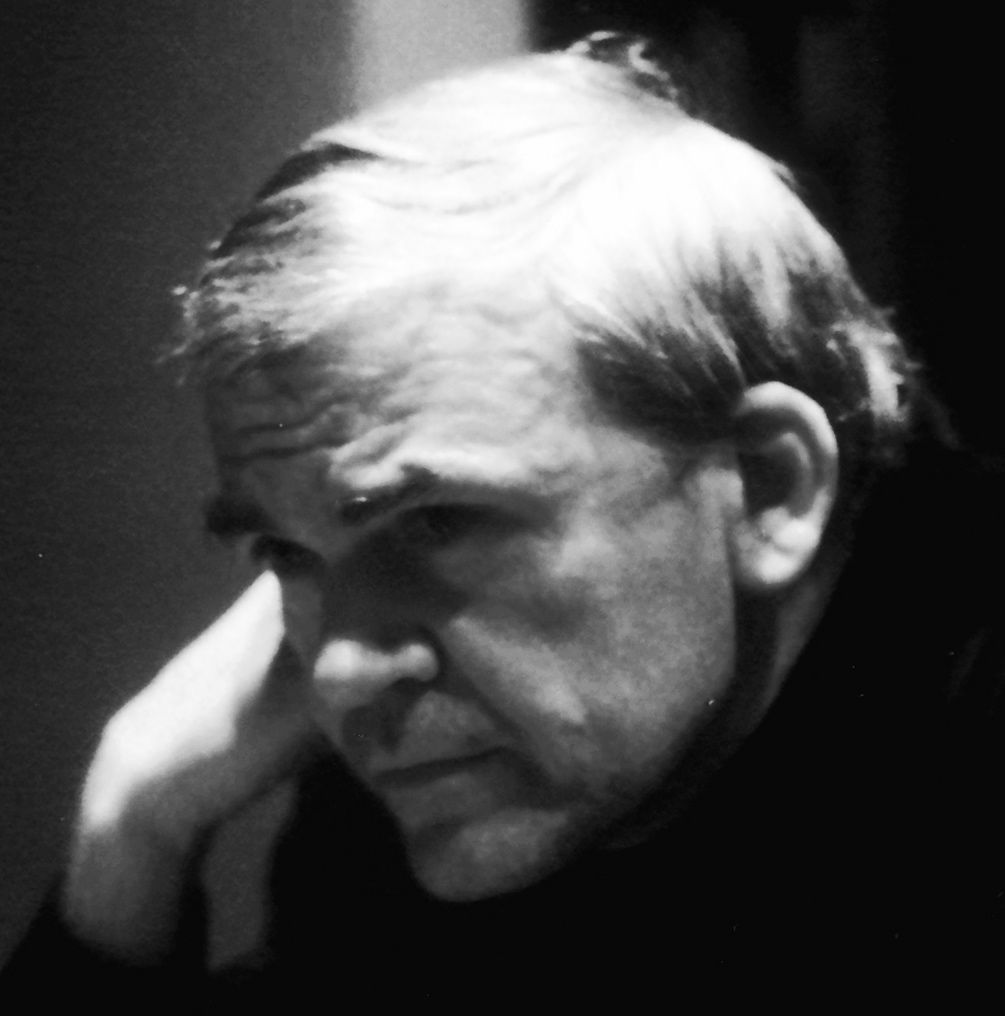
    Milan Kundera 1929-

    More importantly, there is the contemporary work of that most deserving living candidate for the Nobel Prize, the Czech writer, Milan Kundera. His novels are a crash course in uninhibited eroticism, vastly different culturally to an Irish sensibility. They offer textbook exercises in a form of European decadence alien to the repressive Irish mindset, and our smutty obsession with sexual activity – not undivorced, I believe, from the extremities of sexual perverted crimes that dominate newspaper headlines in an increasingly hedonistic society.

    Kundera’s novels, in translation at least, are written in an elegant lapidary style. There is a lot of dark laughter in those books, not unlike the Irish lachrymose sense of humour and despair, found in Flann O’ Brien especially.

    One such example is Kundera’s exposition on litost, ‘an untranslatable Czech word’, in The Book of Laughter and Forgetting:

    Its first syllable, which is long and stressed, sounds like the wail of an abandoned dog. As for the meaning of this word, I have looked in vain in other languages for an equivalent, though I find it difficult to imagine how anyone can understand the human soul without it…

    Kundera expands on its meaning by way of anecdote.

    She was madly in love with him and tactfully swam as slowly as he did. But when their swim was coming to an end, she wanted to give her athletic instincts a few moments’ free rein and headed for the opposite bank at a rapid crawl. The student [the boy] made an effort to swim faster too and swallowed water. Feeling humbled, his physical inferiority laid bare, he felt litost. He recalled his sickly childhood, lacking in physical exercise and friends and spent under the constant gaze of his mother’s overfond eye, and fell into despair about himself and his life. They walked back to the city together in silence on a country road. Wounded and humiliated, he felt an irresistible desire to hit her.…and then he slapped her face.

    His most prescient points concern historical amnesia and the onset of tyranny. As he put it: ‘The struggle of man against power is the struggle of memory against forgetting.’

    Forgetting

    The internet and social media are fast becoming a tool of forgetting or non-remembrance through the deluge of unfiltered information. The greatest area of amnesia is the subject that Milan Kundera dedicated his career to preserving, namely the horrors of Communism, which finds strange echoes in our current transition from neoliberalism to neoconservatism.

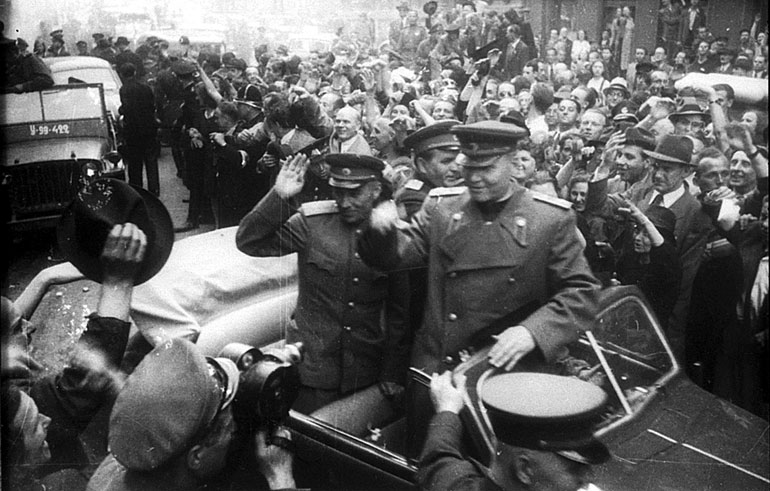
    The ‘Liberation’ of Prague by Soviet Forces in 1945.

    Kundera described what passed for public discourse under Communism as political kitsch in his novel The Unbearable Lightness of Being. This emanates from an aesthetic ideal ‘in which shit is denied and everyone acts as though it did not exist’. ‘Kitsch’, he argued, ‘is the aesthetic ideal of all politicians and all political parties and movements.’

    It is the dream scenario of the spin doctor where the press is utterly compliant. He gives the example of politicians kissing babies as an obvious expression political of kitsch.

    In Kundera’s view political kitsch is not dangerous in itself, and most politicians cultivate a clean-cut, artificial, image. The real danger lies in totalitarian kitsch such as that encountered by the character of Sabina, who recalls the Communist parades of her youth, which projected an idealised vision of the worker removed from the corruption, suspicion and cruelty that infected her society. Indeed, it was said in Czechoslovakia that love for one’s family required theft in the course of one’s professional life.

    Kundera contrasts what looks suspiciously like de-platforming, or cancel culture, with the plurality of voices that he believed still lay in Western democracies:

    Those of us who live in a society where various political tendencies exist side by side and competing influences cancel or limit one another can manage more or less to escape the kitsch inquisition: the individual can preserve his individuality. The artist can create unusual works. But whenever a single political movement corners power, we find ourselves in the realm of totalitarian kitsch.

    It begs the question whether the Internet has reawakened this “totalitarian kitsch.”

    Air-brushed from History

    In the same work Kundera describes a moment in Prague in 1948 amidst heavy snow in which the bareheaded Communist leader Klement Gottwald, while giving a speech in Wenceslas Square, was handed a hat by his comrade Vladimír Clementis. Four years later Clementis was purged – charged with treason on trumped up charges and hanged. The propaganda section literally airbrushed him out of history by removing him from the photograph that is the title image for this article. Ever since Gottwald has stood on that balcony in splendid isolation.

    Where Clementis once stood, there is thus only a bare wall. All that remains of him is the cap on Gottwald’s head. Similarly, to get rid of an enemy today, you do not have to prove anything against them. Instead, you use the internet or family courts, or indeed a compliant media, to generate conflicting accusations and contradictory data. You sow confusion to elevate hatred and fear until that enemy is either banned from social media, their history re-written or erased from the minds of millions through smear, disposal and, in fact, apathy.

    If the struggle of man is the struggle of memory against forgetting, as Kundera put it, then we have in the cacophony of the internet a vast machine for forgetting. One that is building a new society upon the shallow, shifting sands of what Gore Vidal described as the United States of Amnesia.

    Of huge relevance to our times, Kundera said:

    The first step in liquidating a people is to erase its memory. Destroy its books, its culture, its history. Then have somebody write new books, manufacture a new culture, invent a new history. Before long that nation will begin to forget what, it is and what it was. The world around it will forget even faster.

    It is like a clairvoyant presaging our times. A pre-Facebook comment on our age of gnat-like attention spans. A world of amnesia and the distortion of history; of canned laughter and forgetting.

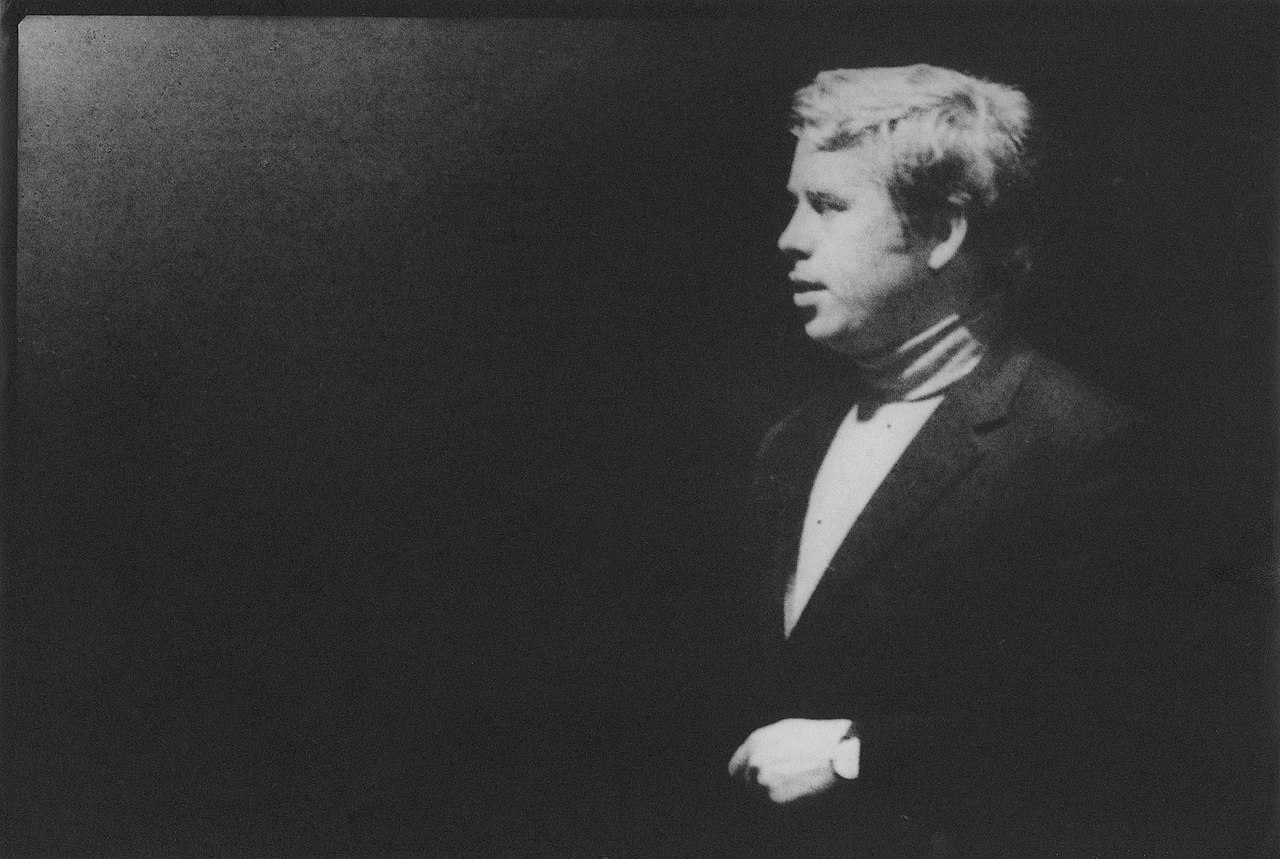
    Václav Havel in 1965.

    Kundera’s only modern contemporary intellectual equal, the former President of the Czech Republic Václav Havel issued a similar warning in his seminal political essay, ‘The Power of the Powerless’ (1978). The then dissident playwright and philosopher argued that empowerment requires us to ‘live in truth,’ which means facing up to the uncomfortable reality that we are not solely victims of the political and economic order we live under, but sometimes also enablers who play into its myths and cover up its lies.

    We turn the lies into truth and come to believe it is the only way to get through; the only way to survive in what we are told again and again is a ‘dog-eat-dog’ world. In a reappraisal at the end of his tenure, Havel observed how neoliberalism had created similar social dynamics to Communism.

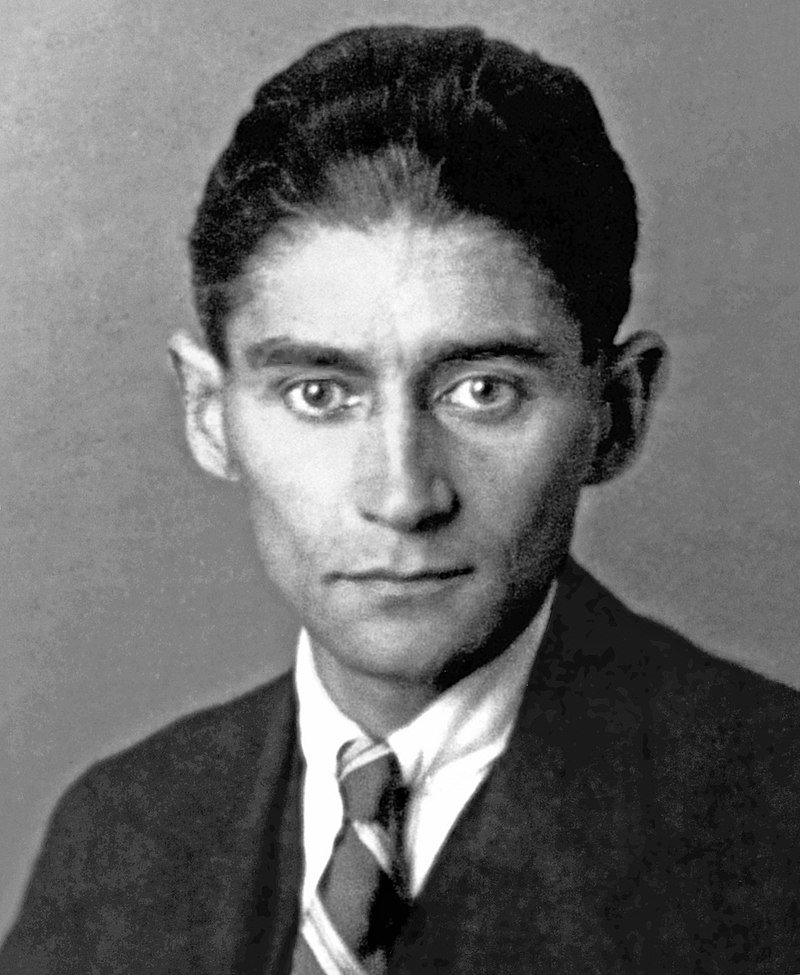
    Franz Kafka as a young man.

    Kafkaesque

    Despite writing in German, Franz Kafka reigns supreme as the writer par excellence of Prague. He now resides like an all-enveloping spirit in Prague. In the Jewish quarter there is a rather modernist statue of him; his visage and silhouette adorn mugs and t-shirts in every tatty tourist shop. There is also an expensive and rather uninformative Kafka Museum, and a bookshop in his name.

    Above all else, there is his former house near the Castle, down from the narrow Jewish mile road. His house, now converted into a museum, is not that dissimilar to the two bedroomed artisan houses near the Four Courts in Dublin.

    Apart from writing in German, Kafka was Jewish, giving him an outsider status in the Czech Republic; historically an uncomfortable position – though not anything like as bad as it was in Poland – to be in.

    While living in Prague, it was an immense surprise to find how Germania had been expurgated from Czech culture after the War. The Czechs now speak English primarily, and Russian occasionally, despite being enveloped by German speaking territories. Still, they venerate Kafka and why not.

    Legal Conformism

    Part of my own adoration of Kafka comes from training to be a lawyer, and an expression used in a case that has dogged and at times unsettled my career: Gilligan v Ireland. (1997).

    The expression I used a ‘Kafkaesque situation’ arrived impromptu to describe what was happening, although I was aware that other Irish judges, particularly Cathal O’Dalaigh had used a similar phrase.

    In a legal context the expression conveys a situation of labyrinthian complexity, absurdity, and perversity: one where the law is traduced by procedure and injustice and has become – to use common parlance – an ass.

    Franz Kafka did not find the study of law to be an edifying experience. Indeed, according to one account cited by the legal scholar Robin West, he found it ‘had the intellectual excitement of chewing sawdust that had been pre-chewed by thousands of other mouths.’

    In Authority, Autonomy, and Choice: The Role of Consent in the Moral and Political Visions of Franz Kafka and Richard Posner (1985), Robin West argues that in Kafka’s world law is alienating and excessively authoritarian, exerting in people a craving for conformity. Students have an urge to conform or obey the law. She argues:

    Kafka’s world is populated by excessively authoritarian personalities. Kafka’s characters usually do what they do – go to work in the morning, become lovers, commit crimes, obey laws, or whatever – not because they believe that by doing so, they will improve their own wellbeing but because they have been told to do so and crave being told to do so.

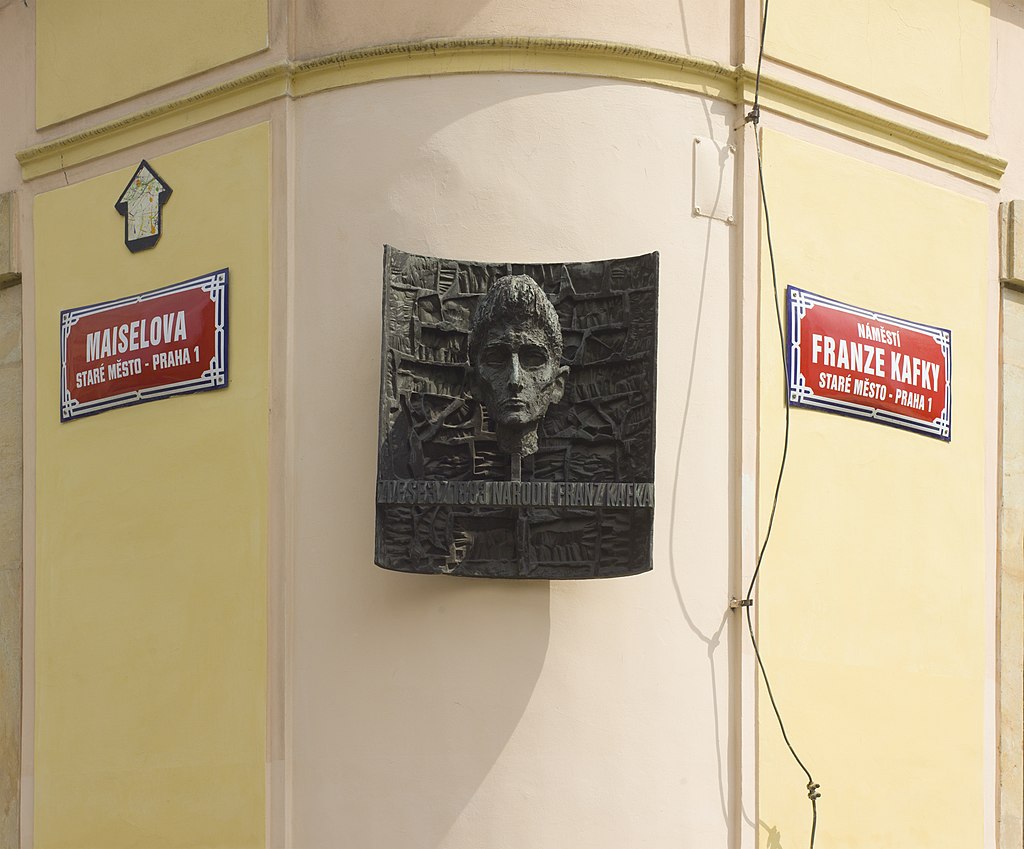
    Plaque marking the birthplace of Franz Kafka in Prague.

    She contrasts this negative view of the law, with the view that it facilitates the maximization of one’s own welfare, which is presented by the right-wing law and economics scholar Richard Posner:

    Whereas Posner’s characters relentlessly pursue autonomy and personal wellbeing, Kafka’s characters just as relentlessly desire, need and ultimately seek out authority.

    Further, West points out that although both Kafka and Posner see people as consenting to the various transactions they enter, for Kafka, such consent can lead to humiliating and degrading employment, sex and even death. This point is not expressly made by West, but this may be familiar to readers of The Trial. For Posner, such consent is rational and self-fulfilling. For Kafka, such consent leads to victimization.

    West thus posits a conclusion from Kafka on consensual market transactions which is far from positive:

    In all these market transactions – commercial, employment, and sexual – Kafka portrays one part consenting to a transfer of power over that party’s body, and in each instance the transfer, although consensual, is horrifying. In none of Kafka’s depictions does consent entail an increase in wellbeing … The participants are often motivated by a desire to submit to authority, not to enhance autonomy, and in each case, the authoritarian relationship they create proves to be a damaging one.

    Moreover, West examines the question of consent to law in Kafka. According to Posner, people consent to legal imperatives that are wealth maximizing. According to Kafka, they consent to impersonal state imperatives not because of wealth maximization but out of a deep-seated desire for judgment and punishment. Or one might add compliance.

    ‘The Judgment’ and ‘The Refusal’        

    Thus, in Kafka’s short story ‘The Judgment’, a son submits to death by drowning as his father has decreed. And in another short story ‘The Refusal’, the townspeople obey the colonel in charge of the town because authority has ‘just come about,’ and submit to his various denials of their petitions.

    The most dramatic example of this submission to authority is of course in The Trial, where Joseph K is arrested without having ever done anything wrong. He never learns the nature of the charges laid against him; he is arrested but not imprisoned; interrogated but never forced to appear; yet in time he passively accepts the jurisdiction of the court and the law’s authority, which results ultimately in his own death sentence.

    Finally, West relies upon the short parable ‘The Problem of our Laws’, in which Kafka informs us that law is ultimately sustained, not by force but by the craving of the governed for judgement by lawful, noble authority. It is this human craving, even more than the urge of the powerful to dominate, that sustains the illusion of certainty, fairness, generality, and justice.

    In conclusion, West derives the message from Kafka that:

    Our tendency to legitimate lawful authority – to give our hypothetical consent – may have good or evil consequences, depending upon the moral value of the legal system to which we have submitted and the moral quality of the relationship between state and citizen that our consent nurtures.

    Scepticism Towards Authority

    How much of this is of jurisprudential or indeed morally significance? First, it confirms an innate prejudice of mine which is to be at the very least sceptical of authority. Deep scepticism. Far too many people who have had no interaction with authority figures, such as police officers or indeed judges, are inclined to defer to their wishes and take what they say at face value. My experience as an Irish barrister has engendered in me the opposite instinct. Always confront, challenge authority, and never commit the cardinal error of submitting to the edicts or wishes of authority.

    Also, ask who is in authority and why they are there? Who appointed them and what agenda do they serve?

    Kafka also touches on the way procedural tangles and processes often run contrary to that elusive concept of justice. Law then should be transparent and accessible, and often it is not. Unduly complex procedures among other casuistries militate against just outcomes.

    Law of course relates to questions of punishment and both in The Trial and, above all, in the shocking story ‘In the Penal Colony’ – surprisingly neglected by West – about a perfect execution machine, the barbarism and cruelty of legal processes are there for all to see. It is frightening to see how the condemned man submits and, in some ways, enjoys the barbarity of his torture, just as occurs to the dissident in Arthur Koestler’s 1940 novel Darkness at Noon. Today we call this Stockholm Syndrome, where you empathise with your captors.

    I have always hated the death penalty and indeed torture or state sponsored cruelty, anyone who has experienced the jihadism of Roman Catholicism will know what I mean.

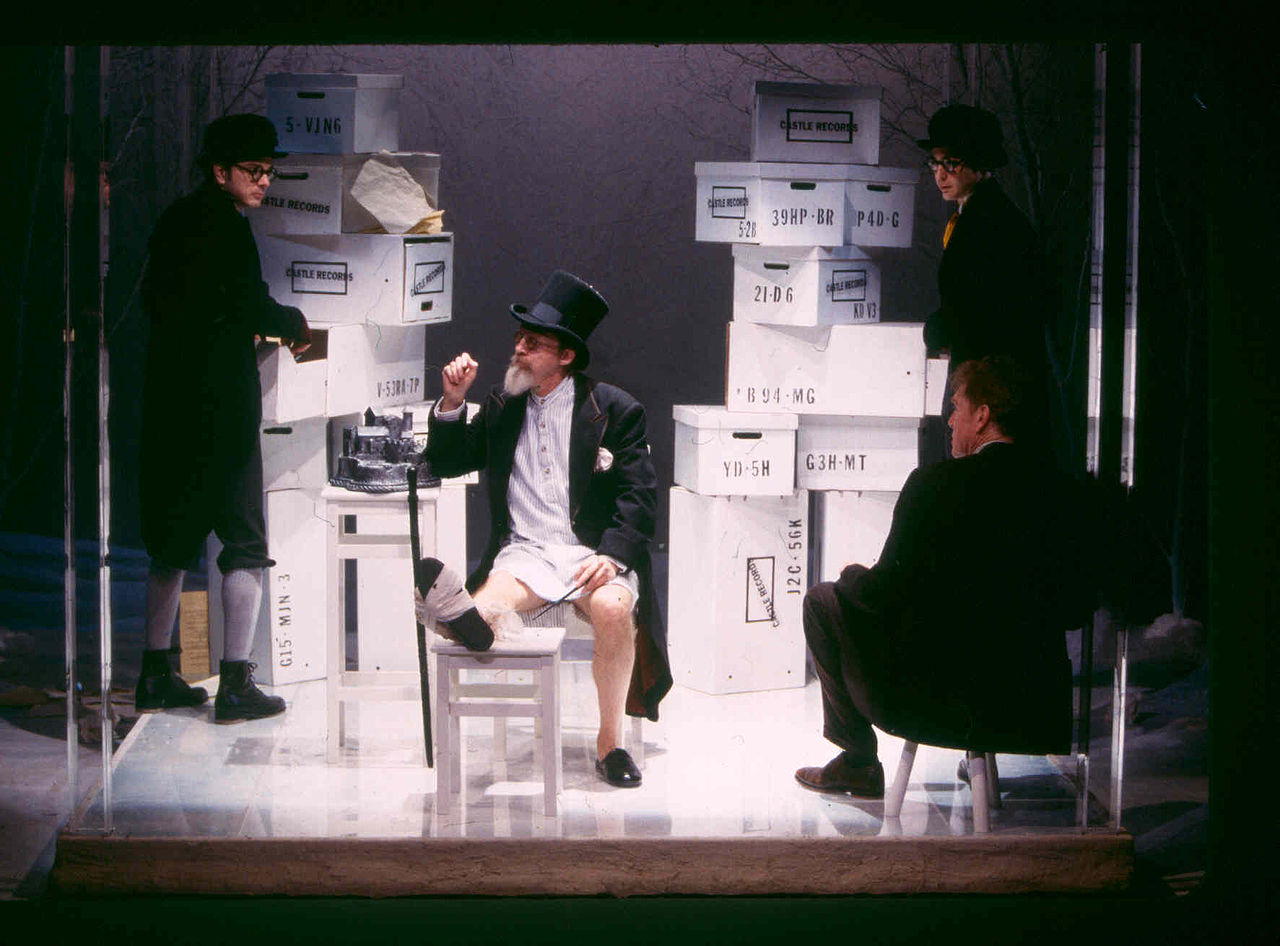
    Fishelson’s version of The Castle at Manhattan Ensemble Theatre, January 2002.

    Bureaucratic Nightmares

    Kafka lived under a deeply authoritarian extended Germanic state of bureaucracy and authoritarianism then ruling the Czech Republic. A Weberian bureaucracy gone mad.

    Alberto Moravia’s 1951 novel The Conformist demonstrates how a bureaucratic conformity evident in lawyers far too easily morphs into fascism. Kafka lived in a proto-totalitarian state and is often seen as someone who mystically envisages dystopian totalitarianism. In some respects, Kundera observed the completion of the projection. The full negation of the individual, and individual rights.

    Now such harbingers of dystopia are right back, for want of a better expression, in fashion and the reasons for this are obvious to anyone who looks up from their screen.

    We are in a new age of corporate fascism, with an ever increasingly authoritarian state. Mass monitoring and surveillance through artificial intelligence is dictating and controlling our choices. Ascendant right-wing extremism throughout much of Europe has drawn lessons from religious fundamentalism.

    Thus, Kafka’s arguments on the dangers of unconditional surrender to authority and acceptance of its legitimacy, as well as his arguments around how consent to authority can destroy us are important points to recall. Even in our daily lives.

    Both Kafka and Kundera urge us to challenge authority, and at the very least always ask: who is making a decision and why? Don’t look at the office, but at the man or women in control of it, and what he or she is purporting to do.

    The enlarged Kafkaesque state – in many respects experienced by Kundera – is right back in force in the coronavirus panopticon, with the vectors of evil apparent everywhere, not least in a plethora of falsely accused and indeed framed Joseph K’s. worldwide. Let us call them the dissentient.

    We have all too much faith in the law, a failing which led my friend the late Supreme Court Justice Adrian Hardiman to entitle an article on how the state falsely accused the DJ Paul Gambaccini, ‘Kafka On the Thames’; and yet faith in due process and legal fairness is one of the few values left to clutch on to.

    Kundera and Kafka are two titans of the Czech intelligentsia who have much to say in our contemporary era: be careful about unconditional obedience to authority and distrustful of legal processes; antennae should be raised to detect post truth nonsense and dissimulation; and witness how Communist totalitarianism has been replaced by another decline of the human condition: neoliberal degradation.

    Never unconditionally comply with the edicts of authority. Just say No. Do not obey orders just because they are orders. Exercise judgment.

    [i] Arne Novak, Czech Literature (translated from Czech by Peter Kussi), Ann Arbor (1976), p.170

    [ii] Ibid, p.9

  • Poetry: Quincy Lehr

    THE YELTSIN-CLINTON ERA, CENTRAL TIME ZONE

    The end of history will be a very sad time. The struggle for recognition, the willingness to risk one’s life for a purely abstract goal, the worldwide ideological struggle that called forth daring, courage, imagination, and idealism, will be replaced by economic calculation, the endless solving of technical problems, environmental concerns, and the satisfaction of sophisticated consumer demands. In the post-historical period, there will be neither art nor philosophy, just the perpetual caretaking of the museum of human history.

    —Francis Fukuyama

    I saw her at the end of history,
    a manic pixie dream-girl in black hat,
    a smile of adolescent irony
    hanging like an imported cigarette,
    a denizen of corners. As she sat
    off to the side, I stared. The smell of sweat,
    Doritos, and the Oklahoma air,
    sweet and allergenic, hit my nose.
    I didn’t sneeze and held a pensive pose.

    A Walmart of a decade, grunge CDs
    about to hit the bargain bin, left stranded
    like hapless Soviet cosmonauts. The breeze
    reminded us that time, like space, still moved.
    The Wall was down, the Eagle long since landed,
    and we were told that nothing could be improved,
    that this was the teleology, the sum
    of humankind’s equation—cue our laughter
    at a life spent in the morning after.

    Never trust a hippie; punk was dead,
    and there she was in her Doc Marten boots,
    chin-length bangs and a partly shaven head,
    and me with clothes and hair in mostly black
    (the latter, though, showing some brown roots).
    With nothing up ahead, we both looked back
    and somehow saw each other as we did.
    It’s no way to travel, but neither was the way
    mapped for us. Another summer day.

    another night. The party was a bore,
    though everyone was there, and every room
    echoed with conversations. You could score
    a few hours in your head if so inclined—
    an afternoon special tale of woe and doom,
    erasers in the center of your mind,
    or just a gakked-out evening passing time
    with tabs of LSD or skunk-schwag weed,
    mushrooms, alcohol, or trucker speed.

    Brown hair and gray-green eyes, high-cheekboned face,
    insomniac intelligence—a joke
    she told herself running in a race
    between the shimmers of her glance and lips.
    I sneered, though fuck knows why, and lit a smoke,
    arrogant from lungs to fingertips,
    the dumbest smart guy in the room, but still
    she followed me outside. Cue the blurred
    memories of teenaged passions stirred.

    Gas was cheap. I used to drive all night
    looking for crowds I knew would be at home.
    Nothing was going on. Cosmic spite?
    A scene commodified and then discarded
    like cardboard boxes, plastic, styrofoam
    the day after Christmas? I wasn’t broken-hearted,
    so much as empty as a city street
    on Sunday night with everything closed down,
    counting the days till I got out of town.

    Ambition needs a narrative, an arc
    —rising action, climax, denouement—
    and what we had was groping in the dark
    along with books we partly understood,
    discussed across a coffee and croissant
    some mornings. Good enough, if not quite good.
    Understanding is the bonus point,
    experience itself the pass and fail,
    the revolution, Jonah and the whale.

    I got the girl, or for a while at least.
    Mazel tov. Yippee yi cy yay.
    Behold the bread and theorize the yeast,
    but know that when you eat it, that’s the end.
    Ride into the sunset. What the hey.
    History wasn’t over, that pretend
    conceit was soon demolished. We were, too.
    I wouldn’t say I miss her. The debris
    remains beneath, and archeology

    reveals the substrates, relics of a life
    rebuilt on top of ruins. As I drive
    through a different city, kids and wife
    await me as the radio plays a song
    I barely liked but heard back then, alive
    but not like this, when summers seemed so long,
    when love was hard, and love was what we had.
    I change the station, hum a melody
    that sings out past the end of history.

    GEN X STORIES

    He used to be the bass guitarist for the classic hardcore band Die Capitalist Pig!!! and was on their seminal album, We All Fucked Your Girlfriend, Even the Bass Player. Now he lives in Altadena, teaches memoir-writing at USC, and voted for Elizabeth Warren after considering Beto O’Rourke and Pete Buttigeig. He also just blocked you for saying, quite truthfully, that the Clash weren’t actually that good.

    When she was a girl, she had a Cabbage Patch Doll named after Sally Ride. In high school, she wasted two weeks of everyone’s time because her English teacher alluded to the character of Shylock as an anti-Semitic trope, and she decided he was an anti-Semite. Even though most of the teaching staff and administration hated her afterwards, her essay on the matter got her into Bard. Now she works for a non-profit that specializes in teaching homeless children how to play Dixieland jazz. She also just blocked you because you called Tulsi Gabbard “thicc” to see what would happen.

    He came out of the closet as soon as it became clear that he wouldn’t get written out of the will if he did. He owns three restaurants: Billy Bob’s Shake-n-Bake (the one he inherited from his parents that actually makes money), a faux-dive called The Pink Flamingo (after the line in the Soft Cell song), and a Japanese-Italian fusion restaurant called The Meiji Risorgimento. He once beat a lawsuit from a disgruntled employee by successfully arguing that calling people “bitches” is part of his culture. He also just blocked you after you posted a link to an article about sweatshops making Beyoncé’s clothing line.

    She was the Assistant Vice Treasurer in high school and was voted “Most Likely to Narc on a Friend.” She majored in art history at Vassar, did a law degree at Michigan, and married a regional manager for Chuck E. Cheese, who bought her an art gallery in order to have painters fuck her so he doesn’t have to. She runs for local office as a Democrat as a hobby, losing by fifty more votes each time. She also just blocked you for calling her “the Amy Klobuchar of Ventura County.”

    He spent high school listening to Napalm Death and Cannibal Corpse and trying unsuccessfully to kick you in the genitals. Once, after taking several tabs of LSD, he joined the army and ended up doing a tour in Iraq. He got an honorable discharge, gained 300 pounds, and is the leading Facebook expert on how war crimes are actually good. He also just blocked you because… could have been anything, really.

    She was Native American in that Elizabeth Warren way, in that the only way you could know was if she told you—a lot—and you still had to take her word for it. Now, she lives in the worst suburb in your home state and produces children, revenue for chain restaurants, vaguely white nationalist online tirades, and second-hand lung cancer. She also just blocked you over the chain restaurants that she likes more than you do, of all the goddamn things.

    When he was a boy, he wanted to be president as soon as he ceased wanting to be a leopard or a cobra. After a school career spent listening to Classical music and doing an impression of an unusually ambitious Teddy Ruxspin, he settled for being a corporate attorney. His hobbies include playing the piano, collecting rare liqueurs from the former Soviet bloc, and tweeting about the #Resistance. He also just blocked you when you called his would-be Bond villain boss an asshole.

    She was always going to be a star and was not without a certain waifish charm, by which I mean she had a fondness for flowing dresses and singing in her thin, reedy voice to a tentatively strummed guitar until people hated her. Now she owns a cafe that she bought to save the open mic from the previous owner who thought it sucked. She also just blocked you when she remembered you called Tori Amos “white girl suicide music” twenty-five years ago.

    When he was a teenager, he was so violently and obsessively homophobic that everyone assumed he was secretly gay. Turns out he isn’t gay. He’s just a massively bigoted asshole. He also just blocked you because he was only in your timeline in the first place due to a misunderstanding.

    She used to have hours of dialogue memorized from every season of Northern Exposure, even the one after Rob Morrow left. She was also heard to remark that she wished the world could be more like Edward Scissorhands. Now she makes Christian-themed videos for children on YouTube that feature her playing the glockenspiel. She also just blocked you for posting a parody of a Creed video.

    When someone told his class in high school that his generation would work harder than their parents for less remuneration and less job security, it gave him a boner, and he knew exactly why. Now he has exactly the job you think he would, precisely the ugly McMansion you think he’d live in, the kids with the exact godawful names you’d think they’d have, and the exact car with the precise bad gas mileage everyone suspected. He also just blocked you because he thought you were making fun of him when you cracked a joke about people who like Charlie Sheen.

    She does a reasonably good impression of being Michel Foucault’s illegitimate daughter with Judith Butler. Her signature moves are using the word “radical” to modify every noun referring to her academic work and looking violently ill every time someone said “dialectics.” She’s an adjunct professor at five schools, is shopping around seven articles and nine book manuscripts. She also just blocked you for being a socialist.

    His first big concert was Garth Brooks in 1990, and his belt buckles and pickup trucks have gotten bigger ever since. He has an MBA from the state university, lives in a four-bedroom home with unforgivably high ceilings, and manages a sporting goods store that mostly sells guns and fishing rods to fat people. He also just blocked you for being a coastal elite.

    She would have been beautiful had she spent less time on her appearance. These days, she sells houses to investors who think a Cheesecake Factory is the acme of gentrification. She’s a church-council psycho who posts pictures of food she feels guilty about eating and which she blames for her ex-husband leaving her. She also just blocked you because you said her nickname in high school was “The Black Mamba.”

    He was the sort of guy you figured would end up designing elf-themed emojis, hosting a gardening show on a local NPR affiliate, becoming a serial killer, or some combination of the three. Instead, he has chartreuse dreadlocks, goes by DJ Kompound Fraxyoor, and is the seventh-most-popular purveyor of EDM on the Belgian club circuit. He also just blocked you for not realizing that “you have to be on ecstasy for it to sound good” was intended as a compliment.

    In the eighth grade, she cried for two hours after she got mud on her Guess jeans during a wilderness excursion. Her first husband was a cop and her current husband is a white-collar criminal who’s an actuary on the side. She loves both her boys, who despite being seven and thirteen are already Large Adult Sons. She also just blocked you because you said that cheese was racist ironically, and she took it literally.

    He’s forty-five years old and still wears leather. Being the father of two children has had no discernible effect on his level of swearing. He’s a middle-class Ivy League leftist who distrusts people who went to elite schools. He’s an alternative rock snob who finds most first-wave punk rock unlistenable and goth rock funny. His hobbies are reading, writing, caffeine, vituperation, and hate. He hasn’t blocked you, but sometimes you wish he would.


    Featured Image: Illustration shows a scene in the “Grand National Congressional Theatre” at the conclusion of the performance of “Fair Promise Combination No. 47 – Great Reform Bill – Act I Tarif Reform – Act II Civil Service Reform – Act III Internal Revenue Reform”. The audience is pelting the cast with cats, eggs, onions, turnips, and other vegetables and fruits. Among those on stage are David Davis, Thomas W. Ferry, George M. Robeson, Jay A. Hubbell, Frank Hiscock, Horace F. Page, William Mahone.
    Title from item.
    Illus. from Puck, v. 12, no. 312, (1883 February 28), centerfold.
    Copyright 1883 by Keppler & Schwarzmann.


  • Swing into Summer Sunday Jazz Gala

    When a respected and much-loved member of the Irish jazz scene suffered a major illness, the jazz community rallied round to support him in the best way they know – a gala fundraising concert, streaming to audiences all over the globe this Sunday.

    Phil Ware is one of the Irish jazz’s most celebrated musicians, a much-respected pianist and an inspirational teacher, who led his own trio to national and international acclaim, as well as playing with some of Ireland’s – and the world’s – leading jazz musicians, including Louis Stewart, Peter Bernstein, Perico Sambeat, Bobby Wellins, Honor Heffernan and Ian Shaw.

    In June 2020, Phil suffered a rare form of stroke – which left him severely disabled, unable to speak or to move the right side of his body. In that moment, Phil’s life was changed forever. Following surgery at Beaumont Hospital, and weeks of specialist care at the Mater Hospital, Phil was transferred to the Royal Hospital, Donnybrook to begin a long journey of rehabilitation and recovery.

    Image: Dorota Konczewska

    Over the last year, Phil has made remarkable progress, thanks to the great professional care he has received from doctors, nurses, therapists and support workers in the Irish healthcare system. He has also been supported by many of his friends and colleagues in music who have united in solidarity and friendship at this most challenging time.

    Phil’s speech is slowly returning and he has regained some movement in his right side, and while it is still unlikely that he will ever regain his former abilities as a performer, his doctors are hopeful that with the right kind of treatment and rehabilitation, he may make further gains in the coming months and years.

    To help Phil recover and to support his needs into the future, a group of his closest friends, led by renowned vocalist Honor Heffernan and Phil’s half-sister Alison Cooke, established The Phil Ware Trust so that those who wanted to support Phil’s recovery could donate to an official, properly governed fund, which has created an extraordinary response.

    As part of this fundraising effort, a group of Phil’s former students, came together to raise money in a very fitting way – a benefit concert, featuring many musicians who have been influenced and inspired by Phil. As a teacher in Dublin City University’s jazz programme, Phil inspired many young musicians, and is noted as the teacher who never accepts anything less than the best, but always believes in his students to create the best.

    Three organisations in the jazz community came together to bring the concert to life – Improvised Music Company, Jazz Ireland, and the Dublin Jazz Co-op, with the support of Rock Jam. With the ongoing COVID-19 restrictions, the event was planned as a virtual one, with a line-up of some of Dublin’s finest musicians streaming a swinging afternoon of Sunday jazz, presented by DJ and jazz aficionado Billy Ó Hanluain. Fortunately, this also means that it will be accessible to audiences wherever they are in the world.

    For the musicians who Phil mentored and inspired, the obvious way to support him is of course to make music and share it with audiences. All of the time and costs of the event are being donated freely by the musicians and organisations involved, so that audiences can enjoy a day of wonderful music while knowing that their money is going to support this extremely important cause.

    Special guest for the day is renowned singer Mary Coughlan, who will bring tinges of blues, and folk to the proceedings, hitting audiences across many genres with the extraordinary emotional depth of her voice. Ireland’s jazz scene shows a rich range of influences, and while many of these musicians have come through similar paths in education, their approaches can show very different styles. The younger musicians in the line-up, including many of Phil’s former students, make music that smoothly crosses many boundaries.

    Rising singer-songwriter Jennifer McMahon’s raw lyrics are the keystone of her work, while Dublin trio Berri take adventurous improvisatory explorations into jazz standards. The sweet voice of Emilie Conway lends itself to the poetic style of her literary-influenced work, while Ríona Sally Hartman weaves surrealist stories into her lush harmonies. For those with eclectic tastes, Matthias Winkler’s quartet ÄTSCH bring post-rock influences in the vein of Sigur Rós to jazz improvisation, and vocalist Aleka pulls inspiration from her home country of Romania and her classical background to explore jazz standards.

    Aside from their performances, many Irish musicians continued to donate their work to the fundraising effort. On the Fund for Phil website, you can find digital albums and an array of music lessons, all donated by the community with full proceeds going to the Fund for Phil.

    All monies donated to this benefit concert, officially sanctioned by the trust, will go exclusively to cover costs associated with Phil’s medical care and ongoing rehabilitation, as determined by the board of trustees, which includes distinguished figures from the worlds of medicine, finance and music in Ireland.

    The Swing into Summer Sunday Jazz Gala takes place this Sunday 11th July from 3pm-7pm (yes, you can still catch the Euros, don’t worry).

    Tickets are from €10 to €30 available from www.thefundforphil.com

    The outline of Phil’s illness and current progress was supplied by trustee of The Fund for Phil, Cormac Larkin.

  • Peter Dooley: An Independent Candidate for Political Homeless

    Dublin Bay South by-election candidate Peter Dooley has an impressive track record of fighting for a just society, especially through the Dublin Renters’ Union, and unlike many on the left in Ireland, has drawn attention to the devastation to ordinary people’s lives caused by the longest lockdown in Europe.

    This by-election in Dublin Bay South allows voters to say enough is enough with the FG, FF and Green coalition government’s inadequate approach to the housing, health and climate emergencies. But some lifetime left-wing voters are now feeling politically homeless due to the adoption by the established left-wing parties of a ZeroCovid policy, which apart from being hopelessly Utopian, would hand draconian powers to corrupt State institutions and impede the free movement of people in and out of the country, including the Irish diaspora living abroad.

    Throughout Ireland’s never-ending lockdown, Peter has openly questioned the wisdom of handing extraordinary powers to the Minister for Health, which infringe basic constitutional rights such as freedom of assembly. Not only do lockdowns come with a huge human cost – in particular to school children denied an education for months and small- and medium- sized businesses prevented from trading – with little impact on the virus itself, but it has also created a political vacuum, where people affected don’t know where to turn for representation.

    Observing the colossal transfer of wealth to the billionaire class, while small businesses go bust and workers see their jobs disappear, Peter asks whether the Irish government’s response has been proportionate.

    Peter Dooley stands for an equal opportunity Ireland. He walks the talk through his daily activism, galvanising grassroots movements around housing and tenant rights.

    As a co-founder of the Dublin Renters’ Union in 2017, he has helped prevent evictions and supported renters. Peter’s ideas on housing involve resistance to the vulture funds, and ensuring that the rentier class pays a fair share in taxes. Although Dublin Bay South is the most affluent constituency in Ireland it also has the highest number of homeless people living in tents in Ireland.

    Peter has also called for a full public inquiry into the unprecedented scale of nursing home deaths at the beginning of the pandemic in Ireland, when the elderly seemed to have been sacrificed due to a flawed epidemiological assessment, and for the utility of antigen testing and drugs such as Ivermectin to be adequately examined.

    Unlike the other main opposition candidates in the area he has expressed deep opposition to divisive and exclusionary vaccine passports.

    He calls for the end to a two-tier healthcare system, and for a proper cost-benefit analysis to be undertaken if any lockdown is ever contemplated again.

    You can reach Peter Dooley and his campaign policies here:

    FB: @PeterDooleyDublin

    Twitter: @PeterDooleyDUB

    Email: peterdooley@gmail.com

    IG: @PeterDooleyDublin

    Image: Daniele Idini

  • Pandemic Considerations

    As an immediate disclaimer, I am a doctor training to be a general practitioner in Ireland and am a member of the Royal College of Physicians of Ireland. I have worked in the local hospital emergency department and Covid assessment hubs as well as a general practice surgery during the pandemic and have seen very unwell patients suffering with Covid-19 and the after-effects of same. I have friends who have lost parents and grandparents and understand the devastating effect that the virus has had on their lives. I absolutely do not underestimate the seriousness of this disease. I am fully vaccinated and recommend that patients are vaccinated should they so wish. I am vehemently against the concept of vaccine mandating and passports. I fully support the right to protest and detest the concept of censorship by large technology companies. I feel that in the current climate of extreme opinions on this topic, I must state all the above. I have no expertise in infectious diseases, public health or epidemiology. Like most doctors, regardless of whether they choose to admit it or not, my understanding of statistics is limited. Hence, I do not offer any opinion in this regard.

    The Doctor in Society

    The Covid-19 pandemic has been an ever-present part of our daily lives for over a year. There is little left to say that has not already been said in relation to the correct management of the virus on a national and international level. It appears – from the approaches of different countries around the globe – that it is impossible to reach anything approaching universal agreement on the best manner of protecting vulnerable people from the disease, while simultaneously protecting vulnerable people who also have suffered terribly because of the restrictive measures that governments have felt it necessary to enact in our societies. Hence, the purpose of this essay is not to provide an opinion as to the approaches adopted, but to discuss and examine some ethical considerations and the implications of our decisions.

    We should first consider the role of a doctor in society. John Berger wrote in A Fortunate Man, a seminal book on the life and work of a dedicated general practitioner in rural England, that ‘like an artist, or like anybody else who believes that his work justifies his life, Sassall – by our society’s miserable standards – is a fortunate man.’[i]

    Certainly, as a vocation, medicine is endlessly interesting and the care of people when they are unwell is incredibly rewarding, despite its demands. There is an intimacy between a doctor and his patient that is intangible and key to a successful therapeutic relationship. We occupy a privileged position in people’s lives as we often meet them when they are at their most vulnerable and most in need of help.

    Note the deliberate use of help as opposed to treatment. I use this word purposely because treatment in the general sense is not always appropriate when trying to improve a patient’s condition. Berger continues that a good doctor can be recognised as someone who ‘meets the deep but unformulated expectation of the sick for a sense of fraternity. He recognises them’. You’ll notice that the recognition does not include intelligence, curiosity or diligence, although these are all welcome attributes.

    Ethical Pillars

    Another important aspect of being a decent doctor in the true sense of the word is to regularly consider the four ethical pillars of medical practice. These are autonomy, justice, beneficence and non-maleficence. Acknowledging and adhering to these principles allows us to help and treat patients in a humane manner and should allow doctors to recognise the limits of our ability to protect people. This is an important point to emphasise. As physicians, we often see ourselves as lifesavers or life-preservers, but this is often not the case and creates unrealistic expectations for both the doctor and patient.

    Our primary function is to prevent unnecessary suffering and death where possible and to try to consider the effects of our treatments not just on the patient, but on the patient’s family and wider community. Beyond the above, we are capable of little else, which is in of itself, no mean feat.

    A significant risk in the practice of medicine is that in the search for ‘progress’, our hubris means that we are trying to cheat death on behalf of the patient with ever-increasing numbers of interventions, with often dubious effects on patients’ quality and quantity of life.

    This is often apparent in the field of oncology. For example, a recent paper published in JAMA in November 2020 examined the clinical trial data available on treatment outcomes of all novel cancer drugs approved for the first time between 2000 and 2016.[ii] 92 novel cancer drugs were approved by the FDA for 100 indications based on data from 127 clinical trials. Despite the enormous cost of both developing and treating patients with these drugs, the median absolute survival benefit was 2.4 months.

    This requires emphasis. 2.4 MONTHS of median survival.

    This is simply staggering and reflects that we may have lost our way in the medical community, approving medications for use without fully appreciating the implications of this decision i.e., if this person receives x drug at x cost, what effect will this have on the healthcare system as a whole? Does treating patients in this manner, with often experimental medications, benefit society as a whole or the pharmaceutical industry? This may require a ‘hard heart’ as described by Jim Stockdale in Thoughts of a Philosophical Fighter Pilot. The correct decision for the many is often the hardest on the few.

    Progress in Medical Science

    It goes without saying that it is essential to strive for progress in science and medicine. This should not require stating as I am in awe of the advances made every day in medical science. It is, however, equally essential to recognise the fundamentals of health and the requirements for same. The UN defines health as not just the absence of disease, it is a state of complete physical, mental and social well-being. Can we say, as doctors, whose role it is to help restore and maintain health, that any of our patients are healthy in the context of the events of past year? Are we striving to help our patients to be healthy or are we only treating their diseases as they develop? There is a subtle but significant difference.

    Ivan Illich, the philosopher, wrote extensively about the effects, both good and bad of doctors and medicine on not just the individual but on society in general.[iii]3 He recognised the amazing large-scale innovations in public health that have given us access to good food, safe water, sewage disposal etc, but he also recognised the potential for medicine and the medical profession to cause significant harm. The focus of his arguments relate to the adverse impact of medicine on society. His principal argument being that the medical profession was eroding the individual’s capacity to accept suffering and more importantly, the capacity to die one’s own death.

    As previously mentioned, our duty is to ameliorate suffering where possible and allow patients to suffer and die with dignity when this is appropriate. Our attempts to do more has the potential to lead to catastrophe, both physically and psychologically, because it can permanently remove a patient’s perception of control over their own being. Prominent examples include the current opioid epidemic in the US and benzodiazepine addiction issues here in Ireland. All developed under the guise of attempting to alleviate suffering, but instead mutating to continue to cause devastation to this day.

    Overdose deaths involving opioids, including prescription opioids, heroin, and synthetic opioids (like fentanyl), have increased over six times since 1999.[iv] Most of these deaths are attributable, unintentionally or not, to the medical profession. This is a sad reality. Simply because a treatment decision is well-intentioned does not protect the doctor or the patient from unintended circumstances.

    Hence, I would advocate where at all possible, conservative or ‘light touch’ medicine, promoting patient empowerment and autonomy. Where possible, I suggest promoting the ideal of health provided by William Landen: ‘To ensure good health; eat lightly, breathe deeply, live moderately, cultivate cheerfulness and maintain an interest in life’.

    Latter-day Clergy

    Physicians should be an occasional addendum to life; instead, we have increasingly assumed the role previously held by the clergy. This is not a positive development. Although the medical profession has not asked for this endowment, it has accepted it without significant resistance or understanding of the spiritual nature of the role. Many physicians are not consciously aware of the transference, creating further patient dependence and maladaptive behaviour patterns, creating the class of people known to doctors as ‘heart-sink’ patients. Medicalisation of existential angst manifesting as vague abdominal pain serves neither the doctor, the patient, nor society in general.

    Public health is an extension of medicine that is remarkably important but often ignored at a societal level. It has been defined simply as the science and art of preventing disease and is tasked with the promotion and protection of the health of entire populations. This is a gargantuan task and is arguably much more important than the other, more visible fields of medicine. While the aims of public health medicine are admirable, it would be easy to deduce that multiple aspects of modern public health, beyond the basics mentioned previously, had been failing miserably up to the onset of the pandemic.

    Levels of both child and adult obesity as well as type 2 diabetes are increasing year on year, chronic disease continues to over-burden every western healthcare system and smoking rates remain stubbornly high globally. All these issues, created by the cultures of excess and consumption that we inhabit, are likely to worsen in the years ahead, with multiplicative effects on successive generations in Ireland to the point where it is expected that our life expectancy and more importantly, healthspan, will decrease in the years ahead.[v]

    I mention this to illustrate the point that people rarely behave in a rational manner. This is especially evident at a population level. Therefore, one could logically decide in a public health capacity, to intervene in increasingly intrusive ways to ultimately improve the health of the population, through restriction of access to unhealthy pastimes and products. This would presumably entail banning cigarettes, alcohol, highly processed junk food and all other manners of potentially unhealthy choices. This would reduce the burden on our hospitals in both the short and long-term and allow improved access to care for a happier, healthier population.

    For example, the government of Bhutan has banned all sales of cigarettes in their country, with excellent health effects to date. The Prime Minister of Bhutan took the decision because he stated that it was the right thing to do for the health of the country’s citizens.[vi]

    However, it would be argued vociferously that any such decrees would impinge on an individual’s rights to individual choice, not to mention the enormous loss in tax revenue to the State from the sale of such items. The Irish government is estimated to generate two billion euro a year in tax revenue from the sale of cigarettes alone. Interestingly, it is estimated that we spend the same amount on the management of smoking-related diseases in our healthcare system, thus negating this as an argument against banning cigarettes.

    If this were indeed implemented in Ireland, and more particularly in the case of alcohol, there would be immediate cries of excessive intervention in the private lives of the citizens of the State. This would be a perfectly reasonable argument in the absence of a state of emergency, such as we find ourselves in over the course of the past fifteen months.
    It must be stated that the effects of cigarettes and alcohol are not limited to the individual. Anyone who argues this has not had to wait for an outpatient appointment in an overcrowded cardiology or respiratory clinic for three years. One should remember though, that there has been a healthcare and trolley ‘emergency’ in Ireland since Mary Harney announced one twenty years ago and there has been no improvement whatsoever in the annual crisis figures, with increasing amounts of the State budget allocated to the attempted provision of healthcare. In 2018, the Irish state spent €22.5 billion on the healthcare system, which equates to 11.4% of Gross National Income (GNI).[vii] People blame the healthcare system but the system, while dysfunctional, may not truly be to blame. Perhaps, as a society, should we shoulder some of the responsibility?

    State Interventions in Pandemics

    Thus, after thinking about some of the arguments that could be made for state intervention in the lives of its citizens, I think it is important to consider the various ethical approaches that could underpin our ongoing approach to the pandemic.

    A utilitarian approach was initially adopted by the UK government, aiming for the concept of achieving herd immunity to maximise the collective interest. As is commonly known, this was quickly abandoned as the healthcare system came under increasing strain. This approach is not without precedent, and I do not refer to the management plan decided upon by the Swedish government.

    In 1968, the world was struck by an influenza pandemic known as the ‘Hong Kong flu’, killing approximately 4 million people globally, according to the Encyclopaedia Britannica. A paper published in The Lancet examined the response to the 1968 pandemic and noted that the British government was extremely passive in its approach.[viii]

    Fearing that the press would have a field day if it issued a prominent warning about the pandemic, it left it to local medical officers of health to decide on the most appropriate course of action. Interestingly, publishers were also reluctant to risk stoking public fears, ‘a reflection perhaps of heightened anxieties due to the Cold War and the launch of Sputnik, as well as greater respect for medical experts and deference to authority’. This approach undoubtedly led to many deaths and interestingly, affected people under the age of 65 more than the elderly.

    It can certainly be argued that the fabric of British society was maintained at the time, possibly for the greater good in terms of long-term ramifications. Contrast this with the media response to the pandemic today. The Guardian newspaper is one of many which has a live ‘coronavirus update’ section on its website for the past year. Does the information provided serve the individual or the advertisers paying for space?

    Ireland’s Kantian Approach

    By way of comparison, Ireland seems to have adopted a Kantian approach to the management of the pandemic. It is unclear whether this is by accident or by design. In an interesting paper by Gerard Delanty, he quotes the philosopher Jurgen Habernass, the world’s leading political philosopher.[ix]11 He stated that ‘the efforts of the State to save every single human life must have absolute priority over a utilitarian offsetting of the undesirable economic costs’. This equates to, in layman’s terms, ‘lockdown first, ask human rights questions later.’

    While Kantian ideals are superficially attractive, I worry that the implications of following such an approach will have long-term repercussions. One can argue that that the degree of government overreach into the lives of its citizens is deontologically unacceptable and that multiple human rights violations have occurred in this country and may occur again in the near future.

    A report commissioned by the Irish Human Rights and Equality Commission in 2020 stated that ‘not only is Covid-19 more than a public health crisis, but it is also arguably the most significant set of human rights and equality challenges that Ireland has ever faced’[x]12 The report highlights multiple areas of concern regarding the State’s and NPHET’s issuing and maintenance of emergency powers. Principally, these included the blurring of the boundaries between legal requirements and public health guidance, the potential for emergency measures and their enforcement to disproportionately affect certain disadvantaged and more vulnerable groups and the lack of human rights and equality expertise in the decision-making structure put in place to tackle the pandemic, or in the systems that implement and scrutinise these decisions.

    These are significant issues that have not been acknowledged or addressed by the Government or NPHET. This should be of significant concern as it belies the seriousness of the situation. I must stress that I do not suggest that NPHET or the government are made up of morally ambiguous people. They are not the real issue. I honestly believe that they are decent people working hard in the most extraordinary circumstances that we have witnessed in most of our lifetimes. It is in this ‘state of exception’ however, that we must be at our most fierce in the assiduous monitoring and protection of our civil liberties.

    Overreach?

    Giorgio Agamben, the Italian philosopher, has warned repeatedly against the implementation and continuation of emergency powers as a normal paradigm of government.[xi] He questions the imposed limitation of freedom in a desire for perceived safety and security and has previously discussed this issue in his examination of the surveillance powers afforded to the US government after the events of 9/11. He warns against fear and stresses the importance of society guarding itself against any form of extreme government, regardless of perceived benevolence.

    Matthew Crawford, the philosopher cum motorcycle mechanic, also warns against the culture of ‘safetyism’, describing a cycle whereby ‘the safer we become, the more intolerable any further risk becomes’ and that ‘once emergency powers are passed, they are seldom relinquished.[xii]

    Do we genuinely believe in Ireland that we are immune to benevolent autocracy? Has the question even been asked in the public domain here? Does the absence of questioning and discussion not demonstrate the lack of any public intellectual discourse that might be useful to allow individuals to consider their own ethical responsibilities in a pandemic?

    By corralling people in their homes, the State has acted as a helicopter parent, pacifying us with off-licences and pandemic unemployment payments. The decision was made that people were not trustworthy enough to consider their fellow man and behave accordingly.

    Anti-lockdown campaigners have repeatedly pointed to the relative ‘success story’ of Sweden in its approach to the pandemic. Perhaps, it has nothing to do with the manner of the imposition of the restrictions but to do with how seriously the population took the virus and were satisfied to adhere to advice from the public health authorities. There was reciprocal trust between the State and its’ people. Because essentially, that is the difference between the population groups.

    I would ask people to ignore the behaviour of the virus and instead to consider how people in different countries behave on an individual basis. In Japan, lockdowns have not occurred as they are deemed illegal. However, anecdotally, they take virus very seriously and take what could be regarded as excessive personal risk avoidance i.e., wearing hazmat suits in airports when travelling (this was witnessed recently in Charles de Gaulle Airport in Paris).

    Again, I must re-state that I do not believe that lockdown decisions in Ireland were made with ill-intention. They were made to ostensibly protect the vulnerable in society i.e., the elderly. By and large, despite some nursing home and hospital scandals, this has been effective and a healthcare system, bloated and over-burdened for decades, has avoided a presumed disaster. These are the benefits of the most prolonged and nominally if not practically, the most stringent lockdown measures in Europe.

    The Law of Unintended Consequences

    However, one should also consider and cite the law of unintended consequences i.e., that the actions of governments always have effects that are not anticipated. Hence, it would be unrealistic to assume that our seventeen months of restrictions will have no harmful side-effects. Unfortunately, the vulnerable in society are still those who have and will suffer the most.

    Elderly patients, the focus of our concern, have deconditioned before my eyes over the course of the three lockdowns enacted here and many of my colleagues are reporting similar experiences. Loss of muscle and bone strength has a direct impact on the morbidity and mortality of an elderly population.[xiii]

    Physically active older adults (≥60 years) are at a reduced risk of all-cause and cardiovascular mortality, breast and prostate cancer, fractures, recurrent falls, ADL disability and functional limitation and cognitive decline, dementia, Alzheimer’s disease, and depression. They also experience healthier ageing trajectories, better quality of life and improved cognitive functioning. Inactivity over the past seventeen months will have dreadful ramifications for a significant proportion of the people that we have sought to protect.
    They spend their time with their families in a state of anxiety, fearful of becoming unwell but also guilty at the burden placed on their families. Loneliness and social isolation have increased dramatically. This will have multiplicative effects in the years to come as there is a strong body of evidence to demonstrate that cognitive decline and mortality rates are doubled among people who suffer because of isolation and loneliness.[xiv]

    The ESRI now predicts that tens of thousands of people will permanently lose their jobs, and that up to 250,000 will remain unemployed at the end of 2021[xv]17. Perhaps many of these jobs would have been lost because of the pandemic and not the restrictions, but the negative societal impact of such job losses on people in lower socioeconomic groups cannot be overstated, further worsening inequality and poverty.

    In Ireland, the lockdown has been an inconvenience for the middle class, but I state without hesitation, that the longer this persists, the more devastating the blow will be to the vulnerable in society and the more difficult it will be to recover.

    Socioeconomic Status

    Socioeconomic status has a much more significant impact on health status than medicine and medical care. To provide a stark example, In England, the gap in life expectancy (LE) at birth between the least and most deprived areas was 9.4 years for males and 7.4 years for females in 2015 to 2017; for healthy life expectancy (HLE) it was 19.1 years and 18.8 years respectively.[xvi] This is in one of the richest countries in the world, with a socialised healthcare system lauded and envied globally. It is essential that we remember this fact if we wish to strive for a decent society. I stress again that lockdowns and continued restrictions will affect the most deprived in our own society and further widen the gap of income inequality.

    Finally, the effect of state intervention must be considered on the most vulnerable cohort in society, our children. Lockdowns have been demonstrated to have increased the number of adverse childhood experiences suffered by vulnerable children.[xvii]

    The common argument in favour of lockdowns is that their adverse effects are not multiplicative. I would argue the opposite. The longer these measures remain in place, the larger the long-term effects on children. A study in Oxford demonstrated that children had essentially learned nothing over the course of the pandemic year through Zoom.[xviii]. It is estimated that 100,000 children did not return to school in the UK after the most recent lockdown or were defined as ‘severely absent.’[xix] When will disadvantaged children regain the educational ground that they have lost and what will be the effect of this life on their adult lives?
    The government tells us to stay safe and hold firm, slogans that signify nothing except a lack of imagination. They asked that the citizens of the State protect the health service by adhering to stay at home guidelines, which were enforceable by law. The question must be asked why the State has not applied the same urgency to the trolley and hospital bed crisis, which has been present annually for at least twenty years?

    How many poor people have died unnecessarily because of over-crowding or inequitable access to healthcare services? Why was the Cervical check scandal allowed to unfold? Why the Mother and Baby Home scandal? Why are we building a behemoth Children’s Hospital that is arguably not suitable for purpose and will be by its’ finish, the most expensive hospital in the world? Why does this occur while there are 193,600 children living in poverty in Ireland,[xx] considering the wealth that this country currently generates. One should ask is the state truly worried about its citizens or its systems of ‘care’? There is a significant difference.

    Viktor Frankl

    Finally, we should consider the role of the individual in this pandemic. Victor Frankl, the famous neurologist and founder of logotherapy, wrote about the nature of life and its meaning in the context of his experiences as a prisoner in Auschwitz and his subsequent return to society.

    In Man’s Search for Meaning and Yes to Life, he explores the themes of meaning and his own treatment of patients with severe mental illness. In summary, his own severe despair, which often afflicted him, only served to convince him further of its meaning and the importance of finding meaning in life.

    This does not necessarily mean happiness as this is a more modern obsession. We have no right to happiness in the modern sense. Life does not expect you to be happy or sad or any other emotional state. Life simply is. Within these confines, which are as limited or limitless as you choose, what you emotionally feel during this period is your interpretation of the experience, nothing more or less.

    Tragedy constantly stalks us and will visit at various points during our lives, regardless of external environmental factors. As a result, negative visualisation is a concept that the Stoics advocate. Marcus Aurelius wrote of putting his children to bed at night and imagining them dying. This was not done in a sociopathic sense, but to remind him of the precious time that he had with his children, to value this time and to appreciate that they may be taken from him at any point.

    Perhaps, societally, we could improve our lot by engaging in this thought process more often, not to upset us but to improve our appreciation of what we have now and to steel ourselves against the difficulties that we may face in the future. It encourages difficult thinking and bravery. It may often be easier to retreat to the arms of someone/something else to make decisions for you but is this the correct decision? This pandemic is an external, unfair devastation but I believe that our society, as imperfect and flawed as it is, can adjust and limp forward. I trust in people to make the correct decisions for themselves at this point in the pandemic.

    In Summary

    I repeat my claim to no expertise on the management of a pandemic. As a doctor, I am asked to assess people’s problems, both medical and otherwise on multiple occasions throughout my daily work. While I am required to make my decision with relative confidence where possible, key to being a decent physician is to constantly consider that I may be wrong in my treatment decision and that my differential diagnosis remains broad.

    I believe that at this point, ongoing and future mandated restrictions are likely to be more harmful than beneficial to society and that we should carefully consider the course that we plot and what we value in life. Safety should not be valued above all else and iatrogenesis has terrible implications for health. I write this on a day when NPHET has recommended to government that indoor dining should be restricted to people who are fully vaccinated only. Is this what we have become?

    All images © Daniele Idini

    [i] Berger J. A Fortunate Man: the story of a country doctor. London: RCGP; 2005

    [ii] Ladanie A, Schmitt AM, Speich B, et al. Clinical Trial Evidence Supporting US Food and Drug Administration Approval of Novel Cancer Therapies Between 2000 and 2016. JAMA Netw Open. 2020;3(11):e2024406. doi:10.1001/jamanetworkopen.2020.24406

    [iii] Illich, I. (1975). Medical nemesis: The expropriation of health. London: Calder & Boyars.

    [iv] Wide-ranging online data for epidemiologic research (WONDER). Atlanta, GA: CDC, National Center for Health Statistics; 2020.

    [v] Woolf SH, Schoomaker H. Life Expectancy and Mortality Rates in the United States, 1959-2017. JAMA. 2019;322(20):1996–2016. doi:10.1001/jama.2019.16932

    [vi] Ugen S Bhutan: the world’s most advanced tobacco control nation? Tobacco Control 2003;12:431-433.

    [vii] CSO https://www.cso.ie/en/releasesandpublications/ep/p-syi/statisticalyearbookofireland2020/soc/health/

    [viii] Honigsbaum M: Revisiting the 1957 and 1968 influenza pandemics The Lancet 13–19 June 2020 https://www.ncbi.nlm.nih.gov/pmc/articles/PMC7247790/

    [ix] Delanty, Gerard (2020) Six political philosophies in search of a virus: critical perspectives on the coronavirus pandemic. Discussion Paper. London School of Economics, London https://www.lse.ac.uk/european-institute/Assets/Documents/LEQS-Discussion-Papers/LEQSPaper156.pdf

    [x] Irish Humans Rights and Equality Commission, https://www.ihrec.ie/documents/irelands-emergency-powers-during-the-covid-19-pandemic/

    [xi] Stephen Humphreys, Legalizing Lawlessness: On Giorgio Agamben’s State of ExceptionEuropean Journal of International Law, Volume 17, Issue 3, 1 June 2006, Pages 677–687, https://academic.oup.com/ejil/article/17/3/677/2756274

    [xii] Matthew Crawford, ‘The Hypocrisy of Safetyism’, Unherd, May 15th, 2020, https://unherd.com/2020/05/the-hypocrisy-of-safetyism/

    [xiii] Hwang, T., Rabheru, K., Peisah, C., Reichman, W., & Ikeda, M. (2020). Loneliness and social isolation during the COVID-19 pandemic. International Psychogeriatrics, 32(10), 1217-1220. doi:10.1017/S1041610220000988 https://www.ncbi.nlm.nih.gov/pmc/articles/PMC7306546/

    [xiv] Hwang, T., Rabheru, K., Peisah, C., Reichman, W., & Ikeda, M. (2020). Loneliness and social isolation during the COVID-19 pandemic. International Psychogeriatrics, 32(10), 1217-1220. doi:10.1017/S1041610220000988

    [xv] Quarterly Economic Commentary, Spring, 2021, ESRI, https://www.esri.ie/system/files/publications/QEC2021SPR_0.pdf

    [xvi] Office of National Statistics, https://www.ons.gov.uk/peoplepopulationandcommunity/healthandsocialcare/healthinequalities/bulletins/healthstatelifeexpectanciesbyindexofmultipledeprivationimd/2015to2017/

    [xvii] Per Engzell, Arun Frey, Mark D. Verhagen  Learning loss due to school closures during the COVID-19 pandemic Proceedings of the National Academy of Sciences Apr 2021, 118 (17) e2022376118; DOI: 10.1073/pnas.2022376118 https://www.pnas.org/content/118/17/e2022376118

    [xviii] ‘Kids can’t catch up if they don’t show up’ The Centre for Social Justice,  https://www.centreforsocialjustice.org.uk/library/kids-cant-catch-up-if-they-dont-show-up?utm_medium=email&utm_source=CampaignMonitor_Editorial&utm_campaign=LNCH%20%2020210628%20%20House%20ads%20%20JO+CID_c144dc407b002e4fa6548baa2389bf59

    [xix] Ibid https://www.centreforsocialjustice.org.uk/library/kids-cant-catch-up-if-they-dont-show-up?utm_medium=email&utm_source=CampaignMonitor_Editorial&utm_campaign=LNCH%20%2020210628%20%20House%20ads%20%20JO+CID_c144dc407b002e4fa6548baa2389bf59

    [xx] Social Justice Ireland, https://www.socialjustice.ie/content/policy-issues/more-637000-people-are-still-living-poverty-ireland-despite-modest


  • Peter O’Neill’s Henry Street Arcade

    Covid-19 has perhaps spelt a temporary death for, amongst many other things, flaneurship – that is, the practise of being able to wander throughout a city freely and unobstructed, making observations as one goes. Peter O’ Neill’s latest collection addresses the flaneur directly. With a background in translation, academia and his long- avowed admiration of Beckett and Baudelaire (to whom the flaneur label is most regularly attached), O’ Neill puts his own unique slant on Dublin, and he is not alone.

    Henry Street Arcade is a bilingual edition, with O’ Neill’s poems in English appearing alongside their French translations by French novelist and poet Yan Kouton. This is an indicator that O’ Neill is a poet who must, out of necessity, operate always between dualities.

    Henry Street Arcade forms the end of his Dublin Trilogy, a triumvirate of poem sequences centred around Dublin, which include The Dark Pool and Dublin Gothic. The collection’s title comes from the name of a commercial passage located just off O’ Connell Street, built in the style of a Parisian arcade. A loose sequence of a single day in Dublin is gradually formed, in the title which directly addresses the arcade, O’ Neill asserts:

    It evokes the cave which according to Vico,
    In Scienza nuova, Plato singles out as the origin
    Of civilisation.

    Like Baudelaire and Joyce before him, O’ Neill’s aesthetic lies in transplanting ancient, iconic mythologies into a contemporary setting, underscoring its timelessness with regards to the human condition. In his case, it is a freewheeling mix of classical and literary understandings, now set to the backdrop of Dublin’s streets and architectural mismatches, that frames his poetry. He gives us a city in a state of uncertain but unstoppable transition, one in which the ideals of Ireland’s revolutionary past seem to hold little relevance to the social ills that continue to plague the very city – itself in the grip of lethal capitalistic freefall – in which they were first enacted. This constant collision between mundane, everyday reality and the author’s eye for both myth and observational capacity lends it a finely-tuned tension.

    In ‘Portrait of a Woman on a Train’, he writes: “Her handbag/Hangs from the gentle scaffold of her arm/The murderous black leather having been tattooed/With bolts of burnished gold, also bearing/The holy runes of some designer’s name. What inside does the urban Pandora bring?’

    O’ Neill almost seems to revel in this dualism. His own philosophy can perhaps be surmised with a line from the poem ‘Portrait of a Woman’: ‘Beauty must always be contrasted with banality.” His continual pairing of the two also becomes a way of interrogating whether making sense of the city is even a worthwhile endeavour.

    As an ultramodern metropolis of cosmopolitan glamour and multicultural receptivity, the social blights of homelessness, poverty, addiction and waste also remain on full display. Even a crushed coffee cup: ‘The premium of price per individual coffee/Reflecting back the macro environment of the/Property world which the cafe finds itself in.’ – is indicative of a society in extreme disrepair.

    A later poem, ‘Heraclitus’, describes: On the high street, in broad daylight, Bordello chic is promoted in plain view. And for all to see – though they pass by unseeing! Our age is one of casualised distraction – the ubiquity of screens, whether from phones, laptops, tablets in the majority of peoples’ lives, necessary for both business and pleasure – conference calls and dating sites, social media as well as the commercial necessity for businesses to have and maintain an ‘online presence’.

    Running through Henry Street Arcade is a desire for a sense of mystery – arguably essential to the poetic imagination – to be returned to an age, as O’ Neill describes it, ‘of blinding all-seeing, all knowing/All encompassing… nothing!’ He urges the reader to ‘Reappraise/The splendour of the shades and the shadows.’ This is not a call to return to a state of benightedness – it is a call to acknowledge that there is still a place for beauty in a world that seems to be increasingly accelerating.

    By Peter O’ Neill trans. Yan Koutan. Editions Du Pont de L’Europe, 95p, €12.00 ISBN: 978-2-36851-573-0