Blog

  • Al-Quds: the Red Line

    Al-Quds (‘the holy sanctuary’), Jerusalem is the red line for the Palestinian people, the wider diaspora and the Arab collective. It is the capital of Palestine and home to the third holiest shrine in Islam, the Al-Aqsa Mosque. Muslims believe Muhammad was transported from the Great Mosque in Mecca to Al-Aqsa during the Night Journey. Islamic tradition holds that Muhammad led prayers towards this site for sixteen to seventeen months after his migration to Mecca. So how did we get to this current impasse?

    Jerusalem is in flames. Gaza is being bombed back to the Stone Age. Israeli Zionists and illegal settlers are attacking Palestinian business, homes, and people in the streets, at their residences and places of worship. Palestinians are defending themselves by any means necessary.

    Palestine: To Exist is to Resist

    I won’t give a historical lecture, just some pertinent facts. The First Zionist Congress was held in 1897 in Basel Switzerland. It was decided then that European antisemitism needed to be challenged and that a new state for the Jewish people, free from European antisemitism was to be created. Several places were considered including Madagascar, Uganda and some Latin American countries.

    Finally, it was decided Palestine would become the new Israel. From 1901 onwards the Jewish National Fund began buying land in Palestine. Palestine at that time was part of the Ottoman empire. The land was bought from absentee Turkish landowners, the Palestinians put off the land and Jewish only migrants employed.

    This continued up until World War I. The British formed regiments of Palestinian and Arab troops promising them freedom from Ottoman occupation if they fought for Britain. When the war ended the troops dispersed and Britain and France carved up the Middle East as a prize for both their colonial empires.

    All manifestations of violence today in the Middle East stem from the secret Sykes-Picot Agreement of 1916 and subsequent redrawing of the old Ottoman Empire into a new white European colonial construct. All those who fought for Britain and for the freedom of small nations were abandoned. They were simply cannon fodder to save British lives by using expendable Arab lives.


    History’s Dead Hand on the Middle East
    (Image: Kevin Fox, all rights reserved)

    The Jewish National Fund continued to buy up land and displace the indigenous population. As the 1920s progressed we witnessed clashes between the European colonists and the indigenous population with riots in Jerusalem during this decade.

    With the outbreak of World War II Zionist designs on fully colonising Palestine were set in motion. After 1945 further ethnic clashes occurred. The Zionists were fully armed and trained and the Palestinians had no army, just bands of neighbours and villagers trying to defend their homes and families.

    The Stern Gangs, the Hagana and the Irgun began a campaign to terrorise, murder and displace the indigenous population. They succeeded with the help of Britain and America at the UN and the state of Palestine under the British Mandate was partitioned and the new state of Israel born at the point of terrorist guns. 750,000 Palestinians were forced into exile into the surrounding Arab countries and the systematic erasure of the Palestine footprint in the new state began. Villages were destroyed so their inhabitants could not return. Businesses taken over by Jewish Zionist families, homes sequestered and the land stolen.

    This happened again in 1967 during the Six-Day War with the occupation of the West Bank. This continued Occupation and the siege on Gaza from 2007 are a continuation of the policy of the theft of homes, theft of land, theft of resources and the displacement of the indigenous population.

    From the Wild West to the Middle East, the European white colonial settlement of North America and Canada became the blueprint for the Zionist colonisation of Palestine. We can see the house evictions in Sheikh Jarrah East Jerusalem for what they really are: a continuation of the Zionist-Israeli ethnic cleansing of Palestine. It is a microcosm of everyday reality and life under Occupation.

    These house possessions by Zionists are just the latest step in the long path to the total Judification of Palestine. West Jerusalem is already nearly 100% Zionist.

    Israeli Prime Minister Benjamin Netanyahu is facing criminal corruption charges and is hanging on to power as leader of an extremist Zionist political party Likud by the skin of his teeth. During the Holy Muslim Festival of Ramadan up to 100,000 Palestinians gather for prayer and worship daily at the Al Aqsa Mosque in Jerusalem known in Arabic as Al Quds

    Now if you remember, the Israeli military Occupation is illegal under international law. The Zionist settlements are illegal under international law.

    Every day Palestinians watch their homes land and businesses confiscated by the Israeli occupation. These daily injustices lead to a growing sense of frustration, anger and discontent.

    The Israeli illegal occupation forces then attacked the peaceful worshippers in the compound adjacent to the Al-Aqsa mosque. They attacked people through dispersal squads who use sound bombs, chemical canisters, arrests and assaults to clear any groups who might congregate.

    This means family, friends, neighbours and communities cannot gather in conversation in the community and in peace at the end of the day attending or leaving prayer.

    The scenes witnessed all over the Arab, Persian and Muslim world of peaceful worshippers, many of them women, being attacked inside the mosque at prayer, has led to the resistance groups in Gaza launching primitive rockets at Israel in retaliation.

    Israel’s disproportionate response by launching military sorties from land, sea and air has destroyed buildings and killed scores of men, women and children.

    While Israelis cower in their bomb shelters from the falling debris of Palestinian rockets with a payload similar to an enormous firework, the Gazan’s have no bomb shelters, no air force, no navy and no land army. They have a few rockets, machine guns, mortars and rifles to defend themselves against one the best-equipped armies in the world today.

    While yet another pro-Zionist American President Biden phones Netanyahu to give his support to the ‘Israel must have the right to defend itself ‘mantra, all we will see and hear from Western media propagandists are further Zionist cries of victimhood.

    I visited Gaza on a medical aid convoy in 2010. I walked the streets the Zionists are turning to rubble. They intend to bomb Gaza back to the Stone Age.

    Electricity only runs for a few hours a day. Fresh drinking water is nearly unheard of and bottled water and fuel for generators is sold to Gaza by Israel

    With a total land, sea and air blockade, the Gazan population has an unemployment rate of nearly 70%. They watch on each day as a bombing campaign destroys one building, one house, one business, one apartment block, and one family at a time. The fear the people, and especially the children, must be living under is unimaginable..

    Occupied Territories Bill: Government Defies Dáil Majority Leaving the Jaber Family to their Fate

    What can we do?

    Support the right of Palestinians as enshrined in International Law to free themselves from Occupation by any means necessary.

    Go on a protest.

    Support BDS and boycott Israel goods and companies.

    Demand your government divests from the political and financial support of Israel.

    Once the killings and bombings stop all the people you see protesting will go home and the Palestinians and the Yemenis and the Syrians will be forgotten. Please remember it’s not just Palestine the Zionists want to destroy. They want total hegemonic control over the entire region. That means destroying any country and its peoples that it cannot control. Look at Iraq and Libya, see Syria and Yemen watch them threaten Lebanon and Iran.

    Netanyahu’s Likud government has made Israel a cancer on the body politic of the region. Like cancer, it must respond to treatment or the host and the body die.

    There will soon be one million Zionist Jewish settlers in the Occupied Palestinian Territories. They are all illegally there. The Fourth Geneva Convention prohibits an occupying force suhc as Israel from settling its civilian population in occupied territory.

    UN Resolution 194 states that Palestinians exiled from their homes, land and property have the Right of Return.

    Israel has never let the Palestinians return. It continues to usurp their rights and ethnically cleanse the West Bank of its indigenous population through dispersal and dispossession.

    In 1901 European Jews had a dream of a land free from hatred, from discrimination, from racial and religious prejudice. Far from creating this land, they created a state based on hatred, discrimination, and racial and religious prejudice. To many onlookers, Israel and its settlers have recreated that which they set out to escape.

    Featured Image of Al-Aqsa Mosque by Frank Armstrong (2003).

  • Poetry: Billy O Hanluain

    Gold Fish

    I envy the gold fish
    the dignity of his fits
    and spasms mid the
    glass shards of his
    smashed aquarium,
    the water that was his
    air, evaporating, floor
    board sucked around
    him, gills screaming,
    cold blood pierced by
    the furnace of room
    temperature, epileptic
    defiance as oxygen
    congeals his world.

    The brittle bowl that
    held my world has been
    drained of chance and
    flooded with numbers.
    The days are stale and
    plain, the months are
    undercooked, the year
    unseasoned. But I have
    no gilled valour. I do not
    scream among my shards
    or gasp for air and tremble.
    I walk like a patient, long term
    on the ward, round the well worn
    radius of park and asphalt and wait
    and wait, binge watching banalities,
    downloading instructions for how
    to pant on.


    Rare Aul Pompei

    Town was at its eeriest today.
    A rare aul times Pompeii. Its streets
    broad and narrow, frozen by the
    shuttered and unlit lava of lock
    down. A hollowed out commercial
    carcass. Sleet spitting gulls circling
    the wreckage like white painted
    vultures. It appeared to me, like
    a join the dots puzzle in a macabre
    children’s book. The outline of some
    familiar things visible, the numbers
    though were like memories I struggled
    to evoke, as when I swim against the high
    tide of waking, trying to remember a
    dream. The numbers were a maze of
    dull dots, the pencil of my mind’s drawing,
    faltering and I was forgetting how to count,
    hardly knowing where I was. All the familiar
    turning to fog as I got lost in an echo’s frail
    memory of the sound that first bore it.


    One Year Anniversary

    I walk through the shuttered reminders of my life before.
    An abandoned theatre, the play I acted in is long over,
    the poster curling on the tobacco stained walls of a
    a boarded up, once
    Flowing Tide.

    The unbrowsed books on Dawson St peer out at a
    camp site of shame; tents pitched in the doorways
    of travel agents that sell trips of a life time to locations
    that shimmer azure blue like lotto day dreams. A bronzed
    honeymoon couple jet ski over the sodden reef of a
    a sleeping bag that has a dormer extension of rain pulped
    Amazon stamped cardboard.

    The shops tremble, empty, like DT sweat sheets, withdrawal
    symptoms from the sugar rush of compulsive shopping. Stephen’s
    Green Shopping Centre is a stale wedding cake whose icing has fallen to the
    ground, like vast sheets of nuptial glaciers, so you can see the putrid fruit,
    held inside by a frayed, once loved silver band.

    The place is emptied, like sink poured Tesco wine,
    the broken promise to never drink again.
    The whole place is a broken promise.
    Window displays of garish coloured children’s
    clothes turn and stare at me with uneaten
    crumbling cupcake eyes.

    The mannequins are mute Midwich
    orphans, stranded on the low tide shore of stunted
    commerce, their plastic, cash starved eyes look right
    through me.

    It is a drained aquarium full of writhing, rusting gold fish,
    a carol whistled out of season, a joke that nobody
    has laughed at for a year, lurching, searching for a
    punchline to belt up his trousers with.

    Outside morsels of memory
    from the time before
    are being torn at by
    gulls whose pen sharp
    beaks scrawl the grey
    parchment sky with manifestos
    of a new clawed and feathered
    city, not mine but theirs.

    The headlines in Bus Stop Newsagents read:

    “Search for Teen Torso”

    I have come too far in one year
    I turn away and try to remember
    the way home.

    Featured Image: © Daniele Idini

  • Covid-19: A Deadly Deception

    4,915. And rising. This number can only increase or, at best, stay the same. It can never go down. Of all the innovations that governments and media around the world have come up with, seemingly independently of each other, during the ongoing Covid period perhaps the most insidious is the daily running total of deaths.

    I have often wondered what purpose this number serves. At a time when we are frequently told by the media and government to ‘follow the science’, what could be more unscientific than a figure which, even when nobody is dying, looms above us as a warning that danger is ever present and nothing has improved.

    But take the number of people who are unemployed, a figure that has reached terrifying proportions without any sophistry or assistance from behavioural scientists. In fact, a lot of effort is expended on massaging this number downwards from the actual amount to levels more palatable for public consumption.

    But imagine that we calculated the number of unemployed by concocting a total of all those who have been laid off – jobs that have died – at any time and for any duration, during the past thirteen months? Or since unemployment began, a running total of all the people who have been unemployed ever?

    What function would that number serve? Might it help prevent future unemployment? Might it better inform us of the skills and training required for our workforce? Might it be useful for analysis and reporting? As Frankie Howerd used to say, “Nay, nay, and thrice nay.” I wager any civil servant who proposed such an idea would soon be on their way to early retirement, and be about as popular with politicians as a Garda on breathalyzer duty outside Leinster House.

    Yet that’s exactly what we do with the running death total (and its near twin the running case total) for Covid. If the purpose of this number is to show where we currently stand amidst the ebbs and flows of the pandemic, then surely a monthly or a weekly total would do the job better. We could then, as we do with the unemployment figure, compare this month to last (or this week to last) and judge which way we’re going. Are we moving steadily forwards? Are we tumbling hopelessly backwards? You get the idea.

    Why haven’t we ever had a running total of deaths from cancer, heart attacks or diabetes? If we’d started even a year ago, these numbers would be at impressive levels now. Cancer and diseases of the circulatory and respiratory systems certainly dwarf the Covid tally.

    Surprisingly, Worldometer hasn’t tried to do something like this. To many of us, Worldometer is the central hub of running Covid death totals. Currently, it trumpets a formidable 593,148 deaths for the United States, a daunting 127,570 for the United Kingdom and, as mentioned at the start, a not inconsiderable 4,915 for Ireland.

    But what do these frightening numbers refer to? Well, they refer to the number of Covid-19 deaths. So what’s all the fuss about? The fuss is over what constitutes a Covid-19 death. So what is meant, exactly, by a Covid-19 death? Here is where it starts to get a bit complicated.

    WHO Guidance

    On April 16th 2020, the World Health Organisation (WHO) issued a document entitled “International Guidelines for Certification and Classification (Coding) of Covid-19 as Cause of Death. This provided strict rules for registration of Covid-19 deaths, rules which were fundamentally different to those which were in place for the registration of deaths from other causes.

    Some doctors expressed concern about what they felt would give a misleading picture of causes of mortality. These rules, they said, were unprecedented and would lead to the over-reporting of deaths from Covid-19 and the under-reporting of deaths from other causes. Their warnings went unheeded and, for the most part, unreported. There was no place for prudence and common sense amid the frenzy and hysteria of the early days of the pandemic.

    Even CMO Tony Holohan acknowledged in April last year: ‘Clinically, the “index of suspicion” for the disease would be “a good deal higher” than would normally be the case for flu.’

    Since then numerous medical professionals have added their voices to this dissenting chorus. The latest Patrick O’ Connor is coroner for Mayo and public information officer of the Coroners Society of Ireland. O’Connor has expressed his discomfort at official reporting of Covid-19 deaths in this country: “I think numbers that are recorded as Covid deaths may be inaccurate and do not have a scientific basis”, he said earlier this month.

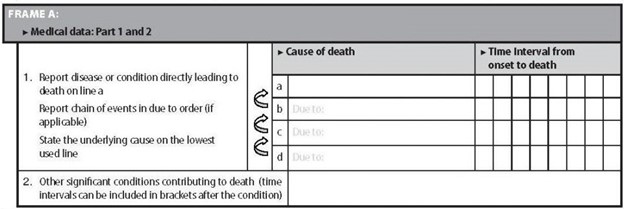
    Let’s take a look at the International Medical Certificate of Cause of Death (MCCD). For this section I am indebted to Dr. No, the author of the ‘Bad Medicine’ blog, for his succinct explanation of how the MCCD works and how, in practice, the WHO guidelines affect this process. I recommend his article about this if you want a more detailed understanding of the topic.

    The MCCD was introduced by the WHO in 1948. Its purpose was to create an international standard for the recording of deaths and to describe the sequence of events which led to a death, rather than just the immediate cause (as was common in many countries at that time).

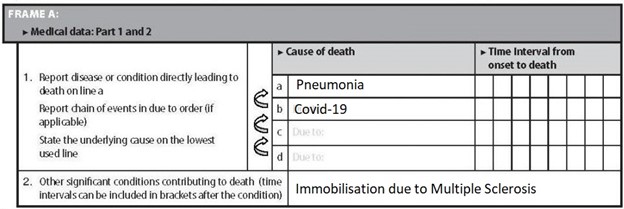
    Frame A (above) is the most important part of the MCCD. It is here that all significant information about a death is recorded. As you can see, Frame A has 2 boxes. Box 1 is for recording the cause of death, Box 2 is for recording contributing conditions. Box 1, the cause of death box, has four lines: the first line records the immediate cause of death, the remaining lines record any conditions which led to the immediate cause of death, with the last line containing the underlying cause of death. The idea is to record the sequence of events which led to the death.

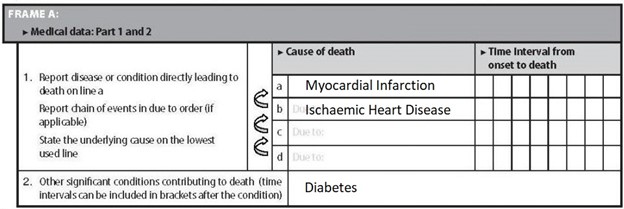
    To give an example. A person with diabetes dies from a heart attack, which was caused by heart disease.

    So the first line in Box 1 contains ‘Myocardial Infarction’ (the clinical name for a heart attack) because a heart attack was the immediate cause of death. The second line contains ‘Ischaemic Heart Disease’ (the clinical name for heart disease) because this is the underlying cause of death. This is the condition which initiated the sequence of events which culminated in the person’s death: the heart disease led to a heart attack. The remaining lines in Box 1 are left blank because this person had no other conditions which contributed to the sequence of events leading to their death. Diabetes is recorded in Box 2 because this is a contributing condition, rather than being a part of the sequence of events which led to death. This death will be registered as ischaemic heart disease (or simply heart disease) because this is the underlying cause of death.

    Another example. A person dies from internal bleeding due to a ruptured artery as the result of a road traffic accident.

    The first line in Box 1 contains ‘Internal Bleeding’ because this is the immediate cause of death.

    The second line contains ‘Ruptured Artery’ because this is what led to the internal bleeding.

    The third line contains ‘Road Traffic Accident’, as this was the underlying cause of death: it was a road traffic accident which initiated the sequence of events that led to the death. In this instance, Box 2 is left blank as there were no contributing conditions. So, the road traffic accident led to the ruptured artery which led to the internal bleeding. This death will be registered as a road traffic accident.

    “clinically compatible illness”

    The WHO’s guidelines define a Covid-19 death as “a death resulting from a clinically compatible illness, in a probable or confirmed COVID-19 case, unless there is a clear alternative cause of death that cannot be related to COVID disease (e.g. trauma).” This is an extremely vague definition and one which allows for a rather broad interpretation of what can be considered a Covid-19 death.

    As can be seen from the HSE’s website or that of the UK’s NHS, there is a large overlap between the symptoms of Covid-19 and those of any number of other respiratory conditions or Influenza Like Illnesses (ILIs). Any of these other conditions can be considered a “clinically compatible illness”. You will note that Covid does not have to be confirmed: a “probable” case is sufficient for inclusion as a death. As Dr. No puts it, “If it looks like Covid-19, it is Covid-19.”

    The guidance goes on: “A death due to COVID-19 may not be attributed to another disease (e.g. cancer) and should be counted independently of preexisting conditions that are suspected of triggering a severe course of COVID-19.” This is very important. What physicians are being told here is that, when they have identified a Covid-19 death (using the loose “if it looks like Covid” definition), then regardless of any pre-existing conditions which may have triggered severe Covid-19, the death must be registered and counted as a Covid-19 death. This goes against all conventions for identifying the cause of death.

    So how does this relate to our MCCD form? Well, in our earlier examples of somebody dying from a heart attack and somebody dying in a road traffic accident, there should be no difference in the way the deaths are recorded. In fairness to the WHO, they are quite clear in their guidance that these two types of death should not be recorded as Covid-19. (Unfortunately, this has not stopped overzealous authorities around the world from registering heart failure, motor accidents, suicides and murders as Covid deaths).

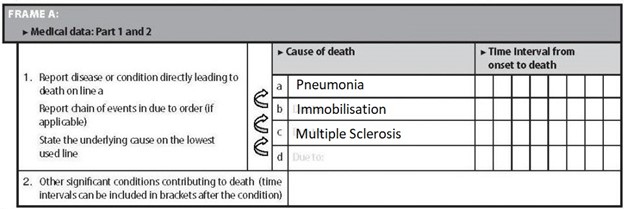
    However, when it comes to most other types of death, we start getting into murky waters. Take the example of a person who dies from pneumonia, caused by immobilisation, which itself was caused by multiple sclerosis.

    In this case, the underlying cause of death is multiple sclerosis. Why? Because multiple sclerosis led to immobilisation which led to pneumonia. So this death will be registered as multiple sclerosis.

    Now, let’s imagine this person had tested positive for Covid-19.

    Notice anything strange? Because of the WHO guidelines, the underlying cause of death is no longer multiple sclerosis, but is instead Covid-19. Multiple sclerosis (and immobilisation) gets moved to Box 2, it’s now been relegated to a contributing condition. This death will be registered as Covid-19. Remember the WHO said in their guidelines “A death due to Covid-19 may not be attributed to another disease and should be counted independently of pre-existing conditions.”

    Testing Flaws

    A further issue with the above example is that the presence of Covid-19 is determined solely on the basis of a positive PCR test result. According to the WHO’s clinical coding instructions, a death must be registered as Covid-19 if the patient received a positive test result, even if they never displayed any symptoms. But PCR tests are notoriously unreliable, with even the WHO themselves warning of their tendency to produce false positive results.

    So here we have the case of an unfortunate individual whose multiple sclerosis, over many years, caused them to become immobile. Immobility, sadly, can lead to pneumonia which, especially for the aged and/or immunocompromised, often results in death. However, because of the WHO guidance, the presence of a positive PCR result alone means that all of their medical history, the entire chain of events which led up to the person’s death, is cast aside and replaced by the misleading explanation of Covid-19.

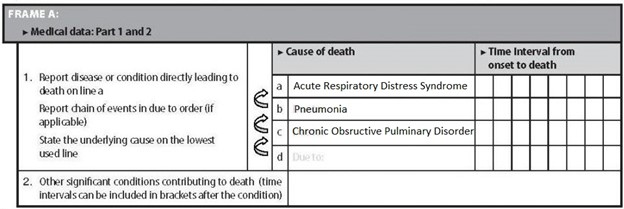
    But the issue goes even deeper. You’ll recall that the WHO’s definition of a Covid-19 death includes “probable” cases as well as “confirmed” ones. Our final example describes an individual who dies from acute respiratory distress syndrome (ARDS), caused by pneumonia, which itself was caused by chronic obstructive pulmonary disorder (COPD).

    As you can see, the underlying cause of death is COPD, which led to pneumonia, which led to ARDS. This death will, of course, be registered as COPD.

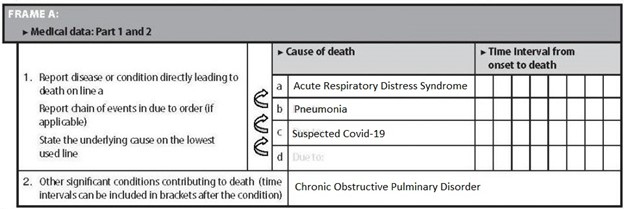
    But what if this person had had contact with someone known to have Covid-19 or even with a person suspected of having it? Here’s what would happen to the MCCD:

    The underlying cause of death is now ‘suspected Covid-19’, which, in the figures we see on the nightly news and in the vast majority of statistics made available by governments, is treated in exactly the same way as a confirmed Covid-19 death. The WHO’s clinical coding instructions insist that it is, so long as the deceased had “contact with (a) confirmed or probable case.” The COPD which caused this person’s pneumonia is cast aside, no longer considered to have played a part in the sequence of events that led to their death.

    This is absurd. Yet this is how deaths around the world are now being recorded and registered. If somebody is dying of heart disease, liver disease, respiratory disease, cancer, dementia or any other terminal illness, and they have a positive PCR test or have simply been in contact with somebody suspected of having Covid, their death is now registered and counted as a Covid-19 death. Any pre-existing condition, no matter how serious and no matter what part it played in their ultimate demise, is moved to Box 2 of the MCCD and not recorded as the underlying cause of death. The WHO guidelines state, in the section entitled “Comorbidities”, that “if the decedent had existing chronic conditions…they should be reported in Part 2 of the medical certificate of cause of death.” Conditions which for more than seventy years, since the introduction of the MCCD form, have been understood as underlying causes of death, are now rebranded as contributing factors. All to make way for the mighty Covid.

    Massive Inflation

    The result is a massive inflation of the numbers of Covid-19 deaths. As Patrick O’Connor, the Mayo coroner, says, when speaking about terminally ill patients, “If they prove to be Covid positive in a test, it is that (Covid) which is recorded as the principal cause of death — even though that person may have been terminally ill with a short life-expectancy prior to such testing.” And, as we have seen, a test is not even necessary, as the WHO’s guidelines instruct physicians to include “probable” with “clinically compatible” illnesses in the tallies.

    Even before the WHO issued their guidelines on 16th April last year, Italian authorities had been using a similar method to register Covid deaths, with 88% of patients there (up to March 20th, 2020) having at least one comorbidity and many having two or three. In addition to hugely inflating the number of deaths from Covid-19, this bizarre way of counting also distorts the mortality rate of the disease, making it seem far more deadly than it actually is.

    In 2020, a total of 73,444 people died in England and Wales with Covid-19 recorded as their underlying cause of death. In response to a freedom of information request, on 29th March 2021, the UK’s Office for National Statistics revealed that only 9,400 (12.8%) of that number were recorded without pre-existing conditions.

    On July 3rd last, Ireland’s then acting Taoiseach, Leo Varadkar, tweeted, “In Ireland we counted all deaths in all settings, suspected cases even when no lab test was done, and included people with underlying terminal illnesses who died with Covid but not of it”, revealing that the numbers of Covid-19 deaths in Ireland were vastly exaggerated and in no way reflected the lethality of the disease in this country.

    Although the complete death statistics for 2020 have not yet been made available for Ireland, in April, 2021 Kildare coroner Professor Denis Cusack published a report analysing deaths in that county during the pandemic. Of 230 deaths recorded with Covid-19 as the underlying cause, 228 (99.13%) had pre-existing conditions.

    Fewer than 1% Died Without a Comorbidity

    I would have thought that this was a significant finding, that fewer than 1% of the people who died from Covid-19 in County Kildare did not have comorbidities. But, like anything else that doesn’t fit in with their campaign of terror against the Irish people, the Irish media was having none of it. While both RTE and The Irish Times gave coverage to Professor Cusack’s report, neither had anything to say about the 99.13% of Kildare’s Covid dead who had pre-existing medical conditions. Nor was there a mention of the average age of death in this cohort being 82.2 years of age. Both news services instead chose to focus on selected aspects of the report which they used to support the ‘lethal virus’ narrative they have long pushed. Is this censorship? Maybe it’s just extremely poor journalism.

    The running total of deaths is one of the pillars that supports this whole charade. The narrative of a deadly pandemic would never have worked without the impression of huge numbers of fatalities, countless lives ‘lost to Covid’. The unprecedented changes in the way deaths are counted allowed this to happen. You would imagine such a fundamental change, one which has had such a colossal impact on every man, woman and child on the planet, would be widely reported and discussed. Yet it is almost impossible to find a mention of it anywhere in the mainstream media.

    Although most of us have suffered under the heel of draconian Covid regulations, and will continue to suffer, some have profited greatly from this fiasco. We have seen how health scares have been manipulated for gain in the past, none more so than the Swine Flu pandemic that never was, in 2009, when governments, the WHO and pharmaceutical corporations colluded to profit at our expense.

    There needs to be an urgent investigation, on a global scale, to find out how the Covid pantomime was allowed to happen. And we need one in Ireland, to determine who knew what and when, and exactly who has benefitted.

    Walk-in Testing Centres

    The current narrative being spun in Ireland is that we are close to ‘finding a way out’ of lockdown and that, if we behave ourselves, we might be permitted some limited freedoms during the summer. This is hardly surprising. We’re coming to the end of coronavirus season, which means it’s so much harder to inflate ‘cases’. And because mortality rates in the Northern Hemisphere are typically at their lowest during the summer months, it’s not as easy to attribute huge numbers of deaths to Covid-19. It was the same last summer.

    But the government has been preparing for this. Already, there are 5 walk-in testing centres in operation in Ireland, with many more planned – a perfect way to boost the numbers and keep us on our toes for the summer months. And, of course, the government reserves the right, at any moment, to slap us all back into lockdown.

    At the same time, it has been made abundantly clear that whatever limited freedoms we might be permitted will be contingent on mass vaccination and, before long, vaccine passports and digital identity. And don’t forget, coronavirus season comes around again in September. But, as we have seen, the lethality of this disease, for which we’ve radically changed the way we live and have forsworn so much of our freedom, has been blown out of all proportion by the fraudulent way in which deaths are registered.

    We suffered under austerity for a decade. It’s hard to believe that the same politicians who decimated our health service, causing untold hardship and death, now want to protect us. Do we trust they are spending our money honestly and wisely? How much is being spent on mass vaccination, testing, tracing, the vaccine passport infrastructure? And what is the cost of the Covid period to our economy? The whole circus makes a mockery of the years of austerity and of every person who suffered because of them.

    Cost to our Health

    Then there is the cost to our health. Many have lost their lives because of this deception, but you don’t see a running total of their deaths on the news every night. How many have died due to a lack of primary health care, which has been sidelined and neglected, sacrificed at the altar of Covid? How many cancelled surgeries and missed screenings? What about those in urgent need of treatment who were too frightened to attend a hospital? And those who were turned away before they even reached a hospital, because Gardai at a checkpoint deemed their need not sufficiently urgent?

    The mental health of our nation has taken a nosedive, not due to Covid but because of lockdowns and other unwarranted sanctions against our people. Loneliness, depression and despair have all taken their toll. The US Centres for Disease Control and Prevention (CDC), hardly a radical anti-lockdown stronghold, has estimated that one third of all excess mortality in the United States during 2020 was due to reasons other than Covid-19.

    We’ve been deceived. When important facts are left out of a narrative in order to foster a misconception, we call it lying by omission. We have been lied to by politicians, public health officials, wealthy media barons and the stooges who write for them. And we have paid a terrible price. In the twilight of our freedom, it’s time for us to stand up for the truth.

  • Musician of the Month: Donal Gunne

    I have nothing to say, and I am saying it. And that is poetry. As I needed it. 
    John Cage

    ‘Nothing to do, nowhere to be?’ This is the space where the best stuff – the best musical stuff – shows its face, ugly, beautiful or otherwise. At first glance, this appears quite simple but when does one actually have nothing to do and nowhere to be?

    I could segue in a multitude of directions about the treadmill of living a contemporary life, or the long and deep impact of smart phones on our monkey minds, how instead of liberating us with ever more efficient apps and services they actually fill in any and all space in a day for idleness, daydreaming or any of these seemingly archaic pursuits.

    In addition, in this day and age, would I not be crazy to at least tip the hat at any inherent privilege allowing one simply to exist and have nothing to do, nowhere to be, even temporarily?

    But this misses what I’m attempting to get at. Anyone who has dabbled in the contemplative arts or meditation may give a knowing nod here. I have found that – and maybe this is the hardest part – I can have ‘nothing to do, nowhere to be’ many times throughout a day even when engaged in doing and going. It involves dropping back and just hearing, listening, feeling, playing; giving oneself the internal space, in the moment, to play and mess and see what happens. Dropping all the to-do lists, the constant planning, the goals, the dreams, the worries, the imagined conversations and arguments with friends and family.

    For me, this is where the good stuff lives. Being in this space allows the drama of ideas, feelings, and connections to unfold itself and for the music to flow. With practice and hard work (it may come more easily for others) that space can be attained on a regular basis.

    This is one part of my creative process. The internal part. The external part is actually carving out some time in the day when one can make use of the fruits of this space. This also is a challenge, for reasons I’ve discussed and many others.

    This part is huge though. I’m sure this phrase has been uttered by many before me but you have to show up for creativity. Show up every day that you can. Show up for minutes or hours and then you  will make progress. Show up in the space described above and you can make all sorts of progress. The direction may be unforeseen and not necessarily the progress you think is most pressing, but, there will be progress nonetheless. This is a process, and I address this to myself as much as anyone else.

    Just a caveat, however, on occasion works can arrive fully formed in an instant, as if received from some wonderful ‘other’ creative dimension. In this case all one can do is try and document it as soon as possible before it dissipates into the ether once more. When this happens it is truly magical, but it is hard to rely on this source so, to move forward, a process must be developed.

    I have been playing the guitar and making music in my own little way since I was eleven years old. Previously, I had wrestled with the piano for a few years, with mixed results. I certainly enjoyed the sounds, getting familiar with melodies and harmony, but at that age I could not relate to the music that I was being taught. It was the height of Grunge so I was deep into Nirvana, Pearl Jam, Alice in Chains, Soundgarden, and also bands like Radiohead. I was also discovering the old guard, The Beatles et al.

    Almost immediately after my piano lessons ceased I picked up my father’s old nylon-string guitar and started tinkering with it. My father was a dab hand at a Beatles number and could certainly entertain for an hour or two into the wee hours at a party. He showed me the basic first position chords, plus one jazz number, ‘The Girl From Ipanema’ and one Classical piece, ‘Romanza.’ With these great standards of the guitar canon, he set me on my way. The guitar seemed so accessible in comparison to what I had been doing with the piano. My thoughts on this have changed considerably since then but that is another article in itself. Plus there was the notion that I could learn songs that I was listening to. Eleven year old mind well and truly blown!

    In addition to all that, and maybe more importantly, the vibrating strings of the guitar seemed to hold a hypnotic power over me. Everything else would fade away and I would be completely zoned in. Whether it was me or someone else playing the instrument. Even very basic chord changes or musical parts would and, I’m happy to say still do, have that effect on me. The sum total of the sounds, the feel, even the look of the fingers dancing on the fretboard, or hands making all sorts of strange, contorted shapes would transfix me, entirely, completely. I was addicted.

    I have found that the guitar, or playing music in general, is therapeutic in many ways. As I grew up I would actually process my emotions on the instrument. Some could call it ‘self-soothing’ or something approximating that (as a new father I am really getting to know that term, happy face emoji).

    All the mixed up emotions of teenage years (or adult years) could be shaped into some form of tangible sound that I could sit with, more easily, until it had passed through me. A friend recently said to me “music is what emotion sounds like” and I think that I tapped into that early on.

    But, let me return to that eleven year old. Very quickly I realised that I was interested in making my own bits of music. Whether an interesting chord change, phrase, melody, finger picking pattern, these little ideas would come out whenever I sat down with the instrument and had some time to breath.

    Calling these creations ‘music’ may be a stretch. They were under-developed ideas based more on the arrangement and structure of the instrument than a clear delineation of a musical idea, and even then I struggled to finish a piece. Enjoying a sense of completion still comes hard for me. Beginning can be just as hard, and yes, the bits in-between can be hard too!

    What I discussed in the first few paragraphs is the beginning. Giving one the space and time to create and play. The ideas then arrive. The middle part is where the craft comes in. Developing techniques for this is certainly an ongoing process, but generating material from a seedling idea is something that can be honed. With all the music notation software and digital recording platforms available one can take a very basic idea and stretch it, shrink it, chop it up, layer it, reverse it, invert it, amongst other things, and, this is the magic part, hear it back immediately. How did the greats ever do anything before the advent of computers?!

    Finishing a piece is another challenge, especially for anyone with any perfectionist tendencies. Letting something go, warts and all, into the world, is an exercise in showing your vulnerabilities. I don’t find this straightforward. It is difficult to put out work when you know the standard that is already available.

    Also, knowing that sweet spot when a work is ready to let go of is a dark art in itself. I have only released a tiny percentage of all the music that I have composed. Much of it is forgotten, a lot of it sits in hard drives or old laptops, and some is still is in my head. And that is ok. What remains is an archive of ideas that I can dip into when and how I need them.

    Over the years I have prioritised the technicalities of music over the emotional content. I have often been lost in the exhilaration and energy of music, while over-looking subtleties and nuances. I have been self-indulgent and egotistical. However, amidst all this, progress has been made and I have found moments of success on my own terms.

    This is a process, and I say this to myself as much as to anyone else.

    Instagram: https://www.instagram.com/donalgunne/

  • Belfast’s Broken Record Crackles On

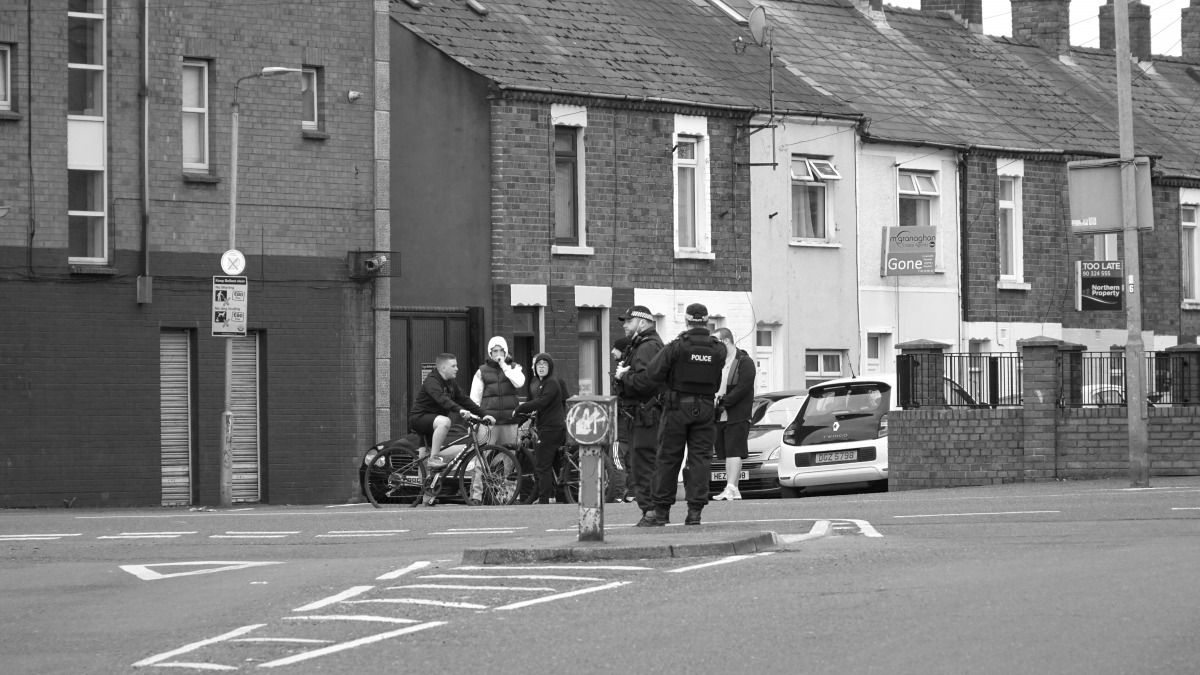
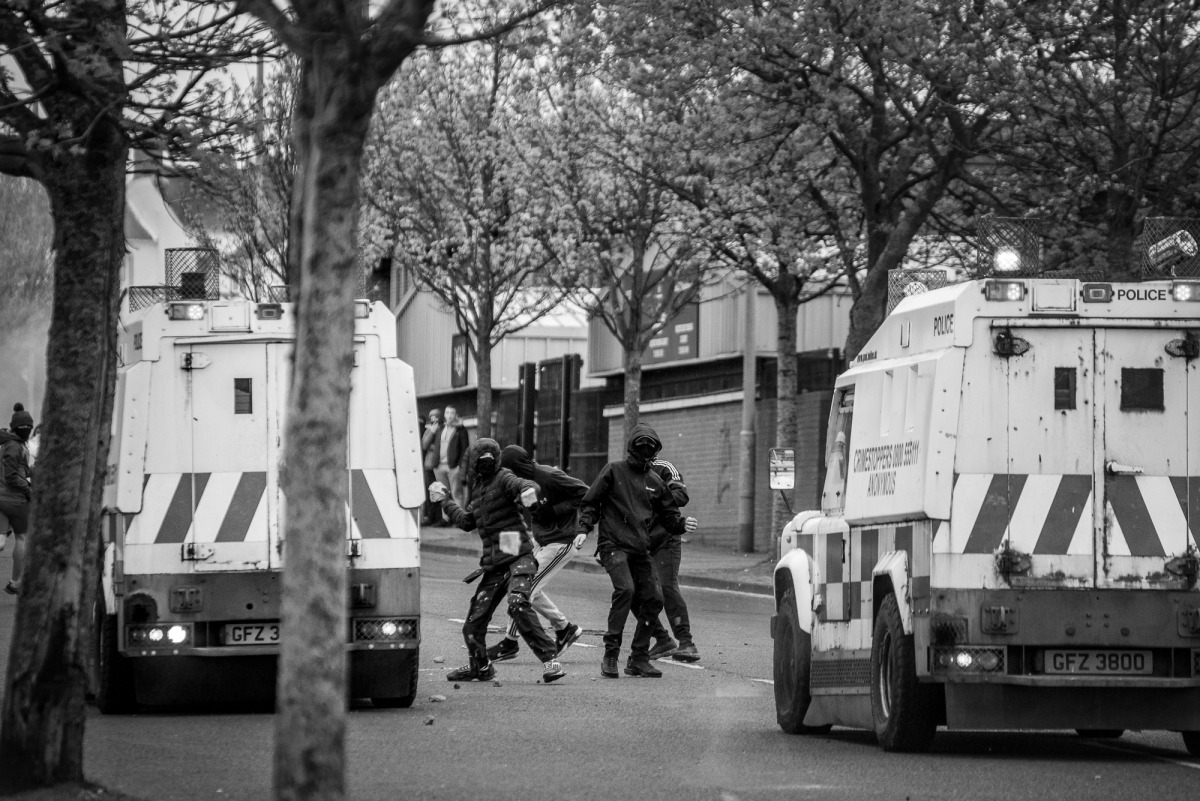
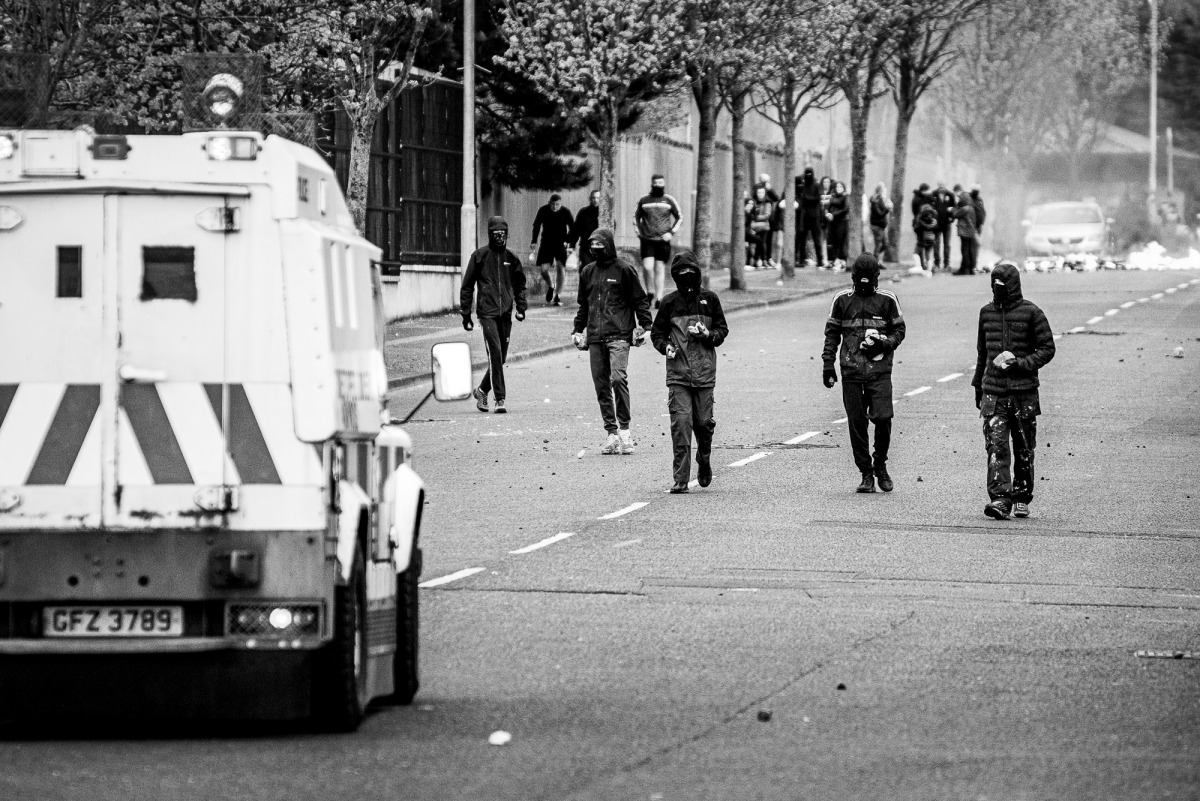
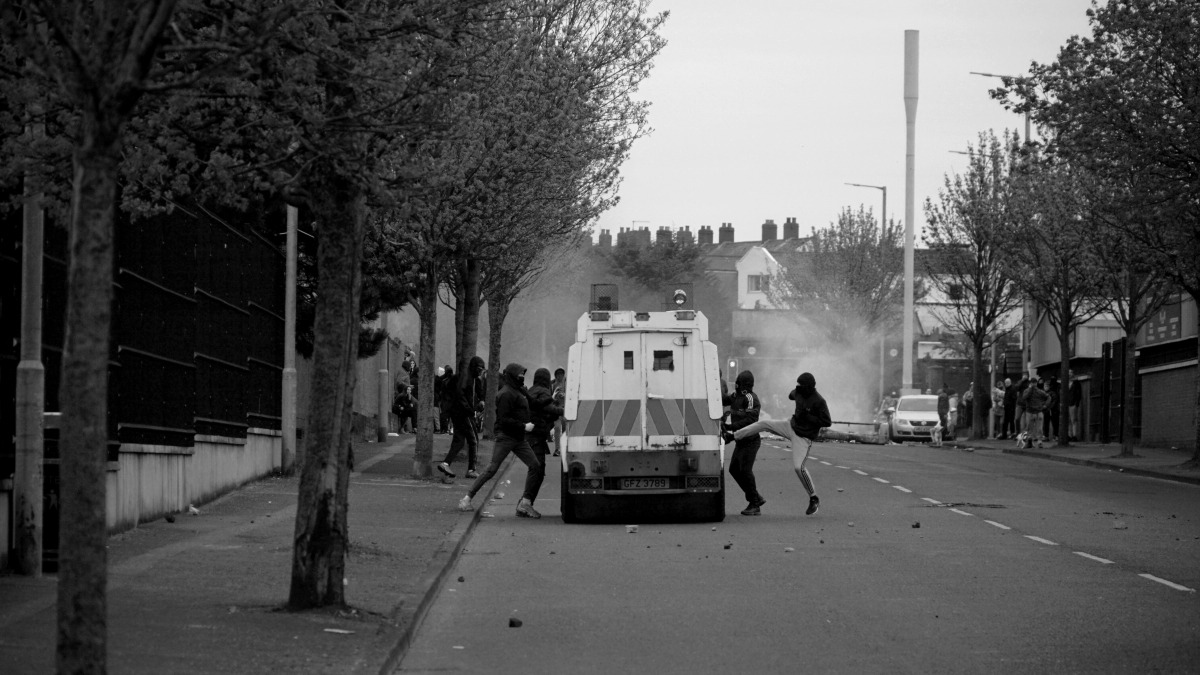
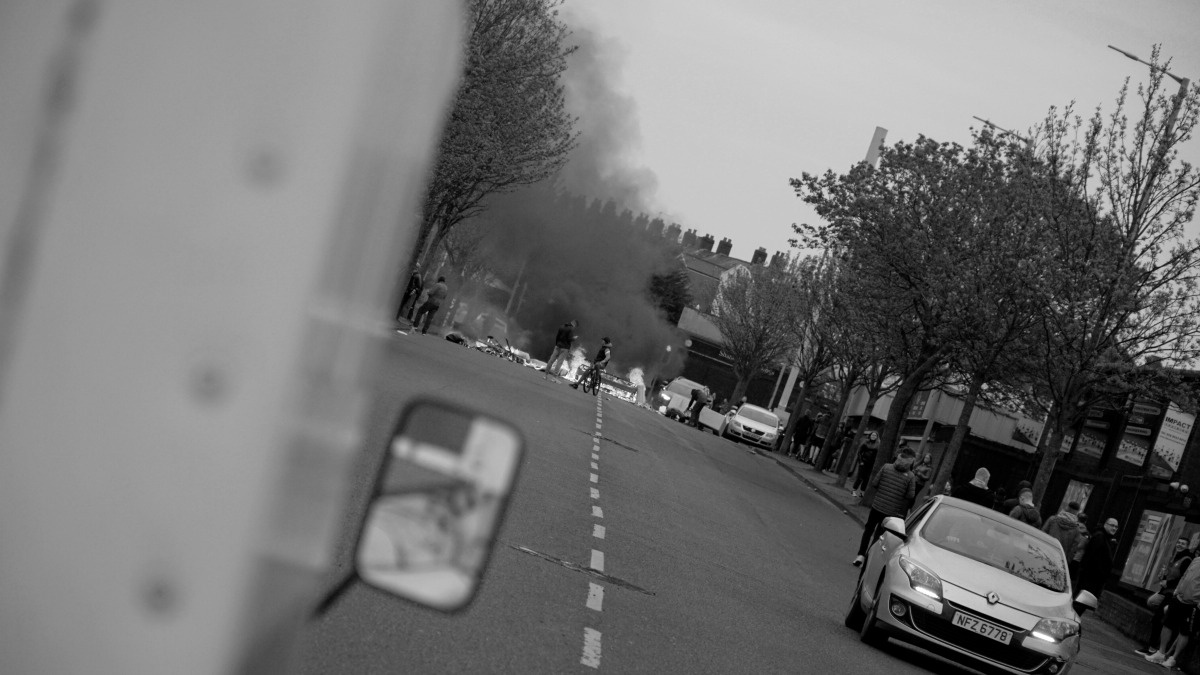
    There is a strong impression of the same old story of the Troubles in Belfast, all over again. The new element is the pandemic affecting teenage lives. Words and images by Fellipe Lopes in collaboration with Daniele Idini.

    It is hard to see a purpose behind the recent violent protests in Belfast that have fleetingly come to global prominence. On the ground, community leaders identify continuities, as recreational rioting is all too familiar, ever since the Good Friday Agreement of 1998.

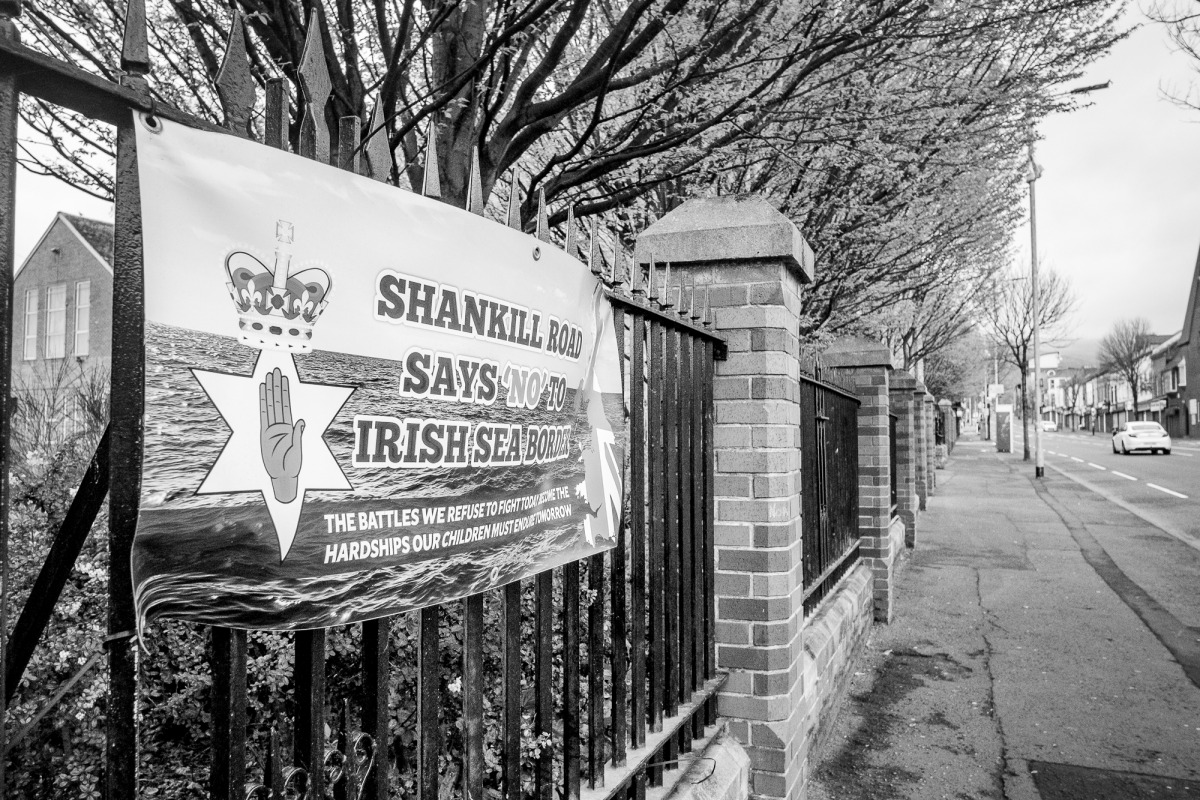
    There is, however, a perception that the intensity of this year’s disturbances are a product of uncertainties around the new Irish Sea border and Northern Ireland’s position in the post-Brexit context.

    Brexit has clearly increased insecurity in the Unionist or Loyalist community, many of whom voted against withdrawal from the EU. Now the establishment of a commercial border between Northern Ireland and the rest of the United Kingdom, through the Northern Ireland Protocol, designed to protect the Good Friday Agreement, has created a sense of betrayal. This has hardened the rhetoric of struggle and conflict.

    The Unionist side of the argument is that this creates further distance from the rest of the U.K. amidst a sense that they are the ones being sacrificed in the divorce from the E.U.. Moreover, talk of a possible United Ireland in the South and persistent grievances over the failure to prosecute senior Sinn Féin politicians for a perceived failure to abide by social distancing rules at the Bobby Storey funeral fans the flame.

    © Fellipe Lopes
    © Daniele Idini

    Added to all this, Northern Ireland’s lockdown has affected the lives of young people in particular: directly through extended school closures, and loss of job opportunities, but also by creating a despondency that leaves many feeling they have little to lose.

    Finally, the long-standing educational segregation between Catholic and Protestant communities perpetuates a sense of “us” and “them.”

    So, how to explain these violent outbursts? What is different now from the usual activities? And what role has the pandemic played, especially on the youth involved? We spoke to a politician John Kyle, an activist Eileen Weir and an academic Dr Katy Hayward to find out more.

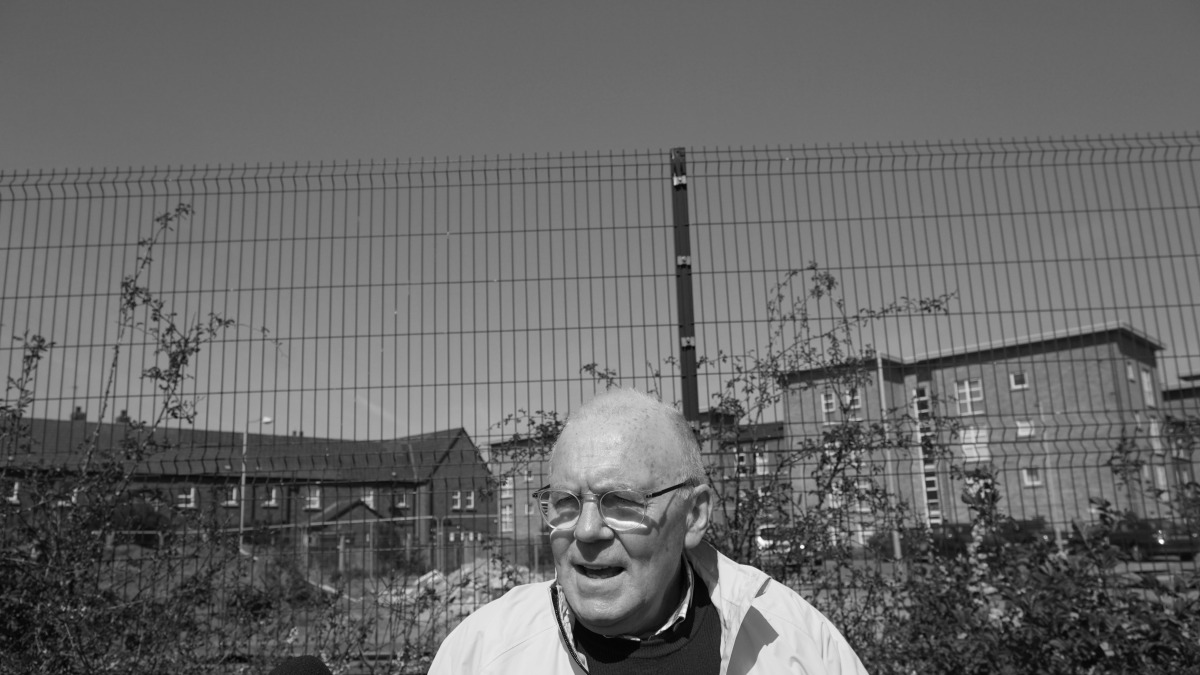
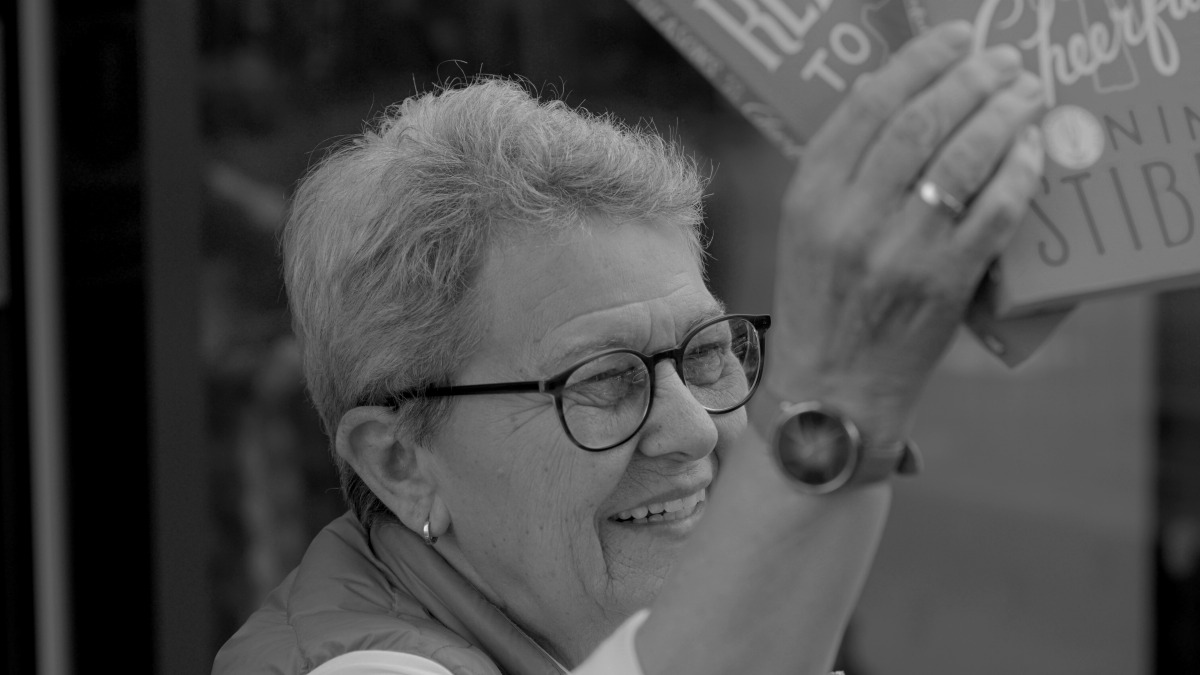
    John Kyle (PUP). ©Fellipe Lopes

    According to John Kyle, a Councillor on Belfast City Council, and former interim leader of the centre-left ‘Loyalist’ Progressive Unionist Party in Northern Ireland:

    “There are different factors involved. The first is that young people have been restricted. They have been unable to go to school, unable to meet with their friends, unable to go to the movies, unable to do, you know, stuff like that. If then there’s an opportunity to go out and get a bit of excitement, they will take that opportunity. Secondly, here in Northern Ireland, there is a tradition of what we call recreational rioting. In other words, if there were kids at an interface between two communities in the summer nights, sometimes, they arrange on Facebook to meet up for a fight. And so you might get 100 kids, sometimes 30, sometimes 50 kids. They meet up, start shouting at each other and throwing stones and bottles. And that’s what we call recreational rioting.”


    Daniele Idini with John Kyle. © Fellipe Lopes

    But Dr Katy Hayward, an academic and writer based at Queen’s University in Belfast says:

    “Something different has happened in the past few weeks, and that is that you’ve had a change in the political situation whereby the rhetoric in particular, from Unionist communities, and leaders has been one in which people have begun to really, doubt the process of basically the core elements of the Peace Process, for a long time. And amongst Loyalist communities, there has been a sense of frustration and anger about the Good Friday Agreement and compromises there. This is now beginning to get into the wider mainstream political field. And that’s primarily as a result of the conditions of Brexit, also you’ve had a new dimension, which is the criticism of the police service”


    Katy Hayward at Queen’s University Belfast. ©Daniele Idini

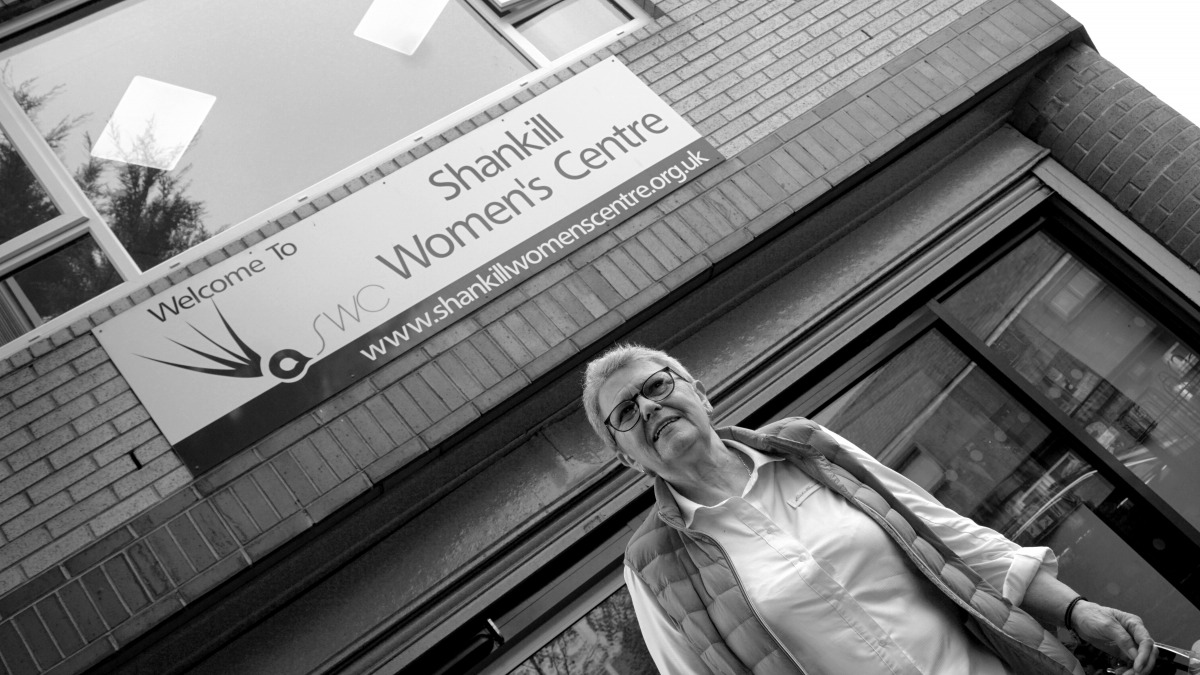
    On the other hand, Eileen Weir, Peacemaker and Community relations worker at Shankill Women’s Centre speaks of persistent social problems:

    “yeah, I think it is partly down to boredom. The things that people are not picking up on is that we have interface violence all year round. Right? This is not the first. They are usually not to that extreme where things are being burned or anything, but the two communities come together for a fight all year round and every year. We have a big, big drug problem in our communities and a lot of our young people are addicted to some type of drug, whether it’s illegal or prescribed. So we have a big mental health problem in our communities. It’s like they put a plaster on a thing that actually needs an operation. Our rate of suicide, and not just with young people with adults as well, is through the roof.”


    Eileen Weir in front of the Shankill Woman’s Centre. © Fellipe Lopes

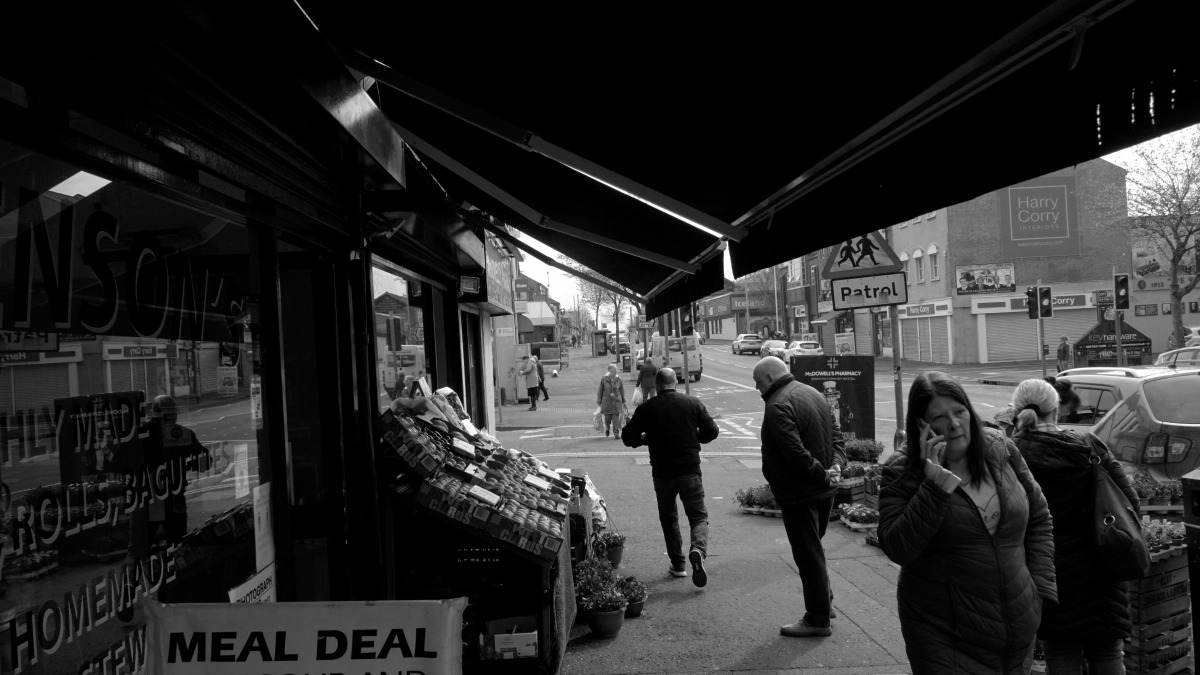
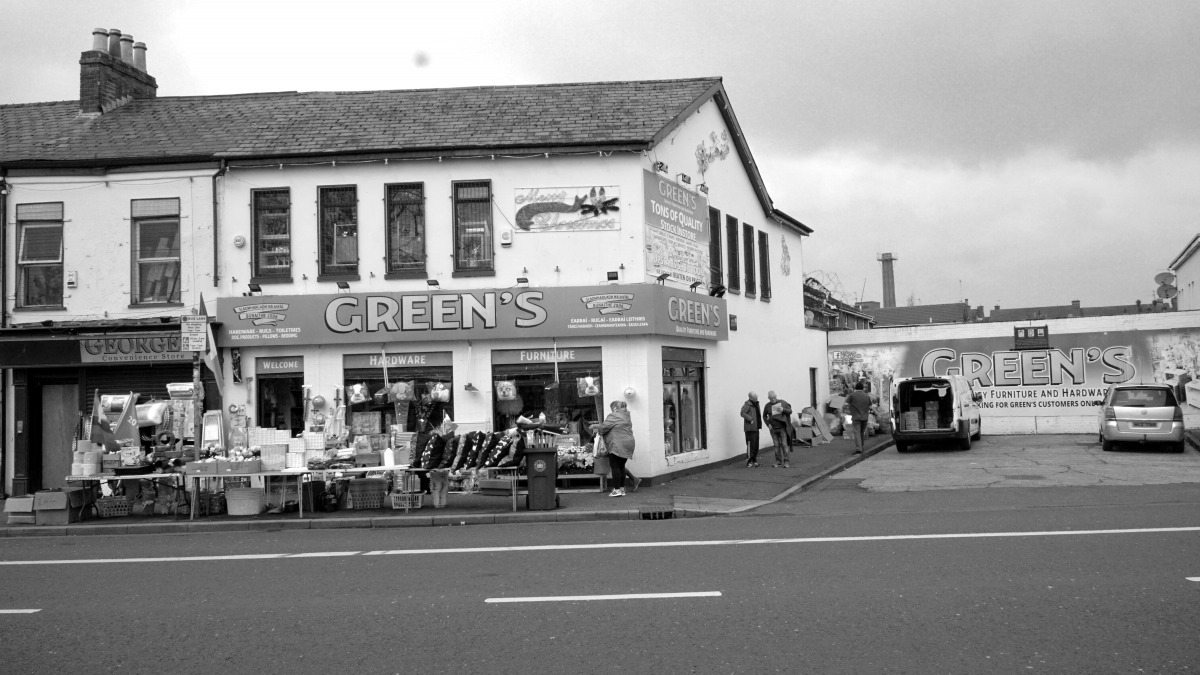
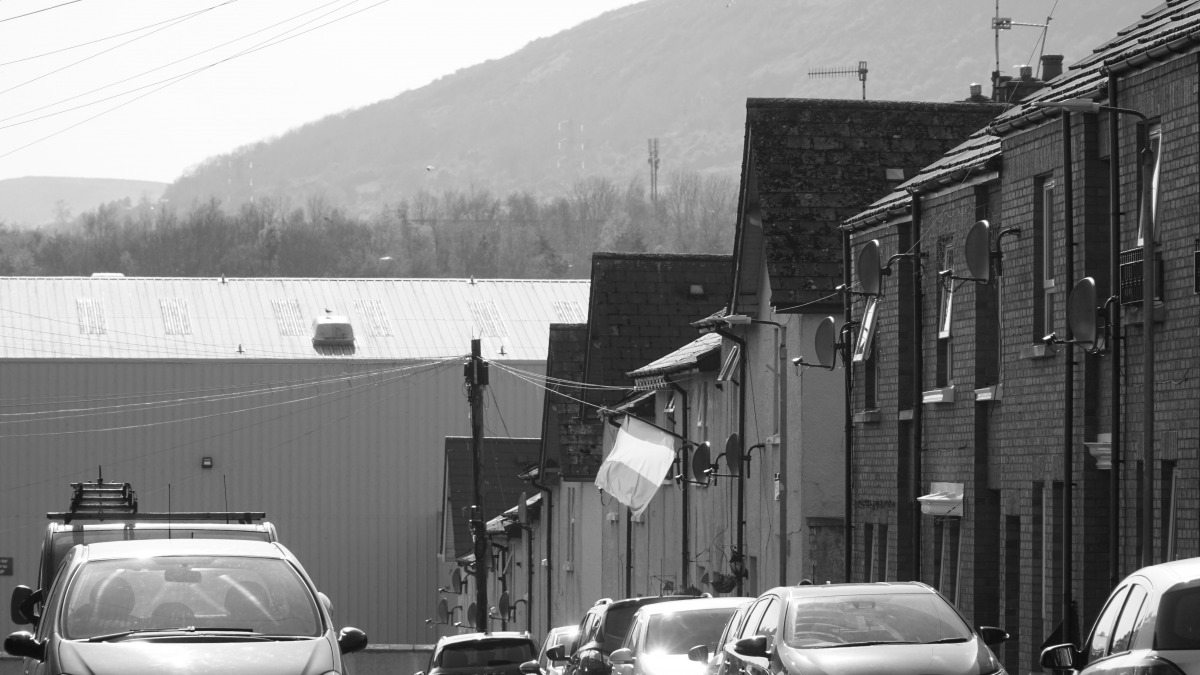
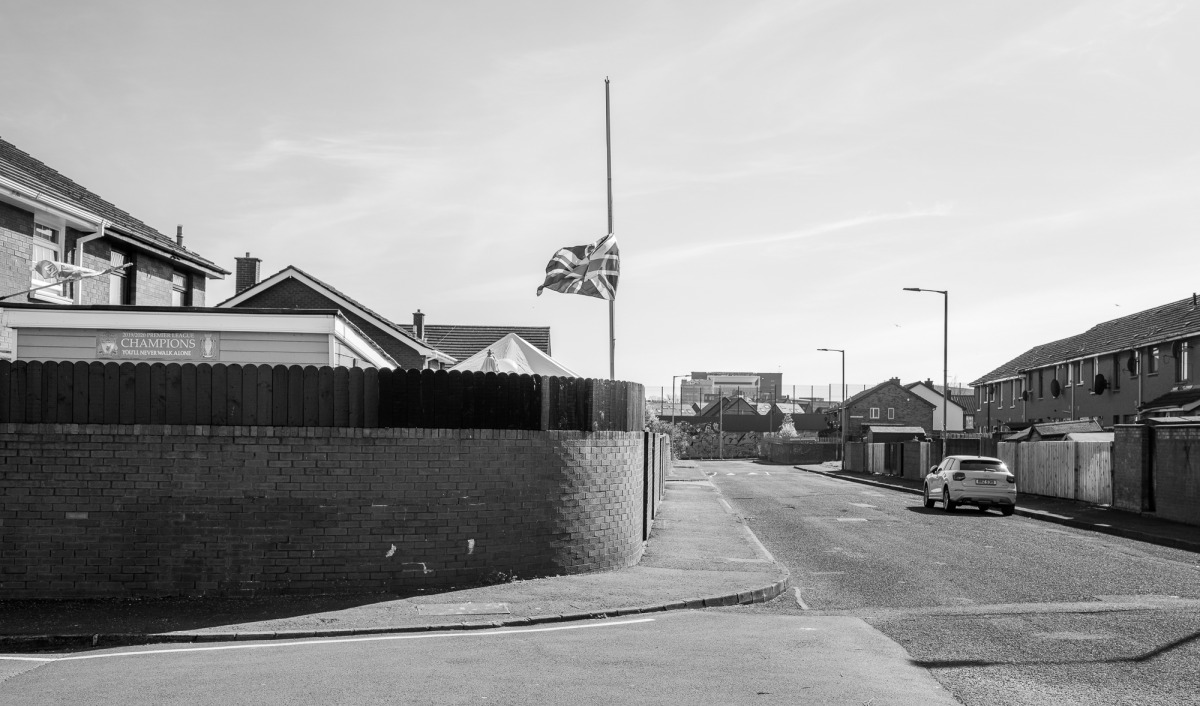
    Walking around the predominantly Protestant areas of Shankill and Lanark Way, as well as in the Catholic Springfield Road and Falls, reveals a tranquil environment with bustling local shops, active community centres and friendly characters, more than willing to share their views on the current situation.

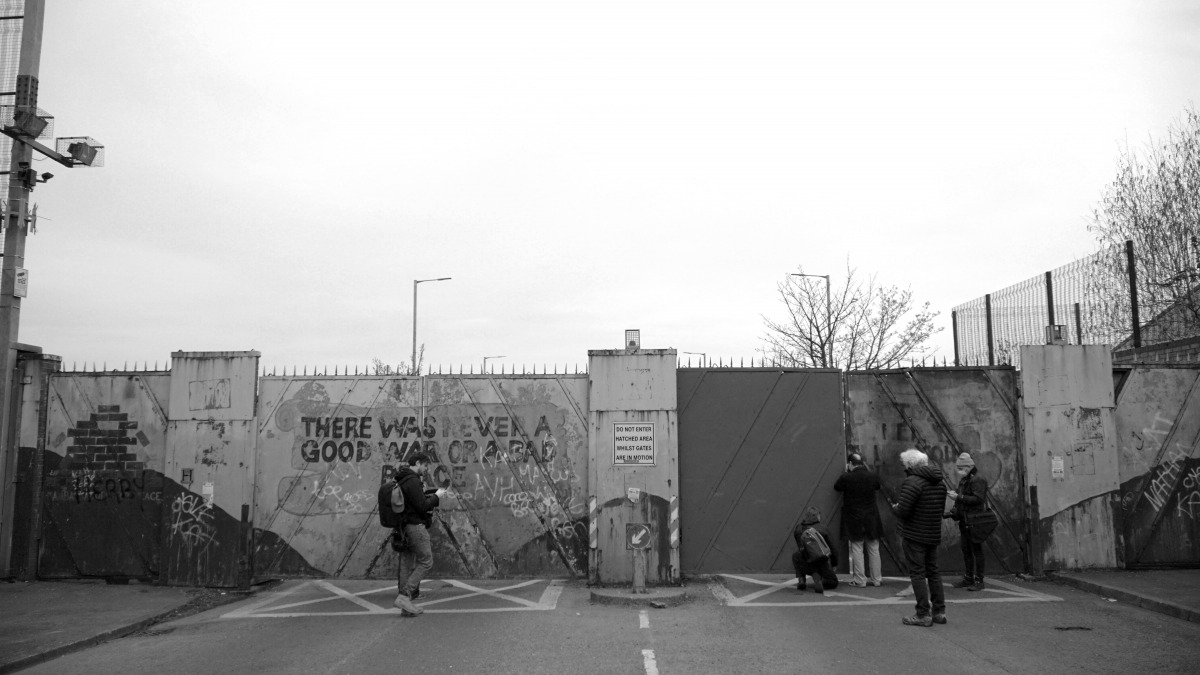
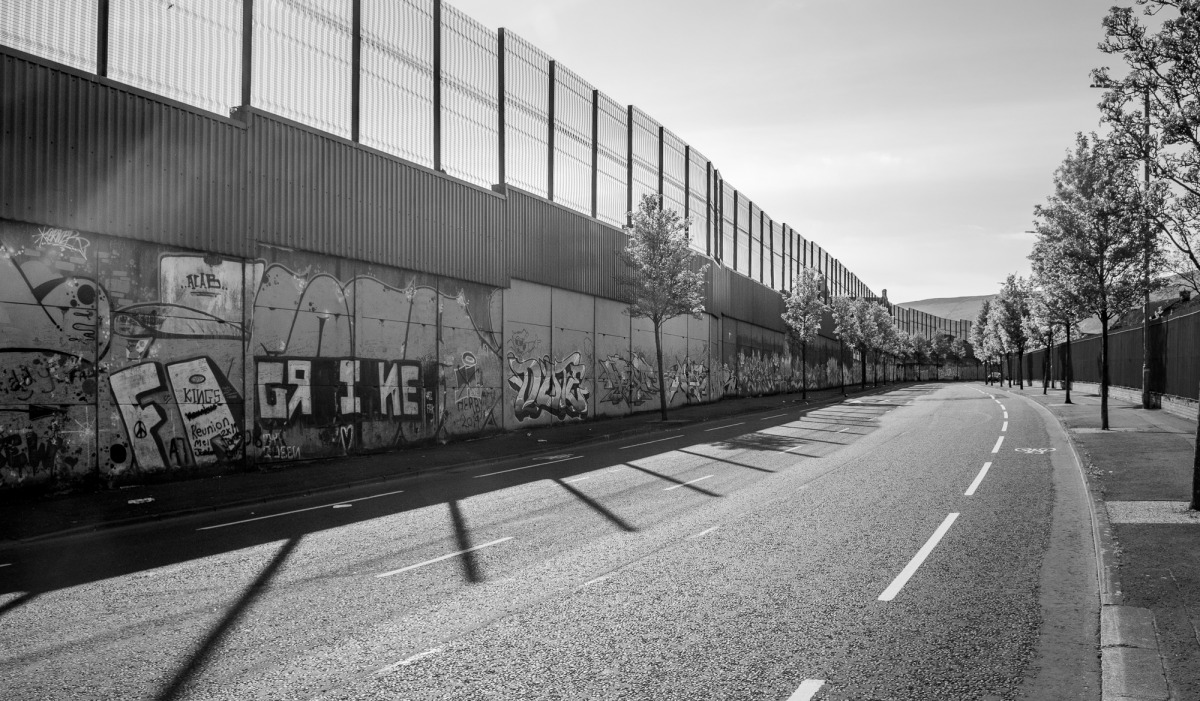
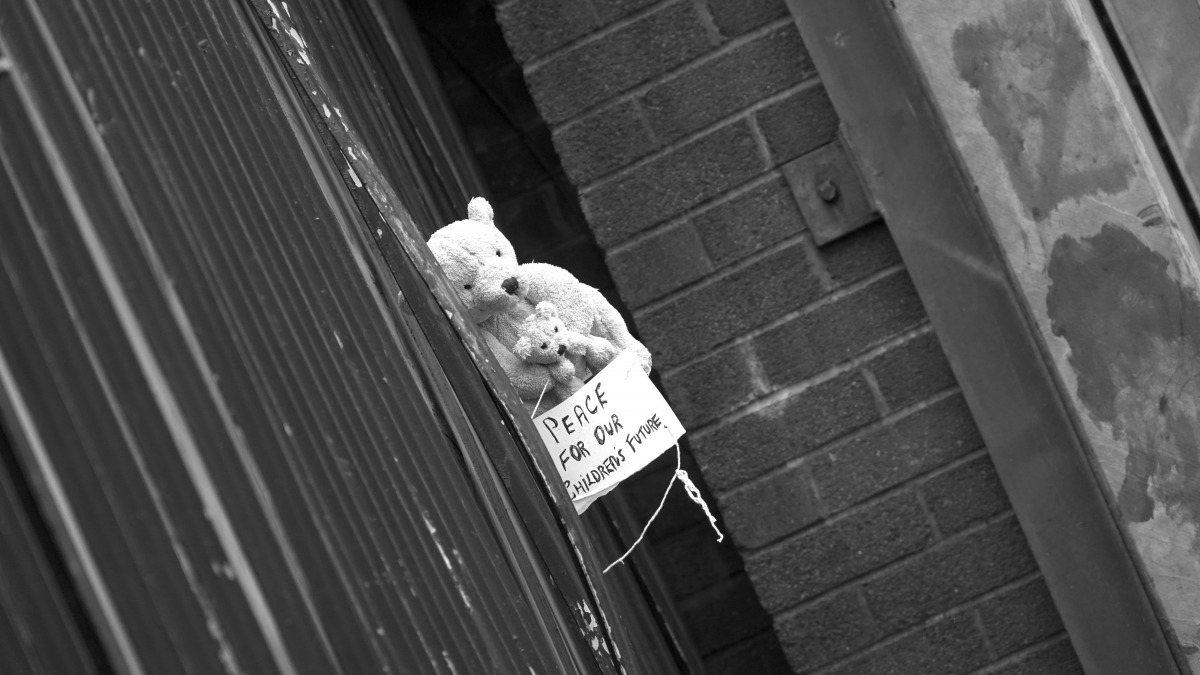
    These are among the areas of Belfast most affected by the long period of the Troubles and the scars are apparent. Chatting to locals from both communities living alongside the so-called the Cupar Way Peace-Wall the general impression is of a desire to leave behind a troubled past.

    Shankill Road © Fellipe Lopes
    Falls Road © Fellipe Lopes

    According to Eileen:

    “we do have peaceful communities, OK? I mean, the woman that I work with, you know, we’re from North and West Belfast and we have a fantastic relationship. I don’t like to label anybody. But within that group I have Republicans, I have Nationalist, I have Loyalists, but building relationships is not enough. And we can all build relationships. But that relationship doesn’t happen overnight.”


    Clonard neighbourhood. © Fellipe Lopes
    Shankill neighbourhood. © Daniele Idini

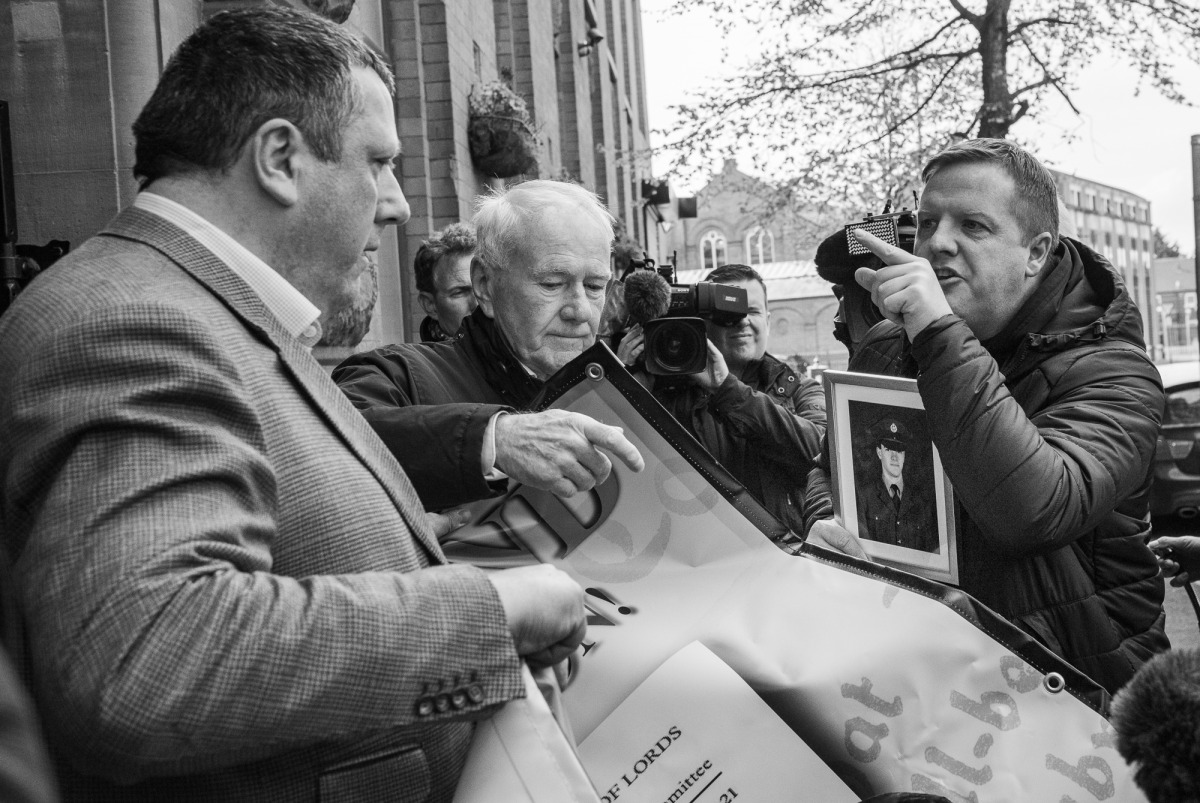
    By Monday April 19th the moratorium on Loyalist protests in the wake of Prince Philip’s death had lapsed. That morning, in front of the Irish Secretariat, a two man protest against the Northern Irish Protocol, organised by the Loyalist Communities Council’s Chair David Campbell and former politician and co-founder of the group David McNarry, was in full swing.

    Before long, however, it was interrupted by David McCord, whose brother Raymond was allegedly killed by members of the UVF in 1997. With a picture of his late brother in hand, he confronted the two men who were holding a banner that had appeared in different locations across Northern Ireland the previous night, addressed to the large media presence before them.

    © Daniele Idini

    There is a big gap between the government and these communities that reflects uncertainties over the decisions being made, especially the government’s failure to recognise the serious impact of their policies. Our conversations in the neighborhoods reveal a lack of understanding of the practical implications of Brexit and the Northern Ireland Protocol. This incoherence is reflected in the seemingly pointless violence.

    Now there is particular concern around the escalating misbehaviour of teenagers, leading shop owners in the affected areas to coordinate closures.

    Meanwhile on social media, calls to resume Anti-Northern Ireland Protocol protests across the region started to circulate. This included tweets about one to be held that evening at Lanark Way, where in previous weeks the violent riots had taken place.

    In the hours leading up to the anticipated protests on Monday April 19th in the Springfield Road area, rumours circulated about community efforts to prevent local teenagers from taking part.

    Springfield Road Interface. © Fellipe Lopes

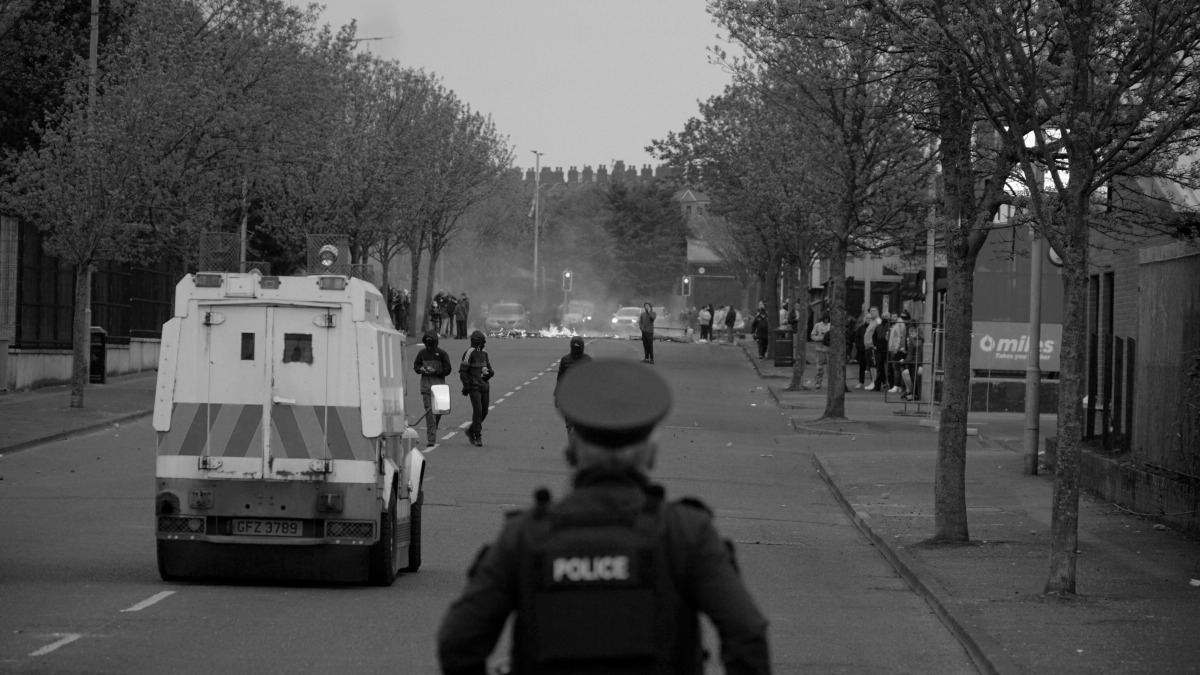
    But by that evening approximately thirty teenagers were blocking Lanark Way on the Shankill Road side, setting fire to furniture and rubbish in the middle of the street.

    © Daniele Idini
    © Daniele Idini
    © Fellipe Lopes
    © Fellipe Lopes

    The protest soon descended into stones and pieces of iron being thrown at police cars. Over the course of the disturbances we saw no visible expression of what was motivating the protesters; no posters criticizing the governments, or otherwise communicating reasons for the violence.

    After a couple of hours, the PSNI asked journalists to leave the area and move to Springfield Road, as they closed the gate. This raises an important question as to what happens in the fight between teenagers and the police when media outlets are absent. A lack of media coverage fuels growing resentment towards the PSNI.

    Lanark Way interface Gate © Fellipe Lopes
    Lanark Way interface Gate. © Daniele Idini

    Katy points to this new antipathy towards the PSNI:

    “you’ve had this new dimension, which is the criticism of the police service. That’s something very new. So for some time, Loyalists have been feeling that the police service no longer backs them … what changed in the past week was that the First Minister of Northern Ireland called on the chief constable to resign, and we had all the political leaders of Unionism calling for the same thing.”


    @ Fellipe Lopes

    Katy adds:

    “They don’t trust political representatives or institutions to manage Northern Ireland’s interests. So you can see here all these factors exacerbating the sense of insecurity and that it only takes a few individuals. We know those individuals who have been present for a long time, presenting the Peace Process, presenting the compromise, thinking that violence pays. There’s a new narrative in Loyalism now that looks at what happens with the Protocol … They say the threat of Republican violence led to the Irish Sea border. So that’s another element.”

    Another important dimension is the difficulty faced by women in particular during the pandemic, as Eileen puts it:

    “the reason why this impacts on women more so is that there is homeschooling – working from home and often caring for an elderly relative. A lot of women’s jobs are low paid … zero hours contracts. We get very little recognition for the work of women. In the present situation, if it wasn’t for community workers being on the ground, you’d be seeing a hell of a lot more problems. And really, that’s not what community workers are for. That’s what our political representatives are for.“


    Eileen Weir. © Fellipe Lopes

    We also raised the question of a United Ireland and whether it is healthy to talk about this now. Katy said:

    “the more you talk about it, the more unnerving it is for Unionism. And that’s perfectly understandable because, of course, it’s anathema to the Unionist identity and certainly that is a factor. Because Brexit has taken Northern Ireland outside of the European Union, that’s a bereavement for some people and particularly for Nationalists. Northern Ireland is on the wrong side of that European external border, but that’s kind of overlooked because that leads to, certainly amongst Nationalists, a growing desire for Irish unity. They wish to see that happen and happen soon. But that has increased the uncertainty and insecurity for Unionists and we have both communities feeling more insecure in their position, thinking that the other is secure because basically they got what they wanted.

    Unsurprisingly, John holds a different view:

    “I personally think that the best outcome is a Northern Ireland that is part of the United Kingdom, but that has a close relationship with the Republic of Ireland. People here who identify as Irish have got free movement between the North and the South. They can work anywhere in Ireland and celebrate their Irishness and vice versa. There is good things in the British system and good things in the Irish system.”


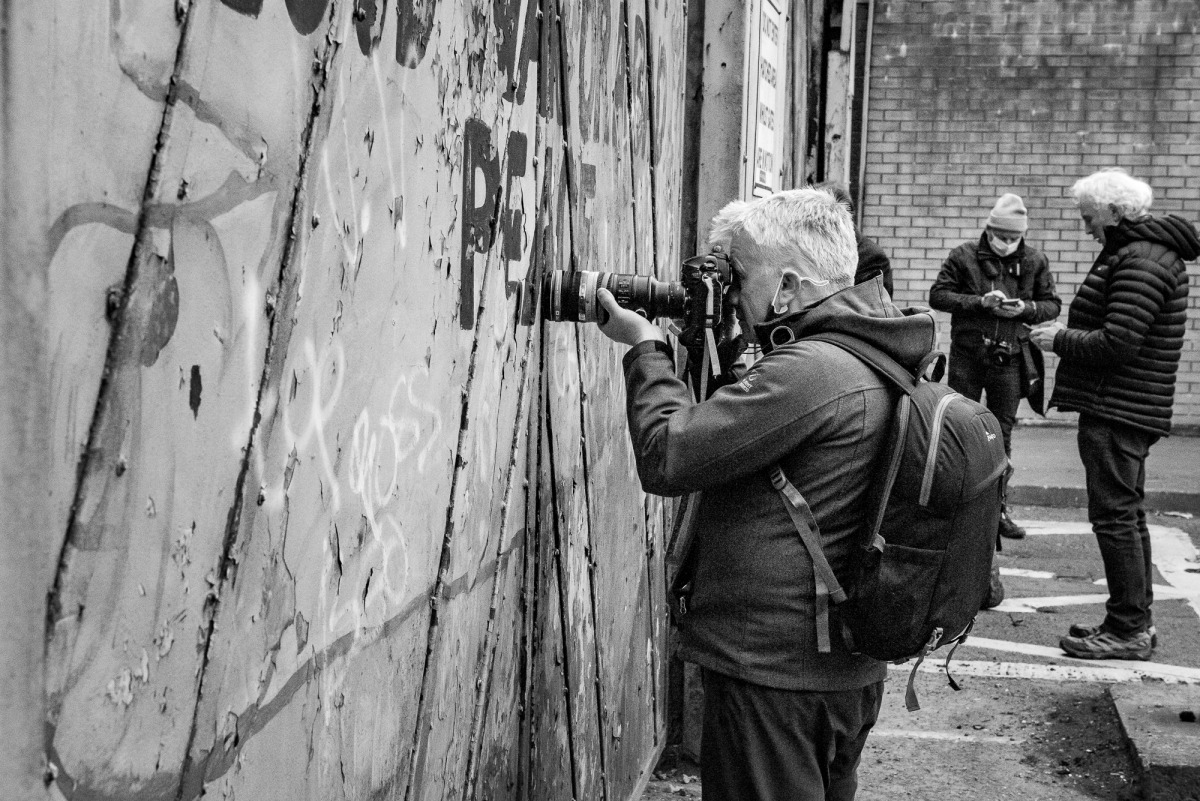
    The Cupar Way ‘Peace Wall’. © Daniele Idini

    Right now there is considerable focus on the decisions that the governments are making. The other part is about the lives and futures of these teenagers. Several communities in Belfast have paid a high price for the lack of access to education and job opportunities. Teenagers are now paying this bill. With their futures appearing bleak many have been drawn into unsuitable activities.

    Discussion of the protest should look beyond the intricacies of the Brexit deal and the Northern Ireland Protocol. Society and government should be forming a long-term plan for the social and cultural integration.

    On the streets you see violence involving teenagers and a decisive response from the police. What we did not discover is whether external forces are guiding and supporting these teenagers. Perhaps the real question is who stands to gain from the disorder?

    These communities are experiencing challenges very similar to what happened from the 1960s to the 1990s. The Good Friday Agreement created peace, but the record player is still playing the same scratched tune, with an extraordinary new phenomenon at play, which is the pandemic.

    The response of these adolescents represents another side to the impact of the pandemic. Mental health problems present as an issue in the lives of many families. The social projects around the Shankill and Falls Road do their best, but at this point the government has a responsibility to intervene, not only through policing, but also with social supports, inclusion programmes, enhanced access to education, job opportunities, improved living conditions and greater support for social workers, and psychologists.

    The pandemic is leaving a distinct legacy in Belfast: the ashes from the street bonfires; the stones hurled at police and journalists, and a new generation of teenagers accustomed to fighting the police. But the locals we spoke to all want peace and integration. They don’t want this generation to experience the same story as their parents.

    The fear is reborn of a new chapter to the Troubles. What happened over the last few weeks in Belfast has reawakened fears in these communities. No doubt this is a political issue, but the psychological scars are borne by individuals, families and communities.

    You can support Cassandra Voices reporting either on an ongoing basis through Patreon or a one-off PayPal donation to admin@cassandravoices.com.

    © Fellipe Lopes
  • The Communist’s Daughter

    In the morning before waking, I dream of vast empty plains of flatland and red undulating weather systems in the far distance. It is a dream I have often which leads me to wake with a nameless anxiety, and while the images quickly dissipate like dreams do, the nervousness persists. It is before dawn and I lie there on the couch for an hour, before rising and dressing without showering because I have resolved to leave for the office alone, but Tadhg appears in the doorway of his bedroom before I can make my exit.

    “Well Senan, how’s the head this morning then?” He asks in his meek manner which belies his Corkonian extraction.

    “Same as.” I tell him as I strip the sofa of bed sheets.

    “Ah man it’ll get better.” He says.

    “It will.”

    I check my phone for messages from Anaz but there are none since last night when she broke the silence which has existed between us for the past week and suggested we meet this evening for drinks. I check Instagram as well but little has been updated since I last checked it at about 2AM.

    “I’ll make us some coffee and we’ll head.” Tadhg says.

    I want to respond. Tell him that I’d rather make my own way to the office this morning, but I can’t put the words together. Instead I feel irritated by his presence, even though it is his flat I am staying in. I fold the sheets and leave them on one side of the couch, as if in anticipation of another night which will be spent there, and sit. Tadhg, still standing in the doorway, watches me do this, and after a beat when it becomes clear that I am no longer present, he moves to the coffee table in front of me and clears it of the cans and full ashtray that I left there the night before, despite his request that I not smoke inside. In the kitchen I can hear the coffee machine gurgle and spit, and the cans being crumpled one by one and binned. I consider just walking out the door while he is occupied, but checking my phone again I am reminded that I may need his couch indefinitely, so I stay where I am, staring vacantly into the screen of my phone, scrolling aimlessly and without register, down the endless feed of Instagram. Already new stories are appearing from people I barely know and I tap their smiling icons and view their manicured nails, brightly coloured and bedazzled, gripped around cardboard cups or tilting towards the small lens on their phones a plate with muffins of seed and bran and obscure berry or grape, and infused with cinnamon or pumpkin spice even though it is now November and not October, and the rain outside has turned cold and the air heavy, but all the pictures are warm and dry, and yet somehow still frigid and empty. After what seems like a long time but is likely only a few moments I am returned from my uneasy reverie by Tadhg planting a cup in front of me and falling heavily on the couch to my left, both his hands holding his own cup close to his lips as he blows on the steam that rises from it, and it is only then that I notice the cold of the room. The damp feel to it that I hadn’t felt before, and the dull throb of a hangover rousing behind my eyes.

    “Are you gonna see Anastasia later then?” Asks Tadhg.

    “I am.” I answer, though I don’t remember discussing with him my arrangement with Anaz. But then, I don’t remember much from last night.

    “You sure that’s wise?” He asks with only a hint of incredulity.

    “We share an apartment, Man.” I respond, and then after a beat, “And Buddy.”

    “This isn’t the attitude you had last night,” Tadhg says.

    “Well, I was drunk last night.”

    “I can see that,” he says, drinking his coffee now.

    “How many more did you have after I hit the sack?”

    “Not enough.” I respond.

    “Right.” He says, and a silence descends.

    “Look, I know I need to end it,” I concede. “It’s gone fuckin’ toxic.”

    “It’ll get better, Man.” He repeats.

    I pick up my phone again and open Instagram and refresh the feed. A new story from Anaz appears at the top, her icon a smiling glittering visage cuddled up to the dog we share, Buddy. I tap the icon and Buddy appears again, at the end of his leash which trails back up beyond the camera’s sight, and ahead of him is the public park which is across the street from our apartment building. The grass is an almost luminous green, the cloudy sky not grey but bright, and the caption reads “Out for a walk with my little man!”, with the sunglasses emoji. I lock my phone and put it down again and drink the hot coffee, its taste bitter and sickening.

    Tadhg is moving around his small flat, wiping down the coffee table and coming in and out of the living room from his bedroom in increasing states of dress. The place is tiny, the kitchen a cove, shared with an oversized washer-dryer that he was bragging about having bought, about never having to go to the launderette down the street again. The TV is too close to the couch, the coffee table too close to my knees, and the couch too low, old and impacted. I put down the cup of coffee and finish dressing by grabbing my tie, still tied from yesterday, and noosing it around my neck.

    “Not gonna finish your coffee?” Tadhg asks, a look of concern, or perhaps irritation, on his face.

    “I’ll grab one on the way to the subway station sure,” I say, before adding, “Thanks though, it was… decent.”

    From the street the sky is a huge churning spectral mass of grey which cascades over the roofs of the differently crested buildings of downtown Toronto. We walk the short distance to the subway station in silence and I am tempted to put my headphones on now rather than when we get on the train. I hold off and tell Tadhg that I am running into Tim Horton’s to grab a cup of coffee, but he follows me into the shop and stands with me after I order.

    I check my phone again for messages from Anaz, or anyone, but there are none. There are numerous new stories on Instagram, mostly of coffee cups and allegedly healthy breakfast choices. Anaz has posted a picture of a cardboard coffee cup and the yogurt and granola pot that she likes but always says is too expensive. I study the photo closely but there is little more info I can glean from how the picture is cropped. When I receive my own coffee, without thinking, I hold it out in front of me and open the camera function on Instagram.

    “Are you taking a photo of your coffee?” Tadhg asks me, laughing.

    “No.” I mutter, quickly locking my phone and putting it back in my pocket, disturbed by the apparent instinct of my own action. Tadhg continues laughing at me and despite the fact that he is probably my best friend in this country, the desire to walk away from him and put my headphones on is intense, and the knowledge that this reaction is merely a projection of other feelings does not quell the almost overwhelming impulse.

    I walk out of Tim Horton’s and make a beeline for the entrance to the subway station, holding my coffee in my right hand and pulling my wallet from its pocket with my left. At the ticket barrier I stop and struggle with one hand to remove my subway pass. Tadhg sees this, and his own pass already in his hand, takes my wallet and removes my pass and hands it to me so that I can easily go through the turnstile.

    “So where is it you’re meeting her tonight?” He asks me when we’re both on the other side, Tadhg this time holding my coffee cup while I put the pass back into my wallet.

    “The Communist’s Daughter,” I tell him, before adding, “Ossington.”

    “Ye seem to like that place, you go there so often,” he says, “I’ve still never been.”

    Redundantly I reply, “We don’t go there that often.” Though I find myself thinking about this point as we descend the city and catch a train that’s already waiting at the platform.

    At lunchtime I don my Bluetooth headphones again and hit play on a new episode of the podcast I’ve been listening to which is about an Irish serial killer who murdered his victims by pushing them in front of tube trains in London. I manage to duck out of the office unnoticed and make my way to the underground concourse 70 stories down and walk past a small second hand electronics store which is run by a short, crippled Asian man, past a dollar store where I bought a red rubber spatula when we first moved into our apartment, and through the link corridor. Then past a chain clothing store which reminds me of Dunnes Stores or Marks and Spencer or something of that ilk from back home, but is far more expensive just like everything is here. Past an LCBO which if I’m honest is located too close to where I work, and around the corner past three different Canadian banks, to the food court. I follow the kiosks which circle the seating area, reading the menus of each – Falafel, bagels, Indian, Chinese, Italian, Burger King, A&W Burger, Sushi – but I become aware that the seating area is full and bustling which will make it difficult to sit alone and away from absolutely anyone else, so I make a snap decision to leave the shelter of the concourse and take to the street.

    The clouds still hang low and swollen and ominous, and though the pavements are stained damp it does not appear to have rained again since last night. I walk steadily along the footpath, dodging some people and overtaking others, passing different shops where I could take a look at the lunch options but am put off entering either by the crowds or by the glimpse of my own haggard and tired reflection in the windows. Persistent, the hangover has abated to something more familiar and manageable, but my mood is a strange amalgam of weariness and restlessness. Tired and tense at the same time. Muscle memory leads me to subconsciously take out my phone yet again, and by the time I realise what I’m doing I’ve already unlocked it. So I relent and go through the process of checking everything: messages from Tadhg and Aidan and Freddie and Harry asking where I disappeared to and if I’m free for lunch; a missed call from our apartment building manager; an email from my bank offering me increased credit and an additional credit card; countless emails from Linkedin even though I have unsubscribed numerous times, and Facebook even though I deactivated my account months ago; nothing from Anaz. Instagram consists of stories depicting what people are actually watching on TV at any given moment and  posts about the colour of the clouds, or about how rain cleanses everything and how we should feel positive about this: “Positive vibes only”, followed by love heart emojis and the sun wearing sunglasses, probably expensive ones.

    I’ve walked as far as the shop fronts go before they turn into condo building entrances, so I enter a Loblaws and absently wander the isles not focusing on what I might eat for lunch but thinking instead about the last time Anaz and I were together.

    Despite a barrage of texts from Anaz asking where I was, rather than go home that evening, I had been out drinking with Tadhg and Aiden. I let myself into our apartment as quietly as I could so as not to set the dog off, or Anaz. But she was up.

    “Do you realise we don’t had sex in two weeks more than?” She said from the shadows before I saw her on the couch eating caprese salad in red lace underwear and a halter top. Her trousers, shoes, socks and jacket were strewn to various different points throughout the apartment, which was lit only by the sprawl of the city shining through the floor to ceiling windows in sharp spears of light. I wondered briefly if she had been alone the entire time. Whether she had removed her clothes herself, but before the thought could fully form in my mind she spoke again, “Where the fuck were you?”

    I digressed to the fridge and grabbed a beer, trying to remember what excuse I had made up, before finally settling on, “I told you, I was having drinks with clients.”

    “Sex,” she said again, not listening to me, lifting above her head a slice of tomato with a generous sliver of mozzarella cheese heaped on top of it, and a leaf of basil, and then lowering it, craning it, slowly into her mouth, and then shutting her eyes tightly and clenching her fist with pleasure. It was a display I had observed before, and had previously found strangely arousing, but in that moment I was so utterly repulsed by the show that I felt like weeping. Instead I did as I always do and opened the beer and downed it while standing at the kitchen counter.

    “Why we don’t had sex?” She repeated.

    “Because we don’t even like each other, Anaz.” I muttered to myself.

    “What?”

    “Where’s Buddy?” I asked her.

    “I walk him and feed him and now he sleep in the bedroom, where you think, Senan,” She answered me with a calculated bite.

    “You supposed to walk him,” She continued.

    “I walked him this morning, like I do every morning.”

    “Oh ya!” She scoffed.

    “Why are we fighting Anaz, it’s Friday and we’re both drunk. We should be happy,” I said tiredly to her. To the empty apartment.

    “Why you don’t come home?”

    “Drinks. Clients.”

    “Bullshit.”

    Had I not been drunk I may have considered the fact that she was right, I was bullshitting her, and had done so countless times before. Had I not been drunk I may have contemplated the possible reasons I preferred not to go home to our spacious apartment in leafy midtown Toronto, where I had a beautiful girlfriend and a dog and a future unfurling. But rather than think I drank, and I don’t remember who initiated it or how and I don’t remember desire awakening in me, and I don’t remember but I must have joined her on the couch, and I must have allowed my eyes to trace up the silken sheen of her sallow-skinned legs, crossed and toned and elevated on the coffee table, to her underwear delicate and transparent. I must have because an image of it lingers even now. So too lingers the fragrance of sex, still in my nostrils. The smell of stale cigarettes and liquor and caprese salad. The taste of her mouth in mine. The sensation when her teeth broke the skin inside my lower lip, and the sight of blood, black in the dark, marked on her chin. The taste of it when my teeth and tongue followed the line it had traced. My hands as they held her hips and her waist. My fingers when they found the flesh under her top and drew up to her arms and threaded her fingers held high above her head. Then her underwear torn away and my trousers unbuckled and lowered just enough. The impatience we shared as we both tried to ease me into her, our hands wet with spit. The image of a tug at the corner of her mouth forming a sinister grin which I should have paid more attention to as I held her arms down with one hand and arched a leg with the other, blood smeared on her face, dripped from my lip tense with intent. The image of her legs locked around me as they negotiated a rhythm. The memory of her words of goading in the guise of encouragement. The tightening of her legs around me and the slow inward rise of an orgasm. The memory which is trying to bury itself of her holding my hands to flesh under her hips, of her holding me there, inside her. The memory of her intent. The memory of my words of caution turned pleads, turned echoes unheeded.

    The whole scene replays before me as I stand in front of single serving plastic containers of red and green salads, of triangular sandwich boxes, or wraps, or veg sticks and fruit cups. I haven’t eaten since lunchtime yesterday and though I feel empty and depleted, nothing in the array of options in front of me, anywhere in this shop, appeals to me. The disembodied voice of the Irish serial killer, gruff and slurred, brags in my ears about how many people he pushed in front of oncoming trains, how they were all ruled just suicides, and he repeats those two words several times, “Just suicides”.

    Still standing in front of the lunch options, as if to break the trance I’m in, I take out my phone. Another missed call from our apartment building manager. Instagram stories from people back home, coffee cups and porridges with seeds and honey, salads of avocado and lettuce with tomato and egg, and complaints about the cold and the wind and the rain and “It’d be a grand aul country if you could only move it har har!”. A picture of a dazzling warm sunset posted by my sister in Australia with a caption about there being “A grand aul stretch in the evenings”. So many different emojis plastered over every picture that I can’t fathom what I’m supposed to feel at all. And a reminder that a friend’s birthday is tomorrow, which I dismiss.

    I grab a sandwich and slalom the isles again, unsure if the sandwich will suffice or if I’ll need something more, something other.

    At the dairy freezer I stop and peruse the different cheeses, all of them foreign to me and expensive, like everything is here. I pick up a cheese that Anaz likes. One we eat with crackers in front of the TV. Aged Five Years is advertised on its red ribbon emblem, and without looking around me, I open my jacket and slip it into the inside pocket, and walk to the checkout where I purchase only the sandwich, before leaving the Loblaws and without thinking, without giving it any conscious consideration at all, acting purely on some sort of toxic instinct, I walk out into the middle of the street, traffic coming in both directions, and I cross the road and walk into a Firkin Pub which has a John Cleese silhouette on the wall ascending the steps, and I sit at the empty bar and order a pint of Moosehead and a shot of Jameson, and when I’m told that I can’t eat the sandwich that I bought in the Loblaws, I ask what sandwich. The bartender actually has to nod at my hand before I realise I’m still clutching the sandwich box tight, crushing what’s inside, so I ask for a food menu as well and end up ordering a Classic Poutine which I don’t initially think I’ll eat but end up devouring.

    Back in the office I spend the afternoon sending emails to clients: millionaire hedge-fund managers, managing billions of dollars worth of wealth. I send them short snappy missives which emphasise how I know how precious their time is and assuring them that I’m not in the business of wasting it. How their quarterlies show good numbers while many of their competitors are sliding precariously into the red. “It was my robust macroeconomic advice which assisted this, and with year end approaching I hope I can count on your business for what I’m sure will be another successful year. Kind regards, Senan O’Sullivan”. Then I avoid all calls and scroll Reddit and Instagram for hours until my neck and shoulders begin to ache. Anaz has continued posting stories throughout her day, of her yoga mat laid out in our apartment which she refers to as “My place“. Of Buddy at the obliterated end of a chew-toy even though it is usually me who plays those games with him. Of the view from our balcony which looks down the long stretch of Yonge Street to the city, broad and still at a distance. I am still scrolling Reddit when I leave the office, and still when I am waiting for the elevator, and still when I am riding it down the throat of the building. I am so engrossed in the variety of nothingness reeling before my eyes that I do not notice that Tadhg has gotten on the elevator as well and is speaking to me. I have to ask him to repeat himself twice before I can register that he is asking me about sleeping on his couch again tonight.

    “You’ve been pretty out of it all day.” Tadhg says to me with a forced kind of humour.

    “Have I?” I feign. “Just tired.”

    “And will you be needing the couch?”

    “Probably…” I tell him, wanting to form more words, to give him an answer more certain, but I am just breathing audibly on the verge of a panic attack. He stares at me puzzled until the elevator doors open on the ground floor, where we exit to the lobby and walk together to Bloor subway station.

    The sky is now a disintegrating black horde manifested on the street as the heaviest rain I have ever seen, and we run through this along with hundreds of other people finishing work at the same time and descending from their offices in the sky and following the same routine. Cars and buses and taxi cabs blast their horns and make their presence known but otherwise there is only the sound of the falling rain and then the squeak of rubber soles on tiles as we enter the shelter of the concourse. At the ticket barrier Tadhg turns to me and says: “Let me know then, I’ll be downtown having a drink but the couch is there for you if you need it.”

    To which I nod and respond: “Grand, I’ll let you know.”

    And I’m thankful to him for being a friend, and I want to articulate this but instead we separate, going in different directions on the subway lines.

    When I arrive in Ossington the neighbourhood is drenched in the light of the city, the streets shimmering back at the night sky like a warped mirror. I’m early and I stand for a time under the awning of a restaurant in the style of an American diner on the other side of the street from the small speakeasy bar that reads above its door The Communist’s Daughter.

    It has been five years since I met Anastasia Smirnov on that curbside one sweltering summer night. Four years since I moved here to be with her. Three we have lived together. And two that we’ve shared Buddy. Each year marked by some type of progression or milestone or marker. Red Toronto streetcars pass me and chime at clocklike intervals. I take out my phone and text Anaz to say that I will be a little late, and then turn around and enter the diner restaurant and take a booth by the window facing across the street, and when the waitress comes by I order a gin and tonic off the bar-rail menu. In my ears ring the unsubtle hymns of Arcade Fire, and for the first time all day I feel tranquil.

    Anaz texts me back to say she will be there in the next ten minutes. I respond sarcastically that I’ve been enjoying the stories she’s been posting all day, but I realise the subtext was lost when she says she has been able to relax and think. That she has tomorrow off work so we should put some wood on the fire tonight and enjoy ourselves. Adding wood to the fire is something she has always said: that our fire will die if we don’t add to it.

    Instead of waiting just a little longer to speak to her in person like I know I should, I type out the message:

    “Are we just going to ignore what happened the other night?”

    “Ignore what Baby?” She responds a little too quickly.

    “That you made me finish inside you,” I write.

    And then immediately on top of that: “I wasn’t wearing a condom.”

    “No Baby, you didn’t pull out because you were drunk.” She immediately responds again.

    “Anaz, you wouldn’t let me pull out.” I tell her.

    “No Baby, it was you.”

    “Anaz, we were drunk but I remember,” I write, the memory of my rising panic giving me a sudden jolt.

    “I wasn’t drunk.” She says.

    Minutes pass and I don’t respond to the last message. I replay in my mind the events of the night as I remember them, only now I doubt myself. I doubt what I know is true. The minutes stretch and a directionless anger rises within me. I finish my gin and tonic and order another and while the waitress is walking away from me, I find myself typing: “The thing I’ve come to realise about you Anaz is that you are undeniably beautiful… but only on the outside.” I read this message over and over trying to calculate its effect before my fingers delete it and instead type and send:

    “Did you take Plan B?”

    “Yes Baby.” She says.

    “How can I know that’s true?”

    “Well you’ll see in 9 months when I don’t give birth.” She tells me and I can’t know if this was meant as a joke or not.

    Another expanse opens between us, the only sound the din of shifting metal cutlery and ice in glasses like a death rattle. Anaz has posted a picture looking out of a bus window at the rain with the caption “Date night!”, and the drinks emoji. When I look up from my phone I can see her across the street finishing a cigarette outside The Communist’s Daughter, and as always I am struck by her beauty, and the night maps out in front of me coldly.

    I will go over to her and we’ll order drinks, perhaps beers to start with but then we’ll move on to cocktails and we’ll definitely do shots, and then we’ll probably move on to another bar somewhere. Maybe we’ll take a cab back downtown, and maybe we’ll score some coke and then we’ll go home, possibly with some random people in tow, and the night will blur and we’ll never address that night or our problems directly, but we’ll take some wonderful pictures and videos and we’ll post them to our Instagram accounts and we’ll call them the memories we’ve made together, and people back home will comment on them saying how great I look and how happy we seem, and I’ll like the comments and respond with emojis which will assure everyone of my complete and utter contentedness.

    Anaz vanishes briefly into the darkness of the bar but reappears when she takes the booth in the window box which is the best table in the place, and I become aware that all I need to do to break this cycle is to not join her tonight – that on some unconscious level I already knew this and took the first steps by entering the restaurant and not the bar.

    I chew the ice at the bottom of my glass.

    I tear a napkin to shreds.

    I watch the waitress meander about the tables filled with the frivolous Friday nighters.

    I order another drink.

    The rain outside has started up again and I watch her over there, as she removes her red beanie hat which through the two water streaked windows that separate us looks like an undulating beacon, warning me, while always drawing me in.
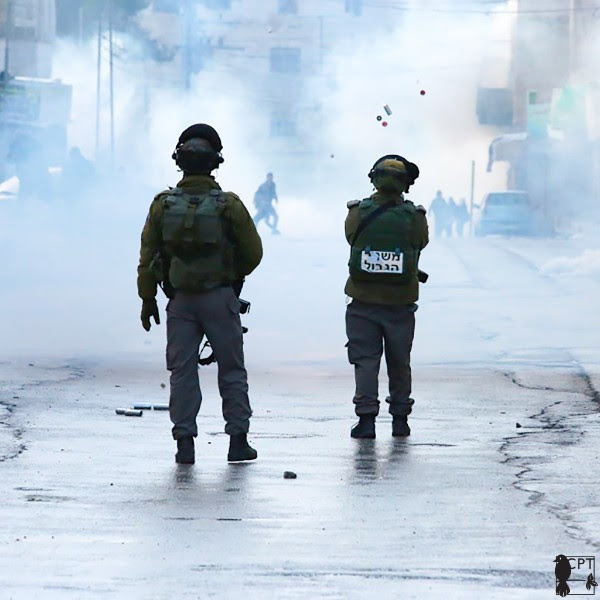
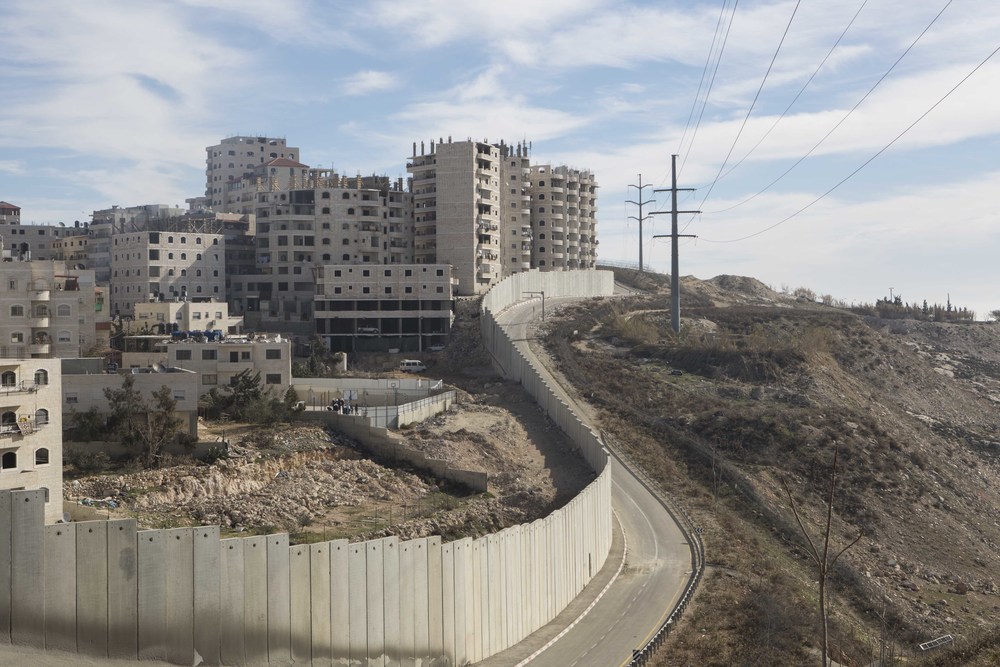
  • The Other Great Troubadour

    Unlike Bob Dylan who is still actively making music, Leonard Cohen has not released a new song from beyond the grave. Cohen is dead. Of course he was from an older generation than Dylan.

    If Dylan represents the Baby Boomers then the Canadian national poet and songster represents the preceding Beat or Beatnik generation of Kerouac and Ginsberg, which he, and Dylan, reference frequently.

    Cohen and Dylan are the two central figures of a movement in popular, or folk, music, which morphed into cultural commentary and public intellectualism. Thus, the troubadour or bardic poet jumped the tramlines from pop musician into serious art. Dylan was rewarded with a Nobel Prize, but many thought it should have gone to Cohen. While Dylan is a poet in a minor key dedicated to the craft of songwriting, Cohen was a major poet, who learned his trade, and novelist – Beautiful Losers (1965) is a hidden treasure – and that poetic sensibility is reflected in his measured songwriting.

    With Cohen a poem such as the stunning Going Home,’

    I love to speak with Leonard
    He’s a sportsman and a shepherd
    He’s a lazy bastard
    Living in a suit

    Becomes ‘Old Ideas’ (2012) a song.

    This genre hopping perhaps explains why Cohen’s style is less prolix or baroque than Dylan’s, although both arrive at a point of brief severity, and a compression of language which is to be admired. There are other similarities, such as both mining the political protest genre.

    The Influence of Lorca and Spain

    As an aspiring young poet, and through much of his career, Cohen was influenced by Federico García Lorca and the sense borrowed from Lorca of Duende, a Spanish term for a heightened state of emotion, expression and authenticity, often connected with Flamenco music. In fact the famous song ‘Take This Waltz’ is a translation of a Lorca poem. As he put it in an acceptance speech for the Prince of Asturias Award in 2011:

    Now, you know of my deep association and confraternity with the poet Federico Garcia Lorca. I could say that when I was a young man, an adolescent, and I hungered for a voice, I studied the English poets and I knew their work well, and I copied their styles, but I could not find a voice. It was only when — when I read, even in translation, the works of Lorca that I understood that there was a voice. It is not that I copied his voice; I would not dare. But he gave me permission to find a voice, to locate a voice; that is, to locate a self, a self that that is not fixed, a self that struggles for its own existence.

    The speech is a beautifully crafted admixture of jokes and seriousness, reflecting an interior monologue of his love of Lorca and Spain, but acutely conscious of shall we say some of the sensitivities of his audience.

    He also reveals how a Spanish guitar teacher in the space of three lessons taught him the rudiments of Flamenco that proved crucial to his style:

    He said “Let me show you some chords.” And he took the guitar and he produced a sound from that guitar that I’d never heard. And he — he played a sequence of chords with a tremolo, and he said, “Now you do it.” I said, “It’s out of the question. I can’t possibly do it.” He said, “Let me put your fingers on the frets.” And he — he put my fingers on the frets. And he said, “Now, now play.” It — It was a mess. He said, “I’ll come back tomorrow.”

    As he put it: ‘It was those six chords — it was that guitar pattern that has been the basis of all my songs and all my music.’

    Sadly after completing this initiation Cohen discovered that his mysterious teacher had taken his own life:

    I knew nothing about the man. I — I did not know what part of Spain he came from. I did not know why he came to Montreal. I did not know why he stayed there. I did not know why he he appeared there in that tennis court. I did not know why he took his life. I — I was deeply saddened, of course.

    Early Songs

    The initial albums stemming from his poetry are a chronicle of loners, romantic love, beautiful losers – to use the title of his defining 1966 book – and are decidedly non-political. They are a kind of erotic tablet and backdrop to a very different age.

    The songs are a soundtrack to Robert Altman’s masterful revisionist Western ‘McCabe and Mrs. Miller’ (1971) in which the doomed love of the interloping property baron (played impeccably by Warren Beatty) and the hooker with a heart (played by Julie Christie).

    It is a film of stunning autumnal clarity and candour but wistful nevertheless. We meet a bygone age, though strangely redolent of our age of boom and bust. Gentleman outsider capitalists should be wary of their surroundings. Will of the wisp behaviour. As we will see Cohen saw these hard times coming.

    Those songs of romantic disappointment such as ‘So Long Marianne’ and ‘Suzanne’ are often hymns to ex-lovers. Cohen was a ladies’ man which probably brought some reputational damage. Although thankfully he was Canadian rather than Irish, otherwise this sensuality would have been crucified.

    He seems to have required muses in orbit to function creatively. The well of inspiration was often carnal or at least he needed the mother lode to function.

    In his famous comeback tours, after being liquidated by a dodgy business partner, he was surrounded on stage by a bevy of ex-lovers and chanteuses, at least when I saw him in Kilmainham in Dublin. He collaborated with some and slept with others. Surprisingly these ex-lovers did not seem to resent him. By all accounts he was a charming man and curiously self-reflexive about his predilection for the other sex, best captured in ‘Death of a Ladies Man’.

    By all accounts, including the way he treated his children, he was in general a lovely man. Yet those earlier songs have almost become caricatures. It is the later songs, particularly those after he came back from the Buddhist retreat that gain the most traction.

    Hallelujah and Politics Protest Songs

    Perhaps the defining song of that pre-retreat period was ‘Hallelujah’ (1984), memorably covered by Jeff Buckley, the suicidal chanteuse of incompletion. The blending of the spiritual and the erotic are well captured in the opening stanza.

    I heard there was a secret chord
    that David played and it pleased the Lord
    But you don’t really care for music, do you?

    And then God and faith but faith in romance and carnality:

    Well your faith was strong but you needed proof
    You saw her bathing on the roof
    her beauty and the moonlight overthrew you

    And an intense religious ambiguity:

    Maybe there’s a God above
    but, all I’ve ever learned from love
    was how to shoot somebody who outdrew you?

    It is a spiritual odyssey and not for the last time a conversation between Cohen and God, although in the case of Cohen a belief in the divine was Buddhist, hence the ill-advised decampment to a Buddhist monastery ostensibly to see out his end of days. His work tells of a spiritual journey evoking a divine disapproval that might be traced to the Jewish tradition.

    I saw Jesus on the cross on a hill called Calvary
    “Do you hate mankind for what they done to you?”
    He said, “Talk of love not hate, things to do – it’s getting late.
    I’ve so little time and I’m only passing through.”

    I sense that Cohen believed that God, if he exists, thinks of him as a naughty boy and recalcitrant artist. It is vastly different to Dylan’s political engagement or indeed Dylan’s much more fearful and eschatological sense of God. So Cohen was spiritual, but not a defined believer. A fence sitter.

    The political songs come later and are as angry as Dylan’s. ‘Democracy’ (1992) sounds an initially optimistic note:

    It’s coming through a hole in the air
    From those nights in Tiananmen Square
    It’s coming from the feel
    That this ain’t exactly real
    Or it’s real, but it ain’t exactly there
    From the wars against disorder
    From the sirens night and day
    From the fires of the homeless
    From the ashes of the gay
    Democracy is coming to the USA

    But this move to utter despair in the apocalyptic warnings of ‘The Future’ (1992).

    Things are going to slide, slide in all directions
    Won’t be nothing
    Nothing you can measure anymore
    The blizzard, the blizzard of the world
    Has crossed the threshold
    And it has overturned
    The order of the soul
    When they said (they said) repent (repent), repent (repent)
    I wonder what they meant
    When they said (they said) repent (repent), repent (repent)
    I wonder what they meant
    When they said (they said) repent (repent), repent (repent)
    I wonder what they meant
    You don’t know me from the wind
    You never will, you never did
    I’m the little Jew
    Who wrote the Bible
    I’ve seen the nations rise and fall
    I’ve heard their stories, heard them all
    But love’s the only engine of survival
    Your servant here, he has been told
    To say it clear, to say it cold
    It’s over, it ain’t going
    Any further
    And now the wheels of heaven stop
    You feel the devil’s riding crop
    Get ready for the future
    It is murder

    It’s a dirge worth quoting in full that is redolent of doom, and a world disorder upon us. God is more readily embraced, but as in Dylan’s album Slow Train Coming (1980) we have met the God of retribution and vengeance. The God of the Old Testament.

    The only song of equivalent outrage in Dylan’s oeuvre are possibly ‘Hurricane’ (1975), and certainly the recent song about bankers ‘Early Roman Kings’ on Tempest (2012).

    Cohen’s ‘Closing Time’ (1992) also senses the end of days and that the shooting match is over.

    loved you when our love was blessed
    I love you now there’s nothing left
    But Closing Time.

    However, my favourite song and to my mind his greatest work is ‘Dance Me To The End Of Love’ (1996). I listen to it regularly and I find it most apt for our times.

    Today we seem like shadow dancers, ghosts, marionettes spinning towards oblivion. It is most relevant to our plague-driven times.

    Dance me to the children who are asking to be born
    Dance me through the curtains that our kisses have outworn
    Raise a tent of shelter now, though every thread is torn
    Dance me to the end of love

    So Cohen still has much to say from beyond the grave, and his death left popular song without one of its titans. Dylan now almost has the stage to himself as a probing popular commentator in this genre.

  • Head Shop

    Tedium was tip tapping on the pane of Gibbo’s day, the hours slouching into another shite night alone, like the slow but certain, annihilating course of ink on blotting paper. A visit to Tosh in the Head Shop “Happy Daze” on George’s St might just resurrect the dregs, if not by consuming a selection of the products for sale there, then at least by listening to Tosh describe them and the effects they’d produce, the feelings and sensations they’d induce once ingested.

    The shop was dimly lit like one of those places that sell lizards as pets to stoners; it smelled of stale joss sticks and half eaten Govinda take away trays. Dub reggae oozed like liquid hemp from two battered vintage speakers that stood at either end of the glass cabinet containing all the pills, powders and shrooms, which looked like the moist, fecund sex organs of alien amphibians. And then there was, Tosh.

    Some people become caricatures of themselves but Tosh took it to another level entirely, becoming a parody of the caricature itself. He was pencil thin and tall enough for half of his body to be in an entirely different, Himalayan weather system, to the rest of him. He didn’t wear clothes; they hung from him like sheets of washing out to dry. The brown, round neck Aran sweater that he wore like a second knitted skin, billowed at the slightest twitch of his body.

    He had that wizened pirate look that comes from years on the high seas of late nights, rolling spliffs in other people’s kitchens, at parties that always ended with dawn breaking on crushed green cans that spread like metallic spawn from butt soaked sinks.

    Of course he had a benign, pointed satanic beard too! And he wore an earring that was given to him by a German girl he’d spent the night with after seeing Marley in Dalymount Park, years back. Everything was “Years Back” with Tosh except for his eye brows which were fierce as fresh printed font. He wouldn’t have looked out of place on the cover of “Mojo” magazine talking about his comeback album but he had little to come back from, other than his greatest hits played in the kitchens of Dublin where he’d roll the best numbers while talking about Syd Barret,  arcane sub clauses in the Brehon laws and mumbling something about the Tuatha De Danann being connected to the Mayans.

    “Ah Gibbo, my man! How are we today? Are ye in for a buzz or a chat or a bit of both? I’ve got some crackin’ new stock in from a warehouse in Budapest. I’ll talk ye through it in a minute but c’mere, how did ye get on with them ones I sold ye last week?

    Did you do as I told ye?

    The cheeky half, chased by a full one just as the half is settlin’ in nicely, then when you’re tilting full gear on the whole one, drop the last half, see, that’s how ye play a two pill game!

    D’ye remember I wrote it down for ye? Like how to take them properly, in the right order, there’s no point in double droppin’ these, that’d just be bein’greedy and ye wouldn’t be lettin’ them tell their story, it’s a three act thing, ye got yer intro, yer crescendo and yer beautiful sunrise fade. Apart from the obvious whack off them, did ye get any of those subliminals, I’was tellin’ ye about? There’s a nuance to them, like they’re not in yer face, but they’re all over ye at the same time.

    So Gibbo, I have another fella like yerself who comes in most Fridays, now, he loves his food, he’s all culinary, mad into his ingredients, would know his way around all them African spices on Moore St, so, when I’m talkin’ him through the pills I go all Master Chef with me metaphors but you’re a man like meself who’s into his tunes  so I’ll keep it musical for ye, so ye get me drift, I love doin’ the R+D on this shit, I take it seriously, I want me good customers like yerself to know what they’re getting’ into and always remember Gibbo, when ye feel yer bowel howl, ye’ll know they’re kickin’ in, c’mon, are ye ready?

    These ones here I call Kittsers, after yer man David Kitt, half an hour or so after takin’ the first half, ye’ll feel a warm acoustic vibe comin’ over ye, a half full but well in to it crowd in Whelan’s buzz, but ye’ll feel a slight stitching of electronics studded around the hinterland of things, I don’t wanna say “a glow” but ye get what I mean, the Kittsers aren’t too strong though, when ye drop the full one, it’s more of a Boutique festival vibe, like Whelan’s morphin’ into a Body and Soul stage and it goes on like that a while, a more genteel “Gloaming” vibe than yer urban “Lankum” trad, they’re smooth, the muchies with these pills are organic, d’ye get me, I found them a bit shite in the end to be honest, like being at some gig in the Iveagh Gardens and ye wonderin’ how ye ended out there?

    Nah, I like a bit of grit in me pills.

    These ones here are more like it, though may I say, they are strictly for well-seasoned travellers like yer self. I call them, “The Gaffs”.

    About twenty minutes after taking the first half, remember yer maths Gibbo, half + full + half, the only way to do it, the narrative, the flow, that’s what yer after,

    It’ll start to feel like there’s a house party in yer head, a good one with all yer mates there, you’ll feel them coming in, a mad rush at the front door, swingin’ bags of cans, it’s not Whelan’s anymore man, it’s a stairwell full of people ye hardly know, that you’ve never seen in yer house before, one of them nights that’s goin’ to swell, it has its rough edges too though when ye start comin’ up proper, a Garda siren lickin the walls blue and white, ye might feel a tremor, a panic but it’ll pass with a rattle of worry farts, when ye drop the full one it’ll be like the house has been dipped in spirits and torched with new beats you’ve never heard before, some Brazilian dude is DJ-in in yer front room, Favela-Fuckin’-Chic, wadin through a block party, a carnival and a  sudden flash of asphalt wasteland in the room, there’s no lettin’ up with these ones, pure ritual,

    ye’ll be all alone but surrounded by people, nice bit of hallucinatin’ on these too, the party will become external, people will leave yer head and pour into the kitchen, ye’ll meet people there ye haven’t seen in years, ye’ll feel the erotic rush of a whole house heavin’ with the dance, like a greedy snort of Pentecostal Poppers,

    the colour range on these is like a serious fuckin’ festival rig, ye’ll end out focusin’ on the colour of the kitchen door for way longer than’s natural, ye might even feel a Oneness with shit that’ll make ye oblivious to all the other shit around you,

    ye know like when all of life’s asteroids are comin’ at ye, thick n fast and ye do a Han Solo on it and go straight into Spiritual Hyper Space, bypassin’ all the mundane crap that brings ye down, it went like that way for me anyway,

    these really are quality pills, all the colours get like a Biblical Dulux paint catalogue, ye’ll start makin’ connections between things that’ll fade as soon as ye try thinkin’ of them again, ye’ll remember nothin’ later, yer mind’ll be like The Shining maze, bein’chased by half formed feral sentences, ye’ll wish ye had a brain stenographer with ye to record yer thoughts, ye’ll think they are important but they might just be shite but who’s to know,

    they’re roarin’ “Tune” in the front room, ye’ll have strobe light black outs on the dance floor, not knowin’ how ye arrived into the glare of the kitchen light, ye’ll feel epic and loved, all the walls of the house throbbing like a heart pumpin’ speed, the kitchen and the front room will seem like they’re different hoods in some huge smudged metropolis that yer racin’ through now, high as some released captive thing, a vertigo in your stride, fearless, ye’ll have flashes of being all alone because you are all alone, reality sneaks in the fuckin’ cat flap the odd time with these pills, like morning light torn from a drawn curtain, a prison break on the dance floor,

    there’ll be a blonde PR bird at yer living room door with a clipper board, askin’ ye what guest list yer on, ye’ll have to choose carefully or ye’ll be fucked out high as a kite cut loose, tremblin’ alone on the quays, freezin’, neon taxi slur in the puddles, ye’ll look back at the entrance to The Liquor Rooms and ye’ll realise it’s yer own gaff, the door into yer own livin’ room and everyone there is bein’ sliced by strobe, tribal Batucada Beats, and the bird who had the clipper board has lassoed you with her eyes, ye’ll get a lust rush but it’ll be a brain boner, yer lad will be limp as a droopin’ glove, ye’ll think of Lou Reed, “between thought and expression there lies a lifetime”, the music will go all,

    ah- whacka-whacka-whacka, ah-whacka-whacka-whacka,

    ye’ll get down on yer hands and knees and try crawlin’ away from the echo but soon enough ye’ll surrender to it sweatin’, relieved that it’s yer new Master.

    these pills can have quite a rough come down, the worst kind of psychic turbulence but they’re worth it for their plasma screen clarity and the integrity of their buzz, when ye come down proper, all the people who weren’t there will have gone but ye’ll be glad ye met them anyway.

    Are ye with me Gibbo? Am I givin’ ye a few ideas for later? C’mon, I got a couple more to show ye.

    I call these pills “The launches”, they’re cunnin’ little bastards, the first half comes on all warm like yer at some art openin’ in a warehouse, somewhere in the Batter, NCAD heads wearin’ vintage gear, some lad in a knit wear bobble hat, stooped over a lap top playin’ Ricardo Villa Lobos minimal techno, craft beards and shite lager but it’s free, so ye dive in and talk crap about the installations, ye’ll get these comin’ up jitters, feelin’ that what yer sayin’ about the installations isn’t the right thing to be sayin’ about them, like yer out of yer depth at a party full of those Irish Times “ 50 People To Watch in 2009”, ye know the fuckers, video sculptors ‘n vegan choreographers.

    Ye won’t feel like yer one of them, me and you Gibbo never make it on to them lists, but once ye drop yer first full “Launch” ye’ll feel better than all them cunts collaged together

    You’ll feel like you’re the artist, that it’s your launch, you’ll have interviews about your work runnin’ through yer head, ye’ll feel like ye own the room, on top of yer mad out of it game, ye’ll see yer self on the box talkin’ about yer difficult second album even though you’ve never played a note in yer life, it’ll be like ye become whatever music yer listen’ to, it’s so real, ye’ll feel ye’ve got the fingerin’ all sorted on the tenor sax yer mimin’ the fuck out of in the mirror, ye’ll see posters for “An Evenin’ With Gibbo” flappin’ on the lampposts in yer twisted, head fucked streets, you’ll believe you’ve really gone and learnt an instrument, then the most fucked up, loved up shit kicks in,

    Yer playin’ stadium concerts now, yer the lead singer or the guitarist, ye can be whoever the fuck ye want to be, snortin’ lines of adulation, ye grab yer crotch and gurn, “I am Live Aid. I am Freddie Mercury”, a Nuremberg crowd rush of pure fuckin’ love, the best gig ye ever gave to yer reflection in the mirror, yer all alone and shittin’ yerself, a stab of the fear, but ye mange to pull yerself back into a pub sized gig, yer listenin’’ to Howlin’ Wolf, built for comfort, “300 Pounds of Joy”, it’s Walters in Dún Laoghaire and ye command the room, ye’ll see everyone ye knew there when ye were young and they’ll love ye, ye’ll feel Savoy 1 screen stretched, everythin’ about ye will feel epic, it’s the maddest rush.

    I, like, became Marley in Dalymount an’ I seen meself singin’ as Marley to me younger self and the German bird that gave me the earring, fuckin’ multiple identity trippin’

    The come down from these is smoother than you’d than ye’d think, like a class of farewell tour, a “for one night only” vibe, ye’ll see posters for yerself again but they’re smaller, ye’ll be back to playin’ Whelans, but it’ll be a good crowd, when ye come round ye’ll have forgetten all the interviews ye gave but ye’ll know ye did give them,

    ye won’t even have a ticket stub to one of yer own gigs.

    The rest of the gear I got is natural, herbs and shrooms, Inca gear, it’s not really party gear, it’s all about foliage and mad ancestral voices,

    These first two herbs work in seconds, they both wreck yer sense of time, one makes nine hours seem like it’s just two minutes that’s passed and the other stretches two minutes into what seems like nine fuckin’ hours, so, you choose dependin’ on how yer fixed for time, both have the same immediate effect of ye seein’ foliage growin’ on yer walls, it’s Amazonian, the green is so deep ye could swim in it.

    The Shrooms are ancestral though, I got an intense Ogham Stone vibe off them, like I was rubbin’ my hand up one of them and understandin’ this 8th century braille that was chipped into them by some mad mason monk years back before, like when ye know some of the Brehon Laws were still standing, I felt like a kind of gutter with all this mythology streamin’ through me, playin’ me Bothy Band and me Ó Riada sa Gaiety albums backwards and hearin’ messages from The Tuatha, ancient secrets that would make Fatima blush, d’ye get me, I had some experience of knowledge, somethin’ unbroken, like I was totally plugged in to the whole meaning of shit, like, I saw through it all, connected it all up, wrote a new fuckin’ alphabet and found a story way out of it all, I was it all, I had Prophet deliriums, I sweated two languages and learned a third, I tied myself to a post and crawled through centuries to tell people what I’d learned , the further I went the less I remembered until I had no idea where I was or what I was doin’ and I’d forgottin’ what I was supposed to tell them and they didn’t like me for that.

    Ye just don’t know what portals the shrooms are goin’ to open up for ye Gibbo.

    Are ye with me Gibbo?

    So, what’s it goin’ to be? A bit of herb and nine hours of Kittser?

    A mad one or a quiet one?

    You tell me.

  • Poetry: Chay Bowes

    Three Miles South of Carlow Town

    Walk with me. Don’t speak.
    Come to the place where the walls and stones
    Yield their shameful secrets.
    Listen. Listen.

    Stand and hear the black earth shifting,
    As she did then, to deny him his succour,
    And as she did when he slipped into her inky embrace.

    Three miles south of Carlow town.
    In the Lea of the silver stones,
    Latched together when we had the strength,
    That small hollow where we submit.
    Where a whispering call gave way,
    To a silent deafening tide,
    And where we fade into the geography,
    Of this holy ancient place.

    This inky earth,
    Thick with the toils of a thousand years,
    Will now gladly hold this pale handed child,
    In its dark embrace.
    Only the hunger of the earth
    Surpasses that of her children.

    Three miles south of Carlow town,
    A Holocaust reflected in the silent slate grey sky,
    The amputation of all kindness screamed,
    In a lone mother’s last breathless farewell;
    “Golden haired child,
    Son of the earth and wind itself.
    The black turf is no cradle,
    The rush and reed no shawl”

    Come walk with me.
    Don’t speak.
    Come to the place where the walls and stones yield their secrets.

    There is buried treasure three miles south of Carlow Town.
    Listen. Listen.

    Feature Image: Dublin Street, Carlow c. 1900.

  • Old Headscarf

    At thirty-two, after decades of sporting a headscarf, I abandoned the practice and exposed my bad hair days. There was a short-lived, still humongous, stir. At home, there was one overriding fear: “And what will people say?”

    I had long interpreted the headscarf as a politico-cultural expression of Islamic modesty; for years though, I never risked taking it off. The spectre of community disapproval deterred me, but then, so did the thought of selling out. That I could enact the archetype of Muslim woman unshackling her chains, could endorse the cardboard tropes, bothered me. When I finally stopped caring and took the plunge, my entire conception of reality shifted.

    Four years on and my experience equips me with insight. A hijabi when headlines hyped the War on Terror, I already know that all are prey to mainstream conditioning; that IQ, educational, or professional qualifications are not automatic safeguards against ignorance. In my life as it unfolds post-headscarf, the comic sea-change in strangers’ attitudes towards me, I can vouch that opting out of norms incurs social penalties. I have witnessed polarities in treatment, know a hunger for acceptance, and appreciate anyone’s pressure to conform to the crowd.

    By interrogating the headscarf as immutable religious law, I am reminded that beliefs and identities are products of historical, political, and cultural forces, configured by upbringing and environmental backdrop. I observe that too many of us outsource our critical faculties in blind deference to expert authorities, subscribing to the fallacy that appointed ‘philosopher-kings’ must comprehend something we can’t, that the structural asymmetry of information serves anything other than vested interests. Hence, if Imperial College London plots a graph about it, or a man in spectacles rattles off numbers, or a stack of death certificates signed by frontline heroes just says so, we’ll dig no deeper; we’ll admire the emperor’s new threads as he stands naked in plain sight.

    So now as I stride into shops, into salons; down hospital corridors; onto Dublin’s public transport, my face unmasked, not even pretending to be sorry, the waves of hostility, the missiles of verbal abuse, are (stifle yawn) old headscarf to me.

    I can hush attacks with official paperwork—I’ve secured a medical exemption. What’s troubling is the visceral nature of the onslaught. Where dishonouring the dead and the vulnerable enters the equation, I see how my behaviour signifies a disregard for the common good. The shock value speaks more to the success of the global fear campaign than to an informed understanding. I don’t blame anyone for adhering to public health guidance, but when inquiry into its validity is cast in tin foil hat terms, when scrutiny of the doublespeak and the doublethink provokes outrage, when repurposing masks as an instrument of control is the step too far; then even the most credulous need to wonder. When a conscientious refusal to play along counts for little more than petulance, an attention-seeking stunt at best, and those, masked up, cruising solo in their cars, represent virtue, then the time for reflection is long overdue.

    The transition from denial to acceptance is a scary leap: shaking off the programming, rearranging beliefs, remodelling the systems on which we have staked our lives, our livelihoods, our selves, is a terrifying task. Or is it because the conspiracy realm is traditionally populated by weirdos that it’s easy to dismiss the evidence? That Bill Gates is up to nothing other than philanthropy is the comfort of faith. Klaus Schwab will spell out The Great Reset in a how-to guide, but the idea of a technocratic agenda still sounds like hogwash. PCR is not fit for purpose, but we accept the reported case numbers. An mRNA vaccine, rushed, and proudly ‘experimental’ may be a gamble, but we’ll roll up our sleeves, we’ll take a jab —make that two—for  the team. Big Pharma, absolved of liability, is fattening that bottom line, but call it old -fashioned opportunism if you must, not an orchestrated end.

    The Orwellian echoes lend an aura of irony to the occasion, more than mobilise action it seems; and so, is the question that nobody sees it, or really that they’d just rather not? A recent encounter gives me heart: Lolloping down a supermarket aisle, shoppers lunging out of my path, I near collided into a fellow unmasked objector. We shared a moment, grinning at one another; armed with the knowledge, that acquiescence, is always a choice.

    Editor’s Note: A report of the European Centre for Disease Control and Prevention: Using face masks in the community: first update – Effectiveness in reducing transmission of COVID-19 published in February 2021 concluded:

    The evidence regarding the effectiveness of medical face masks for the prevention of COVID-19 in the community is compatible with a small to moderate protective effect, but there are still significant uncertainties about the size of this effect. Evidence for the effectiveness of non-medical face masks, face shields/visors and respirators in the community is scarce and of very low certainty.

    Additional high-quality studies are needed to assess the relevance of the use of medical face masks in the COVID-19 pandemic.

    Featured Image: Anna Shvets Photography