Blog

  • Featured Artist Annelie Carlström

    I have always been a creative person. When I was a child I loved to draw and cut paper, my kindergarten teacher was ever so impressed by my straight cutting lines!

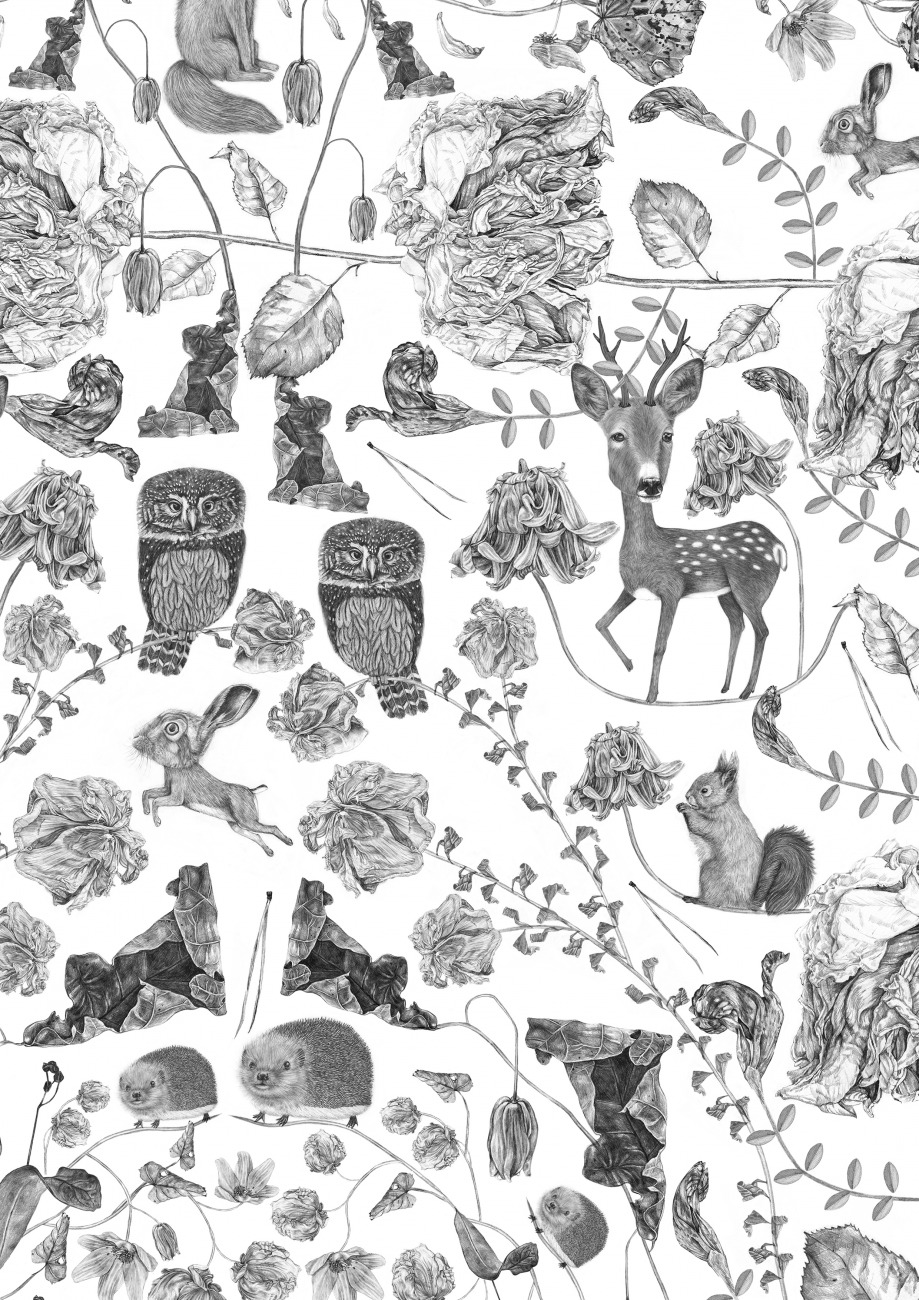
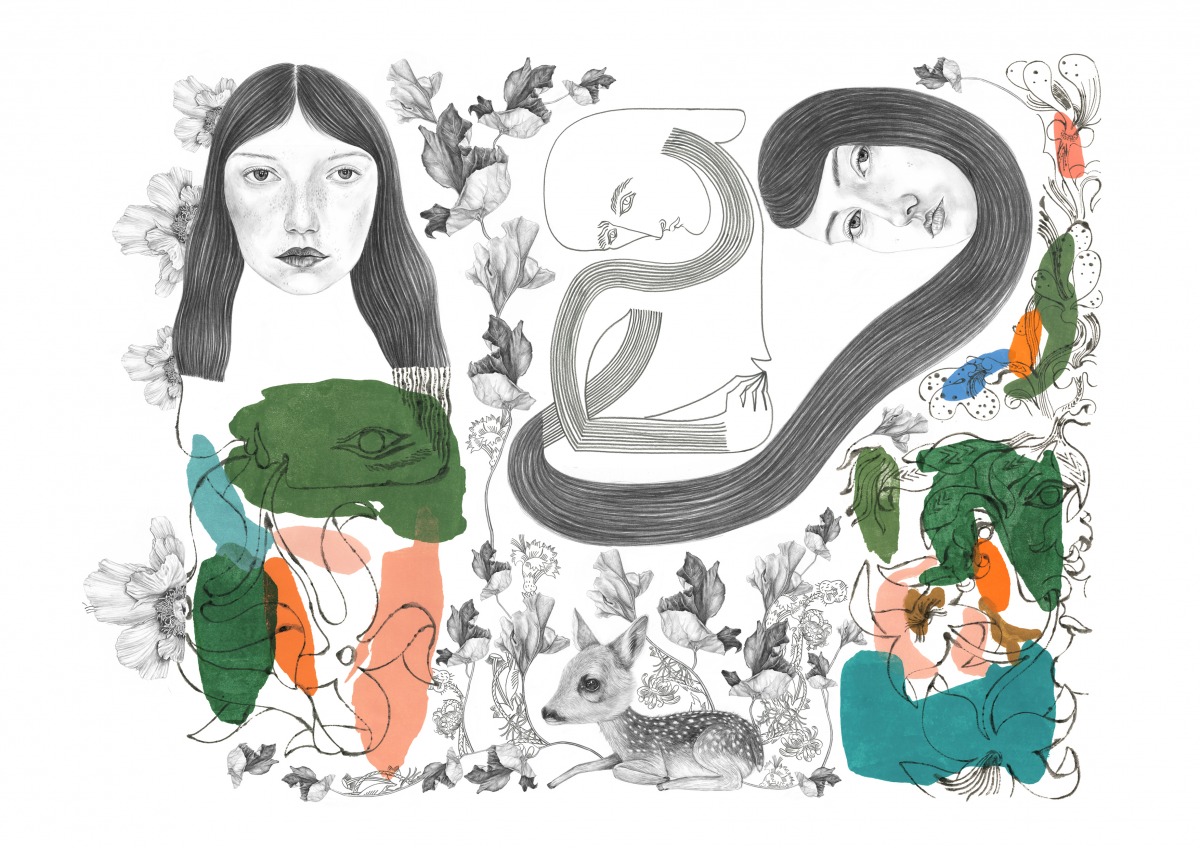
    My grandfather painted in oil and made sculptures out of wood he found in nature. He told me that there is no tree in the world that looks like another tree. That sentence has stuck with me over the years, and I can still see his drawings of trees in my head. That sprawling line in black carbon. The drawn line is very important to me, so is the craftsmanship. I really want to feel the person behind the drawing/illustration, and when it is all digital I can’t sense the person behind it any longer, and lose interest.

    Career Options

    When I was growing up I knew I wanted to work creatively in some way, but I was not sure how.

    I started out with ballet, but after being rejected by the Swedish ballet school I began to dream about becoming an architect, living in a self-drawn house with two big dogs.

    Then, when I was about twelve I realized that I was quite good at drawing. We had a class in school where we drew onions with soft pastel crayons and that was the first time I understood that I had a true talent for drawing. I captured the onion’s expression and the wink on the surface.

    Grandfather

    My grandfather, who was such an important person to me, always said that there was no future in being an artist. He himself was from a working class background and quit school at the age of twelve, with no further possibility to study. Since I had the option to study whatever I chose, he thought I should become a doctor, or some other serious occupation where you made a lot of money and earned respect.

    So with that in mind I have tried to come up with more commercial ways of working creatively. Becoming an artist and being successful felt impossible and something that only rich people with great confident could aspire to.

    ©Annelie Carlström

    Interior Designs

    When I turned nineteen and applied for art school I had a plan to become an interior designer.

    I envisaged myself strolling around in fancy suits with a leather portfolio full of brilliant ideas. It was not so much the design work I was interested in but rather the lifestyle.

    Being a successful business woman became a big goal, but it had to be in the creative industry. After a year of painting still life in oil and drawing croquis we had a class in illustration and from that point on that was all I wanted to do.

    It was the perfect mix of artistic work, while remaining in the commercial world. To become an illustrator I had to apply to the most competitive college in Sweden, so I have attended a lot of art and design schools, seven years in total. It took me a while to develop my own way of drawing, and it did not evolve fully until my last term of Design College.

    I graduated from Beckmans College of Design in 2007. Then I felt quite scared and alone in the world. I had my portfolio of pencil drawings and a well-respected qualification, but I had not done any illustration work, and settled for a part-time job at a grocery store to pay my way.

    As that summer went by I felt more and more frustrated. I suppose I am a very emotional person with little patience. Then in the beginning of autumn something amazing happened. The best illustration agency in Sweden got in touch and said they wanted to represent me!

    I could not believe my luck. From then on my career received a real push and I worked with all sorts of clients from all over the world. One of my first jobs was from a bank with offices all over the world. I got paid so much I really could not believe it!

    Some people said that I had sold out, but I think they were just jealous. My first objective was to make a living as an illustrator, but after doing so for over a decade I’m more interested in the artistic expression of telling my own story, rather than clients’.

    ©Annelie Carlström

    Magic and Poetry

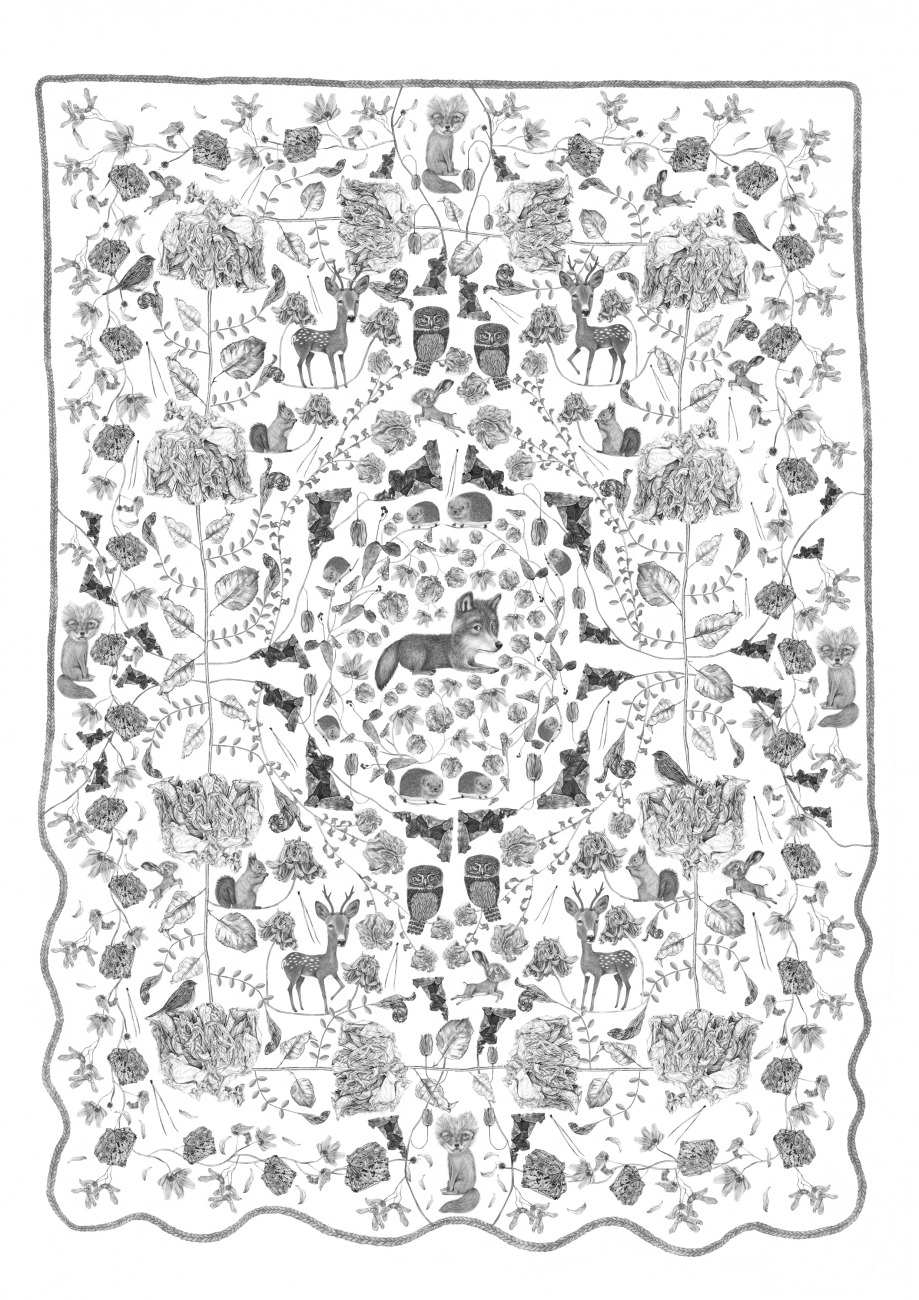
    In my drawings I want to create magic and poetry. I want you to sense the vibrations from the pen. I want to take you to other places, other dimensions. Where words are unnecessary.

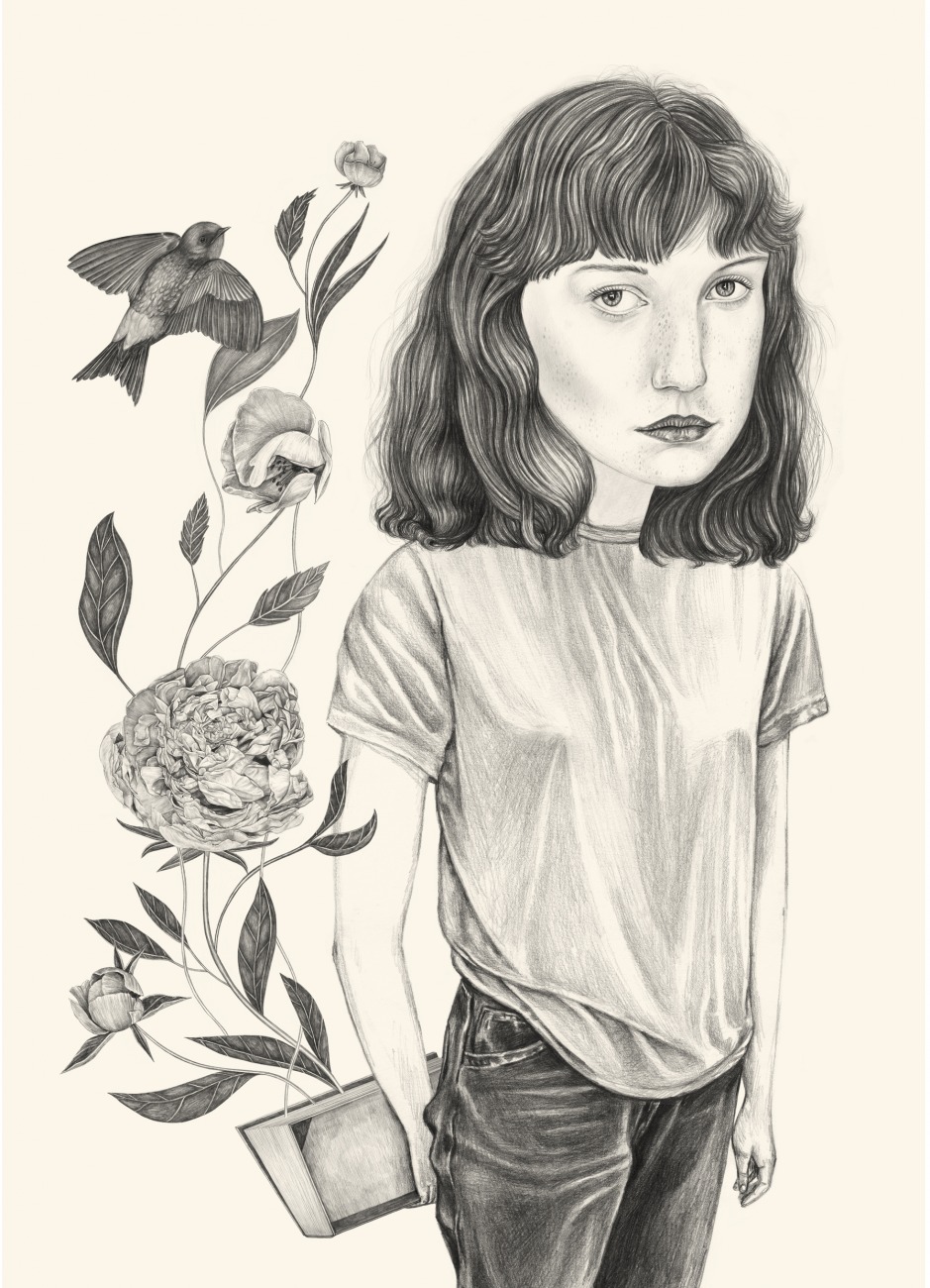
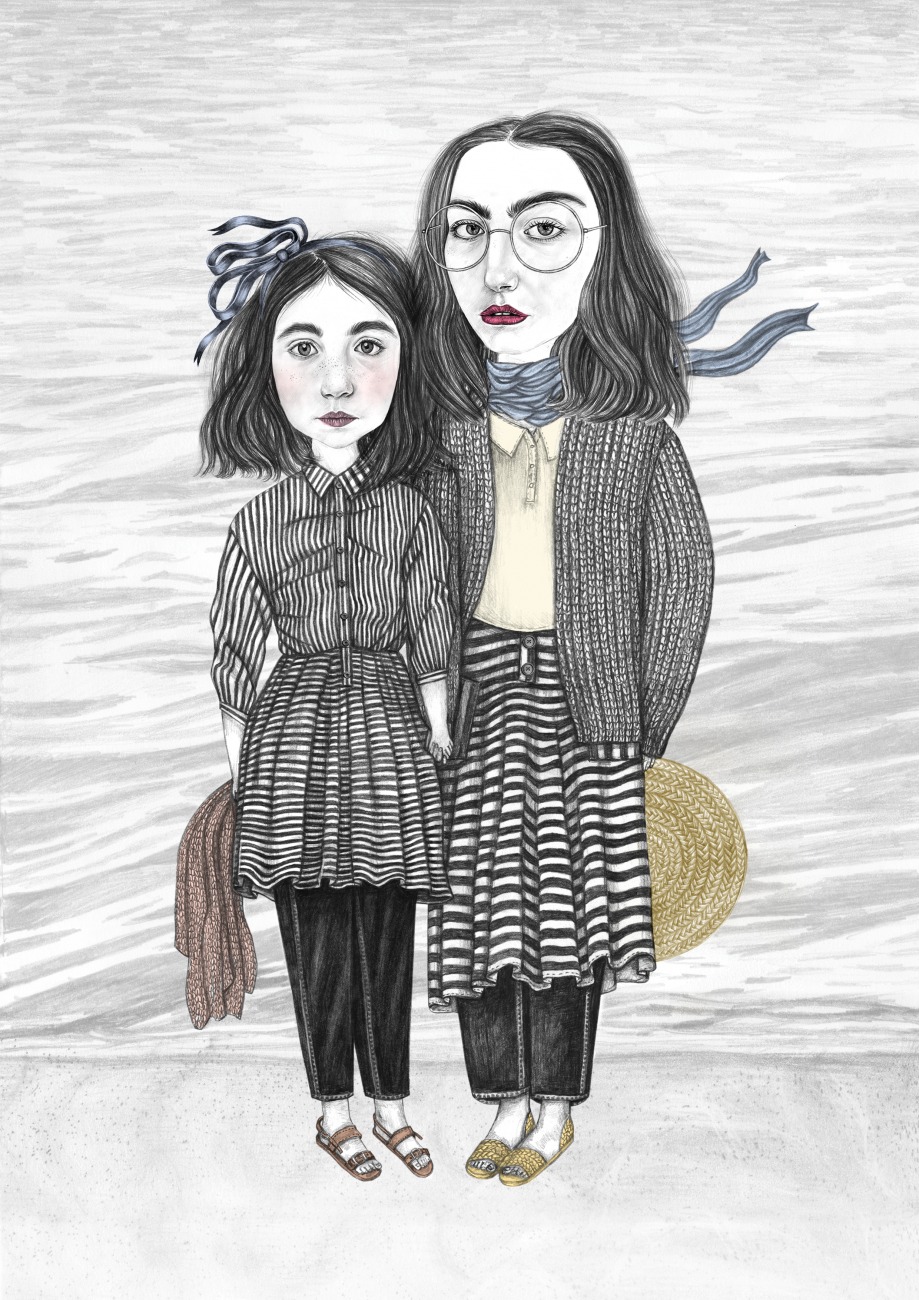
    My favourite subject is girls and nature. Perhaps I’m just drawing myself in different versions over and over again. I don’t want to do what is expected of me. If I do so I feel I have failed.

    I don’t want to draw the happy life, the smiling girls and the cosy gardens, which can make things tricky when working commercially. Indeed, clients always ask if my characters could smile a bit more… It’s as if there is no place for seriousness in the sales department. Perhaps that’s why I’m doing more and more personal art these days.

    Like many others, I draw inspiration from many different things. I often find it in novels. At the moment my favourite author is Agneta Pleijel, I want to draw like she writes. I am also inspired by great artists like Jockum Nordström, Klara Kristalova and Lucian Freud.

    ©Annelie Carlström

    Instagram

    Even though I have a hate/love relation with Instagram, I must admit that it is a big source of inspiration, even though it can be quite fast paced and homogeneous. You see so much in such a small amount of time. A true piece of art get swiped away in a matter of seconds.

    It’s such a different experience to sitting at a bench in a museum, experiencing an artwork in real life, where it is in its natural environment with appropriate lighting.

    I love going to museums. They are like churches for me, where I can find pieces and feel the love in the world. In Stockholm we have the Nationalmuseet, a place I love to visit, where there is art from all times across history.

    ©Annelie Carlström
    Detail of the above ©Annelie Carlström

    Since I was a child I have loved naturalistic portrait painting, particularly the fabric that often folds and the way the dresses fall in old paintings.

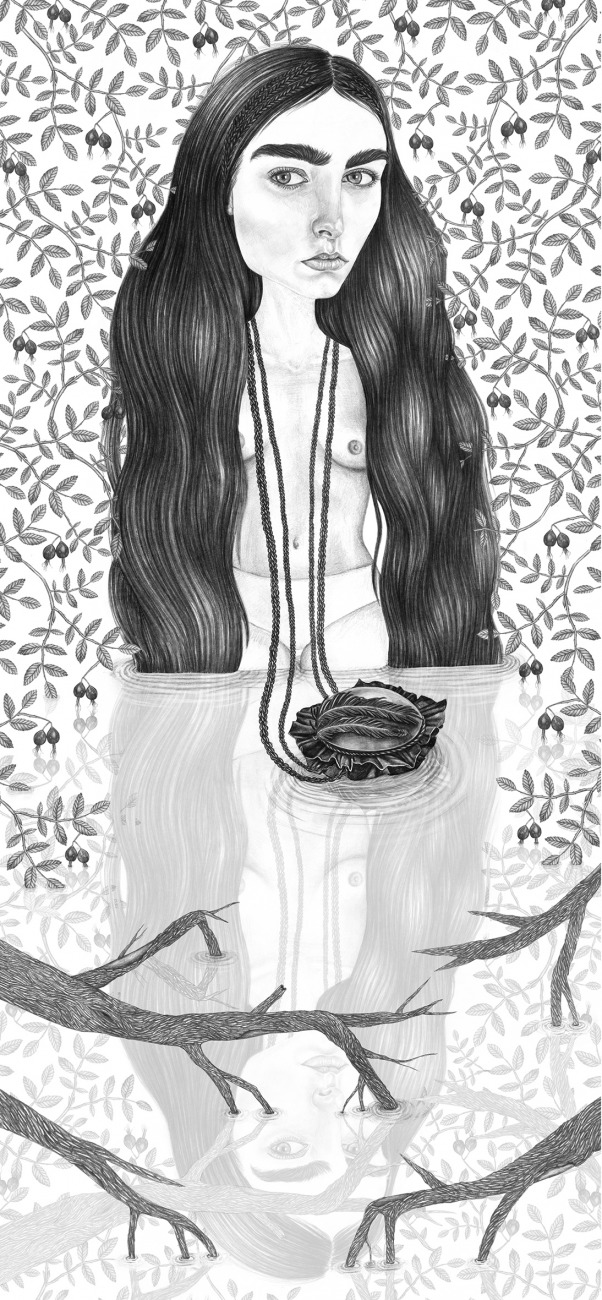
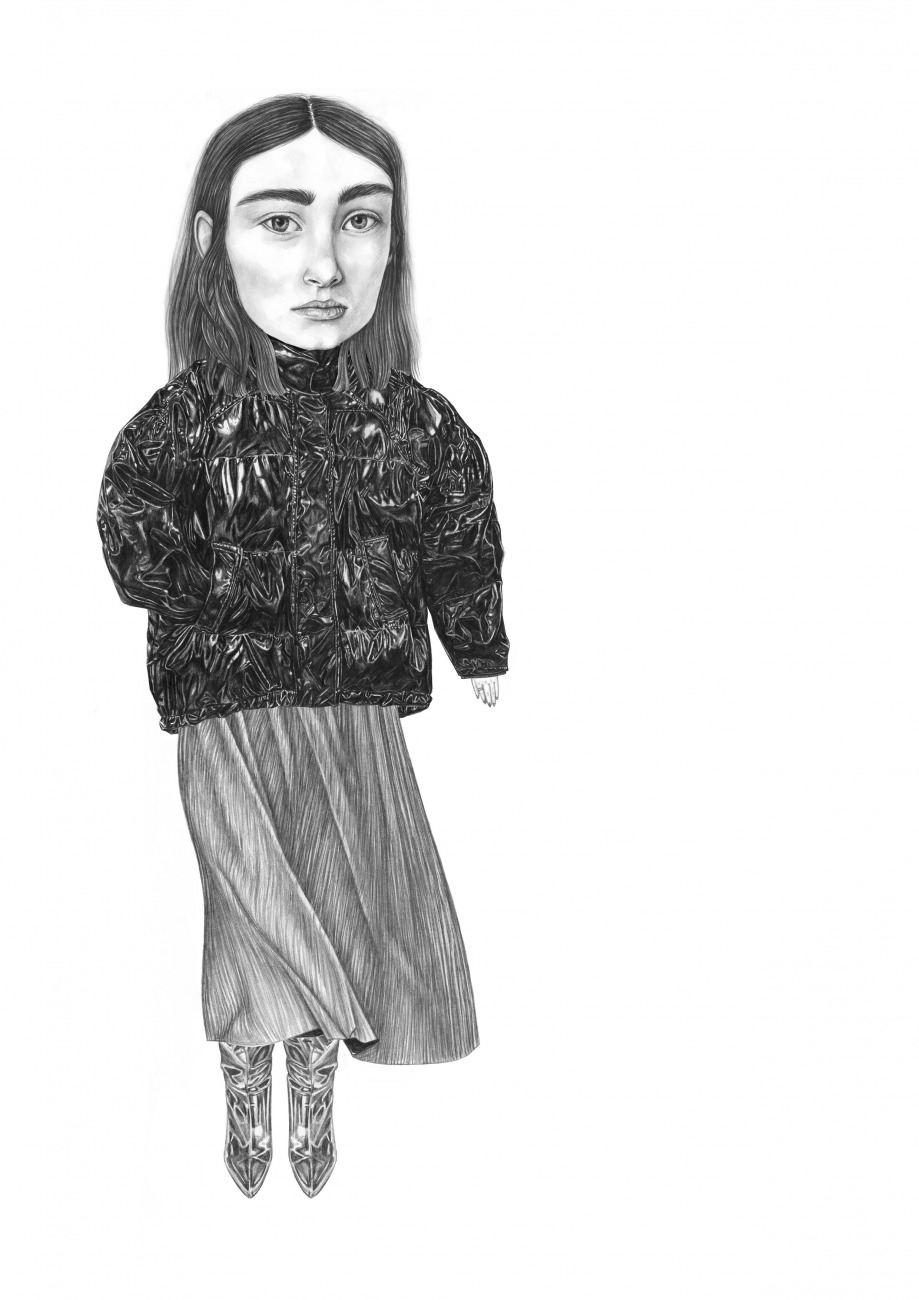
    I’m also very interested in the face, specially the eyes with their gaze and the wink in the eye. Overall I love to work with details, drawing the hair shaft, and trying to understand how a certain surface can be translated into a drawing – like a knitted sweater or a shiny plastic jacket.

    ©Annelie Carlström

    I just love to take my time, and not work under pressure, allowing the line to go on the paper; filling up the spaces moment after moment. But of course when working with illustration you have a timeline to adapt to, which can make the drawing stressful and without soul. I try hard to avoid that. It gives me a feeling of being without a purpose, where everything is meaningless.

    ©Annelie Carlström

    Piece by Piece

    When I illustrate I draw everything in pieces. I draw the head on one piece of paper, the hair on another, the shoes on another etc. Then I scan the drawings and put it all together in the computer. I often say that I cheat a bit, because when you draw big and then make it smaller in the computer it looks more detailed than it really is.

    When I started out I used the mouse to work with the illustrations on the computer, but now I use a Wacom board and that makes the process so much easier, and I guess I also work more on the computer than before because it is so easy to adjust the picture digitally. But lately I’ve got more into making drawings as originals, big ones. I have not managed to finish anything yet but I hope I will find the time soon.

    ©Annelie Carlström

    Collaborations

    I’m originally a lone wolf, but lately I have managed a few interesting collaborations. One is with the excellent artist Petra Börner. We had an exhibition together at The Museum of Drawings called ”Drawn to the Line” here in Sweden, and it was the most creative fun I have had in a long time.

    ©Annelie Carlström

    Petra works in a completely different style that goes really well with mine. To see two artistic expression meet and create a new one was a true awakening for me.

    We are now trying to find a new location for the exhibition and I’m also working on new drawings and sculptures in ceramic that can be part of the original exhibition.

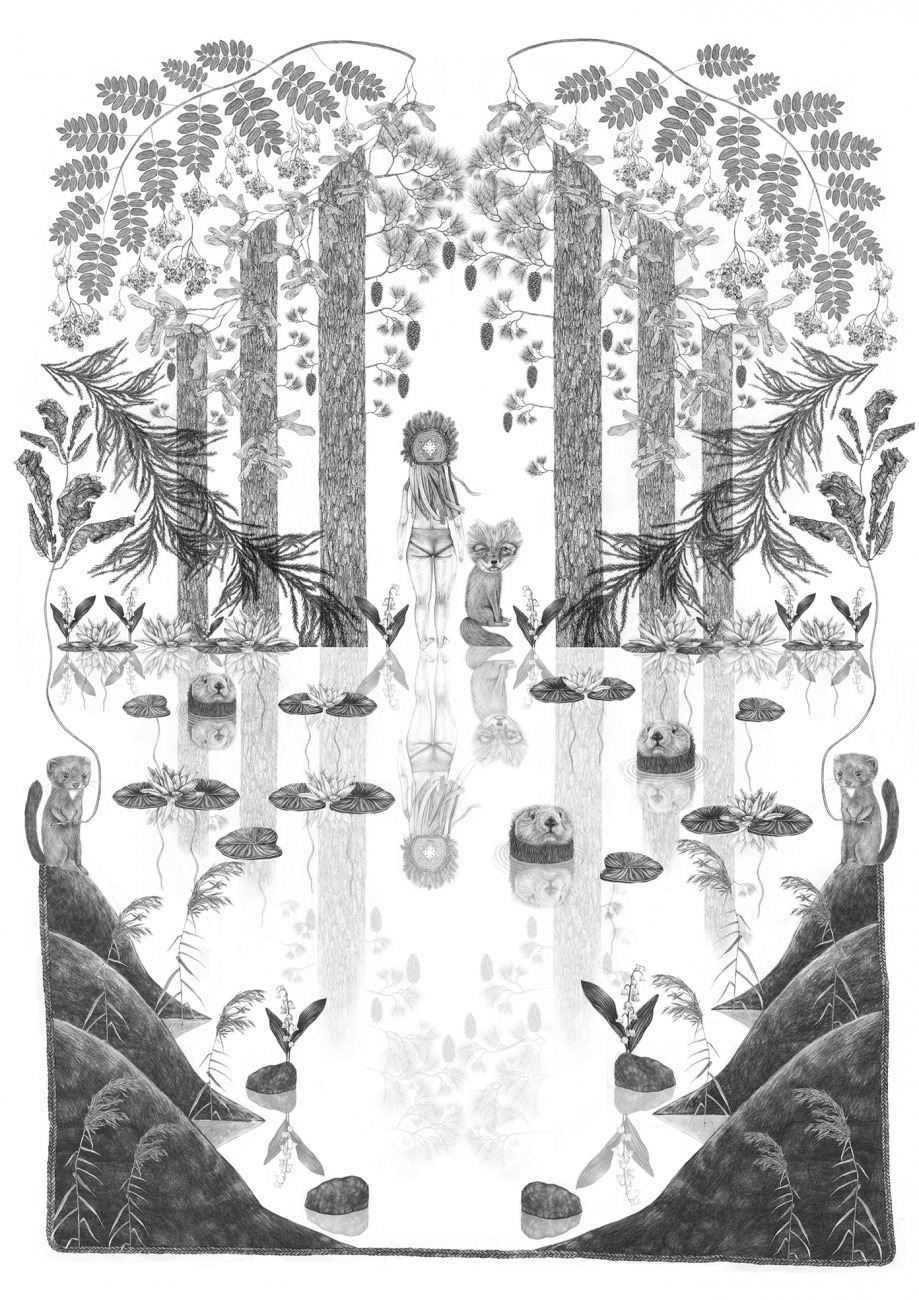
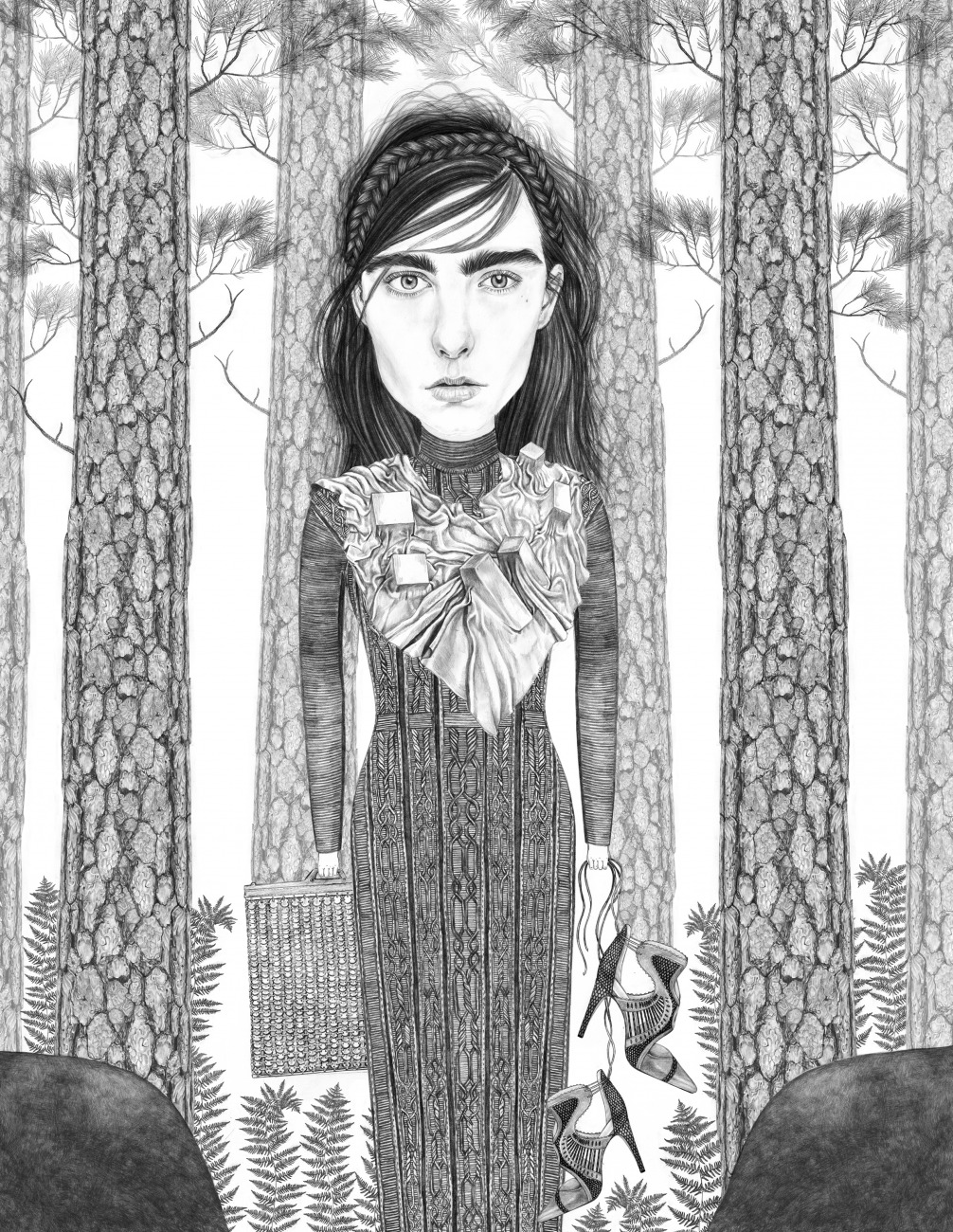
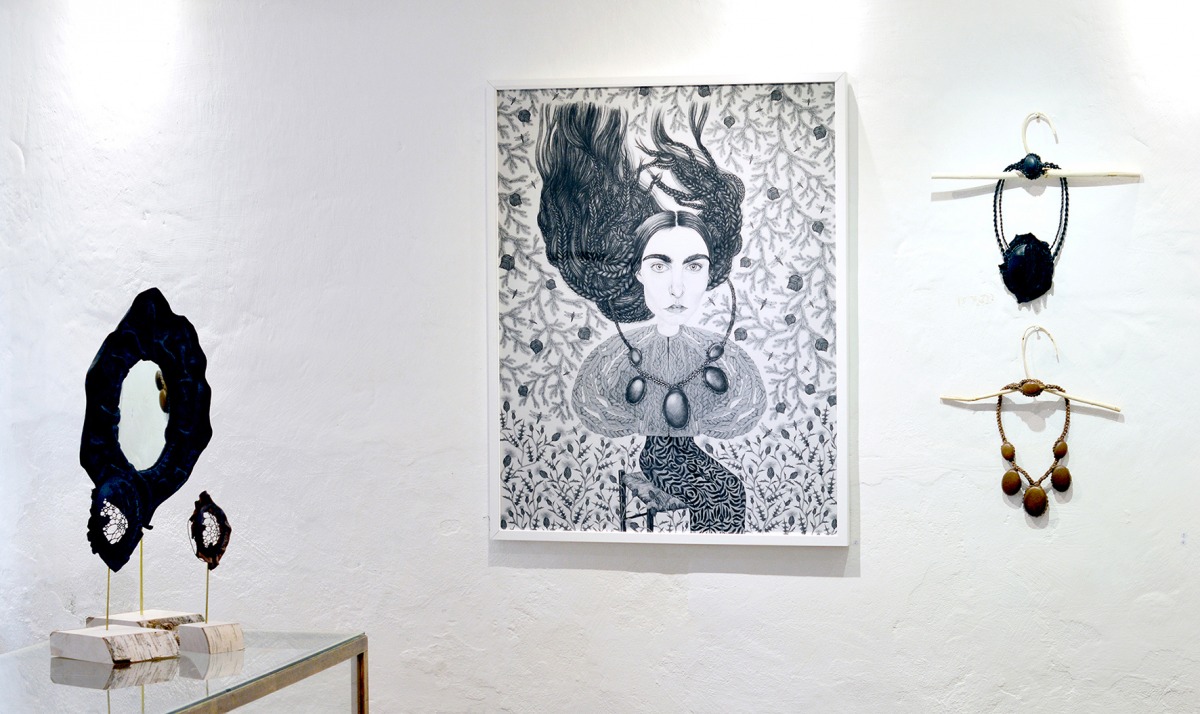
    I’ve also collaborated with jewellery artist Sanna Svedestedt Carboo. I draw her leather jewellery and invented a woman wearing them. We both love braids and pine trees so that was a natural theme for collaboration.

    The exhibition Braid.Stone.Needle that includes my drawings and Sannas art jewelry is currently being showed at MUSA, a fashion store and Gallery in Gothenburg, Sweden.

    I have also just started a artist collective together with artist Mia Nilsson called Fina Linjen. Some of Sweden’s most excellent illustrators is part of the group. I hope it will have a bright future.”

  • Rule of Law Backsliding in Rogue EU States

    This is an abridged interview with jurist Laurent Pech, Professor of European Law, Jean Monnet Chair of European Public Law (2014-17), and Head of the Law and Politics Department at Middlesex University London. Professor Pech identifies rapid autocrisation in a number of EU states, particularly Hungary and Poland, where the Rule of Law has been undermined in a three stage process that has been exacerbated by the emergency conditions of the pandemic.

    On Mandatory Hotel Quarantines

    Technically it has always been possible for national authorities to restrict EU free movement rights on a number of grounds, such as public health. But EU law is normally opposed to collective measures. So you can only restrict on a number of grounds the exercise of free movement on a case by case basis. And you must always comply with the principle of proportionality, so you cannot impose disproportionate measures in the name of public health. You have to have a compelling reasons and you have to demonstrate them on a case by case basis. I’m not familiar with the measures contemplated by the Irish government …

    Without knowing the details of any general policy of containing EU citizens or more generally, [a mandatory hotel quarantine for] EU residents, regardless of citizenship, in my view, would not be compatible with the law, as I understand it.

    What I can tell you is that public health can only be used as a grant of derogation for individual cases, not for the blanket prohibition on arrivals from other EU countries. I don’t think … the European Commission, would let it fly.

    I’m not familiar with any [other] EU country … which is essentially preventing residents in the EU from travelling as a collectively speaking, as a country, imposing on EU residents, trying to get to another EU country and then the mandatory quarantine.

    On the Rule of Law

    I can tell you what the Rule of Law is in EU law in the law of the European Convention on Human Rights, in fact, in our Constitution, constitutional law … the case law has defined the rule of law quite compellingly. Why are we debating these days the definition of the rule of law?

    the concept is being challenged, especially from current authorities in Warsaw and Budapest. The argument is the Rule of Law is too vague and meaningless. It does not exist. And it’s just kind of an intellectual subterfuge to impose neoliberal policies or whatever. But as a matter of EU law, actually, the Rule of Law can be defined. It’s normally defined, understood as a set of legal principles, such as the principle of legal certainty, the principle of judicial review before independent courts, respect for human rights, these kind of principles.

    The Rule of Law is to be found in the EU treaties and has been exhaustively defined both in EU legislation and in the case of the European Court of Justice.

    The essence of the Rule of Law is that we have rules to prevent the abuse of power so we can do something about the abuse of power. We can fight abuse of power, abuse of public power both. But to do that, we need independent consent, which is why one of the components of the Rule of Law is independent courts, where you can assert your rights against the public authorities. So the essence of the Rule of Law, is essentially that even the king, even the president, is subject to the law. There are no distinctions; everyone can assert a right against the public authorities. So this is the essence of the Rule of Law even before the EU itself was created.

    It’s one of the many checks and balances on what we can call unhealthy democracy … certain countries in the European Union have gone down a path where, as for the Rule of Law being challenged in its conception, in its very existence, also other type of checks and balances such as freedom of the press. I mean, it looks like that once one is gone. Then the other one follows.

    Hungary and Poland

    In the case of Hungary and in the case of Poland, essentially, we have a new breed of autocrats. They’re not like the old autocrats, where you see tanks one morning in the streets and then a clear change of regime in the afternoon. It’s much more difficult and they’re much smarter than the previous generation. So I have used the concept of Rule of Law, backsliding of democracy and the Rule of Law; I use the term backsliding to describe what has been happening in the past ten years in these two countries.

    To summarize briefly the process … They only need to get free and fairly elected once and then as soon as they’re elected their job is to make sure to rig the system, to undermine the checks and balances before the next legislative elections. How do you do that? … they tend to always apply the same playbook or the same cooking recipe. The first two steps you’re going to take is you’re going to capture of the Supreme Court or the constitutional court of the country.

    You either purge the current membership of the Supreme Court or you appoint new judges to the Supreme Court … You don’t care whether you comply with the Constitution, because by the time you have captured the Court, then you can get the new court to argue that what you want is not a violation of the Constitution…

    At the same time, what we’ve seen in Hungary, Poland and elsewhere is that while you are violating the Constitution in plain sight, you have to capture the public broadcaster. Or do you do that? If you have a parliamentary majority it is very easy. You can violate the Constitution and you can just pretend it’s not a violation of the Constitution. You’re going to appoint a new board and you’re going to appoint a new president and you’re going to use the taxpayers’ money essentially also to bully or try to corrupt or bribe the private media outlets as well into submission. Why is it important to capture the media? Because you need to shape the public narrative while you are openly violating the Constitution.

    Scapegoats

    You have to explain or try to convince the people that yes, maybe, yes, we are violating the Constitution … but we are doing this in the name of the people. And you are going to convince them this is what you want and then you going to use this some scapegoats in the process. So what you see, what we’ve seen in Poland, Hungary and elsewhere is that they always have a huge need for scapegoating.

    So it’s going to be George Soros … you name a new thing and then they change. They rotate. … It was perhaps worth stressing that you have a change of scapegoat every six months to twelve months when you have exhausted one you need another scapegoat … then it could be also academics. So it could be a corrupted journalist, it could be Communist judges. You need to smear, essentially, the guardians of the Rule of Law. So once you have captured the Supreme Court and the media, you’re going to use scapegoating … You’re going to then bully into submission, order what are called guardians of the Rule of Law, guardians of democracy, the press being one of the key checks on power.

    What I’ve seen emerge in the past few years, is that to avoid European criticism, what they do, they use proxies … what do I mean by proxy? A fake association, a fake NGO which indirectly or directly is given taxpayers’ money … You use a story as a way of distracting the people from the destruction of checks and balances.

    The new would-be-autocrats are much more difficult to fight because a lot of time by the time people wake up it’s a bit too late … the media sector is gone, judicial branch is gone. And then obviously they’re ready for the next elections with the press either bullied into submission or brought to bankruptcy.

    The Last Steps

    One of the last steps in this kind of Rule of Law backsliding process is to radically change the rules of the game. So by the time you have the next legislative election, they’re going to have reformed completely the electoral code. They’re going to capture the electoral commission as well. So it means that they can essentially rig the elections … usually it’s enough to control the ecosystem of the public media. But then also, if need be, you can also rig electoral results in a specific constituency … Also, remember, if you have captured the judicial branch, it means that there’s no place for you to go to challenge the results of the election, even if the results have been gained through unlawful means

    You can you still have elections. Yes, the opposition can win … but it’s virtually impossible to win in these conditions.

    There is no electoral level playing field anymore. Within three, four years, the system has been completely captured … Hungary is no longer a democracy. I expect Poland to be another electoral taken custody within the next two years.

    In fact, Poland is quite dramatic in a way. They had two presidential elections last year. Both of them were completely unconstitutional. I mean, there is not even a room for discussion. They were held in unconstitutional conditions.

    It’s possibly what I call the authoritarian gangrene is going to spread to other EU countries because people are watching, people are paying attention and they’re saying, well, look, it’s working, it’s working fine for Orban and Kaczyński, so why not me? Why not implement this recipe as well in my own country?

    In Hungary the main newspaper, which is not in the control by the government, now has sixty defamation lawsuits pending against. Essentially they’re trying to bankrupt these main opposition newspaper through lawsuits … then you’re going to punish judges if the lawsuits are wrongly decided, so to speak. In addition to that, you have the death threats, that you have a smear campaign. So much so that essentially, if you’re a critical journalist, then you may have no choice but to leave your own country if you want to pursue your profession. What’s happening to journalists is also happening across the board to judges, lawyers, academics. And so we are talking here essentially about a return to the old fashioned de facto one party state. And so I’m afraid we have to be aware of the gravity of the situation

    The Silver Lining

    The silver lining is that Poland and Hungary are the two most extreme cases of autocratic nations, at least in the EU … But maybe we’re going to get there slowly but surely in terms of third possible candidate in the EU. Now, we’ve been talking about Slovenia in the past few weeks because of the parameters of the attacks essentially trying to take control of the Slovenian state agency. And this Slovenian prime minister is indirectly funded by Orban. So essentially Orban is trying to export his model into the Balkans and also into Slovenia. We’ve been talking about the situation in Romania and Bulgaria for quite some time. Malta has also been in the news following the assassination of a journalist who was investigating corruption cases.

    I would say some political entrepreneurs are looking at how successful Orban and Kaczyński have been. Some of them are wondering whether, in fact, this is a good way forward, not for ideological reasons, just possibly this autocratic playbook is a good way of wining power and retaining it.

    The Situation in the U.K.

    Poland and Hungary are just the two most advanced cases in the EU. I have personal worries about the situation in the U.K. if we leave the EU for a minute … there are clear indications that the ruling majority in the UK is trying to dismantle or capture the checks and balances. So essentially they’re trying to annihilate any accountability, including changes to elections. Usually when you see changes being contemplated regarding the electoral commission or electoral rules or IDs to be required to vote and then surprise, surprise, those most disadvantaged by the new electoral rules are those not voting for the ruling party. So this is when you have to get worried. And also in the U.K. we’ve been talking about changing judicial review to make it more difficult to challenge that. And we’ve been talking also about possibly reducing the jurisdiction of the Supreme Court.

    [During the pandemic] I’ve seen an excessive use of secondary legislation. So the parliament has essentially abdicated its role as the key legislator and the government has taken over defining or restricting free movement, something which normally can only be done by the parliament. So I would say this is also part of a potential authoritarian pattern. So we need to really make clear, because once the government is in the business of de facto legislating in place of the parliament, then essentially abuse of power can easily be committed. And if at the same time judicial review is undermined, then you find yourself essentially without any avenue to challenge the excessive use of power. I’m not a libertarian myself, but certainly as a lawyer, I have strong concerns when I see the government essentially becoming the de facto parliament in the name of the Covid-19 emergency.

    Press Freedoms

    So there is ongoing work in the EU to make it more difficult for politicians or oligarchs, these regimes, to sue or bully (journalists) into submission.

    We need to go back to what was the case in the nineteen eighties through strong anti-concentration rules in the media market … if we want to have media pluralism, we need to have a properly functioning media market. You cannot have dominant players essentially asphyxiating the market. So you need to prevent abuse of a dominant position … if we had a well-functioning media market, we would be protected from public abuse of power, but also prevent abuse of power. And the abuse of power does not necessarily come from overbearing governments, it can also come from overbearing private actors. Think of Amazon, think of Google. There is a lot of work to be done in this regard. So concentration of power, whether private or public must be constrained, must be restricted and subject to the law applied by independent courts.

    Covid-19 and Authoritarianism

    Covid-19 has been kind of a blessing in disguise for these autocratic regimes …. giving them even more powers than they used to have … an exceptional situation calls for exceptional powers. But the problem is, once these kind of governments get accustomed to exceptional powers, then they don’t want to give it back …

    So then that’s going to be the next battle as soon as the covid-19 situation is under control. I mean, we need to make sure that parliaments everywhere get back into the business of what they’re supposed to be doing in the first place, which is legislating and controlling the executive these days. What we’re seeing is just an executive without being subject to any meaningful scrutiny from any national parliaments anywhere. So this is actually the widespread issue.

  • Musician of the Month: Ellie O’Neill

    I’ve never needed a reason to write a song. There have never been any conscious considerations of failure or success during the process. If anything, I can say that what I discover through writing is that there are endless landscapes of discovery. This feeling has not changed in the eleven years I’ve been writing and playing music, but it has definitely been challenged many times by different circumstances, by frustration and impatience.

    The first few months of the pandemic were some of the most challenging of times of my life in so many respects, but in particular, to overcome creative blocks of all kinds. I’ve read and heard similar sentiments from artists in all disciplines, from all over the world. Out of necessity I had to find new pathways through the distraction and despair that were surrounding the drive to write.

    https://soundcloud.com/ellieoneillmusic/half-immune

    During the second lockdown, around September, I read Carmen Maria Machado’s book In The Dream House for the first time. It was a graduation gift from my friend Molly. It’s so rare to happen upon a book, or any somewhat mainstream art really, about which you have no preconceived notions.

    I’d somehow never seen it talked about online or even heard about it from friends. It turned out to be a life changing experience for me for many reasons, one of which was Machado’s capacity for searingly honest storytelling.

    She quotes Dorothy Allison at the beginning of chapter five: ‘Two or three things I know for sure and one of them is that telling the story all the way through is an act of love.’

    Molly giving me the book was an act of love; my reading of it through to the end was an act of self-love. Beginning to think about telling your story in this way opened avenues for me in my own writing that had been heavily blocked, long before the lockdowns.

    But in terms of attempting to write in pandemic times, it allowed me to exhale into the situation, rather than instinctively turn a blind eye and try to write as if it had never happened; like it wasn’t happening right now.

    I suppose I struggled with the situation of wanting and needing to write but being unable to do so truthfully, without noticeable inflections of isolation or disease or separation permeating the language and the music.

    Viewing acceptance of the current situation as an act of love allowed me to begin writing again, a couple of months into the pandemic, and to allow these inflections to come, marking my ideas and words and notes, and accepting them as realities in the moment of writing. So, a form of acceptance came and settled in, and I slowly started to come out of shock and into writing mode.

    In an online workshop I took with guitarist and songwriter Buck Meek last month, he referred to his own periods of inspiration or prolifigacy as ‘seasons’ of writing. This resonated deeply with me as a metaphor for those couple of weeks at a time where creativity is flowing: working when there’s no mining to be done, because it’s all there on the surface, ready. These seasons come in cycles, and they bring with them their own unique collection of senses, words and thought processes.

    For me, this most recent season has been rife with images of birds, pyramids, wild animals and the cold sea. These are related to finding comfort, it would seem, in thoughts of flight and weightlessness, of ancient beauty, and again, of natural cycles twinned with wild unpredictability. This is what I’ve been observing, I think, most consciously in the past year: a stillness or stuckness; the prospect of infinite lockdowns and days seeming to repeat themselves; coupled with the unstoppable force of everything around me changing in both minute and massive ways, all the time.

    https://soundcloud.com/ellieoneillmusic/anna

    The pandemic afforded me the privilege to slow down enough to actively watch the physical seasons of the year changing. I had the chance to feel the day it became too cold to swim for more than five minutes, and the day it finally warmed up again. Leaning into the fact that the seasons will return, renewed each time, has been deeply comforting; where I used to deny myself the right to repeat ideas or phrases or even chord progressions I instead began to lean into it, to try and see why they kept raising their heads. I’m beginning to remember that each new season will bring all new types of light and shade.

    It’s been liberating also, to return to writing lyrics in the present tense about things from the past. The movement and immediacy of it has been like stretching out of the confinement of the days, a vibration that helps dissolve the walls of stuckness. Dredging up old stories you thought you were finished with feels nostalgic and sticky and whiny sometimes, but exploring them in the present tense makes them become  dreamlike and fluid.

    It’s been almost a way of travelling, for me, during this time of sudden and intense constrainment. Back to Montreal, back to Cork, back to when Dublin city didn’t feel completely empty. Time becomes irrelevant in this merging of tenses, if only to the writer, but that’s the  liberation. After all, I am the first person I’m trying to communicate with, through all of it.

    Feature image: Jeanne Castegnier-Mainville

    Social Media Links

    Instagram

    Facebook

    Image Jeanne Castegnier-Mainville
  • Brazil’s Pandemic Reaches Crisis Point

    At the beginning of the pandemic, the Paraisópolis Favela Residents Association (G10 Favelas) hired a team of doctors, nurses and first responders with ambulances to serve the favela residents, because the SAMU (Mobile Emergency Care Service) could not provide services to the local community.

    Pedro Dell’Antonia Gymnasium transformed into a field hospital in Santo André, São Paulo, with a capacity for 110 patients. PH André Lucas
    Rescuer, community leader Renata Alves with doctors after an assessment of Covid-19 cases in Paraisópolis. PH André Lucas
    Doctors examine a patient. PH André Lucas
    Child cries at the sight of a man being taken away in an ambulance with suspected covid. PH André Lucas
    A doctor performs a clinical examination on a man who had ben unable to get out of bed. PH André Lucas

    The Paraisópolis favela is the second largest community in São Paulo with 75,000 residents, and the daily effort continues to raise awareness among the local population of the dangers of Covid-19. According to Daniel Cavareti, National Coordinator of G10 Favelas:

    We divided the community into 50 micro-regions and elected local volunteers. Each takes care of a region. They are residents who help to distribute donations without agglomerations and who call the ambulance, in case anyone needs it.

    Daniel Almeida sanitizing alleys in the Vietnã favela. PH André Lucas
    Daniel is president of the “Amigos da Molecada” association of the Vietnã favela, in São Paulo. He uses equipment to clean the streets around the community. PH André Lucas
    Children play in the alleys of the Vietnã favela as Daniel sanitizes. PH André Lucas

    In São Paulo, the Butantan Institute implemented mass testing in favelas which began in the Favela São Remo, the Western-most and most vulnerable part of the city.

    Some 1,600 tests were carried out in June 2020, once of which diagnosed Palmira Costa, aged sixty-six, with Covid-19. She lives with her eight-year-old granddaughter Fernanda.

    Palmira with her 8-year-old granddaughter Fernanda. PH André Lucas

    ‘My mother takes oxygen at home already due to respiratory problems, so I was always very concerned to avoid this disease affecting her. She was very fearful when she tested positive, but at least she did not develop the symptoms. She is very afraid, you know?’ reports Fernanda, daughter of Palmira.

    The average number of daily deaths in Brazil (a country with a population over 200 million) currently exceeds 3,000 per day, a macabre number that may be understating the real figure. The official death toll from Covid-19 in Brazil stands at 313,866, second in the world only to the United States.

    Nurse Marcelo Silva, in attendance at the temporary hospital in Santo André in São Paulo. PH André Lucas

    Thirty-five-year-old nurse Marcelo works at the Santo André field hospital. He finds that the affection and support there creates a lighter atmosphere for patients caught in this moment of uncertainty.

    The work is exhausting, but apart from sad stories of death, Marcelo points to the love on display where multiple members of the same family are hospitalized at the same time.

    It is increasingly common for there to be severe cases among patients as young as thirty, but with the help of doctors, physiotherapists, and nurses most recover.

    Doctors assess the patient’s pulmonary situation. PH André Lucas

    All cases that need tomography and diagnosed with Covid-19 in one of the 7 UPA (Emergency Care Unit) or one of the 35 UBS (Basic Health Unit) in the municipality are referred by ambulances to the Hospital at the Gymnasium Pedro Dell’Antonia, which was set up on an emergency basis due to a lack of ICUs in the city.

    paket wisata banyuwangi
    minyak lintah
    nusa penida tour
    bromo ijen tour
    loker situbondo
    slot online
     

    Fortunately, the hospital created especially to attend to cases of Covid-19 in Santo André does not lack for basic health tools such as PPE and respirators. But working conditions have become more challenging as the government has taken almost no measures to reduce the spread.

    The patients at the Gymnasium Pedro Dell’Antonia are the most serious cases, those who are not intubated are using non-inhalant masks and nasal catheters.

    Inpatient with oxygen assistance. PH André Lucas
    Doctors and nurses in the makeshift corridors of the Hospital de Campanha in Santo André, Sao Paulo. PH André Lucas
  • Lent

    The poor auld Bunty Mac was a great friend of mine back in the late 70s and early 80s. We being young men taken to the sup, what you might call drink. Bunty Mac was the Doc Holliday of Longford and well, I was the Wyatt Earp of Westmeath. The Bunty was a poker shark and every one knew he cheated, but no one could ever catch him out. Not even meself. It wasn’t quite like the film, but it wasn’t far off it, and we always came out on top, or on top more times than not. It funded the lifestyle we choose to live at that time.

    At the poker schools, we took large sums in winnings off the lads. I’d have the Bunty run out a door or window, any exit he could get through. Carrying the cash. That’s when the lads would get mad and start a row. No matter what, Bunty never looked back, because the wad of cash was more important than me. Sure manys the swinging match I had to face while the Bunty made his escape. It was the toss of a coin if you boxed the heads off a lad or two, or they boxed the head off of me. Sure, I didn’t care about them things. I saw it as part of the game.

    One time and we lodging in Harlesdon North London. Big Phil from Cork was our landlord, and a real gentleman he was. Came from money and wealth, and had grown up in a very different situation to the Bunty Mac and meself. But we were great friends in those days and Big Phil would love to come around for the chat and the craic.

    “Bejaysus Lads,” Big Phil would say, “Never a mad pair of hoors like yous pair did ever I see. But yous are great craic, the happy madness.” Poor auld big Phil talked us into giving up the drink for Lent, and he a religious man. Sure the Bunty looked over at me, and says he,

    “We have as much chance of climbing mount Everest in our bare feet, as give up the porter and poker for Lent.”

    It so happens in those days neira mobile phone or social media was come about.

    “What yous boys should do is find two nice girls to straighten yous out. Sure, I looked at the Bunty Mac and says I,

    “There as much chance of that, as climbing Mount Kilimanjaro, in a pair a high heels and suspenders.” After a lot of persuasion, he got us to write to the pen pal club and find ourselves two dacent women to straighten us out.

    As the weeks passed and we climbing the walls for a pint, their letters began to land on the mat. Two fine dacent young ladys began to correspond, and with pictures we got to see what they looked like. After a round of letter correspondence, we made the phone call, and arrangements be made for to meet a first date.

    The Bunty Mac had lied to impress herself, saying he was a business man from Piccadilly instead of a wild hoor from Harlesden, a working class spot. We met them the same night and mine was at Northwood station. His at Piccadilly.

    When she turned up I got the shock of my life, and she had aged 30 years since she sent me her picture three weeks before.

    “Be Jaysus says I. You’re auld enough to be me mammy. What happened to you in the three weeks since past?” She lit me a smile, and asked,

    “Am I still staying at yours?”

    “Be Jaysus, you’re not, Missus!” and I ran like a blue hoor.

    No sooner I be home, and who lands in the door but himself. On his lonesome. Surprised, says I, “Well where is herself, Bunty Mac?

    “Be God, Nicky Feery, You never guess what! A grand posh wan she was, and as she landed on the platform. And me stood there, grinning with a bunch of roses. Says I, to herself, ‘Well Hello Sweetheart, and welcome to Pickladdiki.’ The word came out all wrong. Be Jaysus, if she only walked by me. Her head in the air, like I wasn’t even there. An over she goes to the next platform. Boards a train back, from the direction she came.”

    “Sure,” says I, “I faired no better. T’was the auld mammy she sent, or by Jaysus, she aged shocking in the three weeks since.”

    So, that was the last time we gave up the porter for the duration of Lent.

  • A Few Good Men and Women

    In the wake of the murder by a police officer of the unfortunate Sarah Everard, and the ensuing justified anger, many media people were calling for “good” men to act more visibly in opposing violence against women. While I back 100% the calls made for “good” men to speak up, I am also concerned that the more general ideas of social equality are fast becoming reduced to a gender-specific proposition, having the potential knock-on effect of splitting the Left.

    This is not to diminish the seriousness of violence against women, but only to attempt to bring to light how the focus on gender equality may be impacting our perception of more general inequality, and how this apparent narrowing of focus risks being manipulated by those whose interests are not necessarily best served by social equality.

    While many women are exploited by many men, in the wider culture there are those still looking to keep wages low; rents and the cost of living high, while reneging on any social housing provision, who will look to spin the fact of female exploitation in order to capture the female vote to the service of their own particular brand of social exploitation.

    Spin

    In a recent tweet, Una Mullally, responding to Josepha Madigan’s dig at the Kerryman newspaper, suggesting the paper be renamed the Kerryperson, called this out for the cynical political ploy it was. Referencing her own Irish Times article of March 8th which predicted this type of play, Mullally described Madigan’s move as an awkward Fine Gael grab for the female vote, which, as things stand, may decide the next government, as it decided the referendum in 2015.

    But the main talking point in the past week has not been Fine Gael attempts to capture the female vote, but the more immediate mystery as to why “good” men don’t speak out against violence against women.

    Fintan O’Toole, writing in the Irish Times on March 16th said that in order for men to make a more overt stand against violence against women they must first learn to be shocked by that violence. At the moment, he argues, such violence all seems routine to most men. I wonder about that, since it seems to suggest that silence equals complacency equals broad approval.

    When you remove the particular instance O’Toole is referring to, that is, the emotive and highly charged question of violence against women, and replace it with say, general social inequality; you immediately already have an answer as to why “good” men appear to do nothing in the face of violence against women. The truth is, the majority of good men, and good women too, tend to remain strategically schtum on a wide range of problematical social issues until they see which way the political winds are blowing.

    Good Men

    Edmund Burke is reputed to have said that ‘The only thing necessary for the triumph of evil is for good men to do nothing.‘

    Burke wrote the line in a letter in 1770, which is more than a little while ago. The point being, the good men idea is far from being new. In fact, Burke’s quote needs updating, since at the time of his writing the realization of women’s suffrage was a long way in the future. An updated version would read: ‘The only thing necessary for the triumph of evil is for good men and good women to do nothing.‘’

    So instead of posing the question, Why do good men do nothing, in such a way as to refer to a specific issue – in this case male violence against women – it is perhaps clearer to ask why do good people, regardless of gender, not raise their voices in say, situations where right-wing policy creates homelessness and subsequent deaths from exposure; or privatisation results in poor services and deaths due to cut corners and profit-conscious oversights? Why do good people not raise their voices en masse on these issues too?

    By the strict criteria of the “good” men concept as framed by Edmund Burke and others, we are all responsible, good men and good women alike, for homeless deaths, for direct provision deaths, for deaths caused as a result of medical privatisation, for domestic violence in all its guises and so on. Since this is a democracy, we all, strictly speaking, bear equal responsibility for the failings of democracy to deliver equal treatment to all. But these are difficult questions when applied to the real world.

    For instance, if you were an arts practitioner cosying up to Josepha Madigan when she was Minister for Arts, with a view to gaining favour and financial support for some project you had planned, are you complicit in Madigan’s rallying support to oppose Traveller accommodation? Or are the two issues compartmentalised? One being her political position and the other being her apparent social and class intolerance. Do you sacrifice your project to make a point, or do you compromise?

    Herds

    Along with such moral quandaries you also have the problem of the behaviour of crowds, which tend to behave like herds. Even politicians don’t really lead, they too follow the herd in the form of the public mood glimpsed in polls. Most people are spectators, going with the flow of the herd. We stand and watch the game until some critical mass is reached and then we raise our voices in support of whatever new majority appears to be on the rise. This works for every growing gang, from commies to fascists. A critical mass is reached and the herd follows. History shows that the herd will follow any old idea once this critical mass is achieved.

    Søren Kierkegaard, writing on this phenomenon, noted that an individual is worth more than a crowd of individuals, because an individual has personal agency, whereas a crowd tends to go with the flow of the herd. As a result, Kierkegaard comes to the conclusion that truth always belongs to the minority, since the majority tend towards unthinking obedience to the movement of the herd.

    It could be that now is the time where the issue of violence against women is to be embraced by the herd as an issue whose time has come. An issue for which good men are expected to speak up. But the point is, that apart from the particular issue, the question as to why do good people do nothing might be more properly considered in relation to a wider sense of social equality, encompassing all issues of social inequality.

    This applies equally to the politician allowing the market to decide the fates of those seeking housing, as it does to the person turning a blind eye to white collar corruption, or a man turning a blind eye to violence against women.

    Good Men and Good Women

    In this regard, for Fintan O’Toole to suggest that the evil of violence against women is exacerbated by good men doing nothing, is disingenuous at best, or is simply more political gamesmanship.

    Because the Irish Times also plays politics with notions of equality, quietly supporting right-wing Fine Gael policy through the manner in which it shapes and pitches stories, while always being first up with the property supplements when the market shifts, eager supporters of the housing Ponzi scheme, where the wealthy business class figuratively eat our young by selling them over-priced houses, while their political cronies refuse to enter into any believable form of social housing policy.

    Which begs the question, that when Fintan O’Toole is calling on “good” men to be more vociferous in condemning violence against women, is he referring to the same “good” men who remain silent in the face of social inequality on a more general level, keeping strategically schtum on a range of social equality issues, in order to ensure the perpetuation of a neoliberal status quo that is giving rise to social inequality in the first place?

    Conclusion

    All of this is not to suggest that the call for “good” men to raise their voices on the subject of violence against women is a wasted exercise; but only to point out that such a call to “good” men is not new; and furthermore, that by repackaging that call as an issue-specific moral imperative, while ignoring the same demand across a more general range of social equality issues, is to have the effect, whether knowingly or not, of splitting the Left by narrowing the imperative of social equality to a divisive gender issue, in such a way as to assist the project of the establishment parties and the elite they appear to represent.

    This will doubtless remain the situation until such time as good men and good women of all classes speak out against social inequality in all its guises.

  • Public Intellectuals: Hannah Arendt

    A fundamental difference between modern dictatorships and all other tyrannies of the past is that terror is no longer used as a means to exterminate and frighten opponents but as an instrument to rule masses of people who are perfectly obedient.
    Hannah Arendt, The Origins of Totalitarianism (1966)

    It is, perhaps, notable that as a young student Hannah Arendt was the Nazi-sympathising philosopher Martin Hedeigger’s lover. His little Jewess trophy, perhaps redolent in his mind of Weimar Republic decadency. Surprisingly, she never really developed a hated for him, intellectually at least, despite his stunning failure in selling his soul to the Nazis.

    In contrast to Heidegger, the ultra-conservative German burgher Thomas Mann chose exile. His rather clunky prose is excused on that point alone, and, suitably, his best work arrived after decamping to Switzerland. This includes especially Doctor Faustus (1947) an oblique portrayal of an actor and academic visited by a Mephistophelian figure, who sells his soul to the Nazis – a Heideggerean type in fact.

    Arendt’s background, steeped in the great German philosophical tradition, but rejected as a Jewess – and even subjected to a period under Gestapo confinement – gave her an unparalleled vantage on the great evils of the twentieth century, and the perils of ideological conformity that corrupted even the most elevated intellects. A failure to exercise a moral conscience in performing actions is a recurring failure, even where we do not see the extremes of totalitarian rule.

    Arendt and Albert Camus

    Arendt is among the most important public intellectual of our age for a variety of reasons.

    First,  she witnessed at first hand the rise of antisemitism in Germany, before migrating to the Americas, along with others from a golden generation of great mitteleuropean thinkers – many of them also Jewish – such as Stefan Zweig, Joseph Roth, Berthold Brecht and Walter Benjamin. She was young and resilient enough to avoid the despair that led many to suicide, or to expire prematurely like Louis Althusser, whose structuralist influence has had a less than positive influence.

    A migratory professor with lifestyle “issues” including a nicotine habit that has become increasingly unacceptable in America, Arendt’s cosmopolitan “Europeanness” was tolerated in her time. In a bygone age the Frankfurt School colonised American academia, and a person such as Vladimir Nabokov – a different beast altogether – could became a professor in Columbia. Imagine the uproar if his Lolita was published today?

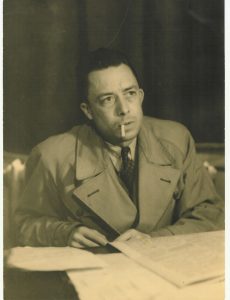
    Albert Camus in 1957 by Robert Edwards
    Albert Camus in 1957 by Robert Edwards

    In some respects her Gallic twin – and the other indispensable public intellectual for our time – Albert Camus also disavowed extremism, strict ideological conformity and what may be described as scientism. Both firmly rejected a positivism identified with the nineteenth century philosopher Auguste Comte (d.1857), whose conclusions according to Camus ‘are curiously like those finally accepted by scientific socialism.’

    According to Camus, Comte conceived of a society whose:

    [S]cientists would be priests, two thousand bankers and technicians ruling over a Europe of one hundred and twenty million inhabitants where private life would be absolutely identified with public life, where absolute obedience ‘of action, of thought, and of feeling’ would be given to the high priest who reign over everything.[i]

    As today we hang on the pronouncement of anointed scientists who decide our intimate social lives, it would appear Comte’s vision has come to fruition. Thus, one of the latter-day hierarchy, Professor Niall Ferguson in an interview with The Times revealed his amazement at the power he wielded. After the British government followed Chinese policy in introducing a lockdown he observed: ‘It’s a communist, one-party state, we said. We couldn’t get away with it in Europe, we thought. And then Italy did it. And we realised we could.’

    Likewise, Arendt equated Comte’s hope for ‘a united, regenerated humanity under the leadership – présidence – of France’[ii] with the idea of a ‘national mission’ used by English imperialists to justify global expansion during the late nineteenth century. Arendt also pointed to the danger of the positivists’ assumption – evident in totalitarian Soviet propaganda – ‘that the future is eventually scientifically predictable’.[iii]

    Eichmann in Jerusalem

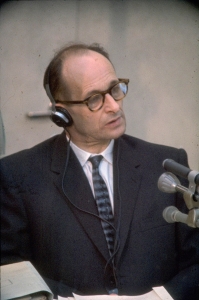
    Eichmann on trial in 1961.

    Arendt’s fame rests especially on the proverbial shitstorm caused by her coverage of the former SS officer Alfred Eichmann’s trial in Jerusalem in 1961. She coined the immortal phrase ‘the banality of evil’ to describe how under Nazism ambitious functionaries and bean counters – such as Eichmann – climbed career ladders without regard for the supreme brutality of their regime. This was not apparent to them in their day-to-day lives; so out of sight was out of mind. In any age, including this, we should be wary of a cost-benefit analysis of life where board room decisions decide the fate of human beings and the natural world.

    Indicatively, in Ireland between 1996 and 2012 the number of qualified accountants grew by a staggering eight-three percent to number 27,112.[iv] It is now clear that bean counters and bureaucrats dominate our lives. Although many may not seem like villanous characters, any buffoonery on display should not be a source of reassurance. As Arendt describes Eichmann:

    Despite all the efforts of the prosecution, everybody could see that this man was not a “monster,” but it was difficult indeed not to suspect that he was a clown. And since this suspicion would have been fatal to the entire enterprise [his trial], and was also rather hard to sustain in view of the sufferings he and his like had caused to millions of people, his worst clowneries were hardly noticed and almost never reported.[v]

    Eichmann in Jerusalem highlights how an obsession with compliance and promotion blunts moral sensibility; and how a cognitive dissonance takes hold where slavish obedience leads to a failure to question one’s actions. This is the moral corrosion generated by a lack of consequentialist or moral thinking.

    The Human Condition

    I would argue that The Human Condition (1958) is central to understanding our age, in that it emphasizes the good life, and a need for Aristotelian measure and moderation in pursuit of eudaimonia. As the opening sentence of Aristotle’s Nicomachean Ethics puts it: ‘Every art and every scientific inquiry, and similarly every action and purpose, may be said to aim at some good.’

    The Human Condition emphasizes a moral conscience that should ideally inform all our actions, especially politics. And she warns of a detachment from human realities that may occur once the “pensionopolis” of an entitled state class have no concern for trade or manufacturing:

    No activity that served only the purpose of making a living, of sustaining only the life process, was permitted to enter the political realm, and this at the grave risk of abandoning trade and manufacture to the industriousness of slaves and foreigners, so that Athens indeed became the “pensionopolis” with a “proletariat of consumers”[vi]

    It is insufficient to perform a deed in isolation; you have to understand what you are doing and for whom and why. Or at the least investigate and interrogate your motivations, while avoiding the pitfalls of perfectionism. As Voltaire put it: ‘the best is the enemy of the good’, a point seemingly lost on certain scientific authorities in their utopian pursuit of ZeroCovid.

    Arendt also warns against the scientism in our public discourse, or more crucially the triumph of a form of mathematical intelligence, which is often divorced from moral decision-making, with Oppenheimer’s quotation from the Bhagavad-Gita ‘Now I am become Death, the destroyer of worlds’ after the launch of the atomic bomb an obvious statement of this pitfall.

    It is a point the philosopher Mary Midgley (above) has also made in response to a letter Albert Einstein wrote to the wife of a deceased physicist that ‘people like us, who believe in physics, know that the distinction between past, present and future is only a stubbornly persistent illusion.’[vii]

    In response Midgley wrote:

    if reality was indeed something that only physicists could reach – if everybody else was wandering clueless through a hopeless maze of illusions – there would be a crucial difference between these scientists and the rest of us. We are being told that we are mere peasants, helpless “folk-psychologists”, and we may well hear this dictum as a simple insult “you are nothing.”[viii]

    Thus Arendt, along with Midgley, warns against placing too great a premium on mathematical intelligence – and those who may consider lesser mortals as mere nothings. Arguably, this can be seen in the all-too-ready acceptance of Professor Ferguson’s doomsday mathematical modelling for Covid-19 mortality last year, which proved to be wrong by a significant margin. According to Mark Landler and Stephen Castle in the New York Times, Ferguson’s interpretation was ‘treated as a sort of gold standard, its mathematical models feeding directly into government policies.’

    More widely, the contemporary veneration of science has spilled into worship of the ‘dismal science’ of economics, and the triumph of homo economicus. This represents a negation of critical human identity through a hyper-inflated economic reality of survival. That any critical intelligence endures, divorced from corporate ‘influencers’, is almost a minor miracle.

    The Human Condition also ably demonstrates that when the sphere of political engagement and the public sphere become redundant and private interests control democracy, then it has given way to something else

    Technocracy

    Arendt warns of the dangers of technocracy, pointing to the blunted moral conscience of an Eichmann, who reasoned that he was only putting people on trains, and did not have the intellectual curiosity to consider their destination and the likely outcome, or was casually indifferent. Arendt understood that he was more concerned with consorting with powerful people, and networking in a moral oblivion. One might add that being exclusively within one’s own silo bubble, or online echo chamber – as all too many are today – is recipe for serious trouble.

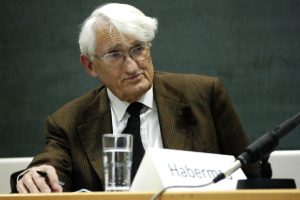
    Likewise, Jurgen Habermas has warned of the danger of technocratic solutions devoid of a moral compass, coining the phrase the public sphere.

    Juergen Habermas

    To offset growing consumerism Arendt advocates the Vita Activa of civic engagement. She remains even-handed, recognising that scientists should of course be listened to – providing crucial specialisation – but it should be understood that many lack a moral or philosophical education, and without ethical training ultimately hold no allegiance to the truth.

    In our time, all too often, political debates reach a point of paralysis in endless arguments over statistics; we are to quote Peter Greenaway ‘Drowning By Numbers’. Arendt’s analysis demonstrates how number can give rise to anti-humanism, perfectionism including an obsessions with tidiness, and other forms of anal retentiveness that inhibit our development as human beings.

    Science detached from philosophy is divorced from ethical considerations, and thus can be deployed for great evil. Therefore, ‘totalitarianism appears to be only the last stage in a process during which ‘science’ [has become] an idol that will magically cure the evils of existence and transform the nature of man.’[ix]

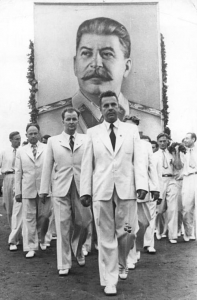
    Banner of Stalin in Budapest.

    The Origins of Totalitarianism

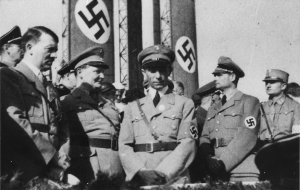
    The Origins Of Totalitarianism (1951) is the seminal account of twentieth century totalitarianism – as distinct from the ‘mere’ fascism of figure such as Mussolini – of both the Nazis under Hitler and Communism under Stalin. It offers a series of reflections that should serve as a warning in our time – when we cannot be said to live under totalitarianism – but where, nonetheless, an unmistakable shift has occurred in the relationship between the state and the individual. Thus measures that no government would previously have contemplated – from lockdowns to curfews – have been normalised in many countries, and controls have even been tightened in Ireland at precisely the point when a declining number are dying from the disease. Coincidentally, ‘terror increased both in Soviet Russia and Nazi Germany in inverse ratio to the existence of internal political opposition.’[x]

    We cannot overlook the damage of enforced social isolation, as Arendt put it:

    What prepares men for totalitarian domination in the nontotalitarian world is the fact that loneliness, once a borderline experience usually suffered in certain marginal conditions like old age, has become an everyday experience of ever-growing masses of our century.[xi]

    Arendt also well understood the fictions that underpin our understanding of the world, and a tendency to embrace conspiratorial ideas in the absence of reasonable explanations:

    Legends have always played a powerful role in the making of history. Man, who has not been granted the gifts of undoing, who is always an unconsulted heir of other men’s deeds, and who is always burdened with a responsibility that appears to be the consequences of an unending chain of events rather than unconscious acts, demands an explanation and interpretation of the past in which the mysterious key to his future seems to be concealed. Legends were the spiritual foundation of every ancient city, empire, people, promising safe guidance through the limitless space of the future. Without ever relating facts reliably, yet always expressing their true significance, they offered a truth beyond realities, a remembrance beyond memories.[xii]

    Thus, it is essential that in responding to the damage of contemporary social atomisation that we do not succumb to ideologies that sow further division.

    Arendt observed how allegiances break down when Populist mobs gain traction. Initially the targets are those of no influence or assets, but essentially anyone is guilty under the arbitrary laws of totalitarianism in power. Thus she recalls:

    It is obvious that the most elementary caution demands that one avoid all intimate contacts, if possible – not in order to prevent discovery of one’s secret thoughts, but rather to eliminate, in the almost certain sense of future trouble, all persons who might not only who might have an ordinary cheap interest in your denunciation but an irresistible need to bring about your ruin simply because they are in danger of their own lives.

    Sadly, this agitation seems reminiscent of the states of mind actually cultivated by government scientists, who have deployed ‘fear, shame and scapegoating to change minds is an ethically dubious practice that in some respects resembles the tactics used by totalitarian regimes such as China,’ according to Gary Sidley, a retired clinical psychologist. Nowadays, instead of being imprisoned, we contend with social shame and even loss of a job for heinous crimes such as meeting a friend for a pint or taking a hill walk.

    Radical Evil

    Arendt observes a failure ‘inherent in our entire philosophical tradition’ to conceive of a radical evil.[xiii] Such a blind spot she argues means, ‘Totalitarian solutions may well survive the fall of totalitarian regimes in the form of strong temptations which will come up whenever it seems impossible to alleviate political, social, or economic misery in a manner worthy of man.’[xiv]

    Moreover, it is important to note in our present state of enforced isolation:

    [I]t has frequently been observed that terror can rule absolutely only over men who are isolated against each other and that, therefore, one of the primary concerns of all tyrannical governments is to bring this isolation about. Isolation may be the beginning of terror, it certainly is its most fertile ground, it always is its result.[xv]

    So let us be wary of the strongman leaders who have emerged to ‘guide’ us to the promised land during a pandemic, which shows up the damage of their own making; and who now argue that solutions lie in asserting the very neoliberal values that brought us to this impasse in in the first place.

    Sadly Burkean and Habermasean moderation has been lost in an age of tribal nationalism. The handmaiden’s of the strongman leaders are in fact a grasping “pensionopolis” that are removed from the dramatically worsening poverty in countries such as Ireland caused by the pandemic.

    This sadly is the digital generation of what are, in effect, fabricated human identities – a kind of unreal Blade Runner replicant. Homo faber has given way to homo economicus, as the law and economics ideologues put it. Craftsmanship and intellectualism are despised, and the public space denuded of significance.

    Finally, and perhaps more optimistically, Arendt clearly distinguishes between loneliness, and solitude: ‘Solitude requires being alone, where loneliness only shows itself most sharply in company with others.’ Let us thus endeavour to accept solitude as a temporary gift and resist the loneliness which is fertile ground for the infliction of terror.

    [i] Albert Camus, The Rebel, Translated by Anthony Bower, Penguin, London, 2013, p.145

    [ii] Hannah Arendt, The Origins of Totalitarianism, Penguin, London, 1966, p.237

    [iii] Arendt, Ibid 1966, p.454

    [iv] Tony Farmar, The History of Irish Book Publishing, Stroud, The History Press, 2018, p.12

    [v] Arendt, Eichmann in Jerusalem, Viking Press, New York, 1963, p.55

    [vi] Hannah Arendt, The Human Condition, University of Chicago Press, Chicago, 1958, p.37

    [vii] Mary Midgley, Are You an Illusion, p.136

    [viii] Beard, Ibid, p.138

    [ix] Arendt, Ibid 1966, p.453

    [x] Arendt, Ibid, 1966, p.514

    [xi] Arendt, Ibid, 1966, p.627

    [xii] Arendt, Ibid, 1966, p.271

    [xiii] Arendt, Ibid, 1966, p.602

    [xiv] Arendt, Ibid, 1966, p.603

    [xv] Arendt, Ibid, 1966, p.623

  • The Terrible Truth about Sarah Everard

    Even after six days listening to the outpourings of grief, shock, and rage, about the kidnap and horrific murder of Sarah Everard in London; of how her life was scrubbed out, a beautiful young woman reduced to ‘human remains’ in a builder’s bag identifiable only by her dental records; even after story upon story hit the media of how women are attacked, abused, raped and battered, in every country, every week, every day; the words of Mairin de Burca, founder and creator of the Irish Women’s Liberation Movement in 1970’s Dublin, stopped me in my tracks:

    ‘Sarah Everard wasn’t wiped off the face of the earth because someone wanted her jewellery, her mobile phone, the keys to a car or home. She was murdered because she was a woman and a man got pleasure from killing her.’
    Mairin de Burca

    The words were a gut punch. They also felt (horribly) true.

    Since forever in our Western culture women have been attacked but murders such as Sarah Everard’s surely mark new levels of depravity.

    Where is this depravity coming from? What is driving it?

    In one way the answers are so glaringly obvious it’s a measure of the robustness of the Patriarchal system that all of the drivers remain firmly in place: the Patriarchal system itself, the law as it stands, encompassing both police and judiciary, and pornography.

    Let’s take pornography. Instead of being closed down long ago for systematic civil rights abuses, called out for abusing children, trafficking women, cheer-leading sexual brutality against women 24/7, it is protected. It’s legal. It is also a massive money spinner.

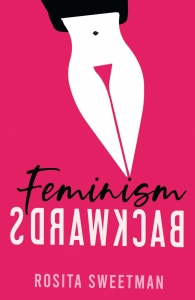
    When I was researching Feminism Backwards I went back and had a look, where is porn at today. For those of you, like me, who haven’t kept up, you’re in for a shock. Where once porn meant large naked ladies with pneumatic breasts in Playboy mags, porn today involves the vicious sexual exploitation of women, is expensively shot, and is everywhere.


    ‘Before the internet’ as Michael Sheath, child sex abuse expert says ‘there was a ceiling on how much porn you could consume, maybe your dad had some; you had to go to a sex cinema to watch a film. It was limited in scope and there was a stigma on its consumption.’

    In 2021 porn dominates the sexual landscape like a horrible cancer. ‘Thanks’ to the internet it can be viewed anywhere, anytime. As Gail Dines professor, author and long time anti-porn activist says, in today’s porn ‘you will not see two people having sex, you will see images depicting a level of physical cruelty that would not be out of place in an Amnesty International campaign’.

    Porn has become truly vile.

    Young men, some starting as young as eight, will have watched thousands of hours of porn, many before they ever have a sexual relationship and porn is now the way most kids, particularly boys, get their sex ed., with every type of porn freely downloadable onto iPhones, tablets, laptops.

    So what, you might say. Porn has always been around. It’s just a bit of popcorn on the side.

    Wrong.

    Porn is no longer about eroticising sex, it is about eroticising extreme male violence against women. Porn sites such as ‘Gag me then fuck me’, ‘Anally Raped Whores’, ‘18 and Aroused’ indicate what’s on offer.

    As Dines writes ‘with mind numbing repetition you will see gagging, slapping, verbal abuse, hair pulling, pounding anal sex, women smeared in semen, sore anuses and vaginas, distended mouths and more exhausted, depleted and shell shocked women that you can count’. Young women routinely wrecked by being simultaneously anally, vaginally and orally penetrated, shouted at, whipped, spat at, splattered with male cum, are left with prolapsed anuses, ravaged vaginas and shattered self esteem.

    As Dr Fiona Vera-Gray of Durham University wrote in The Guardian last week, ‘This is not a problem of niche sites or the dark web, something only found by “bad men” actively searching for this content. This is mainstream pornography on mainstream sites with the mainstream message that sexual violence is sexy.’ With porn’s ever growing audience the brutality has to be endlessly upped.

    Porn, like a lot of other nasties, flourished during the neoliberal ‘boom’. As Feminism was reduced to consumable ‘Pink Power’, porn was pushed ever further into the mainstream. Modern ‘laddettes’ were deemed ‘up for it’, encouraged to watch it, even ‘normal’ women were seduced with films such as ‘50 Shades of Grey’, dubbed by the porn industry as ‘A Romantic Tale for the Porn Age’. Sugaring porn’s brutal edges with sensational clothes, stunning interiors, and A List actors, 50 Shades was basically a film that depicted in unbearable detail how to lure a lonely isolated child into ‘consenting’ to sexual abuse’ (Gail Dines). It grossed $570 million.

    As Gail Dines writes in her book The Pornification of Culture, porn’s favourite gags – the objectification of women, the sexualisation of women as girls, of girls themselves, the younger the better, has leaked into films, advertising shoots, video games, glossy fashion and fashion mags. As actress Kathy Burke’s character remarks acidly on Fashion’s love affair with ‘pre-nubiles’  in ‘Absolutely Fabulous’, ‘They’ll be chucking foetuses down the catwalk next.’

    Second Wave Feminist had few illusions about what porn was. It was ‘the scene of a crime’.  ‘Porn is the theory. Rape is the practice.’ (Robin Morgan, 1975).  Or as Andrea Dworkin wrote, ‘I live in a country (America) where women are tortured as a form of public entertainment and for profit, and that torture is held up as a state protected right.’

    Pretty unbearable right?

    Try flipping the picture and imagine an industry, estimated to be worth $97 billion, where adult women kidnap and traffic young boys, young men, even children, many of them damaged, survivors of incest or child abuse. The women then film the guys day after day being violently sexually assaulted by other adult women, whipped, beaten, gagged, penetrated with everything the ladies can lay their hands on, physically wrecking the guys physically and psychologically, all for the pleasure and gratification of other women worldwide and making the women at the top of this ‘business’ obscenely rich.

    Not so nice, huh?

    Would the male judges, male barristers, male politicians, male academics, male policemen still turn a blind eye?  Would they still argue that porn and it’s ‘consumption’ are an inevitable part of life and cannot be regulated, never mind stopped? That it is protected under Free Speech?  And that anyway it doesn’t affect real people’s everyday behaviour?

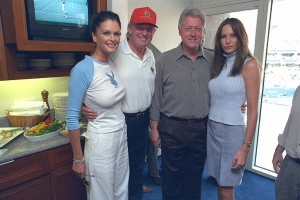
    Sports Illustrated swimsuit model Kylie Bax wearing a Playboy shirt, with Donald Trump, Bill Clinton and Melania Trump.

    In a week where in London a Metropolitan policeman savagely murdered a young woman walking home through lit streets, almost certainly tricking her into getting into his car by using his police ID, where another policeman guarding the site where her poor body was found sent obscene images ‘as a joke’ around his police mates, where another London policeman was released (today) without sentence after brutally attacking a woman, wrestling her to the ground in a headlock while screaming she was ‘a fucking slut’, where yet another policeman who had viciously killed the Mum of two he was having an affair with had his ‘manslaughter’ sentence reviewed because of the levels of injury to her, where a whole bunch of policemen brutalised women attending a peaceful vigil for the woman one of their mates had slaughtered, and that on the way home from that vigil yet another woman who ran to a policeman for help as a man exposed himself to her, was told to get lost, he wouldn’t deal with people attending the vigil, where in America this week six Asian women were shot down in two separate spas and the US sherrif said the shooter was ‘having a bad day.’ That he had a sex addiction and was ‘removing temptation’.

    I mean come on.

    If, as the porn industry is forever saying, porn doesn’t affect normal living why is it that violence against women is now a worldwide pandemic with two women killed every three days in the UK? Why is it that the police are not only ignoring women’s pleas for help, but appear to be actively involved in their brutalisation? Why is it that rape convictions are at an all time low? With only 1.5% going to trial? Why is it that in a rape case the victim is the only person in the court without legal representation? How in the name of god has it been deemed legal to force her to hand over, to the rapist and his legal team, all of her notes from counselling or therapy, if she’s been lucky enough to get counselling or therapy?

    It’s bullshit.

    With visits to Netflix, Facebook, Amazon and Twitter combined outnumbered by visits to porn sites, maintaining the nonsense that the porn industry doesn’t affect everyday would be laughable if it weren’t so dangerous. Does the fashion business not affect normal life? Or the food business? Or the drinks business?

    Even as we become more ‘civilised’, more caring, more vegan, women are to accept porn’s violence against women, its endless, ferocious violation, without question, while the Justice System and the police stand by?

    With Sarah Everard’s terrible death at the hands of a policeman, who had, incidentally, four days previously exposed himself in a fast food restaurant, and shockingly was not demobbed, his badge, gun and car immediately removed, thereby saving Sarah Everard’s life, but was allowed to carry on, women’s anger has reached boiling point.

    This is women’s George Floyd moment. See what they are doing to us? Enough. Enough.

    The Patriarchy, and its porn addiction, are costing women their lives. Their latest victim is Sarah Everard. In her name. In the name of all women – Black, Asian, White – murdered and destroyed by men fuelled on porn’s poisonous meth, shut it down.

    In the name of us all, shut it down.

  • Toblerone

    When you hear the phrase, “Subtropical paradise,” Longford is probably not what springs to mind. As children, we were taken to Center Parcs, over in the UK. Thirty-degree weather year-round, with palm trees, pools, slides and rides, all housed beneath a glass dome. There’d been great excitement in the family following an announcement of a new landmark Irish resort, only now it would largely benefit my sister’s little lad. All the same I was feeling nostalgic. My wife wasn’t coming.

    On day one, without bothering to unpack our bags, we headed to the dome for hours of swimming and sunbathing. Saddling me with an infant nephew, my sister and her husband walked away, hand in hand. They looked relieved to steal even half an hour to themselves. I resented their freckled Eskimo kisses and skipping steps off to the jacuzzi. A glass of wine wouldn’t have hurt. Of course, the imitation bamboo bar didn’t carry prosecco, never mind champagne. I eyed up a little carton of apple juice poking its ear out of the corner of the cooler bag, but couldn’t bring myself to disturb the little one. I considered the bloated bodies and sad eyes I’d see in the supermarket next week. Those young parents living without the luxury of a holiday like this.

    I was prepared for Christopher to start bawling the second my sister was out of eyeshot, but he didn’t. With my hands under his armpits, I bounced him gently up and down, muttering baby gibberish. Elastic strings of dribble descended from his mouth. They were pure and transparent. Like him. Looking in his clear, guiltless eyes I found some hope to quell that nagging uneasiness.

    When he started to whimper, I put his downy head on my shoulder and rocked him. I felt the eyes of a flock of fathers on me as they rocked their little criers and imagined they must be thinking, “This guy hasn’t a fucking clue what’s ahead of him”.

    In unison, their faces softened and rearranged with a concentrated indifference, their growling arched eyebrows conformed back into flattened bushy lines, in poor attempts not to cross…a line. A group of teenage bikini bums passed, and the fathers’ split-second double takes passed under the subtle scrutiny of their ever-vigilant spouses, keeping score and collecting ammo for the invariable fights to come, who were otherwise occupied breast feeding second sons. Every sucked-in gut flopped back out, as the parade of teens turned the corner, heading towards the lazy river.

    I thought about Portugal. Heather’s bum in her black bikini, on our first bit of real sun away together, where I’d proposed on the beach, like a fucking dickhead. We’d mused about how in our first six months together, we’d achieved a level of connection that other couples took years to get to or never achieved. It felt right at the time. That was the last I saw of it, the bikini that is. I recall that for subsequent aquatic adventures, like at Seapoint with her sisters, the charity swim on Christmas day in Sandycove, and even a mid-week spa day in Seafield, the one piece had resurfaced. There’s nothing inherently unsexy about a one piece. But I had to conclude that the same certain behaviors one can comfortably engage in abroad, you might never dream of doing at home. Then I sang to Christopher,

    My girl, my girl, don’t lie to me

    Tell me where did you sleep last night

    In the pines, in the pines

    Where the sun don’t ever shine

    I would shiver the whole night through

    Holding Christopher in my arms, I executed light-footed pirouettes, feeling the warmth of his skin on mine. One tiny hand gripped my chest hair and his breathing calmed as he began to fade. This tender display attracted much attention from a cluster of mothers. The rigid smiles they wore were more a reflex than genuine emotional response before each face rearranged to focus on her respective husband’s hairy tattooed shoulders. Christopher’s small head on my own shoulder, his drool cooled, before running down my back.

    My sister and her husband returned right around lunchtime and passed me a cold beer. But when I handed the little guy back, he reached for me with his wrinkly, doughy hand, and I heard myself say, “He was no trouble at all.”

    I must have read the same page ten times. Peeling myself off the plastic pool lounger each time I reached for a sip of beer, I became hypnotized by their rituals. The unpacking of sandwich bags, the spreading of butter, the squeezing of baby food and the spilling of apple juice. Without a word exchanged, but informed by nods and glances, their Formula 1-style, precision clean-ups ensued. All that munching, crunching, screaming, and soothing seemed like white noise to these parents. Watching the breathless fathers’ pregnant bellies heaving made me feel ill again. Those teens were parading past us once more, which prompted the tired women to brave pleasant expressions and adjust the colorful cover ups with which they concealed their sagging tummies, stretchmarks, and cesarean scars.

    Heather was away on a work trip to Amsterdam. Her company holding its annual conference, essentially a glorified, networking piss-up justified by some scattered workshops and team-building exercises.

    Things had not been good between us. Our relationship strained by living married life in the box-room of my parents’ house. The first-time buyers’ lament pulsated through every minute of every day as we awaited construction to begin on our forever-home, which at that juncture was nothing more than a giant puddle. The show house had seduced us. It would be worth the wait, we thought. However, the reflection in that puddle had turned to that of those who were no longer having fun.

    Heather had fun when she went out with her work friends. On the rare occasion I was invited along, I’d see her smile, laugh, cackle even, and look beautiful. But, whenever our eyes met across the bar, her entire demeanor changed. As if my face forced her to forget who she was. Only on the taxi ride home would her cheekbones rise again, in the glow of her phone, as she scrolled through her past.

    After the subtropical paradise, we went to the fake village for an authentic Italian dinner. My mother inhaled her wine, while Dad picked his teeth. I batted a half-eaten meatball back and forth across a stain of sauce, just to watch my nephew’s eyes swing like a cat’s. Back at the cabin, and much to my brother’s annoyance, I went to bed early. Well, after one whisky over a hand of cards. This left him to suffer our half-cut, maudlin parents, solo. I heard my bleary mother slur about how proud she was of him. Dad’s face would’ve reddened, and his gaze grown more distant, as he mused about being sixteen in the sixties, batin’ around on his Honda 50.

    “He’s probably just missing Heather.” My mother speculated, in what she imagined was a hushed voice. I could almost feel her spit landing intermittently in my brother’s ear.

    At last in bed, thanks to the crappy signal on my phone and the distracting chatter from the kitchen, I couldn’t get hard enough to knock one out. Not even conjuring a casual exchange with an attractive mother I’d seen by the pool, leading to an impromptu segue to one of those convenient family changing cubicles. Close, but it was no use.

    “You were so, so protective of your little sister when she was young.” My mother crooned, slapping away at what I assumed to be my brother’s thigh. Tossing and turning, I imagined Heather out at a bar in Amsterdam, after a long day of corporate icebreakers, awkward talks and wandering thoughts. Who was she looking at? Probably someone less pessimistic. Taller too. Younger, in better shape, and clean-shaven. Maybe with a man-bun. His eyes would be all over Heather. She’d laugh and push the sandy blonde curls out of her face. In skin-tight jeans, he’d see she had hips and an arse to die for.

    We were fatigued. Both of us. Was a good fucking something she wanted? Maybe she would come back from her trip in better spirits after having that thrill, being tossed around a hotel room with the vigour I once had. She knew full well I’d never ask her. Cheating men always bring flowers; what was I to think if she returned with a Toblerone, bottle of Scotch and a big hug?

    I’d heard nothing from Heather all day. But that didn’t stop me from checking my phone every few minutes. I flicked away through our wedding album in the hope of something rousing; she really did look beautiful in her dress. But nothing came, bar a few streaking tears.  My brother stumbled in, with his signature simultaneous belching and farting. So, I rolled over, turning my back on him, and pretended to be asleep. The waft took me back to the bedroom we’d shared as kids. His heavy breathing somehow soothed me, and made me glad he was there. I felt less alone and managed to drift off, dreaming something I’d never remember.

    The following day we’d booked in to play tennis. We each did our part taking turns to rock Christopher’s stroller back and forth. My Metallica-styled rendition of The Wheels on the Bus got him giggling and he squirmed as I ate some of his delicious animal shaped biscuits. My brother-in-law Karl looked visibly uncomfortable as he restrained himself from admonishing me. But then again, Karl couldn’t tell me off in front of his in-laws, just as I couldn’t punch him in the throat on every occasion, he said something condescending. Or called me “Bud.”

    On the tennis court adjacent to ours, a five-aside soccer match was in progress. Boys versus girls. Judging by what I saw, there was obviously a transaction happening. I gathered the parents in each goal had taken one for the team, herding a crew of kids for the afternoon. This freed up other parents for some afternoon delight, while perhaps later, the goalies could have a date night. They looked like they needed a nap themselves, but in their laboured cheers and smiles I sensed some hope.

    Sweat poured off the bear-like dad in the goal nearest me. For a moment, I pitied him, doubting what energy he’d have for later that night. But when I looked down at his wife, it was myself I pitied, as she turned out to be that attractive mom from the day before. The one by the pool.

    With each successive smash, great return or strong serve that drew cheers from our side, she was paying attention and deciding I wasn’t half bad. Untying the jumper from around her waist, she tossed it aside to show off a Lycra sheathed bum and thighs. I read this display of plumage as a sign. I watched her ask someone to swap positions, take a turn guarding the goal, so she could hoof a series of goals past her bewildered husband. I could feel her glancing my way, when a timer sounded indicating one minute remained before the hour booked on both courts was up.

    Fingers clawed through the chain link fence, from eager tikes impatient to enter for scheduled fun. As the clock wound down, both within and beyond that fence, kid’s screams reached a fever pitch. In one last effort to underscore the girls’ dominance over the boys, this determined woman took a cross from her daughter down on her chest and volleyed the ball into the top right-hand corner of the goal. Pulling her top up over her

    head, she exposed a well-filled sports bra, flat stomach, and on the small of her back, a single Scorpio symbol tattoo. Origin: Ibiza, circa 200. To the applause of all those watching, she led a flying-V of girls in a victory lap around the pitch, singing “Champion-ay, champion-ay, oh-ay, oh-ay, oh-ay.” As she pulled her top back on, our eyes locked through her tousled hair, and the final clap was mine.

    We packed up our things, all leaving the courts at the same time.

    “Pretty feckin’ impressive out there!” I said to her as she passed, “Half expected a power-slide, but that AstroTurf is a bitch”.

    Her husband had gone ahead with an arm around a sulking son. But now craning his neck, he called to her, “C’mon Ciara, let’s get this lot cleaned up.”

    She smiled at me and said, “Oh, even if it were grass, I wouldn’t be doing much sliding at my age.”

    “I dunno, you looked pretty good out there to me” I said, instantly regretting it.

    Ciara laughed and said, “Thanks… I’d better catch up with that gang.” before jogging up to join her son and husband.

    My bones ached, watching her walk away. As Ciara tied up her hair, the sun caught the lightly freckled back of her neck and I could almost taste the salt. Tugging on her husband’s sleeve, the little boy in a Liverpool jersey piped-up, pleading with a cute-hoor’s precariousness rarely perpetrated by their class, to his father.

    “Please Damo, please!”

    “Only the winners get ice-cream Johnny. Thems’ the rules,” declared his dad.

    Only remembering this bet due to Johnny’s boldness, the rest of the boys swarmed, grabbing his hand here, snatching at his shirt tail there, and a chant broke out.

    “Damo! Damo! Damo!”

    He was loving it.

    Ciara caught up with them to shoo the boys away and reassert a girls’ victory. Her husband slung his arm across her shoulders. after she’d wrapped her arm around his waist, without a glance backwards. But I could feel her feeling my eyes.

    “C’mon Bud” my brother in-law called after me, breaking the spell, “We’ve a reservation at eight.” His presumptuous usage of “Bud” usually made my teeth grind. But in that moment, it barely affected me. I checked my phone. Nothing. I pictured Heather’s arse elevated. She’d be on a Segway, zooming around Amsterdam’s cobbled streets to see the sights, as part of a company sponsored scavenger hunt, led by Luuk, Daan, or some other handsome counterpart from the Dutch office. Heather’d have taken a selfie, eating a stroopwafel by the canal, before Google mapping the walking directions to Anne Frank’s house.

    Gazing at the two grey ticks beside my day-old WhatsApp message to Heather that simply said, “I love you,” the likelihood that I’d been muted almost sent me into a state of panic. But I was distracted by Ciara’s shriek. Damo was tickling her, and a playful chase ensued. When she halted him with whips of her jumper, her flushed face was fucking gorgeous.

    In those aerial shots you see in their TV ads, the Centre Parcs forest seems to span forever. But it’s really not that big. Everything is contained within an artificial central village and I was sure I’d see Ciara again. I found myself double-taking other women with similar body types, around the pool, from afar, or from behind. Figuring her daughter to be say, twelve, and her son maybe ten, I encouraged my family to book everything from archery, to kayaking, to feckin’ falconry. Any activities where she and her kids might be. I even volunteered to attend cupcake decorating class with my sister and Christopher when Karl wanted a break. But after spending more than a minute pondering the list and contemplating whether Ciara was more likely to gravitate toward Bollywood Dance or a Boogie Bounce, I drew the line. It was a slow week. One which passed painfully, and with no sight of her.

    Our last dinner was at the fancy place on the lake, Café Rouge. I was surprised to see Ciara there and gratified when she noticed me. With a pleasant nod she passed our table, as her family was shown to theirs. Damo remained engrossed in his phone, the glow of which illuminated his stubbled jowl.

    Wearing flawless make-up, Ciara looked perhaps only a few years older than me. Her faded Guns and Roses t-shirt could have been from the nineties; but was probably just a cool mom’s pick-up from Penney’s. In fact, Damo washed up well enough too. Belly hidden in an expensive-looking shirt, he was breathing easy, his thinning hair sculpted not without some expertise.

    Detecting the residual rugged handsomeness Ciara would have been attracted to, back when he was sliding in tries at Blackrock, I wondered if she still saw him like that. Or whether it took a bottle of wine. Being seated a few tables down allowed me an uninterrupted view of both Ciara and Damo’s faces. I ordered a salad. When what I really wanted was the steak.

    By dessert, he was scrolling endlessly on his phone again. It didn’t look like work. He wasn’t responding to critical emails. Damo didn’t type at all, and his eyebrows furrowed the way one might react to a series of surprising match scores. At one point, he even bit down on his tongue. Ciara contained her irritation by tilting her head to smile at passers-by, that and pushing that last profiterole around her plate.

    When Damo excused himself to make a call, he left Ciara a parting kiss on the cheek. Through the back of his shirt, a thin line of sweat had bled, and as he lumbered out of the restaurant, I wondered if I’d be able to take him down in a headlock.

    When Damo left, Ciara momentarily rummaged in her bag, then headed towards the back of the restaurant, clutching what appeared to be a pack of Marlboro Lights. After nicking my brother’s cigarette pack from the breast pocket of his coat, I followed her out of the dining room, and past the kitchen, to the smoking area.

    At the glass door outside, she flashed me a smile, and blew smoke out of the side of her mouth. I asked for a light. It was a small world. We didn’t live that far apart back in Dublin. We’d gone to schools near enough to each other and would’ve drank in some of the same pubs. Both of us feigned recognition. “Oh, I thought you looked familiar,” and “Yeah, I do know so-and-so.” She went to her pack for another, but was all out. I’d one left that she offered to split.

    She apologized for the duck-arsed fag. There was something intimate about the warmth of her saliva on my lips and it made my heart pound. After noticing my tattooed wrist, Ciara took hold of it, examining and running a finger along a blown-out line.

    “I wish I’d gotten more, if I’m honest.” she said.

    “It’s never too late.”

    Ciara gave her mouth a blast of a minty breath freshener.

    “Does he not know?” I asked her.

    She raised a thin eyebrow, as if to say, “Are you fucking joking?” before scoffing, “He wouldn’t notice if I shaved my head.” Before parting to head back to our tables, we formally introduced ourselves. First name. Last name. Handshake.

    The next evening, back in Dublin, I went to meet my wife at the airport. My WhatsApp messages went undelivered. Her phone had died. But when she finally appeared through the arrivals gate, she looked small and broken. I thought about the soccer match, our wedding photo, Christopher’s clear eyes and dribble-soaked chin. My heart squeezed closed like a fist and I knew we wouldn’t make it. Waving away like a fool from behind the barrier, I greeted Heather with a hug and took her bags. She didn’t have a Toblerone. Just a headache, and a cold sore.
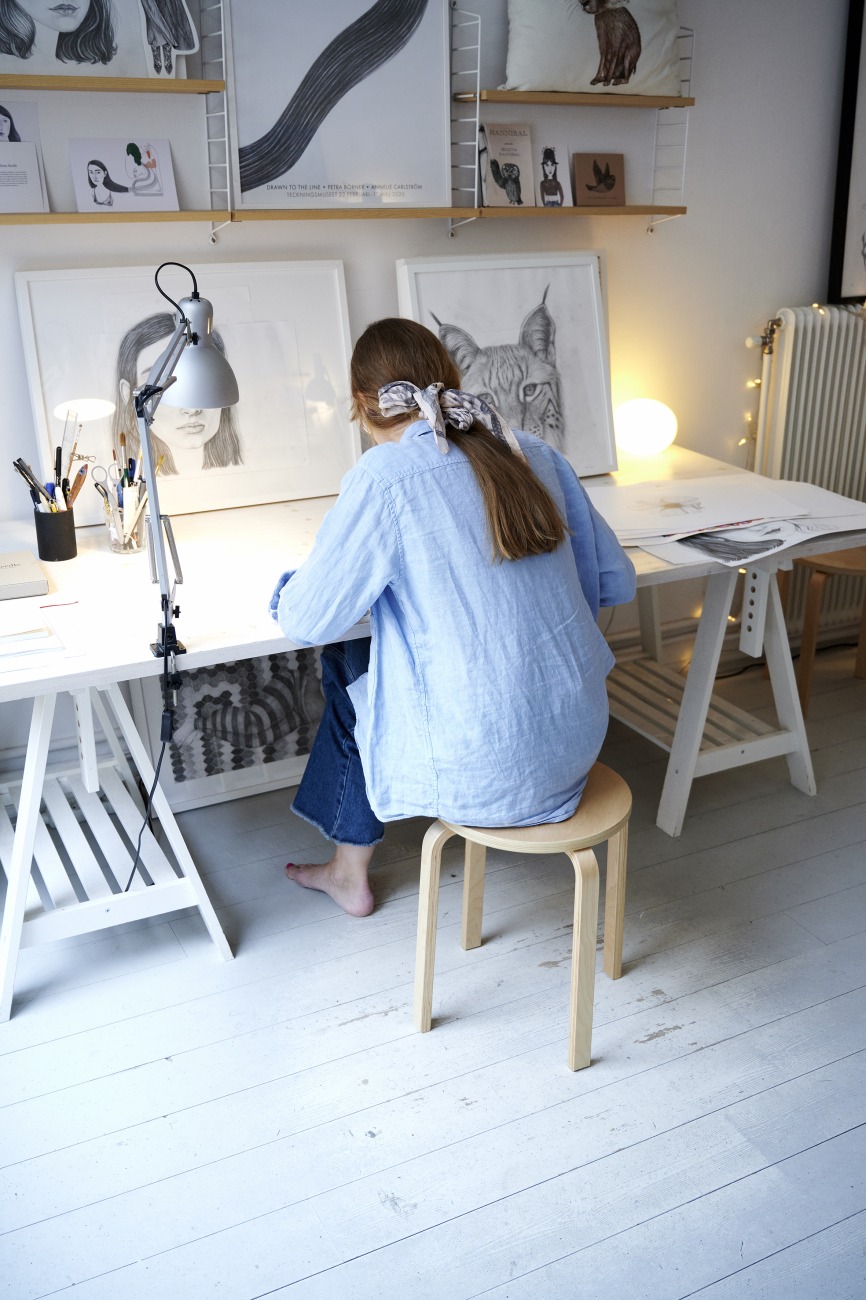
  • Featured Artist Michal Greenboim

    Growing up in a small rural town in Israel, Pardes Hanna, has shaped me into who I am today. My grandparents were part of the hundreds of thousand people who fled Europe prior to the Holocaust and settled the land of Israel in the 1930s. It was important to them that we were raised as Israelis. They instilled their love for the Jewish country into us and this is what has inspired me throughout my career as a photographer. My image making is a reflection of my childhood in Pardes Hanna; it is filled with my interpretations of the emotions and senses that I grew up with: from the breeze I felt while swinging on a tree swing to the sweet tangy flavor I tasted from our mango tree. These moments are what has influenced my work and continue to be a part of my photography every day.

    From On Our Journey To Home

    I did not always notice that my photography was shaped by my childhood memories. During the years, I realized that I had been always carrying memories of the house I grew up in with the big luscious trees surrounding it deep down within. I develop these feelings further and organize my work into a book. Forming my book, The Orchard Trail, which is based on my raw childhood emotions, feelings, and memories. It was only while working on the book that I realized that most of my photographs are based on the innocence from my childhood.

    Pardes Hanna, translated directly into Hannah’s Orchard”, is a town that was filled with orange, avocado, and mango orchards. I remember small moments such as exchanging our avocados for the neighbor’s mangos. My images reminded me of how it felt to lay on the grass under our big tree reading a book.

    Looking up to the skies and inventing stories based on the shapes of the clouds.

    Hearing the rustling leaves and picking oranges with my father in the nearby orchards.

    On a rainy day, I would set a chair under an umbrella and listen to the sound of the raindrops.

    As kids, we would walk over to our neighbor’s house for story time or a piano lesson.

    These are the memories that inspire my photographs, they remind me where I started and who I really am.

    Through the process of placing images together and choosing which ones would come together to form diptychs, I learned so much about how different aspects of my life are threaded together once they’re viewed on a deeper level.

    The Orchard Trail became a homage to the magical place I grew up in. My grandmother planted a tree in the backyard of my childhood home when her and my grandfather arrived in Israel in 1933 from Germany, against her family’s will. The tree became a symbol of growth, its roots planted deep into the ground to prove to anyone who thought they didn’t belong that they were staying. I learned who I am through the creation of my book, The Orchard Trail where I explored the importance of the family that I raised and the way I engrained my values into my children and future generations. After finishing The Orchard Trail, I began working on a new project called, Keeping the Flame.

    It was during this project that I researched more about my Jewish heritage and looked into the past to learn about the roots that have brought me to where I am today. I focused on who I am as a modern Orthodox Jewish woman, and also researched the Jewish artist, Chagall. I then moved on to learning about the Jewish homeland, Israel, a land that has held my past along with my future, through analyzing the art of Israeli painters. Lastly, I represented my relationship with the land of Israel through my photographs of ballerinas (images 12-16 ) who are always in motion but are also stable and balanced, just like I have moved away and back to Israel several times, I always know that it will be there as a place for me to call home.

    Learning about who I am in the past, present, and future has given me depth and appreciation for where I came from, the journey I am on, and for the family that I’ve raised.

    In Cuba, I was exposed to a small Jewish community, one of the smallest in the world. They serve as a proof that when a community sticks together, they can overcome anything. I realized then the importance of having a community as support, and this inspired me further to tell the story of the Jewish people. They showed me that even with limited resources, the importance that the Jewish traditions play in who they are and what they believe in. Furthermore, it showed me how vital it is for us, as a nation, to pass down our traditions even when it is difficult, because if not for us, they will not exist.

    From On Our Journey To Home 

    In my book On Our Journey To Home, I visually describe the migration of my family from Europe to Israel in 1933. This immigration story tells of the many challenges and hardships involved with such an effort to establish life in a new land. At the same time, it expresses the sense of optimism and the determination that sustained the hopeful vision. The journey involves sacrificing closeness to friends and family, learning a new language and adapting to a different culture in order to fulfill a dream of a home and better life for generations to come.

    From On Our Journey To Home

    I poetically sketch the feelings and dreams of my grandparents beginning with the time of the diaspora, their fears and insecurities involved with life in Europe at the time. They dreamt of a place for a new beginning, where they could start over and shape it however they desired, a place where they would create a just and giving society. Therefore, they settled in a small town called Pardes Hanna’, where they farmed the land, and built the town from the ground up with their own hands.It was a new and optimistic beginning, but not always a smooth one, with a lot of difficulties and sadness, Life in the new land wasn’t easy. There was much fear; of the enemies around, of illness, and that their dream would not come true.

    The story continues on for five generations, to include the experience of life for my family in Israel today, which is wonderful, far beyond anything my grandparents imagined more than a hundred years ago.

    It was a journey back in time while I spent part of it searching the archives of Germany, Israel and the United States, reading letters that my grandmother wrote, or articles written about her in newspapers. I learned taught everything I could from the places where they lived, and the spirit of that period, and so this book was created, by virtue of imagination and thought.

    The title image is from Michal Greenboim’s last project “On Our Journey To Home”

    www.michalgreenboim.com/on-our-journey-to-home

    www.michalgreenboim.com/instagram

    www.michalgreenboim.com