Stopping wantless under cherry blossoms
He hears a girl singing from the sewer,
then harmonizes voices with some hums,
then sings the final chorus like he knows her,
their voices shaking red chrysanthemums –
but now the crowds of fading stars are fewer
and his voice grows weaker as the day glows nearer,
as he’s alarmed by the stirrings of the bums.
“Should I come up to see you on the street
so in the morning light we could now meet?”
A blossom plummets through the dewy grate.
Before he can reply I, an old class-mate,
pass by, asking why he’s standing here —
“for — for cherry-trees this time of year.”
______________
SONNET ON ANASTASIA
Like Martin Luther King she had a dream,
but lived out what the TV would prescribe.
She’d only ever be a psych-ward queen.
I know she might have equalized our tribe.
I whisperingly sing so soothingly;
Sometimes I wonder: would she still be gone
If she had measured my worth by my love, alone?
I could not heal her so distantly.
Like Martin Luther King she had a dream,
but lived out what the TV would prescribe.
She’d only ever be a psych-ward star.
We found her at the harbour, drowned. Her surgeon-
markered life-time thought-line equalled one long
wound — her legacy a traceless scar.
THE SONNET OF A PROPHET ADDRESSING HIS OWN COUNTRY
Canada, I came to you with my soul
and with diamonds, and you tried to collapse them
back into a vacuum, back into coal! —
Canada, remove your bloody diadem!
Canada, I came to you with answers
to inquiries you make in your lion-wild
dreams, where your wonder has been exiled,
where your wishes are kites so drawn to stirs
of the vortex of utopia, through
whose one end I blow, as though through a trumpet,
the prophecies you mock, despite sensing,
deep in your soul’s centre — you freeze —
the chance my drawn and quartered words are true,
these testaments to my theophanies!
____________
SONNET XVIII
So boa-constrictor-slowly you move,
exterminators of my humankind!
Some hardly feel their dying and approve
their deaths with stasis, silence; quarantined,
they cheerlead their own Gotterdammerung
while our exterminators now erect
the camps where Fidelitites — the unsung
saints, the Bride of Christ, the final sect,
dressed from head to foot in fealty —
will kneel before the pits; the humanoids
will jeer them from their seeming realty,
sore from their beast-marks – rabid with tirades.
So boa-constrictor-slowly you kill
those who’ll deny or receive you with full will.
THE SAVIOUR ADDRESSES A DANCER AT THE JUBILEE OF THE SECOND COMING (for Lenora Di Saverio)
Lone among the dancers, you mourn– despite Death’s adieu —
my Calvary anew, behind your sunglasses?
Woman, none stands alone so beautifully as you,
since, has the Kingdom not Come? You say your tears are dew?
Why now cry amid the trumpets and the brasses?!
Lone among the dancers, you mourn, despite Death’s adieu —
Mourn the dead Inferno-hours of the Risen Son, too?
O won’t you jive and join in chalice-clangs?
Woman, none stands alone so beautifully as you.
Why should you not waltz to a flawless few
Of Cecile’s tunes? Whiff this lilied wind that passes?
Lone among the dancers, you mourn, despite Death’s adieu.
I feel no sorrow; must my whippings ensue?
Should you not see family, upon my greenest grasses?
Woman, none stands alone so beautifully as you.
Behold the diamonding stars! Behold your halo-hue
supremely match the moon! To Lea! Raise your glasses!
Lone among the dancers, you mourn, despite Death’s adieu –
Woman, none stands alone so beautifully as you.
__________________
A SONNET AFTER MY WINTER SURRENDER
O Seraph who stands on sacred airs —
goldening the firmament with halo-
beams – illumining my soul with
rosary-stars, which supernova
after your Amens — you whisperingly singing
over me, soaring my soul like a whitening kite
triple-tied to an infinite string…
O Seraph who lands on burn-out back-
yards of this downcast world, when will this tempest end?! “Know: I only seem a Seraph! I am come, tonight, to witness your rebirth! Revere the spirit inside the whiteout; the snow foreshadows my Kingdom on Earth!”
_______________________
Featured Image: James Ensor – L‘entrée du Christ à Bruxelles
The Garda Síochána will succeed, not by force of arms or numbers, but by their moral authority as servants of the people. Michael Joseph Staines, First Garda Commissioner (1885-1955)
The above statement is, in my opinion, a good founding principle for any Police Service in a free democracy. What is meant by “moral authority”? Merriam Webster defines this as ‘trustworthiness to make decisions that are right and good.’ This is authority based on principles – norms which are independent of written, or positive, laws.
Under its current leadership, An Garda Síochána has become increasingly politicised by this government and its predecessor. This undermines the moral authority which Michael Staines rightly recognised as being so vital to its success as a Police Service. The Gardaí should indeed be servants of the people, not private political and ideological enforcers. Unfortunately, we are seeing policing in Ireland increasingly take its cue from the double standards of its hypocritical political masters.
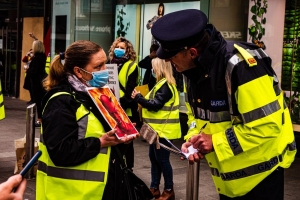
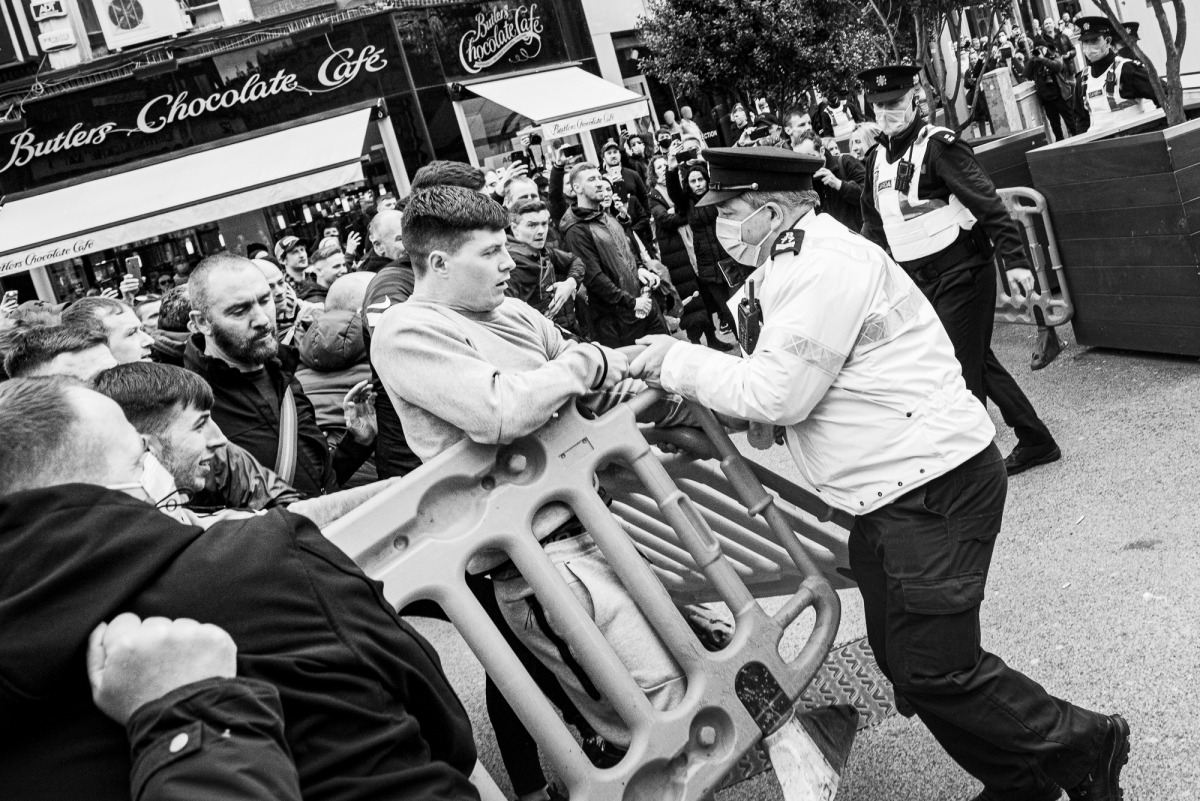
Last April, Gardaí broke up a demonstration by ordinary citizens protesting the loss of their jobs at Debenhams. Ironically, in light of recent events, the Debenhams protests were endorsed by prominent voices from the Irish Left.
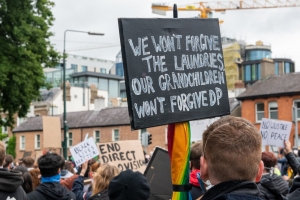
However, in June 2020 a five thousand-strong Black Lives Matters protest paraded through Dublin with hardly a Garda in sight. This demonstration, supposedly in the middle of a deadly pandemic, drew no condemnation from the political establishment – quite the contrary, in fact. There was no rush to social media to raise any public health concerns, nor to condemn the protest as an affront to the “people who have sacrificed so much”, “frontline workers”, and “those who have died.”
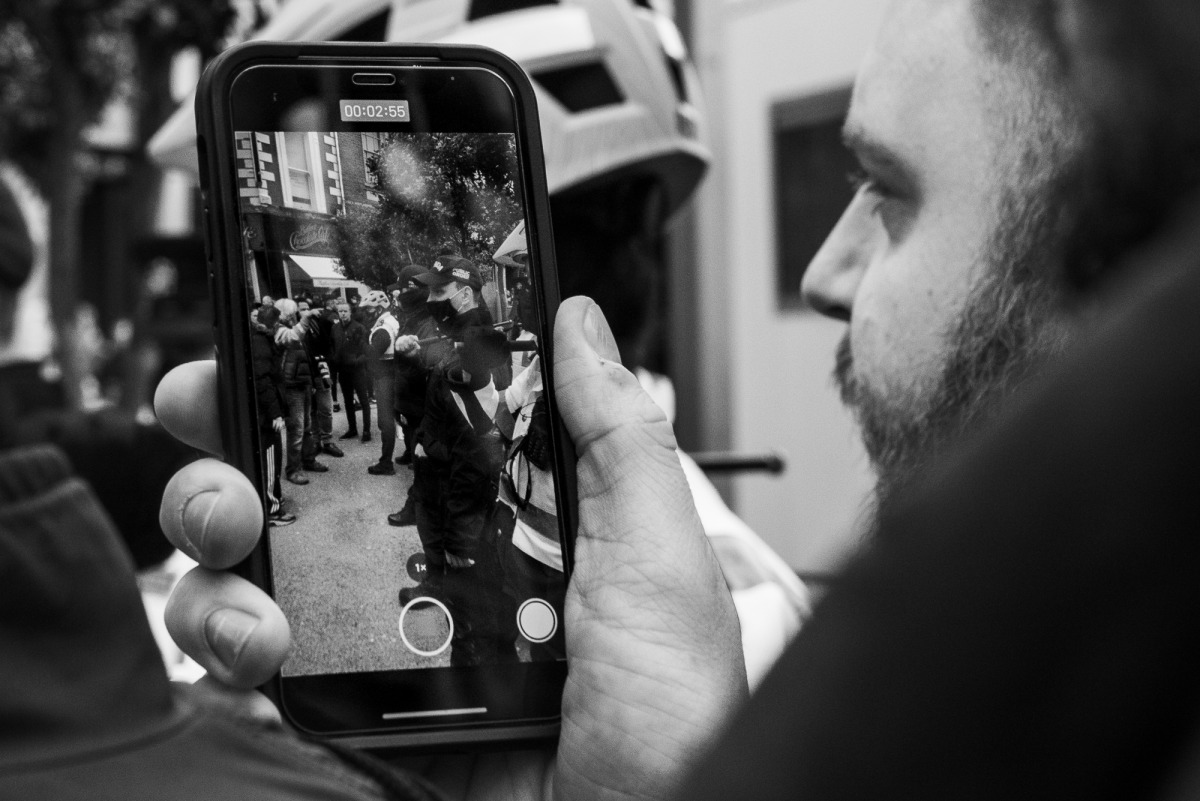
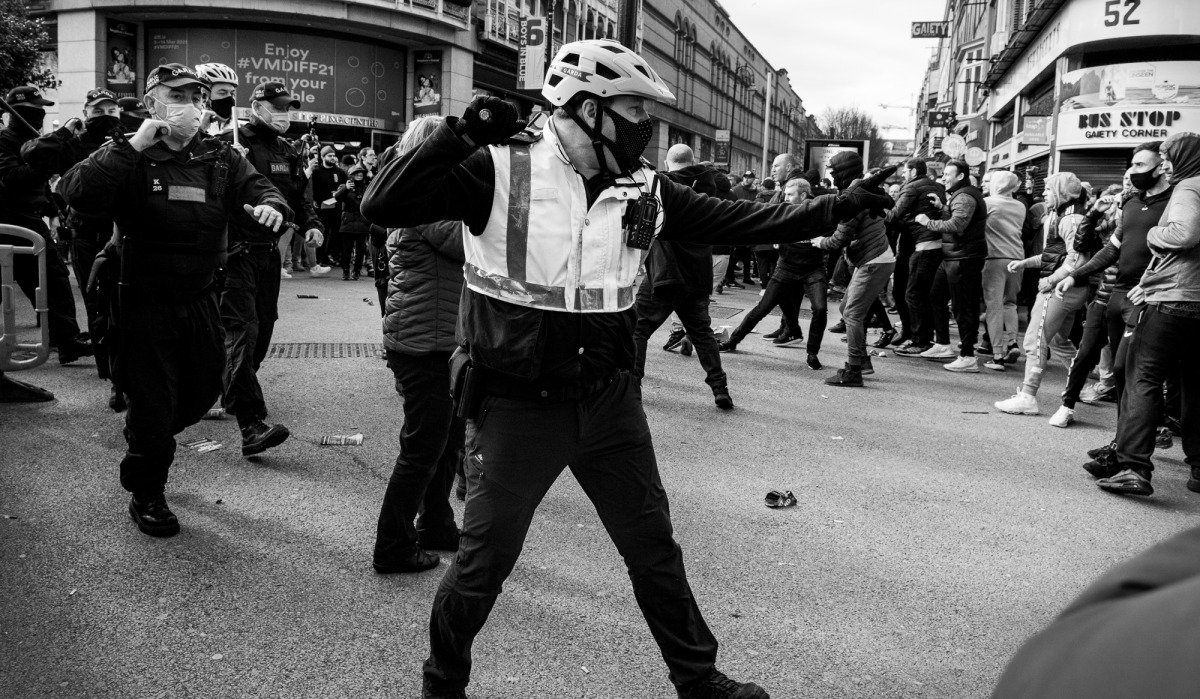
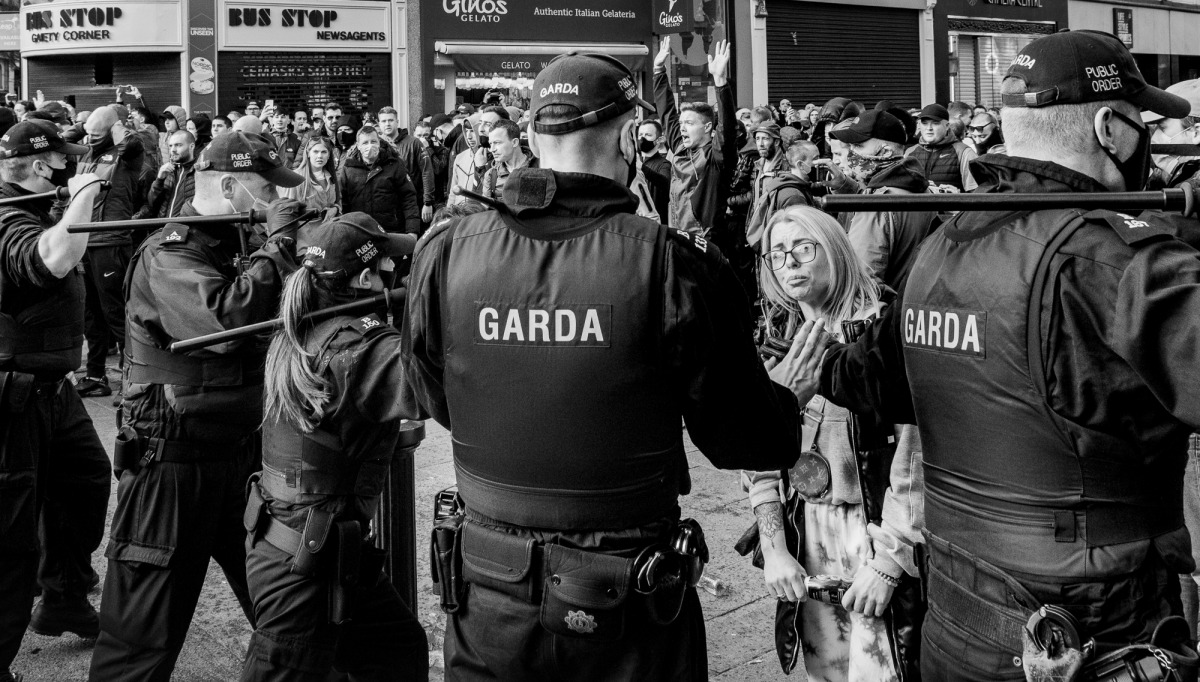
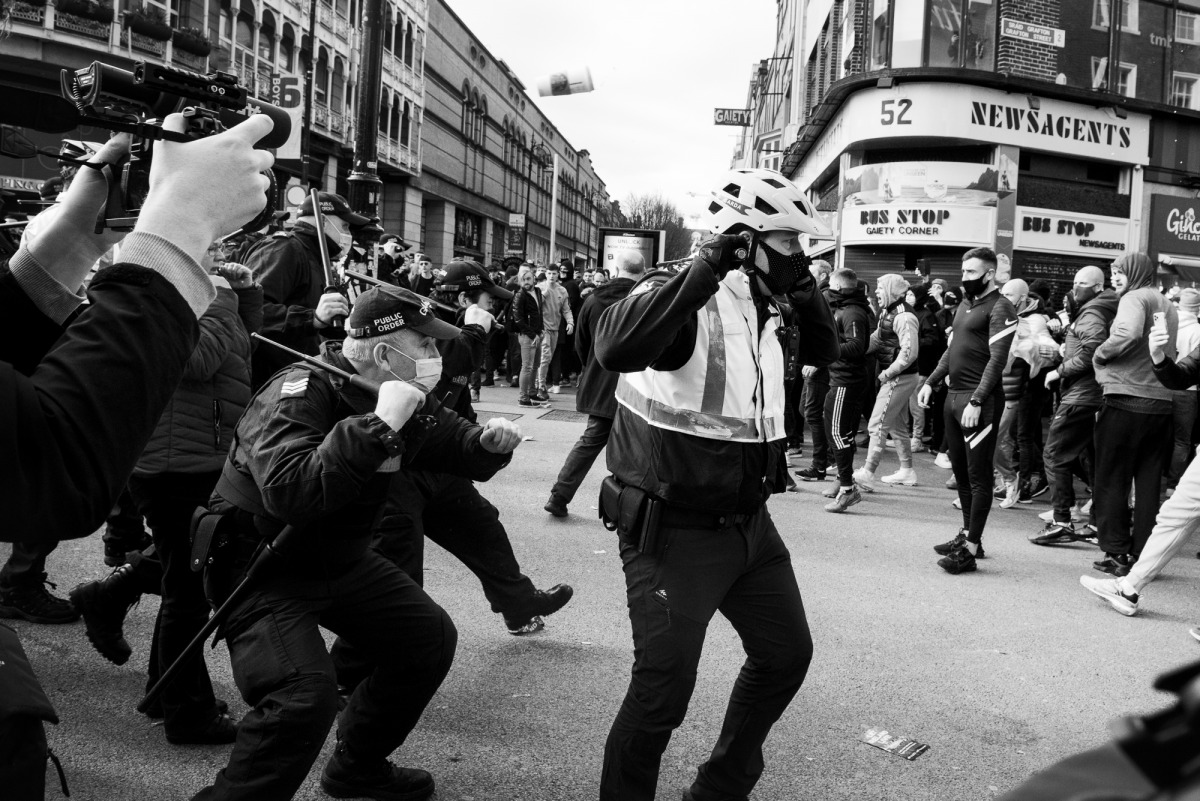
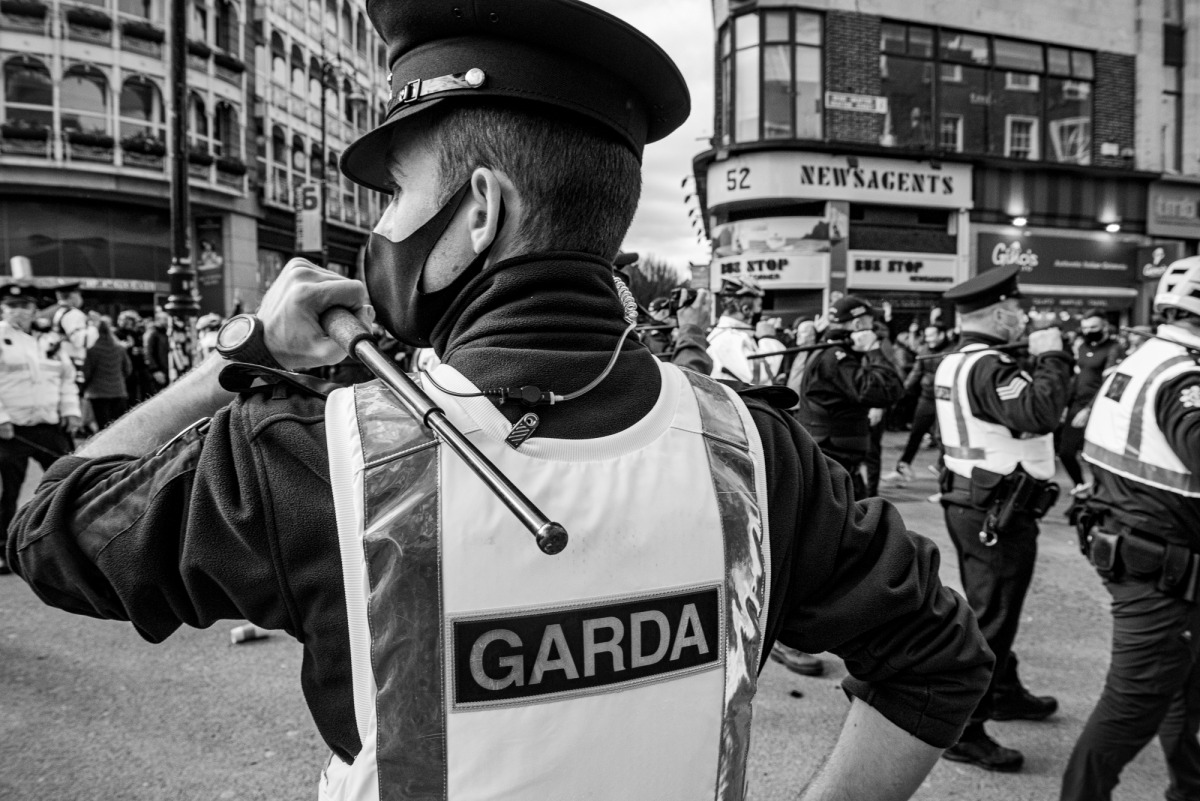
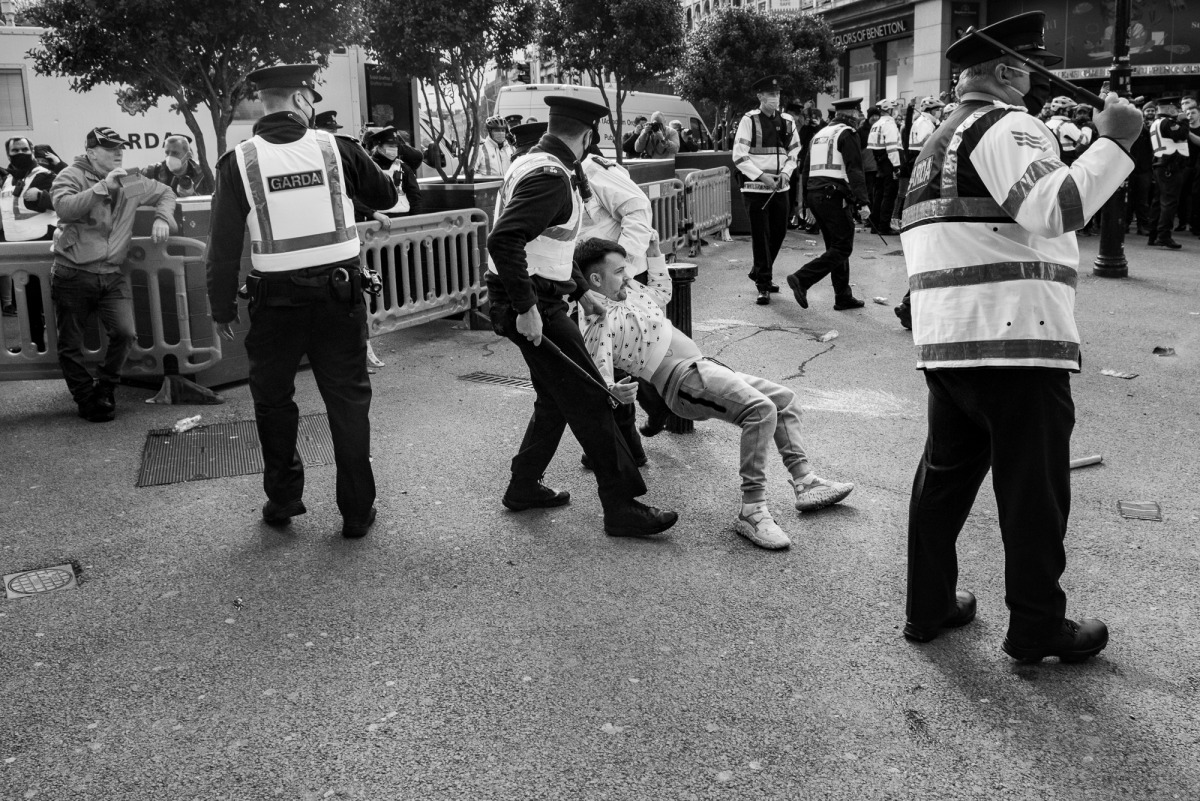
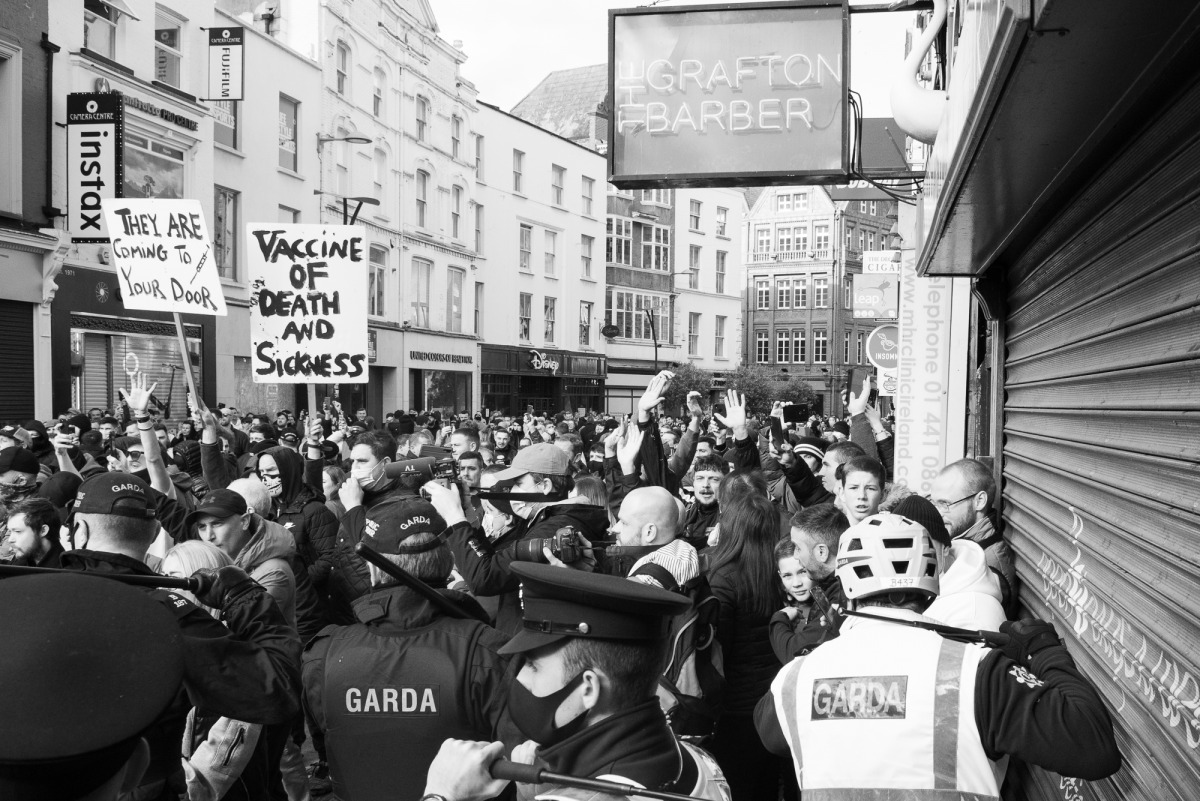
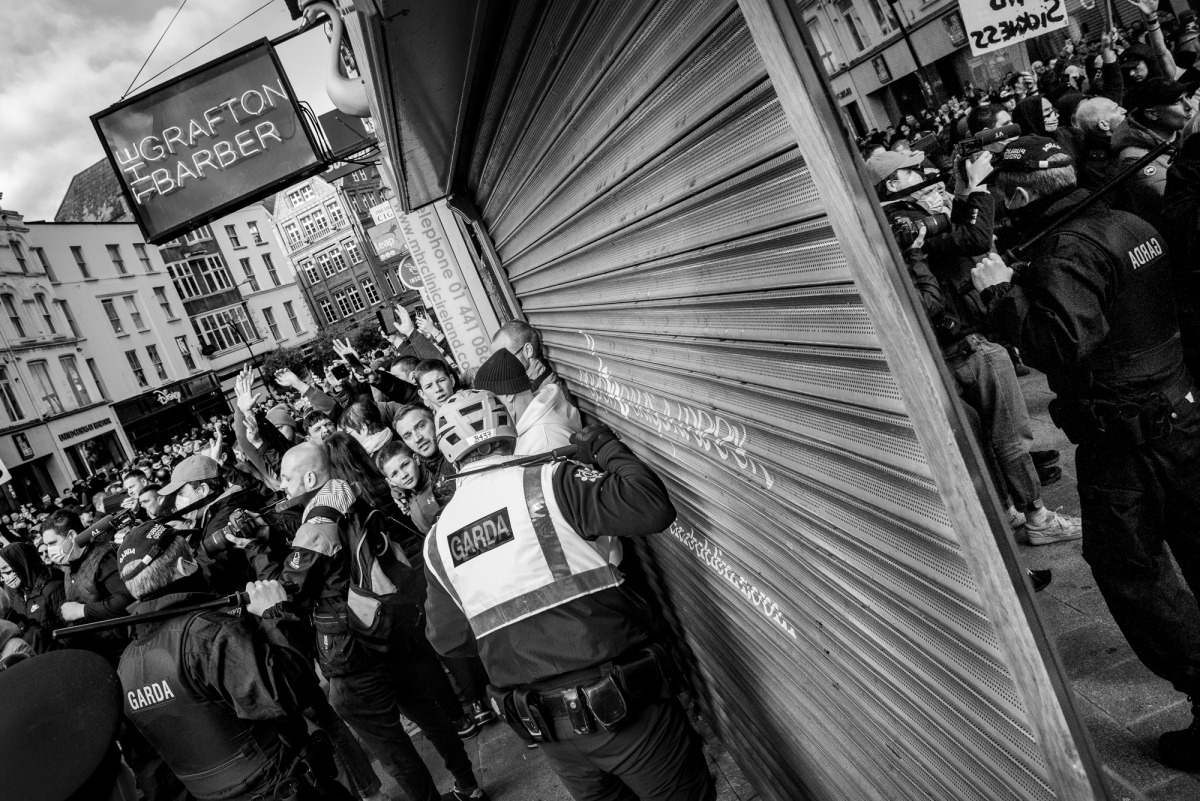
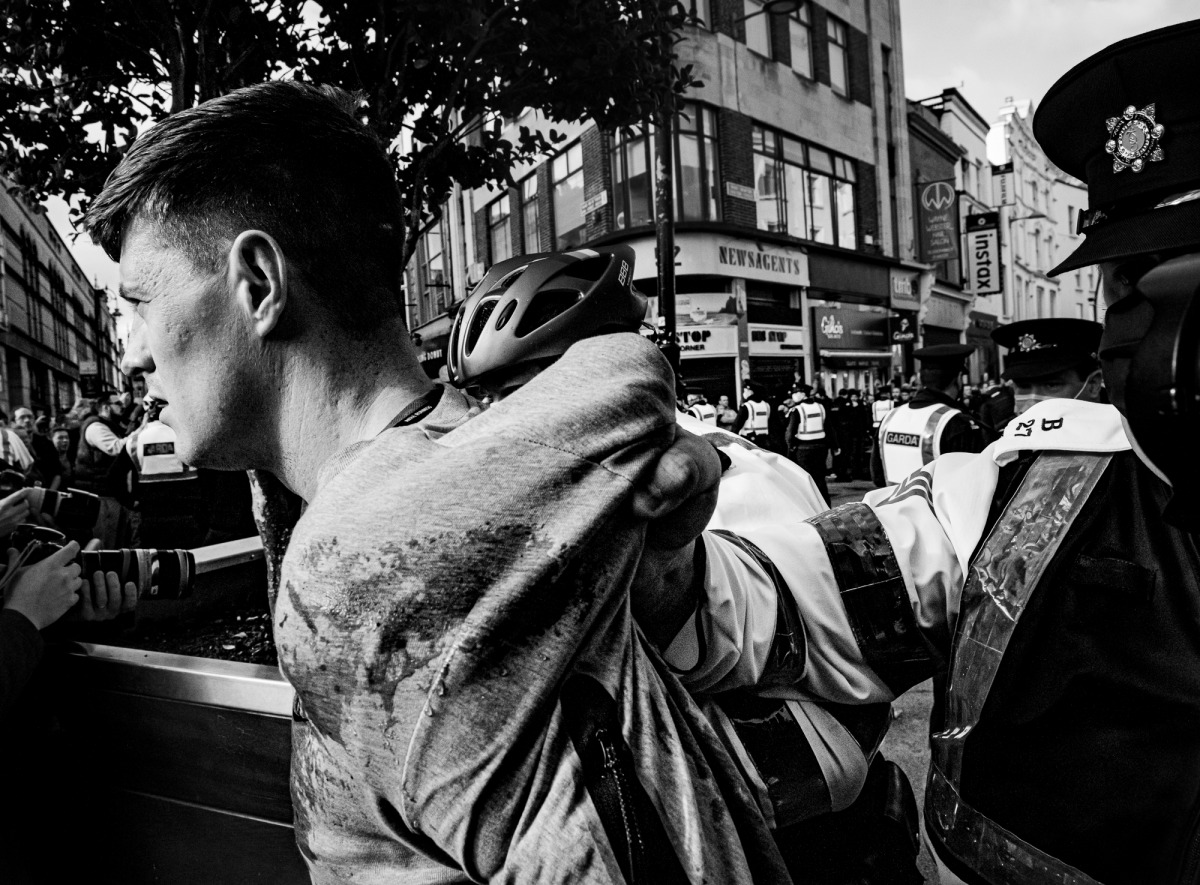
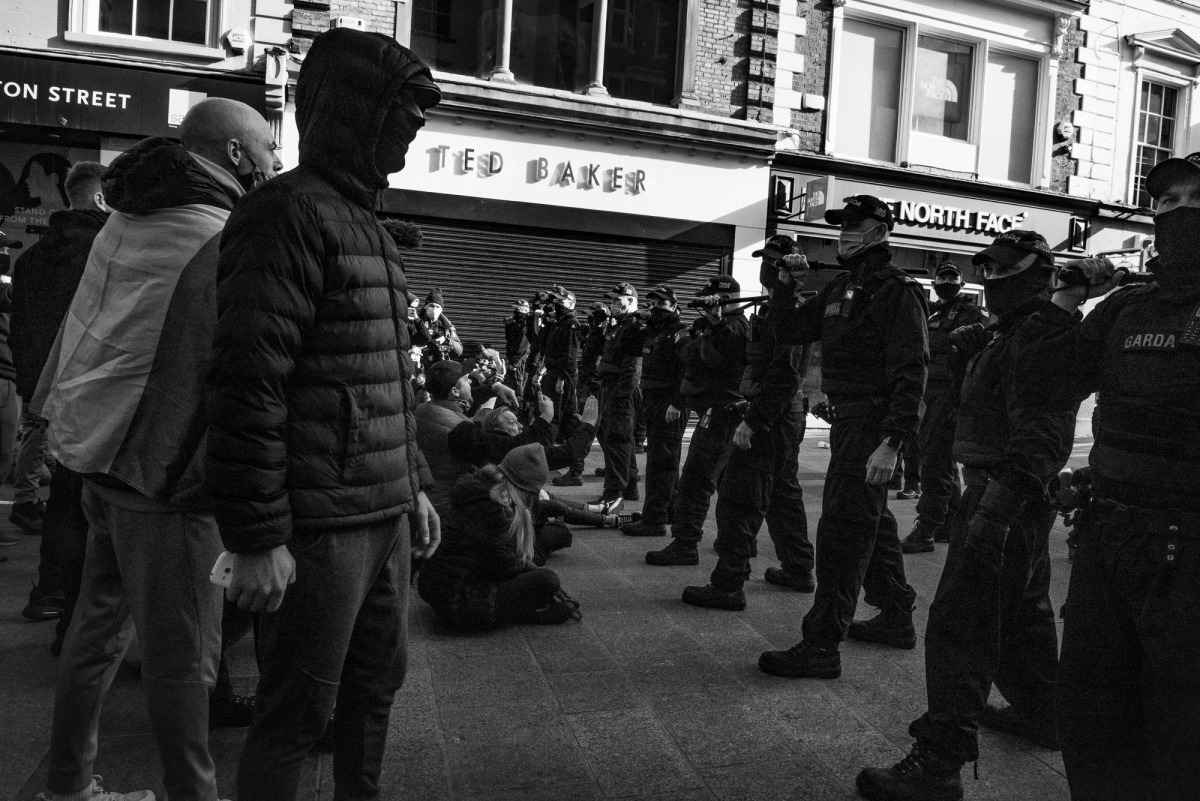
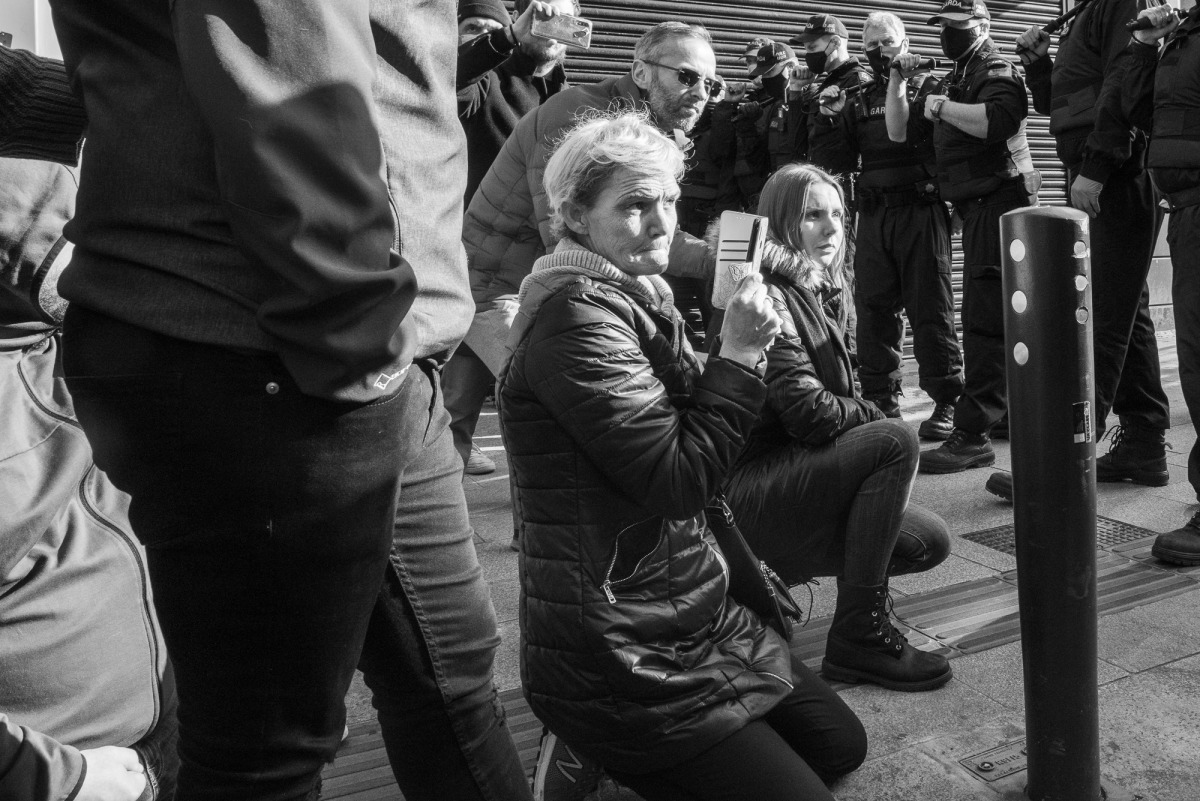
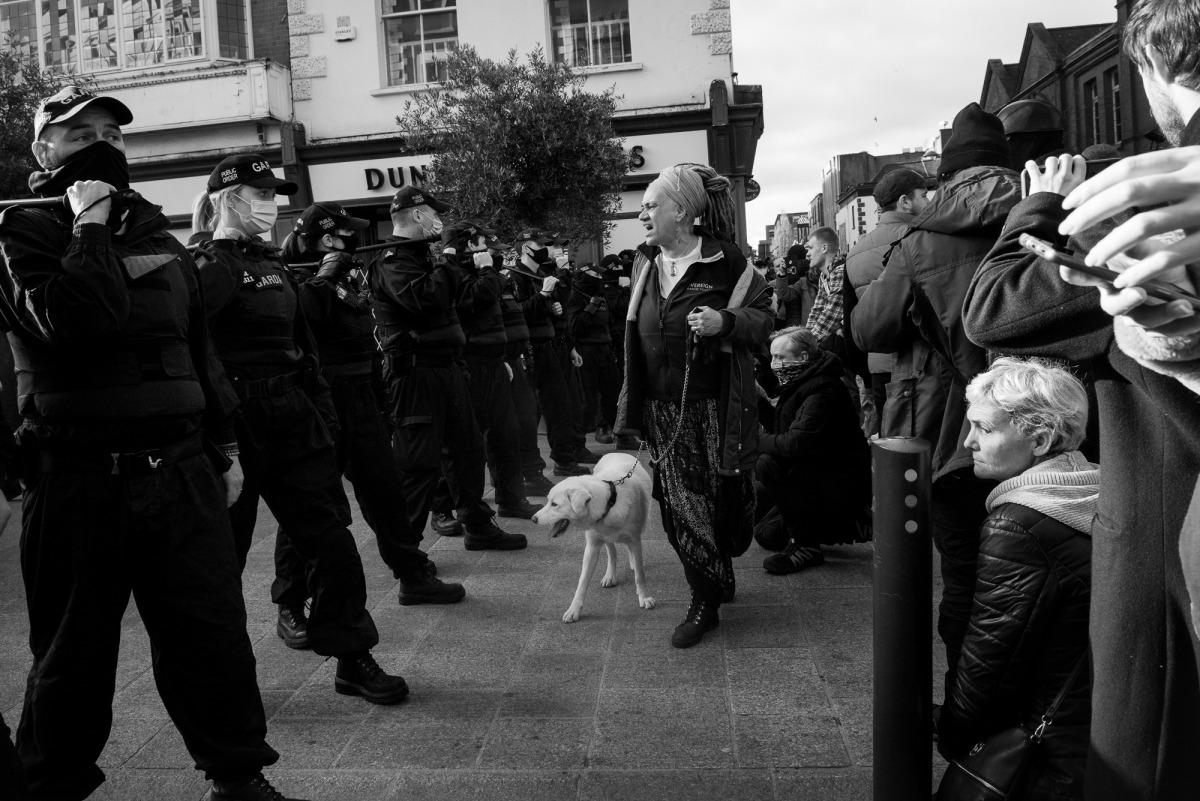
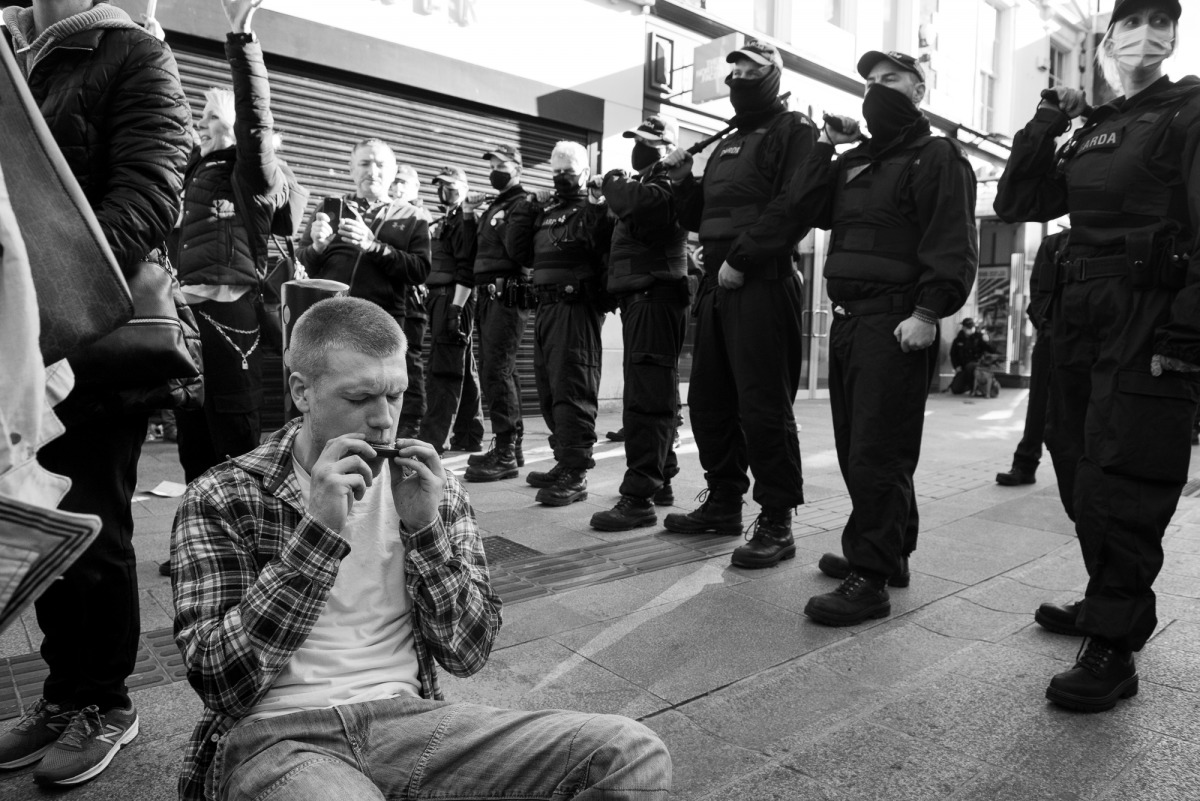
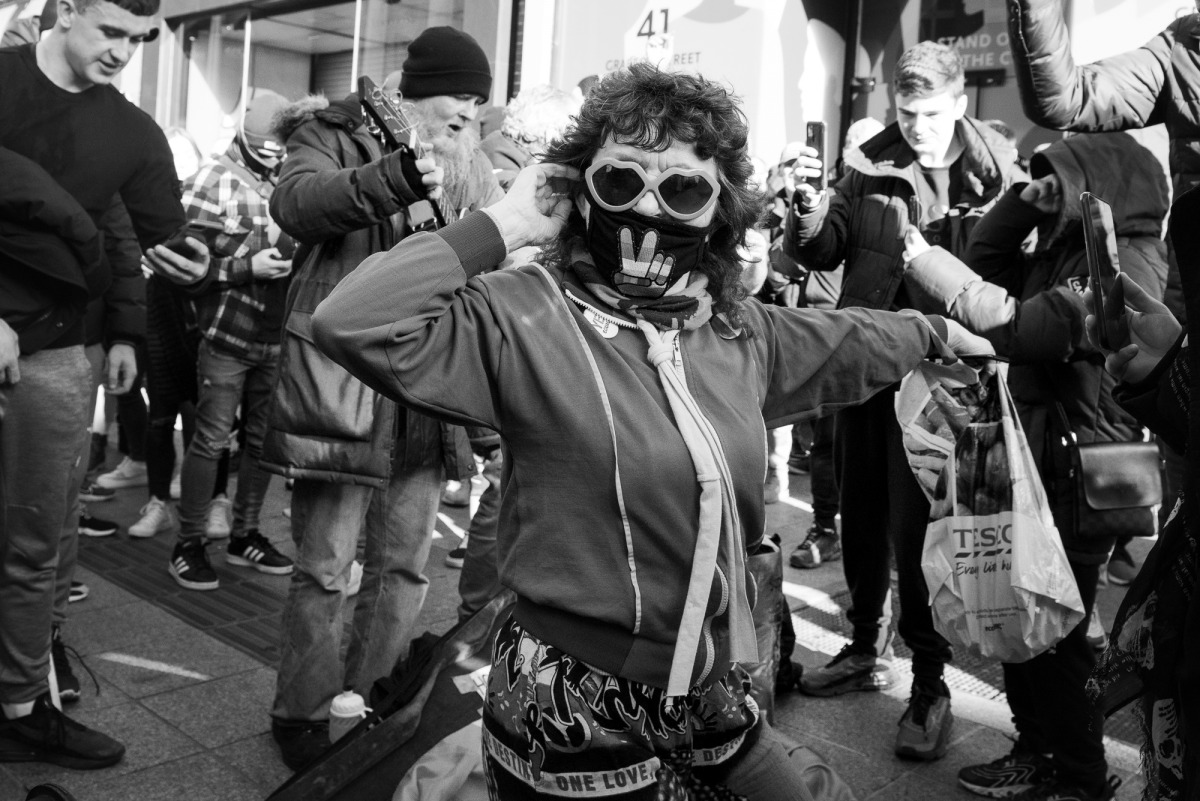
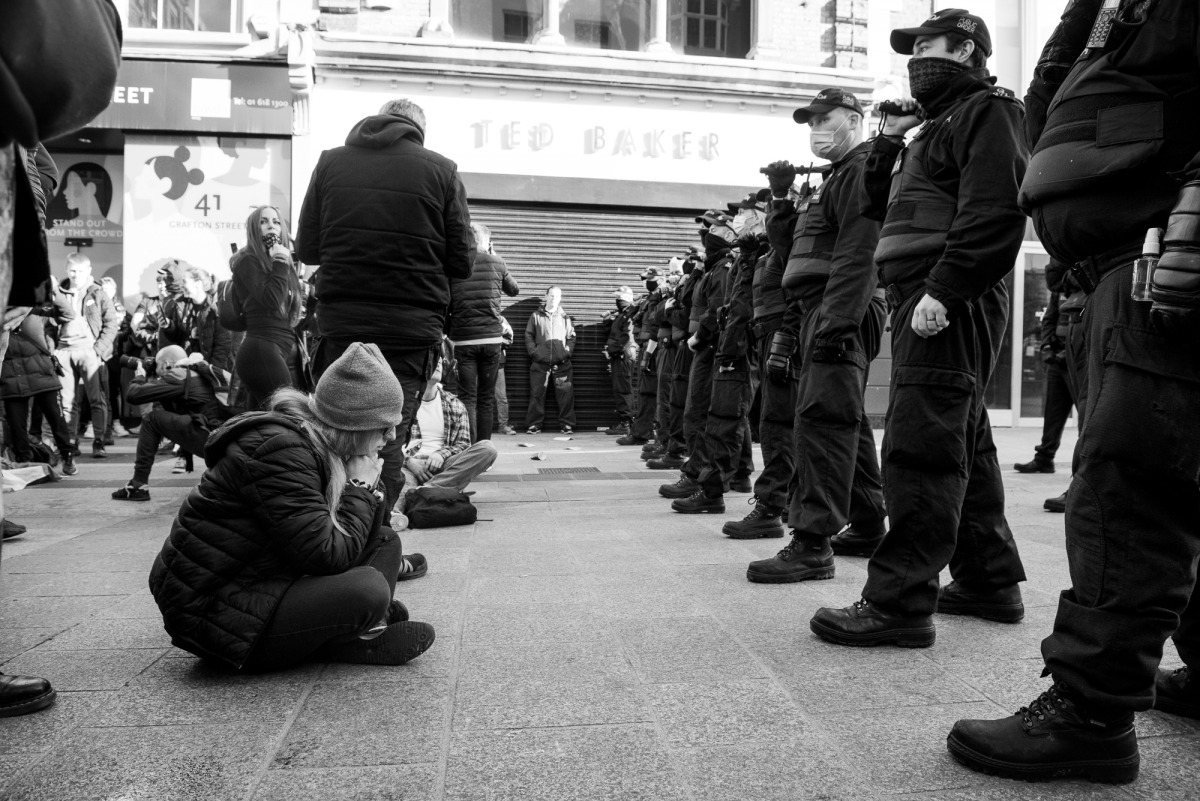
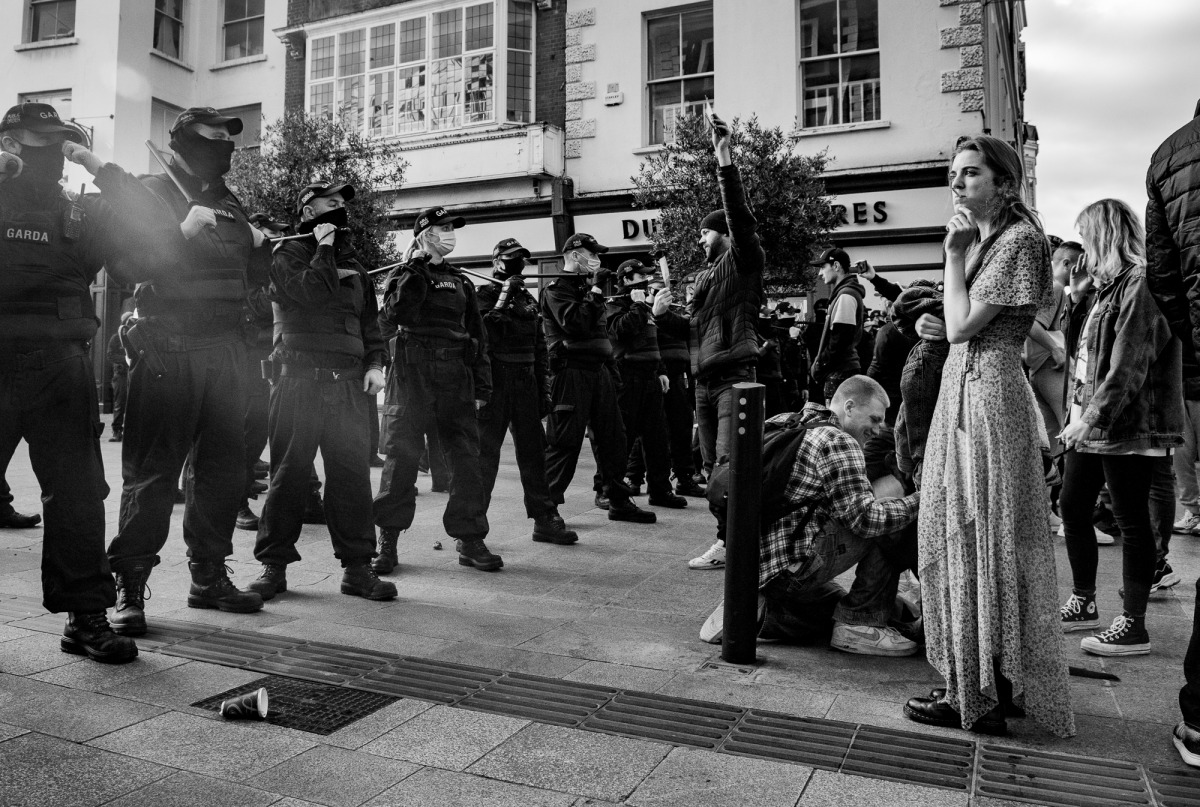
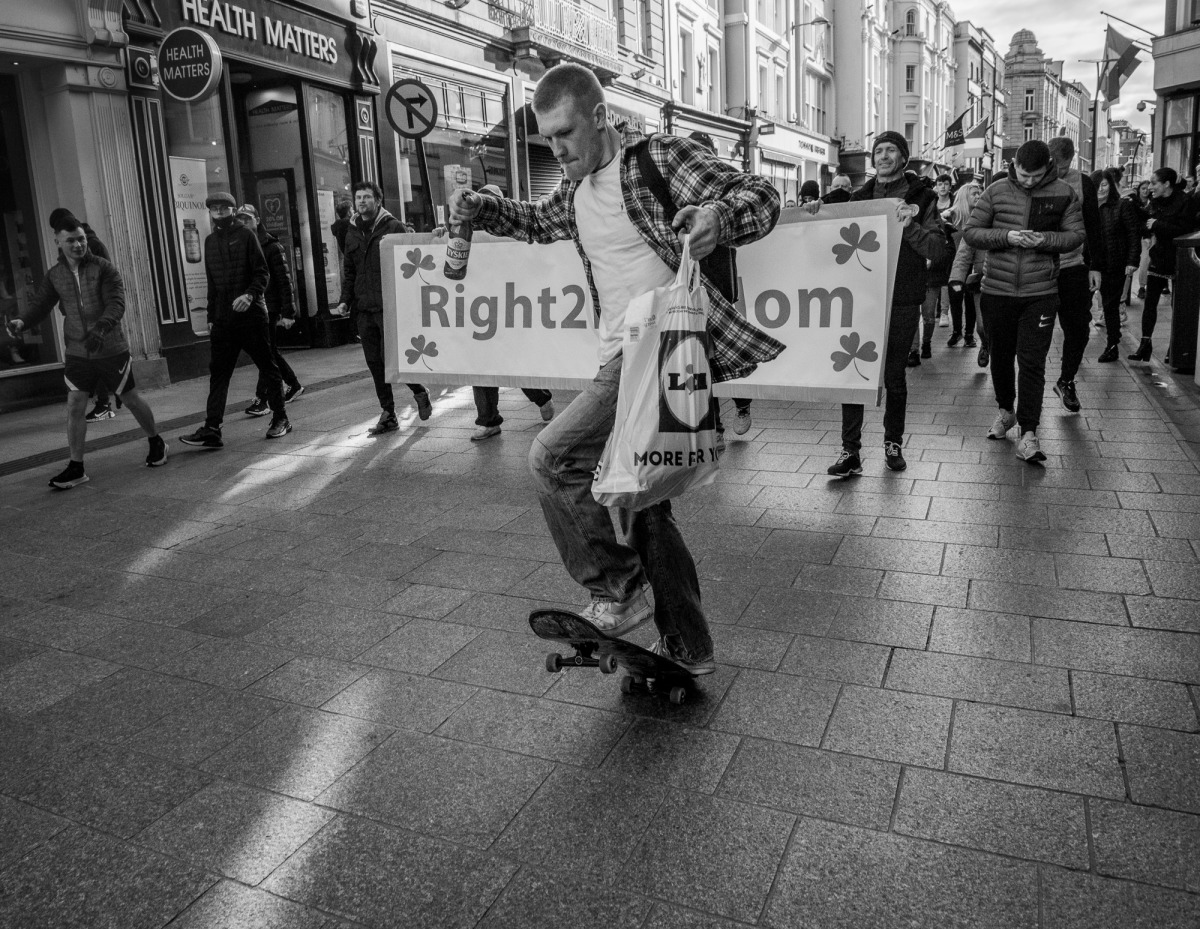
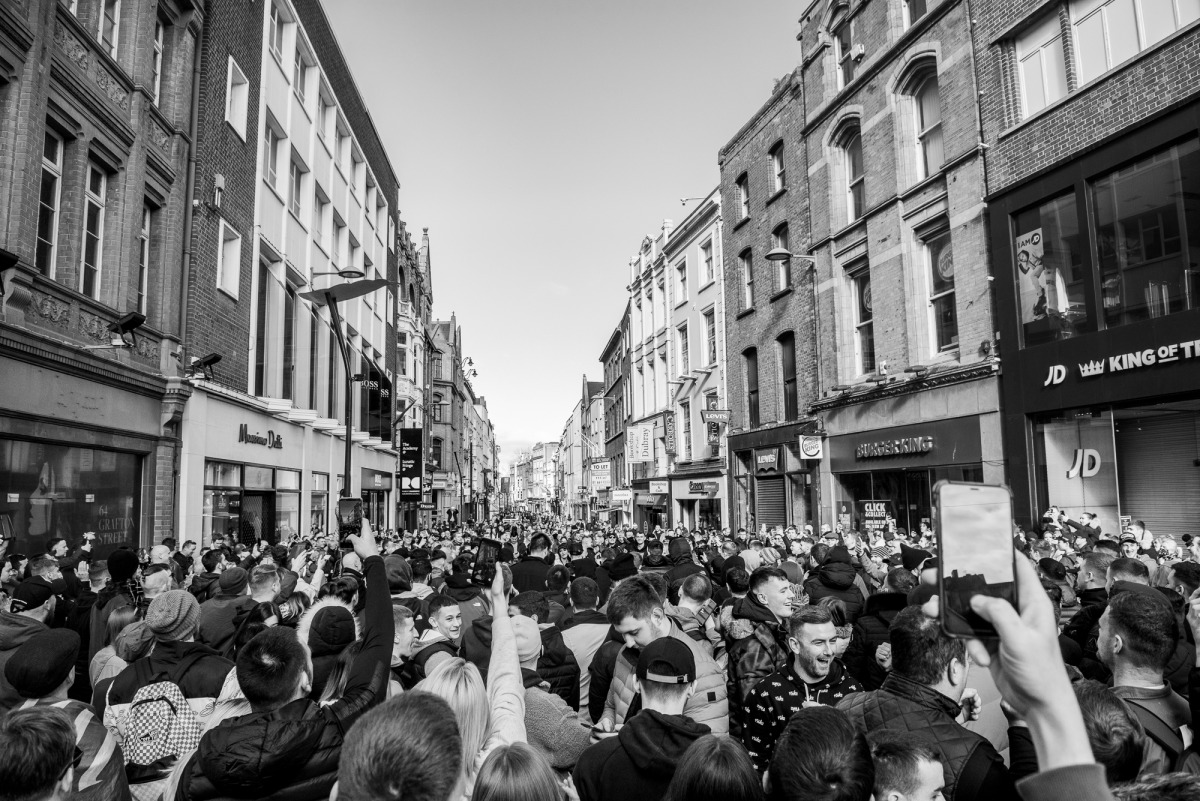
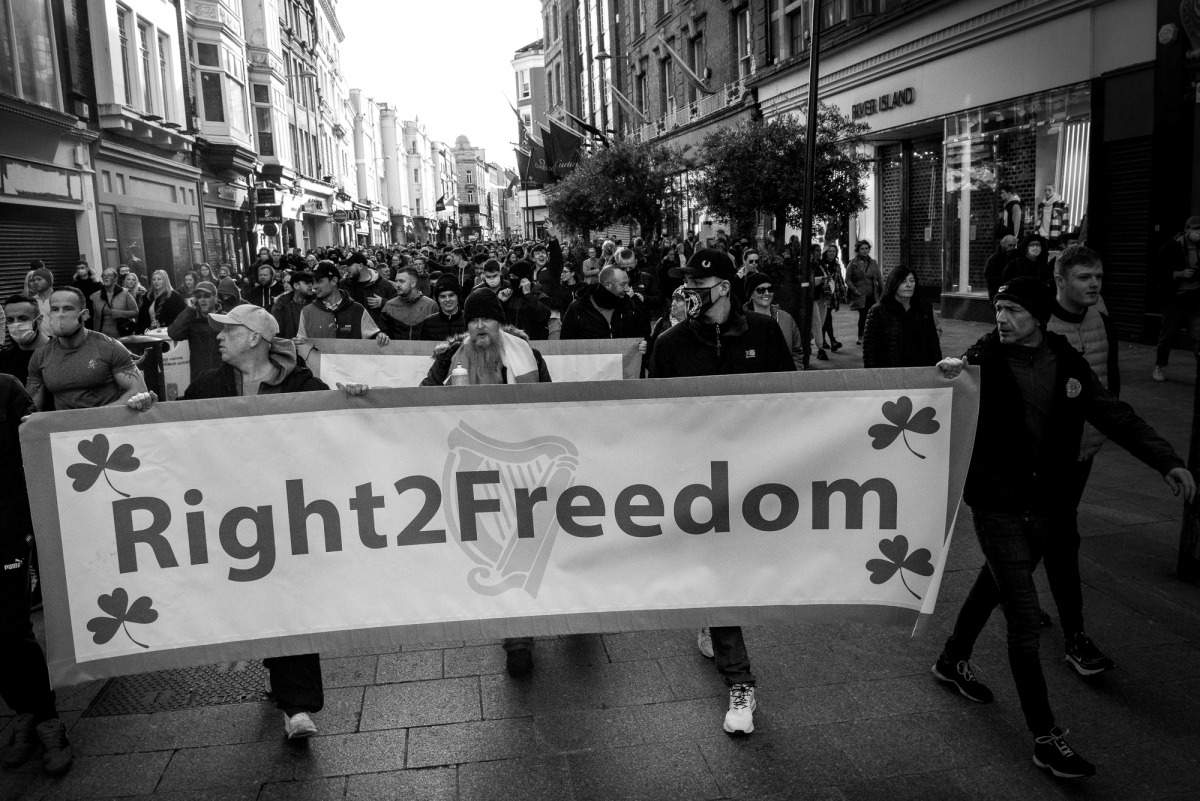
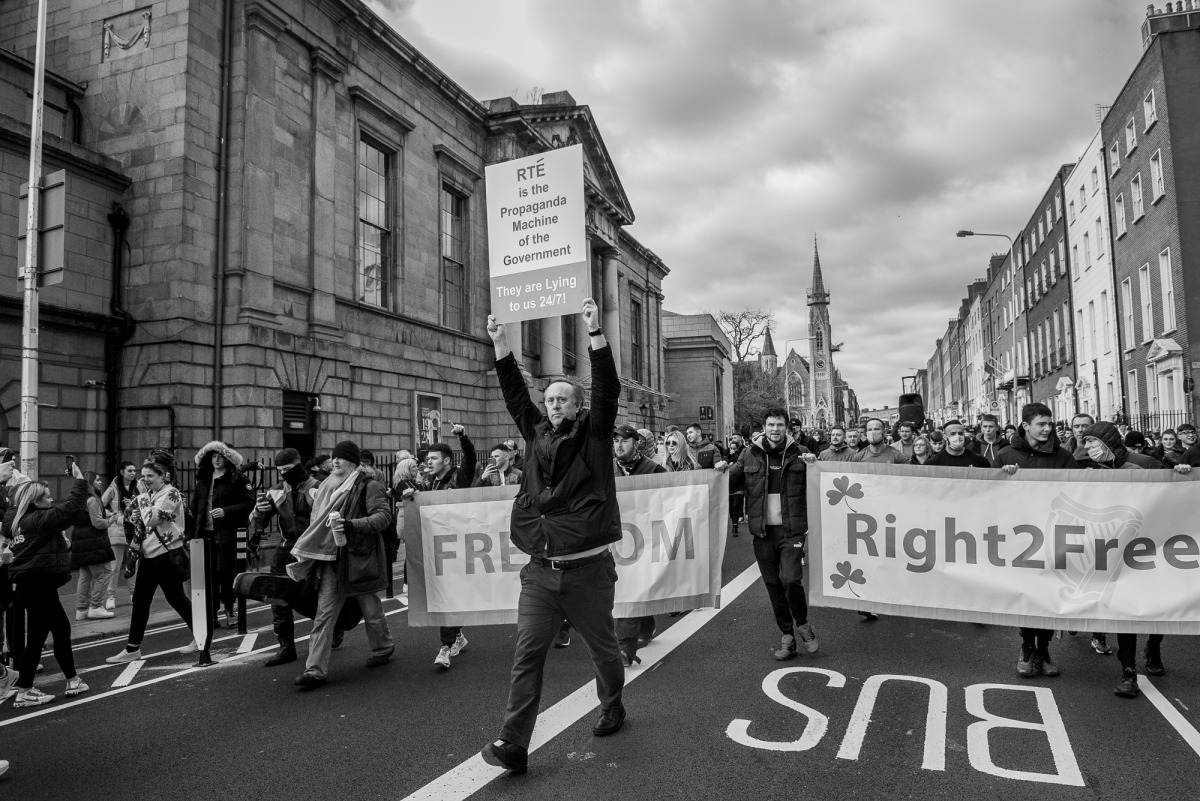
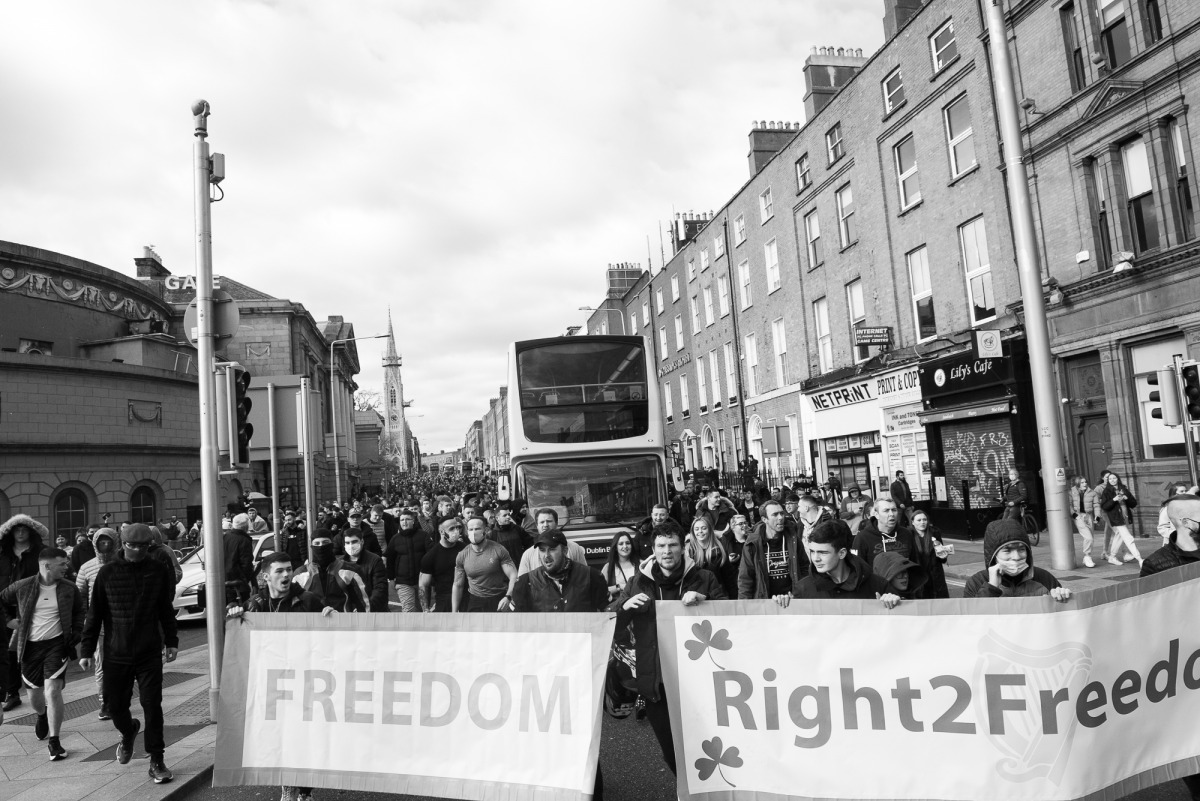
Last December, there was a media blackout and no arrests made after BLM violence in Blanchardstown. This is in stark contrast to the political, media, and Garda reaction to an anti-lockdown demonstration last Saturday 27th February in Dublin where peaceful protestors were met by a phalanx of Gardaí (both mounted and on foot) who were suited and booted with dogs and batons at the ready, long before the lobbing of a firework by one individual set off a media storm of condemnations.
The behaviour of Gardaí at evictions has also been called into question. The role of An Garda Síochána at an eviction is quite clear: they are there to prevent a breach of the peace and to ensure the safety of all concerned. If they witness a breach of the peace or any other offence, then they are duty-bound to act. It really is that simple. With respect to the assertion in an Irish Independent article that ‘An Garda Síochána is a learning organisation’ and the request for an urgent external report so that the organisation can ‘learn lessons’ – isn’t that exactly the purpose of the expensive two-year training course which Garda recruits undergo?
There have been other incidences of the organisation and its members acting inappropriately and outside of its remit in furtherance of various agendas unrelated to policing, such as participation by a Garda in the “Yes” equality campaign, and the organisation’s promotion of vaccines on social media.
Over the course of #COVID19, a special bond has been strengthened between An Garda Siochána & The HSE. A relentless support for us at all times, helping to keep people safe, secure, protected & healthy. We are with you all at this time and always. @HSELive@gardainfo
Then there’s the TikTok dancing, supposedly to “Lift the Nation’s Spirits”. The participation of An Garda Síochána in an inane (but undoubtedly very expensive) dance production at a time when livelihoods, and perhaps lives, are being lost as a result of the government restrictions which they are enforcing was completely inappropriate. At best, it was in bad taste. It was unnerving and slightly sinister, like a bully wanting to be your friend. Notably, the Defence Forces and The Coast Guard wisely chose not to follow their example.
There is no doubt that the relationship between a politicised Garda Síochána and the ordinary citizen is changing – particularly under the current government restrictions – and not for the better. Policing by consent is being replaced by coercion. The image of a gaggle of dancing Gardaí does not juxtapose well with the image of a cohort of Gardaí detailed to arrest and remove a woman from her place of business for exercising a constitutional right to earn a living and provide for her family. Ordinary people are being criminalised for just trying to live their lives.
In a force (and An Garda Síochána can certainly be described once more as a force) comprising in excess of fourteen and a half thousand members, it is not unreasonable to believe that there are many who have their doubts about the direction policing has taken both generally, and specifically in relation to current government restrictions. They can see the damage being wrought by these restrictions on the people they are supposed to serve. Many undoubtedly have families themselves who are also suffering and they must look their children in the eye each morning. So where are the Garda whistleblowers now?
All members have made a ‘Solemn Declaration’ (albeit watered down from the original Sworn Oath) to uphold the Constitution – which is superior to all positive law – and hence to defend the rights and freedoms of all citizens which Bunreacht na hÉireann asserts and guarantees. Is there really nobody prepared to raise their head above the parapet? Remember, five thousand members found it within themselves to take (forbidden) action over their pay in 1998 via the “Blue Flu”.
Meanwhile on Merseyside in the UK, there was a scene somewhat reminiscent of a relatively recent Garda photoshoot, but far less subtle: four officers from Merseyside Police – one wielding a large stick – posing in front of an advertising van bedecked with a rainbow-coloured billboard bearing the large slogan “BEING OFFENSIVE IS AN OFFENCE”. The ill-advised stunt proved to be a goose-step too far, however, and the resultant public backlash forced Merseyside Police into an embarrassing apology, a Superintendent being required to clarify that “being offensive” is, of course, not in itself an offence.
Although having occurred in a neighbouring jurisdiction, such “woke” (and legally incorrect) virtue-signalling should also ring alarm bells here, particularly in the context of the impending enactment of identity politics-based “Hate Crime” legislation. The Merriam-Webster dictionary defines “Identity Politics” as “Politics in which groups of people having a particular racial, religious, ethnic, social, or cultural identity tend to promote their own specific interests or concerns without regard to the interests or concerns of any larger political group”.
Identity politics is by definition inherently divisive and inequitable. Legislation (and obviously enforcement) based upon it is not a good fit for a Republic that purports to assert the equality of all citizens before the law.
The drive to enact such legislation, supposedly in the midst of a deadly pandemic, is pure opportunism, an effort to make ideological hay while the political skies are clear. In truth, one would now be hard-pressed to separate the government parties ideologically, and the oxymoronic “Opposition” lie even further to a version of the left that emphasises these identity politics over socio-economic questions.
The Covid-19 narrative continues to provide fruitful opportunities for the government parties to achieve long-held political and ideological aims. Many of those who have championed this legislation, and who seek desperately to discover a fascist bogeyman to help justify it, are the same people who have spent the last eleven months steadily eroding the fundamental rights and freedoms of Irish citizens. The irony appears lost on them, but the fact remains that these are the people dictating the policing agenda.
An Garda Síochána must return to the first principles advocated by Michael Staines. They must repudiate the service of political agendas and reprise their role as servants of the people. Politicisation and poor leadership is undermining the moral authority of An Garda Síochána. Care should be taken to ensure that it is not lost, or the loss of the support, trust, and consent of the people would surely follow.
Cassandra Voices is a home for independent voices to inspire new thinking that publishes a wide variety of viewpoints, check out oursubmissions guidelinesand drop us a line: admin@cassandravoices.com.
In a suburban Dublin pub ten men aged sixty and over have gathered in a circle each week to play traditional Irish tunes. I joined this weekly session when I moved back to Dublin and after initial bewilderment was embraced by the group. I was the only woman that had ever joined in the twenty odd years the session had existed and I grew to love the chats and the musical immersion that it became.
At some point in each tune set we all closed our eyes and it felt like it really didn’t matter that I was female.
I discussed with Mairéad Ní Mhaonaigh in an interview recently how music can be something that rises above divisions and transcends gender, race and politics. Sadly of course, this is not always the case. It was disturbing last year to read the revelations of the Mise Fosta (Me Too) movement which detailed the experiences of young musicians in the Irish Traditional music scene. The reports, which came from mostly girls, consisted of unwanted physical contact, sexual assault, harassment and degradation.
It saddened me deeply to hear about the number of musicians that have left the scene due to this kind of behaviour. I’ve experienced both sides of this coin. I’ve met some of the kindest men I know through pub sessions in my journey back to playing music again publicly. And I’ve also experienced subtle and not-so-subtle forms of inappropriate physical contact and degrading comments from pub-goers, and from musicians themselves; followed by ‘sure it’s only a bit of craic.’ Unfortunately, it’s the kind of ‘craic’ that drives talent away from the scene.
A young female musician I spoke to recently described lecherous comments she often experiences online as the ‘cross we have to bear,’ as women in the industry. Another musician I know will avoid a particular number of sessions because of the consistent unwanted advances of a fellow musician who attends them.
This kind of behaviour has typically been quietly tolerated as ‘the cross we have to bear.’ But we are in an age of increasing disclosures in Ireland and globally regarding abuse of many shapes and kinds. (The recent harrowing revelations of the treatment of women in Mother and Baby Homes in Irelandis just one example of this).
Voices of all genders in Ireland have been heavily suppressed in relation to these matters so all speaking out must be applauded. In continuing to break this silence, we’re slowly becoming part of a wider global story, where the veil is being lifted on many forms of abuse and inequality. As humans we love to create categories of ‘me’ and ‘other’. We are better and the ‘other’ is lesser. Male-female, white-black, able bodied-disabled. Yet these hierarchies are slowly being dismantled all over the world. A huge amount of people are waking up to the realisation that these imagined hierarchies are cultural constructions which could easily have been otherwise and must be challenged.
Traversing a Wave of Change
Both men and women need support to traverse this wave of change. All genders need education at every stage of schooling about not just the concept of consent but what that looks like in real life circumstances. Inappropriate comments, contact and expectations need to become rejected in the music scene, in person and on-line, as well as on a cultural and societal level in Ireland. We need to release the shame attached to discussions around sexuality, around our bodies and what is and isn’t acceptable to us.
These types of conversations around sexuality have slowly been opening up in Ireland. The TV series Normal People last year opened avenues of discussion many of us had not foreseen (Liveline radio programme to name just one). My father was of the opinion that the series should be shown in every secondary school in the country to educate teenagers about healthy consent. I also had a lengthy conversation with my aunt, a religious sister in her seventies, about the portrayal of the lead character Connell’s refusal to hurt Marianne during sex as she requested.
‘That was exercising his right to say no,’ she’d said at the time. ‘It was very important to show that men need to be able to say no as well. It works both ways, you know.’ ‘’It does work both ways,’ I had agreed with her. It is not a case of ‘men vs women’ in this particular arena. That is not a narrative that I believe will get us any further.
We discussed how every person has both masculine and feminine elements within them which need to be developed. As a fundamental element of the patriarchal structure, to show emotions, for men, is often seen as a sign of weakness. And so men are typically encouraged from a young age to bottle up these more ‘feminine’ aspects of their character. Ireland has one of the top five highest rates of suicides for men aged 15-24 in Europe. There are clearly elements of the patriarchy which are not favouring men either. We are clearly missing a trick somewhere in preparing young people of all genders for adulthood.
Movements Forward
Some strong indicators are showing that we are on the right path. The Fair Plé movement which advocates for gender balance in the Irish Traditional & Folk scene has recently developed an Anti-Harassment Policy for use across all arts sectors and Sexual Harrassment guidelines in collaboration with the Rape Crisis Network Ireland, which are important steps towards highlighting and addressing these issues. These can be used by all pubs and music festivals and generating awareness of these policies is a key part of moving forward. The Speak Up ACTiON Survey is a survey of all arts workers and their workplace experiences which will inform policy and the development of artist supports for safe and dignified work spaces. Fair Plé and SAOI are also pushing for a neutral independent complaint structure with investigative powers across all arts sectors.(1)
Beyond the pub scene, the facts are staring us in the face that women’s voices are under-represented in the arts in general. Music consultant Linda Coogan Byrne and folk singer Áine Tyrrell published a Gender Disparity Data Report in 2020 highlighting that female artists take up less than 5% of airtime on Irish radios. The ‘Why Not Her’ campaign is currently making huge strides towards eradicating this bias.
Clearly it is not just revelations of abuse that are required to instigate change but cold hard facts and key players in the Irish Traditional Music scene are doing Trojan work towards developing these statistics.(2)
The Need for Women’s Voices & Men’s Support
I sincerely hope that women who have left the Traditional Irish music scene can come back and can feel safe in doing so. We need to hear women’s voices, in real time, performing. And we need to keep supporting each other as women in making this happen.
We can choose to silence ourselves also in many ways; through allowing internal critical voices to hold us back or by buying into the unwritten rules of the patriarchal structure we were brought up in that tell us our voices are less worthy of being heard.
Or we can do none of this and allow our voices to be heard. Write the song you’ve been humming for years. Pick up the instrument that’s gathering dust. Get up and dance at a session if that’s your thing. Take your place in the scene, with respect and kindness towards all genders, sexualities, races, people. Yet call it out when that respect is not shown back to you.
For men, you are more visible in the industry. Use your visibility to make sexual harassment and inequality no longer acceptable. It’s no longer enough just to not take part in sexist behaviour. Misogyny in all it’s subtle and not so subtle forms needs to be denied air time for good.
Music, to me, is the most powerful force on earth for bringing people together and none more so than Traditional Irish music. I believe we can figure this one out.
Louise O’Connor is a fiddle player, sean nós dancer and hosts Music As podcast where she interviews guests about the role music plays in their lives.
FairPlé have been working with SAOI, a group consisting of a mixture of women across the arts: poetry, literature, publishing, comedy and music. They are currently pushing for a neutral independent complaint structure with investigative powers, specifically for this to be set up by the Department of Tourism, Culture, Arts, Gaeltacht, Sport and Media to deal with issues of sexual assault and harassment across the sector.
Statistics on the Irish Traditional and folk music scene have emerged in the work of Úna Ní Fhlannagáin, Úna Monaghan, Fintan Vallely and Jane Cassidy, and more work on this area will be visible in the forthcoming publication of Ethnomusicology Ireland on women and music.
Why Not Her? is a social media campaign and podcast launched by Linda Coogan Byrne to ‘amplify the voices of woman in the music, entertainment and arts industry.’
Irish Theatre Institute has launched Speak Up ACTiON Survey- a survey of all arts workers & their workplace experiences which will inform policy & the development of artist supports for safe & dignified work spaces. Complete the survey here:
It’s like living in East Germany Nowhere let open at night Incarcerated by mediocrity Mad I’d love a RyanAir flight I’m back in the D.D.R. You don’t know how lucky you are, boy Back in the D.D.R. (Yeah!)
Been locked down so long, I hardly know a place Gee, it’s grim to be stuck at home Unending house arrest is a disgrace Forcing folk to stay alone I’m back in the D.D.R. You don’t know how lucky you are, boy Back in the, Back in the, Back in Leo’s E.R.
Hell, Ranelagh girls really knock me out (… Wooh, ooh, ooh) They leave the clap behind, While shit government makes me sing and shout (…Wooh, ooh, ooh) That Corona’s always on My, my, my, my, my, my, my, my, my mind Oh, come on Woo (Hey) (Hoo) Hey Woo hoo (Yeah) Yeah,…
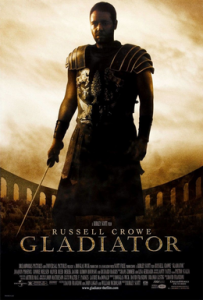
Hollywood has a long history of portraying the Classical world in film, often with a large degree of artistic licence. One recent example is the film Gladiator, where a Roman general is reduced to the status of a gladiator. This could never have happened of course, as being a military commander in Rome was based on holding high political office.
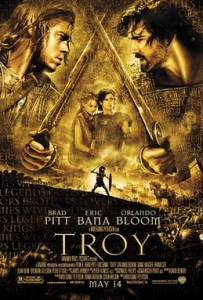
There are also numerous examples of Hollywood taking liberties with Roman and Greek mythology, such as in the movie Troy where the tale is condensed into a few weeks. So how closely do video games stick to Classical history and the original myths?
Hades
One recent games set in the Classical world is the multi award-winning Hades by Supergiant Games. After the early 2018 release the game was released to the public on the September 17th 2020 on Microsoft Windows, macOS, and Nintendo Switch.
Its excellent plot, storytelling ,characters and playability – not to mention the canonically bisexual main character Zagreus – have made this roguelike dungeon crawler a triumph in the gaming world. A key feature, unusual in such games, is that despite the character dying, the story will still progress. But how closely does this game keep to the original myth of Hades and Persephone?
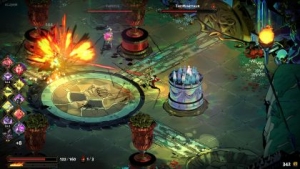
Hades is presented in an isometric view, with the player controlling Zagreus (center) as he fights his way out of the Underworld.
The story begins with Hades seeing Persephone picking flowers. He then abducts her, carrying her off to the Underworld at the behest of Zeus. Here she is tricked by Hades into eating seeds of a pomegranate. This ties her to the Underworld for one third of the year. Demeter, upon learning of her daughter’s fate is enraged with Zeus and use her divine power to make the harvests fail, so that widespread famine ensues. Eventually Zeus steps in to put an end to this, forcing Hades to return Persephone. Of course there is a lot more to the story, including details of the Underworld, but these are the crucial elements.
In the myth there appear to be two versions of Zagreus – or even three if we acknowledge that some sources equate him with Hades himself. One is as the son of Hades and Persephone, and is the version we see in the game. The other is as the son of Selemus and Zeus and is known as the Orphic Dionysus Zagreus. This Zagreus was ripped apart by the Titans after Hera hears that Zeus intends to make him his successor. He is then reborn to Zeus and Selemus as Dionysus.
In the plot of the game the protagonist is Zagreus, Prince of the Greek Underworld, who is fighting his way to the surface to reach Mount Olympus in order to get away from his seemingly uncaring father Hades. Persephone is nowhere to be seen at the start, as she believes that her son is dead. It is explained that those on Mount Olympus are often engaged in petty squabbles and Persephone doesn’t want to return for that reason, leading her mother Demeter to thinks she has gone missing.
There is no mention of any other siblings of Zagreus. As Demeter thinks her daughter has gone missing she inflicts a widespread winter, rather than just changes to the seasons.
The game is true to many of the Underworld residents who are included in the narrative. Some are, however, left out – most likely because their vast array would make the plot unwieldy. For example, The Fates are mentioned, but aren’t characters that show up, and so are their siblings Hypnos (sleep personified) and Thanatos (death personified), but there were also sixteen other siblings. All the areas of the Greek Underworld are dealt with, the best known being: Tartarus, Asphodel Meadows, Elysium and Erebus. The game adds in another area, The Temple of Styx, presumably for further gameplay.
On the whole, the game does stick to the original myth but uses aspects of it to help the plot along. The eating of the pomegranate pips by Persephone does come into the plot at a later stage but is more an excuse as to why she is staying in the Underworld. There is also reference to Zagreus and Dionysus being the one and the same. The marriage of Hades and Persephone is shown to be a loving marriage despite Hades being a difficult character. Only Zagreus is mentioned as being the child of Hades and Persephone despite the myths saying that they had Melinoë, Plutus, and Dionysus (Orphic) too. Of course with mythology,parentage of the Gods does not seem to be set in stone.
Assassin’s Creed Odyssey
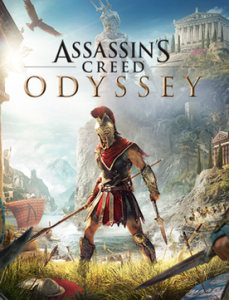
Assassin’s Creed Odyssey is another game that borrows its story line from the ancient Greek world. It is an action, role-playing video game developed by Ubisoft Quebec and published by Ubisoft in October 2018. This game takes on parts of Spartan history such as The Battle of Thermopylae and the Peloponnesian War. The Battle of Thermopylae is playable in the opening tutorial level and is featured in a series of flashbacks.
There’s no set myth or story here, rather it combines several stories together into the game’s original plot. Set in 431–422 BC, it recounts a secret mythological history set during the Peloponnesian War. The player takes on the role of mercenaries and can choose to fight for the Delian League, led by Athens, or the Peloponnesian League, led by Sparta. The main storyline has the protagonist attempting to restore their fractured family after they and their sibling were thrown off a cliff, when they were young at the urging of the Oracle of Delphi, and left for dead by their father.
The plot of this game deviates a lot from what we know about Spartan life. But while there are historical inaccuracies, it can certainly contribute to an understanding of the Classical world.
In the first tutorial, the player is King Leonidas fighting in The Battle of Thermopylae. Something to note is the scarlet cloak that King Leonidas is wearing in gameplay. Edna Mode from The Incredibles comes to mind with ‘No Capes’. Cloaks were certainly not worn in battle. It was likely that the developers needed the King to stand out as the protagonist of this scene. In fact cloaks were used to sleep in on long marches.
The playable character changes after the tutorial from King Leonidas to the grandchild of Leonidas. Although we do not know whether Pleistarchus, Leonidas’s son, ever married. All we know is that he was born aa prince, likely the only son of King Leonidas I and Queen Gorgo. He ruled with a regent as he was relatively young when his father died in battle in 480 BC. Given that Pleistarchus’ successor was Pleistoanax, who was the son of his second regent, it seems unlikely that he had any descendants.
In the game the protagonist and their siblings are thrown off a mountain according to an oracle’s prophecy. This practice of infanticide was indeed commonly carried out in Sparta. A society based on the development of fierce warriors permitted eugenics.
Moreover, seers and prophecies were taken very seriously in the Greek world. Thus Agamemnon, King of Mycenae, sacrificed his daughter Iphigenia in order to appease Artemis before he set sail for Troy.
Pericles and Kleon are also mentioned. Pericles was a prominent and influential Greek statesman, orator and general of Athens during the first two years of the Peloponnesian War. Kleon or Cleon was Pericles’ political rival and was also a general during the Peloponnesian War. He wasn’t written about in a favourable light by Aristophanes and Thucydides, most likely due to personal grudges and because Cleon had many informants around Athens.
Of course these are just two recent games that have been in the public eye. Age of Empires and Age of Mythology, Kid Icarus, God of War and even Halo are also based on or reference the Classical world, along with numerous others.
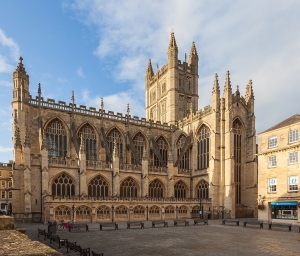
So what can video games bring to education? Video games could be especially useful in terms of widening appreciation of archaeological history. Ruins can be reconstructed from the past and returned to their former glory through virtual reality or augmented reality. For example Wessex Archaeology have been excavating and recording beneath Bath Abbey floor since 2018 as part of The Bath Abbey Footprint Project. The archaeologists have used traditional recording systems, as well as recording everything in 3D using a process called photogrammetry.
Photogrammetry creates accurate fully textured 3D models from photographs. It can even record details on individual stones which affords conservationists a greater level of accuracy than traditional techniques.
Video games can, therefore, be used as a tool in teach the Classics, but should at least attempt to remain faithful to the sources. Otherwise they can serve a purpose in highlighting inaccuracies!
Feel free to turn up (or not)
wearing a full suit of armour,
or a hat with a big feather in it
and transparent trousers;
or to come dressed as a future
Bishop of Cork and Ross,
or as the prophet Isaiah’s
discredited older brother.
But this march is no wild ground
on which entrist dandelions
or buttercups will be allowed grow.
The Committee permits
no placards or literature
of a factional variety.
Most egregious those
with crazy words on them,
like “people before profit”.
So as not to put off
those not necessarily
in favour of people
(nor at all against profit)
our gathering will resemble
less a revolution
than a church group
on its way somewhere
to pray for a cure
for rheumatism,
or even better,
no cure;
so we can stand here
in increasing discomfort,
become such fixtures
even well behaved
dogs from Dun Laoghaire
start anointing
our legs as public conveniences.
One comment I hear most often is: “you are doing so many different things!” Followed by the inevitable question: “aren’t you doing too many different things?” What I detect behind this question is the idea that everyone should concentrate on a single discipline, and bring it to a certain standard of success within a capitalist system.
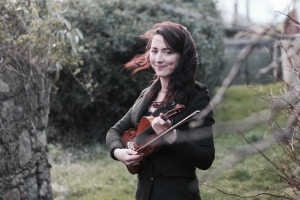
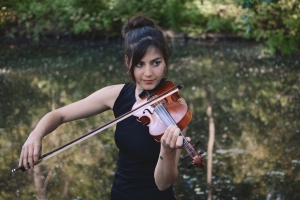
I used to identify as a violin-maker then transformed into a violinist; after that I settled on being a musician, and right now I see myself more as an artist with a scent of activism in the air. But my other shapes are still alive and well. I was never able to do just one thing, and I don’t want to be placed in a single category.
I chose to play the violin at the age of eight. One of the main reasons was my desire to be a princess, and thinking the violin would make a suitable instrument. The first time I dared go to a lesson without my mom I was allowed to choose a film I wanted to watch as a reward. I chose a Western, which seems a little unsuitable for a princess, but I liked the idea of being both a princess and a cowboy.
My background is in Classical music, but I soon realized there wasn’t only one type of music I wanted to concentrate on. My musical horizons broadened a lot through my first big love. She showed me artists that opened doors to new worlds. I spent hours in the CD section of the library in my hometown of Celle in Germany to find music that she might like too.
I became a big fan of Tori Amos and Fiona Apple and tried to sing and play their songs on the piano, when no one was home. I currently play with my first love in an underground duo, covering an unknown band that broke up around fifteen years ago. She plays an out-of-tune e-guitar and I play the three different beats I know on the drums, and we both drink beer.
Choosing to become a violin maker wasn’t only motivated by passion for this kind of work, but also because I was frightened of entering the professional music world as a Classical musician. After applying to study musical education I never showed up for the entrance exam. I felt that the pressure of the academic system would destroy my love of music, which for me is all about spontaneity, lightness and variety.
By that time I had already played in various Classical youth orchestras, as well as on the street with a group of friends. So violin-making was a way do dive deeper into the music world from a different perspective, while maintaining a diversity to what I played.
Image: Justina Jaruševičiūtė
Lisbon
After finishing my three year course in France to become a luthier, I moved to Lisbon, and worked in a violin maker’s shop for five years, where my first band came along.
I have always had an appetite for learning many different things. By that time I had begun learning Japanese, Swedish, and folk dancing, and experienced French culture. I had also taken piano lessons, singing lessons, double-bass and cello lessons. The list goes on.
I reached the highest point of trying out things in Lisbon. That beautiful city inspired all of my senses. I played in an orchestra, in two bands, for a theatre group, ‘The Lisbon Players;’ and people kept asking, “why I was taking ballet classes instead of concentrating just on the violin?”
In my view neat lines of separation should not be drawn between: musician or craftswoman; feeling ‘German’ or ‘Portuguese;’ being a shy girl or a party animal; a woman or a man. All these categories limit identities and are often unhelpful. We need to open a space for coexistence.
Musical Magic
This moment of convergence is when the magical music happens. When, on a stormy night in Sligo, I played with my band, The Loafing Heroes, the winds merged with the singing, and the alcoholic ecstasy; I found myself sinking into the sound of a wineglass, feeling the glass on my fingers that vibrated along with the waves in the air, connecting present and past feelings, all of us surrendering, and the universe surrendering.
I do not enter a different world or shape shift, but I bring something with me and act like a linking element between those worlds. And I unite the parts of worlds in myself.
To give an example: the dancing classes I took with wonderful Rita Lucas Coelho gave me new elements for composing music. She taught me the importance of repetition and stillness in dance, and these are also important elements in music. And life in general too.
Currently I live in Berlin. It’s the perfect place for people who love walking through different worlds. I have discovered Balkan music and been delighted to experience styles ranging from oriental funeral doom to opera.
Some Current Projects
With my folk trio Gerda Vejle we do exactly this type of merging. We cover songs from various countries and styles. What brings it all together is the three of us, our stories. I play the guitar in this trio, even though I am really just a beginner. Music doesn’t live from perfect technique. It helps if you develop it, but music happens as a connection between people and energies. Or a deeper connection with yourself, your story, other stories, and your body.
I play in another trio called Schnaps im Silbersee. It is much more focused on lyrics and merging comedy with tragedy. It was something completely new for me to be more direct in my performances and make people laugh.
Another project I want to present is called Simons Sofa. It is a studio space that opens a time-hole to a fourth dimension, inviting your creativity to flow on a wave of coziness and red wine. Those projects all leave their traces in my music and nourish each other.
Activism
Over the last few years I have felt a need to became more of an activist. As a “female” musician it is impossible to ignore the huge inequalities that still exist. There are small things, like that I get a lot more comments about my performance after concerts than male colleagues. Like constant little raindrops, they leave an impact.
It is mostly men that interrogate my performance about where I was standing on stage; why I wasn’t singing more; why I wasn’t singing louder; why I was moving so much or so little…
Also, sound technicians tend to treat me as if I don’t know how my own mic works. And I hear people say: “You will have a good show, as you have a good-looking violinist.” How can you feel valued as a musician after a comment like that?
Questions like that distract me, and make me question myself and my art. Insecurity stops the flow of creativity, and possibility to dive into a musical moment. So I need extra energy to let those comments pass over me, and remain focused on my art. If I want advice I will ask for it, thanks.
It’s not at a new topic, so I don’t want to describe in greater detail what a lot of female musicians face. It’s structural discrimination that we all experience.
Gender Diversity
There are many reasons why there are more men in music than women. I am playing with the singer Rosa Hoelger who adresses some of these topics in her music, which I appreciate a lot.
And I am part of a FLINT* (Female, Lesbian, Inter-sexual, non-binary, trans, queer) collective that gives birth to ideas to battle sexism. It is called Visibility-Breakfast, and has almost six hundred members. It was founded by Johanna Amelie and Julia Zoephel in 2017 and aims to enable personal, professional and artistic exchange within the Berlin FLINT* artistic community.
The objective is to increase the visibility of FLINT* artists in the creative industry and stand up for gender justice, enabling activism and creating the space and impulses for it.
Uncertain Times
In these uncertain times, I am curious to find out what the future has in store. I am sure new projects and people will find their way to me and I will find them, as long I keep my senses open and welcoming! As Tori Amos put it, I might even “become a snow witch or maybe a sandwich and melt away and that’s ok I think.”
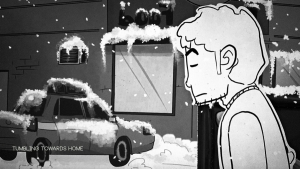
Tumbling Towards Home is a short documentary, a coming of age story about Malcolm Adams, an Irish immigrant who moved to New York in 1989 to study acting under Alan Langdon. He works through the grief of losing his mother and friend Philip Seymour Hoffman. This leads to a decision of where to place his hat down and call home.
The film delineates themes of identity, homeland, narratives across cultures, the arts, addiction and how to overcome grief. The film also explores the family unit, family on a psychological level, parenthood, domestic violence and references colonization and PTSD. Tumbling Towards Home explores the liminality of cultural boundaries, shifting between cultures and perspectives on the Irish diaspora, both leaving and returning to the homeland.
I decided to collaborate with an animator for the first time to complete Malcolm’s backstory as it would have been difficult to recreate footage from the 1980’s when he previously lived in New York.
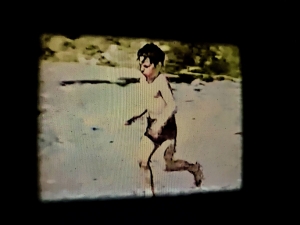
I also had access to a home movie shot on super 8mm by Malcolm’s dad from Ireland in the 1970’s. I then had the aesthetic challenge to combine all of these different elements in the film and make seamless the transitions between each genre. The film provides a more hands on engagement with the research while the written work provided context.
The film is being presented at Fordham University as part of an Irish Women Writers Symposium 2020.
The documentary can and of itself be a form of a hybrid film. My previous film Bricks, Beds and Sheep’s Heads, that I shot in Morocco was a narrative film, but audience members experienced it as a true story. There is a sense in the documentary that you are presenting a perceived version of the truth of a situation. In fact, the documentary can cross over into narrative as you dramatize the story for a viewing audience. This allows the filmmaker to blur the boundaries between truth and fiction.
Through the process of making this film the concept emerged of a cultural misfit and how this is accentuated when a person is required to shift between cultures. In this film I explore the concept of returning to the homeland and possessing an otherness or difference that gives you new insight and perspective on the culture you left behind. This creates a gap of expectation from the inhabitants who never immigrated. How does this aspect shift the perspective of national identity within a given country?
While this film views a story of returning to the homeland it evokes the complex emotions that are stirred when ghosts from the past haunt us and how memory plays a vital role in this comprehension. While working on the film I coined the term “Memory Pockets” and I found myself combining my own memories with that of the visuals I was choosing. For example, I filmed the sign “Suncroft” this is the village where my own mother lived. These “aha” moments became self-reflexive for me. In fact, that is what the film explored is the ability to exercise self-reflection on ghosts of one’s past. So, I found myself trespassing on my main protagonists’ story as he looked back on his life, I too as an immigrant felt an overlap in the emotional content of the film. It helped to deepen the process and exchange and ultimately tell a more compelling story.
In participating in telling Malcolm’s story, the film coaxed me to explore the liminality of the spaces in between staying away and returning to the homeland. This “small death” of exile impacts so many individuals and the mystery and wonder that unfolds when you leave and return. Inevitably every choice you make as an individual you gain something, and you lose something, but what creates a bond whether coherent or mysterious can be unspoken and unsaid and in fact transcend culture.
I gained an understanding of the depth of defining a homeland, I understood that identity is complex and does not only have one dimension, and the ability to exercise self-reflection is a treasure when it comes to a person’s past.
Trauma and addictions are passed down from one generation to another and it’s complicated for a family to transcend these dysfunctions. In addition, colonisation impacts a culture far beyond the end of the direct period. It can take centuries for a country to recover from being colonized.
It is complicated how these elements play out in a nation’s history. When Malcom speaks of his grandfather fighting in two World Wars, and how he suffered from PTSD the agony of his destiny is amplified. Through reflection on the themes in the film and engaging with the process of crossing cultural boundaries, I had the opportunity to expand my thinking, experiment with different film aesthetics and hopefully told a compelling story that audiences can relate to on an emotional level. There is a relentless tension between leaving the homeland and returning, and I hope to shed light on the many complex issues surrounding these themes.