I am a visual artist and improvising musician. I trained as a painter, but also worked with various media including sound, installation/performance, sculpture, print and photography during my studies. My visual work since leaving college in 1987 has largely centred around photomontage, and in recent years has moved into painting and drawing (still using photography as source).
I began using sound pretty much from the start in college, using found metals, initially to record with, and later use in live work, inspired by the work of Test Dept., Einsturzende Neubauten, z’ev & Bow Gamelan. I was also inspired by the work of Dome, :zoviet*france:, Hafler Trio, Strafe Für Rebellion, Nurse With Wound and others, and began constructing very simple tape collages which were used for tape/slide works and installations.
Apart from a brief flirtation with guitar in my teens, I am not musically trained. I got the hang of drums some years later and really enjoyed the physicality of that instrument, but never played in a band. Since college, I have continued in the vein of constructed and adapted instruments and tape collages.
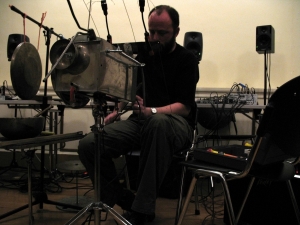
Cabinet Of Curiosities instrument, in concert with Judith Ring, I&E Festival 2006, Printing House TCD (photo: Sean MacErlaine)
I’ve been passionate about music from an early age, and my love of the post-punk spirit of DIY and experimentation found a crossover with the further reaches of sonic exploration coming from the Fine Art approaches to sound as a sculptural medium. I then discovered improvised music and was smitten. The possibilities just seemed wide open. There was a directness and a simplicity that was really appealing. It was also a much quicker route to producing music by sidestepping years of training. Of course, it’s not just musical ability you bring to the table, it’s imagination and intelligence too.
The possibilities expand further when working with other players in an open dialogue with parity of presence, no grandstanding, all listening attentively as much as playing or not playing. Listening is key. I established a strong connection with drummer David Lacey early on, and went on to play and record on many occasions over the years in a very sympathetic and satisfying working relationship for which I’m really grateful – the natural chemistry is a source of great joy.
I’ve also worked with other Irish players such as Judith Ring, Jurgen Simpson, Paul Vogel, & Dennis McNulty, as well as UK players Max Eastley & Mark Wastell. We put out a trio album to critical acclaim on Mark’s Confront label in 2019, The Map Is Not The Territory.
I have pursued this area of exploration ever since because it’s really where my heart’s at. I’m in my element. It’s a completely obsessive and highly fetishised world for me. I’ve always loved the idea of making something from discarded materials, the idea of transformation; base metals into… not quite gold, but something beautiful or intriguing at least.
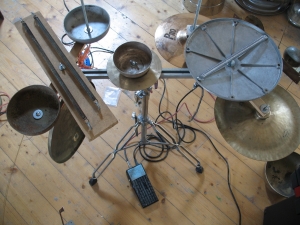
Percussion stand adapted from roto-tom stand photographed in studio, c.2009.
These materials inspire a particular approach with all their tactile and evocative qualities. Whole worlds can be constructed with these sounds with the compositional possibilities of the computer (4 track in the early days forced a particular discipline that’s served me well since). That’s the other side of it for me: the idea of making your own unique sound world, evolving a voice that establishes a particular presence, one that hopefully moves beyond your influences and into something different, something engaging and satisfying.
Brian Eno’s work in the 70s and early 80s was another significant inspiration for me, especially his On Land album. In his liner notes, he speaks specifically about the idea of landscape, memory, and a sense of place. He also mentions the notion of psychoacoustic space—the idea of using recording technology to create imaginary spaces and atmospheres: the suggestive power of sound. This absolutely got the hook in me.
Field recording has been a core element of my practice since 1986, when I bought a secondhand recording Walkman whilst on summer work in London (no summer work in recession-hit Ireland in the 80s). My immediate environment in all its fascinating detail became framed between my ears whilst listening on headphones. I was completely taken with the possibilities this offered for further manipulation/recombination, enriching my sound palette.
I went on to buy a DAT recorder in the 90s, and latterly have used the Zoom H4N flash card recorder, as a handy device that can be carried in a back pack. A lot of my recording would be opportunistic – hearing something that takes my fancy and capturing it, or returning later. For more involved recording, especially wildlife recording, I use a Sound Devices hard disc recorder with DPA mics in a windshield, or a Telinga parabolic reflector for capturing bird song. I’ve built up a considerable archive over the years, which I dip into for compositions which are either wholly field recording-based, or are one part of a composition, to add particular colour, texture and depth.
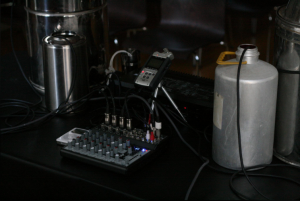
Feedback set-up with contact mics in metal vessels, from launch gig for A Congregation Of Vapours album at the Goethe Institute, Dublin, 2012.
When composing, improvisation is essential in building the material from the ground up, mainly because I can’t conceive of structures in the abstract as someone traditionally trained would do. But then that is only one system. Mine is another, admittedly more labour-intensive and time consuming one. I’m approaching it from an artist’s perspective – painting and sculpting with sound. Sound as raw, malleable matter to be manipulated – prodded, poked, pushed, pulled, beaten, hammered, scalded, stretched, scarred, chopped, diced, dessicated, burnt, and glued, taped, nailed and bolted back together again.
The editing of the material is where the pieces find their form. The painterly/sculptural analogy is apt as the sounds get built up and hacked back quite brutally, cross-hatched with other material, further distilled and recombined, depending on what’s working or not. Pieces can start out relatively long and end up a fraction of their original length. And sometimes shorter pieces that weren’t strong enough to stand alone end up being stitched together into a larger piece. Listening is a really important part of the editing process. I would usually put rough mixes on CD and audition them at home for a period of time, let them settle – hearing them in much the same conditions as the listener. If there’s areas where I find I’m losing interest, then it’s got to be pruned. I shouldn’t lose interest for a second. I’ve got to be totally involved all the way.
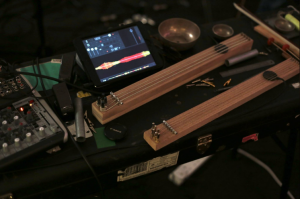
4 & 6 string devices made with guitar and bass strings mounted on teak beams, made in 2014.
In 2005 I established my CDR label Room Temperature. I’ve released mostly solo material on the label since, in EP and full length album form, as well as two collaborative albums with David Lacey and a live album with David Lacey, Paul Vogel & Dennis McNulty. I’ve also released albums on Farpoint, Stolen Mirror, Unfathomless and Confront. September 2020 saw the release of my 16th item on my label, Plundered Lumber.
This is a 52 minute album comprising 13 tracks using mostly bass guitar and metal percussion. It’s a return of sorts to a form of composing last used about 20 years ago, where an emphasis on rhythmic interactions and melodic interplay was the main driver. I’ve used little or no processing (apart from some delay and reverb) and no field recordings. Some delays were added after, some used during recording, as a phantom rhythmic element to play against.
I did a lot of this kind of thing on the technically limited but (with lateral thinking) creatively manipulable 4 track in the 90s with a mixture of drum kit, gongs, non-European percussion, found metals and bass and various small stringed instruments picked up in markets and the like. I used to put compositions on tape and give them to friends. Before graduating to digital tape and CDR, and long before online presence and downloads, the cassette underground was a lively and many-splendored thing.
One other recent development in my practice has been the creation of tribute pieces to artists whose work has had an influence on me. It began with a piece to celebrate ex-Wire member Bruce Gilbert’s 70th in 2016, and went on in 2017 to celebrate the work of Bow Gamelan Ensemble’s Paul Burwell, marking the tenth anniversary of his death. I also marked Wire’s 40th anniversary in 2017, and the 40th anniversary of Joy Division’s Unknown Pleasures in 2019.
These pieces usually have about a 10 – 15 minute run time, and use a combination of edits of their music and music that influenced them, as well as other cultural influences – film, TV and radio, which I combine with current affairs snippets, comedy and interviews to create a rich portrait. This year I produced my most ambitious tribute yet – to the 1970s music of David Bowie, which ran to just under 22 minutes:
Another work recently completed in a similar vein, though it’s not a tribute as such, is Spectral Vectors, which was composed for Come Hell Or High Water, a monthly series of live events on the Thames foreshore at Poplar, organised by Bow Gamelan Ensemble’s Anne Bean and others. I was to have performed at this in September but the pandemic put paid to that. So Anne suggested I make a sound work in lieu. The piece I’ve composed takes as its starting point the idea of ghosts of the Thames; river revenants in the form of lost sounds of previous times from the river’s busier industrial past, such as ship’s horns, tugboat horns, foghorns and other industrial sounds.
Expanding on this theme, the idea of things lost/buried/hidden/removed came to mind. Documentary radio footage relating to sunken unexploded WWII ordnance and tragic drowning was combined with recent field recordings of mine made with contact mics attached to cabling beneath Millenium Bridge at St. Paul’s, amplifying sounds hidden to the naked ear, when the bridge is animated by foot traffic, wind coursing through it and sun warming it.
Hydrophone recordings also capture hidden sounds – various vessels passing, sounding thin and insubstantial as wind-up bath toys from a submarine perspective. Delving deeper, recordings made inside Greenwich foot tunnel feature; resonant metallic sounds buried beneath the river itself echo along the tunnel’s length.
Municipal greed and acts of resistance also form part of the documentary material with Bob Hoskins enlightening Barry Norman in 1982 about various development scams along the river, Malcolm MacLaren talking about the Sex Pistols’ 1977 riverboat gig, and riverboat men going on strike. This footage is animated by the addition of lost ship’s horns, populating the river with a lively, boisterous presence.
Fergus Kelly is a Dublin based visual artist/composer/improvisor. Working with field recordings, invented instruments, electronics, photomontage, painting and drawing, publishing albums via his CDR label, Room Temperature (www.roomtemperature.org)
The death of Ruth Bader Ginsberg signals the death knell of the tradition of liberal American judges from William O’ Douglas, to the Irish-American William Brennan, and Harry Blackmun. In recent times we have had Stephens, and perhaps Souter, who went on a voyage of passage from conservatism to moderate liberalism. Such warning signs ripple across the pond as America sneezes and Britain catches a cold. Or rather all catch Covid-19, and Trump appoints Amy Coney Barrett before the election.
And it is abortion that at one level is the defining issue or rather the side-tracking defining issue. America has been down this road before when Reagan appointed Sandra Day O’Connor to be the first female Supreme Court judge, as an ardent anti-abortionist, only for her to endorse to a limited degree the fundamental right to procreative autonomy in Planned Parenthood v Casey (1993). I do not think Trump has made the same mistake, much to my chagrin.
Let us be clear: the appointment of a woman because she is a woman is not a cause for unique celebration. It is a Populist gesture to deflect criticism from her judicial philosophy. She is in fact a deeply conservative alt-right human being, whatever about her personal qualities.
Populism joins religious fundamentalism with a veneration of unregulated free markets in American. Top it off with a clean cut corporate fascism and you have a signature hemlock cocktail.
An ardent Catholic with seven children (two adopted), contraception not I suspect being permitted; a supporter of the ownership, possession and use of handguns even for non-violent felons (see Kanter v Barr (2019)), something she has inherited from the recently deceased Supreme Court Judge Anthony J. Scalia. She clerked affectionately for the guy we like to call Tony the Phoney.
It now gives hardline conservatives an in-built majority of 6-3 to overturn the case of Roe v Wade (1973). Thus the case which established the right to abortion in America is imperilled and a neoconservative appointed to the bench. Harry Blackmun, the author of Roe v. Wade foresaw this calling it in Planned Parenthood (1973) the light flickering at the end of his moving judgment. That light is now soon to be extinguished.
Of significant concern to Irish and U.K. nationals, even allowing for special relationships, she also voted as a circuit court federal judge for Trump’s hard line legislation on Green Cards and will no doubt also support the expansion in the protection of religious rights, which the Supreme Court has hitherto been agnostic on.
Gay rights groups have been very troubled by her views. She has gone on record and is appointed to dismantle even the remnants of Obamacare, narrowly endorsed by the Supreme Court in truncated form. Hard right-wing Republicans see health care as an entitlement not a right.
Trump’s greatest legacy according to the Senate majority leader is the stacking of the Federal courts with 217 hard line conservatives and now three in rapid succession to the Supreme Court. The conservatives understand that the three recent appointments will dictate policy for perhaps forty years and are unlikely to be impeached. So the Thermidorian Reaction has seized control, irrespective of the outcome of the forthcoming Presidential election.
To understand the ascension of such a person to me is to understand the stranglehold that the alt-right now exerts over U.S. politics. The conservative hard rightist is the new norm. Politics has shifted to the extent that even modest liberalism is equated with the dread spectre of socialism, and Trump in the recent debate with Biden can sanction and endorse alt-right fascism and thuggery without restraint, thus encouraging disparate sympathisers throughout the planet and in the U.K..
In terms of judicial philosophy, following her mentor Scalia, she is a strict constructionist textualist and an adherent of original intent, thus handgun use, even by felons, is acceptable as if we were still in 1776.
No doubt she will also be well placed if rushed through quickly by November 5th under unorthodox emergency procedures on a carefully engineered Senatorial confirmation with limited scrutiny to oversee any electoral problems her mentor Trump has; or for that matter if he loses to assist in his probable declaration of a state of national emergency; followed by the Federal invocation of martial law to extinguish American democracy.
Her appointment signals not just the dying of the light, but, quite frankly, game over for American democracy, and perhaps global democratic values. This is a power grab that will take generations to undo.
‘Hey Siri, how will AI impact the Future of Work?’
If you have already worked out that whoever lives inside your phone when you say ‘Hey Siri’ or ‘Hey Google’ can read emails out to you, find the nearest movie theatre, or reserve a restaurant table, then Artificial Intelligence (AI) is already in your life. AI automates ‘real time’ scans on your travels, gives current and projected weather data, identifies a spam mail, and, above all is operating on Google’s ever-evolving search engine.
Businesses, big and small, are leveraging artificial intelligence in multiple ways. Large-scale organisations are already making the move towards intelligent data analytics. Two prime examples are chatbots and recommendation systems that we encounter online almost every day. Artificial intelligence enables businesses to process bulky data in real-time. Through this, AI can provide meaningful insights into solving recurring business issues.
For instance, businesses can identify inconsistencies in their operations and anomalies in their patterns to re-strategize their processes. Not just this, but through in-depth analysis provided by artificial intelligence, businesses can also determine the root cause of problems they face.
‘Data-driven’ and ‘AI-driven’ are not synonymous though. The former focuses on data and the latter on processing ability. Data holds the insights that can better enable decisions; processing is the way to extract those insights and take actions. Humans and AI are both processors, with very different abilities.
Among the benefits that AI offer are:
Activising quicker decisions: for example, oil companies can alter the price of gas according to the demand with the help of AI-powered pricing. Similarly, travel sites, retailers, and other services use dynamic pricing on a regular basis to improve their margins.
Effective handling of multiple inputs: machines certainly can do better than humans when it comes to managing big data, and can make complex decisions to predict the best decision and avoid certain errors.
Reduce fatigue: when people are forced to make numerous decisions in alimited timethe quality of those decisions diminishes. This is the reason you see candy and snack bars near cash registers at supermarkets; shoppers get exhausted with so much decision-making while shopping, making it much more difficult to resist the sugar craving at the point of sale.
Algorithms have a few weaknesses…
Algorithms can help make equally good decisions at any point in time, helping executives to avoid bad decisions due to exhaustion. This can lead to non-intuitive predictions through more original thinking. Thus, through AI, executives can identify patterns that may not be immediately clear to human analysis.
AI refers to machine intelligence or a machine’s ability to replicate the cognitive functions of a human being. It has the ability to learn and solve problems. In computer science, these machines are aptly called ‘intelligent agents’ or bots.
There are three broad types or categories. Firstly, assisted intelligence, which refers to the automation of basic tasks. Examples include machines in assembly lines.
Secondly, there is augmented intelligence, where there is give and take with augmented intelligence. An AI learns from human input. We, in turn, can make more accurate decisions based on AI information. As Anand Rao of PricewaterhouseCoopers (PwC) Data & Analytics puts it: ’There is symmetry with augmented intelligence.’
Thirdly, there is autonomous intelligence AI, with humans out of the loop. Think self-driving cars and autonomous robots. We see this in something as basic as automatic photo-tagging on Facebook, which came out with an augmented reality application that employs deep learning in real-time object recognition in 2015. You can look forward to driver-less cars and so much more. In the same way, we can expect AI to be applied further in business, particularly in decision-making.
Today’s AI systems start from zero and feed on a regular diet of big data. Data-supported decision-making has been a reality for quite some time now. AI has helped in improving innovativeness and the quality of decision-making. This is augmented intelligence in action, which eventually provides executives with sophisticated models as a basis for their decision-making.
Marketing Decision-Making with AI helps in identifying and understanding customer needs and desires, and align products to these needs and desires. AI modelling and simulation techniques enable reliable insight into your buyer personas. These techniques are now used to predict consumer behaviour. Through a Decision Support System your artificial intelligence system is able to support decisions through real-time and up-to-date data gathering, forecasting, and trend analysis.
Customer Relationship Management (CRM) is another area where Artificial intelligence involves automated functions such as contact management, data recording, and analyses and lead ranking. AI’s buyer persona modelling can also provide you with a prediction of a customer’s lifetime value. Sales and marketing teams can work more efficiently through these features. Recommendation System is another domain where the AI system learns a user’s content preferences and pushes content that fit those preferences. This can help you reduce bounce rate. Likewise, you can use information learned by your AI application to craft better targeted content.
The many blessings of AI: Examples across Sectors
Example of AI are noted across sectors. Volvo would be a good case in manufacturing since it uses AI to improve continually its safety reputation. In 2015, Volvo fitted 1,000 cars with sensors to detect and analyse driving conditions and to monitor the vehicle’s performance in hazardous conditions. The collected data is then uploaded to their cloud. Volvo works on this data with Teradata for carrying out machine-learning driven analysis across its collected data. Volvo’s early warning system now analyses over a million events per week to predict breakdowns and other failures in their cars.
Energy is another sector where application of AI has emerged rapidly in the past five years. BP Plc for example has installed sensors in its gas and oil wells, which continuously collect data to monitor and understand the working conditions of the wells at each site, irrespective of the physical location. Analysing this data helps BP monitor and optimize the performance of their equipment and keep a tab on their maintenance needs to enable smooth and unhindered functioning. This improves operational efficiencies and cost-saving.
The two keywords that we are beginning to see in any AI related discussion on debates are social computing and opinion mining. Social computing helps marketing professionals understand the social dynamics and behaviours of a target market: for example how the social media platforms can track, analyse, evaluate and project consumer behaviour.
Opinion Mining is a form of data mining that searches the web for opinions and feelings. AI has helped shorten the long hours required to do this through reliable search and analyses functions. Typically search engines use this method, which continually rank people’s interests in specific web pages, websites and products. Thus perhaps when you visit a webpage it might tell you that ‘you have visited this page 20 times in the past seven days’.
‘In the end, all technology revolutions are propelled not just by discovery, but also by business and societal need. We pursue these new possibilities not because we can, but because we must.’
AI shall lead to enhanced decision-making for a wide range of business stakeholders. With increasing dependency on devices and mobile apps that are AI managed at the core, the new desire creation or consumption of some of these are AI-driven, consciously or unconsciously.
Ethical Concerns
‘Artificial intelligence is kind of the second coming of software.’ Instead of serving as a replacement for human intelligence and ingenuity, artificial intelligence is generally seen as a supporting tool. Prior to exploring the many ways that Artificial Intelligence can be defined or recognise potential opportunities and challenges in machine- or deep-learning, common debates seem to first point out some of the ethical concerns that AI brings in the contemporary society.
Below is a summary of concerns and possible remedies in terms of AI that have been discussed by policymakers and scientists:
(a) Increased application of automation technology will give rise to job losses, but applying the sophistication and complexity of AI should lead to the redeployment or workers, if necessary retraining them for tasks that are still the sole preserve of human beings.
(b) AI will trigger continual machine interaction on human behaviour and attention, igniting a need to address algorithmic bias originating from human bias in the data.
(c) We will need to mitigate against unintended consequences, as it is believed that smart machines may learn and develop independently.
(d) Finally, it will be necessary to addresses burning issues around customer privacy, potential lack of transparency, and technological complexity.
The benefits of AI, however, are so numerous and multi-dimensional that it would be a shame to dismiss this technology outright. For businesses, AI can support both product and process innovation.
This includes improving simple features like simple spam filters, smart email categorisation, voice-to-text recognition, or utilising what our smart personal assistant – such as Siri, Cortana or ‘Google Now’ – can do for us on a daily basis, in addition to automated responders and online customer support.
AI further helps in sales and business forecasting, improving security surveillance, as well as adjusting smart devices to accord with our behaviour.
‘Day-to-Day’ Benefits
At a quick glance let us understand the ‘day-to-day’ benefits of AI for businesses. Firstly, AI improves customer services, linking to virtual assistant programs that provide real-time support to users (e.g. billing).
Secondly it can efficiently optimise logistics and procurement assignments – e.g. using AI-powered image recognition tools to monitor and optimise infrastructure, plan transport routes, etc.
Thirdly, AI improves and increases manufacturing output and efficiency, especially in the automobile industry production line, by integrating industrial robots into workflows, and teaching them to perform labour-intensive or mundane tasks.
Fourthly, AI can predict performance, for example by using AI applications to determine when you might reach performance goals, such as in response time to help desk calls.
Fifthly, AI can predict behaviour, for example by using Machine Learning algorithms to analyse patterns of online behaviour to, for example, serve tailored product offers, detect credit card fraud or target appropriate adverts. This list is certainly not exhaustive, but it gives an idea of the scope of benefits that AI brings to businesses.
Along came Machine Learning and Deep Learning…
Machine learning is one of the most common types of artificial intelligence in development for business purposes. It is primarily used to process rapidly large amounts of data.
Machine learning is useful for putting vast troves of data – increasingly captured by connected devices and the internet of things – into a digestible format for human consumption. For example, if you manage a manufacturing plant, almost all of your machinery is connected to the network.
Connected devices feed a constant stream of data about functionality, production and more, to a central location. Unfortunately, it’s too much data for a human to ever sift through, and even if they could, they would likely miss most of the patterns. This is where Machine Learning really comes in.
It is also a broad category. The development of artificial neural networks, an interconnected web of artificial intelligence ’nodes’, has given rise to what is known as ‘deep learning’.
Deep learning is a more specific version of machine learning that relies on neural networks to engage in nonlinear reasoning. Deep learning is critical to performing more advanced functions, such as fraud detection. For example, for self-driving cars to work, several factors must be identified, analysed and responded to at once. Deep learning algorithms are used to help self-driving cars contextualize information picked up by their sensors, like the distance of other objects, the speed at which they are moving and a prediction of where they will be in five to ten seconds. All this information is calculated simultaneously to help a self-driving car make decisions such as when to switch lanes.
It would be useful to look at some examples of how AI changes customer experiences as well as making business processes and internal systems more efficient.
AI At Your (customers, retailers, supply chain, e-tails) Service
Let’s turn our attention to Sephora, the makeup brand. When a customer walks into a Sephora store to find a makeup shade before trialling anything on the face a Colour IQ scans her face and provides personalized recommendations for foundation and concealer shades; while Lip IQ does the same to help find the perfect shade of lipstick. This can be a huge help to customers who know the stress of finding the perfect shade by trial and error!
Walmart, the retail giant, are planning to use robots to help patrol their vast aisles. Walmart is testing shelf-scanning robots in dozens of its stores. The robots can scan shelves for missing items, items that need to be restocked or price tags that need to be changed. These robots can free human employees to spend more time with customers and ensure that customers aren’t faced with empty shelves.
Another company to utilize AI is North Face. The company uses IBM Watson’s cognitive computing technology to ask questions of customers about where they’ll wear the coat and what they’ll be doing. Using that information, North Face can make personalized recommendations to help customers find the perfect coat for their activities.
Uniqlo the clothing chain is another example. They are pioneering the use of AI to create a unique in-store experience. Select stores have now AI-powered UMood kiosks that show customers a variety of products and measures their reaction to the colour and style through neurotransmitters. Based on each person’s reactions, the kiosk then recommends products. Customers don’t even have to push a button; their brain signals are enough for the system to know how they feel about each item, which might sound a bit scary!
Amazon Go is Amazon’s cashier-less grocery store where the company is attempting to revolutionize not only the way people shop online, but also the way we interact with bricks-and-mortar stores. The company completely automates the grocery shopping experience. Once the shopper checks in via app, the sensors throughout the store track whichever items they put in their basket. Once their shopping is complete, customers can just take their items and leave. No checkout lines, no cashiers, no baggers. Amazon automatically charges shoppers when they leave the store.
Finally, an extended example would be DOMO, a fast-growing business management software company that has raised over $500 million in funding. They have created a dashboard that gathers information to help companies make decisions. The cloud-based dashboard can scale to the size of the company, so it can be used by teams as few as fifty, or by much larger enterprises. There are more than four hundred native software connectors that let Domo collect data from third-party apps, which can be used to offer insights and give context to business intelligence.
This gives companies using Domo a way to pull data from Salesforce, Square, Facebook, Shopify, and many other applications that they use to gain insight on their customers, sales, or product inventory. For instance Domo users who are merchants can extract data from their Shopify point-of-sale and e-commerce software, which is used to manage online stores. The extracted information can be used to generate reports and spot trends in real-time, such as in product performance, which can then be shared to any device used by the company.
Cut to Credits…
It is now evident that AI brings a colossal amount to the table for a wide range of business stakeholders to add convenience and simplicity to customer experiences, while also saving time and money for business, along with making processes and planning more efficient and future-facing. Debates, nonetheless, should continue to trigger innovative learning solutions around how to offset or reduce some of the ethical concerns that AI brings along with its benefits.
Feature Image: Kismet, a robot with elementary social skills at MIT museum (wikicommons)
‘Is Heroin still a thing in Dublin?’ The academic, and Professor of the field asked me somewhat perplexed. This is 2019, don’t you know, boy. Heroin is pastiche here in my wood-panelled mind of tenure and privilege. The arrogance and elitism illustrated the issue: there is a disconnect from warm offices, fragrant welcoming baths, internet browsing and the addict out there, anonymous. In pain. In want. Shivering. In desperation. Rattling.
Heroin has always been a thing in Dublin since members of the Dunne family brought it into the inner-city flats, in the eighties, and now, forty years on, there are many struggling people firmly atop its precarious cliff-face.
Heroin addicts tend to mate for life. Like dilapidated swans – twisted in a deadly alliance they dance and embrace towards a finality of breath. Like a sculpture in a Giorgio de Chirico painting. It is an ersatz marriage of sorts, sharing needles – inveigling that sharp, finite pain. Into the vein. The arm. The thigh. Leaving rack-marks like horse gallops that tear up the grass on a racecourse. Puckered, indeed, punctured skin. Delving into the life’s blood. The blood’s life which is cherished. Next to Godliness. Spike island. Feel like Jesus’ son was The Velvet Underground’s lyric. Warm blanket to insulate against the world’s harshness. Being judged. Much of it in the head and coveted paranoia.
This is a process of annihilation. A nuclear war on the self. Total destruction of the physical form. Heroin strips the body and brain of all nutrients. That’s why the addict cannot respond well to reason because there is no reason to grasp onto. The only clench is the death-watch grip of the next score. To score goes beyond food. Love. Understanding. Addiction is a monster. A hairy, unrelenting, unfulfilled beast. The might just of garnering the score. A little cellophane baggie of fine brown dust which brings so much for relief for the addict.
Hepatis C is big. Blood-borne virus. Hep C is a worry. For many.
There is the messy out-of-control user who will leave used needles everywhere. These addicts are very chaotic. They, usually, have had a big negative event which has impacted their life to such an extent that the mantra of ‘Fuck it!’ colours their small outlook. Hence a headstrong dive into heroin.
The addict through heavy usage draws themselves into a bare corner. The retreat into that inner-world. Not harmonious if you have no Art to draw upon to help alleviate you. Some become that solitary user. They alone are ensconced in a safe place to cook and shoot up. A singing yellow-blub overhead. They ride the snake, to the acid-filled lake. It is easy to romanticise The Doors’ version of Heroin use. There is an outlier aspect to the lone user.
That fine line between life and death – you crawl down along that line. Sluiced and carried along on that geometrical plane. Like crayfish in need on the wide open, busy streets. Needing that score half-an-hour ago to take the sickness away.
Sheets of tinfoil. The black scorched shadow of the chased dragon high.
The skin is cold. Sometimes it takes on a deadened, marbled-hue. Pallid. Eyes are shrunken back into hollow sockets. Fear lies therein. A desperation cranks the features.
Cook-pot –
Bent over the cookpot. The wagging flame of the lighter, Sapping the golden-brown, liquid-funk through the swab. The beating eyes upon the arm or leg. The measure up. The careful dart – the hospital-like plunge. Needle bleeding in. The foetal position. The meridian of death. Which belts around the cold.
I recall one Saturday listening to the silence, in a project, and knowing that one of the residents was up there and there was this deathly silence. I went up to his room. There he was. Behind the door. Lying there. Upon his back. Eyes wide open. Lifting him like a corpse, lightweight, he came to, and immediately grabbed a brush and began sweeping around his bed. He said ‘Thanks’ and continued in a manic way. His debilitating high was over, for now.
Every recovering addict, and it does not, necessarily, have to mean ‘Heroin’, learns that the strength to be able to not partake in whatever vice it is, grows and that turns into confidence. Yet, a silent confidence, and welcome abstention.
Yes, it’s your gear. Your decision. But now you tear a fabric in the shell of your being and you let blood’s life-flow ebb out. The branch is torn.
I am very sorry for your loss.
A workman stopped me outside the project one day and told me the year before, he watched a seagull with a needle in its mouth looped up onto the roof and dared it to be remonstrated. A needle. For a nest. The junky’s nest. Stark symbolism against a soft blue sky.
Neil Burns worked in a Dublin city centre emergency accommodation for just under two years, experiencing the visceral nature of heroin up close and personal.
O guardian of the dark, keeper of creeping
shadows, o night I’m standing in…
And you, timid stars, who wait for her arrival
to shine…
And you, Hecate, Hecate, Hecate,
who knows and keeps the herbal secrets,
the potion’s potency, the rites of sorcery…
And you, Earth, who grows the elements,
you world of winds and waters, you gods
of woods and watchers of the dead, I need
you all.
It is through your power that I have reversed
the river’s current as the mute banks gaped.
Haven’t we stilled the trashing seas,
convened councils of clouds, bagged and shook
out the very winds? With words I’ve split
a writhing serpent, drawn down boulders,
plucked an oak as easily as a flower. I can
shake the very mountains and open
the mouth of the ground in a groan. The shades
I can make walk from their tombs. Even you,
noon, I can drop in this stream like a white pebble.
The sun, my grandfather’s carriage,
I can sing pale. I can staunch the wound
even of pink dawn.
But it is you, who, helping me,
tarnished the bronze of the bulls and bent
their necks to plow. And you who tangled
the serpent’s scions and saved my Jason
in the ring. And it is you who, singing
through him, put that watchful and wise
beast to his first sleep, and so brought
the golden fleece—power of powers—
to Greece.
In a Dark Wood
Why am I so jealous of the duck
That has been swallowed by the wolf?
Because he has slippers
and a peg on which to hang his coat
and a rug on which to place the slippers?
In the same way, I wish I was the bunny,
always, but especially in Spring,
because I think of his hook,
and the tree he’s in
and the snow outside
and all the hawks he doesn’t
hear hunting, until he does.
The Holding Pattern “Just then a plane jumped up and ripped the sky to shreds” -K. Vonnegut
The F-12 fighter jet jumps
through a hole in the wall
at the café, at the museum, at the lunch
I am enjoying, at the moment
I am thinking of saying the bit about
my animal’s charging hard
and my man’s restraining grip—
the whip he uses to keep
the beast at bay—
how his forearms tire, how
his fingers ply at the leash.
The line was its own pastiche
of images—the broken clause, dramatic
pauses meant to make the thing sound
ex temporae—like I hadn’t come
up with it the day before, like I
hadn’t been dying to say it for its sharp
“ar” sound from “hard” and how that slammed
into “charged” and made the thing
sound sexed and desperate, as indeed,
I meant it.
This before the razor-winged marten
whose dive-bomb corkscrew threw an element
of reverie into an afternoon I’d mapped
out as heartful, profound, became
in the turn, her bright laughing’s
little explosions on the ground.
Feature Image: J. M. W. Turner’s Vision of Medea (1828).
Her voice echoed, in ripples, wave after wave. Outside an open window, fronds of the palm tree danced.
“Are you Ok? Here, Ruth. Drink that.”
A pair of green birds chased each other flew past the Chinaberry tree. Laughing or fighting, their feathers were a lighter green against its dark leaves. I despised that tree. The cocksure way it seeded its poisonous self everywhere with impunity. It even flowered in a cruel way. A beautiful bunch of blooms, their purple eyes narrow with suspicion. Not a tree for a farm. And though Avram only approved of trees that bore edible fruit. Somehow this Chinaberry avoided detection, the sapling was tolerated, and survived.
“Ruth, you should have eaten something. Here, have a date.”
Those enormous eyes were looking at me, as I tasted something sweet in my mouth. I felt peaceful, but puzzled. What were these tunnels? So dark. Deep. And the heavy blob of woman lying on the tile floor. Tiles that were grey and speckled with black dots now vibrating in and out of focus. A river of sweetness ran through me. Everything became clearer. More mundane. That blob on the floor was me.
“What happened?” Tina smiled. Tender. Discreet. “You should have had something to eat”
“Yes, I wasn’t paying attention. But, what are you doing here? How did you know?”
“Rosie called. She was worried when you didn’t answer.” Tina paused to pick up the fallen chair. “Can you get up? Slowly I started to… Didn’t really want to move. But I would have to get up sometime. Tina didn’t offer her hand in help, and I didn’t blame her. Too much of a challenge for her small size. This is not an age to take chances. She stood up, looking at me like an insurance assessor evaluates damage. I managed to sit up, on the floor.
“No broken bones. Pain anywhere?
I shook my head. We heard a car drive through the gate that should’ve been there. When it came to a stop, the door slammed shut.
“Are you expecting someone?” Tina went over to the window.
“Who is it?”
“Can’t see.”
“Ooh, it could be Osher. For weeks now, I’ve been asking him to come and help me. Tina still peered out the window.
“Yes, it’s Osher. What is he going to do?”
“Ruth!” he shouted from below, “It’s Me. Osher!”
Then his footsteps were climbing the stairs and the door opened. Osher didn’t conceal his surprise.
“What happened?”
“I fell.”
“She fell.” echoed Tina.
Osher crossed the room to help me up. Amazing, how strong young men are.
“So… Why did you fall?”
Tina’s face twisted in to a frown as she bent to pick up my errand slippers.
“I just forgot to eat. So my blood sugar dipped. But I’m fine now. Want some
coffee before you start?”
“No time. I must get on with it. I can only spare a couple of hours.”
“Gosh, you’re always so busy! Nobody has time anymore. How did we ever manage in the old days?”
Osher was already bounding down the stairs.
Tina asked, “Shall I make some coffee?
“I better eat something more. Where is my syringe? I need an injection.
“Good idea. Tina was already on the case. Osher is lovely, isn’t he?”
“Yes. Good person. The only one who’d come and help.”
“Why do you bother? No one else does”
Tina was referring to the other widows who lived on our street. There must be at least seven of them. It was rare to see them out. Instead, they each shuttered themselves from the heat, in cool dark houses. Watching TV I guess. All day long. Just like me. But I couldn’t let all these trees go to rack and ruin. Avram loved this place, and he would turn over in his grave if one tree died. In truth, I love the trees too. Poor Avram. You know…I think he gave up and died because he couldn’t live with not working anymore. But fair due to Osher for always coming to help Avram. Tina busied herself as if she were burying a secret.
“Have you seen Yvonne lately?”
Yvonne Cohen was my next door neighbour and perhaps the first one to be widowed on our street. Not surprising. She was just a kid when she married a man already past his prime!
“No one ever sees her. You know that,” answered Tina, putting a couple of glasses full of hot coffee on the table.
“I don’t know what she does indoors all day long. Does she ever go out?”
“I see Vera sometimes, when she goes to the shop.”
Vera was the woman most recently widowed. She lived in the 5th house on the street. That is how it worked: the houses were in rows either side of the road, and the farm fields were behind each house.
Some of the widows let their fields, to be farmed by some of younger men, who already had their own fields and were looking for more land. Doodi used my land and paid me peanuts. But that’s all he could afford in order to still make a profit. And a monkey can’t afford to sneeze at peanuts. Otherwise, all I’ve got is my miserly pension.
“You’re so lucky to have your husband, Tina,” Nodding Tina sipped her coffee. She appeared pale and preoccupied. “You can’t imagine how lonely it is. When Avram died, it was like someone just switched off the light. I’ve no one to talk to. Nobody to cook for. I watch politicians argue on tv, and when I turn around to say something to Avram, he isn’t there!
I wonder what Osher is doing?”
I walked over to the window. He was pruning the lemon trees and watering them at the same time. “Osher! Don’t forget to do the pomegranates.” He looked up smiling.
“If I have time…”
“Time! Time! That’s all everyone talks about. No one has time except me!”
“You said you were going to eat something, reminded Tina.
“I’ll just grab a banana. I can’t be bothered to cook just for myself.”
“I have some chicken stew and rice at home. I’ll bring you some later.” Tina decided.
“No Tina, I’m alright. Tomorrow is Friday and Rosie is coming. She’ll help me to cook for Saturday and I’ll have loads for next week too.”
Tina’s eyes seemed far away. She was somewhere deep inside herself. I felt that she saw me through a veil. The breeze wafting through the window was warm and the birds sounded so cheerful. Well, at least they sounded as if they hadn’t a care in the world.
“My daughters want me to sell the farm and move closer to them.”
“That’s an idea.” said Tina
“I don’t want to. It’s home here. How can I leave the place where we lived and worked for sixty years. All the trees. The shrubs. These green birds…they’ve been here for years. Even the traffic noise from the highway. This is what I’m used to.”
“Home is where your family is. What’s the point of being here all alone. Cut your losses, forget all that you have planted. Life is short, but you still have time to enjoy yourself.”
Tina spoke sensibly but also from a distance.
“Thank God you are here. I said. What would I have done without you?”
Tina stood up and went to look out. The afternoon was slowly becoming evening.
“How about going for a walk tomorrow?”
“I can’t say Ruth. I have to go to the hospital.”
“What is it?”
“Oh, just some tests.”
“Is everything ok?” I was beginning to feel strange. Tina trembled a little, and I felt my heart dropping down to my ankles.
“Ruth, I’m dying.”
“What do you mean? We’re all on the way there…”
“No. This is different. I’ve got the big C. I don’t have long.”
I didn’t know what to say. I was numb. Not Tina. The only friend I have. I know, it’s selfish but right away I thought, what about me?
“I’m sure the doctors will find a solution. They have new stuff coming out all the time. Don’t say that you are dying. Don’t say that.”
Osher was running back up the stairs again, and in a flash he stood at the open door, with a smile. “I’m going now, but I did manage to do the pomegranates. I’ll try and come another day. There is just so much that needs to be done.” Turning to go he asked “Why the long face? Not happy?”
“Yes, Osher, of course I’m happy.”
“Well, you don’t look it,” he grumbled.
“Some people are never satisfied. I’m going too,” announced Tina, “Or Albert will think that I ran away with the plumber.” Osher shrugged his shoulders and I felt better. At least she hadn’t lose her sense of humor.
“Come back tomorrow!” I shouted after her. Startled, she spun around to remind me Friday was Rosie’s day, which allowed me one last whisper, “To tell me what the doctor says.”
“I will. Don’t worry.” And with that, Tina was gone.
Another tree in the Central Highlands loses all its leaves
A girl sits on a visiting diplomat’s lap
Someone organises a Nelson Rockefeller look-alike party
which Henry Kissinger attends
An election result somewhere is declared null and void for its own good
An interrogating officer switches on the electricity
A government spokesman interrupts his denial to wish Dr Kissinger well
Another tin of Heinz baked beans is sold in China
and the CEO personally thanks Henry Kissinger
A ginger cat named Agent Orange leaps down off the garden wall
A baby slides from the womb with a surprise third arm
When Henry Kissinger again fails to die:
A ginger cat named Agent Orange leaps back onto its garden wall
A government we didn’t like is overthrown in a military coup,
welcomed by the European Union
A hut is set on fire for the greater good,
the European Union calls for an inquiry
Someone dies of politically necessary starvation
but that someone is never Henry Kissinger
A bomb is dropped on someone whose name you’ll never have to pronounce
because it’s not Henry Kissinger
For its birthday, a baby gets Spina bifida
A Bengali family have all their arms sawn off.
Fifty bodies topple into the sea off Indonesia
but none of them are Henry Kissinger
Each time Henry Kissinger again fails to die
Facts alone are wanted in life. Plant nothing else, and root out everything else. You can only form the minds of reasoning animals upon Facts: nothing else will ever be of any service to them. Mr Gradgrind from Charles Dickens’s Hard Times (1854).
These are facts the heart can feel; yet they call for careful study before they become clear to the intellect. Albert Camus, The Myth of Sisyphus (1955).
The philosopher Alasdair MacIntyre wrote that ‘facts, like telescopes and wigs for gentlemen, were a seventeenth-century invention.’ The term is derived from the Latin ‘factum,’ meaning ‘a deed, an action and sometimes in scholastic Latin an event or occasion.’ MacIntyre was not dismissing the importance of gleaning evidence from sources, or deriving conclusions from scientific studies, but asserting that no fact is ever ‘independent of judgment.’[i]
Over the course of the current pandemic, as a recent opinion piece in the British Medical Journal puts it:
uncontested facts—things that are ascertainable, reproducible, transferable and predictable—tend to be elusive. Most decisions must be based on information that is flawed (imperfectly measured, with missing data), uncertain (contested, perhaps with low sensitivity or specificity), proximate (relating to something one stage removed from the real phenomenon of interest) or sparse (only available for some aspects of the problem).
Similarly, the historian E. H. Carr considered facts to be ‘like fish on the fishmonger’s slab. The historian collects them, takes them home and cooks and serves them.’ Thus partisan outlooks have always coloured understandings of historic events. Carr recalls: ‘Our picture of Greece in the 5th century BC is defective not primarily because so many of the bits have been accidentally lost, but because it is, by and large, the picture formed by a tiny group of people in the city of Athens.’
Journalists and editors in writing ‘the first rough draft of history’ therefore make judgments in determining facts. Unsurprisingly, during a global pandemic Covid-19 deaths and diagnoses are given greater factual weight than the equivalent statistics for heart disease, cancer or influenza. This is quite apart from deaths in developing countries from tuberculosis, AIDS and malaria, which are set to double this year in part owing to the intense focus on Covid-19 – particularly in Africa which by mid-August had experienced just 23,000 deaths from Covid-19.
Any journalist’s judgment in determining facts is not necessarily a product of sinister machinations, but orthodoxies and received opinions are easily enshrined in news organisations that are patronised, or owned outright, by vested interests, which throughout history have ‘manufactured’ consent.
Moreover, as Noam Chomsky put it in a famous interview with Andrew Marr, there is ‘a filtering system’ that starts in kindergarten which ‘selects for obedience and subordination.’ Chomsky intimates that most journalists that rise to the top of major news organisations are conformists, including Marr.
The pandemic has exposed the fragility of contemporary journalism in the era of the Internet, which, arguably, has exhibited over-deference to scientific authority, even where those authorities have proffered accounts that have proved wildly inaccurate, or contradictory. This passivity seems to be a feature of what Nick Davies has described as ‘churnalism’, whereby journalists become passive processors of ‘unchecked, second-hand material, much of it contrived by PR to serve a political or commercial interest.’
Fake News
In the Internet era we have witnessed an onslaught of so-called ‘fake news,’ which are accounts departing from journalistic convention that enter the realm of fiction and outright distortion.
This is not, however, entirely novel. It is axiomatic that truth is the first casualty of war, a metaphor constantly applied to this pandemic. Journalists embedded in power structures have long spun outright falsehoods. We need only cast our mind back to uncritical coverage of claims around Weapons of the Mass Destruction prior to the invasion of Iraq in 2003, or the misleading accounts of Cuba in the U.S. press.
Nonetheless, in this context such claims have become more outrageous, and even comical, with social media – Facebook in particular – acting as a conduit for misinformation from non-mainstream outlets, granting individuals unprecedented platforms to project fears, fantasies and delusions that are often manipulated by shadowy agencies, such as Cambridge Analytica.
An apparent antidote to fake news has arrived in the form of fact-checking websites. While these may succeed in exposing outright falsehoods – which is undoubtedly important in an era of climate change – we should also examine which facts are being checked and also, why there are discrepancies in mainstream accounts. The funding for such sites also merits scrutiny. The facts do not speak for themselves.
That global alliance was launched in January by the Poynter Institute:
when the spread of the virus was restricted to China but already causing rampant misinformation globally. The World Health Organization now classifies this issue as an infodemic — and the Alliance is on the front lines in the fight against it.
This global response is in line with a war-gaming exercise for a global pandemic (coincidentally a fictional coronavirus: Coronavirus Associated Pulmonary Syndrome) called Event 201 organised by The Johns Hopkins Center for Health Security in partnership with the World Economic Forum and the Bill and Melinda Gates Foundation. In this exercise where no one has immunity from that virus, the model predicts the pandemic will only end when 80 percent of the world’s population has been infected, which takes 18 months and results in 65 million deaths.
The participants addressed the issue of disinformation and misinformation from ‘state sponsored groups’ and specifically pointed to the importance of ‘fact-checking efforts.’
Notably, the Poynter Institute has received charitable donations from the Bill and Melinda Gates Foundation of $382,000 in 2015, earmarked for improving ‘the accuracy in worldwide media of claims related to global health and development.’ The organisation now receives donations from, among others, Facebook, Google News Initiative and climate-change denying Charles Koch.
More relevantly to Ireland, in carrying out its fact-checking remit www.journal.ie has bolstered the Irish government’s emphasis on the serious danger posed by Covid-19 to all age groups. Consolidating government messaging during a pandemic may be considered a civic duty, but it can also over-simplify “elusive” facts that merit revisiting.
On July 24th, Radio DJ Niall Boylan’s tweet from July 14th claiming just eight people under the age of sixty-five had died from Covid-19 became the subject of a fact-checking inquiry.
It’s shocking that only 8 people under 65 in Ireland died from Covid 19 and we destroyed & continue to destroy the economy. Every one of the 1700 deaths matter but most did not die from Covid 19 and just happened to have a positive test.We need logical responses & not hysteria
The relevant fact checker, Rónán Duffy, recalled that the Health Protection Surveillance Centre had recorded a total of 1,763 deaths related to Covid-19, of which 113 related to people under the age of 65. Duffy thus concluded that ‘At the time that Boylan shared the original tweet on 14 July, the number of Covid-19 deaths among people under 65 was 113, not eight’
In response to a request for clarification, however, Boylan said he specifically used the term ‘from Covid-19,′ not ‘with Covid-19′. He went on to argue that it was important to distinguish deaths among people with and without underlying health conditions, ‘in other words people who had died from coronavirus.’ He claimed the figure of eight people was a direct quote from a statement made by Independent T.D. Michael McNamara, who said at a sitting of the Special Committee on Covid-19 that only eight of those under the age of sixty-five who died did not have an underlying condition.
Duffy concluded the claim was ‘misleading because it omits crucial details that may lead to readers forming an incorrect conclusion.’
Boylan’s tweet may indeed have been unsatisfactory, but the original death toll was itself a simplification: a bald statistic that omitted to mention that the vast majority of those who died were afflicted with underlying conditions. Perhaps some of these were patients would have succumbed to a respiratory infection in an ‘ordinary’ year, considering influenza or pneumonia are the cause of up to a thousand deaths a year in Ireland.
A Covid-19 infection may not have been the primary cause of death; or an infection could have accelerated by a short time that mortality. Any death comes as a shock to those left behind, and all reasonable efforts should be undertaken to preserve life, but it is not uncommon for patients weakened by long-term illness to succumb to respiratory infections, such as Covid-19, rather than the chronic degenerative disease to which the cause of death is ordinarily ascribed. Members of the public unacquainted with medical science may not be aware of this. According to one G.P. consulted in researching this article attributing cause of death is never an exact science.
A more thorough fact-checking exercise might examine the nature of comorbidities or underlying conditions. Conditions are described in papers, but a loose definition can easily yield to wild claims around the number of those in the Irish population who are at risk of death from the virus.
Yet a recent article in Nature emphasises that age is by by far the strongest predictor of an infected person’s risk of dying :
For every 1,000 people infected with the coronavirus who are under the age of 50, almost none will die. For people in their fifties and early sixties, about five will die — more men than women. The risk then climbs steeply as the years accrue.
The suggestion that 1.5 million among an Irish population of less than five million that is the youngest in the E.U. are susceptible to death from Covid-19 is a wild exaggeration.
Excess mortality was found to be 1,072 (95% CI: 851 to 1,290) between 11 March 2020 and 16 June 2020 inclusive. The officially reported number of COVID-19 deaths for the same period was 1,709. Therefore, the estimated excess mortality is less than the officially reported COVID-19-related mortality by 637 cases.
Similarly in the U.K. Dr Jason Oke of the Centre of Evidence-Based Medicine in Oxford has found that almost one third of Covid-19 deaths in July and August were ‘primarily caused by other conditions’. There is therefore significant doubt over whether the virus was the primary factor in all 1,777 of these deaths.
Also, the coroner’s office was not conducting post-mortems on suspected cases and testing was pulled from the entire care home sector for three weeks at the height of the pandemic, meaning in many cases doctors were making educated guesses that Covid-19 was the cause of death.
Some people find it hard to believe that when Care Home residents were in the greatest need for testing and diagnostics, testing service was pulled from the entire sector for 3 weeks, to preserve test supplies for the general public. Most died in Homes many/most were not tested. pic.twitter.com/EFi8XsRqER
Then CMO Tony Houlihan also acknowledged: ‘Clinically, the “index of suspicion” for the disease would be “a good deal higher” than would normally be the case for flu.’
RTÉ’s Feargal Bowers
The Irish public service broadcaster RTÉ says that ‘nine out of ten people in Ireland say RTÉ has been their main media source for accessing information on Covid-19.’ The broadcaster recently launched an initiative against fake news entitled: ‘The truth matters at RTÉ – here’s why,’ claiming:
Now that society is grappling with the challenges of a pandemic, and the inescapable anxiety that comes with it, the potential for manipulation of the facts is huge.
But RTÉ has at times provided an unreliable account of the danger posed by Covid-19 to the Irish public. Throughout the pandemic RTÉ’s health correspondent Feargal Bowers has pointed to the exceptional danger posed by Covid-19, which fits within what Nancy Tomes has called the “killer germ genre of journalism”.[ii]
This virus could visit any of us, at any time, in our homes, or in work.
It does not make an appointment.
Going outside involves a certain roll of the dice.
Inside you may also encounter this intruder.
Like any lottery, there are things people can do to improve their chances.
And hold onto the most valuable prize of all – your life.
In fact, we are dealing with a virus with an infection fatality rate below 1% according to Nature magazine, or ‘possibly as low as 0.2% or 0.3%,’ according to Lone Simonsen, a professor of population health sciences at Roskilde University in Denmark who has worked at the CDC and National Institutes of Health in the U.S.; others such as Professor Johan Gisecke, a member of the WHO’s Strategic and Technical Advisory Group for Infectious Hazards (STAG-IH) previously suggested a figure as low as 0.1%. The IFR has varied from region to region, with New York, Madrid, London and Lombardy particularly badly hit, but in Africa, as indicated, the IFR appears to be exceptionally low.
With better treatments – especially the use of the generic drug Dexamethasone – and protection of vulnerable groups, chances of survival have improved since the early stages of the pandemic. This seems evident from the relatively low death toll currently witnessed across Europe, including in Ireland, despite rising case numbers. Many of us also harbour T-cell immunity from other coronaviruses, as we will see.
Yet Bowers has continued to make factually incorrect claims in a succession of articles, including on September 5th, which stated: ‘The World Health Organization says data to date suggests 80% of Covid-19 infections are mild or asymptomatic, 15% are severe infection, requiring oxygen and 5% are critical, requiring ventilation.’
Remarkably, Bowers seems to have copy and pasted that information from a WHO Situation Report from March 6th, stating ‘data to date suggest that 80% of infections are mild or asymptomatic, 15% are severe infection, requiring oxygen and 5% are critical infections, requiring ventilation.’[iii]
The continued use of data from March undermines RTÉ’s credibility and should be a source of embarrassment.
IFR or CFR?
In a widely circulated tweet at the height of the pandemic then Minister for Health and current Minister for Higher Education, Simon Harris confounded the Case Fatality Rate (CFR), which is the percentage of deaths from diagnosed cases, with the Infection Fatality Rate (IFR), which is the percentage who die after contracting the virus. This surely elevated fears around the ‘deadly’ virus.
Our world is now full of statistics and numbers. I wanted to share an important one with you – our latest figures show 19,470 people have recovered from #COVIDー19. That is 84.3% of those who have contracted this virus.
More recently Fianna Fáil TD Cathal Crowe displayed the same confusion when he called a TikTok video ‘almost treasonous’ and ‘only a step or two away from being culpable for manslaughter.’
He added:
And at a time when those who contract Covid – there’s a fatality rate at the moment in this country of 6.2% of those who contract Covid – I think their actions in trying to draw the Covid virus onto themselves and pass it onto others, I think it’s only a step or two away from being culpable for manslaughter.
Reference to the CFR may give the impression the virus is more lethal than we now know it is. Raising alarm bells may serve a short term end of confining people to their homes, but will ultimately only lead to distrust as reliable scientific information is now easily accessible.
A similar caution should apply to emphasis by the current Minister for Health Stephen Donnelly on so-called ‘Long Covid.’ In June the UK’s Covid Symptom Study indicated that ‘one in ten people may still have symptoms after three weeks, and some may suffer for months.’ But the study fails to distinguish between asymptomatic and symptomatic cases, implying this is a reference to only confirmed symptomatic cases. Anecdotally, one Dublin GP consulted said he had not encountered a single case in his practice.
Long Covid appears to fit into the category of a post-viral syndrome, or post-viral fatigue which ‘refers to a sense of tiredness and weakness that lingers after a person has fought off a viral infection. It can arise even after common infections, such as the flu.’ The prevalence at this stage is unclear.
Mortality Projections
The medical historian Mark Honigsbaum writes: ‘by alerting us to new sources of infection and framing particular behaviours as “risky,” it is medical science – and the science of epidemiology in particular – that is often the source of … irrational and often prejudicial judgments … knowledge is constantly giving birth to new fears and anxieties.’[iv]
Epidemiology cannot be an exact science as it projects into an uncertain future. Michael Levitt has claimed that epidemiologists see their function, ‘not as getting things correct, but as preventing an epidemic. So therefore if they say it is 100-times worse than it’s going to be, then it’s ok.’ This approach may explain why a senior Irish health official told the Sunday Business Post in March that ‘1.9 million could be infected and become sick with the new coronavirus.’
But crying wolf with claims that prove wildly inaccurate over the course of a long pandemic cannot easily be repeated. It corrodes trust in scientific authority, which is an important consideration in an era of climate change.
Among the scientists that have risen to prominence over the course of the pandemic is Professor Sam McConkey. On March 11thhe predicted ‘there could be between 80,000 and 120,000 deaths in Ireland from coronavirus.’ McConkey has not been adequately held to account for the inaccuracy of this prediction, yet his projections continue to be circulated:
Higgins recalls the country went into lockdown in two stages. ‘The “first measures” were on March 12th with school closures, social distancing and a ban on large gatherings …. Then on March 28th, we began the ‘full lockdown,’ with non-essential workplaces shut and the 2km rule.’
Higgins worked from the assumption that symptoms manifest after five days, and that deaths, on average, occur after twenty. He calculated that ‘the March 28th lockdown should have led to a peak in deaths taking place over 20 days later, any date after April 17th,’ which he said is ‘pretty much what the headline data shows. April 20th saw the largest number of new deaths.’
‘However’, he added, ‘we know that the date of death being announced is several days *after* the death actually took place,’ which, he reckoned, was typically about two days. Therefore, ‘the peak is more likely around April 15th.’
‘The problem is’ he said ‘that’s 2 days before the March 28th “full lockdown” should have had an effect.’ His conclusion was that ‘the full lockdown wasn’t the main cause for peak deaths!’, the implications of this were ‘profound’ he argued. He argued that ‘the social distancing alone (between March 12th and 28th) was the main driver of #FlattenTheCurve.’
Based on Higgins’s assessment, the laws introduced on March 12th provided sufficient space for hospitals to handle a surge in cases that could have led to avoidable deaths from hospitals being overstretched. One may question O’Higgins’s assessment, but at least he has crunched the numbers, unlike O’Neill it would appear, who has offered no proof for his claim.
Forming Memories…
Another scientist to have gained a platform has been, Dr Tomás Ryan, a Trinity colleague of O’Neill’s, who is widely touted asan expert authority on this pandemic, despite being a neuroscientist, with no publications listed on Google Scholar related to contagious diseases or public health. Nor does he have a medical background. A recent paper, from June 2020 is entitled: ‘Memory: It’s Not a Lie if You Believe It.’
Advocating a suppression of the virus in ‘the paper of record’ on June 10th, Ryan claimed that a strategy of ‘living with the virus,’ would involve:
a cycle of successive lockdowns [which] would need to continue four to seven times until we reach a stage of herd immunity, with at least 60 per cent of the population infected. The health cost of this approach would be about 50,000 deaths.
On March 17th, 2020, Mark Landler and Stephen Castle in the New York Times wrote: ‘It wasn’t so much the numbers themselves, frightening though they were, as who reported them: Imperial College London.’ Due to the professor’s WHO ties, the authors noted, Imperial was ‘treated as a sort of gold standard, its mathematical models feeding directly into government policies.’ Yet despite a chaotic response from the Federal authorities, the U.S. death toll from Covid-19 remains below two hundred thousand, with daily deaths decreasing according to the New York Times.
Contrary to Ryan’s stark warning, Ireland has registered just over fifty deaths, as of September 20th, since the start of July.
A More Nuanced Approach
One-sided reporting of ‘facts’ around Covid-19 in Ireland is consistent with a concerted global effort emphasising the unprecedented danger posed by Covid-19. This account is predicated on the assumption that a reliable vaccine is the only way to bring the pandemic under control.
As mentioned, however, the pessimistic projections of Professor Niall Ferguson and others have proved unfounded, and recently the WHO’s Mike Ryan warned there is no guarantee that a vaccine will ever be found.
This leaves us in a position of zugzwang, a term which Emeritus Professor of Public Health at Edinburgh University Raj Bhopal borrows from the game of chess, meaning when the obligation to make a move in one’s turn leaves one in a serious, often decisive, disadvantage. He concludes:
The balance between the damage caused by COVID-19 and that caused by lockdowns needs quantifying. Public debate, including on population immunity, informed by epidemiological data, is now urgent.
Hearteningly, after a relatively heavy death toll in the spring, having avoided lockdown, Sweden’s case numbers have remained below the European average throughout September – lower even than its high-performing Scandinavian neighbour Norway.
This supports an hypothesis that a herd immunity threshold could lie at around 10-20%, ‘considerably lower than the minimum coverage needed to interrupt transmission by random vaccination,’ according to the University of Strathclyde’s Professor Gabriela M. Gomes et al. Professor Sunetra Gupta’s group at Oxford University have put the figure as low as 10%.
The scale of pre-existing immunity to Covid-19 is discussed in a recent article in the British Medical Journal. The authors remind us that the ‘research offers a powerful reminder that very little in immunology is cut and dried.’ Yet there has been little debate on the crucial question of herd or population immunity in the Irish media. This would involve an age-targeted strategy that takes account of the significant health impacts of lockdowns, especially on younger age groups.
Yes, my impression is also that most infectious disease epidemiologist favor an age-targeted strategy over general lockdowns. Among other scientists, most are silent, for obvious reasons, while almost all the vocal ones favor general age-wide lockdowns.
We are now beginning to witness the emergence of a recognisably left-wing opposition to lockdowns as herd immunity ceases to be a dirty word; while Bill Gates has acknowledged: ‘the initial vaccine won’t be ideal in terms of its effectiveness against sickness and transmission. It may not have a long duration.’
Lack of ICU Capacity
Facts around Covid-19 remain keenly contested among scientists. It may well be that the extreme precaution advocated by the Irish government is indeed justified, but it is incumbent on the Irish media to validate carefully all claims, and permit frank debate to occur. Politicians can be forgiven for erring in not giving an accurate picture at the height of a pandemic, but more honest conversations are necessary as we move forward. It is incumbent on journalists to hold politicians, and scientists, to account.
Unfortunately Ireland’s dysfunctional system of public health creates additional risks that discourages any change in approach, and perhaps explains an apparent faith in a reliable vaccine being produced.
At the start of the pandemic Ireland had half the number of ICU beds and staffing compared to other E.U. countries. By the start of May, however, according to Feargal Bowers (who presumably can be relied on in this instance) there were 417 units; but by the start of June, that figure was 381; July 252; August 276. At the start of September it was 356. But, as of mid-September the number of ICU beds open and staffed is 278. Under questioning from Michael McNamara in the Dáil, Taoiseach Micheál Martin said that just twenty-three had been added since the start of the pandemic.
Under-resourcing of the health system might best explain the ultra-cautious and draconian approach adopted by the Irish government, which is increasingly out of step with most its European partners,where social life has been permitted to resume under restrictions.
Feature Image: Daniele Idini
[i] MacIntyre, Whose Justice: Which Rationality?, University of Notre Dame Press, Indiana, 1988, p.357.
[ii] Mark Honigsbaum, The Pandemic Century: One Hundred Years of Panic, Hysteria and Hubris, C Hurst, London, 2020, p.75.
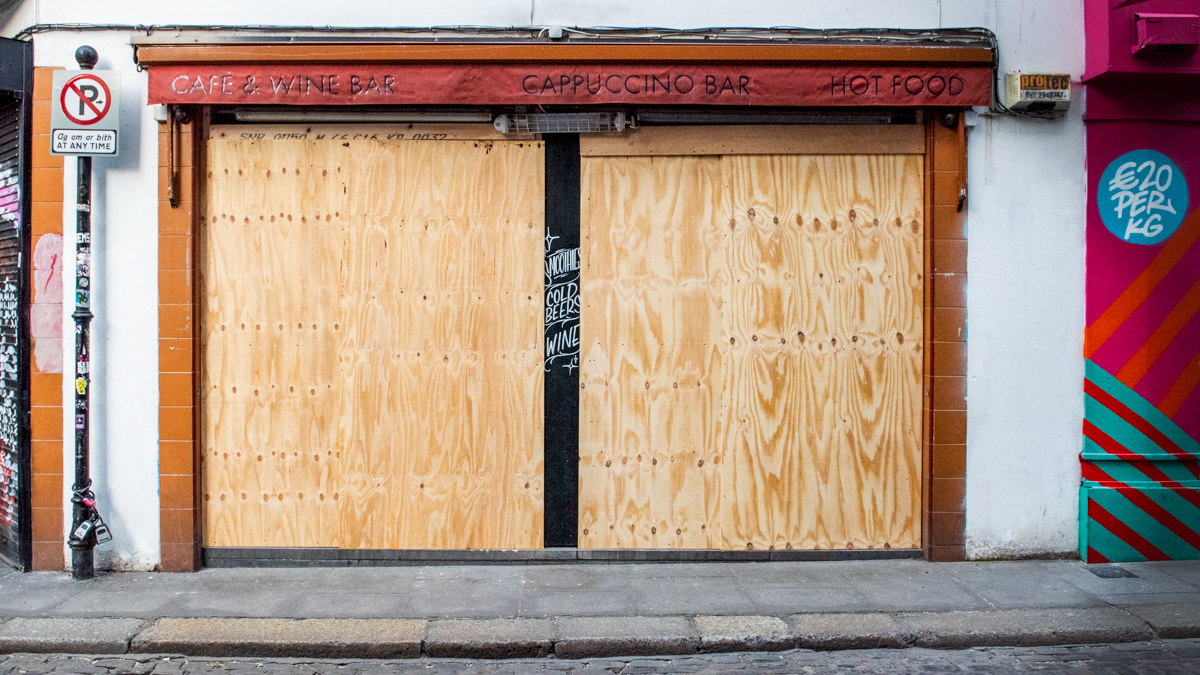
The pandemic has changed life as we know it. We are dealing with the ‘New Abnormal’ where certain aspects of life, such as our café and pub culture are no longer viable. Alas, many places have closed down permanently due to reduced customer footfall and loss of incomes.
So, what does this mean for our social lives? As social animals we need a certain level of sociability for our mental wellbeing. This teaches us valuable life lessons for survival in different situations. We socialize to meet new people for friendship or to meet partners. Socialising differs from age group to age group. Cafés and pubs are the most common areas across generations in most countries.
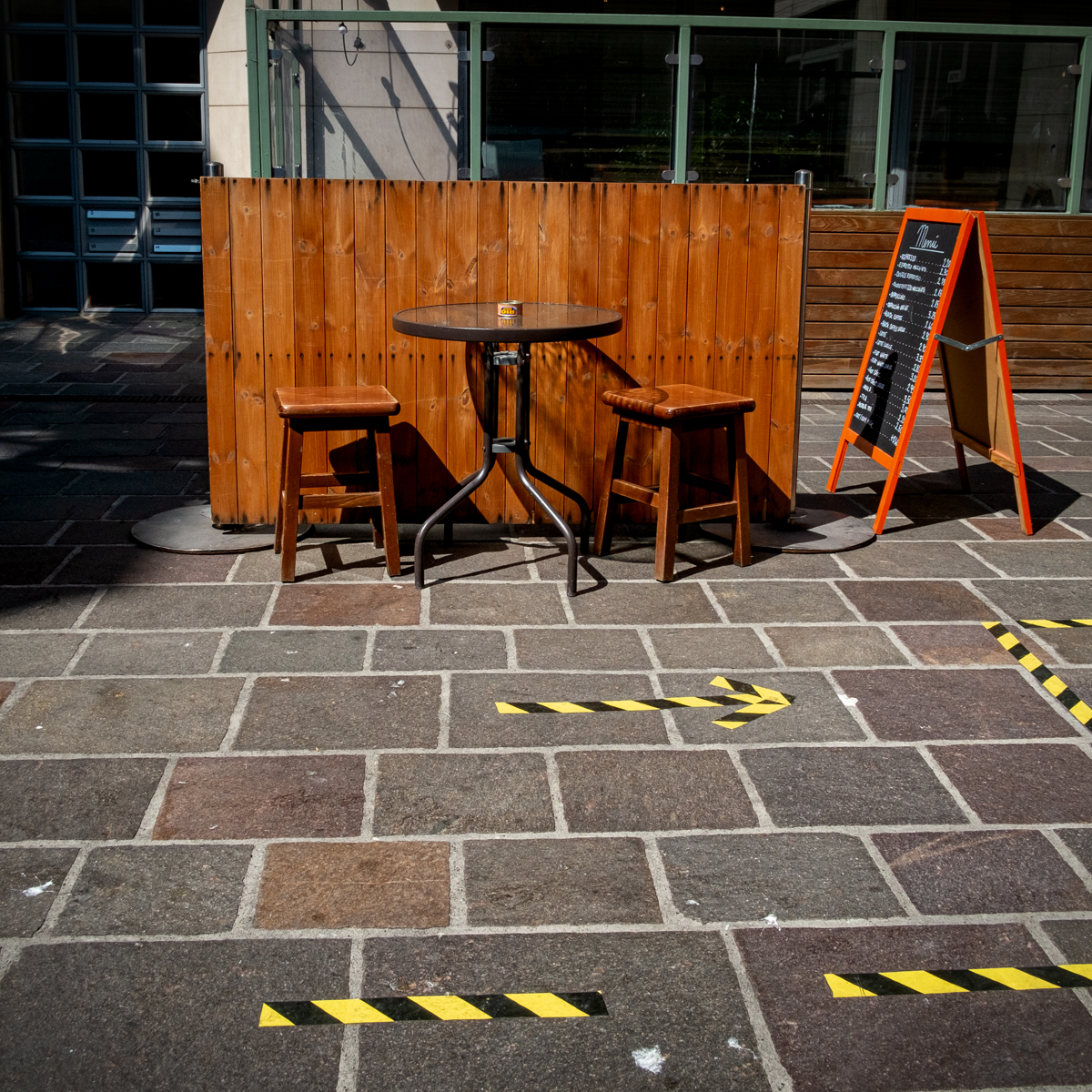
In Ireland, cafés and coffee shops now operate on a socially distanced basis. Many have developed outdoor seating, which is a fantastic addition on those rare occasions of sunny weather in Ireland.
For the younger generation in pre-Covid times, socialising on weekends meant pre-drinks in someone’s house and then piling into a taxi or bus to get into town. The bars and clubs would be heaving, and you’d brush by strangers on the way to buy a drink. When it got warm, you’d nip outside to the smoking area to cool down and have a chat with friends even if you didn’t smoke.
The nights out were great. But waking up the following day at least €40 down and a pounding headache, you would have to wonder, was it really worth it? Could there be a better way to socialize?
In today’s pandemic circumstances we have an opportunity to find other ways of remaining sociable, yet safe from contagion. Phase Four of the lockdown easing measures involving the reopening of pubs has been put on hold until the 18th of September. So for now we still have to book a table to have a meal if we want a drink for the allotted time, give or take.
It is easy for some premises that already served food. But it is a bit of a pain knowing that you’re spending more than you want, all for the sake of a socially-distanced drink.
Temple Bar, Dublin. 27 March 2020. Daniele Idini/Cassandra Voices
It seems as if Germany is in two minds over how to move forward with a social experiment that went ahead in Leipzig on the 22nd of August and an anti-restriction protest being witnessed in Berlin at the start of the month.
The experiment equipped 4,000 pop music fans with tracking gadgets and bottles of fluorescent disinfectant. This is designed to allow scientists gain a clearer picture of how the spread of Covid-19 can be prevented at large indoor concerts. We’ll find out from this how easy it will be to return to a level of pre-Covid normalcy when the results are known.
Meanwhile, in Berlin on August 29th a protest against Covid-19 measures went ahead that brought out an undisclosed number of people of varying opinions on the restrictions. Many chose to avoid wearing face masks or social distance, despite the urgings of police over megaphones. A similar protest also went ahead in Dublin and also featured a lack of masks and social distancing.
Open-air Concerts
On the 11th of August an open-air concert took place at the Virgin Money Unity Arena in Gosforth Park, Newcastle, at which people were fenced off into private pens at a six feet distance with a maximum of five people for each one. This could be the short-term future of concerts and would certainly allow events to proceed and may even improve on certain aspects of the experience!
The UK’s First Socially Distanced Concert, the Virgin Money Unity Arena was built in Gosforth Park, Newcastle. The concert venue extends 480,000 square feet (or 45,000 square meters) and has 500 viewing spaces (some refer to them as “pods”), with a total of 2.500 attendees. pic.twitter.com/wQsDfp4pIj
However, in Ireland, we have not been as lucky with the weather as in Britain, which experienced a summer heatwave. Clearly it is more viable to put on outdoor concerts in warmer countries than Ireland. We do, however, have the space for outdoor concerts with the likes of Phoenix Park and other large green areas such as the Punchestown racecourse, where the Oxygen festival was held, close to Dublin city. But without a large marquee for concerts, which maintains open-air ventilation, it’s unlikely that many concerts will be able to proceed outdoors, as we enter the cooler part of the year.
In Switzerland, clubs reopened in June without physical distancing and at a reduced capacity. The creation of the Swiss Night Pass, a digital ticket, ensures that clubs, bars, and events have a list of attendees with their contact information for tracing. This became mandatory after revellers failed to provide correct information. Six people contracted the virus after a man tested positive after attending the Flamingo Club in Zurich in June, but otherwise, surprisingly, these venues have not been the occasion for super-spreader events.
Many countries plan to reopen nightclubs from September 1st. South Korea reopened nightclubs back in May, but this led to a spike in Covid-19 cases resulting in indefinite closure of all bars and clubs. New Zealand had been doing well, maintaining zero Covid-19 for a hundred days, but a recent outbreak led to another set of Level Three restrictions in Auckland, which has just recently ended. There appears to be no signs of clubs reopening there for a while yet.
Better Ways To Socialise?
So, what will these restrictions entail for sociability? And, can we find a better way to socialise?
One novel approach that could bring about a change in the way we socialise would be to revive The Muse Conversations proposed by Theodore Zeldin. Zeldin is a renowned Oxford University philosopher, historian, and author. He has been a pioneer in revealing how relationships, and emotions such as love, fear, loneliness, friendship, and ambition have evolved in different civilisations over the centuries.
The Muse Conversations brings together total strangers in pairs, for a conversation that transcends small talk. Both are given a Menu of Conversation with specific questions that guide and structure their discussion. These questions enable the pair to reflect on the details of their lives, speculate on their personal experiences, and gain a deeper understanding of one another. The idea is that this encounter will change their world for a short period of time.
Perhaps this idea of a new way of relating to one another could take place in short periods of time in a controlled environment. Indeed libraries have reopened along with the likes of community halls where this would certainly be a viable option. Another alternative could be to have The Muse Conversations in an app, in the style of dating apps. Socialising in person is still the best way to make connections as non-verbal communication such as body language and inflections or tone of voice remain important to forming lasting bonds.
Marking indicating social distancing in a cafe in Dublin. August 2020
Getting Around the Regulations
For the moment it seems that we will have to continue to reserve tables in bars and restaurants. One option is to make a second reservation to extend a social gathering, as ninety minutes is really insufficient to catch up properly with people. If others don’t live close by the chosen destination then it often just isn’t worth it, given the cost of travel and the mandatory nine euro surcharge for food, on top of the money that will be spent on drinks. This will probably lead to more indoor gatherings at houses where the social norm is to provide guests with snacks and some drinks. It’s also a lot cheaper for guests to bring their own beverage and there’s less of a time limit.
For coffee shops, it’s possible to take away beverages which doesn’t change that aspect at all. The chance to sit and work on a laptop at a café appears to still be part of the new normal, as long as they are following the same rules as restaurants.
For clubs, it remains to be seen what will happen when they officially reopen. It’s difficult to see how social distancing will work on dance floors, along with ordering drinks. If clubs increase the size of their smoking areas, it may be possible to achieve the required ventilation. And unless there’s the possibility of a club having an app to order drinks that allows distancing from patrons, it would be difficult to remove entirely the chance of contracting Covid.
The only way we can socialise with a degree of normalcy is to have more open-air events. This may have to come with a limit on numbers or even a ban on alcohol consumption. But this could work if bookings for private seating arrangements were possible as with the outdoor concert in Newcastle. Ireland should certainly look at what has been happening in the UK, and elsewhere, for inspiration of what can work for future events.
The pandemic will certainly bring huge changes to social life around the globe that will hopefully not last as long as people expect. All we can do is wait and see what happens. For now, we have to accept the new abnormal.