In a recent survey of Small and Medium Sized Enterprises (SMEs) by Ernst and Young[i], 79% of board members stated that their organisations were not well-prepared to deal with a crisis such as today’s pandemic. Several other analyses also indicate that the COVID-19 pandemic will push down the full-year gross domestic product (GDP) globally from the 2.5% that was forecasted in January 2020 to 0%.[ii]
In this climate, corporations are urgently attempting to satisfy the dual key targets of meeting strategic goals and also customer demands (which tend to be bespoke in several sectors). However, a closer look at these two goals reveals that strategic goals also includes employee wellbeing (a particular problem during this period), maintaining brand image and overall reputation, supply chain and procurement essentials, while staying clear of legal challenges that the current situation might inadvertently throw up.
So, while sending out a responsible business image that needs to be maintained, at the same time longer term stakeholder management and internal coherency in management decisions are equally important. All of this while keeping healthy financial charts, tables and projections in today’s remote board room meetings.
An OECD analyses show that new business registrations in the U.S. fell by more than 75% relative to the prior year from 15-16 March onwards [iii] – the day when lockdowns started. Similarly, in the Netherlands, the number of start-ups dropped by 34% in April 2020 compared to April 2019[iv], in particular in business services and construction.
Also, in China venture capital investment in new companies declined by 60% in the first quarter of 2020 compared to the first quarter of 2019. In Canada, a survey suggests that 59% of Canadians are considerably less likely to start a business after COVID-19 than before.[v] While these numbers indicate how deeply the aspiring start-ups and entrepreneurial initiatives have been hit in several leading countries, it also demands an exploratory look into how existing and relatively new businesses (especially, smaller ones) are coping under the circumstances.
They remain the competitive engine of many regions and cities while contributing to the fabric of local communities. Policy makers in several countries, including most BRICs [Brazil, Russia, India, China] have responded by deferring payments and assisting with temporary layoffs, enhancing access to credit, providing grants and wage subsidies – amongst many other short-term measures. However, these quick fixes cannot continue indefinitely. Therefore, strategic action is required to enhance SME resilience by opening new markets and by helping them to adopt new technologies and work practices.
The vigour, agility and the general wellbeing of employees should be a priority for small and large businesses alike. Despite the image portrayed on social media, throughout the lockdown limited working hours, work from home, virtual leadership and new strategies for remote engagement have brought considerable difficulties in all major sectors.
For progressive organisations, small and large, the challenges are on several fronts, beginning with identifying the current bottlenecks, before listing challenges and potential (and implementable) solutions.
The primary concern of any business should be the wellbeing of employees and their families. This should look beyond the ‘duty of care’ component of management and take a more humane and ‘affiliative’ leadership approach.
Secondly, perhaps the most important consideration should be communication. Not only how clear and concise a message should be, but also how well-coordinated and standardised the communication systems is to ensure clarity when engaging with key stakeholders.
A third consideration is the challenge of ensuring sustainable financing and stable cash reserves in the period following lockdown.
A fourth component is to assess what kind of models and constructs are in place for companies to assess risk and crisis management.
Fifthly, despite talks of a ‘new’ normal etc., the empirical demand patterns in some markets will not witness a sea change immediately after the crisis lifts. The challenge is to address the impact of demand disruptions, which businesses will need to recover from. This will hit the supply chain and entail procurement risks that businesses need to mitigate both in the medium and long term. The practical foresight of resilience and prudence will play a colossal role.
Staffing Limitations
The emphasis on driving production efficiency, strong yield, and high first pass quality is even more urgent now as many companies have reduced capacity utilization due to staffing limitations. Data shows that even after the reopening of factories, most sites are still struggling to achieve 50% of their previous capacity.
Most companies are likely to experience significant disruption to their operations and will underperform for the duration of the COVID-19 crisis. Companies that are operating in, or exposed, to countries that are significantly affected by COVID-19 will experience disruption to their supply chain and production commitments.
A greater emphasis on employee wellbeing should be as a priority since employees are the one true asset, even more so if they are motivated as much as their line managers towards a common larger goal.
For SMEs, staffing and recruitment should remain key components during times such as today. At least the market has provided a brief window to rethink the acquisition, management and retention of talent. This has as much to do with change management as with determining the culture of the company as it will be in the future. One tip that might prove worthwhile is to be empathetic in reducing employee hours.
Particularly in the case of businesses that have not been in complete lockdown, or those that have been partially open with restricted hours every day, or those slowly expanding their opening hours as lockdowns are lifted in phases: it is often best to speak directly with employees about their financial situations.
Most zero-hour contract workers in retail outlets, food and beverage, fast-fashion and also the hospitality industry are self-selecting towards reduced hours, thereby, saving the time and energy of line manager cutting the hours of those who may be more dependent on the income from that employment.
Provide Reassurance
An equally prudent approach towards customers is to provide reassurance during this period. That is easier said than done for companies that are widely visible on social media. The question is how personalised, accurate and contextual that message should be.
Clearly, there is a temptation to post often on social media, but this also carries challenges and long-term risks. A lack of clarity, and meaningless assurances to customers could do far more damage than not posting at all. A recent survey showed that 34% of customers,[vii] especially concentrated in the Gen-Z cohort use social media platforms channels as an information source.
To keep a business’s head above water, this may also be a good time to reach out to lenders to negotiate short-term reliefs. This could come either in the form of deferred payments or extended credit lines. As mentioned earlier, the focus on supply chain and procurement in this period is essential.
This is also important because there may be significant changes in stakeholder relationships arising out of current decisions. Equally timely and important is reaching out to business vendors to confirm supply continuity. Some of these businesses may be facing their own hardships. This is a good time to work closely with them and explore opportunities for mutual benefits. Some of these businesses could offer deferred payment terms as well.
Going forward, survival, resilience, and renewal strategies need to be independently developed if the pandemic is to teach businesses a crucial lesson or two.
[i] Ernst and Young (2020). Is your organization prepared to respond?, EY Global Risk Survey (accessible at https://www.ey.com/en_ie/covid-19/is-your-organization-prepared-to-respond-)
[ii] World Bank (2020). Pandemic, Recession: The Global Economy in Crisis, World Bank (accessible at https://www.worldbank.org/en/news/feature/2020/06/08/the-global-economic-outlook-during-the-covid-19-pandemic-a-changed-world)
[iii] OECD (2020). Coronavirus (COVID-19): SME policy responses, OECD Policy Responses to Coronavirus (COVID-19) (accessible at http://www.oecd.org/coronavirus/policy-responses/coronavirus-covid-19-sme-policy-responses-04440101/)
[iv] OECD (2019), OECD SME and Entrepreneurship Outlook 2019, OECD Publishing, Paris (accessible at http://www.oecd.org/industry/smes/SME-Outlook-Highlights-FINAL.pdf)
[v] McKinsey & Company (2020). COVID-19: Briefing note: June, 2020, COVID-19: Implications for business (accessible at https://www.mckinsey.com/business-functions/risk/our-insights/covid-19-implications-for-business)
[vi] Yoshino, N. And Taghizadeh-Hesary, F. (2016) Major Challenges Facing Small and Medium-sized Enterprises in Asia and Solutions for Mitigating Them, ADBI Working Paper Series, Asian Development bank (accessible at https://www.adb.org/sites/default/files/publication/182532/adbi-wp564.pdf)
[vii] The Asean Post (2020). Gen Z’s use of social media has evolved, The Phillipines (accessible at https://theaseanpost.com/article/gen-zs-use-social-media-has-evolved)
The word ‘landscape’ not only refers to the topography of an environment, but also to its existence within society, consciousness and experiences. As we move through our existence we traverse thousands of constantly shifting landscapes – geographic and experiential- moulding them around us. Boundaries shape how we think, move and express ourselves. Our ability to understand ourselves, and our place in this world, rests on our collective responsibility to protect and celebrate our surroundings.
My work is grounded in an exploration of ‘landscape’ through colour and texture. Visually, I create bold, visceral works that stretch between two and three dimensions. My work is site-responsive and my large scale works are created and exhibited in remote, wild locations, inviting audiences to experience the works in situ. I describe myself as a painter, although my practice spans various mediums including bio colour, printmaking, sculpture, photography, installations. In 2016 I created a site-responsive arts organisation with artist Hazel Mc Cague. Lay of the Land strives to support artists and communities through the production of art.
Paying heed to ‘landscape’ requires acknowledgement of its physical, cultural, historical, economic and social influences. This is intrinsic to both my practices. My own work focuses on colour as a means of investigation, whereas Lay of the Land employs large scale exhibitions and residency structures to empower artists and communities to respond to “site” collaboratively.
Site Responsive Art
Site-responsive art serves to enliven the relationship with the natural environment. It is an immersion in, investigation of, and response to ‘site’. In my mind, site-responsive art is a kind of collaboration, between artist and place. Having a site-responsive practice requires me to spend periods of time immersed in nature, exploring sites by actively engaging with them. These journeys are integral to my work. Not only do I respond to thecol landscape but I create colour from within the landscape. The act of searching for the colours forces me to approach the environment with a bold investigation and is as much part of the process as the resulting palette. The process of creating bio-pigments and paints this past year has allowed me to contrast factory produced colours with a more circular-centred approach to making. I am shifting my work away from reliance on disposable, unsustainable, petroleum-based materials such as acrylic. The resulting paintbox of bio-colour highlights the spectrum of materials that grow in abundance around us.
What my work looks like
I have a direct and intuitive process of energetic mark-making which allows me to better understand the physical and visceral experience of an environment. I use strokes and colour combinations as a way to invite the audience to explore the landscape. My work features the interplay of light and tone to create a balance of motion. I drip, scrape, bruise and blush colour onto surfaces. I sketch, paint and draw. This creates a visual map from which the aesthetic and form of my larger paintings or installations stem from. I record the energy of crashing rain, the piercing light at sunset and the slow shadows across the mountain, weaving them between stories and folklore I hear through conversations along the way.
Colour-making from the Environment
I create paint from seaweeds along the coast, from rocks and sand at diverse, geological sites, from local wildflowers in maritime grasslands, from cliffs and ledge habitats. I dig earth pigments from mineral-rich, low-lying valleys and extract botanical pigment from native trees. I search for hues found within lichen, moss, algae and fungi. Paying attention to the industrial and maritime heritage of our island, I collect copper and iron scraps at industrial and port areas. I gather, grind, pulverise and suspend the materials in order to produce ecologically friendly paint particular to each environment. The pallets of colour form the foundation of my artworks.
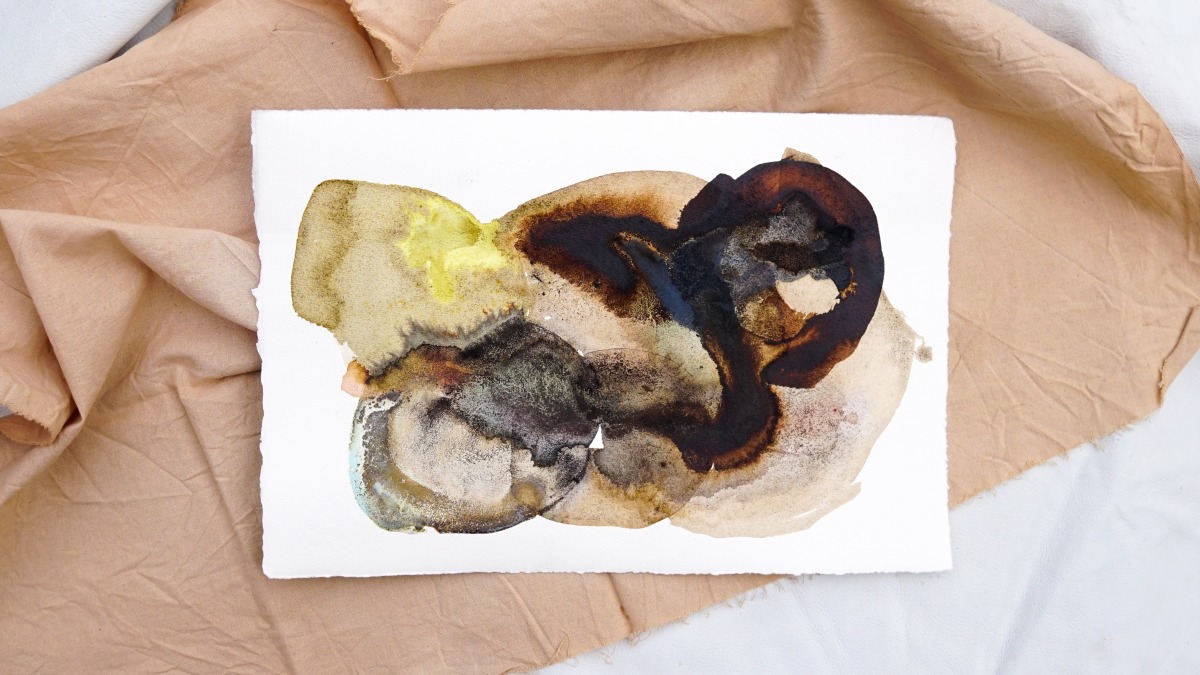
The parameters for colour creation expands considerably in a controlled environment. Using my studio as a laboratory I tweak ph levels and apply lake pigment extraction methods to alter viscosity. I oxidise copper scraps with vinegar to make a beautiful blue colour and modify the vibrance of berry ink using iron oxides from rusty nails. Allowing the materials to decay or chemically change through these natural processes I can connect with the ephemeral, geographical, and cultural nature of the landscape. I pool, drip and soak pigments onto the surface of paper and canvas, calling them to interact with each other. Precipitation occurs as the pigments permeate. As the painting dries new colours emerge. Through my research and experiments I am creating a compendium of colour; detailing the shades and hues achieved from.
Sustainability and the Future
Artistically, my aim is to drive artists and the experience of art outwards into the wild environments of the natural world. High-quality artistic work energises through a sense of place-making and engagement with culture, history and heritage. By working within the public realm my work has the potential to engage with an audience outside of art institutions and galleries. These audiences are presented with work that speaks about sustainability through exciting colour interventions, while simultaneously imbuing a sense of value and appreciation for the arts into their psyche. By celebrating the resources nature has to offer us, we can alter the perception that a linear economy is necessary and open to exploring more circular based templates of development.
My process of creating colour echoes age-old techniques that have been employed by humans for millennia. These techniques have had a huge influence over our cultures, from the charting of trade routes to the dissemination of knowledge and cultures between tribes, to the sealing of legal documents with signatures. Marking ourselves in time is part of the human condition but natural processes have been cast aside in favour of factory-produced chemicals that produce vast amounts of waste, pollute rivers and damage the overall health of our environments and therefore, our society. I will search for new forms of interaction that could transform our ambitions, values and perceptions in order to build a more sustainable future. My artistic practice can contribute to the development of new perspectives on our cultural, historical and natural landscape.
Where I am Going Next
I have been accumulating, gathering, foraging, collecting and recording places in Ireland. Collectively, these pieces are beginning to emerge as the foundation of a new project – a site-responsive book tracing the experience landscape through colour and texture. The book will be a map of sorts, where facts are replaced by experiences, and place names with colours.
The book will exist as a collection of thoughts and discoveries, bound together, archiving that place, in this era. Accompanying a pigment glossary, the book will contain musings written in situ, spoken histories captured through conversations, and small trail maps that identify locations rich in bio-diversity and bio-colour.
The site-responsive nature of my work, paired with the deepening of my practice towards a more sustainable approach to making has increasingly made me question urban living. In March this year, I decided to move away from Dublin, which has served as my base for the past decade. I write this piece from Sligo, where I moved with my partner Fellipe Lopes, right as the lockdown kicked in. Sligo is situated on the North West Coast of the country and features looming mountains, jagged coastlines, scattered lakes, and rich woodland. It’s as well known for its literary heritage as it is ‘The Rovers’. Its accent dials from steady, almost flat, to a Donegal lilt.
Tomorrow I move into The Model where I will have a studio for the next two years. Although there is something exciting immediate about working in make-shift, back-of-the-van studios on the edge of the Atlantic for weeks at a time, there are benefits to a longer-term studio space where my practice can unfold. I look forward to seeing the nuances of how the landscape, culture and community of Sligo shift my thinking, my production, and the development of all strands of my creative process.
Where to find my work
You can explore my work on my website or through Instagram. Join my newsletter if you would like a drop of colour research in your inbox every once and a while, or if you’d like to know more about my projects and events. If you prefer real-life interactions, I invite you to visit my studio.
I left a depressed New York city following the surprise election of Donald Trump in November 2016; a city reeling in disbelief at what occurred – but I had captured history unfold in Time Square – now I was heading into the heartland of how this had actually happened – the Rust Belt – then the bus broke down at night in rural Pennsylvania and I missed my connection to Kentucky. I overnighted in a cheap motel and caught an early bus to Kingsport, as we pulled into Bristol, Virginia we alighted for a cigarette break and this anonymous traveller waved his American flag, in defiance or support? To understand this election, one had to be in the rural American heartland, to see what was actually going on – coal-mining towns decimated by unemployment, despair and opiates.
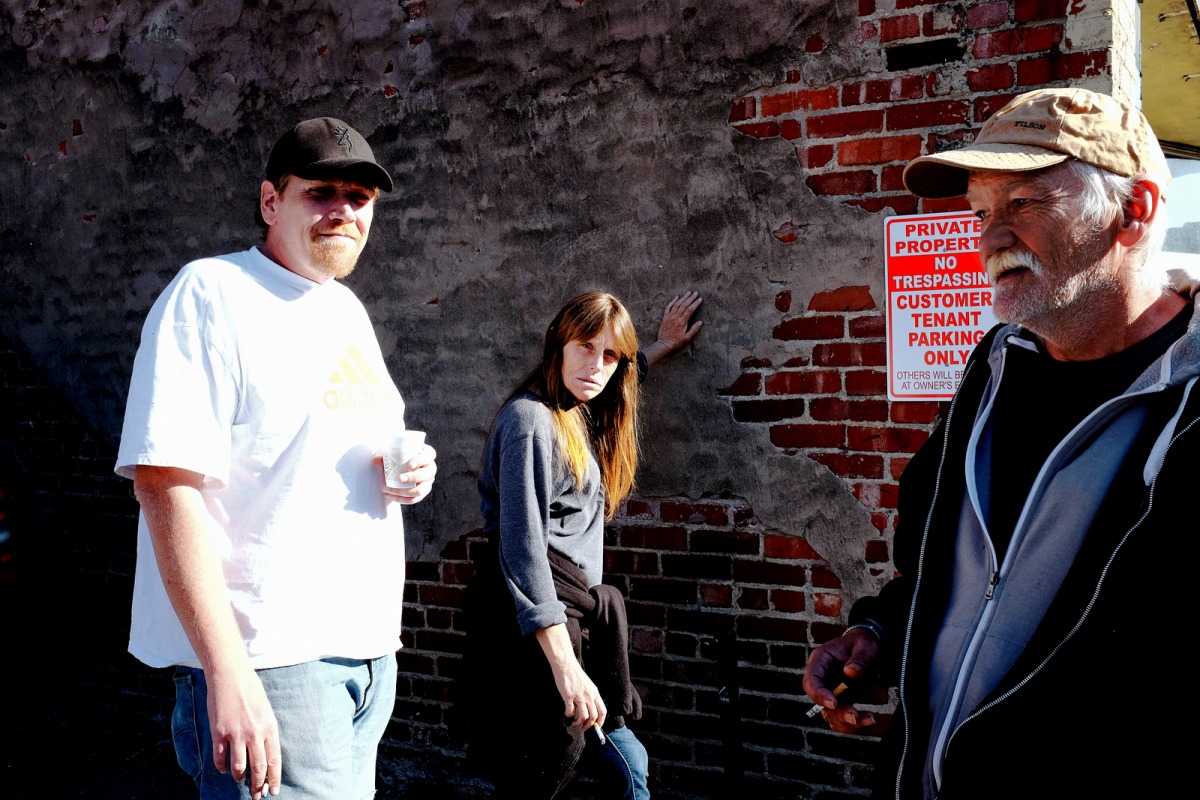
I arrived in Kingsport station tired and dishevelled, after days travelling around the Rust Belt, looking for a taxi to take me to my Motel. As the bus took off I realised the station was closed and not opening – I wandered up the deserted town looking for a taxi or bus – nothing, not even a car – like a Ghost town in an old Western, except this was 2016 in Tennessee. Eventually a man pointed to a building that was not closed. I pressed the buzzer and realised it was a funeral home. A large man in a suit answered. I said I needed a Taxi He said there was none, but if I waited until after the funeral someone would give me a lift. I politely declined and continued walking – the afternoon heat was quite intense and my bags heavy so I returned to take up the offer. I waited at the back of the Shades of Grace hall as the funeral commenced. Amidst a congregation of church goers three casual dressed mourners stood out. They kept shuffling outside for a quick smoke. Then an image appeared on a large monitor – a bearded thirty something male – I was intrigued. The service commenced with a sombre Springsteen song and his short life was celebrated. Jail was mentioned; school; a broken family; a lover and a child; unemployment; drugs. Then the funeral was over, like his life, the three friends left and I was asked to join the gathering over the food platter provided. I was told the real story. It was murder – a drug deal gone wrong; no money for funeral or burial; the Shades of Grace stepped in; it had become a common theme in Kingsport and all over mid-America, where murder and drugs cut life short – money was scarce as debt was due. Talk turned to the newly elected Donald Trump, and I was told when you have nothing, anything will seem better. I got my lift back to my Motel, shaken by what I had witnessed and the fragility of life.
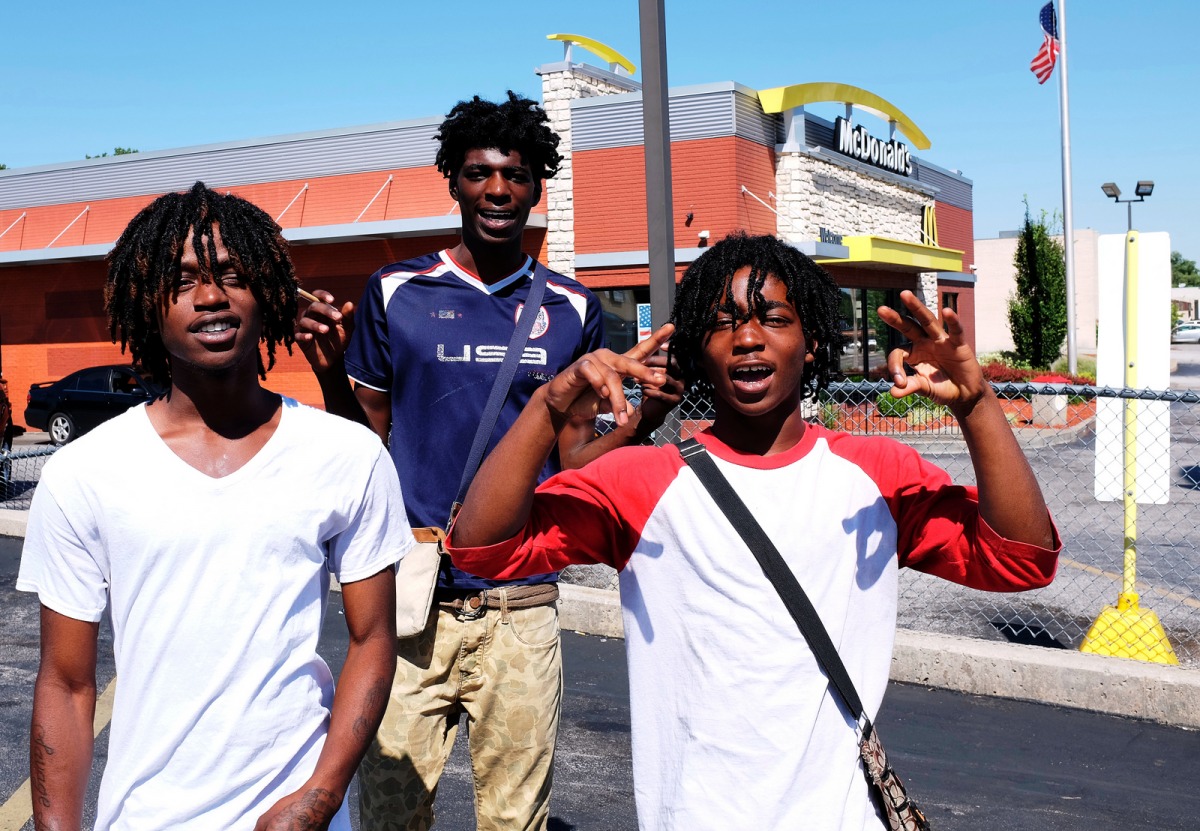
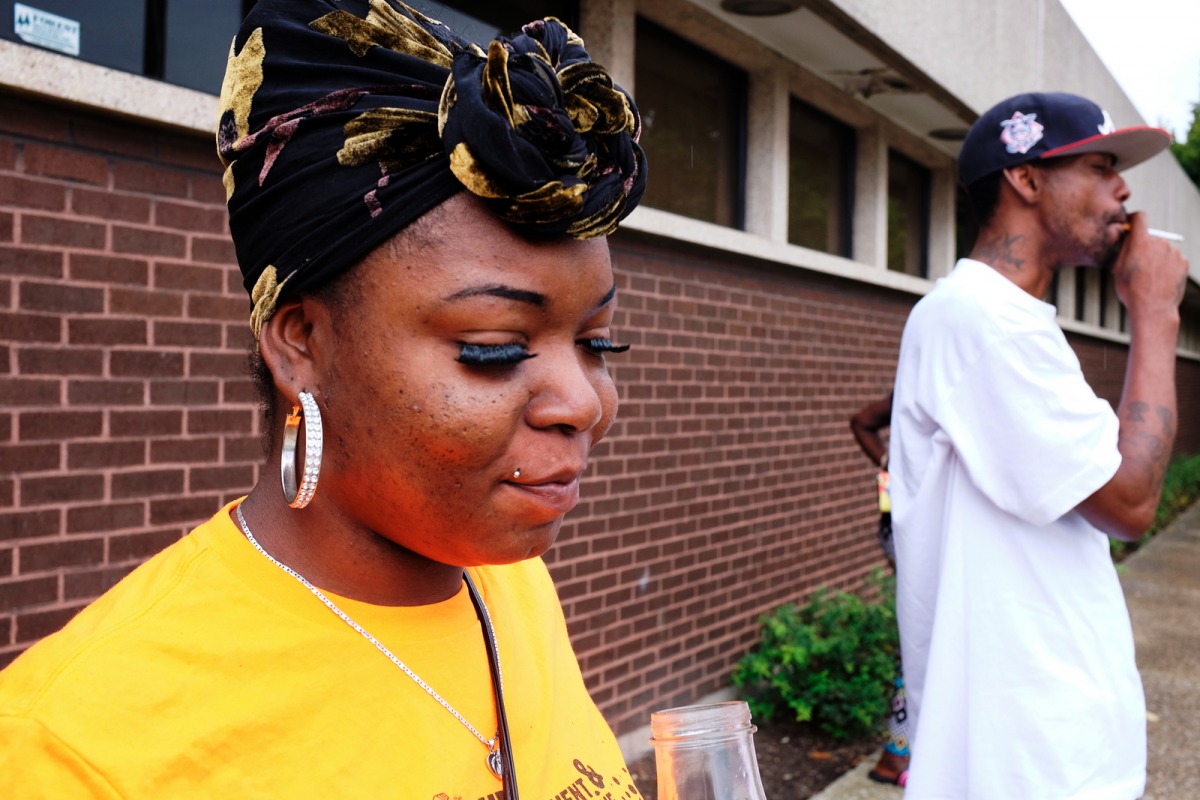
I had been to St Louis a few times, but like most was unsure where Ferguson was – the birthplace of Black Lives Matter. I boarded a bus from downtown St Louis, a 10 mile journey through some of the most deprived areas I had seen in America. I stood out, the only white, and with a camera, eventually the silence was broken. Where you going? I was asked suspiciously. I told them I was a photographer from Dublin. They never heard of Ireland. Eventually the bus driver told me where to alight. He pointed to the liquor store where Michael Brown was accused of stealing the cheap pack of cigarillos. I wandered around this typical American low income shopping strip: the McDonalds; two liquor stores and a convenience store and a few businesses to let, in the searing September heat; eyes peered on me suspiciously; no one talked to me, never mind wanted to be photographed. Eventually a gang of teens, heading out of the McDonalds, agreed to a quick photo. they said they knew Michael Brown then they were gone. I wandered back to the liquor store and something happened: one of the gang was into photography and he interviewed me. I was real so I was in – a few photographs and then the history of what happened to spark the Black Lives Matter movement. One of the most engaging conversations of my life. I was taken down to Michael Brown’s home; shown where the shooting occurred and met his neighbours. We smoked and I told them about Ireland, I showed them my Instagram and then I was gone, back on my bus
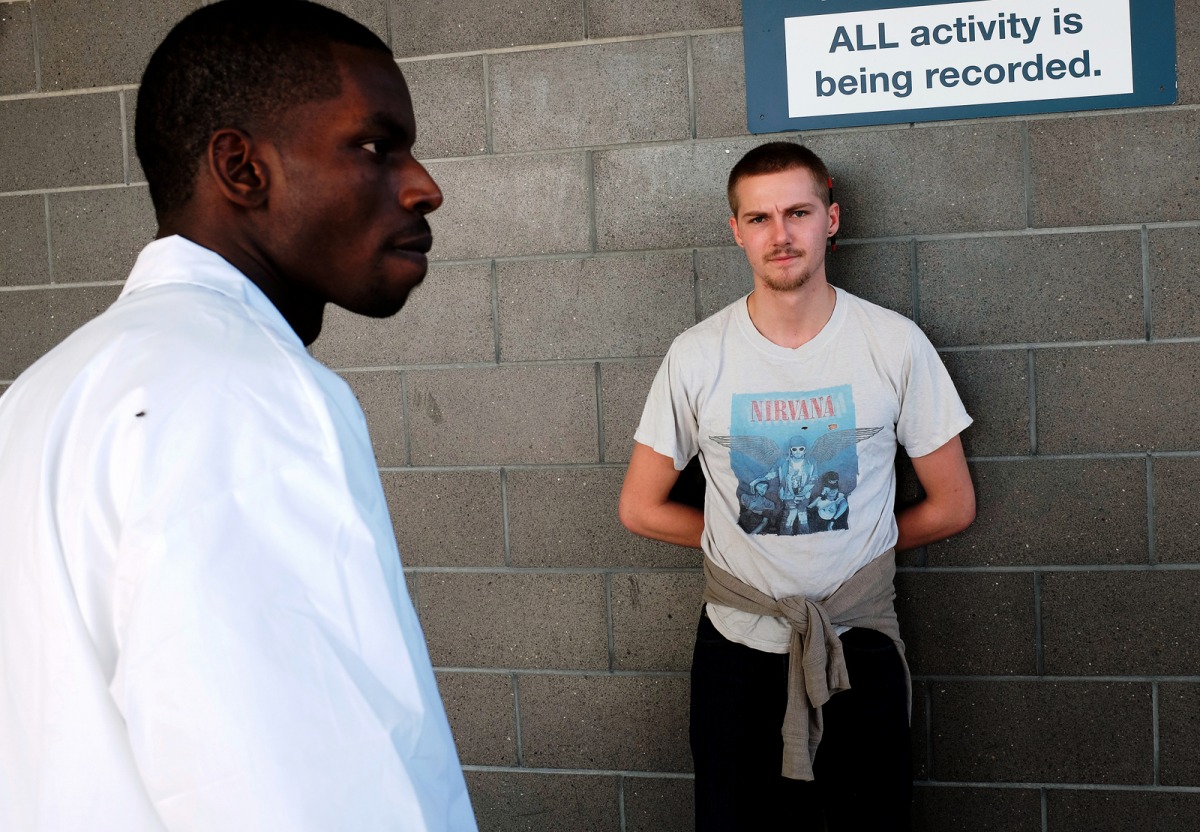
Waiting at Memphis station for my early morning bus to Mississippi and a prison van rolls up and drops off five newly released prisoners; we were all congregated in the smoking area; the guy in the Nirvana T-shirt agreed to be photographed and as I’m shooting the black guy drops in. It’s the perfect picture. I return to my coffee; then he approaches menacingly, “did you take my photograph?” I’m always honest, people on the street see through bullshit. I said yeah, he tells me he had been locked up for eight years since he was eighteen. “What are you going to do with the photograph?” he asks. I told him, hopefully a book or exhibition somewhere in Europe. He said “am I going to be in a book or exhibition in Europe?” I said, hopefully, and bought him a coffee, he told me about his fears about going back to his home town in Mississippi, and getting mixed up again in the gang lifestyle; the horrors of living in a prison dormitory; the violence he witnessed and the segregated racial tension of prison life.
When my exhibition – Americans Anonymous – opened at Ranelagh Arts centre two years later he was honoured at the opening.
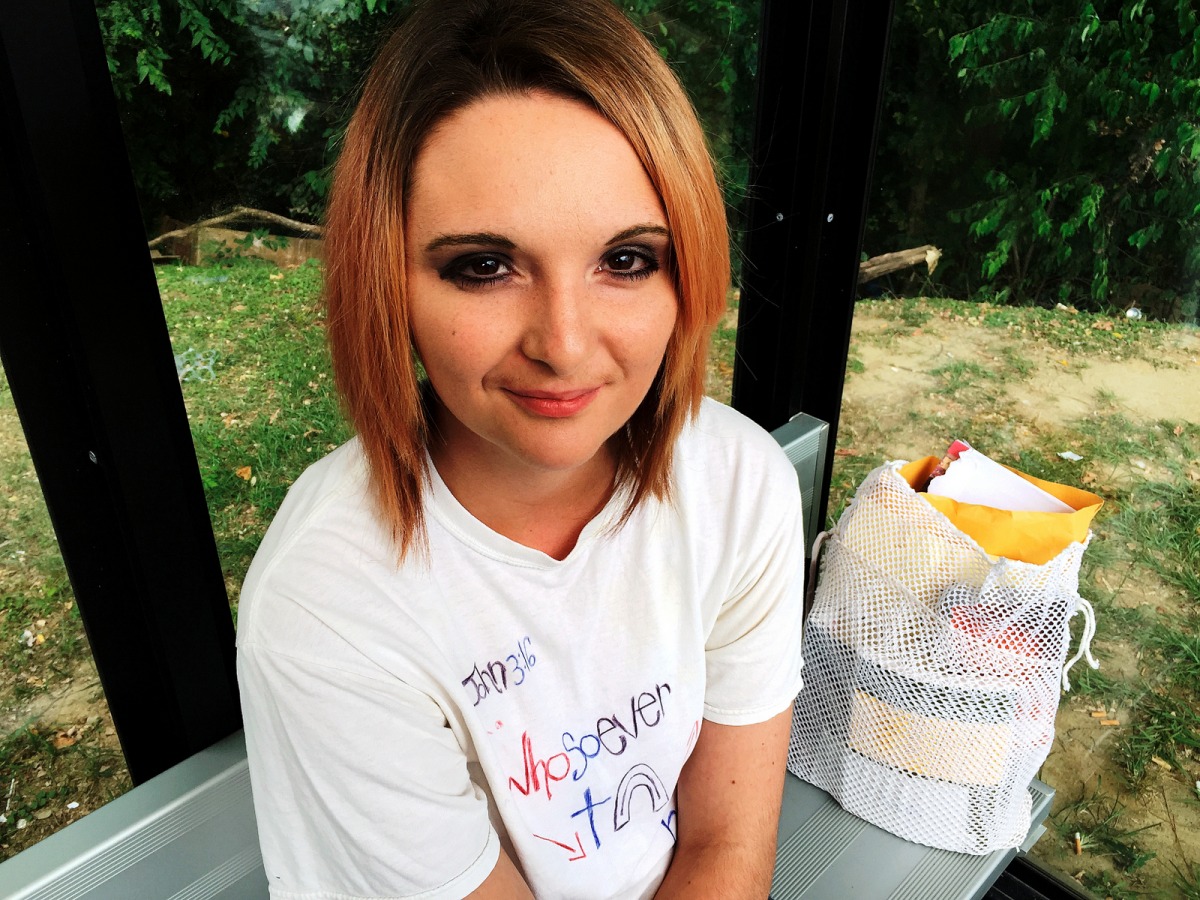
On the bus from Jackson we picked up this sweet little Louisiana twentysomething, four kids and just released from a six month stretch for a petty drug offense; at the next stop I photographed her. We chatted all the way to Louisiana – telling me her story, me mine. When we arrived at Baton Rouge station it was Friday night chaos with more new releases .I took my camera out and suddenly it was not so friendly. Then this guy who had begun flirting with the girl, whipped of his shirt and yelled: “Fuck it – I’m Free – shoot that.” I nearly missed my ongoing bus to New Orleans. Janis Joplin playing in my mind: “Freedoms just another word for nothing left to lose.”
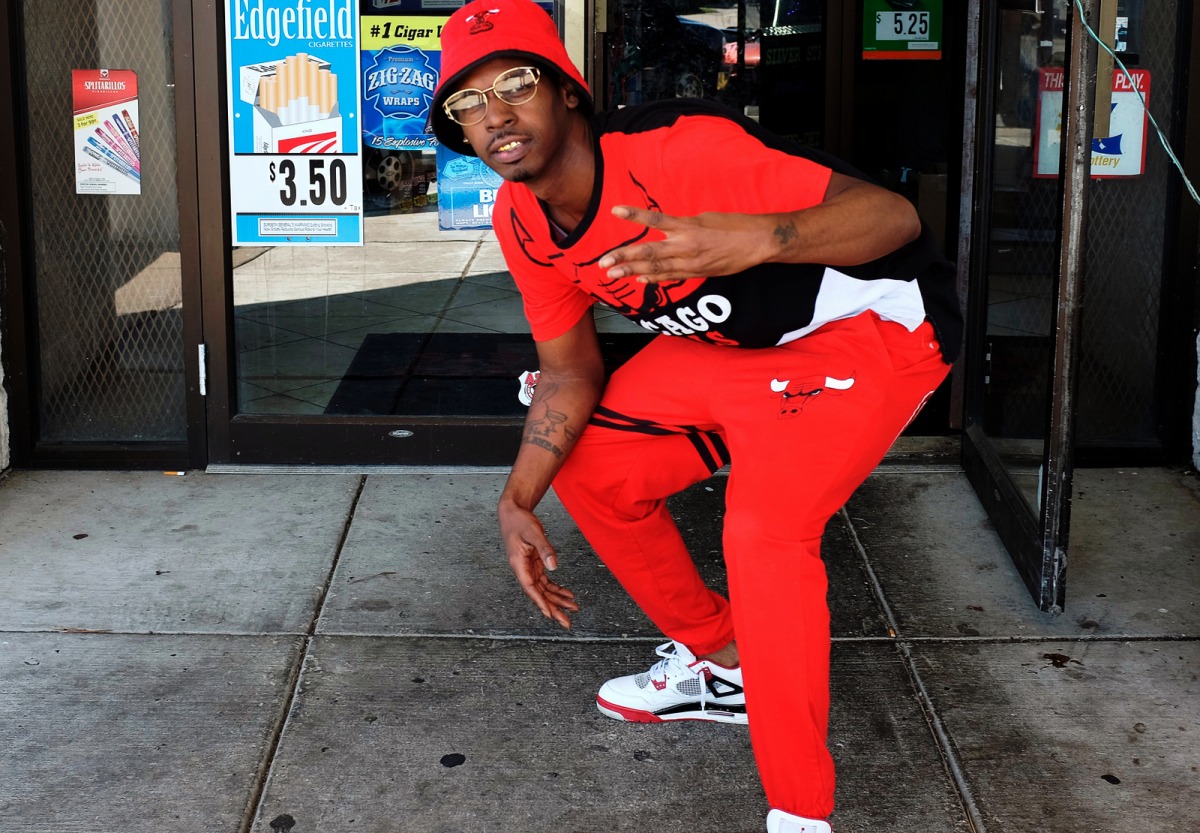
From my central Chicago tourist base I caught the L train out to the South Side; as I approached Englwood there were no other tourists on board. I was on my own as I embarked, noting the gang activity near the station in the late August heatwave. This was not Dublin. This was a place where there was a gang related murder every day. It seemed deserted and strangely suburban: a world away from the Chicago Magnificent mile; suspicion was everywhere; was I an undercover white man (with a camera)? Alone, I endured the fear and kept walking; approaching different groups; no one here had heard of Dublin, most waving me abruptly away. Eventually agreement, a couple chilling agreed to one shot. I quickly moved on; the next group also agreed; then suddenly, as I was shooting, a guy on a low rider bike circled around me and warned: “you and your camera get the fuck out here NOW.” I scurried quickly back to the station still armed with my camera and my one shot.
Right bang in the centre of San Francisco, a stone’s throw from the shopping hub of Union Square, across the road from Market street, home to Twitter itself, is the Tenderloin. Amidst the liberal affluent chic of San Fran is an oasis of the real Wild West, riddled with sirens, drugs, gunshots, hookers, hostels, soup kitchens, fashion and vice; crackheads yelling incoherent paranoid mantras. Is this the home of the Hippies, Apple and all things new-age?
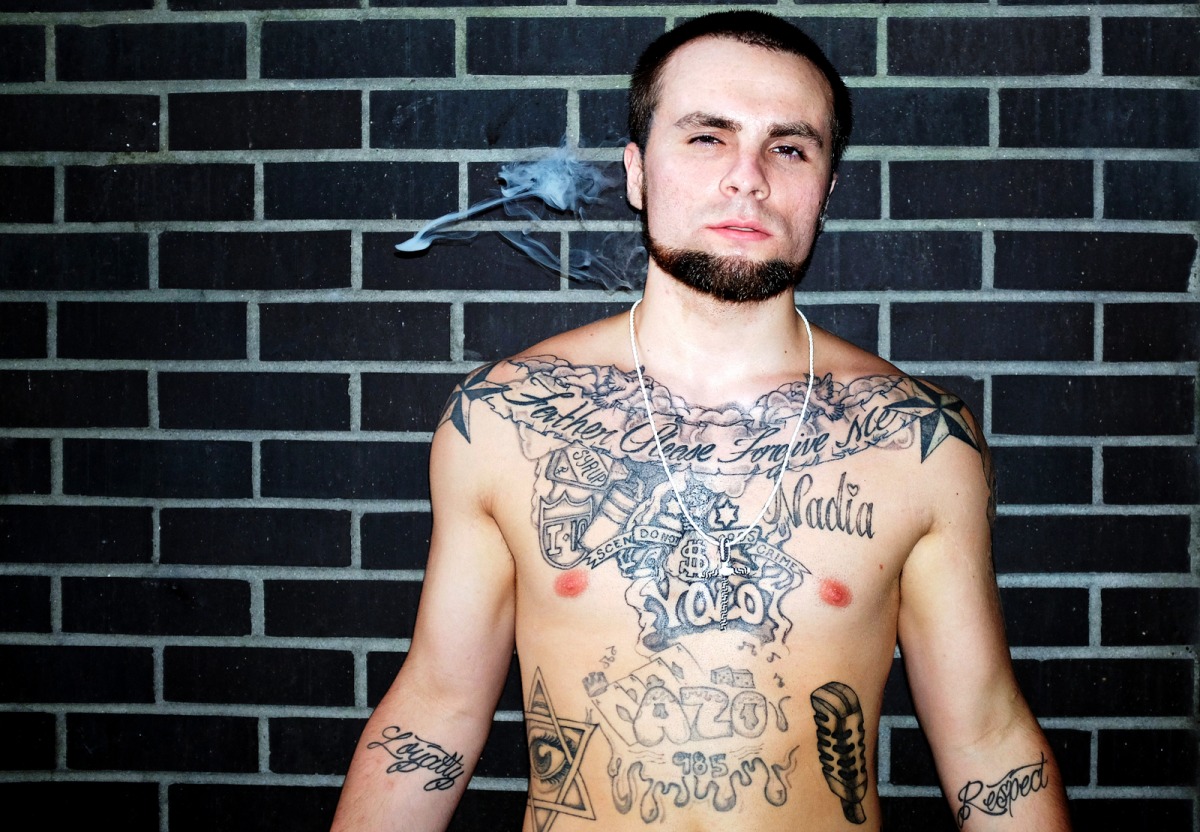
And yet, somehow, it’s all carried out in style, maybe a beat pimp style, in that cool California way, like a set from a 60’s Steve McQueen drama. Each time I return the action has moved on, sometimes across the street to the Mission, but it always has that edge. The last time I was there I was run out by a gang of punks, angered by my candid street photography style. Always an adrenaline rush, in fact a Fear and Loathing. This is a sample of some of the characters I have met down through the years, that I’m putting together for my new book: Americans Anonymous.
History …is not homogenous, empty time, but time filled by the presence of the now.
(Walter Benjamin, XIV, Theses on the Philosophy of History).
Grammar expresses a human desire to control time. Regimented in terms of right and wrong, grammar draws lines by which people can express themselves as concurring or not with their own era. Breaking with grammar rules has often been seen as a form of resistance against the dominant forces of a time: take le verlan in disaffected French suburbs for example. But in corona times this paradigm has been inverted: the notion that humanity is at the heart of time has been annihilated. And now, our era has rejected us. Suddenly our grammar is exposed as fantasy. But wasn’t there always an implicit arrogance in the phrase “next week I will be sitting in Tulum drinking tequila”? It seems hubristic that humans are grammatically equipped to script their own future when anything can happen. Such reflections have been on my mind since our latest release flukishly coincided with the pandemic.
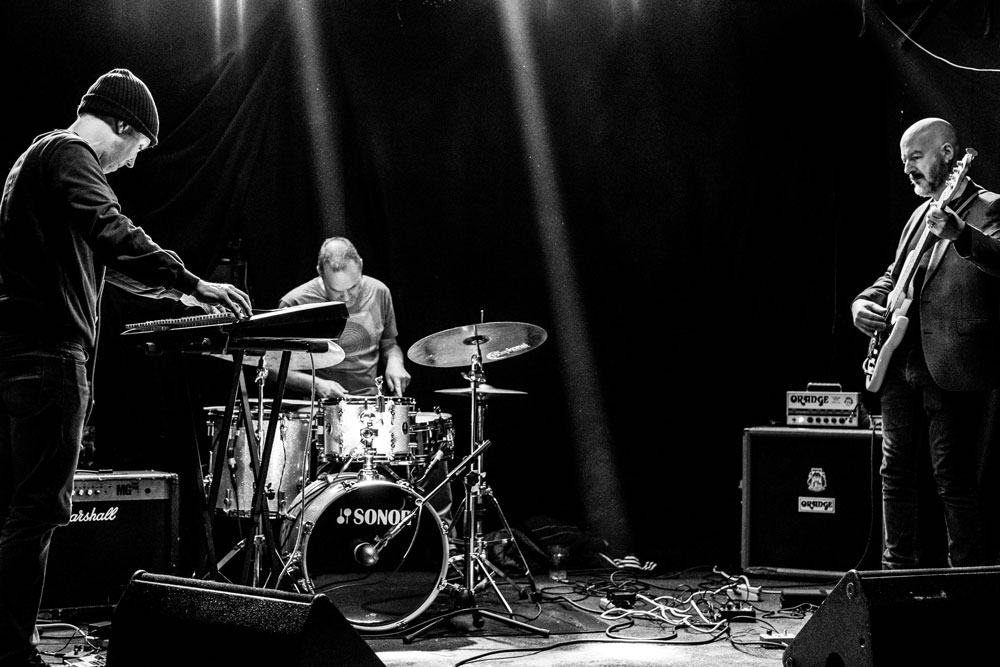
In 2016 Zeropunkt recorded some dystopian improvisations and then parked them. Fort Evil Fruit expressed interest in 2019 and we jumped. We decided to call the album Future Perfect Continuous, inspired by the presumptuousness implicit in the tense, and the promise of an eternally blissful and unshakable utopia suggested in the actual words. The album took slightly longer to release than planned, ultimately concurring with the pandemic, making the title uncanny in a world where time had stopped. Life as we knew it had ended. We’d left the rigid regime of “time” and entered what Henri Bergson called durée (duration).[i] Human temporality had been exposed as an absurdity. Suddenly duration, not time, reigned over human existence, and we were in profound existential shock.
The collapse of routine temporality can have a revolutionary feel about it. Seismic events upending time systems have occurred before. A revolutionary calendar was adopted in Republican France from 1793 to 1805. And Walter Benjamin mentions the later 1830 revolutionaries shooting at public clocks in Paris in order to stop time.[ii] A collapse of normal temporality can feel like a messianic occasion for progressive change. And it can be. But this overlooks how forms of human order can tend to just exchange places. Old order time gets replaced by revolutionary time, which becomes new order time, which in turn becomes old order time replaced by ‘new’ time, etc.. Humanity gets encircled by its own temporal systems, enclosed in its own bubble. Meanwhile, non-human time scales, the geological and the cosmic, continue happily in their duration – simply being.
The coronavirus suggests we’re not special after all. Our personal and collective narratives hang by a thread, overblown in their significance and existing within scripted histories. Geological and cosmic history are very indifferent to our stories. There is undeniable arrogance in assuming our (hi)stories are the ultimate ones. We’re not the official account of the world – not by a long shot. Our consciousness of cosmic immensity doesn’t help us live our miniscule lives any better. Specialists in morbidity despair at the vast nothingness of the universe, but most people ignore it altogether. However, denial increases our nausea and dread doesn’t help. Being a speck in the void isn’t reassuring, but if you think about it, speck and void need each other to be.
Remember that famous Carl Sagan “pale blue dot” poster, depicting Earth as “a mote of dust in a sunbeam”? Our planet is shown as a tiny dot in the cosmic dark. It should make us despair, but we realise that without the dot the immense darkness is indecipherable nothingness, and without the black backdrop the tiny dot cannot be seen. They both need each other to be what they are. Our microscopic relevance to the cosmos might not seem encouraging, but that immense emptiness can’t be discerned without our tiny cogitations. And, of course, if nothingness is the cosmic majority, doesn’t that make our puny somethingness a very concentrated sort of special? In a way, we register the cosmic existence because we express it. The cosmos can’t recognize itself – its recognition happens in the expression we give to it. This doesn’t mean the cosmos only exists when we exist. It just means its being is not registered – because we aren’t there. Our expression is the thing that gives being recognition.
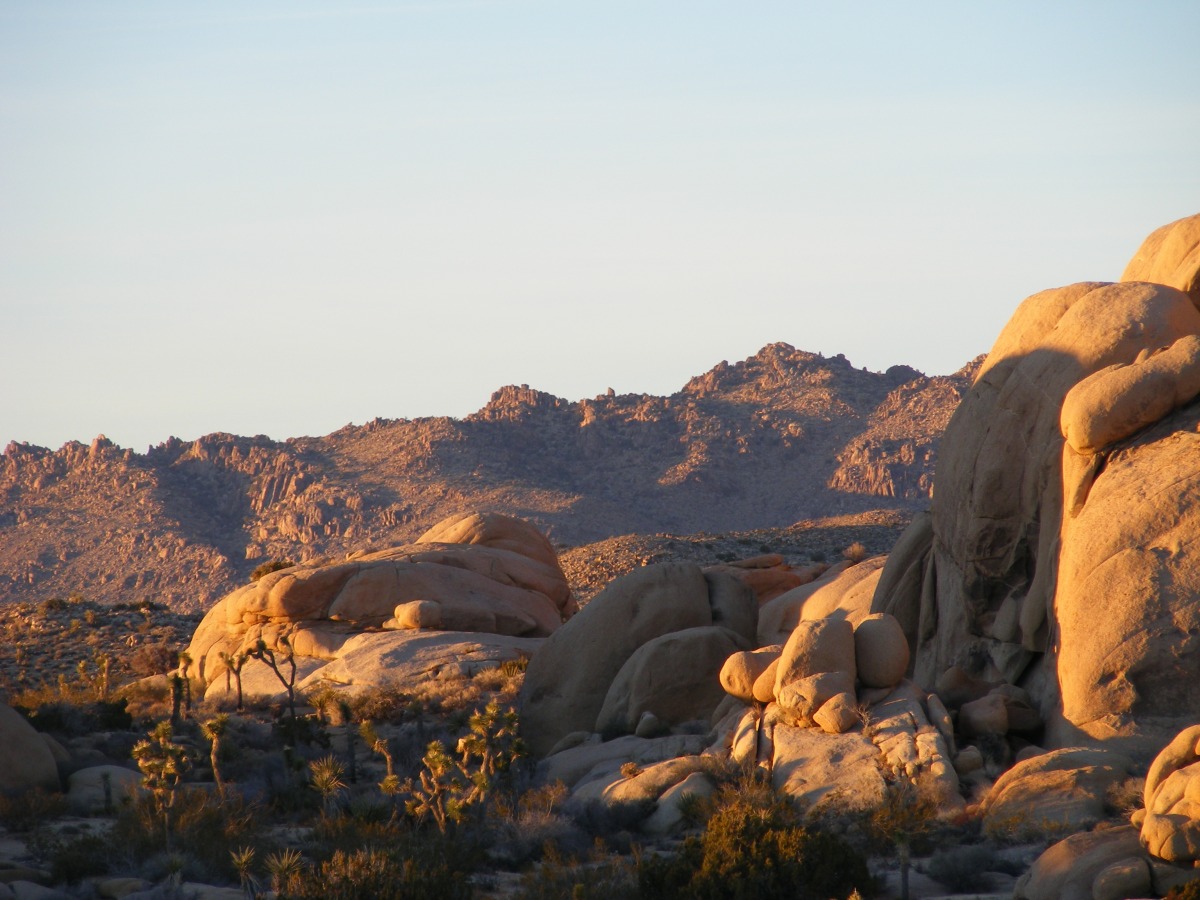
The desert is the best place to go if you are obsessed with these things. It immediately tames any extravagant ideas you might have about human narratives. I visit the Mojave Desert semi-regularly. There, human time really does appear pathetic. When you immerse yourself in its rocks and dust, you are stunned by the vast theatre of geological time.
Photograph by Damien Lennon
The desert is geological time’s grand museum. There are rocks there of unfathomable age. The time-scape of the desert constantly reminds you it can swallow you in a cosmic equivalent of less than a microsecond. In fact, gazing into it, you realise that it already has, that you are behind it in temporal terms. The “you” standing there is a premonition of the ghost you haven’t yet become to yourself. The significance of your story has already been unwritten in dust. The desert is way ahead of you, and way behind you. As a temporal expanse, it precedes you so thoroughly, and succeeds you so thoroughly, that whatever little moment you think you are having there is just an insignificant vanity. To the desert it means nothing whatsoever. Thinking like this makes it hard to reckon the place of the human story.
Even botanical time in the desert can be extraordinary by human standards. There are creosote bushes in the Mojave called “King Clone” which are about 11,700 years old. When you see them in the searing sun they look quite mundane. You would never imagine them to be extraordinary. And I suppose, on a cosmic or geological scale, they aren’t. But we don’t process time that way. Such scales make us feel even more irrelevant when considering how difficult it is to survive the desert. Most humans wouldn’t last than 10 days there without water. That’s quite a contrast with 11,000-year-old bushes.
Walter Benjamin both loved and doubted the human story. He dreamt of blasting fragmented instances out of oppressive narrative history, disrupting its clean lines by elevating sudden intensities that blow the continuum apart and resonate across time. A salient shard from the past would slice into a stunned present – bleeding chronological time to death. I wonder what he would have made of the Mojave, a zero point that obliterates linear time utterly. There, all credibility in human continuity from past to present to future vanishes. The desert proves continuity is not the succession of moments, not a continuum, but continuance: one cosmically long state of being.
Ultimately along cosmic and geological scales, we are irrelevant. And despite earning our own era, the catastrophic Anthropocene, the monumental expanse of cosmic time from nothing to nothing surely relegates us to the smallest universal footnote. Maybe we take ourselves too seriously, but do we have any other option? We are clearly in some sort of time, so how do we live it? Perhaps we should abandon the sense of ourselves as a story, a narrative; a beginning, middle and end.
Instead we could think of ourselves as a state of being only – before which we were nothing, and after which we will be nothing. If there is immense nothingness before us and after us, should we despair? We’re not as enduring as helium and hydrogen, and we are a minute blip on the universal scale. But instead of despairing, maybe we could be minimalist and egoless about it. Couldn’t we see our lives as a thrilling fluke, a fleeting thing dense with multivarious experience, like some rich sub-atomic, micro-temporal explosion? Something the cosmos knows as a glitch, but we experience as the condensed totality of our passions. Maybe we could be irrelevant and exceptional.
For anybody these questions are pretty traumatic. For an artist they get invasive. I prefer improvising music to writing it, because I want to engage the single moment and then let it go. When it works it’s really something. But sometimes it doesn’t. We’re not always pre-disposed to being-in-the-present – we get distracted. And I’m not suggesting it’s “better” to improvise than write. I really do admire people who write great songs or pieces of music, who leave some sense of legacy. Most of my heroes are these people. Yet I’m half suspicious that this is an atavistic romanticism I got contaminated by. I can’t help feeling I’ve accepted this idea of legacy (a sort of calcified time product) as a necessary fiction we assent to, despite knowing it’s bullshit. I mean, five minutes in the desert tells you it’s bullshit.
Wallace Stevens and Marianne Moore can help us out of this paradox. They promoted the notion that poetry can happen when we recognise our existential fictions as fictions and still “believe” in them.[iii] They advocated the idea of being “literalists of the imagination”, people tasked with creating “imaginary gardens with real toads in them.”[iv] That breaks with a certain type of “grammar” of course. It rejects a logical order – that distinct category between imaginary and real. But it also creates while destroying. We use the rules to break the rules, spinning in our circles. Our era has rejected us, absolutely. It wants to void us. And yet we are here, modest as a speck. Time appears perhaps to be an imaginary garden after all, but we are the real things who must inhabit it.
Damien Lennon is a member of experimental improv group Zeropunkt. His new collection of minimalist poetry was recently published in a dual edition with Rosmarie Waldrop by hardPressed poetry (available here).
Photograph by Paddy Kiernan
[i] Henri Bergson. Matter and Memory. Trans. N. M. Paul and W. S. Palmer. New York: Cosimo Inc. 2007.
[ii] Walter Benjamin. “Theses on the Philosophy of History”. In Illuminations. Trans. Harry Zohn. London: Fontana, 1973.
[iii] Wallace Stevens. “Imagination as Value”. In The Necessary Angel: Essays on Reality and the Imagination. Knopf Doubleday Publishing Group, 2011.
[iv] Marianne Moore. “Poetry”. In New Collected Poems. Heather Cass White ed. New York: Farrar, Strauss & Giroux, 2017.
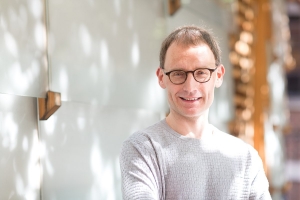
In particular, he condemned Imperial College’s Neil Ferguson for failing to respond to his emails at the height of the crisis. He said that a flawed response had caused hundreds of billions of dollars’ worth of suffering and damage, that had disproportionately affected a younger generation, and which would not substantially alter the ultimate death toll.
Levitt began by saying (at 11.41 in the video below):
One thing that strikes me is that once the virus moved from the China-Korea phase is how totally inadequate science structure is for real time science. People are insisting on refereed reports. No one wants to share anything. The scientists are more panicked and scared by reality than anybody else. The august organisations like Lindau, The Royal Society, The National Academy of Science, have been totally silent … As a group, scientists have failed the younger generation.
‘There should have been a committee formed’, he said, ‘either by the Nobel Foundation, by Lindau, by the Royal Society, or the National Academy of Science in the middle of February.’
He continued:
The worst opposition I got was from very, very prominent scientists, who were so scared that the non-scientists would break quarantine and infect them. There was total panic, and the fact is that almost all the science we were hearing from organisations like the World Health Organisation, was wrong. We had Facebook censoring WHO-contrary views. This has been a disgraceful situation for science … We should have been talking to one another ..
Over the course of the pandemic, he said he was releasing reports openly, but all he go back was abuse. Nonetheless, he argued, everything he said in the first six weeks was true, but that ‘for political reasons, we as scientists, let our views be corrupted.’
He argued that ‘the data had very clear things to say. Nobody said to me: ‘let me check your numbers’. They all just said: ‘stop talking like that’.’
Levitt reserved particularly harsh comments for epidemiologists who he said:
see their job, not as getting things correct, but as preventing an epidemic. So therefore if they say it is 100-times worse than it’s going to be, then it’s ok. Their mistake was that we listened to them. They said the same thing for Ebola, they said the same thing for Bird Flu, no one shut down for them. We should never have listened to the epidemiologists. They have caused hundreds of billions of dollars’ worth of suffering and damage, mainly on the younger generation. This is going to be a tragedy. It’s going to make 9/11 look like a baby story. This is much, much worse. I am not against lockdown, I am against stupid lockdown, without considering the full picture, i.e. not just combating a virus, that is exactly as dangerous as flu, but also avoiding the economic damage, that every country has caused itself except Sweden. We have really, really failed as a group. There have been smart people in Sweden, and that’s about it. Germany is getting reinfected because they cut down too strongly. You know the level of stupidity that has been going on here has been amazing, and it just required a little bit of discussion of smart people. I am not saying I am right, but I would like people to contra me on the details.
He says that ‘simple logical assumptions’ such as the infection fatality rate ‘got discussed so slowly and so late,’ while, ‘we circled the wagons against this, and it really, really hurt us.’
Imperial College’s Neil Ferguson.
Neil Ferguson, he said, ignored his emails, and that the problem did not simply lie with a lack of communication with the public, but that scientists refused to listen to people not in their fields.
Now he said:
Scientists are getting away scot-free for causing billions of dollars’ worth of damage and this is something that cannot be allowed to happen. It’s not just the World Health Organisation. Ferguson wanted Sweden to lockdown, got Britain to lockdown, and when the numbers become normal, exactly what you would expect without lockdown. He then says, ah it’s because of lockdown. This is terrible science. This is science which should go on trial. Scientists cannot cause damage like this and refuse to listen. I really, really tried hard to get them to at least discuss this with me. In the end I said something I never say: whatever. Just leave me alone, go ahead and die. And the fact is that epidemiology and modelling has been a disgrace. They have not looked at the data. They have been wrong at every turn. We are going to see that although coronavirus is a different disease, the net impact of death is going to be very similar to severe flu and it’s going to be that way without lockdown.
Levitt reserved praise for Sweden:
Sweden is the only country that has done the right thing by heading for what they consider to be herd immunity. It occurs at 15%, not at 80%, another error that the epidemiologists made. Sweden is going to end up with about 600 deaths per million.
Doctors save lives today. It’s part of their oath and ethics. Unsurprisingly, most doctors faced with the Covid-19 pandemic recommended the drastic measure of mandatory confinement orders, or lockdowns. The main objective was to ‘flatten the curve’ of new infections so that it did not lead to overcrowding in hospitals.
Ireland had an extremely limited capacity to treat seriously ill Covid-19 patients: 6.0 ICU beds per 100,000 population at an occupancy rate of 88%. This is compared to an average of 11.6 per 100,000 across Europe. In the absence of measures the hospital system would have been quickly overwhelmed through widespread contagion of the disease, and many people would have died, including health workers.
On the other hand, governments should not only care about the lives of its citizens today, but also be concerned with the longer term health and wellbeing of the nation. To mitigate the next crisis and guide future investment, the government should first consider how many, and which, lives confinement saved, and which it destroyed.
Lives however are never really saved. In any given month, about 2,500 people die in Ireland to the relative indifference of the media. The mortality rate of humans has been and will ever be 100%. Death can only be temporally avoided. This is important as it transforms the notion of ‘saving lives’ into the more accurate calculation of prolonging years of life.
Life expectancy in Ireland is 82, so dying after that age means living longer than expected. In the case of Covid-19, 90% of people dying from the virus were above the age of 65 at an average age of 82, and a median age of 84. It is therefore reasonable to assume that the number of years of life lost (YLL) due to Covid-19 is relatively small. Consequently, confinement primarily benefited the population that would have otherwise been lethally affected by the virus, i.e. citizens over the age of 65.
Which lives are and will be affected by the lockdown?
While all of us were affected by the confinement, vulnerable children have been the most exposed and the effect of the lockdown on mental health, the education deficit, and domestic abuse has to be accounted for.
Many adults’ lives are and will be dramatically affected by the economic recession. According to the Economic and Social Research Institute (ESRI), the Irish economy could contract by 17% in 2020; in comparison, the Irish GDP “only” contracted by 7.1% in 2009 and worldwide GDP contracted by 15% between 1929 and 1932.
The relationship between economy and heath/lives is more subtle and sacrificing one for the other does not make sense. The two are intrinsically linked. For example, in 1997, life expectancy in pre-Celtic Tiger Ireland was 76, a full year less than more developed Germany. From the mid-90’s, Ireland’s GDP grew rapidly, allowing governments to gradually increase their health spending from €3.6bn in 1997 to €15.6bn in 2017.
Ireland now has a longer life expectancy than Germany, standing at 82.35 versus 81.41 for the latter. What this indicates is that governments can prolong the lives of citizens by investing in hospitals, but may only do so thanks to a healthy economy.
Africa has not been dramatically affected by Covid-19, but lockdowns in advanced economies have created economic chaos. Poverty and malnutrition already kill 9 million people every year. This is set to kill substantially more very soon as the chief of the UN’s food relief agency is now predicting a hunger pandemic of ‘biblical proportions.’
Hence, there may be a domino effect at play. An extreme scenario – yet likely to occur over the next five to ten years – could look like this: a public health crisis triggering an economic crisis, which triggers financial and monetary crises (avoided for now), triggering a hunger pandemic, triggering mass immigration, triggering a ‘Populist’ far-right reaction, triggering a geopolitical crisis. This is of course speculative. Yet everyone should be in a position to judge whether saving the lives of our parents justified taking such risks for the future of our children.
Thinking Ahead
Just as choosing health at the expense of the future of the economy may prove counter-productive, choosing the old economy now over our future health and wellbeing is a lost opportunity. Hence this Irish government or the next should consider the following proactive options.
The severity and length of the confinement in Ireland can be directly attributed to a lack of ICU capacity. To mitigate public health crises in the future, the government needs to invest massively in public health infrastructure and reduce the gap with our European partners.
The government should also invest in infrastructure that will directly benefit future generations. Investment in public transport infrastructure and energy efficient housing will not only reboot the economy, but will also offer some long term societal and environmental benefits. Equally, investment in education, which has long been recognised to offer the best return for the welfare of any nation, should also be a top priority. This will help Ireland to sustain its position as a knowledge-based economy.
Whatever Irish government comes to power should already be considering how to finance these investments. The opportunity is there to revise Ireland’s business model and redefine a more sustainable tax system. This may help Ireland avoid tensions with economic partners, as the current low corporate taxation model may not be tolerated by American and European counterparts for much longer.
In sum, it is now time for the government to be proactive and invest in the future of our children: Young lives count too.
Twenty years ago the UN General Assembly made the 20th of June World Refugee Day in order to celebrate the 50th anniversary of the Geneva Convention of 1951, the international treaty giving rights to people to seek asylum from persecution in other countries. Every year around this date myriads articles about refugees and their stories are published all over the world. Most of them are well-intentioned, but they can sometimes still be harmful and damaging for the people in need of international protection.
For thousands of years of human culture and history, personal and collective stories have been the most influential sources of information that ensured societal changes and development. More recently, people who have had a chance to voice their life histories made real change through familiarising various audiences with their unusual or – on the contrary – trivial, but nevertheless important, narratives. The same is true for the stories of different communities shared under a common umbrella.
For centuries only certain people could share their stories. They were those occupying positions of power: men, for example, as opposed to women. Feminist methodologies made it very clear that having one’s voice heard is essential to having a societal impact. Since women’s voices were counted, our societies have changed. Following this logic, other communities made their voices heard through various forms of storytelling: they were LGBTQI communities, disabled people, ethnic and racial minorities, working class people and many other groups. Hearing each and every one of these stories has brought our societies closer to real equality.
This storytelling comes in different forms: from mythological chronicles that depict experiences in starry-eyed fashion (like in the Bible), to fiction that is based on real people’s concerns (as in Joyce’s Ulysses), to video and photo images that talk to their viewers through visual means using new tools provided by technologies and social media. So the mediums of storytelling may vary, but it is the stories themselves that make the difference. Personal stories help audiences to relate their own experiences to those shared in the media landscape. No de-humanised statistical data can do better than storytelling.
In the current environment, big numbers through the prism of Big Data are taken to signify important societal impact. We tend to see statistical calculations as evidence of interest. However, only qualitative data such as life histories, observations and biographies actually make sense of any calculations. Interpretations of statistical data always depend on understanding people, but understanding is the task of qualitative methodologies in social science. Statistical data comes only as a set of distant numbers that register something that needs qualitative interpretation. This is why storytelling is so important for gaining an appreciation of what is actually going on.
Stories may also generate quantifiable impact: the number of people exposed to a particular story is visible in the numbers of website visitors where that story is published or the size of an audience of a particular media. Even though these numbers are identifiable, they still speak very little about empathy that viewers and readership may develop in response or about the emotional circulation that results. It is important to learn about such an interest, but the real measure of impact is still located in the hearts of people exposed to storytelling narratives – a quantity that stays invisible, but that is so important for societal solidarity.
Storytelling is an essential form that drives societal transformations. From the ancient ages when people told their stories in person to our current age when people share their stories via digital mediums, stories have always had an impact. Sometimes one’s face tells a story and makes that impact. The important thing is to find the means of communication to deliver the stories straight to people’s hearts.
Considering how powerful storytelling is, we cannot pretend that the infrastructure built around it by media and researchers is always ethical and respectful towards those who constitute those stories. As an LGBT person who has been granted international protection in Ireland and a quite visible activist, I have been asked for interviews and other types of storytelling. I tend to agree but it’s getting harder all the time.
One journalist told me that I was wearing a good shirt and didn’t look like as an asylum seeker. Another asked how much I paid to smugglers to get me out. Quite recently another journalist was looking for someone ‘from Direct Provision’ at a conference. She approached me and started to ask questions. But once she heard that I had already moved out of Direct Provision, she interrupted me and said that she wanted someone who was currently there, otherwise she was not interested. What a devaluation of my life experience.
In other words, journalists were rude to me, disrespectful and abusive. Using my words or ideas without quotes, giving erroneous interpretations and false promises. Trans and non-binary people, homeless people, other migrants, people of colour, people with disabilities and a lot of others who I shared my concerns with, told me that they often experienced similar treatment from journalists, but also from artists, researchers and other ‘supporters’. It is called ‘cognitive exploitation’, and this is exactly the opposite to the idea of the empowerment of the community through storytelling.
The problem is that after such an interaction most people retreat into their closet and don’t want to tell their stories anymore, despite those stories being so important to tell, as I pointed out. I want us to keep telling our stories as long we have the energy and courage to do so. I also want to encourage everyone to keep trying to use their own voices, to write using available media to tell the stories so that cynical intermediaries cannot intervene. As for the journalists, they perhaps need to discuss professional ethics regarding dealing with precarious groups.
Hence, what is really needed is an open critical discussion with the affected people about what we feel as unacceptable when sharing our stories with others. Let new ethical standards be dictated by unwritten concerns around the precariousness and not by outdated rules and norms. These unwritten rules should come about through debate and generate a deeper understanding of people’s experiences. This seems to be another role for comprehensive storytelling.
Stone Roses turned the stereo up a few notches, saying to to her sister, ‘That’ll teach you.’
Smiths turned from the window to reply. ‘Teach what? That White Riot by The Clash is a good song? I already know that. It’s my album, remember? I taught you everything you know. And now Stone Roses, I’m teaching you to turn that bloody music down. Things are kicking off down below on the streets, Man.’
Stone Roses upped it one more notch, before swiftly switching the music right off and into a nothingness where the sounds of a real riot took over the small airspace of their seventh floor apartment on Church Street in Manchester. Plonking herself down on the sofa, she rummaged for the TV remote.
From the window, where she stared manically down on all below, Smiths said, ‘Is that Captain Sensible turning on the TV? We already know what they’re going to say’ll just rile us up. It’ll make us angry, Stone Roses. Do you really want all that in your eyes now? Venting fears? Doubts? Hatred? Do you?’ Stone Roses sat back deep into the comfort of the sofa, and folded her arms after she’d switched on the television.
‘Yes, I do!’
For a second or two, Smiths stared at her sister’s nose and then said, ‘Oh, I don’t know. Suit yourself.’
‘I always do.’
‘I know.’
‘Bitch.’
‘Slapper.’
Gazing downwards, Smiths got lost in the streets below, where men, women and children were milling about the place, in an excited state of consciousness. Rising up, it seemed from the shackles of capitalism. At long last! But damn them, she thought. It wasn’t supposed to be like this. To take this form. Unable to grasp at anything solid or primary, her mind swam in strong currents of emotion. It was spinning.
What they were after was goods, from the shops, she surmised. The meretricious glitter of a consumer society. So they wouldn’t storm an apartment complex, where there was no shop. The Arndale was up the road, and they’d go for that, she was sure. Spinning. It was then that she was awoken from what felt like a reverie by her sister’s sobs.
Turning, she saw her there, still on the sofa, but now silent. Like transparent worms, the tears streamed down her face, while trying to hold it in, she sniffled. Smiths closed the window and sat down beside her. A strong arm went around Stone Roses, to transfer some warmth. ‘What’s wrong? It’ll be alright you know. They won’t get in to us. They don’t want people. They want shiny things. Status symbols.’
Tears still pumping out of her eyes, Stone Roses stood up to take three soft steps towards the television screen and kneel before it, pointing. ‘Look at the people being interviewed. The shop owners. Hear those accents? Recognise their aggression? All the tell-tale signs?’ Smiths now stood, suspecting what would come hurtling at her, hot and heavy. Knowing her sister only too well, she braced herself.
Stone Roses said,‘Their accents! Their manner! Superciliousness directed at a certain section of society! At us! These shop owners castigate rioters as just plain dumb scumbags. They called us that when we were growing up as well, Smiths.’ Smiths tried to wrap another arm around her in vain. ‘Stone Roses, come on. Sit down. We’ll put on a DVD. Take our minds off the whole thing, you know? Like old times.’
Animated by her own words now with every passing sentence, Stone Roses even appeared to become physically bigger in the fading light. ‘All those times I felt small in their presence. Really only in their presence. Granted, I never spent too long in there, but..but.. I wouldn’t have been able to withstand it anyway. Brought up under the yoke of their putative superiority. ‘I know it’s wrong. Oh so very wrong, to feel like this, Smiths. But how can something so wrong, feel so Captain Sensible? When I see those infuriated middle-class faces so upset on the telly, it makes me feel glad. And I’m not ashamed of these feelings any more. I see their anger and I want to laugh. I want my fist in the air, in triumph. In revenge for my youth. Our youth, Smiths. Everybody’s youth!’ At this, Smiths stood back watching her sister’s subsequent tears collect on her chin.
Then she said, ‘It’s alright. I know what you mean. But it’s not good for the soul to ponder such things. Those thoughts will kill you. Because you can’t win. Enjoy yourself. It’s later than you think. Get out of this moment. Sprint! Put on that Damien Dempsey album. Take your French pencil out and draw to his lyrics and chord progressions like you usually do. Don’t dwell on this, Stone Roses, please! Float, with Damo, instead?’
Stone Roses’ tears were arrested by a sudden spark in her eyes. Adulterated thoughts coursed through her veins, and spread so quickly, she knew exactly what came next. What had to be done. Hands thrust into her pockets, she frog-marched over to Smiths. ‘Come on! We’re going downstairs. We’re joining up. Let’s steal back a little dignity. To make the heart strings go zing! Like that old song. The Clash song. You already know all the words backwards at this stage. The lyric made real flesh and blood, come to life.’
She nearly walked through Smiths, as if she were a ghost. ‘Are you coming?’
‘No. Sit down. Calm yourself.’
‘I’m afraid I can’t do that, Smiths. Tweak your own nose, not mine. Blame it on the posh doctors of our youth who played Rugby for Ireland. The ones who called us lazy scumbags, and thus, wouldn’t treat us properly. The ones who’d no respect for patients carrying a medical card, yet on all their earnings had never paid any tax, themselves. Ah, good old Dublin. The good old days.’
‘But we’re in Manchester, England now. Across the Irish sea!’
‘It’s the same here. Look down at the street, yourself. The people feel the same pain. Maybe they don’t know it consciously, but they do. Come on. Feel the noise! Can you? Or don’t you dare?’
Yes, Smiths knew Stone Roses only too well. So she walked to the door of the living room, as if going to the toilet. Upon opening it, she stood in the hallway, where she locked it firmly behind her. Realising what had just happened, Stone Roses rushed up to the locked door and banged her arms against it, while Smiths shouted through the keyhole. ‘Direct, non-violent peaceful protest. That’s how we’ll do it, Stone Roses. Not rioting in the streets. You know that. Relax there now, Child. Write some poetry and a literary, yet bitter, autobiography, it’s the only way.’
In a torrent, Stone Roses drummed her hands against the door. She shouldered it. Elbowed it. Bummed it. And in lashing out at every splinter within its essence, released herself. Next up she whacked her head against it until blood oozed.
Now back at the window, she looked down on the riot. Inhaling all its unbridled and cacophonous fumes, she smiled before running again headlong at the door and whacking herself once more. And again. Enjoying herself. And again. Rejoicing.
‘Now is the time Smiths. Can’t you see? Now is the time to get our own back. It’ll feel good and silky. Open the door!’
‘That’s not revenge. It’s just lashing out.’
Stone Roses wiped the blood from her face with water from the kitchen tap, until the bleeding had just about stopped. She then lashed herself against the door once again, laughing inside and out. Rapping on the door three times, she asked ‘Remember Robin Hood? Well, that’s what we’re doing.’
‘You’re not doing anything. It’s them, Stone Roses.’
‘And Jesse James. Riding Black Bess. Like Dick Turpin Highwayman. That’s us. Stand and deliver! Us. Robbing the rich, to give to the poor. And oh look at the multitudes of the poor, stretched out on that rack, down below.’
It was this comment that stabbed Smiths. So easily unsheathed, because Stone Roses knew it for the weapon it was. Right there and then, on the spot, Smiths restrained herself from unlocking the door, to go in, and ram her point home with her fist.
Her turn now, Smiths kicked the door and head-butted it too when she said, ‘Robin Hood and Jesses James are stories, Stone Roses. They’re just stories. Outside the legends, these people were murderous thieves. Scumbags in real life. They took from the rich alright. But giving it back to its rightful owners, the poor? They forgot all about that, while they drank, raped and stabbed themselves into folklore.’
Stone Roses knew she had her. Dabbing the blood on her face with a disintegrating hankie, she stood back from the wall and spoke calmly,‘That’s where you haven’t really understood the situation, Sis. Make no bones, you’re the person in this equation with the brain. You should be getting this. Even I know those Robin Hood stories are there, not because they’re true, but because they’re what people want to believe.
‘People believe in the romance of robbing the rich to give to the poor because that’s what they dream of, and by believing, they give their consent to a notion that it’s right and proper order to rob the rich and give to the poor. It’s allowed. Everyone has already cheered this past the finishing line a long, long time ago. That’s one hundred per cent. No one can argue. It’s justified and ancient. Rob the rich, and give their money to the poor. The real facts don’t matter. Only the goal and dream of ultimate justice. I think another chap with a beard said similar things in Galilee a long time ago too, Stone Roses. Do you not remember all those sermons on Sunday, when they weren‘t molesting us?’
Everything went quiet in the hall. Ten seconds passed, before the door unlocked, and in walked an exasperated Smiths who, when she reached Stone Roses, whipped out her hands with the intention and enough sheer brute force to strangle her.
‘Wrong. Wrong. Wrong! You’re staying put, right here in this apartment, even if I have to strangle you to sleep, myself. The peaceful way is always the best! The peaceful way…’
And with that, they rolled about on the floor for a while.
‘Jimmy would say you know. Didn’t realize you and Big Brother were such bosom buddies these days. He’d love you saying that, right about now. Probably salute your common sense.’
Yes, Big Brother would crack up watching it all live on the T.V. back home in Dublin. And he’d spontaneously combust into a million rags like confetti as he shouted, ‘Shoot the scumbags! Shoot the scumbags! Shoot them! Why aren’t they shooting them? Why?’ he’d be screaming.
He’d always wanted to get out. Be like the posh ones. Never did though. Uncle Tom. To ground control. But ground control wasn’t listening to him.’
Smiths said, ‘You’re right. Come on, let’s go out and do a bit of rioting with the best of ‘em. Revenge eh? You can’t beat the feeling. Big Brother will be watching alright. He’ll see us,’ said Smiths. ‘Yes, he will,’ answered Stone Roses. ‘Big Brother will see us. We’ll wave to him from the heart of the riot. Flick the Vs. Hey! Ho! Let’s go!’
However scant the support provided by the legal process, as a lawyer I am drawn to rights-driven considerations. In terms of recent context – blinkered by the present over-reaction – Obama’s climate change initiative has been overturned by Trump, who effectively tore up the Kyoto Accord.
The internal U.S. solution to climate issues is to endorse such market-driven approaches as ‘Cap and Trade’. For example the Law and Economics movement allows and encourages individual U.S. States to permit, through legislation, permission to purchase the right to pollute. Obviously what happens is that once a corporation’s pollution credit is exhausted in a given State they simply move on. It is, in short, a polluter’s charter.
A pollution or carbon tax is justified on the basis that it will promote efficiency but little account is taken of the externalisation of environmental meltdown, or on whether it is regressive or not. China’s ongoing disregard for pollution controls and restraints on consumption is well documented. The excuse given is that the U.S. is doing worse. So there seems to be little hope of the Big Two changing course.
Nonetheless, as we will see, such ‘environmental rights’ as there are can be divided into three distinct categories: environmental procedural rights; the right of environment and the right to environment.
A Consensus of Crisis
Discourse on the status of the Blue Planet is varied and complex. On the one hand it is quite clear that it will survive climate chaos even if humankind does not. Gaia, as James Lovelock conceives her, has an infinite capacity for renewal and regeneration. But the scale and imminence of the impending disaster is being carefully manipulated in the vectors of public opinion. Trump, Bannon and others should be indicted for the crime against humanity of ecocide.
The science is saying – the work of Elizabeth Colbert in particular – that without radical action, within sixty years the remaining wild mammals may be extinct. In these circumstances human extinction is likely to occur by increments.
Various parts of Earth will be rendered uninhabitable through plant and animal die outs, destroying natural habitats and accelerating ecological meltdown. Raised temperatures will foster further mass migrations, with no clear destination, or pity, emanating from the privileged few, as quarantining of refugees in secluded detention centres becomes the norm.
Radical inequalities in wealth and assets will diminish life expectancies through poverty and an under-resourced and undermined welfare system. Death on the Instalment Plan, as Louis-Ferdinand Céline put it after the Great Depression awaits for many of us. So in the medium term a mass extinction seems unlikely. More likely there will be significant population culls as a cost-benefit analysis to human life is applied.
A crucial consideration, flagged in detail by John Gray, is that the top soil on which agriculture rests is being rapidly eroded. Furthermore, of even greater concern perhaps, is that chemical inputs into agriculture are wreaking havoc with natural ecosystems.
Gray has previously argued in favour of an alliance between moderate conservatism and the green agenda, conserving venerable institutions while enhancing environmental and civic health. This is a variant on sustainable growth or development. Unfortunately, this admirable ideal appears to have little chance of success in the real world of power and money.
Besides, the post-truth plague has put wind in the sails of climate change denial, as inaccurate and self-serving ideas are peddled by the likes of Michael O’Leary. These are accepted as valid points of view, as part of a misplaced notion of balanced coverage.
The agenda is clear. The far-right prizes its assets and its riches, and prefers to pillage the Earth, rather than protect the planet.
Collapsing Glaciers, Arundhati Roy and Indian Precedent
According to the Geophysical Research Letters the ongoing melting of the glaciers of Antarctica is expected to be exacerbated by the collapse of the greatest canyon on earth: the Denman Glacier. By now the glacier is mostly cut off from the sea due to the level of glacial ice piled inside and atop the ravine.
As the glacier’s edge continues to retreat down the slope, however, warm ocean currents will pour into the canyon, battering bigger and bigger sections of the glacier and gradually turning the Denman trough into a giant bowl of melt water, with nowhere to go. This scenario could have a runaway feedback loop of melt that ultimately returns all of Denman Glacier’s ice to the sea — risking a nearly 5 feet (1.5 m) rise in the planet’s sea level.
This could lead to significant migrations from South to North – a mass exodus in fact – as overheating increases, joining the ever prevalent boats arriving in Sicily and elsewhere on the Mediterranean. I fear increasingly draconian measures to control migration and effectively dispose of fellow human beings.
The developed world is not immune however. The environmental crisis, coupled with inevitable pandemics to come, is likely to precipitates a global financial collapse. The recent Financial Crisis has already brought ‘strong man’ leaders, and an increasingly oppressive jackboot state in so-called democracies.
Assets need to be preserved, and those who threaten the status quo and the inward rapacious march of unchecked capitalism may be disposed of. As John Gray remarked in a different context: ‘The quickening advance of science and technology in the past few centuries has not gone with any comparable advance in civilization or human rationality.’
Many human rights organizations reliant on funding and sponsorship from right-wing think tanks are becoming less than eager to confront the hard issues, as the consequences for doing so is a withdrawal of funding. The priorities of the Ford Foundation and others, who fund NGOs, brings a devotion to identity politics rather than the crucial issue of climate change.
Those therefore, such as the Indian writer Arundhati Roy, who challenge rapacious capitalism around the world, or have the temerity to object to its nefarious agenda will be murdered, imprisoned or simply disappeared. This goes hand-in-hand with sectarian repression in India where, ‘people are graded and assessed according to their faith.’
Naomi Klein has offered a powerful critique in a series of books ever since The Shock Doctrine (2007). The important point to grasp is that the Chicago School approach of enforced shocks and distractions occlude sinister power grabs. The Covid-19 pandemic is a perfect sideshow in this respect for a shake down by large corporations. Over-reaction and mass hysteria about a virus becomes another distraction from a bigger picture of environmental, and social, meltdown.
In India and beyond, Arundhati Roy demonstrates how neo-liberalism and environmental damage go hand in glove in her Capitalism a Ghost Story (2014). Since the publication of The God of Small Things (1997) she has channelled her energies into political activism against the growing environmental and economic calamity being perpetrated on her native land, through the depredations of neo-liberalism. It is that political conscience that is the primary interest of her new awareness.
In Capitalism: a Ghost Story there are all sorts of resonances to her new work of politicized fiction The Ministry of Utmost Unhappiness. There is the mass evictions of India’s ‘surplus population.’ The street vendors, rickshaw riders, the small shops and business people, that brought the suicide of 250,000 farmers. This forced displacement, often from rural areas to cities, augments wealth of the one percent of plutocrats who control India. A graveyard, or simply being simply dumped in a river bed, is often the fate of the displaced, or the disappeared.
It is clear in both books that this is the product of a society where corruption is endemic. Inequality works to the benefit of monopolistic corporate interests, involving crossover interests of transnational corporations and law firms. Even the NGO sector won’t cut it as Roy saliently points out: ‘charity douses anger with pity.’ It can even silence criticism of neo-liberal atrocities by deflecting attention to ‘safer’ human rights issues such as gender equity.
Her recent short text, available in any decent book store for £2.99, No One is Too Small to Make a Difference (2019), provides a summary of her speeches. She questions, given an imminent mass extinction, whether attending school is a terribly worthwhile idea, and identifies a cathedral solution. This is a brilliant analogy as we need deep structural and integrative thinking, and the leadership of the just and the wise. She might also have noted that serfs and slaves built the cathedrals, just as wage-slaves constructed those great cathedrals of capitalism: the skyscrapers.
On Monday my book “No One Is Too Small To Make A Difference” will be released in the United States. This is an updated edition with more speeches, which will be released in other countries and languages soon as well. And all my earnings will go to charity. pic.twitter.com/QH6X9edHnS
Greta Thunberg sees the world through black and white lenses. Good and evil. This provides a refreshing clarity, demanding action to be taken now, or her generation has no future. She is right insofar as the overwhelming majority of scientists are to be believed.
Fortunately she is Swedish and retains a comparative freedom to speak her mind, despite the chastisements of Mr. Trump. The writ of neo-liberal justice does not extend to that Nordic country just yet.
Little wonder also that anarcho-syndicalist groups such as Extinction Rebellion have gained traction when the political process has failed. The dangerous vista of extra-legal tactics, beyond civil disobedience, is on the horizon. The beast is slouching towards Bethlehem.
Applying Sustainability in Our Daily Lives.
There are also environmental considerations about the quality of civic life. Alain de Botton’s The Architecture of Happiness (2006) argues that the kind of buildings we inhabit and work in make a profound effect on our wellbeing. The poet Kathleen Raine pointed to a sense of homecoming when we encounter cities ‘where in architecture, sculpture and painting, the needs of the spirit are met.’ She attributes a growing alienation in the Britain of the 1960s to the architectural fashion of the time.
It is self-evident that operating in an aesthetically pleasing home environment will raise the spirits, and yet this idea is often dismissed. Placing people in Bauhaus tower blocks creates battery hens. America is the paradigm of the skyscraper mentality, with Chicago’s Louis Sullivan ‘the father of the skyscraper.’
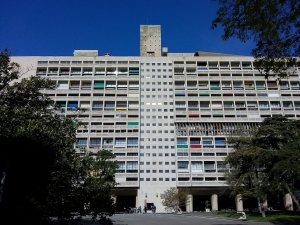
I have visited perhaps the seminal modernist or rather brutalist example of sustainable living apartments. Le Corbusier’s Unite d’Habitation (1952) is the perfect expression of his idea of ‘a machine for living in.’ Although wonderful in principle, in application it is a bastardised disaster.
East elevation of Unité d’habitation Marseille in 2019
How can you function properly, or think straight, while raising a young family living in an overpriced tenement which chews up most of your salary? Commuting to work compounds the problem, as you spend your spare hours on a train going to and from an ‘open plan’ panopticon of a workplace that generally diminishes your wellbeing. Sedentarism and a lack of exercise will shorten your life span and diminish a capacity to think freely. Failures in Irish urban planning, such as Ballymun Tower Blocks, lay behind the heroin epidemic of the 1980s.
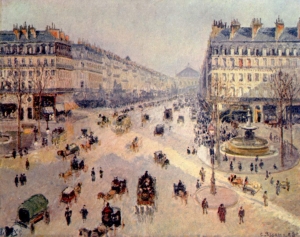
Yet there is good urban planning that raises the spirit. Paris was a crime and slum invested medieval city until the Baron de Haussmann developed a prototypical grid system, after Napoleon III instructed him to bring air and light to cetnre the city, to unify the different neighbourhoods with boulevards, and to make the city more beautiful. Yet today beyond the city limits, the architectural depredation of les banlieues has engendered the social dislocation and La Haine.
It should be noted that great businessmen – which is not entirely an oxymoronic idea – think long-term and in terms of fundamentals of life. Benevolent capitalists, such as the Adriano Olivetti and John Cadbury, had regard to the quality of life of workers and housed them appropriately, endowing long obsolete privileges such as pensions and benefits.
As indicated, in procedural legal terms the broad notion of ‘environmental rights’ can be divided into three distinct categories: environmental procedural rights; the right of environment and the right to environment.
Environmental procedural rights include those associated with rights of participation in decision-making, access to information and the ability to access justice, such as is expressed in the Aarhus Conventionunder European Union Law. But any consultative processes and public hearings are irrelevant if outcomes are pre-determined.
The right of environment is perhaps the most radical, envisaging as it does a value in the environment beyond mere human benefit. Such an approach assumes that the environment should be held as a good on its own merits, and protected as such. The argument is based on the position that it is arbitrary to restrict justice and rights exclusively to inter-human relationships and to tolerate a situation in which interested parties are deprived of essential values in the distributive process on the basis of morally irrelevant factors – such as their not being human.
Finally, there is the right to environment. This was first given international expression in the Stockholm Declaration, Principle 1 of which stated that ‘[m]an has the fundamental right to freedom, equality and adequate conditions of life, in an environment of a quality that permits a life of dignity and well-being …’
The right to environment is conceptualized as a right pertaining to each individual – the environment is valued not on its own merits, but in light of its importance for human existence. The exact description of the right has been framed in various ways. A range of adjectives have been used: decent, healthful, natural, pure, clean, ecologically-balanced, safe (see International Environmental Law and Policy for the 21st Century, Pring and Nanda). Throughout the literature, a common theme is that of ensuring human health is not put at risk by environmental degradation. Obviously, this approach is open to the criticism that it is entirely anthropocentric.
So do we assess the environment as a benefit to us as humans or as an intrinsic good in and of itself? I would argue in favour of the latter approach. But legal case law and rights are toothless fairies if there is no political will to implement them.
Coda
So legislative and constitutional protections exist and lobbying continues apace. This seems destined to fail, although I have not given up hope. In the present circumstances – portals or otherwise – as creatures of bounded rationality, with limited time, what we can do in our own lives is at least try and do as little harm as possible.
What I don’t find nice, and I really don’t need, is people clapping. I don’t need rainbows. I don’t care if people clap until their hands bleed with rainbows tattooed on their faces. I don’t even (whisper it) need Colonel Tom, lovely man as he clearly is…
The coronavirus crisis has shone a light on lots of good and bad things in this country. It is of course to be welcomed that key workers, including those for the NHS and social care, are being increasingly valued. I hope the reality is dawning that immigrants and BAME staff are vital to the NHS and we couldn’t manage without them.
But don’t feel you need to clap. Enough with the rainbows. When this ends, people need to show their value of key-working staff in practical ways; pay them enough to be able to live in our cities, and recognise, support and welcome immigrant staff who prop this country up. Listen to the views of NHS workers when they raise concerns, address the culture of blame and bureaucracy. Anonymous NHS Doctor, 2020[i]
Mediated Isolation
Cocooned in state-imposed lockdown, many of us succumbed to media binges while absentmindedly doing the housework, feeding the kids or, my own personal bête noire, chasing the kids down to do their homework. For some this might entail spending a sizable proportion of their waking hours perched in front of flickering TV screens while others opted for being serenaded by the droning tones of radio heads defining their versions of a ‘national reality’, from which we were physically excluded.
Internet and social media platforms have also served to distract us from excess navel gazing by informing us of FB ‘friends’ consumption habits that day, conjectures as to when the ‘circenses’ of sport will return to lighten up our beleaguered days and the travails of celebrities struggling to survive their privileged lockdowns, while providing anodyne and impractical advice on how we too might achieve elevated states of consciousness.
However, no matter which media is our poison of choice, it is hard to escape the constant, mind-numbing refrain that ‘we are all in this together’, facing the same existential threat irrespective of our status in society, our relative wealth, cultural and religious ethos and any other distinguishing features, real or imagined. Only by sticking together will we be able to defeat our contagious foe, or so the story goes.
Never ones to let a good crisis go to waste, the advertising industry has swiftly conceived and produced a slew of adverts to hawk their clients’ wares by tapping into the positive sentiments of this catchphrase. Praising frontline workers or highlighting our newfound unity – separated but together – they strive to manipulate the emotions and purchasing decisions of their target audiences.
Some of us feel stressed during this time, but there are many things we can do to help us mind our mental health and wellbeing. Staying connected will help us all get through. Visit https://t.co/cf8uvz2CF8 for advice and support for your physical and mental wellbeing. pic.twitter.com/Eu106PZM3k
But are we really all in this together? Has the Covid-19 pandemic impacted us all in a similar manner? Or has it and the measures imposed to tackle it impacted upon different sectors of our societies?
Mortality Rates
The first and most obvious disparity of impact has been the varying mortality rates between different age groups. Amongst those diagnosed with Covid-19, people over 80 were seventy times more likely to succumb to the virus, than those under 40 and the death rate amongst males has been seen to be greater than amongst females. A Public Health England report revealed a higher mortality rate amongst members of Black, Asian and Minority Ethnic (BAME) groups than in White ethnic groups, those born outside the U.K. and Ireland as well as, unsurprisingly, ‘those in a range of caring occupations including social care and nursing auxiliaries and assistants; those who drive passengers in road vehicles for a living including taxi and minicab drivers and chauffeurs; those working as security guards and related occupations; and those in care homes.’[ii]
However, it could be argued that these facts should not be used to detract from the fact that we are all in this together. After all, Covid-19 resulting in higher mortality rates amongst certain age categories is surely just a characteristic of this virus, similar to how the second wave of the 1918 flu virus disproportionately resulted in deaths amongst young men and women in their 20s and 30s, ‘while often sparing the very young and the very old.’[iii] Similarly, there are obvious reasons why people on the frontline and who have been dealing directly with the public have experienced greater rates of infection and higher mortality rates. Although the higher rates of death amongst BAME groups is evidently concerning, it too requires greater examination to be able to determine its exact cause.
Socio-Economic Disparities
While one might claim pathogens are ‘democratic by nature’,[iv] in the sense that viruses do not consciously target potential victims or particular social groups, certain social and economic factors clearly influence their ease of dissemination and transmission.
In the United States, according to the epidemiologist Camara Phyllis Jones, the higher infection rates amongst African and Latin American communities can be at least partly attributed to their being at a greater risk of exposure and less protected. Other contributing factors include the existence of socio-economic and health disparities, themselves the outcome of historical segregation and endemic racism,[v] as well as the increased levels of contact with environmental pollution and lower rates of access to health care.[vi]
In many parts of the United States, people of colour make up a higher proportion of some low-paid professions that have elevated risks of exposure to the virus—those who staff grocery stores, drive buses and work at food plants, for example. Also, COVID-19 is deadlier for people with chronic conditions, including diabetes, obesity and cardiovascular disease. These have a higher incidence in many minority ethnic and racial groups.[vii]
In the U.K., considerations such as ‘crowded housing and working conditions’ have been advanced as reasons for the divergences in infection and death ratings between ethnic minorities and white people. For example, whereas only 2% of white people in the U.K. are living in crowded conditions, overcrowding is far more prevalent amongst minority ethnic groups with as many as 30% of Bangladeshi, 16% of Pakistani and 15% of black African households being overcrowded.[viii]
Social Determinants of Health
According to Dr. Enam Haque, a GP based in Manchester, while BAME groups, particularly from South Asia, are more prone to diabetes, heart disease and high blood pressure, which does increase their risk of contracting Covid-19, a more significant role is played by the social determinants of health.[ix]
As Farrell, McAvoy and Wilde explain
Health is not just the outcome of genetic or biological processes but is also influenced by the social and economic conditions in which we live. These influences have become known as the ‘social determinants of health’. Inequalities in social conditions give rise to unequal and unjust health outcomes for different social groups.[x]
(i) Social determinants contribute to health inequalities between social groups. This is because the effects of social determinants of health are not distributed equally or fairly across society.
(ii) Social determinants can influence health both directly and indirectly. For example, damp housing can directly contribute to respiratory disorders, while educational disadvantage can limit access to employment, raising the risk of poverty and its adverse impact on health.
(iii) Social determinants of health are interconnected. For example, poverty is linked to poor housing, access to health services or diet, all of which are in turn linked to health.
(iv) Social determinants operate at different levels. Structural issues, such as socioeconomic policies or income inequality, are often termed ‘upstream’ factors. While ‘downstream’ factors like smoking or stress operate at an individual level – and can be influenced by upstream factors.[xi]
The social determinants which have placed minority ethnic groups at a health disadvantage already as well as other vulnerable groups – less economically secure white people, the homeless and so forth – have led to their members being at greater risk of falling victim to Covid-19. It is critical these factors are addressed, not just in a piecemeal fashion or through a short-term approach in response to this pandemic, but comprehensively with structures being put in place to reduce the health inequities experienced by BAME communities and other vulnerable groups, as well as ensuring equitable access to health services.
— Padraig O'Reilly Photojournalist (@padraig_reilly) May 6, 2020
People around the world have been obliged to adapt to living in relative isolation, frequently separated from their loved ones due to stringent lockdowns. They have found themselves in straitened conditions on reduced incomes, with many worried as to whether their pre-Covid-19 jobs will still be there when the economy reopens. The vulnerable in countries such as India, South Africa or the Philippines, are faced with the Catch-22 situation of abiding by savage lockdowns, facing potential starvation and severe malnutrition for their families, or venturing forth at the risk of violent beatings or worse at the hands of the police for breaking state-imposed lockdowns.
As Joseph Natoli writes, the rich face no such dilemmas.
Those who live on dividends and interest from investments face no Catch-22. Private planes take them where they think they will be safer. Sheltering in place on your yacht with a serving crew is a safe sort of isolation. It’s in fact not much different than life before the pandemic. A cell phone and zoom keep you actively tending your horde. A top 20% meritocratic class has already been working from home, not bound by office or punching a wage clock. Life’s not much different for them. Nannies and tutors, daily tested, can handle, as usual, the offspring. Someone — not you — will cook and clean. Life’s not much different. No Catch-22 here…[xiii]
One of the most vocal advocates for the re-opening of the economy and ending the lockdown measures in place is the controversial billionaire Elon Musk. He even went so far as openly defying the local authorities in the US to reopen his flagship Tesla auto assembly plant in Fremont, California, which public health officials had ordered shut down some two months previously. Due to a complicated pay deal Musk had negotiated with Tesla, which could culminate in the ‘biggest executive pay windfall in global corporate history,’ opening this plant was critical to help him reach the required targets.[xiv]
While, it might be argued that Musk was right in his arguments about opening the country to business to prevent economic devastation, whatever his personal interest, this is not the issue here. If an ordinary U.S. citizen had defied the public health authorities as Musk did, publicly defying the civic authorities to arrest him as he joined his workers in the factory,[xv] would they have got away with it? Having got his way, Musk can now sit back in comfortable isolation, while his workers run the risk of contracting any circulating viruses, as he waits for his bonus to come home to daddy.
Rich Man, Poor Man
During Covid-19, the ultra-rich have managed to increase their already obscene share of the world’s wealth, as poor people around the world have struggled to survive. A report by Americans for Tax Fairness reveals that between 18 March and 19 May, in the midst of state lockdowns and business closures, the wealth of Jeff Bezos (Amazon), Bill Gates (Microsoft), Mark Zuckerberg (Facebook), Warren Buffett (Berkshire Hathaway) and Larry Ellison (Oracle) grew by $75.5 billion. The personal wealth of Elon Musk alone, grew by 48% or $11.8 billion.[xvi]
At the same time, the severe impositions of movement control and lockdowns globally have disproportionally affected the more vulnerable members of our societies. While things may be booming for the wealthiest, many of the poorest and most defenceless communities are subject to violent and humiliating punishments to ensure they stick to quarantines, leaving them at the risk of starvation. Alberto Ruíz, who sits on a resident’s social organisation in the deprived Tacumbú neighbourhood of Asunción emphasises the lack of support that has been provided to lockdowned families deprived of any income and how people have been instructed ‘to stay at home, to protect your family. But in poor neighbourhoods, you have to go out to earn a living: if you don’t, you die of hunger.’[xvii]
As Arundhati Roy writes, encapsulating the horrors of those most affected by the Indian lockdown, migrant workers and their families.
Many driven out by their employers and landlords, millions of impoverished, hungry, thirsty people, young and old, men, women, children, sick people, blind people, disabled people, with nowhere else to go, with no public transport in sight, began a long march home to their villages. They walked for days, towards Badaun, Agra, Azamgarh, Aligarh, Lucknow, Gorakhpur — hundreds of kilometres away. Some died on the way. They knew they were going home potentially to slow starvation. Perhaps they even knew they could be carrying the virus with them, and would infect their families, their parents and grandparents back home, but they desperately needed a shred of familiarity, shelter and dignity, as well as food, if not love. As they walked, some were beaten brutally and humiliated by the police, who were charged with strictly enforcing the curfew. Young men were made to crouch and frog jump down the highway. Outside the town of Bareilly, one group was herded together and hosed down with chemical spray.[xviii]
Philip Alston, the former United Nations Special Rapporteur on extreme poverty and human rights, accuses many states of having enacted policies reeking of social Darwinism, by prioritising the wealthiest to the detriment of the poor.[xix] Looking at how entire countries have been shut down by governments, many of whom have failed to make even minimal efforts to protect the most vulnerable members of their societies, it is hard to disagree.
Covid-19 and minority ethnic groups
From early May, New York City reported over twice as many deaths amongst the African and Latin American communities per 100,000 residents compared to white people. The Bronx, with the highest concentration of African Americans, had the city’s highest rates of deaths and hospitalisation.[xx] Data from early June indicates that Black Americans have been throughout the U.S. been 2.4 times more likely to succumb to Covid-19 than White Americans.[xxi]
This disparity of impact on black and Asian communities is also an issue of serious concern in the U.K. Harriet A. Washingtonwrites how
In April, the UK Intensive Care National Audit and Research Centre estimated that 35% of people in intensive care with COVID-19 are black, Asian or members of other minority ethnic groups, nearly triple their proportion in the UK population. The first ten physicians in the United Kingdom known to have died from COVID-19 were also from black, Asian or minority ethnic groups.[xxii]
Racial Inequality in the U.K.
A Public Health England report, Covid-19: review of disparities in risks and outcomes, highlighted the role that deprivation can play in exacerbating infection and mortality rates.
The mortality rates from COVID-19 in the most deprived areas were more than double the least deprived areas, for both males and females… ONS analysis shows that between 1 March and 17 April 2020 the deprived areas in England had more than double the mortality rate from COVID-19 than the least deprived areas.[xxiii]
Given the relatively impoverished status of BAME groups, as evidenced in their far higher concentration in impoverished locales such as the most deprived 10% neighbourhoods, their vulnerability to Covid-19 is further aggravated.[xxiv]
Ethnic minority workers also tend to be employed in more insecure and more poorly regulated work with a Carnegie U.K. Trust, UCL and Operation Black Vote report noting that BAME millennials were some 47% more likely to be on ’notoriously unstable “zero-house” contracts.’ As a result, they have been disproportionately engaged as key workers in front-line positions, placing them at greater risk of catching the virus.[xxv]
The situation for migrants to the U.K. employed in front-line positions, necessitating direct contact with the public, is if anything even more precarious. A particularly tragic case was that of Rajesh Jayaseelan who succumbed to the virus alone in Northwick Park hospital on 11 April. Rajesh, who had come to London about a decade earlier to provide for his family, had starved in his rented accommodation for several days. He had informed his wife he did not want anyone to know of his condition, as he feared being cast out on the street, as had happened at his previous lodging where the landlord had evicted him due to the risk of his contracting the virus as a Uber driver. By the time he made it to the hospital where he passed away, he was already critically ill. He left behind a wife and two young children, to whom he bade one final farewell in a last video call from his hospital bed.[xxvi]
The situation in South Africa clearly illustrates the social and economic divisions that existed in society prior to Covid-19 and how they have remained in place during the virus and punitive lockdown. Rather than creating a national unity where everybody feels they are in it together, the pandemic and, in particular, the actions taken to combat it have in face served to reinforce the social schisms. As Patrick Bond writes:
The lockdown and social-distancing mandates simply won’t work in the overcrowded townships, which traditionally under apartheid were built merely as the urban holding cells of a reserve army of migrant labor… Many workers and most of the massive unemployed precariat were immediately without income as the full lockdown began on March 27, just as the state safety net was fraying… So as Covid-19 has struck, the country’s extreme inequality has been exacerbated, and the state’s long-standing delivery shortcomings stand exposed… For many people suffering what were already recessionary conditions, coronavirus seems the least of their concerns.[xxvii]
Bond quotes a local activist who explains that while people understand the potential threat of coronavirus ‘it is here for a short period, while we have been living under these dangerous conditions since 2000.’[xxviii]
Le coronavirus, c’est l’État (the coronavirus is the state) [xxix]
As she recounts issues of police harassment and oppression in the tower block estate of La Caravelle located in the commune of Villeneuve-la-Garenne, Malika points out a boy of 13, who looks younger, and relates how a couple of days previously he had frantically knocked on her door pleading for help as the police were around.[xxx]
Another resident, Taha Amghar, details how a body of police followed him home, entered his flat and beat him with their batons. They had then detained him overnight, and refused him access to legal representation. Rather than receiving any apology for this completely unnecessary detention, Taha was later issued with a deportation notice on the grounds of his Moroccan nationality, prohibiting him from working, despite having lived in France for 16 years. To add insult to injury, Taha has a medical certificate from a French doctor explaining the necessity of his remaining in France as he has a chronic illness for which treatment does not exist in Morocco.[xxxi]
It is for this reason that Malika states ‘Le coronavirus, c’est l’État.’ For the relatively impoverished residents of La Caravelle, Covid-19 is being exploited by the state and its’ servants, primarily through the brutality of police operations, to repress them. Whereas for Louis XIV, he was the nation (l’État, c’est moi), today the French state (ab)uses the coronavirus, by using it as a ‘veil’ to disguise its’ efforts to engage in targeted violence and discrimination, primarily against ethnic minorities.
As Assistant Professor of Sociology, Jean Beaman writes,
While everyone in France is subject to this decree, early evidence reveals it has been differentially applied. COVID-19 is not the equalizer or leveler some have suggested. Rather, this state of health emergency has disproportionately affected some populations compared to others, as some communities are more policed and surveilled than others. And these communities and populations are those that were already marginalized in France before COVID-19.[xxxii]
Plight of refugees and migrants
Similarly, it is hard to see how the almost 71 million refugees and forcibly displaced people worldwide[xxxiii] are being included as one of us, members of the ‘we’ fighting an implacable, infectious foe. As Cork-born Ettie Higgins, the UNICEF Deputy Representative in Jordan, warns previous experience has demonstrated “that a pandemic accentuates existing inequalities and makes life much more difficult for the most vulnerable.”[xxxiv]
Corralled in alarmingly overcrowded camps, the risk levels for refugees is greatly elevated for virus contraction and dispersion, not to mention the barriers, including language, they experience in accessing health services. Devoid of support, residents from many different countries in the Moria camp on Lesbos, where there are over 20,000 people living in a camp designed for less than 3,000, have come together to spread awareness of the virus to their fellow camp residents. A group of four Afghan women, one of whom had been a tailor in Kabul and who was willing to head the operation, volunteered to sew face masks for the camp’s population.
While people continue to be detained inside refugee camps in horrible conditions where there’s limited measures to prevent the spread of Covid-19, restaurants and bars will be opened this week across Greece. This discriminatory treatment is fulfilling the goal of local rightwing groups of keeping migrants out of public spaces away from public view, abandoned by the state.[xxxv]
Added to their immediate concerns regarding Covid-19, refugees are also impacted by the cessation of free movement and international travel between countries, with some countries also placing a hold on resettlement intakes.[xxxvi]
In the U.K., the sharing of patient information between healthcare services and the Home Office has resulted in highly negative health outcomes for migrants with an insecure migration status, as they have avoided going for treatment even for serious complaints such as tuberculosis, lest they be detained and/or deported.[xxxvii]
Indigenous people’s face many challenges, similar to those experienced by refugees and other vulnerable groups. As the UN Permanent Forum on Indigenous Issues highlight:
Indigenous peoples often have much in common with other neglected segments of societies, i.e. lack of political representation and participation, economic marginalization and poverty, lack of access to social services and discrimination. Despite their cultural differences, the diverse indigenous peoples share common problems also related to the protection of their rights.[xxxviii]
Making up some 6% of the world’s population, 476 million people spread over 90 countries, indigenous peoples account for about 15 percent of the extreme poor and have a life expectancy some 20 years lower than that of non-indigenous people worldwide.[xxxix] Frequently deprived of good access to health care, higher rates of poor health and lack of access to adequate sanitation facilities and other preventive measures, the advent of Covid-19 was seen as a significant threat to these communities. However, the lockdowns implemented without adequate support measures, could create greater long-term problems.
As lockdowns continue, Indigenous peoples who already face food insecurity, as a result of the loss of their traditional lands and territories, confront even graver challenges in access to food. With the loss of their traditional livelihoods, which are often land-based, many Indigenous peoples who work in traditional occupations and subsistence economies or in the informal sector will be adversely affected by the pandemic. The situation of indigenous women, who are often the main providers of food and nutrition to their families, is even graver.[xl]
Even worse, some governments are using the cover of Covid-19 to implement policies and actions that indigenous people oppose. In Canada, Kate Gunn, a lawyer at First Peoples Law Corporation wrote in early April how the Crown had still not clarified how it would safeguard the title and rights of Indigenous People’s during Covid-19. The Crown had also failed to confirm whether it would continue to make decisions which might impact on First Nation rights, a particularly critical issue given the impossibility of the First Nations to participate meaningfully in consultations during this period.[xli]
The Choctaw nation and the Irish
Although the mortality rate during the 1740-41 Irish famine is estimated to be slightly higher,[xlii] the 1840s famine is generally remembered as the greatest tragedy to have befallen the island of Ireland. Fuelled by blight devastated potato crops and an, at best, callous British administration,[xliii] one million Irish died and over a million more emigrated between 1845 and 1852 out of a population of 8.5 million.[xliv]
One of the few positive memories of this famine was the wonderful humanity demonstrated by the native American Choctaw Nation who, moved by the plight of the Irish, donated $170 in 1847.[xlv] This was a highly significant sum of money in those times, particularly when you consider that in 1831, the Choctaws had been forced to walk from their ancestral lands in the American southeast to the new Indian Territory in Oklahoma. Along this ‘trail of tears,’ many Choctaw lost their lives.[xlvi] And yet a mere 16 years later they were sufficiently moved by the suffering of a people living in a distant land to dip into their meagre resources to help alleviate the plight of the Irish.
Choctaw ‘trail of tears’
Now, over 170 years later, the Irish finally had the chance to repay this debt to some extent. In response to a fundraiser established to support the Navajo nation, badly impacted by the Covid-19 virus and the lack of suitable health facilities and equipment, many people of Irish origin contributed generously. Several of these contributors left notes drawing attention to the solidarity and humanity displayed by the native American community during the Irish famine.[xlvii]
Solidarity in India
The current pandemic has been witness to acts of heart-warming human solidarity. In India, the transgender community were seriously impacted by the sudden imposition of the Covid-19 lockdown on 24 March. Frequently dependent on daily income to survive, many struggled to survive, dependent on whatever relief was made available by the state and NGOs. Despite their precarious situation, transgender people have established support and assistance scheme for other vulnerable groups.[xlviii]
In Porur, the transgender community helped some 40 members of eleven stranded migrant, Muslim families. Originally from Andhra Pradesh, these individuals did not have identity cards and were therefore ineligible to receive relief. Keerthana, a transgender sanitary supervisor helped feed sanitation workers in Puducherry. According to Srijith Sundaram, an LGBTQ activist, the transgender community was able with the help of patrons to distribute rations and other essential items to these workers.[xlix]
Moved by the frightful conditions and suffering of migrant workers travelling on the Shramik Special trains commissioned to ferry them home, Rasheeda who lives in impoverished circumstances in New Arif Nagar slum in Bhopal, decided she had to do something to assuage their misery. Leaving her house at daybreak, Rasheeda collects materials and food to prepare packages of food. Wasif, her husband, who works in a nearby junkyard as a rag-picker, helps her collect the food, firewood and utensils to prepare these packages. The children in their colony pack the food. Upon the arrival of a train, dozens of the children rush forward with packets of food and water. Between 200 and 250 food packets and 50 litres of water are distributed daily to the grateful passengers.[l]
Rasheeda and Wasif engage in this selfless work each day even though, according to Wasif:
There are days when we get to barely eat as well, but we try hard to feed the passengers because we at least are at home. However, the lockdown has not only made them homeless but penniless too.[li]
Six kitchens are operated by their neighbours in the Blue moon colony and New Arif Nagar slums, despite the intense poverty and deprivation experienced by their inhabitants. Each kitchen prepares 20 to 25 kgs of rice daily to distribute to the passengers of two to three Shramik trains. They continue in their altruistic work, despite themselves having only received assistance of 5 kgs of flour and rice from government authorities over two months previously.[lii]
Final Remarks
I would argue that if there is one thing that Covid-19 has demonstrated conclusively, it is that we are not all in it together. At least, not in terms of our experiences, our levels of resilience and the impact the virus and state-imposed lockdown measures have had upon us. For vulnerable groups in the Global North or South, minority ethnic groups, refugees and indigenous people, the homeless or financially insecure, the negative impacts of Covid-19 and, in particular, the lockdowns, have been far more severe, resulting in serious economic stress, increased immiseration and deprivation, hunger and even death. Furthermore, as the Covid-19 infections decrease, economies reopen and people get back to work, the inequalities that pre-dated Covid-19 will still be here.
Moving forward, we need to work together to ensure the most vulnerable groups amongst us receive the support and assistance they need to address these inequities, ensure they are provided with equal access to education, health and other social goods and are able to participate fully and equitably in our society and economy.
[x] Clare Farrell, Helen McAvoy & Jane Wilde, Tackling Health Inequalities: An All-Ireland Approach to Social Determinants. 2008, Institute of Public Administration & Combat Poverty Agency: Dublin, Page 11
[xlii] S. Engler, F. Mauelshagen, J. Werner and J. Luterbacher, The Irish famine of 1740–1741: famine vulnerability and “climate migration”, Climate of the Past, 28 May 2013, page 1174