Blog

  • Musician of the Month: Richard Egan


    Considered Silence


    An artist’s journey is one from noise to silence. In the beginning they need and want to be heard yet, at some point, silence will be required to stay sharp. They should never choose the sound of their own voice over the work. Staying quiet is not what artists are very good at but it is what needs to be done sometimes. Silence doesn’t have to last forever and invariably there will come a time when a fork in the road is reached: one way ‘stop talking’, the other ‘continue speaking’. The artist will feel in their bones when this fateful day arrives.

    When I was younger I felt a lot more confident in my inner voice. I used to think of my subconscious as a shield against outside forces that might bring me down and also, as a key into a world behind the veil – where truth could be spoken without thinking too much. Songs felt like magical opportunities, a chance to present the best of myself to the world, and receive the wonders of it in return. A typical writing session would consist of me sitting, zoning out, letting a thought or idea come. And when a worthwhile thing came along I would attempt to fashion it – using the craftsman side of my brain – into something resembling a piece of art I could stand behind, and release.

    I was conscious of looking for something that could be intimate and personal and also universal in a way. The first line that came to me when I wrote ‘Graveyard’ (2008) was ‘I kissed you in the graveyard’. This deceptively simple line was the exact kind that could open up a whole banana-bunch of possibilities. I was thinking about T.S. Eliot’s poem The Waste Land (1922) and imagining the idea of a kiss in a world of death as a good old two-fingered salute to the grim reaper – the idea of two lovers sharing a brief, graveside moment, a microcosm of their whole lives. And the ambiguity of a line like, ‘it’s a short, short distance from the nipple to the soil’ appealed to me.

    A song, about sneaking into a graveyard with a lover, could maybe communicate the shortness of life and the quicksilver importance of transcendental moments. These moments where time seems to freeze in order to allow your memory bank to open up a little wider to take in a scene you know you’ll never forget.

    Experiences that make life worth living are perfect fodder for a song. Translating them is usually a sure-fire way to get people to nod and say, ‘Ahh I feel that…. where’s the merch table?’. This was how I used to write back in those times. I could kind of tell when an idea would resonate, and it was important for me to ‘be seen’ so I ran with this, and it was fairly successful for a while. Then I reached that fork in the road.

    The silence began to present itself to me.

    After a little success arrived for my songwriting I became suspicious of my methods. They did not provide the succour my soul was crying out for. In order to satisfy my own very personal itch I had to try something else. My work felt cheapened by taming the initial subconscious Eureka moment into something tailored to get people to notice. I could probably say goodbye to a mansion in Dalkey.

    I began to dissect why the secondary part of the process felt so wrong. The craftsman side of my brain moulding the initial idea into a sellable shape bothered me and I struggled to understand why. It felt egotistical and selfish; it was like a vegetarian eating steak, completely ‘allowed’. Still, by the standards I had set myself, a failure of sorts (there’s nothing wrong with failure of course). My job as a songwriter changed. I now listened for ideas and lines except once they arrived I did not attempt to shape them. This method felt closer to a purity worth aiming for, closer to the unarguable truth of silence.

    I listen to songs on my latest record Sentinel (2019) and I only have a vague idea what they are about. I like them all the more for it. In a track like the ‘The Sea Shade’ I can see it is somehow about loss but it doesn’t spell itself out. The tonality and the textures speak as much as the words, my voice submerged in the lake of its surroundings. And it’s not as much mine any more – it feels like everything – and yet it is me, inching towards saying something by not saying anything, trying to evoke silence by making noise.

    On the title track ‘Sentinel’ the lyrical theme loosely revolves around kindness and accountability while it, crucially, floats above these concepts (you can check out the premiere of the beautiful 16mm video from director TJ O’Grady Peyton below). This looseness keeps me interested in continuing to work. I need to be confused by what I’m doing in order for me to allow it to be. Some might argue this could result in obtuse and self-indulgent work. I have allowed myself to place a bet that eventually this confusion will lead to understanding. That’s the artist’s wager.

    Of course I have to accept that this might be folly and lead me to a place of complete redundancy. ‘The cruellest trick is that Sisyphus believes he is making progress. He would give up but the mountain peak seems closer every time’ (tweet via @ctrlcreep). I suppose we’ll see about that some day.

    A few years ago I saw an artwork that was a piece of paper that the artist had stared at for many hours. The end result was this simple white sheet of paper in a frame, hung up for all to see – completely blank. This is where I know I’m heading to. The final form, the ultimate song.

    Considered silence.


    For more about Richie’s work as Jape:
    Official website: http://www.japemusic.net/
    Twitter: https://twitter.com/richiejape


  • The Musical Duel of Apollo and Pan

    Pan’s Song

    Your rule has lapsed Apollo, all narrative is dead,
    You said true form is timeless, but they chose me instead,
    My pipe has no rhythm, but is easy on the ear,
    A great tumult rise in ecstasy, precisely as you feared,
    It’s true you had your time,
    But as samples, your’s is mine,
    The young are running in the wood,
    Arm and arm, as they should,
    That measure gave no pleasure,
    And with rhyme we divine,
    The inkwell has run dry,
    Dance along with your lyre.

    Lyre lyre lyre lyre lyre lyre lyre

    Why endeavour to fix what is beyond repair?
    The dancer knows it, but does not despair.
    Such concepts as justice permit, the mighty to inflict,
    Pain and suffering, so desist, with your rule of the fist!

    Virtue hardly nurtures,
    Such beauty as you speak.
    We must dance Now,
    Not ask ourselves How.
    Nature is our calling,
    All cities are appalling;
    Let us grow our hair,
    To show we don’t care,
    For our time on earth is short,
    Let us shed blood as we ought,
    Laugh, love and lustre,
    Not your cerebral bluster,
    Intuition is my mission, and tradition,
    I have no time for your addition;
    I trust in the Earth,
    And embrace the dirt.

    Apollo’s Song

    I now appeal to all who wish to learn,
    The crafts which make of life a pleasurable span,
    Or seek refuge from the beasts of prey,
    In glistening cities of men who sing my name,
    And communicate in tongues glorious refrain,
    As without laws to curb the passion’s rule,
    Their lives are spent in dreadful misery;
    Instead I pray they last the course and take,
    Such lessons only I may give as these.

    Oh Pan you fool your passions rule your wits;
    The muck of earth becomes a curse to those,
    Who call civilisation their home.
    To Pythagoras I brought my gift the lyre,
    And from my precious instrument there came,
    A lesson mathematical giving,
    To all who wished to build, precious insight;
    Even the stars above obeyed my rule.

    And yet I shed these tears as well you see,
    For man is not a worthy pupil still,
    He lies and cheats and shapes belief to suit,
    Vainglorious aims, intrigues and stratagems;
    His wiles would make a god despair;
    A time of expertise is passed indeed,
    And shallow intellects run wild and mock,
    The light of knowledge that I handed down.

    And Pan you should recall the contest when,
    Old Timulus adjudged my song above,
    Your playful lute. Alone was Midas struck,
    He swooned with crass desire and came unstuck,
    And grew a pair of ass’s ears to show,
    To those who may assume your song superior,
    A fate unkind for foolish thoughts as these;
    To all I urge be careful what you wish.

    Feature Image: Jacob Jordaens: Apollo as Victor over Pan (1637).

  • The Ninth Rose

    In an undisclosed year, Decency took something marvelous away from me, and by extension away from you. Away from… I want to say, everybody. Decency took it, and left me…decency.

    Decency now obliges me to make fiction of this, and set it far away and long ago, but how I want to blast that for the sake of its long debt to me, Seifert!* Hmm, Decency. Alright, then.

    Long ago and far away, in an Eastern European country called…

    (My own Soviet-bloc memento, from a time when we spoke in parables, is a little mental collection of those fictional Eastern European countries. Syldavia. Borduria. Rovenia. But I’m not going to use any of those; I’ve sworn off that, as you’ll see.)

    In an Eastern European republic, called Padobron, at a pivotal juncture for me, when I was celebrating the derring-do of my expulsion from the Narodna Misočana Technical University (expulsion had become a countercultural badge of honor) the question of how to get a job was just beginning to grow on me, someone called Jaromir Seifel published something good. Something which everyone said was good, but which betrayed his true greatness by being first, published over-the-table by a state-owned press, and second, not as great as he was.

    Small, in every way, our coterie was one of young people thrown together for being delivered by the same midwife, or confirmed in the same parish, or expelled for exhibiting the same cheek, or stuck in the same tavern-corner because they have the same feeble ideas of looking grown-up at twenty, but who believe that they’ve coalesced at the draw of stars and gods, through possessing a similar gallantry, genius, and destiny.

    That May, my peers, whose dreams were to either reform or undermine collectivism, if not get a job within it, attributed to me a certain dashing, because of my expulsion, and because I wrote things, copied them by hand, and circulated them as if they were dangerous, like an authentic counterculture. I think the writing and the expulsion melded in their minds (though I was not, in fact, expelled for writing, but because of an uncle’s alleged black-market prosperity) and that they accorded me a position among them, rather like Seifel’s among the real writers and agitators. Seifel’s must have been the one because, though I had never mentioned him, when his Eight Roses appeared, Miroslav Kinsky and Petra Raha both told me separately that they thought I should read it, that I would like it. I learned later that neither of them had read it.

    Well, what do you think I did? I bought The Eight Roses. I carried it quite proudly under my arm, with the spine showing nicely. I was only sorry it was so narrow; people might have to stop me, stoop, and stare to read it. Well, I was a little sorry, too, that the cover was such a hideous pink, like unhealthy skin. But I carried it, first to the “Golden Shield,” where I could casually let it be seen by two comrades in a corner, drinking a cheap wine our self-conscious slang referred to as ‘rope,’ and then home, for I was honest enough to read alone.

    I read it. I was prepared, you know, to adore it, and I did. To the very last page, until, I saw what it might have been.

    I don’t know how to talk about this. Love was never my strong point; I once described a man I was besotted with by saying, “In his striped sweater he looked like a large Easter egg,” and thought I was being poetic. When I want to talk about what happened in the blank space under the last words on the last page of Seifel’s The Eight Roses, my pen becomes enormous and my brain feels like the sort of thing you would serve in thin slices on a canapé tray. But allons! Seifel would be equal to this, so I will. On the page…

    Oh, it was bigger than Wagner’s Ring of the Nibelungs, deeper than Meung’s Romance of the Rose, more universal than Sophocles’ Oedipus Rex; more romantic than Keats, tougher than Kafka, more acute than Tolstoy. I didn’t know all those names then, but I knew a thing that I knew was greater than all of them; since then I have known those names and something of what they are, but I have never known the thing of which I speak. I felt it then, and what I felt most certainly about it was that it was real. However clumsy, I would get it on the paper, it was real: what The Eight Roses would have been if Satan had never fallen. Don’t misunderstand me: I still adored The Eight Roses, and that’s why this thing was so big.

    The thing was The Eight Roses, it was what would burst out of The Eight Roses if I could somehow slit the chrysalis. The huge joke was that Seifel had never known it was there. That was as plain as the sun; for if Seifel had known it was there, he would never have written the thin little state-approved thing with its hideous pink cover. Seifel was a genius, everybody knew that; he could have pulled it off. But he had dashed off this Eight Roses thing on table-napkins, probably, and sold it to the National Scholastic and Aesthetic Press, probably to pay his rent, and was probably flirting with his housekeeper while he scribbled the last chapter with his left hand. Even the title was botched. If he had written it two inches further into his peripheral vision, he would have noticed that good poetics, numerology, theology, plot dynamics, or even floristry would have made it either seven or nine roses. But no. He had eight.

    I was stunned, goosepimpled, teary, prayerful with my gift. I wanted to kiss Seifel’s hands and put my wet face against his knees. I wanted him to lay his hand on my head and bless me, like Haydn blessing young Beethoven. He would see, he alone would see now, before it had pages and flesh, the great soul of my conception; he would laugh and be glad, though he had only been its modeler, that someone would bring the true Eight Roses into the world. I felt that Jaromir Seifel must have a rich, deep laugh, and a kindly, rounded face, lined from a thousand smiles. My writing hand curled. Before I knew what I was doing, I had piled ink, pens, my ragged notebooks on the tea table I used as a desk. The cleanest notebook was folded open before me, and I had written the date. Then…

    Something was wrong, but not nearly so wrong as what was right; an inexorable force moved my hand to the left margin, my pen formed I,n, space, f,i,v,e…

    The wrong thing, pain and roar, rose in my hand to snatch that first line from me. I wrote laboriously, shoving on my pen like Tepl’s Plowman of Bohemia.

    “In five hundred lifetimes Mařek Klubaš would never see again what he saw now.”

    The sensation was as if the bare lightbulb had fallen from its socket and exploded on the floor. I leaned forward, crouching over that single line like some terrible wound. For I posessed that greater Eight Roses, but the world could only have it at the price of my crime. This line was the identical line with which Seifel opened his Eight Roses. And this was not the only line of mine that would be identical with his. The first. The fifth. The eighth. The whole third paragraph… For Seifel was a genius, and even his garbage was partly immortal. This would be no wholly original cousin to Seifel’s book; the daughter could never be less than half her mother. That date I had dashed onto the top-right of the page got tattooed backwards across my hot, sticky cheek.

    When I was upset, I had an unfortunate habit of pinching and rolling the skin on my upper arms, which left them blotched and bruised purple that night. As I lay on the floor with my feet on the bed, Barbora, my chaste, almost viceless, older sister, who was working at one of the electric plants then, came home and cooked something. She tried to get me downstairs to eat what she had prepared, and vaguely I remember that she entered my room very late, on one of her raids for my cigarettes, which she despised. Rooting through my handbag and both coats, she might have frisked me too, for all I did about it. I must have known when she fell asleep because later I remember suffering and even rationalizing out loud a bit.

    So sure was I that Seifel would more than forgive me, I even wanted to give him the manuscript and beg him to publish it under his own name; I knew his upright soul wouldn’t do that, and although my huge, Beethoven-sort of ideas earlier would have considered joint publishing a condescension on my part, with the novel so much nearer now, in my fingertips, I was suddenly humble and realistic, and afraid that Seifel, the great Seifel, wouldn’t let his name stand by mine on anything. I was ready to write the thing and ask questions later, but both times I sat up at the tea table again, where that wrong thing, painful and roaring, stood between me and my Eight Roses. Seifel’s words would come next—only two words—and then mine, but I couldn’t write those two. I said them over and over. I said that second line to myself; it was beautiful when it first came to me, but I gave it a touch of assonance, switched a synonym, moved a verb, and it was even more beautiful. I chanted it to myself, under my breath, and the third sentence tripped after it like an obedient little sister; but I had to stop, because those three together broke my heart and I would have died

    I sat Seifel in the broken swivel-chair opposite my bed, and said I wanted to approach this individually, head to head. We were alone with eons of space around us. What would it mean, if I took his clay pinch-pot ? Such a nice one! The best a pinch-pot could be—and made an Attic vase of it? Love! Miracle! Fate! Of course Seifel could see that. He was so understanding. He winked at me. Individual, elemental, primal, me and Seifel. There was nothing wrong at all. The sweat dried on my temples. We had been born for this, he in 1901 and I in ’38, so that he could write a little outline called The Eight Roses and I could make of it a lifegiving epic called, The Nine Roses. We would undermine Totalitarianism and fire noble, honest brains to seize the hour and steer democracy, social justice, and agrarian abundance. We would finally say what the haunted eyes of frescoed saints had wished the stuffy priests could. People would one day forget us, but humanity would ever be drawn into nobler lines. Again my face wanted to press Seifel’s knees.

    I was at the tea table.

    Pain. Roar. Wrong.

    Seifel and I were not alone with humanity. Something that was never quite humanity gazed reproachfully on us, with their own just claims…the artists. For centuries, emaciated savantes had trudged penniless back to their shabby lodging houses because some plump profiteer was turning out penny broadsides of their intellectual property, pocketing everything with full blessing of the inept Law. What I found pain and wrong, was their long deferred hope of just protection. If even one copy of this epic, and even my inebriation knew it would cost something to print a tome of the size this would be, changed hands for a koruna, and Seifel, the most deserving artist of Padobron, would be robbed; his deep, thoughtful eyes—oh! I could see the tired, pathetic lines around them—would still smile on my work, would lose every pinprick of reproach in a selfless, true artist’s rejoicing at my victory, but I would be damnable. I may have knelt by his swivel-chair to ask his forgiveness; I don’t remember, but it wouldn’t surprise me.

    Then, I could only go to him, Pán Jaromir Siefel of…wait, where did he live? Torný Street? And ask permission; like a hopelessly infatuated ragpicker going to ask for a Duchess’ hand. I could have bawled. The Duchess, of course, fully deserved my humiliation and my absurd, mad courtship, but I could not bear the inevitable rejection. Gallantry was hard and could bear it, but Love was soft and couldn’t. Too much was at stake for grandeur.

    Maybe I did bawl; I don’t know.

    Wouldn’t he give me full permission? In original and onionskin, signed and filed with the Department of Trades Protection? If I begged and orated, if I showed him five pages of prospective…? I was ashamed to fall back on this, but I was a girl, if a plain one, and very young; perhaps he would feel some gallantry—Wouldn’t he? Wouldn’t he?

    Would he? What if he really had written it for his rent, and I came along, offering to outwrite and outsell him with his own book? What if he felt he couldn’t afford to split royalties on its improved revision? Or what if he only believed I would ruin it ? Thought me a…

    Starstruck, egotistical, talentless, deluded…

    Nineteen-year-old.

    I was a nineteen-year-old. Oh, pain!

    Unfortunately for that sickly pink book, my eyes fell on it at exactly that moment. How I hated it. Not what was in it. I hated Seifel, at the top of his career (I felt then that anyone who could publish articles in the Brava was at the top of his career), daring to dash off something so beneath his abilities and its own potential, to unload it on a literate, intelligent population, cased in airtight legal protections to keep earnest, less-endowed artists from ever achieving with it, what its semi-occasional flashes of genius taught them to love and long for. Oh, I hated his complacency. I hated his flirting with that fat housekeeper, I hated his hand paying the rent, I hated the half-koruna I had paid for the pink heartbreak.

    I held it between my two hands. Never before or after was The Nine Roses so near me. Again it’s hard to talk about what The Nine Roses was, perhaps because the pain or longing was so acute that it is unconsciously suppressed. I know that one of the principal characters was a woman. I think she was to have been very important, and I know that she was only, in the vaguest way, suggested by ‘Marie Kepys’ in The Eight Roses, that she was profoundly, fundamentally different, not opposite, just so different that they must have been born in different spectrums of light. But for all that, I can’t remember anything about that woman. I know her name was Karoline Svít, that her hair was yellow, she was twenty-six years old, had ancestry in the mountains of northeast Padobron. That one side of her lower lip looked larger than the other, and that when she was nervous, she would blink a lot; but what she was—oh, it was stupendously human and yet inexplicable, unpredictable, something that blasted Determinism to bits, and yet, I don’t remember a thing.

    Another character was deterministic, kind of a foil, who would be involved in a tragic devolution of some sort—obviously he was Heinrich Räder from Eight Roses, and I have to admit now, even with that neurotic curtain drawn across the shining glory of The Nine Roses, that he may have been its weakness, because I was too young to write tragedy well. But I am not sure of that. I’m surer, even now, of the greatness of that Nine Roses than of anything I’ve learned about writing since, which is a lot, at least compared to what I knew then.

    It wasn’t Seifel across from me in the swivel chair then, it was humanity, posterity, and Art. Not the artists, but Art, with her own peremptory, maybe holy, demands, which were not the demands of the artists at all. Art sat in the swivel chair and smiled at me, her own old, youthful, smirking, blessing smile; my shoulder muscles finally released. I smiled too, with my head hanging to one side. The Nine Roses was not mine, had never been; it belonged to Art, loaned to me by her inscrutable purposes, and it was my part only to act, beatify the world, and disappear. The disappearing part especially soothed me. It seemed perfectly fitting and reasonable, just then, that if I produced the miracle and then disappeared, there would be no crime; I didn’t wonder how I would disappear…a galloping consumption, I suppose? An open manhole? This death-wish absolved me, to the extent that absolution is a psychological event, and I returned to the tea table.

    I wrote only that second line, and not all of it, in its entirety. It was not a roaring, painful wrongness that stopped me; it was quiet, weakening my pen-hand. I turned around.

    I was a bad Catholic then, a worse one later, and a poor one now; but God was in the swivel chair, and He was with the artists, the law, and the blasted State. I felt my own fists against my eyes.

    You may have noticed that a good deal of that night is unclear to my memory, but the next part, unfortunately, is not. I was so tired and so…, I put the pen down, closed the notebook, stood, pushed my stool in, and pulled the light-cord. That was the end of The Nine Roses.

    On pensive nights sometimes, I used to try to bring it back. Especially May nights like that one. More than once I walked into the Golden Shield with that hideous pink book under my arm, stood around, wandered back to our east-bank apartment, read the whole thing in one sitting, and stared at that last page, for minutes, more minutes, and then finally, a few more minutes. I don’t really know why I tried, knowing all along that it would never… Well, I used to wonder how the copyright would expire, cutting some unconscious inhibition that was keeping The Nine Roses from me. I even calculated its life-expectancy more than once; after the Berne Convention, it was based on Seifel’s plus fifty years… and he lived to be quite old. I’m even surprised I’ve outlived him. I don’t begrudge him for it.

    In the seventies, I began to hope someone would find nine roses in eight, in some other century when Seifel’s work would be as free as air. But slowly I realized that the only person who would ever find it, was the one who found it that May night. What I saw was so tightly bound to what I was, to going in the Golden Shield, to my expulsion, to Miroslav and Petra, and the exact figure that Seifel was in Padobronsky culture just then, and the exact thoughts that went through my head reading his book, and the exact sickly pink shade of the cover of that particular edition. Perhaps someone reading some other genius’s potboiler will be gifted with an analogously grand reproduction. There are lots of those books about. As for The Eight Roses, I saw a used copy for sale in London a few years ago. Not in English; it was never translated, and it surprised me tremendously. Its copyright will undoubtedly outlive its sales. I think it’s out of print, unless a passage in that new Seifel anthology counts.

    If this story comes to you just when a similar prospect is facing you, (and how can I forbid such a miraculous coincidence, when it has happened to me?) how shall I advise you? I could hardly urge, Write! I, who backed down, cringing and purehearted, from the stare of God that night.

    But I know God now, Seifel better, the law and what the law is for. The only thing I don’t know better is an epic novel called The Nine Roses.

    I regretted it for decades. I still do! But something different is precious to me now, as precious as the best Art was to me then. Perhaps not as precious! for I shall never feel so strongly again. Perhaps more precious than my estimates are : less storm and more truth. What I cherish now is the nineteen-year-old that pulled the light cord and went to bed, walking carefully around the broken swivel chair. Perhaps I understand God better, as I am more like Him.

    For surely only He, who alone besides myself knew The Nine Roses, would say, “The girl is better than the book.” In that moment I chose to make art of myself. Was it worthwhile, for the sake of one night’s low-grade, possibly naïve morality, to give up what I still, only I!, know to have been so great? To throw away what so plainly told me it was bigger than the Nibelung, for a simple, few minutes’ act of elementary acceptance and approval? To forego a thousand master strokes in oil, for a single blunt stroke at human spirit?

    Again and again I cannot answer it, as an artist. But an artist did not sit last in my swivel-chair.

    Tonight, it is with a wonderous joy, I feel again something like that last page of Eight Roses. Not very like, for I do not feel in such storms now. But wonder, excitement, a glimpse of something better behind something good. That perhaps…

    Oh, it is hard to write, my pen is enormous, and my brain is like…

    Yes, that God, who sat in my swivel chair that night, holds a small, ugly, loved, but utterly unrealized work under His arm; that he will one day slit it and release the real…

    I cannot say. He alone knows what it will be.

    *Jaroslav Seifert was a writer, around whom revolved a competitive literary scene, made up of young people moving within the 1950s Czech counterculture.
  • Photo Essay: Mallorca after the Pandemic

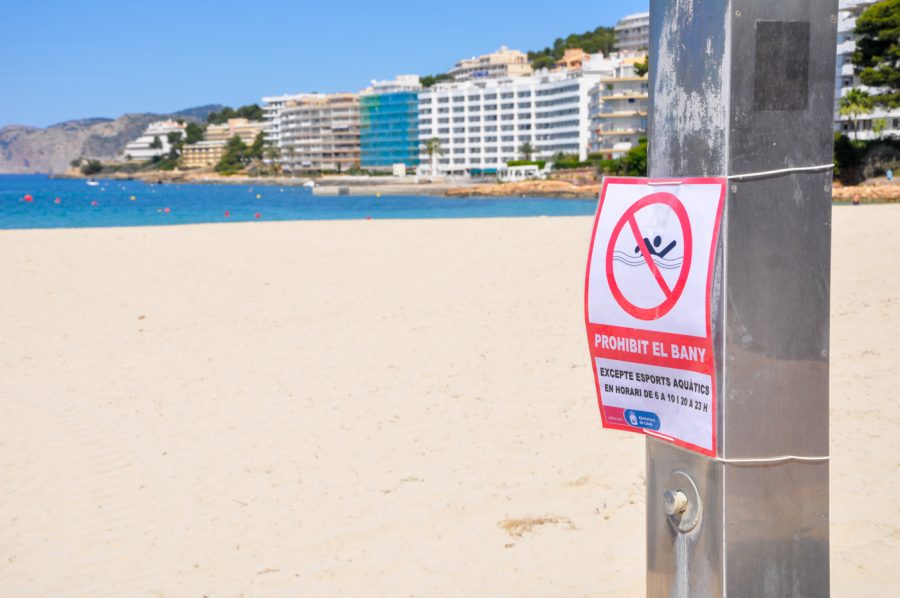
    The resorts of Magaluf, Palmanova and Santa Ponça on the southwest coast of Mallorca are among the island’s most popular destinations. By May, they are usually heaving with a mix of young families, pensioners and stag and hen parties – all availing of cheaper low season prices and temperatures in the high 20s and even low 30s.

    To give an idea of the numbers involved, in May of 2019, 1.8m tourists visited the island – out of a total 16.5 for the year – and there was a hotel occupancy of 62.2%. Yet this May, because of Covid-19, the island is virtually cut off from the rest of the world and no tourists have arrived since early March.

    These images show hotel balconies that in other years would have been a sea of towels, pools that would have been full of holidaymakers and restaurant terraces that would have been packed with drinkers and diners. The streets are empty, the beaches are almost deserted and the children’s play areas sealed off. Some businesses haven’t even bothered to open.

    Like a scene from a disaster movie, but without any physical damage, the resorts gather dust under the Mediterranean sun.


  • Traditional way of life protects Amazonian People from Covid-19

    The pandemic of the new coronavirus Covid-19 is forcing indigenous populations of the Amazon to self-isolate to prevent its spread within villages. In doing so they are fortified by traditional customs and the ancestral relationship with the forest. This occurs both in reverting to traditional food sources, and adopting behaviours that ensure the safety of the community in times of adversity.

    Ashaninka Response

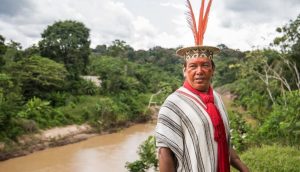
    Take the the example of the Ashaninka and the Yawanawa in Acre. Residents of the Rio Amônia Indigenous Land, in Marechal Thaumaturgo, the Ashaninka have resorted to an approach adopted by their ancestors in response to someone falling ill with a contagious disease such as the flu. Traditionally, each family possesses a house inside the forest – set apart from the village – to allow a sick person to be in isolation while sick.

    Image © Arison Jardin

    According to Francisco Piyãko, leader of the Ashaninka people.

    Families are positioning their strategic points in case the virus enters our community. Each has a house outside the village. This is already part of the Ashaninka culture. You are there at the headquarters, but you always have a point, a house, a brush away from the river’s edge. My grandfather used to do that a lot when he had the flu. They spent months there, then came back to see if everything was okay.

    The municipality of Marechal Thaumaturgo has already had thirty-five confirmed cases of Covid-19. The virus represents a threat because a functioning public health service is lacking. Without road access, patients requiring intensive care would have to be flown to Cruzeiro do Sul.

    A large proportion of the municipality’s population is made up of indigenous people. There are more than 2,100 ethno-linguistic communities, with the Ashaninka in the majority. Other notable groups are the Arara, Kuntanawa, Jaminawa and the Huni Kuin. Since the beginning of the outbreak, the Ashaninka have decided to isolate themselves in the Apiwtxa villages and prevent non-indigenous people from entering. One of the sectors which has been developed is tourism, attracting people from all over the world interested in living and knowing their ancestral way of life.

    Their main activity is food production in the agroforestry system (SAF). These sustainable practices are providing food security for the Ashaninka during the crisis, as since mid-February they have not been travelling to Marshal Thaumaturgo, where they used to buy extra food.

    Images © Arison Jardin

    Piyãko says:

    During this time we organized our supply system through our Agroextractive Cooperative Ashaninka do Rio Amônia, Ayõpare. The cooperative purchases and supplies to meet the most essential need. This was already an old model of ours, but only now can we put it into practice. This has been very important. Our community has not experienced any difficulty with hunger.

    Piyãko’s biggest concern is with preventing the virus from entering the villages. In addition to the cooperative system, they have been strengthening their food production capacity through swiddens (an area of land cleared for cultivation by slashing and burning vegetation) and SAF: ‘We have a rich area, in which we work all our lives protecting, hunting, fishing. Our gardens are well supplied, and families are taking the opportunity to further expand our production.’

    He is assured that the Ashaninka have a sure supply of food during this period of self-isolation: ‘We are guaranteed for a long time. That is why we are working while we are healthy so as not to have any crisis, because nobody knows when this whole situation will end.’

    Ancestral Connections Resume

    In addition to Marshal Thaumaturgo, the Ashaninka are also present in Feijó. There they live in the Kampa Indigenous Land and Isolados do Rio Envira. The language spoken is Aruak. In pre-Columbian times, the Ashaninka were part of the powerful Inca empire, which spread from the Andes into the Amazon jungle. Still today they are present across the border in Peru.

    In addition to genocide committed against native peoples, the Conquistadores who conquered South America also brought infectious diseases such as smallpox that wiped out up to 90% of the native population as they enjoyed no immune protection. (Editor’s Note: Covid-19 is also a novel virus to all humans, but its case fatality rate appears to be far lower than any of these diseases.) The arrival of Europeans also led to the creation of borders between people who were previously living as one.

    Intensification of contact between indigenous Amazonians – especially in Acre – with white men (particularly from the start of the 20th century) compelled them to abandon their traditional way of life. Rubber barons forced them to work on plantations in order to extract latex, and imposed a Judeo-Christian-Western worldview.

    As a result many abandoned spiritual traditions based on the cult and adoration of the natural forces of the forest, as well as modes of food production for survival.

    Accustomed to making a living from hunting, fishing and farming, they were forbidden by the rubber barons from carrying out these activities, and thus compelled to purchase everything they required from the Aviamento houses, the places in the rubber plantations where food, tools and other supplies were sold. This created a legacy of debt which compelled native people to work on until all their debts had been discharged.

    As the decades passed, the rubber economy went bankrupt and rubber plantations returned to being villages in the ancestral lands of the indigenous peoples. Western cultural influence lingered, however, through evangelical missions that sought a “neo-catechization” of the Indians. This contact profoundly affected the relationship of indigenous peoples to their spirituality and ancestral traditions.

    In recent decades, however, indigenous peoples have been recovering and reinforcing their ancestral way of life. The marks of centuries of Western colonization endure, however, especially in relation to food production. Thus, many communities have abandoned practices such as hunting, fishing and clearing land for agriculture, and became depend on processed foods sold in city markets.

    Poachers

    The invasion of the indigenous people’s territories by poachers reduces the supply of food that is available. Forced to live in isolation within the villages, they need to recover the skills of their forefathers in order to enjoy sufficient food for the entire community, for an indefinite period. This is a process that is not always straight forward, requiring time for retrofitting and collecting what was planted on the land. Manioc and banana are now two of the main staples in the indigenous diet.

    The Yawanawá of the Gregório River, in Tarauacá, have taken the message to heart. They are also avoiding towns in order to prevent contagion from occurring. A barrier has even been erected on the river to prevent the flow of people between the villages and the urban centre. The municipality has 105 confirmed cases of Covid-19.

    According to their leader Biraci Yawanawa, Bira earlier this month: ‘This difficult moment that humanity is going through makes us connect with our essence.’

    We are a people who know a lot about medicine. When these drugs came from the pharmacy industry, from hospitals, we forgot all our knowledge. We become lazy with our knowledge of the forest. Now we need to reconnect with our knowledge, our knowledge, with our science. For me it is a moment to rethink our entire history.

    Images © Arison Jardin

    Covid-19 and Indigenous People

    Self-isolation has been crucial to protecting indigenous people from Covid-19 in Acre. The Special Secretariat for Indigenous Health (Sesai) does not present cases of contamination or death in Acre. The agency only takes into account cases that occur within villages. In the cities, however, there is information of at least five people from the Huni Kuin and Jaminawa people testing positive.

    The reality is not the same across the Amazon. The most serious cases are registered among the indigenous peoples of Amazonas. According to Sesai data, as of Saturday 23rd of April there had been 695 indigenous people who had tested positive for Covid-19, resulting in 34 deaths. There are a further 220 notifications under analysis.

    The Articulation of Indigenous Peoples of Brazil (Apib) believe there has been significant under-reporting, as the secretariat does not take into account the Indians who live in the cities that are most exposed to contagion. In the entity’s accounts, 103 indigenous people have already lost their lives to the virus and another 610 are sick. Altogether 44 different peoples were affected by Covid-19.

    The main victims are the Kokama, residents of the Alto Solimões region, in Amazonas. The official Alto Solimões Special Indigenous Sanitary District (Dsei) records the death of 18 indigenous people. According to the leader of the people, however, this number is likely to be much higher as many are dying without proper care in the cities, especially in Tabatinga, on the triple border between Brazil, Colombia and Peru.

    @fabiospontes

  • The First Cassandra Voices Podcast – Italian Library Music


    Without music, life would be a mistake. Friedrich Nietzsche

    ‘Library Music’ is a vast catalogue of Italian records made mainly in the 1960s and 1970s by some of the finest musicians in the country, with Rome and Milan the centres of this exciting scene. Generally commissioned by RAI, Italy’s state broadcaster, musicians of the calibre of Piero Piccioni, Egisto Macchi, Alessandro Alessandroni –  to mention a few – were hired to score background music to accompany TV shows, advertisements, and documentaries.

    Although this phenomenon began life as generic soundtrack music, it was the genesis of a fertile music scene. Many of the musicians carried on their careers outside RAI, pursuing different styles, breaking new borders, forging a peculiar spaghetti western or polizziescogroove. Or like Ennio Morricone achieving worldwide recognition for scoring soundtracks like Once Upon a Time in America (1984) and The Good the Bad and the Ugly (1966).

    This Italian Library — while sometimes referred to as obscure — encompassed avant-garde composition, classical harmony, psychedelia, and funk with brash horns, guitars, and futuristic synths prominent. It was a fertile ground for experimentation and creativity, strongly influenced by the social, economic and political dynamics of that epoch.

    Voice and writing: Nicola Bigatti

    Podcast Editor: Massimiliano Galli

  • Spent Batteries

    The shop sign was in a Youghal side street, and it said Afro Crafts and Groceries. The right half of the window displayed cooking oil, tinned spices, bottled sauces and small bags of beans and lentils. On the left, a selection of small paintings of village and river fishing scenes, were cramped by colourful patchwork, miniature handcarved drums, wooden masks, animals and human figures. The carving of a village woman carrying a water jug on her head jolted Hal’s memory. Dark as the one his Dad had kept on the mantelpiece.

    “Let’s come back here tomorrow, after a day at the beach,” Hal suggested to Jeanette. During the drive to the caravan they’d rented in Ardmore, though it was thirty years ago, Hal told her about his father’s stint as a volunteer agriculturist in Tanzania.

    The following day, after a swim and a stroll, Jeanette ambled off on her own. The Afro Crafts and Groceries was open and empty, in the after dinner shade. Among the groceries were Barry’s Tea, tins of sardines and processed peas. Packets marked Siucra, shared shelves alongside cane sugar from Mauritius. Bags of maize meal, couscous and soya beans proclaimed the shop’s African dimension, and even more so the display of wrapped frozen cuts of goat, oxtail and whole bream in the display freezer. Hal selected a plastic jar of mild Caribbean curry, and a small tin of Kenyan pineapples; souvenirs that would not go astray in his Cork kitchen cupboard.

    Placing the items on the counter beside the cash register, he headed over to browse the alcove laden with crafts.

    First he flipped through a colourful bundle of batiks decorated with a motif of women and men at work, and wild animals. The wood carvings showed skill, but some of the masks erred on the side of kitsch.

    Stretching deeper into the window, he lifted out the black ebony carving of a woman balancing a water jug on her head.

    “From south-central Tanzania, Bwana. She is taking water from the river to her hut in the village.” The African shopkeeper now appeared quietly at Hal’s side.

    “Made from a single piece of timber?” asked Hal, turning the figure he held upside down, and fingering the varnished grain of the heavy base.

    “From a tree trunk. They first cut the local forest trees and chop the branches for firewood with pangas.

    “And the trunks?”

    “Two men sawed these tree trunks. Kazi kweli – lots of work, we say in Kiswahili. But the carvers pay them, some local, some in other places of Tanzania, such as Kondowe.” The shopkeeper smiled faintly after his burst of English fluency. “You want other carvings? Some more I have in boxes behind.” nodding towards an open rear door.

    “This woman with the water pot interests me.”

    A holidaymaker entered the shop and began browsing around, which brought the African shopkeeper back to his cash desk.

    Hal recalled snatches of conversation with his father. Peter Sheridan hadn’t opened up often about his East Africa days. He and a young British volunteer had driven around in a 4-wheel drive Toyota pickup. If they didn’t have bundles of timber, pipes or cement in the back, they took on casual passengers: pedestrians flagged them down, on the way to Kilosa or on the potholed dirt roads to distant Dar-es-Salaam. The isolated town itself, offered limited craic.

    “My late father did agricultural work in Tanzania in the late sixties, helping small farmers with livestock and growing food.“ Explained Hal, approaching the cash register once the only other customer had left.

    Kazi ya maendeleo – development work, as we say.“ The African’s eyes brightened as he extended his hand. Hal grasped it. “There were some young wageni –  foreigners-  in the town near our village. They worked for the British company.”

    “Voluntary Service Overseas: VSO. They recruited from Ireland too,“ Hal elaborated. He raised the wood carving still in his left hand. “He brought back something like this from a place called Tar… Tarande, I think.“

    “You mean Tarandawe? Kweli kabisa!“ Dropping any semblence of formality, the shopkeeper stared Hal in the face.

    “Tarandawe, as you say. Some hours drive south of Kilosa, beside a tributary of the Rufiji river. He said there were elephants in a forest upriver.“

    The African’s demeanour changed from surprise to certainty. “The Mindenzi is a small river near our village and passes through the forest into Rufiji. The men hunt small animals there but that government does not allow to kill the elephant.“

    “Any more carvings like this?“ Hal stood the pot-carrier on the counter, beside the tinned pineapple and plastic curry jar.

    “You must ask Margarethe. She stays at the hostel for asylum seekers. Her friend sends boxes from Tanzania. Her village was in the district where the VSO company put down water pipes for the shambas – small farms.“

    “You’re both from the same area? Did you know each other before coming to Europe?“ Assuming they were asylum seekers, Hal kept the questions general. No need to pry.

    “I have a Portuguese wife, and passport of Portugal. Margarethe and myself, we were strangers, but many from Tarandawe went down to Cabora Bassa to build a big dam for electricity on Zambesi River in Mozambique. Few escudos and hard work. Margarethe’s mother cooked posho for the workers and the little girl just played with other children.“

    “Did Margarethe’s father work on the dam?“

    The African hesitated. “She never knew her father. Her mother was… alone. I became like her uncle. We could sometimes collect firewood, but the Portuguese soldiers supervised. We feared their rifles. Soldiers shot freedom fighters in the forest.“

    Hal paid for his goods and asked the whereabouts of the asylum hotel. At the Cork end of town, it was a B & B cobbled together by the amalgamation of two adjoining houses. In a grassy front garden, he spied two rustic benches and a garden table. An Asian child peddled a plastic tricycle around a mother, absorbed in her embroidery, on the patio.

    A girl helping in the kitchen told Hal that Margarethe was away visiting friends in Cork, so he took the telephone number and walked back to meet Jeanette near the old clock gate on main street.

    During Sunday lunch with his mother and younger sister at the family home, Hal mentioned the Afro shop coincidence. Had Dad mentioned much about Tarandawe village? His mother denied that his talk had been anything but technical: damaged irrigation pipes, difficult road conditions, and the odd reference to wildlife and vegetation.

    “The volunteers found Tarandawe a lonesome spot. Drinking weekends in one or two decrepit bars and dancing freestyle on the bar floor with anyone around to the accompaniment of scratchy Congolese rumba music. The music got weird whenever batteries ran down. No electricity, so tilley lamps and candles lit up the gloomy nights.“

    “The one luxury he brought to Africa was his shortwave radio. Listened to it a lot in the dark evenings.“ Hal was happy to add one of the few details his dad had told him as a child. “Must have used up a lot of those batteries, too. Social life must have been pretty zero for young white fellows?“ Hal mused.

    “That’s why VSO field officers came their way twice a year in a Land Rover, bringing tinned food, wine and old newspapers. Volunteers had an annual expenses-paid get-together in Dar, and bunked down at each others’ houses during holidays.“ Hal’s mother shuffled in her armchair. “Your Dad did his development bit, saw a few sights, and came back. Then he met me at a co-op dance in Mitchelstown.“

    As his mother flipped through a Sunday supplement, Hal fetched the old photo album and pored over the ageing black and white snapshots of people. His father and an English mate posed with them. There were photos of working farmers and a longshot outside Kanjenje Bar in the village, looking like something out of a wild west film, except for the tropical flowers and palms. Among holiday snaps in faraway Dar es Salaam, there was one of his dad with two African men beside the bar entrance. Another was a closeup of his father standing at the same spot, next to a young village woman in a patterned headscarf.

    A couple of weeks later, Hal phoned the Youghal hostel and asked for Margarethe. “Miss Sichalisi hasn’t returned from the Afro grocery yet. She helps out there unofficially, until the Dublin officials decide on her application. When he inquired if she would be at the shop on the following Saturday, The response was, “Probably.“

    On a dry morning in Youghal, Hal parked his car, then strolled to the shop. The African man was again at the cash register, and introduced a fair-skinned woman who looked to be in her forties. “My wife Francesca,“ he said, after shaking hands. “We first met in Cabora, before she fled back to Tarandawe, after freedom fighters started moving against Portuguese soldiers. We got married and flew to Lisboa. But now we are trying for a new life, in Youghal.“

    “My contacts in Lisbon and Maputo send us the foodstuffs, and also some crafts. Margarethe gets the wood carvings through associates in Dar. Come into the back room and meet her.“ Explained Francesca before she led Hal into a storeroom with wall shelves and boxes.

    Odi. Margarethe,“ Francesca called.

    A woman, wearing a short sleeved red chemise over smart white slacks, entered through the doorway from a kitchenette. She had to be in her late twenties, just a few years junior to Hal. Her fawn colored curls complemented a caramel complexion, interrupted by patches of paler pigmentation. Not nearly as dark as her older African “uncle,“ Magarethe extended her hand as Francesca introduced, “Mr. Hal is from Cork city. He likes the Tarandawe wood carvings.“

    “I have to be in the shop, so you can show Mr. Hal the new stock from Dar,“ suggested Francesca, before she left them alone.

    Margarethe unloaded several carved objects from a packing case, for Hal’s inspection.

    He picked up a carving of a woman with a water pot on her head. “My father told me that many villages in Tanzania have no piped water.“

    Her eyes were on the carving as Margarethe answered, “African women have walked to rivers and water holes for thousands of years. Our village was near the river. The women got water and washed clothes at the river bank.“

    “Was it the Mindenzi River?“ asked Hal, eager to show an informed interest.

    At this, Margarethe’s polite reserve dissolved, and eyes sparkling, she placed the bust of a bearded old man on the table. “Mindenzi. You know it? No, it was a smaller river that soon joined Mindenzi. A British aid company brought pipes. Our villagers dug trenches. My mother helped, and so my grandparents had water for the kitchen. But still the women go to the river to wash clothes.“

    “Your uncle mentioned the Mindenzi, last time I was here. He says it flows through Tarande.“ Hal knew he was once more mispronouncing the name of the place.

    Tarandawe“ corrected Margarethe, “is the market village of the district. The foreign workers lived there.“

    “My late father, Peter…Peter Sheridan, worked for VSO… the British aid group, in Tarandawe. It was about thirty years ago. Perhaps he helped your mother and others to lay those water pipes.“ Hal was looking directly at Margarethe now. Her left hand  went up to her cheek, before it covered her mouth in an attempt to conceal the soft sigh she emitted. Dabbing under her eyelids, she excused herself, producing a paper tissue from her handbag. Once composed, she looked at Hal. “My mother took me, as a child, to Cabora Bassa. She cooked for the workers. My friend, now Uncle Josam, was there. Sometimes we returned to our village for holidays. You are Hal… Sheridan?“

    Hal nodded.

    “Then you are the son of Bwana Peter, the white boy that drove the Toyota truck?“

    “My father Peter worked in Tanzania after graduation. Yes, Peter Sheridan – he died of cancer in 1998. He was a volunteer in Tarandawe. After a two-year stint he came back to Cork.“

    “My mother, she passed away, so I came to Europe with the help of Josam and Francesca. I think I am now home – if the Dublin office gives me a residence permit. With God’s help, here is my home.“

    Hal selected two carvings of water pot women, and another of a giraffe.

    “I’d like to come here again with my fiancé, Jeanette. We could take you to a restaurant. I’m curious to know more about Tarandawe and my father’s time there.“

    Hal paid Francesca at the cash desk. As he turned towards the exit, Margarethe offered him a business card.

    “I am sure we will meet often.“ She smiled as Hal stuffed the card unread into his shirt pocket. She followed him out and extended her hand in farewell. “You are welcome here always, Hal. Always,“ she said, sounding almost like a sister.

    Back in the Cork flat, Hal put the carvings on his mantelpiece. Sipping lager from a stem glass, he withdrew the business card from his shirt pocket. At the left edge, he saw a silhouette of a palm tree, with Afro Crafts & Groceries prominently centered in green capital letters. Underneath appeared the rubric Manager: Francesca da Silva. In smaller print, at the bottom of the card, Hal read a second rubric – Craft Sales Agent: Margarethe Sichalisi-Sheridan.

    Garreth Byrne worked in schools and promoted agriculture in East & Central Africa, and later taught English in China. He now lives in Leitrim and has no African progeny to declare.

  • TEXTILE MOUNTAIN: The Hidden Burden of our Fashion Waste

    Tomorrow, Wednesday, May 20th, 2020 from 1:00 PM to 2:00 PM (IST), Documentary Filmmaker Fellipe Lopes and Producer Catriona Rogerson will host a preview of their new documentary TEXTILE MOUNTAIN: The Hidden Burden of our Fashion Waste

    Below is an abstract of its press release:

    We in Europe throw away 2 million tonnes of textiles each year. But do we know what happens to our clothing when we donate them to charity shops and textile recycling banks?

    Up to 70% of our donated clothing are baled, sold and exported overseas to sub-Saharan Africa for re-sale in local markets. This short documentary looks at the ‘afterlife’ of our clothes, tracing our donated garments from textile recycling banks in Europe to landfills and waterways in the Global South. It encourages us to rethink how we make, wear and reuse our clothes for a more sustainable future for all.
    It’s time to #SlowDownFashion – we need to think before we buy!

    Register to watch!

    Link: https://www.eventbrite.com/e/eco-week-advance-screening-talk-textile-mountain-tickets-104951033366

    After the screening, join film maker Fellipe Lopes and Caitriona Rogerson to discuss some of the issues raised in the documentary, and explore how YOU can use the medium of film as a powerful tool for change.

  • I Do Not Consent

    I didn’t particularly want to write this article.  I didn’t want to get involved in the whole online social media circus of opinion and rebuttal, triggering and offense. But I feel like I have something to say, and what I have to say is important. So I’ll speak my truth.

    About a month ago, I completely removed my attention from the hysterical world of 24-hour news cycles, social media, the conspiracy theories, the craziness, the arguments and rebuttals, the fear, projection and lashing out. So I stopped watching the news and left Facebook, and very liberating it was too.

    The collective process the world was going through as a result of Covid-19 (Coronavirus) was taking its toll on me. I had never experienced such fear and anger online before. People were literally lashing out, blurting their unprocessed emotions, fear and anger, all over social media, mirroring perhaps, conversations that were occurring in family homes all around the world.

    Instead, I put my energy into the world around me: learning new skills, fishing, growing food, renovating a cottage. Putting my energy and vision into creating a new reality. But something is making me speak out at this time.

    I would like to preface what I am saying by acknowledging that Covid-19 is a real threat that has caused great loss and suffering to many families all around the world.

    The collective hysteria resulting from it, however, is every bit as damaging as the virus itself.

    On the nature of fear

    My background is as an outdoor guide. I spent two decades guiding in remote and sometimes dangerous rivers and mountains on four continents. During that time I became very familiar with the nature of fear. A large part of the psychological aspect of guiding in adventurous environments involves managing people’s fears.

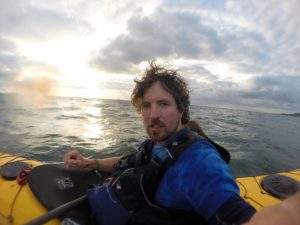
    Solo seakayaking around Ireland, 2014.

    One lesson I learnt beyond any doubt is that fear is contagious. Just like a virus. If one person in a group becomes fearful, it spreads like wildfire throughout the entire group, a legacy of our evolutionary heritage, and the fight or flight mechanism.

    What we have witnessed, in the past few months, is the entire human species in fight, flight or freeze mode. It is collective anxiety on a global scale, amplified by social media and hysterical media coverage.

    Our political leaders, for the most part doing their best and responding to an unprecedented situation, were pressured by a fearful media and hysterical public to do something, anything, and naturally they reacted from a place of fear.

    As anyone with a background in adventure sports will know, good decisions are never, ever made from a place of great fear or hysteria.

    The Indian philosopher Krishnamurti wrote: ‘Fear of any kind breeds illusion … where there is fear there is obviously no freedom … It makes one tell lies, it corrupts one in various ways, it makes the mind empty, shallow.’

    I am not suggesting that our government in Ireland is consciously part of some nefarious plot to undermine democracy. Not intentionally anyway. But democracy has nevertheless been undermined as a result of the hysterical response to Covid-19.

    In the UK, former Supreme Court Justice Jonathan Sumption said: ‘This is what a police state is like, it is a state in which a government can issue orders or express preferences with no legal authority and the police will enforce ministers’ wishes’. He has called the lockdown ‘the greatest interference with personal liberty in our history’. When great legal minds are telling us that the rule of law is being undermined, we should listen.

    Our civil liberties and civil rights are not something that we be taken for granted. We forget now that Irish independence and the fight for freedom came at a high cost. ‘The price of liberty is eternal vigilance’, is a quote attributed to Thomas Jefferson.

    It does not matter whether you consider yourself to be politically on the left, centre, or the right, the erosion of civil liberties that has occurred in most Western democracies over the last few months is something that should concern you. if the there is one thing the history of the last century has taught us, it is that tyranny can take many forms.

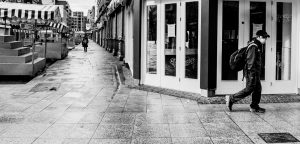
    Image: Daniele Idini (c)

    You may well have great trust in our current government. That is not the point. The point is that future governments may well use the same arguments to repress civil liberties. Consider the possibility of a less benign government with opposing political views to your own coming into power in the future, and using the precedents set at this time to undermine your civil liberties. We do not have to look far back in history to see that such events are very possible. Once a precedent is established, it is an easy path to follow.

    Over two thousand years ago, Plato warned of the dangers of tyranny arising from a fearful and chaotic democracy. The people, when afraid, beg for a strong leader to come to save them. Tyranny can arise, not from a despot seizing power, but through a fearful public demanding protection from an external threat. This threat is real, but is overblown: ‘This and no other is the root from which a tyrant springs; when he first appears he is a protector.’

    Many other great political thinkers have expounded on the idea of the tyranny of the masses. The great Irish political theorist Edmund Burke, wrote in a 1790 letter that ‘The tyranny of a multitude is a multiplied tyranny’.

    John Stuart Mill in his famous essay ‘On Liberty’ (1859) spoke of the need to protect against, ‘the tyranny of the prevailing opinion and feeling … as the majority opinion may not be the correct opinion.’

    We confront a dystopian nightmare of an Orwellian society of constant surveillance, with the government and/or corporations controlling what we can think, what we say, and how we act.

    Militaristic language has become all too commonplace, thereby justifying extreme wartime measures. We talk of ‘front line’ workers. Much as these amazing doctors and nurses are doing a wonderful job and should be commended, there is no ‘front line’.

    This is not a war. You cannot fight a war against a part of Nature. That is like fighting a war against yourself, a mass collective schizophrenia. This is part of the problem with our current rational-materialistic society: in our arrogance we believe ourselves to be somehow separate from Nature. This crisis is showing us clearly that we are not.

    The following liberties have been undermined since the start of the Covid-19 hysteria:

    1. The right to personal liberty and to protest. 

    Article 40.4 of the Irish constitution guarantees a right to liberty, while Article 40.6.1 says you have a right to assemble and to associate freely.

    The right to assemble and to protest is an essential part of any functioning democracy. Remember the mass civil unrest that was occurring in Hong Kong and France before Christmas? This has disappeared without a trace. Are we no longer allowed to march on the streets should the need to protest arise? What is now stopping future governments using the ‘health and safety’ of the public as an excuse to crack down on civil disobedience?

    1. The right to free speech. 

    One of the most important of our human rights, established as early as 1789 in Article XI of the French ‘Declaration of the Rights of Man’ – ‘The free communication of thoughts and of opinions is one of the most precious rights of man: any citizen thus may speak, write, print freely’. Article 40.6.1 of the Irish Constitution guarantees a right to express freely  your convictions and opinions .

    However, this right has come under attack in recent months, with censorship becoming very prevalent. Any questioning of the mainstream narrative quickly gets labelled ‘false news’ or a ‘conspiracy’ theory, thereby stifling debate and discussion. Who has the power to decide what is false news? Do you, or do I? Or does some unelected Youtube or Google content executive?

    The mainstream media and social media companies have unprecedented power to manipulate the narrative. Social media and search engine algorithms can effectively control what we read and see, and therefore control the reality we live in. Who decides what we should think, and who holds this absolute and terrifying power?

    I may not agree with what you are saying, but I absolutely respect your right to say it. Otherwise, one day, we may find that right has been taken from us.

    1. The right to privacy.

    Article 8 of the European Convention on Human Rights states that ‘Everyone has the right to respect for his private and family life, his home and his correspondence.’

    The seemingly benign concept of using a ‘contact tracing’ app could easily be misused by governments to normalise mass surveillance of citizens at all times, in the interests of public safety. Keeping track at all times of where you go and who you are with, a smartphone becomes like a voluntary ankle tag. With smartphones becoming almost essential to function in society, this mass surveillance is constant.

    One of the very worst tendencies this crisis has brought out in people is of of neighbours spying on one another, settling old grievances by informing. Have people forgotten already how secret police, such as the Stasi in East Germany, controlled populations by encouraging this behaviour?

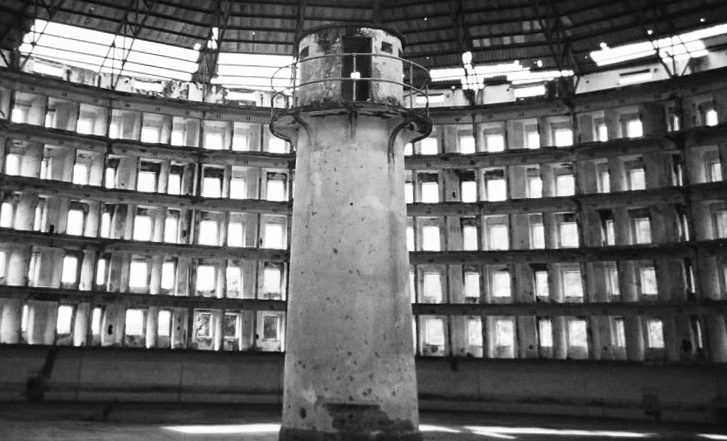
    The French philosopher Michel Foucault believed that: ‘the power of a goverment is co-extensive with its ability to surveil’,  and wrote about the symbolic prison of the Panopticon, in which prisoners never knew when they were being observed, so were obliged to be on their best behaviour at all times. We are living in a digital panopticon, and giving governments unprecedented powers of surveillence.

    Inside one of the prison buildings at Presidio Modelo, Isla de la Juventud, Cuba.

    Moreover, with cash becoming redundant through this crisis, governments and corporations have acquired an even greater capacity to surveil, and therefore control, our lives. In the U.K., Derbyshire police used drones to film hillwalkers in a remote mountain area, while in California police fined surfers a $1000 for catching waves.

    Is this the kind of society you want to live in?

    1. The right to bodily autonomy and personal sovereignty.

    Are we going to give away our right to bodily autonomy to pharmaceutical companies, and the possibility of a mandatory vaccination programme?

    I am neither pro- nor anti- vaccination, but I believe that people should enjoy an absolute right to decide what is put into their bodies, freedom over their own body. A right to bodily integrity has been recognised by the courts as an unenumerated right, protected by the general guarantee of ‘personal rights’ contained under Article 40 of the Irish constitution.

    There is some disagreement in the scientific community around the safety of vaccines, with billions of dollars having been paid out in compensation by the Vaccine Injury Courts over the past thirty years, but any dissent of the mainstream Big Pharma narrative is brutally suppressed and attacked. In the Middle Ages, heretics were burnt at the stake for daring to question the mainstream version of reality. While they are not burnt at the stake today, anyone who questions the mainstream narrative is attacked, vilified, and discredited

    If anyone thinks these concerns over civil liberties far-fetched, I suggest you look at the situation in China at the moment, where the government has used the crisis to strengthen its grip on power, and to crack down on dissent.

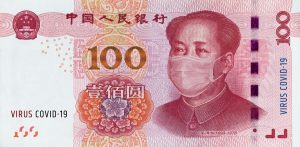
    Dmytro Sidashev / Alamy Stock Photo

    What sort of world do we want to live in post-Covid-19?

    I would easily sacrifice an element of safety for my freedom. I want to live in a world where personal liberty and civil duties are both honoured and respected; where personal sovereignty is not given away to unelected global corporations; where political power remains vested in individuals and communities, and a central State does not have unchecked power to interfere in citizens’ lives. Where policing is by consent, and not by coercion and control. I want young children to be able to run freely in the outdoors without fear, or masks.

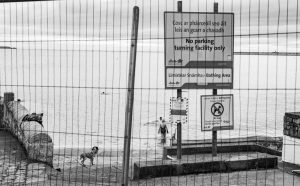
    Image: Daniele Idini (c)

    I do not want to die anytime soon, but if I do, so be it. I have long accepted that one day I will die. I would much rather die a free man from Covid-19 than live in a dystopian surveillance society. What we are seeing is a global collective psychological process, the unconscious and unprocessed fear of death. By facing and accepting our own mortality, this fear dissipates.

    I do not want to live in a sanitised, risk-free, nanny-state surveillance world, where the government knows where I am at all times and controls what I think, what I can say, what I put in my body. I do not consent to this version of reality. I will not be part of it.

    The real front line is about personal power and self-sovereignty. Reclaiming our power from the unelected Silicon Valley AI/tech, media and pharmaceutical executives, who have acquired greater power over every aspect of our lives, with hardly any oversight.

    We need to come terms with the immense power that is accumulating in Google and Facebook to influence, manipulate and control what people think. Even that most Machiavellian of realpolitik bureaucrats Henry Kissinger recently wrote: ‘The Age of Reason originated the thoughts and actions that shaped the contemporary world order. But that order is now in upheaval amid a new, even more sweeping technological revolution whose consequences we have failed to fully reckon with, and whose culmination may be a world relying on machines powered by data and algorithms and ungoverned by ethical or philosophical norms’. He who controls the algorithms controls the world.

    This is not a world I want to create. I do not consent. For sure this crisis has brought out the very best in humanity, with neighbours helping one another, communities coming together, increasing food security and developing a great sense of solidarity. But we cannot, Pollyanna-like, ignore the potential for the slide into a dystopian surveillance society.

    What sort of society do we want our children and grandchildren to inhabit? This is the real front line. We have had a great opportunity for reflection and collective dreaming, for visioning and birthing a new society and new reality. The birthing process of the new world will be messy and painful, as births always are, but the baby will be born.

    We are not powerless. We have the power to rewrite the story and create a beautiful world for future generations. Let us make our collective vision a beautiful one.

    Image: Daniele Idini (c)