Blog

  • Musician of the Month: Niwel Tsumbu

    We’re living in a time where musical forms and styles are fusing more than ever. However, this is an ancient process that has been happening ever since humans have sang, travelled, and interacted with each other. People have always moved around the world with their songs, dances, instruments, and thus, the music evolves. With technology, this process is faster than at any previous time – you can hear music from anywhere by clicking a button or touching a screen, in an elevator, on the radio, and so on.

    I remember between the ages of seven and eleven years old, I went to the church with my grandparents most Sundays. This church was special because it originated from the village and moved to Kinshasa, the capital of Democratic Republic of the Congo. The music was traditional – every row of seats had a bell and a shaker for anyone to play. The big drums in the front had no dedicated drummer – anybody who felt like playing would go in front and play during a song. As kids, we would gather around the drums with sticks and hit them on the side – this could possibly have been my first performing experience.

    After the church we’d come home and I would sit on the pillar of the balcony in our house, which was dangerous as there was a twenty-five metre drop to the floor. Obviously I was not allowed to sit there, and my grandfather – who is my biggest influence, looking after me now from the beyond – would give out to me and even give a few slaps to stop me sitting there (this was normal, not child abuse!).

    When I started learning the guitar between the age of sixteen and seventeen years of age, I was really interested in learning music that was not from the DR Congo. I had a great mentor who taught me jazz and I enrolled myself into classical music school to learn how to play with my fingers. It is only then I realised why I was so obsessed sitting on the balcony years earlier.

    I found out it was the music on the radio that was making me sit on the balcony as I recognised most of the pieces I was hearing students and teachers performing around the school. The pieces were by most of the familiar famous classical composers such as Wolfgang Amadeus Mozart, Ludwig van Beethoven, Johann Sebastian Bach, Antonio Vivaldi, and many others. To this day, whenever I hear their music, the memories of my grandfather, the church, the scents of that time, rush into my body like crazy.

    Classical music is truly part of my existence and experience. It is also clearly an art form rooted in the tradition of Western culture, but I believe it is also my traditional music as a human being. I had no idea it was called classical music sitting on that balcony but it touched me and has made a big impact in my life.

    My music is a glimpse into my perception of life and inspired by my experiences. It should be dynamic, beautiful, adventurous, and take risks. These elements inform the new album I will release later this year, along with the great Éamonn Cagney (percussion), a natural evolution of fifteen years of collaboration.

    My guitar playing is influenced by many great guitarists of DR Congo and the world such as Franco Luambo Makiadi, Roxy Tshimpaka, Paco de Lucia, Wes Montgomery, and many others. However, my approach to rhythm is really what is unique about me. I have been told this by virtually all the musicians I have played with.

    It is very strange for me to hear people talk about pure ‘African Music’ that doesn’t exist – unless you go back thousands of years before humans started roaming around the globe. This concept is simply not true, and frankly, it drives me crazy when people, especially African musicians who use equal-tempered tuning with Western instruments, say so. I will give a talk on the the influence of colonialism on Congolese and African music (and a performance) at the British Forum for Ethnomusicology in Bath University this April [Editor’s Note: this has since been cancelled].

    I’m from the Yombe tribe (part of the Bakongo people) on the western side of the Congo – the first tribe to welcome the Europeans in 1482. It’s very easy to see the Western influence in my tribe, musically or socially (for example, we always eat with a fork or a spoon unlike any other tribe). We are the only tribe in Congo who would traditionally have a choir with a conductor singing three- and four-part harmonies, like you hear in the Catholic Church. The melodies are very diatonic and similar to Gregorian chants, except with a strong rhythmic approach. It is also the most popular traditional form of music in the Congo and has influenced the popular music much more than any other traditional music.

    We are conditioned to hear music in a certain way as a collective entity shaped by our society – and to label it for business purposes. However, music affects us individually, much more than we realise and touches us way deeper than we know. It doesn’t matter where it originates from: colonialists, black, white, transgender, gay, or whatever social group a person identifies with.

    The fact of the matter is that sound travels through our ears to the receptor cells inside the inner ear. These cells change the sound vibrations into electrical signals, which pass along the auditory nerve to the brain. This means, whether you like it or not, the music you hear literally touches and, alters your mind.


    For more of Niwel’s work see:

    Facebook: https://www.facebook.com/pages/category/Musician-Band/Niwel-Tsumbu-Sounds-212103155519751/

    Instagram: https://www.instagram.com/niweltsumbu/?hl=en

    Twitter: https://twitter.com/niweltsumbu?lang=en

    Spotify:


    Niwel is currently preparing a new album for release with percussionist Eamon Cagney. He has performed with the finest Irish and international musicians while continuing to craft his own distinctive fusion of new jazz, rhumba, world, flamenco, rock, soukous, and classical. Niwel has collaborated and performed with artists including the Crash Ensemble, composer Roger Doyle, DJ Donal Dineen, Loah, Baaba Maal, Liam Ó Maonlaí, Mik Pyro (Republic of Loose), Eamonn Cagney’s Treelan ensemble (with Martin Tourish), and many more.

  • Never Such a Meal

    Years ago, arriving late one evening in Ostende by train – always my favourite means of travel – from Paris, I went to the first hotel I spotted:  The OLD SHAKESPEARE HOTEL. I booked a room and, feeling expansive after a film shoot in Sud Tirol, asked the blonde receptionist for directions to the best restaurant in town. In her arms, she fondled a Pekingese which had the all-seeing eyes of an intelligent chimp. The woman said, with complete assurance: ‘This is the best restaurant.’

    When I dumped my bag I went down to the restaurant where the only diners were a man with a cravat and two glamorous women. While I waited for a menu I heard the word ‘chateaux’ and assumed they were haute bourgeois patronising the best restaurant in town. Reassured that the receptionist was not lying, I listened out for other snatches of conversation.

    “Florida! Of all places.”

    “Its actually quiet in Winter.”

    “Do you really like McDonalds?”

    “Well, it has Disneyland and Cape Canaveral.”

    I switched off and shortly afterwards they left. I was now the solitary diner.

    The middle-aged waiter in white handed me the menu. I thanked him and he responded with the simple phrase: “As you please, sir.”

    I studied the menu and said, “I’ll just have the best fish dishes you have.”

    He repeated, “As you please sir,” and took the menu away, replacing it with the wine list. As my filming expedition had been more than usually successful I chose a rather expensive Pouilly Fuisse.

    “As you please, sir”

    Over the next hour that was the only phrase he repeated, after my every “Thank you.”

    Perhaps that was the only English he had? Once I tried to engage him.

    “What do you do when trippers from London ask for fish & chips?”

    “We do everything, sir”

    And that was his only deviation from the role of perfect waiter. In a small aquarium in front of me there was one lobster and one crab, the latter missing one of its muscular claws. It was pressing itself despairingly against the glass while the lobster hovered. I knew it was going to die, eaten by animals like itself before they were eaten in turn.  But I was to be this crab’s final executioner. My uncommunicative waiter delicately fished him out.

    There followed at discreet intervals and in stately procession a series of small miracles of the most delicious food I have ever eaten, titbits of shrimp, mussels, smoked eel, halibut, salmon (smoked and fresh on the same plate), oysters (with a special fork), squid. All were prepared lovingly and served in its own unique dish or platter, garnished with a sprig of this or that herb, or slices of lemon impaled.

    Having no other than perfunctory human communication available, in my notebook I actually wrote down details of each course, even noting that dishes were all wheeled in on a silver tray. Including, of course, the single clawed crab.

    I felt no pity for it, so sated was I in the luxury of perfectly prepared food.

    “This is the finest food I have ever enjoyed,” I said to the morose waiter.

    “As you please, sir,” he repeated. I must have heard him utter this thirty times, before and after every dish.

    The only other people I glimpsed  were a young Asian couple in aprons who emerged briefly from the kitchen to look at me and smile shyly. Then they disappeared again. The Pekingese also appeared once, without its owner, to study me inquisitively. Satisfied, he trotted back to report satisfaction, presumably to the handsome blonde at Reception.

    The dessert was astonishing in its construction and taste. I have no idea of what it consisted but felt guilty at destroying such a work of art with a fork.

    The only detail that let down the side was the that the toothpicks were plastic rather than wooden, but I overlooked this as I sipped on my Hennessy cognac, feeling not in the least bit guilty about the starving masses or the bill to come next morning. It was the best money I ever spent.

    Many years later I went to Ostende, but could not find the Old Shakespeare. I wondered whether it existed any longer; maybe I dreamed up the meal? But I could still relive the splendour of it like some old love or a sensuous dream.

    This evening, in a vacant and pensive mood, I scribbled down these words about the experience, and wondered idly if the miracle of the Internet could help me, so I Googled the place. Yes, an advertisement suggested  it still existed as a centre of gourmet eating. There was even a phone number.

    A woman answered my call in Belgianese and said that, at least as far as I could gather, that the hotel/restaurant was no more. I assumed Coronavirus was responsible. “No”, my multilingual son – who was eavesdropping on the conversation informed me; “the building is now apartments.”

    Coronavirus is not  to blame for everything.

    Bob Quinn’s Memoir Monk Manqué has been serialised in Cassandra Voices.

  • Diary of a Pandemic Doctor Part 2

    No one will want to read this, as this is about death.

    As we sit, quarantined in our homes, scrolling through the news of the pandemic, death seems to stand, ever present, in the corner of the sitting room. Our everyday behaviour is now invested with the knowledge of his presence. The actions we take, staying home, keeping two metres from one another, have a direct, logical relationship to the struggles of people gasping on ventilators in intensive care units.

    It is alien for us to have death at such close proximity. We have in the last decades managed to block it out, hide it away, to think that if we throw all our resources at it we might prevent it.

    But of course death is as natural to life as birth.

    Most of the time doctors battle against the humdrum vagaries of life: the sore throats, broken arms and anxieties; but now and then we are called upon to joust with death, and sometimes during this battle we have to lay down our arms and allow death take its prize.

    Some of my patients have begun dying from Covid-19. They have been unwell for a few days with fevers, chills, and muscle pain. Most get better after a week, but some suddenly develop hypoxemia, a low level of oxygen in their blood, and a few hours later are on a ventilator, mechanically deflating and inflating their lungs.

    If they develop the cytokine storm, a sudden rush of inflammatory cells entering the lungs, the immune system aberrantly attempting to combat the virus, they often die. Death walks the intensive care unit, taking every second patient.

    Just before the pandemic started I made several house calls to an elderly couple. They lived in an airy, high-stucco-ceilinged apartment, full of the accretions of a long life: family pictures hung on the walls, showing adult children, grandchildren; a straw parasol from a tropical holiday in the corner; coloured crystal glasses on the fireplace.

    In an overheated bedroom the elderly man lay on the bed, his limbs cachexic, his skin mottled with liver spots. His chest heaved unnaturally with the effort of breathing. The pump of his heart was failing, so his lungs filled with fluid.

    I had sent him to hospital twice, where they had tapped his lungs, but the respiratory physician called me on his final discharge to say that they would not take him again. I had tried, with diuretic tablets, to clear his lungs, so he could breathe more comfortably. But now even these were failing. It was time to lay down arms and give comfort, rather than fight.

    I took his wife and son aside in the darkened corridor and told them that I would be removing most of his medication, giving just the necessary to make him comfortable. His wife begged me to send him to hospital, saying that she had arranged things so the whole family would be home for Christmas to spend it with him.

    I tried, as best I could, to explain that now was the time to recognise that he would soon die, to gather the family quickly, to make him comfortable, and to spend that time with him. After a long discussion they became reconciled to the situation, took their places either side of the bed, holding the old man’s hands in theirs.

    The home nurse injected an infusion of morphine to relieve his distress, and I left to the sound of the quietening of his ragged breathing and his wife’s sobs.

    By recognising what death is we recognise what life is. That is maybe why this feels like such a moment of quickening. Death has come knocking at our doors and we are forced to open and acknowledge him. The door will close again, but the collective memory will remain, and when the pandemic is over this may help us to invest life with more meaning.

    Read the first installment of Dairy of a Pandemic Doctor here.

  • Vigilance Required Against ‘Seepage’ of Emergency Legislation in Ireland

    On Thursday 19th of March, the Dáil passed emergency legislation in response to the Covid-19 pandemic. The Health (Preservation and Protection and other Emergency Measures in the Public Interest) Bill has two main features.

    The first are financial measures assisting those affected, protecting living standards, and maintaining spending in the economy. The second aspect concerns laws permitting agents of the State to shut down mass gatherings and to order people to stay in their homes. Also, there are regulations allowing for the detention of a person, on foot of a medical recommendation, if they refuse to self-isolate.

    The rapid spread of the pandemic temporarily hands necessary draconian powers to a State that has already acquired other wide-ranging powers in response to subversive activity relating to the ‘Troubles’ in Northern Ireland and, more recently, violent gangland criminality. These have long been subjected to criticism by civil liberties activists in Ireland, including Mary Robinson, as well as external bodies, concerned by the unwarranted erosion of the rule of law.

    In particular, the Offences Against the State Act 1939 permits trial without jury before the Special Criminal Court. Subsequent Offences Against the State legislation created a number of special evidential provisions in response to the unique situation then at play in Ireland, including the use of ‘belief evidence’ of a Chief Superintendent before the Court and the drawing of ‘adverse inferences’ from the silence of a suspect in custody.

    Interestingly, the Special Criminal Court became the focus of a lengthy exchange during the leaders’ debate on RTÉ prior to February’s election, with Sinn Féin President Mary Lou McDonald repeatedly being asked to clarify her party’s position on the issue.

    Indeed, Fine Gael leader Leo Varadkar went so far as to rule out a coalition with Sinn Féin based on its purported view on the Court; his Fianna Fáil counterpart Micheál Martin then claimed that Sinn Féin always votes against the renewal of the Offences Against the State legislation on instruction from ‘their IRA old comrades.’[1]

    The problem with handing over such powers to the State is that once granted they are not easily relinquished, as the police and judiciary grow accustomed to their exercise. This has been the case with the Special Criminal Court that now sits in the impressive and imposing Criminal Courts of Justice building on Parkgate Street in Dublin.

    Protecting civil liberties, such as the right to jury trial, may seem less important as long as extraordinary powers are not abused. However, the existence of special powers poses the ongoing risk that they may be exploited by unscrupulous, or even tyrannical, politicians or agents of the state.

    This article provides background on the emergence of the Special Criminal Court, and the general criticisms that have been directed against the use of a non-jury trial, followed by an assessment of its use against organised crime. It also posits potential alternative practices that could be used to protect endangered juries. As we enter a prolonged period of draconian measures restricting our conduct it is salutary to consider the powers already at the disposal of the State.

    General Criticisms in the Use of a Non-jury Court

    The current Special Criminal Court has been subject to general criticism since its establishment in 1972. The justification for the existence of a non-jury court centred on the potential for juror intimidation and the fear that jurors could be coerced in their decision-making. In announcing the establishment of the Special Criminal Court, the then Minister for Justice, Desmond O’Malley, referred to the prevalent atmosphere of intimidation in courthouses and the threat of retaliation.[2]

    In response, a statement from the ‘Citizens for Civil Liberties’ on 26 May 1972 expressed the concern that the establishment of the Court would deprive citizens of the right to jury trial.[3] The introduction of belief evidence later that year[4] also sparked criticism from members of the academic community. Writing in 1974, Mary Robinson stated that, ‘in effect, this would not even be a case of one man’s word against another, but a case of belief which was based on undivulged facts and derived from undivulged sources – which could only be at second or third hand – being set against another man’s assertions’.[5]

    While the workload of the Special Criminal Court declined noticeably over the following decade, this appears to have been the result of a decline in subversive activity rather than the result of a policy change on behalf of the DPP.[6]

    Writing in 1989, Hogan and Walker noted the lack of political pressure to have the court disbanded and posited that this might be a tribute to the fairness and impartiality of the operation of the Special Criminal Court since 1972. However, they wrote that this also provided ‘disquieting evidence of the “seepage” of emergency legislation into the ordinary law of the State. What was once seen as a radical (and purely temporary) departure from standard norms has now become an accepted feature of the criminal justice system’.[7]

    While in 1996 the Supreme Court indicated the necessity that the Special Criminal Court be kept under constant review, it refused to find that the system was unconstitutional.[8]

    Human Rights Committee

    The use of the Special Criminal Court was criticised by the Human Rights Committee in 2001, which found that the State was in breach of the right to equal treatment, espoused by Article 26 of the United Nations Covenant on Civil and Political Rights, given the power of the DPP to certify trial in the Special Criminal Court.[9]

    The Committee found the State to be in breach of the obligations under Article 26 and stated that it was critical to its conclusion that the DPP was under no obligation to provide reasons and that judicial review of his decision was ‘restricted to the most exceptional and virtually undemonstrable circumstances’.[10]

    In its 2002 report, the minority of the Committee to Review the Offences Against the State Acts 1939–1998, which consisted of Hederman J. and Professor Dermot Walsh, focused on the primacy of the right to trial by jury, which they described as a cornerstone of the criminal law systemwhich  ‘ensures that the innocence or guilt of a person charged with an offence is determined by twelve randomly chosen members of the community, each of whom brings to the process the benefit of his or her life-experience and individual perspective.’[11]

    They noted that the risk of possible jury intimidation is reduced, that the members of the Court can be relied on not to be swayed by political views from convicting where the offence was politically inspired and that the prospects of conviction may be considered more likely, ‘not because the members of the Court are unfair but because studies have consistently shown that non-jury courts have a higher conviction rate than courts with trial by jury’.[12]

    Furthermore, Professor Dermot Walsh in his dissenting comments in the Report of the Committee to Review the Offences Against the State Acts 1939–1998 argued that such exceptional criminal justice measures would, under the guise of combating terrorism, cause more lasting damage to basic democratic values and the rule of law than ‘the terrorists could ever hope to have achieved,’ and suggested the replacement of the standards underpinning the Offences Against the State legislation with ‘standards that are more firmly rooted in due process, civil liberties and human rights’.[13]

    In contrast the majority of the Committee stated that ‘as long as there is in existence a paramilitary threat to public peace and order, the need for the Special Criminal Court will probably remain.’

    In light of the majority recommendations, the operation of the Special Criminal Court has been maintained, despite on-going controversy in the context of organised crime, which is discussed below.

    Meanwhile, most of the recommendations made by the Committee to Review the Offences Against the State Acts 1939–1998 intended to align the legislative provisions with human rights norms have not been implemented and have largely been ignored by the State.

    In its 2014 report on Ireland, the United Nations Human Rights Committee highlighted its continued concern ‘at the lack of a definition of terrorism under domestic legislation and the continuing operation of the Special Criminal Court’.[14]

    The UNHR Committee called on the State to ‘introduce a definition of “terrorist acts” in its domestic legislation, limited to offences which can justifiably be equated with terrorism and its serious consequences’ and to consider the abolition of the Special Criminal Court completely. [15]

    Trial of Organised Crime in the Special Criminal Court

    In 2002, the majority of the Committee to Review the Offences Against the State Acts 1939–1998 reported that juries in Ireland are ‘distinctly uncomfortable’ in cases involving organised crime and that attempts have been made to tamper with juries in high profile criminal trials in the ordinary courts. The Committee felt that the threat posed by organised crime was sufficiently serious to justify the continuation of the Special Criminal Court on that ground alone.[16] In DPP v Special Criminal Court & Ward,[17] Carney J stated:

    Those engaged in [organised] crime require a wall of silence to surround their activities and believe that its maintenance is necessary for their protection. They have at their disposal the resources, including money and firearms, to maintain this wall of silence and will resort to any necessary means, including murder, in furtherance of this objective.[18]

    It has been suggested that organised criminality is not ‘ordinary’ crime as such and measures akin to those used against suspected terrorists are warranted.[19]

    Criminal Justice Act 2009

    Despite the foregoing, the use of the Special Criminal Court for the purposes of non-subversive and organised crime has sparked heated debate in recent years. For example, the Criminal Justice Act 2009 was urgently passed through the Dáil against a background of increasing gangland violence and it evoked great controversy, with many lawyers publicly opposing it.

    A large group of lawyers penned a letter to The Irish Times expressing their dissatisfaction with the content of the Act and the manner in which it was rushed through the Houses of the Oireachtas. Among the complaints was the fact that the Act had been:

    … introduced without any research to support its desirability and without canvassing expert opinion or inviting contribution from interested parties on the issues. It appears now that it will be passed without proper debate in the Dáil because such debate has been guillotined by the Government. It is quite simply astounding that we as a society would jettison ancient rights and rules of evidence in such a manner and seemingly without regard to the effect such impetuous legislating might ultimately have on the respect for the rule of law in this country.[20]

    It was further argued, in relation to the Act’s provision for applications to extend time in detention to ‘be heard otherwise than in public’ and to the possible exclusion of the accused and his legal representatives,[21] that ‘the provision for secret hearings to extend detentions without the presence of the suspect or their lawyer’, was a stark departure from the principle that justice should be administered in public. The letter set out that:

    Secret hearings should be anathema to a system based on the rule of law. From the manner in which detention hearings are currently conducted, there is nothing to suggest that investigations would be compromised. In the main the court hears generalised evidence about the necessity for further time to carry out interrogations, forensic testing or assessment of evidence.[22]

    The Irish Council for Civil Liberties also criticised the encroachments on the rule of law:

    [T]his provision fundamentally alters the nature of criminal justice in Ireland. It allows for the judge to hear evidence of a Garda of any rank, in private, and without legal representation, in order to justify the continuing detention of a person … In essence what this means is that a person can be held without knowledge of the grounds on which the judge is justifying their continued detention. This detention can be justified by the secret information from any member of the Garda Síochána, regardless of his or her expertise or experience.

    In 2014, the United Nations Human Rights Committee expressed particular concern ‘at the expansion of the remit of the Special Criminal Court to include organized crime’.[23]

    Flouting Human Rights

    With the announcement of the second Special Criminal Court in 2015, the debate regarding the justification and role, if any, of the Special Criminal Court, resurfaced. In June 2015, the Minister for Justice, Frances Fitzgerald, informed the Seanad that:

    Organised crime continues to present a significant law enforcement issue, with a number of criminal gangs continuing to engage in serious crimes. There is, unfortunately, stark evidence of the willingness of these gangs to engage in murder, armed robbery, kidnapping, drug smuggling, counterfeiting and other serious offences. We are also faced with the reality that there are growing links between paramilitary groups and organised crime. Given the nature of organised crime, the investigation and prosecution process can be lengthy and difficult.[24]

    In October 2015, the Director of the Irish Council for Civil Liberties shared an alternate view:

    The Special Criminal Court was created as an extraordinary court in extraordinary times; however, no reasonable person could today claim that there is a public emergency threatening the life of the nation. It is therefore unjustified that this Court’s procedures suspend fundamental fair trial guarantees, including the right to trial by jury. The UN Human Rights Committee has repeatedly identified the Special Criminal Court as being in violation of Ireland’s legal obligations under international human rights treaties and called for its abolition. In 2014 the Committee expressed particular concern ‘at the expansion of the remit of the Special Criminal Court to include organised crime’.

    The continuation, much less the expansion, of such a court in peacetime flouts Ireland’s human rights obligations and is not necessary in a democratic society. Crime, particularly violent and gang crime, are a legitimate concern for our legislators. Tackling such crime must not rely, however, on chipping away at the right to a fair trial, but on a commitment to adequately resourcing An Garda Síochána and the regular Courts.[25]

    More recently, in November 2018, the UN Special Rapporteur on the Promotion and Protection of Human Rights and Fundamental Freedoms while Countering Terrorism, Professor Fionnuala Ní Aoláin, commented on the Special Criminal Court regime.

    At a lecture hosted by the Irish Council for Civil Liberties (ICCL) and the International Network of Civil Liberties Organisations (INCLO), she stated that ‘the Island of Ireland, more so than many parts of the world has experienced emergency law, emergency practice and the seepage of the exceptional into the ordinary in ways that has not served the rule of law nor the protection of human rights well.’ She pointed out that there had been ‘consistent and trenchant concerns about the use of the Special Criminal Court and the Offences Against the State Act as a “work-around” the ordinary protection of the law’.[26]

    The Future

    There is a genuine risk that the use of non-jury trial, originally an emergency measure, is becoming normalised. It is disappointing that the debate and dialogue in Ireland surrounding the Special Criminal Court have primarily revolved around two poles; jury or non-jury trial. There has been little political discussion of intermediate alternatives for protecting jurors, which, in modern times, might include the use of technological solutions to some of the problems posed by potential jury intimidation.

    One possibility would be to allow the jury to observe proceedings from a remote location, though it must be acknowledged that such protective measures may have a prejudicial effect and may invite the jury to draw negative connotations about the culpability of the accused. Options such as transporting the jury to their homes or taking steps to anonymise the jury[27] may not be as feasible in Ireland given the small size of the country and would again involve the risk of prejudice towards the accused where the jury members are aware of the protective measures taken. A more realistic option to prevent juror intimidation would be to limit the right to inspect the panel from which the jury is drawn, as has been done in Northern Ireland.[28]

    If the Special Criminal Court is to remain in being, it would be preferable that the decision regarding form of trial should lie with the courts rather than the DPP or the legislature.[29] Instead of using a system of scheduling a vast number of offences which are presumptively tried before the Special Criminal Court, each case should be considered on an individual basis.[30]

    The right to jury trial was described by Thomas Jefferson as ‘the only anchor ever yet imagined by man, by which a government can be held to the principles of its constitution.’[31] One would have thought that in light of the high status formally accorded to trial by jury in the Irish Constitution, these alternatives would merit serious consideration.

    Conclusion

    The current Special Criminal Court was established in 1972 as an emergency measure in response to a unique set of circumstances then at play in Ireland. It would appear, however, that the court now has de-facto permanency in our criminal justice system. While the majority of trials in the Special Criminal Court continue to involve subversive activity, prosecution of organised crime in the court is increasing and a situation has now arisen where emergency powers have become normalised.

    Now, as the Government responds to an unusual situation for Ireland with emergency legislation, it is worthwhile to bear in mind the earlier response to subversive activity in Ireland and – in the words of Hogan and Walker – the ‘disquieting evidence of the “seepage” of emergency legislation into the ordinary law of the State.’

    [1] Ceimin Burke, ‘Explainer: What is the Special Criminal Court and what is Sinn Féin’s stance on it?’, The Journal, February 6th, 2020, https://www.thejournal.ie/special-criminal-court-explainer-4993281-Feb2020/

    [2]Davis, The History and Development of the Special Criminal Court 1922–2014 (Bloomsbury Professional, 2014) 169, citing 261 Dáil Debates (15 June 1972), col 1765.

    [3]McInerney, ‘Special Courts Introduced’ (1972) The Irish Times, 27 May, 9.

    [4]‘Belief evidence’ was introduced by the Offences Against the State (Amendment) Act 1972, s 3(2), which was passed on 3 December 1972. The provision is discussed in detail in Ch 6.

    [5]Robinson, The Special Criminal Court (Dublin University Press, 1974) 31.

    [6]Hogan and Walker, Political Violence and the Law in Ireland (Manchester University Press, 1989) 237.

    [7]Hogan and Walker, Political Violence and the Law in Ireland (Manchester University Press, 1989) 239.

    [8]Kavanagh v Ireland [1996] 1 IR 321.

    [9]The powers of the DPP in this regard are discussed in detail in Ch 2.

    [10]Kavanagh v Ireland, Decision of the UN Human Rights Committee (CCPR/C/71/D/819/1998, 4 April 2001), at para 10.2.

    [11]Hederman et al, Report of the Committee to Review the Offences Against the State Acts 1939–1998 (2002), at paras 9.88–9.

    [12]Hederman et al, Report of the Committee to Review the Offences Against the State Acts 1939–1998 (2002), at para 9.90.

    [13]Hederman et al, Report of the Committee to Review the Offences Against the State Acts 1939–1998 (2002), 255–261.

    [14]United Nations Human Rights Committee, ‘Concluding observations on the fourth periodic report of Ireland’, CCPR/C/IRL/CO/4 (19 August 2014). The Committee had previously expressed concern in 1993 (Comments of the Human Rights Committee, CCPR/C/79/Add 21 (3 August 1993)); 2000 (Report of the Human Rights Committee, Vol I, Gen Ass, 55th Sess, Supp No 40, A/55/40 (10 Oct 2000)); 2008 (Concluding observations of the Human Rights Committee: Ireland’, CCPR/C/IRL/CO/3 (30 July 2008)); and 2013 (‘Report of the Special Rapporteur on the situation of human rights defenders, Margaret Sekaggya: Addendum to Ireland’ A/HRC/22/47/Add.3 (26 February 2013)).

    [15]United Nations Human Rights Committee, ‘Concluding observations on the fourth periodic report of Ireland’, CCPR/C/IRL/CO/4 (19 August 2014).

    [16]Hederman et al, Report of the Committee to Review the Offences Against the State Act 1939–1998 (2002), at paras 9.33–9.36.

    [17]DPP v Special Criminal Court & Ward [1999] 1 IR 60.

    [18]DPP v Special Criminal Court & Ward [1999] 1 IR 60, 63.

    [19]Campbell, Organised Crime and the Law: A Comparative Analysis (Hart Publishing, 2013) 128.

    [20]Undersigned Solicitors and Barristers, ‘Criminal Justice (Amendment) Bill’, (Letter to the Editor) (2009) The Irish Times, 8 July.

    [21]Pursuant the Criminal Justice Act 2007, s 50(4A).

    [22]Undersigned Solicitors and Barristers, ‘Criminal Justice (Amendment) Bill’, (Letter to the Editor) (2009) The Irish Times, 8 July.

    [23]United Nations Human Rights Committee, ‘Concluding observations on the fourth periodic report of Ireland’, CCPR/C/IRL/CO/4 (19 August 2014).

    [24]Seanad Debates, Vol 240 No 9 (11 June 2015). The Minister was speaking to the Seanad in support of a resolution to continue in operation s 8 of the Criminal Justice (Amendment) Act 2009, which adds certain ‘organised crimes’ to the schedule of offences that can be tried before the Special Criminal Court.

    [25]‘Special Criminal Court Decision ‘Flouts Rule of Law’, says ICCL’, ICCL Press Release (29 October 2015). https://www.iccl.ie/press-release/special-criminal-court-decision-flouts-rule-of-law-says-iccl/ accessed 20 January 2019.

    [26]‘UN expert criticises the Special Criminal Court and the Offences Against the State Act’, ICCL Press Release (21 November 2018).

    [27]These steps include referring to them by number only, housing them in a secret location and monitoring their calls, as occurred in United States v Gotti 777 F Supp 224 (EDNY 1991).

    [28] Juries (Northern Ireland) Order 1996 (SI 1996/1141 (NI 6)), Art 26A, as inserted by the Northern Ireland Act 2007, s 10. This was found not to breach the Art 6 right to a fair trial in Re McParland [2008] NIQB 1. See Campbell, ‘The prosecution of organised crime: removing the jury’, (2014) 18(2) IJEP 83, 97. See also, the recent recommendations of Seymour CB in relation to non-jury trials in Northern Ireland (Seymour CB, Report of the Independent Reviewer Justice and Security (Northern Ireland) Act 2007, Tenth Report 1 August 2016 – 31 July 2017 (Her Majesty’s Stationery Office, April 2018), at para 23.2).

    [29]As suggested by Campbell (Campbell, ‘The Prosecution of Organised Crime: Removing the Jury’ (2014) 18(2) IJEP 83, 100).

    [30]This proposal was suggested by Dr Liz Campbell in her article, ‘The Prosecution of Organised Crime: Removing the Jury’, (2014) 18(2) IJEP 83, 100. It may be noted that, in England, Wales and Northern Ireland, the Criminal Justice Act 2003, Pt VII, which was commenced in January 2007, provides that trials on indictment may be held without a jury in cases where there is a risk of jury tampering. Under s 45 of the 2003 Act, the parties will attend a preparatory hearing prior to the decision to hold a non-jury trial and are given an opportunity to make representations with regard to the decision. This safeguard does not apply where non-jury trial is certified in relation to offences with a political or religious motivation in Northern Ireland under the Justice and Security (Northern Ireland) Act 2007 and is non-existent in Ireland. As Independent Reviewer of the powers under the Justice and Security (Northern Ireland) Act 2007, David Seymour CB has proposed that the Public Prosecution Service could, once they have formed a view that a non-jury trial certificate should be issued but before the submission goes to the DPP, notify the defendant that they are minded to issue a certificate, specifying the condition or conditions and any other material which is in the public domain, and invite representations within a specified period. This would lead to increased transparency in the process, a reduction of the risk of judicial review and to circumstances where the final decision of the DPP would be fully informed, particularly if the defence made coherent and plausible representations that, for example, the conditions relied on were not met. (Seymour, Report of the Independent Reviewer Justice and Security (Northern Ireland) Act 2007, Tenth Report 1 August 2016–31 July 2017 (Her Majesty’s Stationery Office, April 2018), at para 23.3).

    [31] The Papers of Thomas Jefferson, vol. 15, 27 March 1789 – 30 November 1789, ed. Julian P. Boyd. Princeton: Princeton University Press, 1958, pp. 266–270. ‘From Thomas Jefferson to Thomas Paine, 11 July 1789,’ Founders Online, National Archives, accessed September 29, 2019, https://founders.archives.gov/documents/Jefferson/01-15-02-0259.

  • Journeys of Displacement – a Personal Reflection

    In October of 2013, a ship carrying hundreds of women, men and children, mainly from Eritrea and Ethiopia, sank off the coast of Lampedusa, Italy. Over three hundred of those on board drowned, prompting a brief media focus on the precarious journeys of those seeking refuge in Europe.

    One of the accounts published in the aftermath was that of a local diver, Renato Sollustri, who was part of the search and recovery response. He described swimming into the hold of the submerged boat and seeing the body of a young woman who seemed as if she was pregnant. He recounted taking her out of the boat: ‘We laid her on the sea bed. We tied her with a rope to the other bodies and then…we rose with them from the depths of the sea.’ When they surfaced and lifted her onto a waiting boat they found that she had given birth while the boat sank, the body of her new-born son, attached by his umbilical cord, underneath her clothes.

    I had spent the years prior to reading the account active in migrant justice and refugee solidarity work. During those years I had heard many other stories of horrific, preventable, lonely deaths, of women, men and children: suffocating in the backs of refrigerated trucks; killed by high-speed trains; pushed back at sea or left to die by smugglers when injured along the way through mountainous or desert border crossings.

    The account of Sollustri, however, impacted on an even more immediate level. I had recently had a child myself, and I knew the powerful, visceral urge to protect, to keep him safe. I dreamt about the young, as yet unidentified, woman for weeks afterwards and closely followed the accounts of survivors, many of whom, despite initial platitudes and promises of citizenship, ended up destitute and precarious, living on the streets of Italian cities, without access to the island graves of their loved ones.

    Many of us involved in refugee and migrant solidarity networks thought at the time that the widespread coverage of the sinking, and subsequent shipwrecks in the weeks and months afterwards, might serve to spotlight the deadly causality of EU migration policies – of externalised, securitised borders and preventable deaths at sea, which continued and intensified in the years following. Some of those deaths catalysed public grief and empathy, such as the images of young Alan Kurdî, and many others became almost normalised in a context in which the death toll was ongoing and relentless.

    I knew that I should be there, in whatever capacity was useful – to witness, accompany and respond, to platform and archive journeys that were defined by such profound and often overwhelming displacement, external and internal.

    I had worked in refugee camp contexts and with displaced communities for most of my adult life – in Chiapas, Guatemala, Haiti, Palestine, Iraq, Lebanon and Syria. The topographies of those journeys were different, but the inner processes, of trauma and resilience, vulnerability and strength, identity reformation in exile, the humiliations of enforced dependency, mirrored and echoed each other, beyond borders.

    I had trained in Gaza as an EMT to volunteer with ambulance services during airstrikes and intensified violence and I had learned Arabic. It was this – a shared language and the emotional and psychological access and intimacy it engenders – that was to become the most practical form of solidarity I could offer over the years that followed.

    I mobilised a support system around my young child in Dublin – family and friends – and started travelling to, and volunteering with, sea and shore response teams, with mobile medics and later psycho-social projects in Lesvos, Lampedusa, refugee camps in the North of Greece and the Balkans, and in Calais.

    The trips were short when Tadhg was young, a week or two at a time, longer as he got older. When the situation and context of the work allowed for it, I took him with me, and his presence, his little legs and hand in mine slowed my own pace down.

    And in that stillness came a prioritisation of long conversations, of deepening connections with other mothers and their children, sharing memories and vulnerabilities, grief and courage and hopes in their tents as they struggled to adjust to lives lived in limbo.

    It was that shared space that prompted me to then train as a psychotherapist, to be able to respond to the physiological and cognitive registers of trauma, sometimes subtle, sometimes overt, that I was witnessing in so many contexts, feeling in so many conversations.

    At times the work was devastating, working with survivors of brutally violent torture, with women like Nadia, a Yazidi survivor of ISIS captivity who had been gang-raped repeatedly in the presence of her children; who survived the executions of twenty-three members of her family, many of those in front of her. And at times there was joy, beautiful, poignant moments of the overwhelming joy of survival; of families and lone voyagers who had survived the wars and sea crossings and, despite the hardships to come, created acts and moments of beauty and creative resistance; of music, community and self-organisation.

    My phone, and WhatsApp messages, became a constant portal into so many stories: of refuge-seekers enduring geographical journeys not yet completed; of those navigating the re-building of lives, recovering themselves in places of safety. Glimpses, too, of the often deeply isolating experience of forced migration – the seeping expressions of loneliness when the external journey has ended and the internal one begins.

    It remains so, my phone is a conduit to a multiplicity of stories in a multiplicity of languages. And my own life, too, within it all, has come to reflect aspects of a different sort of displacement, though one in which choice, privilege and power is recognised and held, always, with critical self-reflexivity and accountability.

    That life, or lives, are lived between Dublin and camps in Greece, Lebanon and elsewhere, juggling jobs and parenthood here and the necessity of constant response, long-distance, to an escalating humanitarian crisis and the violent erosion of the most basic rights of refuge-seekers there.

    It has within it forms of unofficial social work – one that so many volunteers and solidarity activists have by necessity become adept at over the past years – but forms of social care that are carried by individuals or disparate networks, in which there is no system to hold the work, no safety net for the many who fall through it. And in the scale and immediacy of trying to resource so many families and unaccompanied minors, raise funds, organise legal supports, secure emergency housing, lobby and advocate for changes to policies that comprehensively deny rights and justice, we always fall short in our attempts to support those who have become friends and, often, spiritually, family.

    That failure weighs heavily, along with the presence within the absence, of holding the urgency of the memories of the tens of thousands of named and unnamed women, men and children who have died making the journey, their lives and deaths tugging at the borders of consciousness and spirit. But hope is held alongside the grief – one that honours the survival, and strength and potentiality of those who have lived – who continue to endure and to tentatively hold space for a life of arrival, and welcome.

    And within that we honour our own survival, and strength and potentiality, as individuals and communities who witness these times of injustice, but who work to create spaces of refuge and love within them.

  • Review Bob Dylan’s – ‘Murder Most Foul’

    I have been to four of Bob Dylan’s concerts in various places around the world, and bar one where Ronnie Wood lightened the misery in Kilkenny, they were uniformly awful. He persists in reinterpreting and mangling his great songs, and hardly engages with the audience.

    It begs the question: why does he persist with the Never Ending Tour? Perversity possibly? Boredom? What else can I do? I might as well stick to my guns and my art? Nothing else to do?

    The opening paragraphs of this article are of course an irrelevance. He is not a performer in the mould of Springsteen, nor has he really ever been, apart from the tours in the 1960s, with what became The Band and a brief shine of light in the 1970s with The Rolling Thunder Review, where he had ample support. So what. It is irrelevant to his legacy. He is the greatest creative artist of the twentieth century and we are lucky to still have him with us.

    He is also one of the great cultural commentators of our time, and has been for an unprecedented fifty years, except for a period in the 1980s when he seemed to be going to seed. But the wake up call of a near-death experience (form histoplasmosis) has led, since Time Out of Mind in 1997, to an unprecedented bout of creativity.

    Yet since Tempest (2012), apart from a typically immersive and at times brilliant mining of the Great American songbook (all five albums worth) – a bit like the late Picasso turning to the great works of the high Renaissance and tearing them to figurative pieces –  there has been no sign of new material. It would seem strangely fitting if the man who, as Steve Earle puts it, invented the job of singer-songwriter were to see out the autumn of his years crooning along to the same Brill Building standards that he had once made seem so trite.

    Now with a unique sense of zeitgeist opportunism, Dylan has released a new seventeen minute-long song, ostensibly about the murder of John F. Kennedy, but which is also a travelogue through American cultural history, with Prince Hamlet and the great, deranged 1960s American DJ, Wolfman Jack, as our guide.

    A minefield and a summation. In a sense he quite clearly thinks that the killing of Kennedy was committed by the alt-right and the Texan Hunt family, and that the murder indirectly got us to the point of despair in politics where we have arrived. But his new song, Murder Most Foul, is so much more than a mere ‘protest song’, another genre that Dylan briefly defined before discarding in his early twenties.

    Set to Dylan’s own gentle, rippling piano, and accompanied by minimal bowed bass, violin and occasional flourishes of percussion, the performance has echoes of his surrealist masterpiece from the early 1980s, ‘Angelina’, as well as the epic ‘Last Thoughts on Woody Guthrie’ (1962); more of a recitation than song.

    Judging by the subtle arrangement and the mellow tone of Dylan’s voice – closer to that heard on the recent Sinatra ballads records than the ravaged croak on display on Tempest – it seems safe to say that it was recorded, presumably in one take, between recent concert performances.

    As the piece slowly builds in intensity, Dylan moves from the horror of Kennedy’s death, through The British Invasion and on to Woodstock and Altamont, from the Age of Aquarius to the Age of the Antichrist, before finally offering some hope in dark times through the things he knows and loves best.

    Wolfman Jack in 1979.

    Conjuring the incantatory spirit of his old friend and admirer, Allen Ginsberg, Dylan rhapsodises ‘Oh Wolfman, Oh Wolfman, Oh Wolfman, Howl!’, imploring the DJ to play everything from ‘Art Pepper, Thelonious Monk,/ Charley Parker and all that junk’ to Fleetwood Mac, from Buster Keaton to The Who, from Warren Zevon to Queen, from Beethoven to Civil War hymns. Dylan’s playlist is a litany of popular culture, fragments shored against ruin.

    Nobel Prize for Literature

    Dylan’s Nobel Prize for Literature was thoroughly deserved. Yet no one saw it coming. Witness the somewhat shell-shocked reaction in Stockholm.

    Predictably, the great bard of Duluth evaded the glare of publicity, almost sparking an international incident by not responding to the award. Given the great and indeed meditative creative artist he is, I suspect he felt he was undeserving and could not compete with Hemingway and the others he references in a moving acceptance speech, which demonstrated an innate modesty as well as an acute understanding of the American canon.

    I believe his greatness lies in a total lack pretentious. To see him accept the Congressional Medal of Honor from Obama was to witness a wayward little boy seemingly wondering why everybody appreciated him so much. You can also see his pride in being an American; a proper American. There is also an obvious disapproval of how these flickering political shadows interfere in such a great life. Yet an inner dignity too, and truthfully a man who deserved it and knows it.

    Early Days

    Dylan is a spokesman for the Baby Boomer, Woodstock generation. The great soothsayer of the 1960s who knew that change was coming, and that a new generation would not submit to the will of their elders any longer. Yet we find a concern with the growing materialism, obvious from the outset in destroying the goodness in America. This is evident in ‘Like a Rolling Stone’ (1965) with the diplomat carrying his chattel woman on his arm like a Siamese cat.

    There are also the early political songs such as ‘Masters of War’ (1963), responding to the potential of a nuclear apocalypse, and sense of outrage at the treatment of African-Americans in ‘The Lonesome Death of Hattie Carroll’ (1963).

    His civil liberty credentials and intellectual engagement by this stage, circa 1963, are clearly evident.  But other political songs came later. There is the true raging in Desire of ‘Hurricane’ (1975), which is the great theme song of the Innocence Project, although Ruben Carter may not have been entirely innocent.

    But in its grasp of Americana the song is cinematic in scope and sweep.

    Pistol shots ring out in the bar room night…

    An innocent man in a living hell.

    But one time he coulda been the champion of the world.

    So enough has been said of his support of the Civil Rights movement, his hatred of superficiality censure, and his highlighting of injustice more generally.

    Finding God

    And then he embraces God after a hiatus with a motor cycle. This led to an enforced absence and some inconclusive albums. Yet the songs are full of dread of a mighty reckoning coming, such as ‘A Slow Train Coming’ (1979). A deadly reckoning. And that we all have to serve somebody. Pay our dues or penance.

    This is not the embrasure of Republican religious fundamentalism, but the lack of values in a godless universe that he clearly despises.

    The indirection of middle age, before the health scare has now been replaced with an autumnal clarity from perhaps the last great humanist artist. There is a clarity of precise observation, just as the light appears to be dimming in society more widely.

    ‘Not Dark Yet’ (1997) is one of his finest songs. It is Beckett-like in its profundity. There is a sense of closure, indicating it is not dark yet, but we are getting there. There is an uplift of hope and determination that one must go on. It is not dark, but it’s getting there.

    There is hardly a person on this planet that has seen more of it, and who has so much understanding of what Isaiah Berlin called ‘the speckled timber of humanity.’ Over the past decade he has mainly responded with a creative silence that speaks volumes.

    Tempest (2012) is a flawed masterpiece. The much-derided song about John Lennon is intended to convey that an age of optimism has passed.

    Full of utter unbridled fury, and set to a classic Muddy Waters riff, ‘Early Roman Kings’ is a splenetic howl of rage at all that has gone wrong:

    They’re peddlers and they’re meddlers,
    They buy and they sell,
    They destroyed your city,
    They’ll destroy you as well,
    They’re lecherous and treacherous,
    Hell-bent for leather,
    Each of ’em bigger
    Than all men put together,
    Sluggers and muggers,
    Wearing fancy gold rings,
    All the women goin’ crazy
    For the early Roman kings

    Dylan’s classic Middle American decency and his sense that all has fallen apart has been coming for a while.

    New Track

    Out of the blue and out of this lasting silence. I sense Dylan is not winding down at all. Perhaps, like Rembrandt and Ozu, he is just approaching his very best work in the late Autumn.

    Though the shooting match is all over, he perhaps senses limited opportunities are left to make a difference or to intervene. But this disturbing, strangely beautiful song is like an interruption of his work routines. He realises it is now or never for the summation of the great American bard. Finally he has to condense the American tradition of genius, and say how political evil is destroying it.

    In judicial terms, it is a summing up.  Of a world gone wrong.

    The slow train has arrived and it is dark. Not dark perhaps yet but closer than you think.
    The fool in King Lear has spoken to the world leadership and the assessment is unsparing.
    The day that they killed him, someone said to me, “Son
    The age of the Antichrist has only begun.”
    Air Force one coming in through the gate
    Johnson sworn in at 2:38
    Let me know when you decide to thrown in the towel
    It is what it is, and it’s murder most foul
    What’s new, pussycat? What’d I say?
    I said the soul of a nation been torn away
    And it’s beginning to go into a slow decay
    And that it’s 36 hours past Judgment Day.

    This article contains contributions from Dr Francis Leneghan.

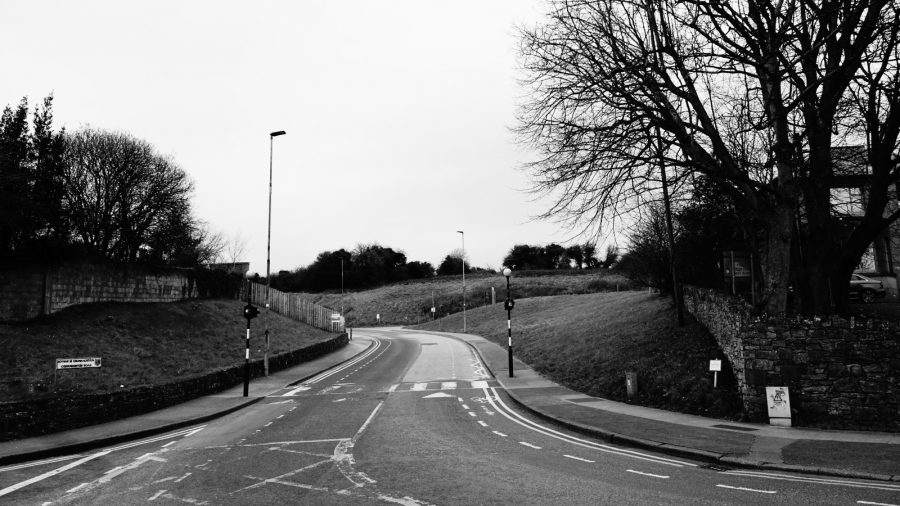
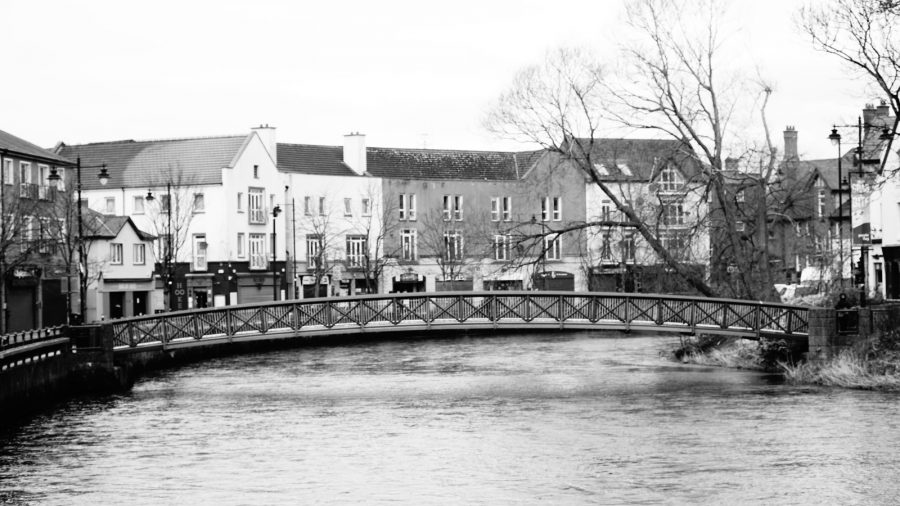
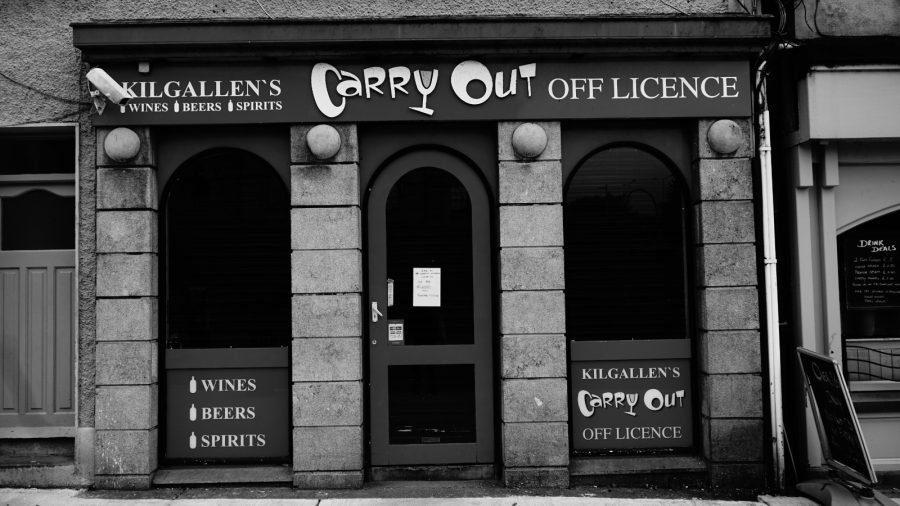
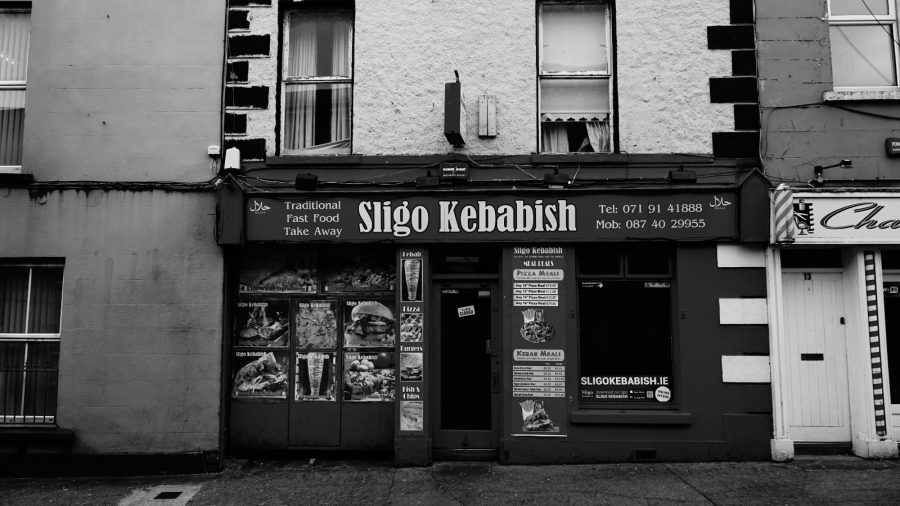
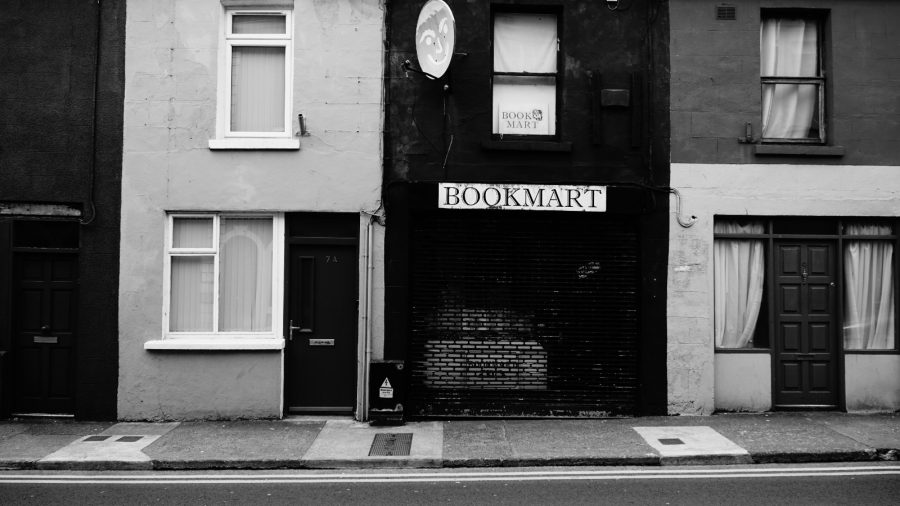
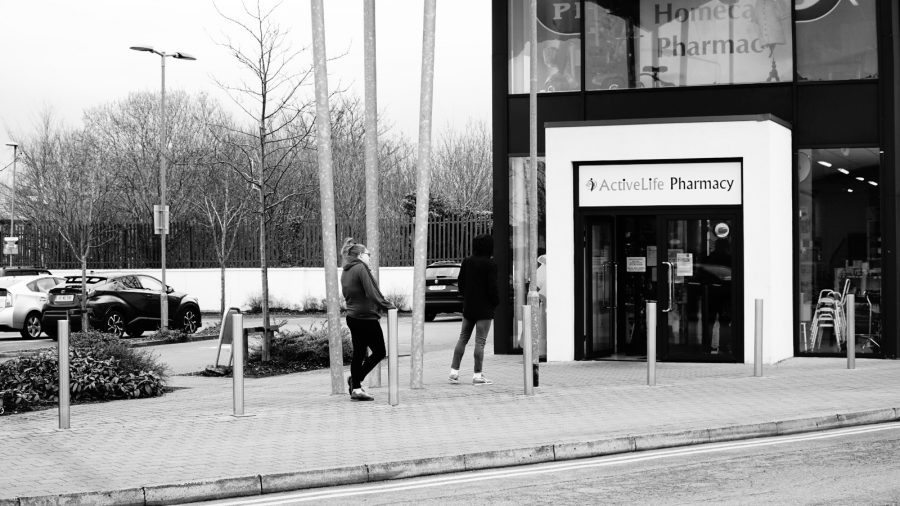
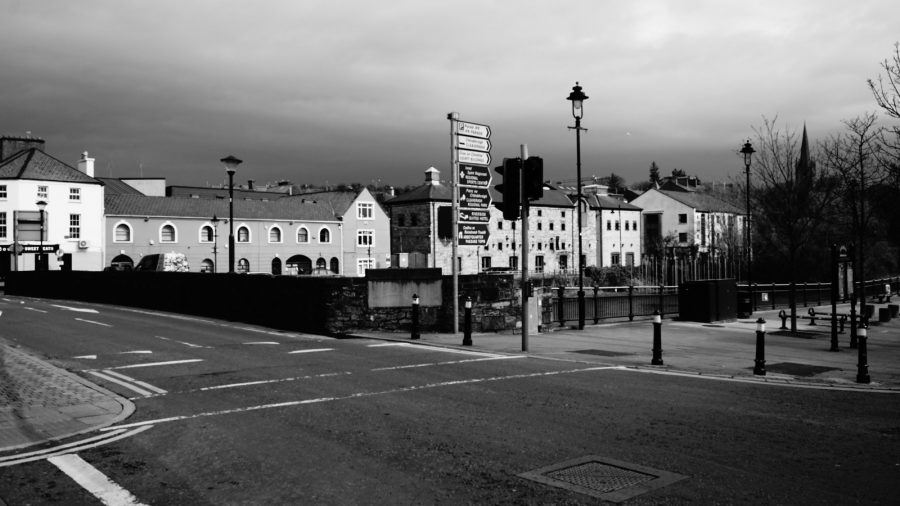
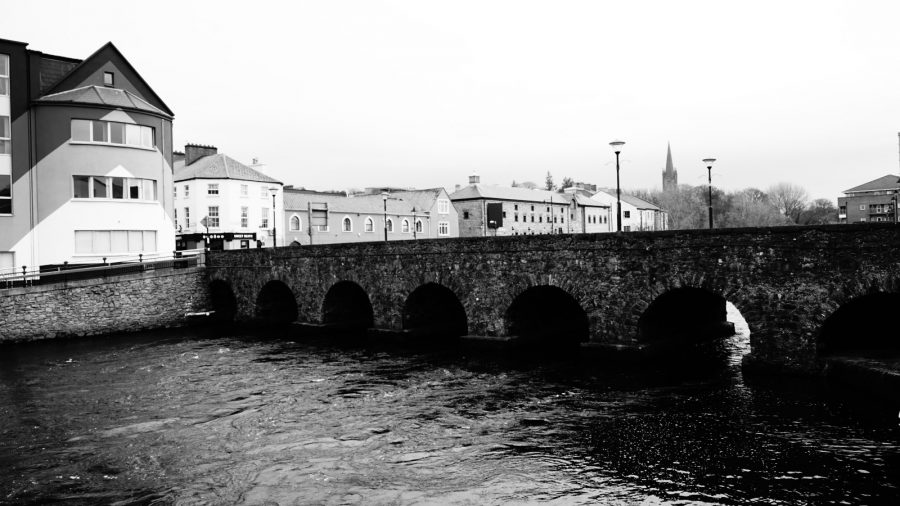
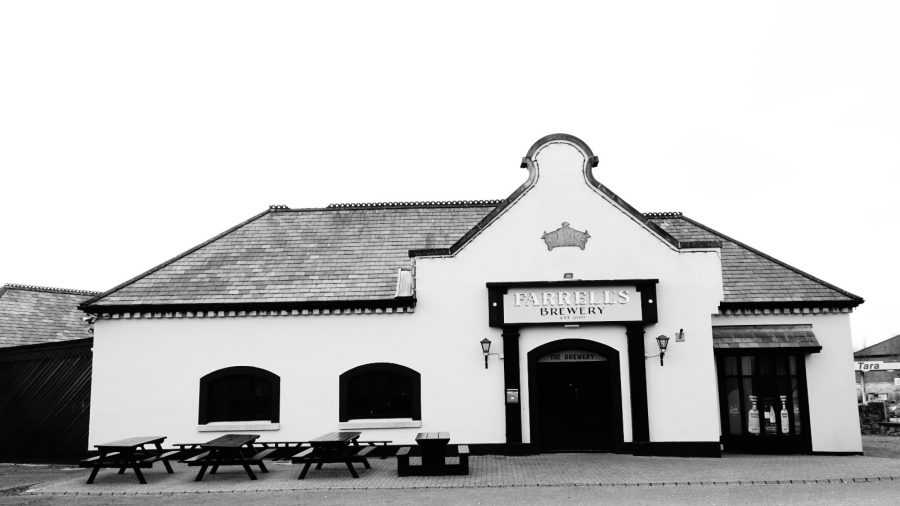
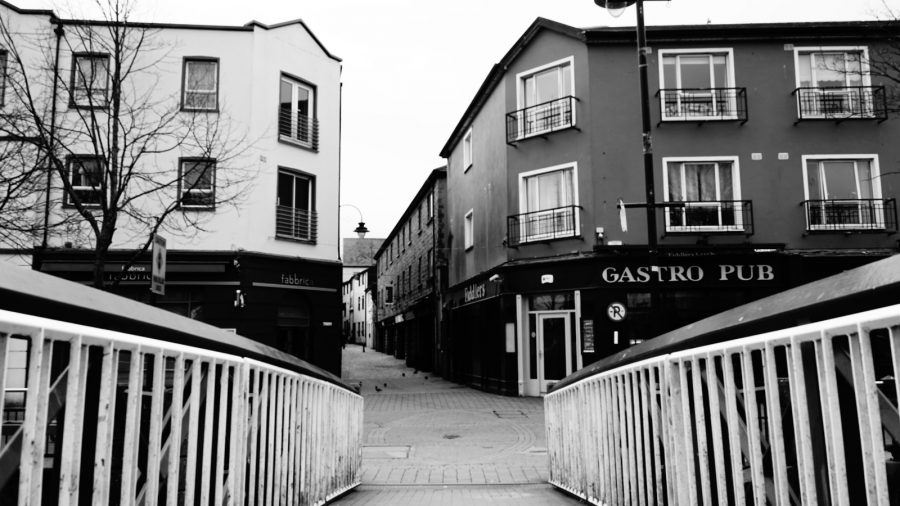
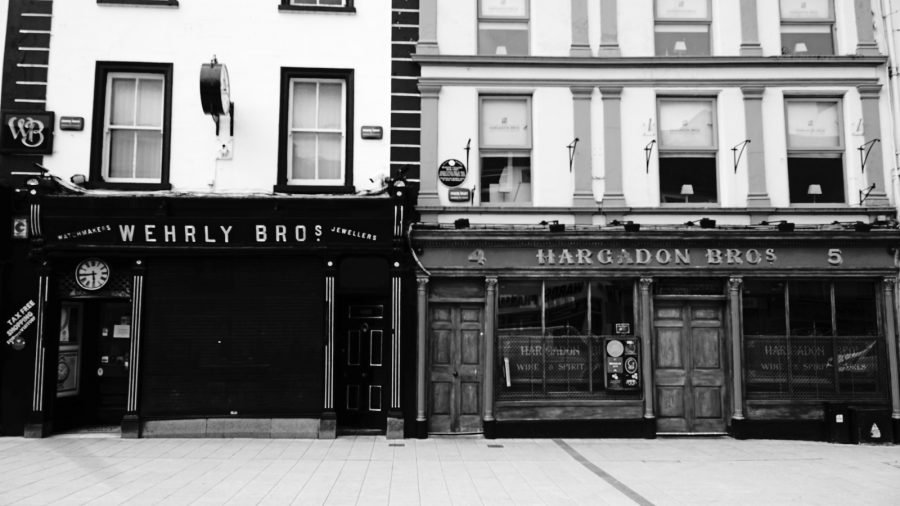
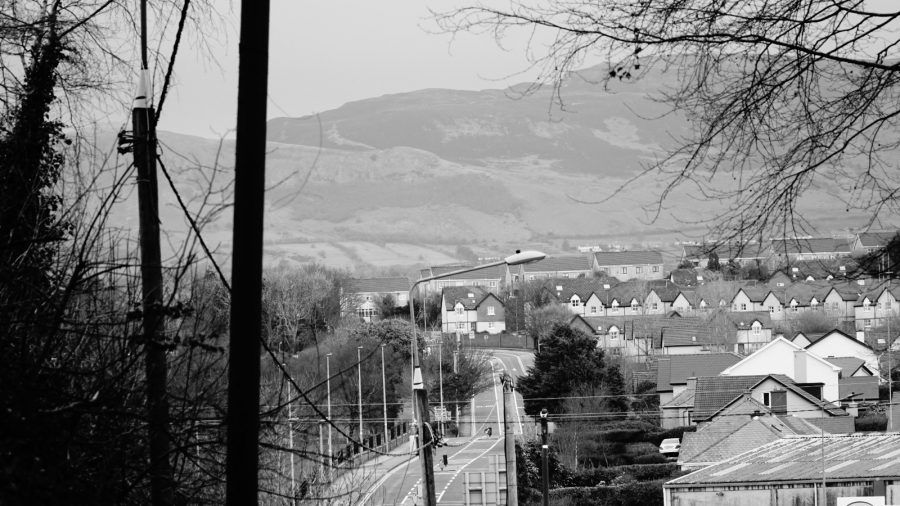
  • No Comment: A view of Sligo Town amid the Covid-19 Pandemic

    Fellipe Lopes/Cassandra Voices
    Fellipe Lopes/Cassandra Voices
    Fellipe Lopes/Cassandra Voices
    Fellipe Lopes/Cassandra Voices
    Fellipe Lopes/Cassandra Voices
    Fellipe Lopes/Cassandra Voices
    Fellipe Lopes/Cassandra Voices
    Fellipe Lopes/Cassandra Voices
    Fellipe Lopes/Cassandra Voices
    Fellipe Lopes/Cassandra Voices
    Fellipe Lopes/Cassandra Voices
    Fellipe Lopes/Cassandra Voices
  • Documentary – Patrick Scott: Golden Boy

    Sucked in by day-to-day dramas, or absorbed by the most closely studied pandemic in the history of medicine, the mental space to muse idly is severely circumscribed. But we may find a portal, removed from the daily thud of mortality lists and the slow grind of lockdowns, to raise the spirit. Art is more important than ever at this time.

    Shamefully, I had hardly engaged with the great Irish artist Patrick Scott before watching Sé Merry Doyle’s vital documentary ‘Patrick Scott: Golden Boy,’ from The Loopline Collection stored in the Irish Film Archive.

    This grand old man of Irish art passed away in 2014, aged ninety-three. Doyle’s documentary provides a vital record of an artist whose work is infused with a tranquillity and balance, seemingly derived from lifelong interest in Zen Buddhism. It is an influence apparent in mesmeric meditative tables skillfully integrated into the film.

    Doyle’s intimate portrayal takes us into the artist’s home, which he shares with an elegant black cat. ‘I’ve never got a cat, they’ve always got me,’ Scott reveals as the feline owner brushes softly against his forearm, whereupon he receives a loving stroke. Although the speech is slowed by age, calm deliberation is still on display, and evident throughout his oeuvre too.

    The documentary takes us to Scott’s family roots on a substantial farm in Country Cork that is still occupied by a relation. The ‘Golden Boy’ came from a comfortable Protestant background, before boarding school at St Columba’s College in the Dublin mountains.

    The turbulent conditions of the 1930s and 1940s, including the Economic War, which almost bankrupted his family, and frustrated a wish to train as an architect – the standard career opportunity for anyone of an artistic bent at the time – before the intercession of a family friend allowed him to begin his studies in UCD.

    Patrick Scott spent fifteen years working as an architect under the great Michael Scott, who was no relation. Although it may not have been his first love, the cross fertilization that occurred seems to have been mutually beneficial.

    Among the projects that Patrick worked on in that period was the Busáras building on Store Street in Dublin 1, heavily influenced by Le Corbusier, still considered one of the most significant pieces of architectural heritage in the city.

    Busarus in Dublin.

    The one-time architect bemoans how the building is ‘nothing but a departure shed now;’ although the camera identifies the yellow mosaic dome that is easily forgotten in the general hustle and bustle.

    The young architects had imagined a multi-purpose hub of commercial activity and civic interactions. Indeed, there is still a roof-top restaurant space that reminded me of a similar venue in Lisbon, but which, according to Scott, has never been used as anything other than as a staff canteen. Can something be made of this delightful venue in the future?

    In parallel with his architectural career, which he was finally able to walk away from in 1955, once he was able to earn a decent living through selling his art, Patrick Scott was finding his way as a painter. He embraced an array of styles and motifs, including using wet canvasses and whips for brushes, as well as the gold enameling that gives this work an iconic impression, which continues to inspire graphic designers today.

    There is also an important discussion of the White Stag movement in Irish art, which developed among British artists that moved to Ireland in 1930s and 1940s. Basil Rakoczi and Kenneth Hall developed a dynamic focus of energy that had a profound effect on artistic practice in Ireland, including on Scott who joined the group.

    In 1960 Patrick Scott became the first Irish artists in thirty years to have their work exhibited at the Venice Biennale. It is indicative of the status of art, and artists, in Ireland at the time that he had to pay his own way to attend the occasion, as well as for the catalogue and press cuttings. The skill of Doyle’s documentary filmaking is to reveal these kind of details. It might bring consideration to the plight Irish artists today, who contend with a high cost of living and low funding by comparison with other European countries.

    WATCH THE FULL DOCUMENTARY HERE FOR FREE


  • Ireland’s Response to the Coronavirus Pandemic

    The total number of deaths attributed to the Coronavirus in Ireland had reached 22 by March 27th, from 2,121 confirmed cases. However, with 14 of those occurring over the previous two day it suggests that number could rise steeply. Indeed, Taoiseach Leo Varadkar has warned that intensive care units may be at capacity ‘within a few days.’ Historically underfunded and mismanaged, the system of public healthcare in Ireland is at full stretch.

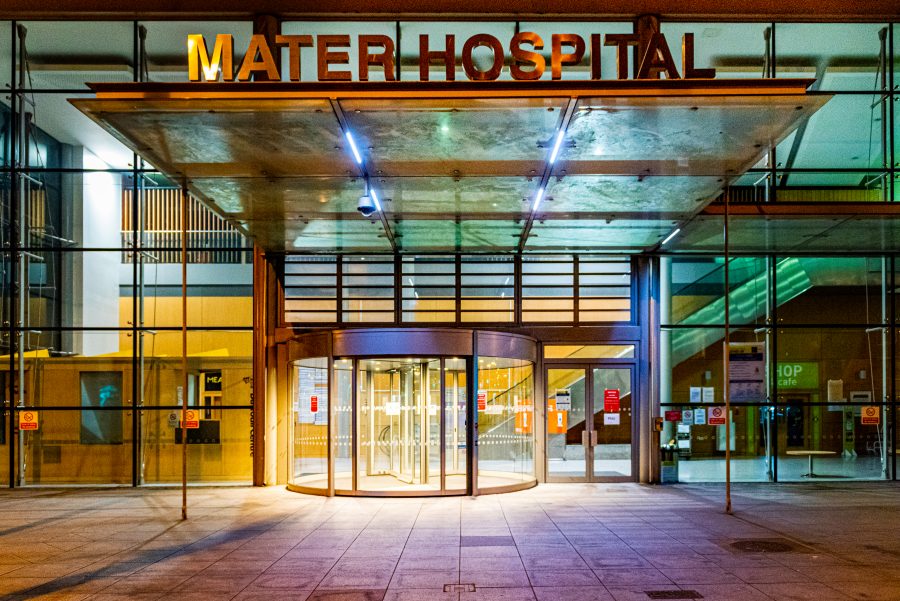
    Entrance of the Mater Hospital in Dublin on the North Circular rd. on 27 March 2020. Daniele Idini/Cassandra Voices

    Nonetheless, a concerted promotion of social distancing and enhanced hygiene, instigated in particular by civil society and the medical profession, and eventually led by an initially hesitant government, offers hope that the trajectory in the rise of the curve of new cases will flatten. This will bring vital breathing space to implement a detailed national action plan.

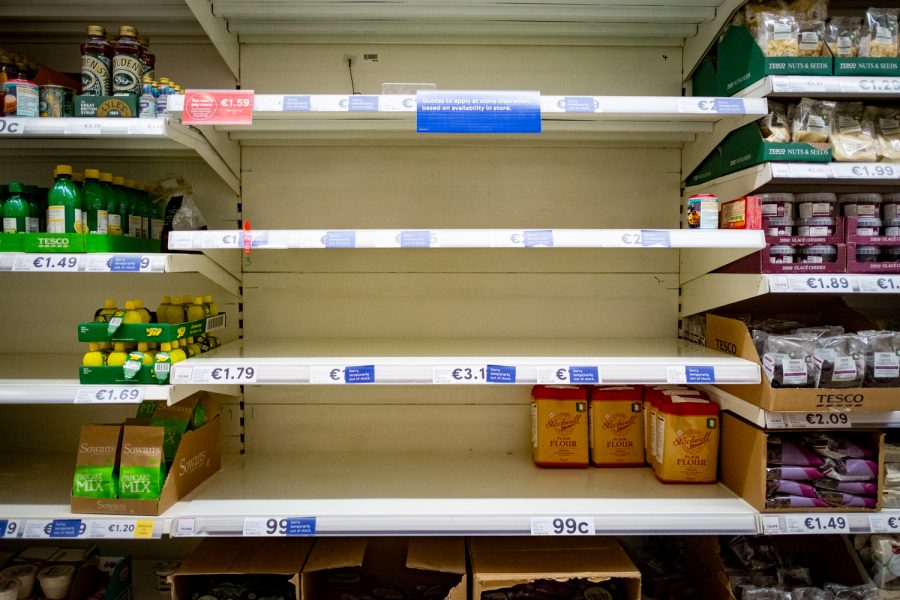
    The provisional success of containment measures came in the wake of doomsday scenarios being painted in the national media. On March 8th The Sunday Business Post led with a headline quoting a senior health official to the effect that 1.9 million – out of a total population under five million – were likely to catch the virus over a concentrated three-week burst. Collective minds were also focused by the harrowing accounts arriving, especially through social media, from Italy, leading to hording of foodstuffs.

    Daniele Idini/Cassanda Voices

    But air travel continued unabated to and from countries such as Spain and Italy, from where the first cases were traced from February 29th. At least the annual Six Nations rugby fixture against Italy, scheduled for March 7th in Dublin was cancelled. Nevertheless, ignoring the looming threat, as many as twenty thousand Irish horse racing fans travelled to and from the annual Cheltenham Festival in the U.K., between March 10th and 13th.

    Flight Zurich-Dublin, 19 March 2020. Davide Beschi/Cassandra Voices

    Importantly, the government announced the closure of schools and universities from March 13th, calming mounting fears and, after a rising volume of complaints on social media, elected to call off the annual St Patrick’s Day parades. This followed the decision of organisers in the small towns of Cobh, Middleton and Youghal to cancel.

    Pubs were not shut down until March 15th, however, by which time concerned citizens were uploading videos of crowded venues onto broadsheet.ie.

    O’Connell Bridge, 27 March 2020. Daniele Idini/Cassandra Voices

    On March 19th the Dáil passed emergency legislation containing financial measures assisting those affected, and permitting the Gardaí to close down mass gatherings and, potentially, to order people to stay in their homes; as well as providing for the detention of a person on foot of a medical recommendation.

    On the evening of St. Patrick’s Day, Taoiseach Varadkar, a trained doctor, solemnly addressed the nation. The competence he projected provided reassurance, even to his critics, that the State would henceforth deploy all means necessary to confront the contagion.

    An initial two-week lockdown, permitting walks within 2km of a person’s home, was finally announced on March 27th. It remains to be seen whether this delay in taking this course of action will prove costly. More draconian measures, however, bring their own health risks.

    Montjoy Square, 27 March 2020. Daniele Idini/Cassandra Voices

    A long-running housing crisis has seen Dublin becoming the third most expensive city to rent in Europe behind Paris and Geneva. This means almost 50% of young adults aged between 25 and 29 now live with their parents. Also, many immigrants, in particular, live in cramped conditions in large groups in the capital. These factors could accelerate the spread of the disease.

    One revealing development has been a massive increase in the availability of properties to rent on the Dublin market, especially near the city centre. This suggests these had been reserved for short-term, Airbnb lets, and that the authorities have not been enforcing regulations prohibiting short-term rents in pressure zones.

    As of March 24th, Ireland’s testing figures compared favourably with other European countries. The rate of 1,350 tests per million lagged behind Austria and Germany, but was ahead of the U.K. and France. Senior health officials are following WHO guidelines, rather than trialling risky hypotheses, like the flawed ‘herd immunity’ idea, initially floated in the U.K., and elsewhere.

    The pandemic has hit Ireland during a period of political instability after a February general election yielded an indecisive result, with Leo Varadkar’s government no longer commanding a Dáil majority. Notwithstanding the challenge of installing a new cabinet under emergency conditions, it sets a dangerous precedent for a caretaker government to be in power for a prolonged period.

    The pandemic appears to have increased the prospect of a united Ireland, especially given the U.K.’s mishandling of the pandemic. The Northern Ireland Power-Sharing Executive, containing politicians from both the Unionist and Nationalist communities, has already agreed to heightened cooperation with the Republic.

    Ireland suffers from a legacy of poor planning decisions, with sprawling developments and one-off rural housing commonplace, leading to reliance on motor cars. In the peculiar circumstances of a pandemic, however, this may prove advantageous as communal apartment blocks and crowded public transport seems to have exacerbated transmissions elsewhere.

    Henry Street, Dublin. 23 March 2020. Daniele Idini/Cassandra Voices

    Located on an island, albeit one with a portion under the United Kingdom, and having a comparatively young and well educated population, Ireland can control its borders easier than most. A best case scenario sees the virus being excluded in a matter of months.

    It is unclear, however, whether this can be achieved without curbing liberties to a point where national cohesion dissipates. There is also a danger that reliance on food imports, exposed as a weak point in Brexit negotiations, could drive up the cost of many staples, and even exacerbate long-term health inequalities.

    President Michael D. Higgins, who is almost eighty years of age, wrote a poem called ‘Take Care’ to reassure his people in a period of dread uncertainty. A portion reads:

    Belief
    requires
    that you hold steady.
    Bend, if you will,
    with the wind.
    The tree is your teacher,
    roots at once
    more firm
    from experience

  • It is Time for a Renewed Deal

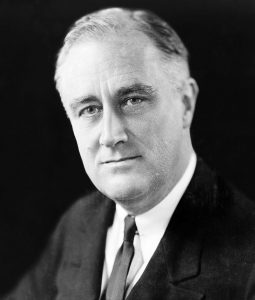
    U.S. President (1932-45) Franklin Delano Roosevelt was born into one of the most aristocratic families in America. A distant cousin, Teddy, had even been elected President. In his youth FDR, as he became known, was a bon vivant and ladies’ man, who strayed from Eleanor, his saintly but formidable wife. This blue blood seemed an unlikely person to buck the entire system of U.S. capitalism. He remains a hate-figure for U.S. Conservatives to this day.

    Any account of his life should include the enormous personal tragedy of incapacitation from polio. He could not walk, a disability which may have broadened an empathy for others’ suffering. He was elected President in 1932 on a platform to provide a New Deal to the American people after the Wall Street Crash of 1929 and ensuing Great Depression. The destitution of the American people is movingly depicted in John Steinbeck’s Grapes of Wrath (1939), where a group of ‘Okies’, led by Tom Joad, are ruined by dustbowl conditions, and the calling in of loans by ruthless bankers, and in E.Y. Yip Harpburg’s Broadway Musical Brother Can You Spare Me a Dime (1930). Even brokers were forced to eat from soup kitchens, as erstwhile respectable folk were reduced to ‘hobos.’

    A bull market of speculation collapsed after an unregulated free market had built mountains of sand out of folly and greed. The dominant economic philosophy of laissez faire brought light touch regulation and government passivity, as with our present, similarly hegemonic, neo-liberalism. The view then, as today, was that government had no business interfering in private transactions and that wealth, growth and efficiency are best achieved through the operation of an Invisible Hand. The banking crash from 2007 has had similar deleterious social consequences.

    FDR in 1933.

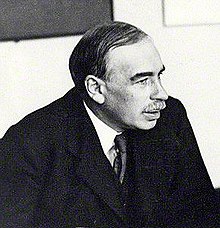
    FDR adopted the then heretical advice of the economist John Maynard Keynes that to save capitalism it was necessary for the government to intervene in the market. He set up national agencies and support structures for aid and assistance. It was a bailout to protect the poor and disenfranchised, not the rich. His New Deal was in the national interest, not to protect vested interests. The Supreme Court initially blocked the legislation, insisting it had no business varying contracts. In response, an exasperated Roosevelt informed the judges that if they did not approve his legislation he would appoint new ones, which led to a change of heart. This became known among wags as ‘the switch in time that saved nine.’

    The assumption of liberty of contract is that anyone is free to enter into a bargain under whatever terms they choose, but once the deal is struck they are bound by their word. But this is based on the pretence that the market is a level playing field. Many sign on the dotted line without fully understanding the implications, or do so under duress.

    Roosevelt may at times have displayed an ambivalence towards democracy, but he favoured those at the bottom of the social ladder, as he recognised that democracy had been sabotaged by vested interests. Just like today, transnational corporations and law firms were dictating to governments. He revived the U.S. economy through a Keynesian stimulus as government expenditure raised aggregate demand. This brought investment to help ordinary people, not the infliction of wanton cruelty in the form of perma-austerity that runs contrary to even capitalist logic. The best evidence is that a mixed economy, combining private enterprise and public initiative, with social safety nets and support for small enterprise, is a model that works best for society as a whole. Keynes was right then, and still is, but over time his approach went out of fashion.

    John Maynard Keynes in 1933.

    In late 1970’s Britain in particular, the excesses of socialism were becoming obvious, with the three-day-working-week, refuse on the streets, and the stranglehold of government by the Unions. In circumstances where initiative was stifled, Margaret Thatcher and Ronald Reagan championed the old doctrine of unregulated markets, conveniently referred to as neo-liberalism. The ideological underpinning came from the Austrian Friedrich Hayek and the Chicago School under Milton Friedman.

    The curious assumption was that wealth would trickle like manna from heaven down from rich to poor under free market conditions. Instead we got the 1980s yuppies like Donald Trump, accumulating vast fortunes. Over time we have seen a dismantling of the Welfare State; the removal of social protections and safety nets. Today the richest 1% are on target to own two-thirds of all wealth by 2030, with the rest of our existences increasingly precarious. The distinction between working class and middle class is being eroded as we revisit a medieval pyramid of barons and serfs. Yet, ironically, Hayek actually described socialism as the new serfdom. But old-fashioned Marxist class divisions no longer make sense.

    The unprecedented banking collapse after 2007 led to bail-outs being awarded to those who were responsible, and the infliction of austerity on the wretched of the earth. This led Nobel laureate economist Joseph Stieglitz to point to a socialism for the rich and capitalism for the poor. Yet those countries which adopted Keynesian approaches – including nationalisation of banks – such as Iceland, have been vindicated by stabilisation and recovery.

    Ireland achieved the worst of all possible ends. It established a bad bank NAMA, which cut deals with failed property speculators and lawyers and the congeries of the corrupt. As the IMF and Europe imposed austerity on the defenceless masses, those responsible were bailed-out and their debts cancelled. The fraudulent banks had made money on misrepresentations, providing negligent lending advice about the value of stocks, investments and credit ratings. This caused the economy to overheat and generated a property bubble that many had pointed to. Now institutions continue to foreclose against the poor and defenceless, as sanctity of contract is insisted on. The perversion of the system it that the richer you are, the more easily you can cut a deal; the logic of a bank too big to fail.

    The neo-liberal recasting of homo sapiens into homo economicus, also initiates a new form of Social Darwinism, permitting the survival of the most ruthless in a dog eat god universe. We have seen a slippage in standards, where the young are habituated to lying, having witnessed the deceit of those in high office. Lines between fact, semi-fact, lies and deceptions have been blurred. Even in the courts of law fabricated cases have reached pandemic proportions. This has also led to increasingly vicious tactics against those who demure: like a plague, the corruption of banks has spread to other private agencies and even state institutions; where whistleblowers are systematically undermined. In a distorted world, the mugshots of heroes of our time now feature in rogues’ galleries of subversion. The indicted include human rights lawyers, public-interest journalists, and anyone in public life with a shred of a social conscience.

    It is an increasingly divisive ‘them’ and ‘us’ social setting, where the poor, the migrant, the displaced, the activist, and the public intellectual, are marginalised and destroyed in increments. Targeted assassination by the state is now evident across Europe, and not just under Mr Putin. Our corporate suzerains lead political discourse towards safe issues around individual entitlements. Suddenly the political class are all in favour of gay marriage, gender equality and decriminalising someone for puffing on a joint. But what about more fundamental rights intrinsic to sustaining human life, such as health care, housing and social support?

    Around the world courts are evicting and rendering homeless surplus populations, and in India dumping them on the streets. Housing, either buying or renting, is increasingly unaffordable, diminishing the prospect of human flourishing. Now crucially also, the privatisation of health care has led to life or death becoming a matter of affordability not a right or entitlement. There are other sinister ramifications. Those teachers, academics or professionals in badly paid but socially worthwhile occupations must toe the line, or are fired for exposing corruption. Survivors sing for their supper, while in journalism the phrase he who pays the piper calls the tune is increasingly apt.

    The wise sensei or village elder is no longer looked up to, but instead the old are being asked to quietly await their death. Intelligence and achievement have to be costed and channelled into wealth producing activities. You are not seen as a man if you do not have the mentality of the hunter.  Short-termism both in contracts and outlooks has brought reactive decision-making, wherein people are desensitised to the suffering of others. These depredations being heaped on society are deliberate. The Shock Doctrine pioneered in Chile and Indonesia by neo-liberals in the 1970s have been visited on Ireland and Greece, and elsewhere. It brings cuts in funding to socially useful public agencies, such as libraries, which are being gradually eliminated. There have also been huge cuts to legal aid, imperilling the ability of the innocent to defend themselves against criminal charges.

    It is clear that we require a Renewed Deal, bringing Keynesian stabilisation measures, including support for small businesses, social safety nets and the shutting down of corporate tax avoidance. The E.U. must desist from imposing austerity under the guise of the Growth and Stability Pact, and reinforce regulatory protection of labour rights and the environment, resisting the lobbying of giant corporations. Courts in Ireland should also recognise a basic human right to housing, including prohibition against arbitrary eviction, as well as healthcare. So let us organise a petition then for an umbrella organisation to bring a Renewed Deal to the world.

    Codicil

    I write this as the Coronavirus pandemic sweeps through the world, with governmental intervention and support in the Keynesian sense right back on the table, particularly in the U.K. But there is appearance and there is reality; smoke and mirrors.

    My concern is with the Malthusian ideas emanating from an ongoing devotion to the tenets of neo-liberalism, and also that social distancing and other precautionary measures will accentuate pre-existing social atomization, and amplify a lack of care and concern for one another.

    Emergency measures could also empower authoritarian elements within States, undermining cherished civil liberties.

    My fear is that any Renewed Deal and stimulus to avoid economic meltdown under the politicians currently in power in the U.K. and Ireland will be selectively targeted, with many if not most of an over populated planet permitted to wither away by increments. We cannot have another Bailout to preserve the assets of those at the top of a latter-day feudal pyramid.